
In short
Podcast Summary: This Week in Startups - Episode E2123
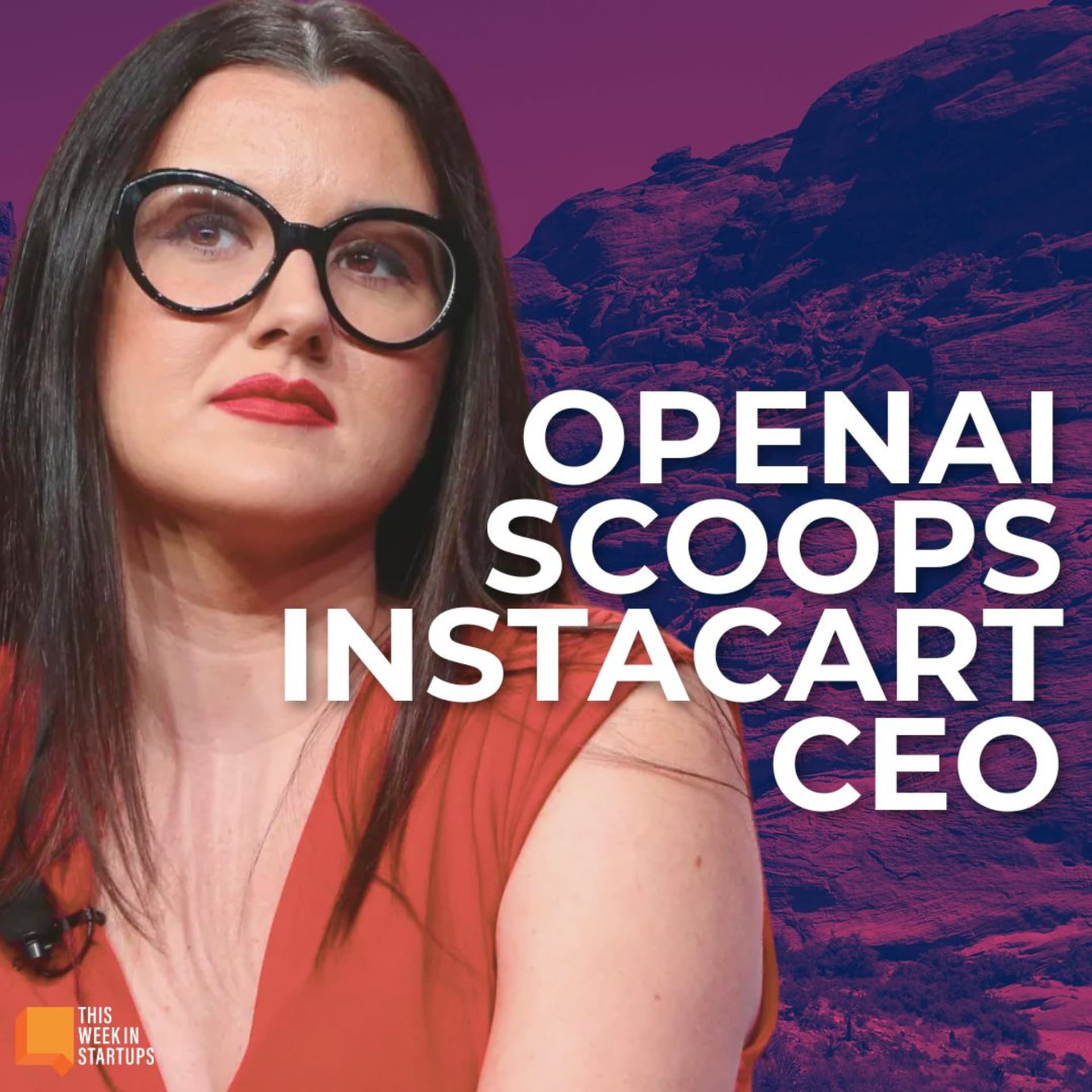
Episode Title OpenAI Scoops Instacart’s CEO, AI in the Courtroom & Off-Road Startups
Episode Description In this episode, host Jason Calacanis, along with co-hosts Alex Wilhelm and Lon Harris, discuss a variety of current topics including OpenAI's recent hiring of Instacart CEO Fidji Simo, ethical implications of AI-generated victim statements in court, the evolving landscape of late-stage funding rounds, and insights from the book *The Checklist Manifesto* for startup founders. The episode also features a segment called Office Hours where the startup WhereToWheel receives feedback.
---
Key Discussions
- OpenAI Hires Instacart CEO
- Overview: OpenAI has hired Fidji Simo, the CEO of Instacart, to lead its consumer applications.
- Insight:
- The move highlights the appeal of working in AI, especially with rapidly growing opportunities at OpenAI compared to Instacart's slower growth.
- Sam Altman, CEO of OpenAI, praised Simo's contributions, indicating a strategic shift in leadership to handle different arms of the company.
- AI and the Courtroom
- Discussion of Ethical Concerns:
- A case involved using an AI-generated avatar of a deceased victim during sentencing, raising questions about the authenticity and ethical implications of AI in legal settings.
- The co-hosts debated whether creating an avatar for a deceased individual to express sentiments in court is manipulative and undermines the justice process.
- Late-Stage Funding and Market Trends
- Series G and Funding Rounds:
- The hosts discussed how late-stage funding rounds don’t automatically indicate trouble, referencing current trends in Series G funding.
- There is a shift in the market, where secondary funding is becoming a significant player, with secondary funds capturing 9% of private market fundraising.
- Insights from *The Checklist Manifesto*
- Key Takeaways for Founders:
- Emphasis on the importance of creating systems and checklists in business processes to enhance efficiency and consistency.
- The hosts shared personal anecdotes on the necessity of having a structured approach to project management, highlighting the risks associated with a lack of systematic processes.
- Office Hours with WhereToWheel
- Overview of the Startup:
- WhereToWheel connects off-road enthusiasts with private landowners for four-by-four access.
- Current Challenges:
- The startup is facing insurance hurdles but is leveraging state agritourism laws to protect landowners from liability.
- Strategic Suggestions:
- The hosts encouraged the founder to consider forming an Agritourism Association to advocate for landowners and promote agritourism initiatives.
---
Key Takeaways
- OpenAI's Strategic Moves: Hiring top industry talent showcases the competitive landscape in AI and the desire for rapid growth.
- Ethical Implications of AI: The use of AI in sensitive areas like legal proceedings raises important questions about ethics and representation.
- Market Dynamics: Understanding the evolving funding landscape is crucial for startups seeking to thrive in a competitive environment.
- Systematic Processes: Implementing checklists and systems can significantly improve the efficiency and effectiveness of startup operations.
- Community Building: Creating networks and associations can empower startups and foster community support.
---
Timestamps
- (0:00) Introduction
- (2:28) Founder Coaching Insights
- (8:52) Discussion on OpenAI hiring Instacart CEO
- (22:53) AI in the courtroom ethical discussions
- (35:38) Understanding Minor M&A
- (53:30) Office Hours with WhereToWheel
---
Conclusion This episode of *This Week in Startups* covers essential topics for entrepreneurs, from strategic hiring practices to ethical considerations in technology. The insights provided are valuable for founders and investors navigating the current market landscape.
Written by AI. May contain mistakes. Listen to the episode to check what was said.
Transcript
Automatic transcript. May contain errors.0:00If you did this to me after I died and tried to speak for me using what appears to be a 25 cent AI model makeover, I would come down and haunt you until I couldn't anymore. You know, like it's just abusive. I feel like we are going to be in a future where everybody's going to have in their will, like, please don't make an AI avatar of me after I'm dead. So it's like your organs. Right. I will give my organs. I will not give my soul and my likeness away. Yeah. It's probably a good time to bring this up in your contract. Obviously, you didn't read it thoroughly enough. We have the rights in perpetuity to have you do all 10 queues and quarterly earnings, even after you pass.
0:33I'm fine with that, actually. Yeah. But your kids get like$100 per hour residual. Let me ask you that. Done.
1:09And Vanta. Compliance and security shouldn't be a deal breaker for startups to win new business. Vanta makes it easy for companies to get a SOC 2 report fast. Twist listeners can get$1 ,000 off for a limited time at vanta.com slash twist. All right, everybody. Welcome back to This Week in Startups. I'm your host, Jason Calacanis, with my co-host, Alex Wilhelm. You know him from TechCrunch. You know him from Crunchbase. You know him from Captain Crunch. Indeed. He's at Alex on Twitter, x.com slash Alex. He loves reading financial documents. He loves big tech. He loves M &A. You got a spreadsheet.
1:41He wants you to share it with him. Of course, Lon Harris. It's true. It's true. It's all true. Lon Harris here, another one of our trio. If you have a question about movies, about an actor, about basically any Bob Dylan song, he's got the answer. I say to somebody like Lon Harris, I'm really enjoying Andor. What's another heady, thoughtful, well-written, slow-paced, but intriguing science fiction series and or a movie for me to watch, he would say. Oh, there's so many. Did you ever see Mr. Robot? Did you watch that one? I did. That's a perfect example. I think that it has sci-fi elements, but it's not totally like it's, you know, it's not hard sci-fi.
2:21Right. But it's interesting. It's a lot of layers, a lot of depth. I really like that. Okay, there you go. Perfect. He is a walking IMDB. All right. Here on the show, we're always trying to make things a little bit better. I was just doing a little coaching session. So I want to do like a little founder coaching here at the start of the show. A couple of things you can do if you're not getting the output you want. It's not enough to just tell your team what you want and what the output is, in my experience. You have to get into founder mode on the details of what makes the show better. So if you had a podcast, you said, I want the podcast to look better, to be better, to level it up.
2:54You can't just say to most people because they haven't maybe had as much experience or they can't read your mind, make it better. What you have to do is create a system. So you have a goal, make a better podcast. Now you can tell people make the view better, make the wardrobe better, make the content better, but it's better to create a system. And what it means is a system, a process in which that always happens. What's the process? Well, read a book called Checklist Manifesto. It gets people into the mindset of creating checklists. If you create checklists, Alex, then it's very hard to forget what your focus should be.
3:25So we like to go live streaming on all platforms. Now this is a challenging task because we have four different Twitter accounts. we want to go to, the three hosts and the show. We have five different pages on LinkedIn, my personal account, plus the podcast account, plus Alex, Lon, so a bunch of other ones. Then on top of that, we have Instagram and TikTok, new platforms for streaming. They're a little kludgy. They don't always work. Facebook, I guess, which I don't think we're doing because you don't really get any traffic. And so I say, hey, I want to be live on all platforms. It never gets done.
3:57There's always a reason why something doesn't work or something breaks. So what you have to do is create a checklist, check these things. And then you have to make sure the checklist is actually done and empower people to speak up when something's not working, as opposed to just keep your head down. And then you have to be vigilant to check. So every day when we go live, I just check. Tell me which ones we're live on, not tell me we're live on all platforms. Live on all platforms means you didn't check, right? But actually we're on this platform. My point is here, it's your job to create the system as the founder and then teach people how create systems.
4:32And that's like what Lon and Alex do here with me as well. It's like, let's create systems that reduce error rate and increase consistency. And I don't want to, I'm not talking about the lovely coworkers I have at this company who are all fantastic. But one thing I've noticed throughout my career, a lot of people are very resistant to this idea. They feel like I have my own process. I have my own way of working. I will get, as long as we meet at the end and everything gets done right, I don't want you to mess around with how I get to my conclusion. So it's a good thing when you're hiring, when you bring in somebody new that you express, this is part of the company culture.
5:11And that cowboy culture that you're talking about, Lon, is what made airplanes, Alex, and fall out of the sky and doctors give people septic shock. Is that what it's called? Sepsis. Sepsis. When you get bacteria in your bloodstream because they wouldn't clean the goddamn scalpels. And what the book Checklist Manifesto does is it says, listen, it's not about ego. It's not about you and your performance. It's about a process that leads to the best outcome. And the process that leads to the best outcome is always a checklist. Are you watching the rehearsal? I won't take a long digression here on HBO.
5:43I have not. I will. This season is remarkable. It's all based on Nathan Fielder made this one observation. He thinks he read transcripts of cockpit communication before air crashes. Right. And he realized there's. Oh, I know what the common factor is. Personality. Can I guess? Yeah, yeah, please. It's always the same dynamic. So there's a series of cascading errors typically caused by a junior person and a senior person. The junior person is running the thing. The senior person, like the flight from Brazil where they went in there and the air tubes didn't work, were like two junior people. The senior person's in the back.
6:17Also, they don't want to correct the senior person when they're making a mistake. You nailed it. It's that exact thing. It's that exact thing. It's that he found constantly there are co-pilots and they clearly seem to have something they want to say, but they're cowed by the pilot and the captain. They don't want to be correcting them. The captains are sometimes aggressive. And so the whole season is just how can we get these people to work together better? How can we give them a process by which we could safely land these places? Which is literally the checklist manifesto. If you want to get into crashes, I suggest Blanco Lirio channel on Patreon.
6:52I pay for this every month. The reason I pay for it is this guy is so good. I just want people like him in the world going out there and examining every single crash. He did the Kobe Bryant helicopter crash, and his name is Juan Brown. He does Blanco Lirio. I pay for this. If you have money and you've got means, go ahead and throw him five, 10 bucks a month, 100 bucks a year, 50 bucks a year. Why? I think people like this reduce the error rate in planes because he examines them and it's literally always the same thing. There's two categories. There's commercial aviation, there's recreational aviation.
7:23In recreational aviation, it's always a young person or young in their career who does something above their grade. They fly into weather or they have, you know, have to get there too soon. So, you know, this pressure to get somewhere, you know, instead of canceling the flight, they decide they're going to go there, even though there's a snowstorm because they have a a week-long holiday, you know, in Lake Tahoe skiing, get their itis, I think is the technical term, which I've seen up close and personal with my friends who have planes. Like literally one time there was one person who was on the plane who was like really upset that she couldn't bring the last three pieces of luggage, you know, like another 150 pounds.
8:02And like, we're at a ski resort. And they're like, no problem. This happens all the time. We're going to FedEx it. It's going to be at your house. And this person starts arguing. And I said, oh, I pulled the person the side i said hey i got my family on this flight you got your family on this flight there's no inconvenience ship my three bags by fedex yeah we're not putting those bags on the plane but you don't want to fly i'm like what are the pilots thing right yeah so that goes to there's another level of pressure the pilots versus them anyway we've got a lot of show to do today i just want everybody to embrace the concept of systems over your goals you've got goals you've got a destination you want to go the systems are what are important and i'm fine with people creating their own system if it works and they explain it to me and it's transparent, everybody has it, and there's a notion, a code, a page or something for it.
8:45So we can all look at it and say, how do we make it better? Alex, I know we have a crazy docket. I don't even know where to begin. So much. So much is going on. My biggest story this week, Jason, is that Instacart, a company that we have known since inception, I used to Facebook chat with the CEO back when they were adding small new markets in the San Francisco Bay Area. So that's how long I've been covering them. They went public and they're losing their CEO No, after a pretty solid run. So the news here is that OpenAI is going to hire the, I guess, now former CEO of Instacart to run their applications business.
9:17Sam Altman, who we all know from his days at YC and currently runs OpenAI for all intents and purposes, said that the company now has enough going on across three different things. Its research arm, its build out of mass compute, and also its applications business. And he's going to hand the application site over to Fiji. Also keep in mind that she joined the board of the company not too long ago, and Sam Altman praised her time. Jason, my read of this is that it's not really a diss against Instacart, but that it's probably a lot more exciting to go run a business that is growing at one bajillion percent a year at the absolute forefront of technology than it is to try to grind out another 5 % growth in your grocery delivery company.
9:56Am I being too cynical or is this just too good of an op to pass up here? All right, listen, as a founder, you can't be putting your business expenses on your personal credit card. No, that is no bueno. You don't want to have tax issues later and you don't want to pay for things. Your personal card, that's post-tax earnings, right? That makes no sense. You need a corporate card and you need one built for startups. You got your personal card, you got your Brex card, you got 10 employees, you got two employees, you got 200 employees, you need Brex. Old school banks charge you insane fees. Nearly 40 % of startups fail because they run out of cash.
10:30Don't I know it? I think that number's more. 100 % of startups, of course, can't afford to make financial mistakes. You've got a bunch of mistakes you're going to make with product market fit and hiring and tech decisions. You're going to make mistakes. We all do. But with Brex, you're not going to make the financial ones. They're going to take your dollars further. They're going to protect your cash while extending your startup's runway. Brex is used by one in every three U.S. startups for a reason. Get the financial stack that founders trust and I trust, J-Cow, at brex.com slash banking dash solutions.
11:01Let me say that URL again, B-R-E-X dot com slash banking dash solutions. You are exactly correct. If we were to look at the revenue from Instacart, quarterly financials, something like 900 million a quarter, I think they're on like a three, almost$4 billion run rate. Most of the profit, of course, comes from advertising. I don't think They make much margin on the groceries. The business needed to partner with Uber to kind of get growth, which kind of tells you something about both how hard it is to get customers and build a network effect and how much of a network effect Uber currently has. So she has gotten that stock to recover.
11:44Instacart, you remember, in private markets was worth, I think, upwards of$40 billion at the peak. Yes. When it went public, if we were to look at the five-year chart here, they went public, $20 a share. It's been up around$40. So it's got a market cap of$11.5 billion right now. It had a market cap as low of$5 or$6 billion. And I'm a shareholder in this company, by the way, just for full disclosure, I just remembered that because it's not really a big position for me. When I say not a big position, under a million dollars is not a big position for me. So it's under a million. I'm not saying that to be obnoxious.
12:17I'm saying it doesn't change my life. A million dollars doesn't change my life. Certainly under a million doesn't change my life. Certainly nothing changes my reporting except for like a very large position like uber or robin hood so putting all that aside in the disclaimer bucket you're exactly right alex this company is not going to magically become worth 100 billion this company is going to grow five percent a year the market cap will be 20 billion and it will get taken out by amazon dory dash uber lyft you know somebody target somebody like that is going to buy this and so she probably saw the writing on the wall that she was not going to make a lot of money.
12:53Now, what is growing at 100 % year over year, both in terms of revenue and user base? Specifically, ChatGPT, the product, I think, is doubling. Somebody pull up the chart of their users, somebody pull up the chart of their revenue. Just to sort of compare the two opportunities, she's going to be CEO of the most important part, I would say, of OpenAI. Why? The consumer business is the breakout success at OpenAI. Yeah. Here we go. This chart shows what? Yeah, this is from Ramp's AI index, which actually I wanted to highlight. So I'm glad we get to kind of put two stories together here. This is the share of US businesses that use Ramp that have paid subs to either an AI model and a platform or AI tooling.
13:34Yeah, this is really fun. Explain what Ramp is. Ramp is a corporate spend platform. If you're familiar with Brex, it's the same idea. Started off life as a way to give out corporate cards to companies with a lot of digital tools to enforce payment restrictions and reporting. And it's grown with a focus on cost savings. It was kind of mocked, Jason, as a Brex wannabe. But since then, it's executed so quickly. It's done well. It's great. You give people a RAMP card. You have one? Not only do I have one, I'm part of these stats. I have used my RAMP card to sign up for both Anthropic and OpenAI. There you go.
14:08If you're on the audio version, the chart shows pretty rapid growth in the number of businesses on RAMP that are paying for AI tooling. OpenAI, Jason, to your question about market share has 32.4 % of RAMP customers are currently paying OpenAI in some capacity, 8 % Anthropic. There's a weird data blip when it comes to Google, so I'm not going to bring up their information. But if you take a note, there is finally a little curve there for XAI and GROC, and I've been looking to see when that was going to show up, and there it is. Is that people who are just signing up for Twitter Blue? Are they get counted as GROC paying customers or that's specifically you go pay for Grap?
14:44I mean, either way, it's a good example of why the two companies should be the same company. Yeah. It really does work well to use a social network and hit that button. The number of users using OpenAI seems to be doubling every year. I think they broke 500 million monthly active users. Somebody correct me if I'm wrong. 400 million in February. I'm looking if we have a more updated. That was the number I had heard whisper to me that they broke 500 million monthly active users on the chat GPT project. That's not paid subs. And we had a big debate, actually, Lon and I, when we were doing all in of like, how many people, monthly active users, does Google have for search specifically?
15:21And Google doesn't disclose that number, but I think Google's is probably$4 billion. Here's ChatGPT's weekly users worldwide as of February. And when you look at this chart, I mean, it's basically doubling year over year. So if you're at a company like Instacart, your best case scenario is it sells for$20 billion,$25 billion. Somebody pays a premium for it. in chat GPT, I mean, it's going to 5X probably from here. So there's a big difference between best case of double up, best case 5 or 10X. Yes. And also don't forget, they're said to be buying Windsurf, the new IDE that everyone's talking about in the AI coding realm, Jason.
15:57And that means that Fiji not only has a lot of businesses to run for open AI, she's also adding entire new revenue lines. So it's probably just pretty freaking exciting. Like, yes, there's the money side of it, but like, it just sounds fun. Like that job sounds awesome. Plus exciting equals easy decision. Um, and then having three CEOs is a power move by Sam. Now they have to report into him and it becomes like making a Susan Wojcicki rest in peace friend of mine. Very sad. Um, she passed away last year. Um, then when they put her as CEO of YouTube and they said, we're going to have a YouTube CEO, what that says to the rank in the file is that person's in charge, not sundar is in charge she's going to make you know 85 of the decisions but the important decision she's got to check with sundar yeah even if she does have to check it kind of just signals we're taking this seriously yeah no she she was the head of like if you work to youtube you went to susan it was right there was that buck stop there basically i mean it might be if she wanted to buy a company or something like that over a billion dollars or something maybe she had to check in but for the youtube rank and file they weren't even privy to that they just knew susan was the boss.
17:05Correct. Yeah. And, and the buck stops there. And then he made some sort of announcement, Alex, that he's still the CEO. I guess people were misinterpreting the announcement I saw on social. Yes. He's still going to be CEO of all three elements of the company. There will still be the nonprofit element. And that's what I wanted to bring up, which is we did have that news item recently that open AI is moving away from trying to get rid of its nonprofit. Instead, it's going to restructure as a public benefit corporation underneath a nonprofit. This has created tensions with Microsoft about profit sharing and so forth.
17:33But the gist is Sam's in charge and he's handing a chunk of his kingdom over to Fiji from Instacart because he's got, you know, a couple of things on his mind. And I think he's kind of the unofficial AI spokesperson for the world, I guess. And so like, he's always out and about. Yeah. Somebody needs to be at the office with the team grinding it out. Yep. Where do we pivot to here, Lon? What do you think is a good, or Alex, what's a good natural segue to go to next? Let's keep on AI. I want to talk about this road rage. Okay, let's hear it. Sentencing. I only saw, or actually I heard Adam Curry and John C.
18:05Dvorak on the No Agenda podcast, which I kind of like. They're kind of like two, it's kind of like Walter and Statler. Yeah, Statler and Waldorf. They're the old Muppets. Statler and Waldorf. The mean Muppets guys on the balcony? Yeah, they're the old mean Muppets of the balcony who make fun of Kermit and Fawz. But in fairness, Adam Curry's not mean, but John C. Dvorak is very mean, you see? I get what you're saying. And Adam Curry is literally like, I think the cocaine in his system from the eighties when he was doing MTV is still in his system. That's how much cocaine was done in the eighties.
18:35It never really is. I don't know that he did cocaine in his, I'm just joking. This is what their set looks like. If you were curious. There it is. There they are. That's John Steve Dvorak on the left and the younger, uh, the younger Adam Curry on the right from Hill Country. Younger. Paradoxically, we both live in Hill Country here and outside of Austin. So in the greater Austin area, but a great show. and they were talking about it and I just happened to, you know, if I'm having a hard time sleeping, I put on no agenda. It's just like my own personal. I'm joking. It's just a zinc. The godfather of podcast.
19:05He is the podfather. I want to have him on the program. And he's doing really interesting things. I'd love to do a live show with him and show podcasting 2.0. Podcasting 2.0, he's created this great standard. Number one in the standard, a donate button. The donate button is set in the RSS feed. And so I'd be giving it to the Spotify people and Apple. You guys have to stop breaking podcast standards. I want this podcast standard. Daniel Ek, this is a message to you. Tim Cook, Apple, Eddie Q, message to you guys. You have to support standards or I'm going to be on your asses big time. And I'm going to tell people to use Overcast or other podcast players as the default player because I want these standards perfect.
19:45The other thing you can set is the live tag. So if we go live, as I was just mentioning at the top of the show, we go live on a bunch of platforms, we can pick whatever platform we like most. If we're like a YouTube shop, great. If we have thisweekinstartups.com slash live or Leo Laporte uses his own proprietary one and Twitter, you just put in the RSS feed when you go live and then all the applications will send people to the same stream. All right, we all know if you're a founder or even if you're on a small business, you're thinking about your company 24 seven, 365 days a year. That's the life of a founder.
20:19This is not clock in, clock out, nine to five gig for you as the business owner. So when you're hiring, you want a partner that's as equally as committed as you are. And that's, of course, LinkedIn Jobs. LinkedIn Jobs is like your co-founder. They're going to make it so simple for you to post your jobs for free on LinkedIn where there are 1 billion members. You're going to be able to share what you're posting and actually keep all the promising candidates organized in one place. And also, LinkedIn is going to help you quickly write a job and get it in front of the right people, whether you want to post for free or use some promotion to get it in front of even more qualified applicants.
20:59So do me a favor. Don't take my word for it. I mean, you should. I know what I'm talking about is where I find my great people. But just understand that 72 % of small businesses using LinkedIn said that it helped them find the best candidates. So find out why more than 2.5 million small businesses already use LinkedIn for hiring. So here's your call to action. Post your job for free. Why wouldn't you do it? It's free. F-R-E-E. That's a good price. LinkedIn.com slash TWIST. Once again, that's LinkedIn.com slash TWIST to post your job for free. Terms and conditions do apply. Is this just like an updated RSS form specifically for podcasting that contains the features you mentioned?
21:44Just to make sure that I understand. It's the upgraded standard. He keeps adding to the standard and he added to the standard. These two absolutely brilliant. I really do think Adam Curry is a brilliant technologist because he does his own tech. He edits his show. He uses the soundboard. He's kind of like he was always inspired by Howard Stern and he had an influence on Joe Rogan, Adam Curry and Howard Stern. One of the things Howard Stern did very well was he controlled the sound deck. So he was able to do timing better and all this stuff. Adam Curry does all this stuff himself. He vibe codes.
22:14He does RSS feeds. And he always has, which inspired me. Remember, like, I don't know, a couple of months ago, I was getting frustrated. And I was like, this, I'm doing my own lights. I did my own lights. I did my own camera. I did my settings. I found the pool that cools the back of your camera before my own tech team found it. Then I said, send it to these guys. Like, I'm on it. I tested three different cameras, four different light systems. I'm on. And that was because I was like, you know what? Adam Curry's right. If you're the artist and you want to really be the tip of the spear, you got to understand the brushes.
22:43And if a new brush comes out, you need to try the new brush. You need to understand it. You need to A, B test it. If a new canvas comes out, you have to be in there and roll up your sleeve. Shout out to my guy, Adam Curry. Let's get back to this story. This all relates back to a road rage incident that happened in 2021. A man named Christopher Pelkey in his late 30s. He was killed by another man named Gabriel Paul Horkasitas. So Gabriel Horkasitas has been convicted of the dealing. We're talking about the sentencing. as part of the sentencing, Christopher Pelkey's family created an AI avatar of him.
23:17He died in the incident. They created an avatar. In a road rage incident, not an accident. Not an accident. He ran the guy off the road somehow? I mean, I don't have the exact like what went down, but yeah, these two guys got very angry at each other in traffic and then one of them was killed. And I guess that would be a manslaughter conviction, I would think. It was manslaughter. It wasn't intentional. And the reason I bring that up is because of the iconic scene in Once Upon a Time in Hollywood when Bruce Lee says to the stuntman played by Brad Pitt, my hands are so lethal that if I kill somebody, the guy playing Bruce Lee, you know, my hands are so lethal that I could accidentally kill somebody, I go to jail.
Read the full transcript
23:57And then the guy, I forgot the name of the stuntman in Once Upon a Time in Hollywood. Cliff Booth. Cliff Booth, thank you. There's the walking IMDb. Cliff Booth says, anybody who kills somebody with their hands accidentally goes to jail. Let's call manslaughter. Manslaughter, you didn't intend to kill somebody, but you did because of your reckless behavior. Anyway, this is crazy. And I just think the idea of, I know that trials are performative, right? There's a performative act thing to closing arguments, opening arguments. There are flourishes, right? If you watch The Insider about big tobacco, or if you watch like, you know, a trial of OJ Simpson, they actually have the videos of that.
24:39If the glove doesn't fit, you have to acquit. You can have flourishes of this stuff, but Alex, it seems profoundly unfair, dramatic, performative is the word I'm looking for. It seems too performative for me to make an avatar to try to influence the jury because that's too convincing. Am I right, Alex? What do you think? What's your... I think it's very worrisome to create an avatar, and we're going to play the clip in a second, that makes it look like the person who is deceased is leaving a message that they did not write. Why? Why is it rub you the wrong way? Take a minute to... I should also note, this was just for a judge.
25:16The jury already did their job. The man was convicted. This is just the judge deciding... For the sentencing? Yeah, the sentencing only. Okay, even for the sentencing, I mean, and a judge should be impervious to this. The judge did. He ignored the AI. The AI asked for clemency or they asked for forgiveness. Apparently, this man who died, Christopher Pelkey, his sister and his brother-in-law felt that he was a very forgiving soul. He wouldn't want the man who killed him to get the - Well, that's a whole nother spin on this. That's why I'm saying what I'm saying, because his family is deciding after he's dead what he might have wanted to say.
25:53and they're trying to then influence the judge's views, not because this is his sworn testimony or he left a note or anything. It's just, we think he'd want this. So it's third party astroturfing via AI. And this is not cool like the Tupac hologram. This to me is manipulative and ripe for abuse because you could flip it around and say, hey, he would have wanted no clemency, which could also be wrong. Right, so the judge ignored the AI avatar and gave the guy the maximum sentence. Anyway, 10.5 years for manslaughter. It was a shooting incident, by the way. So this guy, Kelke, must have cut somebody off, did something in traffic.
26:28The other guy didn't like it. He shot him. Well, whoa, whoa. Wait a second. How is that manslaughter? If you shoot at another person's vehicle, you are intentionally trying to kill them. I don't have this data. My guess would be because it was not premeditated. It was a crime of passion. Oh, so manslaughter falls into that too. Deliberate homicide. Like he didn't plan, I'm going to go kill a guy today. Maybe he shot at the car. Or maybe he didn't intend to hurt anybody and was just angry and fired. I don't know, man. Yeah, so there is like, it's a crime of passion kind of thing. Like I got caught up in the moment, but, and maybe that was the defense.
27:01I wonder if they, this seems highly intentional when you put the gun in, but maybe they're saying self-defense. So if the guy was trying to ram him and he's like, I'm trying to do self-defense, but you have other options in that case, like pulling the car over to the side of the road and stopping. Yeah. Anything but shooting somebody. Let's pause and stop talking about it and just watch this clip. Here it is. Yeah, I'm curious what you guys think. Okay, yeah, let me see this. First time I'm seeing it. I would like to make my own impact statement. So, hello everybody. Thank you so much for being here today.
27:31It means a lot. I can't tell you how humbled I am for those that spoke up for me, everyone who flew in, took off work, those who are watching this remotely, and for everyone who has supported my family and loved ones through three and a half years and two trials. I wish I could be with you all today. to your honor judge lang thank you for making yourself available to see this case to the end especially when the rescheduled trial conflicted with your i don't want to make any jokes or light of the dead right yeah obviously but did they have to use brian williams's voice for this i mean it sounds like that sound like brian williams it sounds like a i mean did am i the only person who picked up on that i i didn't notice that until you said it but now that you've said it Play it for another five seconds.
28:19I'm not joking. I'm wondering if they trained on this person's voice or used a generic one, because you would need to have video of this person to train on his voice. Correct. How did they train the AI? Did they train it to be his voice? Just play another segment of this. His sister and brother-in-law both work in the AI field. And this sort of, they, this came from them, but I don't know what tools they use. I mean, I think what you're getting at gets to my core issue with the whole thing, which is I think people just don't understand this technology well enough. A lot of people think, oh, I had AI make a statement from this dead person.
28:55They think the computer somehow magically knows, understands that guy's personality and is really going to craft something that might have genuinely come from them. And that's not not to take away from AI technology, which is amazing, but that's not what it's doing. if the person wrote a book on forgiveness right if the person had a podcast about christianity right and you trained it on that data set you might be able to say this is 60 70 of what we think their reaction would have been to this issue just like you could take this week in startups as podcast ai is doing shout out to podcast ai they'll be on tuesday to mentor our um founders here in Austin for Founder Tuesdays.
29:39So I could see like in that case, they're doing that, but play just a little bit of the voice while I talk. One of the things that's very interesting here is now that you tell me they work in AI, I don't want to be cynical here, but did they use - Loved ones through three and a half years and two trials. It really does sound like Brian Williams. To your honor, Judge Lang, thank you for making yourself available to see this case. Okay, yeah. I really, that is so accurately Brian Williams from the news. Maybe this guy just sounded a lot like Brian Williams. They would have had to have at least 30 minutes or 60 minutes of his voice on camera to train.
30:17I think that's usually what people say you need. Correct. I know when I was thinking of doing a speechify voice, like Gwyneth Paltrow does a speechify voice, and I told them I would do it. I got to follow up with somebody to make a note for me. But the speechify guys wanted to do my voice and have me read stuff. And I was going to do it as like an influencer deal because I love that product. It's really interesting. Like maybe they just needed a generic voice because they didn't have enough audio of him. I would have to train like maybe two or three hours of my voice, which you can do easily here.
30:45All right, founders, I know you're building something amazing and you're going to change the world. And now, hey, the big logos, they're taking your calls, right? But here's the catch. If you're not SOC 2 or ISO 27001 compliant, these deals won't close. Now, some of you are saying, I've never heard of those terms. Some of you are saying, I've heard of them, but I don't know what they are. And that's where Vanta comes in. They're going to be your partner, and they are the all-in-one compliance solution that helps startups get audit ready. And that's going to build a strong security foundation for your company, which you want, but they're going to do it quickly and painlessly.
31:21Vanta automates the manual security tasks that slow you down, and that streamlines your audit. So here's your call to action. And whether you're closing your first deal or you're gearing up for growth, Vanta is going to make compliance easy for you. Join over 8 ,000 companies, simplify your compliance, and get$1 ,000 off at vanta.com slash twist. That's V-A-N-T-A dot com slash T-W-I-S-T. Producer Chris has weighed in and says that there's actually a video interview they show in this larger news clip, and this is what he sounds like. So he appears to be the vocal doppelganger of Brian Williams.
31:57Okay, fine. Here's the thing. The video adds nothing, right? This is just a script that they wrote and then had a picture of him. Did they write it? Or do you think AI to... I don't know. What was the prompt? But I believe this is a script that they had an AI perform. Got it. Because you could also say the script, make a script based on... You could. You could have asked ChatGPT, like, write a statement asking for forgiveness for... Like, you could do that. I don't think that's what they did. I bet the sister and the brother-in-law wrote this and then gave it to an AI to perform. But what does it add?
32:32Like you, he didn't write this statement. The man who died did not. No, he did not allow for this video. The video is not well done. It's so strange. And when you say the, I mean, again, back to cynicism here. Yeah. This is so off key. It's so obviously inappropriate to the three of us. Yeah. To do this, one wonders, my mind wanders, and I don't want to be cynical, that the loved ones are either incredibly misguided and nobody had the wherewithal to say, listen, this is a really bad idea. This shouldn't be the guy's legacy. I don't know if he's got family, friends, kids. Yeah. That's number one.
33:12Number two, are they taking advantage of this situation because they're AI executives to get press? And I hate to say that because— The thought did occur to me. It did occur to you too? Oh, of course. course. If they're working in AI, a big publicity grabbing stunt. I mean, we're talking about it right now. What do you think, Alex? Did your mind go there or are you too pure? My mind did not go there, but I wish that it had. I wish that I need to be 5 % more cynical, guys. To me, I was just, if you did this to me after I died and tried to speak for me using what appears to be a 25 % AI model makeover, I would come down and haunt you until I couldn't anymore.
33:49It's just abusive. It reminds me of the Jet Li thing. Did you guys hear about this? He was offered the Matrix, Jet Li, and he turned it down because he refused to pose. They wanted to make a 3D computer model of him like they do for Keanu in that movie so they could do bullet time and all that stuff. And he was like, no, I won't ever let a computer train on my moves. Those are my moves. That's my whole career is doing martial arts. I always remember that because he was so far ahead. He was thinking that in 1999. I can't let this computer learn how I do martial arts so they'll be able to do it without.
34:21The only thing that's silly about that is they could just take other videos of him now, even without the motion capture. He was 1999. He wasn't thinking there yet. But he was directionally correct. Exactly. The foresight of that, I feel like we are going to be in a future where everybody's going to have in their will, like, please don't make an AI avatar of me after I'm dead. It's like your organs. Right. I will give my organs. I will not give my soul. and my likeness away. Yeah. It's probably a good time to bring this up. In your contract, obviously you didn't read it thoroughly enough. We have the rights in perpetuity to have you do all 10 Qs and quarterly earnings even after you pass.
34:53I'm fine with that actually. Your kids get like$100 per hour residual. Let me ask you that. If you pass and you could have like Alex, the like analyst, you know, persona and for every hour of use of it in a podcast or whatever on CNBC, your kids got paid like whatever, a couple of shackles, a hundred bucks an hour or whatever. Yeah. Would you let that happen? Oh, yeah. Because one, I have no shame. And two, I have two children and children are expensive. And have you seen how the AI is taking all the jobs? Yeah, so call me. I don't matter. Bruce Lee is a person of cultural import. I am Alex. Well, you look great.
35:35I love the collared shirt. Looking great today. You know, there was another story in the docket. Our friend Eric Newcomer in his newsletter said there was a lot of secondaries going on. Oh, yes. So I want to just point out a little bit of a trend this specific week. We got IPO news. We had two companies bought by DoorDash. Seven Rooms and Deliveroo. Okay. And I think one was for a billion. I don't know what Deliveroo went for. Two and a half, three. Yeah. Billion. Yeah. So that's four billion right there. It's a huge Australian food delivery startup. Then we have whatever the purchase in Turkey was by Uber.
36:13They bought 70 % of one. I don't know what that costs, but let's assume low billions. So I think that's four deals or five deals off the top of my head in what I'll call micro M &A, single digit billions. We're going to call micro M &A going from here. We'll call regular M &A anything from 10 to 100 billion, and we'll call major M &A over 100 billion. So micro M &A happening here, minor. I'll call it minor. Minor M &A, single digit billions. We saw four, five, maybe just in the last two weeks. And we have an IPO that would be a major M &A style event, a major - It's loosening up. Loosening up.
36:51And then this is really interesting. Secondary funds grabbed a record 9 % of private market fundraising. And I guess this actually isn't from Eric. This is from PitchBook. PitchBook is a private like 30, 40,$50 ,000 a year database, kind of like the old school versus Crunchbase. Right. Probably not as good as the data in Crunchbase, I think, but I guess that's a big debate. Like a LexisNexis for investors. Yeah, I don't know how good this data is. I'll be totally honest. CARD has got their data subset. So all three of these companies have their own data. So you have to remember it's imperfect.
37:27It's not like stock data. The PitchBook crew works pretty hard, though. I know a lot of the folks over there just from talking to them. I just know when I look at the data, I know a lot of people who don't contribute their data. I know they have like holes in the data. So independent of them working hard, probably 70 % correct is what I would guess. So they're saying secondary funds grab a record 9 % of private market fundraising. I don't know if the 9 % of private market fundraising means total investment dollars into startups or for funds. Did you know if that distinction is there? I'm going to double check with the source right now because I think I know the answer, I don't want to talk out my backside.
38:06Because it could be two different things, right? It could be 9 % of venture funding to funds went to secondary. But I think this is investing in startups. So if you took 91 % of it being primary investment into the companies, and then 9 % of that total pool would be buying secondaries from the companies. Anyway, that is an increase over the years from what was maybe 2 % or 3 % of the market historically. Yeah. So that is an incredible sign as well. What that means is the bottom feeders believe now's the time to strike because it spiked in 2020, according to this data. Again, it's probably 60, 70 percent directionally correct in my estimation.
38:45That's generally what these databases have. So between five and six percent during the peak ZERP era, 2020 to 21, it plummets back down to two percent in 2022. Wrath of Lena Kahn, Silicon Valley Bank implosion. Actually, the brand's back. I got invited to go to the nickname of Silicon Valley Bank on game four. So I might be in their box for game four. Wow. They're already back and spending money on Nick's tickets. Listen, I think they landed pretty well, actually, the different parts of the businesses. And then here we go, 9%. So if this is correct, again, it's probably directionally correct. We might have tripled or quadrupled from Trow to now this peak.
39:23And it looks like it's going to keep going up. And I know this because there's like a market for calm. you know, the meditation app. And I think that from we sold in secondary 10 % of our shares, and I think it's maybe 15 % of the price we sold for at the peak was what we were offered maybe three to six months ago. The only reason I'm saying this publicly is because it's public knowledge. It's not, this is not hidden. It's available to everybody so we can talk about it. And I've been public that part of our venture strategy is to sell 10 % when we are 50 to 100x, and then another 10 % when we're 200x.
39:57Yeah. Just, you know, along the way, because we have to get DPI for our LPs. It's becoming a critical part of venture for seed stage and pre-seed like us to sell along the way. This is a great sign. So here's my question though, Jason, because it seems that we have early stage investors, angels, pre-seed, seed, accelerators, putting capital in, and then they can't wait 15 years for an outcome, right? So is secondary going to become the main vehicle for early stage investing liquidity versus IPOs and M &A for late stage? And if so, does that mean that venture capital is now essentially just pre-seed through A, and then B plus is just private equity?
40:35I would say it's more like from inception and accelerators all the way to series D or so. Series C is when people start to offer secondaries. D, certainly, people start offering it. So Rippling just raised$450 million in their series G, almost$17 billion valuation. And it includes a$200 million, what's called a tender offer. They're buying for current and former employees. So that kind of like in the previous valuation was 13.4 Series F, if these numbers are correct. What that means is, as you can see, there are people who believe that company's going public and they want to acquire as many shares as possible.
41:14The company doesn't want to create new shares. Nope. So they're saying, if you want to, you can put in$450 million in primary which would be 10 % of 16.8 billion would be 1.6 billion. So this is 25, 2.5 % dilution for that 450 million coming in. That's nothing. It's nothing. But they're like, hey, you want to get the other 200 million? We don't even want to dilute more than that 2.5 so you can buy from our current former employees. So you're right. I think what we'll see is secondaries will be half the market for private company shares. And then M &A IPOs will be the other half. I'm just picking a number here since you asked the question.
41:52And what that means is firms like ours, Launch or Pair or Y Combinator, you're going to see these firms consistently sell into these type of rounds the year six, seven, eight. I'm not sure how old Rippling is, but I think it's closer to 10 than five. I'm guessing it's seven or eight years old at this point. Founded in 2016, nine years old. Nine-year-old company. That means they're planning to go public in the next two or three years. So they'll file next year. I'm going to take a guess. Rippling will file in 2026. And this is the setup, Alex. If Trump ends the war in Ukraine, which he seems to be on his way to doing since he's doing the minerals deal, he's committed to providing them with more weapons and we're going to get our money back.
42:34Basically, exactly what I outlined should happen and what essentially Biden was pursuing. Biden didn't have the, I think, the sharpness to do the rare earth deal. So if you want to compare the two, you know, putting a business guy in there, he says, you know what? I want those rare oats. So he added that. But they both are now sanctions, really strong sanctions, and really strong weapons support. And I'll give Trump credit adding to it, hey, we're going to get our money back and we're going to do the rare oats. What's great about him having a financial interest there, and this is why trade is so important, we have a financial interest in Ukraine.
43:10If somebody invades Ukraine, they're invading our financial interest. So when SAC said on All and podcasts over and over again. Oh, you know, we have no interest over there. Why should we help Ukraine? Why should we help Ukraine other than democracy and human rights? It's the right thing to do. I'll just, you know, that's just my position. Don't want to start World War III. Do want to preserve democracy and do care about human rights. Now we actually have a vested interest. No conflict, no interest. Remember we say that every week? No conflict, no interest there. So I have no idea how I got to Ukraine.
43:39But we're talking about next year's IPO. The market coming back. The market, if Trump doesn't barrel roll the economy and he soft lands the tariff trade chaos, I'll call it chaos because it was chaotic for six weeks. If he lands that plane and Ukraine gets settled, people have already forgotten, no judgments here, but I don't hear anybody talking about the situation in Gaza at all. It is not on the front page of newspapers here in the United States. You guys might care about it. It is. I can tell you it's not on the podcast. You're not on Blue Sky enough. If you were on Blue Sky, people are still talking.
44:12Blue Sky is falling. I'm talking about New York Times, nightly news, and podcasts. It has dropped out of front of mind for most Americans. I would say it's not a top 10 issue anymore. I would agree with that. Yeah, this is somewhere. Whether, however you feel about it, it does not seem to be a high priority. I'm just making an observation. So that one has been deprecated as an important issue by the media and by, I think, the intelligentsia even, and the media. So here we are. No, I mean, we saw that even during the campaign, during 2024, it was never in the top 10, 15 issues people were voting on.
44:43There wasn't a lot of people that were arguing against more military aid to Israel amongst the two major parties. So there wasn't a flashpoint to really... It has not been top of mind. So the perfect setup for M &A, IPOs, and solving venture capital. We were on the precipice of venture capital collapsing two out of three venture firms. I believe the statistic is not making it to, not making it, think about that, to their third or fourth fund. we're on our fourth and if you counted my sequoia scouts arguably our fourth is really our fifth so that would be fund zero and i'm going to go out for our fifth on you know in 2027 i guess um i got one more year of work to do uh and i'm feeling actually very bullish about it i think we're going to see a lot of exits a lot of m &a and a lot of i think we'll see a lot of minor i think we're going to see a lot of singles and doubles which is fantastic for entrepreneurs because it will create more investment and reinvestment when you have a company go public you create a diaspora one of the great examples of course is paypal alex that created uh linkedin yelp founders fund elon would have created his companies anyway but you can you can kind of go back to paypal and x for him going out and doing tesla and spacex that was the thing the sort of foundational moment of all those people working together.
46:05Sachs' firm Kraft. A firm with Max Levchin. With Max Levchin. I mean, the list goes on and on and on. Ken Howery and his firm, Luke Nwasset, didn't work there, I don't believe, but he then worked at Founders Fund. And that's really, I think, what we're going to see here. If more companies can go public, they can create more angel investors, more LPs for funds because they get rich when it goes out. And then they start angel investing and they go out and start their own companies. And that's what happened to Australia. Atlassian went out. They backed Blackbird, the VC firm, and they backed Canva.
46:40And hundreds of companies and investors came out of Atlassian. And they still emerge because Atlassian is doing so well. Then it's happening with Canva. Canva goes public. You're going to see dozens of venture firms get LPs from those Canva millionaires and billionaires and more companies get started. Alex, wrap us up here. I just want to make a small point that when I was learning about venture capital, the idea of a series F was described to me as a series fail because surely you should have gone public by the time you raise a series F. Now we're talking about a series G, which I'm going to rename series goddamn.
47:14Things have changed. I'm being facetious, but I think this just goes to show that we're talking about rippling and we're not saying boo on them for having not gone out. Just shows how the landscape has changed because no one's mad at rippling right now. They're nine years in. I think most folks are okay with going public. I mean, if you can get a company to go public, if they go out by years 10, 11, 12, people happy about it. What I was told by people who got into venture early, they were looking at years five, six, seven, eight, going public at the 50 million to a hundred million mark. Now the bogey is$1 billion in revenue and predictability.
47:50That's a huge bar, man. Which is a huge number. It's crazy. And then what does that do to pension funds and individual investors, they don't get to invest in the public markets and get that run up from, let's say, a billion-dollar valuation to 100 billion. They lose that 100x opportunity. They get to buy in. We had the story about, is it figure robotics that had BMW maybe as a customer or not, or a trial or a pilot? I think it was figure. And figure, I believe the whisper number was a 38, 39, or$40 billion valuation. And I talked to some people after we had our discussion about it, Alex, you and I were confused.
48:27And when I talked to some people about it, they were like, oh yeah, because we did our thing. Was it securities fraud to say BMW was a customer and BMW cleaned up their statement? Right. Well, because they were making it sound like these robots were working on the assembly line, making BMWs. And it's like probably more like an experiment. They tested it out. Well, that's what their first statement was, that it was an experiment. Right. Then they did the cleanup statement that they were working on an active line right now they could have literally been putting the the what do they call the sticker in the window yeah the sticker for when you buy a new car you know it's like a sticker in the window i know what you're talking about i don't know it could have been doing that yeah right it could have been like spraying an air fresher in the car or yeah something they're a pre-revenue company and these spvs were going in the 38 39 or 40 they were trying i don't know if it actually closed because I haven't seen anything about it.
49:2038, 39, 40 billion. This is the crazy bull sign. 39.5 billion. Oh, I thought it was 39.4. Memory failed me. It's so bizarre to even think. I just want everybody to pause on this. As bullish as I am on Optimus and Figure and all of these companies to do great things in the world with human robots. Like we saw human robots for over 10 years at Boston Dynamics. Google bought that company, resold it. And it's... Not doing anything in the real world that's that crazy. Like we have Roombas. Those are great. We have the ones at the Amazon factories. We have drones delivering stuff. To give a company, I just want to also, as we talk about, is the market turning around?
50:05There are moments of insanity in this market. Yeah. Paying$39.5 billion for a company that is pre-revenue. I'm just putting this in here now. It's towards the end of the show. Nobody's going to hear this. but I want to be able to clip it in two or three years that we can say that made no sense. Yeah. That company is worth 5 billion max. That's the proper valuation. There is also, you were just talking about this with Megan Pelley the other day. I think like self-driving cars, there's a high bar to convince people this is okay. Like all it's going to take is one of these robots freaking out and hurting somebody.
50:42And that's going to really make it harder to sell people on, bring this humanoid robot into your life. They just don't work. Let's be honest. When you see what they're doing, whether it's Optimus or these, it literally is like the self-driving cars, you know, halfway between now and when the DARPA experiments. And you look at the DARPA early days, they had these cars like in the desert. Yeah, yeah. And they, there's nothing for them to hit. And they couldn't even get them to go in a straight line. Yeah. It was so, because there's no internet, there's no GPS maps, there was nothing. Yeah, they didn't have the LiDAR like Waymo's head.
51:18I think the DARPA challenge started in either 2002 or three or four, somewhere around that time frame. And this was the beginning of Waymo. The Google guys saw that. Elon saw that. Everybody saw it because it was at TED and a bunch of these events. Yeah, yeah, yeah. We were all talking about it. So it kind of incepted in everybody's mind that, hey, we're starting this journey. That's where the robots are. Now, I do think the robots will go faster because they're building on top of autonomy, LLMs, batteries, and everything. But here's a video of like the original DARPA challenge. Oh, it's a still image.
51:45I'm sorry, Jason. No problem. But even still, no pun intended. I mean, look at it, yeah. You can look at it. It's like, it looks like a Jeep or a Hummer or something. It's a Hummer, yeah. It looks like a, you know, a decapitated Hummer. Where does the person even sit? It's all filled with the gear. There's so much gear. There's so much gear that, yeah. And these things, when you see the videos of these things in the early DARPA challenges, which are on VHS tapes, like, it literally looks like a bunch of kids with, you know, their homemade RV cars. kind of feel like we're not that much further along than that with optimists and all these other robots figures like there's a lot of work to be done for these to do meaningful work in the world now they can carry boxes great but can they carry boxes consistently enough that you would put them in an amazon factory over the purpose bit robots no they have to beat purpose-built robots right yeah or they have to be so good at a range of tasks that you don't want to build a purpose built.
52:39So I guess a way to say this in theory would be, um, you need to have this thing, be able to fill the dishwasher, iron clothes, take the dog for a walk, take the trash out for a walk, cut vegetables. These are all very sophisticated, hard things to do. Yeah. And without separate trainings for each one, like they just got to look at the object and figure out how to interact with it. I think it's like we're between five and 10. I would say to do those things I just mentioned, I think we're five years out from that doing those five things in a home, the laundry, the dishwasher, cutting vegetables, walking the dog.
53:14In five years, do those four things happen or not? Let's create a polymark for it. We got to do office hours. Let's get to office hours. Do you want to show me a video? No, I was going to point out that Y Combinator's latest request for startup does include Jason Soffer for robots. And they say that it hasn't had a chat GPT moment yet, but it's close. But I don't want to delay us. Let's bring in our guest. So everyone here, you know, it's a nerdy show about startups. So clearly we are all outdoors people, which means that we are all out there four wheeling on the weekend. I kid, but I've done a bit of this.
53:41It's a lot of fun. But what if you live in a city and have a Jeep and want to get out there and get muddy and don't know where to go? Well, that's where a company called Where to Wheel comes in. And Jason, we have Brittany Paragroff from Where to Wheel, an investment of yours to ask a couple of questions. Let's bring her up. Brittany. Brittany, how are you? I'm good. How are you? Good. So you're in the accelerator right now, LA34, am I correct? Yes, I am. Okay, so we're on the 34th cohort of the launch accelerator. My God, we've been doing it for a long time. You're a series G. Well, I mean, we had a unicorn come out of it.
54:14We've had multiple hundred million dollar companies come out of it. So it's been like just a great experience for us. Just so people understand, 20 ,000 people apply for funding from us every year. And we have about 1 ,200 of those now. Maybe it's like 1 ,500 now. Yes, 1 ,500 are going to go to Foundry University every year. We watch them work for 12 weeks. And then some number of them, I think about 50, will go to the accelerator. The accelerator has a check associated with it, the 125K check that all accelerators do. And then Foundry University, we do some select checks from there. That's the feeder into it.
54:45But the companies in the accelerator, like Brittany's, tend to have products in market and a couple of customers. So tell us what you're working on. And when did we first engage or meet you? Did you come to Foundry University? How did we meet? We did. I actually saw you speak in Virginia Beach at Start Peninsula, like in 2018, right after you launched your angel book. So that was fun. Yep. And then we joined the Founder University, I think cohort seven last year, went through that, got the accelerator check, and now we're in cohort LA 34. Perfect. So you went to the Founder University. Yep. When you went there, how much of the curriculum, the speakers, and the knowledge that we try to convey in Founder University, would you say you knew already?
55:28It's okay if you knew a bunch of it. I'm just trying to get an honest assessment of our curriculum here. I mean, knew of it, knew how to implement it different, but probably knew about 20 % of the different talks about implementing them, you know, as a little bit of a different game. But there was a lot of really good information and value that was in that program that allowed us to expand. Yeah. What What stood out as, if you had to pick number one and number two, top two topics that we helped you sharpen your blade with? Number one, pitching. Oh, great. Awesome. Okay. That's an important skill to have is storytelling and pitching.
56:04Yeah. What would be number two on the list? Number two probably was how to just speak to investors. And we had never set up a data room. So learning all that, the financial modeling, what they want to know, what they want to and getting that ready for when you're, you know, actually launching your fundraising. So important, Lon. When we look at that curriculum, Lon here is the editorial director, not just co-host. We're really working on that curriculum. And, you know, I would not guess that, that the data room process would be something. And some people might be like, well, data room, I already have done that before my last two companies.
56:37And this is what we see consistently, Brittany, is we have so many folks tell us different parts of the curriculum landed with them. Yes, that's what I was going to say. it's hard it's very hard to predict it there is because it's clearly it's not like you know you could take a class and everybody gets the same class and then you get to the end of the semester and you learned everything there is to know about being a founder it's like everybody's picking up whatever information they can from whatever source they can but it's not codified in that way so yeah different parts of the curriculum appeal to different founders all the time yeah great job so give us the quick you know a really simple sentence that's a that's a thing we do on the on in the founding university is explain your startup in a really simple sentence, RSS, really simple sentence for your startup and then how it's going and what blockers and wins you've had.
57:27Yep. So where to wheel is a marketplace that connects off-roaders with private landowners for four by four access. We've done really well. We doubled revenue last year. We're expanding across the U.S. Our biggest blockers are probably insurance. So we're like insurance for landowners. So we've gotten a couple of quotes, but this sector is a little interesting on the insurance side and they're just not really feasible or offer great protection. So we've actually been leveraging agritourism statute, which 30 of the states have, and we're protecting our landowners throughout that. So it gives them liability immunity for our activity.
58:01But we have a bunch of landowners that don't fall into that. So trying to find, you know, an insurance product for them. Okay. So to recap here, Alex, it's a marketplace. You're an off-roader. you want to take your Rivian, your Cybertruck, your Jeep, whatever it is, off-road and see what it can do. There's literally, I think, in the United States, low millions of people involved in this activity. Correct, Brittany? A couple of million people love this? Yep. 36 million in the US. Wow. 36 million in the US. Yeah, one in 10 Americans. That's a lot. Takes their truck off-road. Yep. Now, how many people do it, would you say, out of that 36 million would be the hardcore that do it every month?
58:38It's their poker. It's their name. it's their skiing, it's their number one golf. How many people is it their number one activity they do it every month, 10 times or more a year? I'd probably say about, like, this is like, it's almost like a cult following. So, you know, I'd say like fishing or something like it's something you want to do almost every weekend or every other. So a high percentage, I'd probably say probably 60 to 70 % of them do. Now, like on our side, our customers come back like week after week after week after week. So it's pretty high. So this is what they do weekly like golf.
59:09There's 10 million people who do this every week like golf. Let's just pick a number. 10 million sounds like a good one for me to start with. Now, you said there's insurance issues. That makes total sense. You're in a new space. Airbnb had this problem. Uber had this problem. Uber continues to have this problem. But you mentioned some word that we all raised our eyebrows at that we didn't know. So this is a term of art in your space. When you're a landowner, you get some type of perfection. It was with an A, I think. What was that word? Yep. So it's agritourism. So it's a new their state level protections in the u.s so 30 of the states have them for agricultural land so they can have agritourism yep got it it's tourism to attract visitors to your farm ranch or another kind of agricultural business correct and you could on your ranch yes you could if you like set up pony rides for kids on your ranch that would be agritourism yes but with What agritourism in Texas, does this exist?
1:00:07And what it means is if you go to do agritourism, you don't get to sue me. Yes. So if it has, there's 30 states that have liability immunity for the landowner as well as zoning. So you don't have to deal with local municipalities to get zoning. And Texas is one of them. So there's 30 that have all of those. So if you're a landowner and you hold activity, so it could be you pick blueberries, off-roading, hay rides, then when the person comes onto the land, because it's an agritourism activity, you get liability protection from them. So if anyone gets hurt or anything happens, you're protected at a state level.
1:00:40Well, so, you know, I'm going to look at this and say, this seems like the greatest thing ever. You have to educate the market on it because I didn't know about this and I own a ranch and I'm expanding the ranch. So, but I am part of an HOA. Part of my ranch is on an HOA, which is a non-commercial use. So I couldn't do this for commercial because I made that agreement. But some of the other land I'm looking at buying in Hill Country falls into either what they call, what's it called when you're not part of any district? God, freehold, free. Unincorporated. Ah. There's unincorporated land. There's agriculture exceptions.
1:01:23But so this is great. So I think you just focus on the states that have it. It's almost like you're a poker, online poker company, and you have 20 states, then 25, then 30, I think this could be a mission that you could kung fu this, where you redirect the energy from this and make this your cause. Our cause here at our company is to get everybody to have agrotourism. And we are going to create the Agrotourism Association. So I want you to consider creating the Agrotourism Association of America. Accurotourism Association of America, the ATA. And I know it sounds silly, but if you brand that, that you are creating a nonprofit or just an organization, and these are the tenants of the organization, and you start asking people to join this organization, and you feature them, that they're part of the organization, and this is your lobbying group, this is your mailing list, and you're keeping people updated on it.
1:02:22Now you have two factors to catch people. You can catch them directly because they search for off-roading in Austin, Texas or Hill Country or wherever. You can also catch them for agritourism. And now that I think about it, you mentioned some other activities. I think that, you know, and this is why when I remember your business came across my desk, my Slack, as it were, I said there was some criticism, valid criticism. Maybe this idea is too small. But pony rides, BlackBerry, picking, these are valid as well. So is photography. So is rucking and hiking. So is hosting a Renaissance fair. No judgments, Lon.
1:03:04I do like a Renaissance fair. They're fun. That's why I said no judgments. You dress up, you eat a turkey leg. So I think you have to take this energy, right? When there's energy in the world, a cause, people like a good fight. Salesforce was built off of attacking Microsoft and package software. I want you to take on this fight for all ranch owners. You're the ranch owner's advocate. And if ranch owners want to monetize their land, the goddamn government has no right. And they need to protect us because Americans need to touch grass. This could then start the tip of the spear. You have people register with the ATAA and they register, they join the consortium.
1:03:48You do an ATAA conference, a meetup in Austin. You do one in whatever your second market is, third market. And you just have people come speak about agritourism they're doing. And then our website, our investment in you is no longer for off-roading. It's for agritourism. And you tell people, hey, you're setting up for doing off-roading. We want to let you know that there are people who do LARPing and Renaissance fairs. And here is a playbook for starting a Renaissance fair. and here's how you do it. And if you start one, we'll help you promote it. And here's one for people who are doing retreats, family retreats.
1:04:24Here's one for, and you can just produce content after content for camping, for fishing, everything. You have the tip of the spear. You're passionate about off-roading. What's the next thing that those off-roaders like to do? I know what it is. They like to drive those goddamn cars and go fishing and then they like to do a barbecue, isn't it? Yep, that and hunting or racing has a lot of crossover. I was gonna say hunting, I bet. This is the same. Perfect. I bet those are overlapping demos for sure. So then, you know, that's what we're doing here. You come for the off-roading, you stay for the jousting.
1:04:56No. You know what I'm saying? Paintballing. Guys, this is the clear use case. Paintball's a very good idea. Paintball's a very good idea. This is when I get tingles about a startup. Is when multiple people who, when they hear the idea, they meet the founder, they start thinking about the next three things a startup could do. Yeah. You know what's big, too? I used to spend time in the upper Midwest sometimes, stuff like apple picking. Yes, that was one of my child, pumpkin apple picking. How about the hay maze? Yeah, yeah, yeah. So, hey, here's a hay maze. Here's how to do a hay maze for under$5 ,000 and make 15.
1:05:32You do that how-to article, you start doing a content strategy, not paying to put your content out there. You do a content strategy, how to make a hay maze, top 10 hay mazes in Austin, in Texas. Well, in October, haunted hay rides. haunted hay rides, all that stuff. This is when you know a startup is on to something, is when people get excited and give you a bunch of ideas. That doesn't mean you go do them, but when people start telling you what should be on the roadmap, what I want you to do is write it down and then compare it to the engagement stats. And then you want to bear hug your customers.
1:06:03How many active ranches do you have on the system, which is a ranch that has done one activity or more? We have probably about eight right now. We have another one launching at the end of this month. Have you visited all eight as the founder? Yes or no? How many of those eight did you visit? We have not visited three of them. Okay. So five of them you did visit. I think a really good use of the money we invested and the money you will raise is to do what's called the bear hug strategy. I've talked about it here, which is take your trucks and go visit those places. Go for a ride there, take the person out to dinner or whatever they like to do, send them some flowers or send them something related to what you see on their social media.
1:06:47If they're really into gardenias, if they're really into archery, send them something. If they call it the bear ranch, find a bear statue, could be like a$10 handcrafted bear statue you get off of Etsy, and you send it to them with a personal note. These first eight customers, they are your core advocates. They're going to become ambassadors for you if you engage them. So a couple of strategies there, I think. And I love the fact that there's people trying to stop you because now you can make it that if people are trying to stop you and the insurance companies want to do you can create the Agritourism Association of America, the ATAA, to go after those people and say, we're here to support you.
1:07:34If you get sued, if you do whatever, we're gonna give you all the people to call. We know the, we have a chat room you can join. We have a message board. You can call us and we'll tell you attorneys we know. And if you'd start the subreddit for, this is another great thing for you to do. You should be the mod of the subreddit for agrotourism. Is there an agrotourism subreddit? Let's take a look. If there's not. I was going to say there are a few big states that don't have this policy, including California and Pennsylvania. So Democrats. Yeah. Well, but that's like that's a natural place to start.
1:08:11Like California has a million places that would be good for agritourism. There is. R slash agritourism exists, but it only has 115 members. So start a new one. Agritourism Association. and just let's get started here because I think you could capture a lot of the energy when there's energy in the world and you can roll it, right? And then send it back out and use it for your purposes, hopefully for good, as we got here, helping ranch owners build sustainable businesses. The Agritourism Association of America, helping ranch owners build sustainable businesses, build sustainable ranches, build sustainable...
1:08:49I think your original slogan was the best touch grass. Touch grass. Perfect. Yeah. That's exactly what it is. I mean, this is what Americans need. Yeah. I am so excited for you and your business. And where are you based? We are on the East Coast, Virginia Beach, Virginia. Perfect. People like to go there. This is another thing to think about. I don't know if you've got a family and it's easy to uproot. Where is the most off-roading in the world happening? In America, I mean, obviously the West Coast has access to more locations with more public lands. But we actually... With agritourism. Oh, agritourism probably on the East Coast.
1:09:23So a place where they have the agritourism exemption, I think, which state? We're in Virginia. We've got, most of our locations are here, leveraging that. Okay, but which is the most popular place with agritourism and people going on ranches, has the most number of ranches, the most activity is what I'm kind of getting at here. Probably Florida or Texas. Okay. I think what you have to figure out is where this occurs most frequently, where the best host will be, the most people who want to go there. And I think you need to put the company there at least for a year so that you can build it. Now, if you happen to be in the place where it's a top three place, fine.
1:10:00But I remember talking to Joe Jebbia on this program and Brian Chesky from Airbnb, which obviously is a corollary marketplace to your business. And at some point, all of their customers and the most sought after destination was New York. and at some point, and the regulations at the time were the most fruitful for them. So that combination, you know, where it's like most hosts, most desire, most customers and, you know, best regulatory environment. If you were to do those three circles, he just at some point, Paul Graham told those founders, well, why are you here? Get your asses there. And they just camped out there for six months.
1:10:38You can look it up on our podcast. But I think sometimes if you're really committed, you got to go to where the action is. Great job with the company and really excited. Now you're actively in the accelerator, right? And what week are you in? I think we're in week three. And who's your... Great. Who is your primary and who is your secondary at our firm? Their names? Bianca and Erica. Perfect. You got two winners there. So let me know how they do. And we're going to start doing some stuff in Austin. So you like the barbecue? Yes. You're a pulled pork, your brisket, your beef ribs, bison ribs. You like the pork ribs.
1:11:14What is your favorite? Barbecue sandwich. You like a barbecue sandwich. You like the brisket on the sandwich. You like the pulled pork. What do you like? Pulled pork. We do it North Carolina style out here. Oh, that's wet. North Carolina is pretty wet. Is that what it is? A lot of sauce? More vinegary sauce than like mustard. Yeah, I know the mustard vinegary sauce. Oh, that's really good. Tasty stuff. It's really good. This is why Kansas City barbecue is the worst barbecue in the nation because it's too fricking sweet. Brittany, I don't agree with you politically, but I agree with you on barbecue.
1:11:43Anyway, listen, give him time. Give him time. When he has homeless people at his little park, he takes his kids to. I lived in San Francisco for eight years. He did. He did. You pulled the ripcord. You're a moderate. All right. Listen, continued success. Cannot wait to host you here. We're going to get you that pulled pork sandwich. Congratulations on week three in the accelerator. If you want to come to the accelerator, it's launch.co slash apply. If you go to launch.co.s to apply, one of our 11 team members or 12 team members now on our investment team will meet with you if you have a reasonable idea.
1:12:15We meet with like maybe one out of three people who apply. We do what's called an introductory meeting for 20 minutes. Brittany, I'm sure you had one of those at some point, yeah? Yes. And do you remember who you did your introductory meeting with? Kelly. Perfect. Kelly's amazing. She's an all-star. She worked on Founding University. Now she's working on the syndicate and rotate people around so they get a lot of experience. So the 20-minute meeting, very simple. you spend 12 minutes or so pitching us what you're working on. We tell you in three minutes what we do. And then with the final five minutes, a little Q &A back and forth.
1:12:46And then if you decide it's a fit, maybe we talk about a second meeting, but we don't want to waste people's time. So if you want to get that quick 20-minute introductory meeting with my team, launch.co slash apply. Launch.co slash apply. We have a common application that'll basically get you into the founder university, the launch accelerator, or even potentially a direct investment if you're like the Series A level. Great job, Brittany. He's Lon, x.com slash Lon, L-O-N-S. He's x.com slash Alex. I'm x.com slash Jason. It's like a 4.3 average. Go Knicks. F Boston. We're going to see you next time.
1:13:23Bye-bye. Bye. Thanks.
From the publisher
Today’s show: Jason, Alex, and Lon break down OpenAI’s latest power move: hiring Instacart CEO Fidji Simo to lead its consumer apps. They also dive into the ethical storm brewing around an AI-generated victim statement used in court — is this the future of legal testimony? Plus, they explore how late-stage funding rounds like a “Series G” don’t automatically spell trouble anymore, and what The Checklist Manifesto can teach startup founders. Stick around for another Office Hours, where WhereToWheel gets a shot at the spotlight.
*
Timestamps:
(0:00) We kick off the show!
(2:28) Intro: It's all about having a system...
(8:52) Wait, OpenAI STOLE Instacart's CEO?
(10:00) Brex. Get the business account trusted by 1 in 3 US startups at https://www.brex.com/banking-solutions
(18:03) Why Adam Curry is the Podfather
(20:08) LinkedIn Jobs - Post your first job for free at https://www.linkedin.com/twist
(22:53) Would you want to be represented in court by an AI Avatar?
(30:44) Vanta - Get $1000 off your SOC 2 at https://www.vanta.com/twist
(35:38) What the heck is "Minor M&A"?
(48:10) When are we all getting humanoid robots?
(53:30) Where2Wheel wants to help you off-road
Subscribe to the TWiST500 newsletter: https://ticker.thisweekinstartups.com
Check out the TWIST500: https://www.twist500.com
Subscribe to This Week in Startups on Apple: https://rb.gy/v19fcp
*
Links from episode:
Check out Wheel2Wheel: https://dev.where2wheel.com/
*
Follow Where2Wheel:
Linkedin: https://www.linkedin.com/company/where2wheel-llc/
*
Follow Lon:
*
Follow Alex:
LinkedIn: https://www.linkedin.com/in/alexwilhelm
*
Follow Jason:
LinkedIn: https://www.linkedin.com/in/jasoncalacanis
*
Thank you to our partners:
(10:00) Brex. Get the business account trusted by 1 in 3 US startups at https://www.brex.com/banking-solutions
(20:08) LinkedIn Jobs - Post your first job for free at https://www.linkedin.com/twist
(30:44) Vanta - Get $1000 off your SOC 2 at https://www.vanta.com/twist
*
Great TWIST interviews: Will Guidara, Eoghan McCabe, Steve Huffman, Brian Chesky, Bob Moesta, Aaron Levie, Sophia Amoruso, Reid Hoffman, Frank Slootman, Billy McFarland
*
Check out Jason’s suite of newsletters: https://substack.com/@calacanis
*
Follow TWiST:
Twitter: https://twitter.com/TWiStartups
YouTube: https://www.youtube.com/thisweekin
Instagram: https://www.instagram.com/thisweekinstartups
TikTok: https://www.tiktok.com/@thisweekinstartups
Substack: https://twistartups.substack.com
*
Subscribe to the Founder University Podcast: https://www.youtube.com/@founderuniversity1916


