
In short
Podcast Episode Summary: Robot Lifeguards, TapCheck’s Payday Play & Thalamus’s Wild Market Share | E2115
Podcast Overview Podcast Title: This Week in Startups Episode Title: Robot Lifeguards, TapCheck’s Payday Play & Thalamus’s Wild Market Share Host: Jason Calacanis Co-host: Lon Harris Episode Description: Jason and Lon discuss significant stories in tech and startups, including insights from new AI models, Meta's internal documents, the impact of fintech startups, and an interview with Jason Reminick, founder of Thalamus.
---
Timestamps and Key Discussions Opening Remarks
- (0:00) Welcome and introduction by Jason Calacanis and Lon Harris.
OpenAI's New Models
- (1:43) Discussion on OpenAI's newer models (03 and 04 Mini):
- Issues with Glitches: New models are glitchy and hallucinate answers more than previous versions.
- Hallucination Rates: 03 model hallucinated 33% of the time, while 04 Mini hit 48%.
- Concerns: Potential legal implications if inaccuracies lead to damage or slander.
Meta's Antitrust Case
- (8:27) Insights into Meta's internal concerns:
- Zuckerberg's Recognition: Facebook's friends format is outdated compared to other platforms focused on followers.
- Potential Breakup: Discussion on whether breaking up big tech could result in increased company values.
TapCheck’s Impact
- (13:04) Overview of fintech startup TapCheck:
- Functionality: Allows employees to access wages before payday without interest loans.
- Market Reach: Serves 12,000 employer locations, including major brands.
- Benefits: Increases employee retention by 50% and reduces financial stress.
Humanoid Robot Marathon
- (27:14) Recap of a humanoid robot marathon in Beijing:
- Competition Overview: 21 humanoid robots competed against human runners.
- Performance: Winning robot completed the race in 2 hours and 40 minutes.
Thalamus Interview with Jason Reminick
- (55:20) Insights from Jason Reminick about Thalamus:
- Purpose: Platform for matching medical residents to hospitals.
- Market Share: Holds 85% market share in the residency application process.
- Public Benefit Corporation: Transitioned to a public benefit corporation to align with their mission of improving healthcare delivery.
- Challenges: Discussed the doctor shortage in the U.S. and the impact of government funding on residency programs.
Conclusion
- (1:10:08) Discussion on the future of healthcare recruiting and the potential for Thalamus to expand into new markets, including post-residency placements.
---
Key Takeaways
- AI Model Limitations: OpenAI models are powerful but have significant issues with hallucinations, raising concerns about reliability and potential legal issues.
- Corporate Strategy: Meta's potential breakup could create opportunities for increased values for separated entities.
- Financial Innovation: TapCheck provides a beneficial service to employers and employees, potentially reshaping how wages are accessed.
- Robot Advancements: Humanoid robots are evolving and could play roles in various sectors, including rescue missions.
- Healthcare Solutions: Thalamus's innovative approach to matching residents and addressing the doctor shortage is critical for improving healthcare outcomes in the U.S.
---
Final Thoughts This episode of "This Week in Startups" highlights current trends in technology and finance while exploring solutions for significant challenges in healthcare and employment. The discussions underscore the importance of adapting to technological advancements while maintaining ethical considerations and a focus on improving lives.
Written by AI. May contain mistakes. Listen to the episode to check what was said.
Transcript
Automatic transcript. May contain errors.0:00This is going to be the future of emergency rescue. So here we're seeing the dolphin one. This is going to be a brave new world where people are going to be drowning. And these things are going to do such a better job because you can't drown one of these. One of the big problems is rescuers getting drowned by the person they're trying to save. When you're drowning, you panic and you just grab onto somebody. So look at this. They're sending a little flotation device with motors in it. And it zips super fast on the top of the water. You go find the person. There's the remote control. the person just grabs onto it and gets taken in.
0:34Imagine this thing was just on the side of that oil rig. And if somebody splashed into the water, It just sensed them and zipped out. It just sensed that they had fallen in, men overboard. Boom, it goes and gets them. Same thing for, you know, on a cruise ship. These things will be on the sides of cruise ships. There'll be cameras waiting for somebody to fall in. It will easily know the signature. And then boom, go do it. This Week in Startups is brought to you by Squarespace. Turn your idea into a new website. Go to squarespace.com slash twist for a free trial. When you're ready to launch, use offer code twist to save 10 % off your first purchase of a website or domain.
1:10Northwest Registered Agent. Starting your business should be simple. With Northwest Registered Agent, you can form your entire business identity in just 10 clicks in 10 minutes. From LLCs to trademarks, domains to custom websites, they've got you covered. Get more privacy, more options, and more done. Visit northwestregisteredagent.com slash twist today. and Brex, the financial stack founders can bank on. Unlike traditional business banking solutions, Brex has no minimums and no transaction fees, and you get 20 times the standard FDIC protection. Get the business account trusted by one in three US startups at brex.com slash banking dash solutions.
1:42Hey, everybody, welcome back to This Week in Startups. Lon Harris is here. I'm Jason Kalikanis. We've got a lot of great founder knowledge to share today, plus a lot of funny stuff going by? Where do we even begin, Lon? Where do we begin today? I do want to start off with a big tech story that I thought was really interesting. OpenAI, the new models that we've all been excitedly talking about, 03 and 04 Mini, these cutting-edge reasoning models, they're apparently hallucinating a lot more than they expected and a lot more than the previous models. Usually, each successive generation of open AI models, they've been hallucinating less and less as they get more refined.
2:23That's the goal, obviously. But 03 and 04 Mini, though they are doing a lot of interesting, high-level reasoning work, they're also hallucinating a lot. I was surprised by some of these numbers. 03 hallucinated answers to around one-third of all queries on the Person QA test. That's the one that gauges how well does the AI recognize real people's names. That's double the rate of the last generation of models. And 04 Mini did even worse on that test. It hallucinated 48 % of the time. That means half the time you ask it about a person, it's going to confidently make up an answer about them that is inaccurate.
3:00Yeah. I mean, garbage in, garbage out is one issue. A lot of the knowledge bases that you'll get inside of any of these LLMs comes from the Wikipedia. The Wikipedia has a problem with the bios of living persons, BLPs, they call them. And these bios of living persons are very contentious. I remember Jimmy Wells and the other co-founder of Wikipedia having this issue where the people who would want to update your bio are people with an ax to grind. So Larry Sanger is the name. Larry Sanger, yeah. The great Larry Sanger who actually created the concept of the Wikipedia. He literally introduced Jimmy Wells too.
3:40Jimmy Wells always tries to take credit as a sole founder. It's like a little bit of a beef from back in the day. Putting it all aside, if you have one of these pages, I have one. It's very weird, like the stuff that winds up there. And then the goal of the page is you have to quote a news source and you're not allowed to edit your own page. So then you have to hire these underground editors who over time have built their reputations and all that garbage then gets fed into open AI, gets fed into Grock, gets fed into Claude. And it's very strange because what is the source of truth for you as a person, especially a high-profile person?
4:15Is it the press that might be leaning slightly left on average? If you look at the number of, and this is a complaint, obviously, that you get from the right, only 5 % to 10 % of people who are in journalism today in these major publications are on the right. It used to be about 35, 40 % just over time. It's atrophied for whatever reasons. Then you have people with an extra grind building your Wikipedia page, etc. And then on top of that, the software is not perfect in how it picks who it's talking about or what they did. And so this is a serious issue. And I think the disclaimers that they give, I think we'll start to see some lawsuits of if somebody were to quote OpenAI or to use OpenAI, I don't think it's enough that OpenAI says, hey, this is experimental software, if it were to slander somebody.
5:06So the next wave of cases, and we should look in to see if this happened, has there been a case where somebody has sued a language model for slandering them? You start thinking about that, right? Writing inaccurate information. Inaccurate information. Here's another interesting wrinkle on this. According to Transluce, which is a third-party AI testing company, They're claiming sometimes O3 makes claims that it completed actions that it did not. Like in one example, it told the person testing it that it ran code on a 2021 MacBook Pro outside of ChatGPT to verify these results. And it technically can't have possibly done that.
5:46Right. It's not just lying about results. It's lying about how it reached results. And OpenAI right now, they're saying they genuinely don't understand why this is happening. It's like a more research is needed situation. This is going to be a major issue if we start getting into these being not on the road to reliability. There is also a competition going on right now. And I think there's a lot of pressure on each of these companies to go faster and to release new models. And there's a lot of money at stake. Obviously, these companies are becoming worth hundreds of billions of dollars in some cases.
6:23So there's a lot of pressure. And we're going to need as a society to determine, especially with agents coming out, this agentic you hear about, fancy word for agents, fancy word for it goes and does an action on your behalf on the web. You know, a hallucination where it thinks I'm the wrong age or political party or worked at a company I didn't work at. Who cares? We all know these things make mistakes and buyer beware kind of thing. But if you went and you hired somebody based on this, or you fired somebody based on this, or you made a trade of a stock based on this, like, or he bought a ticket to something, like you wanted a ticket to a concert and buys the wrong ticket to the wrong concert.
7:03I need to go to Helsinki next month. And then it sends you to Copenhagen instead, you know, like that's, yeah, that's a problem. We got some serious problems here along the road. there might be a trial of despair we go through with ai soon because everybody expects the impressive progress we've seen to just be a straight line and the messy middle concept is what we're kind of getting into now which is it could be messy on the way to agentic you know uh you can fire every developer you can fire every writer you can fire every sales development or like there's going to be some bumps in the road.
7:43I think we're going to keep needing to have humans checking the work. But the O3 model, I'll be honest, I've been using it hoping to be impressed. And it feels to me just like deep research from Gemini. It doesn't feel different than that. Whereas if you watch it work, it's like, okay, I think this person is... I put in a couple of cigar brands because I was going to explain to somebody the history of the cigar brand that I like, El Rey de Mundo. And I watched it and I was like, king of the world, right? And it's like, okay, here we go. And it started giving me, and I watched it work. Okay. I said, El Rey de Mundo, Providence, history, whatever.
8:19And I was watching it work and I was like, this is something I saw like six months ago from deep research. I don't get what is so much better about this. So we'll see. Maybe not. We'll see. Yeah. Yeah. One more big, big tech news story. This one, I could not resist. So we got a bunch of documents shared by the FTC as part of the antitrust case around Meta, which is ongoing. right now. So some of these documents, you know, like journalists are just pouring through these documents looking for fun stuff. And we found this from April 2022, some insight into, you know, Facebook internal communication, Mark Zuckerberg's concerns about the product.
8:56He shared a long thread with employees about his concerns that Facebook's friends format was outdated. All the other platforms are chasing followers. It's all this endless scroll of here's everybody you follow. and Zuckerberg, I think very reasonably, has been worried about the Facebook's, hey, these are your actual IRL friends is like defeating that part of the social graph. Like you may not want to see an endless speed of stuff shared by like people you knew in high school. Like it's not that there's no value to that. But it's less valuable over time. Right, it's less valuable than just like - Actrophies or something, yeah.
9:33Exactly, like here are all the TikTok people I like and I just want to see all of their content go by. Sure. So I just thought it was interesting that he's been keyed into that for three years now, at least. And people change. People change. And, you know, when I go back to Facebook, I feel like I'm going to my high school reunion. It's like an interesting analogy. And it really is interesting to see his thinking. The bigger picture here is the Trump administration may not be falling for Zuckerberg's MAGA pivot. And this whole idea that, you know, okay, he's putting the Dana White from the MMA on his board of directors.
10:10Right. He's donating money. He's showing up for the inauguration. He's saying maybe the organization culture got too feminine and we lost a little bit of the masculine approach. All those Rogan appearances where he's like, I was wrong. And like, Trump's a great guy and we shouldn't have ever, you know, blocked anything. Right. Right. And so the cynicism there is like, oh, we have this FTC case going on where they want to split up companies. There was also, I saw in my feed that he was commenting, you know, sometimes when you split companies up, they become worth more money. So I do think there is maybe people over-index on, oh my God, they're going to break these companies up.
10:49It's like that the principles are so broken up by this concept. if YouTube got spun out, if Instagram got spun out, there was some sort of penalty box for both of these companies getting so large and maybe we let them buy too many companies too quickly. Okay. Guess what? Zuckerberg now owns whatever percentage he owns in Facebook in the independent WhatsApp. So not a big deal. All right, founders, let's talk about your website, huh? It might be a little bit of a sensitive subject. You might be a little embarrassed about it. Let's fix that right now. If you're launching something new, give your brand the refresh it deserves.
11:26You're working so hard on your company and your website looks terrible. Do what I do. Use Squarespace. It's the all-in-one platform to make a stunning professional website. And it's ridiculously easy to use. It's going to work for everything. If you're selling products, it's got all that e-commerce built in. If you're selling services, it works perfectly. And they They have a new AI product called Blueprint. Want more control? Well, of course, you can choose one of the award-winning templates and use the intuitive drag-and-drop tools to make it your own. Easy peasy. Squarespace equals the most functional and beautiful website on planet Earth.
12:02Go ahead. Squarespace.com slash twist to get a free trial. And when you're ready to launch, go to Squarespace.com slash twist to get 10 % off your first website or domain purchase. That's Squarespace.com slash twist. I don't think it's impossible that we would see a settlement. I don't think it will come down to the mat and where they say, like, here's the judgment. I think there might be a settlement where these companies just say voluntarily, okay, look, we'll lop off two or three products and there'll be independent companies. And boy, what an interesting world it would be if WhatsApp all of a sudden was this independent hundred billion dollar company.
12:38Yeah. Or YouTube was this independent$400 billion company that didn't have to worry about what was going on with Google search or the Google ad network. And they can be like, you know what, we're going to, I don't know, make original programming in a major way. Who knows? Yeah. I mean, there's a million things, interesting things that could happen if those two companies went their own way. But the sky's the limit, really. We got some startup news as well. It's not all big tech all the time here. I wanted to talk about tap check. This has been a huge trend lately. We've been talking a ton about these like payday loan-esque buy now, pay later-ish, like these new kinds of fintech applications that are sort of exist on the bubble between like, you know, a regular bank and like a payday loan sort of thing.
13:22So TapChecks thing, they were founded in 2019 and they allow employees to access their earned wages prior to payday. So it's like earnings you've already made through your job, but that you haven't, hit that payday yet, like in a week or whatever, but you want to get at it early. So they've now serviced up to 112 ,000 employees. They're processing 160 million to date in wage advances, and they're serving 12 ,000, what they call employer locations. So that includes deals with Hilton, Planet Fitness, Taco Bell, McDonald's. And the way it works is employees pay nothing for the service. So employers, so like your Taco Bell, you don't have to pay to put your employees on tap check.
14:08And if you're an employee, you can get the money in advance and it's not an interest loan thing. You're just paying a small fee per transfer, like a, like an ATM fee or whatever. According to the company tap check boosts employee retention by over 50 % and more than 70 % of users report lower financial stress after using the service. So they just got$225 million in fresh capital, a$25 million Series A extension from Peak Span, and a$200 million credit facility from Victory Park. It seems non-predatory. I don't know what tap check charge is, and if it's a percentage. When I was a kid and I was in my first jobs, people used to pay 4%, 5 % to go cash their check for cash.
14:55They were check cashing plays. You start thinking about that 4 % to, you know, whoever you're, you know, you're paying whatever that is$1 ,600 a year to like some storefront in lower Manhattan. I always found it very weird. I was like, well, why don't you just turn on direct deposit? But like many things, you know, some people never get onto email, you know, they never, they just sort of get frozen in one moment in time. And people didn't never took the time to open checking accounts. I was like, this is incredible that a world, it was just incredible to me in 1989. 990 that people didn't have a checking account.
15:26I had a checking account. My parents opened it for me very young, a savings account. Yeah. My parents did that too. It's like teach you how deposits work. And yeah, yeah, I did that. I wonder what the tap check fee actually works out to on a percentage basis, or if it's just like$25 to get your check in advance. And if you have $500 coming, it's one thing. If you have a thousand coming, it's another. I don't know. I'm here on the website and all they say is transfer money for one flat ATM-like fee. Oh, here we go. $4.95 for instant transfers and$3.50 for next day transfers. That's nothing. Five bucks.
16:02Five bucks. That's a pretty good deal. I think also this might be in reaction to Uber and DoorDash giving people very quick same day fees. Uber has provided Lyft, DoorDash, the ability to very quickly get paid. So like if you did five rides today, you could get paid for or five rides. Yeah. The instant pay feature, it's called. They charge$1.25 per cash out. Which is nothing. Yeah. $1.25. You need the money now. $1.25 is not going to stop you. That's actually, you know what? That's what this is. There has been a dogfight for employees from shift-based versus gig economy. And let's just assume that because it's a free market and it's pretty dynamic, all things being equal, working at McDonald's and Starbucks and the Apple Store and Uber and DoorDash and Lyft and Amazon drivers, they all kind of wind up in the same amount of compensation, which I think is relatively true because you have minimums like$15,$20, depending on the city now.
17:04I think the highest minimum wage might be, I think it might be Seattle or Oregon. You are correct. Seattle, number one,$20.76. cents. Is it$20? It broke 20, the minimum wage. Yeah. Wow. All the top four are all Washington. I think they're all in the Seattle, Tacoma area. California, high contenders include West Hollywood, $19.08, Mountain View,$18.75, and Sunnyvale,$18.55. Right. So you start looking at these wages, right? We're starting to get to, dare I say, livable wage. I'm not going to say that, But, you know, 20 times 2 ,000 is 40 ,000. You know, the minimum wage should be, you know, much higher than it is.
17:48I don't know why the federal minimum wage is so low, I guess, in some places like Memphis or, you know, Tennessee. I do sort of feel like, I mean, obviously the federal minimum wage should be a benchmark, but I do feel like it makes sense for states to do that because it varies so much how much you need to make in order to - The cost of living is dramatic. To get out of living, yeah. Yeah. But it is interesting that you have states now that are 3x the federal. Federal seven and change, I think, still. Yeah, which is crazy. Which is crazy. But I guess if you were living in a place where your apartment was$400 a month.
18:18$7.25 an hour, federal minimum wage. These services, the instant pay, makes it really hard to justify going to work at McDonald's, where you have to wait every week or two weeks to get paid. Yeah. Plus, you have to drag your ass in there for a shift. And, you know, if you're not feeling it that day. you can't leave it's tough i mean i remember like being like a teen or 20s you know your first few jobs that wait two weeks till payday is it's brutal it's especially when you just started like you got a new job you really need the money and you got to wait you know two full weeks before you get your check for a few hundred bucks it's no fun and this is what competition does if you look at competition between states with the minimum wage and you look at competition from the what But what the competition gig workers and the gay economy did to, and even, you know, Airbnb-ing, your extra bedroom or whatever, all these things put pressure on the shift labor.
19:19Right. Which was, you know, really pernicious, like hated, like, oh God, I got to be a greeter and I got to work 12 hour shifts, 10 hour shifts. It was the only gig in town. I mean, if you, when you were, you know, if you didn't have a degree, if you didn't have advanced skills, you just needed work tomorrow. when I was first entering the labor market, yeah, you just get a job at a store, get a job at a restaurant, get a job at a best booth place. That was it. There was no other category of like, well, you know, drive for Uber, do deliveries or that didn't exist. Yeah. Yeah. So this, I think it like really makes Hilton or McDonald's treat their employees better.
19:54And that's how it's being pitched. Founders, if you're serious about raising money, you need to set up your business the right way. Tight is right. And it all starts with having a registered agent. Investors simply won't fund your business if it isn't structured correctly. Before a VC can wire you the first dollar, they're going to check, is your company incorporated? Is it in good standing and compliant? Missing a filing or losing your status? I mean, it's just going to be a deal breaker for the VC. It's like you're not taking things seriously. And that's what happens during due diligence. That's when a VC makes sure they're not making a mistake by giving you investment dollars.
20:31and hey, angels do this as well. And that's where Northwest Registered Agent comes in. For just$39 plus state fees, they act as your registered agent. They handle all the paperwork, they keep you compliant, and they make sure investors see you as a serious business that's worth funding. In just 10 clicks and 10 minutes, your business is officially set up and investor ready. Northwest handles filings, they protect your privacy, and they ensure that you never miss a deadline. These are the chores that you don't want to have to deal with. You need a partner. And Northwest Registered Agent is that partner.
21:07Thousands of founders trust Northwest because they keep businesses in good standing. And with their expert corporate guides, you get real support. You don't get bots. You get real people on the phone. So here's your call to action. Very simple. Easy peasy. Lemon squeezy. Don't let bad paperwork cost you your next funding. Go to NorthwestRegisteredAgent.com and get your business investor ready today. For just$39 plus state fees, you can set up your company the right way, fast, private, and compliant. Go to northwestregisteredagent.com slash twist today. Now, the last piece to all of this is creating a third category of work.
21:45Full-time versus contractor, there really needs to be a third, which is a consistent contractor, I'll just say, where a contractor who may work for two, three different companies, and they each need to contribute into the benefits, et cetera. or we just make healthcare, like a base level of healthcare, and you then would not have to worry about a gig worker not having healthcare, which is, you know, I'm not making the show political here, but we do have companies lowering the cost of basic services. So getting your blood work done, getting like hims and hers for, you know, different type of pills you might be embarrassed to ask a doctor for.
22:27But those kind of telemedicine, go direct, that keeps growing and go direct for mental health with better health, better help, better health. Better help, I think. Better help. Yeah. So like consumers are actually taking control. And if you think about free markets, again, those are putting downward pressure on prices from healthcare companies and insurance companies, if people can roll their own healthcare, hard to do for brain surgery, easy to do if you need to get some basic stuff. Yeah, but again, not to get super political, but disentangling healthcare from what you do as your job would benefit us in thousands of ways.
23:12I mean, think about just how much more freedom it would give people to make decisions about what they wanted to do for their career. There's no entrepreneur against this. Every entrepreneur and CEO I've talked to, The most MAGA ones, the most left ones, everybody in between, they don't like the dysfunction and the complications that healthcare attached to employment causes because people will stay in a job they hate because they have the healthcare and they have no choice. And that just creates weird dysfunction. That's a really interesting company, Tapcheck. I like this idea. I don't know how it economically makes sense, but maybe the employers are like, you know what?
23:46But in order to have employee retention, TapCheck probably gets to keep the five bucks. And the company, McDonald's, actually does pay quicker. And they're willing to do that with some organized process. And maybe they don't let certain people get this feature, you know, because they might skip town with an extra week's pay. But even if you skip town with an extra week's pay, who cares? It does say you can't take money for a shift you haven't worked yet. So it's only paying you for work you've already done. Oh, okay. So there's no gaming of it. There's no, yeah. Like if you've worked four days out of your 10 day pay period, you can cash out for those four days, but you can't cash out the six days you haven't worked yet.
24:29All right. Let's keep going. All right. There was one more startup story I thought was interesting before we move on. This company, Revel, it was founded by SpaceX vet Scott Morton. He was actually a guy for SpaceX who was working on like the software in the moments before launch where he had to like verify things are going correctly on the launch pad so the rocket doesn't explode. So he left SpaceX after nine years and now he's working on this new company that designs that kind of software that helps people like he used to be navigate these like incredibly complex, safety intensive, you know, situations that help them prevent disasters, explosions, other like really critical billion dollar mistakes that could be happening.
25:11So the company emerged from stealth just this week. They've got 30 million in funding. Significant. They weren't even seeking more funds. They'd done a seed round. that was led by Felicis. Felicis, yeah. Felicis and Abstract Ventures also included Figma's Dylan Field and a few others. They weren't seeking any more funds, but Thrive Capital went over the top and gave them$23.1 million Series A. Anyway, their first customer is Impulse Space. And Thrive partner, Myles Grimshaw, was talking to Fortune about this. This is why I thought it was so interesting. He says, ultimately, this company isn't just going to be about space.
25:45They're using space as like a experimental playground because space is so complicated and so dangerous and so potentially costly if your rocket explodes. But they're saying this could be any kind of high stakes software, factories, wind turbines, shipping lanes, like you name it. Yeah, I mean, there are mission critical situations where when you're firing up your factory or you've got a bunch of wind turbines in the field, if something goes wrong, you know, real time checking of, is this nominal, I guess is the term they use, nominal, like normal, no problems. Yeah, great idea. Yeah. And this is one of the interesting things that happens when the diaspora, am I pronouncing that correct?
Read the full transcript
26:27You are. Diaspora. You know, the SpaceX diaspora is pretty significant now. When companies get past 10 years and they have liquidity events, you know, where they have regular secondaries there, it's not public yet. But the diaspora then creates a lot of interesting things based on the problems they had there. And that then abstracts it. So the next person doesn't need to build the software from scratch. they can whip through that just by plugging it in. Just like we can use Zoom to record this or Descript to do our transcripts or editing. Everything's getting faster, faster, faster and abstracted outside of the company where you don't have to recreate the wheel every time.
27:10And that's really such an interesting technique. All right, what else we got on the docket? We got, I call this from the feed. We got a few videos, fun things that we saw from around the web that we just wanted to chat about. Maybe not news, but human interest or notable anyway. So both of us, you and I both highlighted this one. There was a race this weekend in Beijing, China, where they had human runners facing up against 21 humanoid robots. That is crazy. So they ran a 13-mile half marathon through the streets of Beijing with a bunch of different robots. So there were competing robots from different companies.
27:48There was Ubi, Ubi Tech had one, Noetics Robotics had one, Xiaomi, I'm assuming is how you pronounce it? Xiaomi, yeah, Xiaomi, the phone maker, yeah. And so a bunch of these companies do work together with China's government through an organization known as the Beijing Humanoid Robot Innovation Center. So that's where a lot of these competitors came from. That group did design Tian Kung Ultra, the five foot nine inch 115 pound robot that finished the race in first place among robots. This is them crossing the finish line. Holy cow. Two hours and 40 minutes total. It took them running an average of six miles per hour.
28:27That robot can navigate hills, grass and sand. Wait a second. So 10 minute mile to do 13 miles, 130 minutes, two hours and 10 minutes. But maybe they had to stop and do things. Three times the robot's battery failed. They were allowed to. The teams could change the robot's battery and then keep them going. That was allowed. So at one point, the robot even actually fell over when its battery failed and they had to pick them up and change it out. So many of the competing robots were being directed via remote control. Cancun Ultra, it uses wireless tracking technology. So there was a human runner behind it, sort of guiding it along the way and keeping up with it.
29:07So China, they've set a goal of leading the world in humanoid robots by 2027. And there are tons of subsidies, tax breaks, bonuses the government is putting behind reaching this goal. China's also making strides in the self-driving scooter. I've been talking about this. This is going to work with gyroscopes. There's a couple of companies in the U.S. working on it. Here's a couple of companies. These are Xiaomi's self-driving, self-standing electric scooter. And you can see even when they stop or they go very slowly, it's balanced. So it doesn't, it's not at risk of falling over. Of course. These can drive with no driver, but you could also sit on top of it and go for a little bike ride.
29:47It works either way. Wow. One of the interesting things we should talk about is incentives. Incentives matter. and we talk about this trade war, et cetera. One of the things the government of China can do uniquely because they have so many resources and they have top-down control is they can say, you know what, this is a priority. And if your company hits these goals, we're going to give you a bonus. We're going to lower your taxes. We're going to give you money and grants to do this. When founders ask me which corporate card they should use, I just tell them Brex, B-R-E-X. Why? Why Brex? because it's built specifically for startups, not like all those old school banks that charge you crazy fees, you know, while your cash is just sitting there idle.
30:32They're charging you fees. No, Brex has built you a killer banking experience that helps you take your dollars further, and they protect your cash. You know, you raise some money from venture capitalists, you want to protect that cash, and you want to extend your startup runway. Of course, how do they pull all that off? Well, they offer you the best parts of checking, treasury and FDIC insurance in a single powerhouse account. Knowing everything about your money is non-negotiable and nearly 40 % of startups fail because they run out of cash and 100 % of startups can't afford to make financial mistakes.
31:09So get the financial stack that founders trust at brex.com slash banking dash solutions. That's right. B-R-E-X.com slash banking dash solutions. I love Brex. We use it and we love it. And, you know, we have freewheeling capitalism here. So there's an incentive. And so they have to do these incentives to get people going. And it'll be interesting to see if Optimus and Figure and all the other robots that we're working on here can beat the fastest human without a battery change or with a battery change. And what your mind should do as an entrepreneur is think about, well, what if you had a robot that was humanoid that could run indefinitely, could do it at high speed with high dexterity?
31:55Are there things you could do with that that would make sense, right? Like what business opportunity does that come with? And if the robot could run with your burrito, obviously it's like DoorDash, like that little robot is, or like the ones on wheels. Now, I don't know why you would want it to run, but maybe there's a place where you know there's a lot of steps maybe you're in italy in one of these small towns or spain where you're doing a combination of steps and roads and back alleys and maybe the the robot is a better way to deliver your pasta or deliver your burrito but i think that's interesting that it's not like this is one of those things where it's more like proof of concept there isn't necessarily a specific job attached to making a robot run super fast it's just like, can we do it?
32:42Well, and then, you know, one of the things I think about is emergency rescue, having spent some time as an EMT. If somebody is in the ocean and they're getting pulled out, there are people working on robotic lifeguards, where the goal is for these robotic lifeguards is to throw a device, you know, you would throw a life preserver to somebody. Well, now think about this. You have some sort of device that you throw into the ocean, and it's ferocious ocean. Instead of throwing a lifeguard in there, what if you throw one of these devices in there and you have a remote control? The lifeguard is on the pier and they send one of these like little torpedo things and the person grabs it and then they bring them back to shore, out risking a lifeguard without the person, you know, and this is going to be the future of emergency rescue.
33:28So here we're seeing the dolphin want. This is going to be a brave new world where people are going to be drowning and these things are going to do such a better job because you can't drown one of these. One of the big problems is rescuers getting drowned by the person they're trying to save. Yeah, when you're drowning, you panic and you just grab onto somebody, yeah. So look at this. They're sending a little flotation device with motors in it and it zips super fast on the top of the water. You go find the person. There's the remote control. The person just grabs onto it and gets taken in. Now, these could be, these are currently operated by a person with a remote control right imagine this thing was just on the side of that oil rig and if somebody splashed into the water just sensed them and just sensed that they had fallen in men overboard boom it goes and gets them same thing for you know on a cruise ship these things will be on the sides of cruise ships there'll be cameras waiting for somebody to fall in it will easily know the signature and then boom go do it i looked at this because I was, at one point I had a thesis as an angel investor, where do most of the unnecessary deaths occur and what can we create?
34:39And there are people who are making devices for swimming pools, public swimming pools, where that monitors the pool. There's a company in Germany that does it. We watch a pool and it monitors everybody. If somebody is under the water for more than 30 seconds, their little signature on the video that the lifeguard is watching turns yellow. Now, if they're under for a minute, it turns red. If they're under for 90 seconds, it starts blinking, you know, red, like you should go check it out. And then they just know where to go in a pool with 200 kids in it and that somebody either can hold their breath a long time or not.
35:15And then there are some people putting these cameras underwater in the pool. A lot of deaths, a lot of this robotics is going to be incredible for rescuing people. If you were lost in the mountain range, sending one of these like, um, horses, uh, like the little dogs. Yeah. Somebody's lost in the woods. You just send 10 of those out, go look for them. And so when you start thinking about this, like this one seems like it has no purpose, but you know, this could be, um, you know, not just delivering food, but it could save some people's lives. And that's what I'm super excited about. And keeping up with the, the science theme, a team of researchers from the university of California claim they've discovered a new color between blue and green.
35:55They're calling it Olo. Let's take a quick look at it. I think they've discovered turquoise. Turquoise. To me, this is just teal. I think they discovered the color of Charlie XCX's album, Brad. Brad, yeah. This is not Olo. This is the closest you and I can perceive to Olo. The actual Olo would be more saturated and different. But there are two schools of thought on this. Other scientists are saying they did not necessarily discover a new color. It's a whole debate. So five researchers took part in this experiment. They used a device they call Oz. It shined a laser beam into one of their eyes that stimulated only a subset of the rods and cones in their retina.
36:40And of course, your rods and cones, that's how you perceive color. So by only stimulating the M cones and not the neighboring L or S cones, it allowed those people to perceive Olo. I mean, this is the promise of Neuralink as well in some of these human brain interfaces. You know, there are limits to our perception. Some of those limits are in the cones and the eyes. Some of them are in the brain. And, you know, they're there for a reason. They're there to optimize humans for, you know, survival and procreation. We don't need to see every color. We see enough. Right. It's enough. It's enough already.
37:16And now, you know, you could literally flip some switches in your brain and be able to see, you know, like Daredevil sees too much or Batman or something. I mean, I'm kind of down with the extrasensory perception. Imagine as humans, if we could put on glasses and or contacts or an implant and be able to perceive like this ability to see at night or to see, you know, other signatures, if it was like a biological change. We're so enthusiastic about robots and all this kind of stuff. I think we're going to start getting pretty stoked about what we might be able to do to our own biohacking bodies, right?
37:53Right, yeah. We were told by now by science fiction that we'd be augmenting ourselves and it'd be much more cyberpunk than it is. So I think we're all waiting on that. We're a little overdue for some cyberpunk action. Yeah, where's my cyberpunk augmentations? So last one from the feed, this was something you sent us. So Tim Dillon, the comedian, local Austin favorite, Tim Dillon was recently a guest on the All In podcast. Yes. He's also, he had Andrew Schultz on his podcast recently. Another recent All In guest. We're getting a bunch of comedians who like the pod. You know, there's a lot of people who like the pod.
38:27The Schwarzenegger's son who was on The White Lotus is a fan of the pod. Patrick Schwarzenegger. Patrick, and we've become micro-celebrity friends and we now DM with each other and both of us being micro-celebrities. He's a, I feel like Patrick Schwarzenegger. At this point, he's a full-fledged celebrity. Okay, well then I'm the micro in the relationship. You're getting there. You're getting there. I'm getting there, sure. Dylan and Schultz, they had on an episode of Tim Dillon's podcast recently, they discussed their all-in experiences. Oh, hit me. Would you rebuild it? Would you build another $20 million house in an area where that could happen?
39:02Okay, this is so interesting that you're even saying this. I was talking to the all-in guys earlier, and I think it was Chamath was saying this idea that there's like a home on like 0.4 acres that's worth $100 million. It's crazy. There's just these crazy ideas that we need to completely rethink. Get rid of. I agree with you. And they were, you know, speaking in economic terms, they're like far beyond like my understanding of shit, but just this idea that like. It's far beyond their understanding. Fair enough. I'm kidding. I like them. I like those criminals. Ah! It's pretty great. It's funny.
39:34Tim Dillon took the piss out of us multiple times. I loved it. That's what he does. That's his, that's what kind of comedy he does. I like both of them. You saw both appearances on All In. Did you give one an edge if you had to give one an edge? Which one? I will say, and I think this, much love to Tim Dillon. I think he's a very funny guy. I enjoyed, he did that Jerry Springer-esque Netflix special where it's like an episode of the Jerry Springer show, but he's hosting and I thought that was hilarious. But I do think Andrew Schultz to me was, I think one of the better guests in maybe All In history.
40:04Oh, wow. Okay. So you give Schultz-y the edge. Schultz-y I give the edge. I mean, I also, I like his comedy, I think a little bit more than Tim Dillon's as well. I just think he's so sharp and he's so fast. It really is. It's just that guy who's just on camera all the time. Yes. Like you build up, you get so good at it. I couldn't, it's a jump ball for me. It's a jump ball for me. I'd love to have them both back. They're both very, they're both very funny guys. All right. What else we got? We got to wrap up here. Yeah. One more segment I want to do. I'm calling it blue sky is falling. We talk a lot here about, and I like blue sky.
40:37I hang out on there every day. You check it out. I check it out. I like to keep, I keep one foot in each. I'm still in X. I haven't left X, but I do also like to dabble in blue sky. I do notice that even by my liberal progressive standard, you're a progressive there, but they're a little, they're a little on edge. They, they, they, they feel to me like they're a little paranoid. They're a little on edge. It's a little intense over there. And, and I, I do sometimes worry about them a little bit. So, so blue skies falling is our, opportunity to look at what they're worried about this week over on Blue Sky.
41:12Blue Sky is falling. Got it. They're very worried about robots this week. 404 Media did a report that Serve Robotics, that's the company that runs those little delivery bots like Samo and Coco who drive along the streets of Hollywood and bring people their Uber Eats. It turns out that Serve Robotics has been working with the LAPD and will sometimes send footage recorded by those robots to help in ongoing criminal investigation. fantastic great in this particular case that 404 media was talking about suspects were attempting to steal a coco robot and so the company sent the police the footage that they captured of the suspects they've since been arrested and convicted yes so because you know these robots they're driving around the streets they're recording footage all the time it is sort of like a roving surveillance there's a night scope these are robocops there's a company night scope that you know, for over 10 years now has little robots running around.
42:11Nightscope is the name of it. And that's awesome. Why would, what's the position on Blue Sky? These robots are, they're narcs. You can't trust, you can't trust your delivery robot because it's just going to narc on you to the fuzz. That's what Blue Sky is upset. Oh, I see. They're going to narc on you. I mean, but if they're in LA, they're probably delivering cannabis. These guys are probably, these robots are dealing anyway. I would imagine, yeah, if Ease is not working already with Serv Robotics, those two companies should absolutely get together. That's a no-brainer. No-brainer. And you know what I like about this as well is Providence and knowing this is one of the greatest gifts, you know, to Returns.
42:53I had ordered something to the ranch. I never got it. I'm like, where are my hangers? I'm trying to get these nice wood hangers for my suits. We talked about this at the office. Yeah, you got to have the wood hangers because it keeps the shoulders looking nice on your garments. The shoulders looking great. You got to keep the shoulders looking nice on your garments. You take care of your clothes, clothes take care of you. And I'm looking and I'm like, they didn't come. And it's like, it was delivered two days ago. I'm like, it did not come. And then I look and it had a picture and it was a picture of some other doorstep.
43:21It is not my doorstep. And I went through it and AI, I get dumped into AI, customer support. And it's like, your package was delivered. Is this not your package? Is this not your home? I'm like, that's not my home. They're like, did you check with your neighbors? I'm like, yes, my neighbors know to bring stuff over here. They're like, okay, issuing a full refund. Yeah. Done. I never had to talk to a person. And that's one of the great things about these delivery bots is it can take a picture when it gives you the burrito. When you take it out, it can videotape it. So if somebody stole your burrito, great.
43:51And if you have a video of me taking my burrito and whatever, you know, like it's not the end of the world for me, but you do need to think about surveillance writ large. Right. And if you don't like it, go drive your 1973 Camaro with no tracking in it with cash down to a burrito. Stand and buy your burrito. I think people are worried like, what if there was a protest going on and a Samo was driving by? Could it could it capture the photo of everybody and send it to the cops or whatever? They would get it much easier. So like they're already using drones for that. And they automatically, when there's a protest going on, send somebody with a DSLR and they take every picture anyway.
44:33So that's not how they're going to do it. I mean, I feel like inevitably all of our big cities are going to become London with just surveillance cameras anywhere anyway. That's the future, like it or lump it, really. I think the best thing to do is to have a limit on how long they can keep the data in there and then what type of data. So I would say, if you want to get more granular about this, should they be able to keep faces in a database indefinitely? There's a big controversy with the Madison Square Garden collection of properties where when somebody gets out of line, they have their picture.
45:07The person can get identified. And when they're scanning their ticket, the person who's getting their ticket scanned, a little bit of an alarm goes off. hey, the person in this seat, because they know your seat number when you come into the garden or wherever the beacon, hey, that person got in a fight or that person spit on a player. We had a person spit on a player in a basketball game in New York. Don't do that. Atlanta Hawks, Trey Young, somebody in the front row. And these are$25 ,000 tickets or$15 ,000 tickets. Spit on them. That person should never come back. But I do get a little concern that like, hey, we knew you were at every event.
45:40So how long do you keep it for? Is the really the question, the blue sky my hand wringer should be thinking about is how long is this kept, right? Do you need a subpoena to get it, right? And with Serve Robotics... I think that's the... People are concerned about, like, what are the rules about when? Like, Serve Robotics seems a little happy to turn anything over to the LAPD. And like, should there be some sort of a privacy stipulation or regulation here so they can't just, like, record you and then send it to the police as a matter of cause? You know, you definitely will learn as the founder of a company, that you're going to want to, listen, if there's something that happened and it's very clear you have definitive evidence of somebody being beat up, you can make the judgment call as the founder, right?
46:26You don't need to wait for a subpoena because it's obvious what's happening here, right? Like if you had the video of George Floyd and you were the serve robotics, you want to give that immediately over to internal affairs. There's no discussion. If it's something that's a borderline case, you'd probably say, hey, just for hygiene, would you file go to a judge and file this and we'll give it we're happy to give it to you when we get that which is what happened with eventually google and facebook they were happy if like a terrorist a known terrorist shot up a school to be like yes we have their account this is san bernardino people if the person's on the lam we'll give you their facebook data right you can make a judgment but if it was like we can't understand why you're asking this it's not explicit then you gotta like yeah there's a there's a big gray area there big gray area there use your use your judgment, folks.
47:13One more? You want to do one more blue sky story? One more blue. They're very upset about Katy Perry going to space. I got to be honest with you. There's a huge... There's a lot of reasons to be upset about this if you are extremely left-wing. That's what's happening. So a big theme was Katy Perry's wrong to go to space because it's wasteful. People are starving. There's all these other problems facing our country. Why are we sending Katy Perry to space? And I will say estimated cost to send these ladies on this Blue Origin flight who went to space,$28 million per person was the cost. What? That's what they're estimating Blue Origin sent to send these ladies to space.
47:53No, no, no, no. That can't be possible. Maybe that's if the whole history of the company, six people, 28, 120 million. They couldn't possibly have spent that much in gas. Well, I think it's that they auctioned off seats for their crude spacefights at a cost of$28 million per tank. Previously. Got it. That's how much it, right. That's how much one of those seats. These things are coming down to, I would say that rocket used enough fuel that it would probably be a couple of low millions per person. But okay, I get it. Yeah. There were definitely millions of dollars spent. Tens of millions. Tens of millions of dollars on this entire.
48:28We also had a TikTok from Justin Schmidu that sums up a lot of the issues here. We can play that.
48:41Just pointing out wasteful, all this CO2, you know, and the rest of the world. We're going through all of this environmental devastation. Yeah, that's a big jump there. Here's the comment from Elizabeth Delore on Bluestrike. Katy Perry went to space, cried feminism while NASA forced to remove women's achievements from their history, caused an enormous amount of environmental damage and contributed nothing to art or culture while she was up there. She released a set list for a tour that can't even give away tickets. OK, well, there's a lot in there. A lot going on. People hate Katy Perry. There's something about Katy Perry people now hate.
49:19Yes. I think, to me, I think that's most of it. I think if you picked a more popular at this moment pop star, like if Ariana Grande had gone to space, I don't think you would have gotten this kind of blowback. If Chapel Rhone had gone to space. I think the other piece of this is we're going to have to get used to space tourism. This was presented as an achievement in science and technology for these individuals who did nothing but strap themselves in and maybe take a Xanax or something. I don't know. Oh, I would have. I feel like Gail King definitely took his head. I mean, that's got to be nerve wracking to be on the tip of that thing.
49:55And it's a lot of noise and a lot of force. No, I'd give them a lot of credit. I would not. We've said this before. I would not go to space. No, of course not. It's too risky. I would never do that. I would give them the credit for being brave to sit on the tip of the rocket. But they presented it as if they did something for women, which they did not. This had nothing to do with gender. It had nothing to do with science. this is like if a bunch of women if Katy Perry bungee jumped and you were like oh my god she's so brave she just set women forward this was like an achievement for women because it's like no that's weird now if a woman who was an astronaut who went to school for 20 years was the first woman from Japan to go to space or whatever you know like that is an achievement in some ways because they We very recently had a notable female astronaut.
50:49Boeing stranded her on the International Space Station for months. Nobody knows her name. Exactly. Now, to make the jump, I always think making the jump between using fuel and - It was Sonny Williams, by the way. A monsoon. Yeah, Sonny Williams. Shout out. Now, if you're going to make the jump between, okay, we used some fuel, and therefore, there was a flood in Thailand. Like, there's a little too much butterfly effect going on here. almost universally people who do these kind of things buy carbon credits i'm sure they bought carbon credits i know bezos does carbon credits any billionaire with a plane buys carbon credits so they can just be like listen i know i'm burning a lot of fuel getting from point a to b so does i mean taylor swift right like but if you want to see taylor swift do 200 shows in a year she's not flying southwest i'm sorry and we'll be fine we'll be fine it's not that big of a deal they could go buy carbon credits.
51:43And then that goes to putting discounts on Teslas and other EVs. So that's a whole separate issue. There's a lot of concern about the carbon credit system and how corrupt it is. And how does it work or not is a question, of course. But it is something done in good faith that a lot of countries are working on. That kind of works. And sure, there's some on the margins, I'm sure, scamming going on. I think it's better than nothing. I think we can all agree. It's better than not trying. Yeah, we're trying here. The good news is, based on what I know about technology and the rate of innovation, everything we're worried about with global warming, I think we're going to outrun it with tech.
52:20I hope you're right. Listen, when you watch the number of nuclear power plants that are being built, it's pretty amazing. And if you look at the cost of solar, it has plummeted faster than anybody could have ever imagined. It's so cheap. I'm looking at putting solar on my ranch. I got a quote for 60 grand to be off grid. and i was like man that's still a little expensive for the average homeowner yeah but not for me and i'll do it for shits and giggles just to be off grid and you know for the zombie apocalypse well you already have a bunker on your property as well so you're like you're like i'm ready two thirds of the way there i'm all i'm all in i got three water sources i'm good protein corn tins in your set i haven't gotten alex i haven't bought those from alex jones yet but we'll see maybe you can drop them off if we're both in Austin.
53:07Yeah, those big buckets of food. No, I mean, I think it's becoming so cheap to go off grid that people are now like, just like I 10 years ago or whatever, 14 years ago, bought one of the first Roadsters, number 16. I was to tip the spear on that. It's like, this doesn't make economic sense, but if Tesla survives, maybe it will help. And maybe other companies will start making AVs. Sure enough, that's what happened. Same thing happening of solar, carbon credits, all this stuff. It's all going in the right direction, folks. I don't think you have to worry about it. The fact that people are on blue sky thinking the blue sky is falling, the blue sky is not falling.
53:43Energy sustainability is a certainty. There are 15 different paths to being energy efficient. There were two or three days in the past year where Australia and Germany, which isn't exactly known for sunny days, had more coming from renewables then from other sources. Texas is the number one solar installation place in the world. Yeah, you see them all over the place out here. Well, it literally is like the people here understand like sun. It's pretty hot here. Sun and energy. They understand the energy business. They're really investing in it. You know what other places doing it? Middle East. They get it as well.
54:22They're putting huge solar farms all across UAE and other places. They're like, yeah, we're pulling oil, but we do know like it's going to run out and there'll be peak oil at some point. So this is all good stuff. I love, if they're worrying about it on Blue Sky, Blue Sky's falling, it probably means we're going in the right direction. That's what I take from the two stories we've made. All right. This has been amazing. We will see you all on Wednesday. And thank you for tuning in. He's x.com slash lawns. I'm x.com slash Jason. I am on Blue Sky and I'm using MicroBlog. It's a very cool federated service app.
54:55You should try it. It lets me post to threads, Blue Sky and Medium. All of them. But it, well, not Twitter, Facebook, Instagram, and others. So I would very much like a piece of software that did that. I think what I'm going to do for now is use my Athena assistant and say, I'm going to post on microblog. You posted on these other services for me, like these kind of official things. All right, everybody, we'll see you next time. Bye-bye. Hey, everybody. Welcome back to Twist. This is Alex. Now, if you watch the show a lot. You know, we talk about AI, we talk about startups, we talk about big markets, regulated, unregulated.
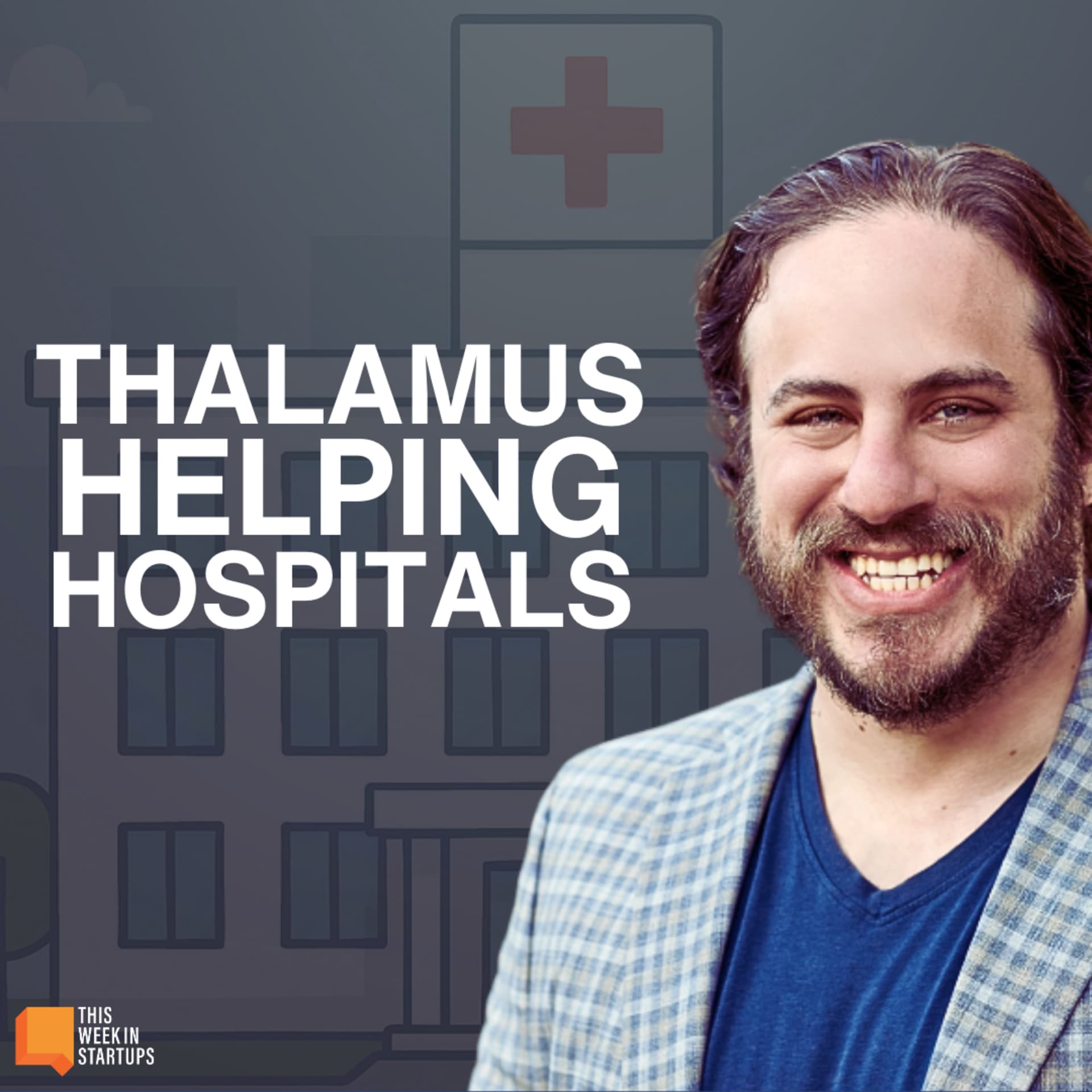
55:29One thing we don't talk about is the world of getting into a medical residency. But as it turns out, that is a very interesting place to build a company. One such company is Thalamus. They've built software tools to help schools find the right people to bring into the residency programs to make the process smoother, more intelligent and more efficient. When I first heard about this, I thought to myself, isn't that kind of a niche? Well, I wanted to learn more. So So joining me on the program now is Jason Remenick, the co-founder and CEO of Thalamus. Jason, hello. I know you're in a hotel room.
55:58Thank you for making the time. Thanks, Alex. Good to be here. So I, because my spouse is a doctor that's gone through the medical residency trek, that was a fun five years. I'm pretty aware of the space you're working in, but I feel like a lot of folks may not have had direct experience with it. Can you just break down exactly what market you're going after and then briefly how you're helping people get through that process? Where we started in kind of our niche, our beachhead, is helping medical students apply to residency programs all throughout the country and have those residency programs help them find the right residents.
56:30And so this is right after you finish medical school in your fourth year, you apply to residency, they receive your application, they interview you over a three to six month period, and then you're selected into residency through a process called the match, which is a mathematical algorithm, which takes into account your preferences and the program's preferences. and we could do a whole talk just on that. But eventually on the third Friday of March, you open an envelope or now an email, which tells you where you're going for your residency. It's a binding contract. And then you start in that residency program in that specialty on July 1st.
57:04So let's go back to the three to six months of applying to places. I think this is pretty clutch to what you guys are building. You will get offers for interviews at different schools. During COVID, I presume that went mostly remote, but candidates have often flown out to these interviews. And so it's a pretty extensive, time-consuming and costly effort, I believe. Very. So I went through the process myself, and that was kind of what was the catalyst for the creation of thalamus. Got stuck in New York City during Hurricane Sandy. Many of my interviews were canceled, and that was what started all of this.
57:33My co-founder, Susie, is a residency program director at the University of Rochester, where I went to medical school. And so, yeah, we were really trying to make this process better for everyone. And so prior to COVID, yeah, applicants were spending between$5 ,000 and$25 ,000. on travel costs and other fees, virtual interviews help with a lot of that cost, still pretty costly overall. But yeah, it's really streamlined a lot of the process. So let's talk about Thalamus, the product. Essentially, as far as I can tell, it's a series of digital tools that help medical residency programs handle applications coming in, organizing and scheduling all the important things that they need to do, because it's a lot of logistics, let's be honest.
58:13Then you have a thing called Cerebellum that lets you compare your programs. metrics, which I presume is number of applicants, quality thereof, and matriculation rates and so forth. And essentially, you just want to make sure that every process of post-medical school into residency has become digitized and smoother, is my read of things. But correct me where I'm wrong. Yeah, for sure. So, I mean, back in my day, when you had to apply to residency uphill both ways in the snow, it was lots of emails and phone calls. And so, we've built software as a service that we sell to hospitals, be they individual programs like pediatrics or internal medicine, or now more likely entire health-wide systems.
58:52It integrates with the application systems everyone's using. They import their data. They invite the applicants to interview. The applicant creates a profile on our platform. It takes about five seconds. And then they're scheduling their interview in real time, kind of like OpenTable, but instead of booking a restaurant, they're booking a residency interview. Back on the hospital side, it's a process-specific applicant tracking system that allows them to score candidates, write notes, and do everything they need to do to hire everyone through the match. With COVID, we accommodate virtual interviewing on our platform.
59:17We have our own homegrown solution, but also connect to all the major video conferencing providers, API. And then as you mentioned, yeah, we have cerebellum, which measures all of the outcomes related to geography, which is a major driver for people practice and other KPIs. And then we also have Cortex, which is an AI and machine learning tool that screens and aggregates key application data to help the hospitals identify key data that they're looking for and streamline those selection processes as well. I want to get back to the electronic residency application service in a second, but on the point of using the Cortex service to apply ANML to screening applications, I'm completely torn about this.
59:53On one hand, efficiency, good. Looking at more candidates, lovely. Being faster, huzzah. But then I worry about candidates that might not color in the lines for what that program is looking for and therefore might get overlooked. So I presume you guys have good thoughts about this, but how do you avoid the AI ML systems, perhaps cutting out certain people that may have been good candidates? Yes, that's a great question. And we talk about this a lot. And I've had entire talks on AI at various medical education conferences as well. The process today and historically has always been very, very biased.
1:00:24And so we tried to start with the most objective way possible. And so the first kind of AI feature we rolled out is using AI and LLMs to pull out grades from medical school transcripts to try and essentially level the playing field with regards to grades. This is a whole talk in itself as well. Medical schools have very different grading. They have what they call core clerkships. And core clerkships are what you do in your third year of medical school as you get out into the hospital to learn about internal medicine and surgery and pediatrics and OBGYN, etc. Every medical school defines core clerkships differently.
1:01:00They have different grading scales. Some are A, B, C, D, F. Some are pass-fail. Some are honors, high pass-pass-fail, or some combination thereof. And so, what we've done, and on top of that, the distributions of the grades that they give out very, very widely. Some medical schools give 99 % of their class honors. Others give 10 % of their class honors. And so, to understand even how someone performs in a medical school, you need a Rosetta Stone to know that this particular medical school grades in this way. So the first foray of AI that we did was taking the grades out of these transcripts. We did that for what's called US MD or allopathic schools, as well as US DO or osteopathic schools, and then IMGs, which are international medical graduates who go to schools outside the US.
1:01:44For the DOs and IMGs, they're, sorry, for the DOs and MDs, they're similar curricula, although DOs have internal medicine one and internal medicine two and surgery one and surgery two. So, there are all these different nuances. And then IMGs in international schools have medical school that's seven years and have five different internal medicine clerkships and have transcripts and other languages that are translated. it. But you guys took all that and you, I presume, harmonized and standardized it so that way schools looking at internal medicine five high honors versus a C from this school and a similar thing can say, okay, well, they give out 90%, they give out 10%.
1:02:21So, like, you got to level it out. So, essentially, instead of AI and ML possibly bringing bias into the system, in fact, you're using it to rip bias out of the system. We're trying. And so, this was a very objective way to do it. There are ethical AI principles that were put out by the Association of American medical colleges. We abide by those. We also think about this an awful lot. Yeah, we have questions like, can you use AI to screen letters of recommendation and personal statements to pull out key themes? And that's something we're looking into also. But then we get the question, well, can you use AI to determine if someone wrote their personal statement using AI, which is a more common practice as it is in most industries now?
1:03:02And the short answer is yes, you can use AI to check for AI. But the much more complicated answer is individuals, as an example, who can be considered neurodivergent, have a much higher likelihood of having their writing picked up as being written by AI when it's actually written by a human. So these false positives. And so we think about this an awful lot. We're trying to move through this in a very calculated way to bring more objectivity and objective data to the process without increasing, and in many ways, trying to reduce bias as well. Okay. No, I really appreciate that. Now, getting back to the state of the market, you mentioned that you guys work with the Electronic Residency Application Service or the E-R-A-S, as I read from my notes.
1:03:41Sorry. Not my usual set of acronyms. I'm not going to lie, Jason. Absolutely. Yeah. Yeah. But you also have a collaboration with the Association of American Medical Colleges. And you guys say that you have 8 ,000 residency and fellowship programs that currently use your software. I pulled some data from the NRMP. Sorry, everybody. That's the National Residency Matching Program. And they had roughly, I think it was like 6 ,000 or so fellowship residencies that were part of that. All this is to say, have you cornered the American market for your software niche? Because it feels to me like you've done it.
1:04:16Congratulations. Well, thank you. Is there that much more for you guys to eat in this first niche that you're going after? uh yeah so i'm right now we have about 80 85 market share depending on how you measure and that includes about 90 of residency programs thank you it's pretty surreal that's nuts and and yeah there are very small fellowships that we don't have using the platform in very sub-specialized fields so there's there's a bit more ways to grow there we've been focusing kind of on enterprise-wide institutional growth land and expand overall uh but yeah with this this collaboration with the double amc who runs eras um and and the alphabet soup in in academic medicine that's how you pronounce those acronyms okay so it's double amc not aamc and that's how you catch noobs it's like that movie yeah yeah you can do you can do both there's there's no standardized way but we have a we have a lot of acronyms but it's it's really helped us grow and allowed the company to accelerate to the growth we have to so okay so the obvious question then becomes what are you going to do next because 85 market share is at once an absolute triumph and also doesn't leave a lot more of the world to conquer.
1:05:20So just thinking out loud, when I was prepping for our chat today, I was thinking going international. There's a lot of doctors around the world. Other similar programs, I was thinking like maybe law and B-school internships have some overlap to kind of what you're doing with placements and complicated applying processes. Yeah, no, I mean, they're both great thoughts and we have dabbled in kind of both of those. We've worked with some of the largest law firms recruiting law students out of law school for their first associates positions. We've worked with pharmacy programs, dental programs, physical therapy programs, kind of the medicine-adjacent programs within hospitals and health systems.
1:05:55There's definitely challenges, especially post-COVID with regards to just doctors in all countries. The thing we're focused on right now and where we see the most opportunity is as challenging as it was to recruit a resident or a fellow to a hospital, recruiting doctors post-training is even more challenging. The average hospital spending a quarter of a million dollars to recruit a doctor, it takes them six months to find that doctor. In those six months, they lose$2 million in clinical revenue. And they're doing about 130 physician searches a year on average, which is a quarter of a billion dollars per hospital.
1:06:28And the best math I can do, it's about a$300 billion problem accounting for 7.5 % of the$4 trillion healthcare costs annually in the u.s other than that though what's the big deal you know exactly the big deal is not many people are talking about it but we're many people are feeling it right now and trying to find a doctor it's kind of a hidden friction a hidden loss inside the system today well i think just very few people understand how doctors train and then get jobs um they know how to go to the doctor but but you really need a passion and expertise to get into this oh my lord yes it is complicated it is complicated it's hard to get through it's expensive and so forth but one problem that we have at a national level as far as i can tell is that there's not quite enough doctors and i know that uh the people behind the match and residency have been trying to increase the number of slots recently in the last couple years and so that's good but i i wonder if part of the problem you just described about how hard it is to find a doctor to hire into your hospital is strictly a supply issue and i know that thalamus is working through your foundation i think thalamus.org to help people finance their relatively expensive residency application process.
1:07:36But is there more work that you might be able to help with in terms of expanding the total supply of residency spots or slots so that way we can get more butts in seats and therefore more doctors on the wards? Yeah, no, it's a great question. Essentially, the constraint is the number of residency positions, which is actually funded by the federal government through Medicare. Oh no, we're doomed! Yeah, it's about$16 billion a year through Medicare to incentivize hospitals to train residents. And the number of spots that are funded has not increased significantly since the 1980s. The largest increase recently coming out of COVID was through the Consolidated Appropriations Act of 2021, where they added 1 ,000 positions.
1:08:18I wouldn't say we're doomed. We're having discussions at the national level as well. I think this is a very challenging thing. To your point, it's not just a supply issue. It's a supply and demand issue. It's a very interesting kind of economics markets issue. And so we're trying to work with legislators, and this is a very bipartisan issue on both sides of the aisle, to help provide more real-time data to measure these markets overall to assign these positions. because you can put a dermatology spot on the moon and it will fill. If you wanted to put a family medicine spot in, let's say, rural Arkansas, you have to be a lot more strategic as to where you put that and when and kind of measure these markets as you would measure the stock market and understand whose stock is high and whose stock is low and such as well.
1:08:59And so, Thalamus.org came about because, well, many reasons, but essentially, if someone looks like their doctor, speaks the same language, reminds them of a close friend or family member, people get better healthcare outcomes that's been proven in the medical literature time and time again. Also, individuals who are from rural and underserved communities are the most likely to practice there. But you really need resources to become a doctor. The average medical school debt is about a quarter of a million dollars and increasing. And even applying to residency prior to COVID was between $10 ,000 and$25 ,000 on top of that debt.
1:09:32And just that process itself accounted for 3 % of all medical education debt in the US. Now, post-COVID, it's still several thousand dollars. And if you need to do an away rotation for competitive specialties. You have to pay double rent and all these other hidden costs that are there as well. And so we really saw a need and so created a foundation on top of for Thalamus as well. I mean, just to be clear, when I said we're doomed, I wasn't trying to say that we're doomed, doomed. I'm just right now, not to get political, but I don't think there's an enormous appetite amongst the leading political parties to expand government healthcare outlays.
1:10:06So that was my oh crap moment. And we saw HHS is going to have some cuts, cutting about a third of its budget. And so that's going to touch these rural hospitals as well. So yeah, we may be doomed in some ways, but I do think we have opportunities in that to create hope and optimism and actually work to solve the problem as well. All right. Now going back to the thing you want to solve of actually getting doctors into hospitals post-residency, that to me sounds like a place that is ripe for something in addition to SaaS revenues, perhaps like success fees or something along those lines. How are you thinking about that expansion in terms of kind of business model fundamentals?
1:10:45Yeah, so it's a major challenge for hospitals and it's existential in many ways. And where the hospitals struggle is with sourcing and retention, sourcing in terms of who has the geographic connection and whether that's the Bay Area, inner city, Boston, rural Tennessee, everyone's having challenges identifying those doctors that may want to work there. Most recruitment is done through Excel spreadsheets, whole text messages, back of the operating room, one-off conversations, just personal networks, et cetera. Whereas most of the other positions in the health system are recruited using some form of technology.
1:11:19The question always is why? And a lot of it has to do with recruiting a doctor is a very, very specialized. And it's different than recruiting nurses and physical therapists or even support staff at the hospital, et cetera. And so it's lagged behind in terms of technology. A lot is done through online job fairs, job boards. There are some more now technology moving companies, but the real competitive advantage that we see is we're working with essentially the entire upstream market now to become a doctor in the United States. It's very surreal. You essentially have to use thalamus now. And we're having early intros to doctors in a spot where they're not the high performing, high earning individuals yet.
1:12:03They're very much at the beginning of their career and there are only so many companies serving this space. And so, we've really tried to be there for the physician or the new physicians trying to navigate this process with the hopes that we can then also help them find their jobs in the future. If you're curious why it's so hard to do this, well, people out there who are listening, and you want to just get a taste of the difficulty that, just to pick one example, residency programs deal with, try to figure out what to do with a married couple graduating from the same medical school with two different specialties and try to find them one hospital chain or group that will take them both at the same time.
1:12:37And you'll see part of the myriad issues that come up here. So Jason, I'm really glad you're working on this, but it would be remiss if I didn't bring up something very interesting. So last year, early, I think it was the first couple months of the year. You guys swapped over to a public benefit corporation. And, you know, I've been talking to founders for a long time. I've talked to a very few who have that tag. I know you are a venture-backed company. So I'm just curious how you balance having a public interest as part of your overall remit and also, you know, having standard kind of ventureonomics, breathing down your neck to ensure that growth and gross margins stay high.
1:13:12Yeah, no, it's a great question. And we had a lot of discussion with our board and our team and our customers. And so I learned about this as a structure because Kapor Capital was one of our early investors as well. And several of their portfolio companies, public benefit corporations. For us, it was kind of always within our core DNA, but this provided us a more intentional way of talking about it. And so we say we're very mission driven because we are. Our mission is to ensure the right doctor ends up at the right hospital to treat the right patients. what that means to me is it's three o 'clock in the morning someone's rolling up to an emergency room having the worst health care event of their life what is thalamus doing upstream to ensure that that right doctor is there for them right could mean so many things yeah but what we saw was that mission and our ability and our profitability our revenue etc are very uh aligned and so as the mission is more successful the company continues to grow the revenue grows the profitability grows as well.
1:14:11And so, we had a long talk about this amongst our board. And we really wanted to look at and did a lot of research, like, would this impact our exit? And would this impact our ability to raise in the future? And all the research that we found, well, not so much. Additionally, as this collaboration formed with the AAMC, like, that mission alignment actually was one of the main things that pushed us to really getting this partnership in place, which has in many ways been a company-changing relationship in many ways. And so, it's also made it easier for us to talk about our talent and what we do with our team and our workforce.
1:14:52And so, we talk about this with candidates and engineers who are looking to provide impact. Like, impact is very much a currency at Thalamus. And it also just drives that continued growth of the company. And so, it's kind of funny, like, people ask me, like, well, what did your customers think about it? I got more positive emails from customers once we did that than any feature we've ever released, any product. This is a message that very much resonates within healthcare, within the healthcare space, and with physicians. And it's been kind of a very, very interesting journey. If you're a doctor working at a hospital group, you're more at the behest of the bean counters than leading them, if that makes sense.
1:15:35So that all tracks very well with me. Jason, just before I let you go, you mentioned the kind of second act of the company helping doctors get placed into hospitals. To me, that seems like an even bigger market than the one you're attacking today. So I'm presuming that there's still lots of growth to come. Lots of growth. The best estimate we can make is it's a total addressable market of about$30 billion and the fastest growing recruitment industry in the country. So we're really excited about the position that we're in. We're very fortunate in many ways. And sometimes some days it still feels quite surreal.
1:16:05But yeah, really building to that next step and that next phase and solving a very acute problem that we're all feeling and needing to go to the doctor. And it's thalamusgme.com. And what is a role that you are having a hard time hiring for? Just so we can throw that out into the air for you. We're hiring, I don't know if it's a hard time, but we're hiring a lot into product and engineering. So software engineers, front-end, back-end, data. We're really looking to bring in some really great data scientists as well as those folks helping us to build this next product. We have some ideas of where we want to go.
1:16:38We're looking to work with really smart folks to help us get there. So, yeah. All right. Well, Jason, thank you so much. When you launch that next product, come back on the show. I want to hear about how it goes. And if you get an even bigger reaction to that than you did with going to be a public benefit corporation, we shall see. Jason, thank you very much. Thanks, Alex. Thanks so much. Great to be here.
From the publisher
Today’s show: Jason and Lon break down the biggest stories in tech and startups this week: OpenAI’s new models are powerful but glitchy, Meta’s internal docs hint that Zuck knows the Facebook friends graph is toast, and fintech startup TapCheck might actually be doing some good. Plus, robot lifeguards and humanoid races — the wildest videos of the week and what they mean. Then, Alex sits down with Jason Reminick, founder of Thalamus, the platform that helps match medical residents to hospitals (with 85% market share!). They talk about becoming a Public Benefit Corp and how Thalamus is tackling the doctor shortage in the U.S.
*
Timestamps:
(0:00) Jason kicks off the show(1:43) OpenAI's new models and issues with Wikipedia as AI knowledge bases
(8:27) FTC antitrust case around Meta; breaking up big tech
(11:13) Squarespace - Use offer code TWIST to save 10% off your first purchase of a website or domain at https://www.Squarespace.com/TWIST
(13:04) Tapcheck's impact on employee retention and minimum wage variations
(19:56) Northwest Registered Agent. Form your entire business identity in just 10 clicks and 10 minutes. Get more privacy, more options, and more done—visit https://www.northwestregisteredagent.com/twist today!(24:31) New company Revel's safety software
(27:14) Humanoid robot marathon in Beijing
(30:15) Brex. Get the business account trusted by 1 in 3 US startups at https://brex.com/banking-solutions
(35:46) New color discovery “Olo”
(40:30) Blue Sky is Falling: Robots, delivery, surveillance, and privacy concerns(55:20) Alex sits down with Jason Reminick of Thalamus
(56:01) Thalamus and the medical residency application process
(59:42) AI in residency applications and standardizing medical school grades
(1:03:30) Thalamus' market share and collaboration with medical associations
(1:10:08) Impact of budget cuts on rural hospitals and business model expansion
*
Subscribe to the TWiST500 newsletter: https://ticker.thisweekinstartups.com
Check out the TWIST500: https://www.twist500.com
Subscribe to This Week in Startups on Apple: https://rb.gy/v19fcp
*
Links from episode:
Check out Thalamus: https://www.thalamusgme.com/
Check out the Robot Lifeguard: https://oceanalpha.com/product-item/dolphin1/
Check out TapCheck: https://www.tapcheck.com/
*
Follow: Jason Reminick
LinkedIn: https://www.linkedin.com/in/jason-reminick-md-mba-ms-bb251645/
Thalamus on X: https://x.com/ThalamusGME/status/1757812695787581485*
Follow Lon:
*
Follow Alex:
LinkedIn: https://www.linkedin.com/in/alexwilhelm
*
Follow Jason:
LinkedIn: https://www.linkedin.com/in/jasoncalacanis
*
Thank you to our partners:
(11:13) Squarespace - Use offer code TWIST to save 10% off your first purchase of a website or domain at https://www.Squarespace.com/TWIST
(19:56) Northwest Registered Agent. Form your entire business identity in just 10 clicks and 10 minutes. Get more privacy, more options, and more done—visit https://www.northwestregisteredagent.com/twist today!
(30:15) Brex. Get the business account trusted by 1 in 3 US startups at https://brex.com/banking-solutions
*
Great TWIST interviews: Will Guidara, Eoghan McCabe, Steve Huffman, Brian Chesky, Bob Moesta, Aaron Levie, Sophia Amoruso, Reid Hoffman, Frank Slootman, Billy McFarland
*
Check out Jason’s suite of newsletters: https://substack.com/@calacanis
*
Follow TWiST:
Twitter: https://twitter.com/TWiStartups
YouTube: https://www.youtube.com/thisweekin
Instagram: https://www.instagram.com/thisweekinstartups
TikTok: https://www.tiktok.com/@thisweekinstartups
Substack: https://twistartups.substack.com
*
Subscribe to the Founder University Podcast: https://www.youtube.com/@founderuniversity1916


