
In short
Episode Notes: Savvy is HQ Trivia + Wordle (feat. Scott Rogowsky) | E2245
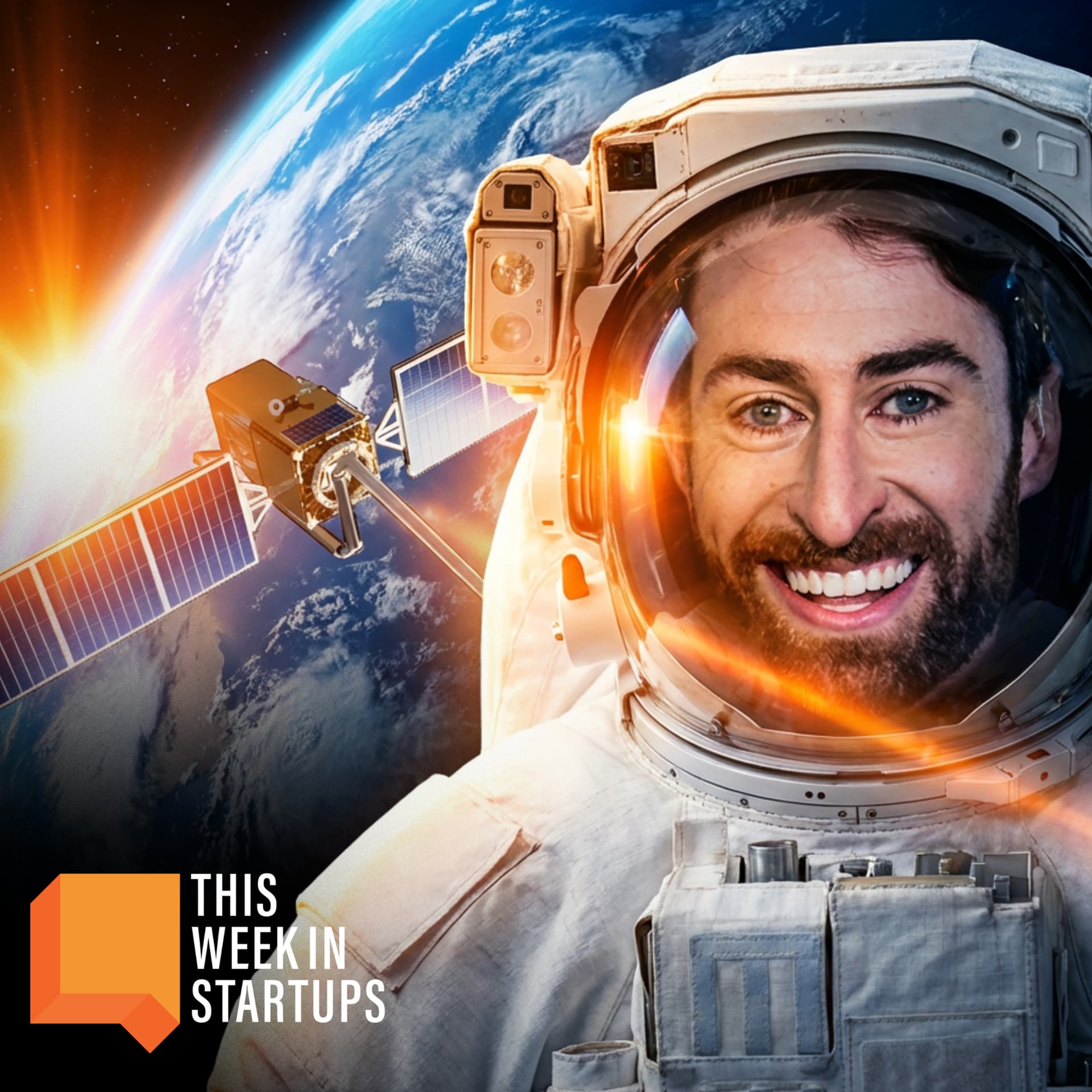
Podcast Overview Title: This Week in Startups Host: Jason Calacanis Guest: Scott Rogowsky Episode Summary: Scott Rogowsky, known for hosting HQ Trivia, discusses his new venture, Savvy, a mobile game show inspired by Wordle. Also featured is a conversation with Trevor Bennett from Starfish Space, discussing advancements in space technology and their recent successes.
Key Themes and Discussions
Scott Rogowsky's Background
- HQ Trivia Success
- Initially became famous as the host of HQ Trivia, which gained substantial popularity in 2017.
- Describes the excitement and engagement it created among users, making it a viral hit.
- Noted for its unique format of live trivia where players could win money.
- Transition to Savvy
- Rogowsky is now the co-founder and CMO of Savvy, an interactive game show combining trivia with elements of Wordle.
- Savvy allows players to compete against Rogowsky directly, with cash prizes for winners.
- The concept aims to retain the engaging nature of HQ Trivia while introducing fresh mechanics.
The Downfall of HQ Trivia
- Reasons for Decline
- Despite initial success, HQ Trivia's user base plummeted due to lack of content updates and failure to adapt to audience expectations.
- Rogowsky cites mismanagement and indecision among leadership as significant factors in the app's decline.
- Highlights the importance of continuous innovation and engagement in maintaining user interest.
- Business Structure and Challenges
- Discusses personal experiences with compensation and equity at HQ Trivia, illustrating challenges faced by talent in startups.
- Emphasizes the need for experienced leadership in rapidly growing startups.
Savvy
A New Beginning
- Game Mechanics
- Savvy combines trivia gameplay with a competitive twist, allowing players to outscore the host.
- The game is designed to be engaging and entertaining, aiming to build a community around gameplay.
- Future Plans
- Plans to implement a subscription model for Savvy to ensure sustainability and continued engagement from users.
- Acknowledges the need for monetization strategies that provide value to players while ensuring the company's growth.
Guest Interview
Trevor Bennett of Starfish Space
- Starfish Space Overview
- Introduced as a company focused on providing space transportation solutions, including the removal of defunct satellites from orbit.
- Highlighted the successful Remora mission that demonstrated autonomous rendezvous capabilities.
- Otter Spacecraft
- Described Otter as a small spacecraft capable of docking with satellites for the purpose of servicing and de-orbiting.
- Bennett shares insights on the operational capabilities of Otter and its significance in the broader context of space economy.
Space Economy Insights
- Emerging Trends
- Discussed the evolution of the space industry and the increasing commercial interest in space-based services.
- Emphasized the shift from government-led missions to commercial endeavors in maintaining and servicing space assets.
- Contracts and Funding
- Mentioned the recent $52.5 million contract with the Space Development Agency, which signals a growing recognition of the need for sustainable space operations.
- Discussed the importance of solidifying contracts as proof of a viable business model in the competitive landscape of space technology.
Key Takeaways
- Resilience in Entrepreneurship
- Both Rogowsky and Bennett emphasize the importance of resilience and adaptability in the face of challenges in their respective fields.
- Innovation is Key
- Continuous innovation and understanding user needs are crucial for the long-term success of tech startups.
- Space as an Expanding Market
- The emerging space economy presents numerous opportunities for innovative companies that can offer services and solutions to existing challenges in orbit.
Additional Information
- Subscribe to the Podcast: For more insights and discussions on startups and technology, listen to "This Week in Startups" available on various platforms.
- Support the Show: This episode is sponsored by Circle, Caldera Lab, and LinkedIn Jobs. Check out their offers for listeners.
Links
- [Savvy App](https://playsavvy.live)
- [Circle](http://Circle.so/twist)
- [Caldera Lab](http://calderalab.com/TWIST)
- [LinkedIn Jobs](http://linkedin.com/twist)
Written by AI. May contain mistakes. Listen to the episode to check what was said.
Chapters
Tap a time to open that second in VOBuilding Resilience in Startups
0:45 to 1:17
Discussion on the challenges of building an audience and maintaining positivity in startups.
“I was speaking at Stanford this morning.”
Scott Rogowsky's Journey with HQ Trivia
2:06 to 2:41
Exploring Scott's background and the success of HQ Trivia.
“We are talking to Scott Rogowski of HQ Trivia fame.”
The Rise and Fall of HQ Trivia
2:41 to 4:50
Scott discusses the rapid success and subsequent decline of HQ Trivia.
“Savvirgin, if you're a first-time player.”
The Audition Experience for HQ Trivia
4:50 to 8:02
Scott recounts his audition experience and the rise of HQ Trivia.
“I mean, look, trivia is one of the oldest entertainment formats out there, right?”
The Structure and Challenges at HQ Trivia
8:02 to 10:50
Scott details the internal challenges and structure at HQ Trivia.
“But lo and behold, you know, our CEO, our founder, the guys running the company, they didn't have any experience in the media landscape and entertainment.”
Understanding Audience Retention
10:50 to 12:20
Discussion on the importance of evolving content to retain viewers.
“I'm going to guess they offered you a point because yeah, it was 0.25.”
The Evolution of Game Shows: Jeopardy vs HQ Trivia
14:23 to 15:10
Discover how HQ Trivia attracted a younger audience compared to Jeopardy.
“Scott, people love Jeopardy and that show has not changed much over the years.”
Reflections on the HQ Trivia Experience
15:10 to 16:34
Scott shares insights on HQ Trivia’s challenges and his departure.
“If you're a smart guy like Stephen Colbert, very smart guy, who wants to feel stupid playing a game like that?”
Introducing Savvy: A New Interactive Game
16:34 to 19:16
Scott discusses the innovative live interactive game he is launching called Savvy.
“I got an offer I couldn't refuse from a baseball, a live MLB network show with DAZN.”
Game Mechanics and Prize Structure of Savvy
19:16 to 21:02
Learn about the game mechanics and prizes offered in Savvy.
“It's a live, interactive version of Wordle.”
Show all 20 chapters
Monetization Strategies for Savvy
21:02 to 24:26
Scott discusses the monetization strategies and subscription model for Savvy.
“Well, we're now available for Apple and Android.”
Starfish Space: Innovations in Satellite Management
25:40 to 28:03
Trevor Bennett discusses Starfish Space's mission and technology for satellites.
“And if you are a regular TWIST listener, you may recall we had them on in early 2025.”
Understanding Satellite Disposal and Servicing
28:03 to 31:32
Learn about the importance and process of disposing of satellites and the role of Starfish in maintaining orbital cleanliness.
“Historically, this has been where we just leave satellites in orbit or individual operators can go and deorbit it.”
Starfish's Business Model and Fleet Strategy
32:31 to 34:22
Explore Starfish's approach to servicing satellite constellations and the benefits of a service-based model.
“Everyone wants to have their own constellation.”
The Remora Mission: Achievements and Technology
34:23 to 35:35
Learn about the successful Remora mission and its innovative use of technology for satellite rendezvous.
“And so there's, there's really kind of two full models here.”
Innovative Rendezvous Techniques in Space
35:36 to 40:10
Understand how Starfish achieves rendezvous with minimal hardware through clever software solutions.
“and then we're going to let the guy actually explain it.”
Future Prospects and Learnings from Missions
40:11 to 42:02
Discuss the outcomes and learnings from the Otter Prop 1 and 2 missions, and how they impact future launches.
“And so maybe again, like try to anchor that in some touch points here to do what the space shuttle did to go dock with another spacecraft.”
Navigating Challenges in Space Missions
42:02 to 45:56
Learn how unpredictable factors impact space mission timelines and developments.
“but also manage expectations there and be clear that space is hard, right?”
Emerging Trends in the Space Economy
45:56 to 48:38
Discover emerging trends and the evolving landscape of the space industry.
“Like things happening inside of orbit, your Vardas, your companies that are trying to do work in space, which I presume is going to be an important customer base for Starfish in time.”
The Future of Space Contracts and Services
48:38 to 53:18
Understand the significance of commercial contracts in the space sector.
“Or are we still waiting and expecting that to happen to make all the magic we're seeing sustainable up there in Leo or Geo?”
Transcript
Automatic transcript. May contain errors.0:00We're doing it now every school night, Sunday to Thursday, 9pm Eastern, 6 Pacific, live on the Savvy app. And it's called Savvy. Words, Puzzles, Live. Jason, you mentioned Wordle. Guess what the show is? We're doing our version of Wordle. It's a live, interactive version of Wordle. Timed rounds. Me versus you. If you score more points than me, if you get the word before I do, you win. So they fixed this. Yeah, because it was win Ben Stein's money was the other one where it had a little bit of that device. So what a great idea. It's win Scott Rogowski's money now because, you know, it's coming out of my pocket.
0:32You just told us you're broke. So what are they winning? Some lint or? I'm putting it all into Savvy now. I love it. I love it. You know what I love about you is, you know, you've remained relentlessly positive and you've grinded. And this is what it's about. I was speaking at Stanford this morning. I speak to the GSB about like resiliency and building companies and accumulating an audience. And you're like the perfect personification of this, which is it's really hard when you hit lightning in a bottle early in your career. but you take all those lessons and you keep going at it, you will figure it out.
1:07And you take all those lessons forward with you. And the lesson I think you've learned is slow and steady wins the race.
1:17This Week in Startups is brought to you by LinkedIn Jobs. Hire right the first time. Post your job and get$100 off towards your job post at linkedin.com slash twist. That's linkedin.com slash twist. Terms and conditions apply. Caldera Lab. Whether you're starting fresh or upgrading your routine, Caldera Lab makes skincare simple and effective. Head to calderalab.com slash twist and use twist at checkout for 20 % off your first order. And Circle. The easiest way to build a home for your community, events, and courses. All under your own brand. Twist listeners get$1 ,000 off the Circle Plus plan by going to circle.so slash twist.
2:06We are talking to Scott Rogowski of HQ Trivia fame. Jason, I don't know if you were an HQ Trivia player, but amongst my friends back in 2017, 2018, we were obsessed. It was a live trivia game where you could sit there with your phone and see this very handsome man ask you questions and you try to win and beat your friends and maybe even make some money. Then it kind of unraveled. Scott left in 2019. The app died in 2020. But now he's back as the co-founder and CMO of a game called Savvy. And apparently, Scott, I'm no longer going to be an HQT. I'm going to be a savant. Welcome to the show. A savant.
2:42Yes, that's what we're going with now. Savvant. Savvirgin, if you're a first-time player. Savveteran for those who've played before, but we're coming up with names. So I think it's a little trip down memory lane because lightning in a bottle is so rare. You were the host, but were you also the founder or you were a hired gun? I was a hired gun, Jason. Okay. So you're a hired gun, but you're the face of it. It becomes a huge hit. That becomes a little tension in some tension in running a startup. You had a contract and what was it like on the way up and just how big did it get? It was wild. It was a wild journey for me.
3:20I mean, just even getting the audition, I can back you up to that point. Yeah. Tell us, How did the audition go? So the whole quick backstory to me is I've been doing comedy since 2005, doing stand-up, hosting my own talk shows in New York City. I was doing this show called Running Late with Scott Rogowski, this kind of live talk show I'd started. And I was pretty much hitting the ceiling in New York around in 2017. I decided that summer I'm moving out of New York. I'm from New York. I said, I'm moving to LA to do this in LA. Hollywood, baby. Let's go. As I was, you know, closing up my apartment and packing out, I get a call from my friend who goes, hey, do you want to audition for this game show on the phone thing I'm doing with the guys who started Vine?
3:59And I was like, what the hell is this? I mean, game shows on your phone. I had such a low opinion of social media at that point. I didn't even have an Instagram at that point. I didn't have Snapchat. And I thought, great, I'll get a game show on the phone and then I'll be doing a gas station TV after this. That's really where my mind was. But I went in for the audition. I always take the meeting, always take the audition. And I got this gig and I stayed in New York and it went from, I mean, from nothing, from 50 people in that first show to a million people in a matter of months on New Year's Eve.
4:30Why did it catch fire in your opinion? When you look back on it, what was the magic? Well, I mean, it was definitely a first mover advantage, right? Because it was like the first live stream produced show, I think really interactive game show of its time where you can tune in, appointment viewing, play this game for free and win money for free and have a good time doing it. You have an entertaining host. It was entertaining game. I mean, look, trivia is one of the oldest entertainment formats out there, right? Going back to just radio trivia shows, quiz shows. So you have an old tried and true format that works and was updated to the phone, to the mobile generation.
5:10And that ability to be anywhere in the world, anywhere you want to be, you don't have to be, you know, sitting on your couch anymore. You can be, people are playing from basketball games, from weddings, all over the place. They're playing this game when it goes live and you have this, this funny guy giving out money. I mean, it, it, it, it worked because all those things were happening together. It was like a perfect recipe, I think for success. And you were doing this running late live talk show. This was a send up to Carson, to Letterman. What were your inspirations for that? Because I'm kind of in the same milieu and I am obsessed with it as well.
5:46In fact, I'm reading two biographies right now. Craig Kilbourn's and Riding the Elephant and then that magnificent Carson. So I, too, am obsessed with this. As many comedians are. I'm not a comedian. You are. But tell me about that late show. How did that running late show work? I'm curious. As I was flying out to L.A., which I just moved from New York back to L.A. last week to do Savvy Here, I was watching a movie on the plane. In the movie, there were three guests from Running Late. I had hundreds of celebrity guests over the years. And I'm watching this movie. Oh my gosh, I'm recognizing these people.
6:17And I was thinking about Running Late. Like, why did I start that? Well, the truth is, I've always wanted to host a talk show. But back in 2011, when I was a 26-year-old, sort of struggling, underemployed comedian, I was applying to be a writer on talk shows, applying to be a producer, a segment producer, audience coordinator. I would do anything. Writer's assistant. I wanted just to be in that ecosystem. And I was getting rejected left and right. And I said, you know what? Screw it. If no one's going to give me the job, I'm going to make it myself. And I started running late. I started my own talk show.
6:47I found some great producers. My dad was my sidekick. I asked a couple other comedians, do you want to be a sidekick for my talk show? Nobody was interested. But my dad, God bless him, he felt obligated to do it. And he was the best sidekick I could ask for. And you did hundreds of episodes of this? About 100 episodes. had about 400 guests over the years from 2011 to 2019. I mean, Paul Rudd, John Oliver, Regis Philbin, Jerry Springer. I've had some pretty major guests and John Hamm, all sorts of people. Amazing. Yeah. And it was really just one of the thrills of my life to do the show. Yeah, there's the old website that hasn't been updated in many years.
7:25Yeah, I was going to say, I really don't think web design is your next career path. No, no, no. That was cutting edge web design in 2011, 2012. Cutting edge WordPress. Yeah, but now I should probably vibe code a new site and re-art it. Am I remembering correctly that there was some talent dispute with Trivia ASQ? And how much were they paying you? Were they paying you like a hundred bucks a show? What was the whole thing? So to catch you up to the original question, there was definitely some tension that started to occur pretty early on, if I'm being honest. You know, look, they hired me because I assume they liked what I did in the audition.
8:00They thought I could handle a live show, you know, being extemporaneous and all those years of hosting running late directly prepared me for hosting HQ. But lo and behold, you know, our CEO, our founder, the guys running the company, they didn't have any experience in the media landscape and entertainment. They built fine, but not the they didn't know how to manage talent, maybe. Jason, I mean, I know that you're deep into this world and I respect the startup world and the whole thing, but I do have a pretty cynical or had a cynical view after my experience with HQ because I really couldn't for the life of me understand the rationale, just the logical sense of these VCs and investors just dumping piles of cash at the feet of people who are frankly totally unqualified to run businesses, to manage teams, to scale businesses.
8:52I mean, our CEO, you know, he was a designer. He designed the logo. And okay, great. He's a great designer. It's a great logo. There it is. This is from the HQ documentary, a prop that I was given. But you design a logo. It does not make a CEO a logo designer, right? So what was your initial deal? What did they offer you? The initial deal, it was something like, I mean, it was like six-week contracts, and they kept getting re-upped. And yeah, I think it broke down about$100 a show if you broke it down. Wow. They never offered you to be a co-founder? No, no, no. This is so dumb. You were the face of the brand and you, people loved you.
9:30Well, to be fair, I want to kind of pull back the curtain on like the structure itself. So the company was called Intermedia Labs that was originally funded. It was two guys who came from Vine, Colin and Russ. And I think Lightspeed was their big investor at the time. So, you know, before I was ever in the picture, before HQ was even in the picture, they had gotten Intermedia Labs funded and started. and they were just trying different things. They were trying different apps. One of the apps they started was called Hype and Hype basically allowed people to go live and host their own shows. One of those shows was a trivia show some woman was doing in her bedroom.
10:04They saw that and went, maybe we'll just produce our own version of this trivia show. And that's when they got the auditions and that's when they called me in. So the company had been around for probably about a year before I even joined. So, you know, making me a co-founder didn't make sense, but they eventually did want to sign me to a long-term, a two-year deal. they offer me some equity as part of that deal. 10 %? What percentage do you want to guess? Let's play this game. I'm going to guess, if it was me, I would have done 10 % over 10 years. Okay. Or maybe 10%, I would do 10%, I would do like 10 % over seven years and I would backload the last couple to keep you in.
10:40But then of course I have the ability to fire you. So there's a balance there, right? Like you could earn the 10, but you got to show up for work and you can't be a fuck up, right? So that's the nature of it. I'm going to guess they offered you a point because yeah, it was 0.25. A quarter point, 1 400th of the company. So dumb. You were the show. We tuned in because we liked you, Scott. Like, I mean, not to fanboy about it when you're on the show, but like, I mean, really, we looked forward to seeing you and your silly suits doing your thing. So why did it crash and burn in your opinion? Did they replaced you with somebody and they weren't as good?
11:15Is that what happened? Honestly, the crash and burn thing, I have many theories on it. But one of the biggest ones is that just they had this show and they were not quite prepared for the instant success of it to the point where it was a very small team still. And they kind of threw this thing against the wall and it happened to stick. And the people just went so viral so fast. I mean, every day we had more people playing than the day before and the app was breaking. It couldn't handle it. So, so much of those early days, I mean, our CTO, God bless him, Colin, was working like around the clock, all the engineers working so hard just to keep the thing alive and keep it from breaking.
11:51And they couldn't focus on building new games, making new features, adding engagement in mechanics, you know, treating like a mobile game. They didn't quite have any mobile gaming experience either, frankly. So they had no entertainment, media experience, no mobile gaming experience. And they're trying to build a mobile game. That's also a game show. That's also, you know, Hollywood. They just didn't have the right pieces, I think, to build a sticky, engaging product to the point where, you know, we actually peaked with our downloads in January 2018. Our daily download peak was January 2018. And we, you know, by January 2019, we had gone from like two and a half million concurrent users in April of 2018, our peak with The Rock hosting with me, two and a half million concurrent devices.
12:37Nielsen did a rating study. It was a multiple on that. So really it's about 5 million viewers. If you were to compare it to television viewers, Nielsen ratings, about 5 million tuning in in April. January 2019, we're down to 350 ,000. We just churned so many people, Jason, because the product wasn't iterating. It wasn't changing. It was the same meal. The way I equate it is, I say, if you go to a Michelin star, five Michelin star restaurant, 12 course meal, You go there once, you go, holy crap, this is the best meal of my life. This is amazing. Would you go there every day for a year? No, you get sick of it.
13:14Building a community business is really hard. And if you're a first-time founder or independent creator, you may not be prepared for everything you need to accomplish. But now there's Circle, the complete community platform for creators and brands who are building new customer groups. Maybe you're teaching a course or you're starting a membership program. Circle is going to help you with every single aspect of forming and maintaining your new community from creating a branded website to tracking and monitoring all discussions, announcing and planning events, email marketing, and everything else.
13:44It's extremely fast to get started and you maintain total control over your new community's design. The branding is yours and your data is your data. It's not shared with anybody else. Circle is by far the cleanest and fastest way to set up a home for your new community. Maybe you've got a book club, maybe you're teaching a course, or like me, you have an Accelerator and a pre-Accelerator, Founder University. We've been using this product for five years at Founder University, well over five years now. It is the easiest to use all-in-one platform and so powerful. So try out Circle today and get$1 ,000 off the Circle Plus plan by visiting circle.so slash twist.
14:19That's circle.so slash twist. Scott, people love Jeopardy and that show has not changed much over the years. It's a grid, It's the same setup. And that Michelin star dish has been eaten every day for what seems like 10 ,000 years. That's a good point. I mean, it's, you know, with Jeopardy, I don't, you know, there was definitely overlap with the audiences for sure, but we had a much younger audience, I would argue, than people watching Jeopardy on television. And this is a fickle audience to a degree. You know, they're on their phones. Attention spans are short. And I think a lot of people, by the way, interestingly, when you watch Jeopardy, you're watching, you're not playing.
14:55So you can shout out answers, but no one, you're not being judged really. with HQ. Here's a great little story. I did Colbert. I was a guest on Stephen Colbert's show. He told me before we went air, so he never said this on the air, but he told me backstage, he goes, I played your game twice. I didn't win. And that was it. Because think about it. If you're a smart guy like Stephen Colbert, very smart guy, who wants to feel stupid playing a game like that? See, they should have done it like Wordle. Wordle, I think, which is the most successful subscription game probably of all time online by this point i'm wondering oh if we if we don't count if you if you count game shows not like candy crush and those kind of things wordle and wordle lets everybody feel smart right like because winning is getting i don't know what they call getting a wordle in one word but like if you ace it and you get it on the first try There's probably 50 people a day who get it in one try, you know, 200 get it in two tries, et cetera.
15:55But this thing had like a big tragedy. If I remember the co-founder had an overdose and that's just terrible. Yeah. I mean, that clearly also contributed to it. So I got a lot of factors that, that contribute to the downfall. And then ultimately, you know, I saw the writing on the wall. I mean, the numbers were just going down, down, down. And really, I truly think that if we had a more experienced leadership, executive team who knew how to run a company, let people ship product. We had so many talented people working there in the product team and design team. And they would come up with features and ideas and nothing got shipped.
16:28We were totally paralyzed, indecision from the top. And that's really what killed us in the end. I left in March, 2019. I got an offer I couldn't refuse from a baseball, a live MLB network show with DAZN. It was a joint production with DAZN, like a streaming service. paid double HQ, half the work because the baseball season is only six months long. And it was a three-year deal. I was like, this is amazing. Did it for one year. COVID killed the contract. So I've been floating around since then, Jason, but I tell you what, I remember you tweeted about HQ, Jason. You said, you said, my checkbook is open for who wants to do HQ 2.0.
17:08So is that why we're here? Okay. That's why we're here. I do have a DM that I sent you in October 2020 because it's the story of my life is just being a super router. This is, I'm calling you out, but I did say, Hey Jason, that checkbook's still open. It is actually. So let's hear what you're up to now. Well, so that was from 2020. I did try a different, a different interactive company that I was trying to do a live auctions, which interestingly, another company called whatnot sort of ran with that and has done very well. I try to get that going in 2019, 2020, But now last year, I met a couple of guys on Twitter, actually.
17:45So two guys from Europe, two young guys just DM me out of the blue. I check my DMs. I reply to them. And I said, listen, I'll take the meeting. Of course, I always take the meeting because a lot of people message me about stuff over the years and I've dabbled, but nothing's really captured my attention. These guys pitched me an idea. They said, we want to do a live interactive mobile game. But it's not just you hosting, Scott. It's you playing. The host plays against the audience. And this was pretty revolutionary, apparently. No other platform's doing this. Yeah, I'm trying to think of a game show like that.
18:16I can't think of one. Yeah, they showed me a demo. I said, these guys are up to something. So we talked some more, talked some more. I brought in another founder and the four of us with my money and my co-founder Josh's money. We incorporated last January. And for the last year, we've been building this team. It's a very small team. Most of them are out in Europe. But Johan and Benjamin are CEO and CTO. and Josh is in the States with me. And we just, last night, this is an exciting time to be recording, Jason, because last night was our series premiere show recorded right here at Forever Dog Studios in North Hollywood.
18:50We had 2 ,100 concurrent users, over 2 ,000 users. That's 71 % increase from our last beta show on Thursday. So in three days, we went from about 1 ,200 to 2 ,100. And we're doing it now every school night, Sunday to Thursday, 9 p.m. Eastern, 6 Pacific, live on the Savvy app. And it's called Savvy. Words, puzzles, live. Go search for the app. Jason, you mentioned Wordle. Guess what the show is? We're doing our version of Wordle. Love it. It's a live, interactive version of Wordle. Timed rounds. Me versus you. If you score more points than me, if you get the word before I do, you win. So they fixed this.
19:27Yeah, because it was Win Ben Stein's Money was the other one where it had a little bit of that device. So what a great idea. It's Win Scott Rogowski's money now because, you know, it's my... It's coming out of my pocket. You just told us you're broke. So what are they winning? Some lint or? I'm putting it all into Savvy now. I love it. I love it. You know what I love about you is, you know, you've remained relentlessly positive and you've grinded. And this is what it's about. I was speaking at Stanford this morning. I do like every, I speak to the GSB about like resiliency and building companies and accumulating an audience.
20:02and you're like the perfect personification of this, which is it's really hard when you hit lightning in a bottle early in your career, but you take all those lessons and you keep going at it, you will figure it out. And you take all those lessons forward with you and the lesson I think you've learned is slow and steady wins the race. And the fact that you're excited about the growth from low thousands of users to more thousands of users, that's what it's all about. Just keep it high quality consistency. If you show up every day and it's high quality and you're consistent, it'll work out because you have time to iterate on it.
20:40People forget. Johnny Carson was not just instantly good. He was like a writer. He had all these other bit parts before he got that opportunity. And he just built brick by brick, or as Anne Lamont says, bird by bird, step by step. You build the castle brick by brick. I'm just super excited for you. How can people sign up? How can people get involved? Well, we're now available for Apple and Android. We have about 11 ,000 downloads on iOS, about 500 on Android because we just announced that last week. So you can go to playsavvy.live. We have both Apple and Google Play there. You can download it.
21:15And we just hit top 30 in the App Store for the Word categories. This is as of yesterday because because I think a tweet of mine went viral promoting the show. So, you know, look, I'm the CMO here, Jason. It's my job to get the word out. And here I am, and I appreciate the opportunity because the way I see it, Jason, you mentioned lightning in a bottle. You know, the HQ founders, they kind of hit it twice with Vine and HQ, right? So if those guys can hit it twice, why can't I hit it twice? And the fact is, I kind of taken so much of the learnings and insights from HQ, bring it to this team, which, by the way, my co-founders, they come from mobile gaming.
21:50And that's a huge, huge difference. These guys, Johan and Benjamin, worked together for years. Mobile gaming has its whole ecosystem, its whole mechanisms and ways to engage viewers and users. So they have that insight. I've got my insight. Josh comes from a production background as well. He's our production manager, as well as our COO with the operations side. I really feel great about our team. And I love the people we've hired so far. We're definitely hiring more people. So if people want to work for Savvy, if you want to play Savvy, hit us up. I'm available on all the socials. PlaySavvy.live.
22:21Love it. I wish you continued success with this. And do people win something in it? I don't know the gaming rules. We're giving out cash. This is another thing. We have this piggy bank that we just launched. So basically, every time you play the game, you're scoring points. And depending on how many points you score, we're going to give you money that goes into your bank. These are like bonus bucks. And if you beat me, if you're a host buster, we also give you some bonus bucks. And in every show, we randomly award hammers to people who can break their bank and claim their cash. So it's like every day you play, you're accruing small amounts of money, dollar here,$5 here, $10 there.
22:55And then eventually you get one of these hammers, boom, you're getting a hundred bucks, 200 bucks, whatever you've banked up. So Scott, love that because I love money. I love word games. This is all music to my ears, but how are you going to monetize me, the user, to make sure that you don't run out of money? Because it sounds like this is awesome for me. I just show up and make money and beat you at work games. Yeah, it is pretty good for you. We plan to run out of money very quickly. Now, we're looking. The goal is to just get the users, right? I think that's important. But we do want to start monetizing with subscription.
23:25I think that's something HQ never did. And I think if we, everything's subscription now. But if we can offer something that's compelling to users, and I think it's more games to play, more money to win, digital prizes, badges, all sorts of skins like the Fortnite model. And not to mention, you know, we've got physical items too. I can send you some stickers if you're a super savvy subscriber. No, no. The best thing to do is subscriptions because what subscriptions do is they keep it pure. If people love the game, they subscribe. If they fall out of the love with the product, they unsubscribe. So for a product team and a startup, you have this purity.
Read the full transcript
24:02You have to provide value. If you're not providing value, you see the unsubscribes. If you are providing value, you see the subscribes. And then you can see people subscribe to a higher tier. So it does create a purity that just going for like some large audience and not really being tight doesn't allow for. So I think it's awesome. I wish you continued success. Everybody go try Sabi. Thank you. Thank you very much.
24:32if you watch the video version of the pod on youtube you probably noticed that alex and i have radiant beautiful skin i don't like to talk about it but we all see it right and that's not just a genetic accident it's because of our newest partner caldera lab they've spent years developing and testing skincare products specifically for men and they make your skin and feel smoother and healthier gives you a more youthful experience. And who doesn't want that? When you're getting up there in your late 30s like me, you get this puffiness around your eyes, maybe even dark circles like I have. But Caldera's eye serum makes your skin more resilient and leaves me looking well-rested, even when my sleep number, yeah, sometimes it dips a bit, right?
25:17I only get six or seven hours. So it's time to elevate your skincare routine with Caldera. Head to calderalab.com slash twist and use the code TWIST at checkout for 20 % off your first order. That's C-A-L-D-E-R-A-L-A-B.com slash TWIST. CalderaLab.com slash TWIST. I'm sitting down with a company called Starfish Space. And if you are a regular TWIST listener, you may recall we had them on in early 2025. This is a company building what I call Tugs in Space. They'll help you move your satellites around. They are the most blue-collar space startup I've ever seen in my life. and I absolutely adore them.
25:56I have them back on the show today, not just because I want to talk to the company again, but also because they've been doing a lot of very interesting things, including getting close to other friends in space. So please join me in welcoming Trevor Bennett to the show, co-founder of Starfish. How are you doing, Trevor? Great. Yeah. Thanks for having me on and happy to talk about Starfish today, which is great. So for folks who don't know, tell me about Otter and tell me what it's for. Yeah, absolutely. So Starfish Space, we're designing and building what we call the otter spacecraft otter is a spacecraft capable flying around and docking with other spacecraft in orbit which is not something historically done on a commercial scale in the space industry and it's also not done where you can have hundreds of otters flying in in space so we've seen some incredible missions over time where we've serviced satellites in orbit we've taken the space shuttle up and provided new mirrors and new cameras for Hubble.
26:46We've consistently flown things to and from space station. We have actually gone and done demonstration missions where two satellites can dock in orbit. And you have Gemini missions where people were able to dock it. The problem has been over time that it has been one-off or high value or high dollar missions only that get that kind of attention and capability. And what we're trying to do and rightly put, maybe the blue collar nature in us here is let's make docking just It's an everyday part of the job and something that is no longer a unique or challenging capability. It just is ubiquitous. It's just an everyday life for space assets.
27:20And that's what Otter is designed to do. Designed to go and fly up to other satellites, dock with them, provide maneuvering, allowing it to fly into new orbits, provide station keeping, which is where it keeps it in the same place and fights against all these different forces that tug on spacecraft as they go. And in some cases, and kind of where we're going next is the ability to do satellite servicing and recycling and manufacturing in orbit. And if you can have a satellite, they can go dock with other satellites. That's definitely the first step along the way. You guys also do deorbiting, which is essentially the opposite of providing lift.
27:48It's pushing things back. Oh, wait, no, it's slowing them down so they fall out of orbit. Memory, sir. Kind of sometimes a retroactive way of thinking there where we actually slow it down to come down and speed up to go up. And that's definitely how the orbits work for us. Deorbiting and disposing is actually part of an end of a life cycle for satellites. Historically, this has been where we just leave satellites in orbit or individual operators can go and deorbit it. Now, hundreds of thousands of satellites are in orbit and going to continue to drive in that way. And so this now is a resource and a shared real estate where everybody is trying to maintain not only the capability that they have with their specific satellites, but making sure that that stays a place that everybody can continue to fly.
28:30And so that's what Disposal does. It helps kind of keep those areas clean at the end of life. And in some places actually lets satellites continue to operate much past their original design life, which we'll talk about here in a bit. So how many satellites do you think need to be deorbited each year? I'm trying to get my head around how many missions the otters of the future might need to run to ensure that we're doing our proper space trash work. Yes, I think it definitely scales with the number of satellites that go up there. The major users are the big constellations. And each one of those constellations are flying anywhere between a couple hundred to 20 ,000, 40 ,000 satellites.
29:04And so there's a potential that hopefully not every single one of them needs to be deorbited by us, this little tow truck that comes and provides that extra service. But a fair number of them might, right? And that's where we can go and scale the business here. So what that number looks like in the next couple of years, that looks like 10, 20 otters that go to space in the kind of midterm over the next kind of 10 years. Maybe that's hundreds of otters that are up there flying and providing these missions. And just for folks who aren't really up to speed on satellite size, how big is an Otter and how does that compare to, let's just say, the average Starlink center?
29:37Yes, a great question. Where Otter is, Otter is the size of like an oven that you have in your house. And it's a few hundred kilograms, like 300 kilograms, which is double that, 600 pounds, right? So that's kind of where we sit, which is rather small for spacecraft that are so capable. You think of maybe some sense of some data points here. some of our customers, which are up in geo for life extension with Otter, are the size of a school bus, you know, huge solar panels. Geo is geosynchronous orbit, which is higher than much higher up there, right? Yep. Something like a Starlink satellite, right?
30:10That's on, you know, on par with where we are. Maybe they're a little bit bigger than us at times too. And so that's, you know, a small car is probably some of how these cars work. So that's kind of the range that the large customer base might be. It could also go down as small as a microwave oven to still be useful for us. And so that's kind of the range that we go in service with the otter. And the otter has a device that lets it to attach to satellites out there. I presume that's relatively small, so you could actually attach it to a satellite of effectively any size? Yes, yes. What's really driving the size is just how much we can manipulate it and control it.
30:45The actual manipulator itself, which we like to call Nautilus, because we like to keep a lot of nautical themes going on here at Starfish, Nautilus actually can capture any type of spacecraft geometry. And that's actually unique in the industry right now because it doesn't require any change to the satellite. So size is not the only challenge that satellite servicing has faced. It's also faced that these satellites were built sometimes five or 20 years ago and servicing was not a thing. And so if you have these satellites that are up there and have never thought like, oh gosh, how am I going to get a service in the near future?
31:18Then that's where Starfish has built this kind of custom piece of hardware to go and interface with it so we can meet them where they are today and actually go have it adopted today rather than waiting another 20 years before we can provide value.
31:32For startups, every single hire matters, but posting an ad and sorting through all the applications, it can be a huge drain on your time and resources. Don't I know it? But thankfully there's LinkedIn hiring pro that's right. Our friends at LinkedIn are going to help you hire with confidence faster than ever before. For example, we're hiring new editors here for the pod and reviewing all these reels and applications, this can get overwhelming very quickly. We know what we're looking for. It's just a matter of tracking them down. Hiring pro streamlines the entire process, helping us quickly draft a perfect job post, then using AI to shortlist candidates and even conduct initial interviews.
32:13So we can zero in on the best overall applications right away. Nearly 60 % of companies find a quality candidate within their first week. So hire right the first time and get$100 off your first job posting by going to linkedin.com slash twist. Terms and conditions apply. So on the Otterfront business model side, I'm curious because when we think about these major constellations, Starlink, and I know there's Project Kuiper or Leo now from Amazon and Tearaway from Blue Origin and the EU is building one and China is building one. Everyone wants to have their own constellation. Correct. Are you guys going to sell them Otters or are you going to run the fleet yourself in orbit and provide essentially services?
32:53I could argue this either way. I'm kind of curious what the plan is. And the industry has argued it either way. Where Starfish has really landed is on the service side. And so otters are going to be owned and operated by Starfish as much as we can. And the real reason for doing that is really twofold. One is on the customer side, what they really care about is the service that they're getting. They want a disposal. They want a life extension. They want a repair. That's not buying an otter. that's buying, you know, what the actual interface that we do with them and provide the disposal. And so that's just beneficial for both parties now, because we're transacting on the thing that actually provides value to both.
33:30The second thing that's useful for us at Starfish is by us operating and maintaining this whole fleet of otters, we actually get to continue to improve the entire stack the entire time. And so one of the things that we'll potentially get to here is that Starfish has really leaned in on the software side and the autonomy side. And so these spacecraft fly themselves. And if we continue to practice across an entire fleet and continue to maintain that, that just gets easier and easier and easier for everybody. And so that scale that we're trying to get to as an industry, we can go faster by making sure that that is a service model rather than individual owners having to learn how to fly their respective satellites and having a bunch of, you know, archaic systems that are just designed for them.
34:10We can take that on and it's actually beneficial for us too. Okay. So if you need 10 or 20 honors in the next couple of years to do all the deorbiting, just picking one category of work and you need a couple of hundred down the road when the space economy is even bigger. How many can you fit in say, I don't know, one SpaceX Falcon launch? Yeah, many. And that's part of the goal. Yeah, absolutely. Yeah. And so there's, there's really kind of two full models here. One of the challenges that the industry has also faced is servicing vehicles have been really large. And so they call it, they get a dedicated launch.
34:36It was just the servicing vehicle that gets, gets the ride to space. We want to challenge that paradigm and actually recognize like if you're launching a constellation one of the slots rather than being the actual uh vehicle that's going to go provide the service you could just put an otter in there and now otter is going up with the constellation and can provide value for the rest of that part of the constellation that's that's kind of a rideshare model but you could also imagine if we want to go launch hundreds we could just buy every slot on the on the falcon 9 and launch tens of otters at a time and oh tens at a time that's incredible okay i mean credit to like like Falcon 9 and other launch vehicles for actually having enough capacity.
35:11But I think also really a credit to kind of the Arc system architecture that we've driven towards, which is 300 kilograms-ish is actually a rather small vehicle for how capable this is. And you can put a number of 300 kilogram vehicles on the same launch vehicle. That's fantastic. All right, now let's turn to current news, because in December you guys announced the successful completion of the Remora mission with our friends over at Impulse Space. And I'm going to read you the verbiage, everyone, and then we're going to let the guy actually explain it. But this was a fully autonomous rendezvous with a single lightweight camera system and closed loop guidance, navigation and control software running on a peripheral flight computer.
35:48So I think that means your satellite executed the mission on its own using just one camera, albeit the processing work was done offsite. Actually, the processing was done on board, which is pretty wild as well. Oh, peripheral flight computer means it's actually on the... Oh, okay. Yes, and we can dive into what that actually means. Yeah, please. Essentially what it is, is imagine having what we call a main flight computer, which is the fail safe. If anything goes wrong, that has just the critical functions on it. Outside of that, we want extra processing to do things like cloud computing or extra camera and imagery processing or extra comms payloads.
36:25All of those things become peripheral computers. And essentially you just got to plug it in like you would plug a normal computer, an extra keyboard or something into this main computer, and then you get extra capability. And those are the peripherals. And so for us, what we were doing was actually separating out two parts of it. One, which is just the ability to make sure that the vehicle just stayed healthy and safe. And then our software, which then did all the guidance planning and the image processing and made sure that we could both use what our camera was, becomes the eyes, takes an image in, figures out where the two satellites are based off of that image, and then passes that off to another part of our software that then plans a maneuver, which says, okay, we want to get another 100 meters closer, fire the thruster at this time in this direction, and we'll start marching ourselves in.
37:11And then we could just do that over and over and over again and march ourselves all the way in from pretty far out. I feel like I buried the lead here. The important thing here is that this was a rendezvous operation, which means you're bringing one bit of space machinery closer to the other. And given how fast they're moving and the fact that we're in orbit, this is a difficult task. Yes. Yeah. Yeah. Sense of scale here and how difficult this is. in the time it takes you to blink your eye, we've traveled a mile. That's how fast these satellites are moving. And when we actually go and do this maneuver, it's almost like traveling that mile after blinking your eye and trying to high five your friend on the highway at the same time out the window.
37:48The relative velocity though, of the two objects would get closer over time, I presume. So doesn't that make it easier, the closer you can match speed because then you have almost two static objects. Yeah. Your intuition is right on. And that's the goal of what we call rendezvous. Rendezvous is actually to try to match those speeds. And as we get closer and closer, we get more information as to how to correct that. What the problem is, is in general, if you don't know the difference in your speeds, then you can't make that correction. That's really what our software does is it tries to appreciate the difference in speed.
38:22And then the maneuvering is that that thruster firing is actually to get closer and closer to matching the speed. And so that's exactly what a roundabout is. Your navigation software is called cephalopod going back to the, um, not nautical theme. The nautical theme is rich with us here. Yeah. So we have cephalopod and cetacean. Um, cephalopod does the guidance planning, which is the path planning. So you like kind of your Google maps, if you will, it plots the course. And then cetacean is our relative navigation suite, which is the camera part. And to, you know, help provide a little bit of context, why we called those cephalopod is the smart creature brain and cetacean from echolocation of these creatures, right?
38:58It's kind of that range finding, if you will. And so those are kind of easy ways to remember how those map to some of the core tech that we have. Yes. That's not going to fall out of my head the moment we finish this call because I spend so much time thinking about marine biology. No, no. Nerds welcome, man. I mean, that's the whole point of technology stuff. Why do this if it wasn't fun, right? Preach. Preach. We could all just go work for IBM. Yeah. Okay. So the thing that stood out to me is use a single lightweight camera. So you're not using a lot of fancy tech to pull off this rendezvous on the Remora mission.
39:28So has, has someone done a similar rendezvous with a similar camera setup, or is this the first time we've tried to do with what sounds like an iPhone camera strapped onto an object moving at a mile? We believe that this is really the first time it's done this way. Yeah. And, and you're talking about the camera being simple. That was the goal. Our goal was to make it hardware simple and put the complexity in the software and put the complexity in other parts of it. And that's what allows scale, right? And if we're talking about trying to build many of these, what we were trying to prove out is the core thesis for ourselves, which was with a single camera and some clever software, you could do what was seemingly a complex mission that previously was required a lot of extra hardware and a lot of extra sensing.
40:11And so maybe again, like try to anchor that in some touch points here to do what the space shuttle did to go dock with another spacecraft. It was the size of an oven or a really large microwave in sensors to go do the docking. That's been true for even commercial companies today. They use really heavy, exquisite packages for this. And we could just go strap an iPhone camera on and go do this mission. And that really is what allows us to go and do this in a whole new way. It does feel like we're moving away from the artistic era of building spacecraft into the industrial era. Like think back to early Cray supercomputers.
40:44One of them had a fountain of coolant. We were like, we were showing off because we didn't know what we were doing. And these were not something you ordered out of Granger's catalog, right? But it does feel like you guys are dumbing down intelligently the hardware side to put more brains in the software side. And that's going to make things cheaper, faster and also updatable in more orbit. Exactly, you're spot on. Let's go make the personal computers for space. Let's make this proliferated where it's, where everybody can go and use this service and it becomes, yeah, the norm. All right. So the Remora mission, you got within 1 ,250 meters or in American, that's like a mile.
41:20Yeah, it's a little less than a mile. Yeah, like three quarters of a mile. There you go. A success. And then you guys also had the Otter Prop 2 mission, which is the second of your Otter test missions going on last year. How did that one go? Yeah. So Otter Prop 2 is still in space. It's still performing its core mission set here. And that mission is going to go further than Remora and actually go and attempt to dock with another craft. And when will that happen? That sometime this year is our expectation for that. Sometime, it's January, Trevor. I mean, can't you be slightly more, in the next 11 and a half months?
41:51Maybe as a quick sidebar here, the space industry is notorious for making promises and not delivering on them. And one of the things that we really want to make sure we do well at Starfish is actually talk about the successes that we have, but also manage expectations there and be clear that space is hard, right? And it's an easy thing to say, but what that really translates into is there's always unpredictable steps. There could be an issue on the spacecraft or issues on the ground or development timelines or competing priorities. And those things can shift the timeline. And I would rather tell people like, hey, we're actually going and flying through the core mission set and we'll share all of the technical detail and data as that unfolds, instead of saying, well, it's definitely going to happen in February and like keep the eyes out, right?
42:32Okay. The thing though that I'm curious about is learnings from both the Remora mission and the second Otter Pup mission. Have you found anything that's going to slow down the commercial launch of otter or are things looking good if anything it's accelerated the ability to do the commercial launch for otter yeah which is what you would hope for in a demo mission right so it's easy to say uh some of the cool things that have happened from from a war and otter pup one is taking a picture of another spacecraft is so valuable for the things that we do on the ground and a couple of ways that's really valuable one is there's not a lot of imagery in space of other spacecraft.
43:06And so we have to artificially create what it might look like so that we can build our algorithms. And that artificial creation is like, let's take a game dev engine and let's go pretend like we can see another spacecraft on our own computer. And then let's design our algorithm against that. When we get real spacecraft imagery, we get to slot that in and actually do a lot more like enriched development and actually change our models on the ground. So this is a little bit too deep in the weeds, but I'm just curious. So So every satellite that goes up or most of them that are not like, you know, defense or whatever, I presume we kind of know what they look like.
43:38We've also gotten really good at digital twinning. We've gotten really good at simulation, like asking the F1 team, why is it actually better to have a picture of a thing if we already knew what it looked like on the ground and could therefore model it effectively already? It's a great question. And you're right on many fronts that we've gotten a lot better at things like CAD models. We have an actual model there. There are effects that we have on the ground that we are in space that we don't have on the ground. For example, without a rich atmosphere, sunlight bounces off of objects differently in space than it does on the ground.
44:10Right. And so that's just one of those things where like if you look at it on the ground, you get this nice like blue sky in space. It's harsh black. Right. And so we have to pretend like we can see that. And we can't see that from the ground either. Right. And if you're using one simple camera. And one simple camera. And so let's now talk about that a little bit too, because there are properties of the camera that change in space. Like just the heat that's applied might change the lens shape or the way the light is bouncing off the lens might change the color and contrast. And so those are all the things that we have to learn about in space and actually test in the real environment.
44:46We could do some modeling on the ground. You talked about digital twinning. We've gotten clever about predicting what that thermal effect might look like or that sunlight reflection might look like. But there's some knobs that we still turn every time we go to space. And those are the knobs that we get to turn now and actually get to improve the way our software works. And sometimes that translates to more performance. We can be moving faster in orbit because we have more confidence in the way it works. Or we can take more mass out of the system because there's less uncertainty in our next iteration.
45:13And so those are the things that actually get to play. And that's really the value of doing demo missions and real flight experiences is we get to go and improve the ground-based models. Same reason why F1 does track days, right? They go put a bunch of sensors on it and then it's all about the racing for the season. I have not been putting off work by reading every single bit of scrap that I can from the Barcelona tests at all. Not at all, right. No, no. Who? Me? No, definitely not. And all those teams that are like, hey, I'll just go do modeling instead of actually doing some real track time, you know?
45:40I guess now I'm not talking to my question. You should have been like, F1 also uses both modeling and testing. Yeah, fair enough. Okay, so we talked about the major constellations that are doing essentially satellite internet. Very important. Lots of satellites. The majority, actually, now. But I'm curious about the pace of growth in what I call the space economy. Like things happening inside of orbit, your Vardas, your companies that are trying to do work in space, which I presume is going to be an important customer base for Starfish in time. So can you, from where you said, just tell everyone listening what's going on in the space economy viz startups?
46:18I think that's something that people don't really understand well. Yeah, it's a great question. I think there are several trends that are emerging and I'll try to touch on those quickly and we can dive in where interest lies. One trend is that and one thing that we're trying to push is that space can be its own economy and ecosystem. That no longer you just go to space to serve a ground based customer. You can go to space to serve a space based customer. And we're maybe like a direct correlation there. Like our business model is not serving a consumer watching the F1 race. We are servicing the satellites that broadcasts the F1 race.
46:51And so we are a space-to-space business. Another change that's happening is we're expanding the number of use cases for space, right? You look at the Vardas or the others that are thinking, okay, we'll do some manufacturing in these capsules and downmass it. Talk about LEO commercial destinations. Let's try to bring people and science up there a little bit more. We think about new cloud computing and structures and AI, right? Like there are more use cases there. Exactly, right? What has been a mainstay for a long time is communications. That's not going away. It's only increasing. As a species, we are hungry for data.
47:24And so finding ways to get more data is always going to be a win. But now we're seeing there's an expansion of other opportunities that could exist there, resources and other things that we'll see in the distant future, but are on the horizon. Those are the growing types of businesses that can exist. I think the third thing that's really happening and we can acknowledge is that it's shifting away the access to space and the utilization of space is shifting away from just a couple of large superpowers, maintaining persistence and moving towards commercial access. Many countries having a vested interest, seeing it as a strategic value to the nation and also a strategic resource.
48:06And so trying to claim some use there. And so these three trends, I think, are some of the more dominant ones. And they're really pulling the industry in a variety of interesting ways. You didn't touch on something that I thought you might there, which was falling launch costs. And, you know, I talked to the StarCloud guys and they're like, look, you know, our entire company is a bet that these are going to go down because we need to put so much mass up in orbit. And you know what? I love a binary bet. Bring it on. But like we don't have Starship yet. And, you know, Blue Origin is making progress with the New Glenn, but it's not, you know, going up every month right now.
48:37Correct. So do you think that the space economy can continue to evolve in the ways that you're describing without a reduction in cost per kilogram? Or are we still waiting and expecting that to happen to make all the magic we're seeing sustainable up there in Leo or Geo? It's a great question. And one that we should definitely acknowledge, like launch costs have come way down and folks like SpaceX and hopefully Blue and others will be major drivers in continuing that trend here. We have taken a major step function as an industry. I think over the last 10 years, because that major step function down in cost has happened, there's room to grow still, even without further reduction in cost.
49:15So there's still capacity in the Falcon 9 era, essentially. I think so, at that price point, right? If it continues to come down, like, all the better. Like, let's keep utilizing it and going, yeah, more stuff to space, indeed. What has also changed is just availability. And I would highlight that even more so than cost. for us and the missions that we launched with remora with otter pop with with otters we can actually look forward and say oh a transporter mission is coming every three months and so we'll pick the one that's like we'll catch that bus and we'll plan for that that time and i think that's a good shift in the industry as well because now it becomes not these discrete moments that just the launch field just slips until the vehicle like the spacecraft is ready it's you're on the bus or you're not on the bus like make sure that you're ready and hitting that cadence and that's a good thing.
50:03And hopefully, you know, additional launch providers will just continue to add to the availability and driving that change. We need 10 times as many rockets going up per day and even then, I think it wouldn't be enough because I would like to go to space without having to sell one of my children. That's right. That's a good child if you can sell it for that much. I mean, I'm a little biased, but I think my kids are fantastic. I think they're worth every penny to send me to space. Okay, Trevor, before I let you go, you guys just announced a big contract with the Space Development Agency, $52.5 million to provide disposal services.
50:35Very, very cool. You guys also had the contract a couple of years back with Space Force for$37 million, and you've raised some venture capital. So my feeling is that there's plenty of money for you guys, but also it's been interesting to see how you raise outside, or you attract capital outside of the venture world. Is that because it's convenient and non-dilutive, or is that because the venture capital world is less enthusiastic about backing space companies? I would say it's neither of those. Really, what our goal is, is let's go build a business. Let's go build something of value. And to build something of value, that means having real contracts with real customers.
51:13Venture capital is super helpful in that process because they help bridge gaps, right? They make sure we get to continue to take the bets and try to build that scale and double down or triple down on the philosophy that we have. But that's only matched, as we've seen, with actual customer traction or customer engagement there. Because that's what venture is really betting on. They're betting on that this is a business in the future. And so what these contracts represent is that there is a real business here. There is real value to be had. And so this exciting announcement for us with SDA, and as you look back to some of the other ones where we've engaged with Space Force and commercial customers and been able to share that involvement, What it's signaling is that customers are willing to pay for this model and that we should go do that.
51:58And that's exactly what we want to do as a business. And we'll bring on venture to help us do what venture does best, which is go take more bets or scale. And we'll bring on the contracts to say this is what the contracts do best, which is the business. You know, venture capitalists love the pattern match. And that's what I was doing. So you and I read about something from the government involving money to a company in space. It's usually a grant, but I should have actually flipped that around and said, no, this is a commercial contract for just work. You just announced a sale, essentially. And that's exactly right.
52:22And I think that that's such a key element of what this contract is and why we are so excited to share the news is because this contract is structured in a way that it's about a service. And this is something that we have tried to profess in the industry and wanted to turn the ship of the industry. The industry was all about sell you an otter and we're selling a service. And SDA agreed. SDA said, that's exactly right. We need to buy this as a service. let's set up a contracting vehicle that not only can we use for this first otter, but for many otters later, like SDA could just continue to follow this model indefinitely.
52:55Other customers of the government or even commercial could follow this model indefinitely. You've set a precedent. We've set it. Yeah, exactly right. And so, you know, credit to SDA for having kind of the rapid maturation of their constellation and the excitement about not just what the initial service is, but the sustainability and maintainability of that constellation going forward. other constellation operators are reaching that similar point where they're thinking about that longevity of their service, not just the initial bring into use. And so that's where Starfish really gets to shine. And that's where we get to share that we've turned a corner as an industry here.
53:27Right company at the right time. Dr. Trevor Bennett, thank you so much for coming on, man. Appreciate you. And I'm sure we'll have you back on in a year and we'll learn about the latest things that have happened because I want to keep doing this every January. Excellent. I really appreciate the time with you here and appreciate the great questions and looking forward to the future as well.
From the publisher
This Week In Startups is made possible by:
Circle - http://Circle.so/twist
Caldera Lab - http://calderalab.com/TWIST
LinkedIn - http://linkedin.com/twist
Today’s show:
There was a time, not long ago, when offices everywhere came to a standstill, and everyone became even more fixated on their phones than usual, each time HQ Trivia went live. The app-based game show was a massive viral hit… until suddenly, around a year later, it wasn’t.
Now, HQ Trivia host Scott Rogowsky is back with a new concept: Savvy, another game show you play on your phone, this time inspired by the word puzzle hit Wordle. Is lightning about to strike twice?
PLUS, Alex chats with Trevor Bennett of space transportation outfit Starfish Space. This comes off two major successes for the team: the Remora mission that proved Stafish’s autonomous rendezvous capabilities and the $52.5 Million dollar contract to dispose of low Earth orbit satellites.
Timestamps:
(00:00) How Scott first got involved with HQ Trivia
(2:23) Why Scott thinks HQ Trivia struck such a chord with fans
(4:12) Scott couldn’t get a job in late night, so he made his own show
(5:31) Delving into the behind-the-scenes tensions at HQ Trivia
(11:07) Circle - the easiest way to build a home for your community, events, and courses — all under your own brand. TWiST listeners get $1,000 off the Circle Plus Plan by going to http://Circle.so/twist
(13:53) The end of HQ Trivia and why Scott jumped ship
(16:35) Savvy just had its series premiere: you play the game against the host
(20:14) How to play Savvy and win cash
(20:57) Why Jason thinks a subscription model is the future of Savvy
(22:25) Whether you’re starting fresh or upgrading your routine, Caldera Lab makes skincare simple and effective. Head to http://calderalab.com/TWIST and use TWIST at checkout for 20% off your first order.
(23:31) Introducing Dr. Trevor Bennet of Starfish Space
(24:04) What the Otter Spacecraft does: de-orbiting to clean up space
(26:46) Why space will need hundreds of Otters in space
(29:24) LinkedIn Jobs - Hire right, the first time. Post your first job and get $100 off towards your job post at http://linkedin.com/twist Terms and conditions apply.
(30:23) Starfish Space’s business model: operating a starfleet
(33:17) The success of the Remora mission: autonomous rendezvous in space.
(43:47) The rise of the space economy
(48:18) Starfish’s $52.5 Million dollar contract and what it means for the space ecosystem
*
Subscribe to the TWiST500 newsletter: https://ticker.thisweekinstartups.com/
Check out the TWIST500: https://twist500.com
Subscribe to This Week in Startups on Apple: https://rb.gy/v19fcp
*
Follow Lon:
X: https://x.com/lons
*
Follow Alex:
X: https://x.com/alex
LinkedIn: https://www.linkedin.com/in/alexwilhelm/
*
Follow Jason:
X: https://twitter.com/Jason
LinkedIn: https://www.linkedin.com/in/jasoncalacanis/
*
Thank you to our partners:
(11:07) Circle - the easiest way to build a home for your community, events, and courses — all under your own brand. TWiST listeners get $1,000 off the Circle Plus Plan by going to http://Circle.so/twist
(22:25) Whether you’re starting fresh or upgrading your routine, Caldera Lab makes skincare simple and effective. Head to http://calderalab.com/TWIST) and use TWIST at checkout for 20% off your first order.
(29:24) LinkedIn Jobs - Hire right, the first time. Post your first job and get $100 off towards your job post at http://linkedin.com/twist Terms and conditions apply.
Check out all our partner offers: https://partners.launch.com


