
In short
This Week in Startups - Episode E2147 Summary
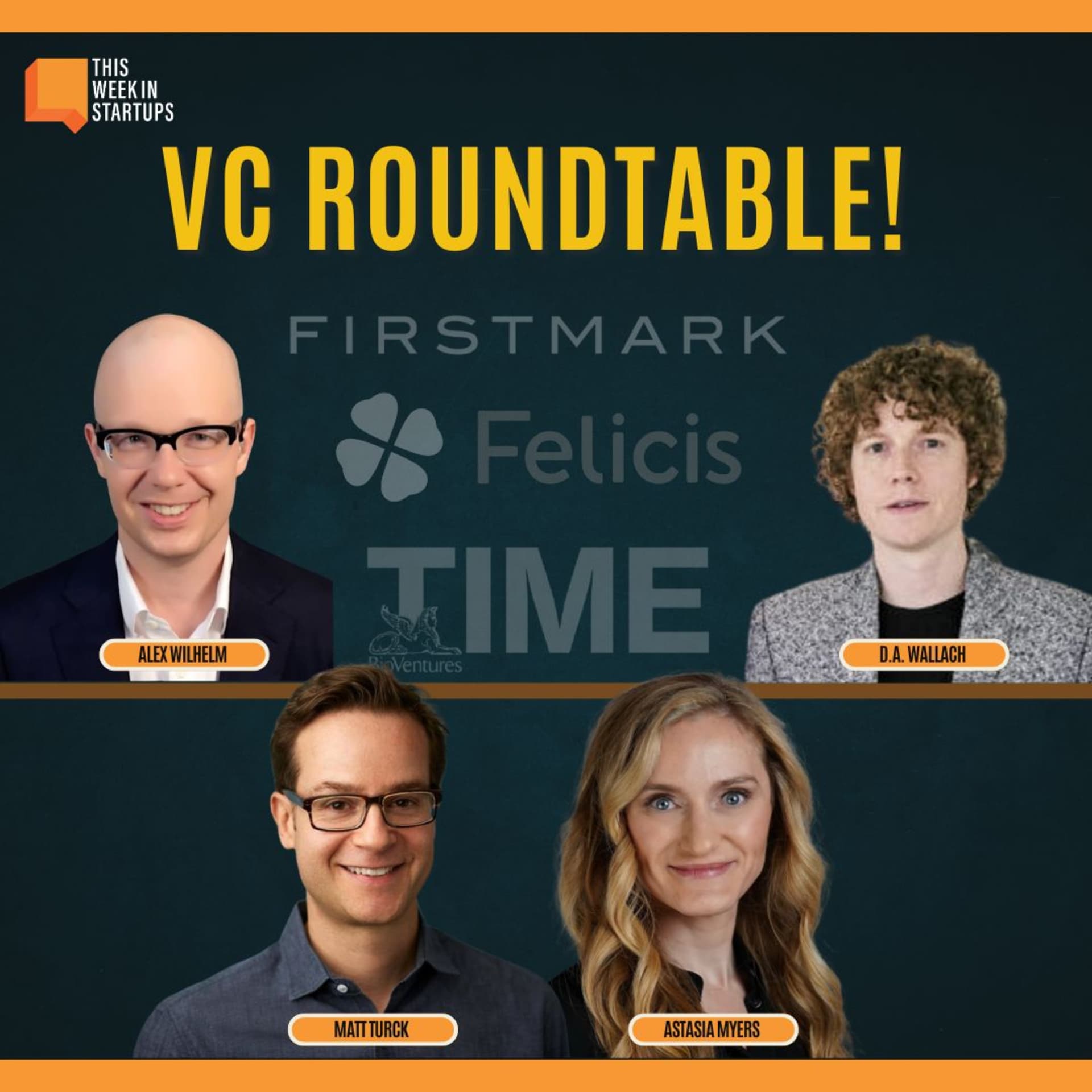
Podcast Title: This Week in Startups Episode Title: Startup Valuations, Biotech’s Crunch & AI’s Massive TAM | E2147 Air Date: [Insert Date] Host: Jason Calacanis Panelists: Alex Wilhelm, Astasia Myers (Felicis), Matt Turck (FirstMark Capital), D.A. Wallach (Time BioVentures)
---
Episode Overview In this episode, the panel discusses the current state of startups, particularly focusing on AI's impact on early-stage investing, challenges in the biotech sector, and the growing opportunities in healthcare technology. Key insights are offered regarding market trends, funding dynamics, and the future outlook for various industries.
---
Key Topics
- Current Investment Landscape
- Post-Q2 Reflections:
- The panel discusses the slowdown in deal velocity but notes an increase in total capital invested in early-stage rounds.
- Astasia Myers' Insight:
- The quality of founders is rising, leading to larger early-stage rounds with a focus on ambitious projects.
- Pricing Pressure:
- Matt Turck: Expresses difficulty in finding attractive entry points at lower valuations due to hyper-competitive AI market dynamics.
- D.A. Wallach: Contrasts this with the biotech sector, which he describes as facing a "Great Depression" with a lack of public market exits limiting private funding.
- Biotech's Challenges
- Market Closure:
- D.A. Wallach highlights that the biotech capital market has been effectively shut down, leading to a crisis for companies that historically relied on public offerings for funding.
- Investor Shifts:
- A shift has occurred with generalist investors rotating out of biotech, leaving specialist funds struggling to support these companies.
- AI's Expansive Opportunities
- Massive Total Addressable Market (TAM):
- Astasia Myers emphasizes that the AI sector has the potential to target a $35 trillion market, leading to unprecedented growth opportunities.
- Product-Market Fit:
- The panel discusses the importance of achieving strong product-market fit, particularly in the context of AI innovations that have shown rapid growth in customer adoption.
- Healthcare Innovations
- AI-Powered Solutions:
- The panel addresses advancements in AI virtual doctors and their potential to democratize access to healthcare, providing high-quality medical advice globally.
- Revolutionary Fertility Technologies:
- D.A. Wallach discusses how companies like Conceivable are automating IVF processes to enhance efficiency and lower costs, thereby expanding access to fertility treatments.
- Founders and Team Dynamics
- Rise of Solo Founders:
- There's a noted trend toward solo founders in the startup ecosystem, with discussions around the pros and cons of smaller founding teams.
- Hiring Trends:
- The panel underscores the shift towards operational efficiency, with startups hiring less aggressively and focusing on leveraging AI tools for productivity.
- Exit Opportunities and Market Outlook
- M&A and IPOs:
- The panel expresses cautious optimism regarding exit opportunities, noting a rebound in M&A activity and the potential for upcoming IPOs.
- LP Expectations:
- As the market stabilizes, investors are beginning to see exits, which may alleviate some pressure from limited partners in venture funds.
---
Key Takeaways
- AI is a Transformational Force: The investment landscape is evolving rapidly, with AI startups experiencing unprecedented interest and valuation increases.
- Biotech in Crisis: The biotech sector faces significant challenges due to a lack of capital and public market support, impacting the ability of companies to innovate and grow.
- Healthcare Innovations Are Crucial: The integration of AI into healthcare promises to enhance patient care and expand access to essential services.
- Venture Capital is Adapting: A shift towards more efficient operations and a focus on solo or small founding teams could redefine the startup landscape.
---
Conclusion The episode provides a comprehensive analysis of the shifting dynamics in startups, particularly in AI and biotech. The conversations highlight both the challenges and opportunities that lie ahead, indicating a transformative period for various industries.
For more insights, subscribe to the TWiST500 newsletter and follow the hosts on social media.
Written by AI. May contain mistakes. Listen to the episode to check what was said.
Transcript
Automatic transcript. May contain errors.0:00I can't overstate how transformational it's going to be to give high quality gold standard medical knowledge to every person on the planet. I mean, we are really going to put the world's greatest doctor at the fingertips of every single person on earth. And this is, I think, in some ways, the biggest thing that has ever happened to medicine. This Week in Startups is brought to you by CLA. Innovation takes balance. CLA's CPAs, consultants, and wealth advisors can help you get from startup to where you want to end up. Get started now at claconnect.com slash tech. Sentry. Your team should be focused on shipping features, not chasing down bugs.
0:48New users get three months free of the team plan, which covers 150 ,000 errors. Go to sentry.io slash twist and use the code twist. And public. You take investing seriously. Public does too. Build a multi-asset portfolio and earn an industry-leading 4.1 % APY on your cash with no fees or minimums. Learn more at public.com slash twist. Hello and welcome back to Twist. This is Alex and today we have something special for you. We have just closed the books on Q2 and just opened a new chapter in the third quarter. So it's the perfect time to sit down with some of the smartest investors out there in the world to get the down low on what they're seeing, what's going on and how they are placing bets or investments, if you want, as we dig into the new quarter.
1:37Joining me today are Astasia Myers, a general partner at Felicis. She invests pre-seed through Series A with themes including AI Infra, developer tools, enterprise software, cybersecurity, and my favorite, open source. Astasia, hi. Hi there. And then we have Matt Turk, a partner at FirstMark. He invests seed through Series A thematically, looking at enterprise software in the US and EU. And then as he puts it, AI up and down the stack. Matt, welcome. Thanks for having me. And then finally, we have DA Wallach, a general partner at Time BioVentures. He invests series A through series C, thinking about things like biotech, diagnostics, care delivery, and healthcare.
2:15DA, welcome to the show. Thanks. All right, so I'm really glad that we're here today because we've really just finished Q2. I'm looking forward to earnings reports and we're already off to a pretty hot start in terms of M &A. But I want to take a look at just deals and deal making in Q2. For the data that I can see, it does appear that overall deal velocity slowed down, but perhaps in the earlier stages, total capital invested went up. So I'm curious, Astasia, and starting with you, how much pricing pressure did your firm face in the second quarter? And are you still able today to find attractive entry points for new investments?
2:49Absolutely. Yeah, I think what we're seeing in these numbers is that it's a really interesting story around the founder quality going up and having larger ambition across these teams. Early stage rounds are fewer, but larger. And I believe that's because we're witnessing the seismic shift in terms of the caliber, the market opportunity, and the ambition of these early stage founders. The AI explosion is democratizing access for tools so that they can build faster than ever before. We're seeing them increase and achieve higher ARR faster in the life cycle of the business. And with that, we're seeing a flight to the quality companies.
3:29We definitely believe this is a huge moment in time and just the beginning for AI investment. And so we're excited about these early stage teams that can not only go after$10 billion markets like before, but$100 billion markets. Matt, same question over to you. similar dynamics from your side? Yeah, absolutely. And look, to keep it real, I'm not at all able to find attractive entry prices. I've been at FirstMark for over a decade now, and the last two or three investments I've made were by far the highest valuation investments I've made in my career. It's fairly routine at this stage that anything interesting in AI is at, you know, nine figures pre-money at the Series A level.
4:23Everything is hyper-competitive and, you know, it's something like I've never seen before. On the flip side, it's also something like I've never seen before in terms of how exciting a moment it is. And just to build on what I just said, Like all of this is true. We're living in a paradigm shift, but that comes out of price. Yeah, apparently a very high price. DA, I am not going to lie, a little bit less familiar with the realm of biotech investing. So I'm curious, are you seeing similar dynamics in your part of the market? Well, I don't want to be a wet blanket here, but biotech is sort of in the Great Depression right now.
5:03And we're about three years into it. And the reasons why we got there are complex. and we can get into some of those later. But the bottom line is that the biotech capital market has basically been shut down. And that has been led by the public markets, which have been effectively totally closed to public offerings for some time now. So with the exit doors effectively closed, the private market has suffered tremendously. It's been incredibly difficult for companies to find capital. That is even true of companies in biotech with an AI theme. They may be able to attract generalists who are maybe not super historically embedded in the sector.
5:47But when it comes to the specialist biotech investors, even the AI companies are not garnering a lot of excitement right now. So it's a very difficult time. That makes it an interesting time to navigate as an investor and a difficult one. And we can get into some of the nuances of that as the conversation evolves. Just really briefly, when I was learning about venture capital and IPOs, one of the rules of thumb was that biotech companies tended to go public earlier and that it was a capital formation function. So does that just mean that because the IPO market has been so rigid or closed, if you will, that a main fundraising mechanism and liquidity mechanism at the same time is being closed is putting you into a depression, as you put it.
6:27That's exactly right. And so if you think about, you know, Matt and Anastasia can speak to, Astasia, sorry, can speak to this better. But in the past decade or two decades in the tech VC market, so much capital has come into the private market. And it's enabled companies, as everyone knows, to stay private much longer. And by contrast, the same thing has not happened in biotech. And so companies still need to go public merely to access the capital that is required to develop drugs clinically. So going public is generally the beginning of the clinical journey for biotech companies. It's when they start to raise the capital sufficient to take them into human trials.
7:09And they'll often stay public for several years as they move through those trials, either towards an eventual commercial launch as an independent company or M &A to one of the big pharmas. I would love to double click on this if this is okay. This is very interesting to me coming from the enterprise software AI side of the house, which is, there's such constant interest in what we're doing from a private and public markets perspective. I'm wondering what are the dynamics in terms of different investors in biotech that is demonstrating or causing this effect where other capital sources are not coming in earlier?
7:48Yeah, it's a great question. I would say that the public market is driven by a combination of biotech specialist hedge funds that just do biotech for a living, and then the usual suspects when it comes to the big multi-strategy hedge funds or the large mutual funds. So think everyone from Citadel to Fidelity to T. Rowe Price. And historically, biotech companies require both of these constituencies to survive and to IPO and then do follow on financings. So what's really happened in the past several years is that the generalist investors rotated out of biotech, essentially all at the same time, leaving only the specialist funds.
8:32And even in the aggregate, they're not large enough to carry all of these companies by themselves. So essentially, everyone has been on hold waiting for the generalists to come back into the sector. And why they have not is multifaceted. Some of it has to do just with the relative opportunity that they've had in large cap tech. And if you could earn 18, 20, 22 % a year with ostensibly low risk, why would you bother gambling on these super risky binary biotech stocks. So I think it's been the competition over that essentially public risk capital that has led to this shortage of available capital for these companies.
9:20Well, that's an enormous bummer. So I guess, DA, does that mean that there's an interesting opportunity for funds to pivot into biotech, given that we were just talking about how prices elsewhere are super elevated, but I presume that they're, I'm not going to say down in the dumps in your sectors, but I mean, certainly probably more affordable. One of the themes we talk about over and over again on This Week in Startups is making sure you do your chores. I'm no expert on these things. I have some experience. Stephen Estes from CLA is an expert. Let's talk about being cash efficient. Tell us about efficiency and what you see in the top tier startups in your practice.
9:58We're seeing kind of an interesting trend out there where companies aren't needing to raise quite as much as they had in the past. You really have to be careful as a founder to only take on as much money as you really need. You've got to do the forecasting, you've got to do the modeling, and you've got to dial it in and get it right. Otherwise, you're going to end up either not raising enough capital to get to where you're going, and you're going to have to go get venture debt or go back, have an extender to the round, or you're going to give up too much of the company because you just didn't recognize how much money you actually needed.
10:27Yeah, very important to get this stuff right, folks. And that's really a bummer when startups don't do things in a button-up way. I always have a great partner, a good partner to have on this adventure. While things change, my friend Steven over at CLA. Visit claconnect.com slash tech. And don't forget to mention that your boy, Jake, Al sent you. That's claconnect.com slash tech. Start today. Well, look, this gets at the fundamental, one of the fundamental paradoxes of all venture capital or investing even more generally, which is that high prices tend to foretell low expected returns and low prices, by contrast, tend to foretell high expected returns.
11:08And the challenge is that when something happens that is substantive, like AI, where we've got a series of legitimate breakthroughs that have occurred, it can be hard to tell whether the high prices are warranted or not, you know, whether the high prices do in fact mean low expected returns or whether they mean, you know, that people are even at those prices underestimating the potential and you should jump on the train because you don't want to be left behind. So I think in biotech, it's a bit it's a bit of that kind of situation. We we have low prices. We all know that that's very clear. They're historically low in the public markets and they're progressively becoming historically low in the private markets as people sort of stop the extend and pretend type of behavior.
11:58And so I think over a sufficiently long time horizon, there's no doubt that there is enormous upside. But predicting exactly when that transfer of the sort of risk appetite of the market's going to occur is unclear. So thinking about the high entry price, lower expected returns point, Matt, One thing I'm trying to sort out is are the companies that you mentioned are raising at nine figure valuations at the Series A level overpriced or simply high performing? I'm going to show a chart here. This is one of many of this particular genre. This one happens to be from Stripe. It just shows the median months to five million ARR for kind of current top AI companies being 24 months and then for previously leading SaaS companies taking 37 months.
12:44So to me, we're seeing a lot of these companies outperform historical norms, which would mean that they should have a higher value touch them earlier on. Matt, does the prices we're seeing reflect that fairly or are they still, in your view, a bit over their skis? Time will tell. Time will tell. It's true. Venture is a long game. But when you're talking to yourself at night, what do you say? Whenever I manage to catch some sleep over all of this. look you know it's it's when in the venture capital world we're like in the the business of taking risk and we can all see that there is a huge paradigm shift that's happening I think you have to play the game on the field at any point in time you know with discipline but like you can't not invest in AI right now so yes there's that happening on the one hand and by the it's a select group, right?
13:39That was a top 100 that you showed on the chart. So it's not every AI company. You could absolutely make an argument on the other side that a lot of this isn't proven. There's like the well-publicized discussion around experimental budgets. There is a big open question around retention. So cursor seems to have great retention. Others do not. For many others, the jury is out, nobody knows. And then there's the question of gross margin, and in particular negative gross margins, where there's a lot of reports that some of those companies operate at a deficit in terms of a gross margin. So at some point, they will need to grow into all of that.
14:23There'll be a reckoning of some sort, particularly as you get closer to public markets, the pressure intensifies. So there is a big question mark. But equally, as I said at the beginning, a second ago, we're in the business of investing in the products and the companies of tomorrow. So you have to play the game on the field. I'd love to add on to this if this is okay. You know, how we think about investing at the earliest stages and the value of the company as a function of the total addressable market and how big that business could become in the span of time. And when we talk about platform shifts, previously we talked about on-premise to cloud or mobile to consumer internet, but in both cases, it was software replacing legacy software.
15:10The AI shift is totally different. Here at Felice, as we really think about, they can go after labor budgets now. This is a$35 trillion market, absolutely insane. Like if you look at the NASDAQ top 10 % companies or the Fortune 500 budgets, only 10 to 15 % is actually software. So the markets that these AI companies are playing in are larger than ever before. They're absolutely huge. So I think that's one of the reasons that there's a willingness at early stage to not only pay premiums for exceptional teams and differentiated technology, but because the markets are really large. Another slice that we took was actually looking at how much budget could these companies go after.
15:56So if you look at AI software products and infrastructure increasing the S &P 500 net gross net margins by 5%, that's essentially like$600 billion a year in profits. And you can imagine software can go after 20 to 30 % of that. So that's$100 billion of new spend. And if you apply a 10x multiple on that, that's$1 trillion of new market value. So that's all up for grabs for AI startups that hasn't been there before. And so we're just super excited that these markets are bigger than ever. These teams are more ambitious, and they're growing faster than ever before. Well, on one hand, that's fantastic news.
16:34Everyone loves Big Tam, big opportunities. On the other hand, today, Microsoft laid off another, I forget, 6 ,000 or 9 ,000 people. And so it does seem to be taking a bite, Astasia. So we'll see how that bet plays out. But I will always worry a little bit about short-term dislocations in the labor markets. But I don't think we can have a revolution in the technology world without impacting labor markets. It seems to come with that. And so perhaps this is just the way things go. All right. So going from broad to the specific, I want to ask you each about your report codes and how Q2 went and kind of an on-the-ground basis.
17:06Let's start with you, DA. I'm most familiar with Iterative Health, but you also have investments into Nanomosaic and DeepSight, other companies. How is Q2 for your firms, tailwinds, headwinds, surprises? Yeah, I'd say operationally, many or most of our companies are doing great. And they are beneficiaries of when we started this fund, which was basically 21, because they had some time before the market kind of crashed in biotech when they could spend risk capital developing their products. And that is the nature of most of the companies we back, which is that the intention is that they're going to spend and therefore lose a lot of money for five or 10 years developing products.
17:48And then ideally, those products are going to be very profitable once they're FDA approved and out on the market. So we fortunately have, for example, in Iterative Health, a company that got its product approved and on the market and therefore has been out there actually selling and generating revenue. And so they're on a great trajectory. I'd say the companies that are having the hardest times are those that really have no choice, but to continue operating in that risk capital financed model where, you know, if you've got a drug that is in preclinical development, there's no pivot you can make that will start generating profits tomorrow.
18:24If you can't raise cash, the entire premise of the sector is that you lose money for years while you develop product, but that the upside at the end of the tunnel can be adequate to compensate you for that. So I'd say the companies that are highly dependent on capital are having a hard time. Everyone is finding it difficult to raise money. The companies that are less dependent on that, I think are flexing their advantages right now because they're getting to actually do business in a marketplace where a lot of others aren't. I appreciate that, Matt. Same question over to you, but don't answer about Synthesia from your portfolio, because I know they crossed 100 million ARR in April.
19:04So that's a gimme. Elsewhere, blockers, tailwinds, surprises. What are you seeing on the ground for founders out there who are listening? Well, all my companies are crushing it. Thank you very much. Oh, well, all right. Next question. Astasia, over to you. No, look, I think everybody that's in generative AI is experiencing incredible tailwinds right now. you know, buyers and companies are just out trying products, buying products, importantly, deploying products at some scale this year, which is different from last year. So if you're so lucky to be in that market, it's just amazing and incredibly exciting.
19:46So you mentioned Synthesia, you know, I mean, there's a company called ADA, which is part of that customer service automation, where the generative product that they launched has been doing incredibly well as well, going through Forex year on year at some scale. And, you know, we see it everywhere. And then the companies that are sort of derivative of that AI wave that are supporting the AI wave are also seeing incredible growth. You know, a company like ClickHouse, in which we're investors, which has a bunch of AI use cases, is also filling the pool. So wherever you are in the stack from the very bottom infrastructure to all the way in applications, if you're in that wave, that's fantastic.
20:30If you're outside of the wave, it's a little different. Founders, be honest. How much time is your team wasting on debugging? If you're like most startups, it's way too much time. That's where Sentry comes in. It's a real-time error monitoring and tracing platform so you know exactly when something breaks, where it happened and why. No more 1AM Slack threads or digging through endless logs. Nope. Let Sentry identify, debug, and resolve the problem while you're keeping your team informed with live Slack updates, Jira syncs, and meet Sear, Sentry's new AI debugging agent. It's like a new engineer that knows your entire code base.
21:08Sear is going to find the root causes of the issues you're having in your code base 94 % of the time, and it can generate merge-ready pull requests with optional tests to prevent regressions. Here's the bottom line. You're going to ship faster. Your team isn't drowning in bug alerts. And instead of grinding through logs, your developers are back building your beautiful, functional, delightful product. New Year's just get three months free of the business plan that covers 150 ,000 errors. Go to century.io slash twist and use the code twist. That's S-E-N-T-R-Y dot I-O slash twist and use the code T-W-I-S-T.
21:46But just to be clear, it feels like you're describing relatively strong product market fit. If they're feeling the pull, that implies that they've nailed something. So going back to your earlier point about concerns about innovation budgets and churn and so forth, are you seeing those potential risks crop up amongst the companies that you're mentioning? Or is their revenue proving to be thus far pretty durable, perhaps in and around traditional SaaS metrics? Yeah, I think for the ones I mentioned, it so happens, like they all have a pretty impressive NDR or like net revenue retention numbers that show that the enterprise keep buying more and more.
22:22So, you know, Synthesia at this stage is in 70 % of Fortune 100 companies, which is sort of incredible when you think about how long they've actually been in market. So those are traditionally the hardest customers to penetrate and they've been able to just land but expand across use cases. And look, it's a fantastic company and they have been doing an incredible job. I think also in fairness, it speaks to the moment that those enterprise buyers are willing to and excited to bring in innovation quickly and then expand quickly. And I think that's an incredibly favorable market, if you will, position.
22:58Now, the other end of the spectrum, for sure, there's a bunch of companies that are still early in product market fit, trying different things. and they may or may not have a staying power, but that's not any different from prior wave. So, Astacio, that all sounds pretty bullish. I want to ask about your portcos. I have to admit, you have two of my favorites. I think browser use is super cool, and I was a big Alamarina user before it became an actual company. But same question to you. What's surprising to you in Q2? What do you see in its tailwind? How are the founders doing, and what lessons?
23:32Yeah, we see similar things across our portfolio, both at the AI app layer and infrastructure. Something that I do want to call out is Felicis has been really early investors in some of these infrastructure businesses. So browser use, we led the inception around N8N and Superbase who are benefiting from these Gen AI apps. We partnered with them, one very, very minimal amount of revenue. And they've evolved to take the reins of these categories that they operate in to see the benefit of working with the Gen AI apps. Like Superbase is a huge beneficiary of Lovable, Bolt, V0. You know, we partnered with them because they had an incredible product and team.
24:15And we saw the big opportunity to be the world-class transactional database. And because they had built such a good product, you know, when these other platforms came along, they were the first partner and first choice for these other founders. So that's been really cool. If I was a founder at the earliest stages thinking about, you know, areas that are top of mind, I would really prioritize marketing and community development because the barriers to entry for starting a new business are lower. Now we don't need to rack and stack servers thanks to cloud service providers. We have gen AI coding products like Cursor.
24:54More people are empowered to be builders, which is beautiful. but you also need to get your tech out there and people need to learn about it. If no one knows about it, no one's going to care. And so for pre-seed, inception teams, make sure you equally prioritize marketing and community development to break through the noise. Is that why Matt tweets so much? That's my AI. Oh, it's your AI. It's my Syntegia avatar that tweets. Are you actually here today or is this just an ad for your portfolio of companies? The uncanny valley has been crossed live today. Nice. It's such a bit of a large Turing test, if you will.
25:34Let's stick with AI for a minute, and then we'll move back to other topics. I know there's quite a lot else to discuss. I've been thinking a lot about the AI Foundation model companies and how their work has been improving. DA, we often talk about this in terms of how well they can code or follow tests and so forth. But there's also companies out there, like I think BioOptimist, working on foundation AI models for the biology space. For folks out there who are more familiar with the enterprise software side of things, what's the state of play in terms of AI advancements in the healthcare and biotech world?
26:05And how much does that unlock new opportunities for your thesis? I think there's tremendous opportunity, both on the healthcare side and on the biotech side. And I'll distinguish between the two. And I think our thesis here is a little bit contrarian relative to the rest of the market. So there has been a lot of excitement over the past three, four, five years, specifically around AI and biotech. And the theme has essentially been that AI is going to come in and make drug discovery cheap, fast, easy, simple, where in the past it's been incredibly challenging, incredibly time-consuming, exponentially expensive.
26:42And the reason people have believed that is because we've had some genuine breakthroughs, I'd say most notably AlphaFold, which was DeepMind's product that was able to computationally predict protein structures simply from knowing the sequences of those proteins. And that was a true breakthrough. It built upon several decades of experimental discovery. There was something called the Protein Data Bank that that was trained on. And so it was really an amazing tribute to 40, 50 years of molecular biology and then some amazing new capabilities of AI models. And Demis Hassabis and John Jumper won the Nobel Prize for that.
Read the full transcript
27:27So you can't downplay how important it is. But really what we're seeing with that and other associated innovations in biotech is a new approach to molecular biology or cell biology that can happen inside the computer as opposed to in a Petri dish. So on that point, are we actually going to be able to have models that can simulate a cell, like a cell with mitochondria and all the other things we learned about. I think we're moving towards it. And you've got, in particular, a lot of philanthropic efforts like the Chan Zuckerberg Initiative and the ARC Institute that are targeting in specifically on that opportunity, virtual cell models.
28:08So I would bet on their success, but having virtual cells as cool and revolutionary as it is, does not fix what sucks the most about drug development, which is that the only way we find out if drugs are safe and effective today is to put them into human beings. And we have to put them into enough human beings that we can get statistical significance around our assessment of their safety and efficacy. So to me, it stands to reason that until we can truly simulate whole human biology in a way that is reliable enough that we would trust it to stand in for the real people, it's not going to disrupt this fundamental bottleneck, which is really what makes drug development a challenging endeavor.
29:00So I'm more pessimistic maybe than some about the near-term prospects for this technology to transform biotech or drug development. Given the liquidity issues, given the depression era economics for companies in your space, and given the long time horizons to figure out how to kind of solve bottlenecks using AI, DA, why are you investing where you are? It sounds incredibly difficult and like you're running uphill on your hands with your feet tied. Our friends also on the show are having a much easier time of it. We've got AI helping us out with everything now, driving our cars, writing our code.
29:37Isn't it about time you put these innovations to work on your portfolio where it really counts, you need public.com, the investing platform for people who take their money seriously. You can buy and trade everything on public.com, building out a multi-asset portfolio, including stocks, bonds, options, cryptos, ETFs, and more. And these yields are no joke. But what really sets public apart are their AI-powered tools and features. Check this out. You can ask public a question about any stock and get a quick, straightforward answer. You want to understand why one of your stocks jumped or maybe it crashed?
30:11Well, Public has a clickable AI-generated summary right there on the performance chart. And in their income hub, you can get a monthly breakdown of the earnings from every one of your companies, plus a forecast for the year ahead. And there's the Q tool, which allows you to plan and execute multiple trades at once with real-time price updates. So go to public.com slash twist today to fund your new account in five minutes or less. That's public.com slash twist. Paid for by public investing. Full disclosures in podcast description. At risk of being long-winded, I didn't get to the optimistic part of my answer.
30:50Oh, I'm so sorry. Please. That is the healthcare side. And when I use the term healthcare, what I'm referring to is everything we've all experienced when we've been patients or when family members have been patients. Doctors, hospitals, insurance companies, pharmacies, sort of the last mile of medicine where it actually interacts with patients. And we are fundamentally constrained and have been for all of human history by the fact that we have very few doctors relative to the number of people that require care. And so while it may still be a decade or two away that we can virtually model humans for the purposes of clinical trials, I think we're already pretty close to virtually modeling doctors.
31:40And this vision of the AI doctor in everyone's pocket for free is one that I would bet on heavily. And I think that what we're going to see in the upcoming years, it's already started With the general purpose LLMs, already patients are taking this into their own hands. And when they're getting confused or overwhelmed by their experience navigating the traditional healthcare system, they're going home at night and they're asking ChatGPT a series of questions about their prostate cancer or about their COPD or about whatever else they're dealing with. And they're finding it enormously helpful. so you know i don't want to downplay all of the challenges that people rightly point out we need these things to be reliable we have to be very careful about errors because these are life and death applications but i can't overstate how transformational it's going to be to give high quality gold standard medical knowledge to every person on the planet i mean we are really going to put the world's greatest doctor at the fingertips of every single person on earth.
32:49And this is, I think, in some ways, the biggest thing that has ever happened to medicine. So we have great reason for optimism in healthcare innovation. We have plenty of early evidence that biotech itself is going to be revolutionized over the long run. I just think that's a longer thesis to play out. Well, I hope full doctor employment continues for the sake of my household income. Astasia, over to you on kind of a similar question, but admittedly over in your domain. I've been watching foundation AI model companies slowly creep into the application layer. Things like Claude Code. We're seeing, I think, also anthropic work on customer support agents, that sort of thing.
33:30I'm curious how much concern you have or your founders have that you talk to about these companies eventually taking over more and more of the market with what they build and reducing the amount of space that there's left for startups to build, innovate, and go to market? Yeah. You know, competition is always a risk. We could see that OpenAI, Anthropic identified different verticals where their models were finding the most success and efficacy, really landing with code generation as a key use case. And it was kind of predicted that they would move this direction over time. We're not surprised by this.
34:06You know, I've been an infrastructure investor for 10 years. There's always a large incumbent in the space that's trying to win the mass market. In the early days, it was Dell, EMC, and Cisco. Then I went to the cloud with AWS and GCP and Azure. What sets founders apart that build in these competitive spaces is, you know, the touch that they have with the end users and the customer relationship management, the core differentiation of the product, and extreme velocity and execution to go in the market. You know, there was a very well-known Amazon product called Redshift that was a cloud data warehouse, and yet we got Snowflake.
34:50Flake, the largest enterprise software IPO of all time. Similarly, we have Databricks, Confluent, a number of these vendors that go head to head against publicly trade. Yeah, head to head against cloud service providers. It's going to be the same thing in AI apps. The agile, smart, aggressive, early stage teams have a shot of continuing to win these markets. So while there is a risk of more competition, it does validate the space. It also could provide acquisition opportunities for these teams as we're starting to see. So from our perspective, this is not new. Competition always exists. And there's a precedent in the infrastructure world of really large companies being built going after the incumbents.
35:37Matt, does all that track with what you and your firm think? Yeah, I think that's well said. You know, last year, everybody was saying LLMs are going to become commodities. But I think the nuance is that never meant that LLM companies were going to be commodities. And the way they make money and become super large is by monetizing the LLMs, in part by providing those as API, but in large part by building application on top of them. And, you know, OpenAI is in some ways always been, I mean, at least for the last few years, an application company. It was the accidental consumer company. And clearly what they're building is, you know, the next Google, right?
36:22They're a consumer company. They are an enterprise company. There were reports that they were doing the Palantir playbook in the enterprise. They are a developer company. They're trying to do all the things at the same time, which makes them such a fascinating company. So, you know, it's pretty much what Sam Altman previewed last year. If you're right in the middle of, you know, horizontal applications of AI, whether consumer or enterprise, and you're trying to do productivity, you know, stuff, you're going to be competing very directly with them. And by the way, I think that's partly the rationale behind Grammarly buying superhuman.
37:01And, you know, if you're in that productivity world, you need to build product and distribution real fast because they're coming after you. Having said that, the rest, you know, whether that's legal or finance or, you know, vertical industry specific kind of applications, I think there's plenty of room to build great companies there because as it turns out, building what was known last year as a thin wrapper actually takes a lot of work, a lot of, you know, industry specific workflows, a lot of industry-specific integrations, and OpenAI and Anthropica are not going to do those. So there's plenty of room to build fantastic companies.
37:38Conventional wisdom in the AI era moves very quickly. We have gone from LLMs or commodities, therefore OpenAI is doomed, to, okay, now it's worth$300 billion. Alex, I got a quick question about that for all of you, which is, you know, and here we all get to kind of speculate because this is not in our investment sweet spots, I think any of us, but opening eye at 300 billion is, is that too expensive? Is it, is it a deal? You know, like what, what would, what would each of your pain threshold be, uh, for the valuation of opening eye, which you'd say this is absolutely overpriced. Well, I'll answer last and give our, our friends for a shot here.
38:17Astasia, Matt, who wants to jump off the plank first? Okay, I'll call on you. Astasia. You know, I think there's huge upside in OpenAI today. We just kind of talked through their multi-product approach. You know, you have the infrastructure layer that they're building with the models, they're moving into more developer tools and platform, as well as up the stack for AI applications. I don't think it's unreasonable to imagine this becoming one of the largest companies in the world. So, you know, would I buy at$300? Probably. Would you buy at$500? With your own money? Like, not speaking for Felicis, just literally Astasia Myers, your checkbook?
39:04Probably. Okay. Matt? It's a complex question. I would, you know, if you look at the current revenue growth rate and the sheer number in terms of revenue versus the, you know, most recent valuation, the multiple is actually not that crazy at all. But, you know, all of this happening at massive scale, that's a question about, you know, what that means, how much more room there is to grow given the many, many billions we're talking about. So I'm personally bullish on the company. It would probably be a buyer now, personally, and in probably the near future. Having said that, you know, the firms that put billions and billions of dollars into that company, I just admire that from afar.
39:57I mean, that would be so incredibly nerve-wracking for me because you just, you know, there's many ways this can go wrong. And, you know, it's still a nonprofit company. the you know there was a CEO question that came up there is you know management questions there is you know a bunch of developers and researchers that leave that getting poached by meta this you know like every day there's a reason to just give an ulcer to somebody that has put billions of dollars in the in the company so much power to my colleagues that that do that and play that game as bullish as I am on the company. I just find it incredibly scary.
40:38Well, I mean, whenever you make a big gamble, it's pretty scary. We've all made a bluff in a poker game that we've hoped would get by and didn't, and we've all been on the other side of that. I think the growth to 10 billion in ARR, to answer your question, putting OpenAI at effectively 30x ARR makes it very, very cheap for its technology, I would say, level of prominence, how quickly it's shipping, and just give it its growth rate. It feels cheap. Paying threshold? okay so today 10 billion 600 billion would be 20x arr given what i've heard about a lot of startups that some of our fine friends may have put money into recently that's still incredibly cheap so i think i'd pay up to 30x for it today so about a trillion which sounds ridiculous but you know i watched google go public and i know what generationally defining companies can become in time and if it's already this large and growing this quickly and this important uh sure i take a flyer on it for, I don't know, a third of my net worth.
41:30But DA, you can't ask the question without answering it. So take us home. It's really hard. I mean, constitutionally, I'm a value investor. And I think I don't say that to be sanctimonious about it. I just think it's really difficult to price something like this. I mean, it wasn't long ago that we had no trillion dollar companies. And the first ones that we got were companies that have been building for decades. So, you know, sure, there's a possibility we're in a completely new regime where companies can become worth a trillion dollars in just a few years. I don't know. I guess it hasn't happened yet.
42:13And they may be the first ones to do it. And then there's obviously the question of, you know, what kind of multiple do you need to take the relevant risks? So, you know, for it to be a 10x from here is a lot harder than for it to be a 2x. And then you have to compare that opportunity to all the other opportunities where you think you can get 2x and ask whether you're taking more or less risk. Well, on that point, I am I'm pulling up a chart for us. This is from a CO2 deck that I think just underscores why we're seeing companies become effectively trillion dollar firms faster. This shows how long it took Anthropic to go from zero to one billion in revenue.
42:53Took about, I guess this is 21 months. And then it took three months to go from one to two, and then two months to go from two to three. And the latest reporting is that it's now, per the information, at$4 billion in annual revenue rate. So when you're seeing growth like that, it's hard to sit on the sidelines, to Matt's earlier point, even if prices are expensive. I mean, I think the other thing is, I have trouble, you know, and I'd be interested in people's comments on that. Just as a user, it's unclear to me what the cogs are on these LLMs. and I get the impression sometimes that I'm being metered, even when I'm paying for the premium subscriptions.
43:25So I'll feed it a spreadsheet with, you know, 50 stock tickers. And I say, fill in this information for all 50. And it gives me back the first five, you know, and then it basically tries to trick me into not asking it for the rest of them. I say, give me an Excel spreadsheet where you put all of these values in and then it gives me a link and it doesn't work. And so it's hard for me to tell whether the models are actually incapable of doing this work, which I find hard to believe, or if the companies are basically metering usage. the experience i had with gemini kind of gave me that impression relative even to the other ones where there were things that it couldn't do that the others were doing but it felt like the inability was more a matter of willingness to go spend compute uh on on something that wasn't particularly complex than it was on the fundamental capabilities of the model well there's two things that come into that one is just how much compute capacity we have as a species or a company or as a platform.
44:26And then there's also just how much we're using or how much of costs. And Matt had a great tweet talking about the impacts of this on startups from the other day, saying that, sure, the cost of inference keeps dropping. But as of right now, seeing a lot of AI startups at 50-ish gross margins, not 80 % like SaaS companies. And Matt, what I was trying to get to a little bit earlier was we talked about how quickly conventional wisdom becomes wrong in the AI world. So sticking to DA's broader point in your tweet here, does this persist as a problem or does this go away as we add more compute and as we see compute limitations decline?
45:00Look, that's certainly the bet that we're all making collectively as an industry, that the cost of inference is going to continue dropping. I mean, certainly the last year seems to validate that hypothesis. And, you know, I think we're all on board with that. But like, that's the bet. That's the bet. And there's a lot that needs to happen for this, both on the, you know, the LLM companies, inference providers, but also on the company side, like the level of optimization that you need to be able to do if you're a company that builds into your product, into the product that you deliver to your users.
45:39But my point was just, you know, when you talk to people, and that tends to be a little bit the case in our industry, people think that a lot of things are a foregone conclusion and just operate as if the reality of today was that intelligence is basically free. So that was just a tweet to remind people that at least as of now, that's not the case. And I'm seeing this across companies that leverage AI in their product for every single interaction that the product has with users, or heavy users of AI, but that's the reality of today. And as I mentioned earlier, there's a bunch of companies that have negative gross margins, right?
46:13Where, you know, to a large extent, we are in the pre-IPO Uber phase of the AI cycle. Reminds me of that too. Yes, where - But Matt, for the young folks listening who weren't here for that, why don't you explain what that means? Yes, so it turns out that Uber is showing up at your doorstep in one minute and being half of the price of a yellow cab in New York was not a miracle of modern economics, but the result of the whole industry being subsidized by VCs. And, you know, I think we are at that stage as well, where VCs like us are betting, as we should, on where the puck is going, which is all of the cost part of the AI equation being much lower.
47:07But the reality as of today is that it's not. And the money comes from VCs. So when you look at the anthropic numbers, like I have no idea what the percentage is, but for a fact, I know that a chunk of this is coming from Astasia and me, you know. and a chunk of the NVIDIA revenue that everybody has been raving about for the last few years come from us VCs and also the general public through Microsoft. So it's all very circular. And look, I think you can be super bullish on AI while recognizing that there is an element of fragility that's built into all of this, which is that we are in the supply build phase of the market where founders are building, big companies are building, VCs are investing, and all of this on the basis of a future bet that it's all going to work out.
48:06But demand needs to materialize on the other side, and we need, as an industry, to stick the lending within a few months or maybe a year. If there is a true disconnect between the supply phase and the demand phase, then we might be in trouble. trouble for a minute. Yeah. According to producer Claude, the average gross margin for public SaaS companies today is 73 to 77%. Astasia, before we set AI aside, same kind of question over to you. What are you seeing amongst your companies? Are gross margins an actual problem or something that's going to be solved by whatever the next trillion dollar data center that gets announced will bring to market?
48:48Similarly, I spend most of my time at the infrastructure layer. And I think an interesting deployment mechanism we're seeing in our portfolio is the bring your own cloud model where they're actually running their infrastructure in the customer environment in their VPC. And so we actually see really strong gross margins. VPC being virtual private cloud. Yes, exactly. And so we actually see very strong gross margins with that profile. And it actually gives the sellers of that technology a lot more leverage when they're competing in bake-offs against fully hosted or cloud service providers. And so we can see gross margins there.
49:25They're 85 % plus. And often those teams are using AI as part of their product experience. And they're working with open source models and distilling them so they can be run effectively. You said earlier that we've moved past the era of rack and stack servers because we got cloud. And now you're talking about people having better economics on their VPCs or I presume their own in-house iron. So are we ironically going back to a world in which you don't want to pay someone else's cloud margin if you're going to have good AI margins on the inference you provide to your customers? So we see it in both approaches where there are still very large-scale companies and financial services, healthcare, et cetera, that have their own data center environments.
50:07And our products can sell into those data centers, but they can also be deployed in AWS or Azure, et cetera, as well. So I'm actually very excited about that deployment model because I think it gives power back to the founders against the incumbents. And it's wonderful to see those gross margins again. All right, well, we mentioned healthcare, so we've got to bring DA back in. DA, are you seeing your companies able to sell into customers that have their own VPC or are they mostly living and existing in an Azure AWS vanilla world? Yeah, frankly, we don't have a lot of portfolio companies that are in the software business.
50:46And so I can't speak to it intelligently, but I will say, you know, the world of enterprise hospital IT is a unique and interesting one. And in particular, the opportunity there that keeps coming up is around cyber. You know, these particularly with AI attacks now, these are just some of the most vulnerable and mission critical information systems that exist in the world. And they're all kind of running around trying to figure out how to manage the risk today. They don't know exactly what that risk looks like, but they know it's big. We've been spending some time looking at Gen.AI applications and healthcare, and we're particularly excited about the role of voice for improving client and patient care, decreasing administrative overheads, helping with insurance claims.
51:40systems. So I think that a really, really cool area for healthcare is the application of conversational AI. Yeah, that's definitely true. And, you know, one of the things that we're very conscious of is that physicians today, partly because of the shortage that I described earlier, report just very pervasive levels of burnout. And Alex, it sounds like you've got family in this business, so you understand directly. And so, you know, part of that is, or a big part of that is driven by what any of us have experienced, which is when you go to the doctor's office, they basically sit there staring at their computer doing data entry during the whole visit.
52:16And so to your point, voice is potentially an escape hatch from that. And, you know, what would be much better is obviously if the doctor could look at you, look you in the eyes, do a physical exam, focus on the patient, not on their, you know, 2000 era software and doing data entry during a visit that's already painfully short. Well, here's to bringing more technology to healthcare. So that way everyone's doctor has more than 30 seconds to talk to them. I think we will all appreciate that. But let's put AI down for a minute and talk about founders. One of the more interesting trends that I've seen in the last couple of years is one, the rise of solo founders as a more common founding unit, and also a decline in what I might call party round of founders.
53:06So here's a bit of data from our dear friends over at Carta that shows just, as I said, more and more founders are single shop and we're seeing roughly steady two and three founder numbers. But once you get to four and five, it's pretty infrequent now. I'm curious if the VC market is becoming a bit more willing to back solo founders in the AI era. Matt, we've heard some people discuss how there's going to eventually be a a billion-dollar company founded by one person with no other staff. A bit of a meme at this point, but certainly shows where people are thinking. How has your firm changed its expectations around founding team size?
53:41Yeah, one founder plus one AI, right? That's the new founding team. Or one founder plus 50. Many, many AIs. Yeah, look, that's interesting data. I hadn't seen that. It seems to corroborate what we see. I wouldn't say we ever had a particularly strong sense in favor or against solo founders. We have some, we have many founding teams. We have, you know, founding teams that are brothers. We have founding teams that are married couples. So we never had a sort of predisposition in favor or against certain formats. I would just say that, you know, from personal experience and watching many, many companies over the years and working with many companies over the years, you know, solo founders is cool at the beginning.
54:33It can get very lonely very quickly. So, you know, you could argue that on the other hand, founder divorce is one of the worst things in the world. but by and large, you know, I've found that teams of like two to three founders, like people tend to be happier in good times and more challenging times. Nastasia, same question over to you. Any change in how Felicis approaches this or is two to three still the place you want to write the most checks? Yeah, we similarly have been agnostic to the number of founders. Typically, we do see two founders as the most common but it is good to have a friend in the trenches with you.
55:16Many of our solo founders eventually do kind of anoint that number two on the team that becomes a safe space to work with. But for me, when I was looking at that chart, I was most surprised that there were actually so many teams with five founders. I think I've not really seen that before. I don't think we really see it. Well, now it's down to just 4 % of the market, all the way from 11 % back in 2015. But some companies have. That's also a bad idea from experience, like for anybody listening to this, because it solves a problem in the short term. Fast forward, you know, seven, eight years, you're the very successful CEO, founder number two or three or four of a company, and, you know, you own 3 % of the company.
56:07Well, yeah, but then we have companies like Databricks that had seven founders and they seem to be doing pretty well. But I'll take that that's the absolute outlier. I want to go towards team size in general next, because as we've seen founding teams maybe get a little bit smaller on average, we've also seen companies trying to do quite a lot more with less. And Astasia, you mentioned earlier about how much of the labor market we can attack with technology. That appears to be showing up in how teams at startups hire or don't. back in the day, the old riff was you raised and then you hired, took your burn up and then tried to grow like hell.
56:38Talking to a lot more founders lately, it seems that there's less of an appetite for rapidly growing headcount. I'm curious, one, how much that showed up in your portfolio, Astasia? And then two, if that changes burn dynamics or how long these companies have in between funding rounds, if they are spending less on people. I want to take you back to 2020. Okay. Growth at all costs five years ago, like hit the top line numbers. And I think there's a lot of learnings for investors and founders coming out of that era. And so kind of seeing the high highs and the low lows of what it takes to build companies when it's growth at all costs.
57:15I think this next generation of founder is a little bit more pragmatic and sensible, but they're also empowered by these AI native products that they can adopt so they can get more leverage out of the founding engineers and they can potentially be more empowered to do the BDR work and sales and marketing and customer success without needing a huge team. So I think it's a learning from the past era of building, but also these AI products that are just giving people more and more leverage. And then on the burn front, does a decreased need to staff up early give these companies more flexibility, more firepower to spend on marketing.
57:57What is unlocked by having less spend in that human resources line item? We are seeing that the burn numbers are lower. Of course, that gives them more runway and we're seeing them often repurpose it towards the go-to-market side of the house. So thinking about marketing content and collateral events, et cetera, as a way to continue to get strong ROI from their investments and building a community and getting customers. Matt, some question over to you about hiring, I don't know, trends, if you will, and then how that impacts overall startup economics in the earlier stages. Yeah, it's actually kind of funny.
58:36I was tweeting that the other day. You know, everybody's talking about the one person, $1 billion company, but equally every company that we come across, and by definition, it's a self-selected group. Like everybody's raising 20, 30, 40 million. and when we ask them, you know, what for, especially for the companies that are not building their own models, like they're not going to burn on GPUs. So like, what do you need the money for? And all of it is just hiring people. So, you know, it's like a little bit of an irony or I guess, you know, there. And we're seeing some of that. We're seeing, especially in the early stages, we're seeing people be very efficient using a lot of coding tools and all the things.
59:20But very quickly, as you start scaling just a little bit, then we sort of back to having a bunch of people. And that's just the reality of the beast. You can build product faster, but for all the functions, you need to have people. DA, over in your side of the fence, is there a similar dynamic in which people are hiring a little bit less earlier on? Or is the unlocks that we're describing on the Astasia and Matt side of things not as pertinent in healthcare and biotech? In biotech in particular, I'd say the major shift in really the past two decades has been towards an ability to outsource more and more and to thereby build what can be very valuable companies with relatively few full-time staff.
1:00:05And so that is a trend that we're seeing, obviously, people embrace more and more with capital constraints. But I'd say the other force that's exemplifying that is the Chinese biotech scene. And this has been a major story this year. What we're seeing are these Chinese startups, in some cases subsidized by the government, the whole sector is being heavily pushed by the CCP right now. But I don't want to take any credit away from these entrepreneurs who are really doing remarkable work. And I think what we're seeing from China is that companies with a virtual model, basically leveraging what are called CROs in our industry, these outsourced service providers that can do specialized work in drug development and drug discovery, they're able to do things in six months or a year that people in the US are used to taking two to four years.
1:01:03And so that's a real wake up call to VC and to, I think, the entrepreneurs, because if they're seeing these Chinese founders do it, then they've got to figure out a way to match that. And from the standpoint of the biggest acquirers, which are largely global pharmaceutical companies, there's a sort of indifference to geography. I don't want to speak for Apple or NVIDIA or anyone else in the Valley, but they may have some home court bias, but a Swiss pharmaceutical company is just as happy to buy a new drug out of China as it is to buy it out of New Jersey. So there's a real global competition at foot and U.S.
1:01:48startups are needing to figure out how they play into it. Do you think we should have more state level investment here in the United States, given what you said about the investments that the CCP is making? Not to get political, but I'm just curious. It's a great question because it's inevitably political. I mean, people are disputing right now the cuts that are in a lot of cases inflaming academics and folks in my industry, because what they are feeling is that the U.S. government is basically pulling back from this industry at exactly the wrong moment. I think what's critical if I try to step outside of my own vested interest, though, is to really ask, you know, like what is in the long term strategic interests of the country?
1:02:36and, you know, think about France. Matt, you're French? Yes, where is this going? We know he's French because he pronounced it nuance earlier. Here's why I bring up your homeland. I had this insight when I was in France last year, which is that, you know, as you're familiar with, people have a great lifestyle, but they complain a lot about the lack of entrepreneurship, how hard it is to get rich, da-da-da-da-da. And it occurred to me that, you know, there is a trade-off there with the way that, say, we do things or that China does things, but it's not as if the French people do not get the technology.
1:03:15They get the same iPhones and the same LLMs. They basically get to benefit from the innovation that is produced in these bloodthirsty markets like the United States. And so every society has to ask, what is the pro and what's the con of prioritizing innovation on their soil? And in the case of biotech, I think it's clearly the case that, you know, from a national security standpoint, we don't want to be dependent, say, on adversaries for critical drug ingredients. But that's very different from the question of whether we need to be the ones producing the next big breakthrough. I mean, we want the next big breakthrough for the benefit of our patients.
1:03:59But if that breakthrough happens in Switzerland or France, it's not clear that we're not going to get it. So I think it's a complex calculus and there's no substitute for the democratic process sort of weighing it rigorously. All right, Matt, answering for not just France, but all of the EU, your response.
1:04:25look i i i um think that um you know old perceptions die hard uh and um you know it may be different in biotech but uh in in tech um thinking that the eu in general in france in particular has not fully embraced innovation is missing the big story of the last few years. France currently is obsessed with startups and that, you know, starts at the very top of the government. And you could argue whether the government should be in that conversation in the first place or not. But every kid that comes out of a top elite school in France today wants to do a startup. And there is a deep tradition around software, deep tradition around AI, and it's gone from zero to hero in the space of like four or five years.
1:05:26And sometimes, you know, I want to talk about this like today. Many times I don't want to talk about it because that gives me a comparative advantage to go to France and win those deals. But there is a lot that's happening right now. And in particular in AI, you know, like Mistral being the most famous company, but there are many, many others. Having said that, DA, like directionally as a society, I don't disagree. There's a lot of work to be done, but there is that nucleus that has completely transformed in the last few years. I would just add that when we think about, you know, breakout AI companies today, the name Lovable comes to mind.
1:05:59They just crossed 75 million ARR and they're based out of Sweden and they're about to raise that, according to the FT, a$2 billion valuation. So there's one company that could easily become the next$10 billion public company from the EU. So something to keep in mind. Now, Astasia, when DA mentioned academia and the connection between industry and startups, I think you were beginning to nod your head. I know you recently interviewed Leta, one of your portfolio companies, about making the jump from academia over to the world of entrepreneurship. I'm trying to find some silver lining in some of the cuts that we've been seeing.
1:06:30And I'm curious, are we going to see more academics that may see their time at universities in the ivory tower come to an earlier end, are they going to break into industry or are we just cutting off our own legs to the knees here? Yeah. So we're strong believers in academia and deep partnerships with many universities. This question of how do we 10x the number of founders that are coming out of academia, we took to heart. And that's the reason we launched our fellows program. So each summer we bring really bright AI students from places like Stanford, Byrd, MIT, Berkeley, among others, where they had this incredible technical aptitude, but maybe haven't gotten the exposure to what it's like to become an entrepreneur and founder.
1:07:15And so during this week, we have talks from founders and hear real stories from people who are just a few steps ahead of them so they can get that exposure. And really, the response has been incredible. We just had our Felicis Fellows program and we had four times the number of applicants this year compared to last. And it really speaks to there is a hunger from students, undergrads, masters and PhDs to learn more about our world tech and venture. We personally believe there's huge untapped potential here where we bring together amazing researchers with builders and kind of help create that bridge between the two communities.
1:07:56The other thing that has been really interesting is you highlighted, I interviewed one of my portfolio companies, Leta, that was alongside Jan Stojka from Databricks and the Sky Computing Lab that he runs out of Berkeley. And, you know, that program is really designed for students who have an entrepreneurial mindset. They have a really strong belief in the value of open source as a vehicle to share your research, but also get the experience of working with users who become contributors and customers. And so our recommendation for students as well is build, but then release it and learn from that experience, how to work with users, how to bring your technology market and kind of test the waters.
1:08:44So we're super encouraging of this. If you are a student listening, reach out to us. We'd love to talk to you about your work and the path forward to become a founder and commercialize it. Just because people will ask, what's the best way to get ahold of you, Astasia, if people wanted to reach out to you on that exact point? Yeah, it's astasia.phelicis.com. So A-S-T-A-S-I-A at phelicis.com. Simple enough. All right. I want to squeeze in a little bit of notes on exits here because we've talked in passing about the superhuman grammarly deal. We just saw yesterday that Figma filed to go public. I absolutely adore an S1 filing.
1:09:24And early data kind of makes it seem that Q2 was a bit more fecund than we might have expected in terms of total value of M &A and even a couple of IPOs. So just briefly, Astasia, how good was Q2 for you guys in a returns context? Are your LPs calming down a little bit? And looking ahead, how excited are you about the back half of this year for exits? So we don't publicly speak about our returns and our DPI, of course. We are very encouraged that publicly one of our portfolio companies, Weights and Biases, was acquired by CoreWeave. So that was very exciting for not only Lucas, other founders and the entire team, but we are just pumped about that opportunity for this next phase of the business.
1:10:07in the second half of the year, we think that there could be a really interesting opening for both traditional exit channels of IPO as well as the opening of M &A markets. We haven't talked about it, but I thought it was very interesting that Dylan at Figma actually commented that he would become acquisitive as well at scale, mind you. So it's encouraging to see these businesses have a path forward. Yeah, checkbooks seem to be opening. Matt, same question to you. How was Q2 for you in exit terms? And are your LPs happy? And what's your expectation for the rest of the year? Yeah, plenty of encouraging signs across the board.
1:10:47You know, Q2, but in general, the last two or three quarters, we actually had a bunch of exits, some of which just happened, you know, for like smaller amounts. But that's exactly what you want to see because it's healthy for a portfolio that the companies that are, you know, not scaling should be cleaned up by the large companies. The way it's always worked, but even that kind of like stopped for a while. It seems to have resumed. Okay. And then, you know, we had larger ones, you know, we're talking about like superhuman, but like we had a comparable size acquisition, an insurance company or an AI for insurance company called Evolution IQ that was purchased for actually higher than was reported in the press for like 850 million.
1:11:36So, you know, great, we'll take it. And so there's been a bunch and whether that was Q2 or Q1 or whatever, the secondary market has been active as well. And then in terms of IPOs, you know, like a lot of VCs, like we already, like we've been waiting for this for a while. So, you know, from, you know, Discord to Dataiku in the enterprise AI world to Roe in the health world, We have a whole slate of companies that are generally in that pre-IPO zone. And I'm very encouraged by what's been happening. All right. Now, DA, because you started off by saying that the exit market for your industries is troubled, I'm not going to ask you the same question.
1:12:18But instead, I want to close our chat with this. Two of your portfolio companies, Conceivable Life Sciences and Billion to One, are both working in the broader fertility space. It's a world that I've run through over the last couple of years, so I'm pretty familiar with it. I just want to end with some positive thinking here. What's the chance that the companies you're either investing in or seeing can expand fertility treatments to the point at which we all can stop worrying about global birth rates over the next five to 25 years? Because I feel like we're all sick of talking about it. Yeah. I think the global birth rate issue is it's both about people's ability to reproduce easily in today's modern lifestyle and also their interest and willingness to do so.
1:13:02And that latter consideration is a more challenging one to think about for me, because who knows, you know, maybe that you got to think about housing costs and education costs and all these very lofty topics. When it comes to the actual technology, though, again, we're in a renaissance right now of the basic biology. And two of those companies that you mentioned are big, success stories in our portfolio so far. Billion to One is relevant during pregnancy. And it's a company whose test very easily enables expecting families to find out whether the fetus has any congenital diseases. And it's a replacement basically for amniocentesis, which was the big needle in the belly that no one liked.
1:13:50So that company has grown tremendously over the past few years and is now effectively becoming a standard part of every pregnancy. Conceivable is doing something that's much crazier and more, I'd say, futuristic, which is it's completely automating in vitro fertilization with robotics. And it's pretty shocking when you learn just how variable the results of IVF can be as a result of human handling. So embryology, which is really the art of reproductive medicine, involves handling sperm, eggs, doing the fertilization, freezing the embryos, in some cases biopsying embryos to test them for genetic conditions.
1:14:34And all of this today is done by human hands. And if those human hands are a little shaky on Tuesday, you might end up with a worse result than on Monday. So we think that there are huge gains to be had by totally automating this. And when you automate it, you not only improve the consistency of the process and thereby the technical outcomes, but you also can start to reduce the cost. And to me, one of the great no brainers in health care investing today is this opportunity to democratize access to IVF. And it's very simple to see how big that prospect is, because you can look at other countries where the cost of IVF are socialized.
1:15:14And that gives you a sense of basically what the demand is if costs were not a concern for patients. And it's multiples of the numbers that use IVF in the United States and the other markets where it's not covered. So we see this great opportunity, both with this conceivable company, but then with other technologies to make IVF something that is accessible to every family that wants it. And I really think it should be sort of like a human right to the extent that we're covering medicine as effectively a human right in advanced economies. I don't see why fertility medicine should be any different.
1:15:51I think the word you missed there was most, most advanced economies. There are a handful of exceptions. but I do think we've had an overall very bullish conversation. Astasia pointed out that the TAM for AI companies is much larger than just technology budgets today. Matt thinks we're going to see more M &A pop up in the back half of the year, which is going to be great for everyone's portfolio construction. And DA's companies are solving the global birth rate crisis. So between all of that, ladies and gentlemen, it's going to be one hell of a back half of 2025. Thank you all so much for coming and taking part.
1:16:21I would love to do this again in six months to check in on how we're doing. But in the meantime, thank you all. This is Alex. This is Twist. We'll see you next time. Bye.
From the publisher
Today’s show:
It’s another blockbuster panel of insiders, as Alex sits down with Astasia Myers from Felicis, Matt Turck from First Mark Capital, and D.A. Wallach of Time BioVentures. AI is reshaping early-stage investing, with startups raising record-setting rounds adn chasing $100B+ markets. Meanwhile, biotech faces a “Great Depression” as public markets stay shut, putting added pressure on private capital. In healthcare, AI-powered virtual doctors promise to bring world-class medical advice to everyone, while fertility tech could revolutionize IVF by automating embryo handling and slashing costs. Hear our VC experts exclusive thoughts on these trends and much more!
Timestamps:
(2:21) The post-Q2 landscape and everyone’s immediate reactions
(05:00) Why biotech is in a “Great Depression,” even for AI companies!
(9:36) CLA - Get started with CLA's CPAs, consultants, and wealth advisors now at https://claconnect.com/tech(12:14) Overpriced vs. high-performing: Do high prices ALWAYS mean low expected returns and vice versa?
(14:50) Mega markets: how AI is different from past software shifts(18:58) Everyone’s companies are CRUSHING IT: why genAI has crazy tailwinds right now
(20:33) Sentry - New users get 3 months free of the Business plan (covers 150k errors). Go to http://sentry.io/twist and use code TWIST(21:46) Product-market fit and revenue durability in AI(24:29) Marketing and community development for early stage founders(25:14) AI advancements in humor, avatars, and healthcare(29:30) Public - Take your investing to the next level with Public. Build a multi-asset portfolio and earn 4.1% APY on your cash—with no fees or minimums. Start now at public.com/twist.(30:45) Healthcare innovation and AI foundation models(35:37) AI differentiation, OpenAI valuation, and infrastructure companies(43:08) User experience in LLMs and AI inference costs(51:21) AI healthcare applications and founding team trends(56:28) Hiring trends, burn rates, and outsourcing in biotech(1:01:51) Government investment in biotech and the European AI ecosystem(1:06:43) Academic founders and the Felicis Fellows program(1:09:10) Recent exits and the outlook for the upcoming quarters(1:12:27) Innovations in fertility treatments and prenatal testing(1:15:51) Summary of bullish trends and future outlook(1:16:14) Closing remarks and future check-in plans
Subscribe to the TWiST500 newsletter: https://ticker.thisweekinstartups.com
Check out the TWIST500: https://www.twist500.com
Subscribe to This Week in Startups on Apple: https://rb.gy/v19fcp
Follow Lon:
Follow Alex:
LinkedIn: https://www.linkedin.com/in/alexwilhelm
Follow Jason:
LinkedIn: https://www.linkedin.com/in/jasoncalacanis
Thank you to our partners:
(9:36) CLA - Get started with CLA's CPAs, consultants, and wealth advisors now at https://claconnect.com/tech
(20:33) Sentry - New users get 3 months free of the Business plan (covers 150k errors). Go to http://sentry.io/twist and use code TWIST
(29:30) Public - Take your investing to the next level with Public. Build a multi-asset portfolio and earn 4.1% APY on your cash—with no fees or minimums. Start now at public.com/twist
Great TWIST interviews: Will Guidara, Eoghan McCabe, Steve Huffman, Brian Chesky, Bob Moesta, Aaron Levie, Sophia Amoruso, Reid Hoffman, Frank Slootman, Billy McFarland
Check out Jason’s suite of newsletters: https://substack.com/@calacanis
Follow TWiST:
Twitter: https://twitter.com/TWiStartups
YouTube: https://www.youtube.com/thisweekin
Instagram: https://www.instagram.com/thisweekinstartups
TikTok: https://www.tiktok.com/@thisweekinstartups
Substack: https://twistartups.substack.com
Subscribe to the Founder University Podcast: https://www.youtube.com/@founderuniversity1916


