
In short
Podcast Summary: This Week in Startups - Episode E2112
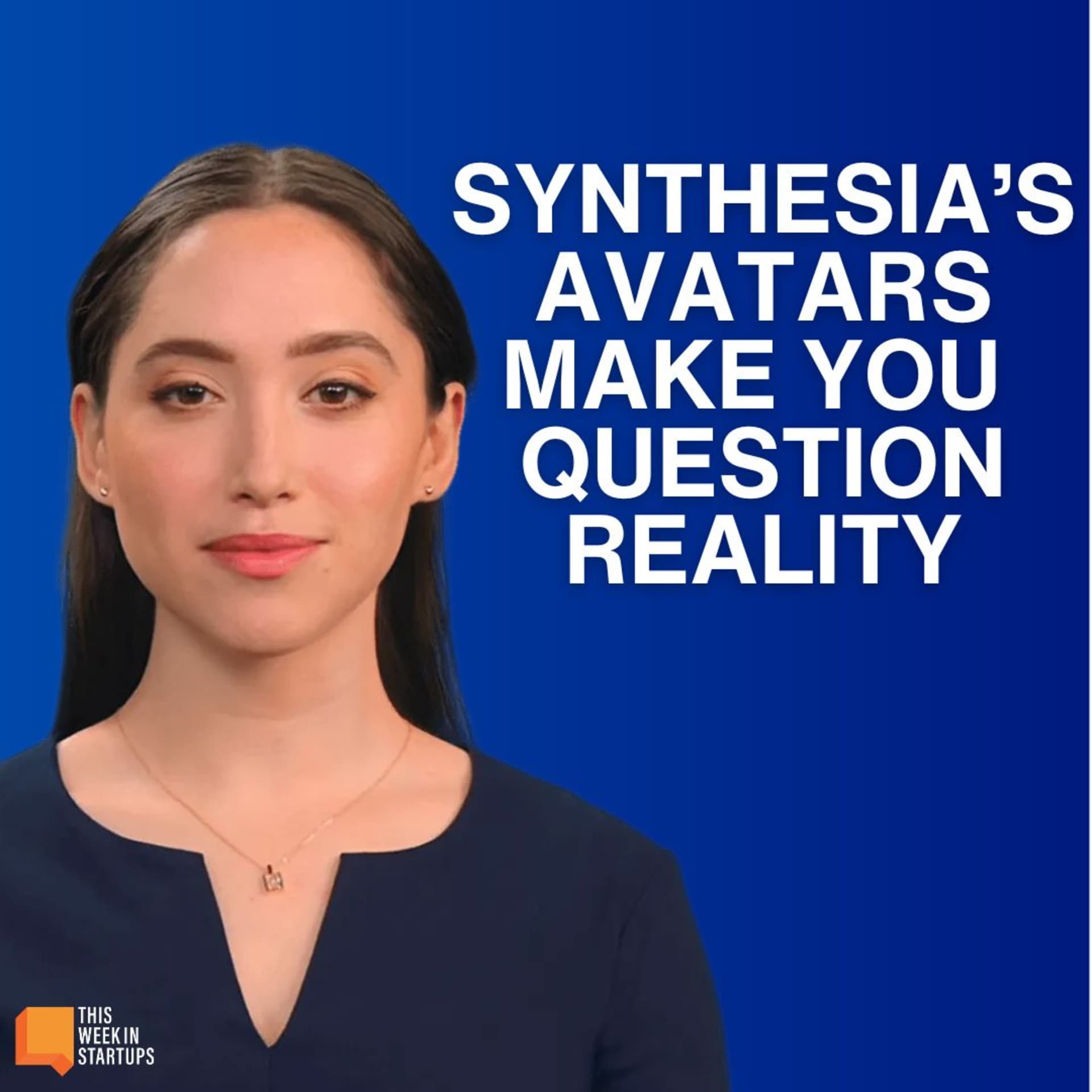
Episode Title Vertical AI Innovations: Abacus LLM in Finance & Synthesia's Video Avatars
Episode Description In this episode, Alex interviews founders of two pioneering companies in the realm of vertical AI—Abacus, which focuses on on-premise LLM deployment for regulated industries such as banks and insurers, and Synthesia, which generates AI video content to assist in corporate communication for the Fortune 100 companies.
---
Key Themes
- Introduction to Vertical AI
- Vertical AI refers to generative AI applications tailored for specific industries, similar to vertical SaaS.
- Companies are moving away from general AI tools to niche solutions that cater directly to the needs of a particular sector.
- Abacus: Generative AI for Regulated Industries
Overview
- Founder: David Moscatelli
- Mission: To integrate generative AI into heavily regulated industries (banks, credit unions, insurance companies) while ensuring data control and security.
Key Points
- Market Challenges: Financial institutions are typically slow to adopt new technology and are risk-averse.
- The Abacus OS:
- A proprietary private LLM designed to be deployed on-premise, ensuring data privacy.
- Focuses on combating AI hallucinations and providing accurate responses.
- Customer Acquisition:
- Abacus employs tactics such as directly engaging with banks through customer channels.
- Offers a money-back guarantee to encourage trial and adoption.
- Synthesia: AI-Powered Video Creation
Overview
- Founder: Victor Riparbelli
- Mission: To provide a platform for creating AI-generated video content that enhances corporate communication.
Key Points
- Product Features:
- Includes AI avatars and a collaborative video editing platform for enterprise use.
- Supports over 140 languages, enabling global communication for businesses.
- Market Adoption:
- Synthesia has achieved $100M in annual recurring revenue (ARR), with 70% of Fortune 100 companies as clients.
- Use cases have expanded from internal training to customer support and marketing.
- Growth and Strategy
- Abacus:
- Transitioned from $25K to $125K in monthly recurring revenue (MRR) within a year.
- Focused on building a sustainable business model while preparing for strategic fundraising to enhance growth capabilities.
- Synthesia:
- Raised $180M in Series D funding to advance AI video technology and expand market presence.
- Positioned themselves to lead in the AI video space by focusing on practical applications in corporate settings.
---
Key Takeaways
- Industry-Specific Applications: Vertical AI is becoming essential as industries seek niche solutions that address their unique operational challenges.
- AI Trust and Control: For regulated industries, data security, response control, and ensuring accuracy are top priorities in AI adoption.
- Video Communication: The demand for video content in corporate settings is on the rise, driven by the desire for more engaging and efficient communication methods.
- Rapid Growth Potential: Both companies are experiencing significant growth, indicating a strong market appetite for their specialized AI solutions.
---
Conclusion This episode highlights how vertical AI is reshaping the landscape of technology in regulated industries and corporate communication. Both Abacus and Synthesia are leading examples of how targeted solutions can drive innovation and efficiency in their respective sectors.
---
Episode Links
- Abacus: [goabacus.co](https://www.goabacus.co/)
- Synthesia: [synthesia.io](https://www.synthesia.io/)
- Subscribe: [This Week in Startups](https://twistartups.substack.com)
---
Follow the Hosts
- Alex Wilhelm: [X](https://x.com/alex) | [LinkedIn](https://www.linkedin.com/in/alexwilhelm/)
- Jason Calacanis: [X](https://twitter.com/Jason) | [LinkedIn](https://www.linkedin.com/in/jasoncalacanis)
---
This detailed summary outlines the insights shared during the episode, emphasizing the key innovations and strategies of both Abacus and Synthesia in their pursuit of harnessing AI technology for practical applications.
Written by AI. May contain mistakes. Listen to the episode to check what was said.
Transcript
Automatic transcript. May contain errors.0:00Hey, everybody. Welcome back to Twist. This is Alex and I have two amazing interviews for you on this very fine Tuesday. Thematically, they are linked because we are talking about the application of AI to particular sectors. This is often called vertical AI, kind of building off the idea of vertical SaaS, but taking generative AI tools and applying them to one particular industry. First up, we're going to talk to Abacus. Now, this company wants to bring Gen AI into regulated industries, think credit unions, banks, and insurance companies. It's very interesting to hear how they're going about approaching that market, and it's quite different than other AI first companies and how they're going after their own markets, especially if they're more consumer oriented.
0:40Then second, we're going to talk to Synthesia, a company that I actually demoed on the show a couple months back. They're a twist 500 company and they're working on basically video generated AI models of people for things like training videos and so forth. Well, they have a pretty important revenue milestone to talk about and some very cool technology. And they have notes on where people are buying genetic technology inside the enterprise today. So if you're a little tired about hearing about the newest model, this and the newest benchmark, that I want to know where does the rubber meet the road?
1:11Well, here you go. Let's start with Apicus. This Week in Startups is brought to you by Atlassian. From MVP to IPO, Atlassian for Startups provides your team the right tools to plan, track and collaborate on work. Head to atlassian.com slash startup slash twist to see if you qualify for 50 free seats for 12 months. Vappy. Add real-time AI-powered voice conversations to your apps or business in minutes, not months. Go to vappy.ai slash twist and get 1 ,000 minutes free per month for life. And HubSpot for startups. Smart founders aren't piecing together random tools. HubSpot is the customer platform that thousands of startups use to scale efficiently.
1:51Get up to 75 % off plus three months of perplexity AI for free. Go to hubspot.com slash startups. Go back in time, a couple of quarters, maybe a year, a year and a half. Everyone was curious, what are all these AI technologies going to be used for? Will they have a real world application? Are they just very fancy toys that cost a lot of money to run? Well, the market has answered that. The answer is yes, AI models do have a lot of value. Bringing AI to the enterprise does have real grit to it. But some companies are taking this in a different direction. Instead of building a tool or a model that works for everybody, they're going niche and trying to take one industry down to the studs to build something just for it.
2:29One of these companies is Abacus, which you can find at goabacus.co. We're going to talk to founder David Moscatelli about what he's building and why he decided to go after a regulated industry so hardcore that I think he must be at least half insane to have selected it. Please welcome to the show. It's David. David, how you doing? How's it going, Alex? I am part insane. That is true. So I appreciate the intro. I don't have to surprise anyone. We were just talking before we hit record and I learned that you're based in Chicago and I have done four Chicago winters. And I have gone through snowpocalypse.
2:59I have lived the lake effect. I learned about depression. So just give Chicago a shout out for me and tell me why you're building in my beloved windy city. Yeah, Chicago's great. I've tried to ask my parents tactfully before. Why do we live here? Why of all places, why did you pick this? And they've never been able to give me a good answer. But in Chicago, we're building a company called Abacus. So Abacus is generative AI for regulated industry, think bank, credit unions, insurance companies. And what we like to say is Abacus is where AI meets assurance. So we're really about helping enterprises not only have an LLM solution with our on-prem solution, but also helping them with response control and then anti-hallucination.
3:45So we have a whole package platform for enterprises, and we're doing quite well at that. from a relatively high level, instead of making a wrapper around something that open AI built or anthropic or pick a company, you guys have your own model that you're taking to the financial industry, for lack of a better broad term, which is very much regulated. And also in my personal view, just not hyper technology savvy. Like, I mean, we joke about checkbooks, but who was sending those out still, right? So am I wrong to think that the world of financial services is relatively behind the times? Because it feels like you picked a difficult niche.
4:22I joked in my intro, but I'm honestly quite curious about their posture towards adopting technology, let alone generative AI on the leading net. Yeah. So it's a good question that you ask. And banks, I will say that the first bank I ever worked at, this is a true story, they gave us a package of red grease pencils to mark up bank statements to do reconciliations. True story. So you're not completely wrong when you say banks are sort of behind the technology curve. But I will say they've started to recognize this as a real serious need for their business, for their customers, one that they can't avoid.
4:55But they want to do so in a bank-like way. What does that mean? Very little risk, lots of control, right? Something that they can really have a lot of purview over. And so that's why Abacus has kind of come up as a solution for them. And they're really looking for, Or if you think about it, Alex, looking for three things when they want, you know, an LLM or any kind of piece of software. They want something that they don't have to worry about their data. So they want something on-prem or very secure. They need something that's going to index all of their data, right? So if you're a bank or a credit union or insurance company, you know, they don't have one place where all their documents and data are, right?
5:29They have tens of thousands of documents and they could have hundreds of different data sources, right? You know, how do they bring all that together to index for an LLM, right? So they need that. The second is the answer has got to be accurate, right? You can't ask an assistant, what's our mortgage rate and have the assistant give the wrong rate. Now you've got a problem, right? It creates all sorts of compliance risk, right? And then you need response control, right? So Abacus or any virtual assistant-like software might give a response, but maybe that's not the response they want that piece of software to give.
6:00So they need some way to control the responses whenever they feel appropriate. So those three things, you know, in place, as I've described them, I think banks are more willing to explore this avenue as a potential solution for not just internally, but their customer. You know, we ask a lot of companies that jump on the show, you know, what's your moat? And it sounds like really in this case, getting a product set up to work inside of an industry with those very strict regulations is a moat in and of itself. Because who wants to go do all that work? It sounds very, very complicated. but instead of going product then model let's start the route and then build up so you guys have made something called the abacus os private llm it's a 30 billion parameter model and i'm not gonna lie david when i hear we trained a model i just imagine a a crater in the ground with just cash burning coming out of it because that's the narrative we hear right from a lot of folks i know you can do it cheaper uh databricks has etc but tell me about this model you trained how you went about it and just the cost books.
7:00I'm sure a lot of founders listening are curious about the process and the why. Yeah. So we started with a base open source model, which is the mosaic 30 billion per amp model, right? Sure. And then we have a lot of data. So from all of our clients, right, we have about 6 million queries every single month that come in. So we have a ton of data in terms of the questions asked by our clients. And this data is very specific, right? So folks ask, hey, how do I open a new debit card in DNA, right? If you ask any general LLN that question, they're going to think DNA means the genetic structure. Really, if you're a bank or credit union, you know DNA stands for Pfizer, right?
7:36Things like that, that we're able to extract out and then fine tune and layer on top of that base model, some really impressive enhancements, right? The second thing we do is at Abacus, we have what we call a parent model. It's a very large, very bloated model. This is a lot of different things. And then what we deploy on the bank's infrastructure, credit union insurance infrastructure, is called a sister model. And the parent model teaches the sister model how to behave, right? So the sister model mimics the parent's behavior. This is often referred to as knowledge distillation, right? Distillation.
8:08Okay, I was curious. I'm like, wait, this sounds incredibly familiar. So you made the enormously expensive, ridiculous, oversized, hard to use thing, and then simply let that train the smaller model, which is cheaper, faster, easier to run, and therefore is a better fit for a GPU cluster you might find at a bank versus one at, say, an Azure data center. Exactly right. So that means all of the compute that the on-prem model's eating up, the cost is actually not even material, right? It's so small because if you think about it, I hate to demistify this for you, but an LLM model is just a CSV file with weights, right?
8:43To get those weights, that's where the expensive training comes in. And then there's some software to then run those weights, right? Predict the next series of words in a sentence to get the query, right? So, you know, at the end of the day, that's what we need to run when we're deploying. And so that sister model is very lightweight. It's completely on-prem within their control, you know, and so that gives us the flexibility to then have that within their infrastructure. sure. And this allows them to do two things as far as I can tell. One is you have an enterprise search function, essentially an AI powered search product lets people go into their own data and pull things out.
9:15Some companies are working on this. I think, uh, Glean is doing this for like the generic enterprise. I've actually used that once at a company that bought it and it was medium. Um, maybe it's gotten better. Sorry to Glean, that wasn't very nice, but I was not blown away by it. And then the other thing you're building is a thing called Abby, A-B-B-I, which is an AI agent, as far as I can tell, that you have tuned to work in a FinServe call center-like environment. Exactly right. So if you think about Abbey, and our company is called Abacus, but some of our first clients, they kept referring to Abacus as Abbey.
9:52And so we sort of adopted that name Abbey. So we call it Abbey Assist. All right. If you're shipping a product or rolling out an update, you're building a company, you need to be organized, right? We know that. Atlassian has exactly what you need to streamline your work and smash your goals. And the Atlassian for Startups program is packed with all the tools you need, like Jira, where you can track every task, sprint, and bug. That's the industry standard. Confluence, another industry standard for team collaboration and documentation. And of course, Loom for quick video explainer creation. Now, Loom is really brilliant.
10:26My team started using Loom on their own. They started paying for it on their own. Why? They wanted to get credit on the investment team for communicating to me, the general partner of the firm, why they wanted to invest in a company. So they would do a loom where they recorded over a recording of an interview they did with a founder or visiting their website and going through why they want to invest in a company. And this was so great for me. I would be skiing in Japan. I would be on a flight to New York to see my parents. And all of a sudden I get a notification from one of my team members. Hey, watch this loom.
10:58And I get the link for the loom. I click it and then I can put comments at any time. So it's like doing a conference call, but on my time asynchronously. And I can communicate right there on the video. Also included in Atlassian for startups is Compass, Jira Product Discovery, Bitbucket, so much more, all powered by Atlassian Intelligence. That's their built-in AI. Atlassian software helps companies like Canva, Cloudflare, and Rivian keep growing and keep innovating. Whether you're brainstorming on sticky notes or scaling to the big leads, Atlassian is here to accelerate your startup's growth.
11:32Check out Atlassian for startups where eligible startups get up to 50 seats for free for one full year. That is absurdly generous. Why can they be so generous at Atlassian? Because they're the standard. Atlassian is the standard. And they are generous to startups because they were once a startup. I remember meeting them 20 years ago in Australia. What a great company. Head to Atlassian.com slash startups slash twist for complete details. And Abbey Assist is sort of that front end chat BT like interface that bank, credit unions and insurers use to answer questions. And this is the kind of thing that, you know, if you're thinking about servicing a client or a customer, you're on the phone with a customer, you're in front of a customer and you're trying to get information to them.
12:16So there's the Abbey Agent, which allows folks internally to look up information. And Abbey Agent has a whole bunch of things synced to it. So they have Compliance Guard. Then we have Chain of Validation. We could talk about those. But then the piece that you mentioned that's really important is the indexer. So Alex, I spent eight months of my life building software that just connect one piece of data to the next. It's very painful. I don't want to relive that. But that was my life for eight months. And so we connect to a lot of data sources. But what's really important is we connect to the really hard one.
12:45But you mentioned Glean. Glean's a great company. They connect to a bunch of different data sources, but the ones we have to connect to for our industry are things like Fiserv and Scimitar. Very complicated core systems that require due diligence and compliance checks on our end. And I presume, unlike linking into Slack, there's not an amazing API perfectly built just for you to drive developer adoption. Exactly right. So we help to solve that problem, safety and security while connecting those core systems. The piece about our indexer that's really important is it's decentralized, right? So most of our competitors, Alex, are going to say, hey, we have this AI assistant.
13:21Take all of your documents and upload it to this one location, and we'll index it, and then we'll give you the answer. And if you're an enterprise, that's just not realistic, Alex, right? So what's unique about our indexer is that it goes out to where the information lives today, indexes that data, and brings it together. So there's no internal alignment meetings or changes in processes and procedures. Does that make sense? Yeah, but the indexer, just to make sure that I'm fully tracking here, because we're talking about on-prem, is running inside of the bank, credit union, or insurance company's own system.
13:50So you hand them this piece of software, and then they go off and run it on. Okay, this is making sense to me. But it all stays inside. It never breaks the firewall containment. That's right. The indexer is completely inside their infrastructure. The on-prem model is on-prem, completely in their infrastructure. So they really have that piece of mind and sense of security when using Abacus, the product. Yeah. Now, when I was prepping for this chat, because I love to dig into how people actually run their service, you have a section in the Abacus OS LLM model part of the site discussing how you can run it on a handful of H100 GPUs, or I think also A100s, yes.
14:29Yep. Reading this, talking mostly to technology founders, getting access to a small allocation of GPUs is not an impossibility. Yep. and the know-how to set them up and properly use them, also not an impossibility. When I think to my childhood credit union, which had great lollipops, by the way, love that. So I still remember that. I remember where it was my hometown for some reason. I don't think they have the juice to get a GPU rack going. So my concern is this sounds awesome, but it also sounds like something that only applies to the largest banks, credit unions, and insurance companies. Because to me, smaller people probably just don't have the gear for it.
15:11Is that right? Or am I being too pessimistic and behind the times? Alex, this is why I love you because your questions are right on. So your answer is correct, but I want you to inverse it. So if you're a big bank, think Chase or Wells Fargo, you fill in the blank, right? Those guys have the money, the talent, the infrastructure to go ahead and then get the best infrastructure that the money can buy. But if you're a credit union or a mid-tier bank, you don't have the talent or the infrastructure to do it. That's why they need a solution like Abacus, right? So even if they, you know, figured out a way to do it, it's not a simple plug and play, press a button, it deploys to their infrastructure and they're good to go, right?
15:50There's a whole bunch of maintenance and compliance things around that. So you're absolutely spot on about, you know, there is a lift, a technological lift to get people there. and that's why a lot of the folks, mid-tier credit unions and banks that need that support, that's why they turned to Abacus. What is the deposit base of a mid-tier credit union? I have no idea what the tick marks are on the axis we're describing here. Yeah, another fantastic question. So I would say the sweet spot is between a billion and$3 billion in total assets, which if you're at JPMorgan, Wells Fargo, this probably sounds adorable, right?
16:27Oh, there'd be a little baby bang. Yeah, but... But those are the folks that really, they have the money, but they also, you know, they have the infrastructure to think about doing something like this. But they don't have necessarily the technological capability or the staff or human capital to go ahead and deploy it. The net interest margin on, say,$3 billion, let's call it, it's a credit union, so it's a little bit lower because they're better to you than banks are. Call it 2%. What is that,$60 million a year? So they probably have, what, a million-dollar-a-year IT budget, give or take? Like, so that does put a cap on your ACV for that type of client, but it can still make a very attractive business.
17:05So how hard is it to land those mid-tier credit unions and banks and bring them into the Abbey fold? Yeah. So that's a good question. And this is where, if you haven't already, Alex, you're going to be like, wow, this guy's insane. So I learned early on that if you're a customer of these banks, because people always ask me, David, how did you get these clients? How did you get your clients? This is a very hard industry. Did you open accounts at all of them? you are there you go so i'm probably on some i'm probably on some government lists right being watched by the feds because i probably have the most open bank accounts of any person in the u.s so i would open a bank account deposit the five dollars and i email the ceo and i'd say hey i'm a customer and i promise you if you're a founder listening that tactic works like 95 percent of the time if you email them and say you're a vendor you almost never get a response because they get those emails all day long but if you say i'm a customer it's like a 95 percent response rate.
17:57So that's how I would, you know, sort of get my foot in the door, which I know sounds insane and it is insane. I don't recommend it for everyone, but, um, you know, that's kind of my hacky way of, of going about it. And then the second way, Alex, that we get them to, you know, use Abacus is, you know, I tell them and, and, and I'm going somewhere with this. I don't want them to use Abacus unless they absolutely love it. Right. I want them to completely love the product and I want it to do everything that we've told them it does. So we give them three months money back guarantee, right? We let them try the product.
18:28You know, it's not something I want them to use. If it's not something they absolutely love to use. And it's, you know, we take this as a matter of personal pride, company pride, you know, we want our products to be tremendously useful and of tremendous quality, tremendous quality. So, you know, that's how, you know, we're able to sell ourselves. It's not just, Hey, you know, we're a customer of yours, or we have a strong interest in you doing well, but you know, our product is here to help you. And we're going to guarantee it does that. From a business perspective, I can kind of see this two ways.
18:54Because on one hand, if you offer a three-month money-back guarantee, people will take a greater risk on trying you out because the bar to entry is effectively lowered. And also you, by giving them this out, effectively say, we're going to let all of our problem customers go away immediately. And if we're not a fit, we're not going to try to fight for retention here because why bother? On the other hand, a lot of companies don't like to let revenue go away. So I guess for founders out there, this sounds like a short-term risk, long-term benefit setup. Is that fair? Exactly right. So what I like to tell all of the Abacus folks, everyone that we work with, and all of our employees is the answer is never no, it's just not now.
19:37We are here to serve our clients and our customers. And that's our focus is making sure we're delivering a product that is really what they want. And while it seems like an inherent risk, gosh, you're going to give away three months for free. You know, I think that's the ultimate test. If your product is what you said it is, and it's a quality piece of software, I don't think you have anything to worry about giving it three months. 2025 is going to be the year that voice AI really breaks out. Voice AI is going to change everything. And this technology is perfect for building a chatbot or automating customer calls and basically creating these next-gen voice experiences.
20:14But building with these tools is so difficult. It's just a bear. It's going to take your developers months to build and test anything even basic unless you use VAPI, V-A-P-I. This is the fastest and easiest way to integrate voice into your products. It's just the most simple API you've ever used. It helps you build, test, and deploy voice agents in just minutes. And you can create ultra-realistic AI voices and customizable personalities. I like that part. All with real-time response speeds. You know what'd be great? Maybe I just demo it, okay? Listen to this. Hey, Jason, it's great to be on your podcast.
20:51It seems like Vappy has figured out how to be very low latency. Maybe you could talk a little bit about why that's important. For sure. Low latency is crucial for a smooth user experience, right? It makes conversations feel more natural and engaging. People expect real-time interactions, especially with the voice assistants. At Boppy, we've optimized everything to keep that response time around one second. It's like having a chat with a friend, not waiting for a robot to catch up. Can you do other voices and personalities? Right now, I'm rocking my CEO's voice, but with Boppy, developers can bring their own voice models.
21:24So if they want to add some walk and flair or any other personality, they totally can. I mean, who wouldn't want a little drama in their AI conversations? Just think of me as your friendly AI buddy, keeping it real. If you want to give it a spin yourself, And trust me, you should. Just head over vappy.ai slash twist and twist listeners will get 1 ,000 free minutes per month for life. That's F-R-E-E. Free. What an amazing price. Again, that's V-A-P-I dot A-I slash twist. We've never had a customer take that three months and not convert to a full-time paying customer. So I know it's adorable because we have nine paying enterprise clients.
22:00So that sounds adorable. that, you know, we, you know, for us, we've never had a conversion not go well. Nine enterprise customers for a company of the age of Abacus, because it's only a couple years old, right? That's right. That's right. Yeah. So stop, stop talking yourself down. That's fantastic. There's unicorns out there right now who are like, we would kill for nine customers. So I think you're doing fantastic. Now, what is the ACV here? We're talking about, you know, FinServe. We're talking about self-hosting, talking about data fine-tuning. there might be some handholding there. I'm presuming this is not 20 bucks a month.
22:35No. So, you know, what's our pricing schedule look like? How do we price our product, right? We have both a monthly subscription and a one-time installation fee. Now it's based on asset. So our monthly fee is for anywhere from 10 to 15 ,000 per month. And then the one-time installation is 250 to 350 ,000. That's a one-time payment. And it's usually amortized over the life of the contract average contract is roughly three years okay so i'm looking at about a hundred a year for the spread out installation costs and then i'm paying some number of bips off aum for the rest of it that's right that's right so we usually uh we usually get um the the installation fee it depends on the client sometimes it's paid up front sometimes it's amortized but you know i would say 15 000 is uh surprisingly uh more common than i mentioned that range and we normally uh itch inch toward the 15 ,000 per month.
23:29How much capital would you need to raise to be able to just waive the installation fee and just go straight for it and just go faster and land even more enterprise accounts by getting rid of that roadblock? Everyone asks me this question. So the installation fee is actually... Okay, tell me why. I want you to think of the monthly fee as mom and the setup one-time installation fee is dad. Dad's grumpy and he's really strict and mom is really nice and wants to give you everything she can, right? Okay. So you play those off of each other. It allows us to be flexible with our pricing and allows us to negotiate, right?
24:06So if you have two of the numbers, one's a monthly fee and the other is a really high number, seems very large. And all of a sudden you bring that number way down. All of a sudden the customer, right, sees a tremendous amount of value and goodwill toward them as a client, right? So it's a very strategic value proposition to have both. If you just have one number, hey, this is our monthly fee. You only have one number to negotiate with. But if you have two, you can play them off each other. And we typically do. So everyone says that to me, hey, why the installation fee that's really high? My answer to that is it gives us a leverage and negotiating power when we're talking to clients and allows us to meet their level of budgetary applications, if that makes sense.
Read the full transcript
24:47Yeah. And besides, you care much more about the monthly than the one time. Exactly. One time is a sweetener for you guys. There you go, Alex. So it really wrote about the monthly, so the one time gives us flexibility in our pricing in a way that we wouldn't have otherwise. Honestly, I mean, like, pigs get fat, hogs get slaughtered, but, like, if you can go ahead and get paid twice, huzzah! I mean, look, I'm not going to stare gross profit in the face and say no to it, but I just realized something interesting about your 15K a month price point. because this is on-prem, you're not eating enormous public infra cloud costs.
25:25So your COGS must be low and your gross margin must be just ludicrously lovely. Exactly right. So we are not paying an open AI or anything on a per query basis, which is why our fees can be fixed, right? We can say, okay, for the contract, 10 ,000 or 12 ,000 or 15 ,000 a month, banks and credit unions like that. They do not like annuities that are variable. They will shut that down every time. They want a fixed price. And so they can ask 10 ,000 queries a month or a million queries a month. It doesn't matter, right? The price never changes. So we can undercut a lot of our competition on price, first of all, when it comes to these sorts of Asians and AI deployments.
26:01And then secondly, as you mentioned, you know, the one-time fee that we're charging, you know, because everything's on-prem, everything is built in-house. So, you know, we can really price it in a way that makes sense for the client. has anyone ever come to you and said listen we want you we want to be on prem we don't know how to set up our own you know racks have you ever like gotten the screwdriver out like put the gpus together for someone else to run the model on their own metal yeah it's funny you mentioned that so a lot of credit unions and banks maybe even the one you mentioned top of the call from your hometown they actually have a server room right actually in the building right and so we've actually gone to physical server rooms before spent a few days helping them install abacus so maybe not quite a screwdriver, but we have been in the room in the vicinity of the actual servers that run the computational data for the bank or the credit union.
26:52So we're not afraid to be there on site if we have to. I'm now frantically Googling credit unions, Corvallis, Oregon, trying to figure out which one it was. It's the one over by my old dentist. You know the place, right? You've been there. Of course. Yeah, yeah. A hundred percent. I want to drill down on some of the tech things and get away from the money side for a minute. And response control, hallucination control, clearly when you're talking about regulated industries, can't be spitting out BS. How did you guys actually go about combating hallucinations? Because I think that most models have made progress here.
27:22I think there's a good trajectory, but I wouldn't say it's something that's been resolved. And so I'm kind of curious, what was your approach? Yeah. So we have what we call chain of validation, right? And it's a three-tiered system, Alex. And that really helps us ensure that Abacus is always giving the right answer. So as you know, with LLMs, hallucinations is a big problem, right? How do we make sure that the answers that an LLM gives is accurate and grounded in real facts and data? So our chain of validation has three steps. The first is triangulated retrieval, right? So Abacus will look up.
27:55So say you ask a question like, how much is a late? And Abacus gives the answer. A late fee is$25. dollars she will look to cross-reference three different sources of information to validate that a late fee is actually 25 so she'll look at their online website make sure that the fee listed on the website says 25 she will look at their truth and lending disclosure to make sure the disclosure says 25 and then she'll look at their internal policy documents to say that shows that the late fee is 25 when all three she here is abby the agent that's right that's right abby the agent And so if all three of those sources match, the data passes the first step in chain of validation, which is triangulated retrieval.
28:36Then there's a second step in chain of validation, which is claim decomposition engine, right? So we take the logical structure of a claim and we decompose it, right? And make sure that that's valid with the fact. So let's take our example. A late fee costs$25. We're talking about a thing, a late fee. We're talking about a fee. And then we're talking about amount, right? We take the thing, the fee, the amount is the logical claim that we're trying to validate, and we validate that claim against the information. So with an LLN, they give a lot of very colorful answers, answers that are meant to sound very human-like in quality.
29:14We're extracting just the logical claim that's being made. The thing is saying it costs this much. Is that true? Customers are allowed to sign into online banking and set up alerts. are customers allowed to sign into online banking? And once they're in there, are they allowed to set up alerts? That's a logical statement, right? That we're trying to validate. Okay. Why wouldn't you do that before you did the triangulation of the$25 price point for this late fee that we're discussing? Because to me, it sounds like you would want to get to the absolute nuts and bolts of the logical progression and then check that against the facts.
29:49Yeah, it's a good question. Because if you check the logical progression of a statement, right, Right. And it is valid, but the validity. So if I said, for example, all cats are dogs, that is a valid logical statement. It's not a true logical statement, but it's valid, right? All right. Everyone knows that CRM isn't just software. It's basically the heartbeat of your business. But it can get ugly quick if your data isn't organized and you're dealing with a messy tech stack. That's why I love HubSpot for startups. It's the all-in-one customer platform. So you don't need a Franken-side of tools.
30:29No. Right now, early stage companies are going to get 75 % off. And with this one system, you're going to automate marketing that actually converts, track your sales pipeline without spreadsheet chaos. And you're going to manage your customers like the Amman Hotel, six stars all the way. You're going to get investor-ready analytics that tell your story perfectly. And man, when you pull up HubSpot and you got those metrics, you got those analytics, things are going to go really faster for you as a startup with potential investors. Plus, you're plugged into an amazing community of founders who've already tackled what's ahead.
31:03They've been around those sharp turns and they can tell you how to navigate them. HubSpot was built by scrappy founders. I know them. And they understand every dollar counts. That's why hundreds, thousands of startups trust HubSpot to scale their businesses. Here's an amazing call to action. So generous from my friends at HubSpot. 75 % off. That's right. Seven, five, not 7 % off, not 5 % off, 75 % off HubSpot for startups. You're going to get three months of perplexity AI for free. That's a great pot sweetener. Head to HubSpot.com slash startup. We're not just checking the validity of the logical statement.
31:40We're also checking the truthfulness of the statement. So the first is we want to make sure that the information going into that logical statement's true. Once we validate that it's true, then we validate the actual logical claim, right? Is the claim valid? So if something were to say a late fee is negative$100, that's not a logical claim, right? So that's not a valid logical claim. So we know immediately something's wrong. So that's why we do it in that order. But then we have the third piece, which is what we call fact backpacking, right? So every single answer Abby gives comes with the actual document that provided the answer.
32:12Where in the document that answer came from and a full citation. So document ID, paragraph level hash. So if that person using Abacus wants to see, okay, Abacus saying it's$25. I just want to make sure that's right. You know, for my own sanity check, they can click to see the actual physical document. Okay, this is where it came from. This is the exact paragraph. Oh yeah, it says$25 there. I know the answer is right. Is the person here that's checking this, the end user or the company itself who's vetting their own system? The end user. So we empower all of the end users, no matter if they're a teller or an executive vice president, if they receive any answer that Abacus gives and they want to make sure that that answer checks out.
32:52It sounds about right, but I don't know about that. Is it really$25? I thought we changed it to$35 last month, right? They can click on the actual answer, right? And it'll show them, oh yeah, in policy 568, where it talks about late fees in this paragraph, I can see right here, Abbey highlighted exactly where it came from. Can I just say that if your credit union is charging you a$35 late fee, get a new one. That's worse than Citibank, who I hate. Yeah, no, credit unions are really good about late fees. I'm just making up numbers here, but they - I know, I'm just - They're really fantastic. Yeah, no, but I agree with you.
33:26Late fees can get completely out of control. I'm curious, with this three-part system, do you get hallucinations down to zero, down to a de minimis level or down to a merely acceptable, but still improving level. We have a 98 % accuracy rate because of this system, right? Anything that the system flags, it kicks out, right? Okay. And because we train on financial data, you know, we know the kinds of questions they're asking, you know, we can be very, very precise. So we have a 98 % accuracy rating. Hallucinations are incredibly rare if they happen. Okay. We're able to get it down to a level so low that they're not material.
34:03And that's where the trust comes in. And so once clients learn to trust Abby, you know, sky's the limit as to what you can do. That's amazing. I'm so happy that we've gone from, you know, attention is all you need to chat GPT to this level of deep vertical integration in, you know, less than a decade. I mean, that's why technology is awesome. Like, I mean, my God, I do hate that I feel so incredibly behind every single day because I feel like I'm sticking my head into a fire hose of news, but then you see where the rubber meets the road and it's pretty exciting because this is actually going to make smaller financial institutions more competitive more efficient and just more viable so that that brings me joy um david now about your company though how fast are you growing we've grown tremendously fast we have more interest than we're able to service right now so we're we're really trying to you know move the needle on uh our fundraising around and and you know build up some infrastructure here so we can do that.
34:59Just last year alone, we went from 25 ,000 in ARR to 125 ,000, or excuse me, MRR, 25 ,000 in MRR to 125 ,000 in MRR by the end of the year. So we have grown incredibly fast so far. When I think about venture capital, I know this is this big in startups, not this big in venture capital, but it often feels like the same thing. A lot of founders need to raise money because they need to build, they need to reach a certain milestone, hire a certain number of people, buy a certain technology or whatever. And so it makes a lot of sense to have risky capital in there. But going from 25K MRR to, you know, north of a million ARR in a year, I mean, it feels like you probably have so much more income to play with that you're probably not as capital constrained as your average Joe in the startup game.
35:44So why is it the right move for you guys to go out and try to raise more money versus just self-funding? Because it feels like you have a fork in the road here, if you will. You're right. When I started the business, I started the business and I wanted to run it like a real business. We're cashflow positive. We don't have a burn rate because I'm from Chicago. I'm from the Midwest. I'm not one of these fancy San Francisco boys. So I started it the old fashioned way, my business, and worked at it slowly as we've made progress. To me, making money was the definition of, okay, now I have a business.
36:20We have net income. So you're right. We do have capital. We do have money coming in the door. So why venture capital? And the answer, Alex, is as much as I hate to say this, to win in this space, you have to be first, right? The company that these credit unions or banks or insurance companies adopt first is going to win because once they're in there, they're very hesitant to change, right? Some of these banks and unions have systems from the 80s and they don't want to change it because it works. So the same thing is going to be true of whatever AI system they adopt. So we need to get there first.
36:51To get there first, we need a large infusion of cash so that we can move very, very quickly, make sure that we're capturing as much real estate as possible as the AI space is building out and companies are starting to adopt this technology. And so that's why the venture capital is coming in. So the gates open, you're running across the field to get the best spots at the concert, and you want to run even faster to beat all the nerds out. So you raise money. Okay, I'm here for that. But if you do end up raising some money, going out there and then going back to profitability. Well, that would make my Chicago roots very happy to hear because I love net income.
37:24Those are my two favorite words in the English language. All right, David, before we go, one, what's the website? And two, what is a role that you are hiring for? You're having a hard time landing the candidate. Yeah. So goadvocist.co is the website. And then a role that we're hiring right now, sales, sales, sales, sales. And we need people that have expertise in that industry. So banking, insurance, credit unions. So those are the roles we're really looking to fill right now. So if there's anyone out there listening that's interested, please let me know and go to the website and hit contact us.
37:54But we're looking for people with that industry experience and that sort of sales point of view or disposition. So all my cool salespeople out there that know those industries, let me know if you're interested. All right. Well, David, thank you so much. And when you, I don't know, whatever your next milestone is, 2 million air or whatever it is, I'd love to have you back on to learn more about it because companies that grow as fast as yours are, are onto something. So in the meantime, good luck. Enjoy the Chicago summer. It'll be tank top season for a solid three months before it freezes again.
38:23We'll talk to you soon. Thank you, Alex. Thank you very much. I told you that was going to be fun, but let's take it one step further. Let's go talk to Synthesia, not Synthesia. Come on, get it right, people. And let's learn more about AI-generated avatars, training videos, video models, and all that good stuff. Let's go. We have been talking about AI so much on this show, I'm sure you want us to be quiet about it. Who wants to see more text generated by a robot? Well, good news today, we are going to stay on AI, but we're going to move away from the written word and instead focus a little bit more on video.
38:54Now, regular viewers of the show will recall that some time ago, I heard tell of a neat new product called Synthesia, and I wanted to play with it. So I made a video, brought it to the show, showed it off to Jason. Well, today we are bringing the company on the show to talk about what they're building because i have added them to the twist 500 partially because they raised a big round earlier this year but partially because they're growing very very quickly and we'll get to that so please welcome to the show it's victor ripperbelli the ceo and co-founder of synthesia hey man good to be here thank you for being here uh for folks who are watching the video it's actually quite late over in london where he is he's been very generous with his time but first of all let's start right there building an ai company in the uk i've been told victor that if you're not building within three blocks of one part of San Francisco, you're doomed and yet you're absolutely not.
39:41So what's it like to build an AI company over in Europe? There's pros and cons. I think if you weigh up everything at once, it's probably still better to build an asset for the US. But there's a lot of benefits actually for building in Europe. One of them I think is actually talent, right? So the price of talent in the Bay Area is extremely high compared to the rest of the world. And it's not just about the cost. Actually, I think there's also a loyalty element to this, which has two sides to it. In the Bay Area, most people are building their own personal stock portfolio. And they're very quick to jump ship if you miss a couple of quarters, right?
40:18In Europe, there's a different way you relate to your work. It's less transactional in a sense. People care a lot about the mission, the company they work in. And they don't care so much about stock options, which definitely has its downsides as well. But my general sense is that people are less jumpy in Europe. And I think that's, of course, beneficial if you're the founder of a company, right? You know, when we started the company back in 2017, the capital markets were not nearly as global as they are today. I think that has kind of like equalized today, more or less. I don't think it's particularly harder to waste money in Europe than it is in the US.
40:49You're less close to the ecosystem. I think that matters a lot if you're building, if you're customers at other tech companies. And that's one of the things that we aren't. That's not really a thing for us. It's not even a top five industry for us. But obviously, if you're building developer tooling, you probably want to be in the Bay Area. That's just proximity to other tech companies who are ultimately your customers is much better. But I think building in Europe, building in the UK is getting better and better and better. There's also the benefit of a company like us, who are one of the companies in Europe that are doing really well.
41:19If you're a great European engineer, there isn't that much choice, right? In SF, there's like a thousand cool startups who've laid lots of money and do very interesting things. so i mean pros and cons but overall i think europe and the uk is actually become a pretty good place to build i've uh don't tell anybody but i've actually scooted the uk back into the eu mentally i'm just preparing for a post brexit feature so we'll see how long that takes but i think we can kind of see the writing on the wall uh okay victor what i did there was actually not start with what the hell you're building so synthesia in my understanding is a tool that i can use to create essentially AI avatars in videos.
41:56And these are aimed not at the consumer use case, I'm not making a 30 second clip of Gandalf walking around with Frodo. But instead, I'm creating video materials for a corporate environment. So one, how close was that and to narrow it down for me? Not bad. But I think a lot of people have this perception that we're an AI avatar company. And that's definitely the way we started, like, let's start it. But that's, that's kind of how we We initially went to market, the hit product market fit four or five years ago in 2020. I think by now we're much more than that. Avatars is a feature in our platform, but really what we are is an AI video platform for the enterprise.
42:31We cover the entire life cycle of the video. We help you create the content which starts with the AI models, the avatars, right, which replace the need for a camera. But it's also a fully fledged video editor, sort of like using Canva or PowerPoint. It's a modern collaborative platform that can support enterprise with thousands of people creating things simultaneously. organize themselves around that. It's a content management system for translation, updating, versioning. It's a publishing platform. We have our own AI video player that's built to show the videos you make in Synthesia and deliver your insights and analytics back.
43:01So really, it's about the entire value chain. It's not just about creating clips of advertising, even though that's where we started. You're right on the use cases. We're not targeting entertainment. We're not targeting advertisements, really. And the best way of thinking about Synthesia and the market we serve today is people today want to watch and listen to content they don't want to read that much anymore right in our private lives everyone i think will agree with that we're recording a podcast with a video right now and most people prefer to consume information this way and that's because when we have free choice that's what we do but when we go to work right we don't have free choice most of the time you have to basically consume a lot of text a lot of emails a lot of slides and that's just a much worse way of communicating and to your customers employees your partners that could be anything product marketing to customer support to internal trainings, it's a much worse format if you're using text.
43:48If you want to communicate with most efficiency, you need video. And what we've built is a platform where enterprises can essentially use our tooling to communicate in the most effective way, which is with video, but at the speed and scale of text, right? You don't have to use cameras. You don't have to use actors. You're going to need to be great at video editing. It all just comes out the box in a PowerPoint-style experience. And the markets we serve, five years ago, when we launched the first iteration of the platform, it was very much internal-focused learning and development workout training-oriented use cases.
44:18What we've seen is that as the avatar and voice technology gets better and better, and you unlock more and more tan. So today, it's 52 % of all videos generated that are external-facing, which is like customer support. Oh, so over half now. It's over half now, right? And a lot of that is like product marketing, for example. But it's not like the fancy meta ad that attracts you initially. It's the mid-funnel content, right? It's like you're interested in a product, you go to the website, and you want to learn how does my product compete against a competitor. That can now be a video instead of a long page of text.
44:48Your consumer and your transaction out of mortgage used to be faced with a long page of text that very few consumers can sit down and comprehend. Now you can watch a five minute video instead. So it's not like the top level awareness stage of the funnel. It's much more in the kind of information sharing, how-to style of content that we found on mission. Now, when I showed the demo, we used a model of a woman sitting on a couch wearing a striped shirt, for example, that's kind of the thing you have on your front page. Can I use Synthesia to make a video or an AI digital twin of myself? Or am I always going to be working with a model that you guys have provided and also, I presume, tuned and tweaked to fit your voice algorithms?
45:29So you can make your own avatar, a very popular feature on the platform, one of the most popular ones. It's super simple, you can use your webcam, it takes five minutes, you basically just recite a script that we give you. You can also, if you want higher quality, you can go to a studio, you can record it with a camera and essentially the quality you input to the system is the quality that you get out. These technologies are magical now, right? Should we just try cloning your voice at some part in time? Actually, I haven't yet because I think my voice is very annoying and I wouldn't want to listen to it more so it actually hasn't occurred to me.
46:01But I will play with that, yeah. Because you can speak 30 languages at the click of a button and it is pretty magical to listen to your own actual tone of voice, speaking in Spanish, German, Italian, whatever language you want to speak. That actually, that is freaking cool. And I presume, because we're talking about multiple languages here, that the service itself does support much more than just English. We support 140 different languages, which is also a key part of our value proposition, especially for global companies, right? We need to communicate across borders all the time. So let's talk just a little bit about training data, because you guys recently announced a deal with shutterstock to ingest some of their visual information to help build out your express 2 model but when i'm thinking about how to nail an irish accent i mean is there a repository you can go out there and like train against you to collect all that yourself how did you go about supporting that many different languages and speaking styles so that particular part is separate from the the the deal with the shutterstock right if we start to count the video side of things, which is really where Shutterstock is kind of relevant here.
47:08Basically, what's happening in the world of AI, as you probably know, right, the models get bigger and bigger and bigger and bigger, and they get more and more generalizable. LLM is kind of like the first iteration of this, where we built something which was essentially highly generalizable and could just do a lot of different things. It wasn't like a model that was like really good at doing just one thing. In the world of video and avatars, if you look at what the product is capable of today, it's essentially people talking to the camera, and the quality has gotten like really high. It's kind of edging on looking like a real video, essentially.
47:38But there's a lot more things what the avatars do. They want avatars that can laugh, avatars that can cry, avatars that really use their body language in the correct manner. So when you look at me speak right now, I use my hands. There's a beat to what I'm saying. The avatars are not there yet. They will be with these new flagship models. And essentially what you want is for our AI models that centers on human speaking, we want them to see lots of different scenarios, lots of different types for people interacting in many, many different ways. And that requires lots of training data. So we both spend a lot of money on procuring our own data sets, working with actors all around the world and studios, 3D data and so on.
48:13But it's also really helpful with these models to see kind of a glimpse of the world from Shutterstock, which has like a lot of content on their platform. So much. Okay, so it sounds like this is very, very hard to do well. So you're using both data from other people, getting your own data from actors and voice and motion capture and so forth. How much better will Express2, the model I believe you're currently training right now, be compared to what I can currently see via the Synthesia website? It'll be a lot better. I think what we're getting to now is maybe Self-Dubes just to outline how I view the kind of avatar space and video in general, right?
48:53So I think these technologies started five years ago. We were the first ones to launch the property. And back when we launched the first iteration of them, they're pretty crap, to be honest, right? The devices sounded like you're kind of talking to a GPS. The video was kind of stilted, but it was kind of like good enough for some use cases. And we were some of the first to discover what those use cases were. And they were definitely not Super Bowl ads at all, right? But for internal training videos, where the alternative was asking people to read 10 pages of PDF documents, these sort of crappy avatars actually was a much better experience, right?
49:24Now, what has happened since then is the quality has gotten better and better and better and better. but we're still in the realm of what I would call educational how-to, very kind of utilitarian practical content, right? It's about like me delivering some information to you in the most engaging way. It's not yet about storytelling. Storytelling to me is making you feel something, making you laugh, making you sad, making you happy, right? That's what a real actor does. That's what you look like a great app, right? It makes you feel something. That's what you see in entertainment content that makes you feel something.
49:50And I think with these new models, we'll actually begin to cross into that because what's going to happen is that the avatars can and begin to perform their lines like a real actor would. When I speak to you right now, my voice kind of slows down and speeds up. And I emphasize a specific word. I use my hands to underline something, right? And that's how we speak as humans. That's what's most natural to us. And when we can teach these avatars to do that, we are going to be able to create content that's going to be even closer to the real thing. And it's going to have all the emotions and explosivity you would have from a real actor.
50:18So I think with these new models, I think we'll break through into storytelling. and you'll begin to see the first iterations of creating content that's not just meant to inform, but also kind of entertain, storytell, make you feel something. And I think that's going to be a pretty interesting watershed moment. We've seen that in other modalities, something like if you just stick with just the voice part, essentially before a couple of years ago, voice technology was only used for assistance in your phone or for GPSs, right? You would never listen to an audio book that was done with an AI voice.
50:48It was just way too bad. It was terrible. Now you have companies that basically take real books and turn them into audiobooks, and it's a great listening experience because all the emotional exclusivity is conveyed. But we haven't had that moment for video yet, and I think that will be a pretty big watershed moment that just unlocks so many use cases. So I think it's pretty exciting. So what I just heard is that when the Express 2 model comes out from Synthesia, we're going to cross over to almost a new generation of AI video quality. It's going to unlock a lot of other use cases, both in the corporate world and I presume also at some point in time in the consumer domain as well.
51:23Absolutely. Yeah. That's incredible. So I'm going to go off topic here and talk about where I see this going and I'll bring us back to the corporate world and how you're doing and so forth. but I recently was playing with OpenAI's voice mode, just chatting with my AI. And we had a talk, I gave it a name. It was kind of weird. I almost felt like I was like crossing some sort of like ethical boundary. We were just talking about like the stock market, but it still felt different in an interesting way. Almost like I was talking to a person, even though I knew better. If I take that moment of like, oh wow, this is actually really good and apply it to what you just told me about what you're going to pull off with the Express 2 model video.
52:00i mean how long until i have like my ai is is not only persistent in terms of memory and knowing me but also has like a a look to them that i would expect to persist across my digital environment it feels like to me you're building the real front end for ai here in a way that other people haven't yet and they're still trying to get me to type into a chat box so to me what you're describing feels like it opens up a cambrian explosion of possibilities versus just making middle funnel corporate materials that much more beautiful for sure i mean i think we're so early in all this technology and as to your point right i mean these things will be real time they'll be the fidelity will be 10 times what it is today and you will be at some point right probably have like ais that can tell jokes you'll laugh at which sounds weird we may even at one point have you coming home after a long day of work and sitting down on your couch and instead of turning on netflix to entertain yourself you may actually begin talking to an avatar go through some interactive kind of experience, right?
53:01It's kind of hard to imagine. Five years. Yeah, I mean, maybe even before that, but definitely in five, 10 years, I think this is going to be a completely normal part of living our lives. And it'll be weird. There'll be lots of challenges. But ultimately, I think what this promise is, right, is that the interactions we have with our computers are going to be much more natural the way our brains are wired, process information, right? Like using a keyboard and a mouse, it's natural to all of us today because we've, you know, we kind of grew up with it. But everything really is a proxy for how we actually prefer to interact with each other in the real world, right?
53:35Which is, we talk to each other, we see emotions, we use our hands, we show people things. I think we can just, we can get what goes on. And it sounds like you had the same experience, but the first time you tried something like OpenAzModicSmart, right? It is kind of like a holy shit kind of moment where like you almost cannot believe it's real. But like the first time you used ChatGPT, right? You just, and it's truly magical technology. the flip side of that is it's also very interesting how quickly we just get really used to things right like with chat gpt it's like if you took chat gpt back like 40 years in time you'd get burned at the state right oh it's like someone invented uh it's like this is like insane but now everyone's like it can't like solve the entire all it can't solve all by homework in one prompt right i have to do in two prompts that's all we get used to this very quickly yeah but i mean we get used to it quickly because our expectations rise so fast.
54:27So the first time that I saw a Synthesia video, I thought to myself, this is 90 % of what I could want. How dare they not give me 100? Which is an insane perspective to have, given that, you know, not that long ago, this was, as you said earlier, poor voice, stilted video, kind of crappy, but definitely a great first step progress. But compared to today, I mean, it's mind-blowing how much better things are, and I almost feel like I should be more enthused. Like, I should be more excited day-to-day, but instead, tools become rote very quickly when you actually go about using them exactly and I think a great analogy here is like visual effects in movies or computer games if you go back and watch a movie you watched when you were 10 years old you were like mind blown as the realism and you're back then you're thinking like this cannot get better we've reached like the apex of like visual effects and then when you go back and watch it today it looks like crap right so we just get used to this stuff so quickly Yeah, it's also interesting, especially when you work with humans, which we do, right?
55:25Humans is the hardest thing to synthesize and make AI videos about, right? Because we're so sensitive to even like the smallest inconsistencies, right? Like when you look at a human, we have so many like micro interactions, the micro movements that goes on all the time. And we're incredibly good at spotting if something is like just a little bit off. Much better than if you're just making a video of like waves in the sea or something like that, where I think in a lot of AI models now are capable enough to do that. But it is a bot, it's kind of a moving goalpost, right? Which is kind of like very fascinating.
55:57Okay, let's bring it back to today. So actually, as this video comes out, we're recording this just a little bit early. You guys are announcing that you've reached 100 million in annual recurring revenue. One, congrats. And two, and this is a stat that actually blew me away more, is that 70 % of the Fortune 100 are now customers, and that's up from 40 % about two years ago. you're getting pretty darn close to having every single of the largest companies out there a customer for you so i'm curious what can you tell me about what they're using synthesia for today has the use case changed at all is it where it was even though you're going into the largest companies in the world or do they want something else out of you it has definitely changed over the years you know and we're very fortunate to have worked with lots of our customers over many years and cutting into you know larger and larger contracts because more and more people in those companies use Synthesia.
56:45And as I kind of described a bit earlier, it still revolves mainly around practical content and utilitarian content. It's about informing someone of something. It's not storytelling, ads, and those kinds of things yet. But what we have seen is that a lot of our customers that started working with us a couple of years ago, maybe they started with internal training and learning. But then since then, now they're using us for customer support. They're using us for product marketing. They're using us for partner integrations and a whole bunch of other things so i'm curious about your costs because the technology is awesome you guys did just raise 180 million dollar series d i think you said it was a 2.1 billion dollar valuation that's a big chunk of capital so i do you guys have very high compute costs is is training very expensive um or is that money more earmarked for you know people marketing and so forth so it's always been very important to us uh to build a great business and not just in terms of top line growth, but in terms of unique analysis.
57:41So it's a really, really solid business, kind of like a marketing perspective, retention metrics, and those kind of things, which is something I'm really proud of, almost more proud than a Hollywood and AR figure. Now that said, of course, we do spend a lot of money on training AI models, right? Like it's important for us to stay the leader of the field, have the best models and so on and so forth. But I generally take a very practical approach to how we train models. You know, I don't want to just train models for the sake of training models. There's a lot of companies out there that start with the technology, right?
58:09So let's train And an AI video model that could do absolutely anything. If you want an AI video model that could do absolutely anything, that's going to be a very big training one. It's going to be very expensive. And your model is going to be kind of okay-ish at a lot of things. Yeah. But not really, really good at one thing. And for some use cases, that's the thing you want, right? Sure. Because I'm saying that that's not great. What we're doing, though, is we're focusing purely on humans talking to the camera. So that's a much more narrow domain than all the videos in the world. That also means that we can be smart around how much training we need to do.
58:38We can work with open source models. We can add a lot of our own data. But of course, a ton of old algorithms. So even though we do spend a lot of money on AI models, that's not the predominant reason for raising this capital, right? That is predominantly going into headcount and all the usual things you'd see in a SaaS company. But I think it's kind of interesting how the margin profile of AI companies, right? It's like they look very different depending on what kind of model you are. In general, it looks like it looks better if you're like workflow driven and use case driven as opposed to being like in the model layer.
59:08Because when you build a workflow on a platform around your model, you're not really charging for the model. You're charging for the workflow you're selling to our customers. And for us, what that means is that, to the point I made earlier, yes, the avatar is a feature in the product, but they are a part of the product. What people pay us for is not just avatar videos. They pay us for translation, versioning, video editing, collaboration. They pay to use our video player and analytics suite that comes with that. And I think that means you can build a different shape of business, of course, like being a foundational model company.
59:41And it's amazing, like looking at open air and probably all these guys, right? They're going to be great companies, but it's going to be very few of those. And I think if you're not going to be one of those truly big winner-takes-all kind of companies, I think you want to be very smart about what models you train and how much money you pour into that, right? Because if you use$200 million to train models and you still don't have the best model on the market, you're basically kind of screwed. So we think a lot of, we think backwards from the use case and for the workflows. And when we need to train our models, we do our own models to do that.
1:00:09If we need to integrate other models into our ecosystem to create the best experience for our customers, we'll do that. And we're not religious about like having to do everything ourselves, right? And I think that's, that's been a key part of our strategy for many years. Hey, if OpenAI, Anthropic, Google, XAI, and Mistral all want to spend a hundred billion dollars making something awesome and then beat each other up on price and then offer it to me, cool, I'm in. Exactly. I'm happy as a cat because I don't have to lose all that money and I get the best stuff. So I do really appreciate that. Now, we talked about the Fortune 100, clearly biggest companies out there in the world.
1:00:42I'm curious about the next like 5 ,000. So are you guys seeing smaller, more mid-market companies have a similar appetite for what Synthesia offers, essentially video AI technology? I mean, we have customers that are of all sizes, right? From just individuals all the way up to the world's absolute biggest companies. and we have a self-service product we have a freemium product which i think you've interacted with yourself right so all that is is of course also very important for us but to my point earlier around focus and we're building for the enterprise you know and that means we're building for businesses and that means we make a bunch of trade-offs that makes our product amazing for the enterprise and for bigger businesses and and maybe sometimes means that we're not always like priors as we need to like a small business that said you know we work with lots of small businesses who love the product and we love working with them.
1:01:28And there's going to be tools like Synthesia. I think the best way of thinking about the ultimate TAM of something like what we're building right now is basically PowerPoint, right? Every office worker in the world today creates PowerPoints. And in 10 years' time, they're going to be creating videos instead of interactive videos. They're not going to be creating PowerPoints. I think that's for sure. And so our tool is enterprise-focused in terms of like the company strategy, but the product in itself can be used by literally anyone, right? And of course, when you have a PLG-driven model like we have, where you can go in and try out the product and sign up a credit card and go for it, you get amazing.
1:02:05It's just amazing. You get everyone in, right? And everyone who wants to play around with it and use it can use it. It'll be interesting to see if the split between enterprise companies using it for internal knowledge sharing and smaller companies using it for marketing external-facing creations, if that holds as the models improve over time or if it becomes much more blended. I presume it'll become much more the same across the size of customer, but the question I guess then is just how quickly but I guess things are moving so fast in AI, maybe soon, I guess is my answer to that everything feels like it's about 6-18 months away where are we going?
1:02:44It's going to be nuts it's going to be nuts but I think also, I think what you'll find is if you think of like the total market for all this as being any communication touchpoint, if it's text, the PowerPoint, the video, whatever, as the market that we're targeting, right? I think the shape of the different types of markets will be different. So for example, in internal facing communication, you'll have a lot of videos that'll all be very different because they're all talking about some different topic, right? Which makes sense, right? You're teaching your partner how to do things, you're teaching your customers how to use the product.
1:03:12There's just so much communication that happens in an enterprise and with the kind of close stakeholders. Now, if you take advertisement for a job, right? That's probably going to be different to shape. That's probably going to be more, I'm going to spend a lot of time on this one video and I'm going to make it really good. And then I'm going to iterate like 10 ,000 variations of that video. I'll change out the avatar to be slightly older, slightly younger. I'll change the hook, right? I'll change the way the product is positioned in there because that's a conversion rate optimization game, essentially, which is what you're doing on meta, AdWords, et cetera.
1:03:45So I think that's going to be more about You create a couple of great base ads, and then the system creates many, many, many different iterations of that to figure out which ones works the best. And this is actually exactly what has happened today, especially in text. With AdWords today, when I was a teenager, I did AdWords. You would have to write all the different AdWords iterations yourself. What you do with AdWords today, you can't just give it a theme. It's like, this is my product. It does X, Y, Z. This is my competitors, whatever. And then AdWords just automatically generates, I mean, thousands or hundreds of thousands of different variations to figure out which one performs the best, right?
1:04:22Now, that's not possible with video today because we can't really programmably create video at that level of scale. But that is going to be possible very, very soon, right? So I think it's got very interesting to see the difference between this kind of algorithmic creation of video for conversion rate optimization. On the other hand, we'll probably have more kind of PowerPoint style creation inside companies where you'll still want to have an onboarding video for the sales team. You'll have a specific video explaining how partners should integrate with your platform and the pricing policy and all those different sorts of things.
1:04:52Which is still very early, but there'll be so many different shapes of products that'll come to rise in the Z-Cosystem. This is mind blowing because I just realized that eventually, you know, run the tape out far enough. Instead of having text ads that are targeted for my demographics, my age, my location, my education level, whatever. It's going to be like, here is the best video avatar to sell X to Alex. And here's the best video avatar to sell Z to Victor. And I'm really curious what that is for me. Like, I don't know. Is it like an old man? Is it like a woman my age? I have no idea, but someone's going to math that out and I'm going to get told a lot about myself based on how I'm sold to.
1:05:35And I don't know if I like that. That just feels... Is that therapy or is that advertising? Yeah. As I said, it's going to be weird and it's going to get weird real quick. And there's lots of ethical considerations. Sure. Culturally, right? I think the fact that these technologies are developing so quickly is very exciting. but humans are much slower to change and to understand new technologies and what's happening in the world than technologies developing right now right and that definitely creates that creates um some problems or some potential challenges that we have to make sure we kind of square up to all right well victor an absolute treat uh when express 2 comes out i want you to come back on the show and show it to me and i'm curious to see how far things can go but in the meantime, I'm going to go make your AI avatar tell me more heavy metal facts because I can.
1:06:25What is the URL for people to go check it out themselves? And quickly, what's a role you're struggling to hire for? Right. www.synthesia.io. Go in, create a free account, make an avatar of yourself. Right now, we're struggling to hire and we're hiring across all roles. And we're building an amazing go-to-market team across North America and Europe. And we're building amazing engineering teams in Europe. So if you're in one of those two camps, and you want to join a company that's become a$100 billion company one day, then you know where to go. All right. Thanks, Victor. I absolutely love talking to founders.
1:07:01It actually just never gets old. I've been doing this for, what, a decade and a half now. And every time you talk to a new founder, you leave pretty darn energized. We're back tomorrow with our live news team with Jason and Lon. But I do really enjoy getting the chance to sit down with founders, dig a little bit more deeply into what they're working on and just riff, just learn what's working in the market, what's not, where is the capital really flowing? So expect a lot more of these. I have a bunch in the can. We're recording a lot more this week, so there's a lot more twists coming your way.
1:07:30I'll see you tomorrow. Bye.
From the publisher
Today’s show: Alex interviews founders from Abacus and Synthesia—two companies leading the charge in vertical AI. Abacus is deploying on-prem LLMs to banks and insurers with a focus on data control, accuracy, and integration with legacy infrastructure. Synthesia just hit $100M ARR by helping 70% of the Fortune 100 turn internal documents into scalable AI video. If you're interested in how generative AI is moving from hype to real enterprise utility, this one's for you.
Timestamps:
(0:00) Introduction to vertical AI with Abacus and Synthesia(1:57) Real-world applications of AI in regulated industries & Interview with Abacus founder David Moscatelli(5:02) Unique challenges for banks and credit unions using AI & Abacus OS private LLM(9:56) Atlassian - Head to https://www.atlassian.com/startups/twist to see if you qualify for 50 free seats for 12 months.(11:57) Abacus features, benefits, and customer acquisition strategies(12:27) Decentralized indexer, data integration, and voice AI technology with VAPI(19:58) Vapi - Go to vapi.ai/twist and get 1000 minutes free per month - for life.(24:47) On-premise setup, combating AI hallucinations, and trust in AI responses(30:08) Hubspot for Startups - Visit hubspot.com/startups and join the founders who are turning growth challenges into opportunities.(33:40) Abacus company growth, fundraising, and sales hiring(38:25) Introduction to Synthesia CEO Victor Riparbelli, AI avatars, and building a startup in Europe(41:34) Synthesia’s market positioning, target use cases, and personalized avatars(46:33) Synthesia's training data, partnerships, and improvements in AI avatar technology(55:57) Synthesia’s growth, Fortune 100 companies usage, and financial aspects(1:00:21) AI model competition, market appetite, and enterprise focus(1:02:09) Future of AI in video creation, ethicalconsiderations, and Synthesia's plans
Subscribe to the TWiST500 newsletter: https://ticker.thisweekinstartups.com
Check out the TWIST500: https://www.twist500.com
Subscribe to This Week in Startups on Apple: https://rb.gy/v19fcp
Check out:
Abacus: https://www.goabacus.co/
Synthesia: https://www.synthesia.io/
Follow Alex:
LinkedIn: https://www.linkedin.com/in/alexwilhelm
Follow Jason:
LinkedIn: https://www.linkedin.com/in/jasoncalacanis
Thank you to our partners:
(9:56) Atlassian - Head to https://www.atlassian.com/startups/twist to see if you qualify for 50 free seats for 12 months.
(19:58) Vapi - Go to vapi.ai/twist and get 1000 minutes free per month - for life.
(30:08) Hubspot for Startups - Visit hubspot.com/startups and join the founders who are turning growth challenges into opportunities.
Great TWIST interviews: Will Guidara, Eoghan McCabe, Steve Huffman, Brian Chesky, Bob Moesta, Aaron Levie, Sophia Amoruso, Reid Hoffman, Frank Slootman, Billy McFarland
Check out Jason’s suite of newsletters: https://substack.com/@calacanis
Follow TWiST:
Twitter: https://twitter.com/TWiStartups
YouTube: https://www.youtube.com/thisweekin
Instagram: https://www.instagram.com/thisweekinstartups
TikTok: https://www.tiktok.com/@thisweekinstartups
Substack: https://twistartups.substack.com
Subscribe to the Founder University Podcast: https://www.youtube.com/@founderuniversity1916


