 Ask ChatGPT



After the 2026 midterms, the episode argues MAGA is “rebooting” into a more extreme, younger “new right” that believes Republicans either went too far on immigration/deportations or didn’t go far enough, and that the Iran war and affordability helped drive losses.
Samuel Benson (Politico national politics reporter; covers young conservatives and a MAGA-affiliated group, American Ascent; previously reported on a pro-deportation “Mass Deportation Coalition” yacht party). Ryan Newhouse (early-30s; former Heritage Foundation chief of staff; president of American Ascent; says the goal is a younger, more ideological Republican bench for 2028 congressional flips). Simon Van Zylen-Wood (New York Magazine writer; reports on young conservatives; interviewed Clemson College Republicans).
Trump’s “too tough” deportation comment contrasts with naming Stephen Miller as chief of staff. American Ascent backs “go harder” immigration via worksite enforcement and e-verify, and links to pro-deportation groups suing DHS over removal figures. Young conservatives at Clemson voted for Democrats (e.g., Annie Andrews) or abstained as a protest, citing betrayal on Iran and immigration (especially H-1B/legal immigration), not excitement for Democratic policy.
Alaska Senate win by Democrat Mary Peltola; South Carolina split-ticket voting (Dem Annie Andrews won Senate while GOP won governor); Clemson students voting for Andrews/abstaining; references to Nick Fuentes and claims about J.D. Vance; H-1B focus; “ICE raids” seen as politically counterproductive by some.
Written by AI. May contain mistakes.
Discussion on the new MAGA-affiliated group American Ascent and its goals.
“Oh, that's ahead on Today Explained from Vox.”
Examining the group's stance on immigration and the push for more extreme policies.
“But the issues that you're talking about, immigration, some of the culture war stuff, these are the things that lost them the midterms.”
The discussion shifts to economic populism and the impact of foreign policy on voters.
“President Trump and this administration did go pretty far.”
Identifying key young conservative leaders and their ideological positions.
“Have they come out and said, like, he did a bad job?”
Exploring the future of the conservative youth movement and its figures post-Kirk.
“Support for the show comes from Anthropic, the team behind Claude.”
Discussion on the conservative youth movement following Charlie Kirk's assassination.
“He's been following young conservatives for a while now.”
Exploration of how young Republicans voted in the midterms and their motivations.
“Charlie Kirk has become a white nationalist, hardcore, but he remains a shill to the Jews in Israel.”
Young Republicans voted for Democrats, revealing a shift in political allegiance.
“And I went back to Clemson because these kids a year ago were so on the cutting edge of where hard right conservatism was going.”
Discussion on the reasons young conservatives feel betrayed by the MAGA movement.
“To a person, they voted for the Democratic Senator candidate, Annie Andrews, or abstained from voting and did a lot of split ticket voting.”
Young conservatives' opinions on immigration policies and their effectiveness.
“If you look at polling, what you will see is that a lot of Americans felt that ice in the streets, masked men, the videos, the killing of American citizens, that all went too far.”
Examining economic issues like affordability and student debt among young conservatives.
“But as it was a year ago, and I saw this sort of double down on this now, they don't talk as much about illegal immigration as they do certain kinds of legal immigration.”
Analysis of young conservatives' views on Trump's leadership and Stephen Miller.
“OK, so so immigration very much on their minds after the election.”
Discussion on who young conservatives view as potential successors to Trump.
“So when they look for alternatives to President Trump, who it sounds like they are deeply disappointed in, if you're young, Trump is just an old, incoherent man, I imagine.”
Exploration of the future of the MAGA ideology and its potential evolution.
“The only one that interests them is James Fishback.”

Get the gist, explore an idea or ask about something said.
 Claude
On Today, Explained, what are the key points of this episode?
Searching your listeningAutomatic transcript. May contain errors.
0:01Noel King: In the immediate aftermath of the midterms, President Trump seemed to acknowledge that something had gone very wrong. Republicans lost a near historic number of seats in Congress and they were still losing right up to last night when Democrat Mary Peltola won the Alaska Senate seat. So here's the president on 60 Minutes, days after the election. So you think your deportation policy went too far? I think it was too tough. I think it might be too tough, yeah. This was supposedly evidence that he was moderating. But what to make of the fact that he named Stephen Miller, no moderate, to be his chief of staff?
0:33Noel King: The president, it seems, has not landed on MAGA went too far, but on MAGA didn't go far enough. And he has company. Today, we're going to ask about the future of this movement and what young conservatives make of the double down. The fact that Stephen Miller is Jewish, they're just like, yeah, I don't know. Oh, that's ahead on Today Explained from Vox.
0:59Noel King: Support for Today Explained comes from Anthropic, the team behind Claude. Anthropic is a public benefit corporation founded on a hard question. That question is, how do we make sure AI goes well for people? They're working on it, publishing what they find, even when it's uncomfortable. There's hope in hard questions. Ask your hard question at claude.ai.todayexplained. That's C-L-A-U-D-E dot A-I slash Today Explained. I don't think there.
1:43Starts here with State Street Investment Management. Before investing, consider the funds investment objectives, risks, charges, and expenses. Visit statestreet.com slash IM for prospectus containing this and other information. Read it carefully. SPY is subject to risks similar to those of stocks. All ETFs are subject to risk including possible loss of principle. Alps Distributors, Inc. Distributor.
2:01Noel King: The golden age of America begins right now. On Today Explained. Samuel Benson is a national politics reporter for Politico. With the midterms done and dusted, Samuel's been looking forward to 2028. He's been reporting on a new MAGA-affiliated group called American Ascent. The president of this group is a gentleman by the name of Ryan Newhouse. He's in his early 30s. He's the former Heritage Foundation chief of staff. The president of the very influential conservative think tank, the Heritage Foundation, is facing internal backlash for defending Tucker Carlson's recent interview with white nationalist and Holocaust denier Nick Fuentes.
2:41Joining us tonight to talk about this and so much more, we have Ryan Newhouse. You know, I don't think he's necessarily apologized for the statement. I think he stood by the fact that we should not engage in cancel culture. And the goal of this organization is to create a new bench of Republican leadership. It's just a recognition that the current political elites that we have have failed us. Our nation has been in decline for too long. So essentially to make the Republican Party younger, more ideological, in kind of an extreme conservative sense. And to hopefully, starting in 2028, flip some of the congressional seats that are held by aging lawmakers.
3:20We exist to invite and promote and elevate a new generation to capture American leadership.
3:28Noel King: OK, this is very interesting. So younger, I think people on both sides of politics are looking for younger these days, more ideological than MAGO. What what did that what would that entail? Well, the Republican Party is 10 years into the Trump experiment, right? And for the first time in a decade, they're looking down the barrel at a presidential cycle where Trump won't be on the ballot. And so we're quickly going to enter this phase in which there will be a real ideological reckoning and kind of a civil war within the party over what conservatism is and who should carry that banner. And there's this kind of new right that J.D.
4:04Vance and some other leaders of the Republican Party have started to champion that focuses on like a really aggressive immigration enforcement policy. It focuses on economic populism, champions tariffs and reshoring American manufacturing. It focuses on issues at home and trying to avoid conflicts abroad and interventionalism abroad. And these folks, this American descent group, very much falls within that wing of the new right.
4:31Noel King: Okay, that makes sense. But the issues that you're talking about, immigration, some of the culture war stuff, these are the things that lost them the midterms. These are the issues that lost them congressional seats in 2026. What are they thinking exactly? Yeah, if you parse the exit data from two weeks ago, it's clear to see that the Trump coalition that helped him rise to power in 2016 and helped him reenter the White House in 2024 is really crumbling, and particularly among young voters and Hispanic voters. And so within the Republican Party right now, there's kind of two views on what went wrong.
5:10I think the majority view is people acknowledging that going too hard on immigration and not doing enough on the economy and getting involved in Iran and all these things isolated a large chunk of these voters that would have voted for Republican, have voted for Republican in the past, but weren't willing to do so this cycle. So you think your deportation policy went too far? It was too tough. I think it might be too tough, yeah. But then I think there's other, a smaller group of folks within the Republican Party, including perhaps these folks involved with American descent, that argue, no, no, no, the issue is that we didn't go hard enough.
5:44And that there were voters out there that thought we didn't do enough on immigration, that we said we were going to do mass deportations and we didn't carry that out. And that's why voters stayed home or didn't vote for Republican. The exit polling showed that, like, there's no reason to back away from mass deportations, right? Immigration is still trusted by the average voter more with Republicans than Democrats. Now, in the data I see, it's really hard for me to come to that conclusion based on the exit polling and what voters I've spoken to have said in South Florida and South Texas or in California.
6:21But that's the argument they're making. And they're kind of hitching their wagon to this idea that a more extreme conservatism and a more extreme Republican Party is what the future holds.
6:32Noel King: Have they outlined what they mean by going further with deportations? Let's take immigration as the case study here for a second. President Trump and this administration did go pretty far. Polling shows us that many voters actually recoiled over how far it went. They identify that there was some weakness. They say we didn't do enough. So how do they envision doing immigration reform? Some of the leaders of this American Ascent group were involved with this coalition called the Mass Deportation Coalition. And it's a group of individuals and organizations that dot the political right who want to see the Trump administration go harder.
7:16The 200 most pro-deportation people in Washington just had a yacht party. I covered it for Politico. Here's what I learned. And essentially their argument is that the Trump administration promised to deport all of the individuals that entered the country illegally during the Biden administration. And they haven't hit that number. In fact, some of the folks involved with this coalition have even sued the Department of Homeland Security and alleged that the figures that we've received on immigrant removals over the last two years are inaccurate. At one point we were told we weren't even supposed to say mass deportation by political consultants.
7:48That's over. That's a conversation and debate they can have, but that's kind of the headspace. And their argument is that in order to hit the promise of one million removals every year, whatever the figures they want to see, there has to be worksite enforcement. So essentially, immigration officers need to go to construction or agricultural or manufacturing sites, and that's where they should carry out this immigration enforcement.
8:11Noel King: OK, so that's immigration. Let's talk about the economy. When voters went to the polls a couple of weeks back, they said again and again, life is not affordable and we are ticked off about it. This group says we need to be even more ideological. Sometimes affordability and ideology are like directly at odds with one another. What are what are their plans for the economy? What can they do? Do they think? Well, I think a lot of folks on on the political right, when they talk about the currency of the economy and why voters are so frustrated, a big part of that they acknowledge is the war in Iran.
8:43It's caused diesel prices and fuel prices to go through the roof over the last nine months or so. And even the vice president acknowledged that the single reason why he thinks Republicans lost the midterms was because of the war. The reason we lost is the war. If you'd like to argue it was worth it that losing the Senate for the next six years was worth it, then do so. And so I think a lot of the folks involved in this effort would agree with that. And in their heads, there has to be kind of an economic restructuring to focus on the needs of young people, a more populist approach to economics than perhaps past free market conservatives would be comfortable with.
9:20But the first and foremost thing on their minds, I think, is frustration with the Iran war and acknowledging that that in many ways was political kryptonite for Republicans this cycle.
9:28Noel King: Are these guys saying anything about President Trump? Have they come out and said, like, he did a bad job? We need to fix it? Not in my conversations with them. I think there's a conversation and acknowledgement that Trump, you know, won't be on the ballot in two years. And again, these folks aren't focused on presidential cycles. They're going to focus on congressional seats. And they really just want to build up a bench of kind of hardline young conservatives that can run for congressional seats. These folks, I think, for the most part, would identify as MAGA Republicans, people that have supported Trump.
10:03But they're also calling for kind of a new dawn of the Republican Party.
10:07Noel King: And who are some of the new folks that they would like to see in office? Who should we be paying attention to over the next couple of years, do you think? When I asked the American dissent leaders, like, who are these young Republicans that stand out to you? Who are the folks that you want to see be the inspiration for this next generation? They pointed to Senator Eric Schmidt in Missouri. Mass migration drove up the cost of living for the American people. More deportations will bring that down. They pointed to Brandon Gill, a congressman in Texas. When you hear about constituents talking about going to their local malls and you look around and it feels like you're in Pakistan, not Dallas, Texas.
10:48That's a problem. J.C. Arbro, who's a congressman-elect in Texas. I think there's something inherent in the kind of liberal project, which ultimately leads to civilizational suicide. These are all really hardline Republicans. Then, of course, J.D. Vance was another one that they brought up. And I think that the ideological through line for all of those four individuals is kind of what I described already. Hardline positions in immigration, on trade, and on foreign policy. And then in addition to that, people like Brandon Gill have been as vocal as anyone in talking about Islam and Muslims and claiming that there's a real threat to America because of this.
11:30And that, I think, real extreme language, specifically as it relates to minority religious and ethnic groups, will only become more common if there's these kind of these hardline groups that take a larger role within the Republican Party.
11:50Noel King: That's Politico's Samuel Benson. When we come back, the young people that American Ascent and some others are hoping to appeal to.
12:09Noel King: Support for Today Explained comes from Chime. Life adds up fast. A trip here, a dinner there, a bit of late-night online shopping. At the end of the month, you might be wondering if you could be getting more out of your money. That's where Chime comes in. Chime is changing the way people bank. They are not like traditional banks that keep the best rewards and pile on hidden fees unless you have a massive balance. Chime offers the most rewarding fee-free banking, and they do it all with no overdraft fees, no monthly fees, and no minimum balance fees. You can get 5 % cash back on your Chime card in a category of your choice, such as gas or groceries, while building credit through regular everyday spending.
12:45Noel King: Chime lets you access rewards with no credit check. Join the millions who are already banking fee-free with America's number one choice for banking. Head to Chime.com slash Explained. That is Chime.com slash Explained. Sign up now. It only takes a few minutes. Chime is a fintech, not a bank. Banking services and Chime card provided by Chime's bank partners. Qualifying direct deposits required. Terms and limits apply. Go to Chime.com slash Disclosures for details.
13:14Support for the show comes from Anthropic, the team behind Claude. Most good ideas start half-baked, a hunch, a rough sketch, a question you can't quite put into words. You don't need to know where to start. You can just bring Claude what you have, and it works to help you shape it, question it, and find that first step. You can try it at Claude.ai slash Today Explained. That's Anthropic, the team behind Claude. You've heard of Claude, right? From Anthropic.
14:06I'm going to go.
14:17This is Today Explained.
14:22Noel King: Simon Van Zylen-Wood is a writer for New York Magazine. He's been following young conservatives for a while now. In the months after Charlie Kirk's assassination in September of 2025, I set out to report a piece from New York Magazine on the future of the conservative youth movement, which at least its MAGA wing, its dominant wing, had been led by Charlie Kirk. So where does this go? So Clemson University ended up being a really interesting node in this kind of ecosystem because they were already kind of grown radicalized by Kirk's assassination far to the right of where Kirk himself was and closer and closer to the so-called Groiper persuasion associated with Nick Fuentes, the alternationalist anti-Semitic broadcaster who was in fact one of Charlie Kirk's great enemies in life.
15:09Charlie Kirk has become a white nationalist, hardcore, but he remains a shill to the Jews in Israel. So a year after the midterms, there's this blue wave, young Republicans, what are they doing? We're getting conflicted messaging. Are they sitting out? Are they flipping blue? Are they moderating? Have they given up on the manosphere? What's going on? And I went back to Clemson because these kids a year ago were so on the cutting edge of where hard right conservatism was going. And so just two days after the midterms, I found myself back there at the Clemson College Republicans weekly meeting as they debriefed the results.
15:46Noel King: We interviewed you about your very good piece about these young conservatives. And I would have expected, based on what we learned talking to you then, is that these kids, because they had moved so far to the right, would have voted overwhelmingly Republican in these midterms. If your options are Republican or Democrat, I would have guessed Republican. What did you find? Who did they vote for? Oh, boy. They were part of the blue wave, but not in what you'd expect. To a person, they voted for the Democratic Senator candidate, Annie Andrews, or abstained from voting and did a lot of split ticket voting.
16:20So South Carolina split its ticket. So Annie Andrews, the Democrat, beat Darlene Graham, Trump's handpicked successor to the late Lindsey Graham, the incumbent senator. We're Republican women politicians. We think rape is bad, but also think a rapist should be president. The state moved blue words, but every other statewide office was won by a Republican. And so I met a lot of people who voted Republican, Alan Wilson for governor, he won, and voted Annie Andrews Democrat or didn't vote at all, left that blank, or a write-in candidate for a preferred primary candidate. They were blue. They were enthusiastically part of the blue wave.
16:56Noel King: And when you asked them why, what did they say? Is there a specific issue, specific moment? They feel incredibly betrayed by the MAGA movement, which they were part of until like four seconds ago. And the number one reason was the Iran war. And this is the one and only place, however, where there's a kind of putative horseshoe between them and the rest of the blue wave. They are, you know, this is a kind of hardcore anti-Israel, anti-Zionist persuasion of the right. And they also, you know, even setting aside the question of Israel's influence or perceived influence in their minds, they are – you know, they thought that MAGUS stood for, you know, anti-interventionism, American isolationism, restraint abroad, you know, polar opposite of the neocon GOP establishment.
17:47And so they felt betrayed there. But as you brought in the aperture, they felt very betrayed on immigration and not because they thought Trump went too far in his ice crackdowns or deportations, but because he didn't go nearly far enough. Huh.
18:00Noel King: OK, so earlier in the show, we heard about this conservative group, American Ascent, making that argument that that the deportations didn't go far enough. Let me let me ask you something. If you look at polling, what you will see is that a lot of Americans felt that ice in the streets, masked men, the videos, the killing of American citizens, that all went too far. So when you when you talk to these young people and they said it didn't go far enough, what did they what did they point to specifically? What do they want? A lot of them tend to think that the kind of Greg Bovino era of, you know, filmed violent ICE confrontations was performative and counterproductive, but actually the administration would have been more – would have done better.
18:40And I think American Ascent and some of the sort of Vanceans have made the same argument, which is that if you do things via the employer side, if you enforce e-verify rules, if you try to crack down on the hiring of undocumented labor, you're going to do better on that way than alienating people. But they don't actually – the kids I was speaking to, the students I was speaking to, they weren't actually upset in any organic way with the ICE raids or the deportations. They just thought that politically they became counterproductive against the mission. But as it was a year ago, and I saw this sort of double down on this now, they don't talk as much about illegal immigration as they do certain kinds of legal immigration.
19:24Clemson is a STEM school, and a lot of these kids want to be engineers or work in various parts of industry that they feel is being undercut by immigrant labor, especially from South Asia. So they are obsessed with the H-1B immigration reform, and they feel betrayed that the Trump administration didn't go hard enough on this.
19:44Noel King: Did these kids talk to you? I mean, one of the big issues we know for many voters was affordability. does life as expensive come up with them at all or are they kind of too young to be facing that in a real way i think what's really important here is that like i kept asking them like well you know you they do talk about it they talk about student debt they talk about affordability they talk about gas prices they talk and i you know i would say to them like all right well you know some of this stuff do you think there's an appeal in a kind of bernie sanders type program is there is there any way that given you know these complaints with trump Trump and your economic anxieties.
20:18Would you ever go over to that side? And they say, look, we really respect the Democrats for weaponizing this issue. They did a great job. They were praising some of Annie Andrews's ads about rising gas prices. They think the GOP is out to lunch on these issues. But never did they say, oh yeah, we voted for the Democrats because we love their program and think it will improve these issues. It was a straight protest vote. So it was like a kind of groiper version of the 2024 uncommitted movement. None of them were like excited to become Democrats, at least among this cohort. This is a temporary blip.
20:52Noel King: OK, so so immigration very much on their minds after the election. President Trump said, OK, maybe we went too far. He said a lot of things, but maybe we went too far was among the things that the president articulated. Then he named Stephen Miller to be his chief of staff. Were you talking to these young people at that time? Did you get a sense of how they feel about Stephen Miller? Yeah. So let me break my answer to two parts. On the Trump saying maybe went too far, they were all like feeling betrayed and like, you know, how dare he? You know, this is more GOP slop or whatever they would say.
21:25Like they're very cynical and online. And the Stephen Miller thing, this is like really interesting. They're split, I would say. And again, I have a relatively small cohort that I was hanging out with. Some of them thought it was, quote, a step in the right direction, meaning, OK, great, we're doubling down on culture war and mass deportations, aggressive immigration enforcement. Others, you know, this is these are Nick Fuentes fans. Like the fact that Stephen Miller is Jewish, they're just like, yeah, I don't know.
21:54Noel King: Oh, geez. Wow. Wow. OK. OK. All right. All right. So when they look for alternatives to President Trump, who it sounds like they are deeply disappointed in, if you're young, Trump is just an old, incoherent man, I imagine. And now he's ticked them off. So who is next? Who takes Trump's place? Who do they want to see become the next head of this movement? Well, not J.D. Vance. Not J.D. Vance. One of the most interesting things is that J.D. Vance, like more than anybody, more than anybody. And you saw this with his, you know, Iran war thing, immediately distancing himself from the war, which like anyone who knows anything about J.D.
22:34Vance knows that privately, like not a fan. If this was a Democratic administration starting this war, J.D. Vance would be on Twitter 12 times a day. Like, yeah, it's almost like a Greek tragedy that he is the one like negotiating this thing or was negotiating this thing. and like you know and some will argue it's really J.D. Vance's great comeuppance that he has this albatross around his neck forever now which is the opposite of like what Vance you know Vanceism if it's a real thing is supposed to be about which is um you know exactly the kind of pop you know distilled nationalist populist thing that you know MAGA was supposed to be J.D.
23:10Vance always representing like the intellectual wing of that but Vance this group can't stand him there's a few reasons for that one they take a lot of their cues from nick fuentes and nick fuentes can't stand him because i don't trust him and he strikes me as an obama-like figure who will do and say anything why does nick fuentes not stand jd vance uh the worst version is probably that he has an indian wife uh and they just see that as a kind of you know it's suspect it's betrayal how could he be one of us advanced though they just see him as a cipher what is the kind of crude but kind of telling word that one of the students told me, a quote, skin suit.
23:45And even people I thought they'd like more, they were kind of aeon. Like, they're so nihilistic. Like, Fuentes is such a teardown artist and everyone in his ilk. They're just so, there's this cathartic nihilism that they all embody. And part of the no vote, the Democratic voting was all about that. The only one that interests them is James Fishback. It's an honor to be here tonight. I'm here to share five objective truths. 31-year-old failed Republican gubernatorial nominee who ran this summer, who is like, he's just like an unadulterated, like lab-created version of their politics. The first of these five truths is this.
24:22Christ is king. I don't mean offense to anyone here, but none of our founding fathers were Hindu and none of our founding fathers were Jewish.
24:39I asked this question in the piece about whether MAGA was a personality cult around Trump or whether it is a genuine political persuasion, a nationalist populist political persuasion. If it's the latter, if it's the latter, there's a good case to be made that it mutates and survives because the people who ascribe to that persuasion would argue like, well, it wasn't really on the ballot at all. Everything Trump did was a betrayal of those ideals. And so the Trumpism that he himself was supposed to sort of lead will now be carried on by others. And the success of the project probably depends in part on whether this young right vanguard eats its own or attempts to assemble it under the banner of an imperfect vehicle, whether that's J.D.
25:28Vance, Ron DeSantis, Tucker Carlson, or somebody else.
25:39Noel King: Simon Van Zylenwood of New York Magazine. Miles Bryan produced today's show and Miranda Kennedy edited. Bridger Dunnigan and David Tattashore engineered. And Gabriel Donatov checks the facts. I'm Noelle King. It's Today Explained.
26:04Thank you.
26:34No messy integrations, no bouncing between tabs, and best of all, no spreadsheets. Stop managing software and start managing your business with one unified system. Try for free today at odoo.com slash vox. That's odoo.com slash vox.
The hard right flamed out in the midterms — their response is to double down.
This episode was produced by Miles Bryan, edited by Miranda Kennedy, fact checked by Gabriel Dunatov, engineered by Bridger Dunnagan and David Tatasciore, and hosted by Noel King.
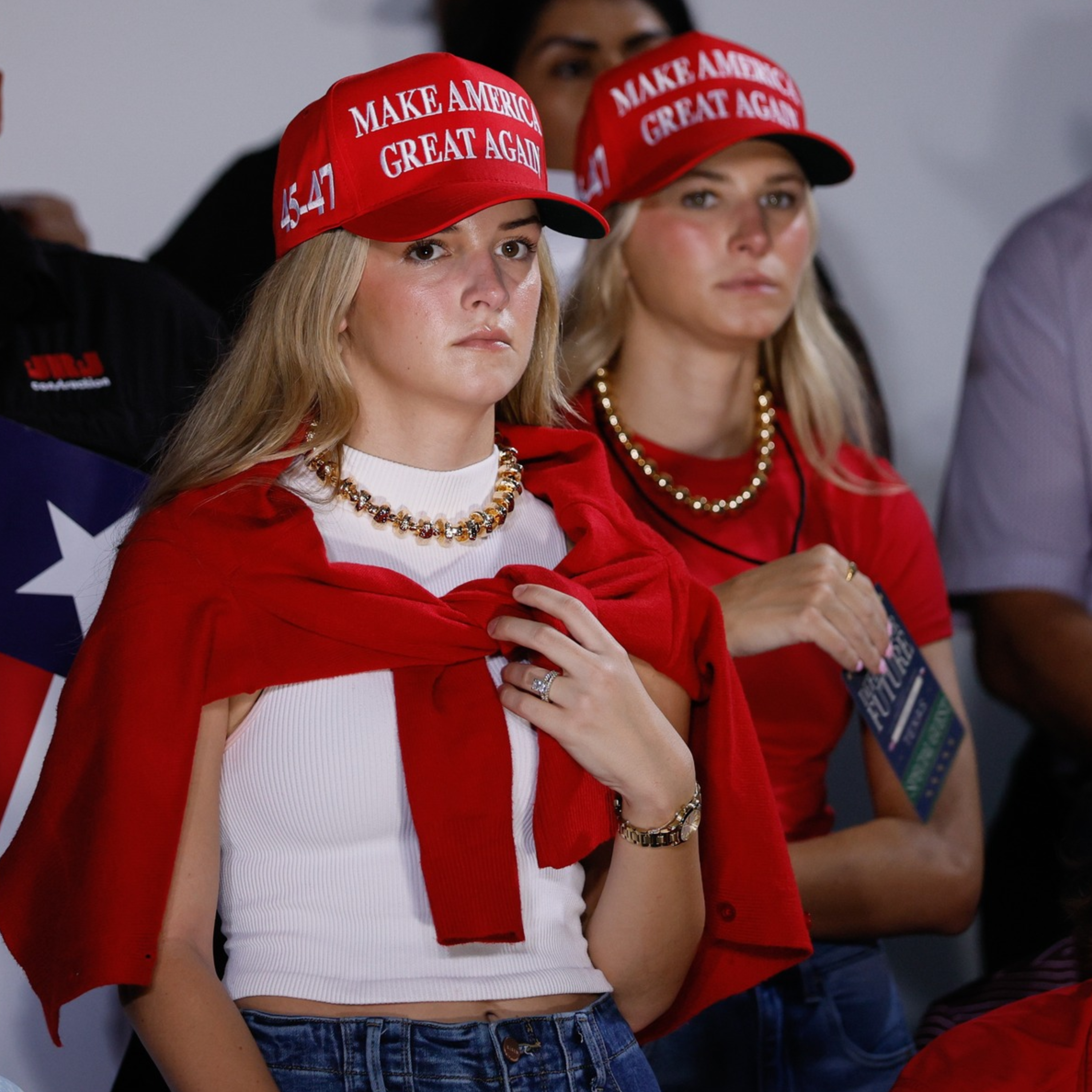
Supporters wear MAGA hats as they attend a midterm campaign rally by Vice President JD Vance at JRJ Construction on Oct. 29, 2026 in Weatherford, Texas. Photo by Evan Vucci-Pool via Getty Images.
Listen to Today, Explained ad-free by becoming a Vox Member: vox.com/members. New Vox members get $20 off their membership right now. Transcript at vox.com/today-explained-podcast.
Learn more about your ad choices. Visit podcastchoices.com/adchoices