
 Ask ChatGPT


 Today in Focus
13 Jun 2025 · 13m · 6 chapters
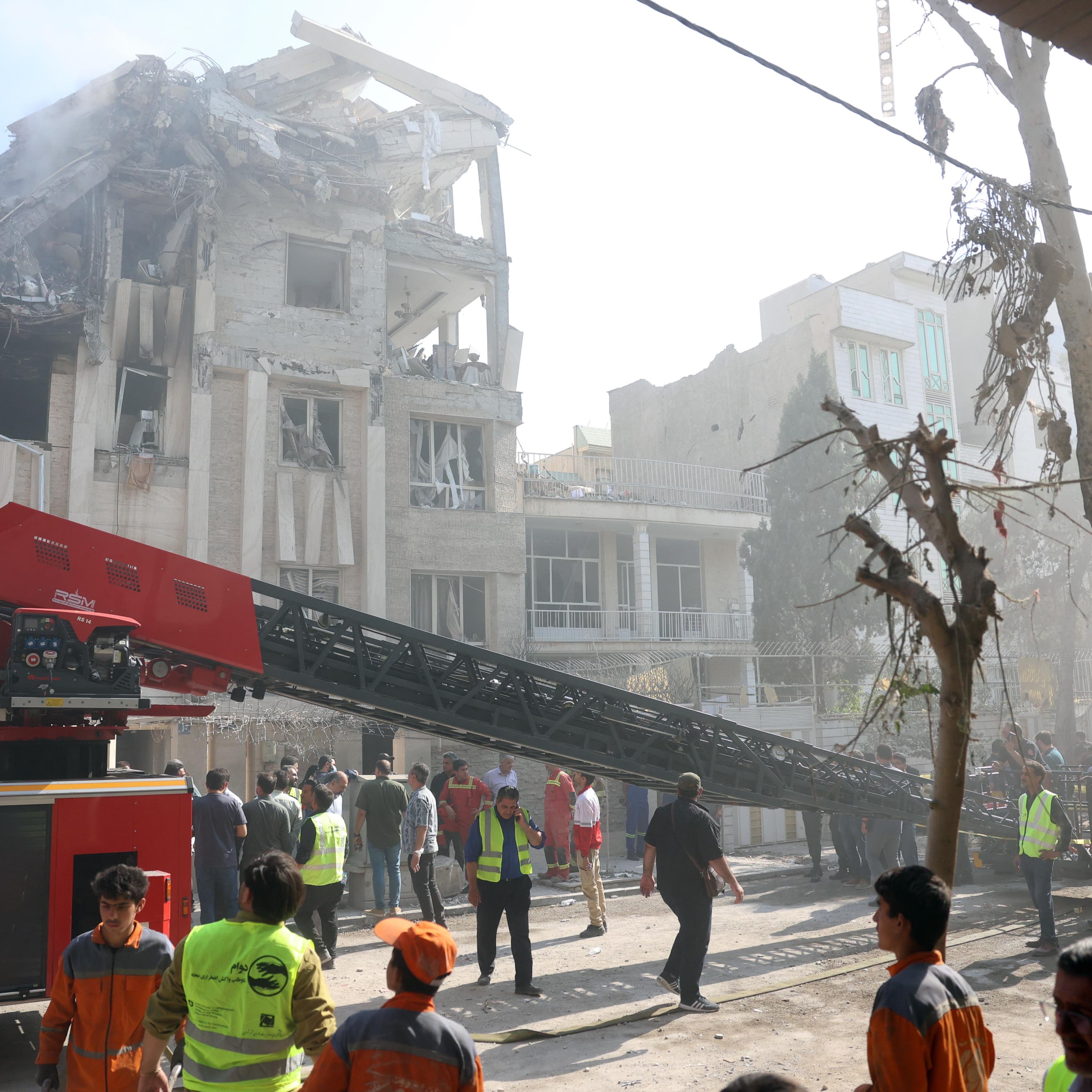
Israel’s early-morning wave of strikes on Iran, framed as potentially the “first shots of war,” targeting Iran’s nuclear program and IRGC leadership, amid escalating regional tensions and uncertainty over retaliation.
Julian Borger, senior international correspondent for The Guardian (in Jerusalem).
Israel used about 200 jets, hit the uranium enrichment plant at Natanz multiple times, killed senior IRGC and military commanders plus at least six nuclear scientists, and struck ballistic missile and air-defence capabilities. Israel says it’s acting because Iran is nearing nuclear weapon capability and allegedly moving toward “weaponization,” making negotiations a delay tactic. The US (Trump) urged against action but may still be involved via defence against counter-strikes; a US-Iran meeting in Oman was scheduled for Sunday. Israel reportedly prepared via Mossad infiltration and pre-positioned drones.
UK warning of imminent shipping risk; US withdrawing personnel; reports of 100 Iranian drones launched toward Israel and interceptions; prior October retaliation and earlier 2024 drone/missile exchanges.
Written by AI. May contain mistakes.
Discussion of the recent military actions and the context behind them.
“He says tensions escalate and Israel considers a military strike.”
Analysis of the scale and targets of Israel's strikes on Iran.
“This story is moving incredibly quickly, but let's start with what happened last night.”
Exploration of Israel's motivations for the timing of the strikes against Iran.
“but the number of targets and the variety of targets.”
Examination of the US's position and response to Israel's actions.
“Israel regards those sites as an existential threat to that state.”
Insight into the current mood in Jerusalem following the strikes and potential Iranian retaliation.
“So one way or another, the US will be involved.”
Discussing the potential for regional war and the implications of Iran's response.
“Julian, finally, we'll be coming back to you, I'm sure, next week to keep talking about this.”

Get the gist, explore an idea or ask about something said.
 Claude
On Today in Focus, what are the key points of this episode?
Searching your listeningAutomatic transcript. May contain errors.
0:00This is The Guardian.
0:08This afternoon, an update. Israel launches a wave of deadly strikes across Iran. Are these the first shots of war?
0:23For people who watch the Middle East and Iran closely, over the past 48 hours, the lights started flashing red. On Wednesday, warnings came from the UK that shipping in the region may be at imminent risk. The US announced it was withdrawing diplomatic personnel and military families from across the Middle East. The US has pulled American personnel from parts of the Middle East He says tensions escalate and Israel considers a military strike. Donald Trump said an Israeli strike on Tehran's nuclear sites was, in his view, not out of the question. Well, I don't want to say imminent, but it looks like it's something that could very well happen.
1:03And then early on Friday, Israel announced the largest-scale strikes on Iran's nuclear sites in the history of the two countries. Whereas Israel has carried out strikes on Iran's nuclear program, The IDF has said, with blasts heard in Tehran. From The Guardian, I'm Michael Safi. Today in Focus, where Israel strikes on Iran, leave the region and the world.
1:32Julian Borgia, you're a senior international correspondent with The Guardian. Thank you for giving us time on this extraordinary and dangerous day. This story is moving incredibly quickly, but let's start with what happened last night. Well, overnight at about 3 a.m. local time, a wave of airstrikes was carried out by Israel, they say, including using 200 jets against a number of different categories of targets. They have hit nuclear facilities, in particular, the uranium enrichment plant in the Tans, which they seem to have hit multiple times. they have killed a significant number of Iran's top commanders from the IRGC, the Revolutionary Guard, the Army Chief of Staff, head of the Air Force, and the head of a joint force headquarters, as well as at least six nuclear scientists.
2:32So it's a combination of hitting big things and very targeted strikes against individuals, as well as hitting Iranian ballistic missiles, which Iran would have hoped to use to strike back, and Iranian air defences.
2:53So listeners will have been aware of similar strikes like this over the past year. Put it in context for me. How much of an escalation is this compared to what we've seen in the past? This is on a different scale altogether. The biggest before this was in October, a retaliation for an Iranian strike on Israel. And that really focused on air defences. And looking back at it in retrospect, clearly that served to soften up Iran in terms of its ability to defend off this strike, which is an altogether bigger scale, not just in the number of aircraft, but the number of targets and the variety of targets.
3:36And they've gone after one of the big targets, which is the Iranian enrichment program. Okay, so this is not about signaling. It's not about softening up. This is a proper attack. Why do you think Israel has done this and done it now? Well, what Israel is saying is they're running out of time. that Iran was getting closer and closer to a nuclear weapon and that they were just using negotiations with the Iranians to buy time. And Benjamin Netanyahu, in his televised address, made a very specific claim that not only were they building up their stockpiles of fissile material, of enriched uranium, they were also taking steps, he said, in the last few months, towards weaponization, which that is, if true, would be new.
4:30In recent years, Iran has produced enough highly enriched uranium for nine atom bombs, nine. In recent months, Iran has taken steps that it has never taken before, steps to weaponize this enriched uranium. And if not stopped, Iran could produce a nuclear weapon in a very short time. It could be a year, it could be within a few months, less than a year. This is a clear and present danger to Israel's very survival. The U.S. intelligence assessment as recently as March assessed that Iran had not at that time made a decision to actually construct a warhead.
5:18Okay, so we don't know if this is true. And from what we know of US intelligence, it indicates it may not be true that the threat was that imminent. But this has been part of a long Israeli effort to campaign for a military strike on Iran's nuclear facilities. Israel regards those sites as an existential threat to that state. But in the past, Julian, Israel has wanted the US to join them in this kind of attack. Now it appears they're going it alone. Where is the US in this? Well, the US, Donald Trump in particular, had urged Iran not to act while negotiations were still going on and there was another round, a sixth round of US-Iranian talks scheduled for Sunday.
6:05And Trump openly said that he'd rather, that the Israelis would not carry out this military action. but he said he wasn't surprised by it when asked this morning. And this seems to be the case, that they did give a heads up on what seems to have happened because what the Israelis are claiming is that part of the attack involved Mossad commandos infiltrated into Iran and drones pre-positioned inside Iran, that this was several weeks, if not months, in the making. And so it had its own timeline. And if that is the case, that they had people inside, infiltrated in, ready to go, then it would have had an expiry date.
6:51There was a day that the Israelis had to carry out this operation from their point of view, or it would be too late, that it would not have the intended effect. And what is possible is that if you remember back in March when Trump wrote a letter to Iran, to the Supreme Leader Ali Khamenei, giving a two-month window, a 60-day window for negotiations, this may have fed into Israeli timelines, giving the negotiations a couple of months and then feeling that they had a free hand to act. So there was a kind of deadline to the US's negotiations with Iran, but you said that the US and Iran were scheduled to meet to keep talking in Oman on Sunday.
7:37So like, help me square this. How can Israel attack on a Friday and the US and Iran are meant to meet and sit down and talk about a deal on Sunday? Well, what it shows is that Trump does not have control on a veto over Netanyahu. I think Netanyahu is very well aware that in many cases, Israel is the tail that wags the dog. And we've seen this today, where they acted unilaterally without US involvement. But the US is nevertheless involved because it is committed to help defend Israel against the counter-strike, against Iranian retaliation. So one way or another, the US will be involved. How involved will be in some part up to the Iranians, to what extent they target US targets as well as Israeli targets when they decide how to respond.
8:35So there's a very real risk here that even though Trump did not want Israel to strike Iran, he doesn't want to be in a war with Iran, he could be dragged into one against his will. Yes, I think that is very possible and very likely to have been Netanyahu's game plan, this belief that if we start a war, it'll be very difficult for the US. The US cannot abandon us. It can't stop defending us. And it is quite possible that it will get drawn in, especially if the Iranians miscalculate and draw the US into a war. But I think you're absolutely right that instinctively, if there's one strand of consistency about Trump and foreign policies, he does not like wars.
9:18He primes himself on getting out of them. He's primed himself of staying out of them. And any war involving Iran and also that would, for example, bloke the Strait of Hormuz and oil surprise and cause an oil price spike would be very negative from his point of view for his presidency. I mean, this is such an unpredictable situation. It seems like there's so much pressure on how Iran responds now, whether that response takes in any US targets in the Middle East or elsewhere. That might tell us just how big this all gets. You're in Jerusalem right now. We're told that drones have been launched at Israel.
9:59Many of them have been intercepted. What is the mood in Jerusalem right now? Well, Jerusalem is very quiet. there is a lot of nervousness because this was a great fear that there would be a major war with Iran has come to pass and so there was a degree of fear but there's a sense this is now dissipating people have been told they can come out of their shelters the original launch and the only confirmation we have from the Israeli side is a launch of 100 Iranian drones There are unconfirmed reports of missiles being launched, but no confirmation from the Israelis on that. And what the two previous rounds of Iranian missile attacks last year showed is that Israel is able to defend itself fairly easily from drones.
10:54And the US also had pre-positioned an extra squadron of planes in Jordan that would help in that defense in terms of taking down drones. So after the last two rounds in last year and the fact that nothing has got through yet on this occasion has, I think, mitigated the fears, the initial fears when this conflict broke out in the middle of the night. Julian, finally, we'll be coming back to you, I'm sure, next week to keep talking about this. But what does your gut instinct say about this situation? How likely is it to become a full-scale regional war? I think that is really hard to predict because it's very much up to the Iranians how they respond and whether they try and defuse this, for example, go back to negotiating and very much calibrate their response, or if they go all out and start attacking targets around the region.
11:55My sense, if I was to go one way or the other, I think they're becoming quite aware of the limits on their ability to respond. And the response, if and when it comes, may come over a longer period of time. Because if they were to fire everything in their arsenal now and it got shot down, then they would seem impotent to the region but also to their own people. Yes, Israel has calculated this is the right time to make this strike because Iran is too weak to strike back meaningfully and we're about to see if that bet is correct or not. Julian, thank you so much. Thank you. And that was Julian Borger, a senior international correspondent with The Guardian.
12:41He's in Jerusalem. This story is moving by the second. So for the latest, go to our website, theguardian.com, where we'll be posting only what is verified and credible. And there's a lot of information out there that is neither. So keep an eye on our live blog for the latest. And that's it for this afternoon from London. This update was produced by Eli Block, George McDonough and Isaac Tompkins. Eli Block was also the sound designer. The executive producer was Sammy Kent. We're back with you on Monday.
13:13This is The Guardian.


