 Ask ChatGPT



The Guardian’s “Today in Focus” episode examines Andy Burnham’s push for a closer UK relationship with the EU after a change of UK prime minister, focusing on a Brussels summit agenda and whether it signals “rejoin” (eventual EU membership). It argues Burnham claims “hard Brexit” harmed Britain (prices up, barriers to work/travel/business) and is seeking concrete EU deals to boost GDP and reduce border/trade frictions, while facing political backlash and renewed “Brexit wars.”
Jess Elgott-Yor, The Guardian Deputy Political Editor; David McAllister, German MEP and Chair of the European Parliament Committee on Foreign Affairs; both discuss summit politics and EU attitudes.
Summit will likely cover youth mobility (80,000–100,000 young people), food/drink trade, emissions/border checks, migration/info-sharing, possible defense cooperation, and “Made in Europe” industrial rules. EU door is “open” but “ball is in British court.” Rejoin is framed as a public “temperature test,” with cabinet/cost-of-living concerns.
“Stay Out” and “Enough” campaigns warning rejoin would cost £750m/week; examples of EU-trauma from Brexit negotiations; references to Macron/Sanchez/Merz/Tusk reactions; mention of Chinese cars and EU protectionism.
Written by AI. May contain mistakes.
A recap of the resurgence of Brexit discussions in political conversation.
An analysis of Andy Burnham’s stance on Brexit and its implications.
“These past five years, have you felt that something has been missing from your life?”
Details on the agenda for the upcoming EU summit and its significance.
“So there's been a lot of talk this week about Britain and its relationship with the EU ahead of this summit on Friday.”
Exploration of the economic implications and potential benefits of Brexit adjustments.
“OK, so we've got some really big meaty issues on the table.”
Discussion on the political risks and motivations behind reopening the Brexit conversation.
“and the instinct from the civil servants was to try and minimise saying that.”
Examination of political campaigns against rejoining the EU and their implications.
“And now it looks like it's going to be in December.”
Discusses the potential for EU expansion and the current political climate in relation to Brexit.
“The roads in Romania while ours fall apart.”
Explores the mood in Brussels regarding UK relations post-Brexit and the implications of rejoining the EU.
“David McAllister, you're the chair of the European Parliament Committee on Foreign Affairs and you were heavily involved in the EU-UK negotiations the first time around.”
Examines Andy Burnham's ambitions regarding the UK rejoining the EU and public sentiment on the matter.
“There's been the full-scale invasion of Ukraine, an energy crisis, AI, Donald Trump.”
Discusses the political risks surrounding Brexit narratives and the potential for future referendums.
“The counter to that is that living standards are going to fall, not rise by the next election.”

Get the gist, explore an idea or ask about something said.
 Claude
On Today in Focus, what are the key points of this episode?
Searching your listeningAutomatic transcript. May contain errors.
0:00This is The Guardian.
0:08Today, hang on to your hats, folks. Brexit is back.
0:30shipments, inventory, returns, and analytics in one place. What used to take five separate tools, ShipStation does in one. Automate fulfillment and rate shopping for parcel and freight to ship more with up to 90 % savings. Go to ShipStation.com and use code XXX to try ShipStation free for 60 days.
0:55These past five years, have you felt that something has been missing from your life? Family dinner conversations lacking that familiar frisson of tension, the sides of buses woefully short of misinformation? Well, fret not, because Brexit is back. Yes, it's really happening. It really is happening. The EU debate is really happening again. Once thought to be consigned to the dustbin of history, the question of whether Britain should be in or out of the European Union is suddenly back at the centre of the political conversation. I'll tell you exactly what's going on. I'll tell you, listeners, viewers of GB News, what is going on is Candy Burnham hasn't got a clue what to do.
1:39He's trying to throw sand in everybody's eyes by saying we've got to go back to the Brexit discussions. And now it's the Prime Minister himself, Andy Burnham, making it very clear which direction he thinks Britain should be heading. I'm just going to say it. Britain has lost more than it has gained from Brexit. Prices have gone up. And if it was up to him, it seems we'd be swapping Brexit for return? Rejoin? The branding still needs some work. Tomorrow the Prime Minister takes another step towards his vision of a closer relationship with the EU at a summit in Brussels. And all those arguments we thought we'd never have to have again about the EU, well, buckle up, because the backlash has already begun.
2:27Would you be happy if closer realignment with the EU meant the banning of smoky bacon crisps or the banning of the labelling of smoky bacon? From The Guardian, I'm Annie Kelly. Today in Focus, Andy Burnham's big European gamble.
2:47Jess Elgott-Yor, The Guardian's Deputy Political Editor. So there's been a lot of talk this week about Britain and its relationship with the EU ahead of this summit on Friday. Let's start with the basics in this summit. What are they going to be discussing? What's going to be on the agenda? So it's a big deal, but it's reasonably routine. And it's one that probably would have taken place in the summer had there not been this change of prime ministers between Keir Starmer handing over reluctantly to Andy Burnham. And it will seal what was set in motion at the last EU summit, which was May 2025, a youth mobility deal, which was the big ask from the EU.
3:23We'd expect 80 ,000 to 100 ,000 young people the opportunity to come and live and work here, British young people to go out and go and live and work in Europe. There'll be a deal on food and drink trading, which should significantly, I think, ease trade between the UK and the EU and ease those checks on the borders and on emissions trading as well. So there are big things to be discussed. There are even bigger things, I think, to go onto the agenda for the next summit. There'll be talk about a deal on migration and information sharing, potentially a re-entry into some kind of defence pact. and also the biggest thing on the agenda and which has become at the forefront of the minister's minds, which is Britain being part of this made in Europe legislation, the industrial, effectively European protectionism that the EU is doing.
4:08That has the possibility of causing a lot of problems if Britain was excluded from that, making it much more expensive and cumbersome to trade with Europe if we are excluded, but also would be quite onerous for us in terms of our own imports, particularly things like Chinese cars. So there's big stuff to be put on the agenda and there's big stuff to be agreed at the agenda at this summit too. So it is a big deal in its own right. OK, so we've got some really big meaty issues on the table. Food, drink, carbon emissions. Is that going to make much difference? It should make a reasonable degree of difference, particularly if you're in business.
4:44One of the reasons Burnham says he's doing this is to boost GDP. And that should be up to£17 billion or 0.4 % of GDP. so it's a significant difference you know we see the cheering of the GDP figures they crawl up by 0.1 or 2 percent and it feels like a feels you know still like a significant impact when you see even a small amount of growth in the economy so that matters in terms of business confidence investing here there are there are some things actually not to get too technical about it but you know we saw the growth figures earlier this week which were a little bit better than expected Actually, lots of that is on tech and AI.
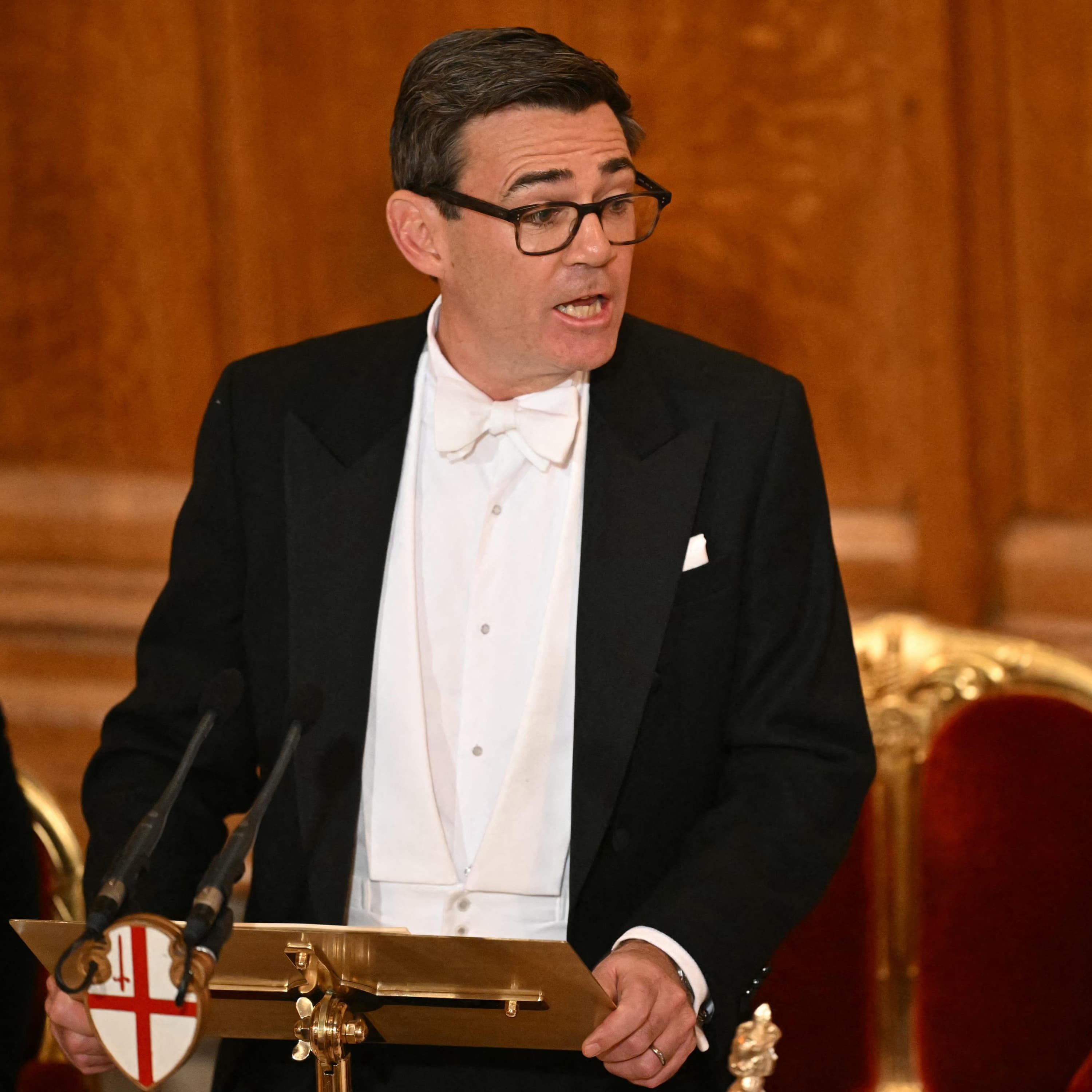
5:22That's driving those growth figures. That's one of the reasons why Britain is doing better in those sectors is because it doesn't have to adhere to some of the EU rules around that. So all of these things come with trade-offs. You know, I think a reason why this particular summit has got so much attention is because of what it signals, right? We've had Andy Burnham giving a big speech on foreign policy on Monday night at the Lord Mayor's Banquet, dressed in white tie. What did he say during that speech about what is going to happen after the summit? So he talked about how the Brexit that had been delivered was not the Brexit that people expected, that it was a far harder Brexit and that the country was left with needless barriers for work, for travel, for business, and that were damaging the economy.
6:09It's like the emperor's new clothes where no one is prepared to say the obvious truth. Well, I do try to say things as I see them. And to be frank, we have lost more than we have gained in the last 10 years. The hard Brexit we were given is not good enough for Britain. So he will say for now, the deal that he will sign on Friday is one that has to be within Labour's red lines, consistent with the manifesto, has to be something that improves what happened in 2020 and brings it close to what people thought they would ultimately end up with in 2016 and that it would pass this make-a-field test. Producing real improvements in people's everyday lives in areas of the country that have felt...
6:56It's quite interesting how Burnham seems to want this to be a kind of longer-term conversation with the country. It's a very, I think, optimistic view of how British politics has worked on this subject and how certain things just became impossible to say over the course of the last few years, particularly within government. I was talking to a cabinet minister who was saying to me that when they first went into their department, they were trying to produce some figures and one of the things that it showed was that Brexit had damaged certain sectors or was leading to the decline in certain parts of their brief.
7:34and the instinct from the civil servants was to try and minimise saying that. And they were like, you don't need to do that anymore. We're perfectly happy to say that this is the thing that's caused the problem. We don't have to pretend anymore. Burnham, I think, from his speech, just is ready to open up the discussion again. But that is a real mind melt moment in almost all then on the broadcast for a lot of people in Westminster. In the spirit of this speech, we have to be honest. Brexit hasn't given us control.
8:14We do have an idea from his conference speech of what he's aiming at. He wants there to be not these kind of rolling summits where we do things sector by sector, but to have a long term, stable relationship, which would probably look more like something like a customs union or the single market but on the table as well as full membership you know for a lot of these politicians particularly around the labor in the labor party they do want to rejoin the eu that in their half hearts lots of them that's what they would like but lots of people you know i'd say probably a majority of the cabinet are very worried about opening up the discussion again
9:03You know, you've covered this over the last 10 years. So I just wonder why Burnham wants to reopen this whole kind of can of Brexit worms now with such strong language around this. What I think is particularly interesting about this is that over the course of Burnham's campaign in Makerfield and in the run up to him coming into power, lots of the noises in Whitehall were actually the opposite. they felt that Burnham didn't have a lot of interest in reopening the European question, that he would be prepared to kind of sign off the stuff in the summit. But he would bring things much, much closer home focus.
9:35And when he was mayor of Greater Manchester, you very rarely heard him making interventions in the Brexit debate in the way that you saw the mayor of London and Sidney Kahn do. He was very reticent to get involved. Certainly wasn't very keen on the idea of a second referendum. Probably that was a good judgment call on his part. But, you know, he was not part of those Brexit wars. He stood well out of them. and when he did make interventions in the Brexit referendum talked a lot about the kind of patriotism of wanting to be part of this shared block of common values which I think is an argument you'll hear and make more and more actually about how things have not only that the Brexit deal wasn't what was promised but that Britain in an unstable world that the world has changed significantly since 2020 and that we need to be with allies who share our values in a place where we can have influence I think that will be one of the most compelling arguments that he has for a longer term, more stable relationship.
10:30I notice he has slightly delayed when he would set out the options for our future relationship. First, it was going to be soon after Friday's summit. And now it looks like it's going to be in December. It does suggest a little bit of wavering on this whole question. Do you think this is all quite a big risk for him politically? I think that he feels the kind of common bond stuff incredibly closely. I think that he feels that particularly stepping into office at this moment in time with a very unstable partner in the US with rising powers elsewhere, whether that's China or Russia, and the influence they can exert.
11:10I think most prime ministers, when they get into office, are shocked at the lack of resilience in the British state generally, how vulnerable we are. And I think that is one of the things, you know, both looking at the economics and at the diplomatic situation that pushed him to be bolder. He has said, I think, publicly that his experience on the ground in Makerfield, when he talked to people about Brexit, what people said was very different to what he expected. You know, he expected people in a very pro-League constituency to be, broadly speaking, still supportive of it. And he found almost no support for it or a lot of regret from people who he spoke to in his constituency.
11:52So I think, again, that's been one of the things that's given him the confidence to go bolder. If you can't find anyone and he spent, you know, how many thousands of doors he knocked on, who was prepared to say they thought that Brexit was going well and it's a good idea. that probably does make you think well why are we still doing it but i mean you were saying the cabinet is split on this we saw former deputy pm now backbencher david lammy come out very strongly on wednesday for rejoining the eu it's very clear to me that labour should go into the next election saying that we want to renegotiate rejoining uh a customs union delivers not enough growth for this country.
12:34You know, but there are Labour ministers, maybe, for example, Home Secretary Shabana Mahmood, who will be worried about the argument over immigration or those ministers who are having to go back to their leave constituencies and try and explain this new position on Europe. They will be cautioning him this week about just this language on going closer and even rejoining Europe. What do you think they're going to be saying exactly? Why is this such a political risk for them. I think you've only just got to look at what launched over the weekend. We saw these two campaigns launched. The first was Stay Out.
13:09It feels like it's the air to vote leave, led by Oliver Lewis, who was the deputy chief negotiator under Boris Johnson, came with an endorsement from Michael Gove. We hear that Dominic Cummings is taking a bit of an interest in that campaign and they launched a very compelling video. Across Europe, governments are running out of money and they want Britain to help pay the bills. You know, it showed riots across France and Spain, showed, you know, the kind of, you know, talked about the chaos that Europe is currently undergoing and saying it would cost another£750 million a week to rejoin. I think we're all familiar with those kind of over-exaggerated figures and that one, you know, is also pretty dubious.
13:52Yes, of course, we need more money. £750 million a week. That's what the EU will charge us to rejoin, more than we've ever paid with no rebates coming back. Where does that money go? The roads in Romania while ours fall apart. Talking about the countries that might be joining the EU who would have freedom of movement with us, talking about Albania, you know, it's exactly the playbook you would expect. And it worked last time. Lots of these people are some of the most, you know, kind of talented, if you like, people on the right of politics. They're kicking their heels. They're not doing very much.
14:26they have been very passionate and vigorous and effective campaigners they don't really fit into the Kemi-Bodinok conservatives they don't really fit into Nigel Farage's reform so they've got time and space and energy and they can be very nimble and the other one is from the former funders of Leave.eu Andy Wigmore he has another one called Enough which again has close links to that group that campaigned mostly led by Farage which was kind of grassroots out Leave.eu They're all very familiar figures involved in these campaigns. I think Cameron's also weighed in. David Cameron's also weighed in.
15:00David Cameron as well, saying that he doesn't think that Britain should rejoin, that it's a distraction. My advice would be focus on the partnership. You know, we're living in a difficult, dangerous world. Britain is a big enough country to be a friend, neighbour and a partner and succeed in that way rather than being a member. Let's work on making that on that work. It's really interesting, I think, the Tory perspective on this. The Tories, by and large, don't really want to say that Brexit has gone well. You can't really get them to say that. Just because there's no real evidence for that at all.
15:32No, it's very, and also it's not a popular position. So what they'll say, the line is, it's a distraction. We shouldn't engage in this. It's done. We don't want to go back to those days of rowing. You know, Kemi Bainer actually said that. I don't want to engage in it. even Nigel Farage seems quite reticent to enter the fray he wants to keep the focus on reform as an insurgent political force you know if there's a reminder of what he promised during the Brexit era people say well you promised all of these things when you were campaigning for Brexit none of that has materialized so why shouldn't we believe the same about Reform UK I think that's quite an effective attack on Reform UK.
16:17Coming up, even if we did want to rejoin, would the Europeans want us back?
16:41front for your home, plus all the profit later. That's no chaos now, no cash left behind later. Skip the showings now, pocket extra profit later. This is so simple now. This is so awesome later. Or sell fast now and pop the champagne later. Cash now, more later. Now available nationwide. Start your offer at opendoor.com slash ACAST. Profits calculated after fees and costs, eligibility and offer price may vary. Bombas knows cozy winter footwear inside and out. Inside, warm merino wool, soft sheepskin shirling. Outside, fluffy sherpa and smooth suede. Inside, layers and layers of luxe cushioning.
17:21Outside, sturdy soles and grippy bottoms. Bombas slippers and shoes, a cozy way to stay in or step out. Visit bombas.com slash audio and use code audio for 20 % off your first purchase. That's B-O-M-B-A-S dot com slash audio. When purchased equals when donated, always.
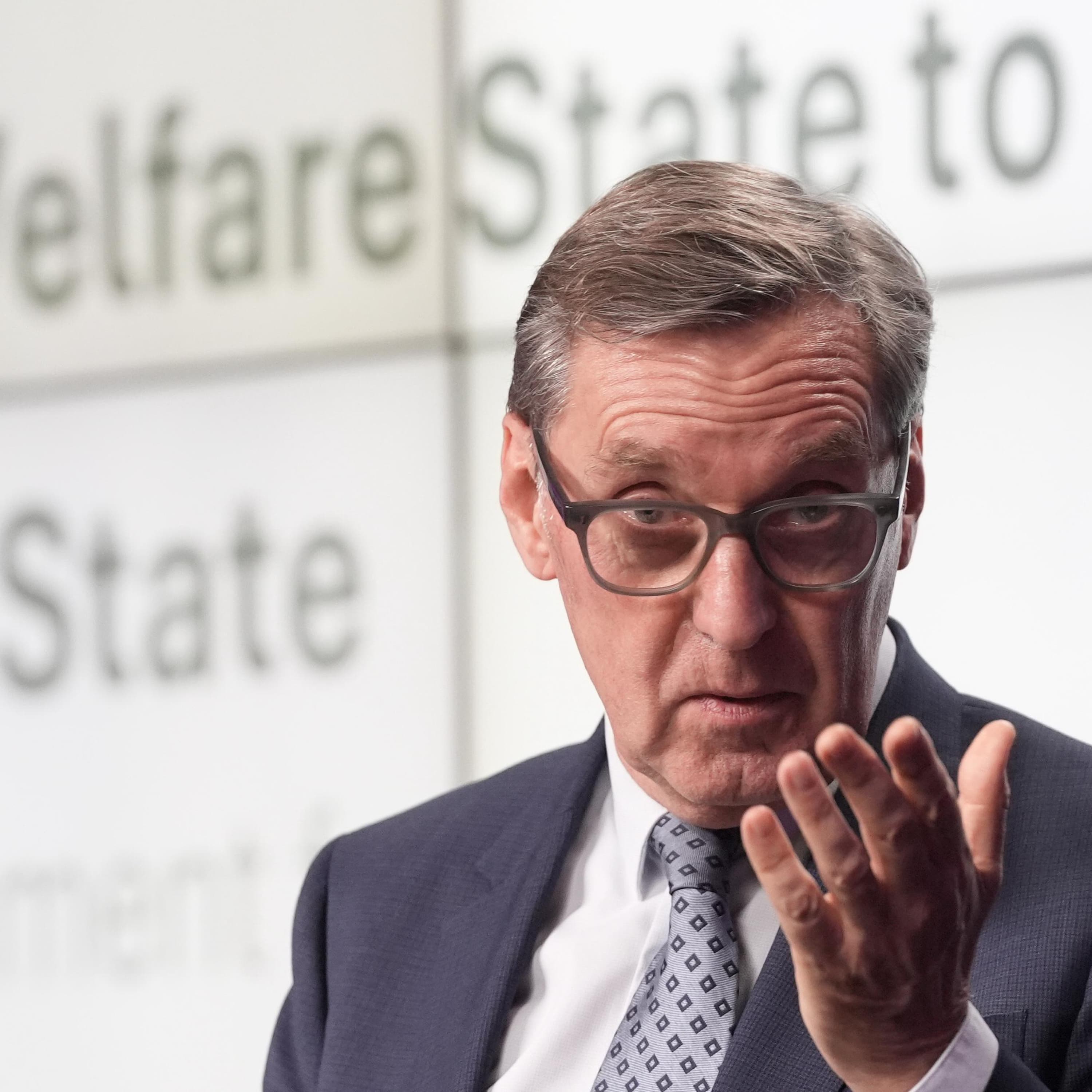
17:43David McAllister, you're the chair of the European Parliament Committee on Foreign Affairs and you were heavily involved in the EU-UK negotiations the first time around. You're also a German MEP and also half Scottish. So can you give us a sense of what the mood is like in Brussels ahead of tomorrow's summit? Well, if that's a relationship with the United Kingdom is in the European Union's interest, the United Kingdom is not just any kind of third country. It's one of our closest partners in the world, most like-minded, a loyal NATO ally, a geographical neighbour and an important trading partner.
18:19So we have always been open for having the closest possible relationship with the United Kingdom. Now, there's definitely a positive atmosphere here in Brussels, but we need to differentiate. The one thing is the long-term debate what role the UK will play in dealing with the European Union and what kind of new status this might lead to. But now we want to deliver on the concrete deliveries because let's not forget there are lots of people involved who are living on both sides of the channel and want to see things improve for citizens and businesses. And I mean, it seems like all options are currently on the table or at least the prospect of options being on the table has been opened up by Burnham and the UK government this week.
19:05But it probably does also mean that it's bringing up a lot of perhaps quite difficult memories of the long slog that was the Brexit negotiations 10 years ago. The EU Foreign Affairs Chief has said recently there's a lot of traumatised people from Brexit here in the European Union. Do you think that that's true? Well, I followed the Brexit negotiations very closely. theme, one thing is clear, nobody in Brussels wants to go through anything like Brexit again. Brexit cost time, Brexit cost money, Brexit cost energy, and in the end, it was a painful procedure. Now, Brexit is done with the trade and cooperation agreement, withdrawal agreement, we have a solid legal foundation for our relationship, and it's up to the UK to define what direction our relations would lead to.
19:58I consider Brexit a historic mistake. And one thing is clear about the United Kingdom, the European Union is not in the same position. The United Kingdom was one of our leading economies. The United Kingdom was one of the leading military powers in Europe. So there are so many reasons why many, not only in my own country, Germany, but in all other member states, We all deeply regretted the decision at the time. And that's why I would always argue that our door should remain open. But it's up to the British, the UK government, the UK parliament, I guess in the end the British people to decide what kind of direction this will lead to.
20:41And do you think everyone in Europe is as open to the prospect of the UK potentially rejoining the EU as you clearly are? You know, we've seen Macron in France has been quite encouraging of Burnham and his kind of desire to have a closer relationship with Europe, as has Sanchez in Spain. Both of these leaders might be gone this time next year. You'd have some very different political parties potentially in power across the continent. How much do you think that will matter? I mean, of course, I can't speak for all Europeans and I can't speak for all European politicians. But following the Prime Minister's comments on Europe, it was interesting to see how positive the reaction was throughout the political spectrum in Europe.
21:29You just mentioned some of them. The very positive reactions, on the one hand, from a socialist like Pedro Sanchez, from a liberal like Emmanuel Macron, but also from centre-right politicians like Chancellor Friedrich Merz in Germany or Prime Minister Tusk in Poland. we're all very keen in having close relations and we're all following the UK debate very carefully the question of course has been discussed also here in Brussels could the UK one day rejoin the European Union well our door is open but the ball is definitely in the British court the UK was a member for 47 years and helped shape many of the rules the European Union works with today and from my point of view, that shared history would be a good reason to take a pragmatic approach.
22:16The politics on the continent is very different from what it was a decade ago. We've seen the rise of anti-EU parties. There's been the full-scale invasion of Ukraine, an energy crisis, AI, Donald Trump. There's been a lot going on. You've seen it all. Could you give us a sense of how different the EU is from 10 years ago and what challenges the bloc now faces? Well, the British left us five years ago, but still, even in these five years, the world has changed dramatically. We are all witnessing a geopolitical shift. The world has become more complicated. The world has become more dangerous. And for us in Europe, the main event is, of course, the Russian war of aggression against Ukraine.
23:00War has returned to Europe. But my understanding is, one thing is clear, all European countries in the 21st century are small. Compared to China, compared to Russia, compared to the United States, we are small. But if we are together with the power of 450 million people in the EU, with 500 million people in the single market, plus our like-minded partners like the UK, then we had the ability to discuss issues at equal footing with the superpowers. So if we want to promote our values, if we want to defend our interests, the best way is to do that together as Europeans.
23:55Jess, do you think that Andy Burnham's long-term goal is for the UK to go all the way and rejoin the EU? Or do you think all of this is a kind of temperature test for the British public? Andy Burnham said quite openly that he hopes that the UK rejoins the EU in his lifetime. I'm going to be honest and say in my lifetime, I would like to see that happen. But I am not are going to move ahead of the public. I am not going to dictate in terms of my own opinion. However, I do think that this, yeah, it's a temperature test. I think it's just what is the tolerance threshold for how far this can go? What do people actually want?
24:32They want their lives to be easier. They want the economy to grow. They want to feel like Britain has a sort of strong place in the world. I think those are some of the tests that he's setting for where the destination ends up. And it might be that some of those tests aren't met by full membership. And is there a risk that this will come to dominate his prime ministership over the next couple of years? That this idea of like, you know, all the campaigns that have come up over the weekend, you know, all of the old figures emerging from, you know, the dust of 10 years ago, that all of this will just kind of dominate the narrative that he'll come to regret kind of opening up this again and kind of taking the whole country back 10 years in time?
25:14I think that's certainly the worry for quite a few of the cabinet who are more reticent about this, who think that the major consideration for the next election should be the cost of living, should be making things just easier for people day to day. The counter to that is that living standards are going to fall, not rise by the next election. And if you're running on a record of cost of living, you actually have to have something sort of bigger picture to point people towards. now whether you can fully control what ends up being of those things dominating the narrative europe and those kind of brexit wars is a much grabbier narrative for people to start talking about than fiscal devolution for mayors even if one of them might have much more of an effect on people's everyday lives and the power and where power lies in this country so you know it's a it's a big risk okay but how would he actually go about it all there are staging posts right so you have you will probably almost certainly have another summit next year where if you can prove the concept then that getting closer has tangible benefits on not just the economy but on things like migration then that you know you start to prove the case the next staging base will be when it comes what they put decide to put in the labour manifesto if labour then win a majority then if the manifesto says you know negotiate if it is rejoin you negotiate the terms of what rejoin would look like.
26:34So if you put to say to people, this is the deal, now there's a referendum to confirm it or not. The mistake I think they feel was made was that people had no idea what they were voting on. And if there ever is to be a future referendum, it should be on a deal that is in front of them. Well, Jess, it is fascinating stuff, isn't it? Even if it's slightly triggering for us all to be back in Brexit. Back in the zone again. Yes, back in the zone again. Thank you so much for talking to us today. Pleasure. Thank you.
27:04That was Jess Elgott, The Guardian's Deputy Political Editor. My thanks to her and to David McAllister. You can, of course, read everything about the summit this Friday at theguardian.com. And before we go, we have a favour to ask. We've created a quick survey to get to know you, the listener, a little better and to know what you think of the show. You can find it at theguardian.com slash podcast survey and there's a link to it in our episode description. we would love to hear your thoughts and that's it for today this episode was produced by Elna Biggs, Alex Atak and Harriet Mogi and presented by me Annie Kelly, sound design was by Brian McNamara and the executive producer was Sammy Kent and we'll be back later on this afternoon with the latest
28:06This is The Guardian.
28:18Hi, this is Elise Hugh from TED Talks Daily brought to you by Okta. As organizations rush to deploy AI, agents operating in the dark create massive security blind spots. To bring them out of the shadows, Okta answers four critical questions. Where are my agents? What can they do? What are they doing? And how do I respond if they go rogue? Okta secures AI. Learn more at Okta.com.
29:08ACAST. Profits calculated after fees and costs, eligibility and offer price may vary. 500 orders a month was manageable. 5 ,000 is madness. Turn fulfillment chaos into total calm. ShipStation is the all-in-one platform to run your shipping operation as you scale. Sync inventory from everywhere you sell. Put warehouse workflows on autopilot and lock in the lowest rates from 200 plus parcel carriers and 50 plus freight providers, saving serious money while getting packages out faster. Go to ShipStation.com and use code AUDIO to try ShipStation free for 60 days.