
 Ask ChatGPT


 Today in Focus
3 Nov 2026 · 13m · 8 chapters
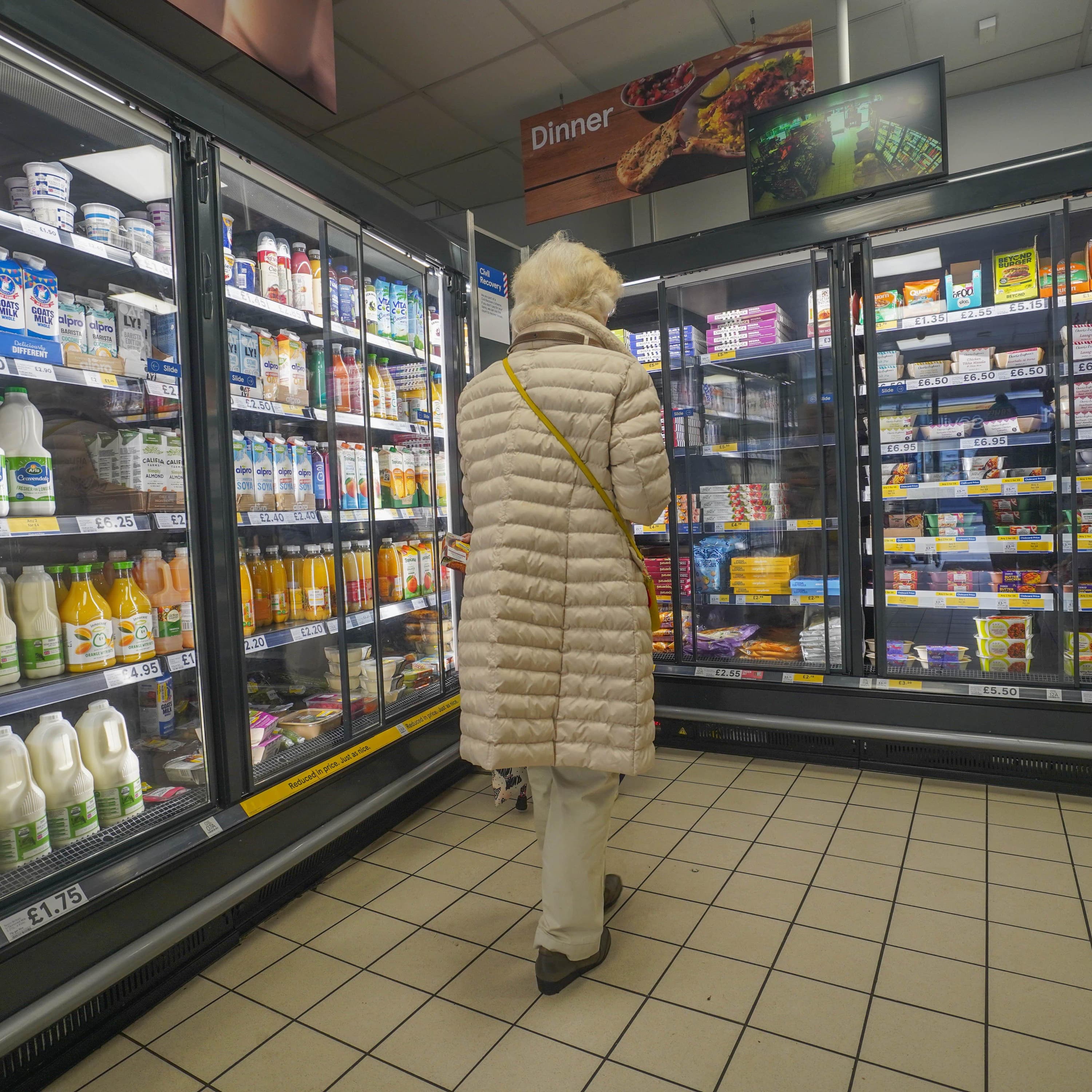
Supermarkets’ hacked fridges/freezers across Europe, the likely motives, and what cyberattacks could target next (including AI-powered malware).
Aisha Down, The Guardian global technology reporter, interviews Lucy Hoff.
Fridges are “edge devices” in the Internet of Things, often less protected and possibly unpatched; hackers exploit vulnerabilities to raise temperatures (reported up to 50°C), spoiling food. Attacks have been reported in France (700 shops), Belgium (Carrefour), Sweden, Luxembourg, and the UK. The EU says it’s a deliberate food-supply-chain attack; no ransom was demanded, suggesting psychological disruption rather than financial gain.
North Korea’s 2021 Bank of Bangladesh printer hack; NHS cyberattack as a resilience warning. NCSC warns AI could make critical-infrastructure attacks more common, though this fridge incident likely predates AI.
Written by AI. May contain mistakes.
Discussion about vulnerabilities in critical infrastructure due to cyber threats.
“Cyber threats are very much a part of modern war.”
Exploration of how fridges and freezers were hacked, causing damages.
“Thousands of fridges and freezers in supermarkets have been meddled with.”
Explanation of why edge devices like fridges are often targeted by hackers.
“So I know it seems random, but actually, it's sort of the traditional playbook for cyber hackers.”
Overview of recent cyber attacks in Europe and their potential motivations.
“stole, I believe it was, billions, and did that through a printer.”
Discussion on the psychological impacts of cyber attacks on society.
“And that was a pattern they saw sort of developing in the course of these past years, critical infrastructure being hospitals, power grids, more sophisticated attacks.”
Analysis of potential future cyber threats, including AI-powered malware.
“So as you say, when you say it's about psychology, it's about getting into people's heads, you know, these things that we use every day may not be safe.”
Insight into how hacks occur and the complexity of infrastructures.
“It's worth kind of taking a step back and saying, well, what what is a hack?”
Discussion on the need for better protection of domestic smart devices.
“You'd want the maximal psychological scare.”

Get the gist, explore an idea or ask about something said.
 Claude
On Today in Focus, what are the key points of this episode?
Searching your listeningAutomatic transcript. May contain errors.
0:00This is The Guardian.
0:30and support your team from anywhere. From automatic payroll tax filing to simple direct deposits and benefits options for nearly every budget, Gusto helps simplify the process. Plus, enjoy unlimited payroll runs for one monthly price with no hidden fees or surprises. And with automated tools for onboarding and offer letters, you can focus on what matters most. Try Gusto today at gusto.com slash tech and get three months free when you run your first payroll. That's three months of free payroll at gusto.com slash tech. One more time, gusto.com slash tech.
1:06Anything, a power station, an airport, a water treatment facility, any of them could really be vulnerable. Cyber threats are very much a part of modern war. The hackers, they'd want kind of the maximal payoff, the maximal psychological scare. From the Guardians today in Focus, this is The Latest with me, Lucy Hoff. So this is a bit of a curious one. Thousands of fridges and freezers in supermarkets have been meddled with. They've been hacked, causing millions of pounds of damage and a lot of spoilt milk or spoilt dairy products. Aisha Down, you're our global technology reporter. First of all, how do you hack a fridge?
1:50So I know it seems random, but actually, it's sort of the traditional playbook for cyber hackers. And what I mean by that is very often, hackers will go for what are called edge devices. So you know, while your laptop computer or your main server might have a firewall and might be sort of continually maintained by your IT security staff, devices like printers, like fridges in this case, that are on the edge of a network, are usually a target and usually not really the main focus of cybersecurity experts. So very famously, you know, North Korea hacked the Bank of Bangladesh, the central bank, in 2021, stole, I believe it was, billions, and did that through a printer.
2:36Wow. Gosh, that's extraordinary. It was pretty good. But I mean, still, how on earth do you actually get into a fridge and hack it? So the fridges were, they're sort of part of the Internet of Things. They are connected to the internet because they're industrial fridges. They have to be kind of controlled and temperature monitored and the rest. But they're not sort of, they're not the traditional, say, point of concern for IT infrastructure experts. And I think in this case, they may not have been patched. So sorry, what does that mean, patching? They get patched? So patching is just when you update your code or your operating system or your program so that the vulnerability that was there that allowed the hacker to get in is no longer there.
3:24So we've had a series of quite major attacks across Europe. We've had hackers in France who managed to get control over fridges and freezers in 700 shops, which is really not nothing. In Belgium, the major supermarket Carrefour was also impacted, as well as Sweden and Luxembourg. There have been reported incidents in the UK too. In some cases, the fridges were heated to 50 degrees Celsius, thereby, of course, spoiling what was inside them. The EU, as a result of that, is saying that this is a deliberate attack to target our food supply chains. But what seems odd is that there's no kind of financial incentive.
4:08It doesn't seem at this point to do this, that the hackers are not asking for any money. So what does that tell you about who might be doing this? We have to be clear. These have not been attributed. However, for example, last week I was speaking with a senior European official and they were talking about how, you know, state sponsored in particular, how Russian cyber attacks are working and how they've changed since the onset of the conflict in Ukraine. And so what they described was an evolution in state-sponsored attacks, Russian attacks specifically, that went from kind of more low-hanging fruit, that would mean taking down a government website, for example, like the Ministry of Defense, to actually targeting critical infrastructure.
4:58And that was a pattern they saw sort of developing in the course of these past years, critical infrastructure being hospitals, power grids, more sophisticated attacks. However, they also said, and I think, you know, worth noting, and again, these frigids, we don't know who did them, but certainly, they achieved a great effect, and they didn't seek any payment for it, which most people said would point at Iran or Russia. These were, I think, very psychologically powerful. It's not necessarily the same thing as like, for example, bombing a power station or permanently like cutting an undersea cable in the sense that it's sort of you recover from cyber attacks more quickly, often.
5:49And the effect, at least in this official's view, was that they were more about the psychology of the attack than actually necessarily permanently disabling critical infrastructure. So as you say, when you say it's about psychology, it's about getting into people's heads, you know, these things that we use every day may not be safe. I mean, on that, we here in the UK have had some advice from our government to start stockpiling a few days worth of food in line that perhaps there are some attacks on our supply chain systems and our food supply system in particular. Does that sort of tally into this picture, do you think?
6:31Yes, I think so. I think there are countries across Europe that are increasingly viewing cyber threats and then their technological resilience to cyber threats as a kind of key part of their societal resilience. And I think, I mean, an extreme example is Iran and what it's done to its own population. It's sort of shut down the Internet. And that has massively changed the equation of how that population has dealt with this recent conflict. And so that's all just to say, yes, cyber threats are very much a part of kind of modern war and understanding them as sort of understanding dealing with them as part of a whole society kind of resilience approach, I think, is very right.
7:14OK, so if there is some state involvement, as it seems likely to be, given the coordination of these attacks, the National Cyber Security Centre is warning us that AI powered malware could hack UK infrastructure sort of beyond fridges such as power stations, airport hospitals. Do you think that's likely? Yes. So the NCSC, I believe, told my colleague Dan Milmo this morning that we are in the foothills of what these attacks could be and that AI will sort of make critical infrastructure attacks potentially worse and potentially more common. That said, we don't think this one was done with AI. In fact, the vulnerability behind it was, I believe, posted on a European cybersecurity forum more than a year ago.
8:09In general, it's, yeah, it's highly foreseeable that anything, a power station, an airport, a water treatment facility, like all of these are highly complex systems. All of them have different, often sort of legacy or outdated software. And so any of them could really be vulnerable. Yeah. With that threat, you know, if we are just really right at the start of things, our infrastructure is already feeling pretty out of date at the best of times. The NHS underwent a big cyber attack and was, you know, very technologically inequipped to come out of it quickly. We really need to get our act together, it feels like.
8:56Yes. And so I know I've been warning you that we're in the foothills and things are, you know, plausibly could get worse, or at least this could become far more common. It's worth kind of taking a step back and saying, well, what what is a hack? And a hack is you find a vulnerability in infrastructure, you know, legacy infrastructure, older new infrastructure, and you get inside and you exploit it. I like to tell people to think of it like breaking into an art museum or, you know, a building, right? The invention of ladders or laser pointers or, you know, I don't know, cell phones probably made it easier to break into buildings.
9:35but it didn't mean that every building on earth was suddenly broken into. So every hack in the UK, any of these that you could talk about, the NHS or a power station here in London or a power station far north of us in Liverpool, they will likely all be running different systems. They'll all have slightly different IT, slightly different software. It's not like by compromising one, you've compromised them all. And so I say all this because I want to walk us a little bit back from the doomsday of it all. People are getting better at breaking into buildings, but like breaking into one house or breaking into the Tate doesn't mean that you can then automatically break into, you know, Parliament or, you know, the Beatles Museum or the University of Bristol, right?
10:24These are all just different things. And so people might get better at identifying vulnerabilities. But hacks will still, like they're not, then the killer robots march on earth, right? It's just, you know, bad, sudden, chaotic things happen. Then they're often solved fairly quickly. Yeah. I mean, I guess, should we be looking a little closer to home? I mean, the fridge is by definition a sort of domestic product when it's not being used in more commercial facilities, such as supermarkets, as was the case in Europe. But I mean, do we need to be better protecting our own homes from this sort of malware?
10:59That's a challenging one. I think that, you know, yes, but again with a caveat. So many people are adopting what's called the kind of Internet of Things, where you have a smart meter or a smart oven or a smart fridge. I believe that those systems are often configured. It's impossible to know. so that by hacking one person's, you know, smart fridge, you haven't automatically hacked like every single smart fridge in the UK. I still think these are sort of often effortful hacks, basically often effortful break-ins, if you will, that require kind of investment on the part of the group that wants to do it.
11:43I guess I shouldn't rule out that, you know, all such devices in the UK might be compromised. But you're talking about a state that would, or a state or an actor that would have to spend a lot of money to do this and find its way through a lot of fairly complex systems. So never say never, but the amount of money that any group has to pour into this, usually it would, you know, they'd want kind of the maximal payoff. You'd kind of imagine, right? You'd want the maximal psychological scare. And it seems that, you know, prima facie, probably the airport or the fridges are a better way to go, you know, immediately.
12:25Aisha, fascinating. Thank you so much for your time. Thank you. Thanks for having me. That's it for today. My huge thanks again to Aisha Down, The Guardian's global tech reporter. You can keep up with all her reporting on this story over at theguardian.com. And I really recommend today's episode of our sister podcast, Science Weekly. They're talking to one of the scientists who raised the alarm about the Flint water crisis in Michigan. Thanks for listening to this episode of The Latest. Today in Focus, we'll be back in your feeds as usual tomorrow morning. The Latest will be back tomorrow night.
12:55This episode was produced by Angus Neal. The senior producer was Leo Schick. The executive producer was Zoe Hitch. And it was presented by me, Lucy Hough.
13:11Nazar is the new award-winning documentary produced by The Guardian that the Israeli government doesn't want you to see. Directed by two of the Oscar-winning directors of No Other Land, NASA reveals the secret systems used by the Israeli military in the mass killing of Palestinian civilians in Gaza. Time Out says, As a work of journalism, it is inarguable. As a work of cinema, it is exemplary. New York Magazine has called it one of the most important films of our time. NASA, the most critically acclaimed documentary of this year, is available in cinemas now. This is The Guardian.
14:02Shipping, billing, admin, payroll, marketing. You're managing all the things. So why waste time sending important documents the old-fashioned way? Mail and ship when you want, how you want with Stamps.com. Print postage on demand 24-7 and schedule pickups from your office or home. Save up to 90 % with automated rate shopping. That's why over 1 million small businesses trust Stamps.com. Go to Stamps.com and use code PODCAST to try Stamps.com risk-free for 60 days. Are we doing enough with AI or are we already behind? The Intelligent Enterprise, hosted by me, Tom Stoneman, is the podcast for leaders who want to be able to answer those questions.
14:44On our latest episode, the generation growing up with AI and how they're using it at work. Like I wasn't just asking questions, but I was actually collaborating with it. Follow the Intelligent Enterprise wherever you get your podcasts.
15:02Cash Now, More Later from Opendoor gives you cash up front for your home, plus all the profit later. That's no chaos now, no cash left behind later. Skip the showings now. Pocket extra profit later. This is so simple now. This is so awesome later. Or sell fast now and pop the champagne later. Cash now more later. Now available nationwide. Start your offer at opendoor.com slash ACAST. Profits calculated after fees and costs, eligibility and offer price may vary.


