
 Ask ChatGPT


 Today in Focus
5 Oct 2026 · 26m · 11 chapters
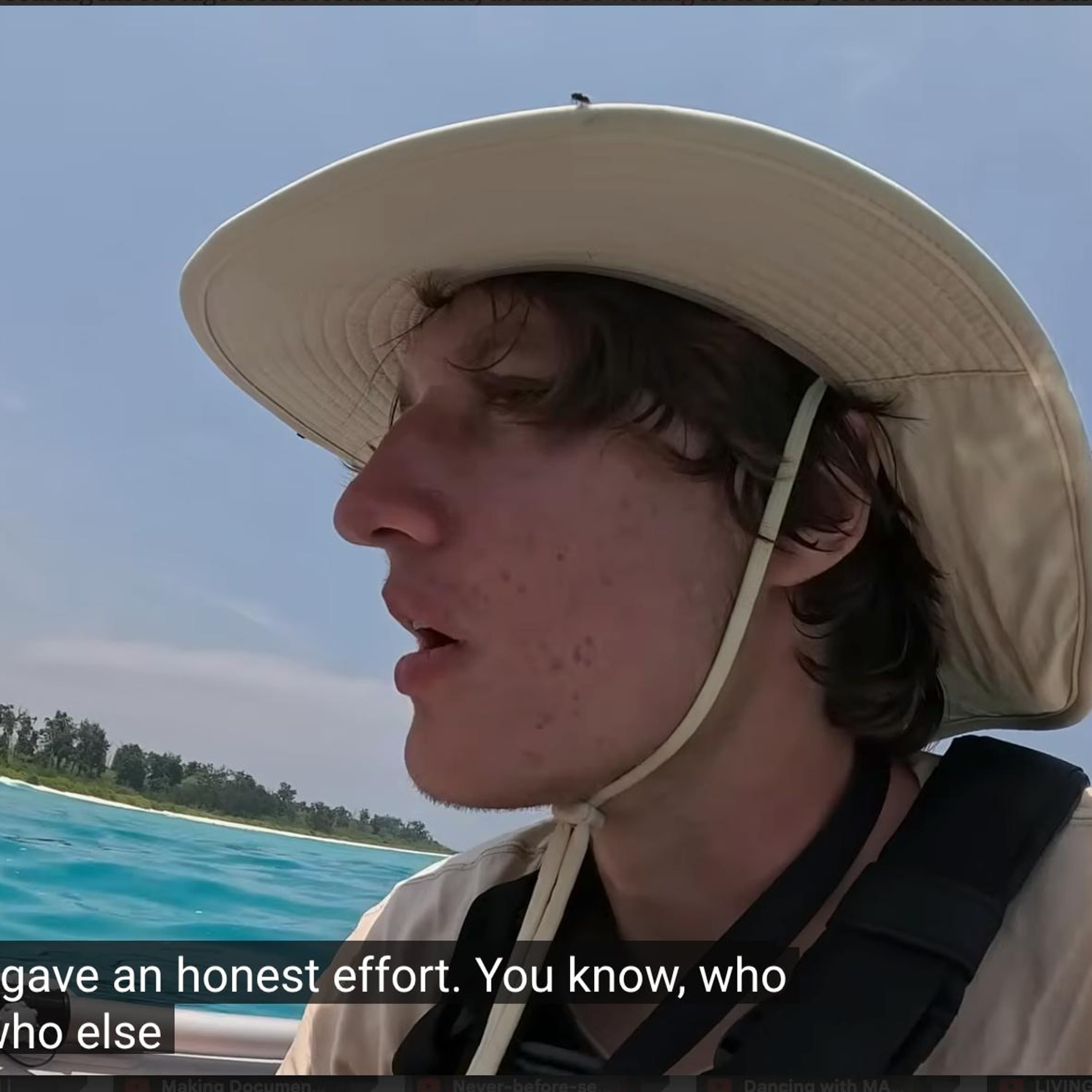
“Colonialism for clicks?”—how social-media influencers seek out uncontacted/isolated Indigenous communities (e.g., North Sentinel) for attention, and the ethical, legal, and health risks involved.
Elle Hunt, Guardian feature writer; previously reported on this “new breed” of influencers. Also discussed Survival International’s work (human-rights group protecting peoples in voluntary isolation). Maria Jose Andrade-Serda, Kichwa activist from Serena, Ecuador, involved in anti-mining and water-access efforts; interviewed about how influencer filming affects her community.
Contact attempts can spread deadly disease; filming and posting without consent fuels “savior” narratives and othering; algorithm-driven exclusivity rewards risky behavior; some conservation influencers also face criticism for centering outsiders.
Mikhailo Polyakov (Arizona master’s graduate) repeatedly tried to land near North Sentinel, filming and posting; an Arizona YouTuber was arrested in India (25 days prison, fine ~120 quid). Paul Rosalie/Jungle Keepers publicized rare footage of Mashka/Nomole people via major podcasts; Andrade-Serda described partnering with MrBeast to fund clean water.
Written by AI. May contain mistakes.
Exploring Mikhailo Polyakov's controversial visit to North Sentinel Island and the isolated Sentinelese people.
“What you're seeing right there is North Sentinel Island.”
Discussion on how influencers and adventurers are targeting uncontacted tribes for online fame.
“Elle Hunt, welcome back to Today in Focus.”
Analyzing Polyakov's perspective on the risks to himself and the Sentinelese and his justification for his actions.
“And in recent years, they have started noticing and hearing more reports of influencers who understand that these people exist and are trying to essentially track them down and get them on camera.”
Exploring the legal and ethical implications of contacting uncontacted tribes and the consequences faced by influencers.
“into making three attempted missions to North Sentinel, the last of which succeeded.”
Discussion on the varying motivations of influencers from extreme adventurers to conservationists.
“sort of, you know, with best case attention to protection against transmission still wiped out sort of like the huge numbers of these populations.”
Analyzing how media representations influence perceptions of isolated tribes and the ethics behind showcasing their lives.
“So I believe that the max sentence for this is five years.”
Discussion revolves around Jungle Keepers and their impact on indigenous lands and conservation efforts.
“And this has not been shown ever before.”
An indigenous activist shares insights about her community's struggles and environmental issues.
Personal stories and experiences of growing up in the Kichwa community and the impact of outside contact.
“and it's one of our favourite times of the year, Nobel Prize Week, when scientists get rewarded for incredible discoveries and breakthroughs in physiology or medicine, chemistry and physics.”
Discusses the problematic nature of influencers contacting isolated tribes and the implications of their actions.
“hearts our rivers, our land, because we are being threatened by mining, because we want to safeguard our future against extractive industries.”
Maria discusses her collaboration with Mr. Beast and its significance for her community's needs.
“to be honest it's it bothers me a lot yeah I can understand that and I guess not only are they filming without permission but then they are posting it on the internet for the world to see Yeah, exactly.”

Get the gist, explore an idea or ask about something said.
 Claude
On Today in Focus, what are the key points of this episode?
Searching your listeningAutomatic transcript. May contain errors.
0:00María José Andrade Cerda: This is The Guardian.
0:07María José Andrade Cerda: Today, the influencers contacting the world's most isolated tribes.
0:21María José Andrade Cerda: Hi, I'm Madeleine, host of The Guardian's Science Weekly podcast, and it's one of our favourite times of the year, Nobel Prize Week, when scientists get rewarded for incredible discoveries and breakthroughs in physiology or medicine, chemistry and physics. We'll be covering it all as the winners get revealed, so search for Science Weekly wherever you get your podcasts.
0:54María José Andrade Cerda: What you're seeing right there is North Sentinel Island. So this is the northeast corner. After hours of motoring across the Bay of Bengal, he finally caught a glimpse of his destination. A low-lying island surrounded by coral reefs and turquoise waters, mangroves lining the shore. It was time. All right, without further ado, let's land on this bitch. We'll see how this first landing goes, but I'll try and do what I can. You know, I do this for you guys. Mikhailo Polyakov was nearing North Sentinel Island, which is part of the Andaman archipelago governed by India. And there lived the Sentinelese, perhaps the most isolated people in the world.
1:43María José Andrade Cerda: In the northeast corner right now, test out the waters. I mean, I can't detect any natives at the moment, but they could be hiding. I'm going to play this very carefully. Venturing within three miles of the island is strictly prohibited, let alone setting foot on shore. And authorities routinely patrol the surrounding waters. But Polyakov saw himself as on a mission. A mission to, in his own words, end history. It is high tide, so I'm going to toss this Coke can in the water. Hopefully the Sentinelese will find it, and through the act of picking it up, history will end.
2:29María José Andrade Cerda: A new breed of adventurer is chasing internet fame by targeting uncontacted people. They paint themselves as anthropologists, documentarians, conservationists even. Others see them as idiots who are risking the well-being of these remote communities and their own lives. From The Guardian, I'm Helen Pitt. Today in Focus, colonialism or cliques?
3:00María José Andrade Cerda: Elle Hunt, welcome back to Today in Focus. Always a pleasure to have you on the show. Thank you for having me. So you're a feature writer for The Guardian and you recently wrote an absolute cracker for The Guardian Saturday magazine about this new breed of influencers, kind of Christopher Columbuses with a smartphone instead of a telescope. How did you come across this tribe of people? Maybe I shouldn't use the word tribe, given what we're going to come on to talk about.
3:23Elle Hunt: Yeah, there's certainly a kind of group of them, though. I was approached by the human rights organization Survival International, who work to protect the rights of indigenous people living in voluntary isolation. So that effectively means that they've decided to disavow modernity and live in line with their traditional customs on their indigenous lands. And there's about 200 of these groups living around the world, overwhelmingly in South America. And Survival International has been going for 50 years. And in that time, their primary sort of work has been done on protecting uncontacted peoples from contact by missionaries or more generally, you know, the threat to their lands and rights from governments and corporations.
4:10Elle Hunt: And in recent years, they have started noticing and hearing more reports of influencers who understand that these people exist and are trying to essentially track them down and get them on camera.
4:23María José Andrade Cerda: Whereabouts are you in the world? I'm in Southeast Asia, in an undisclosed location in Southeast Asia.
4:31Elle Hunt: That's very mysterious.
4:33María José Andrade Cerda: Yeah, I'm working on something. And we've already had a bit of a flavour of the content produced by this one guy, Mikhailo Polyakov. And you actually interviewed him, didn't you? Tell us, who is he and how did he end up on this, should we call it a career? Is that what it is?
4:50Elle Hunt: Well, it's a mission, isn't it? Or a calling of some kind. Polyakov is a 25-year-old, I believe he was at the time. He's a master's grad from Arizona. And when I interviewed him, he told me that he wasn't feeling particularly inspired by that career path. But when he'd grown up, he'd really enjoyed watching documentaries like those on Vice, the kind of countercultural investigative journalism going out there. Yeah, exactly that. And that was where his passions lay. And he started self-funding trips to places like Afghanistan. I think he's more recently gone to Haiti. and he sort of quite early set his sights on North Sentinel, which is an island that belongs to India in the Nicoban and Andaman Islands that is home famously to the North Sentinel people who are probably the most uncontacted of all uncontacted people.
5:45Elle Hunt: They became very famous in 2018 when a missionary attempted to land on their beach and was fatally struck by arrows.
5:51María José Andrade Cerda: Yeah, I remember that, yeah. Authorities say the 26-year-old was killed on what police described as a misplaced adventure in a highly restricted area.
6:01Elle Hunt: He was trying to meet and convert the Centillanese, an endangered tribe. So we really know very, very little about them. We don't know how many there are or even what language they speak because they have made it so clear that they don't want to be contacted. and is actually against the law to go even within five kilometer, three mile radius of the island because the government wants to protect their rights that way. And Poliakov set his sights on going to North Sentinel. He did his own research and decided that the risks both to the Sentinelese and to him were kind of overstated and really put in a lot of time, money, resources and effort into making three attempted missions to North Sentinel, the last of which succeeded.
6:49María José Andrade Cerda: We all, in a way, share a similar goal, to selfishly learn and share one of the last muses of adventure. It's not the landing that's hard. Quite a few people have done that. It's leaving alive that's difficult. All I wanted was to lay eyes on that island. Yeah, and he films these expeditions, doesn't he? And posts them on his channel. And I find the name of his channel quite interesting. Tell me about that. Neo-Orientalist. Hmm. Yes. And that kind of like pigeonholes me a little bit. Right, yeah. But then I added the, obviously, the neo onto it because I'm kind of like bringing it back or kind of bringing back that time.
7:23Elle Hunt: The phrase he used was, I'm bringing it back.
7:27María José Andrade Cerda: But when it comes to Polyakov himself, how does he justify what he's doing?
7:31Elle Hunt: He said, as I said, that he felt that the risks both to himself and the Sentinelese were overstated. And I should say at this point that survival's key opposition to people trying to make contact with uncontacted peoples is that there's a very real and well-documented risk of transmission of foreign disease. So they are very vulnerable to things like flu and COVID and whatever else that we might be bringing with us. And in the past, you know, forced contact missions by the Brazilian government through the 70s, sort of, you know, with best case attention to protection against transmission still wiped out sort of like the huge numbers of these populations.
8:10Elle Hunt: So that was the risk that Poliakov was quite convinced was overstated in the event that he was to meet.
8:15María José Andrade Cerda: So he thought he wasn't going to be importing diseases or what?
8:18Elle Hunt: He felt that because he'd been vaccinated that he would be safe, which again, quite a bold statement to say when we know so little about them.
8:28María José Andrade Cerda: Yeah. And so we've heard him go there armed with his can of coke. Is it just about saying, hey, guys, look, I'm this kind of edgelord. Another guy was shot with bow and arrow, but here I am, tantalizingly close. Yeah. Have you seen the videos? If you've ever read Robinson Crusoe, he's also me, literally me. He is me and I am him.
8:53Elle Hunt: Oh, God. It's a challenging watch for taste reasons. Yeah. But I think the point to his argument that really kind of hit me was that he said, you You know, if it wasn't me who tried it, it would have been somebody else, which I think really speaks to the, you know, the influence that these people have and the sense of that they're not doing anything by pushing the envelope. They're just sort of following the demands of the algorithm and the media landscape.
9:19María José Andrade Cerda: Yeah, I find it unsurprising that these people are all men. Yes. Something very male, isn't there? The conquering mentality.
9:26Elle Hunt: If you go to their profiles, they're either sort of circling, you know, contacted indigenous people like, you know, tribal tourism or they are very into plant medicine. They're very interposing with guns and snakes. I can picture their hinge profiles already. Yeah, swipe left. And one of my influencers that I spoke to who didn't attempt these sort of unethical or illegal missions to contact uncontacted people, which is at the extreme end. He ran a sort of more of an adventure tribal tourism outfit that was explicitly kind of marketed as, you know, recapture the man within. Like this is how authentic people should be living, which is, you know, explicitly manosphere kind of coded sentiment.
10:11Elle Hunt: You know, that we've lost our way and really we should be out there conquering.
10:17María José Andrade Cerda: An Arizona YouTuber was arrested in India, accused of trying to make contact with an isolated tribe. And how did the authorities deal with these people? What ultimately happened in his case?
10:31Elle Hunt: When he had been researching the risks and potential kind of consequences of this mission, He had felt that because he was a foreigner, there was quite a good chance that even if he was caught, he would get away with a slap on the wrist. And effectively, he did.
10:47María José Andrade Cerda: So I believe that the max sentence for this is five years. However, I went into this understanding that, you know, I would get some sort of punishment, but it wouldn't be bad. Like I wouldn't be stuck in India for years.
11:01Elle Hunt: I think he ended up spending 25 days in prison and a fine of about 120 quid from a maximum penalty of five years imprisonment.
11:09María José Andrade Cerda: In the prison, sleeping was a battle. My bed, the concrete floor never seemed as soft. And the bright lights above my face had to stay on throughout the night. Sheer willpower as well as sedatives... And did you get a sense when you were talking to Poliakoff that he kind of enjoyed that he had been imprisoned? It kind of burnishes his reputation as, you know, an edgy guy who takes risks.
11:32Elle Hunt: Yeah. Yeah. And I think this is something that we should all think about. And certainly I was thinking about with my reporting is that it's we often talk about influences as a very, you know, consistent group of people. And, you know, they're widely reviled and we're all sort of influences. And whenever we take pictures and post them online, I don't want this piece to come across. versus these bad influences hunting down uncontacted tribes because it's really a lot more knotty than that. They're driven on to do it by often online algorithms rewarding exclusive and extreme kind of missions.
12:23María José Andrade Cerda: And so El, Poliakov is, I mean, I'd call him a bit of a numpty, He broke the law by going to this island where the resident population have made very clear they don't want to be disturbed. But he's just one guy, isn't he? And he's one of many who are an increasing number who are doing this kind of stuff. Are they all as obnoxious as him, do you think?
12:42Elle Hunt: I'm not going to answer that leading question, Helen. But I will tell you that they come in a variety of kind of guises or motivations. you've got Polyakov at the extreme end of kind of cut and dried wrongdoing and a kind of video trail behind him but below that you have effectively what is an ecosystem of more ambiguous ethically murky kind of interactions.
13:08María José Andrade Cerda: Paul what have you spent the last 20 years of your life doing? Living out of a backpack and then the Amazon rainforest barefoot with a machete to Help the indigenous people save the Amazon, whatever it takes.
13:19Elle Hunt: So at the other end of the spectrum, we have figures like Paul Rosalie, who has been a conservationist working in the Peruvian Amazon for some years now. And he's really one of the highest profile people working on that kind of region. Yeah. He made the headlines earlier this year with what was heavily publicized as sort of never before seen footage of the Mashka Bureau. people or nomole people as they're also known sort of making a rare appearance on the riverbanks and rosalie and his team said this was not a forced encounter you know they came to themselves they're deliberately not revealing the location of this you know yeah but again it was hugely kind of publicized around the world and rosalie himself gave it exclusively to the american podcast Lex Friedman.
14:09María José Andrade Cerda: And this has not been shown ever before. This is a world first. Oh wow. Oh wow.
14:19Elle Hunt: He's a three-time guest of Joe Rogan who absolutely loves him. He's just appeared on Stephen Bartlett with like a bag full of snakes.
14:28María José Andrade Cerda: You bought a friend. I did bring a friend and I want you to meet him. And one of the first things I try to impress upon people when they meet a baby snake is remembering that.
14:37Elle Hunt: Again, sort of talking about these issues, these questions that are sort of like, they'd never heard of the wheel.
14:43María José Andrade Cerda: So tribe isolated so deep in the jungle that they've never heard of a spoon or the wheel or Jesus was coming out to make contact. So we do a two day boat journey in one night.
14:52Elle Hunt: You know, they're really quite sort of esoticizing and othering stuff. And then also kind of highlighting, like I said, a sort of naivety and like, you know, they wouldn't even know who Jesus Christ is, which there's truth to both of that, right? But there's something about consuming it in a podcast format with Joe Rogan or Stephen Bartlett that does open people's wallets in terms of donating to these causes.
15:17María José Andrade Cerda: Yeah, yeah. And I think he would say, if he was on this podcast, he would say, well, Jungle Keepers has raised more than$3 million and that they were able to buy and protect more than 135 ,000 acres of forest. But I guess what's the flip argument to that? Organisations like Survival, what would they say about what he does?
15:36Elle Hunt: I suppose it's, yeah, no one's denying the jungle keepers and Rosalie are doing good work in terms of protecting the rainforest from literal kind of existential threats from logging. I think as always with any kind of like thorny issue like this there's difference in approaches and buying up land which potentially should be seen as being an indigenous rights and ownership there's a clash of worldviews and approaches to conservation right but then the bigger question I suppose is how does Rosalie present this this fight on the world stage is he the sort of big the best known spokesperson you know should we be hearing from indigenous people about how they want their kind of lands to be managed because you know there are indigenous people to interview now do you know what i mean like you know there are indigenous voices very accessible and we can you know hear from them
16:39María José Andrade Cerda: coming up an indigenous activist on why she worked with mr beast
17:06María José Andrade Cerda: Hi, I'm Madeline, host of The Guardian's Science Weekly podcast, and it's one of our favourite times of the year, Nobel Prize Week, when scientists get rewarded for incredible discoveries and breakthroughs in physiology or medicine, chemistry and physics. We'll be covering it all as the winners get revealed, so search for Science Weekly wherever you get your podcasts.
17:53María José Andrade Cerda: I'm Maju Andrade. I'm from the Kichwa community of Serena in Ecuador. I remember just going to bed here in the river and waking up with the river in my ear. We spent a lot of time at the fire drinking our tea to start our day with all our activities. As a kid, I remember me running into the jungle, but also swimming into the river. So that's our life. That's the future that we want for our kids.
18:38María José Andrade Cerda: Obviously, you can't interview someone from an uncontacted tribe. But some people know better than others what it's like to live in an isolated community with fears of the outside world. This is Maria from Yotoriwami. It means female bullet ants and it's a women's collective formed to fight against mining on their land. I think many people might not have heard of your community just tell me a bit about how long have you guys been around and what's so special about your community. So Serena it's a beautiful place we are in two rivers the Hatunyaku River and the Ilokulin River. We are a small community, around 200 people, but we are defending with all our hearts our rivers, our land, because we are being threatened by mining, because we want to safeguard our future against extractive industries.
19:38María José Andrade Cerda: Oh, it sounds like quite an idyllic place and way of life to grow up. And in terms of contact with the outside world, how much contact did your community have when you were growing up? It was quite interesting because before I remember in my community, we didn't have even energy. I mean, it was 6pm and we have to go to bed because there was no electricity. I remember when I was really young, maybe three, four years, we didn't even have the bridge to cross the Hatunyaku to go to the community. We had to cross by canoe or by the other machine that we have to cross. Before, we had a lot of deaths into the river.
20:28María José Andrade Cerda: Even my grandpa died in the river. And tell me, how do you feel now when you see videos of mostly men, male influencers, trying to contact isolated communities, isolated tribes? You know, I grew up in an environment where I saw foreigners, but they were kind of respectful. Or maybe it was because they didn't have cameras and everything. But when they have cameras, they were very respectful. I remember we had a policy of not taking pictures of children. But now, since everything is a phone and you can record everything, and you don't even ask for permission in the forest, you're not asking for that because you think you have a privilege of filming everything so for me it's very difficult that a man it's doing that because of the gender because of the ethnicity and because it has a role a role of power because if you are coming from a different country it means you have some kind of privilege to do that kind of trip you know so um for me to to be honest it's it bothers me a lot yeah I can understand that and I guess not only are they filming without permission but then they are posting it on the internet for the world to see Yeah, exactly.
22:01María José Andrade Cerda: How it's becoming Indiana Jones, it's going to save a small community very far from the city because they need help. And it's because of this narrative of the savior. Because indigenous peoples are very, very savage to save themselves. They need someone else. It's better if it's a white person, male. it's becoming the like Jesus Christ but for indigenous peoples so the dynamic it's still there but in a new area you know so now influencers are coming because globalization and civilization is everywhere but for me it's like why you don't respect just the way that we want to live
23:00María José Andrade Cerda: And but I guess, you know, you could argue that not all social media is necessarily bad, because I think you took part in a video with Mr. Beast, like one of the most popular, most famous influencers in the whole world. Tell me about that. So, as I said before, all governments that were trying to just come into indigenous lands to exploit them. So we need allies who can help us to do what we need in the community because we don't have enough resources, mainly economic resources, to build infrastructure that we need. because we are being contaminated by mercury of illegal miners and in the future are coming the legal miners to our land.
23:48María José Andrade Cerda: So we build a bridge with international cooperation. We're on a mission to give 2 million people all around the world clean water. This village of Malawi now has clean water, impacting over 1 ,000 people. It was more than a year ago. I was busy in the U.S. advocating and speaking up against mercury and illegal mining in our lands. I got introduced to a producer who was working with the team of Mr. Beats. And he said, well, if you need clean water, we can make your community part of this project. So we decided we were going to say yes to the project. All the way over in Ecuador, we're with Ricky Lamone and four of his friends with over 120 million subscribers combined.
24:41María José Andrade Cerda: And they're going to help clean up the water from this dangerously contaminated river. Even though it's very beautiful. They installed a filter for clean water. And now we have also bags to filter the water. But now we are building this center for clean water. Right. Wow. And that all came from the proceeds of the Mr. Beast collaboration. Exactly. Wow, because I think it got 140 million views and that was enough, was it? Yes. And I just wonder if it feels like, is it frustrating that you need in order to raise these monies, you need, well, you need a rich white guy from America to front the video in order to get people to care and to be able to raise the money?
25:26Of course.
25:28María José Andrade Cerda: It's very ironically, I can say, how we have to work to get what we need. Because the other alternative that we have, because governments, they don't give us the money that they take from taking the oil from the ground. They didn't give us the revenues from mining in our land. So we need something else. So we need to be very creative to earn money to have the basic things that we need. And I cannot imagine how is it for people who are near to isolated tribes. Yeah, yeah, yeah. I really think that it's a part that we are missing, how to understand better this kind of world.
26:24María José Andrade Cerda: That was Maria Jose Andrade-Serda. My thanks again to her and also to Elle Hunt. You can read Elle's magazine piece about all of this at theguardian.com. And just one quick thing before we go. I'm delighted to tell you that Today in Focus won two trophies at the British Podcast Awards last week. We got two silvers for Best Hosts and Best Daily Show. And the Guardian Investigates podcast, The Birth Keepers, won a gold. I am slightly less delighted to report that we lost one of said trophies somewhere in the vicinity of the O2 in London so if you happen to find one with our name on it, let us know and that is all for now this episode was produced by Tom Glasser and presented by me, Helen Pitt sound design was by Brian McNamara and the executive producer was Sammy Kent we'll be back in your feeds this afternoon with the latest
27:20Elle Hunt: This is The Guardian.
27:29Thumbtack presents Uncertainty Strikes.
27:32Elle Hunt: I was surrounded. The aisle and the options were closing in. There were paint rollers, satin and matte finish, angle brushes and natural bristles. There were too many choices. What if I never got my living room painted? What if I couldn't figure out what type of paint to use? What if I just used Thumbtack? I can hire a top-rated pro that knows everything about interior paint, easily compare prices, and read reviews. Thumbtack knows homes. Download the app today.
28:01María José Andrade Cerda: Hi, I'm Madeline, host of The Guardian's Science Weekly podcast, and it's one of our favourite times of the year, Nobel Prize Week, when scientists get rewarded for incredible discoveries and breakthroughs in physiology or medicine, chemistry and physics. We'll be covering it all as the winners get revealed, so search for Science Weekly wherever you get your podcasts.


