Ask ChatGPT


 Today in Focus
23 Nov 2026 · 12m · 7 chapters
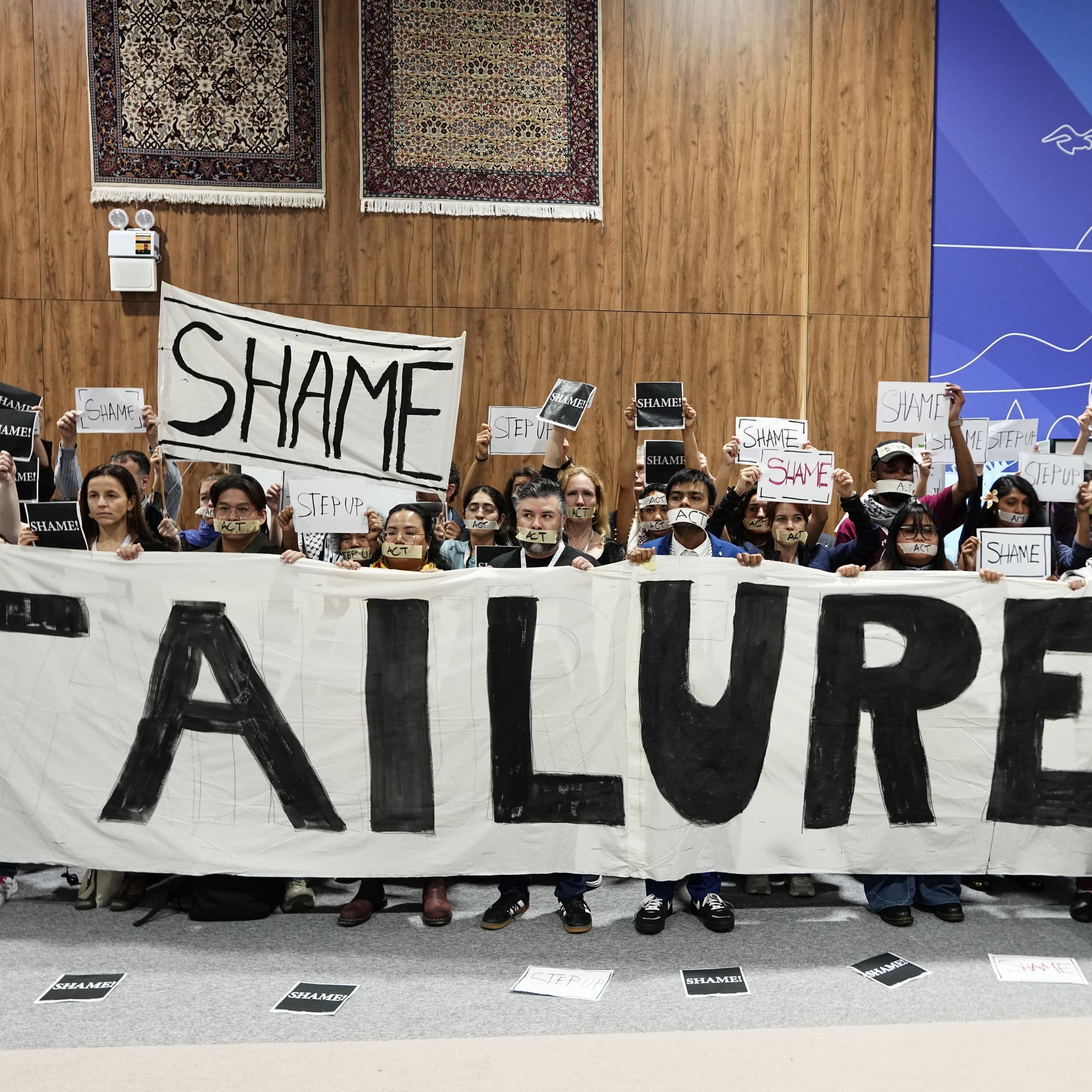
COP31 in Turkey collapsed without a central agreement for the first time in 17 years, with countries refusing to adopt the “Antalya Pact” text due to disputes over fossil fuels, “overshoot” language, and carbon capture and storage (CCS).
Graham Redfern, Guardian Australia climate and environment correspondent, reporting from Turkey.
Agreement failed because consensus couldn’t be reached; some countries walked away rather than accept “greenwashing.” Pacific and EU representatives criticized omission of “fossil fuels,” while Saudi Arabia defended CCS. Disagreements also included stronger commitments on limiting warming and a proposed electrification target being blocked by lack of finance.
Saudi Arabia, Russia, India; Pacific states citing 1.5°C as a survival threshold; electrification target (35% electricity by 2035) called a “mirage” without funding.
Written by AI. May contain mistakes.
Discussion on the failure to reach an agreement at COP31 in Turkey.
“We will not accept a cop that greenwashes fossil fuel.”
Exploration of the reasons for the breakdown at COP31, including key disagreements.
“Some describing this as possibly the worst COP ever.”
Analysis of the demands from certain countries for stronger commitments on fossil fuels.
“Because it really became a bit of a showdown, didn't it?”
Insight into the challenges of reaching consensus during the negotiations.
“So that was in there, but fossil fuels wasn't.”
Discussion on various responses to the outcome of COP31 and its implications.
“And I suppose I was thinking about last year where an agreement was signed, but it didn't include anything about the transition, nor did it include the phrase fossil fuels.”
Examination of calls for reform in the COP process following the event.
“You've got people choking on smoke in Indonesia.”
Discussion on the future of COP and the effectiveness of the current model in addressing climate change.
“You had, for example, a good example was an electrification target that they wanted to be in the pact.”

Get the gist, explore an idea or ask about something said.
 Claude
On Today in Focus, what are the key points of this episode?
Searching your listeningAutomatic transcript. May contain errors.
0:00This is The Guardian.
0:30respond if they go rogue. Okta secures AI. Learn more at Okta.com.
0:40People decided we would rather walk away from a really poor deal than accept one. We will not accept a cop that greenwashes fossil fuel. Countries were saying this text needs to meet the moment to get an agreement. It's got to be consensus and they couldn't get it. The decisions are therefore not adopted. Is COP fit for purpose anymore? From the Guardians today in Focus, this is The Latest with me, Lucy Hoth. This year's COP climate conference has finished in Turkey with no central agreement. The first time that's happened in 17 years. Some describing this as possibly the worst COP ever. Graham Redfern, You're Guardian Australia's climate and environment correspondent.
1:25You're in Turkey for us. This all fell through at the 11th hour, despite the conference being extended, right? What happened? Yeah, yeah. I mean, not even the 11th hour. We were going well into overtime. The 30th hour. I don't know how you'd quantify it. Yeah, I'm beyond the capacity to count that now because there's been some long nights, not a lot of sleep. But yeah, it was due to finish on Friday afternoon. But cops are kind of notorious for overrunning. So we got to beyond the longest COP ever, which was 2019 in Madrid, 1.55 p.m. on a Sunday afternoon. I think the gavel went down there. But yeah, we were going well into sort of three and four o 'clock.
2:05But to be honest, by about 12-ish, it had become really clear that this cover decision, they call it, it was going to be called the Antalya Pact, that they were just not going to get agreement. There was too many divisions, too many countries that just didn't want a bar of it, as we would say in Australia. Okay. Crucially, those states being countries with a vested interest in all of this, countries like Saudi Arabia, Russia, India, who had issue with the inclusion of the clean energy transition and crucially fossil fuels in that pact. What were some of the disagreements? Because it really became a bit of a showdown, didn't it?
2:44I guess you could divide them into three bits. You had groups of countries that they wanted to name the problem. They wanted the words fossil fuels to be in the text and the text that they were presented with very early on Sunday morning in the early hours. It didn't have even those words in it. They also wanted much stronger language on what we are now calling the overshoot. What's overshoot? Overshoot is going over the Paris target, the 1.5 degree. We know we're going to overshoot that. It's a word we hadn't really heard much before at COPS. And now it was in this time it was everywhere. There was a big push, particularly from Pacific countries, Australia's neighbours, that 1.5 was already a survival threshold for them.
3:33So they wanted much stronger language on that. They wanted this transition away from fossil fuels to be really strong in the text. They wanted other things too, like a tripling of climate adaptation finance. While we didn't have the words fossil fuels, what really enraged a lot of parties was it did include the phrase carbon capture and storage, which a lot of campaigners see as really just a sop to petrostates and a piece of greenwashing from the fossil fuel industry. So that was in there, but fossil fuels wasn't. And that was really a bridge too far. We heard in the plenary meeting, Saudi Arabia kind of defending CCS, as it's called, and saying, well, you know, if things are so bad, why do you want to not have all the options available to you?
4:22But at that point, it was incredibly tetchy and impossible for the COP presidents that it was a co-presidency with Turkey, Murat Karam, the environment minister, and Australia, Chris Bowen, their climate minister. They couldn't find a way through. And you have to in those talks because to get an agreement has got to be consensus and they couldn't get it. Yeah. And I suppose I was thinking about last year where an agreement was signed, but it didn't include anything about the transition, nor did it include the phrase fossil fuels. So I'm just wondering, on one level, we did have a form of consensus, which is that somewhere between 140 and 150 member states walked out and refused to sign this agreement that I think we could say would be some sort of fudge, given that, you know, fossil fuels, we know to the extent to which they contribute to the climate emergency.
5:16So on one level, does this feel like a kind of breakthrough moment, given that a document that kind of greenwashes the issue was not allowed to be signed? Yeah, I mean, some people call it like a line in the sand. And you could see, depending on whether your glass is half full or half empty, you could see it as a failure of multilateralism or a success. Because finally, you have a group of countries that came together and said, actually, we're not going to accept this weak language, this compromise. And remember, this meeting was coming. We had the overshoot issue. Countries wanted to deal with that.
5:56So we had that coming into this COP. We had the awful heat waves and fires in Europe, which you guys will know all about. You've got people choking on smoke in Indonesia. We've got the historic El Nino developing. and obviously the awful events in Nepal and all of that. And the science backing that all up to say there's fossil fuel fingerprints all over these events. Countries were saying this text needs to meet the moment, they kept saying. It's got to meet the moment. Yeah, and that was certainly the message from some Pacific Island nations, as you mentioned, the Marshall Islands, you said they felt let down on all sides.
6:43The EU's representative says it's unconscionable that we would have a climate pact that makes no mention of fossil fuels. So this sense that this doesn't speak to the reality of the climate crisis. We've also been hearing a lot of kind of anger and frustration from island nations and from the developing world. A sense that there might be some hypocrisy at play for countries like the UK or European nations who didn't sign this at the expense of countries who are already at the forefront of the climate emergency and experience it in real time, as you say. Yeah, these meetings are, you uncover all of these nuances, these complexities and these cross-cutting geopolitical fights.
7:24And that was definitely one of them. You had, for example, a good example was an electrification target that they wanted to be in the pact. This is the idea that we should be aiming to get 35 % of our end energy use to come from electricity by 2035. So like changing your petrol car to an EV, for example. Now, there was a lot of support for that. But the African group said, well, we like the idea. But if elsewhere in this pact, you're not giving us access to the money to be able to develop it, then it's they called it a mirage. without a deal that was really inclusive on all parts. You always, nobody ever wins everything in these.
8:15But there was certainly a huge block of countries that just said, actually, we're not going to do this anymore. And that has sort of now led in the last sort of 24 hours to sort of some increased calls for reforms to this whole thing. I was just going to ask you about that because, I mean, we get a sense of all of these geopolitical fault lines or, you know, the myriad of issues of bringing this number of countries together, some with vested interests, some who are being impacted already by rising temperatures and extreme weather. I mean, there are calls for reform of the COP model and the way that the negotiations take place, but also whether COP is kind of sustainable and whether it has the ability to be the model with which we face off the climate emergency.
9:05Where do you kind of stand on that? Well, when it comes to reforms of the COP, even one of the COP co-chairmen, Chris Bowen, said, you know, the fundamental problem with this is that we have to find consensus. And that's always been the case for COPs. And that's a problem. And, of course, you need consensus to change the decision-making process that sits around consensus. Simon Steele, the UN climate chief climate negotiator, he said, well, actually, we are, we've got a reform process that he says he's championing. And that might be one of the things that they look at. But you've had everybody from Al Gore down saying this, this really does need changing now.
9:51And we need to look at this multilateral process. But, yeah, you've sort of, you've hinted as well that, like, is COP fit for purpose anymore? Well, kind of I see COP as like the low bar that ideally no country should fall behind because you've managed to get everyone to agree there's power there because you've said, well, this is good for everybody. So I think it's useful because it does set that kind of minimum effort from everybody, even though we know that a lot of countries are not even meeting that. So you mentioned whether someone is a glass half full or a glass half empty person in your view, just to finish.
10:34How do you walk away from this cop? Do you think it is a line in the sand and opens the door for reform? Or do you think it was the worst cop ever? I don't think we can say it's the worst COP ever because what are we measuring that against you know we had an absolute failure in Copenhagen for example but but I apart from walking away from this COP really tired out after after two weeks of kind of pretty long reporting with me and my colleagues I actually feel that that there might be some some really positive questions now being asked about COP. And it could be for the better in the long run. And as a lot of the campaigners have said, finally, people decided we would rather walk away from a really poor deal than accept one.
11:26And then maybe look elsewhere for action as well. Yeah, well, let's hope you're right. Graham, thank you so much. Thanks, Lucy. That's it for today. My huge thanks again to Graham Redfern, Guardian Australia's climate and environment correspondent. You can keep up with all our coverage from our team on the ground in Turkey over at theguardian.com. Thanks for listening to this episode of The Latest. Today in Focus will be back in your feeds as usual tomorrow morning. The Latest will be back tomorrow night. This episode was produced by Angus Neal. The senior producer was Leo Schick. The executive producer was Zoe Hitch.
11:58And it was presented by me, Lucy Hough.
12:08I'm Landry Bakery and this is The Close-Up. The new show from Guardian Studios that zooms in on the big culture questions. We are two culture obsessives who will be talking about, well, everything. Is romanticy secretly subverted? Is SNL UK funnier than the original? Does it matter if a pop star can sing? Every week we take in a wide shot and chat about the big culture headlines before zooming in on the most interesting story of the week. Until things go a bit out of focus and we bring you the stories that you might have missed. On Sundays, we trade our latest obsession for our culture swap. Starting on the 19th of November, watch The Close-Up on YouTube.
12:43Or listen wherever you get your podcasts. This is The Guardian.
12:56Hi, this is Elise here from TED Talks Daily, brought to you by Okta. As organizations rush to deploy AI, agents operating in the dark create massive security blind spots. To bring them out of the shadows, Okta answers four critical questions. Where are my agents? What can they do? What are they doing? And how do I respond if they go rogue? Okta secures AI. Learn more at Okta.com. 500 orders a month was manageable. 5 ,000 is madness. Embrace intelligent order fulfillment with ShipStation, the only platform combining order management, warehouse workflows, LTL freight shipments, inventory, returns, and analytics in one place.
13:36What used to take five separate tools, ShipStation does in one. Automate fulfillment and rate shopping for parcel and freight to ship more with up to 90 % savings. Go to ShipStation.com and use code XXX to try ShipStation free for 60 days.