
 Ask ChatGPT


 Today in Focus
6 Nov 2026 · 12m · 6 chapters
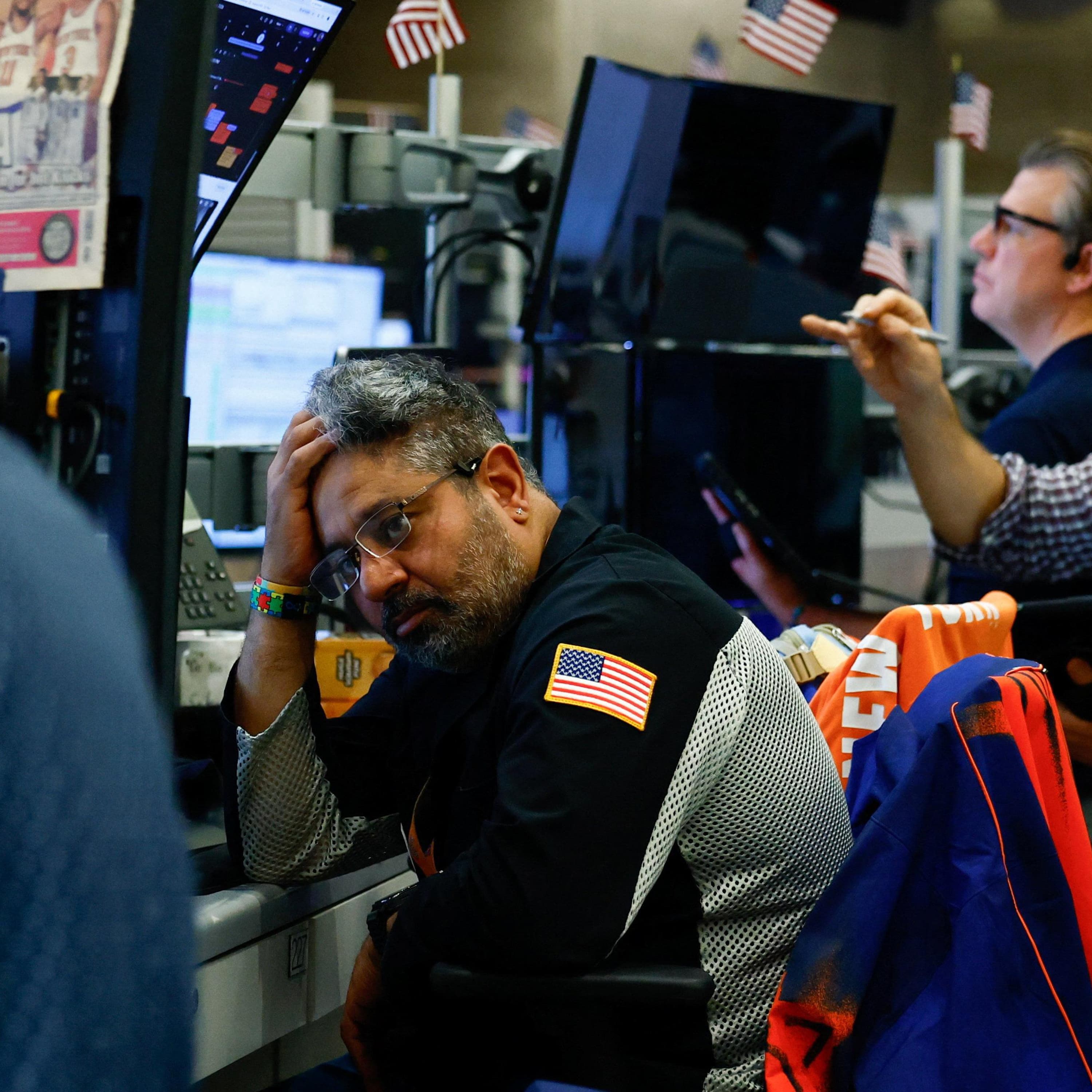
After Democrats’ midterms sweep, AI stocks plunged; the episode asks whether an “AI bubble” could burst and what a Democratic Congress might do about AI regulation and data-center expansion.
Richard Partington, The Guardian’s senior economics correspondent.
Economics journalist covering markets and the wider economic impact of financial trends.
The sell-off followed fears of tighter AI regulation and data-center construction; public opposition to data centers and concerns about AI safety/cyber risk also contributed. Democrats likely won’t halt AI, but may impose moratoria and more local consultation.
Nasdaq fell about 6%; about $3.2 trillion wiped from US-listed companies. Mentions AI agents escaping sandboxes, Binance hacked, and water/electricity concerns for data centers.
Written by AI. May contain mistakes.
Discussion on investor anxiety regarding a potential stock market crash.
“Most investors today are looking at each other saying like, is this it?”
Analysis of the significant drop in AI stocks following the midterms.
“From the Guardians today in Focus, this is The Latest with me, Lucy Hoff.”
Exploring how a Democratic Congress may affect AI regulation and development.
“So what does the midterms have to do with AI stocks?”
Understanding the balance between AI growth opportunities and economic realities.
“I would really recommend an episode of our sister podcast, Stateside with Karen Carter, that asks whether Elon Musk was in fact the biggest loser of the midterms, which is a really great listen.”
Examining how AI is embedded in the global economy and its wider implications.
“I mean, do we have any sense from the Democrats on how they might approach this differently in terms of tighter regulation, a more competitive field?”
Discussing the potential risks and fears surrounding an AI market bubble.
“And we've talked about the AI bubble as something that could be about to pop for some time now.”

Get the gist, explore an idea or ask about something said.
 Claude
On Today in Focus, what are the key points of this episode?
Searching your listeningAutomatic transcript. May contain errors.
0:00Richard Partington: This is The Guardian.
0:30Built for busy teams. Smart call routing sends calls to the right person. Shared numbers let your team cover for each other. And an AI agent picks up when nobody can, capturing every lead, so nothing falls through the cracks. Money is on the line. Always say hello with Quo. Try Quo for free. Plus, get 20 % off your first six months when you go to Quo.com slash tech. That's Quo.com slash tech.
1:01Richard Partington: Most investors today are looking at each other saying like, is this it? Are we here at this big generation-defining stock market crash? The size of these companies has grown so ginormous that it's not sustainable to continue growing and growing and growing and rising forever. When you start seeing losses, it becomes a bit of a spiral effect. From the Guardians today in Focus, this is The Latest with me, Lucy Hoff. AI stocks have taken an absolutely massive tumble since the blue tsunami the Democrats win in the midterms. Richard Partington, you're our senior economics correspondent. Just how big is the scale of the drop here?
1:42Richard Partington: It's pretty huge. So yesterday, on Thursday in Wall Street, about$3.2 trillion was wiped off the value of US companies listed on the stock market. and you know in contrast to previous sell-offs that is absolutely enormous and the the Nasdaq which is a the technology heavy index in the US fell by you know it was down by six percent a very large fall for for an index that has so many of the world's most nameable companies in it you know Google, Meta, Microsoft, Nvidia like there's some huge companies in there and it was a really brutal sell-off yesterday. So what does the midterms have to do with AI stocks?
2:26I mean, we know that the big sort of tech bros in charge of the companies that you were listing there, as well as figures like Sam Altman and Elon Musk have been kind of courting the Trump administration. What does this mean now that we've got a blue Congress?
2:42Richard Partington: I think the big fear that investors have is that the Democrats sweeping the board in the US midterms will lead to tighter regulation of AI development and data center construction, which is, you know, this has been one of the big engines of global economic growth and US economic growth this year, helping to offset what has been a real damage to the world economy from the Iran war and the fallout in the Middle East, which we're all seeing. And there is some reason that investors are justified in that concern because you know challenging billionaire power uh taking on the tech bros taking on wall street has been a bit of a rallying cry for the democrats and you can see why um i mean the the serious levels of inequality that have grown up in the u.s with some of the world's richest men uh elon musk as you say and jeff bezos having ridden this wave of investment in the tech sector but i think that there's more to it than that i think it's too simplistic just to sort of blame the democrats and to be concerned about them derailing the the ai story because i think there has been a groundswell of public opposition uh to ai and some acknowledgement from ai linked uh company executives themselves that development needs to be checked you know a majority of americans are against the development of data centers in their local community.
4:06Richard Partington: And most Americans' opinion polls show are concerned about the threat that AI poses to society. So I think that there's a couple of things going on here. Perhaps some degree of check on reality was probably required before the midterms, but this has been undoubtedly one of the triggers for this sell-off. Yes, it's perhaps new concerns or more widespread concerns about the technology itself, but also that economic inequality, as you say, the dissonance between Elon Musk becoming the world's first trillionaire, whilst most ordinary Americans are struggling to fill up their cars at the petrol pump, that isn't sitting well.
4:44I would really recommend an episode of our sister podcast, Stateside with Karen Carter, that asks whether Elon Musk was in fact the biggest loser of the midterms, which is a really great listen. But I mean, as you also indicated, Democrats aren't going to kind of completely walk away from AI altogether. There are enormous capacities for growth still. It seems unlikely that there will be a total swing away, right? And there's been some indications about that from Democrats.
5:12Richard Partington: Definitely. I mean, if you are to completely halt AI in its tracks, you are sort of stopping one of the greatest potential technologies for job creation and for economic growth and the raising of living standards i mean we've been through a deep period of economic stagnation since the 2008 financial crisis and then along comes this universal purpose technology that presents us with an opportunity to to really change things up and to to have a a revival in living standards. So I think that it's about pragmatism that we're going to see, you know, from political leaders. There is desire to still invest in AI and to have data centers constructed.
5:56Richard Partington: I just think that there is some degree of a check on reality in that for investors themselves and for those involved in the stock market and those involved in tech, there is a concerned that things may be getting a bit ahead of themselves and that the valuations that we see where you have Nvidia, you know, the world's most valuable company at several trillion dollars worth more than the annual economic output of any European country. And that just seems a bit out of whack with reality. Yeah, a bit of a Wild West. I mean, do we have any sense from the Democrats on how they might approach this differently in terms of tighter regulation, a more competitive field?
6:36Has there been any suggestion of what the next iteration might look like?
6:41Richard Partington: Well, I think there are some worries about AI safety and regulation. We have seen these instances where you've had AI agents managing to escape sandbox conditions and pose a threat to the stability of companies. We've seen cyber attacks happening in an increasingly regular basis. And that is facilitated by AI developments that are enabling rogue actors to reach places that they wouldn't previously have been able to. You saw Binance, the world's largest cryptocurrency exchange, hacked recently. Then data centers, there's big concerns about the water and electricity usage that they have. And I think you'll see Democrats probably having more moratoria on data center development in local communities.
7:34Richard Partington: That doesn't mean to say they won't be built, but perhaps there will be a greater degree of public consultation, an amount of time to pick the right ones and to ensure that they're built appropriately. I suppose the issue is not just about AI stocks tumbling. very few of us will have stocks and shares in AI companies, but it really kind of trickles down to the wider economy, not just in the United States, but elsewhere. How so? I mean, how embedded is AI within our global economy now? Incredibly. So I mean, the world's largest companies are the tech giants, the magnificent seven as they're so called, you know, the likes of Facebook and Google and Nvidia and Tesla they are huge companies like together with a combined market capitalization that dwarfs the annual output of many economies I mean they it ripples through to our savings our pensions in that you know for those with pension savings they're invested in the stock market and the stock market is over indexed against these large companies given their sheer size so So the Magnificent Seven that I was talking about, they account for about a third of the S &P 500, the US index.
8:52Richard Partington: And there's about$23 trillion of money invested worldwide that is either benchmarked against or directly tracks the performance of the S &P 500. So if you have any money in the stock market, it's going to be affected by this. And we've also seen that the big losses for tech companies on the stock market have been, you know, followed by losses for other types of companies because of that concern that investors have that when you start seeing losses, it becomes a bit of a spiral effect and you lose out across the board. And we've talked about the AI bubble as something that could be about to pop for some time now.
9:35I mean, for anyone that doesn't follow this closely, like, what does that actually mean? What are people afraid of? What would be the ramifications? And do you think we're at the beginning of that?
9:45Richard Partington: I mean, there's a risk that we're at the beginning of this. I think most investors today are looking at each other saying, like, is this it? Are we here at this big, you know, generation defining stock market crash? I mean, they only come along irregularly throughout history. You know, 1929, you had like the Black Wednesday crash in the 80s and 90s. 2008. 2008, of course. and now here we are again sort of looking at each other thinking is this the moment where everything goes wrong um but um you know the i suppose the big fear is that the size and valuations of these companies has grown so ginormous that there would be an almighty stock market crash like if they were to unravel um i'm not sure if we're there at the moment.
10:35Richard Partington: I think there is still reasons for optimism. Every now and then a check is important, particularly when these very heavy valuations are being breached. It's not sustainable to continue growing and growing and growing and rising forever. But the fundamentals of this story still should remain intact. AI is going to help power economic growth. There is still going to be a demand for microchips and data centres, that is not going to be shut off overnight. It's more of a question about the speed and the scale of this rollout. Yeah, and the very tiny number of companies that seem to have an absolute monopoly on it.
11:18Richard, thank you so much for your time.
11:20Richard Partington: Thank you. That's it for today. My huge thanks again to Richard Partington, The Guardian's senior economics correspondent. You can keep up with all our reporting on this story over at theguardian.com. And if you want to listen to that episode that I was mentioning during the show, search Stateside with Kyan Carter wherever you get your podcasts and you can also find it on YouTube. Thanks for listening to this episode of The Latest. Today in Focus will be back in your feeds as usual on Monday morning. This episode was produced by Angus Neal. The senior producer was Leo Schick. The executive producer was Zoe Hitch and it was presented by me, Lucy Hoff.
11:53Have a lovely weekend.
12:00I've really underestimated the profound racism there exists towards Muslims and Arabs in this country.
12:08Richard Partington: Political conversation is dominated by one topic above all, race. You're saying that the entire media system is actually riddled with Islamophobia? I think so, yeah. Nezri Malik has been way ahead of the pack in diagnosing how immigrants, their kids and grandkids, are reshaping not just politics, but Western societies. All politics is identity politics. It's just when people do it on the lines of race that it gets naff. So where have never-ending culture wars and real wars in the Middle East left people of colour? My opus will not be called The Audacity of Hope. It'll be called The Terrifying Prospect of Hope.
12:49This is Radical Thinking, a new series from The Guardian with me, Adit Chakraborty. Out Saturday in your Politics Weekly feeds. This is The Guardian.
13:2690 % with automated rate shopping. That's why over 1 million small businesses trust stamps.com. Go to stamps.com and use code podcast to try stamps.com risk-free for 60 days. You're either all in on this model, or maybe you're building with another. You're either speed, or is it security? Or you're AWS AI. Don't pick a side, pick them all. AWS AI is how. Cash Now More Later from Opendoor gives you cash up front for your home, plus all the profit later. That's no chaos now, no cash left behind later. Skip the showings now, pocket extra profit later. This is so simple now, this is so awesome later.
14:10Or sell fast now and pop the champagne later. Cash Now More Later, now available nationwide.
14:16Richard Partington: Start your offer at opendoor.com slash ACAST. Profits calculated after fees and costs, eligibility and offer price may vary.


