Ask ChatGPT


 Today in Focus
25 Oct 2026 · 47m · 20 chapters
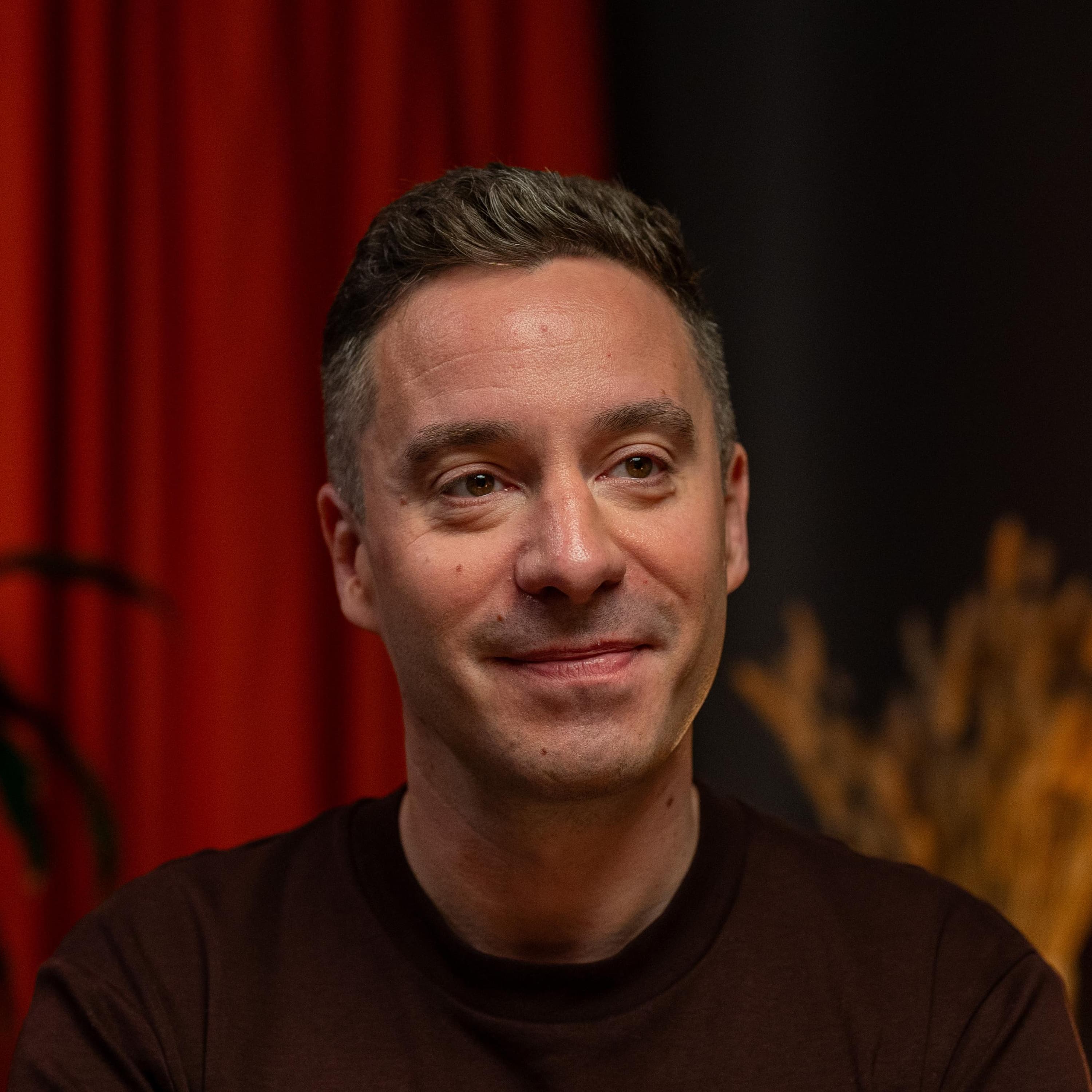
James Graham argues Britain’s culture is “stagnant” because algorithms and short-form attention keep repeating familiar stories, killing “the capacity for surprise.” He links this to democratic crisis: without new narratives, politics can’t imagine a new world. He also says deindustrialized communities lost meaning, belonging, and social infrastructure, fueling resentment and right-wing populism; the left often fails to build alliances.
James Graham, a leading British playwright and “national dramatist,” known for political dramas about prime ministers, miners, football, and tabloids. He grew up in Kirkby and Ashfield (East Midlands) and was shaped by the 1984–85 miners’ strike divisions in North Nottinghamshire.
polarization is partly downstream of isolation and reduced cultural experience; theatre’s value is nuance/complexity, not “both-sides” centrism; tabloids and populist media thrive on simplified “why-less” stories; long-form culture is cognitively and emotionally protective.
miners’ strike split in his hometown; Sherwood’s “look at what they still call us” speech; Murdoch’s The Sun origin; franchise-heavy West End programming (Marvel/Harry Potter); Corbyn/Starmer Labour strategy debates; “flags in gardens” symbolism.
Written by AI. May contain mistakes.
James Graham discusses the narrative of democracy and cultural stagnation.
“Democracy is a story we began to tell 2 ,000 years ago and we've stopped telling it.”
James Graham reflects on growing up during the miners' strike and its impact.
“From The Guardian, this is Radical Thinking with me, Adit Chakraborty.”
Exploration of how political identities shape community and class.
“And I get really angry when people go, you've got to pick a side, pick a side.”
James Graham shares insights on differing political views within his family.
“or frankly, and it's not to disparage these jobs, I've done these jobs.”
Discussion on the importance of storytelling in bridging political divides.
“But yeah, now I remember having that debate.”
James Graham discusses the struggles of towns post-industrialization.
“And if we're not doing it, I think it has no value.”
Insights into navigating political divides in the arts community.
“This idea that we just have to accept managed decline.”
Explore how cultural divisions impact political perspectives and alliances.
“These places now feel quite lonely and isolated and disconnected from one another and disconnected from the country.”
Discuss the potential for alliances between working-class and urban communities.
“But in class terms are very similar to people who are precariously employed, who may feel that they're middle class, but actually don't have a middle class lifestyle.”
Examine how the right simplifies complex political narratives to gain support.
“But that also reflected the kind of slow erosion of a Labour conscience in areas that you're talking about, which you've charted, which you've just talked about with me.”
Analyze how storytelling shapes political narratives and public perception.
“because we talked a lot about the left, this does take us into the right and the right have got very simple, clear stories about why we are where we are and why we're in this mess, right?”
Discuss the impact of short-form content on cultural engagement and storytelling.
“But he says the fifth W, why, I don't give the public necessarily, because if you give them the why, the story's dead.”
Explore the consequences of losing new stories and ideas in culture and politics.
“who really likes going to museums and watching foreign cinema and going to see three-hour plays in a different language.”
Explore how stagnant cultural narratives impact democracy and political imagination.
“And that can be, obviously, that can be the information that you're receiving, so the news that you're receiving.”
Explore how stagnant cultural narratives impact democracy and political imagination.
“A missed call doesn't feel like anything.”
Discuss the challenges of producing new plays in a landscape dominated by adaptations.
“And nothing in our politics and nothing in our communities is seeming to change.”
Examine the importance of narratives in politics and how they're manipulated.
Explore the significance of storytelling and arts in connecting diverse communities.
“I mean, let me ask a question in a different way.”
Discuss how isolation contributes to political division and cultural experiences.
“about radical thinking so i want to see how radical you can go cool tomorrow you wake up and you're a billionaire for one day, one day only, what do you do?”
Hear about Graham's radical idea to invest in community and culture.
“both those people, but also those mechanisms and those instruments do not have our best interests at heart.”

Get the gist, explore an idea or ask about something said.
 Claude
On Today in Focus, what are the key points of this episode?
Searching your listeningAutomatic transcript. May contain errors.
0:00This is The Guardian.
0:31Soft, cushy, plush, cozy. Soft, smooth, buttery, marshmallowy, warm. Soft. Socks, underwear, tees, and more. Bombas. Everyday comfort worth obsessing over. Visit bombas.com slash audio and use code audio for 20 % off your first purchase. That's B-O-M-B-A-S dot com slash audio. One purchase equals one donated. Always.
1:05Democracy is a story we began to tell 2 ,000 years ago and we've stopped telling it. James Graham is the national dramatist who tells Britain's big stories about its prime ministers and miners, England's football team and its tabloids. Just make it laugh. We've sleptwalked into a massive crisis of the new. The new has disappeared. His work looks for nuance, for the good in the bad and the bad in the good and a human in everything, which, in polarised times, makes his work dangerous. How can we imagine a new world if we lose the capacity to invent and create new narratives? The algorithm keeps our culture stuck, producing the same old comfort viewing and golden oldies.
1:47If that is all that the culture is offering us, we are absolutely screwed. So, are we doom-scrolling our way into a democratic crisis? Just to replay and replay and replay a story that we already know. We are never going to invent a new political narrative for ourselves. From The Guardian, this is Radical Thinking with me, Adit Chakraborty.
2:11James Graham, welcome. Thank you. James, when you talk about your childhood in Kirkby and Ashfield, in the East Midlands of England, one of the big themes that comes out is division. Yes. You were a toddler when the miners' strike was on. Two in 84, yeah, two years old. Right. And so that pits your mining town, along with all the mining towns across the country, against the government. But also you're in North Nottinghamshire, which is a particular fault line in the strike, because there are people who are deciding that they're going to hold on, stay on strike, even if it means their families starve.
2:47And it was brutal, that strike. And there are others who are deciding they're going to accept defeat, go back to work, and they're going to cross the picket line on which their friends, sometimes even their family members, are standing. What's it like growing up with that level of division around you? I was only two, three years old during the strike. But you're right, what was unique about North Nottinghamshire, and I can only assume has impacted upon me as a human being, but also as a writer, particularly a political writer, who is interested in this idea of what is the value of drama and stories to bring people together in a space of different stripes and what is the power of storytelling to unite rather than divide.
3:28But North Nottinghamshire basically had its own version of the miners' strike. Unlike Yorkshire, where the majority of the miners stayed out, and unlike the majority actually of South Nottinghamshire and Nottingham itself, where a breakaway union, the UDM, the majority went back to work. In these little borderland villages where I grew up on the border of Yorkshire, what we now call the Red Wall, placed around Nashville, way before the Brexit referendum and the culture wars divided people, we were almost equally split between people who went back to work and didn't. And as you say, sometimes that was friendships and sometimes that was families, two different brothers who would make a different choice.
4:04And it was really painful. And I think I have a resentment about the impossible political choice that was imposed upon these communities that force people to pick a binary side of this or that. When actually, of course, that is not human experience. You can see more nuance. But yeah, it's heartbreaking. And I guess what it did to me is, I hope, develop an empathy for the impossibility of those decisions that these men and women and these families had to make and try to understand we're going to get into centrist, both sidism here, which is what I don't think is, actually. And I get really angry when people go, you've got to pick a side, pick a side.
4:43Yes, of course, sometimes you do have to pick a side. But understanding the motivations and the impossible position, particularly working communities were put in. I think that's just a human thing. One of the legacies of picking a side is that the side you pick becomes part of your identity. The identities that people said, I stayed on strike, I'm proud of that, or I voted for Brexit and I'm proud I'm a leaver. Have those replaced class identities? Obviously not everybody in these communities was universally affected by the mining strike the same. 40 years later, the drama I did Sherwood on the BBC, de-industrialisation and the collapse of a kind of class identity that came from work, that came from manufacture, that came from a pride in work.
5:28And that could be mining, but it could also have been textiles and loads of things that gave people meaning in their occupation and pride to be respected. and the mining industry was called the backbone of the country for a reason. People felt incredibly proud up until the mid-90s to be keeping the lights on in the country and they felt that gave you a social status as well as a class status and an economic stability. All of that stuff has disappeared in the precarious economy that we have today in a job market where people don't feel as valued or respected or frankly, and it's not to disparage these jobs, I've done these jobs.
6:03My first job was a window cleaner with my stepdad around mining villages and worked in these logistic warehouses, which now dominate the industry where the mines used to be. These empty spaces where rather than making things, we just move things about for the people. These are necessary jobs and they can be good jobs, but they don't have the same cultural pride. And the rhythm of life in these communities has changed as well. or the social, cultural life that you got from the mining communities in these working men's clubs and social clubs, that's disappeared as well as these communities hollow out.
6:35So what does that mean? We are less united as a community based on one particular thing, one identity, one job, when the modern left maybe doesn't have as much of a sympathy or understanding or identity with class struggle rather than maybe modern identity politics. that's where you start to lose those traditional heartlands. And to what extent did big P politics enter your own household? I heard you say that in the 1992 general election when it could have been the end of the Conservatives your mum voted one way, your dad voted one way. Is that right? That is right. Yeah, one Kinnick, one major.
7:12I won't betray them and say which. But yeah, now I remember having that debate. We weren't a massively political family. We didn't have arguments around the table. In fact, for me, people having different political views or voting in different ways in your community, in your street and even in your family was not a problem. That was actually a really fascinating thing to awaken your curiosity about different points of view. That's how you're processing it. You tell a story about your childhood in which you live quite a sequestered existence. You're quite isolated. You're indoors with your electronic typewriter.
7:49Is this right? Yeah, I was just a really introverted, shy kid. And I had this imagination. I don't know where that was inspired from. I just really loved writing stories, inventing stories, watching stories, reading stories, and was really at peace and happy in my own company. So outside the communities divided and wounded and inside you're typing up stories. Yeah. I mean, you really are the man for this moment, right? Polarised country outside, there's James Gray writing the stories of the nation. Well, I mean, discuss. There are some people who I think... I feel in the biopic of James Graham, which will surely come, that would be the key scene in Act One, right?
8:28Describe it as a young writer. There's a war going on outside. Exactly, there you are. Yes, get my typewriter out. Fix the world with playwriting. I mean, some people, and I respect this view, some people, I think, maybe think I'm not the right writer for this moment. And I get that. I think it's a misunderstanding of what I'm trying to do and maybe what I'm failing to do. But I've noticed a change over the past 10 years when I did a play called This House. That play at the National Theatre was about the hung parliament of the 1970s and a minority government. It was actually the first hung parliament before the coalition and how that building in our system struggles to be collegiate and to reach across the aisle and to work with your opponents because it's architecturally not designed to do that And culturally, we're not programmed to not have a strong majority with a minority opposition.
9:21So I really enjoyed doing that. But I remember in that play, there were Tory characters and actually very sympathetic conservatives. And I remember at the time people were going, God, it's so unusual to see a conservative politician be a sympathetic character on stage in an industry or world that feels more bent towards presenting liberal progressive characters as the heroes. That was 10 years ago. So 10 years on, I get a bit more backlash from that. And I can feel a stronger resistance from online, from actually my own colleagues and peers who, and it comes from a good place, is that this is a very dangerous world.
9:56And it's got darker. And that what I'm doing is dangerous. Some people don't have time for it. And I think that's absolving myself of moral responsibility. But you can see the argument. Of course, I know. They're making it against you. I can totally see the argument. I can't be someone who sits there going... They may have a point. I may not be the right guy. I have to accept that. I have to accept, one, I'm very lucky to be sitting here, to be given space, to be given cellulite time when no one is making movies anymore, to be given theatres and a stage to put my political plays on it. And you go, that real estate is really important because it's being shrunk and denied of the voices.
10:34So what do I do with my voice? I'm convinced that my attempt to have a nuance and embrace complexity and paradoxes and inconsistencies with characters that make them by default more empathetic on stage, that to me is not endorsing different points of views. It's not platforming dangerous views. It is understanding human beings and their motivations and their intentions and getting you to hear some things that might be uncomfortable and getting people who disagree with you to hear your points of view as well. That is not centrist ad. That is not that is not both sides. That is the founding principle of theatre and why it has a social political value.
11:10And if we're not doing it, I think it has no value. I don't just want some readers to come and watch my Murdoch film. I don't want just Guardian readers to come and watch it. I think some Guardian readers would say you should just be doing that. You mentioned Sherwood, which was the TV drama that you set in your hometown. And there's a famous scene in that in which the key woman delivers this extraordinary speech. And she says in part of it, look at what they still call us. what we call ourselves, a former mining town. Why? Post-industrial. How the hell are we supposed to move on from that when even the way we talk about ourselves is by what we aren't anymore?
11:49That speech was much remarked upon because it cut to a story of loss, which is so core now to Britain. It's part of what fuelled the Brexit vote of 2016. This kind of story of Britain being the first country to industrialise and the first country really to de-industrialise as well and the consequences of that for the people who live in areas such as Manfield. The town that you're from now has, as its MP, an ex-minor, an ex-Labour man, who now wears a turquoise blue of reform. Lee Anderson, quite a character in British politics. How do you feel about that? Lots of things. I mean, thank you for reading that speech very well.
12:30It's always nice to hear your dialogue back at yourself. I mean, it helps when... I'm available. Okay, I'll check. And Leslie Manville delivered that really beautifully. And she played the widow of a striking minor. And that meant a lot to me to be able to write that. Because I've thought about that a lot, about belonging and identity and how language, language itself, if the language that you're given to describe yourself is all about looking back and about what you aren't. We still haven't moved on from that. And I still accidentally sometimes refer to myself as if coming from a pre or a post or a D place.
13:05But in the absence of finding a new story, in the absence of finding a new identity, a new sense of belonging, a new purpose, a new mission, then I don't know what people from my hometown are meant to do except look back with, at best, pride and nostalgia, at worst, mounting resentment and bitterness at us failing to turn the corner and beginning to write a new chapter in our destiny. This idea that we just have to accept managed decline. But these are tough places to grow up because their rate of decline is extraordinary. If you walk around a high street in North Nottinghamshire, a town centre, I cannot believe how quickly they've disappeared and been hollowed out.
13:48And I can't, you know, the lack of opportunities, the lack of social opportunities, the social infrastructure, the public realm, the places where we used to have a human connection and to see ourselves as part of a physical community have so disappeared and so been stolen from us. These places now feel quite lonely and isolated and disconnected from one another and disconnected from the country. You talk about where you're from so lyrically and I can almost see it when you talk about it, but you're in a really different world. You're in London's theatre land now. loveys as they call them 200 pound a ticket to to go and see a play in the west end and i assume that you're meeting lots of people who could never even understand why someone would vote for reform yeah i mean i remember after 2016 meeting a journalist who thought that people who voted for nigel farage who supported nigel farage were following a cult and that he was a cult leader which led to a very interesting conversation that evening.
14:50How do you straddle that divide? It feels frustrating on a political level because I do get it. I get a lot of my friends who feel, especially if they come from their minority background, if they feel like they would be in danger in these communities because of their identity, whether that's their gender, whether that's their sexuality, whether that's their race. I'm not going to sit here as a white bloke and deny them that right to feel very strongly about the move towards right-wing populism in these communities that for them feels like a hugely dark world. I totally understand that and I totally appreciate that.
15:33But what I find it frustrating is the loss of the potential for an amazing alliance between these communities, between traditional majority white working class communities in the deindustrialized North and the Midlands, who I think were tailor made and ready and willing to be this extraordinary coalition with modern day urban middle class. Yeah, the younger representatives, diverse, urban left, who are sharing the same anxieties. They are sharing the sense that life is precarious, that the quality of life is getting worse, that their future is vulnerable and being taken away from them, that the power sits elsewhere.
16:15I blame some of the modern left for not seeing that and from, exactly as you say, looking at these people in these communities and othering them. I just don't know whether they fully embraced the idea that those traditional communities in places like the North and the Midlands and the traditional working class base of the labour movement was where the attention should be or those voices were as welcomed into their politics. I listen to you and I completely agree with your analysis. There was and there is an alliance to be made between working class communities who see themselves as very different culturally.
16:51Yeah. But in class terms are very similar to people who are precariously employed, who may feel that they're middle class, but actually don't have a middle class lifestyle. Yeah. And some of that alliance building was attempted by Jeremy Corbyn. And I never got the feeling that you were that on board with Corbyn and that strand of Labour politics. I am constantly in the market for more ambitious and more radical solutions because the tinkering around the edges of our problems at the moment is not sustainable. And I believe that was one of the central problems and the misjudgments of the Keir Starmer project.
17:33they underestimated even in communities small c conservative communities the appetite for breaking things and burning things down and starting again and radical change of which to many people Corbyn represented where I was nervous about it because it did feel in terms of its identity and its makeup it did feel like it was moving more towards urban centres and university educated people of which hey hello is me I am now that person but wasn't necessarily speaking a language that I thought would resonate in my communities. And I worried, as happened, that they would naturally be moved further and further to the right.
18:13I can agree. I can agree with a lot of that. And also the final thing actually, just by the end of my head, is I also remember, this is a really small thing, and again, centuries-dad accusations, welcome. I remember even some of the language around the Corbyn Project from the Momentum people about the silly name-calling of Melts and all that stuff. Gamings. Yeah, and either you're totally with us and by that, by being with us, I actually mean like you have to come all the way to, I'm not going to move. You have to come all the way towards me in my direction and then you can cross the line and we'll welcome you in.
18:44And I think it's that. I think it's the death of taking people with you and then even the strategies. People don't know how to do it. People have lost the skill, the ability to look different people from different cultures, identities, politics in the eye and listen, but then engage and successfully welcome you in. I completely agree with what you're saying about the stupid name calling. And you're also right to say that Corbynism had a kind of cack-handedness when it tried to go about this. But that also reflected the kind of slow erosion of a Labour conscience in areas that you're talking about, which you've charted, which you've just talked about with me.
19:23But then you end up with the Labour Party rejecting Corbyn, and they bring in this new guy who's always in a flag and likes to boast about how he's got a flag everywhere and Yvette Cooper's got a flag of Yorkshire above her bed, which brings some rather unpleasant imagery. But that is such a caricature of what people in your town and in those regions would actually want from a Labour Party, right? Keir Stom's attempt to say, oh, you're traditional people and I can do traditional values. That is ridiculous, right? I'm not saying that was massively sophisticated, But I swear to God, the central hole in the lives of so many people at the moment is a death of meaning, a death of purpose and a death of belonging.
20:06We're being pulled apart from one another. And I swear it all comes from this human, natural, good place of wanting to feel valued and wanting to belong. So when you see flags go up in people's gardens or in streets, in suburbs and towns across England, as they did a year or so ago, everywhere from Rickmansworth north. how does that make you feel? I think it's entirely about motivation it's entirely about your intention when I'm but you know what the motivation is for a lot of those flags were not about this is our country and I'm proud it's this is our country and you can fuck right off 100 % and if that is your motivation then your intention then none of us should have any time for it if your intention in using one of these historic symbols is to intimidate or to threaten or to make feel unsafe or to exclude other people in this country who have a different identity to you, then that is outrageous and disgraceful and we shouldn't have any time for it.
21:04This is to take us into, because we talked a lot about the left, this does take us into the right and the right have got very simple, clear stories about why we are where we are and why we're in this mess, right? And it's small boats full of fighting age men who are coming over, it's asylum seekers, it's invaders, it's people who don't share your values. And I'm sure that you and I would agree that those people aren't the ones who closed the mines, sold off to water companies, crashed the banks, right? But it does raise a question, why is it that the left struggles to come up with a narrative which is as simple, as clear, as compelling?
21:44There's been a natural move towards the simplification of our politics. Everything is so short. Everything is so quick. and in that space developing complicated arguments that are complex and not reduced to three word slogans. Take back control. They are harder to sell. Build back better. Exactly, yeah. In the death of nuance and complexity, simpler narratives are always going to take hold. And again, I worry about even saying that because it sounds like the people you are, the people out there can only accept easy, easy stories. That is not the case. It's just if there is no space for complexity, simple narratives will take over.
22:19It is much easier to explain a teller story that outsiders are taking something from you than it is to explain all the complex historical and social and economic forces that have come into play that means that my de-industrialised town is really struggling at the moment. And that the solutions to that are going to be really complicated and complex as well. Is it a bad story or is it actually in the nature of storytelling? Because sometimes I do wonder if it's actually in the nature of trying to summon up the mess of the world as it is today in all its shades of grey and turn it into a beautiful lie.
22:58and you mentioned that you've just made this film of your play inc which is about how rupert murdoch created the biggest newspaper in the world the sun and it begins or very near the beginning you've got the editor larry lamb like on his way to becoming the most important editor of his generation yeah and he gives he says i am a master storyteller and i will tell you that where it lies is in the five W's, the things that every journalist is taught very early on, who, what, when, where. But he says the fifth W, why, I don't give the public necessarily, because if you give them the why, the story's dead.
23:40Take away the why, the story runs and runs. When you write that and when that's displayed, you're partly summing up an attitude by tabloids and by sections of media to how to do a story. But there's also something in just the nature of a story. You want the story to run and run, right? Right, yeah. So Jack Hughes, James Graham, because I think the storytellers must have some responsibility for this. Completely. Actually, Larry Lamb offers a sixth W in that scene, which is actually, forget those first five, it's actually about what next. And I think his realisation of that in 1969, that actually was about always moving, always moving.
24:25But never in explanations, right? Never systemic explanations. Yep. But the experience of a tabloid, the birth of the Sun newspaper and how they built over the course of its first year, the kind of template, the kind of model for modern populist news that was loud and sensational. but I am a proponent and an advocate for long-form content, which is absolutely disappearing from our lives. You know, the idea of sitting in a theatre for two hours and watching a play or watching a drama on your telly that's 10 episodes, 10 hours long. We still have people who do that, thank God, and we still have an appetite for movies and films and plays and TV shows.
25:04But that is plummeting in terms of a generation, a younger generation, whose only experience of content and culture is increasingly short-form. and in that space how can you have any nuance how can you develop any arguments that are complex how can you ever drill down into the weeds of something and sit in the grey rather than the black and white I think we're desperately desperately trying to get people to focus on something and invest in stories in a dominant culture which is all about distracting you and numbing your brain So does it feel like a hopeless pursuit? No, I'm really optimistic about it It feels like it's going to get worse before it gets better.
25:43How much worse? Really bad. I think it's bad because I am a pretentious playwright who really likes going to museums and watching foreign cinema and going to see three-hour plays in a different language. And I feel myself being manipulated and succumbing to this modern culture. There's been moments when I've been on my phone in the evening when I was meant to watch the new HBO drama. And suddenly it's 10 o 'clock at night and I've just been swiping, swiping, swiping on mindless videos. And I can feel in my brain the mental equivalent of a nutritionist kebab on the night bus home. It's empty and it's dead and I feel fat in my brain and my emotions.
26:34And then I do it again the next night. And look, none of this is an original thought. We all know the dangers and we all know the problem of the distraction, attention economy, which is not fulfilling. But I think it's bigger than that. If we can't sustain our attention or can't invest in reading novels, in human interactions, in looking at a painting and watching a new film and a new play that is a new story that you're not familiar with. It fires up different parts of your brain that we've been chemically designed to use. that improves emotional resilience, it improves curiosity, it awakens your senses to feel more alive, it improves your intention, it adds to your capacity for empathy, for connection, for hope, for optimism.
27:21And if everything in our culture and everything in our political and social environment is dulling all of those senses and not firing those neurons, and if we are withdrawing from culture, which we are on a mass level, we are having less new cultural experiences and just relying on a tool now that only regenerates something that is a version of what we have already seen or goes, you like this, so you'll like that. It is destroying us cognitively, emotionally. It's going to harm us democratically because we can't tell new stories. It's going to harm the human soul because we can't replenish and regenerate.
27:59The algorithm means that we can't tell new stories. Yeah. It is not designed to generate the new. Tell me. It kills the capacity for surprise. And that can be, obviously, that can be the information that you're receiving, so the news that you're receiving. The platform's now owned by seven people in one part of the world, and not even that, like a strip in one country, to keep us engaged, obviously. It doesn't provide us with things that are uncomfortable, or that are surprising, or that challenge us. It just reinforces the world. But without the capacity for surprise, your brain is numbed. And also your democracy is numbed, Because if you lose the capacity to engage with and experience new stories, those can be political narratives or it can be emotional narratives, you don't replenish.
28:45We've slept walked into a massive crisis of the new. The new has disappeared, plummeted from our cultural experiences. What you'd have seen a lot on your streamers on television, there's been a land grab of IP, which basically means old stories that exist. Is it a marvel? Marvel, comic books, literary estate so buying up Roald Dahl, Agatha Christie great, these are brilliant everyone has been a gold rush to get existing content of stories that the people have already read, have already seen and have already known one of the biggest as we know things being produced right now for television in terms of budget and scale is a refilming of the Harry Potter story with the same characters telling the same story that we already know and that takes away new stories from our life.
29:39The fact that, what is it now, on Spotify, a huge amount of music that people are listening to, we are not being told that that is created by AI and that is only generative. It cannot imagine a new thing. There will be no David Bowie. There will be no Beyonce that comes out of that process because it can only look back. It can't look forward. So we will never be surprised by something new musically again unless we radically reject this. So if we're living on a diet of reheated culture, recycled culture, of bits of old culture spliced up and presented to us as new, what does that do to our politics?
30:15How can we imagine a new world if we lose the capacity to invent and create new narratives? And also what a narrative actually does, I always find it incredibly romantic and satisfying to remember that the story came first before politics and before democracy. And theatre became way before law, most modern religions, anything. One of the first things we haven't sustained was the story. And actually, theatre, by having an excuse to get different tribes together in one place in ancient Greece for a theatre festival, provided the conditions for democracy. By giving something a beginning and a middle and an end, and then being able to frame it and step back and look at it.
31:01You look at cause and effect, you look at a human being's actions, and you see the consequence to those actions. You look at a political system and a drama or a film, you look at it working and it not working. But by being able to frame it and tell a story about it, we get to both understand it, but we can imagine what goes forward. And if we lose the capacity for beginning and middle and end, if we lose the capacity for structuring our lives, There is no meaning. That's what stories does. It gives meaning to the randomness of the universe. And all we have now is a relentless, meaningless series of information hitting us in the face.
31:39But we can't frame it. You have no agency over it. We have no agency of it. We don't see other people having agency because we don't even see consequence, cause, effect. That's what a narrative does. And now we just have cats. And now we just have people falling over and people shouting. So story, yes, it's great entertainment, but I swear it is for our democracy, for our brain, for our communities. They're absolutely vital. And if we can't generate new versions of those and only look back to the new, then we're screwed.
32:21When you're running a growing business, the right systems can unlock your full sales potential and make fulfilling every order effortless. Switch to ShipStation before peak season so you're prepped and ready before the rush hits. ShipStation connects Shopify, Amazon, TikTok Shop, and over 200 more marketplaces with one platform that does it all. You can manage orders, sync inventory, track returns, all automatically. Everything your operation needs, all in one place. Upgrade your shipping operations to stress-proof your biggest sales days and capture every bit of potential revenue. Go to ShipStation.com and use code audio and get 30 days free.
32:52Your call has been forwarded to an automatic voice message system. A missed call doesn't feel like anything. No red flag, no notifications screaming at you. It just disappears into your call log. And nine times out of ten, that was someone ready to hand you money. That's why today's episode is brought to you by Quo, spelled Q-U-O, the business phone system built so you never miss a call. Here's what I like about it. All your calls, texts, and voicemails live in one place, so anyone on your team can pick up a conversation, see the full history, and respond fast. No more, wait, who talked to this customer last?
33:28And if you're worried about after-hours leads slipping through, Quo's optional built-in AI agent can answer questions and even book appointments while your team's offline. It's the number one rated business phone system on G2, and over 90 ,000 businesses already trust it to stay reachable. Money is on the line. always say hello with Quo try Quo for free plus get 20 % off your first six months when you go to Quo.com slash tech that's Q-U-O.com slash tech
34:06so how how do you feel as a very successful story you've had in this landscape but do you feel like you're on an island that's shrinking yeah um i'm very lucky at the moment i have a new play in the west end and i think that might be the only new play in the west end in this season of the next six months the rest are and look these some of these shows are great some of these shows are great they're hard to make and they're very popular they're majority based on 90s movies or based on books or based on television shows and i understand why i understand why economically audience members patterns have changed we're in a cost of living crisis if you're going to take a risk and spend money you might just want to go and see Les Mis or you might want to go and see Mrs Doubtfire or Back to the Future and by the way I say again these shows are really good if that is all that the culture is offering us we are we are absolutely screwed just to replay and replay and replay a story that we already know and can already quote rather than be surprised we are never going to invent a new political narrative for ourselves.
35:10And I think we feel it. You must feel it. We are stagnant and we are stuck. And it's unsatisfying. And nothing in our politics and nothing in our communities is seeming to change. And I swear to God, this is connected. This is connected because democracy is a story we began to tell 2 ,000 years ago and we've stopped telling it. I really want to hear what you at home make of James Graham's diagnosis of our culture. Are we stagnant? Are we stuck? Do you feel it's handicapping our politics? Let us know in the comments. James, that was so brilliant, I feel now compelled to try and argue against it.
35:45Do it. Right? You said that in politics, you need stories and you need some sense of a beginning, a middle, an end. You need payback. You need to see a morality tale played out, right? Here's what I would say to you. In politics, you don't suffer from a lack of stories. We've been told tons of stories. You and I are roughly similar age. I remember being told that the factories were going to shut and we were going to go and work in offices. I remember being told there was a knowledge economy that meant I'd be wearing a black collared shirt and would be having a lovely life in design studios. I remember being told about the dot com boom that would last forever.
36:18I remember being told that banks were great and Britain, therefore, as a banking capital world, was going to be absolutely golden. Then we had Brexit. I can go on and on and on. Loads of stories. At the moment, we have a president of America for whom there is no retribution. He can do any amount of bad things. And what does he get? He gets the laugh of liberals. What do you mean they're eating the dogs? They never listen to what he actually says or look at what he actually does. Right. So there is no retribution. There is no payback. You had Boris Johnson, a fantastic storyteller, a fantastic sloganiser.
36:53Right. Build back better. You know, we're going to level up. he did none of that he told people in areas like the one you've been telling me about he told them this story and then he sod it off and he's doing very well now fine thank you right so it's not that the media or the the platforms in themselves are threatening the the politics it's also that politicians keep telling us the stories which keep being exposed as just lies right yeah and they're never held to account as being liars agreed i think we're saying the same thing i mean no it's not that i think that we are lacking political narratives and that keep being pushed out um that prove to be false but look at a lot of them and take back control make america great again these are narratives that look back to a thing it's ai let's just regenerate a thing that we've already seen and they already know because we cannot imagine for ourselves something different but these narratives are not new they are different ways of saying the old and the history of the 20th century is that every 20 25 years a new story came along an old one ended and something else changed you get to the end of the second world war and then we had the post-war consensus that the new building of a of the welfare state and that atlee labor government um nhs and i've got culture spread across the country.
38:23And then that ended in the 1970s. And then Margaret Thatcher came along and she had a different story. And that was completely brand new. And that was about more micro-monetarism, individualism, financialization of the economy. And that was a new story. And then that ended in 2008. Right, so we agree. But then in 2008, when the new story was meant to emerge, the ambitious new idea that we could all get behind, that was surprising, scary, unpredictable, didn't come along. and we are limping along in the old story. So I agree with you that, and actually I feel this quite keenly as a responsibility as a writer who in a post-truth world deals in real stories and real politics and adds narratives and fictionalization to these stories.
39:09And like, am I just contributing to the inability to understand what is true and what is real in our lives when I'm putting real people on screen and adding my own inventions to it? Am I just part of the problem? I see stories as a positive thing as a way of uniting people around a project a 10, 15, 20 year project that was a problem with the Starmer project wasn't it that he identified in his slogan we want a decade of national renewal and then he went and what is it? what is that? people understand in this short term crisis of short term attention and short form content Britain is only going to survive if we have a long term plan but then you open the book and there's empty pages there.
39:53Since you talk about Keir Starmer let me ask you Andy Burnham what do you make of him? What chances do you give him? He's been accused of being a left-wing prime minister with better TikTok. Right. So there you have the long form and the short form together. Yeah. What do you make of him? Well it feels like change so that's encouraging isn't it? It doesn't feel like it's more of the same and that might just be style and tone but actually I thought that initial policy blitz, which was a bit Trumpian, which is a bit like bang, bang, bang, felt like some new ideas. I guess I'm optimistic about like Manchesterism because I feel like Andy Burnham knows that such a core part of that was culture, was about...
40:35I mean, a certain version of culture, like a kind of Happy Mondays, New Order, Factory Records, Anthony Wilson. Yeah, sure, like Dads in Jeans will be at a concert. I get that, but it also... No, but also the success of Manchester, I mean, is part to do with... Using culture to help regenerate. To regenerate literally in terms of investment. So much television production, film production moved up there. And, you know, making sure that the nightlife economy and clubs and music and theatre and even just like identity. Like people in Manchester know who they are and know their story. and because they know their story, they can maybe imagine where they're going in that and they feel agency and they feel control and they feel like they belong.
41:22What is that if not culture and identity? So Manchester feels confident and happy because it knows itself and so much of that is to do with culture and storytelling. The way you were talking, it reminds me that one of the routine ways in which you're described is as the nation's dramatist, right? Which is a big title to lay upon anyone. Yeah. the previous it's not one I give myself no although if you put it in your business card oh yeah sure yeah it'd be great it's great writing a bar Instagram yeah sure the previous writer who was hailed as the the nation's dramatist was David Hare I think the previous generation and I was just comparing contrasting your backgrounds there's David Hare goes to boarding school and then to Cambridge and there's you you go to a comp and then you go to Hull University and you've talked about being working class that must feel quite daunting to feel that people putting this title upon you?
42:17I mean, let me ask a question in a different way. Does it require huge balls to do that job? I think, I mean, firstly, obviously, hashtag first world problems. It's a lovely problem to have. And it's not, I'm not just being falsely humble. It's very nice to receive people saying those kind of, applying that kind of status or importance to you because you want your work to be important. I do have an anxiety about existing in these dangerous stories and these upsetting stories when actually God sometimes just thinks, oh, I just wish I could make something up or invent something, a sci-fi fantasy, which I don't have to worry about.
42:54I sometimes feel pressure on that sense, on a human sense. It can feel overwhelming. But what a lovely problem to have. I can't believe I get to do this. I can't believe I get to sit here with you and chat about this. And I think the only anxiety you have is missing the opportunity, is wasting that chance. I think my constituency in the East Midlands had the 647th worst access to arts and culture growing up out of 650 constituencies. And I would never have found theatre and the arts had it not been from my drama school teaching, my state school. And that was the equalising effect that drama, music and art is meant to have in schools.
43:33And no matter what your background, it's meant to go, here's a play, here's some Shakespeare, here's some classical music, here's some dance. That has disappeared from our education system. It's completely plummeted, which is disgraceful. It adds to this problem about imagination and the ability for us to imagine ourselves new stories if we don't train people to have that creative, imaginative bone in their bodies. I also have other privileges. I'm a pale white bloke, sometimes really, really pale. I have class, I have sexuality on my side, which makes me unique. No, I feel honestly, I feel lucky and grateful.
44:05and my sole responsibility therefore is to keep doing this uh this thing where i go how can i write a story that um gives voice to a non-white young gen z london uh graduate and uh a 60 year old white male former minor in a de-industrialized part of the country and use storytelling as a space where both those people see themselves as part of the human condition that unites us and actually it's a privilege for that person to hear that person's story and that person to hear that person's story and without storytelling without culture without that space we are not going to get that online we're not going to get that from from our phones but maybe not going to get that from our news media um we're not going to get that from the filter bubble so i'm going to use the time that i have um and the weirdness of breaking the matrix and being a working class playwright from the red wall to to try to put all these people together in a space and tell stories that matter but also also quite fun like i make it sound really worthy you know my plays have knob gags and dancing in them so we can also make it hopefully popular too james this is a series about radical thinking so i want to see how radical you can go cool tomorrow you wake up and you're a billionaire for one day, one day only, what do you do?
45:28I can see you're already kind of barging me up. What do you do with that money and that power in the one day you have? Oh my God. Put it all on red in a casino and then hopefully double it. I would literally throw my billion pounds at an experimental project to revive the heart of my community and rebuild a sense of place. so you'd shovel a billion pounds into kirkby nashfield uh i think all it would take is 20 million and then i would measure it and i would get universities and clever people to measure how it improves our well-being how it improves our productivity how it improves our set what it does to our politics what it does to our sense of engagement what it does to our mental health our physiological health um i would measure all that and if it works then i would roll it out across the country i'm i'm so interested in this because so many people would say that the primary vice of our time is polarization and when i listen to you it sounds like you you go deeper and you think actually the primary vice of our times is isolation yes which leads to political political division and and how could it not you know we know chemically that if you look someone in the eye and have a conversation as we used to do over a pint in a pub and it can turn a bit testing a bit argumentative empathy is generated so if we are lonely and we are we are lonelier than we have ever been if we have less human contact than we used to and that's true um if our jobs are satisfying us less than they used to and they are if we are having less cultural experiences than we used to if there is less um ability to surprise ourselves with a with a painting a piece of music or an encounter than we had we're going to be more politically divided we're going to find belonging in ever narrower communities of interest and those are going to be online with those both both those people, but also those mechanisms and those instruments do not have our best interests at heart.
47:25They will want to make us angry and they want to make us sad and they want to detach us from humanity. I'm not saying it's rocket science. I'm saying it's really obvious. I would spend, yeah, maybe 20 million quid in Ashfield and have a bit like those City of Culture experiments, which do increase people's sense of positivity, optimism and hope. They do increase people's sense of pride and self-esteem. But I would do that that's not just culture. I would do about all of human life and all of the possibility of human interactions. That's brilliant. Thank you, James. Very naive. Have you run this by anyone?
47:57No, you're the first person. James Graham, thank you very much. Thanks for having me.
48:05James Graham is one of Britain's leading purveyors of culture, yet he thinks the culture is stuck and stagnant. This is a guy who's got a new film due out very soon and a drama playing the West End to full houses. Yet when he looks around, he sees the same old endless franchise movies, everything from Marvel characters to Harry Potter. The choke point, he says, is getting anything new past the tech oligarchs and the gatekeepers to us, the Doomscrollers. And here's the danger. No new culture means no new ideas and no new ideas means the same old broken politics. But James Graham does have new ideas.
48:47I loved his suggestion for what he'd do with a billion pounds. Andy Burnham, I hope you're listening. And before you go, can I recommend you check out NASA, our new award-winning documentary. From two of the Oscar-winning directors of No Other Land, NASA reveals the secret systems used by Israel's military in the mass killing of Palestinian civilians in Gaza. Produced by The Guardian, it's a documentary that the Israeli government doesn't want you to see. And it's on now in cinemas around the world. Go see it. This episode was produced by Frankie Tobey and Luke Smith. The executive producers were Maz Eb-Tahaj, Kirsty Major and James Tindell.
49:29Thanks for listening. We'll see you next week.
49:35This is The Guardian.
50:11We'll see you next time. audio to try ShipStation free for 60 days. Are we doing enough with AI or are we already behind? The Intelligent Enterprise hosted by me, Tom Stoneman, is the podcast for leaders who want to be able to answer those questions. On our latest episode, the generation growing up with AI and how they're using it at work. Like I wasn't just asking questions, but I was actually collaborating with it. Follow the intelligent enterprise wherever you get your podcasts.
51:06Thank you.