
 Ask ChatGPT



Whether UK households should “prep” for disasters, focusing on the government’s 72-hour emergency stockpiling advice and broader food-security resilience.
Written by AI. May contain mistakes.
A discussion on personal preparedness and the basics of stocking supplies.
“Me, my husband, and my two teenage kids.”
Exploring the UK government's new emergency preparedness recommendations.
“are we prepared if the lights go out in Britain?”
Anna discusses her approach to preparedness and the misconceptions around it.
“Well, to be honest, I started this channel as a food channel, but then there's more and more things started happening in the country.”
Advice on long-term food storage and water management in emergencies.
“The first important thing is actually to have a look what you have in your house or what you eat, what you consume, and then you build from that.”
The difficulty in balancing being prepared without inciting panic.
“Whatever you're preparing for is always going to be still either water, either food or either electricity.”
Tim Lang shares expert views on food security and government preparedness advice.
“and not making people terrified and scared of what might be happening in the future?”
Learn about the importance of including the public in food security discussions.
“One fifth or one sixth of Britain can't afford to eat well, let alone store food.”
Explore what other countries are doing to prepare for food security issues.
“Tim, what are other countries doing in terms of food security and who do you think is doing it best?”
Understand how the UK can better prepare for food security challenges.
“We've got to be thinking about what in my report I call very pompously a multi-level system.”

Get the gist, explore an idea or ask about something said.
 Claude
On Today in Focus, what are the key points of this episode?
Searching your listeningAutomatic transcript. May contain errors.
0:00Prof Tim Lang: This is The Guardian.
0:09Prof Tim Lang: Today, should we all be preppers now?
0:30Prof Tim Lang: into the address book, get detailed accounting insights, and get notified the moment your certified mail is delivered.
0:35Ana: All from my desk?
0:37Prof Tim Lang: All from your desk. Join the 4 million businesses using Stamps.com right now with code podcast and get your free welcome gift. Stamps.com code podcast. Taxes and fees apply.
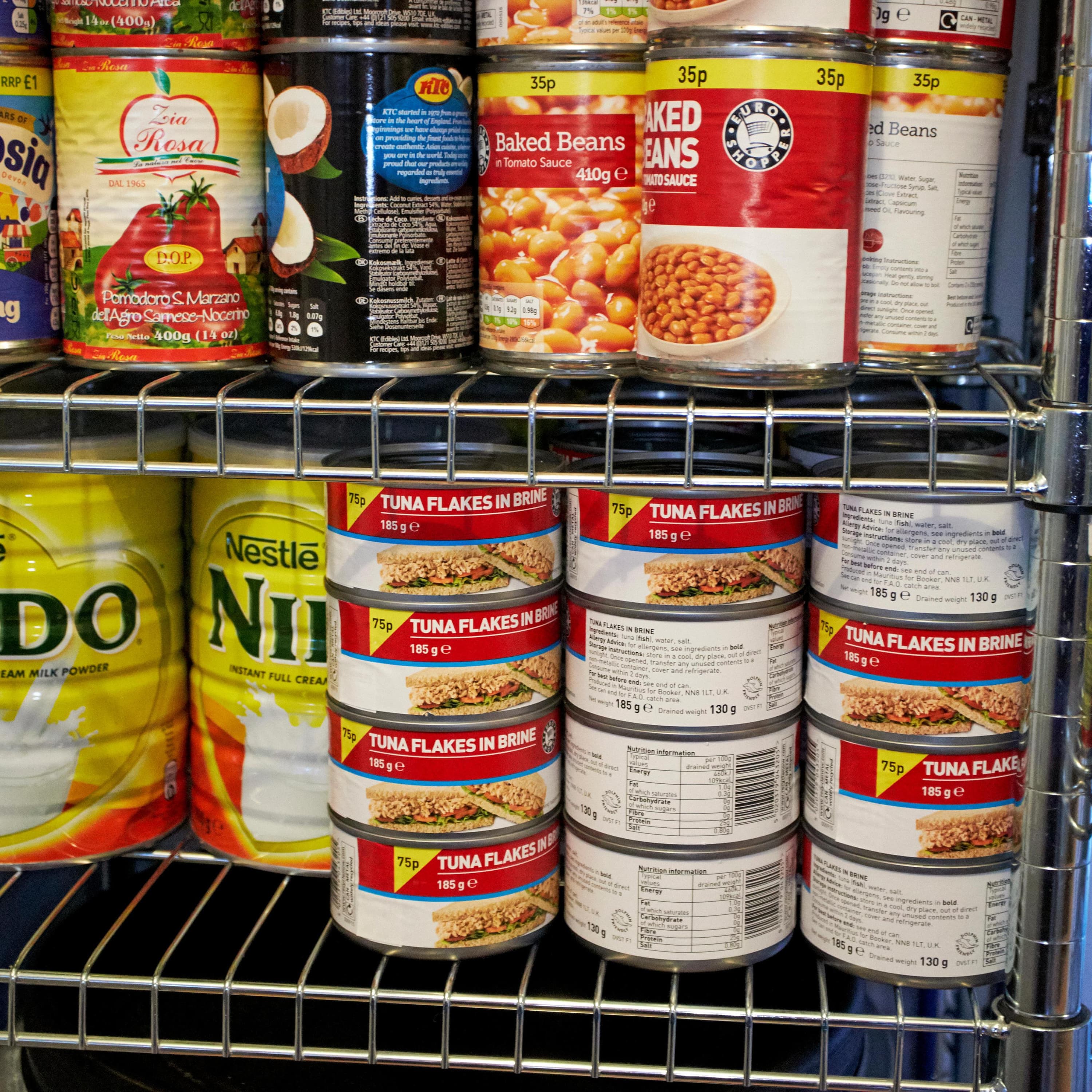
0:52Prof Tim Lang: Okay, so there are four of us and a dog. Me, my husband, and my two teenage kids. If anything happened, these are the people I would need to feed. I'm at home, precariously balancing my laptop on the edge of my kitchen units to try to show Anna, who is a popular YouTube prepper, how I intend to ensure that my family survives whatever emergency is coming over the horizon. Okay, well, let's have a look at what we've got. Okay, so here we go. You'll see that I have got a very basic load of tins, some tuna. This is my water stores. At the end of the summer, the government published official advice that has, well, freaked us all out.
1:33Prof Tim Lang: And last week, Defence Secretary Wes Streeting upped the ante with the launch of the official campaign.
1:39Ana: It's about saying to households across the country to be ready by just having some everyday essentials indoors. So should there be disruption from those sorts of events, you're ready.
1:52Prof Tim Lang: It said we should have three days of food, water and essentials stockpiled. 25 litres of water here and a battery station full of batteries. Battery station. Sorry, what do you mean by that? I'll show you. I'm very proud of my battery station. It's not actually full. I've actually raided this box. It's just looking rather empty. Anna doesn't actually like the term prepper. She thinks we should be focusing on resilience rather than survival. and she's definitely bringing more Mary Berry than Bear Grylls vibes. I seem to have gone very heavy on the chickpeas. Yeah. I've got some tomato soup. Yeah.
2:28Prof Tim Lang: Are you going to share that tin between all four of them? No, no, no. I think I've got like six tins of chickpeas. Yeah. And I have got my camping stove. Only a few minutes into our video chat, I'm feeling like I haven't quite got the prepping memo. Right. OK, it's a start. I'm going to be kind. It's very generous talking. It's a start, it's a good start. The mixture is, I've got to say, quite random, but I can see the, you know, where you're going. I think I'm imagining us in some apocalyptic wilderness kind of eating chickpeas out of a tin. Well, you never know.
3:05Prof Tim Lang: Since the government's advice to ready ourselves for extreme weather or hostile threats, Anna's YouTube channel has received thousands of new followers. But is asking households to get in some tins and bottles of water really the answer? From The Guardian, I'm Annie Kelly. Today in Focus, are we prepared if the lights go out in Britain?
3:31Prof Tim Lang: It's been a long time coming, but the UK has finally released new advice for every household on how to be ready in an emergency. Anna, this summer the government has asked us to increase our resilience by making sure that we have all got enough food and supplies to deal with up to three days without access to food and water, which has, you know, been pretty scary for a lot of us. The move marks the start of a three-year campaign that's meant to strengthen national resilience at a time of mounting threats. But you've been talking about food resilience for years and you run this really popular YouTube channel.
4:07Prof Tim Lang: But could you start by just telling us how you got interested in all of this? Well, to be honest, I started this channel as a food channel, but then there's more and more things started happening in the country. Probably like for many of people, the COVID, I realized a lot of people weren't actually prepared. So I sort of made it my mission to basically share my knowledge. I want to change this idea that preparedness is only just about blokes sitting there talking about, you know, eating squirrels in the forest and wearing the camouflage and bugging out. They all talk about all those extreme scenarios and say oh yes I'm gonna go in the forest and I'm gonna live there and survive there oh what about your wife and two kids right hi guys so as I said today I'm gonna be talking about how to set your tarp up first thing you want to do is check the ground make sure this is really pretty much where this all stemmed from is the that sort of the prep up with the camera and gas mask and things like that what's the point having a gas mask if you don't have a week's worth of food I wanted normal people to get the advice and take on the, let's call it a more natural part of the preparedness, more everyday part of the preparedness.
5:14Prof Tim Lang: And this idea of three days worth of food and water, what does this actually look like? You know, after our own consultation, I realised I was woefully underprepared compared to what I thought would be enough. I always say don't go shopping by somebody else's list because there's always things online, like in the media telling you, oh, you have to buy this, this, you know, all those items, but it might not be relevant to your family. The first important thing is actually to have a look what you have in your house or what you eat, what you consume, and then you build from that. Water and the basics of food.
5:50Prof Tim Lang: Concentrate on things that don't require a lot of electricity to cook it. So things maybe like a crackers, maybe some long-life pates or the paste, and then of course the tinned food as well because something that lasts for a while in your pantry no like you don't have to go out and spend hundreds of pounds of buying extra things see the spaghetti pasta you know from whatever supermarket is 28 pence baked beans 28 pence you can literally for five pounds you can kind of start building up yourself little by little but you have to sort of box clever you have to understand what it is that you eat what the family eats and of course the scenarios you have to cater for.
6:26Prof Tim Lang: And you'd mentioned water. I know there's quite a lot of confusion about how much water you should be storing per person. Do you have an amount, kind of a litreage per day that you would recommend that we stop? Well they recommend generally between 2.5 and 3 litres per person per day. If you are considering your preparedness for say three to six months or even a year you have to think about it as stages, as levels and then consider maybe harvesting water, purifying water, filtering water, all of that stuff is a big part of the whole resilience framework. So you would really be encouraging people to think beyond those three days or even a couple of weeks into a much more long-term strategy for being prepared?
7:08Prof Tim Lang: You have to take a little baby steps. You know, it's not a sprint. It's something that you have to just build gradually. Because if you overwhelm yourself with the whole idea, then nothing gets done. You'll just get scared. You think it's cost too much. and people just won't do anything, the natural reaction is to panic. To panic because you don't know how long the scenario is going to be lasting for. All of those things that potentially could happen, or the way they're going to affect you or your family, is still the same thing. Because if there's a cyber attack, either for one reason or the other, be it the climate or be it the car outages, it all comes down to the same thing.
7:40Prof Tim Lang: Whatever you're preparing for is always going to be still either water, either food or either electricity. We've all just had this summer of drought and heat waves. we've told this is going to have a huge impact on farming next year. And we've obviously also had the war in Iran, which has shown us how fragile our energy and our oil supply chains are. You've just talked about cyber attacks. And there was even this recent hack on a French supermarket chain where all the freezers were turned off and all the food was ruined. Cyber crime investigators in France are hunting for the hackers who seized control of refrigeration systems at hundreds of supermarkets.
8:18Prof Tim Lang: No group has publicly claimed responsibility for the attack, which French authorities say may still be ongoing. So suddenly all these things that we've taken for granted actually do feel quite precarious. But I wanted to know, how do you walk the line between helping people try to be prepared and not making people terrified and scared of what might be happening in the future? It's a hard one, because if I just suddenly say to you, OK, well, just buy yourself a tin or two, everything be fine, you know, then people are just not really going to listen. People are not going to take it seriously. It needs to be some sort of degree of wake up call for people to understand but at the same time, okay, let's not worry about the problem, but let's worry about the solution.
9:02Prof Tim Lang: Let's just do something about it step by step. Get yourself on the journey of preparedness, as I call it, and just make sure your family have that little bubble of that protection. And if you were going to kind of slip a luxury item into your prep box, what would it be? Glass of wine, a bottle of wine or two would be absolutely must. But to me, I absolutely love panettone. Every time there's the Easter or Christmas, if they have some, I always put a couple of them away because I just absolutely love them. But it's many things as a luxury. It's whatever you sort of really enjoy having. I think in the time of tough times, I think they'll go a long way.
9:42Prof Tim Lang: Obviously, batteries for the torch to be able to find the corkscrew as well, right? Yeah. that's not luxury this is necessity really of course
10:03Prof Tim Lang: Tim Lang you are one of the UK's leading experts on food policy and security we've asked you to come on to today and focus because many of us are well, really quite anxious about the government's advice that we should be stockpiling 72 hours worth of food to be prepared for potential shortages. The government is clearly trying to prepare people for potential food or water shortages. What could that actually look like?
10:33Ana: It can mean suddenly there's no milk. Maybe a commodity that you're used to and you just think It's just there, isn't there. If that scales up and you see food being, I hate the word, but weaponized around the world, and we're seeing it in Ukraine, whatever you think about Israel, Gaza, we've seen blockading going on. We've seen that in Sudan. This is a new zone for controlling populations. If you want to scare the public, you scare their stomachs. And we're seeing the threat of that emerging.
11:08Prof Tim Lang: You were one of 180 experts in the UK who's warned that the UK is complacent and we're unprepared for food emergencies that are potentially coming down the line. But has it always been this way?
11:20Ana: We were knocked sideways by World War II, after which an act was pushed through Parliament in 1947, Acreculture said we've got to grow more food. And there was a shift towards A, taking nutrition seriously, and B, thinking there's got to be some collective system. And there were initiatives. And after World War II, storage built up.
11:45Prof Tim Lang: Now, I've been reading, though, that now we don't really have any kind of food stocks at all in this country, no kind of food storage. So obviously, this all ended at some point.
11:58Ana: Well, we spent 70 years in the West getting rid of storage. We've spent 70 years developing and applying what the Japanese developed for their car industry, as known as just in time. In the 1960s and 70s, Toyota, then a small Japanese car company, they realized they were having money spent on warehouses, storing tires, windscreens, doorknobs. And over time, they developed this hyper-efficient system, which they could do because of computerization. The computer said, we need a windscreen now. And the windscreen would metaphorically arrive at the Toyota factory about two minutes before it was put on to that car.
12:45Ana: So just in time has been the big revolution in retailing. And Tesco became this huge company in Britain because it saw that and it borrowed the thinking and it rocketed its market share. Almost everyone I interview, even people who run just-in-time systems, they know that we've got to diversify. Food comes and food goes, and there may be shortages, and we've forgotten that. We think food's just there. Well, you have a bit of storage just in case, or you prepare a bit in your garden just in case, and keep some money in the bank just in case. You know, this is not modern thinking. We focus so much on the individual me, me, me.
13:30Ana: This is mass. This is culture.
13:33Prof Tim Lang: So with all of this in mind, what was your opinion about the government's recent advice?
13:38Ana: Is it good advice? No. Would I like it to be done in different ways? Yes. If just you do it for yourself, OK, it's fine. I mean, my wife and I do. We keep it. But we would talk by our grannies. You had a storage. You had a larder. It's only worth doing it if it's done at a collective level. This isn't just something that can be resolved by Tim Lang storing food or Annie or The Guardian readers storing food, unless it's shared. One fifth or one sixth of Britain can't afford to eat well, let alone store food. And one of the things you've got to do in a crisis is have a whole of society approach.
14:21Ana: That's the phrase. In which case, if you're going to give advice, you've got to engage with people. For rich professors on a pension, the advice may be very appropriate, but totally inappropriate if you're a single one with three kids or someone who's juggling, or indeed if you're an old person, or if you're someone who's suffering mortgage arrears. Food is always the last item in the budget because it's a flexible item as opposed to other fixed costs. Right.
14:51Prof Tim Lang: So you think asking people to stockpile isn't enough. And it also ignores huge swathes of people who simply can't afford to do this.
15:00Ana: My focus, why I'm talking with you, is because it's the public, stupid, I say to myself, every day about food security. It's the public that matters. Can we feed them? Can they feel confident? Do they know how to deal if there is disruption? Include them in that process rather than just say, go away and store some food. It's arrogant. And until recently, it's been patronising. And it's been on a website. That's it.
15:32Prof Tim Lang: Coming up, Tim thinks the UK is failing to get us prepared. But what other countries are getting it right?
16:00Prof Tim Lang: inventory, returns, and analytics in one place. What used to take five separate tools ShipStation does in one. Automate fulfillment and rate shopping to ship up to 15 times more with up to 90 % savings. Go to ShipStation.com and use code AUDIO to try ShipStation free for 60 days. Decisions made in Washington can affect your portfolio every day. But what policy changes should investors be watching? Washington Wise is an original podcast from Charles Schwab that unpacks the stories making news in Washington right now and how they may affect your finances and portfolio. Listen at schwab.com slash Washington Wise.
16:45Prof Tim Lang: Tim, what are other countries doing in terms of food security and who do you think is doing it best?
16:51Ana: Other countries are doing different things at different scales. Sweden, Latvia, the closer to Russia I got, the more people were actually out there engaging. Latvians are given great big heavy advice sheets. Swedes, everyone in Sweden got the booklets. They can read it, they can think about it. A process of democratic discussion began. That's what I would like to see. Switzerland has three months of stockpile. In France, I was sent by the government to look at a 15-year-old system of trying to provide and encourage shorter food supply chains between villages and towns and their rural hinterland.
17:34Ana: And in Belgium, I went to the French-speaking Wellenide, particularly a city called Liège. And over 15 years, they've built up a new culture of trying to take food seriously, rebuilding a bit of horticulture around it. And they've got a food council which links the mayor, the university, people working in the food sector, civil society. This is society preparing.
17:59Prof Tim Lang: Right, so you and me are able to store food, but not having national stores of food is a really serious situation if, as you say, food is now being weaponised. And there's also this fear of everything from cyber attacks to extreme weather. So, finally, how would you like to see the UK preparing itself better? And, crucially, do you see any signs of hope?
18:28Ana: We've got to be thinking about what in my report I call very pompously a multi-level system. There are things government can do about storage, and there are things that cities could do, and there are things that communities can do and there are things that streets can do and there are things that households can do. The people who are most at risk are people on low incomes. They're the people who know the price of everything. And so could this sticking plaster system we have, borrowed from the Americans, of food banks, could that become community storage? These are people who know about things, they store a bit.
19:06Ana: Could they be expanded? Could they become the community or the village or the town or the part of the city food storage? And what about retailing? What about the hospitality sector? What about using skills? One of the ideas that came up in my report from a really interesting project in Yorkshire was why don't communities audit what food assets they have? The asset in my street may be we've got a really good caterer in the street or at the end of the road there's a pub with good facilities. In your area it may be you've got a nice horticultural enterprise or you've got a large and very active allotment system.
19:49Ana: Your community assets may be different if you're in Hackney than if you're in Bradford, as one research project pointed out. There are civil food defence groups starting in Wales. So there's something bubbling up in Britain in different ways in different parts. But it needs government to get the act together and say, let's get on with it. But is it serious, your question? Absolutely. This is very, very serious indeed. Do we need to panic about it? No. Start doing it now in a collective, serious way.
20:25Prof Tim Lang: well tim thank you very much actually feel a bit better after this conversation so it's been great speaking to you and please continue going up and down the country telling everyone about what it is that we need to start thinking about i'm supposed to be having a nice
20:39Ana: time looking after my garden and growing more food that may be needed but this is public duty frankly i mean we've got to take this seriously hold our politicians to account and get them to do the right thing.
20:55Prof Tim Lang: That was Tim Lang, one of the UK's leading experts on food policy and security, my thanks to him. And also to Anna, host of the YouTube channel Anna's Food and Lifestyle. And that's it for today. This episode was produced by Ivor Manley and Ruth Abrams and presented by me, Annie Kelly. Sound design was by Brian McNamara and the executive producer was Khmer Khalili. And we'll be back later on today with the latest.
21:36Prof Tim Lang: This is The Guardian.
21:46Prof Tim Lang: Still waiting in line? Again? That's time you'll never get back. Save time and money with stamps.com. Over 4 million businesses have skipped the line with stamps.com. Join them to save up to 90 % off carrier rates from your computer or phone right now. Print postage for certified mail, registered mail, and packages in seconds. Then schedule a pickup right from your home or office. For a limited time, go to stamps.com and use code podcast for a free welcome gift. Taxes and fees apply. Decisions made in Washington can affect your portfolio every day. But what policy changes should investors be watching?
22:23Prof Tim Lang: Washington Wise is an original podcast from Charles Schwab that unpacks the stories making news in Washington right now and how they may affect your finances and portfolio. Listen at schwab.com slash Washington Wise.


