 Ask ChatGPT



Serbian students helped defeat Aleksandar Vucic after 12 years of increasingly authoritarian rule, using a leaderless movement, university blockades, and a student-run electoral list of experts; the episode also explores whether such a movement can govern and choose a prime minister.
Anna Milisaljevic, Serbian-American journalist reporting from Belgrade; Tara Blagović, master’s student in culturalogy at the Faculty of Political Sciences, volunteering in student media/communications; Milica Jovanovic, assistant professor at the University of Belgrade (Faculty of Organizational Sciences), now an elected MP on the student list.
Vucic lost because the student movement built popular backing for a referendum-style vote; the list avoided a “cult of a leader” by nominating experts (160 of 250 candidates with PhDs); repression and patronage fueled support; the movement will decide EU/Russia positions via constitutional processes, including a referendum at the end of EU integration.
Novi Sad train-station canopy collapse killed 16 (prompting protests); university blockades and alleged beatings by “hired thugs”; village-by-village outreach (“Student in Every Village”); cycling to EU institutions (Vienna/Brussels); candidates include cardiologists, a chemist, an educational psychologist, and a civil engineer.
Written by AI. May contain mistakes.
An introduction to the students' role in bringing down the Serbian government.
Discussion on the joy and significance of the students' victory over Vucic.
“near the National Assembly of the Parliament.”
Insights about the surprising election results and the student movement's strategy.
“Can you start by telling me whether you were surprised that Vucic lost?”
Discussion on why early elections were called and student demands.
“So Serbia was not due to have parliamentary elections until 2027.”
How the student movement evolved into a political force demanding change.
“I'm currently pursuing a master's degree in culturalogy at Faculty of Political Sciences.”
Exploration of various protest methods used by the students to gain attention.
“We need to try and bring down Alexander Vucic.”
Learn how Serbian students mobilized to raise awareness against the regime.
“and everything that was happening in Serbia.”
Explore the emergence of young politicians with diverse backgrounds in Serbia.
“So that's 160 out of 250 candidates, PhDs.”
Discuss the challenges and responsibilities faced by newly elected MPs.
“I think among your fellow new MPs, there's a basketball player, an actor, some farmers, as well as lots of academics like yourself.”
Understand how a leaderless movement plans to choose a new prime minister.
“So that is not a prerequisite, as we can see, to be a successful politician.”
The urgency of electing a prime minister amidst political changes.
“I mean, essentially, a lot of the current system and the structures are left untouched at present.”
Reflect on the broader implications of Serbia's political changes for global movements.
“And these are all institutions that have very much supported the Vujicic party.”
Explore the key lessons other countries can learn from Serbia's recent political changes.
“What lessons do you think other countries can take from what you guys have achieved?”
Hear the closing thoughts from the host and acknowledgments of the guests involved.
“Well, that feels like a nice way to end it.”

Get the gist, explore an idea or ask about something said.
 Claude
On Today in Focus, what are the key points of this episode?
Searching your listeningAutomatic transcript. May contain errors.
0:00This is The Guardian.
0:08Today, the Serbian students who brought down a government.
0:31returns and analytics in one place. What used to take five separate tools ShipStation does in one. Automate fulfillment and rate shopping to ship up to 15 times more with up to 90 % savings. Go to ShipStation.com and use code AUDIO to try ShipStation free for 60 days.
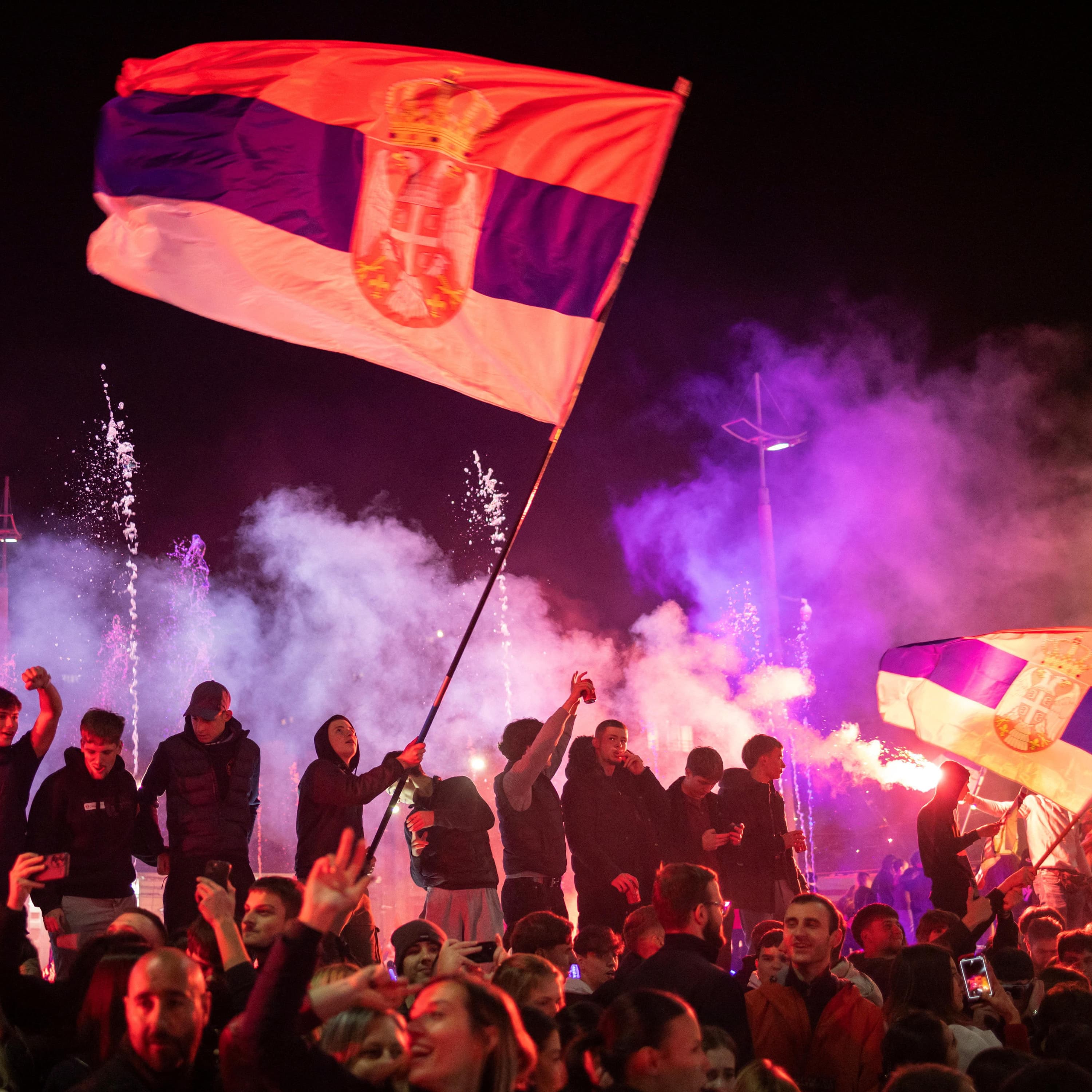
0:56Yeah, so I was kind of milling about in central Belgrade. near the National Assembly of the Parliament. This is Anna Milisaljevic, a Serbian-American journalist. People were screaming out of joy, jumping in front of cars and cars would honk and just pure elation and ecstasy. And yeah, it just seemed indescribable. It's literally a miracle. And thank God everything will be OK. And now Serbia is free. Unreal. This is like a dream. I don't know how else to describe it. Like, I have a feeling I need to wake up, but it's not, it's reality.
1:38After 12 years of increasingly authoritarian rule, Serbian strongman leader Aleksandar Vucic was out. And the scale of his defeat was so obvious that he conceded shortly after polls closed. I don't want to be angry. We don't have the final results. We don't have the final results. There was a steady amount of noise and cheering, but once he had conceded, it audibly went up a level, and that's when, you know, you could tell the crowd knew. We won. We won. And she lost. And we won by so much that he has to say that he lost. I am the happiest man in the world, and she is the biggest loser in the world.
2:30Vucic was defeated not by a political party, but a leaderless movement driven by Serbia's students. The reason we decided not to have a leader was to abolish the cult of a leader. We didn't want one person to be the most important one or the most exposed one because we knew that that person were more prone to be under attack. Instead of putting themselves forward for election, The students nominated experts from across Serbian society. Of the 250 student list candidates who stood on Sunday, 160 have PhDs. My students approached me and they said, Professor, we have one question. It might not come as a surprise, but we need to do it officially.
3:21Do you want to be a candidate for the national? And I said, OK. Among those to win seats are two cardiologists, a chemist, an educational psychologist, and a civil engineer who wrote her thesis on driving trajectories in non-urban road curves. We wanted to show that Serbia has many people who are moral, who are knowledgeable, who are decent, who are willing to fight for better society.
3:54Now, they must decide who should be Serbia's next prime minister. Then comes the small matter of running a country of 6.6 million people. But what can we expect when this ragtag of political novices take the reins of government? From The Guardian, I'm Helen Pitt. Today in Focus, can a leaderless movement really run a country?
4:23So Anna, what a time to be in Belgrade. I'm quite jealous actually. Can you start by telling me whether you were surprised that Vucic lost? Because he's been in power for 12 years and he's been accused of turning Serbia into an increasingly autocratic country. Did you think it was going to be possible to topple him? You know, honestly, I have to say I really didn't And I really was doubtful. And I just think seeing the previous election results and just the voter suppression pressures that were exerted on people in the past, I had a little bit of doubt that it was possible to overcome, as opposed to, I think, the majority of people here who were very, very confident that finally there was this different political alternative.
5:11because up until this point, Vucic has kind of relied on this fragmented opposition that is too weak and too disjointed to really pose a threat. But the students, they were just so popular with everyone that finally they realized, I think, that they had the popular backing to hold what is being called a referendum vote, where it would either be for or against the regime, the ruling party. and yeah, they were right. And just last week on Today in Focus on this podcast, we made an episode about Vucic's relationship with the Trump family, specifically Kushner and this whole controversy over raising this really important building in central Belgrade, the general staff building and replacing it with a Trump tower.
6:02Apart from that, like what has life been like in Serbia since Vucic has been in power? I think it's been marred by this atmosphere and palpable kind of apathy and depression, if you will. People up until this point have felt pretty hopeless watching very key kind of positions be awarded essentially just based on personal connection. time after time we've seen this party patronage on display and I think that's why the student list came out with a list of candidates that explicitly are experts because for for so long people in government here have been just anything but and of course then there's the kind of repressive aspect of it all for example there's this woman who worked in one of the state institutions.
6:56And during one of the student protests, she waved to the students. And after that, she was fired. So it's really to that degree. Yeah, it sounds like quite a repressive atmosphere. We're going to come on to talk about the student list and how they managed to pull off this incredible victory. But before we do that, just remind us, why was this election called? So Serbia was not due to have parliamentary elections until 2027. But in September, the parliament was dissolved and the early parliamentary elections were called because that has become the key student demand put forward. The first time that student demand was put forward was May of 2025.
7:42And they announced that they would be demanding elections, but also that they would be putting forward their own independent list of candidates. But at its core, it's about having this leaderless movement where collectives are making decisions, not any one person.
8:04I think there's kind of this mysticism about students in Serbia I've realized that maybe it's not so consistent with other countries I know for example in the US there isn't this kind of veneration of students just in and of themselves but here there very much is and I think people see them as not compromised by the forces that exist in political life. And we'll see how that continues along because before and after gaining power is a big question, I think.
8:42So my name is Tara Blagović. I'm currently pursuing a master's degree in culturalogy at Faculty of Political Sciences. Alongside my current studies, I'm volunteering within the student movement as a part of working units for media and communications. You're a very busy person. I didn't quite catch. What's your area of study at the moment? Culturology. Culturology, what's that? Exactly. It's an interdisciplinary program, so it has a lot of sociology, a lot of art history, media studies, philosophy as well, rhetoric. as many, many units within the program. Wow, okay. And so can you take me back right to the start of this story?
9:30The student movement began in November 2024 with a terrible tragedy in Novi Sad, which is Serbia's second biggest city. A newly renovated train station opened and then the canopy at the front collapsed, killing 16 people. What was it about this tragic event that prompted such a widespread desire for change. So that was just, I think it was the last straw which put us in the position to protest and to ask for responsibility. We wanted accountability, we wanted transparency and we wanted the judiciary system to prosecute the responsible people. Crowds as far as the eye can see, paying tribute to the 16 victims that lost their lives at Novisad station.
10:20And the anger is palpable towards the government. These people did not die by accident. It is the consequence of a failing system. So that happened in November 2024, and then the students in Belgrade began a blockade. And why were the students blockading universities? Why not like government buildings, for example? I mean, the faculties were a very logical choice because they were autonomous and we could seek justice through that kind of institutions. So the students of the Faculty of Dramatic Art decided to start the blockades and then they spread throughout the country. Saturday's bridge blockade was the latest in a series of protests organized by students who have been blocking almost all state universities in Serbia for two months now.
11:14They say they will not back down until their demands are met.
11:21There were many cases of students getting beaten up throughout the whole country. Also there were fractures of jaws and different kinds of very heavy beatings that happened. Who were they beaten by? Pliers. Really kind of hired thugs. I mean I've seen some of the videos. There was tear gas fired at some of the demos. Many students were arrested. Like pretty heavy stuff. I'm curious, how did all of this develop into a political force? When did you guys decide, do you know what? We need to try and bring down Alexander Vucic. We need to start a political movement and actually stand for election. The movement started with four demands, which later on became the sixth demand.
12:13So we wanted responsibility for the fall of the canopy. We wanted transparency. We wanted our colleagues or fellow students who were arrested to be released and not prosecuted. And we wanted to lower tuition fees. And given that the institutions and people who were in power didn't respond to those demands and they actually wanted to preserve their positions, we decided to require snap elections because we realized that the only way to resolve the problems we faced within society was to run as a political party, but we were not a political party. We were a group of citizens. A session of students continued its journey.
13:09Joined by farmers, cheered on by passers-by, a sign of the growing resentment at institutional corruption many feel is widespread in Serbia. And as well as the university blockade, what else did you do? They were marches or the walks. I walk, walk, walk, and I just look at the concrete and then I hear like the applause and the whistles and it's like my legs are easier. It's like I didn't even walk all those kilometres. And we also cycled throughout our country and we also cycled through to the EU institutions. A hero's welcome for this politicised peloton as they rolled into Vienna, one of several stops on the long road to Strasbourg.
14:03We wanted some kind of attention to be drawn to the regime and everything that was happening in Serbia. So students cycled to Strasbourg and to Brussels as well. And we organized the marches because the media system has been under the control of the previous ruling party for such a long time. So we didn't have any other way to reach the citizens throughout the whole country. So we had several actions, such as Student in Every Village, which was organized in order to be able to reach some elder citizens who live in some distant parts of Serbia or the ones who don't have any media to inform them about what's happening.
14:59So did you just get a map of Serbia and allocate at least one student to every single village in the whole country of, what, 6.6 million people? So, yeah, I mean, it was all voluntarily. They went door to door and talked to their citizens. When they see fresh and young faces of the students, which were authentic and which approached the citizens from a place of empathy and love and respect and unity, you know, people actually start to wake up. And that's how you raise awareness about the problems that are happening in the country. Because people were afraid, you know. The previous regime instilled fear in people.
15:45Their whole campaign was based on the negative campaign in terms of us as the oppositional force and fear. Yeah. Because if they come to power, you will no longer get your pension checks or there will be a drop in economy. There's going to apocalypse in the society. But that was also, you know, something that highly influenced, especially the elder citizens. But it didn't work. It sounds like the fear mongering didn't work. And those many thousands of conversations, village by village, persuaded more than half of Serbians to take a risk, really. a gamble on something completely new. And you guys would.
16:29But it was not a gamble, you know, because I think that we have a list of 160 candidates who hold PhDs. Yeah, incredibly well-educated. Exactly. So that's 160 out of 250 candidates, PhDs. Exactly. So, yeah, so it's kind of almost a political experiment in its own sense. But it's also a very good argument that we do have experts in our country and we do not have to be satisfied with the government, which had a minister of economy with the plagiarized diploma, for instance. So we do not have to tolerate that kind of society while we have people who are experts in their own field. Yeah, and you say that it's not a gamble, but I don't know, I know plenty of people with PhDs.
17:24My own husband is a professor of geology. He would be a terrible, terrible politician. They don't necessarily go hands in hand. Of course, but you know, we can try to become politicians, but they will never be able to be experts such as our candidates.
17:56My name is Milica Jovanovic. I am an assistant professor at the University of Belgrade at the Faculty of Organizational Sciences and now a part-time and full-time politician officially, yes. Well, congratulations. Thank you. You are now one of 140 brand new MPs elected on the students list. How does it feel? It is such a good feeling. And I mean, it's a whole bunch of mixed feelings, actually, because it's a huge, huge responsibility. And I will try not to cry because of everything that has been happening for the last two years and the importance of this moment and the importance of this moment for us, not just for Serbia, for sure.
18:41But I do believe that we will have spillovers at the global level. So with that, there is a huge responsibility if you're having a role as a politician, so-called politician now. I say so-called because you see how distant I am from the term politician because it is still a very, in my mind, it has a negative sound, unfortunately. But okay, we will change this for sure in Serbia. And did you, in your heart, did you think you were going to get elected? Yes, I had unexplainable faith. And there is even a recording of one of my speeches three weeks ago where I said, we will have 130 for sure. And I just expressed it without any evidence.
19:32You're mystic Melissa. You predicted the future. Well, actually, you know, that is the faith. It is unexplainable. We saw that citizens actually recognised our pure intentions, our expertise and what have actually the movement done for the last two years. So there is unexplainable change in everything in Serbia. But you can have the purest intentions in the world and still struggle to find consensus and take tough decisions, particularly because you're such a diverse bunch. I think among your fellow new MPs, there's a basketball player, an actor, some farmers, as well as lots of academics like yourself.
20:15How have you found common cause? Our common cause is our values. The most singular point for us is Serbia and citizens of Serbia and having a decent and quality life in all spheres that you've just mentioned. health care, university, not just university, but education in general, sports, agriculture, very important for Serbia. So it is very important to have those representatives as a representative of citizens in the National Assembly, of citizens, what actually politicians should be. Yeah. And what about complicated divisive issues like future EU membership, for example, you know whether Kosovo should retain its independence relationship with Russia where do you guys stand on those issues?
21:09We are very clear about these issues I mean those are very sensitive topics our external politics so basically we have very common ground about this as well so we do continue the process of euro integration but in the end of the process when everything is finished, we will have a referendum because that is a part of our constitution and part of our laws. So basically, we do not decide now. We decide at the end of the process of the integration. And about Russia, that is always a question. We decided not to go with sanctions because that is something that we are quite familiar with as Serbian citizens.
21:56We We do know that the only one that suffer under those sanctions are citizens, not the governments. So basically, we decided not to go with sanctions and to maintain the same politics as we did now. And I know that the students deliberately chose experts like you to stand for parliament. But collectively, you do lack political experience and the experience of governing. Is that something that worries you at all? No, because why and why is that so? Because you saw and I think that all of us are aware of the situation, not only in Serbia, but in Europe, what experienced politicians have done to their countries.
22:41So that is not a prerequisite, as we can see, to be a successful politician. And I do think that the values and expertise in your specific field is your better recommendation than the political experience itself. So basically, I think that political experience is something to be learned. And I think that's something that we have. And those are values, integrity. Those are some things that are not to be learned. Coming up, how does a leaderless movement choose a new prime minister?
23:56We'll be right back.
24:09Soft. Socks, underwear, tees and more. Bombas. Everyday comfort worth obsessing over. Visit bombas.com slash audio and use code audio for 20 % off your first purchase. That's B-O-M-B-A-S dot com slash audio. One purchase equals one donated. Always.
24:34Anna, you are the impartial journalist on the ground in Belgrade for us. What do you think are the big challenges ahead for these brand new MPs? What challenges remain? Oof. What challenges don't remain? I mean, essentially, a lot of the current system and the structures are left untouched at present. And a lot of those structures have leaders that are not necessarily elected or electable, like the intelligence agencies, the police, the judiciary. And these are all institutions that have very much supported the Vujicic party. So I think it remains a big question mark whether or not they will, for example, cooperate with processing people from the regime or not, whether or not they will bend to different accountability that the students and the student movement is calling for.
25:32So those are some things that come to mind. And I've got to say, it all sounds very refreshing, but how are they going to make decisions? And I mean, they're going to have to elect a prime minister pretty soon, aren't they? Yeah, yeah, that is very much the elephant in the room, which people continue asking them about. And I so far have not gotten an answer, but there's about a month when a new government needs to be formed. So we'll see because the student candidate list took about a year and a half to formulate. So they've got a little bit more of a time crunch this time.
26:16So Militza, you are elected now. You're one of 140 equals on the student list. Given that your movement has been so decentralized and that you haven't had a leader up to this point, how are you going to choose which among you will be the next prime minister of Serbia? Well, I do know that there are many speculations about who will be the prime minister. I mean, we have 250 amazing people on those lists and we still have very strong connections to our students. Our students actually elected us as well. So this will be a common decision. Oh, they'll get to choose or help to choose. All of us will do it as we did in these two years.
27:01So basically, we will find our common procedure to choose the best among us because we have such a great portfolio of people that are able to lead this sector and government as well. But believe me, it will be a great decision because I do know some names. And are these names that the Serbian public will be aware of? People who are well known, well respected in public life? I do believe, yes. Okay. And would you like to be the next prime minister? Thank you for the question. But no, I didn't think about this because I do think that I'm better in some other fields. for this moment now, I'm only a confirmed parliament member and we will see about the other roles.
27:52And lastly, you know, there's a lot of people around Europe, around the world, particularly on the more of the left of politics who are taking great hope from what we have witnessed from afar in Serbia. What lessons do you think other countries can take from what you guys have achieved? Citizens first. So that is my main message. When I say citizens first, it really means citizens first. It wasn't violent. And we can see all over Europe with the protests and student movements what is happening. So we put in the focus our citizens. And I do know that this sounds a bit utopistic, but love, love for each other.
28:34We took care of each other. You know, I took care of my students and they took care of me as well. but uh you can see that i speak from my beliefs in my heart and when i said citizens first that is uh it make me it makes me teary because uh you cannot imagine what we have survived in the last two years yeah uh you know i'm i am not a parent at the moment but uh to be perfectly honest i was afraid to be a parent in this kind of uh country uh and really yes it was things were that bad You just felt that there was no hope for future children. Yes, yes, yes. We sense that this is the moment and we are very proud country.
29:20We have Nikola Tesla, we have Novak Djokovic. We have amazing people, you know, but we are good people. Believe me, we are really good people, but we had bad politicians. And that is why when you asked me about whether our political experience is a disadvantage, No, it is a huge advantage that we don't have political experience, believe me. Well, that feels like a nice way to end it. Thank you so much. Thank you. Thank you so much. That was brand new Serbian MP Milica Janovic. My thanks to her, to Anna Milislavjevic and to Tara Blagovic. I'm so sorry if I've mangled any of your names. If you were inspired by this episode, then let us know in the comments.
30:05We always really enjoy hearing what you think of the show and it helps other people to find us. And remember, you can also email us if you have a burning question or an idea for future episodes. The email address is tif, that's T-I-F, today in focus, tif.questions at theguardian.com. And that is all for now. This episode was produced by Tom Glasser, Hannah Adan and Claudia Effemini and presented by me, Helen Pitt. Sound design was by Brian McNamara and the executive producer was Eli Block. We'll be back in your feeds this afternoon with the latest.
30:51This is The Guardian.
31:01Hey, I'm running out to drop off a stack of letters and packages. Need anything shipped while I'm gone? Save the gas. Stamps.com lets you print postage and schedule pickups right from your desk. Sync your contacts into the address book, get detailed accounting insights, and get notified the moment your certified mail is delivered. All from my desk? All from your desk. Join the 4 million businesses using Stamps.com right now with code podcast and get your free welcome gift. Stamps.com code podcast. Taxes and fees apply. You're either all in on this model or maybe you're building with another. You're either speed or is it security?
31:37You're either custom or are you ready to use? Or you're AWS AI. With hundreds of models, ready to use agents, speed and security built in, you don't have to pick a side. You can have them all. How will AI revolutionize your business? AWS AI is how.