 Ask ChatGPT



The episode is about Israel’s election and whether it marks an “existential” turning point for Benjamin Netanyahu and the country’s democracy. It covers stakes for Israelis (autocracy vs democracy), coalition politics, and how Palestinians under Israeli control can’t vote yet are affected by the outcome. It also links the vote to regional fallout: US rebuke over Lebanon, Netanyahu rejecting Trump’s Gaza plan, and Iran closing the Strait of Hormuz amid Israel-Houthi/ Lebanon attacks.
Emma Graham Harrison, The Guardian’s chief Middle East correspondent. She discusses Netanyahu’s supporters’ security pitch, critics’ claims of security failures after Oct 7, and corruption trial pressure. Key claims/examples include alleged ignored Hamas warnings (UAE/MBZ call), Netanyahu’s indictment for bribery/fraud/breach of trust, and Eisenkot’s promise of honesty and reduced settler violence.
Nova festival bereavement account; West Bank lockdown after an attack near Hebron; Ben-Gvir’s dehumanizing videos and prison jokes.
Written by AI. May contain mistakes.
Discussion on the significance of the Israeli elections and Netanyahu's leadership.
“This election is existential, the most consequential in their country's history.”
Analysis of Netanyahu’s coalition strategies and support base.
“Emma Graham Harrison, welcome back to Today in Focus.”
Exploration of Netanyahu's security narrative and its implications.
“So basically, this is a country of coalition government.”
Discussion on Netanyahu's corruption trial and the stakes involved.
“So, for instance, the idea that you would persuade America to join a joint war on Iran, really, most people, whether or not they wanted it, would have thought that was impossible.”
Examination of the October 7th attacks and Netanyahu’s response.
“So it's about his political career, but much more than that, it's about his personal liberty.”
Analysis of the societal disconnect in Israel regarding ongoing conflicts.
“I mean, he has this sort of argument that he's pushed again and again, and it feeds into, you know, again, quite a Trumpian worldview of him against the deep state.”
Explore how the war in Gaza influences Israeli politics and public sentiment.
“And the extraordinary thing is that this war, which I really think has become sort of critical in how Israel is seen internationally, hardly features at all in the election campaign here.”
Learn about Gadi Eisenkot's background and political approach as an alternative to Netanyahu.
“Emma, for Israelis who aren't happy with Netanyahu and they want a change of government, The main alternative does seem to be Gardaí Eisenkot and he leads the Yashar party.”
Hear perspectives from rally attendees on their support for Eisenkot and their concerns for Israel's future.
“right wing, extreme right wing, irresponsible leadership that has led the current government's actions and plans.”
Discuss the challenges faced by left-wing parties in Israel and their current relevance.
“And he keeps on telling Shalom, take your family, take your money and go away.”
Examine the rise of extremist parties and their impact on the political landscape.
“And in the current Israeli paradigm, they're so left-wing that they're being physically attacked.”
Understand the political representation and challenges faced by Palestinian citizens of Israel.
“Let's take a look at the other end of this political spectrum.”
Learn about the mobilization of Palestinian citizens and their motivations to vote.
“But there are these citizens in Israel, or Arab Israelis, as they're also known.”
Explore the potential influence of Arab-Israeli parties in the elections and their historical context.
“And therefore, the only thing we can do really at this point is just to try and stop the bleeding.”
Discussion on the challenges facing Arab MKs in Israel and the impact of racism in politics.
“However, they are also still key voices for their community, for Palestinians inside Israel.”
Analysis of polling data, potential government changes, and their implications for Palestinians.
“Emma, what is the polling telling us right now?”

Get the gist, explore an idea or ask about something said.
 Claude
On Today in Focus, what are the key points of this episode?
Searching your listeningAutomatic transcript. May contain errors.
0:00This is The Guardian.
0:08Today, Israeli voters on the most important election in their history.
0:30Shopify, Amazon, TikTok Shop, and over 200 more marketplaces with one platform that does it all. You can manage orders, sync inventory, track returns, all automatically. Everything your operation needs, all in one place. Upgrade your shipping operations to stress-proof your biggest sales days and capture every bit of potential revenue. Go to ShipStation.com and use code AUDIO and get 30 days free.
0:54It's been described as an existential moment. A battle for the soul of a nation. This election is existential, the most consequential in their country's history. With violence flaring in the occupied West Bank and the country deeply divided over its future. As the polls open in Israel today, public opinion is divided on what the future of the country looks like.
1:22To his supporters at home, Benjamin Netanyahu has protected the country in a way that no other leader could, taking on Iran, Hamas, Hezbollah, and the Houthis. I see what he did in Hezbollah, Hamas, Iran, Syria, many places, in Khutim, Taman, Iraq. To his critics, Netanyahu is to blame for a catastrophic failure of security, leaving Israel more isolated, traumatized, and no safer.
2:02Today, his most serious challenge comes from a candidate with little experience in office. Mishparahat number one, Gadi Eisenkot.
2:19Gadi Eisenkot is seen as humble, approachable and honest. The former chief of staff for the Israeli military is promising a future without corruption. Thirteen months ago, his party didn't even exist. But after three years of war and upheaval, it's clear that the consequences of today's elections go way beyond Israel's borders.
2:52The United States has issued a rare rebuke against Israel after its defence minister insisted his troops would stay in the south of Lebanon. Netanyahu is rejecting Trump's latest Gaza plan. Iran says it has closed the Strait of Hormuz to shipping, citing a breach of commitments by the US and ongoing Israeli attacks in Lebanon. From The Guardian, I'm Noshin Iqbal. Today in Focus, could this be the end of Benjamin Netanyahu?
3:31Emma Graham Harrison, welcome back to Today in Focus. Now, you're The Guardian's chief Middle East correspondent, and the election today is being called the most consequential in Israeli history. Can you just lay out the stakes and tell us why? So, for Israelis, those who oppose Benjamin Netanyahu feel that he is dismantling democratic institutions and really leading the country towards autocracy. that if he wins, a lot of those processes are going to be irreversible. Of course, when we're talking about these elections, about Israel as a democracy, it's really important to keep the broader picture, which is that there are about 15 million people living in areas under Israeli political and military control, and less than half of them are able to vote.
4:20So Palestinians living in the West Bank, Gaza and Jerusalem do not have a right to vote in this election. Nonetheless, it's also incredibly consequential for them. And whereas it stands, there are 13 parties, as I understand it, represented in the Knesset. There are 120 seats, and so you need 61 seats to win the majority. But more often than not, coalitions have to be built to form a government, which is the case for Netanyahu right now, isn't it? Yeah, absolutely. So basically, this is a country of coalition government. So Netanyahu came to power this time around by creating this unprecedented coalition with the far right, with real extremists.
4:57Israel's Benjamin Netanyahu has announced the successful formation of a new coalition, setting the stage for him to return to power as prime minister. It's going to be the rightward most government that Israel's had in its 70 plus years of modern history. What are Netanyahu supporters at this point saying about why they're voting for him? So, you know, I mean, part of Netanyahu's pitch is around security. His critics would say that's quite ironic, given that he presided over the deadliest day in Israel's history, the catastrophe and the tragedy of the October 7th attacks. But his sort of pitch is this is a dangerous, cruel world.
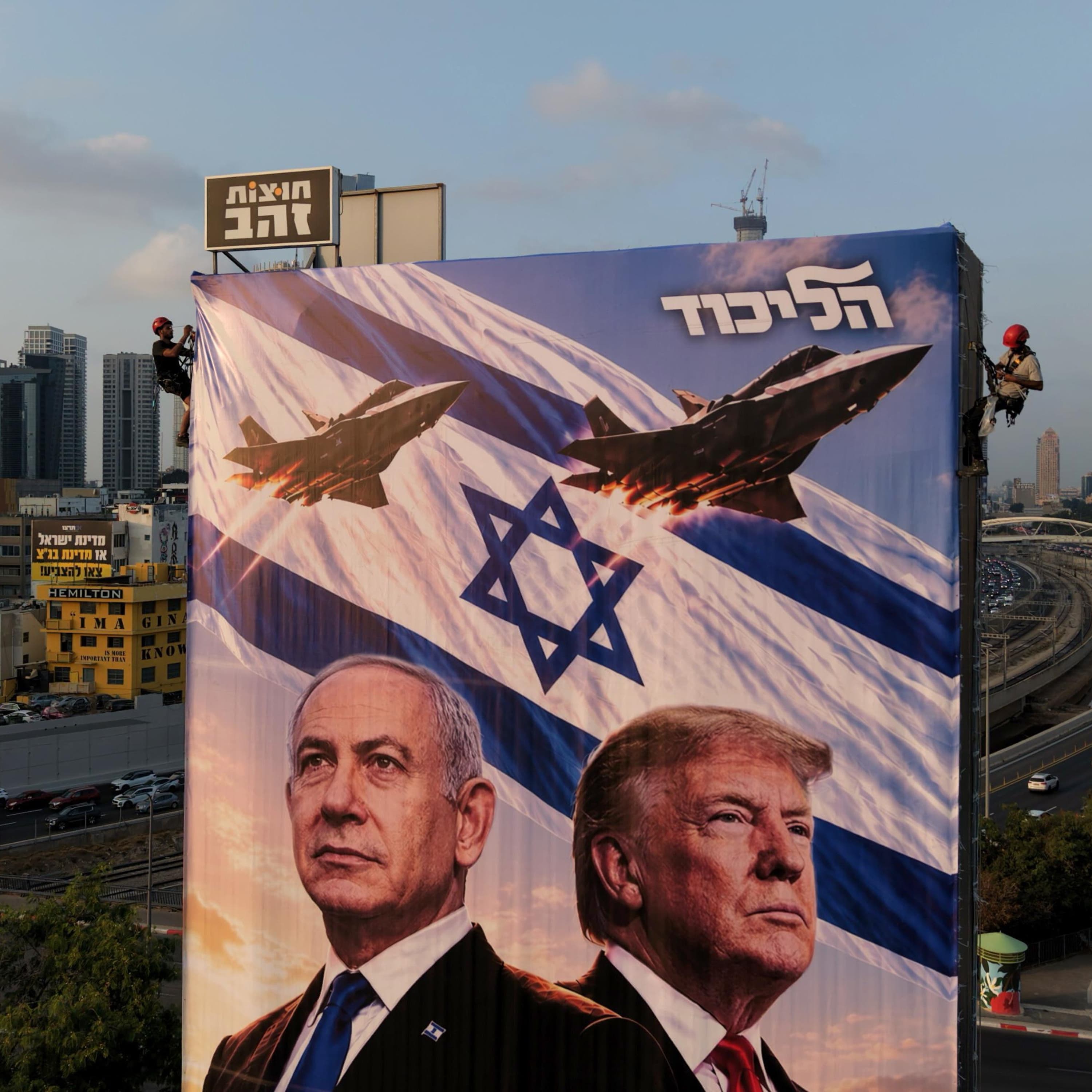
5:37It's full of people who hate us just because we're Jewish. And I am the strong leader who knows how to keep you safe. Iran, about a year ago, was on the verge of developing several atomic bombs. If we hadn't acted in Rising Line and after that with the Roaring Line, they'd have atomic bombs to destroy us. And he would point to having taken out the leaders of Hezbollah, the supreme leader of Iran, you know, all these long-term enemies of Israel. Now comes my dear friend, Donald Trump. We have a historic friendship. The partnership is unmatched. We've never had an Israeli prime minister and an American president work so closely together.
6:23He talks a lot about his alliances with international leaders. His sort of pitch is, you know, he lived in America for a long time. He's a fluent English speaker. He sort of flaunts these relationships with Trump, with Modi, that he is the person who can sort of connect the world to Israel and Israel to the world, that he can get deals done, that he can win support. Are people buying it? Because, you know, he's been in power for almost 20 years. And I wonder at this point, what's he offering Israelis in terms of his campaign? You know, I mean, you could say there are comparisons, for instance, with someone like Trump.
6:57He has a very powerful connection with his base. And for them, they see him as a strong leader who has succeeded in taking on enemies that other people have not been able to. So, for instance, the idea that you would persuade America to join a joint war on Iran, really, most people, whether or not they wanted it, would have thought that was impossible. Even people who would have liked that. I mean, there's been quite a bit of commentary on how this election is potentially a battle for the soul of Israel. You've got tens of thousands of Israelis going back to the country to vote. And they're, I guess, are often seen as more liberal than the Israelis who actually live in Israel.
7:33And I guess the question is, what happens to Netanyahu if he loses? Well, you know, one of the arguments about why Netanyahu has sort of behaved the way he has really over the last three years, why he chose to go into alliance with the far right, why he chose to extend a war that cost the lives of Israeli hostages, is that he's currently in the middle of a trial for corruption. Breaking news to bring to you, Israel's attorney general has indicted the prime minister, Benjamin Netanyahu, on multiple corruption charges. Netanyahu has denied any wrongdoing, but is accused of accepting bribes, committing fraud and carrying out a breach of public trust.
8:15He is not going to go quietly into the dark night. He is not going in any way admit guilt here and he's going to go down fighting and swinging. And, you know, he's not just fighting for his political career. He believes he's fighting for his freedom. He thinks that if he loses this election, if he loses power, that he's going to go to prison, essentially. So it's about his political career, but much more than that, it's about his personal liberty. liberty. And, you know, to the extent that he even sort of managed to get Trump involved and got Trump to put in a personal request for Netanyahu to be pardoned preemptively with Israel's president.
8:50Mr. President, why don't you give him a pardon?
9:05And how much is opinion divided, would you say, on his handling of October 7th? and what has come after, because I know there has been significant criticism about what he knew and when. There were several reports and investigations from the New York Times to Haaretz claiming that he and all wings of the Israeli military had been given intelligence about an imminent potential attack by Hamas and yet had failed to act. Emma, what exactly do we know about that and how have Israelis taken it? Yeah, I mean, it's a good question. There's been a lot of fairly shocking reporting. And it's come from so many different sources that it seems pretty convincing.
9:42This includes the fact that he got a personal warning from the UAE that, you know, the chief of Egypt's intelligence services came to directly warn him. And disturbing new report says that a week and a half before October 7th, 2023, Israeli Prime Minister Benjamin Netanyahu was warned that the terrorist group Hamas was preparing a major attack. The intel came from Sheikh Mohammed bin Zayed, known as MBZ, the president of the United Arab Emirates. Structurally, there was a whole series of warnings that were just ignored. For instance, there were a lot of young women, soldiers basically doing their military service along the border, who were there just to look with their own eyes rather than relying on these computerized systems.
10:26And they warned that Hamas was preparing for an attack. There was a mass activation of SIM cards, Israeli SIM cards overnight, all these things which if they've been taken seriously. And here, perhaps we come back to this question of why is this a battle for Israel's future, those who see it that way. Their argument is that Netanyahu at that point was so consumed by the right wing agenda of his coalition partners who'd moved troops to the occupied West Bank and were very focused on that, that they just weren't paying attention to what was happening in the area around Gaza and that it wasn't a priority for them.
10:58Netanyahu's office has called the report an absolute lie. And both Netanyahu's office and the UAE foreign ministry, which declined to comment on the call itself, have said that there were and continue to be communications between the intelligence channels. Crucially, the UAE didn't deny that the call had happened in the statement they put out just a short time ago. So among critics of Netanyahu, this has caused a huge among his loyalists, it hasn't really. I mean, he has this sort of argument that he's pushed again and again, and it feeds into, you know, again, quite a Trumpian worldview of him against the deep state.
11:35He sort of comes back to this thing that he wasn't woken up until 6.29, when the attacks began, that if he'd been woken up overnight, when there were some initial signs, that things would have unfolded very differently on the day. So like almost everything in this election, and much as you sometimes see with Trump, things that for other people should be sort of career-ending. Netanyahu seems to shrug off.
12:06But, you know, for people, especially people who are directly affected by the October 7th attacks, this is for them very urgent and very painful. You know, at a rally I was at with Eisencott, there was a bereaved mother who lost her son at the Nova music festival. He was killed there. and she stood up and said, three years on, I still don't know where they found his body. And, you know, it's such a sort of, to me, it seems like such a very basic human need, really, to know if you can, what happened to your child in their final hours? Where were they? And the fact that this country has been able to kill the leader of Iran, but hasn't been able to tell all of its own citizens that, is at the heart, I think, of what Netanyahu's critics would say is wrong with him.
12:57Emma, how much of a factor is October 7th in this election? Because lots of people outside of Israel will be watching this election through the prism of the genocide in Gaza, the increase in attacks in the West Bank, the ongoing expansion of settlements. But how big a factor is it at home? Really the shocking thing actually when you're here is that, you know, obviously October 7th was deeply traumatic for many people in Israel. It's such a small country. It was anyway a sort of traumatic national event, the way the 9-11 attacks were. Also, many people were personally affected. But in dealing with that trauma and responding to it, Israelis have kind of retreated, I would say, enabled by a media which hasn't really shown them very well, very often what's happening in Gaza.
13:44A former national security advisor to Bennett, one of the other candidates in this election, described it to me as a dome of disconnect between Israelis and the rest of the world. And throughout the last three years, really, there's been a sort of lack of interest on the part of much of Israeli society and what's happening to Palestinians, and sort of active incitement to genocide on the more far right, you know, this rhetoric that we've heard really right from the beginning of there being no innocence in Gaza. And the extraordinary thing is that this war, which I really think has become sort of critical in how Israel is seen internationally, hardly features at all in the election campaign here.
14:29And, you know, if you're following this from outside Israel, that is frankly kind of shocking and confusing. Certainly, there's no discussion of civilian casualties. And that feeds into a broader lack of any discussion, really of the long-term future of Israel's occupation and its relationship with Palestinians, these millions of people who are living without rights under Israeli rule.
15:04Emma, for Israelis who aren't happy with Netanyahu and they want a change of government, The main alternative does seem to be Gardaí Eisenkot and he leads the Yashar party. But can you tell us more about him and what his backstory is? Yeah. So Eisenkot, he's a former general. He was the chief of staff for the Israeli military. So the head of the entire Israeli military. He only recently got involved in politics. He's not a sort of long term politician. He's a bereaved father. His son was killed in Gaza in 2024. for. And Netanyahu is kind of a political operator. He's kind of very slick. He has these rallies where he really works people up.
15:44Eisencourt, by contrast, kind of has a sort of uncle vibe. You know, he's not very kind of social media savvy. He doesn't kind of work his crowds. He's called his party Yashar, which means kind of honesty. And that's sort of his pitch. I'm a highly competent but ordinary person. I know how to manage. I manage the whole military that keeps you safe. I understand what it means to pay the worst price. My children haven't just served. One of them has died. His nephew was also killed. And I'm not a slick political operator. I just want to get the country back on track. So basically, we are moving from a radical, right wing, extreme right wing, irresponsible leadership that has led the current government's actions and plans.
16:33Well, you went to an Isaac Ott rally in Modin. What did people there tell you about why they were there and why they're supporting him? And that is the materialization of the Zionist dream, having a safe Jewish democratic home for the Jewish people, the only country in the world that is that place. And we need to safeguard it. So, you know, we came back to this fact that for many Israelis, they see this as a sort of a last chance to save their country from becoming something unrecognisable, both in terms of non-democratic, although this rarely comes with an acknowledgement of the Palestinians living without democracy under Israeli rule.
17:14and actually in religious terms, because this gets talked about less, but Netanyahu's coalition includes the ultra-Orthodox, but also the religious Zionist faction who are actually very, very religious. Ben Gavir is basically a messianic extremist. These are people who don't want really a secular country. And so one of the volunteers, I said to him, is this your first time in politics? He said, I've never been involved in politics at all. and I can't wait to go back to my normal life. But this is just too important. You've got the T-shirt on. Are you like an activist? Yeah, I volunteer. Have you volunteered with other parties before?
17:52So what brought you to decide to get involved in politics after a lifetime of staying out of it? Well, I think it's the most critical elections ever. OK, we must bring change. So everybody is expected to do something. So we do what we can. So my colleague Guy and I spoke to several people at the rally, including an older couple. He's the biggest fan of Eisenkot. He goes out, streams out loud, Eisenkot it is. They said that, you know, they are sort of torn because, of course, you know, they're in their 70s. You want your kids near. But they said, you know, we think about our daughters, our grandchildren.
18:33Do we want them to stay in the country this is becoming? if you have a religious government that doesn't respect democratic institutions. His older brother is from a kibbutz, a very old kibbutz near the Kineret. And he keeps on telling Shalom, take your family, take your money and go away. Even if Eisenkot wins, it's going to take so many years. The damage has already been done. Take your money, take your family and go away. And what about the opposition to that? Yeah. And by which I mean, you know, are there any left-wing parties campaigning and what are the chances of them winning any seats?
19:12Okay. When you talk about left-wing parties in Israel, I feel it has to be with the caveat that, for instance, the settlements in the Occupy West Bank have been a bipartisan or a cross-party project from the beginning. However, Labour Party, which was traditionally the party of the sort of peace camp, the party of Itzhak Rabin, Shimon Perez, you know, that was a powerful party that dominated Israeli politics, produced, you know, some of its most well-known leaders for decades. That doesn't even exist as a party anymore. It's been wrapped up with Meretz, the remains of Meretz, which was a more left-wing, more genuinely left-wing party, into something called the Democrats under a former general, a guy called Yair Golan, who was deputy head of the Israeli military.
19:58And in the current Israeli paradigm, they're so left-wing that they're being physically attacked. So their activists who are out on the street are being physically attacked. I mean, I spoke to one who was hit in the face by a guy with a big Ben Gavir tattoo on his arm because he went to a bit of town where there's a lot of Ben Gavir supporters. A tattoo? To the point of a tattoo? Sorry. A tattoo of Ben Gavir's face. I know. I mean, there's many questions to ask about this, but they are seen now within Israeli society as almost fringe or extremist, very far left, or at least forces within Israeli society are trying to position them that way.
20:36And yet, Galan won't say the word's two-state solution. He won't say West Bank. Most Israeli politicians use the term Judea and Samaria for the occupied West Bank. That's a reference to sort of biblical terms for roughly those geographic areas and carries connotations of, in their view, a Jewish-Israeli claim to that land, and it intends to be used by people who deny the right of Palestinians to their state on those lands. And I think it's certainly true that Golan is committed personally to a negotiated solution. But even then, he won't say it's two-state solution. He sort of acknowledges really that it's because of the political reality inside Israel.
21:19He says we have to work towards a separation. But what does a separation mean when you can't even say who you're separating from.
21:34Let's take a look at the other end of this political spectrum. And even further to the right, essentially, is Itmar Ben-Gavir. Listeners are probably familiar with his name by now. He is Israel's national security minister who leads the Jewish Strength Party. He endorses ethnic cleansing, has said Palestinian lives are worthless. What has his party's election campaign looked like? It's really hard to describe it because it's so shocking and so horrific. It almost sounds like a sort of satirical pastiche. Far-right Israeli minister Itamar Ben-Gvir boasted of new gallows for hanging Palestinians under the country's new death penalty law.
22:11In one of the AI videos that he shared on his social platforms, he mocked Palestinians living in the Gaza Strip and implied that they were donkeys should they choose to stay there. Dehumanising Palestinians is the sort of modus operandi to achieve his goal of a sort of Jewish supremacist state. Backlash over that video posted by Israel's far-right national security minister, Itzmar Ben-Gavir, showing detained Gaza flotilla activists kneeling on the ground with their hands zip-tied behind their backs. And doesn't care about international condemnation, doesn't care about, you know, activists on flotillas being humiliated and all the rest of it.
22:47I mean, we've seen those videos and he's completely unrepentant. I think Morethan doesn't care. He sees that as an electoral advantage. He is promoting that as something that is a sign of his leadership. The fact that he is able to humiliate international activists and mistreat them. And of course, you know, everything that he does to foreigners, he does much more in his prisons to Palestinians.
23:20Inside the prisons, they had canteens. They could buy whatever they want. I went to an in-person event where he was cracking jokes about his policy of starving Palestinian prisoners. They used to come in skinny and come out fat. They come in fat and they come out skinny. And honestly, hearing people laugh at that, you do think, is this the type of footage that other Israelis are going to look back on in 20 years and think, what on earth happened to us?
24:06As you've mentioned, there are millions of Palestinians living in the West Bank, living in Gaza, who obviously cannot vote. But there are these citizens in Israel, or Arab Israelis, as they're also known. What can you tell us about them and the candidates they're running in this election? So the Palestinian citizens of Israel are a minority, but they're a pretty sizable minority. They're about 21 % of the population. So that's a lot of votes. They historically haven't all voted, partly because of sort of racism and marginalization in the system. Some people feel that there's no point in voting.
24:42Others choose not to vote because they feel it's essentially a kind of endorsement of the Knesset and of a racist order in which they don't want to endorse through their participation. You know, there's several concerns for Palestinians. The issue of organised crime is really affecting them. It's been historically a problem. And under Ben Gavir, he's clearly been quite happy to let it flourish. The murder rate is really, really shocking. Israel's war in Gaza and the escalating campaign of ethnic cleansing in the occupied West Bank are also concerns for many Palestinian citizens of Israel who have family and friends living in those areas.
25:22So there's basically two party groupings that are representing them. One is Ram, which is actually led by an Islamist, Mansour Ambas, who has been in government before. And then there's something called the Joint List, which brings together three parties. And they're sort of probably the most left-wing of all. They're the ones, or what we would consider left-wing, the most outspoken about the occupation. They see getting rid of the current far-right government as a priority. We believe in the Joint List, but we are fighting for freedom. We don't want any kind of slavery. And essentially, after a case was brought against Sami Abou-Shahadeh, who's the leader of one of these parties, he was forced to drop out of the election.
26:03And I was talking to him at a rally last week, and he said that he's expecting high turnout. And I said, you know, how is that? How do you manage to balance the need to sort of, how do you give Palestinians hope in a fairly hopeless situation? He said, oh, no, I'm not talking about our politics. Fear is the driver. Fear is going to be a better campaigner for us than any of our own policies. What is moving the people, the biggest motivation is fear. The Palestinians, all Palestinians are politicized all over the world. They eat politics, drink politics, sleep politics all the time. People are very politicized.
26:44People are quite aware of the danger of what will happen if these criminals come back to rule again. And they want to do a change. He said people are truly afraid and therefore they're coming out to vote because whatever criticisms we have of the opposition, however very profoundly problematic their policies are, they are not as bad as the far right wing extremists. And therefore, the only thing we can do really at this point is just to try and stop the bleeding. Do you think there's any truth in the idea that these Arab-Israeli parties could become kingmakers in this election, by which I mean, you know, they could enter into a coalition with Eisenhower or other factions that could sway the balance of power?
27:29Have Arab members of the Knesset ever had that much influence? Is this something that's happened before? So in terms of real power, you know, in all of Israel's history, there's been two Palestinian ministers. One was a minister of sport, the other was a minister of regional coordination. They both held those posts for a relatively brief period of time. Right. So I think that's a statistic that in itself gives you a good sense of how far Palestinians are able to go in sort of achieving extensive political power. However, they are also still key voices for their community, for Palestinians inside Israel.
28:08It's much harder to talk about the occupation, but they do. It is not easy to be an Arab in Israel. It is not easy to be an MK in the Israeli Knesset, especially this four years after October the 7th. Coming back to the joint list. Okay, it's one relatively small party, but they are at least a party that is putting the destruction of Gaza into the discussion around this election. You know, they're a critical voice in that way. Much difference. What happens if you manage to get rid of Smotrich? We are choosing between bad and worst. Any new government will not be my cup of tea. But I am choosing between Netanyahu, Smotrich and Bingvier and those two to come.
28:55We have two demands. One civic and social to tackle the crimes and the gangs. And we want to stop war crimes in the West Bank. We want to stop the war in Gaza. They're very open about the fact that they are trying to operate in a system where essentially they're fighting with a hand tied or two hands tied behind their back. It's a racist system. But that doesn't mean that you can't achieve anything. Jewish Israeli politicians say they won't sit with with Palestinian citizens of Israel. But, you know, they're all in politics because they want power. And if tomorrow we wake up and it's clear that Netanyahu and Eisenhower, neither of them have enough seats to form a government, it's a pretty stark choice.
29:44Do you go to another election or do you make some kind of agreement? And, you know, the Palestinian party certainly have been very clear that they would be willing to do that, that their priority is getting rid of Netanyahu and the current government, and that then perhaps they'll pick up other battles. So yes, absolutely. It seems pretty likely as things stand that they will have that role. And then that's something that Netanyahu has been trying to use. He's got a record of using racism. In a past election, he sort of seemed to push up his own turnout by sort of going on TV and saying, Arab voters are turning out in droves, really kind of using racist fear-mongering.
30:23There's been a campaign, Bibi or Tibi, so Amitibi is one of the Palestinian lawmakers. Basically, if you don't, it's either me or the Palestinians. Eisenhower's in bed with the Palestinians. This is someone who won't say the word two-state solution, who's a vocal supporter of settlements, who's sort of campaigning on his role in taking an aggressive part in the war in Gaza. And yet that's the nature of the discourse. And I think that speaks to some of the sort of profound racism and dehumanisation that you're seeing here, that even the idea of going into alliance with Palestinians is so stigmatised.
31:04Coming up, with the West Bank in lockdown, how will that affect voting today?
31:23Hey, I'm running out to drop off a stack of letters and packages. Need anything shipped while I'm gone? Save the gas. Stamps.com lets you print postage and schedule pickups right from your desk. Sync your contacts into the address book, get detailed accounting insights, and get notified the moment your certified mail is delivered. All from my desk? All from your desk. Join the 4 million businesses using Stamps.com right now with code podcast and get your free welcome gift. Stamps.com, code podcast. Taxes and fees apply. Soft, cushy, plush, cozy. Soft, smooth, buttery, marshmallowy, warm. Soft.
32:02Socks, underwear, tees, and more. Bombas, everyday comfort worth obsessing over. Visit bombas.com slash audio and use code audio for 20 % off your first purchase. That's B-O-M-B-A-S dot com slash audio. One purchase equals one donated. Always.
32:26Emma, what is the polling telling us right now? So the polling's been pretty consistent for the best part of two years. Netanyahu is going to lose his majority in his current coalition. However, they also show that the Jewish anti-Netanyahu parties, the Jewish-Israeli opposition, will not have a majority either. At the moment, they look to be slightly ahead of the Netanyahu bloc. So the anti-Netanyahu bloc could win the majority if going into coalition with the Palestinian parties wasn't seen as such electoral poison. Yeah, so I would say they're all related. The dehumanisation of Palestinians, the unwillingness to look at the occupation, and the fact that you would have a very clear anti-Netanyahu majority if those parties went into alliance with the parties representing Palestinian citizens of Israel, who expected to claim about 12 seats.
33:25Emma, last week, Benjamin Netanyahu announced a full lockdown of the West Bank. Can you explain what happened and if it's likely to affect the election? So there was an attack just outside Hebron. Two Palestinian gunmen opened fire at Israeli forces, killed two soldiers, injured three others. What happened was you had a very strong response from this government. It began with almost immediate collective punishment. We saw Minister Smotrich heading to Hebron and sort of doing a video in front of a building being destroyed, really simply because it was Palestinian and close to the site of the attack.
34:04Netanyahu announced that he was planning the biggest operation in the occupied West Bank since 1967. And as part of the immediate response, he said they were going to shut down the West Bank. What that tends to mean is that it's shut down for Palestinians. Israelis who live there, Israeli settlers, still have freedom of movement. So we wouldn't expect it to affect the election. And Emma, if there was a change of government and Gaddy Eisenkot became prime minister, what path do you think that could set the future of Israel on? I think that's a critical question, Machine. and one of the things that is perhaps the biggest gaps between people inside Israel and the rest of the world.
34:46Because I think on a lot of things that are relevant to Israeli voters about democratic institutions inside Israel, Isencourt is going to bring in a change. But on the issues that have really become a focus in the international community for other countries abroad, which is more than anything, the treatment of Palestinians, whether that's genocide in Gaza, settlement expansion in the West Bank, there's really not very much appetite for or pressure for any substantial change. I think, you know, if we look, for instance, at Eisencott, there's been a wave of violence in the last couple of weeks in the West Bank connected to the olive harvest.
35:27We saw a terrible beating of a journalist, Heidi Levine. I don't know how a parent can raise such monsters. They are Jewish terrorists and they are giving everyone in the country a horrible reputation. There was an attack on European diplomats. I was actually there, saw that for myself, really terrifying. I was attacked, violently attacked, protected by the people who were there to try and limit things. I was thrown to the ground. And Eisenhower came out very strongly against that, as many people in the opposition have. And then he went on to say, and I'm just going to read from it because I think it's really important to sort of understand this.
36:08He says, a handful of criminals are burning up the large shreds of legitimacy left to the state of Israel, endangering security forces and harming the settlement enterprise in Judea and Samaria. So this is a man who wants to, on the one hand, cut down on settler violence, on the other hand, protect the mainstream state backed settlement project. And I think if you look at what's happening, for instance, you know, the sanctions announced by Miliband, they came with a recognition of the landmark 2024 ICJ ruling that Israel's occupation of the West Bank is illegal. And Minabam was very clear those sanctions weren't just aimed at violent settlers, which actually we've seen before these sort of settler militants.
36:54The whole settlement project, companies taking Palestinian land and building houses on them, for instance. and I think this goes to the heart of potentially a major problem for Israel going forward and I think some of these leaders really in a way want to turn the clock back to 2023 in terms of relations with the international community about Palestine where people talk about the two-state solution, Israel carries on slowly undermining it, the international community condemns it but doesn't do very much. Perhaps Israel's allies are going to accept that. Ultimately, they've done relatively little on an unfolding genocide in Gaza.
37:36Nonetheless, it does feel like there's been a paradigm shift. And I think that's at the heart of this, that even if Eisencourt or someone replaces Netanyahu and steps back from the most horrific far-right policies, the racist death penalty, the push for ethnic cleansing stops the most extreme sort of settler militant attacks in the occupied West Bank, you're not going to see a fundamental change. You can't because Israel is not willing. Mainstream Israel, Israeli voters are not engaging at the moment and not willing to support some kind of negotiated end to the conflict with the Palestinians and the occupation.
38:19And that is immediately a problem for Palestinians. But long term, a lot of people would say it's also going to be a problem for Israel.
38:33That was The Guardian's chief Middle East correspondent, Emma Graham Harrison. My thanks to her. You can follow all the election coverage of the results as they come in over at theguardian.com. This episode was presented by me, Noshin Iqbal. It was produced by Guy Safman, Alex Atak, Ruth Abrahams and Hannah Aydan. Sound design is by Rudy Zagadlo and the executive producer was Huma Khalili. We'll be back this afternoon with the latest.
39:10This is The Guardian.
39:44We'll see you next time. with up to 90 % savings. Go to ShipStation.com and use code AUDIO to try ShipStation free for 60 days.