
 Ask ChatGPT



Five days into Israel’s expanding war with Iran, the episode asks what Israel wants—whether the goal is ending Iran’s nuclear program, forcing regime change, or drawing in the US/other powers—while weighing escalation risks and civilian impact.
Julian Borgia, The Guardian’s senior international correspondent, reporting from Tel Aviv.
Israel has “upper hand” in aerial operations but cannot easily destroy deeply buried enrichment sites (Natanz, Fordow) without US-supplied earth-penetrating bombs. Regime change is uncertain and could “backfire” via a rally-around effect and a likely hardline successor (IRGC). Iran could pressure the US by threatening Strait of Hormuz shipping/insurance. Netanyahu may be trying to goad Iran into miscalculations that pull the US in.
evacuations in northern Tehran (District 3) like Gaza/Beirut; strikes killing children in student housing; hospitals hit; targeting Iran’s oil/gas lifelines (South Pars gas field, oil storage near Tehran); reports of a planned strike on Supreme Leader Ali Khamenei vetoed by Trump.
Written by AI. May contain mistakes.
Discussion of the recent escalation in the Israel-Iran conflict and its implications.
“The past few days have been a blizzard of headlines we long feared were coming.”
Exploration of the impact on civilians in Iran and Israel amidst the conflict.
“And as of Tuesday morning, it's escalating.”
Analysis of Israel's military strategy and objectives in the ongoing war.
“I mean, the same thing happened in Lebanon.”
Discussion of the potential aims behind Israel's actions: targeting the nuclear program or regime change.
“Do we think that Israel, even with the superiority that it's showing over Iran today, has the capacity to end that nuclear program by bombing it from the sky?”
Examination of the US's potential involvement and Donald Trump's stance on the conflict.
“If ending the nuclear program requires the US to buy in, if only the US has the kinds of bombs that can reach that deep to destroy these enrichment facilities, what is the current US position?”
Analysis of Iran's possible strategies in response to the conflict, including use of the Strait of Hormuz.
“I think it is really hard to predict when a particular regime will fall, especially under aerial bombing from an adversary.”
Discussion on the implications of the conflict for regional powers such as Russia and China's involvement.
“So that is one way in which they could impose pressure on him.”
Discussion on Israel's military strategy targeting Iran's economy and the potential consequences.
“It's not going to escalate the conflict.”
Exploration of Iran's precarious situation and the limits of Israeli tolerance for conflict.
“The Iranians are walking, it sounds like, such a tightrope.”
Analyzing the influence of the US on the ongoing conflict and talks between Iran and Israel.
“of stopping the Israelis is a very forceful intervention from Washington.”
Examining the capabilities of Israel's military and the internal challenges faced during the conflict.
“I mean, what is clear is that Israel possesses very accurate intelligence and very accurate bombing capabilities.”
Discussion on the historical context of the Israeli-Palestinian issue and its impact on regional stability.
“And if it is a miscalculation, then this could be a very long war.”

Get the gist, explore an idea or ask about something said.
 Claude
On Today in Focus, what are the key points of this episode?
Searching your listeningAutomatic transcript. May contain errors.
0:00This is The Guardian.
0:07Today, Israel's expanding war with Iran. Five days in.
0:20The past few days have been a blizzard of headlines we long feared were coming. There's been no let up in the exchange of strikes as the death toll continues to climb. Iranian President Masoud Bajeshkian is urging his country to unite as Israeli attacks cause extensive damage in major cities. More breaking news out of Israel, where at least eight people have been killed and dozens injured in the latest round of missile strikes launched by Iran. Israel's National Emergency Service says multiple locations were hit. This war launched by Israel against Iran has been building for decades. And as of Tuesday morning, it's escalating.
0:59And so is the civilian toll.
1:12But as Iranians flee the capital Tehran and missiles strike Israeli cities, some things are becoming less clear. Like what Israel actually wants from this war. Whether it can achieve it from the skies. And most important of them all, will Donald Trump join the war on Israel's side or make a deal with Iran to end it? From The Guardian, I'm Michael Safi. Today in Focus, the Israel-Iran war.
1:52Julian Borgia, you're The Guardian's senior international correspondent. You're in Tel Aviv, where it's been a busy and sleepless few days. We're five days now into this Iran-Israel war that started on Friday with a barrage of attacks by the Israelis on Iran's top military officials, its top nuclear scientists. We talked about that on Friday. But tell me how this conflict has developed in the days since. Yes, it very much started quite focused on Iran's nuclear facilities. And as you said, the military command, nuclear scientists, and Iran's air defences and missiles. But since then, it has been evolving.
2:31And now on Monday, for example, we saw something quite extraordinary. we saw the IDF's Arabic spokesman issuing a warning to residents of District 3, which is northern Tehran, to evacuate that district in very much the same way as they've been ordering the evacuation over many months of different parts of Gaza. It was very familiar and suggests that this war is beginning to enter a new uncertain phase, almost a sort of war of attrition focusing on cities. Interesting. I mean, the same thing happened in Lebanon. They now regularly order parts of Beirut, of South Lebanon, to be evacuated in advance of an Israeli bombing campaign.
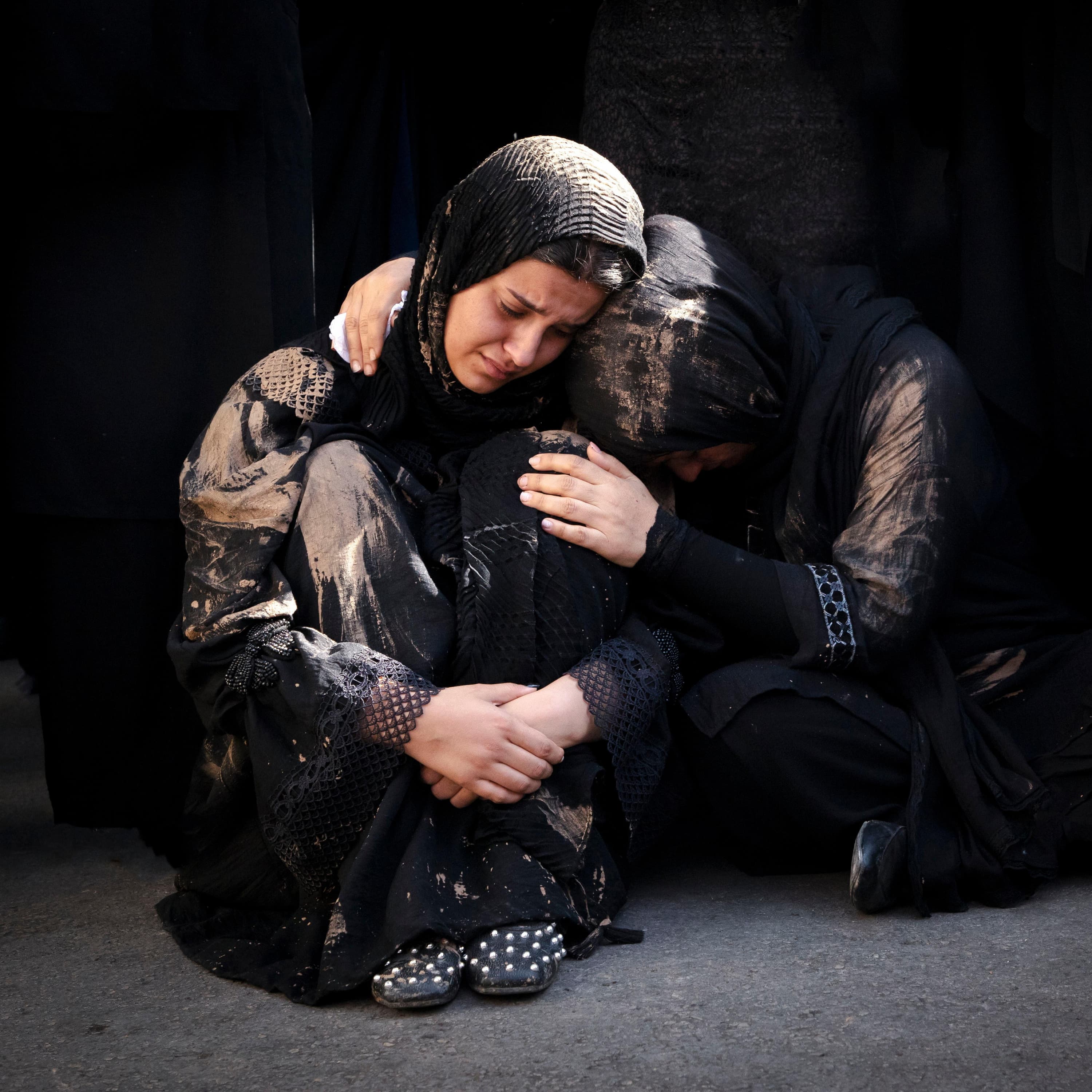
3:17Incredible that we're now seeing the same thing happening in Iran. For Iranians, they haven't experienced this kind of intense bombing since their war with Iraq through the 1980s. It's very difficult to report from Iran, but do we have any sense of how people there are being affected by this? I think they are absolutely terrified by what's going on. Unlike the missile war with Iraq, they now have enemy drones, Israeli drones, hovering over them more or less constantly, which must have seemed like a complete impossible nightmare a few days ago. But now this sense that an enemy power has complete control of the skies above Tehran has induced an air of panic and a lot of people are leaving, moving out of Tehran.
4:09There are queues at the petrol stations as people, especially who have family homes elsewhere or secondary homes elsewhere, are leaving because of the uncertainty hanging over the Iranian capital. Yeah, we're seeing reports as of late Monday of hospitals struck, a student housing dormitory, residential buildings, 20 children among 60 killed on Monday in just one strike. It is starting to look like Lebanon at the height of that war there. The Israelis say that they have the upper hand here. They've achieved aerial superiority. Benjamin Netanyahu said on Monday that the country was on the path to victory.
4:45Is that your read of what's happening here or is it just too early to tell. They definitely have the upper hand and they seem to be able to run bombing sorties with impunity. Now they have not been able to stop Iran launching missiles and some of those missiles are continuing to evade Israel's air defences. So it's not entirely one-sided but I think it is really it is fair to say that Israel now has the upper hand and it raises the questions of just what are Israel's war aims. They started off fairly focused on the nuclear facilities, but now the targets are far more varied and raising questions over whether the real war aim is regime change, that ultimately they want to weaken the government in the Islamic Republic in Iran, which has pre-run the country since 1979, and replace it with something else.
5:44And those are the questions that are now being asked by Israeli commentators, the Israeli press, because of this era of uncertainty now of what is the war about.
6:01Can we look at those two goals that may be Israel's aims, ending the nuclear program or regime change? Let's start with the nuclear program. Do we think that Israel, even with the superiority that it's showing over Iran today, has the capacity to end that nuclear program by bombing it from the sky? The consensus here among Israeli military experts is that the answer to that question is no, that Israel does not ultimately have the means to destroy very deeply buried targets, in particular, the crucial uranium enrichment plants underground in Natanz, and more importantly, in Fordow, where it's deeply buried.
6:46And the general consensus is those can only be destroyed with the kind of munitions that only the US Air Force has. These vast, 30 ,000 pound earth penetrating bombs, something that Israel doesn't have. And so then the question is, if Israel cannot persuade the US to take part, what is the Israeli end goal? Just to inflict damage on the nuclear program? And then if it can only damage in such a way that Iran is in a position to rebuild, is that why we are seeing now a move towards doing things that seem to be aimed at weakening the Iranian government? Interesting. If ending the nuclear program requires the US to buy in, if only the US has the kinds of bombs that can reach that deep to destroy these enrichment facilities, what is the current US position?
7:43As of late on Monday, and this could change at any time, here's a tough question for you. What is Donald Trump thinking? The hardest question of all over the last few months. I mean, you know, we know, I think, that there's one thread of consistency in Donald Trump's approach to foreign affairs is a reluctance and distaste for getting involved in foreign wars. And it has long been the goal of Israel's Prime Minister, Benjamin Netanyahu, to try and persuade him, cajole him into doing just that, to getting involved alongside Israel in bombing Iran's nuclear program. Now, the general belief here is that Netanyahu got a green light to go ahead on Friday with the attack, but not a commitment that the US would actively get involved other than to defend Israel from the backlash from the missile response coming from Iran.
8:46Now, as you say, that may change. And you can imagine it quite possibly that Netanyahu is going to Trump and saying, we have almost done this. We are one step away from ridding the Middle East of this threat of the Iranian nuclear program. We just need a bit of help going the last mile. And that may seem more appealing to Trump than the idea of an open-ended war of attrition. Whether Netanyahu will be able to persuade Trump to get involved, of course, is a complete unknown at the moment. You've said that the other possible goal here could be forcing regime change in Iran. Let me ask you the same question.
9:26Is that something that Israel can do by bombing Iran from the sky? I think it is really hard to predict when a particular regime will fall, especially under aerial bombing from an adversary. I mean, the initial impressions that are given from reports from on the ground in Tehran is that a lot of Tehrani residents who have for a long time now been fiercely opposed to elements of the regime, For example, you know, Iranian women and their uprising against the constraints on them, like the hijab who are having their hair covered and so on. I mean, waves of nationwide protests against the regime that have rocked Iran over the past 10 years.
10:12and have showed really the limits of the regime's power. But since this attack from an outside enemy has begun, there are signs of a sort of rallying round effect that even those who are officially opposed at core to what the regime stands for do not want to see an attack from outside that is killing ordinary Iranians. And so there is the possibility and quite real possibility when it comes to regime change of this Israeli attack backfiring. But, you know, when a regime will crack under pressure, you know, it's something that is historically very, very hard to predict. It's also hard to predict what follows the fall of a regime you don't like.
10:54It can be a government that's more amenable to you or one that actually poses a much greater danger. Absolutely. And I think the most likely successor are the ones with the means to take up the reins of power if the Ayatollah fell is the IRGC, the Revolutionary Guard, which could be a far more hardline government than we've seen up to now. Are there cards here that the Iranian regime could be playing but haven't played yet, might be holding in reserve for when they feel like things are really existential for them? Yes, absolutely. And one thing in particular that comes to mind is blocking the Strait of Hormuz and therefore blocking the flow of Gulf oil into world trade and causing an oil price spike, which is something that would hit very close to home for Donald Trump, for example, in terms of US domestic politics with congressional elections coming up next year and is firmly focused on his personal popularity at home in America.
11:56So that is one way in which they could impose pressure on him. And so this is a shipping channel. I think it's something like one third of the world's seaborne oil passes through this channel that borders Iran. And you're saying if Iran wants to, it could basically stop trade through there, threaten these ships, these tankers that make their way through the strait every day. Yes, or just make it such a threatening environment that it is almost impossible to get shipping insurance, for example, to go through the strait.
12:37We've talked about the risk of the US being drawn into this. What about countries on Iran's side? I'm thinking of Iran's ally, Russia, possibly China. Is there any risk that they decide it's worth them wading into this too? I think that is far less likely. Russia, China are in a proxy war at the moment in Ukraine. But for them to intervene on Iran's side when it is very much at a disadvantage seems unlikely. It seems also unlikely that they would in any way be able to turn things around when it comes to the balance of forces now, you know, five days into the war. A lot of Iran's air defences, Russian supplied, but now seem to be destroyed.
13:26Now, it would take a long time to ship replacements in, and that was something that Israel would very much have a military veto over. So there were reports over the weekend that Israel may have planned to kill Iran's Supreme Leader, Ali Khamenei, but it was Donald Trump, in fact, who vetoed that plan. U.S. officials tell us that the president flatly rejected a plan, an opportunity that the Israelis had to take out the supreme leader. Do you understand his concern? My understanding is his concern is that this would escalate the conflict beyond where it is already. It's not going to escalate the conflict.
14:05It's going to end the conflict. We've had half a century of conflict. I asked you if there were any cards that Iran could play, but they haven't. What about the Israelis? What could they do to escalate this? And do you think that they will? Well, they're attacking Iran's economic lifeblood, which is the oil and gas industry. They've targeted refineries at the South Pal gas field, which is the world's largest. And they've gone after a big oil storage facility outside Tehran. So that is very much focused on Iran's economic lifeline and really going for the economic jugular and another sign that maybe they're going after the regime.
14:45Is there any sense here that if what the Israelis really want is to draw in bigger powers, Europe and the US especially, that what they're doing may be aimed at trying to goad the Iranians into striking back too hard, striking back at the US, miscalculating and turning this into the regional war that it sounds like Israel wants? I think that has very much been Netanyahu's game plan, is that even if there wasn't a US backing involvement in offensive terms at the beginning, that the war would evolve in such a way that the US would get drawn in. And the Iranian government has already threatened any country that defends Israel, which already now involves the US.
15:33It's already threatened ships and bases of those allies. So it would be a big step, huge gamble, and maybe a tragic miscalculation on the part of the Iranians to now to go after a US base or a US ship.
15:52Coming up, how long can Iran keep going? And how long can the Israelis?
16:09The Iranians are walking, it sounds like, such a tightrope. how to respond to what may be an existential threat from the Israelis without turning this into an even wider war. Julian, we talked earlier about how for people in Tehran, they haven't seen scenes like this since the 1980s, but it's true too, isn't it? That for Israelis, people in Tel Aviv, they haven't ever had to live under this kind of consistent missile barrage. Do you think there is a limit to how long Israelis will put up with this war? Yes, I think there is, but I don't think we're anywhere near it now. I mean, there have been reports.
16:44So in the planning of this, the Israeli government had contingencies for a few hundred civilian Israeli casualties, up to several thousand. And we're nowhere near that yet. So far, the defenses have been relatively successful, 80 to 90 percent successful in intercepting Iranian missiles. So some missiles are getting through. Some people are dying, although most people are abiding by the instructions to stay in underground shelters. And so that is helping to minimise the, you know, casualty toll. But you could imagine over time, if it wasn't clear what Netanyahu's exit strategy was from the war, the general support for this war, which is fairly broad at the moment, might begin to erode.
17:36At this point, and we're only five days into a conflict that Netanyahu says will take at least weeks, do you see any off-ramps, any reason that Israel might stop its campaign earlier than expected? Well, I think, as always been true of the war in Gaza, the only outside force capable of stopping the Israelis is a very forceful intervention from Washington. And at the moment, we see no sign that Trump is willing to step in and stop this. He was quoted on his way to the G7 summit as saying, well, sometimes people have to fight it out, suggesting that he would be content to see how far Israel can push Iran into a corner with the idea that Iran would come back to the negotiation table.
18:26So Iran and the US were meant to sit down to discuss some kind of nuclear deal a deal that would curtail Iran's nuclear program. Well, there's a report on Monday on the Wall Street Journal that Iran was looking through Arab state interlocutors to set up talks with the US and Israel. But according to that same report, their starting point was the same as they put out there, you know, and the argument they made when they said they wouldn't come to the talks on Sunday, and that is that they will not enter negotiations while they're under attack. And it seems unlikely at the moment, with Israel being so confident, that it would agree to a pause so that negotiations could proceed.
19:14So at the moment, it's hard to see a compromise solution to that because Israel believes it has very much got the upper hand, is wreaking as much destruction on the Iranian regime as it can. and an Iranian government that is at the moment refusing to go to the negotiating table when it is under continual attack from Israel. It just seems, Julian, that Israel has spent decades preparing for this war, developing the intelligence and capabilities to wipe out almost the entire Iranian military leadership in one night, to kill off nuclear scientists, neutralise advanced air defences, the same kind of overwhelming, technologically driven and quite brutal campaign that we saw in Lebanon last year, now playing out in Iran.
20:08Yes, absolutely. I mean, what is clear is that Israel possesses very accurate intelligence and very accurate bombing capabilities. And there seems to be an imbalance between its capabilities in those sort of high-tech aerial fields compared to its performance on October the 7th, 23, when it was unable to predict an incursion from Gaza, that attack from Hamas, and wasn't able to defend its own citizens on its own territory for up to 48 hours. So this is something that's been pointed to by commentators inside Israel, that it's particularly good on offense when it comes to bonding out of the country, but showed huge weaknesses internally when it came to defending the Israeli territory.
21:02It's so extraordinary, isn't it? That they, all this time they spent building this machine, they were unable to see that the real threat, I mean, the worst attack in the country's history was brewing from inside Palestine, from Hamas. It's kind of breathtaking. But I wonder how you think the past few days will fit into the bigger story that we'll one day tell about how October 7 transformed the Middle East? I think the bigger story that transcends October 7th and transcends these wars that we're in at the moment is how much the failure to resolve the issue of Palestine, of a Palestinian future, has meant that it has been impossible for Israel to live peacefully in its neighbourhood.
21:51You know, there was an Arab initiative long ago now, more than 20 years ago, suggesting that Arab states and the Islamic world as a whole would guarantee Israel's security if it agreed to a Palestinian state. And critics of Netanyahu and his side of the political spectrum say it's this belief that you can exist peacefully in the region, in the belief that you can just quash Palestinian aspirations for nationhood, that this is the greatest threat to Israel's security, the inability to solve this problem. I think it's just really hard to be able to predict when a regime will crack, whether an outside attack will expose internal divisions and lead to the overthrow of a government.
22:44And I think that if Israel is counting on that, that their attack will lead to the fall of the regime and to lead to a more compliant regime, then it may turn out to be a miscalculation. miscalculation. And if it is a miscalculation, then this could be a very long war. Julian, thank you so much and stay safe. Thank you very much.
23:11And that was Julian Borgia, The Guardian's Senior International Correspondent. He's currently in Tel Aviv. Follow his work and that of our entire foreign team, the best in the business at theguardian.com. And that's it for today. This episode was produced by Eleanor Biggs, Chantal Romain, Lucy Hoff, and Olivia Lee. Sound design was by Rudy Zagadlow. The executive producer was Homa Khalili. We're back with you tomorrow.
23:45This is The Guardian.
23:51Thank you.


