
 Ask ChatGPT


 Today in Focus
6 Oct 2026 · 31m · 13 chapters
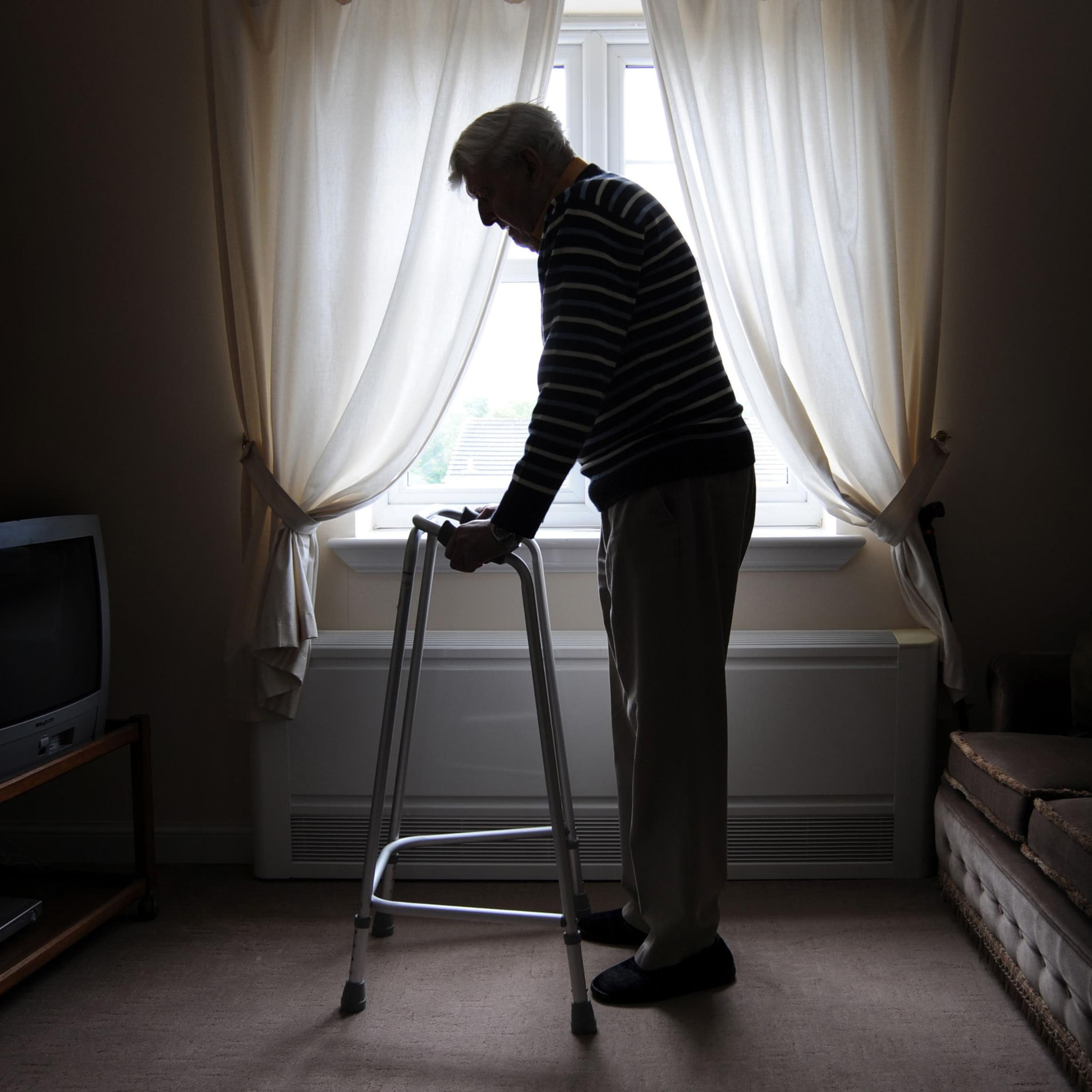
The personal cost of England’s “broken” social care system for dementia families, and what Labour’s proposed National Care Service (Andy Burnham) might change—especially funding, eligibility, and whether families still face large bills.
Heather Stewart, Guardian journalist (normally economics editor), daughter of Liz Stewart, who developed dementia/Alzheimer’s around age 70 and later required 24/7 care in a care home. She describes her father’s role as primary carer and the family’s financial stress.
The system forces families to sell down assets; Heather says she was told no help because assets exceeded £23,000. Care home costs can be about £7,500/month; her family spent ~£250,000 in three years. Families feel isolated and powerless compared with clearer NHS pathways.
Moving her parents to a nearby sheltered flat (autumn 2022); placing her mother in a charity-run care home; her mother’s disorientation and grief at separation; Burnham’s “granny Kitty” example about selling a home to pay for care; Burnham’s plan for free personal care at point of use funded partly by adjusting the state pension “triple lock.”
Written by AI. May contain mistakes.
Exploring the personal costs associated with navigating England's social care system.
“And nine times out of 10, that was someone ready to hand you money.”
Heather Stewart shares her personal experiences with her mother's dementia.
“My brother's nearly six years younger than me, so I was an only child until I was at school.”
Heather discusses the challenges and frustrations of the social care system.
“just because they're unlucky enough to develop dementia or another condition that means they require round-the-clock care but not hospital treatment.”
The impact of caregiving on family relationships and dynamics.
“So normally when you're on the show, you're talking in your capacity as economics editor.”
Heather shares the tough decisions related to her mother's care.
“And over time, that comes to sort of dominate your life, really.”
Discussing the financial burdens of social care and navigating costs.
“And they'd have stayed in that house that we grew up in forever, I think, if it hadn't been, if the situation had been different.”
Explore the financial realities of caring for a loved one in a care home.
“So far, I actually got my spreadsheet out last night, Helen, because I knew I was having this conversation and we've spent£250 ,000.”
Delve into the personal impact of dementia on families and relationships.
“And then, of course, you realise in your head that you're asking yourself, how much longer is mum going to live?”
Discuss the political landscape and past failures to address care funding.
“for Labour Party conference, watching Andy Burnham's speech.”
Examine Andy Burnham's proposals for reforming care services in the UK.
“Just as in 2017, the opposition party said to Theresa May, dementia tax, dementia tax, dementia tax, to which I was kind of screaming inside.”
Consider the implications of funding reforms on pensions and care services.
“by rates of inflation, by 2.5 % or average earnings, whichever is higher.”
Explore how social care issues affect NHS operations and hospital discharges.
“who's going to end up using care, it has a knock-on effect on what's happening in the NHS because of people not able to be discharged from hospitals and so on.”
Discuss the financial implications of care services and the burden on families.
“to foot the bill for this national care service.”

Get the gist, explore an idea or ask about something said.
 Claude
On Today in Focus, what are the key points of this episode?
Searching your listeningAutomatic transcript. May contain errors.
0:00This is The Guardian.
0:07Today, the very personal cost of England's broken social care system.
0:30disappears into your call log. And nine times out of 10, that was someone ready to hand you money. That's why today's episode is brought to you by Quo, spelled Q-U-O, the business phone system built so you never miss a call. Here's what I like about it. All your calls, texts, and voicemails live in one place, so anyone on your team can pick up a conversation, see the full history, and respond fast. No more, wait, who talked to this customer last? And if you're worried about after-hours leads slipping through, Quo's optional built-in AI agent can answer questions and even book appointments while your team's offline.
1:05It's the number one rated business phone system on G2, and over 90 ,000 businesses already trust it to stay reachable. Money is on the line. Always say hello with Quo. Try Quo for free. Plus, get 20 % off your first six months when you go to Quo.com slash tech. That's Q-U-O dot com slash tech.
1:31My mum, she had a strong personality, clever, funny, quite sharp tongue at times. And we spent a lot of time together. My brother's nearly six years younger than me, so I was an only child until I was at school. So mum was very much the closest person in my life. This is Guardian journalist Heather Stewart talking about her mum, Liz. She left school at 16 and was a treasury civil servant and was kind of climbing the ladder there, then left to have me, eventually went to work in our local job centre, which she loved. And it made her this kind of great, I mean, she was a sort of Labour supporter, union member.
2:10She was really strong on how important a job was and also meant that she would know various local characters. So you'd like come in the pub and somebody would march up and say, Liz, how are you? And it would be some chap a few years older than me that she'd helped to get into a job. So, yeah, that plugged her into the community in quite a nice way. Her parents were very proud when she got a job at The Guardian. My dad initially cut out every single article I wrote, including, you know, interest rates remained unchanged last month for whatever month and then basically soon realised that was an unsustainable strategy.
2:42Life galloped on as it does. Heather got married and had kids herself. Then, about nine years ago, she started to realise that something was off with her mum.
2:56So it's hard to pinpoint a specific moment because, as anyone who has a relative with dementia will know, it's something that comes on really quite slowly. It would have been conversations on the phone, repetition, little bit of mood swings in a way that didn't feel quite right. Before long, Heather found herself navigating a system that was as maddening as it was unfair. A system that often forces people to sell almost everything they own just because they're unlucky enough to develop dementia or another condition that means they require round-the-clock care but not hospital treatment. It's a system that Andy Burnham promised last week to change.
3:36And Heather was in Liverpool watching live as the Prime Minister announced his plans for a national care service. Care that is about people, not profit, which gives peace of mind over care needs. It completely set me off. For starters, I had a few tears just because the issue is always... It's always so close to the surface. I think anyone who has a parent in that situation would feel moved by it. Conference, this is the National Care Service we will build.
4:18But what exactly does he have planned? And will the public vote for it? From The Guardian, I'm Helen Pitt. Today in Focus, what will Andy Burnham's National Care Service actually mean for families like Heather's?
4:37Heather, thanks for being here. Great to see you. So normally when you're on the show, you're talking in your capacity as economics editor. But I kind of wanted to have you on the show today more as a human being, really, and as a daughter. Even economic status is going to be human beings, Helen. But a daughter and a child of ageing parents and somebody who's spent the last few years navigating what can be a really difficult system in England. When did you first voice concerns about your mum and the changes that you'd noticed in her? I first had a conversation with my brother and where, you know, we sort of said, it was difficult to have a conversation with dad who was protecting her as partners tend to do in that situation slash maybe not wanting to accept it himself.
5:23My mum's mum had Alzheimer's and it was a big, big feature of my mum's life when she was my age was managing her mum's deterioration. So it was very, very familiar to us, but dreaded, dreaded by mum, dreaded by us. And actually she never, never did, never has admitted that she has a problem. We tried to have a conversation with her and it's, I think, because it was so awful with her own mother, I think it was just something that she couldn't process, couldn't accept. And it sort of happens slow and then it happens fast. Yeah. How old was she when you first started to notice the signs? About 70.
6:02Right. OK. So she's 79 now, is she? Yes. OK. How was your dad about it all? Did it take him a while to accept? It took him a very long time. So it's been a long old journey for him too, really, towards becoming a carer, which is what he did become. But I remember the first time I used that word to dad, he kind of recoiled because he hated the idea that he was mum's carer in inverted commas. And of course, that is what you become. And over time, that comes to sort of dominate your life, really. Yeah. And when did she start to require help, care from somebody other than your dad? maybe four to five years ago.
6:44So after COVID, COVID was extremely difficult because my dad had to shield because he has lung conditions. So they were basically stuck at home with mum already struggling. After that, I tried to help to get a bit of help in at home. So at that point, it was just home care. In my mind, it was really about giving dad a break as much as anything else. Mum didn't always like it very much. And often, you know, you had to sort of tell a bit of a story about it was a friend or it was, You need to find some way of talking about it because she would never have accepted the idea that she needed care, that difficult word.
7:17And so we sort of, that worked for a bit or at least it helped a little bit. My brother and I had had a lot of conversations about the fact that they were a long way away from either of us. And I had kept saying to dad, do you need to move? What do you think? And for a long time it was no, no, no, no, no. They were in the house that we had grown up in. and then I remember a conversation in I think early 2022 where I thought well I'm going to ask him again I've asked him a few times I'm going to ask him again do you think you might need to be nearer one of us and he almost immediately said what were you thinking right okay what have you got in mind and I had I had looked at what would a flat near me cost how could we do it you know how would that work and at that point he was like yeah okay I can't He'd realised he couldn't cope anymore.
8:02Yeah, and he said, I can't do another winter. And how was your mum at that point in terms of her symptoms? How was her Alzheimer's presenting? So she could still sort of dress herself and look after herself, I guess, but she couldn't really understand what was going on day to day. Conversation was getting harder. And she certainly couldn't cook for herself or organise her day. She couldn't really be left on her own. because she wouldn't know where she was or she would forget what time it was. So it was kind of a full-time job for dad. It wasn't intense caring all the time, but he couldn't just leave her alone.
8:40It became something that he felt that he couldn't cope with on his own. So where did your mum and dad move to? We found them a little sheltered flat on my local high street. It wasn't something that any of us really would have planned for. And they'd have stayed in that house that we grew up in forever, I think, if it hadn't been, if the situation had been different. It's a little two bedroom flat just around the corner from me. So they moved into that in autumn 2022. There was then a period where I helped a lot because the real problem was that dad couldn't cope with how difficult things were at that point.
9:15So I helped with GP appointments and I took mum out for a break and did lots of the sort of life admin. And I don't think any of us thought that would last forever, but it actually only lasted about seven or eight months. And so by the following summer, summer 23, dad was really struggling. Apart from anything else, your sleep pattern goes completely when you've got Alzheimer's. So she didn't want to go to bed. She would get quite cross with him when he suggested that it was bedtime. You know, and they'd be watching sort of endless telly in the evening and he would be saying, you know, darling, I think it's time to go to bed.
9:49Absolutely not. And then she'd be standing next to him at three o 'clock in the morning, wondering why he wasn't making her a cup of tea because it was morning and it was just so intense for him. The real struggle with it is that you're dealing with this kind of overwhelming grief of losing this person who's kind of disintegrated before your eyes and at the same time you're trying to do all this practical stuff to sort of try and make their life as easy as you can but actually, you know, it's not really possible. There's no right way of doing it. And she was also quite resistant to help my mum.
10:19She's quite a strong personality. She's quite a tough cookie and she didn't want to be helped. She didn't want to be helped by a dad who... And she didn't think there was anything wrong with her? Not really. Right. No, no. She wasn't distressed. She wasn't realising that she couldn't remember things anymore. No, no. Or if she did, she never told us. And had her personality changed? Sometimes when people have got dementia, they can become a different version of themselves that can be... Strangely enough, so there was a bit more swearing than I ever remember from her when I was growing up. But strangely enough, there's like a core of her personality which is still there, which is this like stubbornness.
10:54Which I kind of love about her, but it doesn't make you a very easy person to care for. We then, you know, I discussed it with my brother. I discussed it with my dad. I discussed it with my husband, who's obviously been holding my hand through it all. And I think initially we said, and I think it often goes like this. Initially, we said, well, perhaps she could go into a residential home for some respite. So we talked about perhaps a couple of weeks or perhaps a month so that dad could get some sleep, repair his health a little bit. I mean, I think probably all of us knew that it was going to be more than that.
11:29I started to look round places and it needed to be somewhere that dad could visit on public transport because he doesn't drive anymore. And we found somewhere near home, which is actually run by a charity, which we quite liked. And it pays the staff the London living wage, which was quite important to us. Most of all, it's kind of near enough to visit. And I had to take her there. And I told her we were going for a cup of coffee somewhere. And I had always dreaded it because I helped her to find a home for my grandmother. And I know what it was like for her. And I knew it would be the worst thing I'd ever done.
12:17And it was the worst. I mean, in the moment. It wasn't the wrong decision. It was the right decision. but it was the worst having to leave her she was in tears I was in tears she was utterly confused bereft that I was leaving her quite bloody angry to be also do you think she realized what was going on yeah I think well she knew she was being left she knew I was turning my back on her and I was walking away and that was you know and I went and she lives upstairs her room is upstairs in the care home and I went downstairs and just absolutely you know hysterical absolutely hysterical and kind of sat in the car and cried for a bit and then you know kind of went home and it was absolutely the right thing to do but it was extremely hard yeah incredibly incredibly painful yeah
13:18and on top of all that there's the admin and and the cost was that something that was weighing heavily on you at that point extremely heavily because it feels like it is all on your shoulders I asked about financial help and was essentially told well we could do an assessment but you would got more than£23 ,000 in assets, we won't get any help anyways. So there's not a great deal of points. So, which I'd sort of knew anyway. So your mum and dad still had some leftover from selling the big house, did they? They did. I should say, you know, there's a big caveat here, which is they're financially fine, mum and dad.
13:57They're not on the breadline. They both left school at 16, but they did well in life. So they had a nice, comfortable middle-class four-bedroom home and because of what's happened to house prices over that generation and also it turned out mum had been tucking quite a bit of money away unbeknownst almost to dad who tends to be not such of a saver so there was quite a bit of savings there and the proceeds of the house so we knew that we'd have to run that down essentially or I think strictly it's mum's half of the proceeds of that house in fact because they don't have to sell the property that dad is in because if your partner is in a property or your husband or whatever then that is exempt you don't have to sell it yeah so that's the flat and then there's the proceeds of the house and I think in theory it's mum's half of that what happens when the money runs out if we come to the point where we've run it down to almost something near the 23 000 we will then have to get in touch with the council and as I understand it they can say well we won't pay the full cost of the home that she's in we will only pay x and do we want to top it up or what or and i just i cannot tell you how many sleepless nights i have had my dad has had just about you know the money and where the money is and and how quickly it's going to run down and and it is it's unbelievably expensive it's How much per month?
15:29£7 ,500 a month. Is that like£85 ,000 a year? Yeah. So far, I actually got my spreadsheet out last night, Helen, because I knew I was having this conversation and we've spent£250 ,000. In three years? Yes. It's a huge amount.
15:55and in terms of the home is she happy there has she settled yeah so we had a couple of incredibly difficult weeks where she just didn't know where she was and was disorientated and would be very upset every time you went in and would say can you take me away can you take me away so that was just that was awful it's just awful um you know and there was at least one occasion where I said to my husband you have to come with me I can't do it I can't do it on my own but once she had settled she is generally happy she gets on well with the carers who are lovely it's a nice place it has a nice atmosphere I think it's as good as yeah you could expect but she is calm and usually quite cheerful and you know fairly well cared for as far as we can tell and also you know the other bit of it is how much more space and time dad had clearly it was better for both of them but it was extremely hard what an agonizing decision to have to take horrendous and it would be horrendous anyway it's like a bomb going off in the middle of your family without having to think about the financial side of it and just doing that thing of like how many months or how many years have we got before it runs down to nothing.
17:17And then, of course, you realise in your head that you're asking yourself, how much longer is mum going to live? It's really the question underlying that, right? And then... An awful thing to have to contemplate. It's horrific. It's really, really horrific. I do a four-day week, and that's partly because I've got school-aged children, But it's also because I like to go in and have a bit of time with mum every week. And, you know, I have a kind of ritual where I know that I'm going to come out and be upset. And so I just I leave myself kind of half a day almost. I only go in for an hour and a half or something or two hours because you can't really talk to someone with very advanced dementia for very long, really, before you, you know, you sort of both of you have had enough, really.
18:01But, you know, I then need some decompression time afterwards because I always come out. As my mum before her used to visit her mum and come out and sit in the car and have a cry. You know, there's a little bench outside and I sit on the little bench and it's not sad when I'm in there because she's quite cheerful. And she knows you, does she? No, no. That's long gone. OK. That's long gone. She knows that I'm a person that's come to see her. So she recognises as I go in the door, she looks up and she recognises and she'll sort of hold her hands up to me. And she knows and sometimes she'll say it's you or sometimes she'll even say it's me.
18:39But she knows I'm a person that's come to visit her. But she wouldn't be able to tell you how many children she's got, whether she's got any children, whether she has a husband. That's all long, long gone. Which is, you know, when Andy Burnham said in his speech about his dad not knowing he was prime minister. So I could see colleagues around going, feeling quite moved by that. And it is moving. But also I was like, well, of course. Yeah. You know, it was my birthday this week and I went in to see mum on yesterday, in fact. And of course, she doesn't know that. And of course, my birthday was quite a big moment in her life, right?
19:16Birth of her first child. And, you know, you sort of sit there thinking, you know, that bit, that's just, that's gone.
19:33And I know that you, like me, were in Liverpool for Labour Party conference, watching Andy Burnham's speech. How was it for you when he got to the bit about his dad? I watched closely the people who looked after my dad,
19:52caring for other people's parents on poverty pay. but doing it with huge skill, humour and humanity, holding a threadbare system... When he announced his vision for a national care service, how did you feel? It's the bit of me that felt it's been a long road, it's been a long time, could we not just quack on? Because what he was doing was making the argument for changes after the next election, right? And I think Labour do think there are things they can do before that, try and make social care better. And there are things they're doing on the workforce and so on. But there was a bit of me that thought, can we not just?
20:35Because, you know, I was at Theresa May's manifesto launch in 2017. Yeah, when you were political editor. When I was political editor. Sitting in the room. Joining with Anushka, formerly of this parish, yeah. Sitting in the room. We'll see that those elderly people who've been worried about how they pay for care in their home won't have to worry about that in future. they won't have to pay while they're still alive nothing will be paid they won't have to sell their home Funding dementia care was at the heart of her manifesto it didn't end well obviously but my mum wasn't even ill then and all these years later she's now in a care home and we still can't sort it out What do you think is at the root of that the scenario that you're facing is a fairly common one why have so many different political parties so many generations of politicians failed to get a grip of this?
21:24I mean, I can only assume it's because those of us who are in that situation are outnumbered by people who aren't and who sort of hope that they won't ever be hit by it. And I think if you're not affected by it or if your family haven't been affected by it, I don't think you have any idea. I mean, I make a point of saying to people, it's£7 ,500 a month, because I just don't think people realise. And maybe people go through life hoping they're going to dodge that bullet. I don't know. And there are just electric fences around some tax issues in this country, I think. So Burnham's approach to it in the past, if you remember, back in the Labour years was, OK, so we're going to need to charge people some sort of inheritance type levy.
22:09Yeah, that's what he was saying in 2015, I think, when he went for the leadership the second time. Right, exactly. He's had this idea for a long time. This manifesto I've produced today, all of the things in it, I believe passionately about helping young people get on in life, better care for older people. These are the things I've campaigned for all my political life. And the Tories immediately said death tax, death tax, death tax. Just as in 2017, the opposition party said to Theresa May, dementia tax, dementia tax, dementia tax, to which I was kind of screaming inside. There's already a dementia tax.
22:38Those of us whose families suffer it, A, end up paying a shed load of money. I don't even care so much about that it's like the the agony of not only having to cope with this situation in your family which is that breaks your heart every time it's like grief bit by bit day by day week by week but also you know fretting constantly about the financial implications of it and how long will the money last and then what will the council do and how will it you know what happens next yeah and I know it's still a bit vague but what do we know so far about what Andy Burnham is actually proposing. So it seems like it's free personal care at the point of use which is similar to what happens in Scotland so you wouldn't suddenly be paying nothing you would be paying as I understand it your bed and board effectively presumably it would be means tested you would pay for it if you could afford it and the state would pay for your the care costs the personal care.
23:33Right because you know in his in his speech he talked about his granny kitty yes didn't he and he talked about how hard that she and his grandpa had worked to get the house in which the prime minister was born and the sort of pain of having of seeing that house sold to pay for kitty's care and the modest savings she had built up through her life starting with the house where i was born all taken to pay for it so it made it sound as if yes he wanted that scenario to be avoided but you're saying from what we understand i think it's very unclear but you certainly i think you can still face significant bills if you're if you're paying for the bed and board yeah yeah i suppose perhaps burnham would argue that if care at home is much better and people can rely on it then they'll be able to stay in their homes for longer and And therefore, maybe care homes become more of a palliative care situation the last few months of life rather than years.
24:36Yeah, I can see that if you had a more seamless connection between the NHS and care. Yes, I can see that you could manage to or people could manage to live at home a bit longer, perhaps. But there's a point beyond which that's not going to help you, I think, because you need 24-7 support. I think we have to wait. We're waiting for this review, aren't we? that Louise Casey is doing, which she was already doing for Keir Starmer, but Andy Burnham sort of put the Burnham's under it, and that's now expected next year. And I think she is going to look at some of these sort of funding questions. Yeah, and so there's a lot of questions still remaining.
25:14But he did answer a fairly important question, which is how is he going to pay for this? Well, how's he going to pay for some of it, Helen? For some of it. So he says he'll pay for it by tweaking the state pension, getting rid of this so-called triple lock, which means that pensions rise each year by rates of inflation, by 2.5 % or average earnings, whichever is higher. What is he proposing instead? So it's complex. It's a tweak. It's a kind of tweaked or an adjusted triple lock, I think they were calling it when they were briefing us about it. But at the moment, the way the triple lock works, if you get a year where inflation is high, it goes up by inflation because that's the highest of those three things that you mentioned.
25:55then the following year wages tend to increase a bit to catch up and that year wages will be the biggest number so it will go up by wages and so it has it has increased the pension the state pension as a proportion of average earnings a lot over the period that it's been in place the triple lot so pensioners have had more of a pay rise than your average work yes yes and it's now worth about 30 percent of average earnings which is a lot higher than it was when the triple lot was introduced Getting rid of the triple lock completely. I'm adjusting it. Now, I know that might sound like a politician's word, but what that means is rather than every year, the highest of earnings prices or 2.5%, which is the triple lock, you have prices and 2 .5 % and then earnings over a longer period of time.
26:42They think this will save, I think, about£15 billion a year by 2040. Yeah. So this is, like a lot of things Andy Burnham is very keen on, is something that will come in in the next parliament should Labour win another general election. Yeah. But ultimately, it does mean that pensioners will not see their pensions rise as much as they would were the triple lock to be kept. Absolutely. And I just wonder, how likely do you think it is that people are going to vote for this? It's tricky because nobody is going to get a ballot paper that says, would you like to keep the triple lock or would you not like to keep the triple lock?
27:14You know, it's part of a much wider decision. So it depends how high up your list of priority issues that is. I mean, there was some polling, wasn't there, that suggested people were fairly supportive, in fact. Yeah, 48 % to 28 % polling from YouGov last week. I mean, I think it's quite clever politics to link it to care, because I think certainly quite a lot of older people will know someone who've been affected or who may fear they may be affected. So I think that makes a lot of sense. It's kind of, OK, yes, we are taking some money away from this group, but this is also the group who are going to potentially benefit more.
27:49And of course, he also linked it quite closely to the NHS, which of course is also disproportionately used by older voters. And he did make this point that even if you're not someone who's going to end up using care, it has a knock-on effect on what's happening in the NHS because of people not able to be discharged from hospitals and so on.
28:11Coming up, will taxes have to rise to pay for the National Care Service?
28:30Your call has been forwarded to an automatic voice message system. A missed call doesn't feel like anything. No red flag, no notifications screaming at you. It just disappears into your call log. And 9 times out of 10, that was someone ready to hand you money. That's why today's episode is brought to you by Quo, spelled Q-U-O, the business phone system built so you never miss a call. Here's what I like about it. All your calls, texts, and voicemails live in one place, so anyone on your team can pick up a conversation, see the full history, and respond fast. No more, wait, who talked to this customer last?
29:06And if you're worried about after-hours leads slipping through, Quo's optional built-in AI agent can answer questions and even book appointments while your team's offline. It's the number one rated business phone system on G2, and over 90 ,000 businesses already trust it to stay reachable. Money is on the line. Always say hello with Quo. Try Quo for free. Plus, get 20 % off your first six months when you go to Quo.com slash tech. That's Q-U-O dot com slash tech.
29:37It sounds like though you think that even this tweak to the triple lock will not be enough to foot the bill for this national care service. I doubt it so I think there was an estimate that an equivalent of the Scottish style system so this thing of personal care free at the point of view would be about 18 billion pounds a year. Okay. Well your triple lock doesn't get you to that for a very long time so I suspect they will also have to do other tax rises potentially to pay for the rest of this and I don't know whether that is where is there some sort of levy on national insurance is that for maybe for older workers who are getting towards that point is there some sort of levy on people's estates obviously people hate inheritance tax and always go a bit mad when you try and change it don't pay even though the vast majority of people don't pay it does it does send people a bit potty but I think there will have to be some other tax increases as part of the package probably well he said didn't he Burnham said he's gonna he's gonna work really hard to have a sort of national conversation about this it's not talked about enough I think people feel often quite awkward about talking about it there's a bit of a sort of shame or an embarrassment about talking about it people find it quite difficult when you say my mum's got a care home my mum's got Alzheimer's and which you know I try and talk about it in conversation because I don't want mum to be kind of hidden away in this sort of shameful secret we don't talk about dementia a lot because it's something that everybody, la la la, you know, wants to hope that they'll never have to deal with, right?
31:06Yeah. And Burnham has said that he may pay a political price for these reforms. But what do you think the price is to families around the UK, well, England in particular, because that's what we've been talking about today, if he doesn't move forward with them, if he ends up losing the next general election and none of the other parties kind of grab the metal on this one or grab the nettle I think he said yeah um well it's more generations of families having to go through what my family's been through which we also went through in the previous generation and it's never not going to be agony right it's never not going to be the worst thing that's ever going to happen to you having to watch the person that you probably are closest to in the world disintegrate before your eyes that's that's never not going to be horrendous.
31:56But the idea that piled on top of it is this kind of sense of being completely alone in a way that just would not be true. You know, if mum had a diagnosis of cancer, or, you know, my dad has his various physical health conditions. And, you know, sometimes it's maddening banging at the door of the NHS. But there is at least there's a pathway, there's a process, there's a protocol, you know, and there's support. And it's just this sense of being completely alone and completely powerless in the face of it and I think you know that is a very very heavy price for families for generations of families to pay.
32:28Absolutely it's been very generous of you to come and share your story with us so thank you. Thanks Helen.
32:37That was Heather Stewart my huge thanks to her. If you appreciated this episode and as ever I really hope that you did perhaps you'd consider leaving us a review. We always really enjoy hearing what you think of the show and it also helps other people to find us. And that is all for today. This episode was produced by Ruth Abrahams and presented by me, Helen Pidd. Sound design was by Rudy Zagadlow and the executive producer was Khmer Khalili. We'll be back in your feeds this afternoon with the latest.
33:10This is The Guardian.
33:21Thank you.


