 Ask ChatGPT



The episode discusses Labour’s controversial welfare bill, framed as major cuts to disability-related payments amid Labour internal turmoil. Key claims include: one in ten working-age people claim sickness/disability benefits; 2.8 million are out of work due to long-term sickness; the government blames a spike in Personal Independence Payment (PIP) claims; the bill is expected to save over £5 billion in 2029-30; at least 120 Labour MPs oppose it; and cuts will worsen poverty and harm councils/NHS (claimed £1 cut costs £1.50 locally).
concerns for the 3.7 million relying on PIP; accessibility barriers like wheelchair users being carried up stairs at nightclubs; schools prioritizing non-essential upgrades over ramps/lifts.
Frances Ryan, Guardian columnist and author of Crippled: Austerity and the Demonisation of Disabled People and Who Wants Normal? The Disabled Girl’s Guide to Life, who interviews 70 women about disability experiences.
Written by AI. May contain mistakes.
Explore the implications of Labour's proposed welfare cuts on disabled individuals.
“It's the most controversial piece of legislation of Keir Starmer's premiership.”
Meet Frances Ryan, journalist and author discussing disability issues.
“Today in Focus, Francis Ryan on the folly of the quick fix of cutting benefits.”
Understand the reasons behind the increase in disabilities among women in the UK.
“And in that book, you interview 70 women, many of them very famous about how their disabilities have affected their lives.”
Frances shares her personal journey with disability and its challenges.
“The last census for the first time included mental health as a disability.”
Discussing the daily inequalities and barriers faced by disabled people.
“Yeah, I think it's a benefit to both sides that no one sees the reality, I think, of me typing a column in my pyjamas.”
An exploration into the stigma attached to disability and its cultural perceptions.
“Yeah exactly you shouldn't just be nursing one drink for hours in the pub because your wheelchair will not fit in the toilet.”
Frances discusses the hurdles disabled children face in accessing education.
“Do you think that is a sign that the stigma is reducing?”
Examine the relationship between work, identity, and the challenges for disabled individuals in the job market.
“that mentality throughout your whole life to say actually I've got a legal right to be here and I'm gonna you know advocate for myself.”
Exploring the societal stigma attached to unemployment and disability, and its effects on self-worth.
“currently are unemployed or in a job that they hate because they just haven't been given the same opportunities as non-disabled workers.”
Discussion on the government's welfare policies and their impact on disabled individuals.
“how many people this will push into devastating poverty, but they are doing it in a very generous term I use here.”
Reflecting on the importance of representation for disabled women in mainstream culture and advocacy for better conditions.
“of recording that an increasing number of labour mps agree with you the labour whip vicky foxcroft formerly Shadow Minister for Disabilities, resigned this week.”

Get the gist, explore an idea or ask about something said.
 Claude
On Today in Focus, what are the key points of this episode?
Searching your listeningAutomatic transcript. May contain errors.
0:00This is The Guardian.
0:07Today, with labour in turmoil over cuts to disability payments, Guardian columnist Frances Ryan on the reality of being disabled in Britain today.
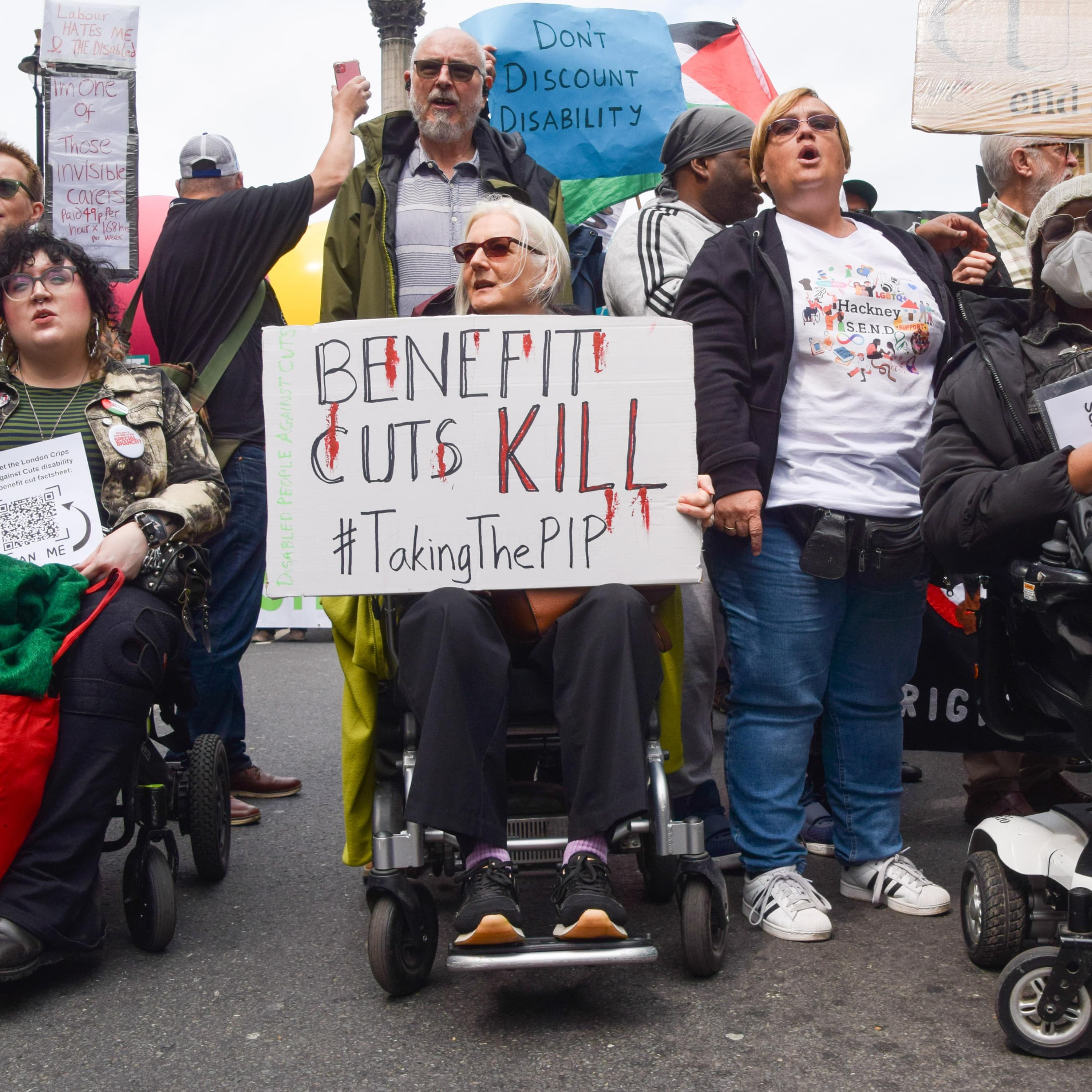
0:28It's the most controversial piece of legislation of Keir Starmer's premiership. A major overhaul of the benefits system. The facts speak for themselves. One in ten people of working age now claiming a sickness or disability benefit. 2.8 million out of work due to long-term sickness. The government says the welfare bill is out of control, largely because of a huge spike in people claiming personal independence payments. This is a significant reform package that is expected to save over£5 billion in 2029-30. This week saw a frontbench resignation, at least 120 Labour MPs publicly opposing the bill, and a promise of concessions to soften the£5 billion cuts.
1:13For the 3.7 million people who rely on PIP to pay the extra costs associated with having a disability, it's been an incredibly worrying time. This is not about taking away someone's luxuries. This is about absolute minimum standards of living for a human being. It's about having enough money to charge your electric wheelchair so you're not housebound. Guardian columnist Francis Ryan has written a book interviewing 70 well-known women across Britain about the reality of living with a disability as they navigate work, school, university and relationships. I think the book is probably the most personal thing I've ever written.
1:57I talk openly in it about the day-to-day inequalities. You know, things like not being able to visit a friend's house because none are accessible for a wheelchair. As the government comes under increasing pressure, Francis spells out what they should do instead. Yeah, I'm not someone who speaks in hyperbole, but I've got to say how devastating these cuts are going to be. From The Guardian, I'm Helen Pidd. Today in Focus, Francis Ryan on the folly of the quick fix of cutting benefits.
2:37Frances Ryan thank you very much for coming on the show I'm a really big fan of your columns and this is the first time though isn't it that we've spoken on today in focus so welcome it is I don't know how we've waited this long thank you so much for having me now well it's great to have you here and as well as writing for the Guardian you are the author of two books Crippled, Austerity and the Demonisation of Disabled People and most recently a book called Who Wants Normal? The Disabled Girl's Guide to Life. And in that book, you interview 70 women, many of them very famous about how their disabilities have affected their lives.
3:10And I was really struck by some of the statistics in the book about the sheer number of people with disabilities, particularly women, and how that figure already larges on the rise in Britain. Could you just start by explaining what's behind that rise? Yes, so women across the world are just generally more likely to have a long-term health condition or disability than men. That's long been the case. And what we've seen in the UK is that disability has increased across the board for men as well as women. So what we've ended up with is now around one in four women in the UK have some sort of disability.
3:53and young people too. I think for young women it's gone up to about one in seven now. It's a pretty big number, isn't it? There are lots of reasons for that. The last census for the first time included mental health as a disability. So that simply meant for the first time we were actually including mental health alongside physical health. But then the other big factor, of course, is simply that Britain is better than it used to be. In the last decade, it's been really tough in many ways. We've had the pandemic, NHS under-resourcing, that's led to severe waiting lists. We've had a huge deficit in mental health services and this constant squeeze on living standards.
4:39And that unfortunately led to very predictable increases in long-term health conditions and disabilities. And you write in the book how you were born with a muscle weakness and have used a wheelchair since you were very, very little. And then in Christmas 2017, so eight years ago, you caught a flu which you just couldn't shake off and which has left you with chronic fatigue. And in your latest book, you write very movingly and also kind of very entertainingly about the reality of that. And for readers of The Guardian, you know, they'll think of you as this award-winning, incredibly successful author and columnist, which is true.
5:14But I guess what they don't know and what you reveal in the book some of the barriers and trials and tribulations that you face on a daily basis. Yeah, I think it's a benefit to both sides that no one sees the reality, I think, of me typing a column in my pyjamas. I like to see an element of mystery about this. I wrote the book itself on an iPhone in bed most of the time because the zest was too natural. but you know I think I try to keep a balance between sort of buying into that idea that disabled journalists particularly women have an obligation to do those sort of confessional yeah um is this where you share all these private details in a way that let's be honest no non-disabled or male journalist is ever asked to do but at the same time not creating this kind of Instagram perfect narrative of success that doesn't include you know pain and prejudice and and broken lifts and I try to be honest about those barriers because I guess downplaying them doesn't help anyone else who also needs those barriers changed but just he doesn't have a a platform at the Guardian.
6:32Yeah no I totally understand your reticence to kind of open up your personal life for readers but it is incredibly illuminating like there's so many different anecdotes in the book there's one how you you're sort of when you're going to nightclubs at university i don't know which city this was in and that it was just in at nottingham and every time you wanted to go to this club up two flights of stairs being carried by four bouncers in your wheelchair like a pharaoh on wheels i thought was a great description and you write for anyone who's never been lifted into a building by four men this is not as erotic as it sounds yeah it's just i I think, as I say in the book, it's one of those things that seems sort of, you know, wildly dangerous, but also is just such a normal part of being disabled in Britain, or most countries, to be honest, any country on earth, that it's sort of, you almost accept it, when of course that should not be happening.
7:27But just as a way of existing in the world, of being a person, you just sort of take on board these million little inequalities every day and sort of have to stand back some time and say actually that should not be a thing that anyone has to do just to have a social life. Yeah exactly you shouldn't just be nursing one drink for hours in the pub because your wheelchair will not fit in the toilet. Yeah it is those things that you take for granted that non-disabled people should take for granted basic access to a toilet but it would It would be nice if disabled people could also take those things for granted.
8:05But unfortunately, even in 2025, we just still can't. And I wonder if you think that the stigma of disability is shifting. I mean, the fact that you managed to get this roll call of 70 women, Jamila Jamil, Emma Barnett from Radio 4, comedians, journalists, So many people have been really open and honest with you, haven't they, about their lives. Do you think that is a sign that the stigma is reducing? There's absolutely still a huge amount of shame and stigma attached to disability and long-term illness, I think. Like mainstream culture, you know, still depicts disability as being ugly and tragic and being a burden on everyone else.
8:58And that's obviously, you know, it doesn't take a psychiatrist to say that it's hugely damaging to live in. disabled people are being sent messages that how you look, how you move, how you talk is somehow wrong and should be hidden away. And there is something powerful about maybe seeing someone that you love on TV or you listen to on Spotify. And maybe you didn't know they had a disability because it wasn't visible. Or maybe you've never heard them speak about their mental health before. and for them to do so openly is not anything they owe anybody. But if they do, I think it's a really powerful thing because it can both counter stereotypes that people might have about what a disabled life looks like and also be, I guess, a sense of comfort and solidarity for people who are experiencing those things themselves.
10:00I think in the climate we're in currently, I think it really means something.
10:11Frances, you say in your book that these messages that society sends to disabled people about their worth can start very young. And it's common, you say in the book, for disabled people to feel like a zebra in an enclosure of sheep, standing out in a way that no child, particularly no teenager, ever wants to. my school you know each year I got a new lift or a ramp by the end I could almost went my way through most of it um because I was the first wheelchair user right um to go to the school I think things are getting better but there's still so many little things and big things that all add up to mean that simply getting a an education is not a guarantee still um for disabled people.
10:58I think going to school is something every British kid pretty much rightly assumes they're going to get a good shot at. But when it comes to disabled children, even though they do have the legal right to it, there are still many, many factors that mean that they are not getting the same experiences and the same life chances as other kids. There's one interviewee in your book who was told by the school that there wasn't enough money in the budget to make the building accessible and yet at the same time they found money to upgrade the stained glass windows sort of a question of priorities isn't it I think I think that is the issue I think a lot of kids with disabilities learn very early that we're just not important that it doesn't matter to a lot of people whether or not we are able to get into the room yeah I think that's that's the fundamental lesson that it's accepted as normal that people like you don't have to be here you have to fight that mentality throughout your whole life to say actually I've got a legal right to be here and I'm gonna you know advocate for myself.
12:05I mean you point out in the book that many schools are kind of obsessed with attendance and like at my school it was a big thing if you 100 % attendance then you got a free pass to the local theme park Frontierland and it really made me look back and think about those children who were missing from school quite a lot and I never gave a second thought I'm ashamed to say about any disabilities that they might have had a long-term health condition that meant they couldn't be there yeah and you shouldn't even because you were a kid but the adults should know and that's the issue isn't it that they're rewards for good luck aren't they they're rewards for good genetics for good health luck and that's part of it isn't it that disability and illness is still kind of seen as this thing if you tried hard enough you'd be able turn up to school.
12:50But falling off, if you're bedbound from long COVID, a bit of effort isn't what you need. And talk to me about the world of work. I mean, it's worth stressing the statistic that one in four people will live with a long-term health condition or disability in their lifetime. So it's far from a niche thing and it could happen to any of us any day, as well as people who were born with various challenges. With the right supports, most disabled people can work and what we're seeing I think in contrast to the news at the minute is we're not actually thinking as a society about what that support needs to be the obsession with benefits actually pushes you away from saying well actually what are the barriers discrimination bosses are much less likely to even ask you for an interview if you put you've got a disability on a cv for example um and there are so many people with disabilities who are doing those amazing things in various industries but the reality is there are more people who could be doing those things but currently are unemployed or in a job that they hate because they just haven't been given the same opportunities as non-disabled workers.
14:22And I wonder what you make of the rhetoric that we hear from the government, from the Labour Party at the moment, this obsession with working people. And there was a quote in the book that I thought was very powerful, where you say, there's a deep stigma attached to not being able to have a job. We live in a culture that equates work with identity and self-worth and where busyness is a hallmark of value and the rest is often frowned upon. Yeah, I think speaking to Guardian readers, I think a lot of disabled people who aren't able to work have been really hurt by that rhetoric. It might seem small, but if you're not able to work for health reasons, Maybe you had a job you loved and you had to give it up.
15:11Maybe you've never been able to develop the career you wanted because of health. It feels frankly awful to not only have to deal with that grief, but for them to be shamed for as if if only you tried hard enough, you'd be able to do it. It creates, as you say, a stigma around disability. it creates a stigma around the idea that you have to have a job in order to be a worthwhile member of society. Which isn't just about disabled people. You know, women with caring responsibilities, for example, you know, he's a contribution to society. But our obsession with, you know, are you paying your taxes just completely distorts all the other contributions that the people make in society.
16:04I think for disabled people that can't work, that sort of language that Labour have been using throughout this, in addition, of course, to the policies themselves, has been alienating and stigmatising in a way that really does sort of create damaging stereotypes that, frankly, were already there, but you don't need the Labour government to encourage them. And Labour has said that the current welfare bill is unsustainable and that one in every 10 working age person in Britain is now claiming at least one type of health or disability benefit and that total spending on incapacity and disability benefits for working age adults has soared by£20 billion since the pandemic.
16:50I wonder, of all of the plans that they have announced so far, what concerns you most about what you've heard so far? The number of people receiving health and disability benefits has absolutely increased in recent years for the reasons we set out at the start. But the cuts to things like universal credit that the Tories did mean that actually as a percentage of GDP, we're spending the same amount on working those benefits as we were 10 years ago. But you just don't happen to see that fact. No, you don't. so much on front pages. It's also, of course, a myth that cutting ever really saves money.
17:34It's been warned that for every£1 that is cut with these latest rounds of disability benefit cuts, it will cost local councils and the NHS about£1.50 to deal with the fallout. I've been covering this politics in general for about 15 years now. And I've seen a lot of table policies, as I'm sure we all have, and this is policy that is going to take a group of people who have already been hit by a decade of conservative austerity and it will further isolate, degrade and impoverish them. I think the fact that the government is justifying it on the basis it will get people into work when they know that the personal independence payment is not an out-of-work benefit makes the whole thing even more toxic.
18:35Because not only do we know by the government's own figures how many people this will push into devastating poverty, but they are doing it in a very generous term I use here. false pretenses. Coming up, what the government should be doing to help more disabled people back into work.
19:03Nonetheless, there does seem to be something particular that has gone wrong in the UK since the pandemic. Because if you look at other comparable sized countries, they just haven't seen the same spike in claims for disability benefits since the pandemic. So there's something that seems to have gone particularly wrong in Britain. Yeah, I think anyone would agree that Britain's population has absolutely become a more disabled and long-term ill society. The issue in this country is that politicians are increasingly framing the issue as there's too many people on benefits rather than there's too many people who are suffering long-term health conditions that they don't have to be and what steps can we do to make our population healthier again rather than this fixation on how much are they costing us and it seems at least at the time of recording that an increasing number of labour mps agree with you the labour whip vicky foxcroft formerly Shadow Minister for Disabilities, resigned this week.
20:10She wrote a letter to Keir Starmer resigning in which she said, I absolutely understand the need to address the ever-increasing welfare bill in these difficult economic times, but I've always believed this could and should be done by supporting more disabled people into work. I do not believe the cuts to personal independence payment and the health element of universal credit should be part of the solution. What do you think about how this is playing out? I think what an incredible mess to have got to this point. You know, this has been in the news, so to speak, for a good year now. And we talk about it, of course, as journalists, as headlines and MP registrations.
20:48But actually, you know, you have to remember, of course, that disabled and long-term sick people have been put through the most incredible distress having to watch this play out. Because this is the money they need in order to live. And to see it, are you going to have it? are you going to get taken away, debated for literally the best part of a year. I think it's been absolutely disgusting. But the fact that Labour, as a Labour government, wanted to do this in the first place, I think would stay in the minds of a lot of people for a very long time. I just wanted to end really by asking you about how it feels to be one of Vogue's 25 women defining Britain in 2025.
21:32Congratulations. So you've been lauded alongside the likes of Amal Clooney, Keira Knightley, Rachel Reeves. How does it feel? You know, I've always felt that Amal and I have had a lot in cons. No, I'm really touched, of course, it is lovely and surreal. You know, I'm not going to claim that a glossy mag is going to fix disability inequality. Representation is essentially trickle-down equality. you know, often it kind of obscures the real aims, which is improve material conditions for ordinary people. But I do think actually that there is something powerful in seeing disabled women in mainstream culture.
22:14And I guess disability getting a place at the table, which it still rarely does, which is in many ways why I wrote Who Wants Normal in the first place to say that disabled women are talented and joyful and are very much unapologetically here. And I think that's the sentiment we need voicing probably now more than ever. Definitely. Francis, thank you so much. Thanks so much for having me. That was Francis Ryan. You can read all of her columns at theguardian.com and I'd really recommend her new book. It's called Who Wants to Be Normal? The Disabled Girl's Guide to Life. And that is all for today.
22:58This episode was produced by Lucy Hoff and Jo Meek and was presented by me, Helen Pidd. Sound design was by Tony Onuchuku and the executive producer was Huma Khalili. We'll be back on Monday.
23:21This is The Guardian.