
 Ask ChatGPT


 Today in Focus
28 Jan 2026 · 12m · 5 chapters
Written by AI. May contain mistakes.
Discussion about the significance and context of Starmer's visit to China.
“He's determined to reset that trade relationship.”
Exploration of the security measures taken by Starmer's delegation during the trip.
“Everyone's clinging to this like notepads and pens version of a no tech trip to China, which seems quite an odd thing to do on a trip like this.”
Insight into Starmer's diplomatic style and what he aims to achieve during talks with Xi.
“of the endless saga of this Chinese super embassy being built in London or not or whatever.”
Analysis of the complexities and challenges Starmer may face while addressing sensitive topics with Xi.
“And how much of this is a tick box exercise?”
Discussion on what China hopes to gain from Starmer's visit and the significance of political relationships.
“had to sort of row back and say, look, we were never planning an FTA with Beijing, obviously has been noticed inside Downing Street.”

Get the gist, explore an idea or ask about something said.
 Claude
On Today in Focus, what are the key points of this episode?
Searching your listeningAutomatic transcript. May contain errors.
0:00This is The Guardian.
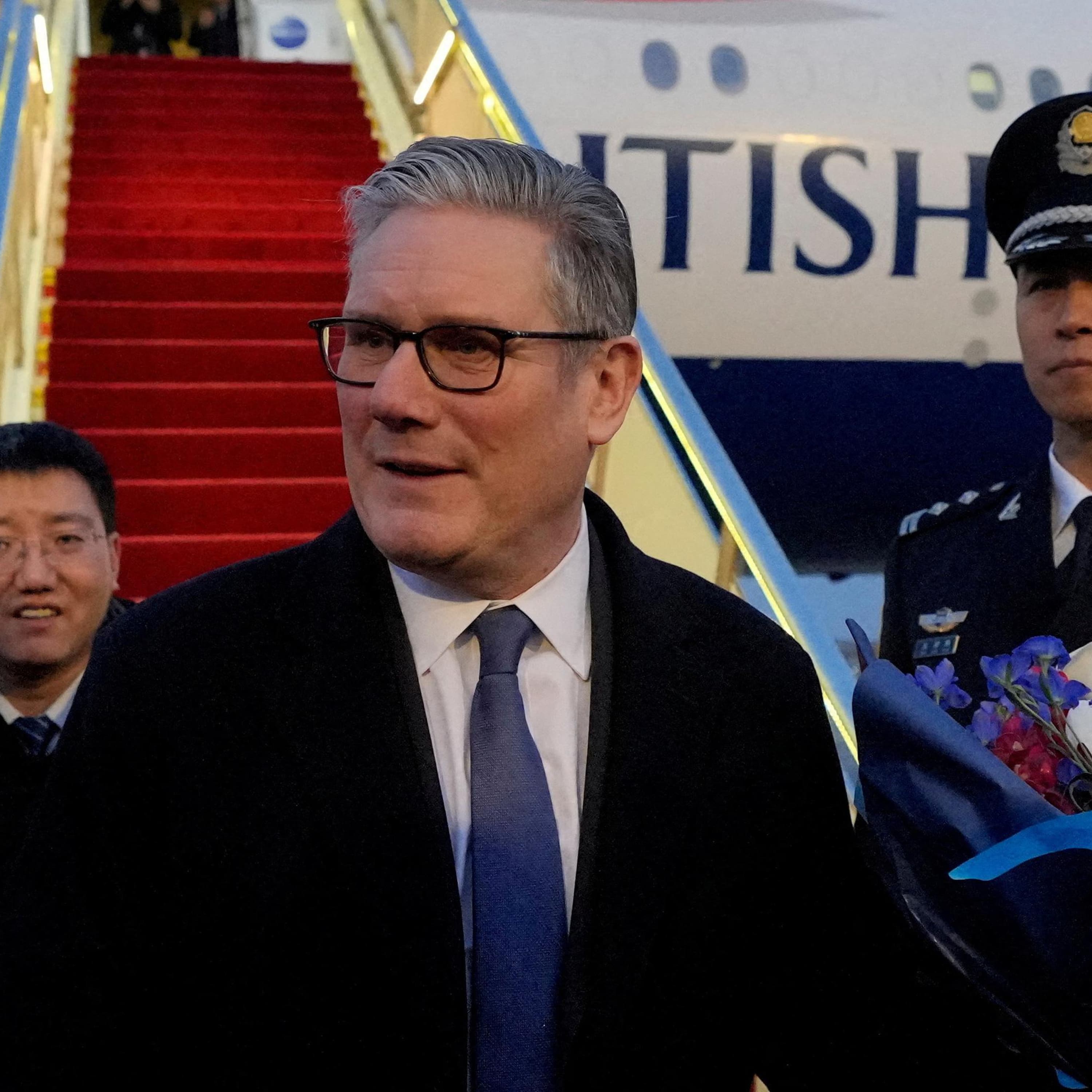
0:09China is the big one and it's a trip that all the political editors have come on for a reason. Eight days is a long time in politics. Try eight years, eight years since a British Prime Minister stepped on Chinese soil. I've got a burner laptop, a burner phone, I've got a VPN network. China has a long record of spying in the UK. Of course we will have to manage our differences. In terms of how much influence he can have, look, let's not kid ourselves. Economically, China is the second biggest economy in the world. Keir Starmer is the first UK Prime Minister to visit Beijing in eight years. He's determined to reset that trade relationship.
0:47But at what cost? From The Guardian's today focus, this is The Latest with me, Nosy Nikbal. joining me is the guardians political editor and host of politics weekly pippa carrera pippa it's great to have you thank you so much for joining us from beijing now you've been on your fair share of trips with many prime ministers over the years but this trip is quite unique it comes at a particular time for britain it's the first trip of its kind in eight years so i wonder if you could tell me a bit about the mood on the plane coming over and more specifically for Keir Starmer, who's obviously not having the easiest time at home.
1:27How did he seem to you? So he was pretty upbeat, actually. I mean, Keir Starmer, despite all his troubles at home, is most comfortable in the world stage. It's where he seems to be doing best, really. I think most people agree that he's had a pretty successful record on dealing with Ukraine, on building relationships with European partners after years of distrust over Brexit. And even though it's a more complicated relationship, I think most people recognise that his attempts to build one, to have a close relationship with Donald Trump, is probably the right thing to do in the national interest, even if they don't particularly like the US president themselves.
2:04But China is the big one. And it's a trip that all the political editors have come on for a reason, partly because it is, as you say, the first time in eight years a British prime minister has come here. And British prime ministers have had to straddle these two horses between the economic powerhouse that is China and the necessity of developing and deepening economic ties, particularly if we want to go for growth back home, but also keeping an eye on the national security aspect as well. So let's talk about that for a moment, Pippa, because I've read reports that this trip is quite unusual in the sense that the entire delegation is there on burner phones, that Starmer's own team has left their laptops, their iPads at home.
2:45Everyone's clinging to this like notepads and pens version of a no tech trip to China, which seems quite an odd thing to do on a trip like this. But also it seems like something they've had to do to fight against this expectation that the Chinese will spy or hack into their emails and what have you. Yeah, I mean, I think the reality is, is that if the Chinese wanted to be listening into this call with us right now, they would be, even though I've got a burner laptop, a burner phone, I've got a VPN network up and running. There's all sorts of stories from previous trips about people coming back to their hotel rooms and finding cameras.
3:21There was a rumour going around that when Theresa May was last here, she was advised to get dressed under the covers in case there were cameras in her room. Blimey. So, but all of this really is less about sort of, you know, us making jokes about who's watching us while we're making podcasts and doing videos down the line back home to London and more about the fact that China has a long record of spying in the UK. And we have had attempts to infiltrate Parliament. We have attempts to secure access to MPs and peers. China obviously has invested heavily in national infrastructure. And there has been stories in recent months about previous attempts at them trying to get into government databases as well.
4:01So the government is right to be cautious. China has some of the best tech in the world. and understandably Downing Street and all of our companies, including Guardian, would rather we left any sort of a window into our world back home at home. As you said, that brings quite attention to the trip, right? And I wonder amidst that backdrop of, you know, the allegations of spying, of the endless saga of this Chinese super embassy being built in London or not or whatever. How will Starmer approach these talks and what is it you think he'll hope to achieve? So Starmer's approach to all of these things is to be sort of pragmatic.
4:40And he also is quite a sort of a cautious, careful, polite person, which actually fits the Chinese style of diplomacy quite well. I mean, don't expect any shouting matches. Don't expect President Xi to come out and post rude messages about him or about the UK on social media afterwards. There's a certain protocol. And the big day here is Thursday, tomorrow, when Starmer is going to meet President Xi and is going to have a banquet with him and they will discuss all of these issues. And he's been clear to us, although he didn't want to get into very much detail about what exactly he was going to raise.
5:10We did speak to the prime minister on the plane and it was clear that he was going to ask all the questions of Xi that he felt needed to be asked. That included things like human rights record, China's human rights record, Jimmy Lai, the Hong Kong British dissident who's currently in prison in Hong Kong, the fate of the Uyghurs, what's going on with Taiwan, as well as the national security issues which are affecting us back home, the collapsed China spying case, the embassy that you mentioned. Of course, we've grinlit that embassy. We also want our embassy here to be rebuilt. So maybe there's something coming on that.
5:44So Keir Starmer, as well as all the economic backdrop to it all, will want to raise those difficult issues and will obviously have to take quite a careful approach to doing so. Peppa, of course, you've mentioned that he's vowed to bring up these issues while he was on the plane talking to a bunch of reporters. But of course, these are uncomfortable elephants in the room when you're actually talking to Xi Jinping, I'm sure, when you're asking him about an apparent genocide against the Uyghurs, when you're asking about Jimmy Lai. And, you know, as you know, there was a point in time where the British were funding grassroots human rights lawyers in China, something that is long gone now.
6:17How much leverage do you think he really has in those conversations? And how much of this is a tick box exercise? Well, I think you've got to try, right? And there is a historical link, not least with Hong Kong. So the case of Jimmy Lai is probably one that he will feel that he has a responsibility to raise. He is, of course, a former human rights lawyer himself and feels very strongly about these things. So I don't doubt that he has a conviction to raise these issues and to try diplomatically to get a response from the Chinese to put them on the spot over it. In terms of how much influence he can have, look, let's not kid ourselves.
6:54Economically, China is the second biggest economy in the world. It's our third biggest trading partner. We don't even come into the top 10 of China's trading partners. But there is a moment here beyond the economics where Britain and other Western countries have perhaps a possibility of getting more of a hearing. And that is because of Donald Trump. Now, Donald Trump has proven himself or is proving himself to be an unreliable partner for many of these, as Mark Carney put it the other day, middle powers, these Western nations that previously would have kind of looked to the states for leadership.
7:25And that sort of uncertainty now that is emanating from the states, not just in terms of geopolitics, but also economically, it creates an opportunity for China politically to have relationships and to build relationships and build dialogues with countries that might not otherwise have viewed them as being a sort of a stable opportunity. and so I think that China will be looking at Britain knowing how close that Keir Starmer is to Donald Trump, knowing about the special relationship that we all bang on about with the states and also our proximity with the European Union which is one of the world's big trading blocs and think actually this is a relationship that could be quite useful for me.
8:06How do you think it is then that Starmer will navigate this without, for want of a better word, just without annoying the Trump administration? Well I think at the back of everybody's minds in Downing Street is what happened when Mark Carney, the Canadian prime minister, came over to Beijing recently. And there was talk about a free trade deal between Canada and China. And Donald Trump retaliated in a very extreme way, I mean, unsurprisingly, probably for him. But he was really angry about it. And he said, well, we'll impose 100 % tariffs on Canada. Obviously, it was the state's closest trading partner geographically, to which Carney then had to sort of row back and say, look, we were never planning an FTA with Beijing, obviously has been noticed inside Downing Street.
8:50Storm has arrived with a trade delegation of about 50 or 60 business leaders and cultural leaders. There may well be sort of, you know, minor breakthroughs, if you like, a few, say a few hundred million, it's a huge amount of money, but we won't see a full blown deal that is likely to anger Donald Trump. And what Downing Street repeatedly points out to us is that Trump and Xi have met and Trump himself is due here in Beijing in April. So it's not as though he himself doesn't also understand the imperative to have a good, strong trading relationship with China. For all the threats, for all the bluster, for all the verbal attacks, he gets the reality.
9:29And what do you think is all that considered that China stands to gain from this trip? What's it for if it's not a big trading deal moment for them? China, as I say, probably spies an opportunity, spots an opportunity to deepen the relationship, the political relationship with a country that ordinarily it would park very firmly in America's sphere of influence. And I actually think the personal relations do matter when it comes to international politics. We've just come from a dinner in a restaurant where Keir Starmer popped in and had a chat with us afterwards. And he told us that he was giving President Xi a gift at the talks tomorrow.
10:05Now, you will probably know that Keir Starmer is a massive Arsenal fan. Well, President Xi, I didn't know this, is a massive Manchester United fan. And last week, of course, Manchester United beat Arsenal. Keir Starmer has got his hands on the ball from that match, and he's giving it to President Xi as a personal gift, which will probably mean quite a lot to him as a football fan. So I do think that personal relationships matter across the sphere. You never know when you're going to have to pick up the phone to somebody and ask them, for example, to put pressure on Vladimir Putin or for advice on what's happening with Narendra Modi in India.
10:40And China is one of the biggest players out there. So it would definitely benefit Starmer having a personal relationship with him. And to a much lesser extent, but still evident, it will benefit presidency in China to have a little foothold in the Western sphere of influence, somebody he can call up on the phone and have a straight conversation with. Look forward to seeing your reporting over the coming days, Pippa. Thank you so much for your time. Hope you get to have some rest now. Definitely off to bed. Thanks for having me. That's it for today. My huge thanks again to Pippa Carrera, The Guardian's political editor and host of Politics Weekly.
11:16Thanks for listening to this episode of The Latest, the new evening edition of Today in Focus. Of course, Today in Focus will be back with you as usual tomorrow morning and we'll be back tomorrow night. This episode was presented by me, Noshi Nikbal, the producer was Bryony Moore, The lead producers are Elizabeth Cassin and Zoe Hitch.


