
 Ask ChatGPT



Germany’s former spy chief August Hanning is arrested in Nordwalde over alleged espionage and treason, including selling thousands of classified BND documents to foreign powers. The episode frames it as a major blow to trust in Germany’s foreign intelligence and amid heightened fears of Russian sabotage and infiltration.
Kate Connolly, The Guardian Berlin correspondent, who reports on the arrest and discusses BND’s role and reforms.
Hanning ran the BND (1998–2005), later criticized it as “toothless,” and allegedly monetized access after retirement via a consulting business. Prosecutors allege documents were leaked by former colleague Manfred D (chief of staff), who stayed at BND and provided files from 2010 onward.
alleged BND spying on German journalists; lack of CCTV during the 2016 Berlin Christmas market attack; Hanning’s alleged links to China, Russia, and Azerbaijan; alleged involvement in a Block family custody/abduction case; and reforms to expand BND covert operations abroad.
Written by AI. May contain mistakes.
Details surrounding the arrest of Germany's former spy chief August Hanning.
“Today, the fall of Germany's ex-spymaster.”
Discussion on the role and reputation of Germany's foreign intelligence service, the BND.
“Today in Focus, can Germany's intelligence services be trusted?”
Exploration of August Hanning's activities after retirement, including his consulting business.
“The last bit of information to be public was that two-thirds of his pension had been frozen as a result of that.”
Details of the allegations against Hanning regarding classified documents and foreign connections.
“Tell me about that raid and how it led to the arrest of Hanning's alleged accomplice, a guy called Manfred D.”
Discusses the ramifications of the arrest of a high-ranking intelligence official in Germany.
“Okay, so you can see why the arrest has caused such consternation.”
Examines the potential exploitation of political scandals by the AFD and broader security issues in Germany.
“We understand fascism to be a response to crises, and it always is.”
Covers upcoming reforms in the German intelligence community and the associated concerns.
“If somebody like Hanning has been getting access to the most sensitive information up until a year or so ago.”
Discusses how the AFD may leverage political scandals to their advantage.
“what top civil servants are legally allowed to do once they have retired and left office.”

Get the gist, explore an idea or ask about something said.
 Claude
On Today in Focus, what are the key points of this episode?
Searching your listeningAutomatic transcript. May contain errors.
0:00This is The Guardian.
0:08Today, the fall of Germany's ex-spymaster.
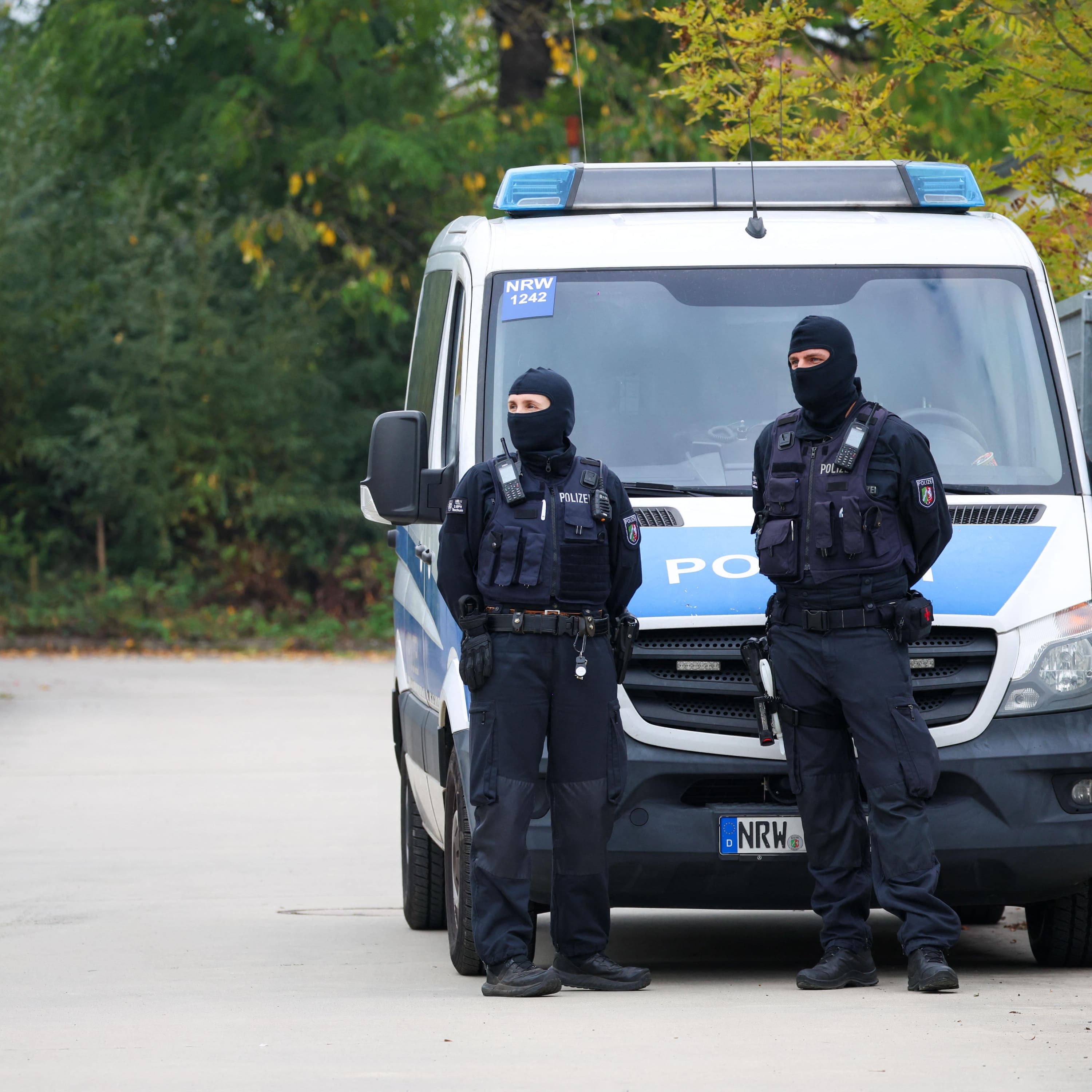
0:20It was just before nine last Tuesday morning when police swarmed the red brick house in Nordwalde, close to the Dutch border in Western Germany. It looked like a terror operation, with masked officers entering the property en masse. But when they emerged with their suspects, he wasn't even handcuffed. Perhaps it was his age, or maybe his reputation, because the white-haired 80-year-old being taken into custody was August Hanning, the former head of Germany's spy agency, the BND.
0:59The arrest may have been genteel, but his alleged crimes could barely be more serious. Espionage, treason, selling thousands of classified documents to foreign powers.
1:10Kate Connolly: The allegations strike at the heart of Germany's intelligence community and come as officials warn of an increasingly aggressive campaign of foreign espionage and sabotage. The Guardian's Berlin correspondent Kate Connolly watched with the rest of Germany as the drama unfolded. It was pretty seismic. I think we'd have to go back to the Cold War and the arrest of an East German spy who infiltrated the government of Willy Brandt to have anything on the scale that we're seeing now. And coming at a time when it does of massive pressure in global affairs, sabotage attacks by Russia on Germany, This adds to the weight and the seriousness of this and, yeah, can't be underestimated, the ripple effects that it's going to have on German intelligence for years to come.
2:02From The Guardian, I'm Helen Pitt. Today in Focus, can Germany's intelligence services be trusted?
2:15Kate Connolly, thanks for being here. Now I always love a spy story and this is a particularly good one. Start by telling me if you would about the Bundesnachrichtendienst, the BND, which is Germany's foreign intelligence service. How would you describe them? Where do they sit on the spectrum of foreign intelligence services? Are they like the CIA or Mossad doing audacious kidnaps or are they a bit more low-key? I would call them low-key not least because of Germany's history so surveillance being at the heart of you know whether it's the Nazi regime or the or the communist regime so they had to sort of prove that they were very different from that they were pure that they were there in essence to keep Germany safe but definitely not spying on its citizens.
3:00And when August Hanning was in charge of the BND so between 1998 and 2005 his whole tenure must have been completely overshadowed by 9-11 right which had a German connection didn't it? That's right I mean when 9-11 happened everybody thought okay this is nothing to do with Germany all the focus is going to be on the US and then it quickly turned out that there was this cell that had been operating in Hamburg some students there who had been incredibly involved in the in the attacks and the planning of the attacks so then immediately there was a focus on Germany. And August Hanning happened to be head of the agency at that time.
3:38And so suddenly it was, you know, full throttle forward and he was just in the limelight and having to sort of deal with this and answer lots of questions to Washington and also reassure Germans who suddenly found themselves thrust into the centre of this global drama.
4:00I think Hanning, after he left the Bundesnational Rating Deeds, became quite an acerbic critic of the agency. He called it a vegetarian among carnivores and was always suggesting that it just wasn't quite up to the job. What was his problem with the BND? His feeling was, and I think that's something that a lot of political figures, security experts would back up was the feeling that it was a little bit toothless, that it didn't have enough powers to do the things that a spy agency traditionally would do. I guess the idea of a vegetarian, sort of somebody who doesn't need their teeth because they don't have to bite into the meat, that's the literal picture we're, you know, trying to portray here.
4:38I mean, even like 10, 20 years ago, you could be in London and you could like not move your head and you could count 15 CCTV cameras. If you're in Berlin, there were very, very, very few CCTV cameras. So when there was the 2016 attack on the Christmas market in which Laurie bombed its way into the centre of the market, there was no CCTV footage of that, even though it was central Berlin. So I just used that as an example to show you that it's so unacceptable in German society to use these methods of surveillance. And yet in 2005, which was the year that Hanning left the BND, he publicly admitted that the BND had systematically spied on German journalists.
5:21He said he hadn't been aware of it at the time. And then he left his post and then he served for a while, didn't he, as the state secretary at Germany's interior ministry until 2009. And then he retired from the public sector, apparently on a pretty generous pension of 11 ,000 euros a month. But he didn't just put his feet up there and, I don't know, enjoy the garden, the grandchildren, whatever. What did he do next? Together with his wife, Root, he set up a consulting agency, Hanning Consult. Consultancy is a nebulous term because I think he was just able to say, I am a consultant and I was the head of the top intelligence agency in Germany.
5:55And then people just couldn't drool and open their wallets. And that's effectively what a lot of people did, we understand. And he would often and go for the highest takers. He had this fat book of contacts, and he was able to open that and exploit the fact that he had them. There were connections to China. I think he was friends with China's military attaché to Berlin, later opened up a German-China so-called ecological village in China with this man. So lots of business ventures. He was linked to G3, which is a British security consulting agency. Yeah, I think he was overseeing their work involving Russia, the former Soviet republics, according to Corrective, the German out.
6:40Yeah, I think even he was like their Russia expert, you know. Okay, so we had close relations with the Chinese and with the Russians. And I think in 2019, he was invited as a guest of honour to a gathering that was organised by Russia's Security Council, which was officials and experts from Arctic Council countries. Yeah. And I mean, on top of this, he also wrote a cookbook with his wife, which they called Topf Secret. Now, Topf Secret, but Topf is the German word for pot or saucepan. So a play on that word. He lived what would seem a reasonably modest life, but had his finger in all sorts of pies that included, for example, working, as we understand, for a Russian oligarch who had set up a bank in Latvia, investing a lot of money in that, that all went pear-shaped.
7:28Yeah, that was PNB Banker, wasn't it? The name of the bank, yeah. That's right. And he was said to be, you know, one of the ones who was to blame for it. As we understand, as a result of his involvement in this scandalous banking project, he had a large chunk of his pension was frozen. The last bit of information to be public was that two-thirds of his pension had been frozen as a result of that. Yeah, and I think there was a letter that was on Earth this week by the German media, which suggested that he had written to the former Chancellor Olaf Scholz back in 2022, claiming that that whole debacle with the Latvian Bank had actually cost him millions.
8:06So when we come on to talk about his potential motivation for these charges, which of course he denies, then perhaps money could be one of the factors there. But tell us, who else was he working for in retirement? Any other clients that raised eyebrows? Well, most prominently, we believe also they were family friends, the Block family. So this is a family that runs a steakhouse dynasty. So they have, on every German high street, you will see a Block restaurant.
8:43You can get a very nice steak there and a red wine. and it's got this sort of familiar air about it. It's a bit cut above the rest of other maybe chain restaurants. It's a bit like a boots on the high street in the UK. No high street is complete without one. We understand that the heiress to the Bloch dynasty, Christina Bloch, who's 53, she approached him at some point to ask for his help in a custody battle that she had with her husband over two of their joint children who had been taken by her ex-husband, by their father, to Denmark, where he is living, and wanted Hanning's help to allegedly to abduct them and bring them back to Germany.
9:30She denies this. August Hanning, who was accused of helping her to organise this abduction, he also denies involvement. Right, but hang on a minute. How would August Hanning supposedly be able to help Christiane Bloch take the children from Denmark back to Germany? Due to his connection to the security services, and we also believe due to his connection in particular to the Israeli security services, who are the ones who are alleged to have helped in this abduction of these children. Blimey. There is tape recording of the children as they were being abducted because it was thought not unlikely that they might be kidnapped.
10:12And so one of the children had a sort of device on him. Oh, right, like a panic alarm sort of thing. A bit like a panic alarm. So you press the button and the recording device goes on. So we hear these children very distressed as they are seized on. and their father was quite roughly treated by these armed men at a New Year celebration in the port town that they lived in, at the port, watching fireworks. So we hear them saying, I don't want to go to my mother, don't hurt my father, and sounding extremely distressed. It's very distressing to hear it.
10:52And what has Christina Block had to say about all of this and then the connection with August Hanning. She's told some story to the court about the fact that her mother, who is now deceased, had possibly plotted something of this sort, but she says she has nothing to do with it. And the reason why we know so much about this and the detail of the case is because it's in court right now in Hamburg. And because Hanning was named in connection with the abduction, in September last year, prosecutors raided his house when they were preparing that Christiane Block case. Tell me about that raid and how it led to the arrest of Hanning's alleged accomplice, a guy called Manfred D.
11:33He said that it was like a robbery. He felt like his house was turned upside down. There were 23 police officers. When they went in there looking for evidence to connect him to the block abduction, they were coming across all sorts of things that suggested that these were classified documents or documents that he had possibly unlawfully received. So where did he get these documents from, which were BND documents? So that takes us neatly then to a former colleague of his, Manfred Day. So Manfred Day was his former office head. Like a chief of staff sort of thing. Like a chief of staff. Yeah, exactly.
12:09Was involved in the day-to-day running of the office and everything around about it. And when Hanning went into retirement, Manfred Day stayed at the agency and was over a long period of time. He was providing Hanning with these documents from the BND, which were meant for the highest echelons of the German government. They were not meant for Hanning, who obviously no longer worked for the BND. But Manfred D carried on working there right up to last year, didn't he? And worked for three successive BND chiefs. And prosecutors allege that he was leaking classified documents to Hanning from 2010 onwards.
12:45So basically from ever since Hanning left the government. And both the men deny this, of course. But what exactly were those documents that he was allegedly being leaked? Were they highly secretive intelligence files that were essentially only for the eyes of the Chancellor, maybe the Chancellor's top team? Yeah, that's as we understand it. Hanning was, as we understand it, paying Manfred D and then obviously monetising those documents, as we understand in his consulting business, proffering them to people who would come to him as prospective clients, wanting to see what the German government was thinking about particular governments, particular countries.
13:27Okay, and again we should stress that these are just allegations at this point. Hanning's lawyer has admitted that his client did have the classified documents but he has denied paying for them or passing them to foreign powers. But do we have any idea which foreign countries he's alleged to have given the files to. We are, to a large extent, speculating about what was in them because we do not know. But we do know that particular countries and governments have been connected to Hanning, including China, including Russia, but first and foremost, Azerbaijan, whose government was forced last week to deny that they had had anything to do with him.
14:06Okay, so you can see why the arrest has caused such consternation. Yeah, if you consider that he was on the highest level of German intelligence, he was then in the interior ministry when he worked under the interior minister, Wolfgang Schäuble, was the highest ranking intelligence person. It hardly gets much, you know, much, much more serious than that when he could bend the ear, even up until his arrest with the now head of the BND, of the chancellor of various people. You know, this is somebody who was very, even in his retirement, very involved in every corner of German politics and security thinking.
14:49And also, you know, poses the question, how was it possible that a top civil servant allegedly was able to monetize his contacts and his access to information, despite the fact that he was retired on a really fat pension.
15:10Coming up, how might the AFD, Germany's far-right party, exploit this scandal?
15:23We understand fascism to be a response to crises, and it always is. It always emerges in moments of systemic crisis. Are we really living through end times fascism? Naomi Klein and Astrid Taylor think so. And they can see it coming for them and the rest of us.
15:40Kate Connolly: The fact that you can have a president who says, well, maybe I have to annihilate Iran. But you also have tech executives saying, yeah, there's a 25 % chance we're going to wipe out humanity. Yet they haven't given up hope of a fight back. It suddenly felt like instead of racing to keep up with all of the terrible things, were racing to keep up with their resistance. So how dangerous is Trump and his coalition of billionaires, evangelicals and MAGA diehards? This is Radical Thinking, a new series from The Guardian with me, Adit Chakroti. Out now in your Politics Weekly feeds.
16:19This is all happening at a very precarious time for Germany and German national security. It was only in August that a drone carrying explosives was found at Leipzig airport, and that could have been a massive catastrophe.
16:30Kate Connolly: ...loaded with explosives found near a plane at an airport used by the US and our allies to help Ukraine. Tonight, authorities in Germany calling this a serious security-related incident, warning of a potential attack scenario. Tonight, you'll see the image... A large number of people could have been killed in an explosion. It was narrowly averted, and Berlin has essentially pointed the finger at Moscow, saying that the drone was sent by Russia. So people are already very jittery about national security. The timing of this is incredibly critical. I mean, we've got evidence of Russian sabotage on German infrastructure, of espionage at the highest level, of Russians infiltrating the Bundestag as spies.
17:11Ilona W. On the face of it, she promoted international friendship. In truth, say prosecutors, the German-Ukrainian lobbyist is a Kremlin spy. We've also had murders committed on German soil, carried out with the oversight of the Kremlin. A Chechen asylum seeker was shot dead in broad daylight in a park in Berlin. A suspect was quickly identified and arrested. His passport showed him to be a Russian citizen. Russia being, let's say, enemy number one in this, but also we've got fallout over the Iran crisis, and a lot of fears about what they might be perpetrating on German soil as well. We have the German intelligence and the British intelligence working incredibly closely together because they're dealing with very, very similar issues.
17:58Andy Burnham was here last week. We are announcing today collaboration on a number of levels, particularly in relation to defence and security, a new partnership. He met with Friedrich Merz, who's obviously, we'd call him beleaguered right now because he's under a lot of pressure. And I think he was quite keen to sort of get a bit of the burn and polish. They did talk a lot about intelligence. They talked about the threat posed by Russia. And we understand since the visit, they talked about the fear that Russia was trying to manipulate elections, whether it's the Brexit referendum or whether it was the recent election in which the far-right populist pro-Kremlin AFD also did very well.
18:46Burnham said that Matt had shared with him that the AFD was a big worry. And Burnham said, you know, yes, I appreciate that. So there was a lot of mutual understanding. But also from a German perspective, they're asking how on earth can we now expect that our foreign counterparts are going to trust us. I think it's less of a concern probably for, say, the British or the Americans, because they have their own breaches. Yes, but at the same time, if you're in MI6, or if you are in the CIA, you might think twice before sharing some very, very sensitive intelligence with the BND. If somebody like Hanning has been getting access to the most sensitive information up until a year or so ago.
19:32Absolutely, yeah. No, you cannot downplay the weaknesses in the system that Hanning has exposed.
19:45And given the severity of these threats, what steps have been taken to kind of beef up the secret services in Germany? Well, we have got a big raft of reforms that are coming through, which are supposed to make it easier for the BND to do its job. And there's some massive thick wad of legislation due to go through the Bundestag. So 730 pages, which would reform the BND, enable it to be much more active, in particular to have covert operations abroad, which has not been something that it has been able to do up until now. And that is all due to go through Parliament, has the blessing of a lot of the MPs.
20:29A lot of people are very sceptical, again, you know, alluding to this past of Germany and saying this could be abused and what would happen, you know, for example, if the far right AFD came into power and was able to, due to its close ties to the Kremlin could pass this information on, which has been one of the big debates of recent times. And is there a fear now that this legislation may not pass because lawmakers in the Bundestag might be thinking, can we really trust this agency if it's so leaky? I don't think there's room or time or space in the current environment for that legislation not to pass.
21:08It could be that tweaks are made to it. I think what is more likely is that there'll be a tightening up of the law governing what top civil servants are legally allowed to do once they have retired and left office. That's probably the most obvious thing that you could do to tighten up. And you've mentioned the AFD a few times. They've, as you've said, recently won the election in Saxon-Hanheide and we made an episode about that. But is there any evidence that they are trying to weaponise this Hanning scandal and the BND scandal? Everything is weaponised. they would probably look to weaponise the weather if they could.
21:46So, I mean, the Hanning thing for them is like they just say this is just an indication of this powerful elite that is grabbing everything and, you know, feathering its own nest and that type of thing. It just helps them to reinforce that image that they're already quite good at spreading. Yeah, so yet another headache for poor old Friedrich Merz. Kate, thank you so much.
22:11and that is all for today this episode was produced by sasca collette eleanor biggs and claudia efemini and presented by me helen pidd sound design was by rudy zagadlow and the executive producer was hummer khalili we'll be back in your feeds this afternoon with the latest
22:31this is the guardian
22:38Thank you.


