 Ask ChatGPT


How Democrats should respond to voter backlash against AI while still supporting AI-driven growth; whether AI will replace economists and how policymakers should manage AI’s safety and job impacts; plus near-term affordability issues (health care, tariffs, energy permitting) and fiscal tradeoffs.
Jason Furman, Harvard professor; former chair of President Obama’s Council of Economic Advisers; creator of econvitals.org (free macroeconomic tracking, simulations, Taylor rule, inequality trends; some emails written by LLMs).
Voters’ AI concerns are broad (jobs, cost of living); data-center slowdown is a distraction—if profitable, they’ll be built. Policy priorities: federal safety/transparency for AI deployment; “economic security” via work-centered reforms (tax credits, job training, community colleges, more vocational education). AI will likely transform economic policymaking and could reduce demand for junior PhD economists, but humans still matter for trust and interpersonal policy work.
Furman’s econvitals built from his CEA workflow (500,000+ lines “vibe coded”); his AI experiments simulating policy responses (financial crisis, COVID, Ukraine). Tariffs: likely to persist ~2 years due to revenue and politics; Canada tariffs singled out as especially “stupid.”
Written by AI. May contain mistakes.
Discussing the implications of midterm elections on AI and economic policies.
“We're recording this on Wednesday, the 11th of November.”
Jason Furman shares insights on how AI might transform economic policymaking.
“Well, Jason Furman, I know, will be someone that many of those Democrats will be turning to for advice on this.”
Exploration of how Democrats can address economic concerns effectively.
“Can we spend a few minutes on the midterms AI, as I mentioned, but also the sort of broader cost of living concerns were obviously a massive factor.”
Discussing the implications of tariffs and their impact on voters.
“Ultimately, the best solutions are on the supply side, but those tend to be relatively small.”
Analyzing the challenges of raising revenue and its political ramifications.
“But the other ones, we haven't heard a real alternative, at least in terms of those revenues.”
Discussing how political actions may influence mortgage rates and economic stability.
“I mean, I can't think of a single broad agreement between the two parties on anything that would reduce the deficit, raise taxes or cut spending.”
Exploring the lack of bipartisan agreement on reducing the deficit.
“But there's a number of items where you have not consensus, but some broad agreement about spending more, cutting back the tariffs.”
How AI concerns are becoming prominent in the political landscape.
“In some ways, the debt has been rising less than we thought as a share of the economy of the last couple of years because the economy itself has been inflating itself up.”
The need for a regulatory framework to manage AI's risks and economic impacts.
“It wasn't the main thing people were talking about.”
Discussing how AI is reshaping work and job training.
“and tax high incomes and incomes more broadly should be a part of that.”
Overview of the Econ Vitals tool for macroeconomic tracking and analysis.
“of policy conferences where economists sort of say, oh, there's still plenty of demand for macroeconomic analysis and thinking around the impact of AI, and they sort of joke about it.”
The creation process behind the Econ Vitals and its intended impact.
“Turned out to be a little bit harder than I thought, but I don't really regret it.”
The implications of AI on economic analysis and the workforce.
“And then I wonder at this old place I used to run, the Council of Economic Advisors, why two years from now you'd need to hire a junior staffer.”
Addressing the accuracy and transparency of AI-generated emails and reports.
“So first of all, it's really important to me to be transparent.”
Reflecting on the balance of AI's capabilities and the need for human economists.
“rounded it to two digits and then to one digit.”
Discussion on the efficiency and cost-effectiveness of AI models in comparison to traditional methods.
“But if anything, I might be on the verge of canceling one of my accounts.”
Exploration of how AI might impact the role of economists and job dynamics in the future.
“And that's, I think, the quandary that they're going to face going forward.”
Examining the challenges of job training and the economic implications of AI on employment.
“And some of my being unsure is less about the economic data and economic history and more about the vibes and maybe making the mistake that this time actually could be different.”
Guidance for students on navigating the job market and leveraging AI skills effectively.
“I'm sure many of your current students wouldn't mind having your old CEA job at some point, being the chief economic advisor to the president.”

Get the gist, explore an idea or ask about something said.
 Claude
On Stephanomics, what are the key points of this episode?
Searching your listeningAutomatic transcript. May contain errors.
0:00When you're a business owner interested in expanding to new markets, there's a lot to consider and countless questions to answer before making the call. The most important one being, are you ready? That's where ChachiPT comes in. Give it a goal, add your files, and ask chat to help you map out different scenarios for the future of your business. So when growth is on the table, you've got an expansion plan ready to implement. Get started at ChachiPT.com. For big business, AI opened up a world of promise, but that world of promise turned into a world of pain. Cost spiraling, data trapped, security and governance risks multiplying, and ROI out of reach.
0:38That's why enterprises turned to Boomi to connect data, apps, and AI, helping them operate securely, efficiently, and at scale. Boomi turns a world of AI pain into a world of AI gain. As Boomi says, we got you. Head to boomi.com. That's B-O-O-M-I dot com.
1:23The Chase Mobile app is available for select mobile devices. Message and data rates may apply. JPMorgan Chase Bank, N.A. Member FDIC. Copyright 2026. JPMorgan Chase and Company.
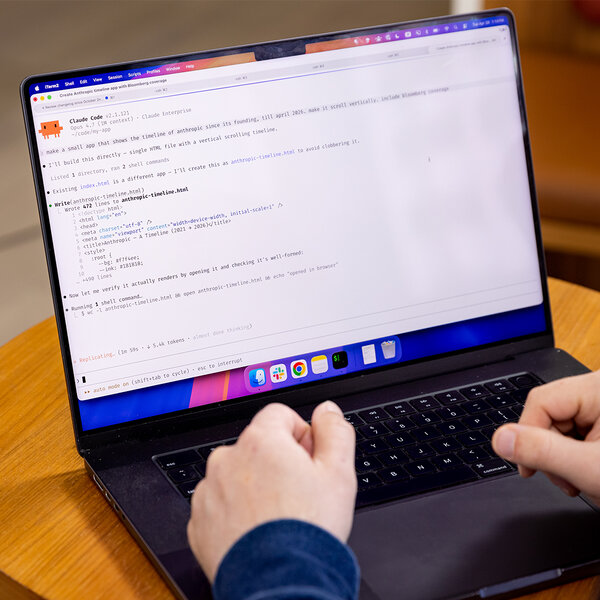
1:38Bloomberg Audio Studios. Podcasts. Radio. News. When I was chair of the Council of Economic Advisors, I had about 35 people working for me. And I just had the most amazing data inflow. constant monitoring, updating, memos, analysis coming my way, and also a team of people that could basically answer any question about the economy I had with a combination of theory, data, evidence, other things. And I basically set about recreating that. It's over 500 ,000 lines of code. That would have been a lot of coders to build that system. And it was all built by me and I didn't read a single one of those lines of code.
2:21It was all just vibe coded.
2:25Stephanie Flanders: I'm Stephanie Flanders, head of government and economics at Bloomberg. And this is once again, Stephanomics, your weekly guide to the forces reshaping the global economy. We're recording this on Wednesday, the 11th of November. It's just a week after the midterm elections in the US, in which voters swung dramatically against Republicans. But at least in some places, is the swing against AI was even greater. With one exception, anywhere that voters could vote against further AI data centres being built, they did. People often associated AI with a higher cost of living, especially higher utility costs, and they fear, many of them, that AI is about to destroy millions of jobs, certainly make it much harder for their children to get their first foot on the job ladder.
3:11Stephanie Flanders: That suggests quite a thorny challenge for the incoming democratic majority, which I think we've already seen highlighted in the seesaw in tech stocks in the days following their election win. Democrats need to respond to voters' concerns about AI, along with that much bigger, broader complaint about higher costs, but not seriously undermine a massive bet on artificial intelligence, which is sustaining a large part of America's economic growth. Well, Jason Furman, I know, will be someone that many of those Democrats will be turning to for advice on this. He is a professor at Harvard University and was chairman of President Barack Obama's Council of Economic Advisers.
3:52Stephanie Flanders: He's also been on this show a few times. But it has to be said, he's not someone who's going to provide much reassurance about the job implications of widespread adoption of AI. Why? Because his own experiments with it, illustrated by a free platform, econvitals.org, that he launched a few weeks ago, suggests it's going to be pretty transformational for future economic policymakers, maybe even replacing a lot of the PhD economists who might previously have worked in, for example, President Obama's Council of Economic Advisers. But I'll let him tell you all about that in a minute. Jason, thanks for coming back.
4:25Great to be back with you.
4:29Stephanie Flanders: Can we spend a few minutes on the midterms AI, as I mentioned, but also the sort of broader cost of living concerns were obviously a massive factor. And now Democrats face this question of how to address those realistically, given that the levers they have in their hands are quite limited, at least when it comes to things like tariffs and the Iran war. What do you think they should be looking to show that they are concerned about this in a real way rather than just having symbolic votes on things. Yeah, one of the biggest issues, and it goes under the heading of affordability in the election, was actually health care, which is interesting.
5:06It used to be the dominant issue in American elections. It faded for a bit. But if you look at the amount of money spent on advertising what voters said in the exit polls, it was incredibly salient. The first thing Democrats, I think, will do and should do, and I fully support it, is undoing some of the cuts that President Trump made to Medicaid and bringing back expanded tax credits for the Affordable Care Act. The thing is, those policies are only for about 10 % of households. So most people watching those ads, listening to them worried about it, it won't reach them. To do that, you need the sort of harder, longer, tougher work of reforming healthcare delivery systems.
5:50And I've heard a much less serious conversation about that part. Health care, of course, is just one thing. Tariffs are another. I would get rid of all of them, but the place they'll probably start is the tariffs on Canada. And those may be the single stupidest set of tariffs that were done. So I think it's a perfectly great place to start. And then right now, already, Congress can do something about it. There's a big permitting reform bill making its way through the Senate would make energy supply increase more affordable. I think that would be a great place to start as well.
6:23Stephanie Flanders: Will you see the effects of that soon enough? I mean, I just have a feeling that sort of permitting isn't going to make a typical kind of democratic socialist as heart beat faster as they've kind of made their way into Congress. And I guess they would also say that some of those big supply side reforms under President Biden didn't do him much good politically. Yeah, well, President Biden's supply side reforms in part didn't do him as much good politically because he didn't do the permitting reform with them. And so you pass this transformational legislation on things like broadband and electric cars, and then nothing ended up getting built because it wasn't able to be built.
7:05So I think there is some complementarity. But look, I think people need to be honest about the tradeoffs and difficult things here. Ultimately, the best solutions are on the supply side, but those tend to be relatively small. There's things you can do on the demand side that help some people but can't help everyone. because when you do things on the demand side, they also tend to drive up before tax prices. And so if you want to help some groups, great, give them subsidies, but we can't really afford to give subsidies for everyone. And then the last thing that works right away is price controls, but it works right away for some people who are lucky enough to get the price-controlled good, and it makes it worse and hurts the supply for everyone else.
7:46So there's some combination of demand subsidies, supply enhancements, and probably very little in the way of price controls, at least in my drone druthers, that one needs to do. But none of these are going to be commensurate to the frustrations and problems that Americans have.
8:05Stephanie Flanders: Just quickly to go back on tariffs, we had a conversation about this last week. And then I noticed that Hakeem Jeffries, one presumes the new Speaker of the House, has said he'll eliminate Donald Trump's harmful tariffs. And then there's obviously this lack of clarity about whether it's just the ones that he considers harmful or all of them being harmful. They're raising quite a lot of money. So some would say they're going to stick around for a while, maybe not the Canada ones, as you mentioned. But the other ones, we haven't heard a real alternative, at least in terms of those revenues. Yeah, I mean, there's three things.
8:37One is a bunch of them are on China and there's bipartisan consensus about being tough on China. The second is certain industries have come to rely on them and will lobby for keeping them. Now, I don't think that's a good argument for them, but just as a political prediction. And then the last issue, as you said, is the revenue one, which is why I do think the majority of the tariffs are going to last at least for the next two years. And my guess is beyond the next two years. And what you'll see is maybe certain salient ones on certain types of consumer goods, certain salient extraordinarily high ones on certain countries like Canada.
9:17But yes, I think unfortunately, the bulk of the tariffs are going to be with us.
9:23Stephanie Flanders: They are enormously unpopular there. I mean, they've become a lot more unpopular in the last two years for good reason in some ways. But the ordinary voter, I think, probably exaggerates the impact on inflation and may think, oh, you have to get rid of them in order to reduce prices. How are Democrats going to get around that? Look, I mean, ultimately, part of why they're unpopular, I wish it was because people understood Ricardian equivalents and all the things I teach about trade. I wish it was all of that. I mean, a lot of it is that they're basically a tax and we actually do need more taxes.
9:54That's the sad thing from my perspective. And taxes are going to hurt somebody. I think there's less dumb ways to raise revenue. There's broader ways, there's more progressive ways, there's less distortionary ways, etc. But the fundamental objection is that and that's part of why they're going to last. Because if you put them up with legislation head to head with another way to raise revenue, it's not like the other way to raise revenue would be a whole lot more popular than the tariffs themselves.
10:25Stephanie Flanders: When you think about raising money, on the first day after the election, there was this kind of surprisingly kind of benign market reaction. And there were lots of what I thought were quite kind of contorted, slightly odd explanations for that. But one of them was, and long term interest rates, bond yields also remained calm. And that was based on this kind of idea that was around that if you had the Congress was under different control from the White House, nothing really could be done to make the deficit worse. And therefore, it would be kind of relatively neutral for the cost of borrowing for the government for bond yields.
10:59Stephanie Flanders: And yet when you actually look at the real situation and the kind of thing you're describing, I can imagine the Democrat majority doing deals with the president when it comes to even restoring the Affordable Care Act credits for health care. I can't imagine him raising taxes to pay for those things. Yes, I think that diagnosis is exactly right. Divided government has generally been somewhat fiscally expansionary or deficit increasing. I think this time I would expect it to be even more so because when it came to Trump's first term or President Bush, the main things Democrats objected to were ways in which they had cut taxes, which is to say the main Democratic objections, if they had been able to act on them, would be deficit reducing.
11:47Here, the main Democratic objections are to ways in which they cut the deficit through Medicaid, through tariffs and the like. There wasn't a whole lot of concern over the Trump tax cuts expressed in the campaign. And even if there was any concern, as you said, President Trump could veto it. And by the way, some of those new tax cuts, like tax cuts on ticks, tax cuts on overtime, I don't know a single economist that liked those, but I don't know a single politician that objected in any serious way to them either.
12:40research competitors, industry forecasts, and market signals. It can turn the findings into a strategic deck in your team's template that you can review before presenting to your leadership team. Growing a business is ambitious, and ChatGPT can help you do it with confidence. Get started at chatgpt.com. Running a small business takes everything you've got, but with Chase for Business, you're not alone. They bring together local support and a broad range of resources to more than 7 million customers. With a deep understanding of your day-to-day needs, they provide products and guidance built to help you thrive.
13:14Right now, earn$500 when you open a new Chase Business Complete Checking account for new business checking customers with qualifying activities. Offer expires January 21st, 2027. Chase Business Complete Checking has the flexible tools you need to accept payments, make deposits, and manage your finances with confidence. Learn more at chase.com slash podcast biz offer. Chase, make more of what's yours. Fees may apply to Chase Business Complete Checking Accounts. The$500 offer is available for new business checking accounts with qualifying activities through 1-21-2027. Eligibility and qualification requirements must be met.
13:51Additional restrictions may apply. Please speak with a business banker for more information. JPMorgan Chase Bank, NA, member FDIC. For big business, AI opened up a world of promise, but that world of promise turned into a world of pain. Cost spiraling, data scattered across disconnected systems, security and governance increasingly complex, AI initiatives struggling to scale, and ROI that remains frustratingly out of reach. The challenge isn't AI itself, it's having the infrastructure AI needs to succeed, which is right where Boomi says we got you. Tens of thousands of enterprises trust Boomi to connect data, applications, processes, and AI.
14:31With Boomi, businesses can eliminate silos, automate workflows, strengthen governance, and create the foundation AI needs to perform at scale. The result? Faster innovation, more efficiency, better business outcomes. Boomi turns a world of AI pain into a world of AI gain. As Boomi says, we got you. Head to Boomi.com to learn more. That's B-O-O-M-I dot com.
15:01Stephanie Flanders: There surely is a risk to mortgage rates on the back of this. I mean, when we get back to this question of how much can the Democratic majority really control, I mean, if one of the levers they can pull to help at least some people is things that are going to also increase deficit spending, then that could potentially be adding to higher mortgage rates for everybody else. Yeah, absolutely. I mean, I can't think of a single broad agreement between the two parties on anything that would reduce the deficit, raise taxes or cut spending. There's no item on that list. But there's a number of items where you have not consensus, but some broad agreement about spending more, cutting back the tariffs.
15:40And yeah, so buckle up. I think we're making our fiscal problems a bit worse over the next two years. Now, the big question mark there is, do we get more productivity growth? And does that sort of luckily help our way out of the deficit and debt? Another thing that could help our way out of the deficit and debt, I'm not at all in favor of this, would be if inflation stays quite high. In some ways, the debt has been rising less than we thought as a share of the economy of the last couple of years because the economy itself has been inflating itself up. But that's not a way I would recommend dealing with it.
16:19Stephanie Flanders: You mentioned productivity. And I raised this kind of massive question on AI at the beginning, which we probably won't be able to completely resolve. But Democrats, you know, the other thing that they're going to be dealing with is this enormous concern around AI. And I think there's a general feeling that AI is going to feel much more present in people's lives when we get to the general election in 2028. But in the meantime, how risky is it to slow down the construction of these data centers, managing the fact that such a huge amount of investment is now is now pinned on this AI revolution? How do you think a sensible democratic leader leadership should be responding to these things?
16:58Yeah. So people's concerns with AI grew rapidly. People are almost entirely on one side of the issue, and Americans much more negative about AI than people in any other country. It wasn't the main thing people were talking about. But insofar as they were talking about it, they were all saying the same thing. I think, unfortunately, the data centers is a little bit of a distraction and a sideshow. They'll get built somewhere in the world, some which way, as long as there's an economic return to them, which is itself a question that we could discuss. But if there's an economic concern, they're going to get built.
17:35For me, the two things are, number one, a regulatory framework for safety, and two, an economic framework for economic security. And let me say those are a little bit different. When it comes to safety, I don't think the right response is saying they can help you build bioweapons with an AI and we're going to give everyone gas masks so that they don't die. We have to stop them from building the bioweapons in the first place. I think it's sort of madness that we have no federal legislation around transparency, around evaluation, around the ways in which these are deployed. And there's ideas that are out there.
18:17When it comes to the economic effects, I actually don't think we can regulate the models. We have no idea how to regulate models so that they add to jobs and help productivity and don't take away jobs and subtract from productivity. I think it's a little bit like the way AI affects college campuses. It helps our students cheat. We can't tell the anthropic to stop helping our students cheat. We have to move our class, our exams and make them closed book and the like. So when it comes to the economy, it's much more reshaping our economic system. I don't have all the answers to that, but for me, work is at the center of it.
18:58Making work more rewarding with things like tax credits, making sure we're beefing up our fiscal system so that we're raising the revenue we're going to need for our solutions. I don't think we need anything fancy, just old ideas about how you tax capital income and tax high incomes and incomes more broadly should be a part of that. Things like improving our community colleges and job search and placement and things like that have long been on the agenda. I think the evidence for them is quite good. They'll only be better. At universities like mine, we might need to think more about making our education a little bit more vocational because there's going to be less incentive to provide people on-the-job training in this world.
19:42So I don't know the full economic list. I think almost none of it, though, is things that Anthropic or OpenAI could do. Almost all of it is a matter for policymakers and institutions throughout our economy and society.
19:57Stephanie Flanders: Well, I wanted to ask you about that. There's been a sort of glib, I've been at various kind of policy conferences where economists sort of say, oh, there's still plenty of demand for macroeconomic analysis and thinking around the impact of AI, and they sort of joke about it. But at the same time, you're one of many economists, but probably the one that's most publicly shown they're kind of living the dream that AI has become part of your lived reality. And you sort of demonstrated that by releasing a few weeks ago, Econ Vitals. So for those listening, you don't know, just tell us a little bit about that.
20:31Yeah, it's econvitals.org. It's free and it does macroeconomic tracking and data. It does analysis. You can simulate different policy changes. You can run the Taylor rule. You can look at trends and inequality. And there's also a set of emails you can sign up for about 25 a week. And a few of those are written by me and the rest of them are written by LLMs. Originally, I actually built this for myself. When I was chair of the Council of Economic Advisors, I had about 35 people working for me. And I just had the most amazing data inflow, constant monitoring, updating, memos, analysis coming my way.
21:13And also a team of people that could basically answer any question about the economy I had with a combination of theory, data, evidence, other things. And I basically set about recreating that for myself. And then I thought, you know, it's not going to be that hard to make it free and share it with the rest of the world. Turned out to be a little bit harder than I thought, but I don't really regret it. I don't think it's a major competitor to Bloomberg. If your job is like buying and selling stocks at a high frequency, it is probably worth you continuing your Bloomberg subscription. But if you're just a member of the public, you're interested in public policy, you need to sort of pay some attention to the U.S.
21:54economy. I think this system does the work of the 20 people would have done. And that's just the economist. The last thing I should say is over 500 ,000 lines of code. That would have been a lot of coders to build that system. And it was all built by me. And I didn't read a single one of those lines of code. It was all just vibe coded.
22:15Stephanie Flanders: I saw that you'd asked Claude how much it would have taken to build that same website before AI. And it said it would have taken 50 people three years and cost$20 million. Yeah, it would have been a lot of people and a lot of money to build this. So for me, it's amazing. It's augmenting me. It's extending me. I have all sorts of ideas that I didn't have time to pursue before, and I'm pursuing now. And so in some ways, I think I am personally thinking better and extending myself better than I have before. But then I also feel somewhat guilty, somewhat bad that I'm working less with research assistants.
22:54I still spend a ton of time mentoring students, but I'm not mentoring them nearly as much through this process. And then I wonder at this old place I used to run, the Council of Economic Advisors, why two years from now you'd need to hire a junior staffer. And that's painful for me because I myself started as a junior staffer there. And a lot of what I know today, I learned by doing the types of numbers and analysis that Claude can just do so much better and faster than a person can these days.
23:35Stephanie Flanders: we should end on the career thing because it's one of those things that lots of people are asking the same question in lots of different industries but these emails are going out most of them the ones that don't have your name on them are entirely automated they're not being checked and you do that as a sort of warning to people but you know how often are they wrong i mean how much can people rely on them relative to what would have been the kind of regular human error rate? Yeah. So first of all, it's really important to me to be transparent. So if my name is on it, I wrote it. And if my name is not on it, the AI wrote it.
24:06I'm not pretending otherwise. And there's some people I know that just want to read things with my name on it, don't want to read the other stuff. That's completely fine with me. I think transparency is an important thing here. In terms of the error rate, there have been one or two errors in the system. I have a lot of agents that do fact-checking, that do error correcting. So my guess is in terms of raw numbers, it's sort of on par with a very good publication, maybe a little bit worse than Bloomberg, but Bloomberg is the gold standard in this regard. But I also think it's going to get better very, very fast because, you know, for example, it made an error that involved the way it rounded numbers and it rounded it to two digits and then to one digit.
24:48And that would have been different if it went straight from three digits to one digit. That meant something printed as 5.0 instead of 4.9. I caught that, fortunately, and it's never going to make that error again. And so that is the difference. And I think that's the difference in all of these systems, whether it's automated driving or anything else, is it tends to not be like the person that you explain the problem to. They say, yeah, yeah, yeah. And then a month later, they sort of slip back into making the problem.
25:18Stephanie Flanders: What are you finding, and this may change every time Claude produces a new model, but what can it do that Fed staff or a previous kind of CEA junior economist couldn't do? But I guess also, what can it still not do that you would need to have that bright young thing for? So there's the dimming old thing, which is to say me. I think the things I write are more interesting than the things it writes. And I would rather listen to your podcast than an avatar of you doing a podcast, even though the avatars are getting sort of more and more realistic looking. They're not as interesting and engaging and human as you are, Steph.
26:01But it's the juniors where I'm more worried. I mean, I just did something that simulated alternative policies to everything from the fiscal response to the financial crisis, to the fiscal response to COVID, to the full-scale Russian invasion of Ukraine. And it was a massive amount of modeling that went into it. And it just sort of did all that. And that would have been a couple weeks of work for junior people. And by doing it, they would have gotten to know the FURBUS Federal Reserve's macroeconomic model better. I know that model some. I've worked with it in the past. I've worked with people that have worked with it.
26:43But now from a distance, I can just do just very, very ambitious things of a type that you would have only bit off a piece of before. The problem is I can do that. The person who's doing it isn't there doing it anymore. And I think that has some real costs and downsides to it.
27:03Stephanie Flanders: If you spread that around the economy, I mean, the thing that people are hitting now is just a cost constraint, because as Anthropic and others, they're starting to cost quite a lot of money. Well, I have four Claude Max accounts, but Harvard is paying for them. So I guess they're called Ultra accounts now. So that's$800. I suspect you're a power user at this point. I'm a power user, sort of switch back and forth as they run out, et cetera. But, you know, just in the last six months, it's actually become cheaper. Things happen faster. They use less tokens. Claw does certain things that let you save the amount that you use on it.
27:42They kept threatening that they're going to take Fable out or raise the price or lower the limits, and they keep not doing that. And so you're right, spend is going up. But spending on anything is price times quantity. And the thing that's going up is the quantity. We want to use it much more, not the price. But if anything, I might be on the verge of canceling one of my accounts. I might even be able to cancel a second one. And these were things where three months ago, I might use up all four accounts in a given week. And they're just actually getting more efficient and, if anything, falling in price.
28:18And for me, that actually is great for users. It raises a question for me about the economics of these frontier labs and the amount of competition they face and the degree to which they will or won't be able to monetize some of their innovations.
28:33Stephanie Flanders: And it actually seems it's slightly the opposite for them because it seems like each model has actually cost them more, not less as they go, as it becomes more sophisticated. I can take your point about the quantity of use, but in terms of raising the quality of each model, that seems to be more expensive, not less, each time they do it. Yeah, that's exactly right. And then just to be a little bit granular, Opus 5.5, the latest of the one rung down model from Claude, that is cheaper and faster than the earlier Opus models. So they put a lot of money into it. They made it better and they actually made it cheaper.
29:09Now they have Fable 5.2 that came out this week. I haven't spent a lot of time with it, but so far it seems like way more than is needed for the stuff that I do. And a lot of businesses are the same way. They're just not using Fable that much. And because in some sense, these companies already have cars that go at 300 miles per hour. They put a lot of effort into making them go at 500 miles an hour. If you're a race car driver, you should be buying the 500 mile per hour car. But for the rest of us driving around the city, 300 miles per hour was already a lot faster than what we needed. And that's, I think, the quandary that they're going to face going forward.
29:48Stephanie Flanders: In this conversation, subconsciously or not, you're sort of reassuring your fellow economists who maybe don't have quite the illustrious career that you have, but would consider themselves to be serious, established economists, because you're suggesting that the only problem here is the junior people aren't going to be able to kind of get their foot in the door. But what you've described, I mean, we have 60 economists at Bloomberg. I think they won't find it super reassuring because it sounds like you might only need a handful to do all the modeling that each team, current team of like four or five people does.
30:20Stephanie Flanders: So this doesn't seem like just an issue for the first rung on the ladder. I mean, look, we had an unbelievable PhD economists who are faculty members on leave at the Council of Economic Advisors. And my view is that some of what they did was interpersonal, going to meetings, engaging in the policy process, and you'd still need people for that. But an awful lot of what they did was analysis at a very high and sophisticated level, but it can operate at a very high and sophisticated level. And any reassurance I'm giving you is reassurance about the capabilities in 2026. We're not talking about 2027 or 2028.
31:04And it can write already a quite good economics paper without a whole lot of guidance from economists. Will it be able to get all the way there and fully replace academic economists or the economists at Bloomberg? I think people will want people, a certain amount of trust, someone that puts their name behind something, how much are you going to be willing to pay for that? How much are you going to need that in the future? I confess I'm growing increasingly unsure about that. And some of my being unsure is less about the economic data and economic history and more about the vibes and maybe making the mistake that this time actually could be different.
31:46Stephanie Flanders: And you mentioned something interesting when you're talking about the Harvard context, that you're teaching students walking out into this job market every day. And I know from my own experience, both of my children at college, one of them is just being sort of deluged with sort of negativity around how awful and impossible it's going to be to get a job in a year or two's time. But you said that maybe you should think of it as a more vocational education. What do you mean by that? Yeah, I mean, the Nobel Prize winning economist Gary Becker observed that most businesses that train people are not keeping that employee.
32:20So our graduates who go to an investment bank, they'll usually go to that bank for two years, and then they'll go someplace else, on to business school, to a private equity firm, whatever it is. And that investment bank is putting a lot of resources into training them. Why do they do that? Because the person's actually willing to work for lower pay. Making up numbers here, they might produce$400 ,000 a year for the investment bank. The investment bank only pays them$250 ,000, and so they're being charged effectively tuition for training. And you see that throughout our economy. It's not just super high-paid jobs like that.
32:59In your 20s, you are effectively trading off lower pay for more training so that you can have a better trajectory in the future. Well, that only works if you're producing something for the business that's meaningful to them. If you're not producing enough for the business, they're not going to want to just hire you for the training. Moreover, a business model where people actually pay tuition to investment banks or to Bloomberg Economics to get their training, that would be absurd. That's not going to happen. And so the first thing that I'm most nervous about is not the hiring, but it's some of the on-the-job training that goes together with the hiring.
33:40And what's one solution to that? It's doing more training at places that can charge people money for the training, which is to say schools. And I think there's other solutions too. I have never really liked non-compete agreements in labor markets. I'm starting to rethink that a little bit. Maybe you do need some way to keep your employee with you so that in the first year or two, when they're not that productive, they're not doing that much for you, you'll still take the time, effort and cost because you know they'll be with you later on.
34:11Stephanie Flanders: Okay, and then the obvious question. I'm sure many of your current students wouldn't mind having your old CEA job at some point, being the chief economic advisor to the president. Right now, if they're 20, 21 years old, they're really good at economics. how should they think about the path to that kind of job? Yeah, I mean, the two things I say are, number one, be good at using AI. Our median student at Harvard still uses it like a chatbot and a search engine and are not building systems of agents to extend them and be that much more ambitious about the way they approach things. That's thing number one is be very good at AI.
34:51But the second thing is understand what AI does really well, what it doesn't do well so you can fill in and do those other things. Now, that second piece of advice is a lot easier said than done because the capabilities of AI are constantly changing and constantly evolving. But figuring out where your edge, your alpha as a human is, and a lot of times that's going to be in interpersonal, in management, in creativity, and things that are a little bit harder to teach and learn, but are going to be hard for the machines to replace.
35:27Stephanie Flanders: I know you now have to go off and provide them with some of that alpha, so I won't keep you any longer, but it's fascinating as always, Jason. Thanks so much. Great talking.
35:39Stephanie Flanders: Thanks for listening to Stephanomics from Bloomberg. It was hosted by me, Stephanie Flanders, and I was joined by Harvard's Jason Furman. Stephanomics was produced by Sam Asadi and Moses Andam with editorial guidance from Megan O 'Neill and Beth Ponsard. Amy Keene is the executive producer for Talk Podcasts at Bloomberg, and Cheryl Brumley is our head of podcasts. Sound design was by Blake Maples and Erin Kasper and Kelly Gary. To help others find this Stephanomics show, please rate and review it highly wherever you listen.
36:22Stephanie Flanders: Notetaker is built to get the hard words right. It takes notes on any meeting platform, Zoom, Google Meet, Teams, even WhatsApp calls, keeps every meeting searchable and connects to Claude or Chat GPTs. So you can ask, what did we agree to last Tuesday? Free to try on Mac and Windows at whisperflow.ai. That's W-I-S-P-R flow dot AI. This is Jenny Garth. If you remember when working out meant an aerobics tape, waiting for your favorite show to come on, or wearing overalls with one strap undone, then remember this. RSV can be a serious respiratory virus, especially if you're over 50 with certain health conditions or over 75.
37:03There is no prescription treatment, but one dose of a vaccine can help protect you. Find out more at Pfizer for all.com. Pfizer outdo yesterday. Here at Bloomberg, we spend all week talking about markets and the economy. And on Fridays, we help you make sense of what it all means for your money. Bloomberg Money is our weekly look at the forces shaping your financial life. We explore personal finance, investing and retirement with leading economists, strategists and wealth managers. Join me, Scarlett Foo and me, Tom Keen, for smart conversations that help you make better financial decisions. Subscribe to Bloomberg Money on Apple, Spotify or wherever you listen.
Jason Furman, the former White House chief economist now at Harvard University, has used artificial intelligence to build a platform that can do work once handled by teams of economists — and it has left him wondering what happens to the people who used to do those jobs. He joins Stephanie Flanders to talk about AI’s impact on work, education and the economics profession, and what the US midterm results reveal about the politics of affordability and the backlash against data centers.
See omnystudio.com/listener for privacy information.