
- Podcasts
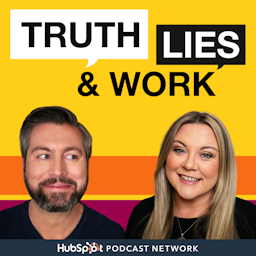
- Truth, Lies and Work
- 204. Boss traumas, 2am callers and benefit ballers. PLUS! Is alcohol a well-being blindspot?
Truth, Lies and Work10 Jun 2025 · 59m
204. Boss traumas, 2am callers and benefit ballers. PLUS! Is alcohol a well-being blindspot?

 Add vo to ChatGPT or Claude to ask about everything you hear
vo listened to this episode to put together the overview and transcript, so there may be the odd mistake.
In short
Workplace trauma normalization and leadership hiring; plus alcohol as a workplace wellbeing blind spot; plus workplace surgery on boundaries with a client and building a great workplace.
Guests (and hosts)
Tabin Almond, founder of Wine to Water coaching and author of Bottling Up Trouble (shortlisted for Business Book of the Year). Leanne (Chartered Occupational Psychologist) and Al (business owner) host.
Guest background
Almond works with organizations to examine how alcohol shows up in culture and its costs for wellbeing, productivity, inclusion, and performance.
Key claims
Viral LinkedIn stories show bullying, burnout, discrimination, and “hope work” (performing extra work for hoped-for rewards) can be psychologically harmful. An NHS cancer trust (Christie NHS Foundation Trust) shifted from personality-based leadership assessment (e.g., Myers-Briggs/DISC/Hogan) to behavior-based leadership diagnostics (Real World Leader) to improve hiring decisions and reduce turnover. Alcohol should be treated as a workplace wellbeing issue, not a personal failing; drinking culture discourages help-seeking and worsens mental health (depression, stress, anxiety).
Notable examples
Boss barging in on an employee pumping breast milk; HR blaming the employee; a manager withholding pay to fund a cult; 2am calls from a top client; “me hey… can I get paid more?” boss laughs; “Eight ways to say screw you at work” email translations.
Transcript
0:02Al Elliott: Coming up this week in work, what if your boss didn't just annoy you, they traumatized you? A viral LinkedIn post triggered a flood of stories about bullying, burnout and psychological harm at work. This week we're asking how we normalize trauma in the workplace. Are you hiring leaders based on personality? Well one NHS trust has challenged that idea and found that assessing behavior, not charisma, completely changed who got the job and who excelled. Are we measuring the wrong thing when it comes to leadership potential? And in the workplace surgery, would you fire your best client if they called you at 2am?
0:39Al Elliott: One listener wants to know when going the extra mile stops being impressive and starts being unsustainable. This is Truth, Lies and Work, the award-winning podcast where behavioral science meets workplace culture. Brought to you by the HubSpot Podcast Network, the audio destination for business professionals. My name is Leanne. I'm a Chartered Occupational Psychologist. My name is Al. I'm a business owner. And together, we help organizations build amazing workplace coaches. Let's get into today's episode right after a word from our sponsors. HubSpot's Inbound Event 2025 is bringing together the brightest minds in business, AI, and entrepreneurship.
1:16We're talking Amy Poehler, the genius behind ChatGPT, Dario Moraday, and Sean Evans from Hot Ones. because apparently even hot sauce interviews can teach us about business strategy.
1:28Al Elliott: Yes, September the 3rd until September the 5th in San Francisco. And no, this isn't just another one of those conferences where you pretend to take notes while secretly checking your phone. This is three full days of actionable insights that you can actually use to grow your business. What I love about this is the focus on practical application. We enjoy applied science here. You're not just sitting through fluffy keynotes. you're getting tactical breakout sessions, networking with people who are actually building things and learning from entrepreneurs who figured out how to thrive in this AI powered world.
2:00Al Elliott: Plus, come on, you're in San Francisco, the global headquarters of let's disrupt everything and see what happens. It's the perfect place to meet your next co-founder, investor, or just someone who gets why you're obsessed with optimizing your customer acquisition funnel. Head to inbound.com forward slash register to see the range of tickets, including VIP options. fancy fancy fancy fancy trust us your future self will thank you for actually investing in learning something useful guess what al what we're gonna be there no we're not i am i'm manifesting oh okay yeah yeah you can come and meet us there thank you that's the reason to go and book your ticket today vip experience will no doubt include us i'd imagine they'd invite us to the vip area so go and visit inbound.com slash register to get your ticket today
2:46Al Elliott: welcome back welcome back i hope it's summer for you where you are it's definitely summer here in in cotter in montenegro it's beautiful beautiful but anyway that's enough chat it's it is a little sweaty it is a little sweaty because you can't have the air con on when we record see so over the next 45 minutes we're gonna get increasingly hotter and sweatier so look out for that if you're watching on youtube fun fun anyway on to your favorite time of the week leanne it is it is time for the world famous no it's not it's time for what what time is it the news roundup that's my favorite time of the week at the news roundup it's going so well okay lee what have you seen this week have you started the jingle i didn't ask you to yes the jingle started the jingle has definitely started what have i seen this week have you ever had a boss that was so bad it left you dramatized i haven't really had a boss since 2002 so not really but i have heard of other people you've had a pretty bad boss though yes i had a very bad boss yes i remember particularly i won't name that person but yes i've i've definitely have some bosses that have have yeah left left a feeling or two um but this is a question posed by laura lania on linkedin laura is a product and content writer at rabbit how you say it or i be i don't know i'm assuming it's in you know i think it's american i think it's american rabbit r-a-b-b-e-t um the comments owl oh my gosh the comments it was a scary place to be that comment section not gonna lie so what did the post say so the post actually said word for word have you ever had a boss so bad that it left you traumatized vent to me I'm feeling salty um which immediately grabbed my attention and many other people's attention too um at the time of recording this post has got 224 comments five reposts more than 200 reactions um so yeah it's hitting a nerve so I dived into the comments had a look through I have asked permission from the people who left these comments for me to share them so i'm only going to read out the ones that said yeah cool don't worry um there were some of those that understandably didn't didn't want to it feels wrong to say these are my favorite given the subject matter but they're the ones that made me go like jaw drop really yeah proper goodness me so here here are some of them al um katherine boyd who is a strategic marketing director shared that she had a boss tried to get her to join a cult he belonged to and withheld money from my paycheck to pay for the first meeting wow the next one came from katie rider a data analyst katie said i quit my i quit after my boss walked in on me pumping breast milk pumping not my comfy pumping um walked in me breast pumping um and hr said it was my fault and i still had to report him that was just a tipping point i'm still traumatized and have flashbacks from working now i'm slowly recovering with time hang on so the boss walked in on this person pumping and HR said that they she had to report the boss yes so I actually messaged Katie about this and she actually shared a post about a year ago um that said this one year ago today I survived a workplace trauma that shaped where I am today I tell this story people's jaws usually drop I was in my private office of nine years pumping when the door suddenly opened my boss CEO barged in since he did not knock and ignored my pumping sign he saw me with my shirt or breasts out pumps on exposed I had to yell at him to leave my office after talking with HR I sent him my statement along with some things he said during my pregnancy um weeks passed I was terrified to be at work did not leave my office or my lab area mental health was declining along with my milk supply um there's a whole post which I'll leave a link to um but yeah it's it's it's unbelievable isn't it that that yeah that that's her fault even though she had a sign up uh another one came from nick power who's possibly the most famous person on linkedin at the moment have you been poured into the nick power universe no who's nick power nick power is some well he's he's a marketer um from murga and he's just somehow got like linkedin famous um everyone follows him tags him in posts um it's like if you want to beat the algorithm you tag nick power he doesn't like to use capital letters it's a vibe anyway Nick said had a boss show me in a magazine the image of the sports car he was going to buy with all the money we made this quarter shortly before denying my request for a raise I left two months later well that was foolish wasn't it I think yeah I've had a boss who was way back in the day and he was like right okay so we've got a brand new Range Rover and then I had to do his accounts for him as well as personal accounts as well he asked me to do that and I could see how much he paid for it.
7:36Al Elliott: And then he complained. He also did this thing to me. He said, right, okay, you're a contractor. So you invoice me 500 pounds for every sale I made. He said, are you VAT registered? I said, no. He says, all right. So we take off 17.5 % of that. And that's what I pay you because you're not VAT registered. I kept saying VAT stands for value added tax, not value, it's not VUDETA, value deducted tax. But yeah, and yes, I left shortly afterwards. And also they did a Radio 4 Expose documentary thing on him later on. So he was a bad man. Bad man and very, very bad ideas. Yes. So yeah, that was Nick. Go and follow Nick.
8:14I'll go and have a look and report back next week. Another one. Oh, this was really shocking. Trivia Dali, strategic HR and talent lead. Not a boss, but I had a co-worker once call me a half-breed.
8:29Al Elliott: What the hell's a half-breed? to do with her race she's mixed race oh okay yeah i'm not even gonna get into that one shocking i again had a conversation um with trivia about this and she was saying that she sat in for like six seven years because um she was an intern at the time didn't feel that she could speak up which i think is very you know a very common experience for our young people so yeah awful um another one came from sharni anderson who is a chartered accountant and she She said, most of my former bosses were bullies. When I spoke up about pay disparities, one manager told me I was just a senior accountant.
9:07It didn't matter that I had over 20 years of experience, which included training and mentoring people, three certifications and two degrees. And I spent two years as an interim director for a client in that company. I walked away from corporate last year to start my own bookkeeping business. Now I have an amazing boss.
9:26Al Elliott: Which is her. Yeah. Yeah, very, very good. bookkeeping always makes me chuckle because it always makes me think of someone who keeps books like beekeeping and bookkeeping they're just not the same idea anyway like a librarian should be called a bookkeeper exactly exactly that's what i keep thinking but it's not the same thing and also is it 2k is it bookkeeping or bookkeeping anyway questions for another day another day do you see any more i did um this one actually came from mila zivkovich um who is in belgrade Oh, hello. I know. It's Bravo. SEO and content leader for SaaS brands. This was awful.
10:03So he said, my wife was having lung problems and I had to drive her to see a doctor. I asked my manager to leave our one-to-one meeting early. All I got was, I'm sure there are taxis available where you live.
10:17Al Elliott: Ooh, that's not cool. Yeah. Also had a little chat with me there. He said he told me that if you wanted to add some more details, that manager made his life a living hell. Everyone was afraid to report him. Took them almost three years to fire him long after I was gone. Just goes to show, right? Leanne's always said people don't leave organizations, they leave managers. And so if you've got a bad manager, look at the damage they are doing. Anyway, that's again a different story for a different day. Soapbox dismounted. Anything else? Any other comments? Yeah, we had Jacqueline, content marketer.
10:51I worked under a CMO, Chief Marketing Officer, who decided she didn't like me for no real reason, which was confirmed by my direct manager. She was rude and condescending, and she once told one of my very busy and productive co-workers she didn't know what the co-worker did for eight hours a day. It was like Mean Girls, the work play.
11:11Al Elliott: That's the film, the movie. Yeah. Yeah. Honestly, there were so many. I was really, really sad making. I'll share a couple more. we had Joshua who is an amateur DB architect and author said I had groin surgery they made me wear a catheter to the office ooh oof oof oof I'm a bit squeamish about that kind of thing so I don't want to go too much into that one it's like give the guy some days to recover yeah come on goodness me how vital is the architect business is it like you need to come in and finish this drafting otherwise the hospital is not going to get built And one more, there's absolutely loads, but I'll show one more.
11:52Nicoletta, who's a life coach, she said, I once had a boss that after I was passed on a promotion and I reached out for feedback and improvement tips for four months, gave me only one piece of feedback. Maybe you'll want to have a baby anyway.
12:08Al Elliott: Oh, was this 1965, was it? You'd think so, wouldn't you? You'd think so. um so yeah shocking shocking stories there and i'm sure there's loads more that people have to share but for whatever reason don't want to do on a public platform what's so silly is that everyone's going oh yeah i've had a bad manager but very few people are probably going to admit that they used to be the bad manager or they are the bad manager i think you know some of these stories are really horrific i mean the half-breed comment completely unacceptable um the catheter in the office they're maybe gonna have a baby anyway that's like you know really bad discriminatory um things coming from managers but there was one that maybe kind of it kind of put into context for me how we might be normalizing the behaviors these behaviors are just aren't okay this one came from cassidy grigg who's a copywriter and content strategist um she said um so you know when you like the me they kind of things like script so she said me hey i've been handling our manager's workload since they quit can i get paid more for the extra work stroke hours i've been contributing boss laughs we don't do that here oh and i just thought that summed up perfectly how many of us engaging in what's called hope work um that we hope that we're going to get something from it if we're not getting um that financial gain in the moment i just think it's things like this that are really adding the pressure on people financially, professionally, psychologically.
13:39It's a bit of fun and it's a bit of a laugh and it's a bit like, wow, oh my gosh, and it makes us feel great that we're in it together, but really I'd prefer it that we didn't have to be in it together, you know?
13:48Al Elliott: Absolutely, absolutely. Anyway, so thank you very much to Laura. I did ask as well her permission to share that post. I'll leave a link to the original post in the show notes. Go follow Laura. She put some really great stuff on LinkedIn. And Al, what have you seen this week? Well, this is probably applicable to a lot of the people you just mentioned in that. I saw a post on Instagram, which is not my usual platform of choice. Goodness, what were you doing on the Insta? To be fair, I think I saw it on Twitter and I saw a link to it on Twitter and then I went over to Instagram to watch it. And it's called Eight Ways to Say Screw You at Work.
14:19Al Elliott: So I think this would be really useful for those. Oh, perfect. Perfect. This wasn't coordinated. No, it wasn't. Hit me. Okay. So now just to be clear, this is someone who is Lee Harding, a Brit. He goes under the introverted recruiter handle. He did not say eight ways to say screw you. He used other words that might rhyme with truck. So yeah, so I've tied it up a little bit. It is hilarious, but a little profane. So you probably don't want to be playing this in front of your nan or maybe your boss or perhaps in work. But it is hilarious if you like a sweary Brit, which to be honest, I like a sweary Brit.
14:54Al Elliott: We are sweary Brits. This is our best behavior on this pod. So here we go. Here's eight ways to say screw you at work. And he said, as per my last email. Now, what he suggests is that in other words, I've told you at least once before, you freaking idiot. You didn't read it, did you? Just go and do the job. Yep, brilliant. Love that. Number two, I love this. To reiterate. Because I've told you freaking once. His explanation or his translation was, I'm not telling you again. Just do it, you. And then the receipt. That to reiterate, I really do like that. To reiterate. Number three, I've CC'd in.
15:35Al Elliott: And then X is person. And he said, this is Nick's idea is, I'm not playing anymore. I'm collecting witnesses at this point. It's so true. When you do CC in someone, and you specifically say in the email you CC someone, basically you mean that I want someone else to see the idiocy that I'm going to have to deal with right here. number four and i love this one and it's probably maybe just a british one but thanks for your input oh that's brutal it's brutal that's like that was completely useless but thank you for wasting my time well his translation was that is hang on a minute nobody asked you literally nobody thanks for your input i'll be using that at the earliest opportunity not with you lee of course number five um as a reminder um his suggestion is i'm not here to i'm not here to babysit you you should have already done this fair enough number six respectfully now this is so funny because when someone says with the greatest of respect if someone says respectfully in an email you know fine well the next sentence coming out of their mouth is not going to be good it's basically be like, I have zero respect for you.
16:49Al Elliott: Sit down right now. This is none of your business. So I wonder if you could send that. I mean, I wonder if that's just like a boss employee thing. I don't think you can send it to anything other than a colleague or a direct reporter, I don't think. If someone says moving forward, can we? This is his translation is, are you seriously this stupid? You've been doing it over and over again. Please never do this again. Moving forward, Can we not CC in a client when we're talking about putting the prices up, for example? And the last one he said, which I found myself possibly doing this, is if you send an email and you end it with best regards, basically what it means is I hate my job, I hate this place, but most of all, I hate you.
17:33Al Elliott: But I can't say this because I'm going to get fired, so I have to say best regards instead. It was a really, really good little video. Again, I say it is quite sweary, but if you're into that kind of thing, which we are, then we absolutely love it. Anything else, Leanne? What are your thoughts on this? It just makes me laugh because everyone knows the translation. It's this kind of civility at work, but everybody knows what's underlying it. So yeah, I think it's quite funny. I like posts like that, particularly things on emails. um yeah they're quite good i also think as well that a similar thing as well if you like that type of thing if you just google like the best out of office replies some of them are beautiful absolutely beautiful if you hate corporate talk or you don't want to sound like a corporate then it's thursday's episode is for you and also you'll learn how you can potentially use some of these phrases but in a good way lee what else you see my love sticking on the recruitment um um chat actually um a case study fell into my email inbox this week and i thought it was really quite cool um i mean i think we've all made a high that we regret at some point or we've certainly been in an organization where a hire has been made that that you see regret coming from leadership um it's a very common common thing and i think you know the particularly because recruitment isn't always necessarily very robust in small businesses i'm sorry guys i'm sorry but if you if you engage a psychologist to help you design your recruitment process then i take it all back um but you know you're just hoping that you know the candidate says all the right things they have some really sexy achievements on their cv maybe they even pass your psychometrics your myers briggs your discs with flying colors um but once you're in the role then those signs start to creep in it very quickly starts to unravel um yes it's very detrimental for the organization lots of confusion um turnover and the impact takes ages not only the cost of it we know it's like five times the typical salary of the person it's going to take two years to get back up to that level of performance it's so disruptive and i think the thing is what this case study was talking about is they're pinning it on the personality trap so that for years companies have used personality psychometrics like your Myers-Briggs like your discs maybe even other ones that are much more reputable like your your Hogan's um to guide leadership recruitment and on paper that makes a lot of sense to figure out the type of person you've got in front of you and then trying to predict how they're going to behave but as this case study shows and this is a case study of the Christie NHS Foundation Trust which is one of the UK's most respected cancer centers in Manchester um they realized that personality-based tools weren't doing the job simply because managers found the reports hard to interpret the feedback was vague and crucially they weren't getting what they really needed a clear picture of whether the candidate could actually lead now i get these personality ones kind of being vague way back when i tricked al um into doing the myers-briggs and shared his results but actually just read out his horoscope and i was like oh wow yeah that's really accurate oh wow yeah and that's a barnum effect isn't it when you have like yeah anyway so sorry i'll um okay i think it was quite good fun so yeah it's it's this case that leadership is discussed differently across across the organization we don't have this shared vocabulary for it we don't even know what great leadership looks like what great leadership looks like here those conversations aren't hard so then to try and recruit somebody in as a leader it's no surprise that it's not gonna not gonna work you know so the christy made a different move they stopped assessing who people were and started assessing what they actually do so they adopted the real world leader diagnostic which instead of being a personality-based assessment is a behavior-based assessment and it looks at the leadership behaviors that have been proven to be effective in the workplace by science lots and lots of data behind both the model and these tests as well so they focus on the leadership behaviors proven to drive effective performance they group them together into ways that make sense and they basically show what behaviors are being enacted most in an organization by a leader and which are being enacted least and what I particularly like about this tool is it's not about behaviors being good or bad all the behaviors are good and positive but how and when we enact them can have impact on our people their performance and the organization so it's having that self-awareness it's really important so once the candidates have completed the assessment then they'll have a full feedback session go to the results and be allowed to talk about the context within these um that these behaviors are being enacted so it makes it real world rather than like a hypothetical color or feeling right on brand for real world group and of course as well then from a candidate experience perspective it's always going to feel a bit more authentic and a bit more relevant how many times have you sat through an interview process going I don't understand what this is showing about how well I can do this job but okay and actually this is one of the key results that they found the Christie is that they had enhanced kind of experience so candidates reported a fairer more transparent and higher quality recruitment process they had stronger leadership development from day one because they know already what leadership means and how it's talked about within the organization and they were able to make sharper more informed hiring decisions um they reduced turnover after appointment so that leadership focused hiring led to stronger job fit and lower early stage attrition and it minimized poor hiring fits because focusing on leadership behaviors over personality traits significantly reduced mismatches that's the key here really in terms of the organizational benefit the benefit for you as a business leader is nothing worse particularly a senior leadership level of making a bad hire.
23:36I've seen people do it and just the path of destruction it leaves for a long, long time. So if you run a business, especially if it's growing, especially if this is going to be your first senior leadership hire, it's really expensive to make this type of mistake. So anything you can do to prevent that is going to be a good thing. And taking a behavior-based approach is going to be a really effective way to do it because most traditional tools weren't built to assess real leadership they're built to assess personality which can be um can indicate leadership behavior um so yeah they measure potential not performance but this case study shows that when you get specific about behaviors the things people actually say and do your leadership pipeline gets stronger more diverse and more effective and when we think about that connection between behavior and culture culture is defined by the worst behaviors tolerated it ties it all really nicely and emphasizes a point that most people don't get is that culture starts with recruitment um so yeah a really interesting case study doing fabulous um fabulous things at christy always do very innovative um but actually yeah taking a science-led approach to improving the quality and effectiveness of their leadership team how cool is that so what
24:54Al Elliott: we're saying is that if there are some behaviors that this real world group is measuring that are better for specific roles like leadership yeah and even specific behaviors within different leadership roles right because not all leaders equal not all leaders have the same same demands and priorities and this again is where our job analysis is really effective because you're going to identify the behaviors that are going to be important in that leadership role and specifically look out for those behaviors it's also going to show you but potentially where leadership behaviors are lacking within your organization if you've done this um assessment as well as a development tool then when you're recruiting people in you're going to be able to look at okay so these are some behaviors that we're currently lacking on our strengths in and it just makes a really well balanced effective leadership team because it's about behavior it's about how we turn up every day uh what we do when we're under pressure what we do when we're stressed how we deal with our people how good we are at creating a vision it's all these lovely leadership behaviors that are so important but rarely measured in the interview process and this tool has been specifically designed and tested to do exactly that it's very very cool i will leave a link to the real world group to this case study and to the real world leader in the show notes beautiful beautiful okay so we're going to go to a very quick break after that we've got our hot take and then we've got our world famous weekly workplace surgery where i put your questions to leanne as you know don't go anywhere see you in a second billion dollar moves hosted by sarah Chen Spellings is brought to you by the HubSpot Podcast Network, the audio destination of business professionals.
26:25Join venture capitalist and strategist Sarah Chen Spellings as she asks the hard questions and learns through the triumphs, failures and hard lessons of the creme de la creme so you too can make billion dollar moves in venture, in business and in life.
26:38Al Elliott: Maybe start with episode 124 where you're going to hear how industry giants from Canva to YouTube define leadership. Listen to Billion Dollar Moves wherever you get your podcasts.
26:52Welcome back. It is time for our Hot Take, the moment in the show where we hear a bold opinion about the world of work.
27:00Al Elliott: Have you been drinking? I wish I had. And today's is this. We need to start talking about alcohol as a workplace issue. Alcohol in the workplace, it's kind of like always been in normal things. Well, not always, but in my generation, definitely used to be Friday drinks. In fact, in my generation, when I did teacher training back in 1997. On a Friday, all the teachers, including me, went to the pub, had a couple of pints on a Friday afternoon at lunchtime, and then went back and taught in the afternoon. Wow. It's just kind of like, you know, you've got client dinners, we've got all that kind of thing.
27:31Al Elliott: Alcohol seemed to be a normal thing for a lot of people. But is it dangerous? Is it harmless? And let's be honest, is it making some people in the organisation feel a bit uncomfortable? Our guest, Tabin Almond, thinks it's time for a rethink. She is the founder of Wine to Water coaching, nice name, and the author of Bottling Up Trouble, a book that's just been shortlisted for business book of the year. She works with organisations to examine how alcohol shows up in culture and what it's really costing in terms of wellbeing, productivity and inclusion, not to mention performance. So today she's here to explain why alcohol needs to come off the personal problem list and be recognised for what it actually is, which is a wellbeing blind spot.
28:15What I wish people knew is the extent to which alcohol may be harming their business and the fact that it doesn't have to be like that. They can help and avoid leaving so much money on the table effectively and improve their productivity and their profitability. So whether it's public sector or private sector, alcohol, if you've got more than three employees, the chances are that alcohol is having a detrimental effect on the organisation. and that isn't necessarily your fault as a business owner or a manager within the business because it could be just that you your employees are drinking out of work but not able to ask for help alcohol it's it's a weird thing because we are encouraged to drink if you go to a party when you say you're not drinking, people will say, oh, don't be so boring, just have one and all of that sort of thing.
29:21And so you're kind of encouraged at every juncture in your personal life and your working life to drink. And yet when you get into trouble, it's like you're completely beyond the pale and you shouldn't be doing that. And it's, you know, you need to go and get yourself sorted out and we're not sure we can trust you. And you're sort of a marked man or a marked woman. so people don't ask for help if they feel they've got a problem with alcohol and it's completely different if you think about heroin or cocaine if you go to a party you're not going to even you know nobody's going to say i don't want to win you know have some cocaine it just doesn't happen and so you're not being we're not being encouraged in the same way but society encourages the use of alcohol it's advertised and marketed really heavily and some very, I would say probably the cleverest people in the advertising business work on the booze accounts.
30:21You know, it's something that everybody in an advertising agency kind of wants to work on because, you know, they tend to be very good creative accounts. I personally never did work on booze because there was alcohol problems in my family and I didn't really want to get involved in that and I was lucky enough to work at an agency which was fairly principled. But therein lies the problem that people are encouraged to drink. There's virtually no education about the harms that alcohol causes. And when people get into trouble with it, it's an addictive substance, so a substantial proportion will get into some degree of difficulty, they're on their own so i see alcohol as a well-being blind spot like from what you're
31:15Al Elliott: saying it sounds like we're separating things into two different parts we've got social drinking at work events and then we've got drinking after hours now if you were a business owner or a manager listening now which of those would you tackle first as like something you need to fix today for any organization where there is alcohol as part of working life they need to look at that because they are uh it's directly contributing to to problems within their business and within their employees own lives um the if i look around at the people that I worked in during my career in advertising, but I've been to far too many funerals of people who've died unnecessarily early because of diseases which alcohol has contributed to.
32:12And we don't have enough awareness of all of that. So there's definitely an education piece that's needed. But the culture whereby people are made to feel that drinking will help them get on is really quite toxic. I mean, alcohol causes a whole load of health problems, physical health. And I think the thing that people don't really know so much about is the mental health side of things. Alcohol directly and inevitably exacerbates the three most common mental health issues, depression, stress, and anxiety. Stress has overtaken sort of musculoskeletal causes as the number one cause of absence, but actually alcohol is causing some of the stress.
33:04And because people don't feel they can talk about the issues they have with alcohol at work. They may be signed off and even given some counselling sessions, but actually nobody's addressing the real issue. They're addressing the stress, but not the fact that alcohol may be a contributory factor in it.
33:25Al Elliott: If you go out and you have three or four pints with someone at work, you feel like you know them better. Have I got that wrong? What am I supposed to do instead? That's a really good question. I was talking yesterday to a Muslim woman. She's never, ever drunk in her life. And I'm quite sure she never will. and so we have in in in the west we have this belief that what you've just said that that's how we get to know people and i said how do you how do you do it and she said well we get to know the real person because alcohol changes you nobody is the same after three or four pints as they are beforehand and generally speaking it doesn't change us to the better i've never met anybody I like more drunk than sober.
34:12Al Elliott: I worry about what you're saying. I think I agree with it, but I worry about it because as a manager, why is it any of my business what people who work for me do after hours? How am I going to start a conversation saying, Tabin, when you go home, you cannot drink tonight? How am I supposed to do that? I don't think you in any way should. but I think that the way into this is to set an example. Now, I've coached a lot of business leaders who had problems with alcohol themselves, but they still carry shame about that and they are terrified of people finding out that they had a problem. and that's the thing we need to to change because having a problem with alcohol you don't have to hit a spectacular rock bottom most of those people would have been what I would call middle lane drinkers it was interfering they were having their mental health problems they were feeling groggy they were lacking energy they were eating badly not exercising but the only way that anybody is going to feel safe and comfortable asking for help at work is if they feel that it's not going to be a black mark against their career development.
35:32So, and for that to happen, we need senior people to say, yeah, I had a bit of an issue. I wasn't too happy with the way I was drinking. So this is what I did. And I've been alcohol free, or I've been well within government guidelines for the last few months and it's made a huge difference. It's, you know, let's talk. Let's just make sure that anybody who is struggling a bit gets some support. So from my point of view, I think just helping people to understand that anybody, just anybody can become addicted to alcohol because it's an addictive substance. Any human being who drinks enough of it will land up with a degree of addiction and the technical term that's used now by the medical profession is alcohol use disorder and it is on a spectrum but unless you intervene once you get past a certain point it it probably will only get worse it's an interesting one isn't it and I I can imagine a lot of managers and leaders listening this going oh my gosh it's another thing that I need to help my people with and it's like well yeah maybe and ideally before anything hits a crisis this point um i think it's you know even moderate drinking habits can affect productivity they can affect mental health um they could potentially affect absenteeism i think it's really just a case of knowing your people having these regular check-ins and if anything is going on recognizing that seeing those behavior changes those appearance changes alcohol might be one of the potential challenges that somebody is having.
37:08Al Elliott: Yeah and there's the other thing that workplace like in a work drinking or the drinking culture is often quite baked in so we're going to an awards ceremony or we'll have some champagne we're going to a client dinner or we're going to order some wine we're going out for drinks on a Friday night or a Tuesday night or something like that so we've got to be careful because social drinking at work events especially when it's seen as this way to bond or get ahead is actually probably pretty toxic. And understanding if there is anybody in your organisation you're excluding through this type of, of course, these types of events, you're going to have people in your organisation who don't drink, whether that be for moral reasons, health reasons, religious reasons, or they've had challenges with alcohol in the past.
37:49It's not about not having fun, but it's making sure that the fun you're having isn't excluding anybody.
37:54Al Elliott: Yeah, and we don't want to be policing this. We don't want to be saying you must not drink. need to be leading by example. So responsible drinking, if you do drink or just creating events, perhaps where drinking isn't, isn't expected. Yeah. And I really also thought Tabin's point was important about addiction is not a character flaw. We have very negative, um, stereotypes when it comes to addicts, whether it be alcohol or drugs or, or anything else. Um, so I think, you know, the medical term is alcohol use disorder and understand that exists on a, sliding scale um and as we say you know if we're gonna create this psychological safety for people to share what's going on that should include disclosures like this from time to time that's not to say as a manager it's your job to fix it it's your job to counsel somebody through it but it is your job to support somebody in getting the help that they need from the qualified people or organizations absolutely so go and check out tab in all the links from the show notes just on an aside, if you're maybe of my age or 40 years old and upwards, perhaps you might be thinking, oh, well, maybe drinking is a problem.
38:59Al Elliott: Gen Z don't drink, so that's not a problem. There seems to be a lot of drug use in Gen Z, recreational drug use, which I think is going to be just as dangerous as alcohol. Us generations, we all have our problems and we all have our addictions. So yeah, don't think, oh, Gen Z, it doesn't apply to them. It could be substances rather than alcohol that could be a problem in the future. Anyway, moving on to the world famous weekly workplace surgery, where I put your questions to Leanne. If you never listened before, there are three questions submitted that I put to Leanne. Leanne is a Chartered Occupational Psychologist.
39:31Al Elliott: She's a workplace wellbeing expert. She's just an expert in everything. She knows everything about everything. She does. She always says this every week, but she does. She's brilliant. So we're going to start, as we always do, with question number one. Am I being dramatic for wanting to fire my best paying client for a 2am call. I run a small design agency and one of my clients brings in nearly 40 % of my income, but they treat me like I'm on call 24-7, shifting deadlines, random phone calls, and now they've rung me three times after midnight. I don't think we need to go any further. I think we've got the answer here, but anyway, crack on.
40:06Al Elliott: The latest was at 2.07am just to run an idea past me. I didn't pick up. This morning I got a message saying I was unavailable and unreliable. They might to reconsider our arrangement. Honestly, I'm ready to let them go. Good. But when I told a friend, they said I was overreacting. I just need firmer boundaries. Am I being emotional? Is it okay to fire your top client if they're wrecking your mental health? Lee seems like a fairly open shop case here. I think it's absolutely fine to fire a client like that. That's gaslighting. To call you at 2am, expect you to be there on demand and then to blame it on you that you're not reliable and you're unavailable that's projecting their own toxic behavior onto you that is gaslight no we don't we don't do that your friend's right you could look at setting firmer boundaries it doesn't sound like this person is going to be open to those boundaries being set I don't know I think it's it's one of those things where it's not worth the hassle it's unlikely it's going to get better yes it might give you a significant chunk of your revenue now wow um but i'm it sounds like if you're ready to let them go you you've already made already made the decision and my only advice would be being mindful of how you do that doing it in a way that is um kind is civil is professional doesn't leave any bad blood doesn't mean that they can bad mouth you to to anyone um so with that in mind it might be worth taking it a step in terms of trying to enforce these boundaries maybe reiterating like this is how we work these the hours we do if that doesn't suit you we totally understand um we'd you know we'd be devastated to um to lose you but this is how we work this is how we operate and we're just fundamentally not a fit we understand if you want to walk away and if they stay hold them to those boundaries and if they don't then breathe a sigh of relief and take that holiday absolutely from a commercial point of view um if you if you have a client who has got who accounts more than like 10 of your of your income then you don't have a client you have a boss because you have to do whatever they're doing.
42:12Al Elliott: And the whole point you set up your agency, I had an agency for 10 years, whole point you set it up is so that you don't have to have a boss. When I had my agency, I had the same thing. I had like one or two clients, which accounted for maybe about 50, 60%. And it was terrifying because I thought, well, I can't sack them because then I'm down 50 % of my income or my revenue. I had to end up, you know, in the end, it didn't work out well. Well, I sent an email, which perhaps was needed to be a little more lightly earned, a little bit more measured and it wasn't. Um, and that relationship ended, but I felt such a sense of relief.
42:44Al Elliott: So yes, it was a problem because then I had to go and replace that income. But then I never allowed any client to have more than 10 % of the revenue share. Um, the other thing is that maybe this person is just, is just trying to test you, see how far they can go. Um, it doesn't sound like it. It sounds very much like they, they've got some serious problems and serious boundary issues. The last thing is that if you follow anyone on Twitter, like Nick Baked Designs, I think it's called, he quite often will post about saying, just refunded a client today. They bought, they paid their six grand subscription on Tuesday.
43:22Al Elliott: Wednesday, they expected me to get on a call with them. So I just refunded the money and said, no, not interested anymore. Now, if you are in a position to be able to do that, great. If you're not, then my suggestion is try and work towards being in a position where they call it FU money, where you could just say FU to anyone you want without worrying about whether the implications of that. Yeah, really good advice, good tips, and possibly a good, whatever happens with this client, maybe a good moment to think about those things. What are your boundaries? What are the expectations, the SLAs, if you want to be corpy about it, that yeah, you'll agree with your client as you onboard them, because yeah, I should hopefully stop this from happening again.
44:03But it's just the way it is as well, isn't it? You know, 80 % of your problems come from 20 % of your clients.
44:07Al Elliott: Yep, absolutely. And onboarding is a good point, actually, because you obviously want to delight a client when you onboard them. But at the same time, if you are then answering, you know, sending emails at nine o 'clock at night, or they bought the package at seven o 'clock and they got an email at nine, you're setting the wrong expectations there. So yeah, just be careful with that. And that's something that any good consultant will work out in during contracting. they'll have these conversations in terms of what you expect from me this is what i expect from you it's a mutual adult to adult professional relationship you're well within um within your rights and and what great consultants do is set those boundaries in in the contracting phase so yeah it's actually a really good book i'll leave a link in the show notes it's called something like organizational change in consulting i don't can't remember sexy title but it's got a whole chapter on contracting which is actually really good goes into psychology of it so i'll leave a link if that's useful.
44:55Al Elliott: Okay, question number two. Am I doing enough to make this a great place to work? Oh, oh, lovely. I run a business in the UK with 30 plus employees and I've been trying to build a workplace people actually enjoy being part of. Beautiful. I've made some changes over the past couple of years and I'd appreciate your thoughts, Leanne, on whether I'm on the right track or if there's more I should be thinking about. Here's a rough idea of what we've done. Four day week for office staff, same pay. Brilliant. Everyone's had a decent pay rise. Brilliant. We increased annual leave, adding extra sick leave.
45:26Al Elliott: Great. We cover health, dental, and accidental. I want to go and work here. Me too. We match pension contributions up to 6%. We're also looking at adding things like a couple of life's too short days each year when you just want to make the most of the sunshine. I like that. They call them duvet days as well, don't they? That's where I'm guessing that's a winter thing. Secondly, a paid sabbatical every few years. Thirdly, help with childcare. Fourthly, profit sharing. just be careful with profit sharing. We had Sir Kerry Cooper on and he explained that this company was trying to do profit sharing and they did a load of work around it.
45:59Al Elliott: Turns out people didn't want it. It was equity share that one actually. Was it equity? Yeah, even worse. Yeah, so just be careful with that. People seem pretty happy but I want to keep improving. Have you seen anything that really makes a difference to how people feel at work? Anything I should be careful of? Lee, lovely question. Lovely question. Good for you for approaching your business and your people in this way. very cool stuff we know all of those things have great connections with performance with engagement with well-being and productivity all really great I would say before I guess there's two things here to answer your immediate question is there anything more you could be doing you're not I can't answer that you're gonna have to ask your people they're gonna tell you what what is needing the organization what benefits they're really enjoying it was actually Jeanette Ramston from the Curve group he said that's part of their kind of like annual review six month review she asked people what they want the organization to keep and what they'd be okay with them getting rid of um so things that absolutely want to keep came up time and time again was a four-day work week things that they'd want to get rid of might be things like your life's too short days or anything else um it might not be you know as valuable as as you think and of course that's going to depend on employee to employee or team to team and it might be that that sentiment's going to change over time so I think first of all as your people second I think my advice at this point would be now would be a really good time to measure the return on investment of all these wonderful things that you're doing and a really great employee engagement insights survey is going to help you do that because it's going to show you how people are thinking and feeling within your organization it's going to show you how that's tied to kind of the cultural foundations of the organization what's going on and that's going to include things like benefits how decisions are made relationships purpose-led work having meaning um having the right resources which will include training as well um and it's also going to tie into the um impact that's having on the individual in terms of their well-being their performance their productivity as well as the impacts it's having on the organization so for example your speed to market uh your turnover rates your absenteeism rates all that that type of thing um because i think what you're doing is is really admirable and you've chosen things that we know from the research and and organizational life are typically really great for performance well-being and engagement what you want now is more granularity around the impact these things are having within the context of your specific organization the context of your specific teams and people so my advice would be get an employee engagement survey survey um in every year so you can start to track through and see the return on investment of all these wonderful things that you're doing.
48:42Just in case maybe someone come knocking on your door one day and say, you've got a cool business. I want to buy it. And you go, no worries. Here's all the information you need about my culture, which is increasingly becoming part of the due diligence process for investors. So there you go.
48:57Al Elliott: Yeah, great. Maybe I'm being a bit unfair, but I would just counsel you just to be a little bit careful of what you're promising. Because the last thing you want to do is give something and then have to take it away so be really careful of that um also you don't want to be you don't want to look too like maybe the answer is going to disagree with here but i worry that maybe you might look like you're a bit more desperate for them to people to stay and then the power of balance might shift people going well he's doing all this to make us leave we know we can go and demand a higher you know a pay rise or something like that um i hope that's not the case but um it's just great that you're putting all this together those four things you mentioned profit sharing help the child care paid sabbatical and life too short days why not just run a poll um on like leanne said on slack or something or you know used to old-fashioned way with a piece of paper um you know just get people to tell you which of these they actually want um and then you'll soon find and then just implement one of them and then you've then got the ability to implement something else and i would also from a commercial point of view and also maybe tie them to revenue targets or targets within your organization so that you say right okay well if we can get three client three new clients in this next quarter what we'll do is everyone's going to get a life too short day and then you know now lee quick question on that is that unethical or is that okay um i think as long as it's very transparent it's stuck to people are in agreement with it they've been able to um yeah provide their thoughts on that process before it's implemented i think that's fine um yeah i think there's no harm in that but i think the thing is that and where I agree Al in terms of starting to to not just promise too much or invest too much that then they're going to cause problems elsewhere especially if it's not something that people necessarily need or want is by having these insights so for example if you um you run your insights you implement the child care support you might find that over the six months from certain people in the organization who are who are parents or carers you'll see an increase in their performance because they're less stressed that mental load that we talked about last week is is reduced they've solved that one problem and they're more productive because they can focus while they're at work they're more committed to the organization so there's less turnover from parents in the organization and you should see that track through over the 12 months when you run your your survey again so you can be able to say that right by implementing child care support we increase performance in x between x population of the organization by 10 percent we reduce turnover by 20 percent um and profits up which we put down to increase productivity so it's it's yeah it's a nice way to actually make um all this lovely people and culture stuff actually commercial and we need it to be commercial so we can keep businesses like yours open because that's how we want everyone to be treated absolutely it's a good look let's know how it goes okay question number three why did they only offer what i asked for after i quit oh no this person works in the public sector said like a lot of people i've been hybrid for a while one day a week in the office which went really well but we were told in february that full-time office attendance was mandatory again since then it's been awful i'm stuck in traffic paying to park don't see my dog who's left alone for 10 hours no um i asked to go part-time in february they said no i kept asking month after month, they still said no.
52:17Al Elliott: Last week, I got a job offer elsewhere. Well done. Yay. Before accepting it, I double checked with senior management. Is part-time definitely not an option? They said no. So I resigned. And a few days later, suddenly they came back to me and says, this is my current employee, came back to me and said, they can offer part-time. Honestly, I'm furious. Why wait until I quit to offer the only one thing I've been asking for? Is this just the way it goes in some workplaces or is there some power play going on Lee? I think that's how things work in the public sector typically I'm not sure it's a power play I'm not sure it's that that deep or intentional I think my and this is very stereotypical and possibly very unfair my experience of public sector I've worked in various public sector organizations or with various public sector organizations and departments is there's very much like a a closed-mindedness it's like well we don't do that computer says no they just don't have the the flexibility of thought or systems or process and understand because typically these organizations are machines but a lot of leaders don't always think they have that flexibility within their teams and departments and typically they do um or it just seems too hard or they don't want you to go part-time because they value a full-time employee i think just it's very typical of a public sector organization mindset whereas if it's not broken we won't fix it and you broke it when you quit so they tried to fix it the real question is how much do you care I understand that you're furious I would be furious too because you've tried in a really flexible way at financial detriment to yourself to solve this problem so I guess it's at this point if they've let you down that much an organization like that probably isn't going to change very quickly then what happens the next time say you stay you go back what happens when you have another request what happens when your dog is ill and you need to take them to the vet so what happens if you suddenly get some caring responsibilities and you require that flexibility around working from home again it sounds like you're not being over demanding but your life requires some degree of flexibility and you work at your best when you have that flexibility so my advice would be find an organization who's willing to give you that flexibility whether that be part-time or full-time whatever works best for you at this point I would double check with the organization who's offered you a job that they are flexible that they do offer these things and have offered them for for a time maybe try and get in touch with some people via LinkedIn to get their their kind of views on it very subtly and then make a decision because the worst thing is probably going to be if you go to this new organization they're as rigid as the old organization because it's kind of at this point better the devil you know until you find something else so that's all i'd say but ultimately it sounds like this public sector organization isn't for you in the long term um so my thoughts would be it might be time to move on if you did want to stay then you're in a good negotiating position and if they want you to stay you know part-time yeah but um i want full-time hour full-time pay or something like that i mean maybe not full-time pay but you could potentially gangle that but then are you just creating resentment are you just creating a problem for yourself down the line is your line manager gonna be like why why is he getting paid more than me he or she sorry i don't think he actually said that was an assumption on my part wasn't that was terrible um so yeah good good luck with it that's a tough one um let's know where it goes um i think i personally agree with leanne i think you should ditch this company go organization go and work for the other one but just don't expect it all to be roses and whatever the phrase is it might be um might have his own challenges yeah and i think if you are really looking for something that is is flexible if these you know these shifts really have a significant impact on your your performance and your well-being it might be time to to think more broadly about the organizations and industries you want to work in and typically smaller businesses as we've just heard from our previous question typically are much more open minded and flexible when it comes to to these types of adjustments within the workplace so yeah it might be time to leave public sector and maybe look at a small business and i understand people are typically want to stay in public sector because it's it's always felt very secure and job for life i'm not sure that's the case anymore with everything everything we're seeing um so i don't think that's as big a reason a reason to stay anymore so yeah maybe start to think about actually what what type of industry organization sector is going to be best for me absolutely so that's all for now um you need to join us on thursday uh whilst first of all join next next tuesday for a new edition of this week in work and then this thursday we've got a fascinating conversation with dr cheryl robinson who is an expert in communication and also shares leanne and i's hatred for corporate speak yeah so make sure you uh circle back uh loop in and also we'll have a synergistic um conversation around which will align shareholders expectations and provide value for the i don't see it's making me sick in my head we're whiteboard it so join us on thursday for another amazing episode and uh if you are a super fan if you do like to get involved then check out the the show notes there's ways to get in touch we have a private whatsapp group that where super fans are in uh which we're very very grateful for we give them we ask them for advice around titles uh they give us honest feedback on what they like and more importantly what they don't like if you don't want to do that but there's something you don't like about what we're doing just email us we do really want to hear it although we'll probably cry be a little bit don't be harsh and if you want to join the conversation in between episodes head over to linkedin that's where i typically tend to tend to hang out um come say hi come say connect um i love it when people connect i had one today actually who was the lovely lady's name let me give her a shout out claire kenny thank you for connecting thank you for listening to the show always lovely to hear messages like that from our listeners brilliant so we'll see you thursday bye bye love you bye
58:26so what did the post say so it basically said have you it's a good question i just thought i put that
58:32Al Elliott: not been wearing my glasses that's a continuity nightmare no can't just leave them off I never can see all the bugs under my eyes
From the publisher
Truth, Lies & Work is the award-winning psychology podcast from the HubSpot Podcast Network — hosted by Chartered Occupational Psychologist Leanne Elliott and business owner Al Elliott.
This week:
– Are we normalising trauma in leadership?
– Is workplace drinking culture harming inclusion?
– And would you fire your best-paying client over a 2am call?
Welcome to This Week in Work — where we unpack the trends, traps and true stories shaping work today.
🔥 Stories Covered
1. Are We Normalising Trauma at Work?
A viral LinkedIn post by Laura Lanier triggered hundreds of comments revealing just how damaging bad bosses can be. From cults to catheter shaming, the examples range from shocking to absurd — but the pattern is clear: we’ve let poor leadership become workplace trauma.
🔗 https://www.linkedin.com/posts/laura-lanier-819b04217_have-you-ever-had-a-boss-so-bad-that-you-activity-7337525588833816576-oyrB
2. 8 Ways to Say ‘Screw You’ at Work (Without Getting Fired)
Lee Harding (aka The Introverted Recruiter) shares the passive-aggressive classics of workplace comms. Think “per my last email” and “respectfully” — but decoded.
🔗 https://www.instagram.com/theintrovertedrecruiter_/
3. Why You’re Still Hiring the Wrong Leaders
The Christie NHS Trust ditched personality tests in favour of behaviour-based assessments — and transformed their leadership culture. This case study offers real lessons for any founder or hiring manager.
🔗 https://realworld-group.com/case-studies/christie-case-study-transforming-senior-executive-recruitment-with-the-real-world-leader/
🔥 Hot Take
Is Alcohol Still a Workplace Taboo?
Author and coach Tabbin Almond argues that workplace drinking is a wellbeing blind spot. From networking norms to pressure to fit in, alcohol affects more than you think — and it’s time businesses stopped treating it as a personal issue.
🔗 https://www.winetowatercoaching.com
🔗 https://www.winetowatercoaching.com/bottling-up-trouble
🔗 https://www.linkedin.com/in/katherine-tabbin-almond/
💬 Workplace Surgery
– “Should I fire my biggest client for calling at 2am?”
– “Why did my boss only offer part-time after I quit?”
– “How do I know if I’m really building a great place to work?”
🎧 Coming Up Thursday
Hate corporate jargon? Join us for a masterclass in workplace communication. We’ll decode the phrases that make you sound credible — and the ones that make you sound like a walking HR punchline.
🔗 Connect
– Al: https://www.linkedin.com/in/thisisalelliott
– Leanne: https://www.linkedin.com/in/meetleanne
– Podcast: https://www.linkedin.com/company/truthlieswork
– Email: hello@truthliesandwork.com
– WhatsApp Group: Send an email if you want to join!
– Book a call: https://savvycal.com/meetleanne/chat
🔗 Support With Mental Health and Well-being
– Mind UK: https://www.mind.org.uk/information-support/
– Samaritans (UK): Call 116 123 or email jo@samaritans.org
– Mental Health at Work: https://www.mentalhealthatwork.org.uk/
More from Truth, Lies and Work
All episodesWe use cookies.They keep vo running smoothly and help us improve it. Privacy policy
Scan the code with your iPhone camera
Listen in the app.
- Play everything vo finds for you
- vo remembers everything you hear
Go to the App StoreFree on iPhone