
In short
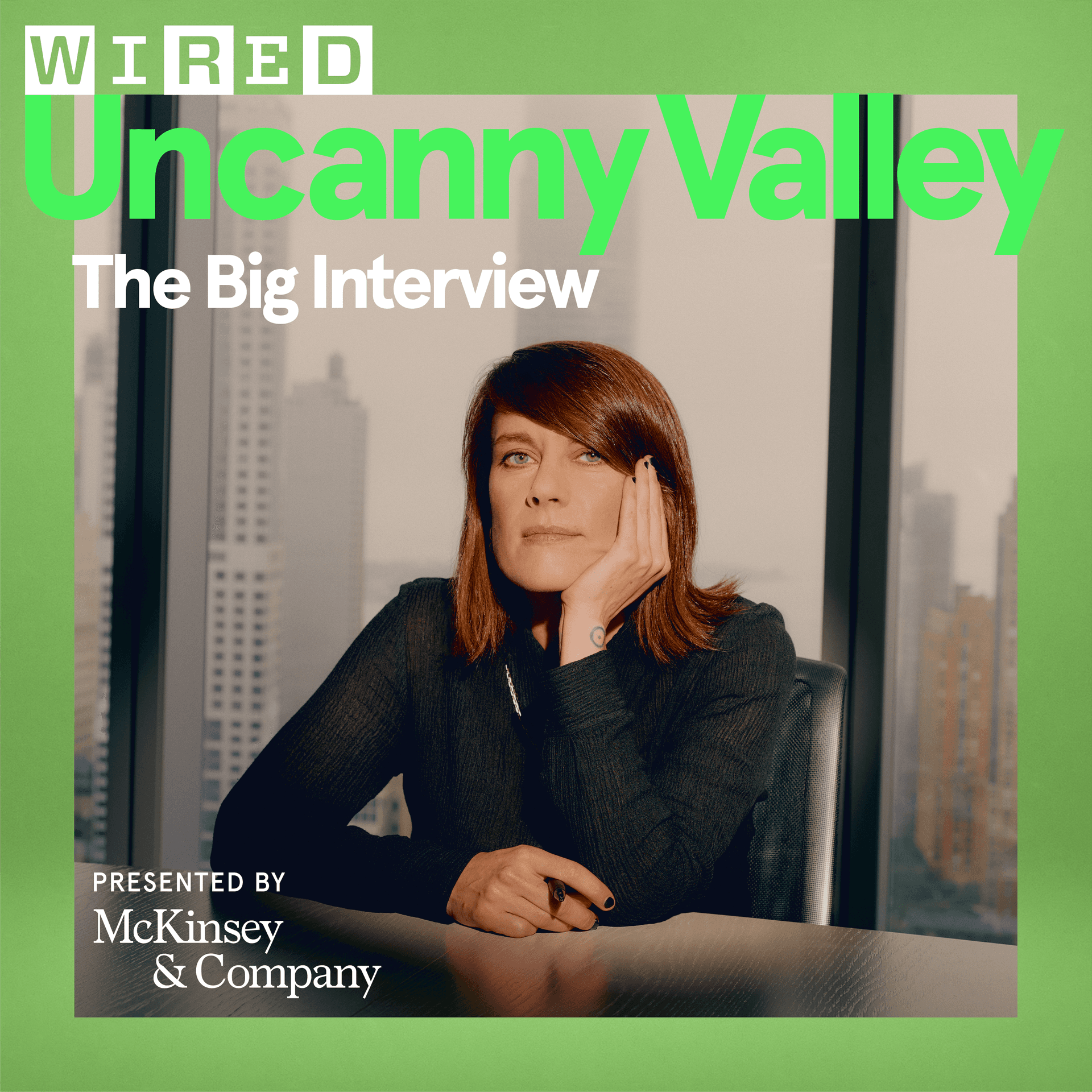
Hasan Piker’s political commentary and streaming life, including his upbringing (New Jersey and privileged childhood in Turkey), his safety concerns from doxing and government action, how he runs Twitch, his views on Democrats’ failures, and his stance that he will never run for office. He also discusses platform dependence (Amazon/Meta/AWS), AI, and social media control.
Guests
Hasan Piker (34), Twitch streamer and political commentator; previously on Young Turks (YouTube/Facebook). He has nearly 3M Twitch followers and drew 7.5M unique viewers during the 2024 election stream; he’s hosted Bernie Sanders and Alexandria Ocasio-Cortez.
Key claims
Democrats have “bad policy and bad politics” and lack signature labor/cost-of-living messaging; Republicans exploit the media void with populist grifts (Tucker Carlson, Marjorie Taylor Greene). He says 2025 America resembles USSR dissolution via “death by a thousand cuts” and oligarch self-destruction. He feels less safe than earlier years because federal actions (e.g., Global Entry revocation) add terror beyond neo-Nazi harassment.
Notable examples
Turkish government threats after a Huffington Post article about a coup; Global Entry credential revoked by DHS; deplatforming fears; “Trump on the White House roof” as an internet meme; Israel/8% Democrat voter support vs party/media coverage; his “delete all LLMs” tech-control answer.
Written by AI. May contain mistakes. Listen to the episode to check what was said.
Chapters
Tap a time to open that second in VOWho is Hasan Piker?
0:45 to 2:15
Exploring Hasan's influence, background, and his engagement with audiences.
“2024 election garnered 7.5 million unique viewers.”
Hasan's Upbringing and Privilege
2:15 to 6:50
Discussion on Hasan's childhood in Turkey and its impact on his worldview.
“It was hassofadir, but it was like Hasan father, but in a Turkish way of saying father in English.”
Transition to America and Its Realities
6:50 to 9:53
Hasan reflects on his move to the United States for college and the American dream.
“This is where I'm going to make a name for myself, you know, all of that, make a career for myself.”
Safety and Threats in Public Life
9:53 to 12:10
Addressing the threats and doxing Hasan faces due to his public persona.
“What does your family think about what you do?”
Family Perspectives on Hasan's Career
12:10 to 13:40
Exploring how Hasan's family views his career and success.
“I want to ask you a little bit about your career now.”
Twitch Streaming and Content Creation
13:40 to 14:01
Hasan discusses the transition to Twitch and how he engages with his audience.
“There's top level stories that I'm definitely interested in getting to.”
Navigating News Consumption in 2025
14:01 to 18:00
Explore Hasan's approach to media consumption and its evolving landscape.
“And therefore, I just go back to the same things that I've said a million times over at this point.”
The Challenges of Streaming Content
18:00 to 20:05
Hasan discusses the difficulties in maintaining context while streaming.
“Every week, we break tech news you can't get anywhere else.”
Critique of the Democratic Party
20:05 to 22:56
Hasan critiques the Democratic Party's effectiveness and policy issues.
“I want to ask you about this idea that has really been floating around since the election.”
The Need for Labor-Centric Politics
22:56 to 25:59
The importance of prioritizing labor issues in Democratic politics is discussed.
“That's not a thing that any Democrat should ever say.”
Show all 16 chapters
The Future of America Under Trump
25:59 to 28:03
Hasan shares his views on the potential future political landscape in America.
“So Democrats are just leaving that out there for some of the most cynical right wing grifters to take advantage of.”
The Oligarchs and America's Political Landscape
28:03 to 29:28
Explore how greed and nihilism affect political engagement in America.
“And they took advantage of this as a means to increase their wealth and power.”
The Dilemma of Technology Platforms
29:28 to 31:26
Discuss the complexities of relying on major tech platforms for content creation.
“And without that, I mean, how are people supposed to push back?”
Navigating Media and Appearance
31:26 to 34:18
Reflect on the impact of personal appearance and media portrayal on political commentary.
“And the reality of the matter is I just have to play ball with these big corporations to a certain degree because I still do generate a lot of revenue for them.”
Future Aspirations and Political Engagement
34:18 to 36:58
Consider Hasan's thoughts on the future of his career and the idea of running for office.
“break certain stories and maybe even get tremendous pushback from editors.”
Control-Alt-Delete: Tech Preferences
36:58 to 39:47
Engage in a fun discussion about which technologies to control, alter, or delete.
“I want to know what piece of tech would you love to control?”
Transcript
Automatic transcript. May contain errors.0:04Katie Drummond:From Wired, this is The Big Interview. I'm Katie Drummond. To some, he's the Joe Rogan of the left. To others, the poster child for anti-Semitism. And in some thirsty circles, he's been described as woke bae and a very handsome man. However you describe Hasan Piker, we can all agree on one thing. He is a relentless human being. The 34-year-old Twitch streamer connects with his audience seven days a week, six to nine hours at a time. And he spends most of that time discussing, dissecting, and reacting to the news, of which there has been plenty of late. There's no denying Hassan's influence. He has nearly three million followers on Twitch and has hosted conversations with Senator Bernie Sanders and, of course, Representative Alexandria Ocasio-Cortez.
0:52Katie Drummond:His stream during the U.S. 2024 election garnered 7.5 million unique viewers. So, who is the person behind all of this influence, all of these controversies, and the many, many thirst trap memes? We're going to try to find out. Hello, Hassan. Hi. It's great to be here. It's great to have you. I heard that you were just at the gym. How was that? Yeah, I was at the park. On some days, I go to the park. I take my dog to the park and I play a little bit of basketball, get to hang out with some people, you know, see what the normies are talking about. What were they talking about today? We do talk a lot about Israel.
1:34I feel like a lot of normies, at least, that I hang out with, like random people, they oftentimes will be talking about like foreign policy in general, which is surprising and unexpected for sure. But other than that, not much. I mean, the other day it was about something silly. Trump was on the roof of the White House, and that was a big deal, I guess, for some people. I just don't really understand why. I think it was a big deal on the internet because it was a very funny picture. Yeah, it was a funny picture. It was an amazing picture.
2:05Katie Drummond:So look, we always start these conversations with some very fast questions to warm up. Are you ready? Okay. You want to do it? I'm ready. Let's do it. What was your first online screen name? Oh my God. It was hassofadir, but it was like Hasan father, but in a Turkish way of saying father in English. It's not the Turkish word for father because that's baba, but it was spelled out in the way that like a Turkish person would say father. Okay, mine was miss pickle. So a little simpler, but first piece of tech you use after you wake up. Oh, my phone. Last piece of tech you look at before you go to bed.
2:53Oh, still my phone.
2:54Katie Drummond:Last text message you sent. Let's see.
3:01It was to my friend, Emma Vigeland, who is live right now, probably. She's the host of the majority report, who said, you're going to be in Chicago? Question mark, question mark. Let's collaborate. I fly out tonight. I said, same.
3:15Katie Drummond:Are you going to collaborate? Yeah. All right. What's your favorite sandwich? Ooh, that's a tough one. God damn, that's a tough one. Because there's, I love all of them. I would say a New Jersey sub from this institution called Sorrento's around Freehold. A number 14, which is a combination, I believe, of like number 7 and number 12. So an Italian sub from a real, real New Jersey institution. And if not that, then a Wawa Club sandwich. I really appreciate how specific that was. Thank you. first video game you ever bought oh i i pirated a lot because i was in turkey growing up so like it was virtually impossible for us to get like a lot of video games so i i pirated virtually every game so as far as purchase it could be metal gear solid 2 for the playstation 2 or i guess pokemon pokemon with pikachu like the og pokemon og pokemon okay it was a yellow i guess well Well, actually, this is a good place for me to slow down my questioning because you mentioned Turkey a couple of times.
4:21Katie Drummond:And I actually want to, you know, we're going to spend time on this podcast, like really trying to get to know the people that we're talking about. I think that's kind of the point. And so we're rewinding 34 years. You were born in New Jersey. You spent the majority of your childhood in Turkey. You've talked before about that upbringing, right? You've characterized it as a very privileged one. How did that experience, now that you're able to look back and reflect, how did that affect your worldview? How does that turn you into the person that you are today? Oh, yeah. So there's massive income inequality in Turkey that resembles America now, almost.
4:56But it's still far worse in Turkey than it is in America, even at this point. And for that reason, I think if you're, like, above board, if you're, like, relatively affluent, you're very, you come across very wealthy in comparison to the average person. and i've never hid that i've never shoved people from that truth like i i did grow up fairly affluent and for me how that impacted my development i think was i mean first it was very positive in the sense that like i didn't have to worry about you know making ends meet or having to take on a job or anything like that i had no no issues with that i had um my parents's main concern was to make sure that i wasn't spoiled so i didn't get everything i wanted but outside of that, I would say that as a young boy, I was sent to public school in Turkey so that I guess, again, I wasn't spoiled.
5:48I wasn't a spoiled little brat. And I think it was a good thing that my parents did that because it made me understand that there were very different income brackets and with people living in very different conditions. So I think that was my beginning point and trying to contend with wealth disparity, I would say, even as silly as it sounds like a child.
6:11Katie Drummond:Yeah. You moved to the United States for college, right? What was surprising to you about that transition from Turkey back to the United States? You're what, 18, 19 years old? Yeah. When I came to college, I mean, this is literally what I wanted. Other people were like, I want to be an astronaut. You know, I want to be a teacher. I want to be a race car driver. I was to go to college in America. That was what I wanted to do. I wanted to come to America. It was a massive Ameribu, as I like to call it, like a weeb for America. So I loved it. I mean, I was so stoked to be here. And I had all of these beliefs, you know, this is a land of freedom, land of prosperity, right?
6:55This is where I'm going to make a name for myself, you know, all of that, make a career for myself. This is where I'm going to live my life. I can't believe I finally made it. And I think slowly but surely just like experiences growing up or going to college and then onwards living in America slowly chipped away at that dream piece by piece. And it's interesting because in comparison to other fresh off the boat immigrant stories, like I did it, I did make it. I am living the American dream, but I just realized that it's just not something that is readily accessible for all. And it's a bit of a lie, I would say.
7:28There are a lot of major issues in this country that need to be solved.
7:33Katie Drummond:One of the things I'm curious about is in my job, right, running Wired, and especially running Wired since Trump was reelected, I worry about, right, my family's safety. I worry about their well-being. I worry about our home. I worry about my safety. I worry about all of these things, right? Obviously, I worry about my staff. do you worry about your family given the high profile nature of your job and how outspoken you are and how often you find yourself in the crosshairs of one debate or another i mean is that something that's sort of on your radar oh yeah all the time but it's not new yeah sure it's not new for me for two reasons one because if you are on the left if you've been a visible figure on the left and you've been a commentator on the left online, no matter what size you are, you've experienced doxing and death threats.
8:27This is something that is just in the backdrop at this point in my career, no matter what happens. I've been taking it on the chin for stuff like this since 2014. So it's been a long time and it shouldn't happen. It's ridiculous, but it's just something that you have to deal with. But also the other reason why I say I'm used to it is because I'm Turkish and the Turkish government is very restrictive with what you can and can't say. And I've already been in the past for an article that I wrote for the Huffington Post, been directly called up and threatened by the Turkish government for the article that I wrote about the coup that had taken place at the time and was demanded that I write another one that was in favor of Turkey.
9:11And I just didn't do it. But that is always because my whole family still lives in turkey so that is still very much a threat yeah that exists so i'm kind of eating it on both ends here because i you know you have that very same threat in america now as well but it is what it is i'm a very stubborn person and thank god so far so good right uh i've been all right and i think the way i consider it is like i have uh enough privilege and enough money to be able to defend my family and myself against such things. And there are so many people who are defenseless who get swept away in the process. So I try to speak for them to the best of my ability.
9:53Katie Drummond:What does your family think about what you do? They like it. They weren't big fans of it at first. They didn't fully understand what it was. And I think by the time I started taking care of them financially, they were just like, all right, it's fine. Because I'm the black sheep of my family. I'm the only one with an undergraduate degree only. My dad, my mom both have PhDs. My brother has a master's in engineering. So like they're all very credentialed. And my dad used to always tell me, when are you going to go back to school? When are you going to get a PhD? When are you going to get a real job?
10:25You know, like what's going on here? And then I guess those phone calls stopped at a certain point. And I would say that's after I started financially taking care of the whole family.
10:35Katie Drummond:So you were detained coming back into the United States, I think it was in May, you then shared that your global entry credential was revoked by the Department of Homeland Security. You've talked about living in Turkey. You've sort of talked about your experiences with that government. Obviously, you have, of course, been the target of sort of a lot of vitriol and doxing and hate for a very long time. So some of this is not new to you, but that feels sort of categorically new and different. I mean, do you feel safe living and working in the United States right now? I mean, yes and no. I feel safer than I would in many other parts of the world still, right?
11:16But having said that, I certainly don't feel as safe as I did 10 years ago, five years ago, even under Trump one.
11:27Katie Drummond:Yeah. Because there's a difference, I think, with right-wing neo-Nazi circuits coming after you, like groups coming after you and doxing you and whatnot. and trying to ruin your life versus the actual federal government actively putting a target on your back. I think that is definitely a little bit more terrifying because when they do it, it's legal, right? Technically, even if it is illegal, when the government is doing it, technically it's legal. And as someone who has seen what that looks like in Turkey, this is definitely a scary predicament. My family certainly thinks so, and they don't want me to continue doing it in America, but I'm too stubborn to leave.
12:11Katie Drummond:I want to ask you a little bit about your career now. I'm going to pivot over a little bit. What drew you to Twitch in the first place? You were on YouTube, right? If I recall correctly, this is years ago. I was on YouTube for the Young Turks And I was on Facebook primarily for the Young Turks as well. But I wanted to make my own thing. Like I wanted to make my own community and have a place that I could go to and just have it as my own thing. And I play video games already. So I was like, you know what? I'm playing a lot of Fortnite. Might as well maximize this time when I'm playing Fortnite.
12:45I'm playing Fortnite with a bunch of other content creators anyway, a bunch of other journalists and podcasters. Felix Biederman of Chapo Trap House. Noah Colwin, who was the senior editor of the Jewish Currents at the time. and now he has his own podcast called Blowback. So I was already playing Fortnite with those guys and shooting the shit, talking politics anyway. Might as well strap a camera to my PlayStation 4 and just go live to Twitch. And that's precisely what I did for like the first couple of months. And then I upgraded it.
13:12Katie Drummond:And do you plan these streams out in advance? I don't watch you for six to nine hours a day because I have a job, but I've seen enough to know that this is an endurance sport. This is a lot. I mean, how much of this is planned out and mapped out ahead of time? And how much of this is just like you're turning it on and you're going and you're freewheeling and you see where those nine hours take you? It's a bit of both. I have a skeleton in mind for what I'm going to talk about every single day. There's top level stories that I'm definitely interested in getting to. And for that reason, I'll have an idea of what I'm definitely going to cover.
13:50Right. but throughout the day as events unfold of course I don't have all my talking points readily assigned ahead of time and there is definitely a much more open communication format that I have in my chat in the process of me going through these stories so while I do have a skeleton in mind for like exactly what stories I want to hit I don't necessarily have the exact talking points that I write down ahead of time but I am in a constant state of researching and after doing this for 12 years at this point, considering that the exact same issues persist, I think I've probably made the exact same argument a thousand times plus for every single issue.
14:33Katie Drummond:Right. And therefore, I just go back to the same things that I've said a million times over at this point. What do you read and listen to and watch? Like, what is your news diet in the year 2025? Everything. I watch everything. from TikTok to, unfortunately, Twitter, even though Twitter has been insanely unreliable for that purpose. Like Twitter used to be my primary way to just, I call it downloading the news and it's gone. It's just not, it doesn't function in that way anymore. It's very sad. But as far as, you know, mainstream publications goes like NPR, New York Times, CNN, NBC, everything.
15:12I'm looking at my news application. I'm reading articles on there. And I'm listening to the radio updates with regular frequency from NPR and also from the New York Times.
15:26Katie Drummond:And how much do you worry about context? I've read or heard you talk about this a little bit before, but you're streaming for hours and hours a day, days on end. You are talking about sort of often very contentious subjects, right? Anything can be clipped. Anything can be shared. Your words can be taken out of context very easily. And they are. And they are. And how much do you try to control or redirect that narrative versus just logging on the next day and doing your thing and just letting it run? I used to try and take control over that narrative quite a bit. And I realized that that was probably a mistake because a lot of people that do that are doing that maliciously.
16:06Like they are not genuinely interested in offering constructive criticism or genuinely interested in like addressing a misunderstanding. And in most circumstances, they're just doing that specifically so they can professionally misunderstand you and present your position as the exact opposite in many instances. And that's something that has been done to me, I would say professionally at this point, there's like an entire cottage industry dedicated to doing that. And it's partially because I think offered it a lot of credence, a lot of legitimacy by responding and being like, hey guys, no, you got this wrong.
16:39This is what I actually meant. And in that process, I realized that a lot of those same people would just turn around and make more content off of that response where they would be like, oh, he's having a hard time coping. They wouldn't believe me, right? They wouldn't believe what the actual context was, even if they saw it. And for many of these people, for many of these content creators, I think I became a figurehead for what is all of the left from the hysterical social justice warrior crying that image from 2016 that Republicans still love posting all the way down to radical, scary, Stalinist, tanky, whatever.
17:21Right. I encompass this broad range of ideology that they despise and became like a figurehead that they could associate with or attack to basically position themselves as against the left without openly saying that they're against the left and then try to stay away from the actual message or the actual ideological disagreements, but instead just make drama content off of it because that's a lot more palatable for a lot of people that consider policies to be boring in general.
17:56Katie Drummond:Hello, I'm Joseph Cox, host of the 404 Media Podcast. Every week, we break tech news you can't get anywhere else. That includes surveillance. This idea that Ring is going to zero out crime. It's not. AI. AI is going to stick around in some fashion. That doesn't mean that the vision that these companies are selling us is how it has to be. And big tech companies. This is a serious crime. It's being enabled by Apple and Google through the app stores. Our journalism is by humans for humans. Find the 404 Media Podcast wherever you listen and on YouTube too.
18:35Katie Drummond:So you have your detractors. You also have a lot of fans. Arguably millions. why why do you think people like you why do people like you hassan i think i i communicate the anger that they feel in their hearts about the way that the system is designed i think that's most of it that's primarily the reason why i think a lot of people enjoy my commentary some people say it's because you're attractive it's your looks or whatever i'm like thank you for saying that that's very nice of you. But I think it's mostly because I try to fill the role that other commentators filled for me when I was growing up as a young boy interested in politics, interested in American politics in particular, when I saw people like Jon Stewart or like political satirists that I read in Turkey that helped me understand the world a little bit better and made politics more enjoyable and made it more palatable, made it easier to consume, but also was invested in educating me.
19:39And I try to fill that role for the next generation where I try to explain to people what my worldview is and I try to walk them through the process of analyzing the news. So in a lot of ways, I try to be an antidote to the unimaginable faucet of reactionary content that you see online to the best of my ability, which of course, like I said, draws a lot of enmity from these very successful corners of the internet.
20:04Katie Drummond:I want to ask you about the Democrats. I want to ask you about this idea that has really been floating around since the election. I mean, since Trump won of, oh, my God, they got to find their Joe Rogan. They have to find their Internet person to reach the young men, to reach the young people or just really to galvanize anyone. You've been described that way. It was weird to me to read the New York Times story about you from a few months ago where they brought in like external experts to discuss whether or not you could be the Joe Rogan. You've commented on that, I think, a little bit. I saw an interview you did recently where I think you said something like the Democrats don't need their own Joe Rogan.
20:44Katie Drummond:They need better policies. Yeah, that's the thing that I've consistently stated over and over again, which seemingly no one hears for some reason. And like, I've said that a million times before the New York Times piece even came out. I said it during the New York Times piece was when it was happening. It's just like you can't podcast your way out of this problem. Talk to us a little bit more about the problem as you see it. The problem as I see it is that the Democrats don't just have a marketing problem. The Democrats are just bad. They're a bad political party. And when I say that, I don't mean evil in the same way that the Republicans are an evil political party, right?
21:18Republicans have bad policy, but good politics. And what I mean by that is they are very good at utilizing the political machine, setting up wedge issues, really hammering in those wedge issues in an effort to create some kind of mobilization or momentum around a legislative agenda that is horrifying. That's the bad policy. Democrats, on the other hand, are supposed to have good policy and bad politics, but they don't even have good policy. They have bad policy and bad politics. So when I say they're bad at their jobs, they're bad at being the counterbalance to growing fascism in this country.
21:56They're bad at being the opposition party. And I think primarily that's because they're not defined by a couple key signature policies that everyone could champion. Right. Medicare for All is a great example of this. Free college is another one. Obviously, focusing on the cost of living crisis that Americans are facing right now is what Trump did, at least when he was campaigning. Clearly, he's not invested in fixing that at all, but at least he campaigned on that, right? Trump even was able to campaign as somewhat of an anti-war figure as opposed to Kamala Harris, which is so crazy to me. Crazy because that's not true.
22:39That was never going to be true. But the only reason why people were foolish enough to believe him is because the Democrats were actively messaging that they were going to continue death and destruction. Kamala said she was going to be responsible for the most lethal military in American history at the DNC. That's not a thing that any Democrat should ever say.
Read the full transcript
22:59Katie Drummond:Let me ask you this. You can snap your fingers and get the Democrats out of the mess that they've created for themselves. Yeah. Get the GOP out of the White House in 2028. What has to happen? What is the revolutionary change that transforms this very hopeless dynamic that I think a lot of people are feeling right now? Everyone behaves like Zohram Abdani. Like, just everyone get more radical now. And I, that's not, I'm not even alone on this. The most unlikely allies in this battle have been the Deboras and the Barbers, I like to call it, the white liberal wine moms are demanding that Hakeem Jeffries put his body on the line to stop these like deportations, to stop these mass fires taking place at federal regulatory agencies, like to do something, anything.
23:49so the way i think we get out of this in general and it's not just about the democratic party's success here it's just uh for the continuation of a healthy america that does right by every single american working class americans we need to start putting labor first we need to start putting the working class first and foremost and if the democrats don't do that and this is another thing that i warn about quite a bit cynical republicans will take advantage of the void that the democrats leave in the media to present themselves as actual populist because they do that all the time trump did that trump said i'm not cutting medicaid i'm not cutting medicare i'm not touching any of that not touching social security 800 billion dollar cuts to medicaid coming after this new tax cuts for the wealthy package.
24:43And the very fact that he ran on not doing that thing that he's now doing still means that they recognize that left populist messaging is very valuable. I'll give you another example. Israel as it stands currently, 8 % of Democrat voters say they like what Israel is doing, right? And yet, if you were to look at the Democratic Party's politicians, If you were to look at the organs of media, you would assume that everyone is on board with what Israel is doing, or at least maybe a little bit critical about it, right? Every now and then, a little bit of condemnation here and there. That's not reflective of the anger that people have in their hearts for this barbaric campaign of death and destruction.
25:32That's not reflective of that, so someone's going to take advantage of that. Who's taking advantage of that void in discourse? Tucker Carlson. Who's taking advantage of that void in leadership? Marjorie Taylor Greene. People who have their ear to the ground, who understand that this issue will get them tremendous support and is the number one way to communicate earnesty to as broad a voter base as possible. They're taking advantage of that. So Democrats are just leaving that out there for some of the most cynical right wing grifters to take advantage of. It's ridiculous. Like, it doesn't make sense.
26:11Even if you are amoral, bloodless, cold, calculating, heartless, like this is something that you should be seizing on as other amoral, bloodless, cold, calculated politicians are on the right.
26:24Katie Drummond:What does 2025 United States under Trump look like to you? You know, we're talking in words like authoritarian, fascism, techno-fascism, all sorts of different terms we could use. You grew up in Turkey, spent several years there, moved to the United States. We're living through Trump 2.0. what words would you use and what do you think that americans don't understand adequately or maybe don't understand yet about living in a country where democracy is a question mark and not sort of a sure thing anymore i mean i've never i've never thought that we've had a true democratic process anyway because the the issues that i brought up about like health care and whatnot like these are these are issues that persist uh these are these are things that people want and yet they never seem to get them right um and that's a part of the reason why i think like the liberal democratic process that we have here in america and in many other western countries is simply a a pressure valve to make people feel like they participate in this process to make people feel like their voice is heard to a certain degree so they don't revolt right Right.
27:35Because countries that have more, quote unquote, authoritarian means of governance are constantly susceptible to rebellion. Whereas I think liberal democracy has that pressure valve so that people just go, well, I voted, you know, I did my thing. And we are still the democratic process here. Like our voices are still heard. And and now I feel like that's falling apart. But I think the apt comparison of 2025 America is the dissolution of the USSR. because it was death by a thousand cuts. But I think the USSR ultimately engaged in self-destruction where numerous Western-affiliated and connected officials that were high-ranking government officials were basically picking apart the carcass of this state for profit as they recognized that liberalization was coming.
28:23And they took advantage of this as a means to increase their wealth and power. And they still run Russia. The Russian Federation is run by those guys. you know the oligarchs and i think that's kind of what we're doing here as well it's a self-inflicted wound born out of just pure greed with no counterbalance whatsoever no no no alternative vision for where society could evolve towards and uh i think a lot of people have have succumbed to nihilism for understandable reasons because they feel like their voices are not heard so they try to keep going by engaging in commodity consumption and watching movies and watching TikTok clips and just like trying to make ends meet and then hopefully feel a semblance of humanity in the very few moments that they have to themselves.
29:15That's pretty much what is going on in America, I think. And there's just not a lot of time for political education for many people. and the ways in which they could engage in said political education is completely destroyed. There is no significant force for collective bargaining in this country. And without that, I mean, how are people supposed to push back? How are people supposed to push back politically, even against the Democratic Party when the Democratic Party does not listen to their demands?
29:46Katie Drummond:I want to go back to the oligarch comment that you made. And this is not a gotcha question. It's genuinely something that I think about and grapple with in my own way, and I don't have a choice in that matter, which is around the technology companies that we rely on for what we do, right? Wired publishes on Facebook. We rely on Google search. We are intertwined with all of these technology companies, and we cover them on a daily basis. And you publish on Twitch, right? You don't own and control that platform. that platform ultimately is owned by Amazon. You publish on Instagram, right, which is owned by Meta.
30:24Katie Drummond:It's this very sort of imperfect reality that you exist in, that any publication exists in, that any creator ultimately exists in. It has not always been a smooth road for you at Twitch. I know, I think you were banned for a period, I think 24 hours, something like that a couple months ago. What are the interactions like with the platform? And have you ever thought about standing something up that would give you a more complete independence? It's certainly something that I've thought about, but unfortunately, my job as a communicator is to be as accessible as possible. And outside of the numerous complications of launching an initiative such as that one, it would also be impossible to do so without using AWS.
31:08So then you go back to Amazon, right? These are things that I have entertained. These are things that I've thought about quite a bit because as a political commentator that is outside of the political duopoly that exists in this country, I'm always thinking about the threat of deplatforming, right?
31:26Katie Drummond:Yeah. And the reality of the matter is I just have to play ball with these big corporations to a certain degree because I still do generate a lot of revenue for them. So I think that is the value that I bring to the table. not only do i generate a lot of revenue for them i generate a lot of positive advertising for them like a positive marketing for them because if all of the top content creators were just little creatures that were constantly saying insanely toxic things and insanely hateful things i think advertisers would probably not like that as much so premier advertisers i think still can point to someone like myself who gets positive coverage in mainstream media to say like oh this is a this is one of the top content creators on this platform.
32:09He's a progressive person. We like that. Now, things are changing. I think the advertising industry is changing a little bit, as we've seen with the Sydney Sweeney ad and the Dunkin' Donuts ad and things of that nature. I feel like they are also pivoting to at least entertaining right-wing sentiments. So who knows where platform moderation goes in that regard. But ultimately, I try to be as invaluable as possible to these platforms that I'm on so that they just let me continue doing my thing.
32:41Katie Drummond:I'm going to wrap it up in a second, but I said I was going to ask you about your appearance. And so I got to fit that in here. And, you know, when that New York Times story came out, I admittedly, I read it and I was like, this is a really weird story. And no offense to whoever wrote it. Fine. Good for them. But it was like, he does news, but also he's hot and a man. And it's like, yes, he is a man that's true. What do you make of the conversations about your appearance? And I would say, too, you just talked about being invaluable to the platforms. I looked at your Instagram, Hasan. You are shirtless often.
33:15Katie Drummond:So you seem to embrace this sort of part of your fandom, this part of the conversation. Talk to me a little bit about how you think about that. Yeah, I mean, I'm just who I am, right? I don't do it as like a marketing technique or whatever. I just, I grew up very, very fat. So I, once I was able to lose this weight and achieve certain goals that I had set for myself fitness wise, like I wanted to influence others to also be able to do the same and to, to have, to lead healthy lives. So part of that process, but I'm sure that there's plenty of people who go, that dude is hot and thank you, I guess.
33:54I'll take it. But the thing is with the New York Times, the New York Times, I don't think is ever going to write about my politics. I don't think the New York Times is ever going to do that because my politics are, especially when it comes to foreign policy, fairly antagonistic to the New York Times. And while there are incredible journalists there, some of them are my very good friends who work tirelessly to try to break certain stories and maybe even get tremendous pushback from editors. that want to maintain editorial control in a certain way, in a certain direction. I think this is basically a way for some people to just try to get me more mainstream prominence.
34:35Katie Drummond:Sure. That's the way I see it. I think it's basically getting proper positioning in mainstream outlets so that marketing managers and media executives who read the New York Times and get their notes from the New York Times actually don't see me as this hostile figure or bad or wrong. So I'll take it. I was on the Times 100 Most Influential, I believe, recently. And I call it terrorism insurance because, you know, there's always, there are always a lot of publications, far-right publications like New York Post or numerous other publications that are actively trying to get me deplatformed. So when I have these sorts of media opportunities, I take them because it's like, yeah, this makes those guys look silly.
35:20This is closer to the truth than whatever the ways in which Fox News presents me as like a dangerous terrorist, right?
35:28Katie Drummond:You're talking about strategic positioning, which brings me to my last question. You've been doing this for 12 years. That is a long fucking time to be streaming on the internet. How do you think about the next phase of your career? I don't see myself doing anything other than this anytime soon. I love this. I'm a very stubborn person and I don't take for granted the fortune that I've had because I never thought that I would be one of the top political content creators in the country. I think that that is a position that requires a tremendous amount of gratitude. Do you think about running for office?
36:07No.
36:08Katie Drummond:Never? Never. Never. Everybody always, that's the number one thing people are always telling me. It's like, no. Well, you have a big platform and strongly held views and, you know, it doesn't not make sense. It doesn't not make sense. But there is no media ecosystem that would prop someone like myself up, as evidenced by even someone like Bernie Sanders. He had all of the experience and yet he was humiliated, bullied endlessly, attacked in many ways unjustifiably. and I think that played a big role in him not being able to achieve this level of success that he could have. Someone is going to have to do it.
36:50Katie Drummond:I'll check back in with you in 20 years. We're going to play a really quick game and then I'm going to let you go. It's called Control-Alt-Delete. We made it up.
37:01Katie Drummond:I want to know what piece of tech would you love to control? What piece would you alt, so alter or change? And what would you delete? What would you vanquish from the earth if given the opportunity? Control. Go. Piece of tech across the board. Delete all of the LLMs. All of them. Gone. No more AI. No more fucking language models. Bye-bye. No more. Bye-bye AI. Bye-bye to all the image generator things that are just destroying the planet so that People can have that like yellow hue, gross AI images that they can churn out. Done. That's out. Easy. As far as control, I would control TikTok. That's what I would control.
37:48What would you do with it? To turn it into the pro-socialist, anti-imperialist propaganda apparatus that every boomer parent thinks it is. To like actually turn it into that. be like, oh, you got a septum piercing and you're talking about how rent must be abolished. Boom. 100 ,000 likes. You're in front of every wine mom, you know? Now everyone's going, I think we should abolish rent. That's what I would do.
38:11Katie Drummond:Okay. This is a good answer. Alt. Alter. Alter. Alter Twitter. Bring woke back. That's what I would do. Bring woke Twitter back. I would bring woke back to Twitter because while that's annoying, right? The endless silly back and forth about whatever problematic content you consumed says about you and all the moral victories that people tried to to gain on this platform is still, while annoying, far more preferable to the neo-Nazi shithole that it has become bring woke back i'd rather be canceled a million times for i don't know uh saying something that uh someone perceived as like remotely ableist or something i'd rather be canceled every day than have to fucking deal with the neo-nazis uh posting adolf hitler uh fan cams and getting hundreds of thousands of likes and it's not even just that it's just like it's all bots my my feed is filled to the brim with like the worst videos of all time not just like violent ones but just like really stupid ones it's like it's such a waste of time i can't even delude myself in the thinking that i've learned anything new when i go on that platform like this was the place where people were breaking their stories journalists were breaking their stories on this fucking platform you know what i did with my account is i deleted it so that i don't have to look at it anymore.
39:42I can't do that because unfortunately it's a primary mode of communication for like an international consortium of journalists. Like I, I talk to reporters in Gaza on this platform, you know what I mean? Like, it's just not, there's no other alternative out there that I can use. It sucks.
40:02Katie Drummond:Hassan, thank you for being here. This was great. It was really, really interesting. Thank you for having me.
40:14Katie Drummond:This show is presented by McKinsey & Company and is produced by Jessica Alpert with help from Adriana Tapia and Sam Egan. Sound design, mix, and original music by Pran Bandy. Kate Osborne is our executive producer. Condé Nast head of Global Audio is Chris Bannon. And I am, of course, your host, Katie Drummond, Wired's Global Editorial Director.
40:41Thank you.
41:29Katie Drummond:Thank you.
From the publisher
Hasan Piker, the Left’s favorite Twitch streamer has the kind of following that could get votes. But he tells Katie Drummond he’d rather use his influence to tell Democrats “you can't podcast your way out of this problem.” Streaming on Twitch seven days a week for 6-8 hours a day, he doesn’t see himself slowing down anytime soon. We also talk about his childhood in Turkey, his decision to live in the spotlight, and whether he’s planning a run for office.
Join WIRED’s best and brightest on Uncanny Valley as they dissect the collision of tech, politics, finance, and business, from Alexis Ohanian's newest tech venture to the effects of inaccurate information from artificial intelligence (AI) chatbots on social protests.
Learn about your ad choices: dovetail.prx.org/ad-choices


