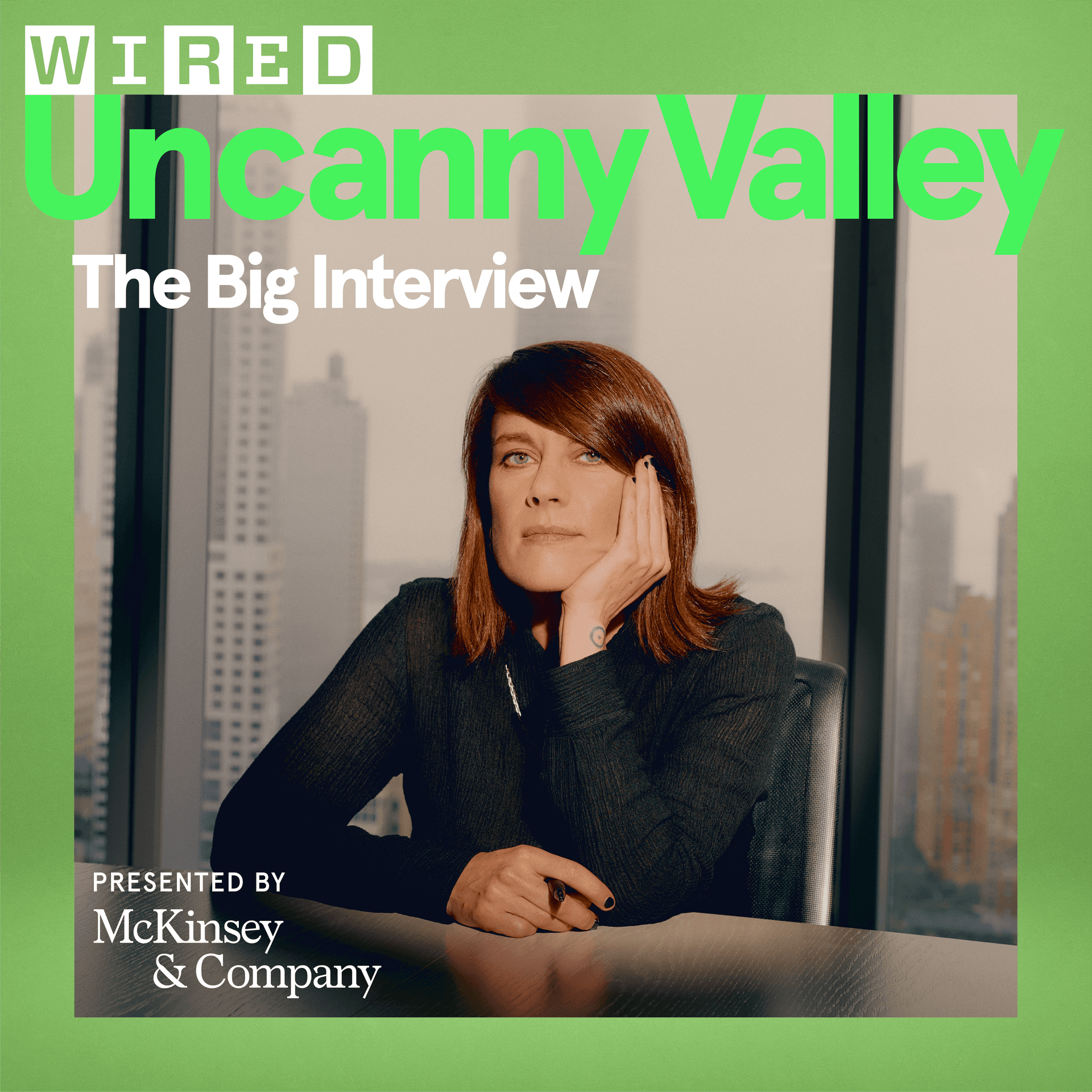

In short
Meredith Whittaker (Signal Foundation president) argues “AI” is a vague branding term, warns about agentic AI enabling privacy backdoors via operating-system access, and connects these risks to surveillance, authoritarian control, and SignalGate-driven growth.
Guest backgrounds
Meredith Whittaker studied rhetoric/English lit/psychoanalytic theory at UC Berkeley; joined Google in 2006 via Monster.com; later co-founded/ran ML-related work including M-Lab network measurement; left Google after 13 years; now leads the Signal Foundation (encrypted messaging used by millions).
Key claims
AI is not a technical term of art; current “AI” mostly refers to large-scale models. Agentic systems require broad data access and cloud processing, creating backdoor risks. Governments and companies increasingly overlap in surveilling citizens; AI systems are inscrutable, non-deterministic, and often non-representative.
Notable examples
Harvard team’s “genocide detection” algorithm pitch; WhatsApp messages reportedly routed to Apple/Siri; Microsoft Recall screenshot/OCR design; SignalGate group-chat incident leading to major download spikes and NYT front-page coverage.
Written by AI. May contain mistakes. Listen to the episode to check what was said.
Chapters
Tap a time to open that second in VOMeredith Whittaker's Journey
0:45 to 4:25
Discussion on Meredith Whittaker's background and career trajectory.
“Her interest, skepticism, and thoughtful perspective on the ethics of AI technology produced friends and detractors, quickly catapulting her into a global thought leader.”
Warm-Up Questions
4:25 to 5:05
Fast-paced questions posed to Meredith to warm up the conversation.
“part of sort of normal culture that everything about you is assumed to be fair game and then i'm you know like it's a question around like what led you to keep your personal life and your relationships to yourself.”
Privacy Philosophy
5:05 to 5:32
Meredith discusses her views on privacy and personal life choices.
“then be sold to advertisers who want to reach a certain type of person?”
Reflecting on Google Culture
5:32 to 11:08
Meredith reflects on her experiences and the culture at Google during her tenure.
“You studied rhetoric, English literature.”
Evolution of AI Awareness
11:08 to 14:01
Discussion about the evolution of AI and Meredith's early warnings about its implications.
“And I think before many, many, many people in the mainstream were like, oh, chat GPT, generative AI is a thing, which is really the last two or three years.”
Machine Learning and its Evolution
14:01 to 16:45
Explore the rise of machine learning and its implications in tech.
“Machine learning was one of a number of statistical techniques that usually lived between ads and research, help optimize advertising auctions and ad placement, whatever.”
The Current State of AI and Its Risks
16:45 to 21:08
Discuss the current AI landscape and potential market challenges.
“And so then fast forward to now, the year 2025, I can't get through half an hour in my job without hearing about artificial intelligence.”
Signal's Growth and Privacy Challenges
21:08 to 26:01
Analyze Signal's growth amidst privacy concerns and AI integration.
“Now, I want to talk to you about signal, which seems like a relevant thing to discuss with you.”
The Future of Privacy in Tech
26:01 to 28:00
Reflect on the implications of AI and tech on privacy and data control.
“So you're like, hey, you know, at 3 a.m., what was I doing on my machine?”
The Consequences of Tech Control
28:00 to 31:38
Meredith Whittaker discusses the risks of tech monopolies and surveillance.
“hold up the collateral consequences of this are pretty dire.”
Show all 14 chapters
AI's Role in Surveillance and Governance
32:06 to 39:19
Exploring the implications of AI in government surveillance and public awareness.
“The reporting around Doge and around how Doge and federal agencies in the U.S.”
Signal's Response to Crisis
39:19 to 42:00
Meredith Whittaker recounts Signal's reaction to a sensitive military leak and its aftermath.
“Where has that surge of attention left you now that the dust has settled a little bit?”
The Seriousness of Tech Culture
42:00 to 43:16
Discussing the emotional aspects of tech culture and the need for dignity in infrastructure.
“Like you have guys just like sniffing the hype glue.”
Control-Alt-Delete Game
43:16 to 45:03
Meredith Whittaker plays a game discussing technology she would control, alter, and delete.
“I want to play a little game to wrap up.”
Transcript
Automatic transcript. May contain errors.0:03From Wired, this is Uncanny Valley, The Big Interview. I'm Katie Drummond. When Meredith Whittaker was an undergraduate studying rhetoric, literature, and psychoanalytic theory at UC Berkeley, she probably wouldn't have predicted her now storied career in tech. But in 2006, the broke recent grad needed a job, so she uploaded her resume onto Monster.com. In between interviews with publishing houses, she was contacted by Google for an entry-level customer support gig. That role evolved into a long and winding upward trajectory before her dramatic departure after 13 years. Maybe she didn't predict all of that, but almost a decade before any of us heard about ChatGPT, Whitaker was predicting something else.
0:44AI was worth taking a closer look at. Her interest, skepticism, and thoughtful perspective on the ethics of AI technology produced friends and detractors, quickly catapulting her into a global thought leader. And while she started her career at Google, the most Silicon Valley of Silicon Valley companies, she's now the first ever president of the Signal Foundation, a nonprofit whose flagship product is an encrypted messaging platform used by millions of people around the world. Among those people, of course, are the Trump administration officials responsible for SignalGate earlier this year, which catapulted the foundation and Whitaker to the very forefront of the political and cultural zeitgeist.
1:26Meredith Whitaker, welcome to The Big Interview. Thank you for being here. I'm happy to be here. Nice to see you, Katie. Nice to see you, too. So brace yourself, because we always start these conversations with a little warm-up. I'm going to ask you some very fast questions. Are you ready? I am. Okay. Mountains or beach? Mountains. What's the most overhyped AI buzzword right now? Agent. Oh, I knew you were going to say that. What's the weirdest AI application you've ever seen? Okay. I'm having to dig through a bag of weird to try to identify something that could top the stack rank. A chatbot that pretends to be your friend.
2:02That is weird. Yes. That's weird, right? Weirder every day. If Signal had a mascot, what would it be? We would never tell you. What emoji best sums up your philosophy on privacy? The ghost emoji. Nice. More secure, handwritten letters or encrypted texts? Handwritten letters. coffee order simple or complicated simple you're she's telling the truth she's drinking what looks like a very basic coffee right now if you weren't working in what we'll call what you do tech if you weren't working in tech what would you be doing what's your alternate career path a poet love that someone asked me that once i don't want to name drop but it was david remnick in a job interview and i said massage therapist oh my and he was like what what is wrong with you You hired?
2:54You're like, David. Yikes. Wow. I can make that joke. It's fine. I'm not in your industry. It's fine. I'm blushing. Okay, so let's talk a little bit about you so that I can stop talking about that very awkward interview I did with David Remnick. Favorite subject. I am so sorry. And interestingly, actually, we don't know a lot about the early life of Meredith, which I realize is on purpose. And you've said that it's on purpose. You've talked about how you've decided to keep your personal life private. You decided that at a very early age, if only more people were so careful. Tell me about that decision.
3:33I don't think it was a conscious decision. It wasn't a flex. It's not like I woke up after reading a book on how to live your life, and I decided this is who I am, and I'm maintaining this firewall. It just seemed weird and creepy. and my friends know me my family knows me but you know I can't I was like a teenager when MySpace and Friendster and these early proto-social networks were coming up I came up in chat rooms and like Usenet groups and it was never really about it was about like is there a persona you could create that's like funny or weird or skewed how good are your clapbacks how accurate is your information can you roast with the roasters like it had very little to do with a sort of expose of your personal life and i think it's strange that that has become part of sort of normal culture that everything about you is assumed to be fair game and then i'm you know like it's a question around like what led you to keep your personal life and your relationships to yourself.
4:49And I'm like, but what led us to assume that every micro action and relationship and social context is mineable and tractable and even understandable from the perspective of data and sensors and giant SQL databases that are mined for typologies that can then be sold to advertisers who want to reach a certain type of person? I don't know. There's nothing complicated about it. I think there's something weird about the time we live in and the way that every single human action and relationship is assumed to be scrutable and mindable and, you know, share game, basically. Yeah. Okay. Well, look, fair.
5:33Fair answer. We do know. We do know about you. Who do we? My producers and myself. We do know you went to UC Berkeley. I did. Right? You studied rhetoric, English literature. What did you think you wanted to do? I thought college was a much easier hustle than working retail and managing bands and scraping together money. Like, it wasn't—I didn't come from a place where you sit down a five-year plan as a 12-year-old and, like, get into school. It was sort of, you know, it was hustling. It's hard to work retail. At first, it was just a much easier job. And I was—I'm good at school. I was always a big reader.
6:11Like, that was never hard for me. But it wasn't a career aspiration. It was like, I'm really, I love reading books. This is the most fun I could have, you know, working, in quotes, right? And then I graduated. There was some professors who wanted to sort of push me to grad school. And I was like, that is not a good bet. I don't want to take out any loans. Like, I had this sort of class-based caginess around owing money. And then I started looking for jobs. And I put my resume up on Monster, which is old LinkedIn for the youth. Oh, yeah. And Google recruiter reached out. And so I was about to go there.
6:49Yeah. And we're not going to spend a ton of time on Google. But speaking of fun and fun things to do, you worked at Google. You worked at Google for some time. Yeah. Was that a, like, culture shock feels like even the wrong way to describe it. But you at Google, I will say, like, knowing you now is hard to imagine. Did it feel hard to imagine to you when you were sitting in your cubicle, drinking the free juice, eating the free lunches? It was odd. But the jump from where I came from to the lowest ranks of Google when I started is farther than any jump I could make from my sort of entry-level position at Google to anywhere.
7:28It was just a very, very different context. And so I didn't know how abnormal that place was. I was just like, I guess this is what a business job is like. Right. All right. We sit a lot. You do not have a social life. You get up at six, you take the shuttle from Berkeley to Mountain View, and then you get home around nine and you sit a lot. But also it's like a feral teaming environment. And at that point, when I started in 2006, it was a very different tech context. Yahoo was a larger enterprise as measured by monthly active users. The IPO had happened a couple of years before. So Google was, there was an exuberance there.
8:12There was a huge amount of money, but Google had not entrenched itself as a dominant monopoly player, right? These were sort of platforms trying to kind of monetize attention in various ways. And there was a real belief at the core of that culture that finally the formula to being ethical billionaires had been found. We'd unlocked, you know, the good kind of capitalism and this was it and the world would be transformed. And, of course, on the backs of Stephen Levy and these sort of, you know, utopian dreams. And I was like, whoa, this is interesting. There was also because I think there's a lot of money and because at the time I entered tech, the people working in tech along with me hadn't gone into that field largely because it was a money field.
8:56They'd gone into it because they were like wooly little nerds who loved circuits. And that's not the case now, right? Yeah. Like if you went into the money field, you were like studying for the bar and the LSAT. You were studying for the MCATs. You were like doctor, lawyer. those were where the kids who just had sort of steely ambition or like really hard-edged parents were going. But there was a sort of genuineness to a lot of the people. There was a huge amount of tolerance for like weirdos and nerds and kind of like strange, odd people, which I love. That's my crew. And so in that way, it was a pretty fun environment because if you worked at Bell Labs, you were hired.
9:36If you were working on some core protocol, you were hired. And so a lot of very smart people who were genuinely interested in what they did were roaming around with money and time and a lot of permission to do stuff. And I, the lucky part about coming where I came from is I didn't realize those checks weren't written to me. So I was walking around trying to catch them everywhere. I was like, well, I want to do that. And they were like, well, you know what? We didn't hire you particularly to do that. You did not invent a corporate, but you're in the kitchen, you're cooking. Okay. No one likes conflict in this environment.
10:06So I guess we'll let you proceed yeah yeah yeah it's so funny to think about that now when you know you're you're going to work there to wait out your four years so that your options vest and then you you're on to the next it's a it's a money machine yeah I mean you know at some point they brought in McKinsey at some point like you can't just continue reporting growth and revenue on the backs of pure ethical. You know, how we've described it in the past is the, at that point, the horizons that, you know, of like needing to do bad or leave money on the table were very, very, very far in the distance.
10:53And ultimately, the machinery of the publicly traded corporation doesn't tolerate that type of bright line. And so I think that has a lot of explanatory power for like, Why from that to this? One of the interesting things about your time at Google, to me, in thinking about where you are now and where we are now, is that you watch the evolution of AI, right? That was unfolding before your eyes. And I think before many, many, many people in the mainstream were like, oh, chat GPT, generative AI is a thing, which is really the last two or three years. But you have actually been warning about the implications of AI for many, many years.
11:32So you did an interview in 2019. I think it was with Kara Swisher. that's six years ago now, where you talked a lot about this. You described sort of the crap in, crap out process. Can you talk maybe a little bit about those earlier years looking at the evolution of AI and looking out into the future and seeing things that we are now experiencing or even then were experiencing, but sort of weren't in the mainstream consciousness? I mean, did you feel crazy? Were you looked at as crazy to be sounding those alarms early on? Yeah. I mean, I never felt crazy. The closest, I think, was like, oh, I must not be clear if this isn't landing.
12:15Like, how do I say this more clearly? Because obviously, if people heard it, we would act, right? And that's a more naive version of myself. But, you know, I started 2006 at Google and then I built a co-founded an effort called M-Lab that was large scale network measurement. And that's network measurement is like basically measuring your Internet performance. Like, why isn't Comcast working? And this was an effort to create data that could live in the public domain that could allow us to understand net neutrality, which was a big topic back then. And also just to have a public source of information around like how these core infrastructures, these telecommunication networks are working.
12:57And in that process, I got really sensitized to the process of creating data, right? Like the millions of kind of editorial choices that go into, you know, how are we designing a methodology that will create data that we can be comfortable saying is a proxy for a very complex reality. I was already backed in to just how contingent and like ultimately editorialized data is. It's not a flat reflection of the facts of our universe. it's a series of choices that people have made that reflect their positions, their interests, the job they have, right? Why was Google paying me to do this? Well, it had an interest in this data set existing, right?
13:42They were paying$40 million a year just in bandwidth to help sustain this infrastructure around the world. Why would they pay that? Because that data set was doing something for them in the world. And so that's happening during the 2000s into the early 2010s. And I knew machine learning was around. Machine learning was one of a number of statistical techniques that usually lived between ads and research, help optimize advertising auctions and ad placement, whatever. But it wasn't the godhead, right? It was like a thing some people did. And then it was early to mid 2010s that I started seeing like machine learning courses pop up.
14:25It became a thing that would move from a little tech talk around a machine learning innovation to the main stage of Google's all company weekly meeting. But there was this meeting I had at that time. I was managing a pretty big budget. I was running the open research group, which was collaborating with a lot of academics and open source projects around big issues that span beyond Google in tech. And it was a lot of fun. And I was funding a number of projects so people would kind of come in and pitch me. And there was this team from Harvard that came in wanting me to fund an effort to create a kind of machine learning based genocide detection algorithm.
15:08Wow. Okay. And, you know, this is, I don't know, 2015, 2014, something around that, 2014. And I was like, wait, what? You know, how do you define that? Is that Lemkin's definition? Like, how do you augur that with data? And if you look back at the We Charge Genocide petition that accompanied sort of the U.N. adopting Lemkin's definition of genocide post-World War II, there's always been contestation around who gets to claim that term and who doesn't get to claim that term from the very beginning. but I'm asking these questions and I'm getting no answers. It's just a sort of tag back till the math will solve it.
15:46We'll build a model. We think we can get the data. And it's like, well, census data across countries isn't even fungible, right? It's collected in different ways. It represents totally different methodologies. Like, how would you do this? But that to me was this moment where I was like, okay, what are we actually doing here? Because I'm seeing this sort of pop up around the company. There is this claiming to be able to predict, detect, do things that I know the data they would be using is way shoddier than the MLab data. Like, I know how obsessive we are about methodological rigor, about all this, for measurements that are very low level, arguably some of the most objective, in quotes, measurements that you could do.
16:28And still, they're fuzzy and we're constantly having to make editorial choices. Now you're saying you can model this with social data, with census data, with data that is like in no way as rigorous or as easily objectifiable, to misuse that term. And that was the catalyst for me beginning to get interested in that field, read a lot, and kind of recognize that what was happening was some sleight of hand and actually had some pretty significant, I think, social risks to it. And so then fast forward to now, the year 2025, I can't get through half an hour in my job without hearing about artificial intelligence.
17:10It has taken over the world from optically, optically, not in practice, but optically. What is your assessment of the state of play with that industry? I mean, you've written before, and I think you wrote a piece for us, actually, I think at the end of 2024, where you talked a little bit in that piece about sort of the AI bubble on the precipice, right? That there were signs that this was starting to crack, that we were starting to see, I'm now mixing metaphors, but this bubble bursting, cracking, bursting, blowing up, whatever. Where are we now on that journey? On that journey. Yeah. That piece I felt like was, I remember asking the person who was editing it, I was like, I don't want to do a prediction.
17:58Can I do a manifestation? Yeah. So I think I have sort of like two answers to that. One, like AI is not a technical term of art, and that's very convenient for this market, right? It was a term invented in 1956 by John McCarthy, who was a cognitive computer scientist, and he wanted grant money, and he wanted to be the father of his own field. Right. So that term was invented, but it was actually not referring to the neural network paradigm we're now using that now is what we mean when we refer to AI. It was referring to these symbolic systems, which at that point were opposed to the neural network approach, the connectivist approach, which predated the term artificial intelligence by over a decade.
18:47So neural networks, it was like 43, I think. You had sort of the term artificial intelligence invented around 56. It didn't apply at that point to neural networks. It's kind of this blanket that has been thrown over a rotating set of technical approaches that currently, in this current moment, refers to these very, very, very, very, very large-scale models that require huge amounts of compute and huge amounts of data and certainly do really, really impressive things like trick me into thinking they love me or whatever. And this blanket could arguably be thrown over any other paradigm, right, if we decide that AI is sort of describing something else.
19:28That's a long way into saying, like, I do think there is a, you know, there is a threshold at which this, you know, the metastatic logic of the current AI moment, you know, bigger, bigger, bigger, bigger, bigger, all the water, all the energy, all the data, you know, all the every compute is going to give out. You have kind of climate thresholds. You have just thresholds on how many data centers you can build. Does that mean there's actually sort of a faltering in the AI market? I don't know. And I'll just end that by saying I think one of the reasons we're seeing this kind of glassy-eyed embrace of so-called AI agents is that they're really trying to find this consumer market fit for this bigger is better paradigm.
20:26And, you know, in a sense, that is just a sort of new branding. It's like wrapping everything we used to call assistants in, in like a new brand term and kind of hoping we can make that work. But there is a point at which the trillions of dollars that are being poured into AI, you know, either will or will not find that killer application and begin to break even. And we have not reached that point. And so I think that there is a threshold coming where the market will rein in the leash. And I don't actually know what happens then. Do we just shift what's under the hood of the definition? Move the goalposts.
21:07Yeah, yeah. To move the goalposts. Look over there. Now, I want to talk to you about signal, which seems like a relevant thing to discuss with you. I love talking about signal. And I'm going to start by, I'm just going to, good. I'm going to start by bringing AI into it because I remember we had coffee six months ago. I remember you talking to me a little bit about the risks of this moment in AI for Signal, particularly with agentic AI. And I'm curious about, given the moment we're in, where it leads us TBD, but given the moment that we're in, what does all of this mean for Signal, actually? Well, the first answer to that is we are seeing steady growth.
21:46I think we are in a moment where the stakes around privacy and private data are coming home to people in a personal, emotional, nervous system level. It's not an abstract concern that you've got to get your laundry done and then maybe you can think about that. It's data breach, data breach, salt typhoon, geopolitical fracturing, what have you. People are sensitized, right? Oh, absolutely. So in that way, I would say it's a good moment for Signal, and we are very proud that we are there and ready, and anyone who needs us can download it and use it. This is not a prefigurative, speculative project.
22:28This is infrastructure that is in place and ready to meet the moment. Very grateful to the team and the founders and everyone who made that possible. And then, on the other hand, there are real dangers to Signal in this environment, particularly, you know, there are, I would say, misguided or malignant legislation that is continuously proposed that would ultimately make it impossible for Signal to provide the robust privacy guarantees that are our entire thing. You know, undermining encryption, giving governments access, you know, things that just completely nullify the point of Signal's end-to-end encryption.
23:09And there are AI agents that do things for you autonomously. And in order to do that, need access to all of your data, your apps, et cetera, in a way that is pretty unprecedented. And the issue for Signal is these agents are increasingly being integrated into the operating system in ways that the operating system that Signal and all applications need to run on, whether it's iOS or Android or Windows. And in order to work, they need access to your data. So you have these systems that are, you know, offering to, like, book a restaurant for your friends and, you know, tell your friends the restaurant is booked and then you put it on all your calendars, right?
23:55Yeah. And in order to do that, they need access to your browser, search for a restaurant, say, access to your calendar. They can see everything else that's going on there, who you're talking to, access to your credit card to put the down payment for the restaurant, access to your, let's say, signal in order to... Message your friends, access your group chats, text your friends on your behalf. Pull down the information your friends reply with, like, hey, yeah, I'm free on Tuesday. Or is it your friends or their agents? You don't know. And then, you know, act on that without asking your permission.
24:29And almost certainly sending that data off of your device to be processed on cloud servers because there's no on-device models. Right. So ultimately what we're talking about is a backdoor. And we've already seen this, you know, in the context of WhatsApp. There was a report from Lumia, which is a security research forum, that showed that, you know, WhatsApp messages were being sent to Siri. Wow. And back as part of the latest Apple intelligence rollout. To me, that is nullifying WhatsApp's end-to-end encryption promises and, you know, ultimately creating, you know, the backdoor is now that vector from WhatsApp to the Siri servers and back.
25:12And so given that environment, how does Signal ensure that what happened with WhatsApp doesn't happen with Signal? You know what I mean? Like, how do you protect your users? Well, according to the Lumia report, it looks like WhatsApp worked with Apple on this instrumentation. I don't actually have the details there. Signal is doing whatever we can. To be clear, the future of total infiltration and privacy nullification via agents on the operating system is not here yet. But that is what is being pushed by these companies without the ability for developers to opt out. So we have spoken out very strongly about the existential threat that this provides to signal and application layer privacy generally.
26:01And there was one kind of concrete example where Microsoft rolled out a agentic system called Recall, which is the conceit there is that instead of you having to remember what you were doing on your browser three and a half weeks ago, Recall will tell you. So you're like, hey, you know, at 3 a.m., what was I doing on my machine? And Recall is like, you know, you were doom scrolling. And you're like, oh, thank you, Recall, for reminding me of that precious moment. But like how does Recall do that? It does it by screenshotting your desktop every few seconds and then running those screenshots through an ocular character recognition system, which basically pulls out the text and then stores all of that in a database.
26:48And the first designs for recall were to store that in an unencrypted database on your desktop. Of course, that would include your Signal desktop messages. So again, you've just created a vector there. Total nightmare situation. A total nightmare situation. We should not be having to make those tradeoffs. And so what we're calling for is, you know, very clear developer-level opt-outs to say, do not fucking touch us if you're an agent. Signal is entrusted with some of the most high-stakes communications in the world, like real life or death communications. Militaries, governments, every boardroom, human rights workers, dissidents.
27:27Ultimately, if you have high-stakes communication, you are almost certainly on Signal. That includes many of the executives of these companies. That includes many of the governments that they work with. And so it's, you know, this is not a, we believe there is a, at least a window of interest convergence here where this is not a gamble we should be making. And this is something that even if the rush for breakeven, for finding that market fit that has been elusive so far is, you know, pushing down from the boardroom to the C-suite to the product managers, like hold up the collateral consequences of this are pretty dire.
28:07In 2021, and I hate to read your own writing back to you, but I will. You co-authored a piece in The Nation where you warned at length about the risks of big tech being leveraged by authoritarian forces. And there were a lot of lines that stood out to me, but I'm going to read this one to you. The neoliberal bargain is fraying. And if we don't vie for control over the algorithms, data and infrastructure that are shaping our lives, we face a grim future. It is time to rally behind a militant strategy that recognizes the danger of leaving U.S. tech capitalists at the helm of systems of social control while far-right authoritarians jockey for access.
Read the full transcript
28:43I will say I read that earlier this week. And in the context of what's happening in this country right now, it was jarring to read that from 2021. Four years later, look at us go. Felt very prescient. I'm curious, to the extent that you can share with me your assessment of the state of the tech industry now vis-a-vis the administration. What stands out to you? What worries you? What can you tell us about sort of how you, Meredith Whitaker, are thinking about this moment? Yeah. I mean, this is – this harkens back to my longstanding commitment to open source, to transparency. I don't think it should be an idea.
29:23I think it should be common sense. that the core infrastructure that our global economies, governments, social relationships increasingly rely on should be open for scrutiny, should have some form of democratic governance, right? They should not be in the hands of concentrated entities, whether governments or companies. And I think that remains true. That's one of the reasons Signal is very staunchly open source. We do not want you to take my word for it. And so I think it's odd to me that we're now in a situation where we become numb to what should not be, I think, easily accepted, which is that government infrastructure, our communications, our intimate communications, our lives and social relationships, are observed, surveilled, instrumented, and determinations about them are made by a handful of companies that shape our access to resources and opportunities where we're slotted into life, how we are treated, what we're able to do, where we're able to go without scrutability.
30:43And this is why I've spoken out about the surveillance business model, which has persisted for a long time but is being supercharged by the desire for data that AI implies and the kind of production of data that AI also executes. And I think it's, you know, I still believe that, you know, the concentration of power is not only bad for innovation, it is, you know, socially dangerous, economically dangerous. And we could have a lot more fun if we make room for truly innovative technologies that we're answering different questions, doing things differently, and reflecting the will of what different populations wanted, needed, were interested in.
31:38On Masters of Scale, iconic leaders reveal how they've beaten the odds. Asking really strong questions is a superpower. You want to show up with something radically different and how they've grown companies to incredible heights. The greatest rewards always come from the greatest risks. That's hit the gas. Airbnb, Zillow, Microsoft, Liquid Death, and more. Hear from the founders who've changed the game. It's anything but business as usual. Find Masters of Scale on Apple Podcasts, Spotify, YouTube, or wherever else you get podcasts.
32:16One of the areas that Wired has been covering a lot this year, and other outlets too, obviously, sort of speaks to the Venn diagram of sort of the tech industry and the government, which is, I would argue, increasingly overlapping in this country. The reporting around Doge and around how Doge and federal agencies in the U.S. are using AI and fast-tracking the implementation of AI technology into federal agencies to do a ton of stuff, right, from identifying spending cuts to potentially aiding the detection of illegal immigrants, right? What should Americans know that maybe until now they have been naive to or they have chosen not to pay attention to?
33:01about what happens when you deploy AI for the purposes of surveilling, tracking, monitoring. Now that that technology is so much more embedded in federal agencies, what is important for people to be aware of? What should the average American be thinking about right now when it comes to their data? I think it is a bit scary. These systems are often inscrutable by design. They're non-deterministic, so you can't really know why a certain output was generated at that moment in relation to something. These systems are kind of janky. They don't reason outside the distribution, which is a fancy little way of saying, like, if it's not in the data that they were trained on, they're not going to be able to detect it.
33:43And so it really matters that they, you know, are representative. They usually aren't. I think, you know, beyond that, there's, I guess, an epistemic concern there that we're trusting these determinations to systems that will give a very confident, plausible -seeming answer. Right. That we can't necessarily scrutinize as true or false, but they will have the power and authority of a final truth claim. And those systems are being developed by, again, a handful of companies behind bales of trade secrecy, not scrutable to the public. There's really no way to know, was that an AI system rigorously trained, kind of making a determination that we can't scrutinize?
34:36Or was that a guy who's always wanted that to happen, who can now attribute the sort of desire to a smart machine that we are not allowed to question? and cannot scrutinize. Yep, exactly. Well, I thought you might make it sound even scarier, and you did, so congratulations. You're welcome. We have to talk a little bit. I have to ask you about a story that came up earlier this year that was maybe something you would think of as a massive pain in the ass. I want to know how you think about it. Atlantic Editor-in-Chief Jeffrey Goldberg, as everyone has, I'm sure, read who is listening to this, accidentally included in a signal messaging thread about a highly sensitive military operation, along with a ton of senior administration officials.
35:23Incredible scoop, but ultimately a horrible and tragic situation. People died, which I think is something we don't talk about enough in the context of that story as a result of that military operation that was being emojied to hell and back in this group chat. Tell me a little bit about how you all reacted to that in real time. And then I want to ask you a little bit sort of about now that the dust has settled. But for starters, just talk to me about, like, the initial moment. I remember where I was when that story was published. I'm sure you remember where you were. It was that kind of story.
36:00I was at my kitchen table in Paris, wherever place. Yeah. And someone in the group chat sent it, and I opened it, and I read it. And so you guys didn't have a heads up? No, we didn't get a heads up. I don't know that anyone predicted. I certainly wouldn't have predicted that Signal would become a main character, right? Yeah, totally. It's like, you know, did the road the car drove on become the main character? So read it, and I, like, remember reading it, and I always have a bunch of tabs up. I read news constantly. And so there was a real quotidian kind of like, okay, I read that article, and I got up to get a glass of water.
36:40And then I was like, wait, what? And I sat back down and read it again because I was like, no fucking way. And like I kind of, I was like waiting for the kind of gotcha or the part where I was like, oh yeah, okay. It was like a, it was a test. It was a simulation. It was a war game or, you know, whatever. Like I don't really remember. It just like picked up, right? There's like a flywheel and suddenly the press inbox is filling up and were sort of distributed across multiple time zones. So, you know, I have people waking up in California. I have, you know, people other places. And we're sort of huddling in group chats and little war rooms.
37:18And we're like, okay, well, what do we do now? And the determination we made was like, look, we're not really part of this story. We're the infrastructure that was used. We can't take responsibility for some guy's thumbs. Like, you know. Or intellect. Yeah. Yeah, that's not like like our lane is narrow and deep. We build the world's most private communication platform and that's what we can speak to. And we don't fucking know about the rest of it, really. We don't want to be part of the story, but what we cannot afford and what the people who rely on us really can't afford is for some misunderstanding around signal that would paint it as somehow vulnerable or somehow, you know, kind of like, you know, the problem at the center of this to catch wind in a way that would make people believe that signal wasn't secure, switch to less secure alternatives, potentially be harmed.
38:14Right. But it was 20 hours a day of background. And then this kind of like hyper vigilant cat like readiness. Everything that comes in, we're talking to folks trying to get a feel of, you know, like, is anything bubbling? Are there some trial balloons happening around Signal like that would characterize us in one way or another? And in the meantime, we're seeing the biggest growth moment we've seen in the U.S. Yeah, you had this massive spike in downloads, right? massive spike, like biggest we've seen in the U.S. And it has kicked off a global growth moment. So thankfully, we have the server capacity to handle that.
38:50And we were good there. And we're getting the kind of publicity that is just, I don't think I've ever lived through that, like in any organization, any instance I've been a part of. But it was a day where we woke up and the name Signal was in the headline of three separate stories above the fold on the front page of the New York Times. Wow. And I was just like, okay, you know, and so at that point, you're not in control. That was in March. So we're several months out from that. Where has that surge of attention left you now that the dust has settled a little bit? Well, our growth continues to be up.
39:28It wasn't just the U.S. We've seen global growth and like little spurts. So we had 25 time kind of growth in the Netherlands. We were top of the app store in Finland for a while. We've seen growth in Europe, growth in South America, some growth in South Asia. And so I think, you know, there's sort of a nexus of issues. SignalGate brought it to public attention. So, you know, frankly, I think it's just easier if I'm talking to my dad or, you know, my dad's friends to be like, yeah, use Signal. And I don't have to go into like a three-minute preamble about what it is and why it's good. There's sort of a common sense understanding, and we're really happy about that.
40:06And then that common sense understanding is like being met by a moment where, again, people are feeling in a much deeper, much more personal way why privacy might be important. And I do think a number of the big companies kind of showing themselves willing to just bow to the political winds, right? Sure. Like, here's my makeover. Now I'm this guy. Masculinity, love it. I love joshing around on the judo floor with my guys. It's very virile. Sorry, please don't mistake me for one of those with that convincing bit.
40:48In any event, I do think just in this moment of wildness where there's a handful of companies and they seem very happy to, you know, five years ago they were one thing. Now they're another thing. What are they going to be in four more years? I think that demonstration has not imbued much trust, irrespective, again, of where you stand politically. Yeah. I mean, in four years, if they're surfing with Gavin Newsom, President Newsom. Yeah. They'd be like wakeboarding. They're still controlling your data. Speaking of wakeboarding and judo, and this is my last question for you, but it's particularly, I think, interesting to me as a woman running Wired.
41:26You are obviously a woman in the tech industry. You're a prominent critic of the tech industry, which, of course, is largely run by men doing judo, etc. We know exactly what kind of guy we're talking about. What's hard about that for you? What's gotten easier, if anything? I don't... Or was it ever hard for you? Or was it not sort of an entity in your head? I mean, I don't, I would say what I don't like about it is anytime you have like a, I don't know, like a clubby little mindset, you have a lot of bullshit. Yeah. Like you have guys just like sniffing the hype glue. Yeah. And kind of believe in it.
42:12And like, you know, they all want to be liked. They all want to be included. They're pretty emotional ultimately. Yeah. You don't want to be left out of the bro crew. And that leads to a lot of, I would just say, sort of vapid unseriousness, like a kind of messiness. This is serious, right? If you're providing core infrastructure that people's lives depend on, there needs to be some dignity behind that. We need to accept that. We need to be empirical. We need to be grounded. We need to be steady. We need to be clear-eyed. this sort of hype hope people believe it so we can exit before the shit hits the fan mentality is just a floppy and undignified look frankly and so that's the culture that i that i really dislike and i find it i don't know if there's a there's a sort of seediness it's not cool it's not you know it's not honorable and then mix that up with like ketamine fueled hype I don't think it's cool.
43:14Get it together, guys. It's not cool. I want to play a little game to wrap up. We play this every time. It's called Control-Alt-Delete.
43:26I want to know what piece of tech you would love to control, what piece you would alt, so alter or change, and what you would delete. What would you vanquish from the earth? I know. All right. Control? Well, I wouldn't want to be personally in control. I would like, let's say, the core operating systems, the core infrastructures or the core libraries to be controlled and stewarded. Let's say stewarded by a, I don't know, like a well-resourced group of people who are working in the public benefit to make sure it is as robust and secure and fit for purpose as possible. Beautiful idea. Alter? Transportation infrastructure.
44:18Moving away from an individual car-based system to something that is, again, more fun, more workable. So let's say transportation infrastructure. What are we deleting? What are we deleting?
44:35I really wish I didn't have to carry smartphones everywhere. That's a big one. Yeah. It doesn't mean I don't use the things that run on a smartphone, but the way that life has been shaped around having to always be available, the assumption that we all make about each other, that if the text doesn't come back in three seconds, someone must be lost in the mountains. Or really mad at you. Or really mad at you, right? Whatever you could do to strip that away and make life a little more spacious, I think would be lovely. Well, on that note, Meredith Whitaker, thank you so much for being here. This was great.
45:07Total pleasure. Thank you, Katie.
45:13This show is presented by McKinsey & Company and is produced by Jessica Alpert with help from Adriana Tapia and Sam Egan. Sound design, mix, and original music by Pran Bandy. Kate Osborne is our executive producer. Condé Nast head of Global Audio is Chris Bannon. And I am, of course, your host, Katie Drummond, Wired's Global Editorial Director.
45:40Thank you.
46:10On Thursdays, join Head of Editorial Content at Vogue, Chloe Mao, and Head of Editorial Content at British Vogue, Choma Nadi, as they explore style and culture through the lens of fashion with guests like Martha Stewart, Kamala Harris, and Tracee Ellis Ross. The Run Through with Vogue, new episodes every Tuesday and Thursday, wherever you get your podcasts.
From the publisher
The Signal Foundation president, Meredith Whittaker recalls where she was when she heard Trump cabinet officials had added a journalist to a highly sensitive group chat. And tells, Katie about why it's important she gets paid less than her engineers.
Join WIRED’s best and brightest on Uncanny Valley as they dissect the collision of tech, politics, finance, and business, from Alexis Ohanian's newest tech venture to the effects of inaccurate information from artificial intelligence (AI) chatbots on social protests.
Learn about your ad choices: dovetail.prx.org/ad-choices


