
In short
The episode covers three threads: Iran’s threat to attack U.S. tech companies, Trump’s efforts to reshape the 2024 midterm election environment, and Polymarket’s failed D.C. pop-up “Situation Room” bar.
Guests
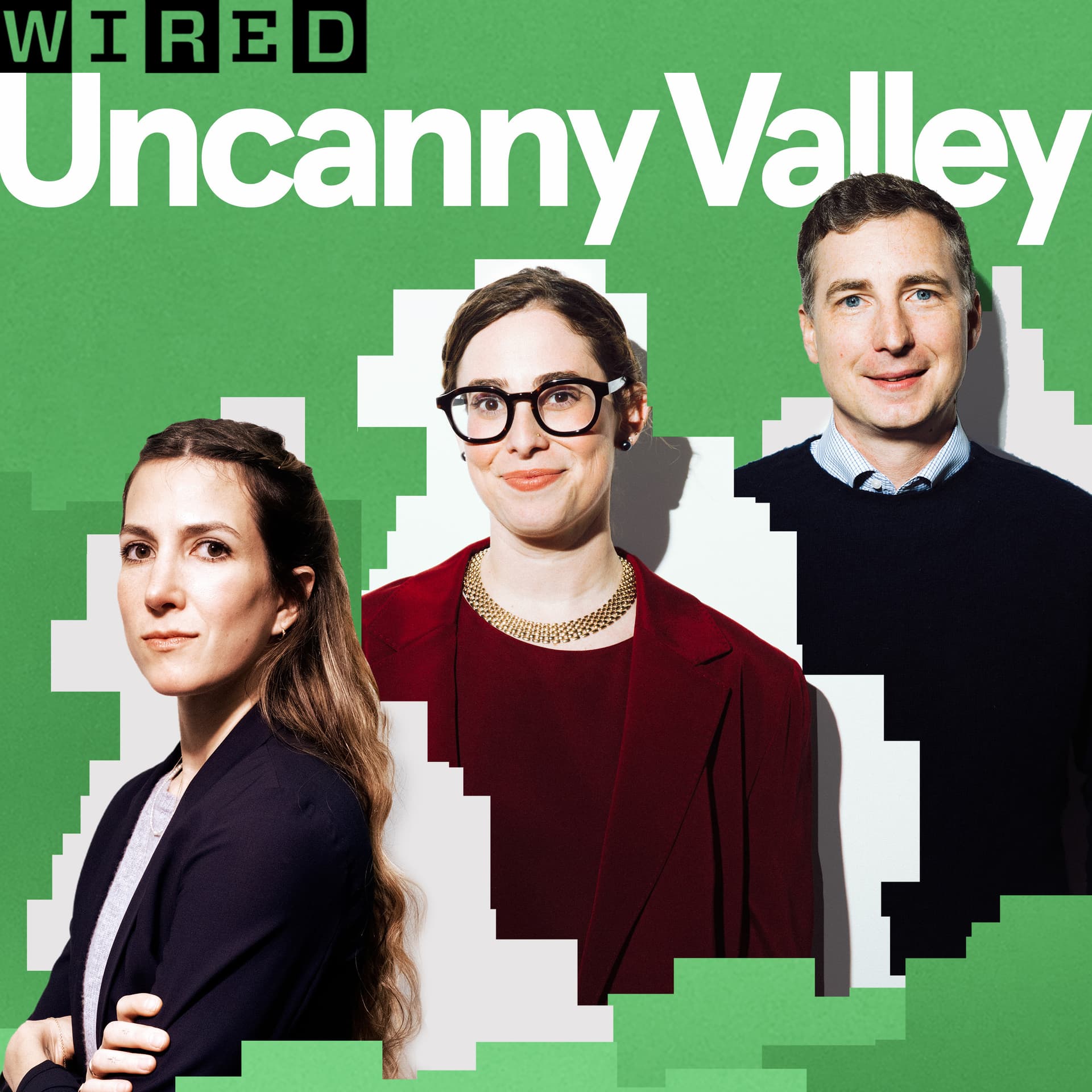
Zoe Schiffer (Wired Director of Business and Industry), Brian Barrett (Wired Executive Editor), Leah Figer (Wired Senior Politics Editor). Also featured: Kate Nibs (Wired prediction-markets expert) and McKenna Kelly (D.C.-based reporter).
Key claims
Iran’s IRGC warned it will start targeting 18 American companies on April 1, listing Apple, Microsoft, Google, Meta, IBM, Tesla, Palantir, and more; attacks already hit Amazon Web Services data centers. Trump’s “Save America Act” would require passport/birth-certificate proof to vote, plus an executive order pushing states to send eligible-voter lists 60 days before elections; courts likely to block. Polymarket’s pop-up was “janky,” with TVs failing and no Bloomberg terminal.
Notable examples
AWS strikes; Sam Altman’s Middle East trip; “negotiating with bombs” quotes; “Pentagon pizza” trackers; Palantir partnership focused on sports-market integrity.
Written by AI. May contain mistakes. Listen to the episode to check what was said.
Chapters
Tap a time to open that second in VOIran's Threat to U.S. Tech Firms
1:47 to 4:02
Discussion on Iran's warning to target American companies and its implications.
“I have spent more time in airports in the last three days.”
Impact on Tech Companies and Employees
4:02 to 6:28
Exploration of the effect of Iran's threats on tech firms and their employees.
“regardless of whether these attacks go through.”
Trump's Approach to the Midterms
6:28 to 8:15
Analysis of Trump's strategies and legislative efforts leading up to the midterms.
“Curiously, what shape those targets take?”
Election Integrity and Voter Restrictions
8:15 to 14:00
Discussion on the Save America Act and its potential impact on voting rights.
“And I think if the effect on their wallets continues, like we will see these people really, really care.”
Analyzing Trump's Political Strategies
14:00 to 15:47
Gain insights into Trump's political maneuvers and their potential outcomes.
“The executive order is going to get probably shot down in courts, although who knows?”
Trump's Impact on Global Politics
17:58 to 18:27
Explore the implications of Trump's foreign policy and its historical context.
“Banking services are provided by LeadBank, member FDIC.”
Inside Polymarket's Pop-Up Bar Experience
18:27 to 19:55
Get a firsthand account of the chaotic launch of Polymarket's bar.
“And I would say it's a world of permanent insecurity that we're looking at.”
Expectations vs. Reality at the Pop-Up
19:55 to 24:10
Hear about the disparity between expectations and the reality of the event.
“Yes, but it's only because I hate myself.”
The Cultural Significance of Prediction Markets
24:10 to 28:00
Understand the emerging cultural relevance of prediction markets in today's society.
“Because they had these Pentagon pizza trackers up.”
The Impact of Prediction Markets in Politics
28:00 to 29:49
Learn about the influence of prediction markets on politics and major players involved.
“I mean, I don't think it's going to subside anytime soon, at least not while the Trump administration is in power.”
Show all 12 chapters
The Spectacle of Polymarket's Event
29:50 to 30:21
Explore the mixed results of a recent Polymarket event and its implications.
“And then when I was at the bar too, like it was only a block away from the CFTC, like on K Street, which like colloquially in DC is known as like lobbyist central.”
Contradictions in Polymarket's Operations
30:22 to 30:56
Discuss the contradictions between Polymarket's marketing and legal restrictions.
“highly produced event that was going to be kind of otherworldly and highly technical.”
Transcript
Automatic transcript. May contain errors.0:28I am a corduroy boy. If your prices are 50-60 % lower than other brands I bought from, it is an unbeatable value. And I know that I'll be coming back to Quince to buy more corduroy. Refresh your spring wardrobe with Quince. Go to quince.com slash uncanny for free shipping and 365-day returns. Now available in Canada, too. Go to quince.com slash uncanny for free shipping and 365-day returns. quince.com slash uncanny. This show is supported by Odoo. When you buy business software from lots of vendors, the costs add up and it gets complicated and confusing. Odoo solves this. It's a single company that sells a suite of enterprise apps that handles everything from accounting to inventory to sales.
1:16Odoo is all connected on a single platform in a simple and affordable way. You can save money without missing out on the features you need. Check out Odoo at O-D-O-O dot com. That's O-D-O-O dot com. Hey, it's Brian. Zoe, Leah, and I have really enjoyed being your new host these past few weeks, and we want to hear from you. If you like the show and have a minute, please leave us a review in the podcast or app of your choice. It really helps us reach more people. And for any questions and comments, you can always reach us at uncannyvalleyatwired.com. Thank you for listening. On to the show.
1:51Leah, did you make it to Chicago? Honestly, barely. I have spent more time in airports in the last three days. than I care to admit. You told me yesterday that you were excited to be flying out of Newark instead of other, which is the first time I've heard that. I can't even. I was young when I said that. Welcome to Wired's Uncanny Valley. I'm Zoe Schiffer, Director of Business and Industry. I'm Brian Barrett, Executive Editor. And I'm Leah Figer, Senior Politics Editor. This week on the show, we have a pretty well-rounded episode for you all. A little bit of international politics as Iran threatens to target U.S.
2:30tech firms. There's also election news as we're tracking Trump's attempts to control the midterms. And a scene report from our D.C. colleague who had the great assignment of hitting up the Polymarket pop-up bar, which was a bit of a firefest situation.
2:52To let people in behind the scenes of the magic of the Uncanny Valley podcast, we're recording this on a Wednesday. It's going to come out on Thursday. That's the magic. So things could happen with China. But on this Wednesday, yesterday, Tuesday, Iran's Islamic Revolutionary Guard Corps warned that it planned to begin attacking more than a dozen American companies across the Middle East, if more of Iran's leaders are killed during the ongoing war. They'd made this threat before, but what was different is that they set a deadline to it. They said, on April 1st, we are going to start targeting companies in these regions.
3:26There are 18 total companies on there. They actually gave a list. On that list include Apple, Microsoft, Google, Meta, IBM, Tesla, Palantir, a bunch more. As of now, that hasn't happened, other than an attack that we can talk about later that sort of affects Amazon Web Services. But it does seem to be another one of these escalations, and I'm really curious what is going on with these companies, what obligations they have to their employees to protect them, what it means for all kinds of investment in that region, which has been increasingly important. It feels like it opens up a lot of serious questions, regardless of whether these attacks go through.
4:07Hopefully they don't, but it's really an escalatory time. I was pretty struck by parts of this where, you know, calling on employees of these tech firms in the region to distance themselves from workplaces, for residents living near offices of these companies to move away to a safe place. Like, this is a very serious warning. And so much to me reminds us that what's happening here, this war that is very much becoming a war with a capital W, is not Trump's like childhood wars. This is, we are in a globalized world where he is not going to be able to remove himself from the blowback if American companies are indeed attacked.
4:48This is very different than military. This is an impact that I think would be very hard to escape from beyond the fact that it's horrible. It's sad. These are people's lives. Yeah, I mean, we reached out to every company on the list. It turns out that they don't largely want to comment on their feelings about this or what they're doing. I actually was kind of surprised. I was like, I don't know, you're on a target list and you don't want to say anything. No, they don't. They don't want to share what their plans are. They don't want to say if they've moved out employees. No, but even they don't even want to say if they're taking it seriously, because if they're taking it seriously, they're not trusting that the U.S.
5:26government and its military is going to be able to handle it. This is a lose-lose situation. You have Trump on one side, like, posting messages about, like, how the U.S. is winning. And if it's not, then, like, they're going to rain hail fire. You have to, like, at least pretend if you're in charge of these companies that you believe that, question mark, while putting, of course, thousands of your employees at risk. And the U.S. did say after this latest thing, there was a comment that someone gave that was basically like, well, we'll respond if they do something here, which is a little bit like we will definitely put up a stop sign after someone gets run over.
5:57you know i alluded this before iran is willing to do this they've already had two strikes on amazon web services data centers last month uh and damaged another one it is sort of the first publicly confirmed attack on american-owned hyperscale cloud infrastructure and i guess my question is you know how much do we think the targets are sort of the symbolic headquarters even if they're empty versus like actual critical infrastructure or actual infrastructure power in the cloud, you know, manufacturing facilities, whatever is there. Curiously, what shape those targets take? Again, hopefully it's all bluster and this will move on.
6:37I mean, but it does come on the heels of Sam Altman's trip to the Middle East with members of the Trump administration, where he was there striking deals and presumably setting up what will become large-scale data centers. So, you know, he and other AI leaders have been eyeing that region as a really lucrative place to begin doing business or expanding business. And I think that that, you know, is something that, for example, Dario Amadei said, like, hey, we should be wary about putting data centers in the Middle East. And I think, you know, they're taking that seriously. It's been interesting, though.
7:10I will say, like, I've reached out to people at Anthropik and sources at OpenAI being like, what do you think of the war in Iran? Like, what is top of mind for you right now, on the whole, people who are working in these companies in San Francisco are like, what war? Like, they are just focused on what is happening here at home and do not seem to be paying an enormous amount of attention. I don't think that's true for the executives, but the rank and file are like shrugging. I'm a little surprised by that because, you know, a knock-on effect of all of this is a stock market that is way down, including tech companies have been really, really hit down 20 % in some cases.
7:49NVIDIA is really pretty far down. Meta, like, so I'm a little surprised in that I feel like the IPO climate is going to be less hospitable to a lot of these companies who are looking for that for their exit. And a lot of people who, you know, have or invest in their companies and have options at these companies, they're seeing their value dwindle by the day. So it is, it's a shame that it takes, you know, hitting their wallet to get people to pay attention, but presumably at some point. And I think if the effect on their wallets continues, like we will see these people really, really care. I'm sure we will see chatter in Slack about this, but I think they're pretty used to like the ups and downs.
8:27And so while this is a pretty dramatic drop for some of the public companies, especially because, you know, when we're talking about say open AI, like the thought was that they were eyeing an IPO near the end of the year. So I think at least from the people I've talked to, which of course is a handful of the overall employee base, it's kind of like, well, you know, a lot could change. This week is going to be a real bellwether as well. You know, Trump delivers an address Wednesday night about Iran. But regardless, in some ways, of what Trump says, Iran has indicated that it feels the exact opposite.
8:59Trump says the war is over in two weeks. Iran says that the war is over when they say it's over, when they have won. So we have backed them against the wall in a very serious way. And it doesn't really appear that there's an end in sight, especially if these are the kinds of companies on a target list which are so near and dear to the Trump administration's heart. I'll say just one more thing on this, off of what you just said, Leah, is that there were an amazing trifecta of quotes over the last couple of days where Trump said something like, negotiations are going great, we're making a lot of progress.
9:28Or Ann said, we haven't even started negotiations, it's not going to happen. And then Pete Hexas jumped in and said, we see ourselves as part of this negotiation as well. We negotiate negotiate with bombs. We'll negotiate with bombs. And that really kind of sums up where we're at. And of course, the Iran war is going to continue to be a point of contention, probably going into the midterms. We have months to go here, but we are deep in primary season right now, which, as you guys know, is one of my favorite times of the year because it's a moment where really we get our political crazies out. I love it.
10:01But we really do have to talk about all of the ways that the Trump administration is already making moves that threaten the integrity of the elections. David Gilbert, senior politics reporter at Wired, published a really good write-up on this this week. And one of the main things that is reporting draws attention to is the Save America Act. Are you guys super familiar with that? I'm familiar-ish in that it seems bad. Strong take. This was a strong take. This is why people come to Uncanny Valley. It's for these kinds of takes. How about this? It seems really bad. Good. Even better. Yes, that's what I was looking for.
10:37Look, it's basically the Republican response to the debunked conspiracy theory that millions of immigrants are flooding polling stations every election, voting for Democrats, making lives really, really bad for Republicans, stealing elections around the country. This act would disenfranchise millions of people because it would require anyone trying to vote to produce a passport or a birth certificate, which is something that a lot of voting eligible Americans do not have access to. It's narrowly past the House. Democrats are still trying very, very hard to block its passage in the Senate. It has come up in conversation a lot.
11:15But I feel like this is something that I and other politics-focused people were talking a lot about a few weeks ago, where everyone else would go, what is that? But now with everything, you know, with the TSA not getting funded and partial government shutdowns, etc., Trump has made this like a core point of his administration. It's like we have to pass the say back. So this is just one of the ways that the Trump administration is putting a lot of pressure in trying to make this happen that would result in a very inequitable midterms for all. And amongst that, they have a bunch of other things that they're working on as well.
11:51The war against mail-in voting. Trump historically hates it, even though he loves to mail-in votes himself. And has benefited from mail-in voting, I'd say. It is weird to me that Trump seems to think that mail-in voting is only a Democratic thing. a lot of Republican voters use mail-in voting. Yes. And if anything, all of the pushing against mail-in voting has like frankly hurt their bottom line a little bit because all these Republicans are like, oh God, screw mail-in voting. And then they're not mail-in voting. It's very messy. And like that one is a very strange one, but like they've continued to work on that.
12:24Election deniers are across government right now, recruited because they were boosting election conspiracy theories back when Trump was out of office. They have not stopped doing so since being appointed. They're all over the government in a variety of agencies, you know, and even right down to like possible concerns day of. The administration has suggested the possibility of sending ICE agents to election sets. So there's a lot here. And I was really taken, I think, with some of the comments on Wired.com or online just about how people were like, oh, yes, this is horrible. I knew that the Trump administration was doing all these things.
13:01I think people were a little bit shocked by how many hands were in so many different pockets. Like this is this is a very comprehensive approach. Like, how do you how do you change an entire like vision of elections? This is it. This is it's an unbelievable roadmap. I've like I've got to hand it to them. Well, and then it continues, right? It's a dynamic thing. On Tuesday, Trump signed an executive order that is sort of part of that war on mail-in voting that we talked about. It would require states to give a list of eligible voters to the U.S. government 60 days before the election in order for the right to have the Postal Service deliver those mail-in ballots.
13:34So that's been a long time. No, no. I think one thing that I want to make really clear is that elections in the U.S. are inherently structurally and for good reasons, very, very localized. Like you have your local election and that is though by design, there is a reason the federal government doesn't control elections in the way that Trump seems to want to. For obvious reasons, one central authority having that much power over elections could do a lot of harm. Leah, my question for you is, how likely is any of this to actually get through? The SAVE Act is stalled. The Senate doesn't want to go for it.
14:06The executive order is going to get probably shot down in courts, although who knows? Like, we know what Trump wants to do. And again, it's really bad, as my analysis showed. But how much can he actually do? What's the appetite to actually push this stuff through? And what are the mechanisms for that? You know, that's a really good question. And it's a little bit hard to say right now while we're in this primary period, which is like why this approach, which is just like throw a ton of spaghetti at the wall and see what sticks, has worked for them very well in the past. So they're making a lot of really educated guesses on what that would mean for them and what that would mean on like the very specific voting breakdowns.
14:44When you say, for example, registering 60 days beforehand to vote, the election is in early November. That brings us to early September. That cuts out college students. that are registering to vote on their college campuses. That's who we're looking. And so it's a very specific targeted approach. Also, I guess to be clear, there's like a very decent chance that the Republicans do very, very badly come November. Like things are not looking good for them polling wise. And so to amp up your populace into being like, if we lose, it's because of cheating. And they're like, they're not gonna do great.
15:18Like if the war in Iran continues, if we all continue to like not be able to travel or some of us spent eight hours straight in the Newark airport. Leah is a single-issue voter now. I'm a single-issue voter, and it's about funding TSA and making weather better. It's all to say that we're hitting an era where they're hedging their bets and going, if we lose, we need to figure out who to blame it on. And it's certainly not going to be Republican voters or Republican strategists. Coming up after the break, we're going to take you inside Polymarket's pop-up bar in D.C. Stay with us.
16:00As a listener of Uncanny Valley, we know you want to stay on top of today's biggest stories in tech. And if you're curious about how tech and innovation are changing the healthcare landscape, check out Mayo Clinic's chart-topping podcast, Tomorrow's Cure. Back for a brand new season, host and award-winning journalist Kathy Wurzer dives into the breakthroughs, challenges, and human stories shaping the future of medicine, from advances in AI and cancer research to the rise of chronic disease and autoimmune disorders. Not sure where to start? We recommend the Season 4 premiere, where dermatologist Dr.
16:35Saranya Wiles and biomedical engineer Dr. Adam Feinberg explore how 3D bioprinting is revolutionizing medical research and accelerating breakthroughs in healthcare. Whether you're a healthcare professional, patient, or simply curious about what's ahead, Tomorrow's Cure invites you to imagine what healthcare could look like and shows you the future is already here. Find Tomorrow's Cure on Apple Podcasts, Spotify, or wherever you're listening now. Ask any small business owner, they'll tell you that finances get messy quick. A bank account here, a spreadsheet there, with tax and invoicing apps stacked on top.
17:11Before long, you were buried in expensive tools behind on books and unsure where your business really stands. That's why there's Found. Found identifies the tasks that create the most hassle for small businesses. Things like categorizing expenses, preparing for taxes, managing invoicing, and budgeting. And they built an app that does it all, directly from your business checking account. They've automated things like tracking expenses, finding write-offs, and budgeting for tax time. You can even send invoices for free and pay your contractors. All from one app. Found makes it easy to regain control of your business finances so you can get back to doing what you love.
17:45Take back control of your business today. Open a Found account for free at found.com. That's F-O-U-N-D dot com. Found is a financial technology company, not a bank. Banking services are provided by LeadBank, member FDIC. Join the hundreds of thousands who've already streamlined their finances with Found. This week on the political scene from The New Yorker, Trump's rupture in the world order. Europe caught between two adversarial great powers. That's basically dialing back the clock to not only pre-World War II, but really it's a pre-20th century view of the world. And I would say it's a world of permanent insecurity that we're looking at.
18:31Join me, Evan Osnos, and my colleagues Jane Mayer and Susan Glasser every Friday on The Political Scene, available wherever you get your podcasts.
18:44So a few weeks ago, Polymarket, which is the online prediction market where people bet on the outcomes of real world events, it's insanely popular, you might have an account, decided to create an in-real-life experience in the form of a pop-up bar, which they called the Situation Room, not to be confused with Wolf Blitzer's Situation Room. No betting there. The space was outfitted with tons of bright TV screens, showing everything from the news to stock quotes, even a Bloomberg terminal. So you got to monitor global events while you bet and drink what could go wrong. So I just got in. We're waiting outside for an hour and a half almost.
19:25It was a one weekend only type of thing. So we sent our DC-based reporter, McKenna Kelly, to check it out. Nothing is working. There's a couple of tablets set up. I'm seeing some people playing what looks like a video game. It seems to have been a messy experiment, to say the least. Hey, McKenna. Good to be here. Good to have you. And here's Kate Nibs, our in-house expert on all things prediction markets, who also has some thoughts to share. Hey, Kate. Hi, thanks for having me. And I'm truly sad that I missed going there in real life. I don't know. Yes, but it's only because I hate myself. Well, okay, so take us there.
20:01When you went, you visited the pop-up, what were you expecting? And what did you actually see? I feel like there's a gap there. Yeah, so from the promotional materials that Polymarket put on X and blasted in their press release, my expectations were really high. they had this like orb in the promotional images there's all these bloomberg terminals people are supposed to be you know downing drinks and placing bets and you know wandering around in this kind of like highly fluorescent room where there was just endless screens endless content to be monitoring whatever situation you wanted to monitor whether that was who the next republican presidential nominee was going to be or the war in Iran or things like that.
20:46And so when I got there, it was supposed to open at 5 p.m. It was pouring rain and we all waited outside for about an hour and a half, getting soaked, getting drinks handed to us outside by a very apologetic polymarket. And when doors opened about an hour and a half after they originally scheduled to, nothing worked absolutely nothing worked and really the only you know promise that they kept was like a free night of drinks for anyone who showed up what was the ratio of like reporters to yeah so the the ratio to reporters and everyone else uh every there was a lot of people who were like leaving the line uh because it was starting to feel like this place was never going to open and so anyone who was like a casual like i'm going to show up here for a drink and gawk at the spectacle, for the most part, left.
21:37And all the reporters who were assigned to this, all for the most part, stuck around. And, you know, later in the night after things had opened up, more people continued to come in. Some of the Doge guys were there. Of course. That we saw mixing around because they were part of the same kind of social circle. Of course. As these folks. I saw some guys wearing Palantir hoodies and a shirt that said, said this this didn't make into the story because i had completely forgotten but he was wearing this like shirt that said like surveillance is the new sovereignty palantir something something before we get too deep in the night i do want to i do want to say not to make you relive this but we do have tape of josh trucker chief marketing officer of polymarket at the moment he let everyone know how badly things were going can we play that real quick as a result of an electrical issue earlier tonight.
22:31We had to reset all the TVs. With that being said, we want you all to have a great evening tonight. There is, there are drinks, food, pass apps. We are here to answer any questions. Overnight, we will remedy it so that the situation can be properly monitored tomorrow. Appreciate you all coming out. We're so excited to meet you. Thank you all, and let's go back. Yes, can I get a glass of white, please? Yeah, did you want like a red or a white? A white, please. Yeah, do you have like a soviet one? Soviet one's great. Thanks so much.
23:09I love that we also got your drink order in there. Was it good? Was the alcohol at least top shelf? That's the part to me that I'm like, this is, this company makes so much money. And they couldn't even put their screens together. I don't know. This is so messy. So yes, I had a glass of white wine. It was totally fine. But the apps that were passed around, I was a little bit disappointed because the things that I saw were some pretzel bites and then these little skewers of pineapple, strawberry, pineapple. And that was about it for the most part. On the second night, they brought in pizza from somewhere else and put it in these like boxes that said like Pentagon pizza on them.
23:56So there was like more food the second night. But yeah, I got to say I was a little disappointed. But you went twice? Yes, Kate, I went twice. I missed that. Wait, is the Pentagon pizza thing a joke about the like pizza predicting the war? Yeah. Oh my God. Because they had these Pentagon pizza trackers up. When I returned the second night, yes, I came back the second night. Everything was working for the most part. There were still some screens that were turned off, but I never saw any like actual Bloomberg terminals. There were like some monetary Bloomberg type terminal things that it looked like Polymark had developed themselves.
24:28But the real like$50 ,000 Bloomberg terminal was nowhere to be found. And yeah, the second night, again, it was like most people looking to gawk at the event, except I did find a couple of people who placed some bets on platforms like Polymarket and Kalshi. One was named William, and he said he was a member of the military, wouldn't give me his full name. And he last year got involved in this for the first time by putting in, I think, like all of his tax return into like Oklahoma City sports betting. So you use CalShea. Yes. When did you first start using the service?
Read the full transcript
25:07Probably when I got my tax return back. OK. So I filed my taxes pretty early and I was like, oh, sweet. I got my tax return. What am I going to do with it? So I was like, I'm going to just put it on CalShea. He said that he goes up and down like$100, but he hasn't like made any major winnings, like some of the stuff that we've heard. You know, some people making crazy insider bets, making millions and millions of dollars. This is just a guy who was interested in this and just plays it for fun, it sounds like. Kate, what do you see when you see a pop-up like this and like Polymarket trying to, is it an attempt to legitimize itself to just a marketing stunt?
25:43And how does it tie into what you're seeing with these companies anyway, that there's the explosive growth that they've got trying to reach out to so many people and getting so many people hooked on what they're offering? I mean, this particular event definitely seems like a very bald effort to woo DC-based journalists, if nothing else. One thing that McKenna said sort of encapsulates like what's going on right now, the thing about the guys in the Palantir hoodies. So I think it was the same week that this bar opened. Polymarket announced a partnership with Palantir. And Palantir is helping them protect the integrity of their sports market.
26:24So Palantir is going to be basically attempting to help Polymarket catch insider traders and market manipulators in all the sports games, which is kind of wild. I actually asked Polymarket last week whether they had any other deals with Palantir when I was like trying to get them to say anything about whether they were investigating the Iran bets that have been raising a lot of eyebrows. And they said that Palantir was only helping them with sports, which I thought was freaking weird. And like it speaks to how they're like rapidly expanding, but doing so in this like really messy ad hoc way that like doesn't really make a lot of sense.
27:03because I was like, if you're going to get Palantir involved, why wouldn't you have them do like this geopolitical stuff instead of March Madness? Yeah, wild, wild times. It does all feel like quite piecemeal, but like sort of together as like a big step back, what does all of this say to you guys? McKenna, you have now spent two, read two nights with all of these people. Kate, this is your beat. That we know of. Just two guys. That we know of. And I went back for brunch on Sunday morning. What does this say about this increasing popularity, the power of prediction markets, and how this is becoming really like a cultural phenomenon?
27:45The fact that they were able to get folks to come out for this, to get excited about this, even as it all vaguely blew up in their faces, their name is out there. The power, the cultural capital here that didn't exist a year ago is very much present. What does this say to you? I mean, I don't think it's going to subside anytime soon, at least not while the Trump administration is in power. The Trump administration is so, so friendly to this industry. Donald Trump Jr. is an advisor to both Polymarket and Kalshi. The Trump family is still prepping, allegedly prepping its own prediction market, Truth Predict, although I haven't actually heard anything about that since like late 2025.
28:24I've got to check on that. But yeah, like this is definitely, I think the beginning of something for better or for worse. I also just, so one of the reasons I was just telling you guys about my ill-fated travels home to Chicago from New York, I was at this Calci conference last week that wasn't open to the public. So it was like different from the Polymarket Bar, but who it was for was really interesting to me. It was like very, very focused on basically highlighting the ways that CalShit is already super entrenched in the global financial system and has all of these big finance players involved.
28:59And it was really eye-opening how far they've already gone down that road. Like they announced that day that they had gotten approval for margining. And that basically means that we're going to see a lot of big institutions putting way more money into these markets sooner rather than later. Yeah, I think my main takeaway from the event and the thing that stood out to me the most and that I put in the piece is that the guy who was running it, Josh Tucker, who made that announcement that we played the tape of earlier, his last job was at Mr. Beast doing viral marketing. And I think, you know, we talk about where Polymarket is right now, very much, even with people who are familiar with the name and all that, it's very much a spectacle.
29:44You know, like this is like very much playing on that and trying to grow. its kind of name. And then when I was at the bar too, like it was only a block away from the CFTC, like on K Street, which like colloquially in DC is known as like lobbyist central. And then like a block away from the one regulator who regulates it, trying to make this like big party saying that this is our coming out party and we're here to have this conversation. And they're like, they're there for the spectacle about blowing up all this stuff. But when it comes to actually like following through with the party and the planning or having this kind kind of productive discussion, that really was nowhere to be seen.
30:20The promotional material on X promoting this event by Polymarket made this out to be a very highly produced event that was going to be kind of otherworldly and highly technical. But after spending several hours here, the whole thing is kind of janky. It's super bonkers to me too, because Polymarket had that whole party in DC. and as of now, like most of Polymarket, you're still not legally allowed to bet on from the US. So like they're really focusing on to get in their name out there over people actually using the product. Just to recap, we had Palantir, Doge, Donald Trump Jr., Mr. Beast and an absent Bloomberg terminal.
31:04I feel like we're checking a lot of boxes with this one event. This is wired Mad Libs in every way, shape or form. Yeah. That's our show for today. We'll link to all the stories we spoke about in the show notes. Uncanny Valley is produced by Kaleidoscope Content. Adriana Tapia produced this episode. It was mixed by Amar Lal at Macrosound. Fran Bandy is our New York studio engineer. Mark Leda is our San Francisco studio engineer. Kimberly Chua is our senior digital production manager. Kate Osborne is our executive producer. And Katie Drummond is Wired's global editorial director.
31:49If there was a big red button that would just demolish the internet, I would smash that button with my forehead. From the BBC, this is The Interface, the show that explores how tech is rewiring your week and your world. This isn't about quarterly earnings or about tech reviews. It's about what technology is actually doing to your work, your politics, your everyday life. and all the bizarre ways people are using the internet. Listen on bbc.com or wherever you get your podcasts. This spring, the Chicago Independent Venue League presents Civil Fest 2026, a celebration of live music and community events across Chicago's independent stages.
32:33From April 16th through 25th, experience concerts and special events at venues like Metro, Salt Shed, Talia Hall, Old Town School of Folk Music, The Auditorium, Romova Theater, Beat Kitchen, Chop Shop, and dozens more. From intimate clubs to legendary rooms, all spotlighting the artists and spaces that define our city. Learn more at civlchicago.com. Civil Fest 2026. Your city, your venues, your festival.
33:05From PRX. .
From the publisher
The team is back this week to discuss how top U.S tech companies are increasingly finding themselves as targets in the ongoing war with Iran. We also get an inside view into how Polymarket’s pop-up bar in D.C went sideways. Plus, we go through the steps that the Trump administration is taking to control the upcoming midterm elections.
Articles mentioned in this episode:
- Iran Threatens to Start Attacking Major US Tech Firms on April 1 | WIRED
- Polymarket’s Coming-Out Party in Washington Was a Disaster | WIRED
- This Is How Trump Is Already Threatening the Midterms | WIRED
Join WIRED’s best and brightest on Uncanny Valley as they dissect the collision of tech, politics, finance, and business, from Alexis Ohanian's newest tech venture to the effects of inaccurate information from artificial intelligence (AI) chatbots on social protests.


