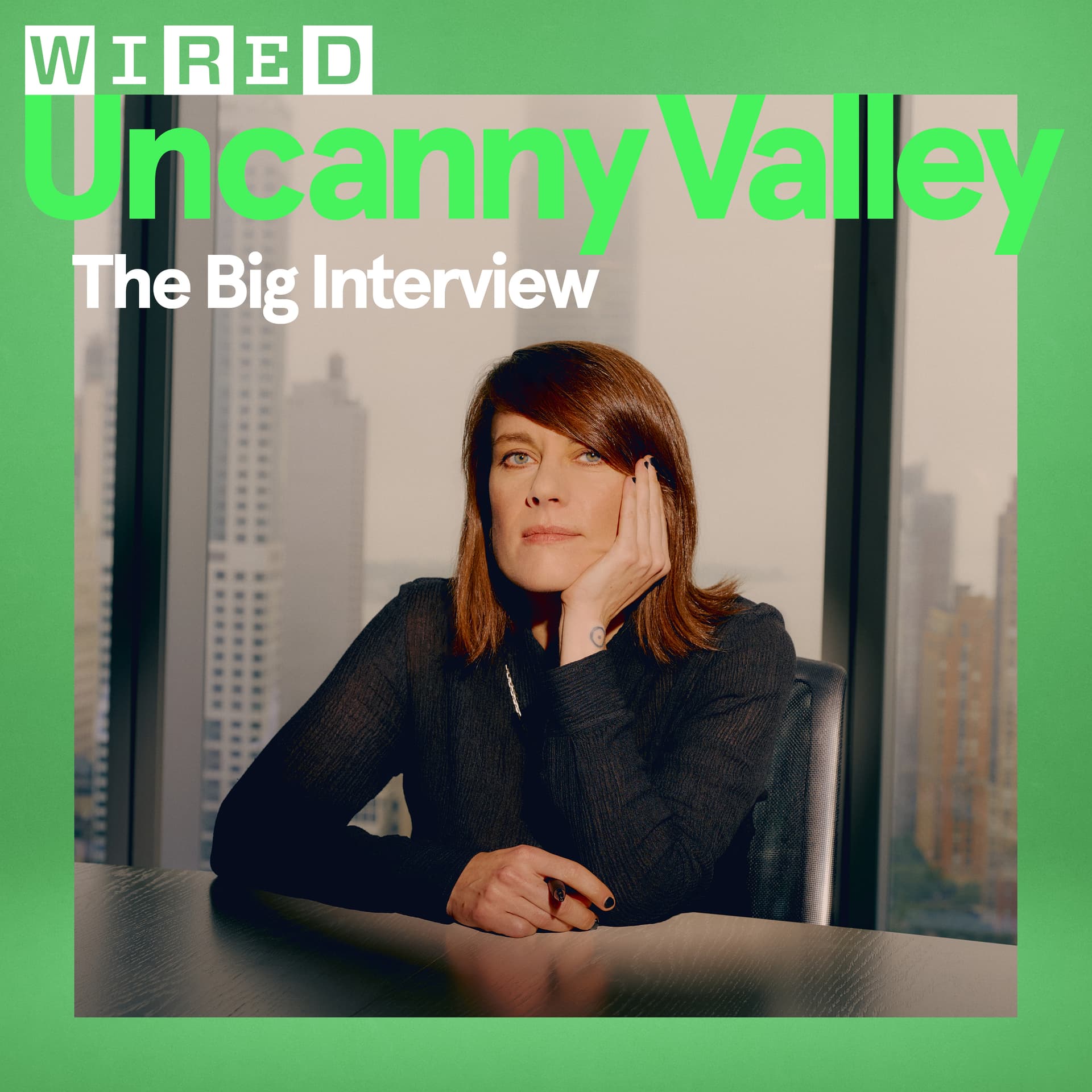

In short
Tom Steyer’s case for his California governor run, linking climate action, “shared prosperity,” AI safeguards, sanctuary-state policy, and critiques of fossil-fuel and LNG expansion.
Guest backgrounds
Tom Steyer is a billionaire climate activist and former hedge-fund executive (Fairline). He says he grew up doing outdoor work and visited Alaska in 2006, witnessing melting firsthand, which pushed him toward climate activism. He is largely self-financing his campaign.
Key claims
He says he divested from oil and gas at Fairline in 2012 and has no remaining fossil-fuel ties. He argues clean energy is cheaper and economically successful, contrasting Trump-era policy. He supports California’s Billionaire Tax Act (as a one-time measure) to fund specific uses including education. He calls for AI safeguards for kids, pre-release testing, and worker protections (guaranteed well-paid jobs with benefits for displaced workers). He supports abolishing ICE and defending sanctuary status through state enforcement and legal defense for detainees.
Notable examples
Alaska’s rapid ice loss; LNG terminals and ships; social media harms to kids; Anthropic’s limited AI release; California poverty/inequality anecdotes (people working for UC living in cars).
Written by AI. May contain mistakes. Listen to the episode to check what was said.
Chapters
Tap a time to open that second in VOTom Steyer's Transformation into a Climate Activist
3:36 to 6:30
Tom Steyer discusses his shift from finance to climate activism.
“So I want to start with your background because you are a billionaire and you like to tell the story of your transformation, right?”
The Role of California's Governorship in Climate Policy
6:30 to 7:53
Steyer explains how the governor's office can influence climate initiatives.
“But I wasn't trying to build businesses.”
Navigating Criticism of Billionaire Investments
7:53 to 12:19
Steyer addresses concerns about his past investments in fossil fuels.
“The president is trying to outlaw color TVs.”
Debate on the Morality of Billionaires
12:19 to 14:00
Steyer argues against the notion that billionaires are inherently immoral.
“But the truth was, the idea that I haven't made that transition is a decade and a half out of date.”
Understanding California's Economy and Inequality
14:00 to 19:30
Explore the dynamics of California's economy, the role of billionaires, and the importance of shared prosperity.
“Now, if you look at California, this state runs because of very hardworking, very skilled people who are paid not very much at all.”
Navigating California's Innovation and Immigration Challenges
21:32 to 28:01
Discuss the balance between maintaining innovation in California and addressing immigration rights and policies.
“Hopefully doesn't take itself too, too seriously.”
California's Vision for AI and Shared Prosperity
28:01 to 33:20
Learn about Tom Steyer's perspective on AI, its impact on jobs, and California's role in shaping a better society.
“where the willingness to stand up and say, no, this is just completely wrong is much reduced.”
The Control-Alt-Delete Game with Tom Steyer
33:55 to 39:38
Engage with Tom Steyer as he discusses what technology he would control, alter, and delete in today's world.
“We hear a lot about microplastics in oceans and food, but they can also come from products we use every day at home, including cleaning products.”
Understanding the Economy Through Diverse Voices
42:00 to 42:18
Learn how various perspectives shape our understanding of the economy.
“Our award-winning reporters talk to everybody from CEOs to farmers to help you understand how the economy takes shape in the real world.”
Transcript
Automatic transcript. May contain errors.0:00This show is supported by OutShift, Cisco's incubation engine. Today's AI agents operate in silos, limiting their true potential. We've been focused on building bigger, smarter models, but scaling up is just one approach. To reach superintelligence together, we need to do more. We need to scale out. And we actually have a blueprint from 70 ,000 years ago. Humans didn't just get smarter individually. The cognitive revolution transformed society because we began sharing knowledge, goals, and innovation. Agents are now at that same inflection point. They can connect, but they can't think together.
0:38That's why Outshift by Cisco is building the Internet of Cognition, transforming AI from isolated systems into orchestrated superintelligence. By creating an open, interoperable infrastructure, Outshift by Cisco is enabling agents and humans to share intent, context, and reasoning. The cognitive evolution for agents is here. Explore the Internet of Cognition at outshift.com. That's outshift.com. Ever notice how the second you Google something, suddenly every ad you see is about it? Or you try to watch something while traveling and it's just blocked? Yeah, the Internet isn't as open as we think.
1:16That's why I started using ProtonVPN. ProtonVPN is a secure VPN service designed for people who want to prioritize their digital privacy and security. It keeps what you do online private and lets you access the internet like it should work. Open, secure, and on your terms. It all works seamlessly so you can be confident you're getting an extensive server network, high-speed connections, integrated ad blockers, and compatibility services without restrictions in over 145 countries. It's easy to get started. Right now, ProtonVPN is offering our listeners 70 % off a two-year plan when you go to protonvpn.com slash uncanny.
1:55That's P-R-O-T-O-N-V-P-N dot com slash uncanny for 70 % off your two-year plan. That's protonvpn.com slash uncanny.
2:16From WIRED, this is The Big Interview, where we get to know the people beyond the headlines in conversations that explore the intersection of technology, power, and culture. I'm WIRED's Global Editorial Director, Katie Drummond. Ahead of the midterm elections, we've been talking to candidates in key races across the country. Among the big ones to watch is the governor's race in California, where several Democrats and two Republicans are in the race to succeed incumbent Democratic Governor Gavin Newsom, who can't run again because of term limits. One of those hopefuls is billionaire climate activist Tom Steyer, who is largely self-financing his run.
2:52So far, Steyer's campaign says he spent more than$130 million in his quest for the governor's office, which is closing in on a state campaign spending record. The dynamics of the race have shifted, especially among Democrats, since one of the frontrunners, former California rep Eric Swalwell, dropped out of the race and resigned from Congress in April following allegations of sexual misconduct. The latest polling from Emerson College Polling and Inside California Politics shows a close race, with former Health and Human Services Secretary Javier Becerra just slightly ahead of Steyer and Republican Steve Hilton, who are neck and neck.
3:27Tom joins me now to talk about his campaign, climate activism, and California's role on the national stage. Thank you for joining us on The Big Interview. Kate, thank you for having me. So I want to start with your background because you are a billionaire and you like to tell the story of your transformation, right? where and how you made your money in hedge fund world to now and in the last sort of decade plus being actually a climate activist. Tell us about that transformation. In terms of climate, what happened was this. When I was growing up, I spent, when I got free time, either from school or work, I tried to go to wild places and get outdoor jobs.
4:06So, you know, I worked as a ranch hand, I worked picking fruit. And after, before I went to business school, I spent the summer in Alaska. And I went to Alaska because I wanted to see what North America looked like before Europeans showed up. And I wanted to see the animals. I wanted to see the birds. I wanted to see the fish. I wanted to look at Denali. I wanted to see what it looked like, you know, vast, untracked North America, rich and fertile. And in 2006, I wanted my wife and four kids, none of whom had ever been there to see it too. Like, this is what it used to look like. So we went up there for a week and we tried to, you know, I had a whole bunch of plans of what we could see, but what we could see was Alaska was melting.
4:51It was really obvious. And it's one thing to read about it on a page when you're working away and thinking about a thousand things, but it's another thing to physically see where there used to be a mountain of ice and now it's a valley. It's amazing. And so you started sort of grappling with that realization. At what point, though, do you say, I am going to say goodbye to running a hedge fund, right? I'm going to sort of turn my back on this career, and I'm going to do something totally different. And a big part of that is going to be climate activism. How did that happen? Well, I mean, I didn't just leave specifically only to do climate.
5:29Sure. You know, it was funny. I was talking to one of my best friends this morning and he was saying, well, the whole point of life is to have a positive impact. I would hope so. Yeah. Yes. Yes. And I got very, very scared that I was going to have a life of no meaning. That's actually what it was. It wasn't – I felt like, oh, my God, I'm going to die and I've had no meaning. It's like I've amassed a whole bunch of numbers on a spreadsheet. But who cares? Nobody, including me. And so I felt somewhat desperate to get out and push for things that had meaning, including climate. I spent a lot of time thinking, how is it that...
6:16I always thought climate was this huge opportunity for us. Like, oh my God. A financial opportunity? No, an opportunity for America to be America. I see, I see, I see. Leave the world, do the right thing, save the world, build businesses around it. But I wasn't trying to build businesses. I was basically trying to give everybody else a chance to say, wow. And I thought, here's a great example. There's something clearly wrong here. We can do the tech. We can do the finance. We can do the global leadership. Let's do it, man. I want to move to talking, actually, about your run for governor, but climate is a big piece of that.
6:51Obviously, Trump is in the office. He's the president of the United States, as he will be, presumably, for another few years. What kind of power does the governor's seat give you vis-a-vis climate policy, knowing that Donald Trump is the president of the United States? Well, I think it gives us a chance to show what success looks like. I think what Donald Trump is doing, he's showing the world what failure looks like. I mean, he's so scared of failure, and he's failing on an absolutely gargantuan scale. But success looks like moving rapidly to sustainable, clean energy that's cheaper. Proving to the world that doing this is actually the way to succeed economically as well as doing the right thing.
7:39We build a bunch of companies around it, get some great technologies going, all of which are happening, all of which are within our grasp, but which, you know, it's kind of like the president is desperately fighting to keep us on whale oil. The president is trying to outlaw color TVs. We need to stay with the black and white models that really work. I mean, it's nuts. Your commitment to being sort of, quote unquote, a good billionaire is laudable, I think. I have more questions about it, but sort of on its face is an admirable commitment. Your critics have questioned some of Faleron, your former hedge fund's past investments, right?
8:15The New York Times published a piece earlier this month questioning whether you still have financial ties to investments that include fossil fuels. And I want to hear from you more fully on this, and I know that our listeners do too. What can you tell voters about the status of your investments vis-a-vis that hedge fund? I did. The thing that I have left at Fairline is some residual buildings investing in real estate. I divested from all the oil and gas from there in 2012. That's one of the reasons I left. I didn't feel, you know, that I could change that organization. People had signed up. Hundreds of people had signed up to run an organization a certain way.
8:55And I had moved on. yeah and you know you'd think i started it i was the head of it you'd think i could just like this is what we're doing but that's not really how organizations work in my mind and i'm not that person anyway and so i was like no anything that's left there you have to get me out of anything related to fossil fuels and a number of other things i just can't have it and that happened 14 years ago so no they that new york times article was silly and it's not true the reason I left was I didn't feel that I could be there and do what I'm doing now without people thinking I was a hypocrite.
9:32When you think about the fact that you built your wealth in that world, how do you think about that and how do you grapple with that? And how would you urge voters to think about it? I think about it pretty simply. Yeah. Which is this. I worked in finance. I went to Stanford Business School. All of those worlds are premised on the idea, which I accepted that basically the way that progress happens is through a combination of capitalism and democracy. And therefore, capitalism is an engine. And Warren Buffett will say this better than I have. He said, basically, look, capitalism has produced all the advantage, the material advantage that people have got from all over the world.
10:24It is the driving force for a more productive economy and one which produces goods and services at a level that is never before seen in the history of the world. And it is a huge force for good. And I accepted. and it was kind of like that was the mantra and what happened was as I was there and started to examine it and think more independently I thought okay that's true a lot in a lot of ways it is true in a lot of ways and so I haven't rejected but it's also a case that it's not always true and when it isn't true it can be spectacularly not true. So I felt like, okay, it's no longer a blanket cover for everything.
11:11And in fact, therefore, I felt like I had to lead my life differently and I had to invest differently and I had to change because I came to a realization that the basic premise that it's all good is not true. And therefore, I didn't want to live that way and I wanted to change the way I invested. I did want to completely change what I was doing. So it wasn't just about investing. I very much wanted to do that, but I also felt like the investing itself, I wasn't okay with. For the reason you just said, like, doesn't that seem hypocritical, Tom? It's like, yeah, it does. It absolutely does. And that's why I didn't do it.
11:49I was like, okay, it's got to stop. And it took me a long time to get out of there because everybody who I had hired, every single person in that firm, was the primary breadwinner for their family. Every single person. And we had the trust of hundreds of pension funds, endowments, and foundations. And I just didn't feel like we could leave them in the lurch. And I felt like it's really important to get this transition to happen right. And it took a long time. But the truth was, the idea that I haven't made that transition is a decade and a half out of date. You know, a lot of progressives, and I think I would argue including some of the voters you're trying to court, don't think that billionaires should exist in the first place.
12:32That becoming a billionaire in and of itself is immoral. That there is not sort of an ethical route to being a billionaire and sustaining that level of wealth. That another Tom Steyer, in essence, shouldn't be able to exist in 20 years. What do you say to that? Well, I don't agree with that. And I'll tell you why. Yeah, tell me more about that. Look, we have ideas. California is about innovation and ideas. It's about imagining and creating the future. That's what we do. That's what this state is about. And frankly, that's what Wired Magazine is covering. It is. People who come up with an idea that's never been thought of before and changed the world.
13:12And, you know, that's much more possible now for a whole bunch of reasons involving software, information technology, the ability to expand infinitely. So if you say to me, if someone comes up with an idea that can be turned into a business, that can change the world, that can actually do immense good, should we just put a lid on that? Should we not give the incentive there? I have a different attitude. My attitude is this. There's a reason people come to California to build a business because we have the ecosystem to build a business and we could go into all of what that entails. But most of what that entails is a bunch of people fighting to build a system over a thousand years that involves rule of law, democracy, freedom.
14:05Now, if you look at California, this state runs because of very hardworking, very skilled people who are paid not very much at all. And so when someone says to me, I'm going to come to California, I'm going to build a business, great. It's going to change the world, great. And then I'm going to try and rip those people off, not be a good citizen, not pay my fair share, do everything I can to basically extract from that system what it has without being a part of that system. And that offends me. That extraction you're referring to, is that how you see the current ecosystem in California now? Do you think that there is sort of an exploitation happening?
14:51No. I think that to a large extent, I feel like people come here, they do build these great businesses, and mostly they stay. They pay their taxes. They're good citizens. They do a whole bunch of things. There are a bunch of people who don't do that. You know, they come and they're worried that, in fact, that they never have to share anything that they made. It's all mine. It is not all yours, by the way. You came here because there was a system that let you succeed. You could have gone to 190 other countries. You could have gone to 49 other states, but you came here for a good reason because this is the best place to start and build a business.
15:27So you should be part of that ecosystem and you should take pride. You know, I call it shared prosperity. You should take pride in the prosperity that you're creating and you should take pride in sharing it because this whole system doesn't work with the kind of inequality that we're seeing. I mean, I know you know this, but the inequality is more than the Gilded Age. Obscene. Being in San Francisco for me for the last 10 years has been a very strange experience. I will say that. I mean, I think it is visceral. I think that you can see it when you walk down the street. I think it is appalling in many respects.
16:01And I'm curious, you know, one of the issues that you are being asked to chime in on and that, you know, potentially as governor, you would inherit is this California Billionaire Tax Act, right, which is what you were just talking about in terms of sort of shared prosperity, I think ties very cleanly into that issue. You've said you're in favor of it. You've also said it doesn't go far enough. Tell me more about that, because this is not the most popular idea among some of the prominent billionaires who currently call California home. And I'm wondering about how you grapple with that as, you know, a potential governor of the state.
16:39Look, I said, if it's on the ballot, I will vote for it. And I said, it doesn't go for, it's a one-time tax. It takes the money and it puts it into a very specific use that doesn't specifically include education. And one of the things that I'm saying is we need to be much better at education in the state of California. We really need to refocus on it because we used to be the best education state. And so to a very large extent, there are issues with the way that bill is written and designed that I think are very imperfect. But the basic point is this. We have the highest percentage of people in poverty in the United States of America.
17:19We have the greatest inequality. We have an incredibly high, you know, average income, But that average includes some off-the-charts incomes. The majority of Californians are really struggling to make ends meet. Really struggling. I mean, millions of people giving up their health care insurance so that they can make rent. People who have worked, been fully employed for 20 years, working for UC, living in their cars. I mean, that doesn't make any sense. And so what I'm talking about is how do we redress this? And part of that is we need to have a sense from everybody of shared prosperity. You said, am I against billionaires?
18:03No. I want people to come here and change the world. And there's some stuff going on that is absolutely mind-blowingly great. Honestly. I want us to be the generator of ideas and innovation that changes the future for everyone in the state, builds great companies, and changes the world. I just want it to be done in the context of a system that doesn't forget our teachers, doesn't forget the nurses, doesn't forget the people who are working in the schools, doesn't forget the custodians. There's a sense that somehow these people are ripping off the system. That is the absolute opposite of the truth.
18:45These are the people who make the system run, and they are really at their wits end. And that's why I'm running. Look, it's not right. This election is about do you think we need change in California? If you think that this extraordinarily unequal system, which is getting more unequal all the time, should go on exactly as it is, there are a lot of people to vote for. But if you believe that it's impossible for most people to afford California and that we need to stand up for working people, then honestly, I'm the only game in town, which I find ironic, too, that the billionaire is fighting for working people and the career politicians are fighting for billionaires.
19:26I find that ironic, but it happens to be true. We're going to take a quick break and we'll be right back.
19:35NPR believes in your right to be curious about the big questions and the unexpected ones. That's what Shortwave, their science podcast, is all about. When we stop to ask questions, the world gets more interesting. Shortwave spends each episode answering one big one. Like, why do we have nightmares? How does AI affect my energy bill? And how can trash be good for the environment? It's science, but not the kind you remember from school. It's playful and full of wonder. Science is for everyone. On Shortwave, the hosts take your questions very seriously without taking themselves too seriously. They follow your curiosity wherever it leads so you can discover something new right alongside them.
20:15I personally really loved the episode about where the moon came from. That's something I'd always wondered about, and now I don't have to wonder anymore. Shortwave makes me curious and then gives me the answers. Follow NPR's Shortwave podcast and exercise your right to wonder. Hey, small business owners. Let's talk about how Found can help you wrangle your finances once and for all. When was the last time you felt like you had your business finances totally under control? Every expense categorized, every receipt tracked, every invoice sent. Oh, and you were prepared for tax season? If the answer is never, you're not alone.
20:48And that's what Found is for. Found eliminates the clutter by giving you one platform that handles it all. Banking, bookkeeping, invoices, and taxes. No more paying for multiple subscriptions and dealing with clunky, outdated apps. Found is reimagining what business banking should be by putting your bookkeeping, invoices, and tax tools directly into your business checking account. They make it easy to regain control of your business finances so you can get back to doing what you love. Take back control of your business today. Open a Found account for free at found.com. That's F-O-U-N-D dot com.
21:20Found is a financial technology company, not a bank. Banking services are provided by LeadBank, member FDIC. Join the hundreds of thousands who've already streamlined their finances with found. Comprehensive. Witty. Speculative. Critical. Insightful. Profound. Wide-ranging. Hopefully doesn't take itself too, too seriously. I'm David Remnick, and each week on the New Yorker Radio Hour, my colleagues and I try to make sense of what's happening in this chaotic world. I hope you'll join us for the New Yorker Radio Hour wherever you listen to podcasts. thoughtful, exquisite, just, you know, real.
22:08I mean, look, it's a tough equation for anyone to need to solve in the sense that, yes, it is very important that San Francisco and California remain engines of innovation, right? That the people leading these companies stay, that the companies themselves stay, right? I mean, we've seen some technology companies, Tesla comes to mind as one example, that have relocated out of California. I can't imagine that is something you would want to see continue. So it's how to retain that sort of innovation edge, right, which is what so many of the people who are opposed to this act say, that California will lose its edge when it comes to innovation and invention because people will go elsewhere.
22:48How do you preserve that while also creating a more egalitarian society, a more egalitarian order in California? I don't envy anyone trying to solve that dilemma, but do you worry about losing the tech billionaires, right? Do you worry about losing the companies? I want to make sure that we remain the center of innovation. I want to make sure that we remain the place where the companies that are changing the world are begun and grow and stay. Absolutely. In my mind, the reason that California is what it is, is, and you know, you work at Wired Magazine, Kate, so I'm sure you've thought about it.
23:31I run Wired Magazine, Tom. You do? I sure do, yeah. Do you know Katrina Herron? The only other woman who's ever run it? Old friend of mine. Oh, wow. You didn't know that? No, I didn't know she was your friend, but I know that she is the only other woman other than me who's ever run it in 33 years. She's an old friend, but that's beside the point. I remember back in the tech wreck of 2000, 2002, and I was talking to an old friend of mine who's a venture capitalist. And he said, the stocks come and go, but the technology, the innovation, the real creativity happens here. And I said, well, why is that?
24:11He said, take a look. It's not happening anywhere else. I said, tell me what? And he said, you want to start a tech company in the Bay Area? You have your choices of CFOs. You have your choices of CTOs. You have your choices of all the different things. Anyplace else, you don't. So this is the place where there's actually the human capital. That's the key part of this. You can't build these companies because companies are built around people. And as long as we have the ecosystem of people, that's really the secret sauce. And that's why I'm such a maniac about making sure we have this great higher education system.
24:51That's why I'm a big believer. I think immigrants have built California. I love immigration to California. I want people to come here who want to, you know, work their tails off and really change the world. So to a very large extent, I'm upset, though, that someone who comes here and really takes advantage of a great system that, as I said, people have worked on for a thousand years and thinks that they did it by themselves. It's not true. If that were true, you could go over to Slovenia and start a company and see how that goes. On the subject of immigrants, you have publicly called for abolishing ICE.
25:26California, of course, is a sanctuary state. So that puts you potentially right at the center of a fight with the federal government, coming back again to President Trump. How do you make sure California maintains its sanctuary status if you're elected governor? How do you go head to head with the federal government on this? I think we enforce our state laws. You know, we have to prosecute people who racially profile in the state of California. It is illegal. We have to prosecute people who use violence against the people of California, and including the people who send them to do violence. We have to inspect the detention centers because clearly they're closed for a reason.
Read the full transcript
26:02There's something going on there that they don't want you to see, and we need to see that. We need to have a legal defense fund for people who've been kidnapped into those detention centers and people are under threat of deportation because this is a legal system. People need to be represented. And so to a very large extent, it is about, you know, the job of the government of California at some level is standing between violence and danger and unfairness and the people of California. And, you know, if you look at my campaign, it's very much about there's a, you know, we have electric monopolies that charges twice as much as the rest of the United States pays for electricity.
26:41Someone has to stand up for the Californians in that fight. Someone who's in a position of power, you know, and certainly with ICE. I do think it's a criminal organization. I think it was designed to be criminal. There is no other reason for them to be wearing face masks. There is no other reason for them to be carrying ARs. And they feel they can do it with impunity. It's very clear that the agents in Minnesota don't think they're ever going to go to jail for shooting Americans. How much can you prosecute ICE agents, for example, while Trump is still in office and the agency is still intact? We will.
27:16I believe that the next president, whoever he or she may be, will be centered enough to recognize that you're not supposed to have a violent, masked, assault rifle armed secret police going around the United States with impunity. You would think so. That seems to me to be an absolutely clear point that only despotic regimes do that stuff. and the idea that we should somehow negotiate with that or, you know, cooperate with that. I pushed really hard for us to be a sanctuary state, that no police officer is supposed to cooperate with ICE except with regards to violent criminals. And it makes total sense.
27:57What they are doing is clearly wrong. And, you know, we've moved to a place in our political discourse where the willingness to stand up and say, no, this is just completely wrong is much reduced. There are so many things that are wrong that people just now accept. I don't want to do that. That is not what California stands for. That is not our values. And I think it's very clear that California can be, and I believe it should be, promoting a different vision of success, of democracy, of freedom. My whole point about shared prosperity is that we have a responsibility to each other. I want to make sure we talk about AI, which is obviously a huge topic for us here at Wired.
28:42And I think certainly for the current governor of California and whoever comes next will be a major issue to get right. California is still a hub for obviously quite a bit of innovation, obviously for artists and creators, right? You're also talking about Hollywood in that picture beyond just the tech industry. I'm curious about where you see the governor's role to be around creating safeguards around AI to protect creators, for one, but to protect jobs, bigger picture in the state. How are you thinking about that? Let me say this. AI obviously has some stuff going on with it, which I'm sure you're familiar with, which are incredibly mind-blowing.
29:19It's an incredible technology. Absolutely. Highly consequential. Yeah. And I think that the outcome will either be incredibly important or staggeringly important. That's the range. And it's kind of like nobody really knows which of those two things it will be, but it will be one of those two things. But I think it's really important to have safeguards around this in multiple ways. I mean, the obvious one is for kids. Like, this is an incredibly powerful technology, and I think we need safeguards for kids because its ability to seduce kids into things that are not good for them when they're not in an age to be able to make those decisions.
30:01So protecting kids, I think, is really important. Testing the models before they're released. You know, I think we went through this whole thing with this model from Anthropic, where it's like they said we're going to do a very limited release because this is too powerful. If we give this out right now, then people with malign intent can use it to do things, and we know that. So it's important to make sure that it's controlled in that way, but also not to release models that have not been tested, we can't be sure work, blah, blah. So that's two. And then I think the most important part about this is we don't know what the impact of this will be on employment.
30:42Right. And so I've said, look, I want AI to be a tool for workers, not a replacement of workers. But I'm aware, and I think anyone who reads the papers, no, I say to everybody, it's not like AI is coming. AI's here. AI's having a huge impact right now. It's sort of like saying, let's wait to the 21st century and see what happens. We're in 2026, dude. We're in the 21st century. And what I've said is we need to make sure that we are protecting workers. And we've made a guarantee, our campaign has made a guarantee that every worker displaced by AI, we will succeed in getting a well-paid job with benefits.
31:19And how are we going to do that? look in the 1970s and 80s the traditional midwestern businesses including cars suddenly got foreign competition and suddenly had technological changes and it hollowed out those cities and they've never come back and i think there were promises from politicians about what they do about it but it didn't happen and so i believe we need to be ahead of that prepared with the kind of ability to get people into new jobs with training, specific jobs. There are a lot of jobs in California that we need. And get people into those jobs and do it in a way so that when you sign up, you have a training program and at the end of it is actually a job with an actual wage and an actual place.
32:10And that is something I think is going to be a critical part for the next government. How big a part depends on whether it's amazingly big or astonishingly big. Right, right, of course. And if you're listening and you're curious for more about that proposal, Wired actually covered it. McKenna Kelly, if you want to look up the writer on that proposal. I'm curious about California to you in the context of the national conversation around AI. To what extent is the way California handles AI and the way an incoming governor decides to regulate the industry and the technology a roadmap for the rest of the country?
32:44I want California to be a roadmap for the rest of the country and everything because I think I disagree so strongly with what's going on in Washington, D.C. I want us to succeed, but I also want to show the world we don't have to be despotic people who take pride in their cruelty in the United States of America. That's not what our country stands for. And that, in fact, we have a much better angel and that we can succeed at a level in terms of creating a better society that people apparently don't think is possible. And it is absolutely possible. And that's exactly why I'm running for governor, is to say we can create this society right now.
33:21All right, another quick break here and we'll be back with our favorite game.
33:43Odoo is all connected on a single platform in a simple and affordable way. You can save money without missing out on the features you need. Check out Odoo at O-D-O-O dot com. That's O-D-O-O dot com. This show is supported by Blueland. We hear a lot about microplastics in oceans and food, but they can also come from products we use every day at home, including cleaning products. Blueland is on a mission to make it easy for everyone to make sustainable choices. Blueland believes that hard-working, clean products can be the norm, not the exception, so that you can do better for your family and the planet at the same time.
34:19From cleaning sprays and toilet bowl cleaner to dishwasher and laundry detergent tablets, Blueland's products are independently tested to perform alongside major brands, and the formulas are free from dyes, parabens, and harsh chemicals. You'll love not having to choose between the safe option and what actually gets your house clean. Blueland is a certified B Corp and Leaping Bunny Cruelty Free certified. Their formulas are EPA's Safer Choice certified, and many products have also earned Cradle to Cradle's Gold Material Health Certificate. If you're looking to make a small change in your routine, you can get 15 % off your first order at blueland.com slash prx.
34:56Get 15 % off your first order by going to blueland.com slash prx. blueland.com slash prx. This week on the political scene from The New Yorker, Trump's rupture in the world order. Europe caught between two adversarial great powers. That's basically dialing back the clock to not only pre-World War II, but really it's a pre-20th century view of the world. And I would say it's a world of permanent insecurity that we're looking at. Join me, Evan Osnos, and my colleagues Jane Mayer and Susan Glasser every Friday on The Political Scene, available wherever you get your podcasts.
35:51Tom, I want to end with a little game if you're up for it. The game is called, oh, it sounds like you are. Good. The game is called Control. I'm not it. The game is called Control-Alt-Delete.
36:06We play it with every guest, and I want to know what piece of technology would you love to control? What piece would you love to alt, so alter or change? And what would you love to delete? What would you love to vanquish from the earth if given the opportunity? So two of them are easy. I want to think about one of them. So delete. Yeah. I want to end the ability to transport liquefied natural gas. That is very specific. Please explain a little bit more. Explain that one a little bit more. Well, you know, natural gas is a gas. It is. So traditionally, it has been a local thing so that the United States, the cost of natural gas is something like, I didn't look at it this morning, but it's probably somewhere around$3.85, 1 ,000 cubic feet.
36:55Just to put it in context. In Europe, it's probably$17. Same thing. It's a local market. They don't have it. We have a lot of it. And there's a move to basically build huge terminals, build special ships, to basically turn natural gas into a liquid, put it onto a ship. It's a whole complicated technology, and people are spending tens of billions of dollars on it. LNG is dirtier than coal. Where do you want that money going instead? Please delete. I want it to go into the stuff that is cheaper, faster, and better. I want it to go into clean electricity, battery development. The batteries are getting so much cheaper and so much better.
37:41I want it to go into pushing us towards all the uses of electricity that we can use it for. If you take a look at where we are in the natural world, it's critical that we get rid of the idea that fossil fuels are cheap. Fossil fuels aren't cheap. Fossil fuels, without any cost for old-fashioned particulate pollution or climate change, are much more expensive than clean energy. They're just the thing we have. The one I'd alt. Yep. I would alt, and I'm saying this, I think we need to have a relationship with AI where we make sure that as it explodes, that it's done in a way so that we don't get the second order effects that can be really dramatically terrible.
38:28And, you know, everyone's like, oh, no, no, you're going to stifle it. Well, I'm curious. I mean, I'm sure you hear that from a lot of people. You're running to be the governor of California. The innovation question, the race against China question, how do you respond to that when you talk about guardrails and regulation? We're not going to stifle it. I'm a very practical person. You know, let's take a look at what happened with social media. Like, we didn't do anything, and take a look at where we are, and take a look at where the kids are. I'm old enough to remember when the Democrats told Wall Street they could police themselves.
39:01It was sort of like, really? That's your idea? So the idea that things that have immense impact can be controlled by the people whose total focus is their bottom line seems to me to be like, okay, so you're saying government doesn't exist. Obviously, we need to, you know, watch out for negative outcomes and avoid them for the people of California and the United States. That doesn't mean stifling innovation. It means having rules to protect people from really dangerous things. All right. So I believe you said you would delete liquid... LNG. LNG. You would alt the AI regulatory environment. What are we controlling?
39:47If I were going to control something... Other than the state of California, I guess. No, it'll never be one person controlling it. I think the one that we should control is probably, there's such a fine line between control and alt. But I think that in finance, we should control the way crypto is used, I think. Oh, interesting. Tell me more about that. Well, I just think that, you know, this is a technology which I'm fine with, but I just think it's one of those things where we need to make sure that the way it's used, there are things to protect people who are investing in these tokens. You know, I think the industry agrees with that.
40:31They've spent a long time saying, stop trying to outlaw us, give us regulations so that we can build our businesses, which I'm totally fine with. And that's what I would describe as control. And I think control is the wrong word because you never control something. You basically have regulations that make sense and protect unsophisticated people from damage. But you could. You could be controlling all the meme coins in the world if you wanted to in this thought exercise. Well, you know, you should understand that I'm going to control them and just take a very small fee every time they turn. Perfect.
41:06Oh, there's someone already doing that. I didn't realize that. Tom Steyer. Yes. We will make sure it registers as a joke. We will make sure it registers as a joke. Thank you so much for being here. This was great.
41:23The Big Interview is a production of Wired and Kaleidoscope content. This episode was produced by our showrunner, Anne-Marie Fertoli. Kate Osborne is our executive producer. Music and mixing by Pran Bandy. This episode was fact-checked by Matt Giles. And I am, of course, your host, Katie Drummond, Wired's Global Editorial Director. Check back here on Thursday for the latest episode of Uncanny Valley, where Wired's writers and editors add you to their Slack channel.
42:10Our award-winning reporters talk to everybody from CEOs to farmers to help you understand how the economy takes shape in the real world. You'll be smarter every time you listen. And these days, that's priceless. Listen to Marketplace on your favorite podcast app.
From the publisher
California’s gubernatorial race is drawing national attention, with several Democrats and two Republicans vying for incumbent Gavin Newsom’s seat. Among them is hedge fund billionaire turned gubernatorial candidate Tom Steyer. He joins Katie to explain why he wants to tax billionaires, regulate AI and the role he wants California to play in the national conversation about artificial intelligence. Here on Big Interview, Katie will be having a series of conversations with candidates who are shaking things up in this election cycle.
Join WIRED’s best and brightest on Uncanny Valley as they dissect the collision of tech, politics, finance, and business, from Alexis Ohanian’s newest tech venture to the effects of inaccurate information from artificial intelligence (AI) chatbots on social protests.
Learn about your ad choices: dovetail.prx.org/ad-choices


