
In short
```markdown
Podcast Summary
Uncensored CMO - How to Win a Cannes Lion with Kory Marchisotto
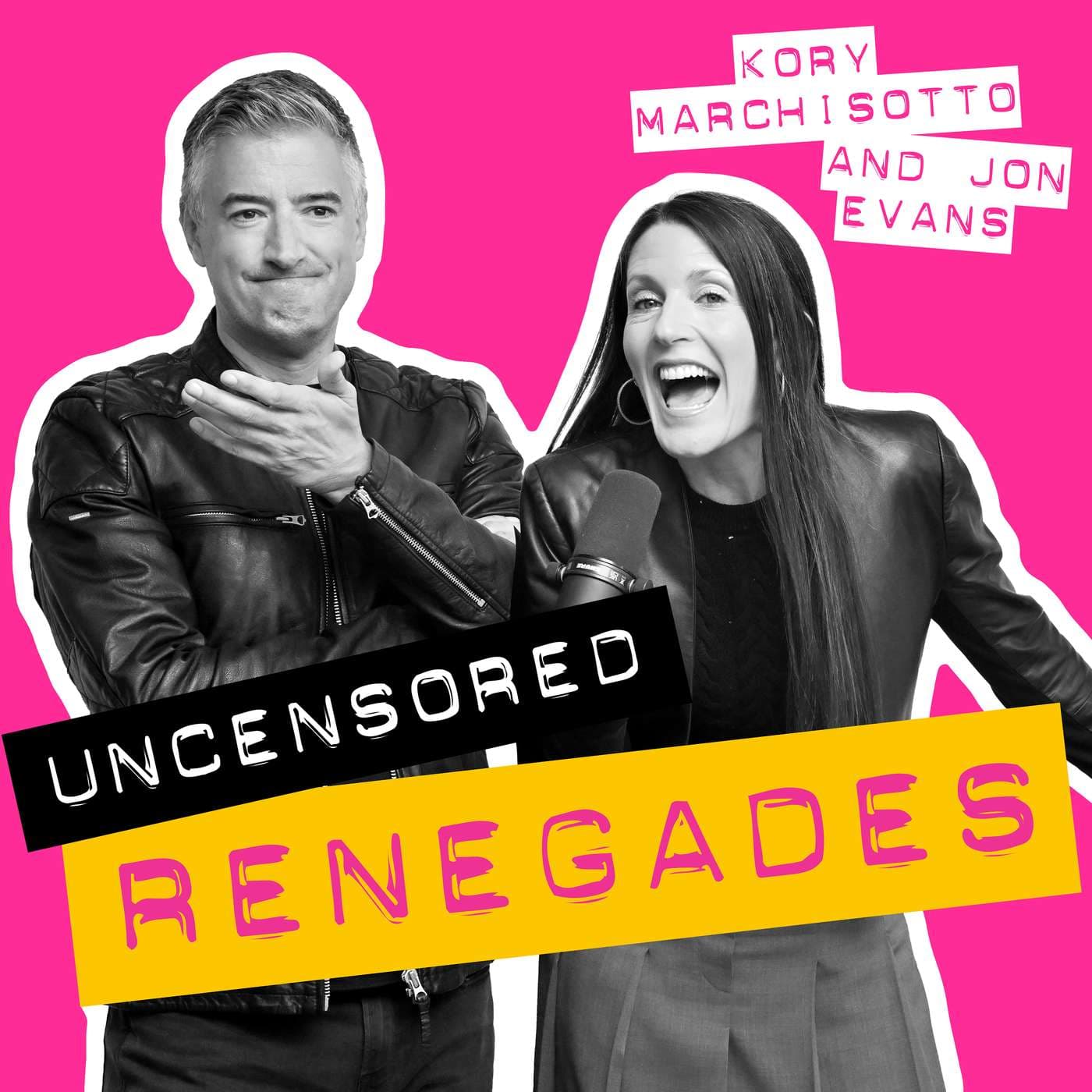
Podcast Title: Uncensored CMO Episode Title: How to Win a Cannes Lion with Kory Marchisotto [Uncensored Renegades] Description: In this episode, host Jon and guest Kory Marchisotto discuss the intricacies of pitching and winning at the Cannes Lions festival, particularly focusing on Kory's recent experiences with e.l.f's campaign submission for a Glass and Titanium Lion.
Key Points Discussed
- The Process of Winning at Cannes
- Overview of Cannes Festival:
- A week-long event encapsulating a year's worth of marketing activities.
- High-pressure environment with thousands of submissions (over 30,000).
- Pitching Dynamics:
- For Titanium and Glass Lions, shortlisted candidates must present live pitches.
- Presentations consist of:
- 2 minutes: Case video.
- 10 minutes: Live presentation.
- 10 minutes: Q&A session.
- Insights from Kory Marchisotto
- Preparation Challenges:
- Time constraints and the need for rapid pitch development.
- The stress of competing against well-resourced competitors with dedicated teams.
- Presentation Experience:
- Kory shares her initial disorientation when mistakenly introduced as another presenter.
- Emphasis on staying calm and adapting during presentations.
- Important Concepts in Pitching
- The Pratfall Effect:
- Making a mistake can increase audience likability by showcasing vulnerability.
- Kory sometimes plans minor errors intentionally to engage the audience.
- Audience-Centric Approach:
- Jon emphasizes asking, “How do you want the audience to feel?” instead of focusing solely on the content.
- ABC Principle: "Audience Before Content" - understanding audience needs shapes the message.
- Creating Engaging Campaigns
- Avoiding Dullness:
- Citing research indicating 54% of ads deliver no emotional response.
- Importance of surprising the audience to maintain interest.
- Successful Campaign Examples:
- Kory discusses e.l.f's humor-driven and unconventional campaigns, notably "Project Pony" which flips audience expectations.
- The Role of Humor in Marketing
- Effectiveness of Humor:
- Humor boosts memorability and likability of ads, often leading to higher engagement rates.
- Combining humor with unexpected elements, like animals or babies, enhances emotional response.
- Final Thoughts
- Reflection on Pitching at Cannes:
- The experience is both exhilarating and nerve-wracking.
- Importance of engaging storytelling and understanding audience dynamics.
Key Takeaways
- The Cannes Lions pitching process is rigorous and demanding, requiring agility and creativity.
- Engaging the audience emotionally is pivotal in marketing.
- Humor and surprise elements are powerful tools in crafting memorable campaigns.
- Understanding the audience's perspective can significantly enhance content effectiveness.
Timestamps
- 00:00 - Intro
- 00:49 - The pitching process for a Cannes Lion
- 03:14 - The pitch process for a Glass Lion
- 06:51 - The power of the Pratfall Effect
- 08:39 - Pitching for a Titanium Lion
- 10:41 - Jon’s tips from winning his Silver and Bronze Lions
- 12:17 - Audience before content
- 14:14 - How to make your campaign interesting (and not dull)
- 16:25 - How e.l.f. makes their campaigns interesting
- 18:58 - How to hack your campaign; babies or animals
```
Written by AI. May contain mistakes. Listen to the episode to check what was said.
Chapters
Tap a time to open that second in VOAnticipation at Cannes
0:45 to 1:55
Discussion about the excitement and stress of waiting for award results at Cannes.
“Well, the first thing I would say about the Cannes Festival for those who have not been here is it's a lesson in endurance.”
Understanding the Process to Win a Lion
1:55 to 3:05
Exploration of the rigorous process behind winning a prestigious Cannes Lion award.
“I actually didn't know until we were shortlisted for them that it is a live presentation in front of a jury.”
The Pitch Experience
3:05 to 4:25
Insights into the live pitching experience and the pressure of presenting in front of a jury.
“And when you're an underdog like Elf is and like our agency Oberlin, you don't have a staff of people whose job it is to do this.”
Adapting to Presentation Challenges
4:25 to 5:35
Adapting to unexpected challenges during the presentation, including dealing with mistakes.
“And I think that's really just to jog the juror's mind because they've seen so many submissions.”
The Importance of Audience Engagement
5:35 to 6:55
Discussion on how to engage an audience effectively during presentations.
“And they said, no, somebody's going to introduce you.”
Creating an Emotional Impact
6:55 to 8:05
How to create emotional resonance with your audience and the lessons learned from past experiences.
“So they cut us off and we lost about two minutes on the tail end.”
Learning from Presentation Environments
8:05 to 9:30
Comparison of different presentation environments and their effects on performance.
“You have to train that muscle, train the muscle of diffusing.”
The Role of Humor in Presentations
9:30 to 10:45
Exploring how humor can diffuse serious topics and enhance audience connection.
“Like you felt like you were in on stage at a Broadway show.”
Empathy in Audience Understanding
10:45 to 12:20
The importance of understanding the audience's needs before crafting content.
“And it was literally like we were performing in a Broadway show.”
The Value of Unique Perspectives
14:00 to 15:00
Discover why unique viewpoints are crucial in marketing discussions.
“And I really wish other people would think like that because I think very oftentimes, even when I go to these summits, all the topics are the same.”
Show all 14 chapters
The Cost of Being Dull in Advertising
15:00 to 17:05
Learn about the emotional impact of uninteresting advertisements.
“So we actually managed to put a price on, like you're saying about, it's always the same topic to live in the same way, in the same style, right?”
The Importance of Surprise in Marketing
17:05 to 18:13
Understand how surprising the audience can lead to greater engagement.
“humor makes an ad more memorable it makes your brand more likable and that those scores are always above 70%, if not closer to 90.”
Flipping Expectations in Advertising
18:13 to 19:39
Explore strategies for subverting audience expectations in campaigns.
“And on your point about flipping the script, we do that at Elf all the time.”
The Power of Humor and Emotion
19:39 to 20:31
Discover the role of humor and emotion in effective advertising.
“I mean, it's interesting, actually, one of the one of the hacks is with our system, one data, animals are create loads of emotion, actually.”
Transcript
Automatic transcript. May contain errors.0:06Welcome ladies and gentlemen to Uncensored Renegades. This is a new show that I'm launching with Corey Marchesotto, and we're going to be focusing in on leadership. And we're going to be doing that in a new format, which is the two of us tackling one topic for 20 minutes. So shorter than normal show, but super focused and with the absolute rock star that is Corey. I know you're going to love this. Now, if you want to make sure you get this every single week, please do go and subscribe to Uncensored Renegades in your feed, and then you'll never, ever miss an episode again. But without further ado, let's get into it.
0:38Here it is. all right okay boss so last time we attempted to do an episode in 15 minutes it didn't go too well we were close now i thought it'd be fun because we are together in can to talk about what does it take to win a lion and what's the process like as well because i think people be really fascinated to know and because you're here and you're up for not one but two really big awards and actually for anyone listening and watching we are actually literally sat here waiting waiting for the phone to go to find out whether you've won i literally had a dream last night woke up in the middle of the night that all my teeth fell out of my mouth and my team analyzed that this morning and they said it's stress and anxiety and i said no shit waiting for this to see whether or not we won the titanium or the glass that would explain why the teeth are falling out of my mouth in the middle of night.
1:28Well, the first thing I would say about the Cannes Festival for those who have not been here is it's a lesson in endurance. It's about a year's worth of activity in one week. And we are here on the last day of the festival. And as I look in the rearview mirror, I can't even believe the amount of things that happen in one week. And as it relates to specifically the titanium and the glass, which are the highest that there is, I actually didn't know until we were shortlisted for them that it is a live presentation in front of a jury. I didn't know this either. I thought the jury decided and then it gets announced.
2:07So you've actually got to pitch your own lion, right? You have to pitch your own lion. So this year there was over 30 ,000 submissions in total for all the submissions that came in to win any lion, and there was a gazillion different categories. If you get shortlisted for any other lion, it goes through a regular process and you just get alerted you've won a bronze, a silver or a gold. In the case of titanium and glass, basically your first pitch buys you your second pitch, which is here physically in front of a jury. And of course, if you've never done this before, which I never did and I had no idea, you ask a lot of questions.
2:47So we got the phone call a week before we got here. Now you have to clear your calendar because you've got to figure out, I've got to bring a new pitch with new information. I need to understand what am I up against? Who are the judges? What matters to them? What's the actual rigor and discipline of the process in and of itself? So it's actually a lot of work. And when you're an underdog like Elf is and like our agency Oberlin, you don't have a staff of people whose job it is to do this. so we actually have to stop what we're doing and pivot to do this because now you've got five days to get a new pitch done to get in front of the jury i don't think many people realize it because i i was a bit shocked to discover that a lot of the most successful can line winners they do have dedicated teams doing the research doing the pitches that you know basically managing the whole process making sure that they're on time like you do have a job to do at the same time I mean, you are running a billion dollar business.
3:47I'm a working CMO. I actually do real work. You are doing the job. Yeah, I do real work. As well. This is not a normal experience for you. Yeah, yeah. What was the actual pitch like? I mean, who's in the jury? But by the way, can you go and sit in as a member of the public? Actually, I also learned that along the process. So the first thing is understanding the constraint of time, right? This is the most important thing. So they give you 22 minutes on the clock and it's very prescriptive. and it's very rigorous. There is no veering off schedule. The first two minutes is your case video. All of us have produced a two-minute video which goes in as part of your submission.
4:27And I think that's really just to jog the juror's mind because they've seen so many submissions. You're now down to the shortlist. In the case of Titanium, that's 17 new case files that you have to review. So the two minute video basically jogs your memory. I think glass is more like 25 or 26 shortlisted. So that's your first two minutes. The next 10 minutes is your live presentation and they will cut you off and they cut us off both times. So that's why I know that. And then you have 10 minutes Q and A. So for glass and titanium, two completely different rooms, spirits, energies, jurors so you do know who the jurors are and they do allow it to be open to the public so people as long as there's capacity in the room people can come in and watch so you're not only in front of the front row of jurors you're also in front of an audience so our first at bat was 9 15 a.m on Tuesday morning we come in bright-eyed bushy-tailed we've obviously rehearsed the night before we've got our whole spiel down to 10 minutes and it took us a while to get there and we asked if we needed to introduce ourselves because that takes time.
5:35And they said, no, somebody's going to introduce you. Don't worry about that. You don't need it. Okay, great. So we're standing on the side of the room waiting to be introduced. And this particular room for glass was like a classroom. So you've got a big projector and screen at the front of the room and then classroom style. So we're standing on the side of the room and they call us up and the woman announcing goes, So I'd like to welcome Gabrielle to the stage. And I'm like, so now I just. You're in the wrong room. Exactly. I got literally blacked out. I completely blacked out. I'm like, who's Gabrielle?
6:09Am I in the wrong room? Is this the wrong time? Literally blacked out. And I'm like completely disoriented. And I know that I have to be very rigorous and disciplined. And I'm in a state of disorientation. So now I'm like, do we go up? Do we not go up? Who the hell is Gabrielle? Is Gabrielle coming? Is Gabrielle going to introduce me? I don't know what's happening. So now I realize like the clock's ticking and I'm not even at the front of the room yet. So me and Lisa, who's at our Oberlin agency, we get up to the front of the room. Now we have to introduce ourselves. and we didn't get any time back.
6:44So we like that whole disoriented moment, then coming up there, introducing ourselves, playing the video. Now I'm short at least two minutes. So we did our presentation. Obviously we lost time. So they cut us off and we lost about two minutes on the tail end. And then we went straight into Q and A. And I do have to really appreciate one of the judges who asked, it was probably the third question in the Q and A who said, Corey, I'd love to pose a question to you was there anything that you didn't present in that deck that we should know about that's good and i really appreciated that because it told me that they saw what happened and while they couldn't give us time back they were going to use this time to give us the opportunity to say anything we may have missed that we thought was critical to the file maybe a random thought have you heard of the pratfall effect no what is that there's a psychological study that basically if something goes wrong or you make an error at the beginning of a presentation the audience love you more than if you don't there's something about vulnerability and a mistake and this has been proven through you know through research that actually warms the audience to you but as a presenter you feel terrible and it takes you know all the energy goes you start panicking you're flustered you know i mean it's really hard to deal with isn't it i mean it's something that you know i have to sort of train myself you know to cope with sort of thing but yeah apparently the pratfall effect so oddly i i occasionally plan a little accident on purpose you know just because you know or or you put a little error in something you know just to kind of catch people's attention so i did not know that and i do have to say that moment of disoriented panic is something that people need to learn how to handle and throughout my career one of the things that I've found is the more I can just be calm and steady, right?
8:35You have to train that muscle, train the muscle of diffusing. When you see a situation get very emotional, how do you diffuse it? Sometimes that's through humor, being grounded, level setting. All of those tools are absolutely necessary because you are going to get thrown in these situations where it's never a perfect condition. How many rooms do we walk into where like you said there was going to be a speaker confidence monitor. There's no speaker confidence monitor. You said I was going to be able to have notes. I can't have notes, right? Things never work out the way we planned. And this was a really important lesson for me because who the hell is Gabrielle?
9:09What am I supposed to do with that? You know? So I needed that minute of just re-grounding myself to be able to say, okay, just dust it off, pick it up and just get up there and go. Now I contrast that to titanium, which was completely different. And I think the interesting thing for me is environment does really matter. So when we walked into the titanium room, it was a legit theater. Like you felt like you were in on stage at a Broadway show. You had red plush seats, theatrical environment, the lighting was pitch dark except for the spotlight on the stage. And it was a real stage. So you were lifted above the audience.
9:49So your mind almost goes to show mode because you're like, oh, well, I'm in a show environment. So I'm going to go in show mode. And one of the things I learned in the glass room, and these were back to back. So, you know, you have that moment of pause and reflect was laughter takes time. If somebody is clapping because they appreciate a moment or they're laughing because you made a joke, that actually takes time. so I wasn't going to make that mistake twice because usually you pause for effect I don't got time for that I only got 10 minutes on the clock that's true if they're going to start laughing or clapping I have to talk over it I have to keep going so I learned that in the glass section nobody teaches you these things right so now we get up on titanium the room was electric the judges were laughing and hooting and hollering and yelling and laughing in all the right places And then that lit up the room.
10:45And it was literally like we were performing in a Broadway show. And it was absolutely exceptional. So when that ended, you just felt so good. And the judges used words like, that was gorgeous. That was sensational. That was not expecting that at all, especially with how serious this case was. but I think what they understood was we were winning and making change by using humor and humor was the best way to diffuse a very serious subject. Such good advice it reminds me I think it's something I constantly have to remind myself to ask the question how do you want the audience to feel not what do you want to tell them yeah and it's a massive difference and it changes completely how you do it because the default position is I have to tell them everything I have to get my points across but if you reframe that as how do I want to leave the room and leave them feeling sometimes I've taken lots of content out or left big gaps you know I in fact I won a I won a silver and a bronze line for a campaign I did a few years ago called no one ever moved forward standing still with the big uh international heavyweight boxer yeah anti-Joshua and I told his life story from when he was born to when he went and did his biggest ever victory and i remember well one lesson was i had nothing to do with the success right so i gave complete autonomy to the creative agency and let them kind of you know run wild with this idea it was so good it was in fact when when they pitched it i had chills going down my spine i said i don't want to ruin this as a client you don't have to put the logo and you don't have to put the pack in and i said I'm only going to make one request of you when you get to the peak end, which is just spine tingling.
12:30Yeah. I want you to hold that frame for at least three seconds because I don't want the next advert to ruin the feeling that people have when they get to the end. So in a way, I was kind of I want to take stuff out so that I leave you with that emotion. It just reminded me of that because the way you described that is beautiful. But how people feel at the end of something predicts exactly what they'll then go on to think about it. It's just a reframing, isn't it? One of the ways that I think about that, and I actually learned this from one of the TED coaches at a great experience at a summit where they brought in a TED coach for CMOs.
13:08And she boiled it down to ABC. And I have never forgotten that. I've used it. I've taught it to everybody on my team. ABC is audience before content. Do not produce a single piece of content until you understand who is your audience. What do they need to see from you? And it makes you reorient exactly what you were saying, reorient everything into the shoes of the person that you're going to be speaking to. And I really take that to heart. And I always ask that question of anybody who asked me to do a keynote or a speaking engagement or whatever it is, who am I speaking to? What matters to them.
13:45And especially if you're going to a big summit, for example, where there may be 80 other speakers they're going to see or insert number here. I want to know what is also on the docket so I can bring them something different. I don't need to come here and say the same thing everybody else said. And I really wish other people would think like that because I think very oftentimes, even when I go to these summits, all the topics are the same. Like how many people are going to talk to me about AI? Like how many people are going to talk to me about performance marketing? How many people are going to talk to me about insert boring freaking thing here that I already heard 3 ,000 goddamn times?
14:21And please do not read me something from your goddamn earnings report because I can do that without you. So what is the value that you're going to bring to the audience comes actually from the empathy of putting yourself in the shoes of the person who's going to be listening to you. So I really love that you learned that lesson as well. Well, as we're talking about so many dicks and how good it is, and I'm still here waiting to find out if you've actually won. But anyway, which is very exciting. No news is not good news at this point. So last year at Cannes, I did a talk with a guy called Morgan called The Extraordinary Cost of Being Dull.
15:00So we actually managed to put a price on, like you're saying about, it's always the same topic to live in the same way, in the same style, right? that's actually costing you money so we worked out the amount of advertising in the world that delivers zero emotion turns out about 54 percent of you know all ads deliver absolutely nothing now there's a little one of the bits in it it looks quite boring but one of the bits in it was a 1972 research paper from a guy called murray s davis and it's called that's interesting and in it he said he worked out what was the source of making one uh production interesting and one production boring he was talking papers and dramas that kind of thing and he said the art of interesting is you deny a key assumption of your audience okay in effect you surprise them so you take on what they think they think and you invert it so for example one of the examples we use there's an amazing uh so orange which is a mobile phone network in france they were sponsoring the women's world cup and they had this incredible 90 minute video and the sorry 90 second video and in the first half you think you're watching the men's french team they're all dressed up in blue they're scoring these amazing goals the skills are next level that you know the commentators are going completely wild the crowd are going crazy and it gets the halfway point and they suddenly reveal that you've been looking at the women's team but they had cgi'd the men's heads that's right i remember this campaign and because at system one we measure the emotional response to advertising we're able to do this trace that basically you have all this happiness in the first half and then it's completely taken over by surprise and i've never seen an audience react with so much surprise because it denied an assumption their assumption is women's football is not as entertaining as men's football right but they absolutely turned it on its head and i just think that's another great lesson in anything like this is how can you surprise your audience by kind of taking what you they think they know which you've done brilliantly and then turn it into something surprising absolutely and if you look at any metric all of them that show you humor humor makes an ad more memorable it makes your brand more likable and that those scores are always above 70%, if not closer to 90.
17:19So I think people are afraid to use humor. They usually take the safe road. And there's a lot of crap work in market because it's just too safe. And to your point, it doesn't make me feel anything. I want to feel something when I look at the work that you've done. Otherwise, it's just, I'm just going to pass it by and never think about it. And worse, never talk to anybody else about it. And when you walk the work in Cannes, I don't know if you had a chance to walk the work yet. It's my favorite thing to do. It's truly extraordinary when you stop and look at all of the exceptional work that's been put to market and why it's exceptional.
17:58And walking it with other people is more important than walking it by yourself. Because when you can talk to somebody about what does it mean to you? What did it make you feel? Why did it stop you in your tracks? You actually start to really understand more about the human condition than you thought you knew. And on your point about flipping the script, we do that at Elf all the time. And we had this project called Project Pony. And Project Pony was really built around the idea of most beauty commercials look exactly the same. Insert beautiful woman walking through a field with grass and puppies and the sun is shining in her face.
18:35And it's just the same thing every time. So we actually started the commercial like that. And it's this absolutely stunning woman walking through this beautiful field on a perfect day. And the sky is blue and the sun is shining in her face. And she's saying a couple of things about our product that sound exactly like the features and benefits you've heard a thousand times before. And then all of a sudden, there's a pony that stops her. And it's really a flip of the switch on woke culture because this pony is very woke. and the pony's like you can't say that and she's like i'm sorry what and then all of a sudden there's this pony talking to her doing card tricks and doing all this crazy stuff and it was crazy because everybody who watched it which was the intention in the first 10 seconds they're like oh my god elf has gone traditional they've gone into the safe space of the commercial and then all of a sudden they're like there's the elf and the wink there it is flipped it right on its head I was surprised you denied a key assumption that they thought you were doing something normal.
19:38Exactly. I mean, it's interesting, actually, one of the one of the hacks is with our system, one data, animals are create loads of emotion, actually. So it's a humor and animals. Yeah. And then surprise. So I think you've kind of ticked a lot of boxes. Babies or no? Babies, too. In fact, the winning Super Bowl from I think it was three years ago. I don't remember. This was Huggies. And they did. I don't know how they did this. Right. They did a film of babies actually born on Super Bowl morning. Get out of here. I don't think I ever saw that one. I might need to fact check myself on this, but I think from couples that conceived on Game Night.
20:16There was something like that as well. There was this wild backstory to what they managed to produce. It was very funny. It had babies. It was very funny. And it won Super Bowl. I think it was two or three years ago. Yeah, so just goes to show. Humor, be funny people. I think that's a good place to end, isn't it? I think it is.
From the publisher
With Cannes Lions deadlines looming, Jon and Kory dive into what it really takes to pitch, and win, at Cannes.
We recorded this episode on the final day of Cannes 2025, with Kory in the thick of e.l.f’s "So Many D*cks" campaign submission for both a Glass and Titanium Lion. With the experience fresh in her mind, she breaks down the realities of the process.
Jon brings a different perspective, reflecting on his own Bronze and Silver Lion wins from years past, and the hard-earned lessons that came with them.
This is an episode of the Uncensored Renegades podcast. We'll only be posting a few more episodes of Renegades on this feed. To hear episodes of this new show, subscribe in your podcast app of choice:
Apple Podcasts: https://podcasts.apple.com/gb/podcast/uncensored-renegades/id1868870960
Spotify: https://open.spotify.com/show/7qnkqq0XSpgif9A5ZNgSpX?si=f181c3a0e9af480c
Timestamps
00:00 - Intro
00:49 - The pitching process for a Cannes Lion
03:14 - The pitch process for a Glass Lion
06:51 - The power of the Pratfall Effect
08:39 - Pitching for a Titanium Lion
10:41 - Jon’s tips from winning his Silver and Bronze Lions
12:17 - Audience before content
14:14 - How to make your campaign interesting (and not dull)
16:25 - How e.l.f. makes their campaigns interesting
18:58 - How to hack your campaign; babies or animals