In short
Podcast Episode Notes: Uncharted with Hannah Fry - "Introducing... Life Without"
Podcast Overview
- Title: Uncharted with Hannah Fry
- Description: Hannah Fry explores the fascinating intersections of data and discovery, meeting the people behind significant findings.
- Episode: Introducing... Life Without
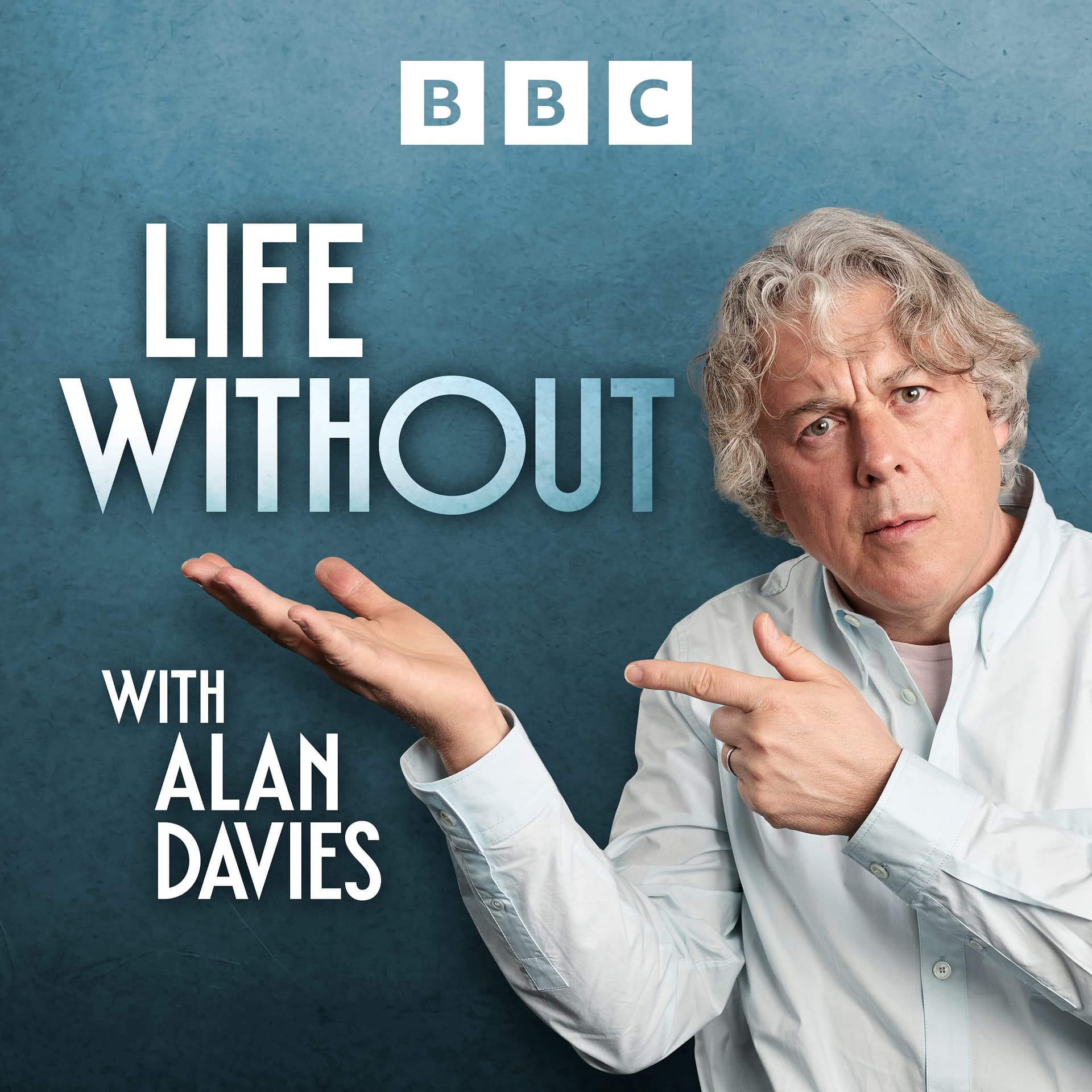
- Description: Hosted by Alan Davies, this segment explores hypothetical scenarios where a crucial element of our world vanishes, analyzing the consequences of such losses.
---
Key Themes and Discussions
Introduction by Alan Davies
- Alan Davies introduces the concept of the podcast Life Without, where he examines what happens when vital elements of our world are removed.
- Focus of the Episode: Life without the Moon.
The Hypothetical Scenario
Life Without the Moon
- Formation of the Moon:
- Discusses the giant impact hypothesis where Earth collided with a smaller planet (Theia), resulting in the Moon's formation.
- Cultural Significance:
- The Moon has deep cultural and personal meanings across various societies (e.g., myths in different cultures).
Immediate Reactions to the Moon's Disappearance
- Shock and Grief:
- Experts discuss how people worldwide would react—shock and mourning would ensue due to the Moon's deep-rooted significance in human culture.
- Initial Observations:
- The first night without the Moon may lead people to dismiss it as a cloudy night, but the reality would be much more severe.
Ecological Impact
- Dependence on the Moon:
- Animal behaviors (e.g., moths, birds) and plant reproductive cycles (e.g., corals) are deeply tied to the lunar cycle.
- Without the Moon, ecosystems would face dire consequences, such as the decline of coral populations crucial for coastal protection.
Tidal Changes
- Tidal Effects:
- The Moon's gravitational pull is responsible for Earth's tides, affecting wildlife and human coastal activities.
- Without the Moon, tides would be drastically altered, impacting marine life and ecosystems.
Long-term Consequences
- Generational Impact:
- Over time, future generations may grow up never having seen the Moon, leading to a profound cultural loss.
- Stability of Earth:
- The Moon stabilizes Earth's axial tilt, which is crucial for maintaining seasons. Its absence could lead to extreme weather and climate instability.
Reflection on Human Connection
- Emotional Connection:
- The Moon serves as a source of inspiration and a connection to the universe, impacting art and culture (e.g., literature, visual arts).
- Potential for Change:
- The discussion hints at a hope that losing the Moon could prompt humanity to take better care of Earth by understanding fragility and interconnectedness.
Concluding Thoughts
- Call to Action:
- The loss of the Moon might galvanize efforts to explore and preserve space, seeking to understand the cosmos and our place within it.
Key Takeaways
- The Moon is not just a celestial body; it's woven into the fabric of human culture, science, and ecology.
- Removing something as significant as the Moon would lead to immediate emotional reactions and profound ecological and cultural impacts.
- The episode explores not only the scientific implications of such a loss but also the deeper meanings and human connections tied to the Moon.
---
Guests
- Sarah Russell: Researcher in cosmic mineralogy and planetary sciences.
- Luke Jerram: Artist known for his work, including the Museum of the Moon installation, which has gained international acclaim.
---
Additional Notes
- The episode also subtly critiques the need for better stewardship of Earth as a lesson drawn from the hypothetical loss of the Moon.
- It serves as a reminder of the fragility of the ecosystems we rely on and the importance of the celestial objects that influence life on Earth.
---
This concludes the notes for the podcast episode "Introducing... Life Without." For further exploration, listen to the full episode on BBC Sounds.
Written by AI. May contain mistakes. Listen to the episode to check what was said.
Chapters
Tap a time to open that second in VOThe Moon's Influence on Life
3:52 to 6:10
Discussion on the moon's impact on Earth and its inhabitants.
“Scientists around the world would be crying themselves to sleep, seeing all of their hopes and dreams evaporate with the moon.”
Cultural and Scientific Ramifications
6:12 to 7:40
Exploring the cultural significance of the moon and scientific implications of its absence.
“It lives on in poems and love stories and sets the mood for champagne and flowers dates, but for animals.”
Tides and Ecosystems Without the Moon
7:42 to 10:40
Impact of the moon's absence on tides and coastal ecosystems.
“to figure out why the moon disappeared on us that night.”
Existential Reflection on Losing the Moon
10:42 to 12:40
Discussion on the emotional and existential impact of living without the moon.
“The sun does a bit as well, but there'll be much less than we are used to and on a different cadence as well.”
Long-Term Earth Stability Without the Moon
12:42 to 14:01
Exploring how the moon stabilizes Earth's environment and the possible long-term effects of its absence.
“oh, granny, going on about the moon again.”
The Moon's Impact on Earth
14:01 to 15:32
Explore how the Moon stabilizes Earth's axis and its importance for life.
“Well, so over a timescale of maybe hundreds of thousands of years we would start to see another effect that the Moon has, which is that its presence in the sky actually stabilises the Earth.”
Transcript
Automatic transcript. May contain errors.0:00Alan Davies:This BBC podcast is supported by ads outside the UK.
0:30Alan Davies:the highest B2B return on ad spend of major ad networks. Spend$250 on your first campaign on LinkedIn ads and get$250 credit for the next one. Just go to linkedin.com slash broadcast. That's linkedin.com slash broadcast. Terms and conditions apply. Warning, the following ZipRecruiter radio spot you are about to hear is going to be filled with F-words. When you're hiring, we at ZipRecruiter know you can feel frustrated, forlorn even, like your efforts are futile and you can spend a fortune trying to find fabulous people only to get flooded with candidates who are just fine fortunately zip recruiter figured out how to fix all that and right now you can try zip recruiter for free at zip recruiter.com zip with zip recruiter you can forget your frustrations because we find the right people for your roles fast which is our absolute favorite f-word in fact four out of five employers who post on zip recruiter get a quality candidate within the first day.
1:28Alan Davies:Fantastic. So whether you need to hire 4, 40 or 400 people, get ready to meet first rate talent. Just go to ZipRecruiter.com slash zip to try ZipRecruiter for free. Don't forget that's ZipRecruiter.com slash zip. Finally, that's ZipRecruiter.com slash zip. Hello, Alan Davis here, hijacking this feed to take you to alternate realities mapped out by science with my new podcast for BBC Radio 4, Life Without, where I take a single vital piece of our world and simply make it vanish. For the next 14 minutes, you'll have a taste of what life is like when something we take for granted disappears. So, brace yourself as we are going into a life without the moon.
2:20Alan Davies:It all started as a messy cosmic fling four and a half billion years ago. In the heat of the moment, two bodies got a little too close and one explosive moment later... They were together, then flung apart, fuming and scorched. You know how it is. Everyone ends up getting hurt. They tried giving each other space, moving apart, Bit by bit, they drifted farther away, but they couldn't let go completely. And the chaos softened into a rhythm of tides and seasons and a whole life balanced on this awkward long-distance thing with about 380 ,000 kilometres between them.
3:05Alan Davies:Every month, the moon swings by in full glow and the Earth pretends it's not obsessed. In the moon's eyes, Earth became that majestic blue boar that it once loved, the centre around which its whole life revolves.
3:24Alan Davies:Welcome to Life Without, where I yank a Jenga block out of our magnificent world, a peace we rely on has just vanished. My doing, of course. No heads up, no easy fixes, just the game of life wobbling in front of our eyes. Will the tower stand or will the whole thing come crashing down? For BBC Radio 4, this is Life Without with me, Alan Davis. And together we'll find out if a life without the moon is game over.
3:55Hannah Fry:Scientists around the world would be crying themselves to sleep, seeing all of their hopes and dreams evaporate with the moon.
4:03Alan Davies:Piecing together this wild scenario right alongside me are Sarah Russell, a merit researcher in cosmic mineralogy and planetary sciences at the Natural History Museum. And Luke Jerram, a fantastic artist who you might know from Street Pianos, Play Me, I'm Yours. And he's also the artist who toured the world with his stunning replica, Museum of the Moon. Fly me to the moon. We won't be singing that in quite the same way once the moon's gone. Now, astronomers have a pretty good idea how the moon was formed. most support the giant impact hypothesis where the young, forming Earth collided with a smaller planet called Theia.
4:42Alan Davies:And yet we still treat it like a mystical switch for human behaviour, blaming full moons for madness, crime and chaos. Well, tonight, the moon has had enough. It's leaving.
5:01Alan Davies:We're one day in. into a sky with no moon.
5:09Alan Davies:Luke, how do you think people will react when they realise the moon is gone? There's going to be a sense of shock, disbelief, mourning and grief. The moon just has so much personal meaning. It doesn't matter where you are in the world, whether you're in the jungle, you could be in prison. We're all looking at the same moon. The other thing is this idea that you can see dark patches in it. And on this side of the planet, we often think we see a man in the moon, whereas over in Japan and China, because it's orientated slightly differently, there are all these mythologies and stories about the rabbit in the moon.
5:42Alan Davies:Whereas in New Zealand, the moon's completely upside down from their perspective. So there's a lovely story about a girl collecting water by moonlight with a pail and a bucket. And the cloud goes across the moon and she suddenly can't see where she goes. She stumbles, the water goes on the floor, and then she curses the moon. And so the moon then abducts her. So now if you're in New Zealand, you can look at the moon there and you think you see a girl underneath a tree with a bucket. So we'll lose all that. Which is a lot, actually. Moonlight is often a romantic idea. It lives on in poems and love stories and sets the mood for champagne and flowers dates, but for animals.
6:21Alan Davies:That light and rhythm can be a matter of life or death. Is that right, Sarah?
6:25Hannah Fry:Absolutely. Because the moon has been our companion for four and a half billion years, life on Earth has evolved to really depend on the moon. Moths and birds can use it for navigation. There are plants that flower with the full moon. I'm thinking particularly of corals as well. So corals give off their eggs and sperm after the full moon. That's how they know that that's the time when they all need to synchronize this reproductive event. So without the moon, they will start to die out and that would be devastating for a lot of ecosystems and it would mean that we don't have corals to protect us from tsunamis.
7:02Alan Davies:Horrendous consequences. Yes. But for a lot of people, day one without the moon, they might just think, a bit cloudy tonight.
7:09Hannah Fry:But if the moon suddenly disappears in a puff, there would be this dramatic event where all of this water that's being pooled by the moon, that's suddenly relaxed and so they move back to some quiescent state.
7:23Alan Davies:So at the end of one day without the moon, those who believe it's gone forever are really in a panic. The rest of us just think it's probably a cloudy night. So here we are, exactly 29 and a half days in, and the scientific community is still working tirelessly to figure out why the moon disappeared on us that night. I think we'd feel even more isolated in the universe. if there's nothing out there other than little twinkly things, because the moon is this stepping stone into astronomy, into the stars. So the moon has always been that first thing that astronomers do when you get given a telescope, you look at the moon.
8:06Hannah Fry:Absolutely, we have. Things like Star Wars and Doctor Who, because we can look up to the moon and we can imagine that it's a world that people could walk on it, right? And that's the only object in the sky that we can do that for.
8:16Alan Davies:When you watch Star Wars and you see the twin moons of Tatooine, are you a bit jealous?
8:22Hannah Fry:No, I love our moon more than any other moon
8:25Alan Davies:How well do we know the moon?
8:27Hannah Fry:We know quite a lot thanks to the exploration like the Apollo program in the 1960s and 70s so it's from that that we learnt how the moon formed in this really dramatic event and that we can use the moon basically as an archive of what's happened to the Earth over four and a half billion years because the Earth is continuously reprocessing itself For example, we can see from its cratered surface that the moon and also the earth have been bombarded throughout its history.
8:57Alan Davies:Luke, you've taken the Museum of the Moon to more than 40 countries. In fact, it was at the Natural History Museum a few years ago. It was. People loved it. It's amazing. So the Museum of the Moon is this sculpture which is a replica moon and it's all made of NASA imagery. I had a scientist in tears where they were able to walk around the far side of the moon for the first time and see it. Because the moon that we see in the sky always faces one direction.
9:20Hannah Fry:I can't express enough how devastating this would be to the scientific communities.
9:25Alan Davies:Is there enough stuff on the moon to make it worth digging holes in it and mining it?
9:30Hannah Fry:Yeah, there's lots of discussion about ways we can use the moon, and there are things on the moon that we would find useful. The moon has this thin layer of helium-3 over it, which is very rare on Earth but also very useful for lots of medical applications. or the moon has certain layers that have rare earth elements in them which are quite scarce on earth. We could put a radio telescope on the far side of the moon that would be completely free of contamination from the earth and we could use that to look right back in time to the beginning of the universe and we could use the moon as a launch pad to launch rockets around the solar system because it's so much easier to launch rockets from the moon.
10:11Hannah Fry:So all of those plans would have to be cancelled.
10:14Alan Davies:Luke, you're from the Bristol area and the Severn River, the estuary, has the highest tide in the UK. Is that what piqued your interest in the moon? Yeah, in Bristol there's a 13.5 metre gap between high tide and low tide and back in 2001 I had this idea that I could make a replica moon artwork inspired by cycling my bike over the river and noticing all the water had gone and then you come back an hour later and it's all full up.
10:40Hannah Fry:So the moon is responsible for most of our tides. The sun does a bit as well, but there'll be much less than we are used to and on a different cadence as well. So that would be really devastating for an awful lot of wildlife that live in that intertidal region. So lots of things like crabs and mussels, seaweed that live in this region. So the tides play this big role in both bringing nutrients from the sea and also getting oxygen into the water. I think it's going to change a lot of our coastal lifestyle.
11:17Alan Davies:Maybe the architecture around the UK and other places that are very susceptible to massive tides will become more like the Mediterranean. You'll be building right on the seafront.
11:28Hannah Fry:Yeah, it won't be all bad. Sailing will be a bit safer as well if they don't need to worry about tidal flow so much.
11:35Alan Davies:We're one month in. There are some upsides, but it's quite devastating. I'm moving as 10 years on now I'm having a slight existential wobble The moon was always this quiet constant that we could count on and now it's just not there 10 years there'll be a generation of people born that will have never seen the actual moon You'd have to be trying to describe to them what the moon would look like in the sky They might see it on TV and they might see it in paintings but there's something about the physicality of actually seeing the moon in the sky. So trying to explain what it's like to be followed by the moon when you're in your car driving along and it looks like the moon is following you as a companion.
12:20Alan Davies:When we presented a sculpture of the moon around cathedrals and museums, a little girl came up to me and she said, will you put the moon back afterwards? So she thought I'd stolen the real moon. That cultural shift will be profound and over the generations, we would lose a feeling of what that experience was like to be physically looking and engaging with the moon.
12:40Hannah Fry:Yeah, I can imagine our grandchildren saying oh, granny, going on about the moon again.
12:46Alan Davies:Do you think that losing the moon might push us to take better care of the Earth out of knowing now what it feels like to really lose something? I'd hope so. One of the main outcomes from the Apollo moon missions wasn't the ability to go to the moon and discover it and put a flag in it, it was that opportunity to look back at the Earth for the first time and realise that we're all on this beautiful blue planet together, the fragility. And that famous photograph, the Earthrise, kick-started the whole environmental movement. The Earth and the Moon are made of almost the same kind of cosmic DNA, Sarah.
13:23Hannah Fry:I hope we still have samples of lunar rocks on Earth that we can still study in the form of the Apollo samples and the Chinese return samples.
13:31Alan Davies:I think they've gone.
13:32Hannah Fry:What?
13:33Alan Davies:So mean. Sorry about that. You've lost your library of the Earth's history.
13:39Hannah Fry:OK, so we have a lot of work on our hands then to try to persuade our governments and space agencies that we still need to explore our solar system, the Moon's fantastic laboratory for geology, and has lots of other uses as well. It's used to calibrate satellites that are looking at the Earth. All that is lost.
Read the full transcript
13:58Alan Davies:I already feel a bit down. Well maybe there'll be an even greater push to go to Mars
14:04Hannah Fry:I would hope so, yes So that would be a really, really exciting development As long as we can keep that push going
14:15Alan Davies:I don't think I want to push this experiment much beyond the 10 year mark But I'm curious, could losing the moon eventually make the Earth uninhabitable?
14:24Hannah Fry:Well, so over a timescale of maybe hundreds of thousands of years we would start to see another effect that the Moon has, which is that its presence in the sky actually stabilises the Earth. And without the Moon there, it would start to wobble around. At the moment, the Earth is at a tilt of about 23.5 degrees off, which gives us the seasons. Without the Moon there, that might mean that we have much, much longer winters. For example, we might not see the Sun for months. So that would be really hard for us to adapt to.
14:55Alan Davies:Somehow that gravitational relationship between the Earth and the Moon is keeping us on this tilt.
15:00Hannah Fry:Yeah, exactly.
15:05Alan Davies:The real magic of the Moon has always been how it unlocks new chapters for us down here in our science, our tech and our stories. I'd like to think we've done a decent job of saying sorry to the Moon, so it might consider coming back. Next time we see a full Moon, we can enjoy it. And remember Maya Angelou's lines, just like moons and like suns with the certainty of tides, just like hope springing high, still we'll rise. Thank you to my brilliant guests, Sarah Russell and Luke Gerald.
15:40Alan Davies:That was episode one of Life Without with me, Alan Davis. If you like what you heard, subscribe on BBC Sounds. The best B2B marketing gets wasted on the wrong people. So when you want to reach the right professionals, use LinkedIn ads. LinkedIn has grown to a network of over 1 billion professionals, including 130 million decision makers. And that's where it stands apart from other ad buys. You can target your buyers by job title, industry, company, role, seniority, skills, company revenue, so you can stop wasting budget on the wrong audience. It's why LinkedIn ads generates the highest B2B return on ad spend of major ad networks.
16:17Alan Davies:Spend$250 on your first campaign on LinkedIn ads and get$250 credit for the next one. Just go to linkedin.com slash broadcast. That's linkedin.com slash broadcast. Terms and conditions apply.
16:30Hannah Fry:It's 2009 and we're in the German mountains. A man straps himself into a car on the world's most dangerous racetrack.
16:37Alan Davies:He whispers to himself, It's time to put my balls on the dashboard. As he starts the engine. In 15 minutes, he's in an ambulance unconscious. In 15 years, he's a billionaire.
16:48Hannah Fry:This is Toto Wolff, Formula One's most powerful team boss and the breakout star of Drive to Survive.
16:54Alan Davies:This week on Good, Bad, Billionaire, how Toto Wolff made his billions. Listen wherever you get your BBC podcasts.
From the publisher
Hosted by Alan Davies, Life Without looks at what would happen to our planet if we removed one thing. Could pulling a single thread from our world really unravel the whole thing?