
 Ask ChatGPT

In short
Markets and central banks debate whether higher energy prices from the Iran conflict will be “bearable,” amid signs of global fragmentation (UAE leaving OPEC) and strong US earnings supporting a “flight to safety” in US stocks.
Guests
Katie Martin, Financial Times markets columnist in London; Robert Armstrong, Financial Times contributor/markets commentator in New York.
Key claims
Energy price risks may persist longer if the Strait of Hormuz stays effectively impassable; markets are “diddy” despite war risk because US stocks are rising on earnings, not hype; UAE’s OPEC exit signals OPEC’s weakening control and broader unraveling of multilateral structures; Fed/central-bank decisions hinge on how long energy-driven inflation lasts, and Jay Powell’s final meeting raises uncertainty about Trump nominee Kevin Warsh.
Notable examples
Brent around ~$110; “danger zone” above analysts’ assumptions; S&P 500 reported earnings up ~15% on average (FactSet); UAE leaving OPEC after 60 years; Hossein Vafai beating Judd Trump in snooker.
Written by AI. May contain mistakes.
Chapters
0:35
Market Realities Amidst Chaos
Discussion on how markets react to world events, including the US-Israeli war.
“They don't care about what's right and wrong and what is pure in the world.”
1:19
Insight on Oil Prices and Economic Impacts
Analysis of rising oil prices and their potential effects on the economy.
“So today on the show, bear with me here, Is Donald Trump actually a master of getting markets exactly where he wants them?”
2:42
UAE Leaves OPEC: Implications Explored
Exploration of the UAE's departure from OPEC and its global implications.
“I think this is going to go on for longer.”
4:32
Geopolitical Tensions and Their Effects
Examination of the geopolitical dynamics affecting oil markets and regional politics.
“But the central hypothesis, the most likely outcome, I think it's markets friendly, given everything else we know about the economy and what the market is doing now and so forth.”
8:02
Understanding U.S. Market Resilience
Discussion on the resilience of U.S. markets in the context of global instability.
“Saudi is kind of the biggest beast in OPEC.”
12:21
Central Bank Strategies and Future Outlook
Overview of upcoming central bank meetings and their implications for the economy.
“corporations expanding earnings and revenue and you have a good and stable U.S.”
14:00
Chair Powell's Future and Kevin Warsh's Nomination
Discussion on Chair Powell's potential resignation and Kevin Warsh's upcoming challenges as a nominee.
“This is one of those rare meanings on a more serious note where we know what the first question for Chair Powell is going to be.”
20:50
Long and Short Segment
Rob and Katie share their long and short picks, discussing technology and sports.
“Find Barclays Brief wherever you get your podcasts.”

Ask about this episode
Get the gist, explore an idea or ask about something said.
 Claude
On Unhedged, what are the key points of this episode?
Searching your listeningTranscript
Automatic transcript. May contain errors.
0:00From globalization to innovation, sustainability to market volatility, there's always more than one side to a story. Explore different perspectives on today's most important business and economic issues with the Flipside podcast from Barclays Investment Bank. Hear two research analysts in a lively debate and get insights from every angle to further inform your view. Listen to the Flipside on your favorite platform.
0:32Rob Armstrong: Pushkin. Money is a tough old game. Markets don't care about your feelings. They don't care about what's right and wrong and what is pure in the world. Stocks, in particular, care about how much money companies are making, how much money is flowing into the market, and that's about it. So it's actually not that weird that markets are doing fine, even though we're now entering month three of the US-Israeli war on Iran. The problem, though, is it's becoming increasingly clear that energy prices are going to be much higher for much longer. Is this really OK, like indefinitely? This week, we got a bunch of central banks and really big company earnings reports to help us understand what it all means.
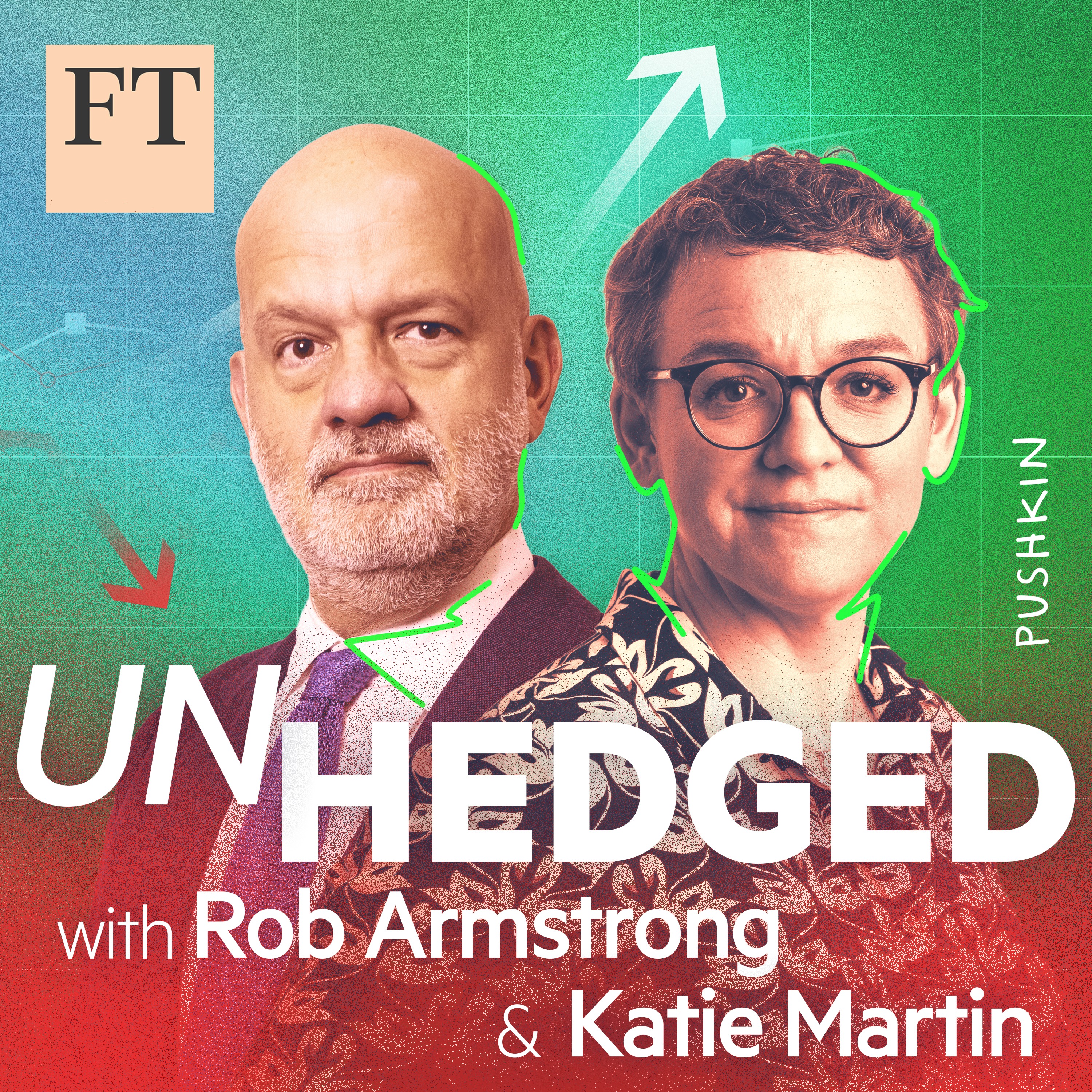
1:20Rob Armstrong: So today on the show, bear with me here, Is Donald Trump actually a master of getting markets exactly where he wants them? This is Unhedged, your friendly markets and finance podcast from the Financial Times. I'm Pushkin. I'm Katie Martin, a markets columnist at the FT in London, where it's warm, it's cold, it's warm again. No one knows what to wear. It's chaos. And I'm joined through the miracle of technology by the larger-than-life Mr. Robert Armstrong, all the way over there in New York City. Rob, how is the Big Apple?
1:53Katie Martin: Katie, it is a beautiful, sunny, cool day here in New York, a perfect spring day. And I know markets don't care about our listeners' feelings, but I do. We here at the Unhedged podcast, we really care.
2:11Rob Armstrong: We're here for you, listeners. So, look, it's maybe like a riddle and it's maybe not, But it's definitely a thing that like the cuffs and collars in markets just don't match at the moment. You were out in Switzerland talking to energy people the other week. And I was writing about this yesterday. All the sort of energy analysts are saying, I don't like this much. I think the Strait of Hormuz is going to be basically impassable for much longer than I previously thought. I think oil prices are going to be much higher than we previously thought. I think this is going to go on for longer. I think it's going to be economically more painful than we perhaps thought at the start of this crisis.
2:52Rob Armstrong: And yet, like markets are still like, diddy, diddy, diddy.
2:57Katie Martin: I think we can make sense of this, not perfect sense, but maybe as good sense as we can ever make of the wild squiggling that characterizes all markets everywhere, always. I mean, I thought your column on this was excellent, Katie, but the numbers they are talking about.
3:16Rob Armstrong: That's nice, Rob. You're never nice.
3:18Katie Martin: I'm never nice. There's something. I've taken some kind of a new pill this morning, and they're working. I don't know. Anyway, the numbers they are talking about there are higher, higher than we are now and well higher than we were before the war. However…
3:38Rob Armstrong: Well, the oil prices, you mean.
3:39Katie Martin: So Brent is what, at 110 or something now? Do you have that number in front of you?
3:43Rob Armstrong: Mm-hmm, something at that.
3:44Katie Martin: I feel like from the work Hack Young has done and that I've done, you know, if we can keep it under 150 for the American economy, at least, that's bearable. Maybe a different story for Europe, certainly a different story for Asia. But like the danger zone, I think, is still above what most analysts are talking about. I, of course, allow for the unpleasant possibility that the analysts are not pessimistic enough, which is, you know what I mean? But, you know, I think the central hypothesis remains sometime in the next couple of months. They managed to get the straight open. Oil never touches 150.
4:28Katie Martin: And we all breathe a big sigh of relief. There is a right tail that is awful. And we should talk about that. But the central hypothesis, the most likely outcome, I think it's markets friendly, given everything else we know about the economy and what the market is doing now and so forth.
4:43Rob Armstrong: Well, let me throw you a curveball, Rob Armstrong, because just before we came to record this show, a headline broke saying that the United Arab Emirates said on Tuesday it was leaving OPEC, the organization that effectively controls oil prices. It's a bunch of big oil producing countries. They get together and talk about how much oil they're going to produce, how much they're not going to produce, and roughly what they think that's going to do to oil prices. It's been around for like ever. It's a really important part of the fabric of global finance. And the UAE is saying, right, after 60 years, we're off.
5:19Rob Armstrong: And everybody I've mentioned this to has gone, huh? What? Like, what's that mean? It is a very unpleasant sensation for a pundit to see a headline and have absolutely no idea what it means.
5:35Katie Martin: And I had that unpleasant sensation this morning on looking on that. And all I can, you know, until I have more time to process this news, all I can do is fall back on that old description of OPEC as the world's dumbest cartel. Like their ability to organize themselves, to effectively control prices, to execute a long term strategy is notoriously a bit ragged. So my first guess, and it's just a guess, is that this is just another wheel coming off a car that is famous for throwing off wheels.
6:15Rob Armstrong: The other car that this wheel is coming off is like multilateralism writ large, right? You know, the World Trade Organization, the United Nations, NATO, OPEC, all these things are just kind of unraveling for reasons that I'm largely going to blame on the US. I mean, whether that's fair or not, I don't know. But like, you know, just a lot of these sort of things that tie the room together are falling apart. And another interesting thing from the Reuters story about the UAE leaving OPEC, says here it's a big win for US President Donald Trump, who has accused the organization of, quotes, ripping off the rest of the world by inflating oil prices.
7:00Rob Armstrong: And it's like, dude, you inflated the oil price? Like, what? Did I miss? Did I miss something? Like, I don't get this.
7:11Katie Martin: Yeah, I don't get it either. But clearly, you know, and this when you talk to regional experts, this is the larger context is this kind of doom loop hypothesis that all the global structures are breaking down a little bit. And the local story is that it's not a simple situation, a simple two-sided war. Like all the parties to this war are pointed in slightly different directions. The Gulf states, Israel, the United States, Europe, everybody, there's nothing simple about it. This is just more evidence of that, that what the Saudis like, the smaller Gulf states don't like, which is different from what the Iranians are hoping for, which is different from et cetera, et cetera, et cetera.
8:00Rob Armstrong: Yeah, there's like this simmering tension between the UAE and Saudi over the years. Saudi is kind of the biggest beast in OPEC. So this almost certainly has something to do with that. But, yeah, it just feels a bit like every man for himself, which doesn't feel like a great place to be. So, you know, in moments where you have these big stories like this breaking, people look to podcasts like this to say, what does it all mean? And our answer is, we don't know.
8:30Katie Martin: Let me try a hypothesis on you, Katie. If you look at this mess and then you look at how U.S. markets in particular are doing well right now, bonds steady and stocks rising, maybe there's not a contradiction there after all. Maybe in a fracturing world, you want your money to be near the biggest thing that it can be near, and that is America. You want to cozy up, not to the nicest, but to the biggest. Now, this is kind of barstool psychology on a global scale by me. But, you know, I think that thesis kind of makes sense that, you know, you might there is a flight to safety trade in the U.S. right now, even when and we've talked about this a lot, even when the U.S.
9:23Katie Martin: has its role to play in creating the instability, a flight to safety still points to the United States.
9:29Rob Armstrong: Yeah, maybe US stocks are the new safe haven, pass it on. Like I have heard this idea expressed like completely sincerely that there has been like a reordering of where safety is in markets. And maybe it's here. And like an additional interesting thing that's going on here is I've read quite a bit of analysis from like a couple of different places recently that have both pointed out that where you see US stocks rising, it's not rising because of the usual reasons. why US stocks rise, which is just like hope and expectation and hype and effectively investors paying more and more money for the same things.
10:09Rob Armstrong: Actually, what's rising here and what's doing the hard work in pulling markets up is earnings. Now, on paper, of course, it's healthy that stocks respond properly to earnings. But I haven't seen stocks respond properly to earnings for like the past 15 years because normally it is that kind of hope and expectation and hype that's doing the hard work so if we're trading on fundamentals something has gone wrong yeah it's like when
10:36Katie Martin: your your crazy uncle starts acting normal you're like what's going on here yeah or like the kids
10:42Rob Armstrong: something's wrong with old joe the kids start like loading the dishwasher and like you know doing their laundry and you're like what have you done what have you done you're obviously hiding
10:51Katie Martin: And look, it's not just earnings expectations. So earnings for next year, the year after that, they're high and even unreasonably high. But I'm just looking, as of last Friday, according to FactSet, the companies in the S &P 500 that have reported so far, which is not the majority of the index, but it's a lot of it, their earnings are up like 15 % on average. Very good. Revenue is beating expectations. And you could be worried if earnings were doing one thing and revenue was doing another thing. But revenue is OK, too. And look, I can pitch you a story about the underlying U.S. economy, which I happen to believe, which is it's not as good as it was a year ago, but it's still damn good.
11:36Katie Martin: I mean, you look at you at home can all go look at a chart of U.S. initial jobless claims, like how many people are filing for unemployment insurance for the first time. That line is historically low and staying historically low. If you look at indicators, my favorite indicator of corporate sentiment, ISM, indices of manufacturing and services, especially on the services side, it's still well in positive territory, you know. So stuff like this, you know, and I could realize like it's OK. I mean, you know, we've just come through a period where the U.S. economy was downright hot and it's cooling, but it looks good and stable.
12:19Rob Armstrong: So you have U.S.
12:21Katie Martin: corporations expanding earnings and revenue and you have a good and stable U.S. economy. Everybody wishes the job market was more dynamic. In other words, more people were switching jobs, more people were quitting jobs, et cetera. But everybody who wants a job basically has one. They may not love that job, but they've got one. And so, you know, and the rest of the market responds to that. Industrial stocks doing well, financial stocks are doing well, et cetera, et cetera.
12:51Rob Armstrong: Now, the other big thing going on this week is central bankorama. Woo! Who's the central banks this week? We've got the Fed in the States. We've got Bank of England in the UK. We have got the European Central Bank. Now, on paper, snooze fest, they're all likely to be on hold and not move rates. But there's exciting stuff going on here on a macro level about how are they thinking about this rise in energy prices, how inflationary they think this is going to be, how much is this going to push them off the courses that they all previously thought they were on. But also, it looks like this is the last meeting where Jay Powell is in charge of the Fed.
13:33Rob Armstrong: And that's a moment.
13:35Katie Martin: I have the following policy proposal for the Fed that at any chair's last meeting, they should play kind of sappy end of the movie love and reconciliation music in the background. Do you know what I mean? So it's like the it's all OK after all montage at the end of the movie. I think that's really going to change the mood.
13:57Rob Armstrong: Yeah. Yeah.
14:00Katie Martin: This is one of those rare meanings on a more serious note where we know what the first question for Chair Powell is going to be. Are you going to leave the Fed altogether when your term is up? Because he was saying, I'm going to stay. I will no longer be chair, but I will remain a member of the committee until this investigation, at least until this investigation of the Fed for fiddling around with its building budget or whatever nonsense justification there was for this investigation is resolved. Well, it looks like that's resolved now. The Department of Justice has dropped the investigation.
14:42Katie Martin: The Trump administration has offered some fairly non-believable talk about how the investigation will continue in some other amorphous way. but it looks like the investigation
14:55Rob Armstrong: itchy chin on that one
14:57Katie Martin: and so will Powell go now because that changes the outlook if he stays right and so that is going to be the first question I don't know what he's going to answer but that bit will be exciting of the meeting
15:09Rob Armstrong: look if it was me and I'm clearly not the Fed chair I would think sod this for a game of soldiers it's been a right old couple of years I'm knackered I just want to like go home put my feet up go on a cruise
15:21Katie Martin: do some gardening
15:22Rob Armstrong: you know what but but he's like a proper public servant right so he might stay on at the fed in another capacity but this does open the door to kevin walsh the trump nominee taking on this this job that he so dearly wants we had a hearing in the senate from walsh the other day talking about so what are you going to do with this job if you get it kind of thing and i feel like we kind of learned a lot and kind of didn't like on the one hand he was like listen i haven't made any promises to cut rates. That's not the basis on which I've got this job. I've been nominated by Trump. I would do no such thing.
15:58Rob Armstrong: But on the other hand, when he's asked simple questions like, so Kevin, who won the 2020 presidential election? He kind of goes, there's a bit of a duck and a dive. So is he his own man? I don't know. But he has got a real headache coming into this job in the sense that the inflation profile is higher than it was when he asked for the job and got nominated for the job because of the war in Iran. So he can't necessarily cut rates in the way that he previously anticipated. He thinks that AI enables him to do this, but I don't know about that one.
16:34Katie Martin: I strongly agree with you that we do not know what he is going to do when he gets the job. We just don't. And the reason for that is easy to explain. Anybody who would have gotten and kept Trump's nomination had to say a bunch of nonsense about interest rates to keep the president sweet. That's just the price of admission to being in position to get the job.
17:03Rob Armstrong: Yes, to get the job, you must be this tall and have these opinions or be willing to say the following things in public.
17:09Katie Martin: And so we don't know whether he believes all the things he said or not. And I think we should accept that fact, not as, you know, a criticism of him. He made this decision. He's going to be nominated by that. He wants to be nominated by the president. That comes with certain things you have to do. Fine. But that does mean now we are going to find out the real Kevin Warsh is now going to show up. What does he really think about cutting rates into an expanding economy where inflation is a percentage point above target? We're about to find out. I offer to you that we have no idea what he really thinks about that.
17:46Katie Martin: And we have to hope that it is a sensible and moderate. I mean, you know, I personally think rates where they are fine. Stay the course. Be boring. Would work just fine here. Let's hope he's that guy.
18:00Rob Armstrong: Yeah. Yeah. But one quick observation I would make about this idea that he has that AI enables him to cut rates because it's so good for productivity and bring down inflation is if that is really a thing and it's untested at this point, then that will be a global phenomenon. And I would note that other central banks are not prominently having this conversation out loud. And it strikes me as odd that this would only work in the States. And the other is central banks are often accused of like fighting the last battle. So, for example, they were really slow to raise interest rates when COVID hit and inflation kicked up because they'd spent years trying to get inflation higher.
18:41Rob Armstrong: But cutting because of a potential thing that might happen with AI in future while you're still dealing with an inflation problem today because of high levels of capital expenditure and because of the war in Iran seems like dumb. like fighting the next battle before the current battle is over strikes me as silly. I'm not a central banker, but this feels like you're getting ahead of yourself.
19:03Katie Martin: I think you're exactly right. And that was actually what's so radical about what Warsh said about AI. It wasn't that higher productivity is going to come through. And when it comes through, we will have more leeway to cut rates into growth. His point was, if you wait for the productivity to come through, it's too late, right? That you have to do it before you see it happen. And that seems to me to be a completely bonkers view. I wouldn't touch with your monetary system. But again, I don't know if he believes that or not. He has to have some story to tell that will satisfy Trump that he's a rate cutting guy.
19:52Katie Martin: And that was the story he had. And I sympathize with the guy. Does he believe it? I surely hope he doesn't.
20:00Rob Armstrong: We'll see. Well, we'll get this probably swan song from Jay Powell this week. We're going to get all these heavy hitting earnings. By the time we come back on Thursday, we're going to know a lot more about the world. In the meantime, we're going to come back in just one sec with Longshore.
20:50Thank you. today. Stay sharp, stay briefed. Find Barclays Brief wherever you get your podcasts.
21:00Rob Armstrong: All righty, it is time for long, short, that part of the show where we got a long thing we love, or a short thing we hate. Rob, what are you saying?
21:08Katie Martin: I am short exercise technology, Katie. I made a terrible mistake last week, and I bought one of these smartwatches that monitors your performance. And I'm training for, you know, a couple of triathlons this summer. And so I ran a 10 K in the park and all this was captured by my new technology on my wrist. And I, you know, I say, okay, now I'm done. Then it was like, uh, very good. Your runtime was this estimated recovery time, 67 hours. And like this phone basically concluded that I'm an 85 year old man after monitoring my vitals for, you know a one hour run or whatever it was like you are about to die well yeah you're lucky it didn't call you an ambulance like just as a friend just those watches are bad what about you katie
22:03Rob Armstrong: what's your long and short i am long the glorious victory of iran over trump i am of course referring to Iran's Hossein Vafai, who defeated Judd Trump in the World Snooker Championship last night to go into the quarterfinals. So like snooker is famous as like a pub sport in the UK. But as far as I'm aware, listeners correct me if I'm wrong, Hossein Vafai is the only Iranian player of any sort of stature in this game.
22:35Katie Martin: It's amazing.
22:36Rob Armstrong: How did this Iranian guy get so good at snooker? And And he's like a really unassuming guy. And he beat someone called Trump? Yeah, Judge Trump. He's a famous, like I say famous, if you like snooker, he's a famous snooker player, a Brit. And it was a really, really close match. And there were errors on both sides. And just the whole like Iran beats Trump headline is just too good to resist. So I'm here for it. So listeners, like I say, we're all going to be much wiser about the world. We might know some things. by Thursday. So listen up then. Unhedged is produced by Jake Harper and edited by Brian Erstad.
23:14Rob Armstrong: Our executive producer is Jacob Goldstein. Cheryl Brumley is the FT's global head of audio. Special thanks to Laura Clark, Greta Cohn and Natalie Sadler. FT premium subscribers can get the Unhedged newsletter for free and a 30 day free trial is available to everyone else. Just go to ft.com slash unhedged offer. I'm Katie Martin. Thanks for listening. Thank you.
From the publisher
The news is bad, but stocks seem happy. Today on the show, Katie Martin and Rob Armstrong unpack the market’s rally and look forward to Fed chair Jay Powell’s final comments. Also, they go short health monitors and long snooker in Iran.
For a free 30-day trial to the Unhedged newsletter go to: https://www.ft.com/unhedgedoffer.
You can email Robert Armstrong and Katie Martin at [email protected].
Hosted on Acast. See acast.com/privacy for more information.
More from Unhedged
All episodesWe use cookies.They keep VO running smoothly and help us improve it. Privacy policy