
 Ask ChatGPT

In short
Main points
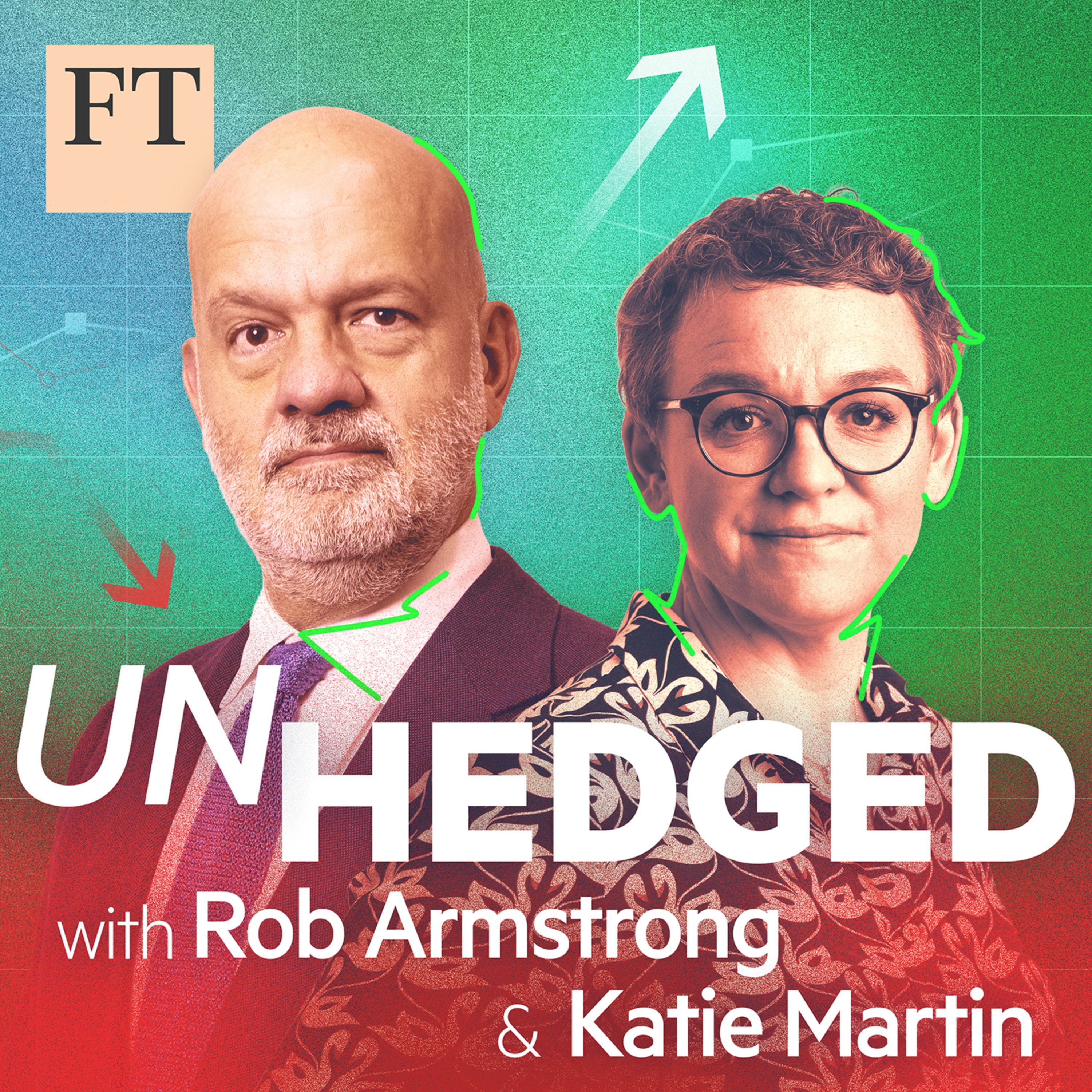
- Host(s): Katie Martin and Robert Armstrong
- Guest: George Steer, US Capital Markets Correspondent for Financial Times
- Description: Discussion focuses on investment scams in the US stock market, particularly “pump and dump” schemes involving Chinese stocks.
- Current Environment for Scammers: It’s easier than ever to perpetrate scams online, especially investment scams.
- Statistics: The FBI reports a 300% increase in pump and dump schemes.
- Victims: Thousands of investors have lost billions, with some losing their life savings.
Written by AI. May contain mistakes.

Ask about this episode
Get the gist, explore an idea or ask about something said.
 Claude
On Unhedged, what are the key points of this episode?
Searching your listeningTranscript
Automatic transcript. May contain errors.
0:05Pushkin. It is a wonderful, wonderful time to be a scammer. It is just so incredibly easy to call someone up, pretend to be from their bank and extract crucial personal details so you can make innocent people's money just vanish. It's also, it seems, alarmingly easy to lure people into investment scams, even on regulated public stock markets. Well, it turns out investors have lost billions of dollars in recent months by betting on a clutch of US-listed Chinese stocks that later turned out to be worthless. The FBI says it's seen a 300 % rise in reports of pump and dump schemes. And when you're a victim, it can be devastating.
0:53Today in the show, we're getting into the anatomy of a pump and dump and asking, how does it feel to be on the receiving end? This is Unhedged, the markets and finance podcast from the Financial Times and Pushkin. I'm Katie Martin, a markets columnist locked deep down in the bowels of FT Towers in London. And I'm joined, energised back from his cabin in the woods by that Robert Armstrong guy off of the Unhedged newsletter. Yo. But also from our New York office by the young and charming George Steer, who's been writing about all of this for us this week. George, don't laugh. You are young and charming.
1:31You're definitely young compared to me and Rob. George, what's your title? U.S. Capital Markets Correspondent. I think we need to get you a more colorful title. I think so. The U.S. Scumbag Correspondent. I would love that. Or Slime Correspondent. Sleaze. The Sleaze Correspondent. Because this has become something of a specialty for you. You are kind of a dark underside of Wall Street reporter in a way, aren't you? Yeah, there's so much dodginess. The stories kind of keep falling onto my lap, honestly. George, this is kind of quite a twisted hobby for you covering this stuff. I'm obsessed. Tell us what's going on here.
2:08What is the story? So in July, I found seven stocks all on NASDAQ, all with their operations in China that were worth very, very little early in the month and then were pumped up to a mad scale, like hundreds of percent, thousands of percent in some cases. We found one company called RegenCell, which made a loss of five or six million dollars last year. They make herbal remedies in China. At one point this summer, it was worth 40 billion dollars. And then lo and behold, shock horror, the shares crashed over the space of a few days. And that's the pattern that we've identified. companies get pumped up, pumped, pumped, pumped, hit a peak, and then insiders sell all of their entire stake on a single day.
2:56The share price crashes. Retail investors lose all of their savings. Yeah. If you were late onto the train, then you lose all of that money. This is unbelievable, George. Tell me about some of the other companies. I mean, none of them make any money. A lot of them, yeah, they will tend to be loss making. They'll be in really varied industries like industrials, like a lot of them are biotechs. A lot of them are kind of will sell, I don't know, kind of niche medical equipment. There's really no pattern to the kinds of companies that tend to be pumped and dumped, apart from the fact that a lot of them are in China.
3:28Not exclusively, a lot. There are pump and dumps involving US companies too, but Chinese companies dominate the small cap, micro cap IPO market in America, which is interesting given everything that's going on between Washington and Beijing, that even now Chinese companies are listing like every day on NASDAQ almost exclusively. Yes. It's sort of the evil twin of the stock market enthusiasm that we've talked about so much on this show, Katie. Whenever there's all this hype and excitement and like real prosperity, there's also this like dark side going on at the same time. There's just a lot of bad people out there.
4:08So, George, tell me in broad terms, there are different ways to fleece people out of their hard-earned cash in regulated stock markets. But what is the kind of new way of doing it? What's the hot new way to scam people out of money? So, back in the day, people would just call you up on the phone and say, like, hey, we've got a stock. We think you should invest in this, blah, blah, blah. The stock would get pumped and then dumped. The person on the other end of the phone holds the stock already. And then it's calling grandma and grandpa or Joe and Jane Six back and getting them to buy it. Now the scam has migrated online.
4:43And I think everyone I spoke to for my article had fallen foul of the scam in the same way. They'd seen an advert on Facebook, normally with an endorsement from someone famous, a big investor, a TV anchor, a friend, someone saying that, yes, this investment group made me loads of money. You should try it too. you click on this link it adds you to a whatsapp group where 40 or 50 other people have also been added and then you're kind of for a few weeks maybe even a few months you're kind of butted up by this a few people who say that they're working with this legitimate looking brokerage or securities group they will kind of they won't encourage you to invest immediately they'll kind of warm you up they'll say hey look one guy i spoke with said um that they had asked him if he was an AI bot to kind of relax you.
5:32Like they're serious. Yeah, we're serious. Yeah, like are you legit? Do you want to be? Are you serious about making money? And then months later, they'll say, hey, we found, we've identified this small company. Maybe you should try dipping your toe in, put like$100 in. Then over the next few weeks, once they've enticed you, they say, okay, maybe try adding 10 grand, 20 grand, 30 grand. And the stock is pumped up, up, up and up and then very abruptly dumped by the insiders in the same way that it was. Is this like that movie Boiler Room? From back in the day where the company is called something like Schmorgan Stanley or something or like literally these companies have a name that's meant to be reminiscent of a legitimate Wall Street operations name.
6:19Are the companies that are being pumped and dumped, are they in on the scam too? It's hard to say. None of them replied to any of my requests for comment. Sometimes it was very hard to even find a website or an email address or a telephone number for these companies. They're all based in either China or Hong Kong. A lot of them are in Singapore. So it was really hard to get in touch with them. And then when I eventually did reach out, none of them replied. It's impossible to say whether they are involved. But they don't have to be. Maybe that's the beauty of it. I think they're targeted. And there are a few common denominators when you look at the kinds of stocks that are manipulated higher.
6:53When they come to market in the US, they all have very small floats. Like people at the company, the executives control or hold 80 % of the shares. Pause for non-nervous here. The float is the number of shares that actually trade, which can be distinct from the number of shares that are out there. Maybe a lot of the shares are owned by the company or somebody or their employees or whatever. the float is the shares that trade yes so i think the scammers whoever they are find these companies where there's only there aren't that many relatively speaking that many shares on the market to play with so they can grab a big proportion of them then float the rest or encourage uh retail investors to buy in as well but they have yeah they they kind of control the uh the share price obviously they don't tell the people they're scamming about that So, George, what I want to understand here is you've spoken to a bunch of people who've lost various amounts of money through these sorts of scams.
7:53Yeah. Is there a type of person who gets lured into it? Because it strikes me that they're not all idiots, right? A lot of these people are perfectly sensible people who you might know and work with and be related to. And they're intelligent, well-informed people. And this can just happen to anybody, right? Everyone who I've spoken with was added to one of these WhatsApp groups via an advert on Facebook. So it's fair to say that not many people under 30 still use Facebook like that. So, yeah, everyone I spoke with is kind of 40, 50, 60. People have lost anything from$12 ,000 to I'd spoke with one guy who'd lost$800 ,000.
8:33Well, anybody under 40 doesn't have any money to scam away from them. Exactly, yeah. I've got no capital.
8:40i'd love to i'd love to make some money on a penny stock i've got 20 20 dollars to my name yeah so people the money to spend and yeah people on facebook what did they say to you about what this experience is like in terms of the moment when they realized that they'd been had well they all yeah they're all like absolutely distraught they've lost in some cases their life savings. One lady said she felt ashamed that she'd been kind of conned in this way. It was a mix of embarrassment, kind of sadness, genuine like, you know, fear about the future because they'd lost so much money and they're now trying to, they're in touch with the FBI and the Securities and Exchange Commission trying to work out if they can recoup any of that money.
9:22Katie, you've hit the key point. The key point is that real people are being hurt here. Every day. Every day. And the question is, I got a lot of questions. First question, why are these tiny companies on the NASDAQ, right? That seems to me, this is a major exchange. And the very fact that they are on a major exchange lends an aura of credibility to the company and investing in the company. Yeah. And I mean, we said the companies are not necessarily involved in this. We have no reason to think that the companies are involved. But what are these tiny little Chinese Singaporean Hong Kong companies doing on the Nasdaq in the first place?
10:06It's a good question. Yeah, it's a good question. Well, NASDAQ prides itself on being the home for kind of small cap IPOs. I think two thirds of new companies that list in the US list on NASDAQ and they kind of that the exchange, they're very proud of this fact. They have this kind of war of words going with the New York Stock Exchange where they'll say like every quarter or every year, they'll say like, we once again captured like the lion's share of fresh IPOs. So they make money when they make money. They're a private company. They make money when stocks list on their exchange. So it's in their interest to let companies, whoever they are, as long as they meet their listing standards, of course, list.
10:44You might make the case from the point of view of capitalism in general that you want kind of wildcat enterprises to be able to raise money. Yeah. One of them could be the next Walmart. Yeah. Yeah. Whatever. Yeah. But still, there is a problem that the halo of the NASDAQ or whatever big exchange is helping these scams take place. If I could ask you another question, George, who are the banks who bring these companies to market? That's a really interesting topic, too. It's generally not the big banks that we've heard of that we know and love. Goldman, Morgan Stanley, JP Morgan City. They handle big IPOs.
11:24The companies that list on NASDAQ that are then often pumped and dumped are taken to market. The IPOs are underwritten by the same kind of cluster of what I call bilge bracket banks. I love that term, the bilge bracket. But yeah, they're small operations. They're almost all in either New York or New Jersey. They specialize in taking companies in Singapore, Hong Kong, China to market on NASDAQ. The IPOs tend to raise around$25 million a lot of the time. The floats, the number of shares actually sold to market is relatively small. But yeah, there's a cluster of these guys, maybe like 10 to 15 of them.
12:03You can kind of bet that whenever a stock is pumped and dumped, one of these 10 to 15 banks will have taken the company public. Rob, let me pick on you as the token American in this group. How is this perceived, this sort of thing publicly in the States? Is it kind of, well, that's capitalism for you folks, and you fell foul of it, and so go and put on this clown hat and sit in the corner and think about what you've done. You know, stuff goes wrong. Or is it, huh, we really need to have a conversation about tightening up here. This is an abuse of the system, which is kind of where I fall down on this.
12:38I haven't heard much conversation about this at all. No. Right? What's incredible to me is how far below the radar a lot of this stuff flies. But there is a poignant phrase that I have mixed feelings about, and I am going to coin an acronym for the phrase, which is... Oh, God. Here we go. You know, I'm an acronym factory. I can't be stuck. The acronym is NOCAC, and that stands for no crying at the casino. Oh, chemist. And that is an old phrase used by some of our somewhat less reputable friends and neighbors these days to say, like, look, there is a take your chances slice of capitalism. Caveat emptor.
13:29Caveat emptor. And no cack, no crying at the casino. And part of me, you know, just playing up my role as the token American, part of me buys that. Right? Like it's a WhatsApp group. Yeah. You found out about it on Facebook. You should have known better. Part of me feels that way. You know, it's hard to say. It's worth noting as a historical fact. If there was one book at the head of the Unhedged podcast reading list, it would be Reminiscences of a Stock Operator, which is a kind of classic written 100 years ago by Edwin Lefevre. And it's a kind of great tale of the early days of Wall Street. And these pump and dumps back before, I guess it would have been the big regulation of the 30s and 40s, were completely legitimate parts and accepted parts of what Wall Street did.
14:23Right. There would literally be articles in the newspaper saying like, so and so and so and so are starting a syndicate to push up the stock of XYZ Railroad. And they hope everyone will participate. Yeah. And it was like this game. everyone perfectly knowingly played together, right? And everyone knew that at some point the music would stop. But in the meantime, this rich guy and that guy are getting together and running a syndicate around this stock. And wouldn't you like to play along? I guess you've kind of just described the crypto market as well. Exactly. But, you know, like literally until the 1930s, this was allowed.
14:59Yeah, yeah. Right. But the difference, I guess, is that now there's a lot of differences. But one difference now is that you have social media. so it's not at all unusual for people to get in touch with me and say hey i just want to check this out like it says here i've got a direct message from you on like on x or on some other social media profile or on a website somewhere saying come and buy this crypto come and buy this stock you know whatever it is and it'll be like a picture of my face katie martin's face saying hello i'm katie martin i i want you to come and buy this thing this this is not at all uncommon And for the record, if anyone ever gets in touch with you claiming to be me saying that, it's not me.
15:40One of the seven stocks that I mentioned in the piece on Monday, one person was enticed to buy this by an AI version of the FT's own Martin Wolf. Well, that's a whole thing. My first response to this is I'm extremely angry that no one has tried to use my license to sell one of these horrors. This seems extremely unfair. My feelings are hurt. But this, I mean, the point you're making, Katie, which I think is legitimate, is that the world has changed. And this social media, these are like credulity machines that are kind of roving the landscape. And they are designed at scale to pull people in. So maybe the question we should be asking is not how is NASDAQ responsible?
16:28How are the banks responsible? Maybe we should be asking how is Facebook responsible? Yeah, Facebook. Did you talk to them? I did, I did. Or Meta or whatever? And what did they say? I spoke with Meta who said, you know, they don't want this content on their platforms, obviously. That's bigger than them to say. They're doing their utmost to remove that content. But I mean, like, this is a problem, has been a problem for them for a long, long time. And I have some sympathy because it's so fast. Yeah. It must be like a game of whack-a-mole for them. These scammers can pop up, disappear, appear in another guy's elsewhere the next week.
17:00But again, you can read, like Martin Wolf has written about his likeness being used in investment scams. And it's incredibly difficult to get your likeness taken down off of these platforms and disassociating them from these scams. So I guess these things fall down where they always fall down, which is buyer beware. You know, for the record, you will never see an FT journalist pumping any kind of financial product at you. We don't give investment advice. All of the investment ideas that Rob and I have are terrible. And you should probably just avoid them for that reason alone anyway. But yeah, this is just not the sort of game that legit journalists are in.
17:43George, let me ask you this question. Is it possible to see these things coming? Is it visible to the naked eye, as it were, or to a computer when a stock is being pumped in this way? I think it's pretty easy to spot, honestly. Like on any given day, you can just check out which stocks on Nasdaq are performing best. And you could see, for example, that a tiny company you've never heard of is suddenly up 900%. Click on that company. They've not put any news out. There's no obvious reason why that company should be up 900%. No one's bought them. So that's one red flag. But every day I arrived in New York in January and very quickly made a connection with this guy who works at a predictive analytics firm.
18:27And since January, this guy has emailed me maybe like three times a week flagging companies that he says are currently being pumped and are likely to be dumped. And he kind of scours. He scans Reddit. He scans X. He scans Facebook for unusual clusters of like promotional activity and different tickers, different stock tickers. disconnected from any kind of like fundamental news relating to those companies. And this guy doesn't just email me, he emails big, big Wall Street trading firms, other investors and regulators flagging that these stocks look like they're being manipulated and that perhaps, you know, like trading in these stocks should be paused or something should be looked at or some kind of alert should be issued.
19:07If this guy can see this stuff happening from space, why is it just allowed to carry on this strikes me as crazy yeah i mean i think that's the kind of the the the main takeaway from this whole like sordid episode is that no one will accept responsibility for what's going on like meta where the adverts are posted you know is it their fault that they allow this stuff to stay up on their site is it nasdaq's fault for letting these weird companies list in the first place should the securities and exchange commission be doing more to warn investors about this kind of stuff. It's hard to pin the blame on any one party.
19:42So the scams, unfortunately, continue. I think, again, now we're in, the S &P has had a bad few days, but it's close to all-time highs. A lot of people are making a lot of money. And I think the scammers, they know that and they kind of weaponize the FOMO that a lot of people might be feeling. Yeah, sometimes missing out is the best policy. George you're doing God's work raising public awareness of these things please keep at it people if you have been pumped or dumped then let george.steer at ft.com know about it trust your gut if it feels wrong it is probably wrong speaking of which we'll be back in just a second with Long Short
20:28okie dokie now it's time for Long Short that part of the show where we go long a thing we love or short a thing we hate George may I please remind you that the last time you were on this show you were on flares I stand by that this time I'm going I stand by that but I was at a party the other day and I spilt I was eating some very greasy pizza basically and got olive oil or just grease pepperoni grease all over my flares and they just the stain will just not come out so I haven't been able to pepperoni grease is the strongest of all the greases yeah it's like it's powerful stuff so i'm shorting uh pepperoni grease and olive oils of all of all kinds good fair rob what about you delicious as they may be i am long envy you know people talk a lot about the other emotions but i think what our show today shows you is you can never underrate the power of envy in human affairs love hate greed all these other emotions they get a lot of hype but don't sleep on envy That is a powerful emotion right there.
21:33Yes, green-eyed monster. Speaking of which, I suppose I have to be long, la boo-boos. No. Not you, too. Well, so this had totally passed me by, but these are like these weird, grinning, collectible, elf-like dolls. Anyway, the company behind them, Popmart, we were reporting this week, sales more than tripled in the first half of this year. It sold nearly$2 billion worth of these lame dolls. What do you do with the dolls? Just attach them to your bag? Apparently so. It's now China's most valuable toy company. It's worth more than twice as much as Hasbro and Mattel combined. Screaming short. It's a short.
22:20Short it, Katie. Short it. Well, you say that, but apparently many LeBooBoo's are coming. So we should be more excited about LeBooBoo's. I feel like we've missed out on the whole LeBubu thing and we need to catch up, guys. FOMO, LeBubu FOMO. You heard it here first. I don't suffer from it. You're too busy with your greasy flares. I've got bigger problems. Listeners, while you think about George's greasy flares, keep that in your mind until we are back in your ears on Tuesday and listen up then. Unhedged is produced by Jake Harper and edited by Brian Erstad. Our executive producer is Jacob Goldstein.
22:58Topher Forhers is the FT's acting co-head of audio. Special thanks to Laura Clark, Alistair Mackey, Greta Cohn and Natalie Sadler. FT premium subscribers can get the Unhedged newsletter for free. A 30-day free trial is available to everyone else. Just go to ft.com slash unhedged offer. I'm Katie Martin. Thanks for listening.
23:35We'll be right back.
From the publisher
US markets reporter George Steer has been tracking stocks that have soared, then crashed. Some of them might be “pump and dumps”, an old-fashioned style of scam where insiders generate excitement, along with sales of a stock, selling them when the price rises. Today on the show, Katie Martin and Rob Armstrong grill Steer about the schemes. Also, they go long envy and Labubus, and short pepperoni grease.
For a free 30-day trial to the Unhedged newsletter go to: https://www.ft.com/unhedgedoffer.
You can email Robert Armstrong and Katie Martin at [email protected].
Read a transcript of this episode on FT.com
Hosted on Acast. See acast.com/privacy for more information.
More from Unhedged
All episodesWe use cookies.They keep VO running smoothly and help us improve it. Privacy policy