
In short
Podcast Notes: Stanford GSB - View From The Top
Episode Title
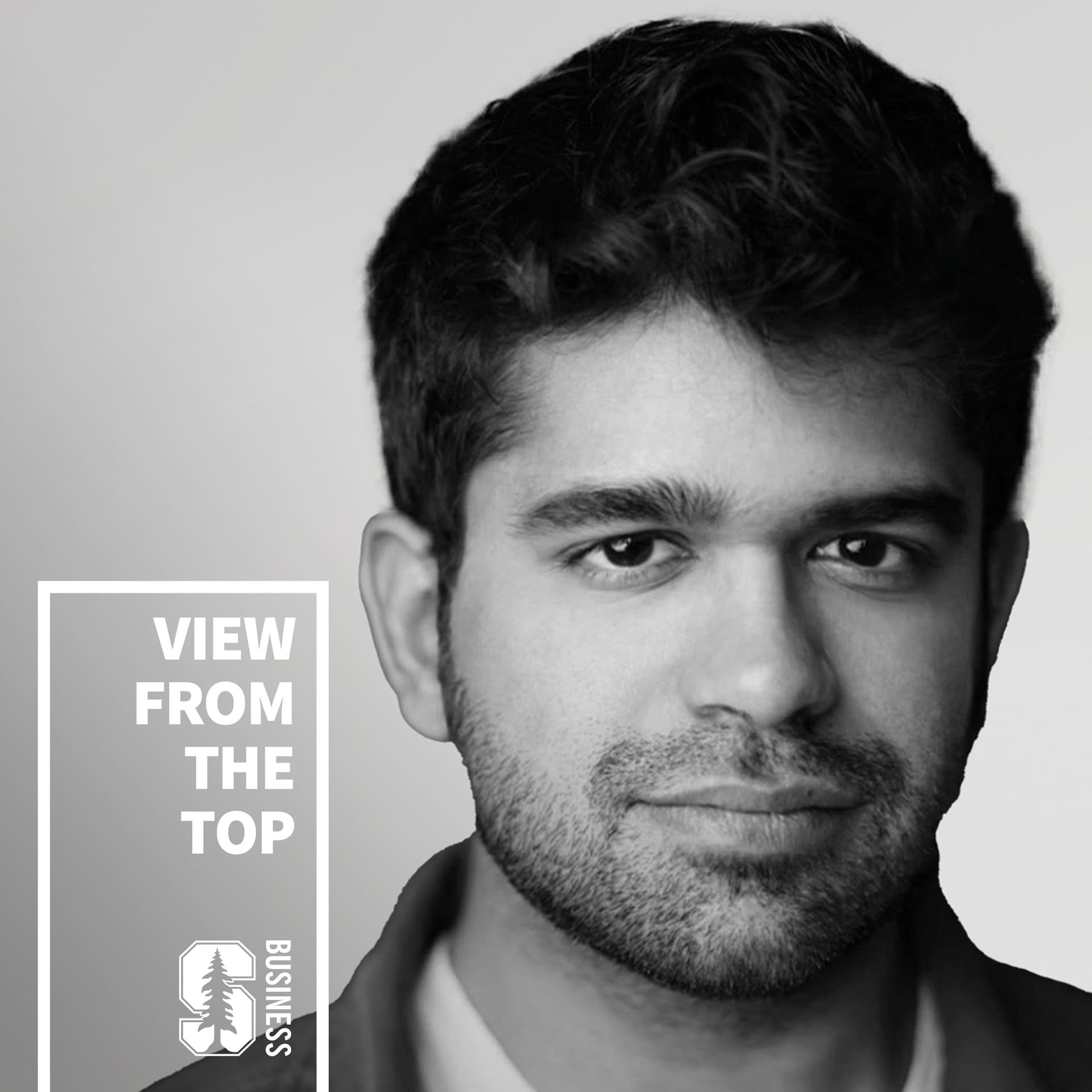
S8E6: Aravind Srinivas Has All The Answers Episode Description In this episode, Aravind Srinivas, CEO and co-founder of Perplexity, discusses his journey leading a late-stage startup in the AI-powered search landscape. Throughout the conversation, he shares insights on leadership, the significance of knowledge, and the ambitions of his company.
Main Themes Introduction to Aravind Srinivas
- Background: Grew up in Chennai, India, and studied at UC Berkeley.
- Company: CEO and co-founder of Perplexity, heralded as the world’s first answer engine.
Insights on Leadership
- Young Leader's Perspective: Aravind represents a fresh perspective, being in his early 30s and still navigating the challenges of startup leadership.
- Valuable Lessons: Stresses the importance of the journey from being an individual contributor to leading a team, reflecting the experiences of many MBA students.
The Role of Knowledge
- Cultural Significance: In his upbringing, knowledge was valued more than wealth.
- Moral Duty: Aravind believes in the responsibility to share knowledge and promote learning as a core value.
The Genesis of Perplexity
- Academic Roots: Perplexity integrates academic citation principles into its answers, ensuring reliability and credibility.
- Founding Principles: Focus on democratizing access to knowledge and making information more accessible for everyone.
Building a Team
- Qualities in Co-founders: Importance of complementary skills and the "Lollapalooza effect," where diverse talents create multiplicative success.
- Hiring Philosophy: Prefers to hire ambitious individuals with potential rather than only established experts.
Facing Competition
- Market Landscape: Encountering competitors like OpenAI and Microsoft, but finding confidence in their unique offering and approach.
- Investor Backing: Gained support from high-profile investors, including Jeff Bezos and Jan LeCun, through the product's demonstration rather than traditional pitches.
Technical Approach and Monetization
- Technical Moat: Perplexity does not develop its own models but builds an application layer on top of existing technologies, minimizing overhead while maximizing innovation.
- Ad Strategy: Unique approach to advertising that avoids manipulating answer quality, instead integrating relevant suggestions into user queries without compromising the user experience.
Ethical Considerations
- Copyright Controversies: Aravind defends Perplexity's approach to using information, emphasizing the importance of attributing sources and the distinction between training on proprietary content versus sourcing information.
- Collaboration with Journalists: Plans to share revenue with publishers and engage in collaborative research to enhance journalistic integrity.
Vision for the Future
- Ultimate Goal: To create a platform where users can seamlessly find answers to their questions while gaining productive insights, enhancing their quality of life akin to having a personal assistant.
- Legacy Aspirations: Desires to be remembered for contributing to a smarter world through enhanced access to knowledge and learning opportunities.
Key Takeaways
- Knowledge as Power: The podcast emphasizes how knowledge sharing and easy access to information can empower individuals and change lives.
- Team Dynamics: Building a diverse team with complementary skills is vital for innovation and growth in startups.
- Ethical AI Development: Balancing innovation with ethical considerations is essential in the rapidly evolving tech landscape.
Conclusion In this episode, Aravind Srinivas shares valuable insights on leadership, the importance of knowledge, and how Perplexity aims to redefine how people access information. His perspective as a young leader navigating the complexities of a startup provides a relatable and inspiring narrative for MBA students and aspiring entrepreneurs alike.
Written by AI. May contain mistakes. Listen to the episode to check what was said.
Transcript
Automatic transcript. May contain errors.0:10Welcome to View From The Top, the podcast. I'm Aislinn Roth, an MBA student of the class of 2025. And I'm Michael McDowell, a producer at Stanford Graduate School of Business. Aislinn, who's on cue from the top today? Arvind Sreenivas, CEO and co-founder of Perplexity. Arvind grew up in Chennai, India, and he moved to the U.S. to study at UC Berkeley. We were so lucky to have him here with us. He's in the middle of building Perplexity, which is known as the world's first answer engine, and an AI-first company. Fantastic. And AI is so fluid. It feels like every day there's a new breakthrough. How do you approach this conversation knowing that that's the reality?
0:51So I spent a lot of time doing some of my own reading, but then also speaking to people who are very familiar with the space, from students to professors to investors to other individuals who worked with perplexity and used the tool over and over again. And that really helped me get a rounded out perspective of where we're at today. And even there was some new news the week before the interview. So just staying up to date on what's going on in the space. I want to ask you a little bit about Arvind in particular. Many of you from the top speakers are later in their careers, but Arvind is almost a peer.
1:21Why is it so valuable and so unusual to hear from a leader at this moment in their journey? I mean, Arvind could be a GSB student. He's in his early 30s, similar to many of us here. I think what's really special is so often we hear from very tenured CEOs. They've been in the position for a decade. It's second nature to them at this point. versus Aravind is someone who's still on his leadership journey, like many of us. He went from building a startup to managing a team of 15 or 20 to leading the company today. And a lot of us are on a similar journey. Maybe we were individual contributors before business school.
1:55We'll go back to our roles as managers with small teams, and eventually we hope to lead big companies. So a lot of the changes and lessons that Aravind has learned really apply to us. And it's incredible to see him go through that journey as someone we can look up to. What are you particularly excited for our listeners to hear? I'm really excited for our listeners to hear about how Aravind describes knowledge and the importance of knowledge and learning is almost this moral duty for us to perpetuate knowledge and to share our learning with those around us. I think it's really powerful. He speaks about how growing up in India, knowledge was valued almost more than wealth.
2:29And he really valued his education, the opportunity to come and study here, just to not take that for granted. and we're all students. So to take away what we're learning here and try to share that with others, I think is really powerful and top of mind. Excellent. So without further ado, should we play the tape? Let's do it. Arvind, welcome to Stanford. Thank you. Thank you for having me. I'm from Berkeley. Hopefully you don't mind. At least I wanted to represent with the blue. But yeah, it's great to be here. Thank you. We're happy to have you here today. Now, many of us in the audience are active Perplexity users.
3:05Thank you. Especially with free Perplexity Pro for all Stanford students.
3:15So we couldn't be more excited to have you here. Thank you. Now, to get started, I figured I would turn to Perplexity to help me craft my questions. So let's take a look at what it said. So to get started, I figured I would put this prompt into Perplexity. And I asked, I'm interviewing Aravind for a one-hour interview at Stanford with an audience of business school students. What questions should I ask him? Now... Hopefully they're not too difficult. You probably missed that in the prompt. You might have yourself to blame for that one. So Perplexity did give me a very detailed response. but in summary, it suggested that we talk about, first, your personal backstory, second, the early days of perplexity, third, the company today, and fourth, various leadership lessons.
4:10How does that sound? Sounds good. I thought that sounded like a pretty good outline, but I figured we could get just a little more personal. So I thought I would test out my follow-up prompting skills and I ask perplexity what is something about Aravind that the audience may not know what is the funniest thing about him what are some questions that I can ask him to inject humor into this conversation very direct what are some rapid-fire questions I can ask you at the end of the interview, so stay tuned for that. And finally, is perplexity ever wrong? More than you think.
4:59So this generated some more interesting insights than my initial prompt, including, here's the very detailed list, but I'll just hit on a few of them. First, I learned that you love cricket. Second, I discovered that you actually taught yourself to program after missing getting into computer science at IIT Madras by only 0.01 points. And lastly, I learned about your connection to Sundar Pichai, the CEO of Google, who grew up in the same hometown in Chennai, India. Now, perplexity actually suggested that I watch this video of you and Sundar from Chennai, so I figured that this might be a very good place for us to start.
5:41I'll spare you the video, but Aravind, is there something in the water in Chennai that's led to so many successful tech entrepreneurs?
5:50Well, I think, like, it's interesting, you know, like, more than, I'm sure, like, a lot of people in India, like, you know, there's so many cities which are producing great people. And so one thing that I would say is very common is the sort of culture of really trying to excel and do your best at what you're meant to do. And the sort of like real emphasis on education is very much present in Chennai and many other cities, of course. but like in at least in my circles people valued being scholarly and well-read even more than being rich like you kind of got respected a lot for it and I think that translates to like you know going above and beyond and not just read what's meant for your exam to do well in your exam but like really try to go deep into what you're trying to learn and I think that's sort of like common in many people who come from there in Excel in Silicon Valley or other parts of the U.S.
6:56I feel that it's like a very common trait. And obviously, like this cricket thing is there. And like one thing Chennai is known for is they call the cricket nerds. Like they're really obsessed about all the statistics. You know, like back before like Google or like Cricket Info or all these sites existed, we could still recite all the stats of every player and obsess about things like what's the run rate, what's the average. You learn basic statistics before even it's thought formally to you that it's not just important to score a lot of runs in one game, but you've got to be pretty consistent.
7:36And so I think that's kind of common, I would say, for people from Chennai. So knowledge over wealth and attend cricket games. That's what I'll take away from that one. Now, you left India to pursue your PhD in computer science at UC Berkeley, not Stanford, unfortunately. Oh, I didn't get in here. That's the truth. Well, we have you here today. We couldn't be luckier. But how have your academic roots shaped your approach to building perplexity? Yeah, it's actually like pretty core. You know, perplexity started off with citations right after every answer. this is obviously like real I'm not not just making it up when I first went to Berkeley and I thought PhD is an amazing thing you watch movies of well like Stephen Hawking where you just knock on your advice's door this is the idea for my thesis like I really romanticize how that's how it's going to be but it's not quite as like you know easy as that like you have to like kind of earn your way to like coming up with your first core original idea.
8:41So institutions like Berkeley or Stanford, they're kind of like amazing because they give the new student sort of like a framework to get there instead of just leaving them completely unsupervised. And so when I first went to the lab, I was asked to kind of help a senior student by like, you know, work on their idea and like try to actually make it really work and write a paper you learn the process and then you kind of like get from there so um after i wrote like a paper or two um they told me this concept of citations and so what matters is not necessarily you getting a paper accepted it's that other people have to cite and build on it that's how you build your academic currency in the community and um i was like okay that's cool but like my paper seems like too complicated so there's always this trade-off between writing very complicated uh like very uh creative ideas that might get the reviewers to accept your paper but for someone else to build on it like if it's too complicated nobody cares so i think like you want that sweet spot of like very simple ideas that will get cited but also will get accepted in a conference.
9:59I had to learn it the hard way and once I learned that I kind of obsessed about citations and you know I also learned that that was the core inspiration for the Google search engine of how academic citation graph to like marrying that idea to the web hyperlinks. So that sort of also came into perplexity because we asked the question, okay, what if like an AI always responded like an academic? When you write a paper, every sentence you write in an academic paper needs to have a corresponding citation to it, or else it's kind of coming across like an opinion. It needs to be something like a source of truth from some other peer-reviewed paper in the past or some experimental result in your own paper.
10:42And we thought, okay, what if we do that for AI where every answer, every sentence in the answer needs to come from some source in the web that has some amount of domain authority or trust core. And if we can bake that into the prompt, it's like inbuilt, then that sort of creates a very unique product experience. And that's actually how my academic roots help me in Perplexity. Now, I know Perplexity's academic focus feature has been a key driver of adoption here at Stanford and lets you cite only academic journals. in your research, so very helpful for all of us who are studying today. Now, at Perplexity, you're very focused on improving access to information, and you're building the world's first answer engine.
11:26Why is democratizing access to knowledge so important to you? Because I love using it myself. Like I said, I come from a culture where being knowledgeable was very valued. there is even this quote from Charlie Munger where the best thing you can do for another human being is to help them learn and know more and it's almost like a moral duty for all of us to seek wisdom and become perpetual learning machines because nothing else can help us keep upgrading ourselves you can probably focus on wealth and your net worth you can try to use that as a metric for your progress in life but at some point it stops motivating you if you reach a certain threshold.
12:12On the other hand, there is no end to knowledge. That's why in perplexity the tagline is where knowledge begins because there's actually truly no end to knowledge and you can only keep getting better. So if there's one metric ultimately that we can converge to, to view ourselves as making progress on that, it's just understanding the world better. So if that is so core to the human nature, it's essential that all of us have access to the tools that help us get there in the most accessible way. And we are trying to do our best to do that. And obviously, the more premium services are behind paywalls, but as these AI models are getting cheaper and smarter, more efficient, more distilled into smaller versions, it's going to be possible to create a version that's just widely accessible for all and helps them basically ask any question they wanted and get an instant answer.
13:11Where knowledge begins. Yeah, exactly. I love that. Now, I want to go back to the genesis of perplexity. To tackle such a big problem, you needed a great team. So what qualities did you look for and how did you build your initial founding team? Yeah, I was lucky enough to know one of my co-founders, Dennis during my PhD days. This is also where the academic background helps you a lot. You learn people who are very motivated and deep thinkers. And so we wrote the same paper, literally the same idea, a day apart. And so that's how we got to know each other. And he spent some time as a visiting student in my lab.
13:55And we used to brainstorm ideas on what we could do together, but nothing really came out of it. One quality I would say you look for your founding team is obviously people with complementary skills. You don't want to be as good as them in what they excel at. Ideally, they should be a lot better. And also, you don't want to step on their toes when they do that. And in our case, it's kind of like Dennis and Johnny were my core founding team. And I would say Johnny was world number one at competitive programming. He represented the United States at the IOI. And those who are aware of competitive programming, there used to be this guy called Tourist.
14:42And, like, only one guy has beaten him in the IOI ever, and that was Johnny. So that's sort of, like, prodigy who can, like, not just write amazing code, but has the problem-solving skills to, like, instantly solve hard problems quickly. And the sort of, like, AI depth and background and software engineering background that Dennis had combined together with, like, allowed me to, like, take bold risks and try to set up this sort of very overarching mission of trying to build a completely new search experience. Otherwise, it's impossible. Like, forget about, like, trying to do this, right? And then over time, you try to hire more and more people who can bring in new skills.
15:28Obviously, none of the three of us have front-end programming skills. So we hired someone really good at the full stack experience, and we hired someone really good at writing CUDA kernels. It keeps on becoming an incremental additive as well as multiplicative force. And I think that sort of effect is necessary. when there's a lot of people who are, it's not, like, I think there's a, like, a mental model of, like, vector sum of all the people. But I actually think if you want to create even, like, a truly great company, there needs to be some kind of this lollapalooza effect. Like, there's factors that become multiplicative in nature.
16:11And one example I can give is, like, our design team is very well alone too but that's not none of the founding team had that design quality so we went and hired someone specifically for that where that person actually wanted to build a product like this but he did not have the AI background or depth he used to work at Quora where humans came and answered questions so when we gave him the platform to use this AI to be able to answer questions like his imagination skills came in and created something that's completely like multiplicator. And that's kind of how I've generally tried to scale up the team.
16:47Find the people who multiplicate you. Yeah, exactly. Yeah. So less than a year later, you're in the middle of raising your Series A financing round. When you find out that one of your key competitors, OpenAI, has just launched their own search competitor. So when you heard the news, how did you respond and what gave you the confidence that there was still room for perplexity? So you're asking me about my Series A? The Series A and the news that OpenAI has the search competitor. Yeah, yeah. Actually, like, just a correction there. At that time, OpenAI wasn't launching search. It was actually Microsoft was going to launch Bing.
17:22And this is almost like a Silicon Valley story, the TV show kind of story, where, you know, we were at the office of NEA, and, like, we handshook on a set of terms there. And then, like, you know, I went to Blue Bottle Pal here in UAB with Dennis, and we're just chilling. Okay, finally, it's done. And then The Verge publishes a story of Bing releasing on Monday, and screenshots were already leaked because of some A-B tests. And, you know, in venture funding, there's this period called due diligence, like 30 days. In fact, another VC would also offer us a term sheet. After seeing that, they increased the diligence from 30 days to 45 days.
18:10And I was like, okay, like, this doesn't seem quite right. Like, you know, maybe I was trying to back out here. And then the NEA also, like, calls me on Saturday morning. Hey, do you have time for a phone call on Saturday morning? I was like, okay, maybe they're just going to say, like, they want to back out. But they actually said, look, we believe in you. We saw the Microsoft thing. Don't worry about it. you'll figure out a way, so we're not going to back out of the deal, and you keep going. So that gave us a lot of confidence, and I felt like that was very crucial, because I've heard lots of stories of how you get term sheets and actually don't get the funding, but they were true believers.
18:57Yeah, luckily your investors had your back. And as the underdog, you must have needed to get creative several times when fundraising, and you've been very successful at it. You've attracted Jeff Bezos from Amazon, Jan LeCun, the godfather of AI, and even NVIDIA. So how did you assemble such a great group of investors and what war stories can you tell us? Well, this is a funny story. Dennis was at NYU, so he kind of already knew Jan. But obviously, Jan is a celebrity. It's so hard to reach him. So Jan was on a vacation in France for a long time, and we just heard he came back to the NYU campus.
19:41So we were already in New York at the time, so we just basically camped in front of his office for, like, multiple hours. And he went for lunch, and, like, he was like, yeah, you guys are waiting. Okay, fine, like, I'll come back. And then we finally got, like, half an hour with him, and we built this search over Twitter demo. where all we had to do is like let him search over his own tweets and who's replying to him and like how many followers does he have that all those kind of interesting questions everybody has for themselves and he allowed it and he's like okay fine like I want to invest like he just made the decision like 10 minutes of using the product same thing happened with you know like other other investors like Karpathy, you know, he's a celebrity here.
20:28He asked for a deck and I just sent him the link to directly try the product. And same thing with Jeff Dean. All these people were just impressed by just using the product. So the main takeaway here is, you know, there's this thing called a circle of competence. If you're not good at making decks, don't try to like do it. and I wasn't good at it. So instead, just make sure there is a link that they can actually use or try instantly and make sure it works because there are some people who do that and the moment you just click on it, it just crashes or it doesn't work. That's not a good experience, but if it works, I think it communicates a lot more than having a deck because number one, most people don't have the time.
21:20They're on their phones. They're not on their computers reading every small part of the deck you optimize for. So the other thing is if you're not good at it like me, then don't try to do it. And by the way, I haven't really done decks much. Even for our Series A, it was very minimal. Series B, no decks. C, D, I just write memos or Notion documents. I actually try not to do it because I'm just not good at it. So there's even like a lot of successful decks from the past, like Airbnb, LinkedIn, Facebook. And you see all that and you're just even more confused how to make one. Because they're all so different.
22:05And you don't know which one to copy or like how to be original. You know, like what is, it's very confusing. So I just never tried to do it. So play to your strengths instead of being a copycat. Yeah. It's a good lesson. You have a lot of perspective entrepreneurs in the audience. And so I think this is a good reminder that it takes grit, determination, and hard work, and that that can really pay off. Or you don't have to be really good at many things. If you can be founder, CEO, and not know how to make decks, it's fine. Yeah. You have a lot of consultants here who all we do is make slide decks.
22:42So maybe we have the opposite skill set. Yeah. A good team to put the two together. Now at Perplexity, you're building an answer engine, but you don't own the content and you don't own the models. So what is your technical moat and why is the Perplexity approach better than direct vertical integration? She's politely asking me why you're just a rapper. So tell us, how are you going to build a... Those are your words, not mine. Yeah. But yeah, like this is kind of like actually I would be one year ago, like the whole community was pretty divided on which startups to invest in or like which kind of startups to build.
23:24Should these companies be training their own models or should they be like using APIs? And we had the conviction that number one, models are going to get increasingly commoditized. that, and if you do want to be one of those players that build their, like our provider of the models, you need to have an insane amount of funding and you need to be a company that is losing billions of dollars a year and it's still fine. And we didn't want to be, we were not in a position to be and we didn't want to be either. So we decided to use other people's models and shape them to be really good for an end-to-end consumer experience of searching.
24:04and we felt like there was a lot to do outside the model there. And I think that bet ended up being right in the sense there are a lot of companies that were trying to build their models who no longer exist. And I think that was a clear proof point that you either raise$10 billion or you don't do this thing at all. You do something else. And for us, we were working on giving answers to people. And if the answer to this question, for giving accurate answers to everybody, do you need to build your own foundation models? If the answer to that question is an absolute yes, yes, we shouldn't be doing this thing without raising$10 billion.
24:51But I felt like if open source makes progress and models keep getting cheaper, the cost of like these APIs is going down 2x every four months so assume that trend continues for another year or two we're at least going to ride the wave of a 10 to 100x reduction in the cost for the same intelligence and level of intelligence and reasoning is also going up and open source is keeping a check on these closed source models and bringing the price down it's a perfect time to be an application layer company using these models and like post-training them to be good at summarization referencing, formatting, custom UIs for so many different verticals, finance, sports, reasoning, all these kind of charts.
25:34There's so many things to do outside the model that we felt like it was just completely worth it to build a differentiated business. And at the end, most successful businesses are wrappers of some form, right? Before they existed, something else was the more valuable thing. And then something comes on top. There's even a thing of like Coca-Cola wouldn't have really worked if the refrigeration technology did not exist, right? But Coca-Cola is an extremely valuable direct-to-consumer product. And so you can always create something, there's some magic formula, the right packaging that works with the foundational technology, but in the hands of the consumer provides immense value to them that it's totally worth building.
26:16And so that's what we want to be. What should you build yourself and when can you leverage things that already exist? Yeah. It's a great strategy. Now, you've been openly critical of Google's over-reliance on advertising. And yet, just this past week, Perplexity announced that it was also introducing advertising for the very first time. So what is your monetization strategy? And how big of a role will ads play in the future? Yeah, so Perplexity's ads are different from Google's ads. Google's ad, the problem is the same ad unit whatever is the answer unit is also the ad unit there. In the sense, Google gives you a bunch of links for most queries, and that is also the unit an advertiser can influence by paying.
27:05So that way, when you're looking for relevant answers, information, and if the ordering of the links was manipulated with ads, it frustrates you. If we can avoid the trap and pick an ad unit that's lower margins, lower profits, yet allows us to be true to our users and still make money, it's a reasonably better, or I would say a much better sweet spot than what Google went for. And we said, okay, there's an answer that should be unbiased and truthful to whatever you ask for. But after the answer, there are a bunch of questions that we suggest you to ask next. You don't have to literally ask that, but at least it influences you on what you want to ask next.
27:48And let's say you're having a shopping-related query of, like, you know, I'm looking for running shoes, and this is exactly what I want, and, like, these are the brands I like, and it gives you an answer. The follow-up question that we could suggest there is some shoe brand that tries to get your attention there, which could be, like, what makes Adidas better than Nike for tennis or something like that, right? that's a question they might have picked because your first question was probably, I'm looking for shoes for playing tennis. And that's a very high intent question compared to just an ad word of a shoe.
28:27But we're not like making a particular brand appear one in front of the other on the original answer. But we could still get your attention on the brand as a follow-up question. You can choose to ignore it too. So that is an ad unit that we are experimenting with. and we're working with a few brands who are willing to try it out. First of all, the major concern is right now for brands that are afraid how the answer can come out to be because they don't really control the answer. No brand is influencing the answer. They're only able to pick the question. So it first takes courage for some brands to come and experiment this style.
Read the full transcript
29:03The ROI is not exactly clear because it's not necessarily driving a lot of traffic to you. So it's still very early days for us. But what we are very, very clear on is not trying to influence the accuracy and truthfulness of the answer. Because once we do that, then we're going to end up in the same path as Google, where people are frustrated with the answer. So when I type my initial prompt, for example, for this interview, I will never see an ad response. Yeah. Okay. It's reassuring to hear. Now, perplexity is obviously innovating very quickly. and yet this pace of innovation has attracted some controversy.
29:41So News Corp, the parent company of the Wall Street Journal, has sued you for copyright infringement. The New York Times has also issued a cease and desist order for inappropriate content use. How are you handling these recent challenges and what is your vision for ethical AI development? Yeah, so here's what we believe and we've said this on our blog post too. no one has a copyright or ownership over truth or facts. This is true in the world of journalism too. If there is an article, for example, right now in our interview, you referenced that the New York Times has sued a perplexity. Now that was reported by somebody else, but you're using that in our interview.
30:29Now can someone claim ownership over that and disallow you from saying that particular thing? No, right? So truth is supposed to be distributed widely, right? So the specific expression of truth, the specific way in which something is written, that has some copyright angle there, and that's actually the core OpenAI New York Times scenario. But what we are doing is we are referencing truth that already exists in these outlets and summarizing and synthesizing it for the user in the context of a search experience. So people need to differentiate the use of AI that trains on proprietary content versus AIs that just use them as sources and give answers and there's no actual training happening.
31:14So we made that very clear in our response. And we've also made it clear that we want to, like, we can only survive and keep getting better as a product if there is an open and thriving ecosystem of journalism. because we do need real-time information to be created every single day. And if there's not the right financial incentive for them to do that, then it's not good. So what we did is like, okay, we're going to make revenue through ads and we're going to share that ad revenue with publishers. And that way you enter into this publisher program that we came up with, which is not exactly paying you money just to license your data for a certain period of time.
31:56And then once we've absorbed it, like we don't want to, like we don't want to create That's sort of a short-term model. A long-term model is as we scale in usage, as we scale as a business in revenue, we want to share that revenue with you on a query-level basis. So it's very clear. This is more inspired by how Spotify shares revenue. And Fortune, Time, Der Spiegel have all signed up to be part of it. WordPress signed up to be part of it. And we're also going to announce more partners in the coming weeks. So we are very confident that that program will soon resonate with everybody in the journalism community.
32:31And we also made grants to Northwestern University to kind of do more research on how tools like ours can help journalists write better. Because all journalists do fact checks. And we are an amazing tool for doing fact checks. So I'm very confident that this current period of turbulence will go away. and a year or two from now, like, we'll have a system that helps both these different set of people to, like, flourish together. And just to follow up on that, so earlier today we talked about perplexity's academic roots and the importance of citations. Yeah. So given that, how do you handle these journalist allegations of plagiarism in particular?
33:12Yeah, so exactly, so that when you want to, like, go deeper into the definition of plagiarism, it's, like, if you don't attribute the source. That's like a very core part of it. And when you're always attributing the source, it's very hard to say like you're plagiarizing content. And also like you're not exactly reproducing things. Sure, AIs are unreliable at times, and like there are times when they're like word overlap of like more than three or four words. And you can argue like to what extent that is like, you know, exact reproduction versus trying to synthesize. But what we are trying to say is like, We are trying our level best to summarize, synthesize from diverse sources and make sure to give credit to all the original sources.
33:55And that way, to our best possible extent, we can control these AIs. We are doing our best to make sure that the credit attribution part is clear. I like the Spotify analogy. It's such a rapidly changing landscape. Yeah, exactly. So if we make an ad revenue where you're a source, we're going to share that revenue with you. who never shared ad revenue? Google. Because they gave you the traffic but they made the ad revenue on their platforms and the only way for you to monetize the traffic that you get is to put pop-ups and ads on your site through another product of their called AdSense and so that is what frustrates many users to come directly read on many journalist sites because there's a lot of ads on the site and they have to close a lot of pop-ups.
34:47And so this system of just referring traffic and making you monetize with more ads is not sustainable, right? You need to create something that the user really wants. And we're also offering our APIs so that they can build AI-native products and chatbots on their websites. So if people want to just come there and ask questions about only articles that they've written, we're offering our APIs for free to these people. and we're also offering our tools for free to all the people who work at a particular journalist outlet. So that way we can create a system that is economically pretty lucrative for them.
35:25That's an interesting future ahead.
35:38Are you looking for fresh perspectives on how we live, work, and lead. If Then, a podcast from Stanford Graduate School of Business delivers research-based insights to help you navigate a rapidly changing world. Just as you would exercise, just as you would worry about your diet, you ought to worry about the place where you work. The trust ultimately has to be with the government, but the government then on its part has to create accountability for all people. These things have real consequences for the welfare of countries and the people that live in them. Join me, Kevin Kuhl, for If Then, a podcast from Stanford GSB, where we explore the forces transforming business and society today.
36:18Find If Then on Apple, Spotify, or wherever you get your podcasts.
36:38So if we take a step back now and we think about the biggest technology companies of all time, in almost every case, these are category creating companies, Uber, Facebook, Airbnb, Salesforce. So a decade from now, if we look back on this moment in time, what is the history defining company that you are building? I would say like if we can help people get answers to all their questions and get help for all their tasks, we will be like we'll be in that league for sure. And we're getting pretty close to being a reliable answer machine. I know you asked the questions perplexed, we're wrong. And I'm telling you, like a lot of mistakes we still make on a daily basis.
37:25but zoom out and think like if models keep getting better and our coverage of the web is getting better the mistakes are going to be like whatever is like one in a ten or one in a hundred is gonna you know be reduced to like one in a thousand one in ten thousand that order of magnitude improvements gonna come so if we are a reliable answer machine to everybody and widely accessible and not just give you answers but help you accomplish tasks to make transactions buy things, book things, book flights, get the best deals, and make your life more productive, give you back all more time, I think we're going to be a pretty industry-defining product in a company.
38:07It's exciting. We hope to see you there a few years from now. Now, there's so much more we could talk about when it comes to perplexity, but I wanted to save a few minutes to talk about you and your leadership style. So in just two years, you've progressed from a scrappy founder to CEO to the leader of a$9 billion AI company. What does your leadership journey look like across all of these different stages? Yeah, I've tried my best to keep upgrading. And I'm still not, you know, the most seasoned, polished CEO. but I would say there's an extreme bias for action that I try to like bring in and try to like encourage everybody else in the company to adopt and I think that's what's helping is continue to be fast even when you've gotten it to about 100 people a founder that I really admire told me once you get 100 people you're going to move you're guaranteed to move slow and I was like very determined to prove I'm wrong so so far so good you know but at some point like definitely we're going to hit the problems of scale and like how to move fast.
39:17So I'm determined to solve that problem. And if whatever final solution I come up with, I hope it's helpful for other people too. And the other thing I would say is giving people who haven't necessarily become experts at one thing the opportunity to like go do something they're not yet proven for is something I've done a lot like uh you don't have to hire the former head of growth at instagram to be like the head of growth or head of product at perplexity that's a trap that a lot of people fall into it's like oh if i want the best uh person for you know doing a b tests i'm gonna get the person who did it at the previous best consumer company and hire them here i have not fallen into this trap I've actually tried to hire people with some chips on their shoulders who are like very talented, but they have not had their first major hit yet.
40:15Chips on shoulders, put chips in your pockets. So not my original quote. So I don't remember who said this, but it's pretty cool. So that's something that I wish more people did. the sort of like experimentation, like putting someone in the waters and letting them figure out how to swim rather than hiring the most, you know, well-known expert at that topic. Main reason is that like most people are unable to push themselves for the second success in general. I've seen that and I think like it's very hard to be extremely motivated to do like grueling hours when you've already had like a big success in your life.
40:57So that's one way I've tried to be different and bias for action, trying to do things on my own to understand like what it is. And I use the product quite a lot myself. Pretty much like at least 10 queries a day is my average. But there are some users who do it more than me, so I'm very happy. And I think like that helps me to make the right decisions. If at some point you stop using your own product that the company is building, it's very easy to lose touch with reality and you're just making decisions based on what other people tell you. And it's very essential that you're as close as possible to the source of truth.
41:43So when people complain on social platforms like Twitter, oh, this thing's not working, that thing's not working, I love doing customer support. I think we have people who do customer support too. I'm not trying to say they're not needed, but it really helps you to like understand what the customer frustration is, the user frustration is, and be that sort of a user yourself. Like complain about your own product to your engineers, your product managers. Say like this should be fast. You don't have to like sort of like just be doing whiteboarding and strategy all the time. You can actually just sit for hours and hours using your own product and you can make better decisions.
42:26How we stay scrappy at scale. Yeah. It's a great one to stick with. So before we open it up to audience Q &A, I have one final question that we're asking all of our speakers this year at View from the Top. Our theme is leaving your mark. So Aravind, how would you like to be remembered? I would love for perplexity, I mean myself and perplexity to be known as helping the world, like makes helping make the world smarter. If people who use perplexity feel smarter after using it because they learned something new, they slept wiser than when they go to bed, then they woke up. I would feel really, really glad if we accomplished that.
43:09because I think that's not easy. Most products, most consumer products end up wasting people's times. Like, you know, there are obviously not, I'm not going to mention which, but there are some products I am addicted to. I use it a lot, but I don't feel good at the end. Like, I've wasted so many hours. And Perflexity is not that. At least, like, I don't think it is that sort of a product that may, you know, Even the Discover feed that we have, people tell me that they learned something when they scrolled through it. And I want that to continue to be the case. And I also want us to help people do things.
43:50Not a lot of people can afford to have assistance, executive assistance, personal assistance. And I remember in 2018 when I was an intern at OpenAI, Sam Altman did this fireside chat with Bill Gates. and he asked Bill Gates, like, what do you think the world would look like when there is AGI? And the answer Gates gave was very interesting. He said it would basically be like living my life, you know? Live like a billionaire where if I want to know about a topic, if I want to learn about a topic, I don't have to read any book. I can have people read it for me and prepare a report for me and even make a presentation for me.
44:37If I have to get somewhere, I have a jet, people take care of all their travel planning, meals. If I want to work out, everything is done. I want the best nutritionist. I know what to eat. I don't have to think. Life is so easy. It's like running life on cheat code. Now, I think that sort of a life can be made more and more accessible to most people if AIs can do stuff for you, truly understand you, help you plan stuff, help you book stuff, like all the mundane work that you have to do on the web, if a tool can sort of increasingly get better and better at doing it, I feel like your life will be like a billionaire, right?
45:19And the meaning of the word billionaire also sort of like loses significance over time. So I think if we can be one such tool, I'm not saying we want to be the only tool, but if we can be the one such tool that helps people do that, I feel like I would have made a good mark in the world. If Perplexity can give me Bill Gates' life, I will be very happy one day. Now, we'd like to open it up to audience Q &A. So if you have a question, please raise your hand, and one of our View From the Top Mic runners will come find you. If you're selected, stand up, state your question and year, and ask your question.
45:55Hey, Arvind. Firstly, thank you. I think you're one of the young leaders we all look up to, given where we are today. I'm a fan of the book Atomic Habits. So in your journey from PhD student to perplexity CEO, what is the one habit you had to, or daily habit you had to let go of? And maybe a new one you learned that helped you become the leader you are today. So the one habit I let go of, I'm not sure if I had to, but I definitely let go of this and I feel like it helped me is waking up late was something I stopped doing.
46:33So, yeah, I think it makes me feel like I get more hours in the day. And so that also means going to bed early. Early to bed, early to rise. I feel like it helped me. So it's been probably at least maybe three to four years since I've woken up later than 8 a.m. in the morning. And it doesn't matter which city or where, like I've always done this. What was the other question? I knew when you learned that you had to pick up.
47:06I think like, yeah, at least trying to get better at like getting, you know, three days a week workouts. And I never used to work out much before, so. Thank you. Thank you for being here, Arvind. My name is Shravan. I'm a second year MBA student. Went to IIT Bombay for my dual degree in electrical engineering. I think you answered the technical mode question really well, but would like to hear from you what do you think is the biggest risk or challenge that you feel the company is facing? Sorry, could you repeat that? What do you think is the biggest risk or challenge that you feel the company is facing today?
47:44Yeah. I think it's the same thing I said earlier, which is, you know, I think every startup that's tried to scale somehow ended up moving slower once they got like several hundreds of people, a thousand people. It's very difficult to do, somehow it gets difficult to do things. Like you expect progress to be at least linear in the number of people you can do more projects, but it gets very difficult to simultaneously execute well without some drop in quality. And when there is a drop in quality, users notice that and they think you've regressed, your product has gotten worse. There's this whole phrase called where when you're trying to scale and scale your business, scale your users, product gets worse in quality for the initial loyalists who allowed it for the quality.
48:36So that's, in my opinion, the biggest challenge for us.
48:43Hi. I've got a follow-up to Aislinn's question earlier about the ethical issues that perplexity has been facing. I know that you personally have experienced a lot of criticism surrounding some of those issues, and I imagine that as a leader in those spaces, you spend a lot of time thinking about that. I'm curious how you've approached ethical issues, whose opinions you seek out to inform yourself as you step into bigger and bigger roles, and if there's an example where you've seen yourself change your position on something really important? I'm sorry, I'm an MBA one. Oh, thank you. So I think we have a good set of people in our company.
49:22Actually, for the publisher program itself, it's the brainchild of our chief business officer, Dimitri. and so clearly one thing that I've learned is just because I'm the CEO doesn't mean I have to be the one who solves every problem if someone's better than me at doing something you should trust their instincts there one thing I did believe in is there's a lot you can do by just engaging and trying to educate people on the other side of what you're trying to do. I'll give you an instance. Forbes obviously was pretty unhappy with some of our attempts to do pages and things like that. But when I actually met the person who criticized me on Twitter and explained to him what we were doing, he at least shook hands and said, oh, I never understood this is exactly what you're trying to do.
50:26and so I think like there's more work to be done there I haven't met everybody in the community who's talking about us and I think just trying to like there's even something right when there is even a sign of war or like it's foggy around there it feels like something might bad might happen the first thing you gotta do is make a phone call and and and talk so that's what I intend to do
51:00I'm Varun, MBA1 student, my computer science from IIT Kanpur. You're a big inspiration. Thank you. I really resonated with the point where you said that you're trying to help people find the answers they're looking for. But then also when you talked about introducing ads in suggestions where you suggest like, why do you think Adidas is a better shoe for sports than Nike or something? Don't you think that affects the kind of information or like the view that you're presenting the users? Like that might not be the answer they're looking for. So don't you think that's... It's the question though.
51:33It's not an answer. It's just a suggested question. But if you do decide to engage with that question, the answer to that question is still unbiased. It's not something Adidas is influencing us to write relative to the other brand. And the same way. So at some point, we would really understand you quite deeply enough that even those questions are quite personalized to you and not a generic sponsored question that the brand picks. And there's been evidence that, like, you know, for example, a lot of people feel like the Instagram ads are pretty relevant to them. And a lot of purchases happen as a result of that.
52:18So I feel like relevance is the true answer to making ads work and making sure that it's not interfering with the core value of the product, which is any question you ask, if the answer to that is uninfluenced by ads and it's always going to be truthful, the product serves its value to you. But if we want to bring such a quality product, which is almost never wrong, so you can trust what it says at scale, the company does need to figure out some intelligent sweet spots of monetization too. Thank you so much. I think we have time for just one more question. Hi, Arvind. I think this might be a good one to end with.
52:58By the way, I'm Abraar. I'm an MBA one. So as the co-founder of Perplexity, what is the question that you find the most perplexing? This one.
53:25It's a great answer. I'm glad you stopped there. We do have one final tradition here at Vee from the Top, where I ask you a set of rapid-fire questions, and you respond with the first thing that comes to mind. Okay. For this one, I use perplexity to generate all of these questions. Should be easy, right? Hopefully. If you weren't the CEO of Perplexity, what would you be doing right now? I'd probably be doing research. That's what I was doing before, so just AI research. You're a cricket enthusiast. What is your all-time favorite cricket moment? When India won the World Cup in 2011.
54:09If you could have dinner with any tech visionary, dead or alive, who would it be? Larry Page. I mean I'm not saying this, actually Steve Jobs or Larry Page would be my picks. Bring them together, dinner for two. And finally, what is the strangest search query you've seen on Perplexity? So we released shopping on Monday and we were just looking at some of the orders and And someone basically bought this face mask that only has an opening for the eyes and nothing else. And so either they're looking at it in the context of skiing somewhere or biking somewhere that's really cold. Or they're conducting a heist.
54:56And we weren't sure of it. So we actually went and looked at the aquarium. And the aquarium was like, okay, I'm really trying to bike in this weather in the upcoming months. and I need something that can cover my face, keep me warm, let me breathe, but only as an opening for the eyes. That was the intent level of the query. And then we got them some pretty good answer that they just bought a product right from there. Well, let's hope that the use case was the former and not the latter. That's a great place for us to wrap up. So thank you so much, Arvind, for being here. It's been a pleasure. Thank you.
55:45Aislinn, are you ready for your life to be like a billionaire's? I hope so. I mean, I better get ready. And I hope that's what the future entails. A world that Arvin is describing where instead of having a to-do list to come home to every day, even my grocery shopping list, that's a repetitive task that can be outsourced to some agentic AI that can go and do that for me. And just think about not just the cost savings, but the time savings and all of that extra time that frees up for us to have new experiences, to spend with family, to spend with friends. It's a really exciting world. So let's see what transpires, but I'd be excited for that.
56:21What will we do with all of that time? That's a very good question. I'll need to pick up a few more hobbies. So perplexity may soon be worth almost$20 billion. What did you learn from Arvind about building a company from the ground up? Yeah, I mean, I loved Arvind's answer around building a team. And it's not just something that one individual can create, but how you choose your co-founders and those first early employees is really critical to getting a company on a path for success. Arvind described something he called the Lollapalooza effect, where intentionally you should hire people who are very different from you and excel in different attributes.
56:55And then you multiply the effect on your business. So Arvin, he's very good at backend coding, but he needed to go out and hire engineers and hire designers as well to complement his skill set. Maybe he even needs to hire someone like me to create slides. PowerPoints, yes. PowerPoint presentations. But I thought it was a really good point. Don't look for people who are similar to you in the hiring process. That's a bias that we tend to have, but instead find someone who really complements your skill set and that will expedite your growth. So you asked some really interesting questions about business models.
57:26Why? Perplexity's business model is really unique compared to a lot of the large AI companies we hear about today. So OpenAI and Anthropic, both of those businesses, they're foundational AI models, and they're spending a lot of money building the underlying model infrastructure and collecting all of the data that allows these AI models to work. What Perplexity is doing is building on top of that infrastructure layer. So they're actually model agnostic. They don't care if they're using OpenAI's model, a deep seek model, an anthropic model. And so that's just a very different business model when there's something that's kind of that layer on top solving a user's end problem and fascinating to understand how that works when you don't have control over the input.
58:06The Coca-Cola of artificial intelligence. Yes, that was a great example. I mean, Coca-Cola is, it's a brand that we're all familiar with. Coca-Cola couldn't exist without the refrigerator. So Aravind is creating a brand similar to Coca-Cola, a wrapper, so to speak, that sits on top of that infrastructure layer. Which is a great way to get to kind of a big picture question. That is, what is the history-defining company that you're building? Our event is trying to build a business that gives us an answer to any question we may have. And if you think about how much time your parents probably spent at the library getting answers, but then today I spend on Google and going down different rabbit holes trying to figure out the right answer.
58:46perplexity can get me to a point where 90, 95 % of the time I have an answer right at my fingertips. That's a lot of time that I've saved. So I think the future Aravind describes where answers are really just at our fingertips is a really exciting one. Yeah, I guess then what will the questions be? I don't know. We'll have to see where we go from here. It will be how can I become a billionaire? What do I do in all my free time now that my questions are answered? So one through line of this conversation is the value of knowledge. How do you think about the value of knowledge? I'm here at Stanford studying today because learning is extremely important to me and I feel very grateful for this opportunity.
59:26And I think what Aravind describes is the future where knowledge is just so much more accessible. If it's at our fingertips, there's no excuse to not spend that time learning more. I've always been fascinated by languages, by different cultures around the world. And I think what Aravind is creating is a world where that is just so much more accessible to all of us. And so that equitable access to information, greater information availability, I think is really, really powerful. And that's a lot of what our educational institutions today are built around. Well, Aislinn, thank you so much. Thank you.
1:00:06You've been listening to View from the Top, the podcast, a production of Stanford Graduate School of Business. This interview was conducted by me, Aislinn Roth, of the MBA class of 2025. Michael McDowell is our managing producer, and Michael Riley edited and mixed this episode. Special thanks to Liz Walker. View from the Top is the Dean's premier speaker series. It was started in 1978 and is supported in part by the F. Kirk Brennan Speaker Series Fund. You can find more episodes of View From the Top on our website, gsb.stanford.edu slash business dash podcasts. Don't forget to rate and subscribe and follow us on social media at Stanford GSB.
1:00:52And see you next time on View From the Top.
1:01:01Thank you.
From the publisher
Aravind Srinivas leads Perplexity — whose AI-powered search engine provides direct, sourced answers to any question you might ask it.
On this episode of View From The Top: The Podcast, Srinivas joins Aislin Rorth, MBA ’25, for a conversation that provides unique insight into how a young leader steers a late-stage startup with big aspirations — from finding a lane in consumer AI to rounding up investors and fighting the inertia that seems to grip startups as they grow.
“If we are a reliable answer machine to everybody and widely accessible, that not just gives you answers but helps you accomplish tasks, too — make transactions, buy things, book things, book flights, get the best deals and make your life more productive, give you back more time — I think we are going to be a pretty industry-defining product and company,” Srinivas says.
See Privacy Policy at https://art19.com/privacy and California Privacy Notice at https://art19.com/privacy#do-not-sell-my-info.


