Ask ChatGPT
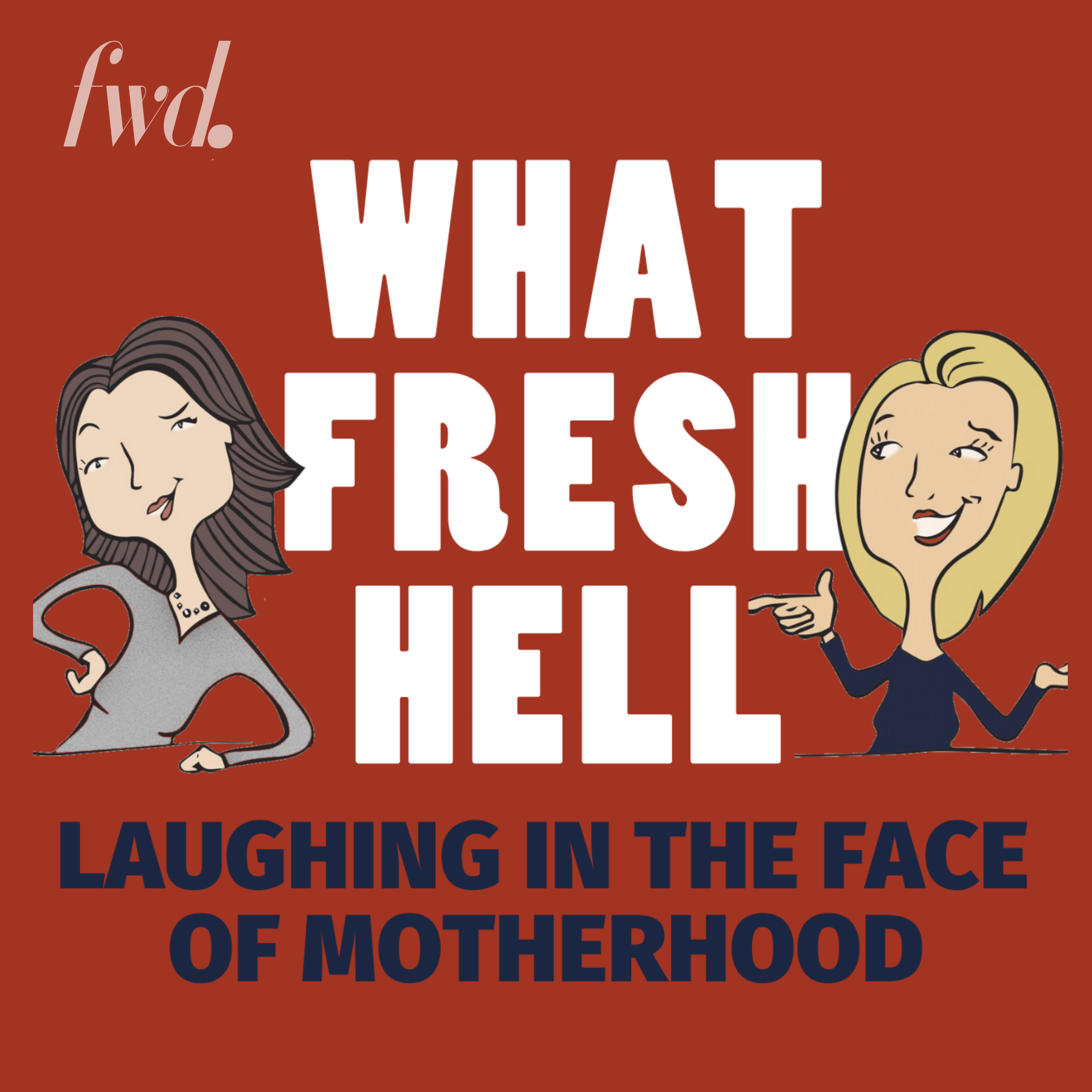
 What Fresh Hell: Parenting, Relationships, and Making Life Better, with Two Funny Moms
30 Jun 2025 · 36m · 17 chapters

Francesca Royster discusses her memoir Choosing Family, focusing on queer motherhood, Black resistance, and “chosen family” as a survival strategy. She connects queer family to African American history (e.g., her great-grandmother’s Chicago boarding house), argues that queerness includes decentering the nuclear family, and frames joy as political and practical. She also covers adoption as “choice among unpleasant choices,” open adoption, and how she and her wife (Annie) navigate motherhood’s pressures and representation (including an anti-Barbie/anti-Disney approach).
Francesca Royster, author and DePaul University English teacher in Chicago; previously wrote scholarship on Black/queer sound and arts (e.g., Black Country Music, Listening for Revolutions, Queer Sounds, Eccentric Arts in the Post-Soul Era, Becoming Cleopatra). Host: Margaret (podcast host).
chosen family is protective; joy is reclaimed in the face of suffering; stories make home; motherhood requires balancing theory with a child’s autonomy.
her great-grandmother’s boarding house in Bronzeville; adoption training and open adoption; Cece’s “hurt/sick stories” practice; anti-Barbie rule; pets (dogs, frogs, fish) and porch visits for joy.
Written by AI. May contain mistakes.
Learn about a humorous conspiracy around lemon dominance and the new lime soda from 7up.
“For decades, a shadowy organization called the Lemonati has kept lemon on top and lime in the shadows.”
Discover how Francesca's experiences and scholarly background influenced her memoir writing.
“So you have this vast range of scholarship behind you where you've written, I'm sure lectured, taught on all of these different issues.”
Explore how Francesca integrates queer theory and personal experiences in her memoir.
“And then I wanted to write something that because I'm a nerd, like I'm thinking about all these scholarly books, I'm thinking about queer theory because I teach it.”
Understand how Francesca defines queerness within her family and its broader implications.
“motherhood, which is it has a tremendous amount of specificity, but there is still a universality to it that allows it to be kind of accessible.”
Discuss the historical roots of queerness in family structures and its significance in survival.
“Yeah, that's a great question, Margaret.”
Discuss the historical roots of queerness in family structures and its significance in survival.
“You know, it's my favorite time of year when I can indulge in my favorite thing in the world, sweater weather.”
Explore how Francesca's great-grandmother's boarding house influenced her understanding of family.
“The Lemonati has spent decades keeping lemon on top and lime in the shadows.”
Explore how the concept of family transformed for Francesca Royster through adoption and identity.
“And this sort of gets to the idea that we were just speaking about before the break.”
Explore how the concept of family transformed for Francesca Royster through adoption and identity.
“While summer may be starting to feel like a distant memory, the effects of all of the sun and salty waves might be lingering.”
Explore how the concept of family transformed for Francesca Royster through adoption and identity.
“So before the break, we were talking a little bit about the concept of joy.”
Discuss the importance of joy in the narratives of African American and queer identities.
“Now, rather than prop joy on some remote mountain cliff, I find and snatch it where I tread.”
Francesca discusses the importance of joy in her family legacy despite historical struggles.
“wrap it around my shoulders, secrete it in my sweat, carry it with me.”
Exploring how small daily rituals and connections contribute to family joy.
“My grandmother, who was a janitor and worked incredibly hard and raised like six kids with not a lot of money, loved like baking experimental foods and like watching Julia Child and attempting some of her recipes.”
Francesca shares her experiences of balancing parenting with imparting values and legacy.
“Like we do pop calls sometimes on Saturday to visit friends and hang out on the porch if it's not really cold, which it is right now.”
Discussing the complexities of cultural narratives and their impact on children.
“And her voice, like once she really started speaking and having opinions, like it's even better than I imagined.”
Francesca highlights how storytelling serves as a tool for understanding and healing.
“And it's been very hard just to not keep talking and talking and lecturing.”
Francesca shares where to find her book and concludes the conversation.
“And I think she already implicitly understands that, which is, you know, pretty cool.”

Get the gist, explore an idea or ask about something said.
 Claude
On What Fresh Hell: Parenting, Relationships, and Making Life Better, with Two Funny Moms, what are the key points of this episode?
Searching your listeningAutomatic transcript. May contain errors.
0:00For decades, a shadowy organization called the Lemonati has kept lemon on top and lime in the shadows. Look around, lemon forward sodas, even lemon forward songs. We ran the tracks, slowed them down, reversed them and squeezed out the truth.
0:19That's lemon propaganda right there. But now 7up is fighting back with their new lime lemon soda. Join the 7up rising. Flip the sip. Hello, everyone, and welcome to What Fresh Hell? Laughing in the Face of Motherhood. This is Margaret. And today I am talking to Francesca Royster. She is the author of a new memoir, Choosing Family, a memoir of queer motherhood and black resistance. Her other books include Black Country Music, Listening for Revolutions, Sounding Like a No-No, Queer Sounds and Eccentric Arts in the Post-Soul Era, and Becoming Cleopatra, the shifting image of an icon. She teaches English at DePaul University in Chicago.
1:05Welcome, Francesca. Thank you so much, Margaret. I'm so glad to be here. I'm really excited. I really, really enjoyed this book. So you have this vast range of scholarship behind you where you've written, I'm sure lectured, taught on all of these different issues. And now you have a memoir on motherhood. So talk to me a little bit about how you got to this place. Yeah, you know, absolutely. I have wanted to write a memoir for a long time before I became a mother and was really interested in writing about my family's history in Chicago. So that was something that I had done little bits and pieces of.
1:44I started making a film about Bronzeville and my great grandmother's house. But then once I became a mom, the intensity of it, and the kind of just the desire to connect with other people as it was happening, got me writing about it. And I have this wonderful writers group where everyone is about my age or a little bit older, and they all have adult children. Actually, one member has someone who has kids who are just a little bit older than mine. But and it was so helpful just to kind of write and really put my feelings out there and my observations and then connect with other people who had already gone through some of the journey.
2:27And then I wanted to write something that because I'm a nerd, like I'm thinking about all these scholarly books, I'm thinking about queer theory because I teach it. And you know, I love a lot of the works that I quote in the book, or lean on heavily are books that are just incorporated into my whole worldview and life. So it wasn't hard to bring them in for me because they're like, I'm always thinking, oh, Audrey Lourdes, Zami, a new spelling of my name or whatever, queer futurity. So as I was writing, it was kind of my natural voice to bring in some of these thinkers to kind of frame where I see the ideas connecting.
3:05And then when the book was finally done, my editors, my initial agent actually had suggested that I take out those theory quotes and, you know, quotes from Toni Morrison, because she was worried that it wouldn't be accessible to a wide audience. And so it's like, sure. Okay, so I took it out. We got a contract with Abrams after a while. And the first thing that the editor suggested was, I really feel like there's some great, like big ideas in the book and some queer theory. Do you think you could actually like show us the breadcrumbs of, you know, where these ideas might be coming from. And you're thinking like, yes, I have a whole draft of it right here.
3:47For those of you who do not write professionally, welcome to a glimpse into what it's like to be a writer. I mean, I was a television writer, a comedy writer, and this is what happens. Take this out. Put it in. Where is it? I miss it. It's too much. Take it out. Exactly. So yeah. And, you know, teaching these works like the theory at DePaul, which is, you know, mostly undergraduate, though I do have some graduate students, I'm used to being able to apply some of the thinkers to everyday life and try to explain it in ways that are accessible. So that helped a lot. My teaching helped my writing a lot.
4:23And I, you know, I still had to work on it some to make sure that everybody really got what I was talking about. But I'm glad that it's there because I feel like sometimes the applicability of some of the writers that I'm relying on isn't really talked about. Like, I think it really is. These are really accessible works that can help us think about where we are in the world. Yeah, I think this book really has something that I love in memoir, especially writing about motherhood, which is it has a tremendous amount of specificity, but there is still a universality to it that allows it to be kind of accessible.
5:05And the foundation or sort of the backbone of the book, your memoir, your story is this idea of queerness, both queerness within your, what I guess I would call nuclear family, yourself, your wife, your adopted daughter, and the sort of historical queerness of generations of your family. Talk about, in terms of the specificity and the universality, how you define, I think a lot of people hear queerness in 2023, and they think that means maybe gayness or being in a same-sex relationship or any sort of relationship outside of heteronormative norms or whatever the term is. And so walk us to that and how that's informed both the specificity of your family and what brought you into writing this book.
5:56Thank you. Yeah, that's a great question, Margaret. You know, it's funny, we are in a really interesting time. My daughter, who is 10 now and an avid watcher of TikTok, like knows so much more in terms of like, nomenclature and just the ways that people talk about identity. She gave us this quiz on LGBTQIA plus flags, and I totally failed because I only knew like a couple. I knew three of them. So, yeah, I mean, it's a really powerful moment where the concept of queerness might be part of many people's vocabularies, especially younger people. But I think you're right that, you know, seeing queer motherhood in most people's minds would only be talking about a sexual or gender identity and, you know, desire choice and things like that.
6:45So I'm really thinking about queerness, including that and really making visible queer desire and sexuality and, you know, trying to live outside of norms of like, you know, heteronormative life as it's been thought about in history, all that stuff. But I'm also thinking about some of the concepts that are connected to LGBTQIA plus community making, especially chosen family. And that idea of de-centering, de-centering the nuclear family as much as you can, but also like connecting, trusting, loving people who are not blood bound and just generally thinking of family and the way that what that means in a much wider sense.
7:34and there's still like a way that like home and you know sitting at the dining room table and all those other things are still part of the way I'm thinking about chosen family but it's also like really thinking about ways that we trust and make ourselves vulnerable and rely on people who are our friends and who even are sometimes people that we don't know well that we might let in. So that concept I think once I started really thinking about queerness that way I thought, wow, that's really the strategy in my own family of survival. Like that was how my great grandmother, who was from New Orleans originally and migrated to Chicago in the 1914s, I think, like that was how she was able to stay in Chicago and she and to thrive was that she opened up a boarding house and she took in boarders, which were usually folks who were friends of friends who were also migrating from streams in the South to Chicago.
8:36But then, and that kind of helped her like, you know, pay the mortgage and kind of when the bank was trying to take away the house, she was able to get it back. She and my great grandfather, and it also became a place, you know, a meeting place, like she would have her women's club meetings there. And it was also, you know, she also took in my mother when my grandmother divorced and had to go work, you know, long hours and couldn't take care of my mom. So for a lot of my mom's childhood, she lived in this boarding house. So also my uncles, when their marriages broke up, would come back and like live in the house too.
9:13And it became this way station when people were, you know, kind of making life pivots or changes or were in crisis. So that way of kind of teaming up sometimes outside of normal, like, or what's considered normal family boundaries, was something that I saw in my own family and that, you know, in the different generations, and I actually think is part of a practice that is part of African American history and life and, you know, with foundations in family survival, you know, from slavery onward, but also like the concept of cousins and play cousins and other interconnections, I think is even older than that.
9:55But often, this is an idea that is seen as a problem, like it's seen as outside of the norm, or it's seen as excessive or a sign that, you know, the Black family is in trouble. So part of my desire in thinking about Black families as queer, which is really kind of embracing queerness as, you know, a resistant spirit that is also, you know, a positive in my view, and to kind of reclaim these ways of surviving and loving, and like really seeing it as a way to create a world of love, no matter what else is going on, you know, outside of your family and outside of, you know, in terms of structures of racism, or in terms of poverty and these things, It's a tool and a way to connect.
10:41I'm talking to Francesca Reister, the author of Choosing Family, a memoir of queer motherhood and black resistance. And we'll be right back. You know, it's my favorite time of year when I can indulge in my favorite thing in the world, sweater weather. And helping me with my sweater addiction has been quince, where I head to find elevated everyday essentials that go with everything I already own. As the weather gets colder, Quince has everything you need to round out your wardrobe. From warm, responsibly sourced down jackets to cozy cashmere scarves and gloves. I just bought the alpaca wool chunky knit cardigan and let me tell you, cozy.
11:23I'm not taking it off until spring, guys. Everything at Quince is priced 50 to 80 % less than similar brands. They work directly with ethical factories and cut out the middlemen. So you're paying for quality, not brand markup. And it's not just apparel. Quince brings that same approach to everything they make, from hotel quality bedding and bath to kitchen essentials and thoughtfully designed furniture. Find the fall pieces you'll reach for most at Quince. Download the Quince app for app-exclusive offers or go to Quince.com. Get free shipping on your order and 365-day returns, now available in Canada and the UK, too.
12:02And when Quince asks where you heard about them, let them know it was what fresh hell. It's the best way to support our show. Friends, my fall look is not complete without my new Zenni sunglasses. I am wearing them everywhere. Zenni is an online eyewear shop with stylish prescription glasses, sunglasses, and customizable lens options at prices that make it easy to own more than one pair. All starting at, listen up, under$30. Just go to zenni.com, pick a frame, enter your prescription, and customize your lenses, all from the comfort of your couch. And if you've never bought glasses online, Zenni has a virtual try-on feature.
12:44Loved it. I could see exactly how the frames looked on my face before I ordered. And can confirm, my sunglasses look just as good on me in real life as they did virtually. That scratched-up pair has done its job. Upgrade today with Zenni. Go to zenni.com slash podcast and use code podcast15 for 15 % off your first order plus free shipping on all U.S. orders over$65. The styles sell out, so don't sit on it. That's Z-E-N-N-I dot com slash podcast, promo code podcast15. The Lemonati has spent decades keeping lemon on top and lime in the shadows. Their lemon agenda has infiltrated everything, even our music.
13:32That hit song named after the color of lemons? Not a coincidence. Big Lemon has been pulling strings in the industry for years. Think about it. But now, 7up is fighting back with their new lime lemon soda. Now lime comes first. 7up. Flip the sip. So, Francesca, before the break, we were talking about the boarding house that your great-grandmother ran and this idea of coming together as family. And I'm going to read this quote from your book. To me, Sealy's house reflected the spirit of queer family in the fluid shape of its membership and the permeability of its borders, stretching always in the face of political and economic troubles as well as troubles of the heart.
14:23And this sort of gets to the idea that we were just speaking about before the break. Is this a reflection that led you to create the family that you are now a part of? Or is it something that you realized in reflection after adopting your daughter? When did this idea of family transform in your mind? I think it was definitely simultaneous with first the decision and then the process, because one of the things that I really reflected on for myself was, you know, what were some of my fears around becoming a parent and also getting married like in an official way. And at the time I was thinking about it, I couldn't officially get married to my partner, Annie, but I was very sure that she and I were life partners.
15:13And but one of the fears is really that feeling of claustrophobia, of losing your identity, and kind of like just, yeah, feeling like pleasure and connection and all these things would kind of just get kind of narrowed down and that it would feel like a lot of pressure. So the idea of this history of expanded and queer family gave me a different way of thinking about what our future could be. And then because the process of adoption was kind of, you know, emotionally challenging. It took us nine months of training and then we were waiting and for a little while it looked like it wasn't going to happen.
15:52And so queer, this concept of queer family also, you know, kind of pushed Annie and I both to push outside of our like insularity and depending on each other only to really connect and share things with the other friends in our community. And then when Cece came, you know, we're also like we're kind of older, as I write about. We welcome we're big fans of older parents on this podcast. So we call ourselves oldie locks. Come on in the water's warm. We're doing it to you say at some point, I'll go back and quote you because it really stuck out to me. This is a story about beginning motherhood in the second half of our lives.
16:30So it's about sore backs and knees, about making mistakes when we thought we should know better and the unspoken worry that we might not live to see our grandchildren. But it's also a story of second chances and rebirths. And it really resonated with me feeling both of those things and all of those things that and also the journey to feeling like we are moving into a realm, motherhood, kind of capital M that everybody is doing in this sort of televised 1950s white-centric way that may not accept us, but that will we accept ourselves in this new role is another part of it. And I feel like you capture both of those things, that looking for the acceptance in this new space, but also will I be able to recognize myself within this structure that doesn't seem to fit my concept of myself?
17:23Absolutely. I mean, it is can be a very all consuming role. And, you know, I feel like you're right that there's this feeling of an audience and also like just a historical precedent of what being a good mother is supposed to be. So yeah, how do you find balance? I was listening to your earlier podcast, with the great doctor who wrote a book on or has a podcast on balance and motherhood. Amber Thornton, she was really wonderful. But especially, you know, when as someone who has lived a life and kind of created an identity, this might be relatable for all women, but, you know, like the fear of losing that is real.
18:07And just figuring out also like how to create a family environment and nurturing relationship that is different, that might, you know, might give a chance to reinvent some of the rituals and ways of thinking about who my daughter is going to be, or a person, I'll just say, you know, that's expandable. So as I was thinking about this role of motherhood, I was really thinking about that pressure, but also like this desire potentially to change with the times and to help nurture this young person to be who she wants to be or they and just give room for the possibilities of a world that I don't even anticipate yet.
18:50So I think Annie and I were both really invested in thinking about motherhood in new ways. And for a long time, Annie actually didn't want to be called mom. She wanted to be, she was trying to come up with something else, but we sort of let Cece take the lead. And so we're Mama Annie and Mama Franny. So that's where we are. Sometimes we're just Annie and Franny. There's a really interesting, thought-provoking sort of theme of choice and non-choice in your journey to motherhood. You talk about the adoption process, this nine months of training, and that friends are saying to you, you know, I think everyone should do this.
19:27I mean, so many people become parents by surprise or through tremendous amount of plannings and you arrive at this different place. And what role do you feel like the amount of choice that went into your journey to motherhood? how is it reflected in the book and how you talk about, you know, this process of becoming a mom? Yeah, thank you. Well, you know, just the the process of making a decision, setting intentions, reflecting on the past like that is all like a kind of psychic process that we were really privileged to have. And I think that lots of parents might ask some of those deeper questions, but you might have to wait until, you know, your kid is a teenager or, you know, whenever there's breathing room, there's never really breathing room, you know, once you're a parent, you're in it.
20:17But so I do think that that was a really important part of what we were doing. And I think the pace of becoming a parent had this like kind of hurry up and then slow down quality, where we were rushing, you know, a lot to set things up, you know, buying a house, We eventually got civil unionized because we still couldn't get married yet. But we were instructed that it's important to have everything in place legally in terms of our connection and our household. So, you know, all of those things are things that I feel like we had choice because we were middle class and because we had an idea and kind of acted on it versus like waking up and going, oh, heck, what do I do?
21:03So, yes, I do think that that's an aspect there. But, you know, adoption is also like reckoning with the limited choices of, you know, the other half of the equation, which is the birth family and their solutions. And we were, we kind of chose the adoption agency that really focused on open adoption, because we're really aware of just from our reading, but also from friends who had chosen adoption plans for their kids, like just thinking about what it feels like, and the ways that sometimes also like it's the state taking away your child, depending on what situation you're in. And we wanted as much as possible to have space to acknowledge that loss of that family and that maybe this is a choice among unpleasant choices, which I absolutely think is true.
21:57And like maybe the hardest part of that is really helping Cece to understand that too, that she is both a child who has been adopted by two women who were very, very committed to the process of having her and are joyous and really a whole community that's ecstatic that she's around. But she's also part of a birth family that, you know, who we want to have in our lives, but also isn't in our lives right now. And who, you know, lost a member, you know, or it might feel like that right now, at least. And that for her, as you know, a daughter, she also has to reckon with that too, that there's some grieving that is always a part of adoption that has to do with, you know, the people who carried, you know, gave you life and kind of carried.
22:51you know, carried her to term. And so especially early on when we were talking to Cece about her birth mom, we really wanted to like emphasize that she took such good care of her, you know, the whole time that she was pregnant and that she, you know, maybe she talked to her because she, Cece, because of the age that she's adopted, Cece doesn't really have a memory of her birth mother, But we just wanted her to have this sense of being cared and nurtured before we adopted her. So all of that, I think, is just reflecting on the ways that sometimes our ability to have access to adoption is also a reflection of the fact that not everyone who wants to mother has the economic support or the emotional support that they might need, you know, to raise the families that they want.
23:44And so I didn't want to erase that, even though I wanted to make central this, like, our joy and this new way of thinking about mothering. I do also believe that it is important for folks who choose adoption to know that, you know, that is a caring act and that it's often not framed that way in our culture. Like, it's often framed in the language of abandonment. But I think that this was a really selfless act on the behalf of Cece's mom to think about her future and to, you know, think about her own limits. And even though, again, I feel like it's a choice among bad choices sometimes or choices that one wouldn't want to take, just a difficult set of choices.
24:32I do have faith that it was a good decision. And I really hope that we someday or Cece someday can have like a relationship with her, you know, in whatever terms are going to work for her. We're talking to Francesca Royster, who is the author of the new memoir, Choosing Family, a memoir of queer motherhood and black resistance. And we'll be right back. While summer may be starting to feel like a distant memory, the effects of all of the sun and salty waves might be lingering. And you might be thinking, my hair could really use a reset. That's why I'm glad I've been taking Nutrafol. It means my hair health never takes a day off.
25:13Nutrafol is the number one dermatologist recommended hair growth supplement brand. and it's the number one hair growth supplement brand personally used by dermatologists and also the hosts of this podcast. And now the Nutrafol Women's Formula has been upgraded to its most advanced version yet. It's 100 % vegan, biotin-free, and comes in a smaller capsule size to make your daily routine easier. Whether you're just starting your hair health journey or you've been taking Nutrafol for years, this update means you can now get their most advanced support yet. Right now, Nutrafol is offering our listeners$10 off your first month subscription and free shipping when you visit Nutrafol.com and enter promo code laughing.
25:58That's Nutrafol.com spelled N-U-T-R-A-F-O-L dot com promo code laughing. You all know I am not a lotions and potions type. I want my skincare to be simple, clean, and effective. So let me tell you about my latest secret, Osea. It's clean, seaweed-powered skincare from the sea. Osea has been providing award-winning, best-selling skincare for 30 years. Their clinically tested products have quickly become my new go-to for everyday skincare. At night, I'm using the Dream Bio Retinol Body Serum. I put it on right after I get out of the shower, and the lavender scent is perfect to put me in the right headspace to go to sleep.
26:47It's fast-absorbing and deeply moisturizing with none of that greasy feel. It's lightweight, silky, and will leave your skin glowing. Infused with vitamins, minerals, and antioxidants, Osea products make a difference after just one use. Guys, I really love it. Go to oseamalibu.com and get 10 % off your first order with code FRESH. That's O-S-E-A, malibu.com, code FRESH. So before the break, we were talking a little bit about the concept of joy. I wanted to quote from the book where you talk, you quote, Black queer scholar and activist Lamar Jarrell Bruce, who writes, for far too long, I regarded joy and peace of mind as glinting treasures propped on some distant and potentially ever receding horizon toward which I dutifully march or trudge with no assurance of arrival.
27:50Now, rather than prop joy on some remote mountain cliff, I find and snatch it where I tread. I cram it in my pockets, fill my mouth with it, cradle it in my arms, wrap it around my shoulders, secrete it in my sweat, carry it with me. It's surprisingly light stuff. I wrote this quote down and I have it on my wall. You're speaking about it in this section of the book, specifically as an African-American woman. Can you talk a little bit about this section of your book and what led you to include this beautiful quote? Thank you. I love that quote, too. I have it right there. We have it on our two desks.
28:28I think that there's something very political about embracing joy as an African American person and as a queer person. And some of that joy is attached to also watching, taking into account and like taking in suffering, you know, at the same time and violence. But I think giving space to joy is something that was a narrative that I had to reach a little bit further back to find, because there is a way that in that, like making a way out of no way kind of sense of struggle of, you know, my grandparents, my parents, my great grandparents, sometimes the fact of the struggle can overtake the commitment to joy.
29:13So when I was writing about them and really remembering them and thinking about what I wanted in a family, I really tried to remember some of those joyful moments and to think about the deliberate choices that were about pleasure and about food and connection. My grandmother, who was a janitor and worked incredibly hard and raised like six kids with not a lot of money, loved like baking experimental foods and like watching Julia Child and attempting some of her recipes. she loved like crocheting things and I remember once she made us a poncho out of my sister and I ponchos out of those plastic six-pack holders I was like this is very scratchy but it's really cool and she had like colorful yarn kind of everywhere so I think that joy is something that is often denied and it's connected to you know the dehumanizing structures in our society And so it really, you know, it doesn't take necessarily money and privilege to embrace joy, because I think that I can see in my kind of family that struggled the most these moments of connection and joy.
30:29But for me in our household, it's really about, yeah, like taking pleasure and taking time in our everyday realities. Like my daughter loves animals and we have currently two dogs, two frogs and a fish. And like, just like we help her take care of them. And they're just like a really important place to quiet down and connect. Or we like to go visit friends. Like we do pop calls sometimes on Saturday to visit friends and hang out on the porch if it's not really cold, which it is right now. Or, you know, just like thinking about ways that we can take our time to connect with the people that we love on an everyday basis and to also like create for the future.
31:19Like I find writing is my way also of embracing joy because I writing with a faith that there are people who are going to be nodding and that, you know, maybe there's a way that my writing can change minds, even if it doesn't always resonate with everybody. But it's sort of like feeding those good faith acts in that, you know, that the future is possible and that we can shape the future. And you talk, one thing I'm interested in as you, this book is tremendous amounts of scholarship and talking about legacy and the concepts and resonance through time. And now they funnel towards like an actual human child.
32:01And I'm always interested in this as a parent and someone who talks to a tremendous amount of people who write about parenting. How do you find that playing out in your household in terms of values you want to impart, pieces of legacy you want to carry forward? How do you balance it against actual human child, who the outcomes of can be very up in the air? You know, it can be very difficult for us. I always say I expected to get like a lump of clay to shape and I got a human baby, which was very surprising to me. How do you find that balance? Yeah, well, it is like that is those surprises are definitely part of the joy and part of what What I'm learning is to kind of release or at least treat a little bit more lightly some of those intentions that got me here a little bit.
32:53But I remember when Cece was still a toddler and she couldn't really talk yet. And I just couldn't wait to talk to her. And I was just like, sure, I knew what her voice would be. And her voice, like once she really started speaking and having opinions, like it's even better than I imagined. So I think I feel like she's always surprising me. She's often schooling me on things. And she's like just a really beautiful combination of bold and shy. And she is like her own self. And it's just so expansive to really to kind of have this real person in your midst who's always opening up new doors and getting you to think about things differently.
33:38But like one of the ways that I remember having to kind of pause was we had this whole anti Barbie rule, anti Disney, anti Barbie rule. We had an anti Barbie rule in my house. So that part of the book definitely stuck out to me. Yeah. And yeah, and you know, I feel like those images of like femininity and of whiteness, like those were real pressures that Cece felt. It wasn't just a theoretical problem of like, you know, images of self esteem and beauty that I kind of thought of in the abstract, but they really were. it really had to do with like how she was interfacing with the kids in her mostly white preschool or things that people were saying to her or just like assumptions about her body as it moved in the world.
34:27So one of the hard lessons was, okay, how do I take this theoretical analysis of, you know, white supremacy and sexism and make a space for this person who's trying to figure out who she is and live in the world, like live in the world as a kid, like in this classroom that I don't have to be in every day and who is seeking a language of connection with the people around her. So we like we definitely kind of told her we have talked about like things that we have trouble with, with some of the like kind of mainstream culture of princesses or then we just leave it alone. And it's been very hard just to not keep talking and talking and lecturing.
35:12And as a teacher, I have the gift of the lecturer sometimes. So just giving her space to make her own choices in and of itself has been hard. And to share history and share struggle, and knowing how much to share is also kind of an ongoing lesson. Balance. Yeah. You finished the book with Audre Lorde, her poem for each of you. Do not let your head deny your hands any memory of what passes through them, nor your eyes, nor your heart. And you say, I think she means that memory and story can sustain us even when we lose the people we love, which you talk about at length in the book, losing people from previous generations, even when we find ourselves alone or confused or wrong or floating without direction.
36:01And by sharing our stories, we are making home. And it's beautiful. It's sort of just what you were saying is that you have confidence that by sharing your stories with your daughter, like that's the legacy that you're passing on rather than but it does take some confidence to say by sharing the stories, you will understand this legacy. but I can't just stand over you and lecture you 24 hours a day because I know it's really important. Yeah, yeah, it is. It's really hard. And, you know, also her stories and her view of things are kind of part of the legacy as well. And really giving her space.
36:45I think she's at this point, like a really great storyteller and writer, but she hates writing things down. And, you know, Like, I'm just like, of course, I want to like, I've given her a million journals. You know, I want, I have this vision of, you know, this potential person who could carry on the role of storyteller, the family, but she might do that in her own way. So yeah, it's always a learning process. But I was thinking about one of the chapters that I write about, which is after the Orlando Pulse shootings, we went to a barbecue with one of our chosen family members. really a dear friend, Leila.
37:24And I think we were all holding a lot of upset, but we weren't saying it to Cece because she was four and we weren't really explaining ourselves. But Cece had this, or has developed this strategy of listening to stories and asking for stories that are hard. And I think it's, she calls them her hurt or sick stories. And tell me a hurt or sick story. So I think there is a way that she understands the power of stories to look at things that are difficult, but also to remind yourself of the ways that we can get through. So I think sometimes that process of telling stories activates the best part of ourselves and our just general hope, sense of hope and sense of like, okay, we're going to, you and I are going to figure this out.
38:14And I think she already implicitly understands that, which is, you know, pretty cool. That's fantastic. I really loved this book, Choosing Family, a memoir of queer motherhood and Black resistance. I really, really recommend it. Francesca, tell our listeners where they can find more of your writing and where they can find the book. Thank you. That's a good question. Well, they can definitely find the book at the website of Abrams Books, abamsbooks.com. And my writing is available all over the place, like at Bookshop and Powell's and all kinds of places like that. I don't currently have a website, but you can always find me and find connections to my work at the DePaul English website.
39:00You can find me on Instagram at Royster Francesca and on Facebook. Awesome. And we will link to all of those places in our show notes, including all of Francesca's writings. And Francesca, thanks so much. This was a great conversation. Thank you so much, Margaret. I really appreciate it too. Thanks.
39:28Thank you to Osea for sponsoring the show. Go to oseamalibu.com and get 10 % off your first order with code FRESH. That's O-S-E-A malibu.com code FRESH. Shhh.
How do we find support when our family of origin is no longer around or has otherwise rejected us? Francesca Royster, author of the new memoir Choosing Family: A Memoir of Queer Motherhood and Black Resistance, explains the concepts of chosen family, finding joy in the everyday, and the resistance that is part of telling hard stories.
Margaret and Francesca discuss:
What inspired Francesca to write her memoir
What it's like to enter motherhood at an older age
The process of adopting her daughter
Taking pleasure in the reality of everyday life can really help you connect with loved ones in your family, chosen or blood-related. And telling stories about hardship and tragedy can actually help us gain perspective and have more hope about the world, not less.
Here's where you can find Francesca:
Her faculty page on the DePaul University website
@roysterfrancesca on IG
@francesca.royster.1 on FB
Buy Francesca's book: https://bookshop.org/a/12099/9781419756177
We love the sponsors that make this show possible! You can always find all the special deals and codes for all our current sponsors on our website:
https://www.whatfreshhellpodcast.com/p/promo-codes/
mom friends, funny moms, parenting advice, parenting experts, parenting tips, mothers, families, parenting skills, parenting strategies, parenting styles, busy moms, self-help for moms, manage kid’s behavior, teenager, tween, child development, family activities, family fun, parent child relationship, decluttering, kid-friendly, inclusive, inclusivity , transgender, trans kids, transgender kids, support for trans kids, trans rights, queer kids,
Learn more about your ad choices. Visit podcastchoices.com/adchoices