Ask ChatGPT
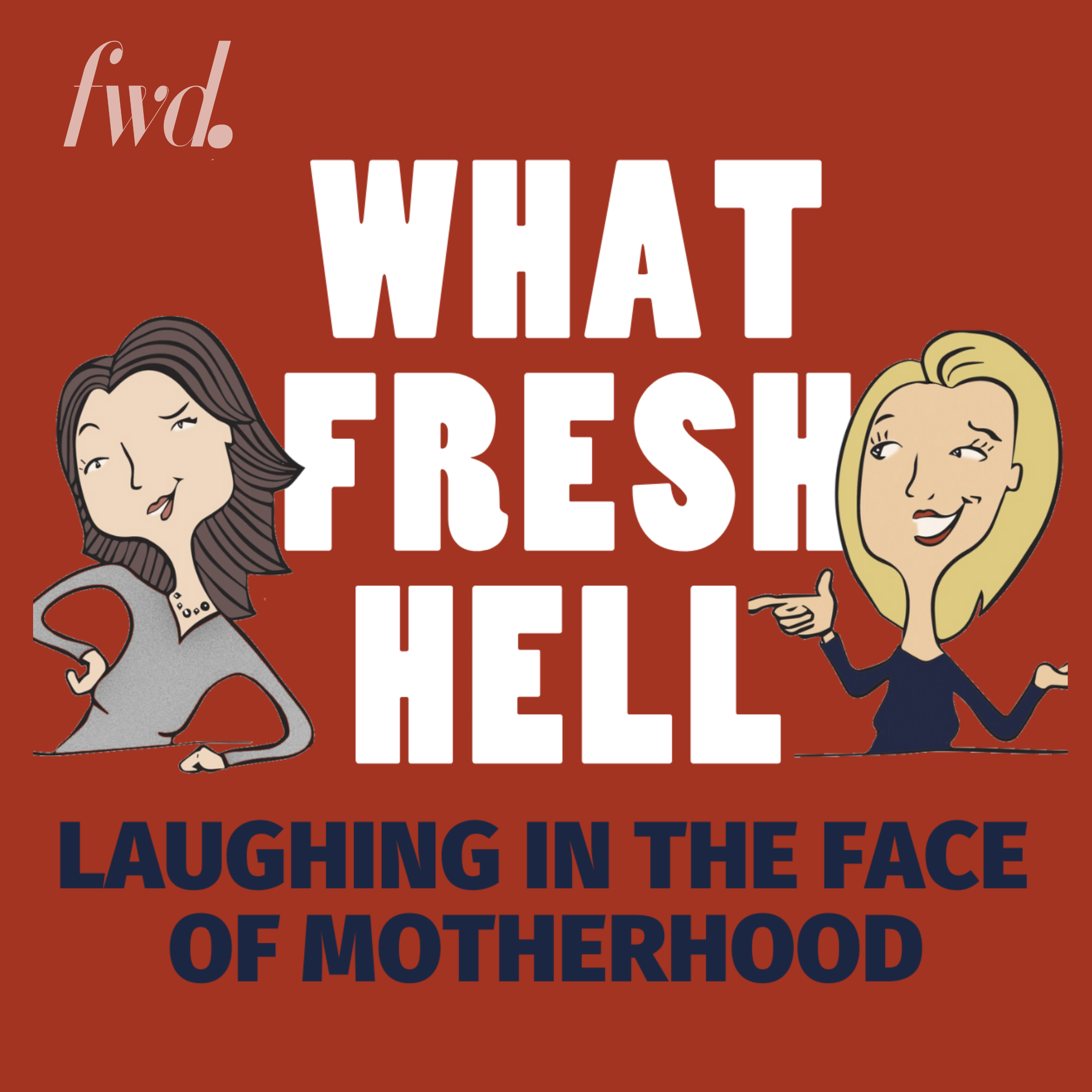
 What Fresh Hell: Parenting, Relationships, and Making Life Better, with Two Funny Moms
16 Jun 2025 · 41m · 15 chapters

Jessica Zucker discusses her book Normalize It, arguing that miscarriage and perinatal mental health are kept silent by stigma and shame, reinforced by “12-week rule” messaging, gendered expectations to be fine, and lack of public language about women’s bodies. She connects this to postpartum depression/anxiety/intrusive thoughts and even suicide risk, and proposes “therapeutic conversations” and private outlets like journaling to break silence without public spectacle. She also describes how normalizing fertility, menstruation, and menopause in childhood could prevent later shock and shame, using the idea of “neural coupling” from repeated storytelling.
Jessica Zucker is a Los Angeles-based psychologist specializing in women’s reproductive and maternal mental health; she’s the author of I Had a Miscarriage, a Memoir of Movement, and has been published in major outlets including The New York Times and Vogue.
trauma overrides knowledge; “out of the woods” advice reduces support; women internalize “illusion of control” and self-blame; postpartum screening can miss anxiety/intrusive thoughts; shame drives isolation.
her 16-week second-pregnancy miscarriage; “at least” platitudes (e.g., “at least you can get pregnant”); comments like “you look like you weren’t even pregnant”; postpartum anxiety not captured by questionnaires; school puberty videos avoiding discussion; “tampons on the shopping list” as everyday normalization.
Written by AI. May contain mistakes.
Discussion on Jessica's miscarriage experience and its impact on her perspective.
“So talk a little bit about that experience and how it kind of led you into this book.”
Exploration of societal stigma and silence surrounding miscarriage and women's health.
“silence the stigma and the shame that results.”
Discussion on the significance of storytelling in coping with loss and creating empathy.
“And I mean, this is a tangent and we don't have to necessarily go down this road, but like, do men feel this way?”
Discussing societal silence on women's health topics, especially miscarriage.
“So you talk in the book about the trifecta that shapes women's lives.”
Understanding the pressures of motherhood and the stigma surrounding maternal mental health.
“It's of course out of reach for some people, culturally, religiously, whatever it is, some people are not prone to, you know, head into the therapy office.”
Addressing the neglect of mothers' emotional health during the postpartum period.
“You make the point that it's pressure on yourself to be going through this and make sure nobody knows about it, right?”
Exploring how societal expectations can harm new mothers' mental health.
“And it's pretty rare for someone to say, how are you doing?”
Highlighting the importance of recognizing various postpartum conditions beyond depression.
“postpartum anxiety, which wasn't as recognized 15 years ago.”
Discussing the shame associated with women's bodies and maternal recovery.
“This is not just like, because people say like new moms feel anxious.”
The hosts tease a shift in discussion towards key milestones in the book.
“if you live here in LA, then once you reach about 40...”
The hosts discuss the importance of talking about difficult subjects to create ripple effects.
“And I will say, Amy and I saw each other last night after having read the book.”
The hosts explore various milestones in women’s lives, including puberty and menopause.
“And I mean, we often talk, Amy, how do you say it about like, you're having a hard time.”
Discussion on the need for normalization of menstruation topics among children and teenagers.
“The milestones are made harder by a lack of information and by a lack of public discourse.”
The hosts reflect on how storytelling and small conversations foster understanding and empathy.
“And I don't think a talk about like, now you're a woman is the way to go with her either because she's 11.”
Learn how open discussions can change societal attitudes toward miscarriage.
“And I think that will ultimately change the zeitgeist if we're having a million little discussions and normalizing things along the way.”

Get the gist, explore an idea or ask about something said.
 Claude
On What Fresh Hell: Parenting, Relationships, and Making Life Better, with Two Funny Moms, what are the key points of this episode?
Searching your listeningAutomatic transcript. May contain errors.
0:00This Monday.com ad was created by a team of people and AI agents. Reese, our content agent, wrote the copy based on our best practices, like mentioning Monday.com three times. That was the second. Johnny, our coordination agent, built the timeline and kept everyone aligned. Olivia, our human creative director, stayed in the loop. Because agents are great, but they don't always know when a joke lands. She had one note. Tell listeners it only takes minutes to build an agent. So, minutes. Create your own AI agent today on Monday.com. Hi there. Just a heads up before this episode, this interview with Jessica Zucker, author of Normalize It, includes discussions of topics including miscarriage, child loss, postpartum depression, anxiety, and mood disorders, and suicide.
0:46These topics can be heavy and emotional, so please listen with care. If you or someone you know is struggling, call 1-833-TLC-MAMA for 24-7 free and confidential support for pregnant and new moms. And if you're experiencing a mental health crisis or suicidal thoughts, call or text the Suicide and Crisis Lifeline at 988 for free and confidential support. We will link to some other resources in the show notes. This is a terrific conversation, and we're so glad we talked about it.
1:24Amy Wilson: Hello, everyone, and welcome to Fresh Take from What Fresh Hell? Laughing in the Face of Motherhood. This is Margaret. This is Amy. Today, we are talking to Jessica Zucker. She is a Los Angeles-based psychologist specializing in reproductive health, and she is the author of the award-winning book, I Had a Miscarriage, a Memoir of Movement. Jessica's writing has appeared in the New York Times, the Washington Post, New York Magazine, Vogue, and Harvard Business Review, among others. And today we'll be talking about her new book, Normalize It, Upending the Silence, Stigma, and Shame that Shape Women's Lives.
2:00Welcome, Jessica. Thank you so much for having me.
2:03Amy Wilson: So in the preface of the book, you talk about your story of having a miscarriage and being a very informed person in this space, and yet still how that experience kind of shaped your relationship with normalizing storytelling. So talk a little bit about that experience and how it kind of led you into this book. Sure. So thank you so much for having me. And yeah, I'm a psychologist and I specialize in women's reproductive and maternal mental health and have done so for about 15 years. And so the thing is, when I was 16 weeks into my second pregnancy and had a miscarriage while I was home by myself, this sort of unearthed my life and my career trajectory, one could say, because I had been so used to the role I had been playing in people's lives.
3:02I had read all the books on the topic. I had a background in public health and had worked internationally and thought I had a handle on these issues and knew about the research. Right. You cite all of the statistics and you get it. I get it. But then trauma has a way of getting us into a position where no matter how much you know, you are sort of upended. Your life changes, of course. You are in fight or flight or freeze mode. And so although I knew all the things and had read the books and gone to the conferences and sat across from women and families talking about the pain and the anguish of pregnancy and the loss in life after, I felt wholly unprepared when it happened to me.
3:51Why is it so different? I mean, there is so much stigma and shame and unlearning that is what this book is about. But why do you think that is that, say, if you were in a bad car accident or if you had had a cancer diagnosis? which is probably something that you won't talk about that too but it tends to be something you could at least feel a little bit more free to share or at least have less shame around than something like a miscarriage and is that learned or is that why does that happen to us as women well i think that's an important question i think that the 12-week rule plays heavily into the silence the stigma and the shame that results.
4:34So typically, I'm sure you know what that is. So typically, you know, in the medical community, they'll advise families to wait to share their news until they're 12 weeks and quote unquote, out of the woods. A majority of miscarriages do take place within the first trimester. However, as I learned, some of them don't. And when you think about when you break down this messaging, don't share your good news in case it becomes bad news because then if it becomes bad news, you don't have to share that. And then you get pregnant again and you can share the good news when it's time. To me, this is incredibly concerning and problematic.
5:15It robs us of the ability to bask in the joy. And then if things take a turn for the worse, it robs us of the incredibly important support that is needed in the aftermath of these situations. And so I think that that plays into it. I also unfortunately think that from girlhood onward, which normalized it gets into, we are learning to be quiet about the very important milestones in our lives. And the research is saying that women feel a sense of self-blame and shame and guilt and even body failure in the aftermath of miscarriage. Why is that? I think that comes from the beginning that we are taught that we are, it's not even just taught, we're groomed to think that we have a hand in all of the outcomes.
6:10And in life, in many cases, we do. If we work really hard at something, we'll get that job. We'll get that book deal. We will attain that accolade. But when it comes to reproduction, that is fully out of our control.
6:24Amy Wilson: You talk about that in the book, and I hadn't really thought about it in just this way, although I've thought about the illusion of control a lot as we talk about motherhood, but that it is kind of a circle with control on one side and shame on the other side, or the illusion of control. We were talking about this with kids with special needs that it used to be, well, you're the icebox mother and that's why your child has autism. But now it's like, you can solve this by being a superhero mom warrior. It's all kind of like, stop. There's this illusion of like what we can control and not control.
7:03Amy Wilson: And the illusion of control is such an important part of the shame that comes out of it because somehow you caused that miscarriage, even though that is very much not what the science says. That's right. And I mean, this is a tangent and we don't have to necessarily go down this road, but like, do men feel this way? Are men tough? I just don't think so. I've never heard a man say, I think this miscarriage was my fault. I mean, maybe they will do testing and it'll turn out that it was a sperm issue. But even then, I don't know that that creates a sense of shame. I think that's right. And so you talk about the nature of storytelling, and I'm going to read this excerpt.
7:44Amy Wilson: The work of creating more empathy and authenticity in our lives and communities begins with telling our stories, especially the hard ones. So I think people understand, and you get into the book, the history of storytelling, the kind of cultural significance of storytelling. but talk about how you started to recognize storytelling as fundamental really to women's health. Well, I mean, the reason why I opened the book, I had a different preface originally, actually. And then we realized though, that the preface needed to begin with my miscarriage story. Why? Because I use that as a way to heal.
8:30Writing became the conduit from which I was able to actually, I was going to say patch things up, but it doesn't really work like that. But like pull the pieces of my life back together or patch them up in a totally different way because you never get back to the person that you were necessarily. Originally, the preface was actually going to be about my breast cancer diagnosis, which came two weeks after my first book came out. And I thought that would be an interesting sort of continuation. It would let my original readers sort of into what happened to me next. And then we rethought that because with my miscarriage, I ended up getting on a soapbox unbeknownst to me, like it wasn't planned.
9:11I wasn't like, I'm going to start this campaign and I want to be viral or anything like that. I mean, I wasn't really even a social media person at that point in time, but I felt deeply compelled. So after my loss, the platitudes I was met with lodged shame in me, I did not previously even consider consciously or not.
9:35Amy Wilson: That's a really interesting point. Can you put a real fine point on that? Why the platitudes? How are they connected to that shame feeling? Because saying something like, well, okay, the usual platitudes begin with the phrase, at least, at least, you know, you can get pregnant. At least you're young. At least you have a healthy child. At least you have a thriving career. At least you were ambivalent about having a second child. That was a good one. Those. But then I think it was two or three days after my loss, I was in the parking lot at my son's preschool, picking him up. And a mom from across the way said, you look so good.
10:16You look like you weren't even pregnant. I wanted to be pregnant. It was so much obviously about her and her own body stuff, but this like really brought up body image related issues. It made me feel shame. And I was like, why do I feel shame when this is about her? And it was because it was like, maybe I shouldn't have left the house. Like maybe I shouldn't have shared my story because now I'm receiving feedback that people think are compliments when in fact they are sort of erasing my experience altogether. And so we can feel okay about what happened to us. I trusted when I had my miscarriage that something must've been wrong with the fetus.
11:03I don't know why. I think it was because I did have a healthy child already. So I didn't go to the place of like, what's wrong with my body. So I didn't feel quiet. I didn't feel stigmatized. I did not feel shame. But then these things came creeping in and these are all in my first book, but you know, my mother also just happened to be coming to town a couple of days later. and her comment was actually like, oh, wow, you still look pregnant. And again, are people trying to make you feel like crap? Absolutely not. These are well-meaning loved ones a majority of the time. And the problem is we don't have a cultural framework to talk about these things.
11:49And so everyone's just batting around these platitudes or these stupid things. They just don't know what they're saying. They're just wanting to say something. They are uncomfortable. But then what they say ends up sometimes creating a sense of regret in the griever because they're like, maybe I shouldn't have told this person. Maybe I should have stayed quiet like my society tells me I should have. We're talking to Jessica Zucker about her new book, Normalize It, and we'll be right back.
12:17Amy Wilson: You know, it's my favorite time of year when I can indulge in my favorite thing in the world, sweater weather. And helping me with my sweater addiction has been quince, where I head to find elevated everyday essentials that go with everything I already own. As the weather gets colder, Quince has everything you need to round out your wardrobe. From warm, responsibly sourced down jackets to cozy cashmere scarves and gloves. I just bought the alpaca wool chunky knit cardigan and let me tell you, cozy. I'm not taking it off until spring, guys. Everything at Quince is priced 50 to 80 % less than similar brands.
12:57Amy Wilson: They work directly with ethical factories and cut out the middlemen. So you're paying for quality, not brand markup. And it's not just apparel. Quince brings that same approach to everything they make, from hotel quality bedding and bath to kitchen essentials and thoughtfully designed furniture. Find the fall pieces you'll reach for most at Quince. Download the Quince app for app-exclusive offers or go to Quince.com. Get free shipping on your order and 365-day returns, now available in Canada and the UK too. And when Quinns asks where you heard about them, let them know it was what fresh hell.
13:34Amy Wilson: It's the best way to support our show.
13:59Tell listeners it only takes minutes to build an agent. So, minutes. Create your own AI agent today on Monday.com. Most women have been there. Something feels off. You don't feel like yourself. Yet your doctor says everything looks fine. Spoiler, it's your hormones. Midi is a virtual care platform built for women by women and offers specialized hormone care from trained clinicians. Plus, it's covered by most major insurances. Getting started is easy. You can book your first visit with a clinician right away. It's not you. It's your hormones. Visit JoinMidi.com to book your first visit. That's JoinMidi.com.
14:35Insurance coverage varies. Check with your plan for coverage.
14:39Amy Wilson: So you talk in the book about the trifecta that shapes women's lives. This is the silence, the stigma, the shame. We've talked a bit about shame already, but I want to break these down. Let's start with silence. Why that is to you one of the main points of this shaping silence. I think that we live in a society that essentially tells girls and women to be quiet. Let's stay quiet about your first period, your symptoms of menstruation all the way through. The book takes on lots of topics that we just don't talk enough about and why. If we talked about them, we would feel freer. So my vision is if we talked about miscarriage, like we talked about what we're having for dinner tonight, we would all be a hell of a lot more comfortable and more connected to each other as well.
15:37Amy Wilson: I think that there's a cliche kind of an idea that women are better at talking to each other than men, that like men don't talk about their feelings and women are talking to each other and that there are spaces for women's conversations and spaces where those conversations shouldn't exist, meaning they should stay within women to women only conversations, I guess. Like a red tent thing, right? That there's a time and place. I was just thinking about the red tent, Amy. I was just thinking about that. And so when you talk about silence, where does that fit in? Who are these conversations with? Or does it matter who the conversations are with?
16:15Amy Wilson: These are just the idea that everyone should be talking about this. So my book takes place within the four walls of my fictitious office, basically. And so in my sort of ultimate vision, I mean, it's not realistic, but people would be talking about their important stories, the taboo stories within the context of therapy. Not everybody's interested in therapy. It's of course out of reach for some people, culturally, religiously, whatever it is, some people are not prone to, you know, head into the therapy office. Totally understandable. So what I'm trying to do throughout the book is help people have additional alternatives.
16:56Okay. so that we don't stay silent, but we don't necessarily have to get on a soapbox with a megaphone, do a TED talk about something that happened to us. Because I don't believe that everybody needs to turn their pain into something incredibly public. What I think though, is that we have to move it through our bodies. And so even if that's in a journal entry, and it's in a journal entry that we end up burning. That in and of itself acknowledges, that breaks the silence in my mind. So because silence, of course, is am I saying it out loud? But it also can be, am I saying it period? Right? Because I think the shame bubbles.
17:39And sometimes even it's so insidious, it could eat us whole if it just remains locked inside. So the sheer act of journaling. And so, as I said before, I found my sort of health through writing, writing, writing, writing, writing on the topic. And it led me to so much community as well. And so, we don't have to shout from rooftops, but we also cannot live in this cultural requirement forever. We can't. You make the point that it's pressure on yourself to be going through this and make sure nobody knows about it, right? Make sure your spouse or your partner doesn't see you're still upset. Make sure everybody at work knows that you're okay now, even though it was three days ago, whatever it is that that's additional work that we have to do.
18:33That's right. To let everybody else know we're okay, even if we're not. And you can probably get stuck there, I imagine. And I guess I am okay. That's the thing. Right. You just made me think about patients I work with who are struggling with perinatal and postpartum mood and anxiety disorders. And that carrying of a quiet but robust feeling of I'm not into this or I am incredibly not myself and super uncomfortable. I do not know if I like this role. How did I get here? What is happening? Why am I having these intrusive thoughts? To have to silence something like postpartum depression, postpartum anxiety, postpartum psychosis, postpartum OCD, all of it is untenable.
19:21And that is why we're seeing suicide in these situations and why the numbers I think are so high in this country, because we are told not only should you smile through pregnancy and glow, you should also within a couple of days look like you were never pregnant. And motherhood should be the thing that you are most dedicated to of all the things. Forget about yourself, forget about your work, forget about your passions. The baby is the singular focus. And actually, because of what culture does, people come over to see us to meet the new baby. And it's pretty rare for someone to say, how are you doing?
20:04Everyone is cooing over the baby and oh my goodness. And, you know, that's wonderful. But I do think that something is happening here. We're really missing out on checking in on the emotional temperature of the mother herself. Just those practical moments, like I'm thinking about being home, day two home with my newborn and the grandparents are around, you know, my father-in-law is around because he wants to see the baby. And I have like cabbage leaves going, I have maxi pads going, but it's like, we can't let anybody know that that's happening. Of course, it's all that's happening, right? My body is in active recovery.
20:43But I have to sort of hide that because we have all this company in the room. And exactly how I'm doing is how the baby's doing. If the baby's well, then I'm of course, well, that's right. And yet, emotionally, has anyone asked you how you're doing? If you had, you know, a healthy birth, if it was a non-traumatic birth, they're not typically asking you, how's it feeling? How's this transition? It's arguably the most major sort of transition or milestone. We go from not being a mother to being a mother and raising a human in this complicated world. It would be nice if someone said, how are you doing?
21:22Amy Wilson: And I think that wraps around the stigma element with a lot of this stuff. And the book is framed around conversations, therapeutic conversations. And I think that somewhere, when you talk about stigma, which is a word we hear and use a lot, but we think of the stigma of adults' interactions or something, but the stigma around a woman who's not feeling happy and fulfilled by having just had a baby is something maybe we don't get at as much when we're thinking about stigma, like a mother who isn't sure this was the right choice when the baby comes out and I'm raising my hand because I did feel that way.
22:03Amy Wilson: And I felt very much like that is not to be expressed because that's what we call an inside your head only thought back in my day. Well, so what did you do? Did you share with anybody? Unfortunately, and I've talked about it on the podcast, I didn't probably do enough. I had postpartum anxiety, which wasn't as recognized 15 years ago. And so I was carefully screened by my pediatrician and my own doctor for postpartum depression. But they kept asking me if I felt sad or I had any instincts to harm the baby. You know, their questionnaire was not hitting what was going on with me, which is that I was very sleepless and I was having intrusive thoughts and I was extremely anxious.
22:46Amy Wilson: I think that is something that's gotten better. I did eventually see a therapist and worked on some of it wasn't the greatest therapy relationship wasn't super helpful. And I do think we've talked about I didn't realize quite how bad it was until I was looking back at it for many years later. But I do think I mean, my mom was also a therapist. I'm very good about not having expectations that you were going to say like, Oh, my gosh, this was the greatest. Thank God Jesus sent me this baby down the rainbow. Like, I was definitely able to talk about it, but not as much as I probably should have, I guess.
23:21Well, I mean, I think the should have thing is hard because like we were talking about earlier, when you're in the trauma of things, you don't have words for it. And especially if people aren't communing around you and realizing that your energy seems different or that you do seem more anxious than usual, It's hard for us to recognize it in ourselves. And I do think because culture doesn't talk about these things openly, we just grit our teeth and hope for the best. We hope that time will take it away. And it often doesn't.
23:55Amy Wilson: It kind of did in my case, but it could have been an easier path for sure. Because I think also you're right that the expectation is to be fine. and so that I'm a person who prides myself on, you know, being fine. And that if the expectation was a little bit more, this is going to be really, really hard and probably pretty unpleasant for the first six months. I might've had a better relationship to the whole experience. I was 37. I was mature. I was well-established. And I just had a feeling of like, well, I'm not one to fall apart about these kinds of things. So I'll just keep going, you know, and I think that some of that is that expectation that, well, you're kind of supposed to be fine and keep going.
24:41Amy Wilson: So I did. Right. Yeah. So what do you think would have happened if you would have said it out loud or like blasted it to the world, not on, you know, social media, but just in your friendship circle or among people that you knew? I mean, I definitely talked to my spouse and family about it. I wasn't really hiding it as much. But I think that at the time, I probably needed a medical professional to be like, this is grounded in something bigger than you. This is not just like, because people say like new moms feel anxious. And I was like, Oh, that's how I feel. I feel a new mom anxious. And I think maybe if there was a greater conversation about it, because people were very sympathetic and helpful.
25:21Amy Wilson: My spouse went out of his way to try to find solutions and help me sleep and lots of great things. But I think the overall water felt like, oh, I'm in about the right temperature. And if I had known that I was actually really not, that would have probably been helpful to me and all the people around me who were like, oh, yeah, this seems like it's hard. But that's right. It's usually kind of hard. That's what I'm thinking, that the difference would have been if you heard somebody else telling their story at that point in your life, you would have said, oh, that's that's me. And that's me, actually.
25:51Right. That's right. moment for you. Right. So if it was freer, if we heard this more often, and if we were educated about the differences between this is what's quote unquote normal, and this is what's outside of normal when we need more help, we would be able to get it. And we wouldn't have to suffer the way that we often do. We should talk about the shame too, the actual, like I'm thinking again about being in this position myself, postpartum and yeah, healthy birth, but recovery from a healthy birth is still a serious recovery in the idea that you have to keep the evidence of that hidden from everybody because your body is shameful.
26:31And does that mean all these topics are also shameful because they're in the end tied back to women's dirty bodies? Well, yeah. I mean, that's perfectly put. Yes. And I think that the shame creeps in when we think that we're alone. I think that shame at the baseline is, am I bad? Or not even am I? I am bad or something is wrong with me. I'm not a good person or my body is X, Y, or Z. I mean, that's my biggest worry as a psychologist is the shame piece because people then retreat with all of these feelings and thoughts and it can lead to intense depression, anxiety, addictions, disorders if people don't feel they can say it out loud.
27:20And so, yeah, I think the body, women's bodies are seen as something to hide or something, you know, when it comes to menstruation, don't talk about it. That's dirty. But yet we're all expected to have babies and sort of the only way to have them is through having to bleed or, you know, at least in some cases, and then be beautiful while you're pregnant. Look like you weren't pregnant, don't complain, and then love motherhood more than anything in the world. Right. On day one, please. Yeah, exactly. And just snap back to it and then be sexy again for a while. And then, well, if you live here in LA, then once you reach about 40...
28:05Get on the barge with the other drones. happens. Exactly.
28:09Amy Wilson: Get out to sea. You know, you're done. You're a goner. It's all over, baby. We're going to take a break. And after that, I want to talk through some of the milestones that you talk about in the book. I am the lightest of light sleepers. And for me, it's not the falling asleep. It's the staying asleep. And I have tried a lot of stuff that did not work for me. And let me tell you what really does work for me. Beam's dream powder. Dream by Beam has improved over 30 million nights sleep for people across the country. It's a delicious hot beverage you drink before bed in flavors like pumpkin spice.
28:44Amy Wilson: You know I like a fall drink, Amy. Or sea salt caramel. Beam's Dream Powder is made with clean, natural ingredients like reishi, magnesium, L-theanine, epigenin, and melatonin, all formulated to help you fall asleep fast, stay asleep, and wake up refreshed. I am such a fan. When I really need eight hours, Beam's Dream Powder does the trick. And don't forget the 30-day money-back guarantee. If you don't sleep better on Dream, they'll give you your money back, no questions asked. Go to shopbeam.com slash fresh, use code fresh, and get up to 42 % off during Beam's cyber sale. With this incredible discount, that means you'll pay just$1.25 per night for the best sleep of your life.
29:27Amy Wilson: So seriously, think about it. How much would you pay for a truly great night of sleep? Beam is just$1.25 per night. So go to shopbeam.com slash fresh now. That's shopbeam.com slash fresh. You all know I am not a lotions and potions type. I want my skincare to be simple, clean, and effective. So let me tell you about my latest secret, Osea. It's clean, seaweed-powered skincare from the sea. Osea has been providing award-winning, best-selling skincare for 30 years. Their clinically tested products have quickly become my new go-to for everyday skincare. At night, I'm using the Dream Bio Retinol Body Serum.
30:13Amy Wilson: I put it on right after I get out of the shower, and the lavender scent is perfect to put me in the right headspace to go to sleep. It's fast-absorbing and deeply moisturizing with none of that greasy feel. It's lightweight, silky, and will leave your skin glowing. Infused with vitamins, minerals, and antioxidants, Osea products make a difference after just one use. Guys, I really love it. Go to oseamalibu.com and get 10 % off your first order with code FRESH. That's O-S-E-A, malibu.com, code FRESH. So I'm going to start with a quote. And I will say, Amy and I saw each other last night after having read the book.
31:00Amy Wilson: And she immediately quoted this to me. And I was like, yes, yes. I knew that would ring for you because it rang for me as well. So I'm going to read this quote. Every time we dare to talk about the hard things, we create ripple effects that ultimately help shape and shift the master narrative, the stigmas, the should. In the face of this revolutionary zeitgeist shift, we have the chance to exist in the mess without feeling like we are the mess. Yep. Circle that. Highlight that. You wrote that. I love it. It was really good. It was huge. That's the good news. And I mean, we often talk, Amy, how do you say it about like, you're having a hard time.
31:43Amy Wilson: It's as hard as you think it is. And these kind of stories, and I feel like that's a lot of what we try to do on the podcast is, listen, this is a space to talk about how hard these things are. and so you talk about a series of milestones in the book and the kind of stories that we want to try to shape around these milestones starting with girlhood and talk a little bit about how you see girls being shaped in childhood and changes to that zeitgeist that we should be making I know it's like maybe I'm naive but my vision is like if we spoke let's say in sex ed if that exists. I think it does. But well, what's interesting is my daughter is graduating from fifth grade in less than two weeks.
32:33And the school just sent out a puberty video that they're showing the kids on the last day of school. No questions, please. Exactly. It's like that press conference where you just run right off. Is that fascinating? I was like, wait, they really don't want to deal with this. So I guess, you know, in an ideal world, we would talk about these things as normative, right? And so they would be integrated into everyday life, meaning why can't we talk about fertility and sex ed? So sex education, or at least when I was growing up, what I remember from like the one day they talked about it was use condoms, use birth control, do not get pregnant.
33:22You know, it was fear, fear-based. And don't get an STD. That's all they really talked about. But what if they sprinkled in fertility stuff? You know, one in eight couples, one in seven couples struggle with fertility. Maybe you don't even have to say more. But that way, a woman in her 30s isn't bowled over when she finds out that she has a diagnosis of, let's say, secondary infertility, because she would at least be like, oh, I remember when I was 10, they mentioned it in class. I mean, that wouldn't really do enough. But I'm just saying, if we were to acknowledge that not every pregnancy leads to a healthy child.
34:06Right. The whole idea that like pregnancy is as easy as falling off a log, right? Like getting breathed on by the wrong person. Watch out.
34:12Amy Wilson: Well, back in our day, if you made out in bathing suits, you were in high risk. That was the Catholic school education that I got. Yeah, that's right. I mean, it's fascinating. And it's troubling because, you know, kids need to, we all need to know things, right? So later in the book, I get into menopause, the psychological elements of menopause and perimenopause. If we were talked to about menopause in our 20s, 30s, we wouldn't be surprised. We wouldn't be freaking out thinking we had dementia because of rain fog. Well, we still might, but at least we would know that this is a thing. And yes, there are new books coming out about menopause right now.
35:01And it's wonderful that menopause is having a moment, but it's like we needed it 20 years ago, or I needed the information earlier. And so I think that's what I'm trying to say through the whole book. The milestones are made harder by a lack of information and by a lack of public discourse.
35:20Amy Wilson: And it reminds me of talking to, we had Ebron Kendi on the podcast talking about racism, and that he was making the point that like, when you don't address things, it teaches children that there's something shameful about it. And that is very true too, about women's bodies. I'm just like making that connection as we're having the conversation. Exactly. If you will not talk about menstruation in front of your boys, you are saying to them, this is too shameful a topic for us to discuss. Now, there's another side to it, which was, I don't know if it's normalization. I don't know if it's where we are in the cycle.
35:59Amy Wilson: My boys do not want to talk to me about menstruation. That's not something they're sitting down to be like, can't wait to jaw about this with you, mom. But right, just like my son doesn't want me to talk about female sexual pleasure. But yeah, he's 16 years old. So I'm trying to introduce the concept. But yeah, they don't want to hear about it from us. But just walking, just walking past the kitchen, you know what I mean? Just just getting it. I do see my son's inability to have it brought up in front of them, right? That the sight of a tampon isn't something that I remember being told when I was young that I should have the tampons at the bottom of the grocery bag, right?
36:37Less somebody see that I was carrying them and put two and two together. And half of my teenage brain was like, come on, that's dumb. And then half of me was like, okay, I'll remember that for next time. Exactly. So I think we're better than that now, boys, but there's a long way to go. I think so too.
36:53Amy Wilson: I think it's a room where you can have a lot of small revolutions, like saying to my teenage boy, like add tampons to the shopping list that hangs in the kitchen. And like, he'll walk over and write tampons. That is something that would never have happened in my house growing up. And even just like I'll often I remember when we were first together being like, my husband was going to the store. And I'm like, it's okay to ask him to get tampons for me. Like, guess what it is, you know? Yes, it is. I think just there's a lot of room. And I will say having a teenage girl, I do see a difference from when I was a teenager already.
37:31Amy Wilson: But I think there's room for it to keep moving forward just in terms of, you know, getting a period and the girls all being like excited and here's what you need. And I have this and then, you know, and maybe it may be partly related to where I live, but it did not seem like, I don't know what this has happened to you? Where do you live? Are you in Northern California? The Northeast. No, I'm in the Northeast. Yeah. You know, I'm sort of waiting for my daughter to get her period and I am having anxiety about it. Yeah, it is. It's weird that it's so hard to talk about. And I remember my mom kind of trying to be very open about it and that wigged me out.
38:12Amy Wilson: Like I hated that too. So that's the thing. It's a hard needle to thread. Right. That's the thing. It's like we can't Totally. There's not one way. I look at my daughter and she's a lot more self-conscious than I remember being. And so I'm sort of struggling with that and trying to navigate it. And I don't know, I want to, you know, people are talking about period parties and I'm like, well, that is going to make her hate me. Yeah. A cake. Yeah. That's that new, that's that overcorrection space. And also this is where you would say like, you have to parent the kid you have. Like I, there might be a girl out there who's like, I got my period, hiring the marching band to shout it out.
38:57Amy Wilson: But there's also a lot of girls who are like, everything about me feels uncomfortable right now. And I don't want this shouted and celebrated. Like it's a, I think we need to normalize, normalize, letting female experiences be on a spectrum as well. You know that like, you may feel super comfortable in your body at certain times and very uncomfortable. And if I want to wear a string bikini to the pool in my postpartum 50 year old body, like that's fine. But also some other people may be like, I'm not comfortable showing off my body. Like it has to be okay to be all women. It can't just be okay to be the new like flag waving period party person too.
39:39Right. But it's like, if we're talking about how do we model for our kids, the way to normalize, then it's sort of, it does put the onus on us as mothers. And so I want to make her comfortable, but you're right. I want to meet her where she's at. Like, I don't think a party would be appropriate. And I don't think a talk about like, now you're a woman is the way to go with her either because she's 11. Anyway, I think it's just interesting. I think as long as we are doing our best and we are not repeating patterns from the past that lodge additional shame into our children, then we're making strides in the right direction.
40:22Amy Wilson: And I think there's a million steps before the marching band parade that really are just about like, hey, have you gotten your period yet? Have your friends gotten their period? Oh, your friend got her period. How's she feeling? It can be a lot of different things. It can be kind of a nothing or it can be really uncomfortable. And I think the normalization just happens at a thousand. We say this all the time in the podcast. It's a thousand conversations as opposed to that one conversation you have to get right or wrong. And like, oh, I'm on my period. I better pack tampons. Like normalizing it every day with all of these moments because I think we put way too much pressure on like the day the announcement comes, I have to say the right thing or I'm going to do the wrong thing.
41:06Amy Wilson: But I think it's more about the million moments where you're like, hey, throw tampons on the shopping list, 16-year-old boy. Yes, I love that. This is, you say in the book, I hadn't heard this term before, neural coupling. And it seems to me like this is the answer. You say, when we see or hear a story, our brain activity begins to mirror that of the storyteller. And it's a process called neural coupling. And it's why we need to storytell, because it builds understanding and empathy in community. So it seems to me like every time each of these little thousand conversations, we're saying, it's building neural coupling.
41:38It's not getting it 100 % right. It's just mentioning it at all is a little bit of neural coupling. Exactly. Yes. I love that. And it takes the pressure off. Yeah.
41:49Amy Wilson: Right. Because it's not about making your 16-year-old necessarily sit down and have a conversation right now about the menstrual cycle. It's just letting it be in the water of what we're all talking about all the time that I think is really beneficial. Yes. And I think that will ultimately change the zeitgeist if we're having a million little discussions and normalizing things along the way. This was a great conversation, Jessica. Tell us where people could, the book is out now. Tell us where people can find it. We will link to it on our bookshop so you can find it there. And tell us, tell our listeners where else they can find you.
42:29Yes. So on Instagram, I'm at I had a miscarriage. My website is drjessicazoker.com. And my book is available everywhere books are sold. The book is called Normalize It, Upending the Silence, Stigma, and Shame that Shape Women's Lives. Jessica, this was great. Thanks for talking to us today. Thank you so much for having me.
43:13Amy Wilson: Thank you to Osea for sponsoring the show. Go to oseamalibu.com and get 10 % off your first order with code FRESH. That's O-S-E-A malibu dot com code FRESH.
Why is there still so much shame and silence surrounding women's experiences with miscarriage in the modern age? Jessica Zucker, author of the new book NORMALIZE IT, discusses her personal experience with miscarriage and its profound impact on her life and career.
Jessica Zucker is a Los Angeles-based psychologist specializing in reproductive health and the author of the award-winning book I HAD A MISCARRIAGE: A Memoir, a Movement.
Jessica, Amy, and Margaret discuss:
How storytelling is a powerful tool for healing and community building.
Why open conversations about women's health are crucial for emotional well-being.
How the lack of information about women 's health makes milestones harder to navigate.
Here's where you can find Jessica:
www.drjessicazucker.com
@ihadamiscarriage on IG
Buy NORMALIZE IT: https://bookshop.org/a/12099/9781683738145
If you are in mental health distress or have a suicidal crisis, call or text the Suicide and Crisis Lifeline at 988 for free and confidential support.
Call 1-833-TLC-MAMA (1-833-852-6262) for 24/7 free confidential support for pregnant and new moms.
Here are additional resources of support for pregnant and new moms:
https://womenshealth.gov/TalkingPPD
https://www.pregnancyloss.org/
https://www.marchofdimes.org/find-support/topics/miscarriage-loss-and-grief
We love the sponsors that make this show possible! You can always find all the special deals and codes for all our current sponsors on our website:
https://www.whatfreshhellpodcast.com/p/promo-codes/
mom friends, funny moms, parenting advice, parenting experts, parenting tips, mothers, families, parenting skills, parenting strategies, parenting styles, busy moms, self-help for moms, manage kid’s behavior, teenager, tween, child development, family activities, family fun, parent child relationship, decluttering, kid-friendly, invisible workload, default parent, #normalizeit #ihadamiscarriage #pregnancyloss #tfmr #grief #loss
Learn more about your ad choices. Visit podcastchoices.com/adchoices