In short
Founder “leap” to launch a fashion label, including how to get funding, choose collaborators, and build a brand from zero (premises, naming, fabric strategy, and early runway setup).
Guest
Stuart (AllSaints founder). Backgrounds mentioned: worked at David Rees from age 18 to 28; later joined Minbrand; met Paul Smith and David Rees at fabric fairs.
Key claims
exposure to opinions beyond one’s design-school background matters; taking the “own label” offer was better than a secure buyer role; naming “All Saints” required checking NFL trademark constraints; fabric decisions were tied to meeting production minimums (using one fabric across seven styles).
Notable examples
Shoreditch loft studio; nylon bomber/parka experiments inspired by Prada’s 1994 rucksack; Paris Fashion Week with outfits hung on a wall due to no money; boots sourced from a contacted maker.
Written by AI. May contain mistakes. Listen to the episode to check what was said.
Chapters
Tap a time to open that second in VOFrom Rees to AllSaints: A Founder's Journey
0:45 to 3:39
The founder discusses his transition from working at Rees to starting AllSaints.
“I'd been offered several different roles.”
The Challenges of Starting a Brand
3:39 to 6:55
Exploration of the initial steps taken to launch AllSaints and the creative process.
“to launch All Saints so you'd obviously been a part of Rees when I'd been through so much in 10 years yeah Where did you start when it came to All Saints?”
Design and Production Decisions
6:55 to 7:40
Details on fabric choices and design strategies in the early days of AllSaints.
Transcript
Automatic transcript. May contain errors.0:00Stuart Trevor:I used to get in trouble with us a lot at All Saints where I'd have assistant designers and I would be at a buying meeting and we couldn't decide which leather jacket to buy. And I'd ask the cleaner and they would get really mad and they'd go, why are you asking the cleaner? You know, I haven't done a degree at St. Martin's for nothing. And I went, yeah, that's the problem, mate. You're all from St. Martin's. And she is a normal human being. I want to know what someone who hasn't been at St. Martin's likes.
0:27Olly Fawcett:Yeah, 100%. So, yeah, I think that exposure to other people's opinions is important. Yeah, it's really important because we're not all, you know, the customers are not all St. Mark's graduates. No, totally. So you worked at Rees till 19, 20? 28. 28? I was there from 18 to 28, yeah. Wow. And then 10 busy years. Yeah, yeah. And then what made you want to leave?
0:52Stuart Trevor:Well, I don't know. I just, I wanted to do my own brand. I'd been offered several different roles. I'd been offered a job at Joseph as the buyer, but I ended up getting my mate the job. And he ended up traveling around the world, buying from, you know, Helmut Lang and all the coolest designers in the world. And I was kind of jealous of that, but I wasn't, I knew that for some reason I had it in my head, if I ever do anything, it's going to be under my own thing. And one of the factories in Hong Kong that we had been doing all the production with came to me and said, oh, listen, we've got a£10 million order book and we're going to give you a 10 % commission if you become our agent and look after the UK.
1:36And I was like, a million quid.
1:38Stuart Trevor:That's big money, no? I was like, if you've got that much money, I've got a business plan. And I showed them the plan for All Saints. And they went away and they came back a couple of months later. And basically on the day that they told me that they were going to fund my own label, I also got given a job offered a job to in New York with a company called Club Monaco that right they were Canadian and when I went to the interview I said if you want to be a global brand you need to open a retail design in office in New York um I'm not moving to Toronto if you moved you know open an office in New York I'll move there they rang me on the same day you say you've got the job we found premises in New York and we're gonna and I went oh fucking hell and I said I've got I've been offered to do my own label and that guy went you know what Stuart take the offer because you know what if you come and work for me you you know all you'll ever think is like I wish I'd done my own label and it was great advice so that was one of the best fair advice as well yeah really fair advice I made about 10 years later this year I joined Minbrand I met him in Paris at Previa vision fabric fair he came walking away went start my god you look at all saints by that point was rocking yeah so he was like i'm so proud of you man and all this it was really that was quite a sweep yeah i also met paul smith uh shortly after i met him when i started reese at his fabric fair in paris and he was on a fabric booth and he was like stewart what are you doing here and i went I'm working he went where and I looked nodded at David Rees and he just looked at me because they were arch rivals yeah and then when I launched All Saints I saw Paul Smith at this fabric fair 10 years later and he came walking all the way over and tapped me on the back I turned around and he went congratulations mate good luck and well so that was very that was really sweet
3:37Olly Fawcett:yeah really nice so taking the jump to launch All Saints so you'd obviously been a part of Rees when I'd been through so much in 10 years yeah Where did you start when it came to All Saints? What was the first step you think you took to starting that brand? I know you've got the manufacturer and you've got the partnerships in place, but like what's day one?
3:54Stuart Trevor:Well, day one, so you need this, you know, from zero, you've got to find premises to a design studio. And I had a friend of mine who was an external tutor from Nottingham. She had a big loft space in Shoreditch on Worship Street. I'd already worked out that I was going to call it All Saints. Right. Because my initials at ST, like Simon Templer, the same, the Roger Moore character. I'm doing that because he drove a Volvo P1800. I bought one when I was 20, drove it around London, I still got it. And everybody used to go, yeah, it's getting a major respray at the moment. Awesome. And it's the most beautiful car.
4:36Stuart Trevor:If you get a clip of the car. Yeah, definitely. It's the most beautiful car. And everybody used to call me the Saint. So I had a list of names like The Saint, Mr. Saint, S.T., you know, I had all these. And when I was on Notting Hill Carnival one day, I looked up and said, All Saints. That's good. That rhymes, you know, if you say, well, where's your jacket from? All Saints. It's better than Mr. Saint or The Saint or whatever. So I registered that name, but then I got told that the NFL have the New Orleans Saints. You're not going to get it. So I found out that the NFL have an office in London, contacted them, went to see them, showed them the port.
5:17Stuart Trevor:The guy went, yeah, I love what you're doing. As long as you don't do American football shirts, you got to go ahead from me. So I said, all right, can I get that in writing? And he went, yeah, yeah, I'll send it to my secretary. And I went, do you mind if I see her while she types it? I wasn't going to leave the room. Just in case he changed his mind. Well, yeah, you never know. So that signed it, gave it to me. and we were like, oh, mad, you know. And so then you sit down in an empty room. So I was in the corner of this huge derelict loft that this tutor had her collection, Italian collection that she designed.
5:52Stuart Trevor:Right. Within six months, she was in the corner and it was my collection that was there. I sat down and I... So I had been buying vintage military sort of pieces, like a bomber jacket like this, a flak jacket, a parka. flat, you know, what do they call cargo pans? And I wanted to limit it to a certain amount of fabric. So I had a nylon like this. I had moleskin, cotton moleskin, and wool flannel. And I basically did the bomber jacket in nylon, moleskin, wool flannel. The parka, nylon, moleskin.
6:32Olly Fawcett:And then I did knitwear. I chose two yarns. Is that from like a business decision as well as a style decision? Because you knew you could get the fabrics and make that stretch.
6:41Stuart Trevor:I knew that I would be able to meet the minimums if I had seven styles in one fabric. And I didn't know whether nylon was going to be successful. No one really wore nylon. But Prada had just come out with the Prada rucksack. This was in 1994. It was the hottest thing in the world. But it was mainly a rucksack. but I loved it I thought I'm going to do all range in nylon the brown of nylon so we did no one else had done it max parkas bobber jackets you know field jackets cargo pads and we set it up in we did Paris Fashion Week set it all up and I didn't have any money so I just banged a game with the wall and put a hanger on it and a hanger on a bobber jacket with a scarf and the cargo pants underneath and I'd and I'd I'd got a guy contacted me and said oh I urge you're doing your own collection I can make really great boots so I made boots and I put them underneath so we had like eight outfits all lined up
From the publisher
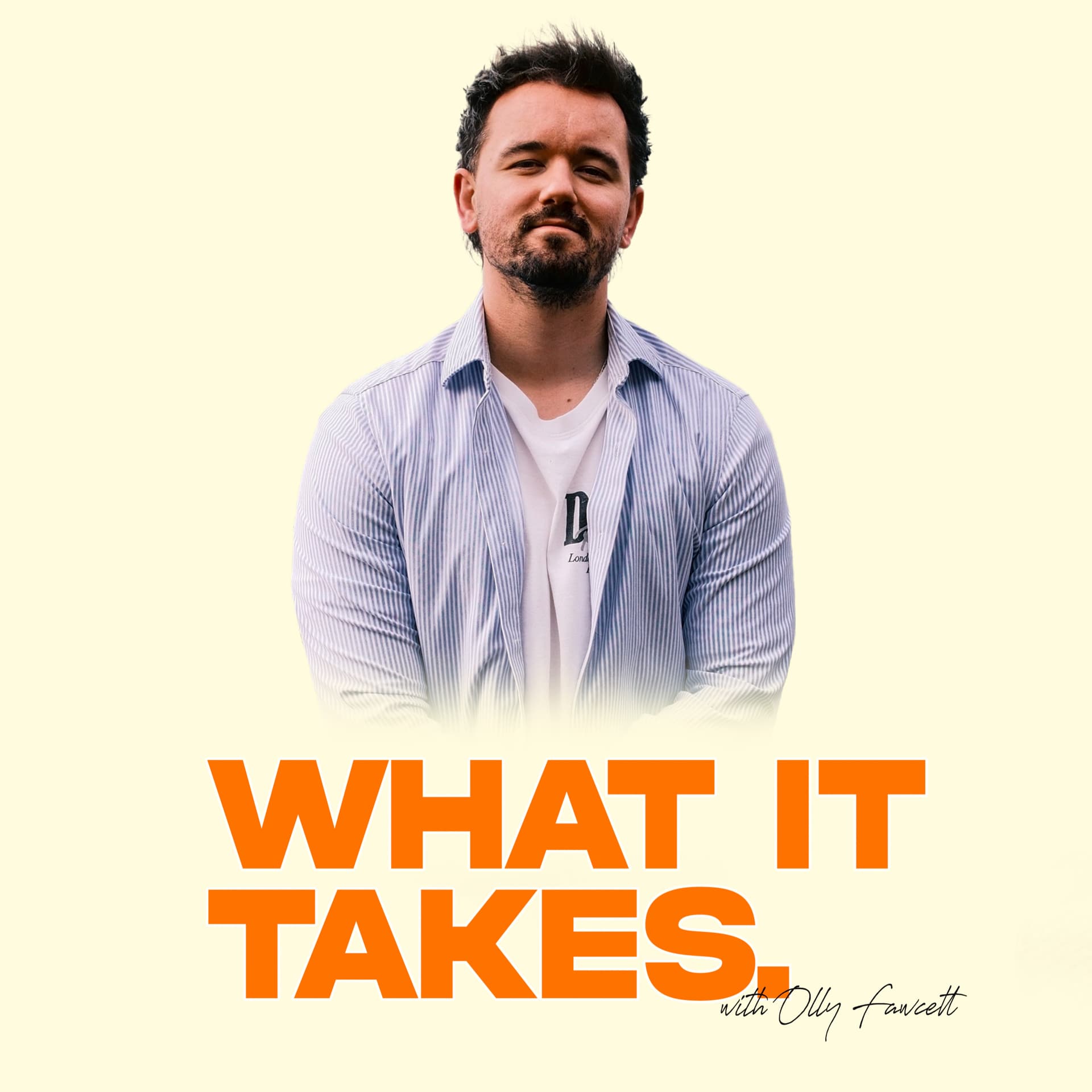
Stuart Trevor is the founder of AllSaints and one of the most influential figures in British fashion. In this episode of What It Takes with Olly Fawcett, Stuart shares the extraordinary story behind building AllSaints into a global fashion brand, his early career designing for Reiss, and why he walked away from the company at its peak.
From growing up on a council estate in Dundee to dressing some of the biggest rock bands in the world, Stuart reveals the creative mindset that drove his success and how ADHD, risk-taking and instinct helped shape his career.
We also explore the realities of the fashion industry, the rise of fast fashion, and why Stuart is now building a new sustainable brand that produces no new clothes, using only upcycled garments.
This is a fascinating conversation about creativity, entrepreneurship, sustainability, and what it really takes to build a global brand.
Follow Stuart:https://www.instagram.com/stuart_trevor/
Follow Olly: https://www.instagram.com/olly.303/https://www.tiktok.com/@ollyfawcett303?is_from_webapp=1&sender_device=pchttps://www.linkedin.com/in/olly-fawcett-668566177/Get frequent behind the scenes updates from Olly: https://whatittakes.kit.com/51cd36dc35