 Ask ChatGPT



Accountability in U.S. politics—why impeachment efforts and congressional investigations may fail or be delayed, and how Democrats should pursue anti-corruption work without getting bogged down in retribution or endless litigation. The episode also discusses mass pardons and executive-privilege arguments as tools to block oversight.
Liz Oyer, former U.S. DOJ pardon attorney; host of “Is This Really Legal?” She argues about executive privilege, congressional investigative power, contempt, and pardon law.
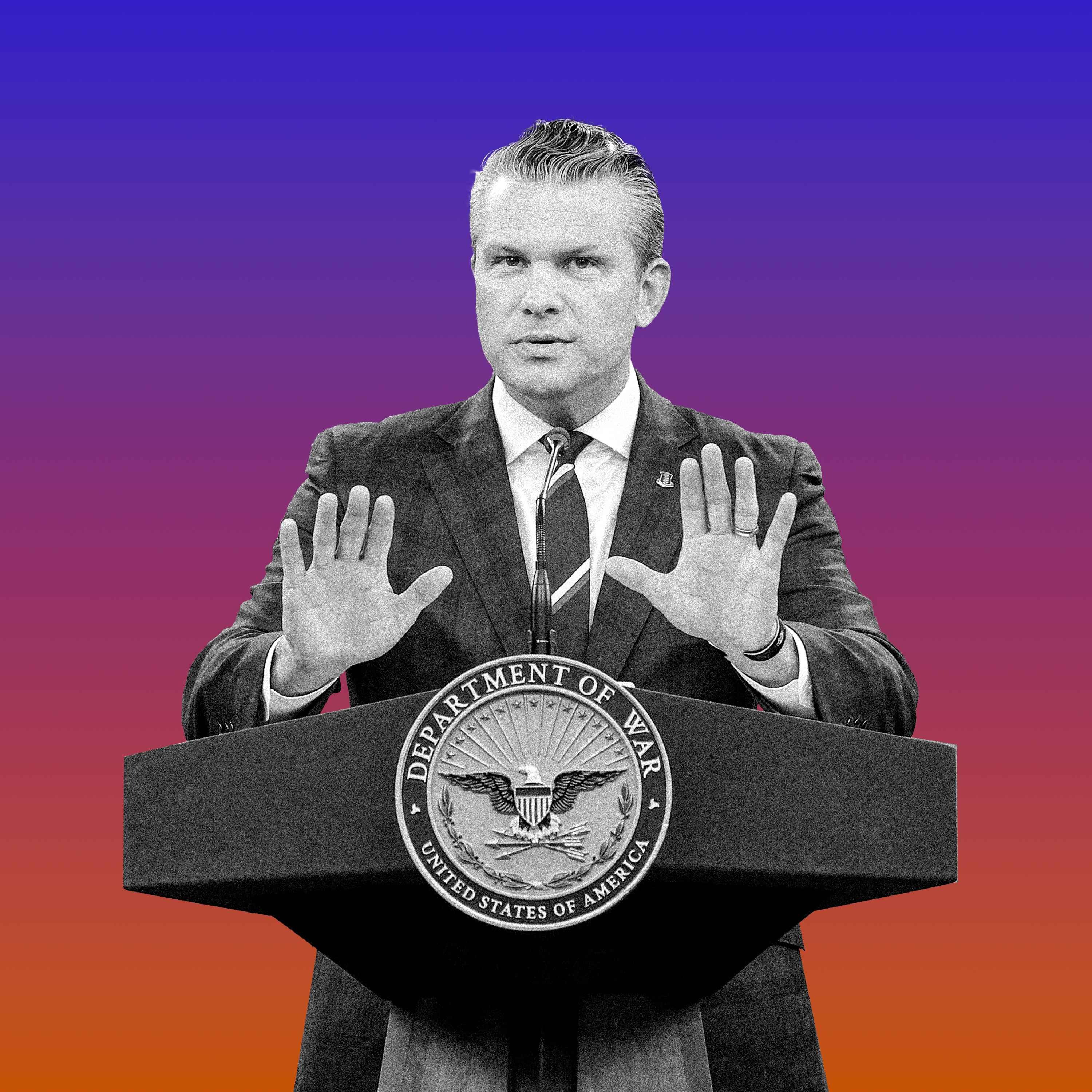
The House impeachment attempt for Pete Hegseth quickly died due to missing Democratic votes; lack of exoneration doesn’t end future impeachment. DOJ is preparing to expand executive privilege (including communications with outside figures like CEOs/Trump family) to resist subpoenas and tie cases up in court. DOJ may also threaten investigators with prosecution and argue Congress lacks authority, though Oyer says Supreme Court precedent supports inherent investigative power.
Todd Blanche’s “anti-weaponization” slush fund; DOJ OLC memo on expansive executive privilege; threats like “lawyer up”; contempt-of-Congress limits; mass pardons “within 1,000 miles of the Oval Office.”
Written by AI. May contain mistakes.
Discussion on the contrasting signals from Congress regarding accountability.
“ExciteOSA is an FDA-cleared prescription-only device for primary snoring and mild obstructive sleep apnea.”
Analyzing how Democrats should balance accountability and governance.
“I mean, traffic is not something new here in our nation's capital.”
Exploring the ongoing debate on the Democrats' post-election priorities.
“And you could see this the day after the election on Morning Joe.”
Examining the relationship between government corruption and accountability measures.
“I just feel like these things are tied together.”
Learn about the expansive interpretation of executive privilege and its implications for accountability and investigations.
“And it said that the executive privilege shields not only communications between the president and his advisors within government, but also the president's communications with people outside government.”
Discussing the implications of political accountability and impeachment efforts.
“Listening to you and what you're describing, it does feel like what's happening right now.”
Analyzing the potential effects of mass pardons on the rule of law.
“And potentially, there's a case for ignoring them.”

Get the gist, explore an idea or ask about something said.
 Claude
On What Next | Daily News and Analysis, what are the key points of this episode?
Searching your listeningAutomatic transcript. May contain errors.
0:00Hi, this is Nikaela Matthews-Oconley from SideHustle Pro. This holiday, the difference between buyers just checking things out and checking out comes down to the last few clicks. PayPal Checkout is a trusted conversion engine fueled by 400 million active PayPal and Venmo accounts. Add Pay Later and turn holiday shoppers into regulars. 96 % of Pay Later shoppers are repeat users. PayPal is built for all business. Get started at paypal.com slash business. Disclaimer, PayPal Pay Later data, 8 markets, March 2025 to February 2026. Repeat users more than one Pay Later purchase in the past year. Do you snore?
0:38Did somebody hand you a CPAP and did you quietly stop using it? The mask that never quite seals, the hose tugging at you every time you roll over, a machine sitting abandoned in a closet? Excite OSA works a different way. It treats a root cause instead of managing the noise, and you use it while you're awake. 20 minutes a day, while the coffee brews, while you set your fantasy lineup. An FDA-cleared prescription device for primary snoring and mild obstructive sleep apnea. Then you go to bed like a person. Nothing strapped on, nothing plugged in. In clinical studies, 90 % of patients saw a reduction in snoring.
1:20No sleep study required. Prescribed online, shipped to your door. ExciteOSA at springsleep.com slash sleep20. Code sleep20 for 20 % off. ExciteOSA is an FDA-cleared prescription-only device for primary snoring and mild obstructive sleep apnea. Not for everyone. Individual results vary. Risks and benefits at springsleep.com.
1:55Does anyone else feel like Washington is giving you mixed signals? I'm asking because this week, to me, the dissonance of Capitol Hill was on full display. Like half of my feed was giddy selfies of new Democratic senators getting ready for work, showing off their fancy leather briefing books. The other half of my feed was folks wondering why a Congress that can see change coming could not get it together to impeach one of the most disliked guys in the cabinet, Pete Hegseth.
2:31Eight articles of impeachment were introduced by outgoing Congressman Thomas Massey Thursday afternoon. A couple hours later, they were dead.
2:41Liz Oyer: Yeah, yeah. No, it was surprising how quickly it died. It sort of just went out with a little poof and it was done. I called up former DOJ attorney Liz Oyer to mull all this over because I got to say, this stumped me. Even Senator Ted Cruz got up on his podcast and said, look, the votes are there to impeach this guy. I think it is extremely likely, if not certain, that the House will impeach him because on the face of it, the votes are there. Now, it only takes a majority to impeach. But here, I want you to...
3:40Liz Oyer: on a narrowly focused subject, but this was very broad and far-ranging. I mean, Donald Trump is saying he's, like, exonerated. Well, that is certainly not the case. I mean, the fact that the House did not vote to impeach him does not mean that he's exonerated, and it does not mean he's off the hook in the next Congress. They could try to impeach him again for exactly the same conduct or some narrower subset of that conduct or for something different entirely. I mean, we got to talk about the Democrats, too. Like 11 Democrats didn't show up. And if they had showed up, they would have had the numbers to defeat a procedural move, forcing a full House vote on whether to impeach Hegseth or not.
4:22That seems a little bit like a fail.
4:24Liz Oyer: Yeah, that's pretty maddening. I mean, a lot of the Democrats who didn't show up to vote are now claiming that they got caught in traffic. OK, I live in Washington, D.C. I've lived here for over 20 years. Traffic is just something you plan for. If you have somewhere important to be, if you have an important vote to cast, you've got to plan for the possibility of traffic. I mean, traffic is not something new here in our nation's capital. I wonder if you see what just happened with Pete Hegseth as a little bit of a lesson of a sort in how to do accountability and how to not do accountability. And maybe also a lesson in what we can expect moving forward.
5:01Yes, definitely. I mean, first of all, I think you have to know that your effort to hold someone accountable is actually going to succeed before you launch into it. Don't be sloppy.
5:12Liz Oyer: Exactly. Yeah. And I think the Democrats have to think really carefully about what to prioritize because there are so many things going on. And the most important thing above all else is that the Democrats deliver on the promises that they made in terms of governing the country. So they cannot get exclusively bogged down in efforts to hold people accountable for past actions. They have to be thinking about forward-looking policy and legislation. Do you think Democrats can walk and chew gum at the same time? Well, we'll see. Today on the show, is Congress about to usher in a new age of accountability?
5:48And what would that even look like? I'm Mary Harris. You're listening to What Next. Stick around.
6:03Today's show is brought to you by Vanguard. To all the financial advisors listening, let's talk bonds for a minute. Capturing value in fixed income is not easy. Bond markets are massive, murky, and let's be real, lots of firms throw a couple of flashy funds your way and call it a day. But not Vanguard. Vanguard bonds are institutional quality. Institutional quality is not a tagline. It's a commitment to your clients. It means top grade products across the board. The lineup includes over 80 bond funds. They are actively managed by a 200 person global squad of sector specialists, analysts and traders.
6:36Lots of firms love to highlight their star portfolio managers. Like it's all about that one brilliant mind making the magic happen. Vanguard's philosophy is a little different. They believe the best active strategies should not be locked away with one person. They should be shared across the team. That way, every client benefits from the collective brainpower, not just one individual's take. So if you're looking to give your clients consistent results year in and year out, go see the record for yourself over at Vanguard.com slash audio. That's Vanguard.com slash audio. All investing is subject to risk.
7:11Vanguard Marketing Corporation Distributor. 98 of the top 100 U.S. accounting firms trust Bill to simplify and secure BillPay. That's proven financial infrastructure built on over a trillion dollars of secure payments. Visit Bill.com slash proven for a special offer. Hey, it's Paige DeSorbo from Giggly Squad. Everyone is always looking for a new way to make some extra cash. But sometimes the easiest place to start is your own closet, with a little help from Depop. Think about how many clothes you have that you love, but you just don't wear anymore. On Depop, it's quick and easy to list those pieces.
7:48There's no selling fees, and suddenly those clothes have a chance to find someone who actually wants them. And the best part, you're making room for whatever you're into next. Make money on Depop with no selling fees and find what you want for less. This message is brought to you by Depop.
8:07OK, I'm going to kind of start us off by just kind of setting the table, because over the last week or so since the midterm results came in, I feel like there's been a simmering fight ongoing about what the Democrats were elected to do exactly. And you could see this the day after the election on Morning Joe. You have Joe Scarborough there with Hakeem Jeffries. And the question, the question I felt like was so slanted. It was like, how are you going to keep your caucus in line focused on cost of living instead of retribution? And Hakeem Jeffries is like, yep, we're not going to do retribution.
8:45The American people don't want us to get even. They want us to get things done on their behalf because life is way too expensive. And like I watched this and I just I had a deep sigh. And I should say that in the days since Hakeem Jeffries has changed his tune slightly to talk about like, well, it's accountability, it's accountability. But I think this debate is still active. It frustrates me because I do feel like the candidates and their voters are pretty clear that they were fighting this electoral battle to fight corruption, which is tied to affordability. And you can't avoid doing some investigations if you're concerned about corruption.
9:26I just feel like these things are tied together. And also like 63 percent of people told Pew, Democratic voters, that investigating the Trump administration is important to them. So I just feel like we need to say that. But I do feel like before we really get into it, I want to ask you your take here, because I do feel like there is this debate happening about how much energy to put into investigations, accountability, all those sorts of things versus, quote unquote, getting things done for the American people to the extent you can do that in a Democratic Congress with a Republican, Donald Trump as president.
9:59Yeah, I mean, I think staying focused on the money is a really important piece of it.
10:04Liz Oyer: So much money has been sucked out of our government by people who are in the administration who have granted government contracts to companies associated with themselves or family members, etc. And then by people on the periphery of the administration who don't have official government positions, but who have access to the president and access to influence on policymaking issues. So people like Jared Kushner, people like Donald Trump's sons and a lot of corporations who have Trump's ear. So a lot of money has flowed out of our government through corruption, essentially. And I think that if Congress stays focused on tracing the money and then trying to recoup the money that has been taken from taxpayers and put into the pockets of billionaires with connections to the president, that is an easy way to make the case to the American people that it is a question of not just accountability, but also affordability.
10:59Liz Oyer: It affects taxpayers when we have a corrupt government, when policy decisions are influenced by the financial interests of Trump insiders. That is bad for America. So my suggestion to Congress is to keep focused on the money. It's interesting because when you talk about that, you're talking about kind of a different, slightly different cast of characters than, say, Pete Hegseth or Stephen Miller or Kristi Noem. You know, people you might want to you might think of as like the stars of Trump 2.0 that you might want to drag into Congress. It really is a slightly different focus. Is that fair? Yeah.
11:37Liz Oyer: I mean, there's some overlap. Like Kristi Noem is a major offender in terms of self-dealing government contracts. Stephen Miller, I'm not aware of him being involved in those sorts of things. But yeah, it's people like the CEOs who are donating millions of dollars to Donald Trump's ballroom and to his presidential library in order to get policies enacted that will benefit their businesses. It's people like the Trump family members and hangers-on who are profiting from selling their access to the president. It's the people who are brokering pardons, who are middlemen essentially putting pardon applications on the president's desk and charging millions of dollars for doing that.
12:17All of those people are benefiting from the powers of government, and that should not be.
12:25Liz Oyer: It's something that, you know, Congress needs to look at from a legislative perspective as well as an investigative perspective to try to close some of these loopholes that allow people like Jared Kushner and Donald Trump Jr. to profit from the presidency. And I think there's a really easy case to make to the American people about why it benefits all of us across party lines. It's interesting, too. I wonder if those people are easier to investigate in some ways, too. Like, there may not be as much executive privilege associated with a CEO versus someone who's been working inside the White House.
12:57Liz Oyer: Yeah. So that's a really important point, Mary. And two things I want to say about that. One is Todd Blanche absolutely crashed out on national television over the weekend about the idea that the Democrats wanted to investigate Trump's donors. Like, how could they possibly investigate the donors? He went on CNN, he went on Fox, and he was basically like, what you're doing, Democrats, or what you're threatening to do may be criminal? At some point, you have to draw the line. And I'm not saying that necessarily that every case is going to be prosecuted. But we have a real problem in this country if a young person in college is getting threatened by a United States senator.
13:34Like we may investigate you for investigating? Right, right. Yeah. Just threatening investigations could be the basis for a criminal investigation of lawmakers, which is absolutely nuts.
13:45Liz Oyer: I mean, there is no merit whatsoever to the idea that the Democrats talking about investigations is somehow the subject of a criminal investigation. But DOJ has been laying the groundwork for a really long time to protect against the possibility of congressional investigations to the best of their abilities. And one of the things they did that is really important but little known, I think, is in August, the Office of Legal Counsel, which is sort of the big think office within DOJ, issued a memo that took a very expansive scope of what executive privilege covers. And it said that the executive privilege shields not only communications between the president and his advisors within government, but also the president's communications with people outside government.
14:37Liz Oyer: So that would potentially include CEOs. It would potentially include his sons, his son-in-law, people who have no official government position. That is not how executive privilege has ever been interpreted before. It is a novel and incredibly expansive interpretation. And the reason they wrote that memo is to try to justify, I believe, resisting congressional subpoenas. And not just people in the administration, but people like Jared Kushner and Donald Trump Jr., people who are, you know, who surround Trump so they can say, I refuse to testify because of executive privilege. So they're basically building like an iron dome around anyone who's touched Donald J.
15:19Trump in the last two years?
15:21Liz Oyer: Yeah, they're trying. They're trying to do that. And what they're going to succeed in is tying a lot of these investigations up in litigation. I mean, I don't think that is a defensible view of executive privilege, but ultimately it may be that that's something that the Supreme Court has to decide. And before that gets teed up for the Supreme Court, it's possible that we'll have another new Congress in place. I mean, it could take quite a long time for all of this litigation to play out. And that is a real concern. I mean, the Democrats have to move forward with governing the country and not get bogged down exclusively in years of litigation.
16:00Yeah, I mean, it's not it's not just Blanche saying this like just a couple hours, I think, before we got on the line. I was seeing reporting that Democratic Representative Robert Garcia, who's the incoming House Oversight Chair, he just got a letter from White House counsel basically saying you could be crossing the line into criminal behavior by saying stuff like lawyer up after winning the midterm elections. So it does feel like this is something the White House is going to dig in on. You've actually highlighted there are like three there's like a three point plan here for blocking investigations.
16:36First point is threatening people with prosecution for investigating in the first place. What else do you think is going to happen here?
16:43Liz Oyer: Yeah, that's part of it. Then the other part of it that they're laying the groundwork for is to make the argument that Congress does not have the legal authority to conduct these investigations. Does that hold water? No, it's true that the Constitution does not say anything about investigations as part of Congress's authority. But the Supreme Court for, I mean, you know, years and years and years has said many, many times that the authority to investigate is inherent to Congress's legislative power. So Congress's lawmaking power necessarily includes the power to conduct investigations, investigations in furtherance of their lawmaking duties to make sure the laws are being executed in the way that they intended, to see if the laws need to be changed to better serve the American people.
17:30Liz Oyer: So the Supreme Court has reiterated that Congress has very, very broad investigative powers, but the Justice Department is preparing to argue that they don't have the authority to investigate people in the Trump administration. That's not legislative. They're planning to make an argument that this is somehow a matter of personal grievance and it's not within the scope of Congress's investigative powers. I believe that that argument will fail. I mean, it seems plainly without legal merit, but they are certainly preparing that as part of their strategy to take on these investigations and at minimum tie them up in court, even if the argument doesn't ultimately prevail.
18:11Yeah, the just asking legal questions costs you in terms of time. It means you can't get your work done because you're still just fighting over whether you can do your work at all.
18:22Liz Oyer: Yeah, that's actually a strategy that this administration has used in a number of domains. Another example is the litigation over the illegal firings of civil servants, including myself. The Justice Department has intentionally essentially broken the system for resolving these claims. There was an administrative process in place that is supposed to resolve claims by employees who are illegally fired within a couple of months. They have essentially collapsed the whole system by refusing to cooperate with litigation and by raising frivolous legal arguments. And as a result, you know, there are many people like me who were fired from the Justice Department more than a year and a half ago and whose cases have still made no progress through the legal system because of the way DOJ is operating.
19:13Liz Oyer: And, you know, it's possible that Todd Blanche, who fired me, will be out of office before I ever kept my case adjudicated. And that's part of the strategy here. I mean, that's how they've been able to do so much damage so quickly. But you're making me despair a little bit because what you're saying is they've figured out a hack. They can avoid accountability by just running out the clock. So I guess I wonder, given that we know that this kind of pushback is going to happen, is already happening, what can congressional Democrats do to respond effectively, more effectively than they did last time?
19:53they had this opportunity. Because frankly, the corruption is much worse than it was last time.
19:58Liz Oyer: Yeah, I think they really need to make the case to the public. The difference now versus two years ago is that Todd Blanche and Pete Hegseth, they don't have the popular mandate that they thought they had when they started in these positions. The people have rejected their efforts to transform government in a way that is detrimental to the interests of Americans. and they can try to push back on Congress. But at the end of the day, the American people are not on their side. And that's something that Congress needs to remember and to use to their advantage. And they need to make their case to the public along the way.
20:36Well, do you think Congress should be considering things like holding people in contempt for, you know, not obeying their lawful demands? I mean, this would involve basically a threatening jail time for people, potentially. Or, I guess, monetary damages.
20:57Liz Oyer: Yes. So contempt can result in either fines or jail time in theory. The issue with contempt of Congress is that Congress has the authority to hold someone in contempt, but it's really only on paper unless the Justice Department decides that they want to prosecute that person criminally for contempt. So Congress can't criminally prosecute anyone. Congress can't send anyone to prison. Only the Justice Department. Well, you're saying this relies on like the consent of the DOJ, which is currently being run by Todd Blanche. So unclear whether that's a positive working relationship. Exactly. Yeah. So those those might go nowhere.
21:33Liz Oyer: Although it is possible that a future Justice Department under different leadership could prosecute some of those cases for people who have obstructed Congress and who have been found in contempt of Congress. But Congress needs to exercise the powers that they have, and that may mean holding people in contempt of Congress. I actually think that courts should be thinking more aggressively about holding Justice Department lawyers in contempt in appropriate cases. I think there's a desire, understandably, on the part of courts to give DOJ lawyers the benefit of the doubt, especially when they're just carrying out directions from their superiors.
22:08Liz Oyer: But we're sort of at the point where this Justice Department is clearly not going to police itself. So it's incumbent on other authorities to impose some breaks. And that may mean holding DOJ lawyers in contempt of court. And it may mean holding potential witnesses in contempt of Congress. I mean, there's also the power of the purse. You know, Congress can place conditions on money that it authorizes the government to spend. Could that be a mechanism of control here? I mean, I know some money has just been given. Like, I think we funded ICE through the end of Donald Trump's term. So there are things we can do and things we can't do.
22:46But I'm curious how you're thinking about monetary control. Yes, definitely Congress has the authority to withhold funding from these agencies. It's tricky in situations like ICE, which, as you noted, has already been funded. There are, in theory, funding could be taken away, but that would be much more challenging. With the Justice Department, Congress certainly could withhold funding. But the Justice Department is in a position where it's already really depleted its ranks.
23:13Liz Oyer: The leadership has driven away many of the most experienced career civil servants. So there's not really a demand for more funding for DOJ right now because they have suffered so many losses in the workforce. And frankly, they're struggling to even fill positions. DOJ has lost about a third of its attorney workforce, and they are really struggling to even hire and recruit new attorneys because nobody wants to jump on board that sinking ship. So they're cash rich but personnel poor. Yeah, the personnel issue. I mean, it's a real problem. I am actually really concerned that there are not enough experienced people in the building anymore to handle really serious cases that might arise.
23:57Liz Oyer: We just saw the departure of the head of the National Security Division of the Justice Department, who served under Trump 1. He was actually a fairly mainstream conservative DOJ lawyer, and he was forced out apparently because he didn't want to aggressively pursue this agenda of going after the media. He didn't want to pursue this witch hunt to, you know, get reporters to have to disclose their sources, et cetera. And when you think about that, that's pretty crazy that that's what the National Security Division of DOJ is even working on. Litigation against the media, lawsuits against the media.
24:35That's an agency that should be working on counterintelligence, counterterrorism, espionage cases. I mean, cases like the one involving the CEO of NVIDIA, Jensen Huang, are the type of case you'd expect the National Security Division to be working on.
24:49Liz Oyer: But they've been diverted to political missions and people are leaving in droves because they don't want to carry out these revenge agendas. They want to do serious work. And as a result, the ranks have been really depleted of people who know what they're doing, which may come back to hurt us in some real ways in the future. It's interesting listening to you. It's like you're painting this portrait of a government that is starved, like people are leaving it, but also still fighting and still like ignoring things that like another branch of government might request of them, right? Like Congress might request of them.
25:33It's a strange situation where, you know, the voters have just said one thing pretty clearly. People seem to be leaving departments because they get the message that voters are giving. And then at the same time, the administration is digging in, not really listening to what just happened last week. Yeah, I mean, it's hard to know at any given moment what exactly the position of the administration is. There have been so many mixed signals. At one point, Donald Trump said, for example, he acknowledged on 60 Minutes that his immigration enforcement policies had been too harsh. And then within hours, he elevated Stephen Miller, who was the architect of those policies, to be his chief of staff.
26:19So it's hard to know exactly where they stand at any given moment. And that's created a lot of chaos downward among the workforce in terms of what the priorities are. There have been some sort of chilling accounts of instructions that have been given to DOJ lawyers that have been reported on since the midterm elections, suggesting that there that people who aren't willing to spend the next two years fully supporting and aggressively pursuing the president's agendas should think about leaving the organization. And I don't know who's driving that, whether those are internal directives or whether they're really coming from the White House.
26:57But the message I think that it's received by the workforce is, oh, shit, you know, like I might have to – I might be asked to do something any day now that will really cross some personal lines. And it's a really uncomfortable position for government workers to be in. I think people don't know where it's coming. America just told you they hated that. Yes, exactly. Exactly. Yeah. But it seems like they're doubling down and it doesn't make a lot of sense. We'll be right back after a quick break.
27:38This episode is brought to you by Article. Article is an online furniture store with great quality pieces, pieces they were so confident in, they offered to send them to me. so I could tell you what I thought. They sent a couple chairs, a planter for out front, a coffee table, stuff I live with day in and day out. So I can attest it looks great and honestly exceeded my expectations. If you are looking to put together a home that's stylish, but you want an upgrade from the stuff you might slap together with an Allen wrench, I'd urge you to check Article Out because they truly sell everything in a range of styles, mid-century, coastal, Scandi-inspired stuff.
28:16In other words, furniture that's going to fit your home no matter how you live. Article offers fast, affordable shipping across the U.S. and Canada with options for professional assembly if you prefer that. If you've got questions, they've got customer service available seven days a week. And they offer knowledgeable support, even free interior design services. And with Article's 30-day satisfaction guarantee, you can shop with confidence, knowing if you're not completely in love with your new furniture, you can just return it. This peace of mind means you can invest in your home without hesitation.
28:48Article is offering our listeners 50 bucks off your first purchase of$100 or more. To claim, visit article.com slash next, and the discount will be automatically applied at checkout. That's article.com slash next for$50 off your first purchase of$100 or more.
29:34We'll see you next time. Be smart. Get wise. Download the Wise app today. T's and C's apply.
29:44Listening to you and what you're describing, it does feel like what's happening right now. It's generating a robust case for some impeachments. But I can't tell if this Democratic Congress is thirsty for that. Like, let's set aside Donald J. Trump for the moment. Yeah. Do you think Pete Hegseth is going to get another round of impeachment hearings after January? Or impeachment articles, I should say.
30:21Liz Oyer: I think it's possible, but I think the failure of this first effort is going to give some people pause, and I think they'll want to make sure they have all of their ducks in a row before going down this road again. I also think that Todd Blanche is one who could potentially face impeachment. I mean, he has been the architect of some of the biggest betrayals of his constitutional responsibilities. For example, signing off on this slush fund, this corrupt slush fund that agreed to, you know, immunize Donald Trump and his family and his companies from any tax liability and that agreed to pay out billions of taxpayer dollars to friends and allies of the president.
31:03That's just a fundamental betrayal of his duty to serve the Constitution and the American people. He has made his client someone other than America. His client is the president, and he's made that really clear. And that's a fundamental breach of his duties that, in my mind, warrants the remedy of impeachment. Well, and it's something I've sort of taken note of in this conversation is that any attempted accountability by Congress can run into Todd Blanche very quickly. Yes, that's true. You know, it's just like, boop. You know, like I had Jamie Raskin on the show right before the election. He was talking about the big report that he had released linking Donald Trump to Jeffrey Epstein and a new allegation of rape in there.
31:50And part of what I think he did in that report was very much point at Todd Blanche and say, hey, there's evidence here that Todd Blanche is acting to protect the president himself, not the U.S. government. I thought it was pretty smart. But when I asked him what he wanted to happen, he's like, well, I think that we should have a special counsel investigate. And I was like, well, who appoints a special counsel? And he was like, well, that would be the attorney general. And I was like, well, I think we're really in a trap here, my friend. And that's your recommendation. Like, it just seems like any attempt at accountability is going to run into Blanche very quickly.
32:24Right. It's like who polices the police. One interesting suggestion that I saw from a scholar named Casey Michelle, who I just interviewed on my podcast, Is This Really Legal?, is that Congress should create a select committee that would be focused exclusively on investigating corruption by this administration that would sort of put it all under one umbrella maybe to make it more efficient and also ensure that it doesn't bog down the other responsibilities of Congress. So this would be like staffers investigating corruption, so separate than the members themselves or with the members too? It would be led by members of Congress.
33:03But, you know, I think it's the congressional staffers that do the real work in these investigations. And it would be separate from the existing committees of Congress. So it wouldn't take away from their ability to focus on other business. It would be in addition to and it would be staffed with people who have who are experienced investigators, probably some former prosecutors who've left the Justice Department who know how to build these cases. And I think there are a few of those sitting around. Yes. Yeah, there are quite a few of those. And I think they'd be eager to jump in and lend their expertise.
33:36And that could be a good way to do it. And the other suggestion that I heard from Casey, which I think is an interesting one, is that we need a new agency, an anti-corruption bureau, that can actually ensure that these laws and policies that should be enacted by this Congress are enforced going forward, and that would be their exclusive responsibility. So, you know, it's interesting to think about the need for really a dedicated anti-corruption
34:01Liz Oyer: function in our government. We have for a long time relied on our elected leaders to be people of good character who aren't going to place their personal financial interests over and ahead of the interests of the American people. And we've relied on them to put good people, ethical people in positions of power like attorney general. But we no longer have that. And it really does make the case, I think, for a dedicated anti-corruption function within our government. Yeah. You know, you mentioned the idea of impeaching Todd Blanche. I wonder if this recent experience with Pete Hegseth gives you some thoughts on, like, what would need—how those articles would need to be drafted to have a chance at success.
34:46because, frankly, you do need some Republican support in the Senate, at least, if you want to actually prosecute a successful case against a Todd Blanch. What are the things you think members can agree on that Todd Blanch has done that would be questionable and would rise to the occasion of saying he needs to be removed from office? There are two things that have crossed over party lines that Blanche has done, and one is the creation of this anti-weaponization fund, the slush fund. That was one issue that—that was the one issue that almost derailed his confirmation as attorney general because a couple of Republicans had questions about the legitimacy of that anti-weaponization fund.
35:36And that's a clear example of him placing Donald Trump's personal interests over and above the interests of the American people. Well, he would say, I stopped doing that, right? Like, I ended that, right? Yeah, he has said that, but it's not dead. There's still ongoing litigation over the slush fund. There was never any paperwork put into place that, you know, said it's dead. And so it's not dead as a legal matter, and it could be revived at any time. And then the other one is the handling of the Epstein case. I mean, Todd Blanche's handling of Ghislaine Maxwell, Jeffrey Epstein's co-conspirator, is just appalling.
36:15I mean, what he did with her, he, when he was deputy attorney general, went and interviewed her over the course of two days while she was in prison in Florida. And he essentially cajoled her to make exonerating statements about Donald Trump in exchange for transferring her to a minimum security prison camp where she does not belong under longstanding Bureau of Prisons policies. And you could just see in the transcript of that interview and in the circumstances of the interview that Blanche was there as Donald Trump's legal representative. He was there to protect Donald Trump's interests, not to get to the truth, not to protect the victims and not to consider the interests of the American people.
36:58And that's another issue that across party lines, I think, has troubled people. And that could be potentially another basis for impeachment. So this whole conversation has been about accountability. accountability um and i guess i want to pick your brain as a pardon attorney at this moment because part of the issue with accountability for this administration is that donald trump has said he's planning to issue pardons to just about anyone who's come within like i think he said 200 feet of the white house like anyone who's had anything to do with him and i wonder how you think about the meaning of that and how that impacts the actual ability to do what needs to be done here.
37:45Like, I've noticed that The New York Times' Jamal Boo, who's a friend of the show, he wrote a column recently where if you read deep, his argument is basically a pardon, like the pardons Donald Trump is saying he will give is anti-constitutional. And potentially, there's a case for ignoring them. I wonder what you think about that.
38:09Liz Oyer: Yeah. So this is something that I've written about as well. I do think that Trump is going to issue mass pardons to everyone in his administration, or at least the ones who are still on his good side by the end. And he said the number of times that he will. He has, He said it as recently as this weekend on 60 Minutes. And this time, I believe he said everyone within 1 ,000 miles of the Oval Office will be getting a pardon. Oh, wow. I get a pardon. So I think he's serious about it. I think it's possible that he's actually signed some of the paperwork already and has it stashed away just in case he should, you know, something should happen to him before he leaves office.
38:47But it would be devastating to the rule of law if he pardoned everyone in the executive branch. It would essentially place the executive branch outside the reach of the laws enacted by Congress, which would really fundamentally upset the separation of powers in our country, the idea that Congress makes the law and the executive branch has to carry them out. That's a real problem under our constitutional structure, and I think it would raise questions about whether the president is fulfilling his duty to faithfully execute the laws, which is one of his duties under Article 2 of the Constitution.
39:22So I think that mass pardons—
39:52would intrude on Congress's authority to make the laws and abdicate the president's responsibility to execute them. So I think there could be a constitutional challenge. Can the president, like, will pardons to people if he if something happened to him in office, he like has something tucked away and it's like, well, he said this while he was still with us. Is that a thing? I think it's possible. You know, if the pardons are signed and dated and can be proven to be authentic and legitimately signed by the president, I think that they could be enforceable even if they haven't yet been revealed to the public.
40:29There is a requirement that a pardon has to be delivered to be effective. But, you know, if he's got the pardon stashed away and he has, you know, told Jared and Don, hey, I've got your pardons in, you know, the top left desk drawer, don't worry.
40:44Liz Oyer: You know, I think they would be they would be enforceable if they were found after something happened to the president.
40:53Liz, thank you so much for coming on the show. I always learn so much from you.
40:57Liz Oyer: Thank you for having me, Mary. I really enjoyed the conversation. Liz Oyer is a former U.S. pardon attorney. She's also the host of the podcast Is This Really Legal? And that's our show. What Next is produced by Evan Campbell, Madeline Thames-Ducharm, and Patrick Fort. Paige Osborne is the senior supervising producer of What Next and What Next TBD. Milo Bell is the executive producer of podcasts here at Slate. Ben Richmond is the senior director of podcast operations. And I'm Mary Harris. Go say hey on Blue Sky. I'm Matt Mary Harris. Thanks for listening. Catch you back here next time.
41:41This episode is brought to you by Okta, helping you secure and govern AI identity by bringing agents out of the shadows. There's no denying that AI agents are completely transforming how we work right now. But when they operate unseen in the dark, they quietly create massive security blind spots. The good news? You don't have to hit the brakes on your AI goals to stay safe. Okta gives you total visibility and identity governance by helping you answer four simple questions. Where are my agents? What can they do? What are they doing? And how do I respond if they go rogue? It gives you full control, letting you manage task-scoped permissions, trace behavior with a full audit trail, and even flip an instant kill switch if an agent ever goes rogue.
42:23That way you can shine a light on agents operating across your organization. Bring AI agents out of the shadows. Okta secures AI. Learn more at Okta.com. That's Okta.com.
42:42The quarter pounder with cheese is made with 100 % fresh beef, cooked when you order it. Then comes the melted cheese, the slivered onions, the pickles, the ketchup, and the mustard. Add hot crispy fries and an ice cold Coke, all for$8. And if things go well, one loose fry at the bottom of the bag. The quarter pounder with cheese meal, now$8.
43:12Thank you.
Whether Democratic leadership wants it or not, “corruption” was a top priority for voters. And judging from how the Trump administration has been acting, it seems like they—like the voters—expect Democrats to try to do something about it.
Guest: Liz Oyer, former US Pardon Attorney, and host of the podcast Is This Really Legal?
Want more What Next? Subscribe to Slate Plus to access ad-free listening to the whole What Next family and across all your favorite Slate podcasts. Subscribe today on Apple Podcasts by clicking “Try Free” at the top of our show page. Sign up now at slate.com/whatnextplus to get access wherever you listen.
Podcast production by Evan Campbell, Madeline Thames-Ducharme and Patrick Fort.
Paige Osburn is the senior supervising producer of What Next and What Next TBD.
Hosted on Acast. See acast.com/privacy for more information.