Ask ChatGPT
 What's Cooking? | A Podcast from Nory
29 Jul 2026 · 14m · 6 chapters
How Hart’s Group scales restaurant concepts without standardising, staying anchored in “lived experience” and uncompromised ingredient quality, while adapting to rising UK labor costs through leaner staffing and data-driven menu decisions.
The speaker is a Hartscape/Hart’s Group leader (founder/exec) with lived experience across Spain (Mallorca upbringing; Spanish/Mallorquín), Barcelona, and the UK, plus Mexico City nightlife experience in the 1990s and 5–10 years in Mexico with a business partner.
Unique value comes from produce-led “restaurante de producto” concepts; privately owned governance enables consensus and flexibility (e.g., waiting during the Iran War). Biggest cost pressure is wages (UK minimum wage up 38% since 2022), addressed by reducing staff ~20% and tightening rotas without hurting customer satisfaction.
Barafina (Spanish, produce-focused) and Crovaris/Covaris building acquisition; later Mexican expansion (few Mexican restaurants in the UK at the time). Uses Yum Pingo tablets to score dishes by taste, value, portion size, etc., removing items that customers don’t actually like.
Written by AI. May contain mistakes.
Discussion on the origins and inspirations behind Barafina and Covent restaurant.
“I think it probably comes from a sort of certain amount of creative itch where we get excited about restaurants or things we want to do and get on and do them.”
Exploration of the importance of high-quality ingredients in their restaurants.
“It felt like a good opportunity to do Mexican as well.”
Insights into how private ownership benefits decision-making and operations.
“and you look around the broader market, it's harder to do that the more doors you have.”
Discussion on the impact of rising labor costs and workforce management.
“But we've never got to the stage where the board can't agree on strategy.”
How technology and customer feedback are used to enhance the menu and dining experience.
“So we have managed to offer a better experience.”
The importance of maintaining passion and striving for excellence in the long term.
“take it off so you know it's really really going into the detail of of each individual dish and trying to make sure that everything we have works.”

Get the gist, explore an idea or ask about something said.
 Claude
On What's Cooking? | A Podcast from Nory, what are the key points of this episode?
Searching your listeningAutomatic transcript. May contain errors.
0:06I think it probably comes from a sort of certain amount of creative itch where we get excited about restaurants or things we want to do and get on and do them. I mean, it's, you know, we started with the Spanish restaurants with Barafina, obviously. And actually, we opened the first Barafina and we were meant to be opening a second Barafina. And by mistake, we were sort of wandering around London, kept walking past Crovaris, which was at that stage by Barco Pier White. And he and the place was sort of, you know, he'd fallen out in love with it and it was falling to pieces and empty and blah, blah, blah.
0:45and we just fell in love with the building and and so did that by mistake I suppose what we try and do at Hartscape is always do restaurants that come from lived experience um so obviously you know um my parents or my mom grew up in Mallorca um the first language of Spanish in Mallorquín so you know we had the Spanish collection I lived in Barcelona um obviously I've lived in the UK all my life apart from my time abroad so you know British restaurants it makes sense for us um and then el pastor obviously mexican restaurants i started out actually with a nightclub in mexico city in the 90s so i spent five years in mexico and my business partner 10 years in mexico so you you know we'd we had spain then we fell in love with the building which ended up being covaris also was already called covaris but we ended up taking it over and then um because we've been in love with Mexican food and felt like we had a really good understanding of it.
1:46And at that stage, there were very, very few Mexican restaurants in the UK. It felt like a good opportunity to do Mexican as well. But I mean, I don't know what you mean. It's more work, but more fun. Because, you know, it's not just our thing. We've got a choice of delicious restaurants to eat in ourselves.
2:09By the way, there's plenty of advisors that are going, you're completely mad. It should make your lives easier, just do one thing and stick with it. But I mean, to be fair, I think now we probably have, we did our L7, which is the new agave-led cocktail bar of gestolene mark. So maybe we still haven't learnt our lesson on it.
2:30Conor Sheridan: Yeah, nice. Very cool. And it enables you to create a very unique value proposition. that's hard to replicate. I don't know if it's based off a lived experience.
2:40We actually call Barafina, sort of, let's just call it, not officially, but like a restaurante de producto, right? It's all about produce. You know, in our mind, it's a bit of, to say it's simple cooking is unfair. It is, a lot more work goes into it than that. But at its absolute core, our ingredients, it's a restaurant. that is about ingredients, you know, and my inspiration when I was living in Spain were these amazing restaurants that just focused on the most, the best product they could possibly get and then relatively simple cooking. So most of our dishes tend to have not very elements, many different elements on the plate.
3:22And it's really trying to focus on, you know, one hero ingredient. and it really comes from the way I like to eat. To be completely honest, that's what I want to eat and so that's what we do. And my partners and my chefs, but it started off as that's what I wanted very deliberately to do is to do a restaurant based around produce.
3:50Conor Sheridan: Nice, and that's a unique differentiator at scale, right? I think if you look around the city and you look around the broader market, it's harder to do that the more doors you have. So I think it's definitely a unique positioning. Yeah, exactly. And as we have grown, I'm incredibly proud to say that we've never, ever compromised on the quality of ingredients. As sometimes if we can't, if the thing at the level we want it to be is too expensive to work in the London market, then we take it off, but we won't compromise and buy a less good version of the same.
4:27there's absolutely no doubt that there's huge advantages of being privately earned and run i mean so so just as a sort of example of this the 24 years i've been doing this we've never had to have a vote at a board meeting because we've had consensus right so you know and um my shareholders tend to support the exec team here and and you know if we say look this is what we think sometimes they don't know they'll challenge us and if they've got a better argument and a better reason than the one we're giving, and hell with it. But we've never got to the stage where the board can't agree on strategy.
5:06So, you know, and there's nobody in the room. It also, like you say, because we don't have set timelines, you know, if it means that we're a bit nervous about something or we can't find the perfect site or whatever it is, we just don't do it. So, for example, at the beginning of the Iran War, we were like, well, look, we'll just wait and see before we do anything within the UK or whatever it might be, or in Abu Dhabi, for example. Let's wait and see how this plays out. So we don't have to follow some pre-agreed plan if the world changes and the situation is different. And, I mean, currently that happens the whole time.
5:52So it's quite useful, we find.
5:57We restructured the company with this 2MD thing. So we had more head office resource and stable teams in order to be able to do it. Plus the trading conditions in the UK got worse and considerably worse. So it really gave us a little bit of a sort of prod to get going on the international and start to diversify in terms of territory.
6:26So the really big one for us is wages. This is by far and away our largest single cost. And, you know, the cost of the hourly minimum wage in the UK has gone up to 38 % since 2022. You know, when you've got 570, 80 staff, it's absolutely enormous. and unaffordable, quite frankly, for us. And so, of course, we don't have 570 staff anymore. We have 470 staff. We've lost 20 % of our workforce. I mean, luckily, naturally, we haven't had to go through mass redundancies. But if we hadn't have done, we'd be bust. Absolutely no doubt about it. We just don't have that. We don't generate enough profit to be able to cope with that level of increased costs.
7:17and of course you're right in saying that that's not the only thing that's seen a lot of inflation because there's there's there's there's the energy there's the this there's the email when it goes um but the biggest single one has been has been the increases in labor cost by by a distance when i suppose it's lucky because that's the one that we can i mean it's difficult but it's something you can do something about you know if electricity prices go up or not very much as a business and company can't turn the lights off but you know this is some it's not really going to make any difference so that we can't really control trying to really work on sharpened rotors so the right amount of people are on the right days and we're not over running and we're the right people and they've got the right training and that is something that we can we we can do something about and we spent a lot of time focusing on how to just be as as lean as we can without affecting customer service and actually you know i have to say we're pretty proud you were doing it with literally 100 people you know with 560 to 460 or 574 70 whatever it is and by all the measurements we use to judge customer satisfaction customer satisfaction has actually improved over that period where we've done that.
8:37So we have managed to offer a better experience.
8:43Conor Sheridan: I'm incredibly proud of the teams because, look, I don't like the rotors. It's such an incredible management team who, you know, and there's whatever it is, 32 rotors each week. There's back of house and front of house across 60 restaurants. So that's a lot of rota writing. It's not one person or one manager is going to be able to change that around. It takes the engagement of all the teams, which has taken us culturally. Because post-COVID, everybody was short-staffed. A lot of our managers grew up in an era where there wasn't enough people. So all their focus was trying to hire more people, hire more people, hire more people.
9:24And then suddenly we were in a situation where we had enough people, but we couldn't afford them. So it'll go to less people, less people, less people, and turn it all around the other way again. Which culturally, because we were short staffed for two or three years, let's say, that they hadn't really experienced before by all the measurements we use with less people. So, I mean, unfortunately, we don't make any more money. In fact, we make less money because we haven't managed to offset all of it. One of the things we do do, we use a bit of tech called Yum Pingo, which I don't know if you've come across that.
10:01What it means is that we get ratings, popularity rates, customer ratings across every single dish, presentation, taste, value for money, portion size. And so when we are looking at menu development, we literally look through all the scores and there's thousands and thousands of customer reviews. So we have a really, really good idea about what works and what doesn't. You know, they're little tablets that is a bit clunky. We don't really like, you know, in an ideal world, putting them on the table. But we just find that the granularity of the data has really helped us improve customer experience.
10:51because there's some dishes because you sell a lot of you think are popular you know oh it's a very very popular thing but actually when you get into the detail of what the customer thinks they're popular but they don't actually like it when it turns up you know um and so it it's enabled us um you know data backed because it's particularly seven you know 16 restaurants lots of different menus to be incredibly clinical about um menu reviews you know i think it's a big it's a big reason why you know despite the challenges that we've had actually customer perception and customer feedback is steadily improving across every single one of our restaurants every every single one actually because we're incredibly granular at working out what people are like if something wrong we'll try and change it if the change doesn't work we'll take it off so you know it's really really going into the detail of of each individual dish and trying to make sure that everything we have works.
11:54It's the most incredible tool that clunky it is of it, but just the information and what, I mean, in the end, the customer 100 % benefits from some of them answering, you know, the questionnaire, because it enables us to listen to exactly what they're enjoying and do more of it and exactly what they aren't enjoying and do less.
12:22I think in hospitality itself, it's that constant striving to improve and being big enough to fix things that are good enough. You know, the one you also see is that, you know, it's all, you wake up in the morning and go, right, I'm going to open a restaurant. You know, day one, you're full of excitement. So are you month one? So are you year one? But can you still maintain that passion year two or five or 10 or 20? And, you know, as time passes, of course, of course, it's easy to lose enthusiasm a little bit. And I think that the people who are best are the ones that manage to, over the long term, keep the passion and keep the perfectionism and keep striving to do better.
13:12and I think from the public's point of view is you know I think they see busy restaurants and I see it we're making we're making lots and lots of money and it's just really isn't the case our operating costs are so high you know sometimes I do think that you know yeah there's a perception because they see it humming on a Friday night it's like oh I was there so busy when were you there oh well Friday night you're not busy on a Friday night as a restaurant you're closed because you got bust because what about the Monday lunch and all the other stuff you know so you they often because they most people come on the busy services they then forget that there's a long month you might be a Monday lunch you do 12 feet or it's just there's no one there at all
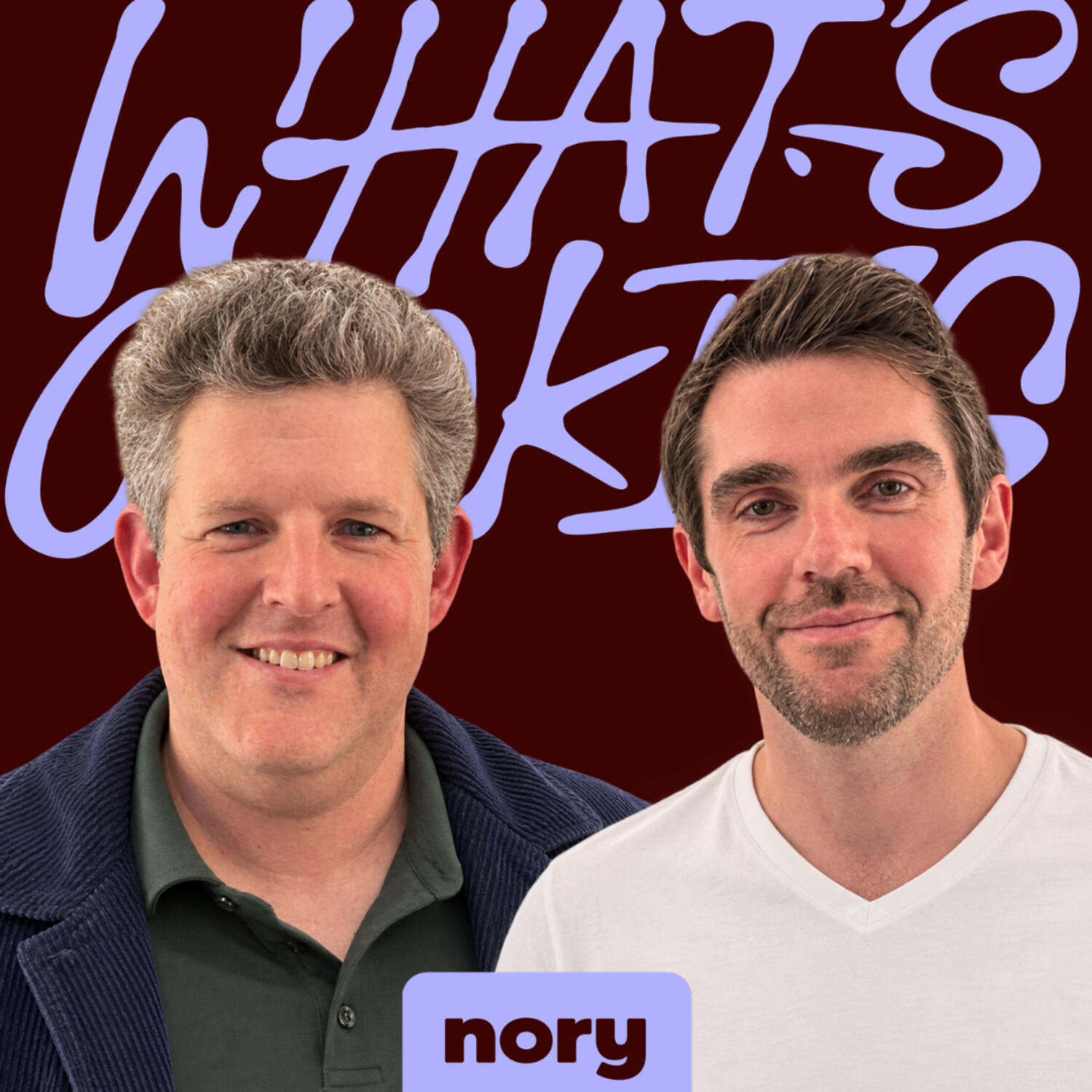
Missed the full episode with Harts Group CEO Sam Hart? Here's the bite-size cut.
Keep an eye out for our next episode of What's Cooking, hosted by Conor Sheridan, CEO of Nory, the AI operating system for hospitality.
LISTEN TO THE FULL EPISODE
Apple Podcasts: https://podcasts.apple.com/gb/podcast/the-harts-group-multi-brand-playbook-what-to/id1825066598?i=1000777855873
Spotify: https://open.spotify.com/episode/3k5D3ehnKxeVb1krbspP7D?si=664c4a5bc49e4bbf
YouTube: https://www.youtube.com/watch?v=kmuhq3S1uIw
CONNECT
Sam Hart on LinkedIn: https://www.linkedin.com/in/sam-hart-23581851/
Conor Sheridan on LinkedIn: https://www.linkedin.com/in/sheridanconor/
Nory: https://www.nory.ai/
All What's Cooking episodes: https://www.nory.ai/podcasts