
In short
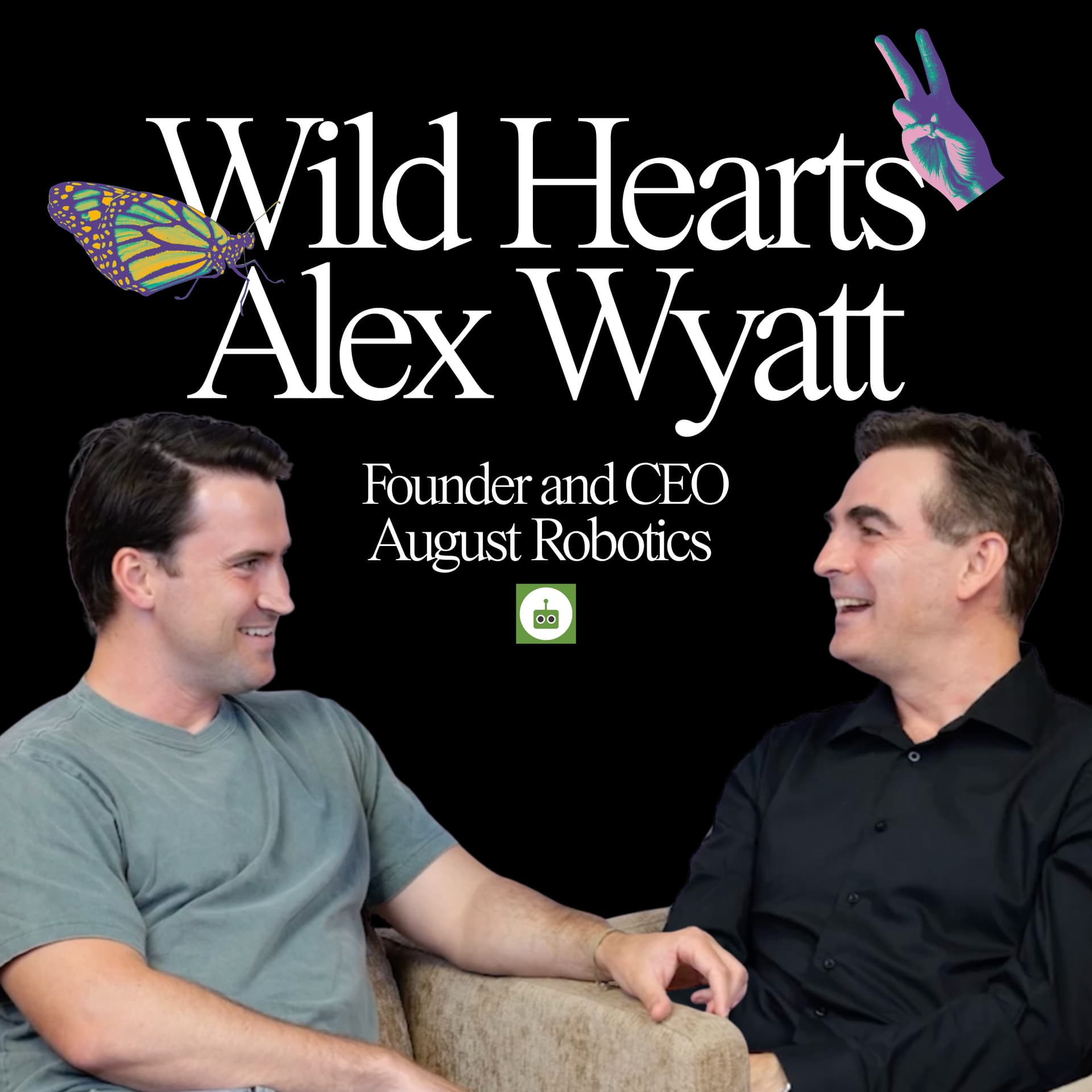
Podcast Summary: Wild Hearts - Alex Wyatt: When seven years of platform work becomes seven-week product cycles
Episode Overview In this episode of Wild Hearts, host Alex Wyatt shares his journey with August Robotics, detailing the transformation of their robotic platform from years of foundational development to rapid product cycles. The discussion highlights the challenges faced during COVID-19, the evolution of robotics, and the importance of building a collaborative robotics platform.
Key Themes
- The Journey of August Robotics
- Initial Success and Setbacks:
- Launched their first robot in November 2019 to a standing ovation.
- COVID-19 led to a 23-month period of zero revenue.
- Platform Development:
- Spent seven years building a versatile robotics platform which allowed quicker product development cycles (e.g., the drilling robot took only seven weeks from concept to prototype).
- Robotics Platform as a Game Changer
- Platform vs. Single-Purpose Robots:
- A third approach combining aspects of both general and application-specific robots.
- The platform enables a fleet of robots to collaborate and share tools, significantly reducing time to market.
- Key Features of the Platform:
- Autonomous navigation with high accuracy (e.g., 3mm).
- Fleet coordination and modular architecture.
- Ability to pivot between different tool applications.
- Market Applications
- Data Centers:
- Drilling robots introduced to automate and expedite the construction of data centers, with Google as a significant client.
- Over 50,000 holes drilled in U.S. data centers using the drilling robot.
- Partnerships:
- Collaboration with DeWalt to integrate various tools into the robotics system, enhancing the ecosystem of applications.
- Lessons Learned from Challenges
- Navigating COVID-19:
- Focus on building technology rather than chasing immediate revenue.
- The importance of understanding customer needs and market demand to avoid missteps.
- Building Customer Relationships:
- Attracting good customers through proven technology and reliability.
- Emphasis on "skin in the game" from customers, ensuring market readiness for new products.
- Vision for the Future
- Anticipated Growth:
- Wyatt envisions a future where robotics becomes ubiquitous in various sectors, executing "dirty, dangerous, and dull" jobs that humans currently perform.
- Projections of expanding robotic business segments from four to potentially 400 over the next decade.
Key Takeaways
- Platform Approach: The strategic decision to develop a platform for robotics allows for rapid product development and adaptability to changing market needs.
- Resilience through Adversity: Founders should remain adaptable and focused on long-term goals, using challenges as opportunities to innovate and improve.
- Collaboration in Robotics: Building robots that work in tandem not only increases efficiency but also creates a competitive advantage through unique offerings.
Conclusion Alex Wyatt's insights provide valuable lessons for aspiring robotics entrepreneurs, emphasizing the importance of foundational work, the adaptability of technology, and the inevitability of robotics in shaping the future of work. The journey of August Robotics illustrates how perseverance and innovation can lead to significant advancements in a challenging landscape.
For more discussions with ambitious founders and operators reshaping the world, listen to more episodes of Wild Hearts.
Written by AI. May contain mistakes. Listen to the episode to check what was said.
Transcript
Automatic transcript. May contain errors.0:00November of 2019, had a fantastic launch. Everyone's just loving it. And then all exhibitions got banned for two years. It was just an absolute nightmare. And no revenue at all. We had this robot sitting there collecting dust. Did give us space to really focus on a fundamental building block. It's like, before this pandemic ends, we're going to make this robot. I mean, the mantra in the office was, your mom has to be able to use it. This is your second term as a founder. Like, what gave you the courage to go again? I think I've always wanted to start a robot company. If I look at robotics more generally, it just feels to me that it's inevitable.
0:29One particular use case that we're working a fair bit on right now is in constructing of data centers. I mean, each data center, probably about 16 ,000 holes that need to be drilled in the ground. It takes a long time to do that. Big teams of people, many, many, many weeks. It doesn't take a robot. It takes a few days. You know, we call them the triple D, dirty, dangerous, and dull jobs. There is no way that those tasks aren't going to be done by a robot. They're going to be done better. They're going to be done cheaper. And people want them to do it. That guy doesn't want to be there operating that machine at two in the morning, semi-trailers throwing dust at him.
0:54No one wants to be doing that. How have you made it easier to attract good customers? Oh, geez, good question. In November 2019, Alex Wyatt launched his first robot to a standing ovation, and then the World Band exhibitions for two years. Most founders pivot to survive, but Alex did something harder. He held the line on a bigger idea. Instead of chasing short-term revenue, he doubled down on the contrarian bed. Not general robots, not single purpose gadgets, but a platform. One shared brain swap the tool out and ship a new robot in months, not years. Inside the office, the mantra was, your mom's got to be able to use it.
1:33Fast forward to COVID, and there was a disinfection robot that August Robotics built. It missed real demand. That sting crystallized the lesson, only build where customers are banging down the door and have skin in the game. Fast forward, the platform starts to hum. A drilling bot for data centers jumps from seven-week prototype to six-month commercial unit. August's software lets multiple robots collaborate and collapse timelines to build these data centers. A DeWalt partnership clicks the tool chain into place and the proof contracts with one of the biggest companies on earth to drill tens of thousands of perfect holes faster, safer, cheaper, while humans step out of the dust at 2am.
2:14This episode isn't just about robots. It's about a second-time founder who was hard to kill, lived through zero revenue, lived through COVID, lived through a robot that didn't hit product market fit and chose the third way, the harder way, the platform first way. So optionality compounds and revenue ramps, which looks like layered hockey sticks. If you ever wondered how to turn a six-year technical slog into a six-month commercial sprint or how to choose which customers to say yes to, this is your playbook. Let's get into it with Alex Wyatt, co-founder and CEO of August Robotics. Well, you've had a crazy six months.
2:56And so I actually just wanted to start with the highest altitude view of August Robotics over the last six months. Can you share like a summary or an update on how life has been? Yeah, it's been a great six months. And I guess the first thing I'd say is it sort of feels like the last six or seven years have been building up to what's happened over the last six months. And, you know, we're only just getting started in the last six months. There's so much more to go. But the way in which we've done the way we've approached robotics, and we can talk about a lot more over the course of our discussion today, is really about building a platform upon which you can throw off a whole lot of new robots.
3:34And that takes a long time. And so we'd spent many years building that platform. And just over the last six months, we've had some validation from the market that this approach has really worked. So we've thrown off some robots from that platform really, really quickly. And then to see from a concept to a robot to signing a contract with one of the biggest companies in the world to run that robot, and then start thinking about all the other things we can do with that platform in the future. It's been a really exciting six months. And, you know, I suppose every time now, you know, I go into a tool store or I see someone doing something, it's like, hey, I got that platform.
4:08We can put that tool on a robot. It's just completely changed that mindset now that, you know, a lot of hard work over six or seven years from a lot of really talented people to put us in a technical position to better do some really cool things going forward. It's been a great six months and we're really excited about the next six months and the next six years and what we can do with our platform in robotics. What does platform actually mean to you? Yeah. And maybe share like the highlight reel. What's been exciting? Okay. Why don't I ask the first question first? And forgive me for getting a bit geeky about it all, but I mean, there'll be listeners on the podcast, I'm sure, that probably have looked into robotics and they'd know that there's almost like a religious divide between generalized robotics, which is sort of manifested by the sort of humanoids that you see.
4:58We've all seen them on the news. They can be somewhat creepy, but incredibly useful. They can do a whole lot of different things with a human form. And they can do a lot of different tasks. But they're obviously pretty expensive because they have to build in all this redundant hardware and what have you. On the other side of the spectrum, you've got your application-specific robots. Currently, Flavor of the Month is Silicon Valley. They're referred to as minimum required hardware. So the logic being that if you want to build a robot to mow the lawn, if it just has some wheels and a lawnmower, that robot is going to outcompete a robot that not only can mow the lawn, but also wash the dishes, pick your kids up from school, make your dinner and, you know, take the rubbish out in the evening, right?
5:38Because it's got a whole lot of unnecessary hardware that is not needed for lawnmowing. Of course, the problem with the application specific robots is that they take forever to build. So you might identify a market need and then five or six later, your robot comes out. Five or six years later, the robot comes out, it's way too late, right? And so both sides have got these sort of fundamental flaws in the sense that the application-specific robots are great, they're most effective, they're cheapest, they're better, but they're too slow to come to market. The generalizable robots are not too slow.
6:07They can, in a couple of months, they can be adapted to sort of any type of use case, but they're too expensive and they're not very well adapted. So, you know, generalizable robot might choose to mow the lawn by walking, but you know that wheels are going to be more effective if you've got a hard surface. That's why we ride bicycles rather than run, right? You'll go faster. And so both of them have these sort of flaws. And so when we started all this robotics is with the conviction that I wanted to do something a little bit different, like a third way. And that third way is the platform of which you speak.
6:34So the idea being that you have a generalizable platform in the middle that has a lot of the functions of the application specific robots that are all in one place, but then you just change the tool. And what that means then is instead of being able to build an application specific robot in five or six years, you can build an application-specific robot in five or six months. So it's not immediate. It's not like swapping the tool because then you need too much generalizable hardware. It's still some bespoke engineering, but it means that multi-year process turns into a multiple month process. And so you sort of imagine it as a platform, so it's like a robot that's just got a little bit of a gap for where a tool is and everything else is the same.
7:14So for the robots in our portfolio, we've got an exhibition robot, we've got a disinfection robot, we've got a drilling robot, we've got other robots in development. You literally take one wheel off one and put it in another, essentially would work. It works from the SAID co-base, but they have different tools on the front. And so that's what I mean by a platform. And it's why we're really excited because it took a lot longer to get the first robot to market because, you know, there are a lot of shortcuts you can take when you're just doing something for one market. Oh, that's out of scope. We don't have to worry about that because of this, this, and this.
7:44We weren't able to do that. It was like, yeah, okay, well, we might not need that for exhibition, but we might need it for later. So you've got to build this generalized platform. That took us many, many years to do the engineering to require that. But now we've just got this beautiful optionality of this platform that can get from place to place to place. It's got a little gap where you put the tool and literally any tool you can see. So, you know, we'll talk later about partnerships and what have you, but, you know, we have a partnership with DeWalt. They have a whole manner of tools and they've all got a trigger.
8:14Any one of those tools, theoretically, you could put onto the robot you take away the trigger and and dewalt um dewalt's like this iconic construction brand right they build power tools they build drills they build hammers they build grinders they build all sorts of stuff like that handymen clearly you're not been doing much uh work around the house mason if you're not aware of dewalt i'm aware of dewalt i'm just thinking for the audience um because it is as you say a behemoth construction company absolutely and uh When you say you can plug in the gaps for certain tooling, what sort of use cases are you thinking through?
8:51I mean, well, DeWalt is just one example. I mean, they're in construction. And so when we're talking about DeWalt, we're talking about construction use cases. I definitely don't do that much around the house. There's a lot. You don't do much work. Neither do I. Just to confirm. I've built a lot of robots. That is true. Nothing around the house. But I do see when people come in to help us in the house, they typically have DeWalt equipment. Yeah. that gives some good affirmation. But in terms of, um, use cases, I mean, looking specifically at the DeWalt collaboration, that's going to be in construction because their tools are in construction.
9:23Yeah. Right. So, you know, really just looking at their, their skew lists. I mean, you know, they've got hammers, they've got concrete grinders, they've got drills, they've got anchor installers, they've got all sorts of stuff. Uh, any one of those things, they've got welding tools, any one of those things could be put onto a robot. Uh, and that's the exciting thing. But, you know, from our side, we're not just focused. I mean, we'll probably be focused on construction for the next couple of years because it's just so needing robots right now. There's just, there's, what is this, like this one and a half million job vacancies at the moment I heard in the US construction sector for manual labor, they can't fill them.
9:59And so there's just crying out for, same in Australia, like getting a tradie real hard. They're very, very scarce. And so we certainly see a lot of demand for robots in the construction sector over the next phase. And so we'll be focused on that. But August Robotics is broader than that. So, you know, we will in the future have collaborations with companies that may make tools for complete other industry. But right now, yeah, in terms of the use cases we're looking at, really just look at the SKU list of a DeWalt or any of their competitors in terms of power tools that they build and imagine that on a robot, there's the next product.
10:33hmm let's touch on the excitement of the last six months in a sec the general specialized like equation and then your platform as the third path the third way was this a decision you selected uh right from the beginning or have you looked at the graveyard of of like either side and been like oh that's not great like we should be building uh something different here how do you think about, well, how did you think about the evolution of the platform and was this a necessity for survival or something that you've begun with the end in mind? Yeah, probably yes and yes. In the sense we did look at the graveyard.
11:17I mean, I've been interested in robotics for decades. Wow. And so I've always wanted to do robots. Yeah. And so naturally you read about stuff, right? And just like, oh, this didn't work for this reason. This didn't work for that reason. And so you're very aware of the graveyard, right? In terms of, and also very aware of the success cases and what they've done to be successful. So I'd say that, yeah, absolutely. We've looked at that. But also on the other hand, that was the founding ethos of the company, right? So it wasn't that we started the company to, you know, build a construction robotics company or started it to draw lines in exhibitions or anything like that.
11:49No, we're going to build an autonomous mobile robotics platform that could get around. It would know its position to within two or three millimeters in a 30 ,000 square meter area. It would be able to work autonomously. It wouldn't need any human intervention to deal with unexpected happenings. The robots would collaborate. They would send messages between each other so they could all work together. That was the idea from the very, very first day. That's what we wanted to build. What those robots actually did, we'll work that out later. What we want to do is to build this platform. And once we have that platform, essentially what you're doing is you're bringing the robot to a point, a physical point.
12:26and then what you actually do at that point, that's sort of the easy bit, right? You just put a different tool there. So whether you bang a nail in or you drill a hole or you twist an anchor or you paint some paint on the floor, essentially, that's just the bit you put on the front. It's getting around, dodging things, having that level of accuracy, having that level of intelligence and artificial intelligence. I want this to my background. It was artificial intelligence way before it was trendy. I've always had the view that if you can get the robot to that position, that's the hard bit. And so we set out to build a platform that would solve that problem.
12:59And that was from the first day we started the company, from the first day I spoke to your colleague, Rick, that was always what it was about. And in terms of use cases or what have you, they all came later. Yeah. So the Star Wars analogy is R2-D2, specialized. Who is the golden humanoid? Is it CB03? Something like that. Everyone knows what I'm talking about. And then am I imagining either force, um, being customers and in this case, are the construction companies or other, uh, markets are coming to you and saying, these are the like most acute pain points or are you coming to them? How does that sort of customer, um, dynamic work?
13:37And I mean, that's something we learn from. Yeah. Uh, and you know, you, they often say you learn as much from your missteps or even more from your missteps than you do from the positive things. And, you know, we had a misstep and we had a pandemic was a really difficult time for all this robotics. Like our first, first robot was for trade shows and exhibitions. We released that in November of 2019, had a fantastic launch. And then yeah. Standing ovation. Standing ovation. Everyone's just loving it. We did, I think, pretty much a whole first year of budget in the first three months. How good, how easy is this?
14:12And then all exhibitions got banned for two years. It was just an absolute nightmare. We had no revenue at all. We had these robots in there collecting dust. But the other mistake we made in the pandemic was to sort of - By the way, I don't think you can put that down to a mistake. No, that wasn't a mistake. I mean, come on. That's just bad luck. It's just bad luck. In a hundred years, I don't think you've had an exhibition's banned. It was banned all over the world for two years. That's not a mistake. What was a mistake is we got sort of distracted from that strategy and we never had the idea to build a disinfection robot.
14:45It was always about these sort of dirty, dangerous and dull tasks in the direction of sort of infrastructure and construction and these sorts of things. I mean, even an exhibition, you're building a little city for a trade show. It's sort of construction. That was always our area. And we sort of got distracted by all of the noise around COVID and viruses and what have you. Oh, well, we can, in that little gap for the tool, instead of putting a hammer or a drill, we'll just put a UV light and do some disinfection, right? And we went to the market with that, right? Rather than waiting for the market to come to us and discovered that our perception of what was useful for the pandemic wasn't, you know, for hotels or what have you, whoever the target customers were, wasn't really their perception of what they needed for the pandemic.
15:33And so that robot was not super successful at all. Not because it wasn't a good robot. It was a good robot. It just didn't hit the market need. We also got a little bit unlucky in that at the beginning of COVID, it was all about surfaces and all that sort of stuff. And by the end, it was about masking and quarantines and what have you. And so disinfection wasn't really a thing. But the message we got from that was that you really want the people that are going to be using it to be banging your door down and ideally to have some skin in the game from one of them. So someone that's going to say, all right, I'll buy the first hundred units.
16:02I believe so much in this idea. I'll buy the first hundred units. or someone that's like, well, I really want this to happen faster. I want a year of exclusivity. Let me pay you X amount of money to do that. And so to me, you can have, you know, we're really good at building robots. We're not going to know as much about all these different little markets as the people that have been in them their whole career, right? So about hotels or about building a data center or about building a warehouse or whatever, there are people that are doing this their whole lives. So you've got to take your lead from them.
16:30And we're very keen to do that. Now, fortunately, now that it's sort of getting out there, like, you know, our drilling robot took us seven weeks to build the prototype of this platform. It was amazing. We got a commercial robot out in less than six months. And so that's starting to get known. And so we have had quite a lot of people say, well, hang on, we got this pain point in our industry and we use this tool and we keep wearing it all this. Can you put that tool on a robot? So, yeah, well, we could think about that. And let's have a chat about what that will look like and, you know, what's the nature of the tool?
17:00What's the nature of the task? And so from this point forward, I think we're very much driven in the latter way of which you speak and waiting for, well, not waiting for, but really heavily weighting those use cases where someone who's been in the industry their whole career or a company that's been doing that basically since the company has existed is kicking down the door demanding it. You're going to weight that more heavily than one where you don't have someone like that demanding a product of that ilk. It sounds like a massive learning in what a good customer looks like. How have you made it easier to attract good customers?
17:33That's a really good question. I guess just by achieving what we set out to achieve with the platform. So if you can show, I mean, one of the things that we spoke about with this latest robot that's been really successful, this sort of downward drilling robot, was that even though it was a new product, we were able to very credibly go to the market and say, this might be a new product, but it's two very mature technologies that have come together. So on the August Robotics side, that robotics platform had already done, and I'm using US units here, but it had already done like 250 million square feet of exhibition space, which is a phenomenal amount.
18:10Like it's just, it's a lot of area, right? It's well over a million points. It had already done all of those, right? And there's no inaccuracies. There's no problem. We've had hundreds of exhibitions that have been built off the basis of those marks. That's the definition of a proven technology. like years and years, millions and millions and millions of square feet, you know that it works. It gets to the right spot, right? And so that's a proven technology. Equally, the drills that we had from DeWalt, I mean, they've been drilling holes in the ground for decades. They're pretty good at drilling holes.
18:40They've got like anti-vibration, the drill bit doesn't lock, like all the sort of engineering they've had to do for many, many, many years to make the drill work for a human. It's also a proven technology when you put that drill on a robot. Humans don't like vibration. Robots don't like vibration either. Humans don't want to get like thrown off when the drill bit stops and the drill keeps spinning and the human gets thrown. Robot doesn't want that either. So a lot of the things that make a tool easy to use by a human also make it easy to use for a robot. And so we're able to go to the market and say, yes, this is a new product, but you've got two proven technologies being merged together to create something that gives you a whole lot less risk than what you'd normally have with a new product, which is essentially why we're able to sort of go from, you know, launch to contract with, you know, enormous customer, you know, in a matter of months after launching, right?
19:30You wouldn't have been able to do that had it just been completely new, right? There would have been a trial, there would have been this, there would have been that, but because there's so much credibility on both sides of that, you're able to move forward and therefore you're able to attract those customers, not just for that use case, but for any use case with that same logic. And as we build our expertise and our track record in more analogous use cases, then that just becomes even stronger. So I think that's the main way you sort of make yourself attractive to good customers. And the skeptical mind would say, well, it's been refined, like this process has been refined for over a hundred years.
20:09We know how to drill. Like where's the aha moment of actually robots are so much better and more useful. How long you got? I mean, look, let's just, I mean, we can take that as just one example, but you know, I'd hasten to add that it's not just about drilling. I mean, we can make exactly the same arguments about pretty much any case study, but let's talk about drilling as an example. So, you know, the first one's obviously just labor availability. I mean, they're just not finding enough people to do things quickly enough, right? So, you know, One particular use case that we're working a fair bit on right now is in constructing of data centers.
20:49I mean, each data center, probably about 16 ,000 holes that need to be drilled in the ground. It takes a long time to do that. It takes many, many, many weeks. Big teams of people, many, many, many weeks. It doesn't take a robot. It takes a few days with a fleet of robots, right? And so there's just not the ability to get enough people that are willing to, like on a drill for a large amount of time. and it's their full-time job. There's just not that many people. It takes a very long time. Robots will work, you know, they'll work around the clock and they'll do the work a lot, lot faster. So there's definitely a part of, I suppose, fixing the labor shortages that we have, you know, for manual labor, you know, right throughout a lot of countries right now.
21:31We have it in Australia, they have it in the US, they have it in Europe, they have it in Japan, they've got it all over the place. So, I mean, that's the first one. It's just availability. But then there's also a whole lot of other benefits that you don't actually see until you start getting into it. right? So, for example, even if you mark a position of a hole exactly right, if someone drills in manually, they're not, I mean, I know when I'm putting my pictures up on the wall for at home, you know, it'll go in on slightly the wrong angle, right? And if you put the drill in on slightly the wrong angle and it's too much, then when you're screwing something in, the screw's not right, you have to re-drill because the angle's not right.
22:04With the robot, it's always perpendicular, 100%, like flat out 90 degrees. So, you're always accurate. And then in terms of, I mean, another example is the depth of the hole. So typically you'll drill a hole and then you want to put an anchor in. If the hole's too shallow, then the anchor will protrude above the surface. If the hole's too deep, then it goes too far, far deep. And the very advanced technology in the manual drilling of how you assess depth is there's a piece of tape on the drill bit and you just sort of, the guy just has a look and sees when it is roughly about the ground. So unsurprisingly, there are a lot of holes that are drilled to an incorrect depth, which means they have to be refilled and redrilled or what have you.
22:40With a robot, again, you can very precisely measure your depth. You don't have to have that. So you're looking at speed, you're looking at labor availability, you're looking at angle, you're looking at depth, you're looking at cost. Because if you're doing something in a few days rather than a few weeks, it's obviously going to be a lot cheaper. There are a lot of benefits to using robots to doing construction tasks. And we haven't even started talking about collaboration between robots and collapsing different parts of the workflow. Because if you're sharing information between robots, you have different sorts of robots doing different tasks immediately following on from the other, rather than in a manual world, you've got to wait till all the holes are drilled before you start filling it with anchors.
23:16Because otherwise you don't know if you've missed one or what have you, a robot can keep track of all of that or a robot system can keep track of all of that. And so there's a lot of benefits. Can you share an example? Help us to imagine what that collaboration workflow looks like. Yeah, sure. I mean, so imagine you're putting up a lot of pictures on the wall. Like I'm looking next to us here in the studio, there's a lot of pictures on the wall, right? Yeah. Someone has had to drill a whole lot of holes, right? And then they've had to put anchors in each of them. Now imagine that you can't see from afar whether those anchors are in or out, right?
Read the full transcript
23:45Like you can probably see that in the wall, but you're not going to do that in a warehouse or what have you. So if you, you're going to have to drill all those holes first, then you come back and install all the anchors, right? Then once the anchors are all installed, you bang the pictures in, right? And you screw them in. If you're doing it in a robot way, once you've drilled that first hole, you don't have to wait for all the holes to be drilled before the anchor installing robot can come back. You can say, right, I've drilled a hole at X coordinate 52, Y coordinate 12. That one is now available for an anchor.
24:15And so let's say you've got a, I don't know, a five-week process to do the drilling and then a four-week process to do the anchoring. Even if you're the same speed, which you're not, you're five weeks for the drilling and then you're four minutes for the anchoring because that robot can follow along. if you hear what I'm saying. Because as long as they're on the same system, right? And one of the things we spend most of the pandemic working on was this collaboration system so the robots could speak to each other and share information. Because what that gives you is the ability for different types of robots to collaborate on doing different types of tasks.
24:46With August Robotic? With August Robotics. Okay. Yeah. The other way that's really beneficial is you can have multiple robots of the same type that collaborate. and that essentially gives you infinite speed. So for our exhibition robot business, you show up in Las Vegas like most, some nights during the summer or the winter or what have you, we don't have one or two robots running because they just need to get it done pronto. They just need to print it all really, really fast because they don't want to pay extra rent to the Las Vegas Convention Authority. They just want to go. So we'll have 10 robots going and they'll all be doing the work.
25:23And then if you put five on and the estimated completion time is, you know, four o 'clock or 4.41. You put another robot on. Okay, updated. It's now 3.54. You put another one on. All right, 2.51. You can see exactly when it's going to finish. And then at the final minute, they'll do the final, all the nine robots or 10 robots, they all finish at exactly the same time and then they all wander over to the truck, right? Because they're talking to each other. They've allocated that work such that they all finish at exactly the same time in the most optimal manner, right? And that's just with robots that are of the same type.
25:53Once you have that, and then you mesh that with robots of different types where there's dependencies between tasks, like the example before with putting your pictures up on the wall, then you can get some really good power in terms of collapsing different parts of a construction process into one by virtue of this collaboration that we have on our platform, which is, you know, we're proud of a lot of things, but super proud of that robot collaboration piece. and it's not, it was pretty hard to build. It took us a lot longer than we thought, but we're really proud that we pushed through and got it done.
26:26Maybe it would be great if you could sort of reaffirm the advantages to August Robotics on the third way of the platform with the example you just gave. The collaboration is part of the platform, right? And so ultimately, if we're, you've got multiple Lionel robots, we call them Lionel robots because they make, well, they were originally going to make lines on the ground. We call the Boris robot, the drilling robot, because it bores holes into the ground. So we have sort of bad jokes for each of the names of our robots. But ultimately, that fleet management system is a key part of it. So just as much as you say, all right, the robot can get from one point to another, the same fleet management system is used for the Lionel system, as it's used for the Boris system, as it's used for the disinfection robot system, or even if you've got multiple of those robots all working together.
27:15It's exactly the same fleet management system. And so we actually see that as the most important part of the platform of which we speak. So when we talk about the third way, not just a third way to get from one place to another and put different tools on the robot, but basically taking one minute to say, right, you've now got full robot collaboration, right? So, you know, if you were to build a bespoke robot to, you know, hammer nails into a floor and you wanted to build some collaborations that you could have five different robots all hammering nails at a different time. You then need to build a whole new collaboration software in order to actualize that.
27:48We get that done in one minute because the collaboration software is already done. It's already proven. It's already been used on 250 million square feet of area in one area. We've already done 50 ,000 holes in another in a couple of months. That's all proven and it's all there. And so you can just plug straight into that platform. And that gives us enormous advantages as we move forward, particularly in use cases that demand speed. on construction. I'm yet to come across a construction project that's not behind schedule. So, you know, speed's pretty important. Even if they're not behind schedule yet, if they can finish early, they're going to get plenty of bonuses.
28:22So everyone loves speed. Exhibition, like, yeah, I mean, they all want to compress as soon as possible, you know, into as smaller time as possible to set up the exhibition because you pay rent for the exhibition center, not just for the days where Mason comes and talks about his podcast, but, you know, also in terms of the setup. So the more they can constrain that, the better. So speed is a huge part of customers' reasons for wanting to embrace robotics in the modern world. So having that fleet system, that collaboration between robots is the way in which we address that speed pain point. And shifting gears a tiny bit, data centers is a pretty clear tailwind.
29:00Yes. It's obvious to say that I think it's what,$500 billion has been dedicated to the US for infrastructure generally, but very clearly companies like Meta, Google, you name it, have openly dedicated tens and tens of billions of dollars. is it just obvious in hindsight that you found yourself in data centers maybe share the journey of what it's been like working with maybe one of them? Yeah, yeah, absolutely. Yeah, I mean, I think I saw an article in Bloomberg about a year ago, maybe a little bit less, six months ago, was saying that in 2025, it was expected in the US that there was more expenditure on constructing data centers than on offices.
29:45And when you sort of think back to, you know, growing up and whatever, you're always seeing the latest office building go up in central Sydney or in Melbourne, and there's a big skyscraper and there's this and there's that. It's a bulwark of the economy is building offices. And yeah, it's gone down a little bit because of COVID, but commercial construction for offices has been a huge part of the economy for as long as any of us can remember. And the the concept that we're building, spending more on building data centers in 2025 than on building offices in the US just boggles the mind. That is actually quite insane.
30:18And even three or four years ago, like the two lines are massively apart. Now they've crossed over for the first time and that trend's only increasing. And so I think people are probably, they're just underestimating what an enormous sector this is, like in the modern economy. And you give credit to the US government. I mean, they saw that really early. That 500 billion you're talking about, like Project Stargate. I mean, that's only one of multiple commitments. A lot of the stuff is outside of that. I think there was a McKinsey report recently that spoke about, they talked about it as a$7 trillion race or something.
30:52Now, you know, that's obviously over multiple years, but you can cut it any way you want. This is a really big industry. And so in terms of how we got there, I think a lot of construction companies in the US have woken up to this just in the sense that every second new order they're getting. Take our money. We need your tools. I just want a thousand drills. Well, by the way, what are you using these for? They're onto that a little bit. And so it's, whilst I think the general society hasn't yet clocked onto the fact that how much of an industry this is, construction companies have, because they've been supplying the boom as it's grown.
31:32And so if you're working with construction companies to address their pain points, it's only natural you're going to be pulled into the biggest area of growth in their business, which is data centers. And so I think it was a pretty natural thing for us once we started moving in the direction of construction and construction is such a perfect fit for what we have as a robotics platform. I mean, a platform, it's good a lot of things, but primarily we talk about accuracy, being really accurate in a really large area. We talk about autonomy, talk about that collaboration. You know, as we spoke about before, all of those things are really important for, you know, you don't want to, if you're inaccurate in construction, your building falls down.
32:07If you're not autonomous and you need people to look after your robots, when you're not addressing their labor shortage concern. And if your robots aren't collaborating, then you can only go at the pace of one robot. It's not really interesting to them. They want speed. And so the things that we're good at are the things that are really in demand in construction. And so once we went into construction, it's pretty clear that you could end up in data centers because that's where all their growth is. So looping back to what's exciting about the last six months, can you share an example of a customer that you recently signed or started working with?
32:39Yeah, I mean, you mentioned before there's a lot of the big companies in the US building a lot of data centers. We've been really fortunate to be working with Google. And I mean, it's a bit of a wild tale. I mean, they're actually the only company we've shown a demo of our robot to. We had originally planned to sort of make an initial run of a certain number of robots, and we were going to put them out in the market, get a little bit of feedback, and then come back with a second version later in the year. They were so enamored by the demo that they saw. They were like, well, we want all of them.
33:14So our feedback from multiple different sources, that plan sort of changed. But they've been a terrific counterparty to work with. They've trusted us with pretty much all their data centers in the U.S., Uh, and we've only really been working. I think we did the first project at the end of July. Um, so it's only been a few months and we've already drilled like, I think 50, 50 ,000 holes or something like that for them. And that has underlined, um, you know, underpinned them trying to go a lot, lot faster in terms of building data centers. And this is, you know, it's common to, to Google and everyone else.
33:49I mean, Google, fantastic company. They've been the best client. but you know all of them are trying to put up these data centers as quickly as they can and so and you know with high quality and with high safety and so anything that they can do to do this faster is obviously really attractive to them and then the other thing about google which you know really respect is they're just all about safety so you often see a bit of a you know a conflict between speed and safety for google like safety is the absolute priority speed is really important to them financially, but they never compromise on safety.
34:24And so the idea that you don't have people, you know, having these really heavy pieces of equipment, like right near their shoes and, you know, they could drop them, they could get shaking, they could, they could drill through their foot. Like there's all sorts of things that you can do and that now people are nowhere near the, near the drills and it's all done by robots, um, is something that, you know, I think really appeals to them from a safety standpoint. So they've been terrific thus far. I've really enjoyed the journey with them. And we do see opportunities to automate other parts of the data center construction process together with them as well.
34:58Right. Congrats. They're a great client. And Anthropic platform, one of the fastest revenue ramps in history. And the reality is that there are billions of computers around the world already distributed with users on the other side of the computer who are ready to use their products. that isn't the case with robotics. And there is this journey of, I need to build the thing. I need to strike the contract. I need to do a pilot. I need to build trust. I need a ramp for that specific use case. I need to ramp up other use cases so that we have collaboration within. And so I think it's fair to assume that we won't see a revenue ramp like Anthropic.
35:38And I think one of the failings of the graveyard era is the promise that there could be a huge revenue ramp, But the reality is that we're in the physical world. And so I'm wondering, what are the enabling technologies that you have control over or the enabling technologies in the market that will help accelerate the revenue ramp, help accelerate the distribution of robotics? Yeah, I mean, I suppose I'd challenge it a little bit in terms of the inability for really fast revenue ramps. I mean your point is valid in the sense that you know a software company like if you're selling ads online you can literally ramp that to everyone on the internet you know the next day and you're not gonna be able to do that with a robot but I think we actually feel really optimistic about the pace of revenue growth because it is harder to get in so it's a lot easier to write a you know piece of software to do something like barriers of entry are a lot lower than to build a robot to be able to actualize physical tasks.
36:38And then on the basis of this platform, and when we're looking at, you know, like our Boris business is reaching a point of inflection where that's sort of going to, you know, they talk about a hockey stick, there's a bit of a hockey stick, but we almost look at it as multiple hockey sticks layered on each other. Because once you've got the platform, you can throw off a new business every three or four months. And indeed, we don't even need to, it's a six month process to do that. It doesn't have to be sequential, one robot, six months, one robot. We could build three in six months. It's just a process where you have to iterate prototypes.
37:05We just build three off the basis of the platform. And so if you've got all these different businesses, all hockey sticking, and you add them all together, your end result is a pretty steep revenue wrap, right? Which is going to, in many ways, be a whole lot steeper than software companies with competitors and what have you. And so I feel as though the proposition that you necessarily have to grow revenue slower in a hardware robotics company than in a software company, I challenge that. I challenge that after you have a platform. before such times you have a platform, but once you have a platform, I think, and that's, you know, ramping back to your very first question about, yeah, where's your head at right now?
37:41Sort of feel like we've spent six or seven years building this really cool piece of technology. And now the fun starts, right? This is about like, how are we going to use that? Not just in terms of ramping revenue, but in terms of doing more and more and more useful things in the, in the society. And it's, it's not going to be linear. It was just a whole lot of investments. It gets where we're at now. And now that inflection point is not just an inflection point for each little business, but layering multiple inflection points all on top of each other. So we feel optimistic about the possibility of ramping revenue really quickly.
38:12But it's not going to be one business that generates$2 million of revenue, but it might be 10 different robot businesses that all generate $300 million revenue. There's your fast revenue ramp. But it's just a bit different, if you get what I'm saying, in terms of the way in which you do that, because there are physical constraints. Yeah. I mean, it's very similar to eucalyptus and generally speaking, sort of the house of brands where there'll be some use cases that just explode and there'll be others which are enabling that one thing to explode. And they're accumulating advantages along the way so that each build layers on top of the next.
38:44Exactly. And becomes easier and easier and easier. Exactly. And I think, yeah, like the eucalyptus story, as you build more things, more of it can become generalized into your platform. And so therefore the next task is going to be shorter and shorter. So what might be a six month process now might be a four month process later. Yeah. The other thing that you do get with the revenue stuff is that, I mean, certainly in our case, we look at our robot collaboration as a bit of a competitive moat in the sense that if these robots are going to be talking to each other, and then that is going to collapse workflows, No one's going to use a robot from outside the ecosystem because they're not going to be able to have access to that particular benefit.
39:22Right. And so that's another way in which you scale revenue really quickly is when you build, you know, Apple's done it. I think, you know, all the social media companies many years ago did it. If you can build these sort of network effects such that it's really very difficult to come off the system or, you know, customers are losing a lot of benefit. That's another way in which you grow revenue quickly because everyone's within that same ecosystem and is incentivized to remain within it. And so for us, that's an important part of the story as well. I'm curious just to learn about, to the extent that you can, some of the decisions from the platform point of view that you look back in hindsight and you go, damn, I'm glad I made that decision.
40:01Oh, we can think of a few opposites as well that we had to redo. But look, the main one that we often talk about in that regard is in terms of, it's getting a bit techie, but in terms of localization. So, you know, we're not the only robot company out there. We're not the only robot company that wants to localize to a high degree of accuracy. All the others use essentially off-the-shelf surveying equipment. And, you know, we obviously considered that really deeply. It's really tempting to use an off-the-shelf surveying equipment because it's already there. We took a decision early on to build our own.
40:33And we did that for a couple of reasons. The main one was they're really expensive. I mean, some of these high-end total stations that you need to run some of the competing robots, like$150 ,000 for one of them. What's tempting about it then? What's tempting about it is that you don't have to develop a whole new product that's already, you know, I mean, the surveying industry has been doing that for years. They've built these things to be able to, you can just put your robot there and it'll tell its position within three millimeters. I mean, it took me years to get to that point without one. Yeah.
41:01Right? But what we decided to do is essentially to build something similar to the surveying equipment, but strip out all of the unnecessary functionality and just do a point-to-point localization, which means that we can do that a lot, lot, lot, lot, lot cheaper. And also we can do it in a way that doesn't rely upon continuous connection between the robot and the total station, which means you're robust to a really busy environment. So, you know, all the competing robots in the industry, if a robot, you know, if Mason stands between the robot and its total station, the robot just sort of loses the plot.
41:32Can't deal with it. Spaz is out. I need to check in 300 times per second, or I don't know where I am, right? Or if the robot goes behind a pillar and the total station's the other side, again, just loses it, right? And these days, construction sites aren't that clean. There are people walking around, there are forklifts, there are pillars, there are heaps of obstacles. And so we took the decision if we wanted to be robust to busy work sites, we wanted a sort of a point-to-point system, and the total station wasn't the optimum solution for that. All these sort of, they call them RTS, robotic total stations, because they're checking in so often.
42:07So both for cost reasons, so that we could include them as part of our system rather than sort of directing someone to like her and say, go buy one of these things for 150 grand, both for cost reasons and then also for this sort of point-to-point robustness for in busy work sites. Yeah. That's the best decision we ever made. Now, you know, there would have been times on the journey I would have said, geez, we should just use the damn total station as it gave the wrong result again and again and again. And you sort of work through that R &D process. But now that we've come out the other end, we are providing as good, if not better accuracy than these total stations.
42:40And we're doing it in a much more effective way and a much lower cost. Obviously COVID was a delay, but perhaps can you share a bit more about the agony of that experience? And like it's taken longer than you'd hoped to begin with, much like every other startup in history. but I'd love to learn a bit more about the battle-hardened version of August Robotics and what you had to go through to get to this point. I mean, you have a lot of founders that come on your podcast. I don't think any of them would launch a product, go really well, it's a nice revenue coming in, and then they have 23 months of zero revenue after that.
43:18That's not on any of the playbooks about how you're supposed to run a startup. And, you know, I think we were, I mean, it was really hard, but we're also really fortunate to have, you know, I think really supportive investors that, you know, were aware of what happened and were willing to support us through. I mean, I think part of it also comes, you know, personally as a second journey, like, you know, this is the second time founder, you have a little bit more perspective. I'm not sure I would have been able to handle that first time around. Like it's a pretty severe curveball. You release your product and then your industry gets banned.
43:51So yeah, it was really hard. The hardest thing about it was we didn't know when it was going to end. And I think a lot of people in the community, you know, we sort of put those COVID years to one side and sort of forget they happened. But if we sort of take our minds back to there, you know, every three or four months, it's like, oh, it'll end now. And so then we'd gear up to start our business again. And we'd, you know, we'd get all the robots out of storage and then Omicron had hit. And then, oh, you know, and then something else had hit. And so it was, if we just know one, there's like, well, you're not going to get any revenue for 23 months.
44:21I think it would have been a whole lot easier than thinking every six months it's going to end next month and then it didn't and so that was really difficult yeah that's agony that is such agony it sucked on on the positive side I mean clearly I wouldn't want it to happen again yes but if you're sort of looking for silver linings on the dark cloud what it did mean is we had this awesome team of engineers and they would have been I think you know distracted in terms of serving these customers and making the robots work and what have you in the exhibitions field. They couldn't do that. So I was like, all right, what are we going to do?
44:53Because at the time when the exhibition started, we had exclusively a service model. People tell you all the time, you know, robot as a service, what have you. One of the main reasons people do robot as a service is it's much easier to get to market faster if your audience is someone with a PhD in robotics to operate it rather than a general member of the public. It's a lot harder to build it. And so essentially when it became clear the pandemic wasn't going to go away after a month, like we all optimistically thought at the beginning, that was the task. that we doubled down on. He's all right, before this pandemic ends, we're going to make this robot, I mean, the mantra in the office was, your mum has to be able to use it, right?
45:25Because prior to that, there was probably four or five people who could run the robot. And you know, the robot would do a great job, clients were all delighted. But if we didn't have one of those four or five people there, you know, panic stations, right? And so what we were able to do is it did give us space to really focus on a fundamental building block, which then unlocked a lease model for our exhibition business. so the vast majority of our business now is lease business. So people just grab the robots, we give them a training course and they run them. We're not there. We're not doing service.
45:53We don't have to drive trucks. We don't have to fly people around. We just send the robots there. We have some wonderful clients at all these exhibition centers around the world. If they have a problem, they call up. But ultimately, we unlock that lease model. And I'm not convinced we would have had that level of focus to crack that really serious problem had we not had the benefit of the pandemic. the other big thing we did in the pandemic was the fleet system, so the robot collaboration. So we came out of it with a legacy. A lot of startups in our position might not have had that luxury. We had some supportive investors that got us through.
46:25But yeah, I hope that doesn't happen again. Fair enough. Me too. For humanity's sake. Well, I'm not talking about COVID. I'm just more talking about losing all the things. I know. But yeah. Clearly, if we're talking about it for humanity's sake, I mean, there are a whole lot worse things that happen in the pandemic than - Oh, sorry. Yeah, of course. I can't be using a little bit of revenue. Yeah. And I obviously know that this is your second time, second term as a founder, if you will. What lessons were you leaning on to keep the team motivated when it is so stop start? Like it's almost as if there's that rule of like, generally speaking, if you're going to let some of your team go, don't do it in like 10 % and then 10 % and then 10 % because it just destroys morale.
47:09And in a similar way, it's like, guys, we're a month away, everyone rally, and then stop, start, stop, start, stop, start. Like, how did you sit with that as the leader? Yeah. I mean, it was obviously it was difficult. We were fortunate in the sense that given we'd only launched the product about three months before, we didn't have a whole heap of sort of commercial infrastructure in place. you know, the classic playbook and, you know, subscribe to that playbook is your first sales should be done by the founder and the key management team and what have you. And so we were still very much in that phase when the pandemic hit.
47:44So we hadn't hired a sort of a big sales team or, you know, a big commercial deployment team or anything like that. It was essentially, we were doing it ourselves and we were learning, you know, we had some engineers that had built the robot that would fly it to then run them. And so it was, it was all still our core team. So it wasn't really that we needed to sort of, cause there's no way you could have sustained a commercial team through the pandemic? Or were they going to be selling? So we would have had just sort of, you know, I think we had one and that was sort of pretty obvious, right? That that had to sort of end when the pandemic became quite permanent.
48:14But the majority of the team was the team that had worked on building that same robot. And so we're able to motivate them. It's like, all right, well, we did build this really cool robot. We did have a success. Like everyone loved it. We know we can build really cool robots. Let's now judge ourselves on our technical progress rather than our commercial progress, because the commercial progress right now, there's not much we can do about it. We didn't create the pandemic, you know, it just sort of happened. And so we were able to say, all right, how are we going in terms of our progress towards this?
48:42You know, your mom has to use it. How are we going in terms of our progress in terms of the robot collaboration? What is this going to open up in the future when all this mayhem ends? And so we're able to sort of focus back in on those sort of micro wins, if not the commercial ones. Now, of course, that was easier for most of the team than it was for me. You have to go to your board meeting and explain, again, that you had no revenue for the last six months. It was, and probably didn't have as many engineers join the board meetings as you would normally do in other circumstances. But yeah, that's something I was able to sort of carry that load and almost ring fence our engineers from that and have them focused on technical milestones rather than commercial ones.
49:22And I think I read, maybe I'm wrong, but I think I read that you're launching office in Australia. Yeah, absolutely. Why are you returning to Australia? I'm really excited about that, first of all. I mean, the plan is we'll be doing that, I think, in January. Okay. When we open that up. We've never had people here. We've got a great client here. Shout out to ICC Sydney. Awesome client that have been running our robots for a number of years. The line of robots running in the exhibition centre in Sydney. but we're building a data analysis, artificial intelligence and data security center. And we were, you know, looking for a variety of locations where we'd put that.
50:04I mean, the pros and minuses of a lot of places, I mean, the US would be pretty obvious, but, you know, we've got a lot of manufacturing and production in China, like most companies do, you know, building sensors and supply chains and what have you. We were really attracted to Australia. You know, one of, you know, we've got an obvious connection here, very attracted by talent. or attracted by the fact that it's in the same time zone as our factory where we build things. Federal government and the R &D subsidy, that doesn't hurt either. And so, yeah, I mean, we're going to be building an office here for a lot of software engineers essentially to work on pulling all the data out of our robots and then using that data in a couple of different ways.
50:44So one is in terms of the obvious one, in terms of data analytics and just making a lot more of it than we do right now. Right now, we just generate all this data and we don't really look at it. I mean, we look at a bit, but we sell 50 ,000 holes. But in terms of there's extra layers of data that we can get a lot more insights out of that we haven't really looked at thus far. So clearly, there's a really big piece there in terms of leveling up our game in terms of data analysis. And then the other big thing with data is you put that into AI models. And so we've got some fantastic things that we can do.
51:13I don't want to talk about them too much, less that they're all ideas at this point. but that using artificial intelligence to increase efficiencies across the whole system, using artificial intelligence to essentially enable the robots to set themselves up. So rather than having to train someone, if the robots are talking to the individuals and telling them what they need, you don't even need a training course. Just the robot will set up and set itself up with some help from the human. And so there's all sorts of different things that we can do with AI. and we decided that, you know, putting that in a deployment office or what have you, sort of divert the focus a little bit.
51:50We wanted to just start maybe sort of eight or ten engineers and they're just sitting there working on these data programs, this problem, working on AI and going really deep into that aspect of things and something I'm really passionate about, artificial intelligence grad from Melbourne Uni back in the day and yeah, really excited to make use of what is a burgeoning scene in Australia for artificial intelligence. And we think it's a perfect location and excited to get started in January. Speaking of back in the day, when did you build your first robot? Well, for all this robotics. No, you personally.
52:25Oh, me personally. Oh, man. Wow. If you could call it a robot. My first robot was I had a friend in Sydney that had an apartment. and I can't remember what it was, Bronte or something. And he had a pigeon problem on his balcony. Okay. And so these pigeons were pooping on the balcony all the time. And he tried spikes and lots of stuff. None of it sort of worked. And the only thing he worked out that he could get rid of these pigeons was that he'd take a water pistol, like one of those super soakers, and he'd shoot at the pigeons. Wow. And that would scare them away. And, you know, it was ethically okay because there was just water and the pigeons weren't damaged in any way, shape, or form.
53:01But then he would go to uni for the day and he'd come back and no one was firing the water pistol. So there'd be bird droppings all over his balcony. And so at that point, we came up with the idea of essentially attaching a water pistol to a bucket of water on his balcony with a motion sensor. And every time it detected some motion outside, it would like spray outside the balcony and front away all the pigeons. And so if you could, I think you can call that a robot. Without a doubt. We essentially had a robot firing water pistols at pigeons on a balcony in, I think it was Bronte or something like that back in the day.
53:35So that would have been my first robot. And I guess to take you back to the beginning of August Robotics, what was the first robot that you guys built there? First robot we built was essentially we bought like a little base on the shelf and we had a big table. There were four of us that essentially built the first robot and we had a big table and our four tables were put together and just this little base that used to go from Marshall's desk to Patrick's desk and from Patrick's to Xiaodin's and we then measure its distance. And essentially it was, you know, that was about, I mean, the whole localization system that we built later will tell you where your robot is.
54:12But if you don't have the fidelity in your wheels to be able to move to that required level of accuracy, then knowing your accuracy is irrelevant. And so ultimately the very first robot we built was essentially some piece of metal on four wheels and trying to tune this locomotion. So it had 360 degree movement at a really fine level of fidelity to get from one person's desk to another. We had little targets on the desks and they'd move around. And, you know, obviously we did on the floor as well. But the first robot was very, very, very basic. Just a couple of wheels and a metal sheet. There's a very clear, like, arc in your life with robotics, but, like, what gave you the courage to go again?
54:50Oh, geez, that's a good question. I think I've always wanted to start a robot company. Yeah. So, I mean, I always saw... Since shooting pistols. Shooting pistols, indeed. shooting at pigeons um i always saw robotics as the as the main use case the best use case the killer app for artificial intelligence in the sense that i mean i'm as excited as anyone about ai and generative ai and what have you but the reality is that all of that is still in the digital world there's no you can't bring ai to the physical world without a robot and equally a robot isn't a robot without artificial without artificial intelligence i mean it's a what's a robot without artificial intelligence.
55:29It's like a remote control car. You know, we've had them for many generations. A plane. I would argue a plane is partially a robot ready, right? In the sense that - You've got, yeah, auto. Autopilot. Yeah. Yeah. I mean, in any categorization, there's always things on the boundary. Yeah. And yeah, I think a plane, absolutely. Yeah. It's halfway in between, you know, a piece of equipment that's operated by a pilot and a robot. Yeah. Because they do go away. That's a robot. But yeah, I've always thought that as an artificial intelligence enthusiast from when it was desperately uncool and my Greek mother was, why don't you do something useful with your life, this silly artificial intelligence thing.
56:10I always thought that robots were that killer app. I always wanted to be part of that. And it's been waiting for the right time. So I had a great experience in renewable energy. In my first startup, absolutely loved what we did. I did actually have two ideas at the time. So one was a renewable energy business with a really good friend of mine who was an expert in renewable energy. The other one was a robot business. But at that time, it was just too early. So I did talk to a few people about it, potential investors. And, you know, their first response was, you know, R2, D2. They weren't really taking it seriously.
56:43There wasn't much data. The sensors were expensive. People just weren't really ready for robots. I mean, we're talking, you know, sort of 15 years ago. It was just too early. The economics didn't stack up. So I was sort of, you know, I mean, we're really happy. The company we did last time was great. It was a great experience. We had good success, worked with a lot of great people, built a really good company. But yeah, I mean, even then I was trying to start a robot company. And so it wasn't the courage to start again. It's like, is the time right yet? Is the time right yet? Oh, I think the time might be right.
57:13Let's do it. So it was more the opposite thinking. I've always wanted to do it. And it was just about waiting for the world to catch up with my aspirations. And how did you make the decision that the timing was right? It's one of the hardest things. Yeah, it is really hard. Or perhaps how did you decide it was, I guess you've already answered why it was wrong. Yeah. Yeah. I mean, I guess the, yeah, I'm just sort of trying to be quite thoughtful about it because it's, I mean, there's such a mishmash of different factors. So part of it's personal, you know, are you sort of free and ready to go and, you know, you're in an ability to be able to start a company with all the emotional baggage that you know that entails, particularly second time around, like, you know what you're in for.
57:54so you've got to be ready at a personal level you need the sort of fundamentals to be there and you know i had an eye on those fundamentals for the past decade and you know it was clear when we started all this robotics that you know sensors had come miles down in price processing was so much cheaper than it was previously it could be so much faster it was faster to the point that you could get the speed of movement that you needed to react in a way for a robot robots that you would have had like early 2000s that could move but they'd sort of be moving in slow motion, right? And it just, it just didn't meet the threshold of what you needed for a commercially useful robot.
58:28So I think there was a fair bit on the, there was a personal side, there was a fair bit on the technical side. And then I did, you know, started to talk to a few investors and previously they would joke, you say robots, and suddenly this is something they take seriously now, right? And so if you've got, you know, the personal ability to go for it, the sort of technology is in a place that it's ready. And then there are people that, could be convinced to fund your adventures, that makes a pretty good time. So those three were ticked off. It was like, okay, time to go. No time like the present, let's do it.
58:59And we started doing a lot of that development with the supply chain in Southern China and then expanded through to Europe and the US. Now it's almost exclusively US for the drilling business and for the exhibition business. We're all over the world, but the strongest business is in Europe. That's exciting. Sorry, did you say you have an office in the US? Yeah. Yeah, absolutely. So Germany? Germany, US. We're in the US? Sorry? We're in the US. We're in Las Vegas. Okay. Las Vegas being in the trade shows. I mean, I've been in the US now for almost three years. And yeah, I mean, we've got Lionel Business there.
59:39We do a lot of trade shows. And it's been really helpful in terms of launching the Boris business, like our collaboration with DeWalt. They're a big, iconic US brand. Being able to be close by to them, collaboration with Google, who have been terrific, makes a huge difference to be there. And so, yeah, US is, you know, absolutely our key market. And then, you know, obviously in the Lionel business, everywhere there's exhibitions. But, you know, thus far Europe's been the most successful, but we're seeing some good growth in the US. And we've got robots elsewhere. We've got them in Korea, got them in Dubai, got them in Sydney.
1:00:16got them in Singapore got them in Hong Kong so they I think we're in Mexico as well so you know we're in a lot of different countries with those robots that's the other advantage of the lease model you don't need to start an office everywhere you go you can send the robots there you train them and then people can use them so the line of business is genuinely global business and at the moment our business for downward drilling is exclusively in the US but excited to bring it not just to data centres but warehouses and other things in other countries pretty soon to finish things off i tend to ask maybe share one or a couple predictions of where august robotics will be next year so when we next have you on yeah next year and the next year maybe five years you can go 10 years you can define the timeline very good we're very brave to be doing a podcast and committing to that in 10 years from now but um no no you can share it yeah absolutely I think the cool thing about Wild Hearts has just been having people come on the podcast over time.
1:01:17Yeah, absolutely. So you have this memory lane of their evolution, both as a founder, but also as a company. Yeah. And this is just one of those questions where you can easily go back on and say, how'd you go? Yeah, no, absolutely. I'll preface that with just sort of a more general reflection. That's cool. And then lean into that in terms of where we think we're going to be. I mean, if I look at robotics more generally, and one of the things that keeps all of us motivated through good times and bad and what have you is that it just feels to me that it's inevitable, right? I mean, last night, I was driving back quite late at night in Sydney, and they're doing some roadworks.
1:01:53People have put out the witch's hats. There's a couple of guys digging something as a semi-trailer drives past two meters from the guy that's doing the work. It's two o 'clock in the morning. Do you really imagine that someone's going to be doing that in 20 years from now, or is that going to be a machine? There is no world where I can consider that that's not going to be a machine. It's not going to be a robot doing that work in 20 years. And you look right throughout the economy at these, you know, we call them the triple D, dirty, dangerous, and dull jobs. There is no way that those tasks aren't going to be done by a robot.
1:02:22They're going to be done better. They're going to be done cheaper. And people want them to do it. That guy doesn't want to be there operating that machine at two in the morning with semi-trailers throwing dust at him. No one wants to be doing that. And so from our side, there's just the increasing ubiquity of robotics is essentially inevitable. And so when we think about where August Robotics is going to be in one year, five years, 10 years from now, it's going to be leaning into that trend, right? And so, you know, one year from now, maybe we'll have four robotics businesses. In five years from now, we have 40.
1:02:54In 10 years from now, 400, right? Like lots of different robots, all helping people do jobs that they don't want to do. and hopefully many of them collaborating with one another and adding more and more value across the economy and helping people to have more time for things that are important rather than doing these jobs that no one wants to do. Mic drop. Thank you for coming. Very good. Thanks so much.
1:03:20Thank you so much for joining us for another episode of Wild Hearts. If you want to learn more from other ambitious people building, designing and creating the world that we all want to live in, then please hit the subscribe and follow button. It would mean the world to us, the founders, the operators, and the investors who join us on Wild Hearts. This podcast is a labor of love from the Blackbird team and Day One. The show is produced by Camilla Herring and Melia Rayner at Blackbird. Our marketing genius is Eva Telemachus and our editors are from Day One, Annie Jones and Sanjay Chabaria. Thank you all so much for listening.
1:03:59and we'll see you next week.
From the publisher
Most robotics companies die trying to build their first product. Alex Wyatt spent seven years building the platform so the second product took seven weeks.
When August Robotics launched their exhibition robot in November 2019, it blew up - standing ovation, early revenue, real momentum. Then COVID hit. Exhibitions banned globally for 23 months. Zero revenue. Total cliff.
But under that first robot was something almost no robotics company ever builds: a platform: autonomous navigation accurate to 3mm, custom localisation, fleet coordination, modular architecture. The long, painful, expensive work that many startups can't survive.
Then it paid off.
→ Seven weeks from concept to prototype for their drilling robot
→ Google as their first demo and customer
→ 50,000 holes drilled across US data centres
→ DeWalt partnership unlocking entire tool ecosystems
→ More robots spinning out in months, not years
Alex is also opening an AI and data centre in Melbourne, choosing to build the next layer of August's platform from Australia, not just Silicon Valley or Shenzhen.
This episode breaks down the real hardware platform playbook: robot collaboration that collapses workflows, de-risking with hyperscaler customers, and why the "third way" of robotics creates network effects in physical space. Alex also talks about surviving 23 months of zero revenue, going from Blackbird LP to portfolio founder, and why he waited a decade for the timing to actually be right.
If you're building hardware from Australia, fundraising deep tech, or wondering when long-horizon bets actually flip into growth - this is the one.