
In short
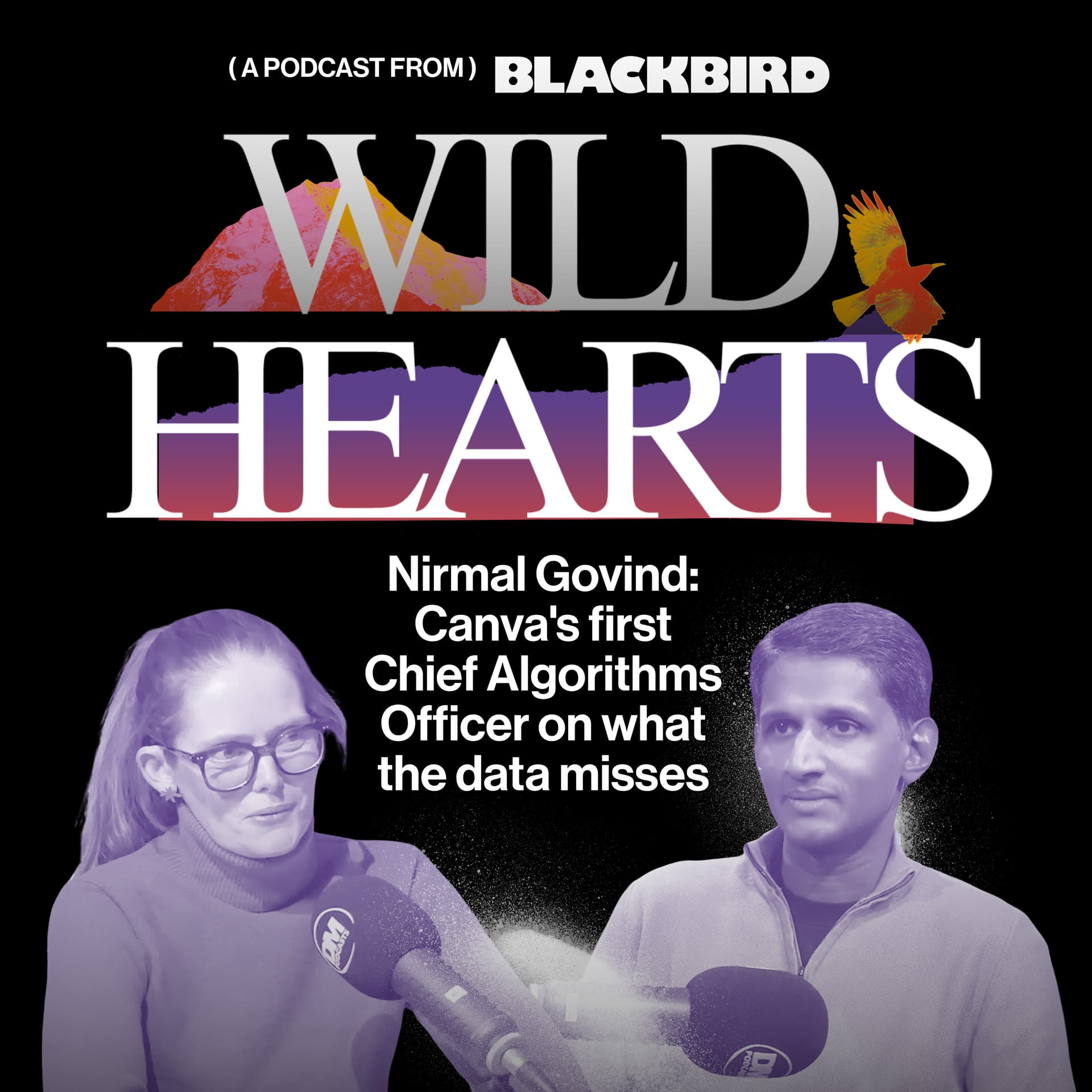
Nirmal Govind, Canva’s first Chief Algorithms Officer, explains the role (company-wide ML/AI to find high-impact use cases), his user-first philosophy for personalization, and how algorithms should be evaluated beyond short-term engagement metrics. He also recounts his Netflix origins in “quality of experience” and studio/production data science, plus lessons about what data can’t predict (e.g., breakout hits like Squid Game).
Guest backgrounds
Nirmal Govind is Canva’s first Chief Algorithms Officer, joining via Canva’s acquisition of Mango AI (which he co-founded with Vanith). Previously he worked at Netflix starting when it had ~12 years ago and only two originals; he led early work on personalization/ML and studio-related data models. Earlier career includes semiconductor manufacturing planning work (Samsung; IBM/Intel) and healthcare scheduling research.
Key claims
Algorithms should benefit users; optimizing for clicks/retention can “game” short-term metrics but harm long-term trust/UX. Long-term impact can be tested with holdouts/A-B testing. Predicting zeitgeist-level hits is inherently limited.
Notable examples
Netflix box art A/B testing; a show where moving opening credits into episode 2 caused a mid-episode drop-off; Netflix studio budgeting/casting-related finance optimization; Squid Game as an example of unforecastable success.
Written by AI. May contain mistakes. Listen to the episode to check what was said.
Chapters
Tap a time to open that second in VONirmal's Journey to Canva
0:45 to 3:19
Nirmal shares his career journey from Netflix to Canva and insights on algorithmic design.
“I told Reed about it and he was like, okay, that sounds great.”
Philosophy of Personalization
3:19 to 6:04
Nirmal discusses his approach to personalization and user-focused algorithms.
“And really, we're trying to find the best places where we can, you know, have impact, right?”
Short-Term vs Long-Term Metrics
6:04 to 8:15
Exploring the impact of short-term metrics on long-term user experience in algorithms.
“And, you know, they come here to do a task that only takes two minutes, that's fine.”
Trust in Algorithms
8:15 to 9:18
Nirmal elaborates on the importance of trust in algorithms and their societal impact.
“I feel like you have to be very careful about, you know, the user experience and how the user is impacted because otherwise they have a bad experience and not come to your product.”
Nirmal's Experience at Netflix
9:18 to 13:58
Nirmal recounts his early experiences at Netflix working on algorithmic content decisions.
“So maybe we could actually take a step back and we'll return to your time at Canva, of course, but take a step back to your time running AI and machine learning type projects at Netflix.”
Operational Wins Through Data Science
14:00 to 15:10
Learn how data science can lead to operational and financial efficiencies.
“Did it end up being sort of an operational win that you'd applied data science to?”
Predicting Content Success on Netflix
15:10 to 17:00
Explore the challenges of predicting content performance on Netflix.
“is really, you know, what those of us who are subscribers to Netflix see and why we see it and how we see it.”
The Limits of Data in Content Creation
17:00 to 19:40
Understand the limitations of data predictions in identifying hits and flops.
“Because if you're going to spend$20 billion in content every year, how do you allocate that is a pretty big question.”
Unexpected Insights from User Behavior
19:40 to 22:20
Discover how unexpected user behavior can inform creative decisions.
“I don't know, you know, if you would say that, like generally you're not making the ones that you predict are flops.”
Collaboration Between Data and Creativity
22:20 to 25:10
Learn about the synergy between data-driven insights and creative intuition.
“And that's something that we fed back to the creative teams.”
Show all 26 chapters
Career Journey and Data's Role in Healthcare
25:10 to 28:00
Follow the evolution of a career intersecting data science and healthcare.
“And so sometimes once in a while, you'll get somebody that comes from that, hasn't quite figured out how Netflix operates or how the culture works and so on and so forth.”
Navigating Career Transitions
28:00 to 29:06
Learn about the speaker's journey through different roles and how curiosity drove his career changes.
“And yeah, sometimes the universe just works, you know, in interesting ways.”
The Evolution of Fable and Mango AI
29:06 to 30:58
Discover the concept behind Fable and how it relates to mental wellness and reading.
“But that's kind of how the transition happened was really just curiosity in terms of both machine learning but also in terms of consumer software and so on.”
From Netflix to Startups: Embracing New Opportunities
30:58 to 34:19
Explore the motivations behind the speaker's decision to start a company and the role of regret minimization.
“And that was sort of the genesis of Mango AI.”
Challenges and Decisions in Early Startup Life
34:19 to 36:12
Understand the complexities of pursuing multiple business ideas and how to identify the right problem to solve.
“Well, you've had an unusual journey since then because it was sort of, you know, sooner did you like create the website and make it public that you had acquisition opportunities coming at you.”
The Canva Acquisition Experience
36:12 to 39:56
Gain insights into the acquisition process and the factors that influenced the decision to join Canva.
“being disciplined about looking at the feedback, looking at the data and sort of, you know.”
Reflections on Legal Processes During Acquisition
39:56 to 42:00
Learn about the nuances of the legal process in acquisitions and the importance of collaboration.
“I think Cliff was definitely very hard to say no to.”
The Complexity of Legal Relationships
42:00 to 43:13
Explore the nuances of legal collaborations and their unexpected complexities.
“customers or their clients right and so at some point you're like this is probably not worth actually spending a lot more time on let's actually just figure out what, you know, compromises.”
Algorithmic Design at Canva
43:13 to 44:28
Learn about the challenges and opportunities of algorithmic design at Canva.
“Yeah, professional services only get you so far.”
Canva's Shift to AI Integration
44:28 to 46:07
Discuss how Canva has evolved into a leading consumer AI platform.
“Like what's the canary in the mind shaft for you around where the impact might lie?”
Balancing AI and Creativity
46:07 to 48:59
Examine the tension between AI advancements and the integrity of human creativity.
“They see in some respects, it's threatening to the underlying job or it's certainly threatening to the craft sometimes of what they love to do.”
Efficiency with AI Tools
48:59 to 51:44
Discover personal insights on using AI for improved efficiency in daily tasks.
“actually, including a lot of Canva users, myself included, like I don't necessarily have the design eye that would make for the best kind of content.”
Leveraging Data Analysis for Startups
51:44 to 54:01
Get advice on utilizing data analysis tools effectively for startup growth.
“So actually, I'm interested in the art and science of your own job.”
Reflections on Team Culture at Netflix
54:01 to 56:00
Insight into the unique culture at Netflix and its impact on talent management.
“So I want to move to learning a little bit about, you alluded earlier that there was almost a loss for you underneath at the very point you might be building out your own team.”
Balancing Growth and Compassion in Leadership
56:00 to 58:24
Learn how to manage fast-paced growth while maintaining a compassionate leadership style.
“It was, you know, I joined probably about 1 ,500 people or so and left when it was like 10, 11 ,000 or so.”
Personal Growth and Being Present
58:24 to 59:34
Explore the importance of being present in your personal life amidst work responsibilities.
“So I think, you know, it's just been very internally focused, obviously, in terms of the role and so on and so forth.”
Transcript
Automatic transcript. May contain errors.0:00You are Canva's first ever Chief Algorithms Officer. What is that job?
0:05Nirmal Govind:High level, the job is really looking at machine learning, AI, just across the whole company. You have spent a long period of time in the intersection between creativity and algorithmic design. Yeah, I started off at Netflix when, you know, Netflix was still very small. The production team, honestly, was like 10 people at all of Netflix. Wow. You know, we had a lot of people, including our CEO, who basically told me, you should not invest in this space because it's actually not going to be very impactful. And you were like, thanks for the input, CEO. Yeah. I'm going to go ahead and do it anyway.
0:35Nirmal Govind:So this was Reed Hastings. And so, you know, he's usually right. Let's just say that, you know, and so, but yeah, we had a pretty good win in about nine months or so. That sort of set the stage for like, okay, this is actually an area worth investing in. I told Reed about it and he was like, okay, that sounds great. Let's put it in the company video next week, right? So, you know, opinions can shift very quickly.
0:59A few episodes ago, Phoebe St-Hill and Stocks made the case for why all good things in life come from cold messaging people. What's the worst that could happen, she asked. Well, I had a crack. A few months back, I spotted that Canva had just hired its first chief algorithms officer. Not a weird title to have held in 2015 or even 2020, but in 2026, it sounded almost endearingly retro up against some of the wilder job titles in AI. I had a poke at who they'd chosen and uncovered the wonderful world of Namaal Govind. Namaal came to Canva through its acquisition of Mango AI, an AI marketing platform that Namaal co-founded with friend and former colleague Vanith.
1:41Together they'd worked at Netflix, charting the first forays the company would take into personalisation and content creation. Like, it's hard to imagine now that Netflix's shows are in Oscars contention on the reg. But they joined the company at a time when it was merely a distribution play, not an original content creation one. Nimal and his team changed a lot of that. And it was their data science wizardry that informed many of the company's biggest decisions on what to invest in, how to market it, and even how to finance parallel production teams for efficiency. I'll be honest, my inner behavioral economist has always loved discussions with algorithmic designers.
2:19I find them weirdly scintillating. Like, what are they optimized for? How do they measure product impact? What assumptions are they making about their users? And how do they trade off commercial goals with user goals when the two diverge? So I took the plunge and I reached out and two remarkable things occurred. First, Namal said yes, he'd do the interview. Second, he shared that he'd actually never done a podcast before despite his storied career. In this interview, Namal talks me through not only his Netflix story, by his early experience in semiconductors, his philosophy on personalisation and why so many platforms get it wrong, and even whether he should have been optimising for predicting Squid Games' outsized success or not.
3:03He also shared a bit on the sell versus continue decision that he and Vanith faced when they were approached by Cliff to join Canva less than a year into their founding journey. Tune in to hear from a master at work.
3:19namal thank you for joining us on wild hearts it's so exciting to have you here yeah thank you for having me i wanted to start with the obvious one which is that you are canva's first ever chief algorithms officer what is that job yeah it's a good question um you know high level the
3:35Nirmal Govind:job is really looking at machine learning ai just across the whole company and trying to see what are good places where you know we can have a lot of impact with those technologies and you I partner with all of the business groups, including the generative AI side. And really, we're trying to find the best places where we can, you know, have impact, right? That's sort of the underlying idea with that role. Because I'm interested even on this distinction, if there even is one between sort of algorithmic design and AI design these days, you know, you go back 10 years and AI was not what we understand it to be now.
4:08And so there are a lot more people with job titles like yours or data scientists, and that sort of job title seems to have fallen away, but you've kept it. How should we understand your job in a Canva universe relative to other people there who might have AI in their job title? What's your principal concern? What keeps you up at night?
4:27Nirmal Govind:Yeah, I think for the short term, at least, maybe for the medium term, the focus is definitely on personalization and trying to figure out how do you really personalize the Canva experience for every user? And that is a cross-cutting thing, right? Because you can think about the experience when the person comes in, they're doing, you know, discovery, then they're getting into the editor, they're doing, you know, generative AI stuff. So it sort of like runs through everything that Canva does. And so if you take the user lens, the user perspective, it's really talking about how do you provide more value, you know, for the user by personalizing the experience more.
5:00Nirmal Govind:So it's not one specific thing. It's, you know, many things sort of coming together to sort of look at that experience. There's so much I want to unpack there. I'm going to start with maybe the highest level version, which is like, do you as a practitioner, as an expert, do you have a philosophy on personalization that you bring to this job? I mean, it's my mind quite simple, right? I think personalization and generally I would say algorithms should really benefit the user. I think the ultimate test for us is, you know, are we providing value to the user? And things like personalization sort of let the user get to value a lot faster because they feel like, okay, what I'm here for, the software, the system understands it, and it's providing me whatever I need as quickly as possible.
5:48Nirmal Govind:So that's kind of the idea is really let's make it very useful for the user. I think the things where, you know, it's sort of trying to push things for, you know, clicks and retention, all those kinds of things are not really where in my mind the goal should be. I think it's really about how do you help the user? And, you know, they come here to do a task that only takes two minutes, that's fine. Let them finish that and then go back. But as long as they had a very good experience, they'll probably come back, right? Yeah, okay. So you've gone right at the nuts and bolts of why this is to me such an interesting topic, because I think if we look back over the last like 10, 15, 20 years of folks in your world, you know, with experience on how to bring better data science to the experience of a given product.
6:32We've seen lots of people approach that opportunity from a different lens than the one that you just described, which is that they are going after metrics which more clearly drive user retention or engagement or clicks, sometimes at the expense of the user experience itself. I'm interested in And how you've seen, like maybe thinking back over, you know, your experience in the industry, like, do you think people have known that they've gotten that wrong? And that's why we're seeing a correction? Or are we even seeing a correction around, you know, how we think about the use of algorithms to benefit users?
7:07Nirmal Govind:Yeah, I think there's probably a short term and a long term view there, right? Which is, you can sort of game your metrics, if you will, and optimize your objective functions so that you will see an uplift in the short term. But ultimately, if you're actually hurting things like user experience over time or the trust that you're gaining with the user and so on and so forth, you'll see it in the long-term metrics. And so a lot of companies will do things like holdout, right? So you keep a portion of your users that never see newer experiences for a long period of time. And the reason for doing that is so that you'll discover what kind of benefit or loss you're having over a longer period of time.
7:49and sort of a rough like rough a b testing yeah it's it's a part of an a b test really um and so
7:55Nirmal Govind:yeah i think those kinds of things sort of give you the longer term you know impact of doing some of these things and i suspect a lot of these companies are realizing as they run these things over long periods of time like okay there is an impact on the user if you actually go optimize for the short-term you know thing and so yeah that's probably the correction that you're referring to i think that's probably happening but yeah you just have to be especially in today's ai world I feel like you have to be very careful about, you know, the user experience and how the user is impacted because otherwise they have a bad experience and not come to your product.
8:28Nirmal Govind:There's another product that was built by another AI company that is right there for, you know, you to go try. Yeah, it's interesting because we when we were sort of riffing on on this episode, we've also been talking a little bit about like this concept of trust that sits within algorithms. And I think in different parts of society, you see there being a real push on like, is the algorithm serving me or is it serving somebody else? So I love the perspective that you've brought to that. And in fact, it's particularly relevant because actually your career has been fascinating in that you have spent a long period of time in the intersection between creativity and algorithmic design, precisely where a lot of people are spending a lot of their time worried, frankly, about what the impact of sort of AI might be on human generated content in the face of this like very low cost AI generated content world.
9:18So maybe we could actually take a step back and we'll return to your time at Canva, of course, but take a step back to your time running AI and machine learning type projects at Netflix. So as I understand it, there were actually two teams that Netflix kind of ran on early days and you were kind of right at the beginning of that. One focused on what we should make at Netflix and we should show to users and what content. and the other team, which I understand was your team, was really the how, like how do we go about that? Could you share with the audience sort of what your job was and a bit of the story of how it came to be?
9:53Nirmal Govind:Yeah, I started off with Netflix when, you know, Netflix was still very small, right? We're talking, you know, 12 years back. I started off to actually work on what we called quality of experience, which is when you hit play on Netflix, making sure that, you know, the content shows up very quickly. You don't get that spinny rebuffering event, right, which is basically when your network connection is not great. And so, yeah, we started off focusing on that area. But one part of that, the experience was the actual quality of the content, which is, you know, we're getting content from many different suppliers.
10:25Nirmal Govind:And this is when, by the way, when I joined, Netflix had two originals, which is very hard to believe. So we were getting a lot of content from, you know, suppliers, licensed content. And if they had issues in the content, like, you know, some pixels are bad, et cetera, et cetera, we would catch those. So there was a team that was focused on the quality control there, the actual partnership with those studios and so on and so forth. So that was also part of an area that I was looking at. And that area sort of, as Netflix became a studio in 2015 with Stranger Things is really when there was the first big show where Netflix became a studio.
11:00Nirmal Govind:The difference really is you now have access to a lot more data because you're actually hiring the line producers, you're hiring all of the staff before or below them and so on and so forth. So you have a lot more access to what's happening on the set, you know, in the production. This team that I was working with was starting to get questions like, hey, for post-production for this type of a show, you know, how much money should we be actually spending? And, you know, in production, like the money is a big thing. It's like that's really very, very, you know, tight and people pay a lot of attention to it.
11:31Nirmal Govind:They actually produce a budget for every show, every movie before the production starts, which can sometimes be in the hundreds of pages range. And that budget is a very, very detailed document. It has everything that you're spending on the CAS, but also below the line costs, like for location, for food. And so I was like, okay, that sounds like data. And so if there's data... I see zeros and ones. Yeah, I see numbers. So we could probably do something with that data. It wasn't quite clear exactly what. The problem is always like, what is the problem worth solving in that space that's impactful enough, right?
12:07Nirmal Govind:And so that takes a little bit of digging and talking to a lot of people and then understanding the process yourself. And did you have any early priors that ended up being wildly wrong? We were very careful going into the space. And, you know, we had a lot of people, including our CEO, basically told me, you should not invest in the space because it's actually not going to be very impactful. And so, you know, a lot of digging. And you were like, thanks for the input, CEO. Yeah. I'm going to go ahead and do it anyway. This was Reed Hastings. And so, you know, he's usually right. Let's just say that, you know, and so spent a lot of time and effort talking to the partners there to figure out what can we do.
12:43Nirmal Govind:And the production team, honestly, was like literally 10 people at all of Netflix. That was the production team of Netflix. And we hired a very senior leader. He's a good friend now. And then he came and really built that team out to, you know, probably like a thousand plus in a very, very short span of time. Yeah. So we figured out a problem in that budgeting finance kind of space. And we had a pretty good win in about nine months. I had to go higher for that. And Vinit, my co-founder, who was actually at Mango AI, was actually the first person I hired to work in that space. And I still joke, but he was probably the only person in the world working on studio-related data and machine learning kind of stuff at the time.
13:24Nirmal Govind:I don't think anybody else was doing it. But yeah, we had a pretty good win in about nine months or so. And that sort of set the stage for like, okay, this is actually an area worth investing in. I told Reid about it and he was like, okay, that sounds great. Let's put it in the company video next week. Opinions can shift very quickly as well. So that's how we got started. And then what to make, so that team eventually became part of my team as well. And so that was the other side of it. But yeah, Studio was definitely a very big investment in Netflix and we were sort of trying to figure out how do you help with data and so on.
13:58Like if you can say, what was the win? Was it like business optimization across, like we've got seven shows that we want to produce and actually there's more cost saving we can do by doing it, you know, sequencing them in a particular way? Like what was the nature? Did it end up being sort of an operational win that you'd applied data science to? Was it financial or, you know, what was the kind of big area that made people go, oh, hold on, this might be worthwhile?
14:21Nirmal Govind:Yeah. So I can't tell too much about what it is. Secret sauce. Secret sauce. Yes, yes. Because, you know, a lot of times in these spaces, actually figuring out what the problem to solve itself is actually the key. It's actually the actual solution might actually not be, you know, that complex. But yeah, I can say that it was, you know, in the finance space, it was related to, you know, how sort of casting works and so on. And so it was very much a show level thing that could be applied to every show that actually is produced. And so, yeah, it was both operationally efficient, I should say, as well as because otherwise, if you did it manually, it would take you several weeks to actually figure that thing out.
15:00Nirmal Govind:But then it was also financially actually pretty good. No, not bad. I'm not surprised Reid was like, OK, fair enough. Fair enough. You were right. I was wrong. So I'm interested then to come to the second half of what your team then got to, which is really, you know, what those of us who are subscribers to Netflix see and why we see it and how we see it. how did you sort of approach that as an opportunity? And did you apply a kind of a lens to what you were thinking about there that led you down a particular path? Or did that change over time? Yeah, I mean, that's an area where, you know, there was already a bunch of work happening there before I took it on.
15:35Nirmal Govind:And, you know, the general idea was how do you actually predict how well like content can do on Netflix? And so it's a very tough problem, because these decisions on like green light decisions are made multi-years in advance of like you know the thing hitting Netflix so you're sort of predicting with like sometimes very little information sometimes you know a director comes in with an idea they don't have a script they have you know maybe a talent associated with maybe not and you're sort of trying to give the creatives you know some sort of input in terms of hey we think based on the data and based on what we've seen in the past etc here's how much the you know what the performance would look like on Netflix and so there's a whole bunch of machine learning models that basically, you know, run to actually help creators with that.
16:22Nirmal Govind:But ultimately, you know, it's still their intuition, right? It's still human judgment that's sort of making that call because they've got a lot of intuition built from like, you know, years and decades of like looking at content. So we're sort of an aid, if you will, right? So that's kind of the idea. But it's all the different areas, you know, that's content demand prediction is one of them. But, you know, trying to figure out where the holes in your catalog are is another problem, which is like you can look at viewing patterns and try to see like, okay, we've got more of this content, we've got less of this content, we should probably produce more in this area.
16:51Nirmal Govind:So it's definitely, there's a lot of problems in that space of what to make. And I think the big thing was Netflix definitely saw that that as a big opportunity, right? Because if you're going to spend$20 billion in content every year, how do you allocate that is a pretty big question. and using data to do it, I think, was a very intelligent decision. And it was not something that everybody did, and I'm still not sure if everybody does it, right? Yeah, it's interesting, isn't it? Because if you compare yourself to at that point, you were taking on the big studios who were at a massive disadvantage, which is that you actually control distribution.
17:28You don't control all of it. There's a marketplace out there, but you were able to apply quite a forensic lens to like, oh, no, we knew that Namal loved that because he watched the entire thing and then clicked on the like you might also like and clicked on other people. And so your ability to see end to end, we made a commitment and investment in building X type of content and we actually know who watched it and how, which is different from the studios who were like, well, it went to a bunch of cinemas and we know broadly how well that went, but down to the granularity of individual preference, you had this huge advantage.
18:01It must have been fascinating. As a data science oriented person, you must have been like, I'm just sitting on a treasure trove here of like ability to answer these questions no one else has been able to. Is that what it felt like at the time?
18:11Nirmal Govind:I mean, definitely. I think the amount of data that, you know, Netflix collected and yeah, you would sort of see a lot of patterns, right? And it's just very interesting to see data at that scale and like, you know, understand. And, you know, the prediction thing, for example, like you also sort of realize the limits of what you can do, right? Because one of the things is you can never pretty much predict, you know, standout hit. like the squid games of the world, there's no way anyone's predicting that. It's just like completely, you know. It's zeitgeist. Yeah, it's zeitgeist. It's like you can't predict that kind of behavior very well.
18:44Nirmal Govind:And so we're not really trying to, you know, maybe predict those kinds of things, but you can still predict enough that it's actually useful to do. That's interesting. And do you have a hypothesis as to why? Like, does it really just feel like the error in the algorithm? You're like, I don't know, that's the secret that the world knows and we don't? It's a good question. I mean, it's sort of like, you know, that was a Korean show that traveled very well and sort of became big, you know, in the US and around the world. And quite a like provocative concept as well. Like it's not obvious that that would be something that a lot of people resonated with.
19:20Nirmal Govind:Yeah, because, you know, it's also there's some like very hard scenes in there too, right? So, yeah, human behavior, hard to predict, right? I have no really good answer on why, but yeah, it's very, very hard to say exactly why something struck big. Is it, I'm interested geekily in this distribution, if like the standout successes are hard to predict, is that equally true for the ones that totally flop or are they more predictable? I don't know, you know, if you would say that, like generally you're not making the ones that you predict are flops. Right. Fair enough. Yes. So that's missing data.
19:57Nirmal Govind:So, yeah, so basically, yeah, it's basically missing data, right? And so there are cases, of course, where you think it's doing, you know, it's going to do well and then, you know, doesn't do as well. There's definitely cases of that. And then you can't build a pattern because if you've learned from it successfully, you don't have the second one to say, oh, also it happened here again. Okay, fair enough. Reasonable. So come back to actually to the human behavior piece. I think it's absolutely fascinating. You must have had like notions of what you thought would drive human behavior that like the data proved out was not true at all.
20:25Have you got any examples of times where you were wildly wrong or wildly right about like, huh, I knew it?
20:32Nirmal Govind:Yeah, it's a good question. I think the thing that I would probably say, so one of the things that we did is we, you know, would test the actual box art images that you see when you log in Netflix, you know, for each show, you show an image. And that was an explore, explore framework where, you know, when a new show launches, we try out a bunch of different images. and then we kind of see, you know, which images are just reading for which groups. And then, you know, you sort of personalize, you know, the images based on that. And one thing that we learned was human behavior of like which one resonates with people.
Read the full transcript
21:05Nirmal Govind:It's just very hard to predict. And so we have an internal system, you know, where we basically look at the metrics as some, you know, unusual launches. And, you know, there's people that will make bets. Like, I think this is the one that's going to win, right? And most often human intuition turned out to be wrong. people's preferences are sometimes just very hard to predict. And so, yeah, that's one I can think of. And sometimes, you know, you'll see patterns which are kind of interesting. And maybe in hindsight, it's like, yep, that makes sense. But an example was, we had a show where in the first episode, towards the end of the episode, there's a battle scene.
21:41Nirmal Govind:And the director decided in the second episode, they would actually start the episode with just a continuation of that battle scene, no opening credits, nothing, right? It just continues. And that thing in the second episode goes for about 20 minutes. Typically episodes, you know, that show are about 40 minutes or so. And at the 20 minute mark, you start seeing these opening credits show up. And we saw a whole drop off. People were like, is it finished? The episode's done. Like, let's exit, right? And so it's like, you know, in hindsight, you're like, yeah, that makes sense. You know, you put the credit somewhere.
22:15Nirmal Govind:And so that was an example of something that, you know, we looked at the data and we're like, huh, that looks interesting. Why are people dropping off right in the middle of an episode? And that's something that we fed back to the creative teams. Like, hey, we're seeing something like this. So watch our trade next time kind of thing. Yeah, that's interesting. So that feels to me like it might be naive, but I imagine that there was at times tension between the folks that you mentioned earlier who have like a strong intuition. They've built shows, they've sort of promoted new types of content, they're coming in, maybe pitching Netflix on like, I believe this is a show or a movie that has real mass appeal.
22:48Your team gets sort of wheeled in to say, well, actually, like based on the data, we found that actually that sort of, you know, content doesn't tend to do so well on Netflix. How did you sort of think about the role that you played in that creative process? It sounds like you've applied quite a lot of humility to that process, but like, can you tell us a little bit about how those experiences played out within a Netflix context?
23:12Nirmal Govind:Surprisingly, probably, the tension, I would say, was very minimal. I feel like at Netflix, just because it's a very data-driven company, and it starts right at the top. So Reed himself is very much a data person, and he looks at metrics pretty much every day and looks at them very, very closely. And so generally, I would say, across a company, you could sort of go to any team and say, hey, we've got some ideas, and here's things that we want to do with data and machine learning and models and so on and so forth, then you don't generally get any pushback, which is very unique in terms of a culture because a lot of places people can be a little bit more protective and so on and so forth.
23:50Nirmal Govind:But I would say Netflix that way was great, which is why I would say we went and built out algorithmic experiences and different kinds of models and so on and so forth in many different parts of the company, that otherwise, including studio, that otherwise you would never think to apply algorithms and data and machine learning and so on. So because of that, I think, you know, generally I would say it's not as much tension as you would, you know, imagine. I think there was definitely an understanding that the creatives know what they're doing and that's why we hire them and so on and so forth. And so, you know, if there is a question mark there, I think we definitely defer to judgment more than the data.
24:29Nirmal Govind:But I think the data was more to inform, right? And it's sort of like if you see something in terms of data that as a creative, you're like, huh, that's interesting. Then the hope is that they would dig in a little bit more with the team and say like, okay, why are we seeing that? You know, what's going on over here? What should I be thinking about? You know, once in a while, once in a while, we'll get, you know, some folks that come from the more traditional sort of studio network type of environment, because Netflix, even as a studio, operated very differently, I would say, from what I've heard.
25:00Nirmal Govind:I've never worked at another studio. Other studios in Hollywood operate, right? And so they're not necessarily looking at data as much. The information flow is a lot more controlled at other studios. And so sometimes once in a while, you'll get somebody that comes from that, hasn't quite figured out how Netflix operates or how the culture works and so on and so forth. And they might be like, oh, you know what? I need to look at this and approve this metric or whatever. And then that's when you have to intervene. And you sort of say like, no, no, no, that's kind of not the way we do it. Here's why we don't do it that way.
25:30Nirmal Govind:Here's the benefit of it. You sort of set context, right? And so once in a while, but I would say that was more rare. Yeah, interesting. So you obviously got a thread in your career of this sort of intersection of creativity because it wasn't just at Netflix. You then went on to Fable to do, you know, algorithmic design in and around the experience of books and then Mango. Maybe you could talk us through a little bit about your forays at this intersection of sort of content creation and experience of users and the application of data science. Why is that the part of your career that ties it all together?
26:05Nirmal Govind:Yeah, it's a good question. I mean, there's an earlier part of the career, which was, you know, more about operations and, you know. Well, you started in Semicon, right? Yes, that's right. So maybe actually let's go back to there. Like you started there well before it was even a thing that we talked about in such short terms. Why was that the place you started? And then why didn't you stay in the kind of hardware oriented part of the world? Yeah, so this is going back a long, long time. But I came to grad school in the US and my advisor was working on semiconductor manufacturing. This is like the late 90s and when manufacturing was still very much a thing in this country, I would say.
26:44Nirmal Govind:It still is. But he was working with a lot of semiconductor manufacturing companies, both in the US, but also internationally. And one of my first projects was actually working with Samsung in Korea and trying to figure out planning for their factories and scheduling for the factories and so on and so forth. So yeah, I would go to Korea, sit with my laptop with engineers there and like, you know, we're trying to run these models and see how they work. That sort of led to work at IBM and Intel and so on and so forth. But towards the end of my time at Intel the last year or so, I got very interested in healthcare and, you know, Intel had a digital health group.
27:20Nirmal Govind:So I started working a little bit with them and And they were kind of, the hospitals are asking the question, if you guys know how to run factories so well, can you actually help us run hospitals better, right? And so I worked with the team there and we traveled around the country, like talking to different hospital directors and so on and so forth. And it seemed like there was a lot of opportunity there. But then Intel decided to go like remote health and so on, which was not quite what I was interested in. And then sort of coincidentally, a founder reached out to me and he had a startup which was doing, you know, health tech, so healthcare, like scheduling for physicians.
27:56Nirmal Govind:And I was like, huh, this is kind of serendipitous, like, you know, similar timing. And yeah, sometimes the universe just works, you know, in interesting ways. It's the squid game of your own career. Yeah, exactly, right? And so, yeah, so I talked to him for, I don't know, six, seven months before I said, finally said yes. And, you know, I joined a small startup and that was a great experience in terms of like working more with end users, right? because we were working directly with the doctors. And the schedules that we're producing affected their work-life balance, really. And it was a big issue because Dr.
28:27Nirmal Govind:Bonnard is still a thing. Physician Bonnard is still a thing. And so we were trying to really help with that problem. But that's where I would say, you know, like working with actual humans and end users was, you know, very satisfying, very, like, interesting. And, you know, that's sort of when I started thinking about what else we could, you know, do. And Netflix had this very interesting role about machine learning in different parts of the business. And I was like, oh, they've got a lot of data. They directly impact consumers. And we were consumers of Netflix. We had Netflix accounts and watched and so on and so forth.
29:02Nirmal Govind:So that kind of got me curious in terms of what can we do with machine learning on the consumer side. But that's kind of how the transition happened was really just curiosity in terms of both machine learning but also in terms of consumer software and so on. But yeah, ended up spending a long time on Netflix. And I think one thing led to the other and Fable sort of came along. And that was an interesting problem because it was sort of started around COVID timeframe. And the idea was, how do we actually use technology to help with mental wellness? And reading, it turns out, if you read 30 minutes a day, it can actually increase your lifespan by a couple of years.
29:39Nirmal Govind:Yeah, there's some studies out of some academics that actually show that. And so that was the key insight that the founder had. And it was like, okay, we should actually do something to help people read more, build communities. So there was an online book club part of the app and so on and so forth. I was like, and I read. And so maybe not as much as I should, but definitely was trying to look at how do you reimagine the reading experience? And so it was definitely a creative plus modeling operational type of a world. And yeah, that's sort of how it went to Fable. Well, and Mango AI was, you know, I think similar thread, maybe to your point, which was we loved video.
30:17Nirmal Govind:And, you know, we did that for a long time and definitely enjoyed being at that edge of creativity and, you know, algorithms. And, yeah, the question was, you know, what kinds of things could be explored in that space that given the tools that we have now? Because when I left Netflix, it was, you know, 2022, early 2022, Chachi PT had not yet come out. And so all the things. Hard to imagine. It's hard to imagine, right? But all the things that we did at Netflix were pre-LLM. And so we were sort of, you know, thinking about given the new technology and especially the visual LLMs and all those models, what can we reimagine in terms of things that we did in the creative space that we could now do with like the latest technology?
30:58Nirmal Govind:And that was sort of the genesis of Mango AI. And yeah, it was still connecting the creativity, you know, sort of algorithms slash data thread for sure. And you mentioned earlier, you sort of dropped in that your co-founder was who you first hired at Netflix. When I chatted to him in advance of chatting to you, he sort of shared this interesting thing where he felt that the two of you explicitly or implicitly had always danced around this idea of like, it would be fun to found something at some time, you know. So I'm really interested in like, you know, by this point, you were a storied, you know, machine learning leader, you know, C-suite, all that sort of jazz.
31:35What gave you the reason to leave? Like, what was the reason to say, now is the time we're going to have a crack at founding a company?
31:45Nirmal Govind:Yeah, I mean, I've always been interested in startups because, you know, after Intel, I was like, let's go try a startup and went to the health tech startup and so on. And so I think there's definitely a thread there in terms of like the excitement of a startup, the excitement of, you know, doing something new. And it's always very impactful, you know, in terms of startup, right? And so that was definitely there. And yeah, even after, you know, I left Netflix and Vineet left Netflix, we stayed in touch. And once in a while, you know, we'd get together to play tennis and, you know, start talking about startups and so on and so forth.
32:18Nirmal Govind:So that was definitely there. I think for me, the thing that really helped was, you know, I've sort of over time, I suppose, as I'm getting older, adopted more of a regret minimization framework. So, you know, I think the idea is like, you don't want to sort of 10, 20 years down the line sort of feel like, oh, I should have probably done that, right? And like, that's kind of a lens that you can use. And we still have this leadership seminar at Netflix, they still run it, which is less about leadership training. It's more about how do you think of yourself as a leader in the world and how do you think of yourself as a human in the world and so on and so forth.
32:57Nirmal Govind:And you're reading very deep stuff like Leo Tolstoy and Dr. King's letter from the jail and all those kinds of things and having very deep conversations. And one of those topics, one of the questions they ask is, what would your 80-year-old self tell you now? And what would you tell your 19-year-old self now? And so we're all sort of mid to late stage career, if you will, at that point. And it's a very interesting reflection question. And so if you apply that, and that's sort of a lens I try to apply more, I'm like, I would definitely regret not having founded a company 30 years down the line.
33:35Nirmal Govind:And so that was definitely part of it. And then I think this confluence of the tools coming together and just the sort of time that we're in, felt like a good time to actually, you know, try something new. Both of us being a little bit more later stage in terms of like, you know, we're not fresh grads out of college trying to do something. I think definitely gave us a little bit of a cushion and, you know, financially as well as like we had contacts, right? So we could go and approach people for trying to do a B2B thing. We can get pilots and so on and so forth. So we had the network in some sense to go try something.
34:08Nirmal Govind:And both of us were very much like, let's go do it. Let's see what happens. And, you know, So it's either way we'll learn something and, you know, we'll have fun doing it together. And so, yeah, that's how it happened. Well, you've had an unusual journey since then because it was sort of, you know, sooner did you like create the website and make it public that you had acquisition opportunities coming at you. And obviously you've just joined the Canva universe as one of the sort of recent acquisitions into Canva and its AI push. I'd love to know a couple of things. The first one is like for someone who spent all of this time thinking of founding a company is a thing that I would love to have done.
34:45Did you feel like you got far enough in or was there any part of you that was like, oh, not yet? You know, it was so fast because people were so excited to think about the opportunity of bringing you into Canva. And I'm sure there were many other conversations that were happening in the background, too.
34:59Nirmal Govind:Yeah, it's, you know, definitely something that we still talk about. Was it too soon? Because what was it? It's 18 months ish, right? Yeah. by the time. And I think, you know, it was, it was a very interesting confluence again of things because we were, we started off working on some other problems. And, you know, I think one thing we were both very clear on because we did this at Netflix too, which is finding the right problem is like 60, 70 % of the, of the problem, right? Like off a startup. And like, and that helps you find product market fit and that helps you like scale and all of that kind of stuff.
35:33Nirmal Govind:And so we were very quick with, you know, going through multiple ideas. And so we found out that trying out things with actual customers is actually a great way to find out if, you know, you have a problem market fit or not. So we did a whole bunch of pilots in different areas and so on and so forth. And then we settled on this problem. Actually, say a bit more about that. Did they all know that you were pursuing sort of two or three different potential businesses simultaneously? I mean, we weren't doing it at the same time because it was just the two of us. So bandwidth wise, you know, it's very hard to do multiple things because, you know, we're sort of like meeting multiple times a day, meeting at night, like, you know, it's like an ongoing thing.
36:06Nirmal Govind:And so once we're in some particular idea or particular area, we're going full force on that, right? And I think it's just being disciplined about looking at the feedback, looking at the data and sort of, you know. I mean, it's kind of meta to have people with your backgrounds, like applying the like, when do we let go? When do we know enough information to let go? Did you find a tension between your intuition and the data there? Like, did you internalize that prior tension? I mean, sometimes, you know, it's sort of your, you really want this to work, you know, because like, hey, that's an area that we know very well and close to it and so on and so forth.
36:40But yeah, you have to look at it very, very closely with like a data lens, but also just like looking at the feedback and talking to people.
36:46Nirmal Govind:And, you know, we would have internal discussions, debates around like, is this really, you know, worth pursuing? Is this worth investing? I think that having done that and having done that in fact together, because you meet us on my team and Netflix do like many, many times, definitely gives you a shortcut, right? Because you don't have to like discuss for too long. You can sort of like, yep, doesn't make sense. Let's move on. Right. So that definitely helped. But yeah, once we found a problem, we were like, okay, this could be something, you know, this could be impactful. And we were getting that signal from our pilot customers too, for sure.
37:18Nirmal Govind:And we were looking at the data and we're like, yep, there's something here. But what happened was, it turns out Canva had acquired, you know, this company, Magic Brief, from here as well. Also a Blackbird company, yeah. That's right. And so I'd known about that because I was in touch with Cliff already before that. And, you know, he sort of mentioned, yeah, we're acquiring this company. But then at their event in October, they announced, you know, what they were actually doing. And we were like, oh, this is actually almost exactly, you know, similar to what we're actually doing, except that we were probably a little bit further ahead.
37:49Nirmal Govind:We were, you know, in the video space. We had figured out the learning loops, that kind of stuff. And so... This is sort of ad and marketing optimization. Yeah, this is video, you know, generative video for ads and using reinforcement learning loops to actually, like, automatically improve them and look at the performance and so on. So, yeah, I think it was sort of, like, very coincidental, very, you know, accidental, if you will. And, yeah, so then we were like, okay, I told Cliff at some point I'll give you a demo. And I was like, okay, I should probably give you a demo now. And then, you know, we need, coincidentally, we need sole boss from Roblox, Steph, who leads AI research at Canva, was also at Canva.
38:26Nirmal Govind:And so a lot of these things sort of like, you know, fell in place and yeah, we showed it to them. And it was tricky for us because we were about to raise money. The thing that I would say we were very good at is, you know, actually hiring and, you know, getting strong talent and so on and so forth. And, you know, done that in the past as well. And so we still talk about it. It's like, we actually kind of got to that fun part. We almost got to the fun part and really good stuff, and we kind of didn't get to do it. But yeah, there's also another aspect there, which is we were about to raise money, and we had some friendly VCs.
39:01Nirmal Govind:We were doing demos too, and one of the first demos actually, very well-known VC in the space, he had a very huge exit a few years ago and so on. I don't know, 20 minutes in, he was like, hey, guys, I want to fund you. Here's what we're doing tomorrow. Here's the deal. and I was like, oh, we're not ready for this. And then around the same time is when the Canva discussion started. And as you know, this person would have wanted to give you even more money even faster after you were like, thanks, but no thanks. Yeah, so I mean, he was a good sounding board, if you will, and he was like, hey, this could be a generational company.
39:36Nirmal Govind:You should really think hard about this and we'll help you find other investors. We can do this very quickly. So it was an interesting time because we were definitely at that point where we knew we could actually raise money and we knew we could go at this very hard. And on the other hand, you have Canva here. And so, yeah, it was an interesting time and tough decision. What nailed it for you? Why path A, not path B? I think, you know, a few things. I think Cliff was definitely very hard to say no to. It is a unique skill of his. Unique skill. He's a great founder, I think. But I mean, for us, you know, we're both very impact-driven people.
40:12Nirmal Govind:and we looked at the trajectory and we were like, yep, we could build this out, but it's going to take us some time to actually have the kind of large-scale impact that we want to have. And Canva was right there in terms of like very aligned, in terms of what they wanted to do. They already have sort of a massive user base and trying to expand more in B2B. And so we're like, impact-wise, this would be much higher impact much sooner. And so that was definitely a factor. I think the other thing was definitely the team. We talked to, you know, everybody was great. And I think the mission of the company, you know, definitely appealed, right?
40:49Nirmal Govind:You probably have the two-step plan and how you think about, you know, what to do in terms of like good for the world, right? That definitely appealed to us as well. And so we're like, overall, it seemed like, you know, a good thing to do. So yeah, we felt good, I think, doing it. And yeah, so here we are. So maybe let's just quickly get into the nuts and bolts of the M &A. For listeners who have never been through one, and obviously you've got an N of one, so we'll take that as it. Is there anything that was surprising about the experience of the acquisition that others could learn from? Yeah, I think, you know, I've been through a couple acquisitions, not as a founder, but seen, you know, how the process plays out.
41:30Nirmal Govind:I think the one that really was surprising for me was, you know, we had a great legal team, fantastic lawyers and well-known in the Valley and so on. but despite all of that the amount of time that you as a founder have to actually spend in the minute details of these things and you know figure out when you should actually not let the lawyers go further on this thing and you know figure out with Canva you know like hey do we really want to go with this because both sides you know the legal sides are trying to protect their customers or their clients right and so at some point you're like this is probably not worth actually spending a lot more time on let's actually just figure out what, you know, compromises.
42:09Nirmal Govind:That kind of thing and just like being very close to it, I think a need to stay very close to it was a little bit surprising to me. But yeah, that's really what. Because of course, what's not often talked about, and lawyers can sometimes forget this, is like, if it all goes to plan, you will then become colleagues. So it's not straightforward that, you know, you might be adversarial on a particular legal point at this particular point in time, but like the relationship matters too. And your experience and feeling about continuing to work together is a big part of it as well, I imagine. Yeah, absolutely.
42:36Nirmal Govind:And for us, we were like, hey, it's not a very old company. We don't have a lot of investors, nobody else to ask approvals of and so on and so forth. So it should be very quick. And honestly, in the grand scheme of things, it was actually very quick. And Canva was great to work with. I think the team was amazing. And it was a very, very smooth process compared to other processes I have seen and heard of. And so I think overall it was very, very smooth. But yeah, that was probably one surprising thing to me. It's like, despite thinking of it as a potentially easy deal, you know, it was still, you still have to pay a lot of time and attention.
43:13Yeah, professional services only get you so far. Interesting. So let's talk a little bit about your plans at Canva. So you mentioned this earlier, you and Vinita were interested in the scale opportunity, you know, quarter of a billion users. help educate me on how do you think about algorithmic design in a Canva universe? You've done it before across multiple business lines within Netflix and in other roles. You have this opportunity to sort of also apply a lot of that to content creation experience for users. Canva has this really diverse user base. You've got everything from like kids in school all the way to, as you say, B2B or creatives for whom Canva is a tool they use to express themselves.
43:54That's such a huge universe of user needs to try to think about. How might someone like you look at that opportunity and think about how to prioritize where you spend your time?
44:05Nirmal Govind:Yeah, prioritization is always a great question, right? I think ultimately it comes down to like figuring out the biggest impact area to go after first. And, you know, I'm definitely data driven. So, you know, look at the data and see like what kind of numbers are we seeing across different parts of business? What's the metric you would go after? Is it like non-repeat users? Like are you going after like, well, that's a signal that they didn't get the aha moment in the product they were looking for? Like what's the canary in the mind shaft for you around where the impact might lie? I mean, looking at simple metrics, right, like activation rates or, you know, retention rates in different parts of the business, looking at, you know, turn rates.
44:46Nirmal Govind:I think those are sort of things that you start looking at. And then you've got to go, you know, levels deeper to figure out, like, is the problem really, you know, an algorithmic problem or is it, you know, further out and it's not something you can control. And so sort of start digging in and then asking a lot of questions. And, you know, once you start doing that, you'll sort of get a sense for where the opportunity might lie. In the case of Canva, I think there's definitely opportunities that I can see in terms of, like, where we can go after first. And the user side of it versus the B2B, I think the consumer side of it is definitely a great focus area to begin with because that affects millions of people and very, very, very impactful for sure.
45:27One of the things I found fascinating about Canva is, you know, there are very few companies, I think it's now listed as like the third most used consumer AI platform in the world, which is fascinating because they were not, you know, quote, an AI company. but they have since become more so and through acquisitions and their own internal development of that kind of part of the business have really sort of refashioned themselves successfully into this new AI driven world. But I think one of the things that I've always found fascinating about how the founders talk about it is there always seems to be quite a sensitivity to the underlying customer base that has tended to be design oriented or creative oriented people for whom AI is not a universal good.
46:10They see in some respects, it's threatening to the underlying job or it's certainly threatening to the craft sometimes of what they love to do. How do you sort of think this might play out, particularly in a kind of like collapsing cost of AI generated content puts even more pressure on that tension? What's it felt like being in Canva, maybe contrasting to a Netflix type environment where that vestige and that history wasn't quite there in the same way?
46:38Nirmal Govind:Yeah, I think Canva's mission is empower the world to design. And I think the reason they've become so big is because they really helped the average person actually create something good. And without having to use complex tools and so on and so forth. And so I think the mission is still very much the same. It's just that you've got different ways of achieving it, which is you've got AI that can actually help supercharge what you're doing and so on and so forth. So from that standpoint, I don't see a huge difference in terms of what Canvas is trying to do for the world, if you will. I think there are definitely people that don't want to use AI, right?
47:14Nirmal Govind:And they're scared of it. And I was just reading a study from yesterday, something to the effect of, you know, Americans love AI and they use it, but they're also scared about the societal implications, right? Yeah, I think Australia is highest on that. We are some of the highest per capita users and also most skeptical. Yeah. And so that is literally a conundrum that's hard to solve. And I feel like people want more certainty in terms of where AI is going and how this is going to play out in terms of many, many different aspects of economy and society and so on and so forth. I don't think there is a clear answer.
47:51Nirmal Govind:And anyone who says with any amount of certainty, I think doesn't really know. And so that's sort of the problem here. And, you know, at school, parents are worried. It's like, hey, when my kids graduate, you know, they're going to have jobs and so on and so forth. So I think the macro picture is very unclear and it's very uncertain times that we're in. And there's obviously talk about AGI and, you know, is AGI going to come next year and four years? And what's it going to mean? I think a lot of question marks, right? And so I feel like if we provide value to the user and these users come here to achieve a certain task then it really amounts to like how do we do that really well and if users are getting used to you know prompting in the chat box and getting um you know whatever they want done very quickly then you know we're happy to use that type of technology and figure out okay how do we actually help them get more done quicker so that's the way i see it is sort of like you know the same mission but it's basically different tools and tools will definitely evolve over time.
48:53Nirmal Govind:And, you know, we're using the best tools, right, to help the user. Yeah, it's a good point, because I think, you know, for a lot of people, actually, including a lot of Canva users, myself included, like I don't necessarily have the design eye that would make for the best kind of content. And so more AI generated support on that is only of an advantage to someone like me. There's a smaller subset of users for whom that might feel a bit more threatening to the very art of what it is that they do. But for most people, that's going to be all upside. Yeah. And I do think, you know, creative execution, I think AI is getting better at, which is, you know, you can sort of say what you want and it's kind of doing what you want and so on and so forth.
49:31Nirmal Govind:And we saw that in Nago AI too, right? Because we were doing general video. But I think the creative inspiration, creative spark, you know, that's the real question in my mind is like, is it going to be able to like create new music? Is it going to be able to create new shows that, you know? Yeah, what's your hypothesis? You sat in and around Gen AI for a while. What's your hypothesis and where it goes? I feel like, you know, it's going to be very hard to replace human creativity. Is it going to really be able to come up with that type of show or movie that, you know, a director would have thought about, which, you know, hasn't existed in the past, right?
50:05Nirmal Govind:Because AI is, of course, learning a lot from the prior, you know, data. and so I just feel like it's going to be probably the best AI versus the best human, I would say the best human would probably be better. Best AI versus worst human output, probably the AI could be better. So there's going to be a spectrum and I just don't feel like, and maybe this is a visual thinking, but human creativity is going to go out of vogue anytime soon. AGI and all of it will come, but it may give us more time because we can sort of get rid of mundane things that we do and, you know, those things open up more time for you to think more creatively, right?
50:47Nirmal Govind:And then you might get better ideas and, you know, newer things happening and so on and so forth. So overall, hopefully it'll be positive where it needs to be and, you know, still keeping the human creative spark, right, alive. Is there a way that you use AI that you think reflects that in your daily life, like for you personally? I mean, I'm a little bit of an efficiency geek. And so that doesn't surprise me. Yeah. So, you know, it's sort of like, hey, my Slack, I would love to have that automated, right? So I've got, you know, a cloud code routine, which basically goes and looks at all of that stuff and prioritizes it in a certain way and gives me all the links to it.
51:23Nirmal Govind:So I can go do, do, do, do, and then, you know, I'm done with my Slack because I also have a time difference from the US. And of course, you know, when I wake up in the morning, Australia's done a lot of stuff. And so I'm catching up on a lot of things in the morning. So it's just a very useful thing. And And yeah, user recording and all those kinds of things. But yeah, I think it's definitely helped with becoming more efficient with your time, for sure. So actually, I'm interested in the art and science of your own job. A lot of our listeners are founding a company or early stage founders or have small teams, don't necessarily have people in-house with expertise levels like yours, but do have access to these sorts of AI tools to help them do some form of rich data analysis on user behavior or preferences or retention, whatever.
52:06I'm interested what your advice would be for them on how to deploy these tools to best effect.
52:12Nirmal Govind:Yeah, I think the data analysis piece specifically, it's getting there, I think is the best way to put it. And I do think it'll actually probably start getting very good. But so far, I would say like, you know, data MCP servers and so on and so forth, they're not quite able to figure out, okay, here's the right set of, you know, tables to go after, use the right set of things and so on and so forth. What I'd suggest is really figuring out the questions, right? Because usually the problem is identifying the right question to ask off the data. But once you do that, some sort of an intuitive sense of like, you know, it should be around this, I think is useful.
52:47Nirmal Govind:And to develop that, I think, you know, if you're not able to do it yourself or the in-house team, et cetera, I think talking to people is probably what I would advise more than relying on the AI, because I've seen cases where it's like 3x off. And I'm like, I can tell that it's 3x off, right? And then, you know, have an actual data scientist actually go and, like, dig in and come back with the actual result. And I wasn't able to tell it's 3x off, just to correct myself. The answer turned out to be 3x off. What prompted you to ask someone to, like, do the work? It just didn't seem, I mean, I saw the numbers and the distribution.
53:18Nirmal Govind:I'm like, hmm, if it's true, it seems kind of, you know, low for the opportunity that I was trying to go after. And I'm like, this probably needs to be verified. And so then, you know, went and like had somebody like look at it. So a lot of it is intuition, right? It's just like you've seen numbers in the past and, you know, see different places and so on and so forth. So you kind of have that like stiffness, if you will, of like, does this sound right or not? But that's the thing I'm getting at, which is if you don't have people who can do that in house, you can't do it yourself. Then I think talking to people is probably a better way to sort of build that intuition.
53:48Nirmal Govind:And then as you start looking at it more, then, you know, you will start building that intuition. And then you can sort of use AI tools a little bit more because now you can, you know, test it a little bit yourself. You can sense check the output a bit better. Yeah, exactly. Interesting. So I want to move to learning a little bit about, you alluded earlier that there was almost a loss for you underneath at the very point you might be building out your own team. At Mango AI, you had this sort of great opportunity and ultimately decided to go down the M &A path. It tells me that you do enjoy the art of team creation and culture and you obviously did that at Netflix in your team, I think your team ended up being 100 people or something to that effect.
54:28So I'm interested to hear your reflections on, you know, you did work at Netflix during a time where its own approach to culture and talent, you know, became storied, right? Like, you know, various parts of the decks became like decks that every new founder read as a way of thinking about, you know, its own value definition process became a thing that other people copied. As did a few of the ways in which it thought about talent, including the Keeper test. I'd love your reflections on what you saw internally while all of that sort of was going on, while Netflix was engaging in this sort of broader ecosystem debate about what is culture and what does good look like.
55:06Nirmal Govind:Yeah, it's, you know, the culture, I would say, definitely was very unique. And it had many aspects, which I would say was unique for even Silicon Valley at the time, right, which is why a lot of people look at it and like copy it and so on and so forth. Well, famously, it did sort of like no policies on things, right? It was like trust people. If they want to take leave, they'll take leave. Yeah, freedom and responsibility was sort of the short version of our culture deck. And that's evolved, by the way, quite a bit. So now there's a culture memo and you've got new things and so on and so forth.
55:36Nirmal Govind:But yeah, I think the Keeper test was definitely one of the mechanisms. Can you describe for the audience what that is if they're not familiar? Sure, yeah. The Keeper test is this idea that if somebody on your team came to you and said that they were leaving, would you fight hard to keep them? it's a self-reflection question really that you ask yourself and if the answer is no then you should let them go regardless of whether they've come to ask you it definitely ensured a high performance culture that's for sure yeah it's just a hard thing for a leader to actually like do that you know on a regular basis and there's obviously the Netflix side of it which is you want higher impact and so on and so forth there's a human side of it which is like you know how do you do this compassionately and so on and so forth and because Netflix was growing at a very very fast pace when I was there.
56:23Nirmal Govind:It was, you know, I joined probably about 1 ,500 people or so and left when it was like 10, 11 ,000 or so. And our, you know, membership was growing. It was less than 50 million. And I joined with like 300 or something now. And when I left, it was 200 something. And that rate of change and growth, it's a hard thing to balance in terms of like the need of the team, the need for the company and, you know, your own sort of like need to sort of find the time to reflect and figure out you're making the right decision. And these are obviously not easy decisions. So you want to take your time and truly think through it.
56:54Nirmal Govind:And sometimes you're just, you know, challenged for time too. Yeah. So the data scientist in you, what do you think is your secret sauce? Like, you know, there's a lot of people who apply, you know, various forms of like, oh, culture is this part of what we need to do. And we invest in that in order to create an experience for people, but it's also in hiring and it's also in how we do performance management or think about all of those things. What was a sort of, do you have a philosophy that was just you? You're like, I've learned this over my career that I would approach team creation and team building in this particular way.
57:26Nirmal Govind:I mean, it's all about the people, right, that you hire. And I think especially for a startup, that initial team matters a lot. And so obviously you have the founders, but then, you know, the first few people that you hire have to be like really, really solid and you'll sort of set the direction for, you know, culture for the rest. And really, I think things like TAM and, you know, product market fit and all of that kind of stuff. If you have the right team in place, you can sort of figure that out, right? Because then you're having those hard discussions. You're trying to, you know, like what we discussed earlier, you know, this isn't worth investing in.
57:59Nirmal Govind:Like, you know, let's go figure out what else and so on and so forth. So I think that having the right team is very important. And I think it was Jim Collins in his book, get the right people on the bus first and then figure out where to drive it. right so that's kind of the idea is that you get the right people in then a lot of the other stuff just falls in place you still have to obviously pay attention to it and you have to be very deliberate and you know think of all those things um but yeah having the right people on board i think is the key so namar my final question for you what's something you've changed your mind about doing interviews say more no i mean we've chatted about this but yeah i think it was just uh you haven't done a whole lot um yes you have a very low profile yeah yeah i had to do a lot more taking.
58:42Yeah.
58:43Nirmal Govind:So I think, you know, it's just been very internally focused, obviously, in terms of the role and so on and so forth. And I tend to be more of a private person, I suppose. And so that's probably the reason for that. But no, I think, you know, in general, probably in terms of changes on the personal side, I would say it's been more about being more present and like in the moment and, you know, not thinking too long term because you never know what's going to happen. And so, you know, the impromptu trip or, you know, dinner or whatever it is, right? Like being a lot more open to that kind of stuff.
59:18And did something change that led to that?
59:20Nirmal Govind:I don't know, maybe I got older. I'm not sure. Passage of time. Passage of time, right? And so, yeah, so I think that kind of stuff probably on the personal side, because it's also a little counter to what you do at work, because at work, you're definitely thinking more longer term. It's like, okay, what do you need to do so that, you know, you're, this is going to last and, you know, how do you think about strategy and that kind of stuff. And, you know, the personal side is a little bit more like, let's just figure out, you know, today and tomorrow and the next week and so on and so forth. So maybe that's a change, I would say, a little bit more over time.
59:52Fantastic. Thank you so much for joining us on Wild Hearts.
59:54Nirmal Govind:Yeah, thank you for having me. And yeah, I really enjoyed the chat.
1:00:01Thank you so much for joining us for another episode of Wild Hearts. If you want to learn more from other ambitious people building, designing and creating the world that we all want to live in, then please hit the subscribe and follow button. This podcast is produced by Camilla Herring from Blackbird. Our marketing genius is Laura Cofford and our editor is Andy Jones from Colour and Sound Creative. Thank you all so much for listening and I'll talk to you next week.
From the publisher
Nirmal Govind has spent thirty years trying to predict human behaviour, and he keeps finding the edges of it.
He joined Netflix when the company still had two original shows to its name, and over the decade that followed his work spread into almost every corner of the business: the engineering that makes a video start playing the moment you hit play, the quality checks on content arriving from studios, and eventually the data behind what a company spending twenty billion dollars a year should actually make. He is now Canva's first ever Chief Algorithms Officer.
One of the things his team ran was a test on artwork. Each time a new show launched they would put a batch of different images in front of viewers to see which one made people stop and click, and internally, colleagues would call it in advance. These were people who had spent years studying what audiences do, and they had strong instincts about what would land. Most of the time they were wrong. Human taste, it turns out, is not something you get much better at guessing just because you have watched it closely for a long time.
Kate and Nirmal spend a good while in that territory, in the places where the data runs out. There is a lovely example of a director who chose to open the second episode of a show by continuing a battle scene from the first, with no titles and no credits, just straight back into it. Twenty minutes in, the opening credits finally rolled, and the team watched a wave of people leave in the middle of the episode. Obvious in hindsight. Credits mean an ending, and the audience took the hint.
In this episode, Kate talks with Nirmal about what a Chief Algorithms Officer actually does all day, why an algorithm should let you finish a two-minute job and leave, what happened when he asked an AI tool to size up an opportunity and the answer came back three times off, and plenty more.