
In short
Charlie Gearside, co-founder of Eucalyptus (exited for $1.6B), explains why he’s now focused on Australian media and ambition. He argues Australia’s “doomer” news incentives and stigma-driven culture distort public thinking, and he’s building a non-partisan media/ideas platform (Build Australia) plus a YouTube channel to shift the Overton window toward optimistic, actionable stories. He also attacks property culture as “massive debt” and a major driver of reduced risk-taking, and discusses how ESOP and equity can spread opportunity beyond founding.
Guest backgrounds
Charlie Gearside is an Adworld-trained creative/generalist who became creative director at Koala and later co-founded Eucalyptus, a consumer healthcare startup focused on destigmatizing private health issues (e.g., fertility, erectile dysfunction, GLP-1s). He now runs a YouTube channel and helps launch Build Australia with volunteers.
Key claims
Stigma can make healthcare marketing more effective; trust requires both ads and product experience. Exiting Eucalyptus was about being “wired for building, not managing.” Media incentives reward negativity; politicians follow headlines. Property obsession closes doors for young people.
Notable examples
ED jokes for men; “safety culture” video misread by early viewers; rebranding Australia “car key” joke that trended on news.com.au; Build Australia aims for idea pitches across builders, filmmakers, startups, and manufacturing.
Written by AI. May contain mistakes. Listen to the episode to check what was said.
Chapters
Tap a time to open that second in VOThe Impact of Eucalyptus and Ambition in Australia
2:46 to 4:28
Explore the evolution of Charlie's career and his perspective on ambition in Australia.
“Charlie, super fun to have you on Wild Hearts.”
Navigating Stigma in Healthcare Marketing
4:28 to 7:25
Charlie discusses his role in de-stigmatizing healthcare products and the importance of communication.
“Talk to me a bit about what it meant playing as a creative in the space of de-stigmatizing products that people have like, you know, awkwardness around.”
Leaving Eucalyptus: Reflections on Growth and Identity
7:25 to 10:05
Charlie shares insights on his decision to leave Eucalyptus and the emotional toll of tying identity to a company.
“like one of the beauties of how Eucalyptus worked is it like it managed to play right at the edge on the provocatisation piece, but at the same time deliver a product that people knew would work, trusted would work.”
The Ripple Effects of Eucalyptus' Exit
10:05 to 13:02
Discussing the broader implications of Eucalyptus' exit on employees and the Australian startup ecosystem.
“But it's worth saying that Eucalyptus' exit is historical in the Australian context.”
Charlie's New Mission Post-Eucalyptus
13:02 to 14:00
Charlie outlines his next steps and mission after leaving Eucalyptus, focusing on personal and professional growth.
“So, one of the things that, you know, we found super interesting in prepping for this interview is, you know, you've gone from startup land, which is like, what can you deliver tomorrow?”
Charlie’s Creative Wandering
14:00 to 15:00
Charlie reflects on his realization of enjoying work and its purpose.
“you know, I needed to spend some time there.”
The Importance of Media
15:00 to 16:00
Charlie discusses the negative impact of modern media on society.
“So I was on this journey of thinking like, what are the things that are concerning me?”
Creating Positive Media Content
16:00 to 18:00
Charlie shares his approach to creating optimistic and actionable media.
“And none of this is really good for Australia.”
Empowering Young Australians
18:00 to 19:50
Charlie discusses the challenges young Australians face and his mission to empower them.
“is an ambitious Australia and what is the role of young people in playing a part in building it?”
Ambition and the Australian Psyche
19:50 to 21:40
Charlie reflects on his goal to elevate Australia and young people's aspirations.
“of that also has huge macro effects on Australia.”
Show all 30 chapters
Multiple Roles in Content Creation
21:40 to 23:40
Charlie explains his different personas in content creation and audience engagement.
“And so I don't think it's like I haven't really thought too much about it at a deeper level.”
Challenging Property Culture
23:40 to 26:20
Charlie critiques the obsession with property investment in Australia.
“And that sort of guides what video I decide to do next.”
YouTube as a Medium
26:20 to 28:01
Charlie shares his reasons for choosing YouTube to engage audiences.
“It's just you're signing up to a very different life.”
The Awkwardness of Being the Brand
28:01 to 29:46
Charlie discusses the challenges of personal branding and the risks involved.
“you know, you would have chosen loads of models and design loads of ads to have people be in the hot seat of like the awkward thing.”
Navigating YouTube as a Voice
29:47 to 31:04
Exploring the authenticity of sharing ideas on platforms like YouTube.
“But I'm getting more comfortable with the idea that like, like I'm trying to be myself.”
Changing Culture Over Politics
31:05 to 32:00
Charlie offers insights about shifting cultural narratives in Australia.
“Like, why not just go into politics, Charlie?”
The Case for Higher Political Pay
32:01 to 33:44
Discussing the impact of politician salaries on attracting talent.
“shift the overton window as people are talking about i mean the policy people were already doing amazing work, right, and thinking about this to an amazing level of detail.”
Emerging Technologies and Democracy
33:45 to 36:09
The role of technology in fostering participative democracy and transparency.
“And so if you were paying a million dollars a year, I think a lot of people would cop that.”
Building a Future for Australia
36:10 to 39:55
Charlie's vision for a project aimed at shaping Australia's future.
“emerging technologies actually in making that possible, right?”
Exploring Media Ambitions
39:56 to 42:00
Discussing the potential and purpose of creating impactful media.
“And you've talked about shifting the Overton window.”
Navigating Controversy in Media
42:00 to 43:31
Learn how to handle public reaction and criticism in creative work.
“Well, I suppose it's like, what are people you ask yourself?”
The Journey of Freedom and Creativity
43:31 to 45:29
Discover how impatience and freedom influence career choices.
“You've got to have a strong stomach in the line of work that you do.”
Inspiration and Innovation in Media
45:29 to 48:21
Explore innovative media trends and influential creators.
“it's at at the moment and trying to do all that.”
Addressing Education Challenges in Australia
48:21 to 51:44
Discuss the complexities of public vs. private education choices.
“So is your ambition actually that we jettison, you're going to like sidestep the infrastructure of existing distribution to do something very, very different?”
Empowering Young Australians
51:44 to 55:10
Learn actionable advice for young Australians aspiring for success.
“the Charlie I have known and and are speaking to now it's authentic it's like you know I'm speaking to you as if we were sitting together in a pub enjoying a beer together.”
Pride in Australia's Potential
55:10 to 57:04
Understand the importance of national pride and identity.
“and thankfully we did in the very first meeting.”
Impacts of Career Stages
57:04 to 58:22
Exploring messages for different career stages and their potential impact on Australia.
“So the third group I want you to get out, we talked young people, we've talked Albert and Brudder, which is founders and people who are like us, like you.”
Changing Perspectives on Australia
58:22 to 1:00:26
Charlie reflects on his evolved views about Australia's identity and entrepreneurial spirit.
“Yeah, I think there's heaps of opportunity for those powerful people, but those generations, whether they're powerful or not, to aid that.”
Adapting to a Changing World
1:00:26 to 1:02:27
Discussing the importance of adapting to new societal norms and encouraging risk-taking.
“Not in a super nostalgic way, but in a like, let's bring - Take the best of what that was.”
The Risk of Inaction
1:02:27 to 1:02:53
Highlighting the risks associated with not adapting to changing circumstances.
“I mean the other way of thinking about it is it's actually risky to apply last year's or last decade's measures of how you get from A to B in a world that doesn't look anything like that right?”
Transcript
Automatic transcript. May contain errors.0:00You know, in Australia, it's been built into our culture to tell 22-year-olds that once they have their first job, that hey, you need to get on this property ladder, which was the ticket to riches 20, 30 years ago. Yeah. I certainly believe for Australia to get better, we need ambitious stories. You're a very deft communicator. Why not just go into politics, Charlie? But the specific part I felt I could start to make an impact in, and I was most concerned about, was the media. It's designed to be a place where people can pitch concrete ideas about what the future of Australia is, whether they're builders, they could be filmmakers, they could be start-up people, manufacturing, et cetera.
0:40For things to change, I think the culture has to change. If you co-founded a company that sold for$1.6 billion, what would you do next? A year on the beach, maybe? Take up pottery? Maybe you'd be kind enough to shat your mates a lap around the world. Charlie Gearside, one of the co-founders of Eucalyptus, did none of that. Instead, he spent his post-exit period doing something a bit strange. Rebuilding himself in public. A whole new image. A new YouTube channel. On which he told a very loud set of opinions about what's going wrong with Australia and what we should do about it. And he found out he wasn't alone.
1:23A loose coalition of ambitious, slightly disenchanted tech people had been thinking the same things. So together they built something. Last month, Charlie and his collaborators officially launched Build Australia, a self-described non-partisan movement. It was aimed at shaking the country out of its stagnation and reigniting Australian industry, creativity and ambition. The reception was hard to ignore. Charlie's launch post on LinkedIn pulled over 2 ,000 likes, 200 comments. 55 reposts. Build Australia itself already has more than 4 ,000 followers on LinkedIn, 1 ,000 on Instagram, and 6 ,000 on X, and they haven't even posted a single piece of content yet.
2:05Clearly something touched a nerve. I spent time with Charlie just before Build Australia was launched, trying to understand those choices. What drives someone to reinvent themselves so publicly after an exit? Why Australian ambition is the thing that he set out to fix. What has he learnt along the way, including which spicy opinion didn't land the way he expected. And also what he thinks about Australia's media landscape, what's broken, what needs to change, and what role he might play in building something new. I'm Kate Glasebrook, your new host of Wild Hearts, and I have huge respect for the work my friend Mason did building this podcast.
2:43And I was delighted when he asked me to take over the reins. I'll be following in his footsteps and speaking to the people building and shaping our futures, people like Charlie Girside. Let's hear from the man himself.
2:59Charlie, super fun to have you on Wild Hearts. To begin with, the thing that most people probably know you for is that you were one of the co-founders of Eucalyptus, recently exited for$1.6 billion. Not bad, earlier this year in February. And obviously we can talk a little bit about that, but I don't actually really want to spend loads of time on Euc, not least of which because what you're doing now is arguably more interesting, more ambitious, interesting to see where you're going to go with it. but also because we've covered you quite a lot. Tim's been on three times. My invite must have been lost in the mail, honestly.
3:28But I'm here. You're here. Well, finally, we've got you now. So, you know, we're making it right. But I do want to start a little bit with you and specifically what you did at you. So you were basically a creative director in a healthcare company. Explain what on earth that job is. There hasn't historically been that many creatives at startups, at early stage companies. But it's getting more popular as people start to realise that like distribution is so important, right? I mean, it's pretty much the thing in this like AI world. And so, yeah, I guess I made ads. Because you came out of Adworld?
4:05Adworld, yeah. I came out of Adworld. I mean, that's partially true. I'm by no means the best creative. Uke's had so many great creatives. And I actually got hired. What people don't realize, I got hired at Koala actually as a front-end web developer. So like at Uke, I'd spent a lot of time on the product side and on the creative side. So I suppose more of a generalist, you know. So you were building ads, you were kind of thinking about distribution, you were thinking about engagement because Uke from its earliest days was always a sort of B2C healthcare company that had its sights set on how do we get people to see healthcare in a slightly different way and buy things in a different way.
4:43And one of the things that always struck me about Eucalyptus, and I think you're the best person to interrogate on this is like you intentionally or otherwise always went after like super awkward products right you've found your way into not just things like fertility which people find uncomfortable to talk about publicly some skincare I mean there's probably that's less the case there but like erectile dysfunction and then of course GLP-1s and juniper has been the big piece now so in some senses as the creative director like you've lived in this world of like social discomfort, like even stigma.
5:16Talk to me a bit about what it meant playing as a creative in the space of de-stigmatizing products that people have like, you know, awkwardness around. Well, I suppose the first thing to be upfront about is that it makes your job really easy. I think couched in stigma, it's just more interesting, right? There's always a little bit of taboo or we can't talk about this. And when you're delivering advertising to someone's phone, that's a very private relationship. So you can make effective advertising very easily that way. So yeah, stigma. Stigma is just interesting to talk about. I guess we've always tried to be a little bit provocative.
5:59We've always believed that if no one's actually noticing your communication, It's a huge, huge waste of time and money. So I guess I've carried that sort of focus on stigma through. And I guess maybe you were getting to this, but it kind of relates to what I'm looking at now with the stigma around ambition. Yeah, I do want to get onto that. But before we do, I want to get a bit of a sense of like, what did you learn? Like, what did you experiment with around stigma? Like, is it humour is the only way through those conversations? is it de-escalating that sense of discomfort and like meeting a person and comforting them that like you're not weird it's not strange here's the like I am your friend in this like what did you learn about the art of destigmatization yeah it's it's like it's different things for different people like pilot's a good example for men that like when we're talking about erectile dysfunction the fastest way to take the the heat out of it and the embarrassment out of it is to make a joke that way.
6:54For more female-orientated brands and conditions, it was different. I think for both demographics, trust is a huge factor in healthcare. So it's one thing to sort of create interesting advertising that cuts through, and it's another thing to build the product experience from the landing page to the product itself that actually makes people go, yeah, I'm actually going to trust this company with a healthcare decision. So it's like two parts. Yeah, yeah, exactly. And actually, they sort of pull to different things, but you can somehow, like one of the beauties of how Eucalyptus worked is it like it managed to play right at the edge on the provocatisation piece, but at the same time deliver a product that people knew would work, trusted would work.
7:37You know, it was, you know, in their best interest, certainly wasn't, you know, running against them. Okay, so one of the things that, you know, we have to quickly cover because you left Eucas a founder end of 2014, 2024, I should say. And, you know, as I said earlier, this year, February, the sort of exit happened. Can you tell us a little bit about the decision to leave? I'm sure it was a hugely emotional one that you took. At the time you said the company is moving into a quote, more stable place, which, you know, for a guy who lives in stigma feels a bit like PR speak for like, I love the zero to one and it's gotten a bit big for me.
8:12Can you share a little bit more? It was PR speak. It's definitely a case of me sort of realising as I get older that I'm built for, I'm wired for building and not managing. In fact, I say that I've been slow to get up the curve as a manager, definitely getting better at it every day. But you grew at such a rate that I sort of like looked around the company with several hundred people. I looked around this sort of boardroom environment and realized that there were many more capable people than me. And I sort of asked myself the brutal question is like, does my presence here change the trajectory of Eucliptus with Tim and the execs and the broader team.
8:55And the answer was like, no. Takes a degree of self-awareness to like even want to ask yourself that question, let alone be open to what answer comes from it.
9:05Charlie Gearside:Have you always been capable of asking yourself those hard questions? Is that endemic in you? I don't know. I think that was an extremely painful period because like you tie your identity to a startup and that's a feature, not a bug. And then eventually, like, you work so hard and then eventually when it comes time to pay that toll, the unpicking of your identity from the company is hard. What did you learn for anybody who might go through it? I think this applies to everyone, but if you're feeling stuck, movement and forward motion is the best, often the best antidote. And a lot of people, I think, enter an analytical phase, an introspective phase.
9:46But honestly, sometimes you sort of just have to exit a situation. There's a world where I've stayed at Eucalyptus, but I definitely think that for both Eucalyptus and myself, that there's a lot more. I really enjoyed this period and wouldn't have helped me unless I actually made that first step. But it's worth saying that Eucalyptus' exit is historical in the Australian context. Like we just haven't had exits of that scale in the Australian ecosystem for a very long time. And, you know, everyone's been waiting around for which of the cohort of you companies that got built in the last 10 to 15 years is going to be the one.
10:23So it was a watershed moment really for the ecosystem. I'm interested in what you think the sort of ripple effects of the exit have been both for Uke employees, but also for the ecosystem more broadly. Yeah, I think it's the thing that made us most proud in the last few months is sort of seeing the several hundred, you know, the team outside the founders owned 20 % of the company, right? So we're talking like several hundred million dollars worth of value captured by our team. Predominantly in Australia. Predominantly in Australia. I suppose the first emotion there is like relief. you ask these people to like give up a lot work really hard and sort of take a punt so that capital flowing into the into the ecosystem like hopefully some of it flows to blackbird i'm sure it will but there'll be angel investments and whatnot so there's i mean there's very real and obvious effects on the ecosystem i think the other thing that i'm hopeful about and i talk about this quite a bit on YouTube is more people realise that ESOP's a pathway and more companies take ESOP seriously and are fair and open and transparent with how they actually build their sort of ESOP schemes.
11:41One of the things that's striking about Uke is that you had this hiring strategy around finding young people, like very, very bright, broadly capable young people. This was, I think, quite an explicit part of your talent strategy, as I understand it, was like, you know, languishing in big four consulting, big four banking, you name it, who'd come out of universities and felt like surely there's got to be more here. And like, you know, one of your strategies was like bring in well-rounded, bright people and throw them onto interesting problems. And so that means that of the couple of hundred you're talking about, we're talking about people who like live down the street from all of us, right?
12:17Like they're not these avatars of, you know, founders or tech bros in Silicon Valley. they are like people you may be connected to one or two levels removed in your social circles. And that's like pretty powerful as a signal in terms of its sort of flow and impact to other people around them. Totally. Yeah. Ownership is like a drug. A lot of people don't realize that once you have skin in the game, it completely changes your relationship with your work. And so hopefully this goes away to unlocking that for a huge different, like I saw the other day that Gilmore Space was hiring a cleaner. You know what I mean?
12:54That's potentially a role with equity, right? Like, I think this is starting to catch on in Australia, that there are other ways to own things, own businesses that don't involve founding, you know? Yeah, exactly. So, let's get there. So, one of the things that, you know, we found super interesting in prepping for this interview is, you know, you've gone from startup land, which is like, what can you deliver tomorrow? What are the stats? And now you've gone quite the other end of the spectrum, which is like, by some measures, what you have defined your next quest as being may not be measurable in your lifetime.
13:28So first of all, let's start with what is the mission? Like what is Charlie Gearside's like, you know, uh, motivating mission post-UG? Yeah. I mean, it is measurable, but it's kind of brutal, right? When you're starting out YouTube, the subscriber numbers aren't there, but it's, it's early days, but I suppose to explain how I got there. Yeah. I've actually, as you said, I've had sort of 12 months after I left Eucalyptus to actually think about things. I wanted to spend more time with my young boy and my wife, which I, you know, I needed to spend some time there. And in that sort of creative wandering period, so to speak, I realized a couple of things.
14:11One, that I enjoy work. I'm not, I'm not someone that that wants to sort of lay on a beach, that kind of thing. And then I guess two was that once you do a healthcare startup, a consumer healthcare startup, your standard for like a mission, needing a mission to sort of get you out of bed every morning becomes a prerequisite. Was that new for you? Like, do you think that came because of you or was that always a part of what you were looking for? I think it's almost like the hierarchy of needs. Like, I think first you want to sort of get your family in a, in a good enough position financially. Um, I think everyone's should be honest and open about that.
14:52I certainly am. And then now that you've sort of earned the right to do anything, what, what are the important things? And so full respect to B2B SaaS, but I'm not going to go and do a B2B SaaS, right? That's not going to get me out of bed. So I was on this journey of thinking like, what are the things that are concerning me? I sort of, I've had kids now. I can see where Australia's heading. You know, Australia's sort of comfortable. We're in economic decline. We can talk about the details of that later. But the specific part I felt like I could start to make an impact in, and I was most concerned about was the media.
15:29and how modern post-internet media is something that everyone consumes, but it puts people in this sort of heightened emotional state. We're consuming headlines. We're being cast against each other. A lot of the news that we consume, both traditional and in social media, is extremely negative. You've got a situation where politicians fixate on what the media is going to say or what they might say. And none of this is really good for Australia. And so from there, I was like, okay, is there an opportunity to do something in media? I certainly believe for Australia to get better. We need ambitious stories.
16:14We need optimistic stories, positive stories that we're just not getting. There's no incentive for the media to really tell those stories. Well, I mean, and you have an insight into that because by definition, you lived your life in the game of engagement, right? Like you understood what makes people pay attention. you understood therefore why there is this like negative loop around negativity what gives you optimism that there's a way of changing that because you also you know have brought your creative brain to telling a positive story why why do you believe that there's space for that I mean it's so interesting right that these clickbait headlines and I'm you know I do it myself on my YouTube channel it's like a lizard brain hack right and it sort of like fires something in your brain that makes you much more interested if it was like a vanilla or even an optimistic sort of headline.
17:02So to some extent, you have to play the game. On my YouTube channel, which is part of my sort of media exploration and sort of first step, I try and make the second half of every video optimistic and actionable. So you sort of get people in with what works. and then you have the sort of the time to send people in a much better direction. But ultimately, I suppose what I'm more interested in is like the business side, is like what are the set of like business incentives that will allow people to create content that's like deeper, more positive, more optimistic. And like, I honestly believe that there is a world in which people do want to consume that.
17:46I'm just not sure what the vehicle for that is. I have so much to unpack there. Let's start with actually the content itself. So you've started out with this YouTube channel. It traverses quite a lot of ground, but it's all centered around this notion of like, what is an ambitious Australia and what is the role of young people in playing a part in building it? One of your unique strengths is your obsession with the customer. That, you know, it was described to me that you could be in a room and people were like discussing and debating back at Uke, for example, like all of these complex operational decisions and like, how do we marry together all of these things?
18:22And this person said to me, like, and then Charlie would just come in and be like, stop, like, we've just gotten too complicated. We've got to simplify what does the customer actually care about at the end of the day? What are they going to experience? So it strikes me that you wouldn't have chosen this universe of content to play in without being really clear about who's the audience that you're serving and why. Can you talk to me a little bit about how you arrived at young people and the message of ambition? Again, it kind of relates back to like, it's an easy sell, right? Young people in Australia are having a rough time.
18:56They can't afford a house. Wage growth is flat. A lot of what they're fed at school and in the media is extremely doomer. It's right, the future is looking bleak to some extent. So startups have been so kind to me. And one of the kind of things it did was show me a pathway that you know someone like me who didn't really know that they were entrepreneurial um it illuminated the path for me to sort of you know build something and you know get ahead financially and whatever and so i guess that's it's quite a simple thing it's like hey this worked for me i believe it can work for more young people to like get out of this situation that we find ourselves in.
19:42It's like a grassroots thing. It doesn't rely on anyone else. It's permissionless in that regard. And then sort of, it just happens to be awesome that the effect of that also has huge macro effects on Australia. If you're into the big picture stuff, it's interesting. If you're actually struggling, it's interesting. I think one of the things you've done really well is getting to the psyche of young people. So you've done posts on what do you do if you're feeling stuck? Like at the emotional level, like I'm speaking to a person who like gets up every day, turns out they're like not at all inspired by the job that they're doing.
20:17And you've talked about your own decisions to like step away from Adworld in the early days and like take a punt on doing something different, moving into startup land. So you've been able to sort of tap into your own experience and your own kind of the opportunities you both made for yourself and found for yourself along the way and were opened up to you. I understand you've even said one of your goals is to have like a thousand Australians experience the opportunities you have yourself. Like that's still, there's something very radical about the goal you've set for yourself. It looks bigger than just like, you know, the sort of small scale, like here's some tips and tricks on how you could kind of get into startups.
20:57Like you clearly have that big ambition for people. Again, like what's driven that? Where did that come from? for you as a sort of goal for other people? I suppose it's like, again, it's probably quite selfish. It's like, I want Australia to be, um, winning. And then, you know, if you were to ask why, it's like, I honestly don't think it's that there's much to it. It's kind of like, why do I care about supporting the Cornelius arcs? It's like, why do I want them to win? I don't know. Why do I want Australia to win? I don't know. But if we're winning, then the people you know and love are winning as well on a number of metrics.
21:38And I don't know, it just gets me excited. And so I don't think it's like I haven't really thought too much about it at a deeper level. So who do you want to be to these people? Because like, let's imagine that you are principally like in reality, the people who are paying attention to what you're saying goes much wider than young people, right? Like it's people who have an interest in, it's a commentariat around what is Australian, what we should be aiming for. Like I loved your clip around like rebranding Australia with 50 tips. And it was like a real spice and dice of like truly harebrained but hilarious ideas that had a surprising amount of like merit to them.
22:14As well as some like quite policy centric questions you had for Australia around the way we should rethink manufacturing and the way we should think about, you know, kind of our industrial base and so forth. So like one thing I want to understand for you, and maybe this is still part of the exploratory part of your endeavor, but I sense like at times you are playing teacher, like you're breaking apart, like how should I think about what a good product looks like based on your own experiences? And other times you're sort of what I might think of as like an empathetic older brother walking along with you, helping coach you out of like a crappy work situation.
22:51and then at other times you were like super provocative about the direction of Australia. Like is that an intentional thing to play three different personas and see which one works or where are you going with that? Yeah, I think to some extent it is seeing what works and what people get value out of versus what I enjoy doing. Like I definitely enjoy a wide gamut of things. Like I made a video about the death of Aussie film which got next to no views but I love making it, you know. In terms of who I'm speaking to, I'm trying to speak to myself when I was 25. Because I had to work, when I worked at Koala and saw Danny and Mitch, the founders there, it was only then I sort of realised that like, hey man, these people are just like you.
23:37It's possible to have a crack. Now I mean that's where the content around the sort of grassroots individual focus comes from. And that sort of guides what video I decide to do next. It's like, what video would have I been into at that age? So let's get into some of the spicier topic areas that you've intentionally gone after. Like the biggest and most obvious one is your like beef with property. I want to start with your like sort of spiciest and most commonly cited area of beef, which is around property investing. So you've said it's actively bad advice, massive debt, flattening growth, bad for society.
24:15You've also said nothing has shaped the Australian psyche more than landlord culture. The fair go is gone and being selfish is now a government enshrined right. So let's start with the fair dinkum thing. Do you have a mortgage? Yeah, I do. Although obviously it doesn't hurt me in the same way it does the average person. The mortgage, nothing kills an ambition like a mortgage. Yeah, like something that makes you think you got to. That I have to, I can't take this risk. I can't quit my job. I can't try this thing. Yeah. And ultimately, you know, in Australia, it's been built into our culture to tell 22 year olds that once they have their first like job, that how you need to get on this like property ladder, which would have been, you know, which was the ticket to riches 20, 30 years ago.
25:07Yeah. And now it's just a life of, of doors that are closed that were, would otherwise be open. And so I don't pretend to be in the same financial position as people struggling or who have taken on mortgages. And I'm pretty upfront about that in the video. But Australia's cultural obsession with property is, yeah, I mean, it's a cultural one. And then it's a macro one with how much money, investment money is just sitting there in houses. It's truly the number one issue for me. Yeah. And you've gone head to head with property moguls, as it were, on this very topic about it being an unproductive asset relative to other places that people could be putting their money.
25:59But I think one of the things that's interesting about your take on this is how it affects the psyche of individuals, not just whether or not the economy would be better off if our money was being invested elsewhere. I'm curious about how well you think that message is landing with young people and what signals have you got that there is an opportunity for Australia to move away from that? On paper, it's hard to make the case that it's not advantageous to go the property path, right? It's just you're signing up to a very different life. and so the signals that I'm getting I'm getting DMs and emails a lot like a lot of them about people that have sort of quit their job they're working at companies that offer ESOP they're starting businesses they're actually just betting on themselves rather than like taking a part on a market that who knows what's going to happen yeah those are the emerging signals, which are exciting.
Read the full transcript
26:59Yeah. It must be extremely validating for the messages that you're sending out to the market that people are actually like, Hey, I'm thinking about this. And it's interesting reading the comments that you get back. Like what are you learning from, because you've chosen YouTube as a particular medium with very clear intent. First of all, talk to me about why YouTube, why that's the place to be and what it's telling you from an engagement standpoint. Well, I used to write a blog years and years ago, and I wanted to get back into writing but I just think I mean sub-sacs are having a moment but in tech circles and I was like what so many people are just consuming video you know I'm not a huge TikTok or Instagram reels guy so then I was like you know what I really like YouTube um I can do my writing and then essentially turn to a camera and deliver it deliver that idea and so I sort of just started there knowing that it was going to be like the first video is going to be super uncomfortable and there was a lot of like phobias to get over.
27:55Yeah. Same more because I mean like the irony is like you, you had this sort of career of like de-stigmatization and like, you know, you would have chosen loads of models and design loads of ads to have people be in the hot seat of like the awkward thing. And now it's you. Yeah. What, what was that like? Yeah. That was the scariest thing I've done in a while. It's like, you can hide behind a brand. Yeah. But when it's you, you sort of. You are the brand. You are the brand and you, and you sort of I've taken a video down that sort of I completely misread the room um can you say more about that yeah it was a video about like essentially how sort of safety culture not the not the company um but a culture of safety obsession is sort of strangling it's like the opposite side of the coin to risk so in a country that doesn't value risk as much uh safety gets sort of lent upon and it really sort of like slows down.
28:53We're talking like OH &S. Yeah, OH &S is a good example. So like, you know, the one that people like to complain about is like why they're like six lollipop ladies on someone filling a hole on the street. And to some extent, that is costing Australia. My video was about that, but the early viewers took it as like, oh, this guy is a white collar that like doesn't understand the real risks of sight. And to some extent, that is true. Like I did undervalue that and did need to do a better job there. Using yourself as the brand and like you are YouTube, like you've chosen this medium that puts you front and center.
29:32Like you are the delivery agent of at times very provocative ideas. It's now more than ever. I mean, you talked about your identity of being a founder. Like you were you to so many people for so long. Now you are you owning your ideas in a really like uncompromising kind of way. I'd love like, yeah, your inside scoop on learning, learning about how to do that authentically and how you found your voice, what editorial decisions you are using about the sort of Charlie Gisside on YouTube, which presumably isn't the entirety of Charlie Gisside, right? No, no. But I'm getting more comfortable with the idea that like, like I'm trying to be myself.
30:13And in a lot of ways, it's very liberating. to align your sort of things that you post from your person. And I find it interesting that like in the future when there's so much like AI content and there's, you know, it's like the humanity of content is actually going to be super important, a moat as it were. And so like being yourself with all the positives and negatives that brings, all the warts and all is kind of appealing. and important. Yeah, absolutely. So, I do want to make sure we give some space to the big ideas. We talked a little bit about property. You've taken issue with the role of certain institutions, in particular universities in Australia.
30:57And we can talk a bit about that, but I suspect many of our listeners are also watchers of your channel. So, I'm actually interested in how you have arrived at this meta vision around what Australia could be and where you want to take it because the sort of former policy official in me is like, so many of the ideas you care about lie in the hands of people who do think about the big picture all day, every day. They are policymakers. They are politicians. You're a very deft communicator. Like, why not just go into politics, Charlie? Look, I personally think that it would be wasted energy right now.
31:36For things to change, I think the culture has to change. Our politicians have pretty consistently shown that they don't have much of a vision for the future and they're sort of willing to listen to read the tea leaves listen to the what's in the news what's in the media and sort of go wherever the wind blows and so i think my energy is better spent in that sort of media conversation how can we change the culture shift the overton window as people are talking about i mean the policy people were already doing amazing work, right, and thinking about this to an amazing level of detail. I'm not going to be good at that.
32:17But if I can help in some way, whatever that is, shift the culture and the conversation to a world where people are actually excited about building things and excited about the prosperity on the other side of building things, then I think all of a sudden the politicians will be like, oh, shit, we actually need to talk about this. You've given them space to do so because it's safer to do so. Yeah, it's safer to do so, which is sad. Well, I mean, one of the other provocative ideas you put out there is that we should be paying our politicians, our senior politicians, a million bucks a year. Say more about why you think that's going to make the difference.
32:55It's a story that always pops up, right? Which is like, why did this politician have this Commonwealth car? And why'd they get this bottle of wine? It's like, the scary part is that they don't get paid very much. we don't attract the best talent it's a hard job it's it's such a hard job the people that have the actual executive function to do well in these positions so i'm talking like the ceos of macquarie bank or you know a head coach of a of a footy team or something like that we're not getting access to those talent because there's no status in being a politician which is fine that's kind of an australian thing but there's literally like no financial reason to do it do you think it's even financial, like surely it's also got to do with the outside scrutiny on you as a person, your family, your choices.
33:44Like there's a pretty narrow window we give for conduct. Now, of course, there's terrible conduct that takes place in politics and everyone rightly should get up in arms about that, but it doesn't really give space for the average human with the foibles and, you know, weaknesses that we all have because you're under the public eye the whole time in a negative media landscape. Very true. But I think everyone has a price. And so if you were paying a million dollars a year, I think a lot of people would cop that. Phew. That scrutiny. Because they wouldn't be products of the party system. They wouldn't be super scared about losing something that they've spent 30 years climbing up the greasy pole.
34:28If you pay them heaps, there's no risk that they're going to go to like some gambling lobby or, you know, a big bank and sit on the board after because like they've made their money. There's no soft corruption. So anyway, I'm passionate about that idea. Yeah. Yeah. It sounds like it. I mean, it does feel to me then like I'm interested in, you've got the YouTube channel, you're speaking predominantly to young people, even if your messages are also resonating with others. Where else are you taking these big grand ambitions because they can't just live with that universe. I think you've got your finger in a couple of other pies on this concept of Australia being and thinking of itself as bigger and better and more ambitious.
35:09It's a sort of a media business I'm working on, but a really exciting sort of project that has emerged with some other volunteers who care a lot about these things is Build Australia. So buildaustralia.com is worth checking out. It's designed to be a place where people can pitch ideas, like concrete ideas about what the future of Australia is, whether they're builders, you know, they could be filmmakers, they could be startup people, manufacturing, et cetera. I'm really excited by that because I don't know if you've been watching, but you followed much of the fuel crisis. And there's like dashboards emerging all over of like literally like raw data for Australia's, you know, where we're going to get our fuel from.
35:59And it's those kind of tools and like the way that we make things transparent that I think that's the future and sort of build Australia's where we're going to house a bunch of that stuff. Do you think, what role do you see for emerging technologies actually in making that possible, right? So we've got like concepts of like deliberative democracy and participative democracy, which sort of like tries to stop the like radical intermediation of like here's a person on the street who had who cares about a thing and it takes like it goes through some horrible machine that manipulates that message before it gets to a person who might listen to it and think this should change the way I think about it like the idea of collapsing all of that it has always been exciting to people but technology makes possible the distribution obviously to speak directly to people and have those voices be heard, but also maybe to hoover up data that would otherwise have been impossible to see or speak to.
36:54I'd love to hear your take on that. Yeah. No, I've been thinking about how the plumbing is broken in Australia to some extent. So by that, I mean the way we measure things. I mean, it's very startup-y, but we've got a situation that if I think of Labor, liberals and One Nation is like three sort of product teams in a company. They can't even agree on the metrics in the dashboard. So you see it in like how we measure inflation, how we measure productivity. Immigration is a big one. Everyone's just talking past each other saying, it's actually coming down. And then the others are going, no, it's actually going up.
37:34So like how is a product team meant to ship any features if they are, which we cannot agree on the numbers? Well, an interesting thing to pick you up on that is that I was recently hearing about is the head of the ABS, David Gruen, has made a bit of a name for himself by making possible a lot more data sets than were previously made possible, which sounds all very wonky and Canberra-like, but actually that's allowed a lot of other people to tap in, build APIs into that data and do new and interesting things with it. And it always sounded like sort of this concept of open data, like lived and died in policy circles, but now maybe with AI, there's a possibility of taking public data that has trust and legitimacy behind it because they spend the time collecting it in the right kind of way, but presenting it back in a way that has a different kind of conversational impact.
38:22Yeah. So if it's in policy, how do we get it the next level up? So like, how does the politician, instead of like some like waffly piece to camera, screenshot the dashboard and share that on their Instagram? Yep. And my gut is that they don't have the level of, it doesn't allow them to bend the narrative. What would? Well, I think if we do enough of it, I think one politician will come along and go, hey, this is actually going to work so much better if I just screenshot a dashboard, show the graph. But the problem is that no one actually agrees on the underlying numbers. So they'll just say, you've measured that wrong.
39:01It's like nuclear, right? It's like there's no actual deep discussion about nuclear because one side says that it's so expensive and shuts the conversation down. And then the other side, the libs aren't clever enough to go, well, let me come back with this other metric, right? And I think it's, yeah, it's a problem. Well, it's a bit circular because, you know, they would argue, I'm sure, that there's no mechanism for having a sophisticated, nuanced conversation about any of these topics, right? Like even if you trust that the Australian public is capable and interested to have a meaningful conversation about most topics and acknowledge that most things are grey.
39:39So you've got to take judgment. It's not like a straightforward yes, no. You know, it comes back a bit to, and you alluded to this earlier, like actually all of this ladders up for you. Like Build Australia, your YouTube channel, all of this ladders up to a media product or a media company. And you've talked about shifting the Overton window. So you've talked about changing the conversation. Like talk more about where you're going with this ambition around media as presumably your idea is that's the mechanism for making possible a conversation that hasn't been happening well so far. Yeah. And to be clear, there's a media business in there, but I like the YouTube and the Build Australia family.
40:21Like Build Australia is literally a not-for-profit. but the YouTube is not-for-profit, not without intent. Did you want to monetize it? Like, are you, like, at what point did you decide, you know what, that's not the goal here? Yeah, it's like, if you're doing an Australian-focused channel and I'm sort of coming up to my first year of, like, my first year anniversary, we're, thank you, but we're not doing the numbers that, like, would make this viable. I can see a world where we cover costs, but I don't think you get into this game unless you want to become a course bro. And you don't want to do that?
40:55No. Because your teacher style ones work quite well. They resonate. Yeah. But it's like, I mean, this is part of the problem I have with the universities is like, why pay for knowledge that's like free on the internet? You're shooting yourself in the foot there. I know. I mean, it'd be funny if one day I have to like time, you know, things get tough and I have to do a course. Talk more about the sort of media play, the broader media play. Well, I mean, I can't sort of like, I don't really, I'm not ready to talk about the sort of business side of things. And I think the YouTube thing is like, I'm going to do it as long as I'm like, feel like I'm helping people.
41:31And that's exciting me, you know, get Australia back in a better direction. And, and yeah, I've got grand designs, but I'm in the exploratory phase. What surprised you there? Like, did you, I assume you sort of started out, was it as explicit as like, here are 10 messages. I want to see if they land and you're like systematically testing them. Like, what's the process, what's the creative process you're using for deciding, like, I'm going to do one, you know, bluey. Yeah. Well, I suppose it's like, what are people you ask yourself? It's similar to like creating an ad. It's like, what are people interested in?
42:09And then sort of, it's like a Venn diagram. It's like, what are people interested in? What are the, what are the things that you want to make? Cause you find them interesting or sort of creatively rewarding. And I didn't know what's like what people are interested in at the start. So I'll just try a bunch of different things. Yeah. Have you ever gotten into hot water with some of the things? Like you mentioned one of them you've taken down. Any others where you've like excited the attention of people? There's been a few. Funny, I get called like either woke or like alt-right. So like it sort of oscillates.
42:44By some measure, that means you're doing things well. Maybe. The one that was funny was I suggested that in that Australia rebranding video, I suggested that we change the national sports covers from green and gold to car key. That ended up being the top story on news.com.au. God knows why, but I mean, like, kind of illustrates my point about the media. I enjoyed that suggestion, but I feel like of all the 50 things you were suggesting for the rebrand, including that we invade New Zealand, I'm surprised that that was the one that they thought was worth reporting on. Yeah, the car came one was interesting.
43:15It's like, it just got people fired up. And I was like, oh, this is kind of funny, like Steve Irwin, you know, like how iconic, that kind of thing. And then all the people were just like dragging shit on me and they're like, who the fuck is this guy? So I was like, you know what? You got to take your licks sometimes. Good for you. You've got to have a strong stomach in the line of work that you do. It gets easier, yeah. Do you pay attention to the comments? Is that one way it gets easier? You have to, but I'm getting better at like which ones I pay attention to. It's like in a startup, if you cover your ears and make it so that no bad news gets to you, you have a very ineffective organization.
43:54Good luck. You can't fix things. So, you know, I'm getting a lot of feedback and trying to take it on board. So I want to come back to you and what makes you tick. Like, obviously, impatience is a part of who you are. It's how you've made decisions in the past. Like famously, you dropped out of your second degree two subjects from finishing because you could see that it wasn't going to make a difference to you whether you'd like officially got the piece of paper or not. That's a level of like impatience, willingness to move to the next thing, take a risk that most people don't have within them.
44:29And now you're in this interesting, you know, post-Uke world where the world's your oyster. You can do whatever you want. Like freedom is the thing that's presumably quite clear to you in your life. What does a day look like? You know, have you chosen the YouTube thing to give you something that exists in the week by week to kind of occupy the part of your brain that's used to being very metric oriented? Yeah. I mean, it started out as, as sort of something to, to get me busy and doing stuff again. And it sort of just compounded from there to the point where I'm like, yeah, okay, media is the thesis.
45:03yeah I don't have any problems sort of on what to work on I mean we now have a we're working out of a studio we're trying to shoot every week um working on my other business as sort of CEO and I've got colleagues there now as well so the days are full but when you find the thing that you're that you really love doing it it's the cliche but it doesn't feel like work so I mean that's where it's at at the moment and trying to do all that. And then obviously like be a good dad is, and whatever the definition of that is, is, um, I'm still working that out. When you figure it out, can you let me know?
45:43Yeah, maybe, maybe I won't. What I'm doing right now is kind of funny as I'm working like tradey hours. So I'm like getting up early, working, coming home, and then like tools down kind of thing. That's kind of working for me. You're enjoying it? Yeah. It's very like tactical thing, but it's working. Yeah. I think you have to ask my wife. Yeah. I'll call in a fact checker. I do want to just like, you're not going to tell me everything about your new media business. Fair enough. Maybe you could tell me who's inspiring you in the media space. Like, is there anyone globally doing the kind of thing that you find could be the answer to what you want to achieve here in Australia?
46:20There are a lot of content creators that inspire. I think I look at sort of someone like a Ben Thompson, the Stratechery sort of. For those in the audience that don't know his work, can you? Yeah. So he's like the sort of go-to sort of tech analyst from the US, very, very sharp product thinker and sort of economic writer. Awesome guy. I highly recommend that you sign up to his$150 a year subscription. And he kind of invented that like independent media newsletter model. So from like a product perspective and sort of around newsletters, that's kind of interesting. I think like the guys and girls innovating on that from a product perspective around media are the most interesting to me.
47:05Which format is the kind of key innovation of recent times? It's both the message and who you're gearing toward, but like why it's now all in video format, why we're in video format right now, you know? Yeah. I mean, a lot of that value has been captured by the Googles. the Facebooks, the TikToks, for better or for worse. But the, I think, independent written journalism is really exciting, particularly newsletters and formats that aren't owned but based on internet protocols that no one owns is really interesting. But actually play into that a little bit more because Uke's great success was basically distribution arbitrage, it seemed to me, right?
47:56Like it was always getting six months ahead of where it was expensive to see eyeballs and always kind of finding eyeballs where it was cheap to do so. And so you kind of like danced around various parts of social media as ways of kind of using these different distribution channels and kind of getting ahead of competitors and kind of getting lower cost per click, basically. So is your ambition actually that we jettison, you're going to like sidestep the infrastructure of existing distribution to do something very, very different? Is that your call? I wouldn't sidestep it. I think these social media companies, these big tech media companies are going to be here to stay for better or for worse.
48:47But there's, I think if you, if you learn how to play their game, um, there, there are room for emergent platforms. That's all I'll hint at. Oh, okay. You've piqued our interest. Um, okay. So moving on to the kind of next step for, for you, I want to know, like, what's a topic that you haven't yet covered on your channel that, uh, we might be able to expect or what's something you haven't touched? Cause you've got fear around touching that as a topic. Yeah. I mean, we've been talking about this a little bit. The one that sort of makes me the most scared is talking about education in Australia.
49:25You didn't seem scared taking down the Australian university sector. Yeah, well, I think tertiary education is different, but for me, it's around primary and secondary around private schools and public schools. Yeah. So obviously this is a funny one because I now have the means to afford to send my kids to a private school. I went to a public school. I know that some of the best teachers are leaving public schools. I know that public schools are having to cancel trips to Bathurst and Canberra because they can't afford it or the teachers are struggling to organise it. and so it's this very real thing of like hey I want to send my kids to a public school because this is like everyone should be educated to a high standard but then when it's your kids all of a sudden it's like would I just like be selfish not saying it's selfish but it's like would I just go like I'm not taking the risk and I mean I've seen public schools first hand right albeit like Good ones.
50:32I mean, relatively good ones. Shout out Cliny Hearts High. But I don't know how to tackle that topic, really. Why not? Do you find it actually difficult from a moral standpoint or difficult because you think, like, what is it? I think the stats are now like 38 % or something of kids go to a private high school in Australia. We have, in the OECD, I think the most privatised education system, or it's certainly always been in the top five? Like, is it that you think you're just going to get loads and loads of people offside? Like, what's the awkwardness there? I think the awkwardness is like advocating for a position and then not taking that position.
51:11Ah, moral inconsistency. Yeah, so it's like, I mean, I agree with it. It's completely cooked. Australia, we pride ourselves on having like, we have an amazing public health system. We're not like America that's a private healthcare system. Hey, we've privatised education. and like we just ignore that and not only that it's getting worse and it's creating this like two-class society um so yeah I want to take it down and then at the same time I don't know what I'll do when Jo's ready for school it seems to me that the voice you are cultivating which is the Charlie I have known and and are speaking to now it's authentic it's like you know I'm speaking to you as if we were sitting together in a pub enjoying a beer together.
51:59Like you deliberately don't get things from the kind of policy wonkish sort of didactic standpoint. So there seems to be space for being honest about your own conundrum in that. But I guess what's different maybe is that your other content has a point of view and it sounds like you're wary of being too strict in a point of view at this stage. I think I'll get there. I just need a few or like weeks. Great. Great. Okay. So I do want to be mindful of people listening to this podcast who find your message about ambition for Australia as a function of ambition of young people, really inspiring. So maybe we could do it in two parts.
52:45Imagine I'm listening and I'm a 25 year old. I am like the next, you know, Charlie Gearside in the making perhaps, or I have some of the same characteristics or potential within me. What are the like three things you reckon I could be doing to kind of live the Charlie Gearside way, as it were? Let's start with that person. Three things. Yeah. Well, look, I would say, yeah, it's the practical stuff I think is, there's so much practical stuff. I think it's like, I hate to be the sort of self-help guy, but it's like the mindset is the is the i think the most interesting in three um i think the first thing is i the thing that i always think about is like you you're going to die one day remember that so like tomorrow is not promised because that that actually sort of leads into the next ones and reframes how you think about risk taking when none of it really matters and then i guess the second one is i guess is an ownership mentality which is comes through in a lot of the videos which is like make sure you own things make sure you own part of the company that you are working at make sure you are starting projects where you have skin in the game because it makes you think differently and there's a financial upside yeah yeah and then i think the last one and it's funny because it sort of like balances the first one which is like this idea the first one is nothing really matters this third one is like it's okay to take things seriously and in australia that's kind of rare we like we call those people try hard um but it's okay to be like earnest and like hey it's good to laugh at yourself but it's okay to be hey i really care about this thing i want to change this thing to be to take your work really seriously because at first like people will laugh at you and then after that people will want to work with you after that passes.
54:47So, yeah. Do you think as a founder you kind of learnt that, like having a vision for the future is there's a self-consciousness to that because you're telling people the world can be different in this way and I believe about making it different, but then you realise that's the thing that people are drawn to. Yeah. You have to convince so many people in a start-up. You have to convince Blackbird. and thankfully we did in the very first meeting. And then you have to convince your early hires, especially when you're paying less than market. So you have to truly believe something and you have to take it seriously.
55:28So now let's turn to a different kind of listener. Let's talk to somebody who might not be at that stage in their career. Maybe they've taken some of those same choices themselves and might be a founder. What about your vision for Australia? do you want them to hear? What is it about who they are to this more ambitious version of Australia and maybe also to the people adjacent to them who could change, who could support you in this cultural change? What do you want them to be doing differently? Yeah, I think those people are probably thinking about why they don't leave to SF as the hot thing in startups or why we don't go to London.
56:06I think it's like, to some extent, that's fine. You will probably come back because the lifestyle here is so good. But I would also ask them to consider a parallel universe of like, why not start to stay here? Why not be really proud of what Australia could be? Um, be proud about Australia's potential national identity. Um, so yeah, I would challenge that. A lot of people aren't proud of Australia. I mean, this, this is definitely - It's not very cool to be proud of Australia. No, it's kind of like, you know, in some circles it might be considered a little bit like Bogan, um, to be proud of Australia, you know, their mind goes to like the Southern Cross and like all that kind of stuff.
56:49But we should consider a world where we are proud of Australia and what it could be. And that, that's where, that's the thing worth, you know, building towards and maybe staying here to do so. Okay. Okay. So the third group I want you to get out, we talked young people, we've talked Albert and Brudder, which is founders and people who are like us, like you. What about the kind of listener who might be at a different stage in their career? Actually, maybe they manage a bunch of people. Maybe they have a huge mortgage that they feel somewhat crushed by, but that they haven't lost the spirit around both their own ambition and Australia's.
57:30What's your message for them. Yeah. I mean, arguably, you make a good point because arguably this group has the resources to make the biggest impact. Maybe there's a world in which there's a level of comfort with these people and understandably so they might've bought their house 20 years ago. They might be in a different phase of life. They might be in sort of management positions or at a stage where they're caring about their families or focusing on retirement. I think the question there is like, I mean, it's a legacy question is what kind of Australia do you want to pass down? And, you know, ultimately a cynic would say that humans do, they look after number one first.
58:15And I mean, there's, it's extremely cynical and oftentimes very true, but yeah, it's like if you have the resources and you are comfortable, how can you get out of the way to some extent and sort of pass goodwill down. Yeah, I think there's heaps of opportunity for those powerful people, but those generations, whether they're powerful or not, to aid that. Yep. So, one final question for you, Charlie. What's something you've changed your mind about? Yeah, I used to think that Australia should be more like America. I used to just be an easy thing to think. It's like, yeah, America's good at startups.
58:59Why don't we copy all that? And then you realize that like America's so good at startups because it's literally baked into their culture. It's like your strengths are also your weaknesses, right? And so America's strengths happen to be their weaknesses around social safety nets and that kind of uber free market economy. Um, and I think Australia has a very unique strain of sort of the Western democracy, at least, you know, modern Australia from the last couple of hundred years. And the more history books I read about Australia in the early days of sort of the emergence of this, you know, larrikin rebellious nature, um, it's actually very tightly linked to entrepreneurship.
59:43And like, you look around and you go, what do you mean? Australia's only been around for 250 years. Well, modern Australia. Sorry, put my foot in that one. But it's like, there's so much progress so quickly. It's quite amazing. It's like, we are a frontier success story. And if you're wondering why Australia is sort of struggling and why we're so comfortable, you know, these days, comfortable in a derogatory sense, I think we can take heart from the idea that like, it wasn't always this way. And so I'm not saying Australia should be in America. I now believe that Australia should be, get itself in shape and be old Australia.
1:00:25Interesting. Yeah. Love it. Not in a super nostalgic way, but in a like, let's bring - Take the best of what that was. Yeah. Brilliant. You know, imagine they do that. Imagine like, and it's very timely, right? We're talking, there's a lot of discussion about tax reform in the property space right at the moment in Australia. So maybe we'll get there. Maybe the Overton window is big enough to allow that and the generations that stand to lose a little in that change actually acknowledge, you know, what it's worth doing for the future of Australia. There's also a role that they play as parents, maybe uncles and aunts, like they may have mentees who are the 25-year-old versions.
1:01:08you know what messages and stories should they be telling if they really believe there's a future that looks different for australia what's their role in changing that landscape and that conversation it's actually a really good point because we need to remember that the young people are entering a a world that looks very different to that of what life was like 20 30 years ago sort of pre-internet right and so as parents as bosses as as mentors i think it's being encouraging being open to things like oh i'm not going to university i'm gonna go and get a trade um encouraging things that seem risky maybe because they are different to what has traditionally been done, I think that's going to become super important and valuable because, yeah, this is like a pretty tumultuous time in history, right?
1:02:14And so being a little bit more risk on, I think that's what, yeah, I mean, it gets harder as you get older, but I definitely think it has huge downstream effects. I mean the other way of thinking about it is it's actually risky to apply last year's or last decade's measures of how you get from A to B in a world that doesn't look anything like that right? Yeah That's actually more risky not to adapt to this new set of circumstances that young people like both opportunities and challenges that they face Yeah people underestimate the risk of doing nothing Thanks Charlie Kisai Thank you
1:03:00Thank you so much for joining us for another episode of Wild Hearts. If you want to learn more from other ambitious people building, designing and creating the world that we all want to live in, then please hit the subscribe and follow button. This podcast is a labour of love from the Blackbird team and Day One. The show is produced by Camilla Herring from Blackbird. Our marketing genius is Laura Cofford. And our editors are from Day One. Andy Jones Sanjay Chabaria and Georgia Catalan thank you all so much for listening and I'll see you all next week
From the publisher
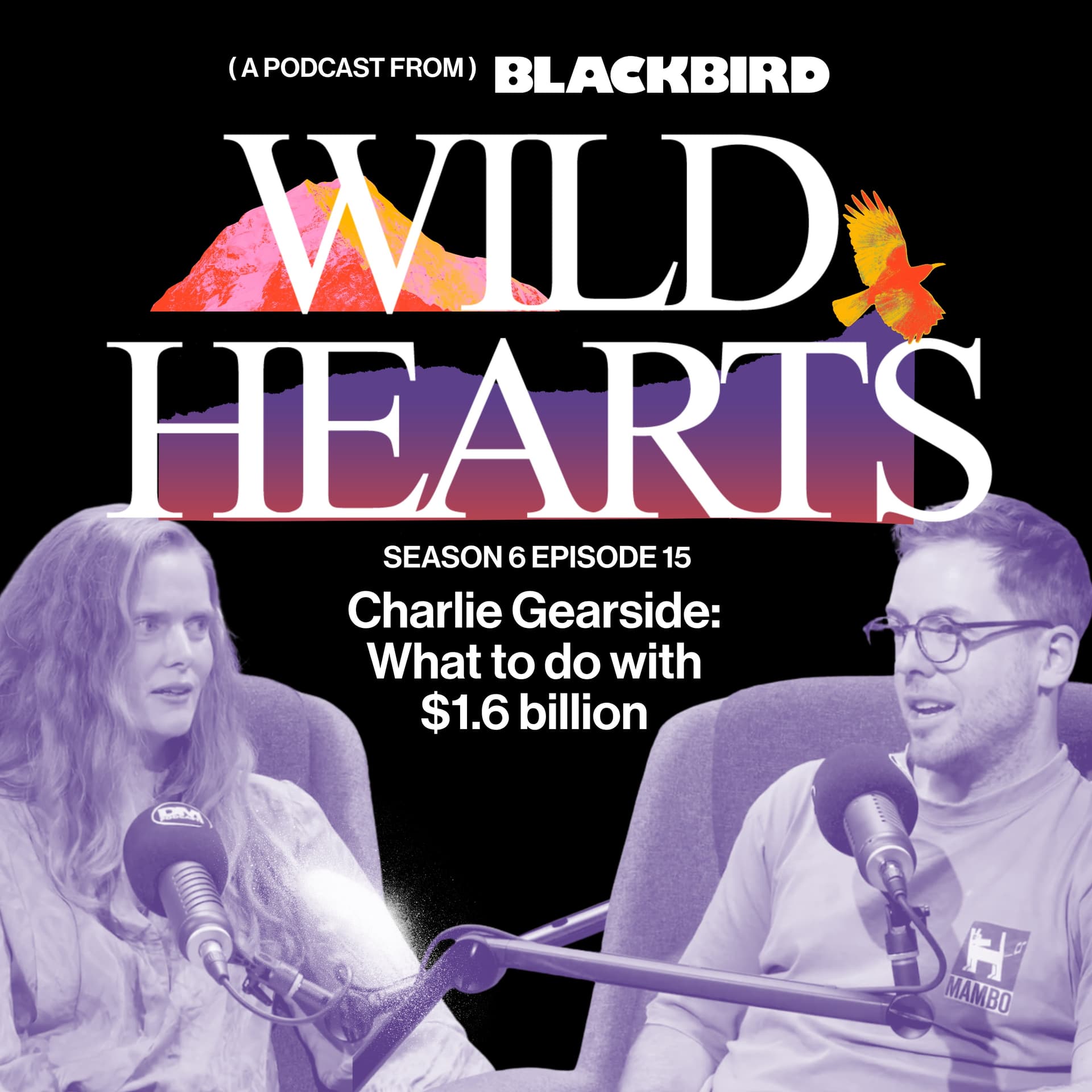
Earlier this year, Eucalyptus sold for $1.6 billion - one of the biggest exits in Australian startup history. Charlie Gearside co-founded it.
A year on, he's spending his time on YouTube and on Build Australia, the nonpartisan movement he launched last month to make space for a more ambitious version of this country. He talks publicly about property investing, the universities, and a culture that calls earnest people try-hards. None of it is comfortable, and none of it is what most people do after an exit.
He's also the first to admit that none of this pays off quickly. The work is to shift what Australians think is acceptable to want. A project that’s measured in decades, not quarters.
Kate sits down with Charlie to talk about untangling your identity from a company you built. The brutal question he had to ask himself before leaving Eucalyptus. Why he won't go into politics. Why he thinks the most risky thing right now might be doing nothing. And the one topic he's still too nervous to make a video about.