
In short
Wild Hearts Podcast Episode Notes
Episode Overview
- Title: From Impossible to Obvious: OpenStar’s Fast-Track Approach to Fusion
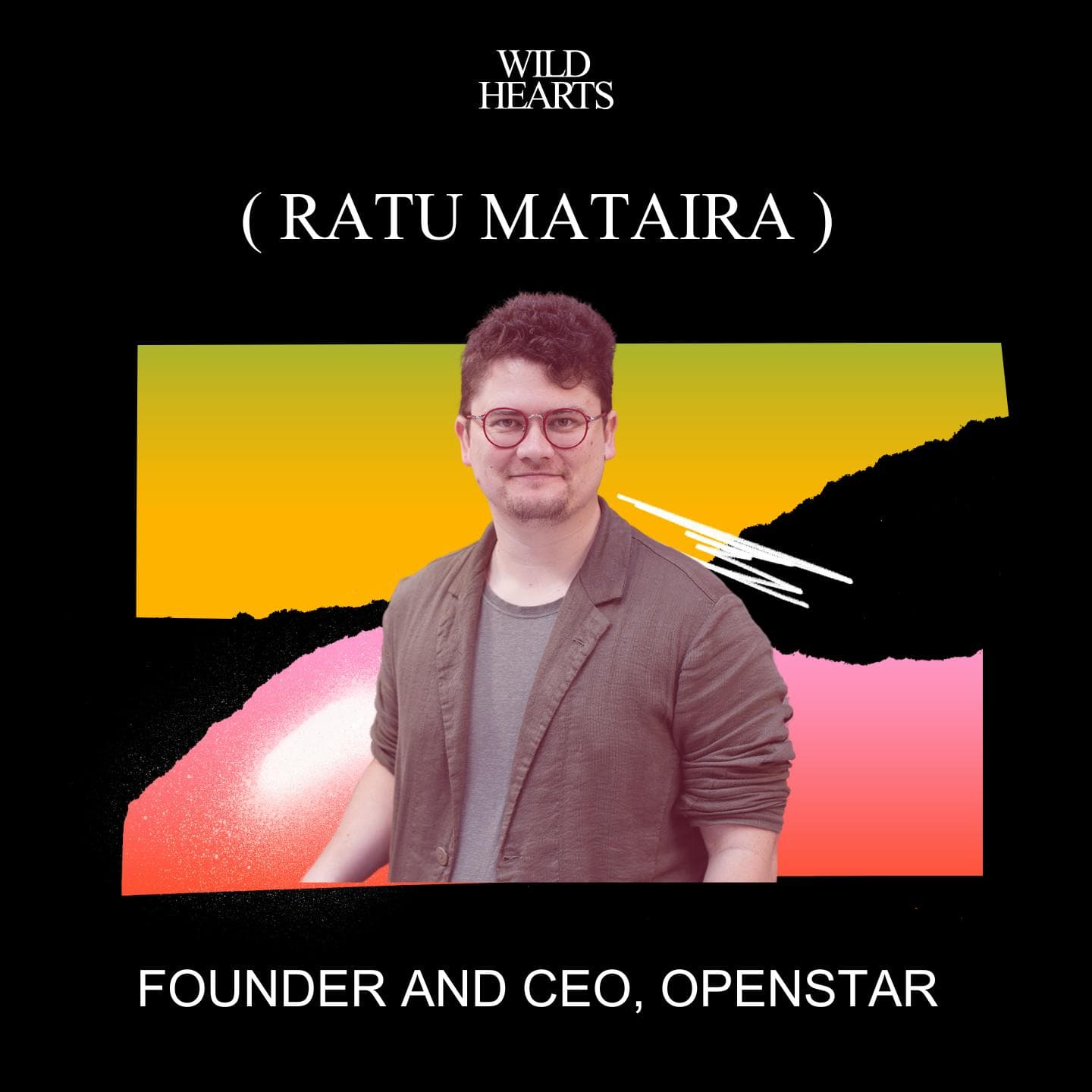
- Guest: Ratu Mataira, CEO of OpenStar
- Host: Mason Yates
- Duration: [Duration not specified]
Episode Description In this episode, OpenStar CEO Ratu Mataira discusses the groundbreaking achievements in nuclear fusion, specifically how the company reached the critical "first plasma" milestone in just 16 months. The conversation focuses on the common misconceptions surrounding fusion, the innovative design of OpenStar’s levitated dipole reactor, and the potential for commercial fusion to be more achievable and valuable than previously thought.
Key Topics Covered
- First Plasma Achievement
- OpenStar achieved its first plasma milestone in just 16 months, significantly faster than competitors who took 6 to 17 years.
- The process involves complex engineering challenges, such as controlling motor actuators and integrating various systems.
- Misconceptions About Fusion
- Common Myths:
- Fusion is often considered "30 years away" – this notion is being challenged.
- The belief that fusion is prohibitively expensive and only feasible through massive government projects.
- Ratu argues that fusion is closer to practical application than many think, potentially within 10 to 20 years.
- Fusion as a Viable Energy Source
- Fusion generates energy through the combination of hydrogen isotopes, resulting in helium and large energy release.
- Current energy sources, including fossil fuels, trace back to solar fusion.
- Economic Viability of Fusion
- OpenStar is focusing on applications that can unlock economic value before achieving full power generation capabilities.
- Potential early applications include:
- Medical isotopes for imaging and treatments.
- Addressing nuclear waste issues, potentially making fission energy more sustainable.
- Engineering Innovations
- OpenStar employs a levitated dipole reactor, which allows for faster iteration and integration compared to traditional tokamak designs.
- The design facilitates easier integration of components, enabling quicker adjustments and troubleshooting.
- Start-Up Mindset
- OpenStar emphasizes a culture of rapid learning and failure tolerance, which is crucial for innovation and progress.
- The team adopts a proactive approach to problem-solving, as illustrated by their quick solution to a motor controller failure.
- Pathway to Commercialization
- Focus is on creating stepping stones towards eventual power plants, rather than starting with large-scale reactors.
- This involves building a supply chain that can support fusion technology and establishing a credible business model ahead of full-scale implementations.
- Future Outlook
- Ratu expresses optimism that fusion could become the cheapest form of energy in the long run, building on cost-learning and technological advancements.
- OpenStar's journey reflects a new mindset in fusion energy development, focusing on practical applications and gradual scaling.
Key Takeaways
- Fusion Technology: The traditional outlook on fusion being decades away is outdated; OpenStar's rapid progress challenges this narrative.
- Economic Opportunities: Fusion has potential applications across various sectors, including healthcare and waste management, which can provide early returns on investment.
- Engineering Approaches: Innovative reactor designs and a startup culture of iteration and flexibility are essential for overcoming historical hurdles in fusion development.
- Long-term Vision: A focus on scalability and cost reduction could lead to fusion becoming a dominant energy source, allowing for a sustainable future.
Concluding Thoughts This episode highlights the transformative potential of fusion energy and how OpenStar is redefining the future of energy through innovative engineering and a shift in mindset. Ratu Mataira's insights provide a compelling outlook on the near-term viability of fusion and its capacity to reshape the energy landscape.
---
Additional Notes
- The discussion underscores the importance of community engagement and transparency, particularly in terms of sharing the journey of innovation with stakeholders.
- Personal anecdotes from Ratu add depth to the technical discussions, illustrating the challenges and excitement inherent in pioneering a new technology.
Next Steps For more insightful discussions and lessons from founders and operators in various sectors, consider following or subscribing to the Wild Hearts podcast for future episodes.
Written by AI. May contain mistakes. Listen to the episode to check what was said.
Transcript
Automatic transcript. May contain errors.0:01and that first plasma milestone is like everything has to work and so you're really now the long tail of really lame stuff that gets wrong it's like we just have to lift the magnet up and it's literally a motor actuator and i burnt like two months of my phd back in the day struggling with motor controllers um that were way too complicated for the project i was doing like i was like i've scaled this company to like 40 people and i can't believe i'm fighting a motor controller again like this is this is bonkers welcome back to wild hearts i'm your host mason yates i'm on the investment team at blackbird ventures.
0:36I've never been more excited or more convinced that nuclear fusion is closer than we think. For decades, nuclear fusion has been framed as a scientific moonshot, always 30 years away, prohibitively expensive, and only viable through massive government projects. But that's a story changing fast. In just 16 months, OpenStar hit their first plasma milestone, a feat that's taken in others 6 to 17 years. No billion dollar budgets, no politics, just raw pace, a magnetic breakthrough, and a team that isn't afraid to build, break, and try again. And sometimes literally with a boat launch. On this episode of Wild Hearts, I sat down with founder Ratu Matejda to unpack why Fusion's path to impact doesn't start with power plants, how OpenStar is rewriting the rules of Fusion economics, what makes levitated dipoles different and radically faster, and why fusion might be the ultimate better tomorrow than today technology.
1:32Bratu's clarity, courage and ambition left me genuinely inspired and I know it will do the same to you. I'm here with a beginner's mindset. I want to learn about nuclear fusion. Let's start at the top. What is it? So fusion is the process that generates energy in all the stars in the sky and in particular our sun. And so if you actually look at all the other types of energy that we use in our day-to-day life, whether that's the food that we eat or the fossil fuels that we burn, all of that energy actually backtracks its way to fusion that was happening inside the sun. So that's why it matters to us.
2:10But if you look at it at an nuts and bolts level, you're taking isotopes of hydrogen and you're squeezing them together under immense pressure and temperature to the point where they actually lock together, become helium, and that releases a huge amount of energy. That's where most of the energy of the universe actually comes from. It's where all, like I said, all of life's energy comes from. And so companies like ours, like OpenStar, what we're trying to do is build machines that can cut out all the middlemen and just bring that down, get the economics better. And then once we have control of that process, we can scale it the way that we want to as we build civilization.
2:46So conceptually makes perfect sense. What are some misconceptions? Because the way that you're describing it is pretty clear, at least to me. But like, let's call out the myths that a lot of people don't quite understand or overlook or believe because someone else said it to be true. I think the biggest one our industry deals with is this notion that fusion is 30 years away and always what we. There's been a lot of progress. And I think a lot of people are starting to actually believe that it's probably not 30 years. It's probably more like 20 or 10. Like they're starting to believe that it will actually happen within our lifetimes.
3:20I'd go a step deeper and say that there's lots of, say, VC funds out there who say, oh, yeah, no, we believe the tech will work, but it could never just return on a VC timescale. And so it's going to be the domain of governments and big bureaucratic technology organizations. I think all of that's wrong. And one of the reasons for that is whilst the journey is being justified by building power plants, there are serious pieces of economic value that can be unlocked if you can master fusion. Even if it's not a power positive type reaction, there are other applications along the way. And one of the reasons that's important is A, it allows us to provide value to society sooner.
4:01That makes us easier to back financially. But B, it also allows us to start building the supply chains that we need so that by the time we're delivering power, which is a very competitive product, we're not deploying kind of first-of-a-kind economics against something so competitive and so I think not only is fusion closer than people think but actually we can deliver value earlier and not just it's not just attractive I also think it's necessary and that's to do with a lot of the risks that we face as an industry is whether or not we can get to producing value soon enough to actually matter and survive.
4:38With the current landscape of nuclear fusion approaches, is the general media right to say that actually it is 30 years away infinitely? Actually, it's going to be really, really expensive. And perhaps then share why sort of picked up that you're removing the middle folks sequenced in between the value. And so just share how OpenStar's approach is different. Let's address why this impression is that Fusion is 30 years away and always will be. One of the challenges is that from being able to make it in the lab and discover how it works, which was in the early 1920th century, really there's a huge range of scale of performance that needed to be achieved.
5:28And actually the industry managed to run through that scaling process like just in academia, incredibly quickly until basically the early 90s. I mean, everything started to stall. And it's in that period where it started to stall, where that impression that it was 30 years away and it always was going to be really started to set in. And kind of fair enough, because humans are good at extrapolating. It's been 30 years since. It's been 30 years since. But the reason I think that's true, and this is the thing that's kind of fundamentally changed, is that the projects that became the champions of making that next step and had those delays, they changed in character really fundamentally.
6:14So the best example is this project called ETA. It's a project to build a big tokamak, which is a very traditional type of fusion reactor. It happens to be being constructed in France, but it's an international collaboration between all the biggest and most powerful countries on Earth. In fact, it was originally set up between the US and the Soviet Union. That's how long it's been around for. And just to make it really clear, that's more of a political project than it is a technology project. It was a way of bringing together these countries on a peaceful topic that they weren't afraid was going to give one or the other advantage and an arms race.
6:53And it was an olive branch for these countries to work together. And the problem with that is if it's a political project, it's not an economic or a technological project. And so its aims were never to bring fusion about in a timely fashion. Its aims were to create a framework for these countries to work together and these people to work together. And that's actually hard. Like getting Russia and America to play nice on anything is not straightforward. Turns out that's still hard. Turns out it's still hard. And so in that regard, you could actually regard it as a huge success, you know, for the really hard problem that they chose to tackle.
7:30But you're basically tackling the two hardest things humans do, which is try not to fight each other and make fusion reactors work. And you're bundling them into two projects. But I think that's one of the reasons why people think this technology is so far away is because they're cross correlating those two things. If you actually take a step back and say, no, this is like any other technology that has a pathway to application. is there a way of developing it sufficiently fast enough you can actually create a credible pathway to generate value soon enough to matter and actually return value to society let's take that a step further and actually talk about like you you also mentioned how a energy is very competitive we can agree b how do you get over the hurdle of like first prototype economics of like being super expensive and like what does that first value creation that someone on the other side will buy?
8:27So we're already seeing companies achieve this. So this is not like a unique open start point of view, but like if you can drive fusion reactions, you create this thing called neutrons and those neutrons are useful for all sorts of things. The first application you typically come across is being able to image things. So just like you go to a hospital and you get x-rayed, x-rays can pass through some parts of you really well but not other parts neutrons are pretty similar we don't use neutron imaging on people that would be bad but we do use it on industrially produced components the one that most people will be familiar with is actually turbine blades for aircraft so those are now sufficiently complex and cannot fail right that every single turbine blade is basically or for a high performance aircraft is basically neutron imaged.
9:16So it's exposed to these neutrons and it reveals all of the cooling ducts that have been put into that turbine blade. And if any of them are blocked during manufacture, you throw that blade out, right? Because you cannot put that in an aircraft. So there are already parts of our society that are dependent on fusion as a technology, but that is a very far position away before you actually get to building power plants. And so it's about finding those opportunities for basically stepping stones along the way. Where the industry is at at the moment is probably medical isotopes. So there are now companies that can produce enough fusion to create these isotopes, which are useful in the medical industry, either for imaging people.
9:59So you ingest an isotope, it goes somewhere, you know, in particular to a certain kind of tumor or whatnot. and then we'll light that up for a scanner to see and a doctor go, okay, cool, that's where we're going to pull out or actually kind of a targeted method to cause damage to the tumors as part of a treatment. That's the level of performance that the kind of fusion industry is at and then we're starting to look at how do you grow the medical isotopes, how do you expand global access to these things because it's still a very first world medical treatment but it doesn't have to be. We can produce more of these things and expand global access.
10:38And then moving the next application above that is probably working through nuclear waste, which is quite ironic. So any country that's been running a fission based energy system has been accumulating nuclear waste that they really don't know what to do with. So not only is there an opportunity to use fusion to burn that through, there's also an intermediate step where we can actually make fission a pseudo-renewable energy resource. So making sure that their waste problem is solved. That doesn't solve all the problems and difficulties with fusion. Sorry, with fission. But it could significantly help and is therefore, again, super useful.
11:16And so you're finding those stepping stones along the way. Now, the important part is that's how we avoid deploying first-of-a-kind units on the power plant side where we haven't had a chance to learn anything about all the different systems that we need to deploy. It's not just us as a company. We're developing various parts of the tech, but it's also our supply chain. We talk to shipbuilders about getting the large pieces of steel that we need. There's lots of examples where it's actually a supply chain that is adjacent enough to be converted, but wants multiple projects so that they know they're building a business instead of doing a one-off.
11:57And you want to be able to get those projects earlier where the economics are better, but the overall kind of size of the market might be smaller, but you get the ball rolling so that you have that supply chain ready by the time it's come to actually build a power plant. it's actually what i think one of the big misconceptions is the difference between fission and fusion and maybe it's worth just identifying the difference between the two i think physicists can be blamed for naming them so closely together that even a fusion company ceo uh like myself just mixes it up linguistically yeah um so and the reason why we named them very similarly is because they are just the reverse of each other um so if you look at the elements you start off with very light elements like hydrogen you end up with very heavy elements like uranium and it's the nuclei just getting bigger as you go through that list and what fusion is is you take two light nuclei you put them together you get a heavier one and fission is just a reverse of that you're taking a very heavy nuclei you're splitting it apart into two small ones now there's a middle ground where neither is favorable and so iron turns out to be the perfect balance it's one of the reasons why it's so common is that both pathways eventually lead to iron and so it ends up being reasonably abundant but the difficulties and advantages of using both of those methods as an energy source are quite different so fission is traditionally much easier to do from an engineering perspective just getting the reaction going but all of your effort ends up going into making sure the reaction doesn't run away on itself and then when you actually look at what the products are effectively the waste you then have some pretty serious questions about how you manage that waste and what you do with it.
13:41Fusion, we are so excited about it because it kind of flips it on its head. It's much harder to do from an engineering perspective, but it is much more straightforward on a safety perspective. And when you look at the safety levels that you would see in a fusion power plant, they're much more similar to all the other industrial processes that are commonplace in the world today. So if you went to a large kind of an oil refinery or a chemical factory, you wouldn't find hazards that are particularly higher in a fusion power plant. So that's the kind of level that you're playing with. And that's really important.
14:12Communities want to know that they're safe and that the engineers and the business people and the regulators who are involved actually have a grasp on this problem. And I think that's the thing that we struggle with with fission. Not saying it's impossible, but that's where the challenge is. It's like, how do you keep it safe? How do you create, how do engineers, business people, project planners, regulators, all come together and deliver those projects. And in a particularly a way that gets them cheaper over time as well, which has been the real challenge with traditional nuclear. But fusion is a way of sidestepping that side of a problem and buying it down by just being smarter and harder working on the engineering side.
14:52So misconception number one, it's safe. Misconception number two is it's really far away. Misconception number three is that it's really, really, really expensive and it isn't feasible. You've touched on that, but I want to go deeper there and really learn about what is underpinning its way to expensive, it's not feasible logic versus the reality of being on the ground at OpenStar. So I think if we look at the other approaches to doing fusion, we see a lot of what we call the pilot plant pathway, which is that you start off with a small piece, you build a bigger piece, and you're building out different parts of a power plant, and one day you're going to deploy the pilot plant.
15:35That pathway is really hard for what we've already discussed. You're effectively deploying a first-of-a-kind unit at a huge scale, so a project, you know, on the orders of billions of dollars to deliver. You've had very little chance to do cost learning on the way through, and as a technology business or an organization, you haven't actually been learning broad stroke lessons of what you're about to tackle next from what you tackled before the way we say it is you start off with cable you figure out how to make magnets you figure out how to make a reactor or a demonstrator and then a reactor those steps actually have very little to do with each other the thing you add on next is a really big whack of challenge and that's what ends up making it really hard to predict how long it's going to take, you know, it makes it hard to predict success, it makes it hard to grow the organization and scale those learnings.
16:27When we look at what it's like at OpenStar, we're really lucky to have a system that's really easy to integrate. And that means that we actually jumped to full system integration much earlier in the journey. So we don't talk about building one small piece and then maybe we'll take on another bigger piece of it. We actually have most of the pieces already just at subscale and subperformance. And so we turned on our first prototype at the end of October. We achieved what's called First Plasma. We'll probably cover that in a moment. But in so doing, we retired the integration risk and now we can tackle the performance risk of all those different components, but at the same time.
17:03The cool thing about that as an organization is I've got 65 staff who are now all intimately familiar with all of those things. And now they just need to scale up to that next level of like, well, okay, I can build a car, but how do I build a really fast car, right? It's not, I figured out how to build a wheel. Now I need to figure out how to build an engine. Now I need to figure out how to build a chassis. Like we actually have all of the ingredients already. And sometimes we need to add a new ingredient, but it's never a huge part of the next challenge. So that's been a huge part about why we think this technology is faster to build in our case and faster to de-risk.
17:40But that's something very unique to us. Like that's not a company decision that we made to like, oh, all these people are silly to develop it in this way. We think their concepts force them to do so. But the Dipole, the particular machine that we're building, happens to lend itself to this approach really attractively. We can just chop and change bits of it if we need to replace things, iterate things, if things break. It's very easy for us to fix those and move forward and keep making progress, which is really what you want when you're doing a hardware startup. I want to read an internal message that was shared from Nikki, the founder of Blackbird.
18:18Pretty amazing that OpenStar are on the cusp of their plasma milestone, 16 months after we participated in the seed round. For reference, here's a timeline for the same milestone for some of the other competitors. It's a crucial milestone in demonstrating the viability of their fusion technology. And so we've got TriAlpha Energy, General Fusion, Tokamak Energy, Commonwealth Fusion Systems, Helion Energy, and then the corresponding timelines are 17 years, 6 years, 6 years, can't see that one, 6 years, and versus 16 months for OpenStar. What the heck's going on? Like I said, I can take a huge amount of pride in having built a team that can move there quickly.
19:03But a huge amount of credit actually goes towards the concept itself. I think when you're developing new technology, you can look at all the advice, you can look at all the success, right? But we're not a rocket company. We're not a SaaS company. We're not a tokamak company. We're a levitated dipole company. We're also going to be the only levitated dipole company. But what it actually means is you should always look at what your technology lends itself to from first principles. And once it lends itself, that actually should affect the way you build your business. What kind of strategies do you lean into?
19:40What kind of culture do you want to build? We're not a semiconductor fab. I don't care about super cleanly workplaces because a little bit of dirt somewhere is not going to ruin what we're doing, right? What I care about is making sure that I have a culture where people feel comfortable pushing speed and copping mistakes because of it, and that we just catch those mistakes and we try again and we have a really fast iteration pace and the reason for that is that our system is very easy to iterate and so it's a strength that you end up wanting to lean into where we have a disadvantage right like that whole list there's a reason it takes them takes them longer a lot of the time it's because those concepts are further ahead they've had billions of dollars spent on them and so these other companies other projects other startups their hurdle for making a big piece of progress is just bigger.
20:28But because of the other concepts, we're typically what we would say tightly coupled. Like it's hard to pull them apart and iterate one piece and be able to make these mistakes. And so in most of those other systems, your tolerance for failure is basically zero. Like if the next prototype fails, it's game over, right? And so if you can't have failure as part of your learning mechanism, you end up creating cultures and companies and strategies that are slow. And I think if you're going to build one of those machines, that is an optimization that you end up doing. But I think it means that we can beat them, right?
21:04That we end up having the technology and the strategy that allows you to move faster. So I feel very lucky in having picked that particular horse. And yeah, it's just about convincing the rest of the world that that's true. And every time we build a new prototype and turn it on and continue to do that at pace, right? the cognitive realization starts to starts to build so there was an amazing live stream on youtube that a lot of the black team blackbird team were watching there were three the first two didn't work uh yeah i saw some of the email threads and it was like wild anticipation of like it honestly felt like a rocket launch like it's scrapped for all sorts of weird reasons yeah yeah and so maybe walk us through those three days the highs the lows and what you actually accomplished sorry to bring back some btsd yeah no um so i've never felt more relief in my life i've been actually achieving that first plasma um as a team we were actually really confident we were going to get it um and the reason we were confident is there's sometimes an overlap between like the true milestone on a technical level and the flashy milestone So to some degree, plasma is a flashy milestone.
22:18It's really beautiful. It's cathartic. It gets people who don't understand anything about it excited. And that's fantastic. It's like this wonderfully unifying thing. But when you look at our technology, the deeper, scarier thing for us is whether or not we could make that magnet work. And what we had done before those three days, before those live streams, is we had made the damn magnet work. We had charged it up to a magnetic field that could support the plasma. and that was the blood, sweat and tears from the 16 months previous, right? So we as a team, you, we could do it. But actually getting first Plasma restore an important milestone because there's still a few more layers of things that actually have to happen.
22:58And we had dry run a lot of those, but those three days were literally a testament to you can dry run things all you like. But it's to some level, there's always little stuff that will catch you out. and so the three days were okay we're pretty sure we're going to get this cracked but like running the system is really hard there's a lot of people who have to put a lot of blood sweat and tears on every attempt that we make and frankly we're at risk of breaking people you know for we can't have 10 15 attempts at this people will just just break like if you do a rocket launch you can scrub it a few times um and then sometimes you get a really bad an explosion you take a deep breath and you go through this kind of cathartic stage before getting back into it.
23:42In our case, we weren't going to get a catastrophic failure. So it was really a question of how long can we really push this thing and what kind of mistakes, what kind of errors were we going to find on our way through. We honestly thought the first attempt would work and then it didn't. And so that's why we sent out the live stream link. It was like, this is a journey that we want to take, not just our investors, but our friends, our families around. So I was, you know, sending it to my aunts and uncles and my parents and that kind of thing. And when it didn't work, it was just like, oh God, you know, this is the slog of what we do.
24:16It's in some senses, the downside of the culture and the strategy that we have is that there is a lot of like, oh God, what did we forget this time type feeling. But the real difference is, are we learning something? Is the thing that failed something new that we've never looked at before? and so you get kicked around um by it but you go okay all right we haven't caught this thing let's we've caught it now let's let's just do with it and that first plasma milestone is like everything has to work and so you're really now the long tail of really lame stuff that gets wrong it's like we just have to lift the magnet up and it's literally a motor actuator and i burnt like two months of my phd back in the day struggling with motor controllers um that were way too complicated for the project i was doing like i was like i've scaled this company to like 40 people and i can't believe i'm fighting a motor controller again like this is this is bonkers um but you're in that long tail of things that can go wrong and they're getting smaller and smaller at that point so they're not you know you know you're going to get there but that first time it failed so we you know it sent out this link we've got all of our investors watching you know the notion that it had failed and i now had to front up to everybody and tell them what went wrong uh what we're going to do about it the fact that we can try again tomorrow effectively i seriously considered not keeping on sending these live stream links um out but i'm actually really glad i did um i'm glad that i continue to lean into this notion that the cost of failure on our system is really not that high this is a journey people have signed up for that they're excited about and you know from rocket launches that they get scrubbed for all sorts of reasons and people still you know get up at their wee hours of the morning to watch you know um spacex and rocket lab um launch things to orbit and so really glad i i lent into continuing having those live streams out because because it was really magical like i've i've watched some of those sections of the live streams again and i'm remembering it by watching them.
26:22But like if a flake of that emotion actually gets, you know, experienced by others, then it's just an amazing thing to be able to share. And we have to be able to share these things. We have to bring along the community that is allowing us to justify the journey that we're going on. So it's a hugely important thing for us to do. Totally. I mean, it's what unlocks the highs, but like when you're staring into the abyss of the unknown and I've got the email up with the subject header that says not today dot dot dot again tomorrow so intense so intense like share a bit more about tomorrow in the anticipation of actually achieving there's um one of those emails I sent out the subject line I wrote was always include a crank and that was when the motor actuator failed by the way it's poetic it's like the past haunting you i know um yeah my rules are no motor controllers no epoxy and no magnetic materials uh where you can have you know where you don't need them um those three rules of thumb i think could save people in my space or similar spaces a lot of a lot of trouble sorry not no motor controllers but like beware motor controllers being overly complicated for what you're trying to do like all we needed it to do is like raise the magnet up into position it's not it doesn't need to do anything fancy it doesn't need to like balance uh you know um the head of a pin it just needed to say one thing from one place to another and it was far too complicated to do that yeah maybe just describe exactly in the way that you did but just finish the the thread like what actually was happening with the magnets with the reaction bring us there so we can sort of see it well on on that um it was simply running that motor controller under load um with all the other things that had gone on um it was really a control and integration issue on the plc whereas this is the computer that's managing everything and the problem with these motor controllers is that they're very complicated because what they do in industrial settings is really often quite precise or complex where you've really fine-tuned to solve a particular problem and when you go to r &d what's often the case is that you don't need that you're just like get me in the ballpark please like just operate in a really simple way and so it's that kind of mismatch just opens up all these interesting ways where it can backfire on you so i i had this email that said um always include a crank and really what i was saying was two things the meeting that we had i was just like guys can we just hand crank this thing like it's just a shaft that you spin and it slowly raises the magnet can we jump on there put a crank on it and just crank it by hand and the answer is yes and so that night the team made the crank um we pulled apart a boat winch machined a couple of brackets um and we had a hand crank ready to go we literally had a plan where if the motor controller failed the next day um that we would just run up onto the chamber on the live stream right pull off the motor put on the hand crank and then one of my engineers would crank the magnet into place which is again you're in this long tail of problems so like if the problem can be solved with a hand crank like it's not a real problem right it's something you're going to push push your way through and so funnily enough the other part of the team that was working on getting the motor control working succeeded all right they they felt very silly for making the type of mistake that they had made and embarrassing the whole company in front of all their investors on this live stream but they actually managed to get it to work and so we didn't end up needing the hand crank which actually just from a you know poeticism uh point of view i think is a real shame because i was really looking forward to having one of my engineers run up on top of the thing and literally uh cranking it up because we were we were ready to go but the fact that like my team could whip together that solution literally the night um before like we fail during the day we figure out like what's the simplest possible answer we get that ready to go for the next day was exactly the kind of high pace learning that I just love in my team.
30:34Well, I'm grateful for, because it made for great viewing and anticipation and what a story. You mentioned earlier that one of the starting point differentiators is that you knew, in essence, back-solved from that use case from first principles to arrive at prototype one. Did I capture that correctly? When did you know that the first use case being cleaning up waste at fission plants was going to be the first use case that you're solving for? I actually don't think we've figured that out fully yet. So where we're at right now is that we have a firm belief that the first use case should not be a power plant just because of how gnarly that application is.
31:18what we're looking for is what one of those other options so waste or isotopes or making fusion fuel tritium that's another option there are quite a few or creating test facilities for the fusion ecosystem broadly it's a variety of opportunities to build and sell machines that come earlier rather than later it's actually a product management problem just like any other it's um the main parameter that we have is how we want to size the machine right the bigger they get the more oomph they have and therefore the more firepower they have to solve one of these applications but you can oversize a machine you can get more fusion out than you possibly need to make medical isotopes for example but you could undersize it where it's not going to be useful to burn through enough of the waste or it's too small to be a power plant for example and so the exercise that we're actually going through at the moment is what is the correct size we think you only need one stepping stone like there's no point designing two we think you can size one stepping stone to capture enough of those applications that you could sell a few of those units through because you really want to get to at least some notion of end of a kind before you then take the next step to building power plants now you immediately start researching how to do that, like you start doing the design, but you know that the production of that earlier sticker is teaching you and your supply chain so many of the lessons that they're going to need to deploy into the next step.
32:51And so I don't think we've reverse engineered that entirely yet. What we have reverse engineered is this notion that we really don't want to build a power plant is the first step if we can avoid it. Now, the counter to that is if capital markets are really eager to just like speed run it um and there's a pathway for that that to happen whether or not it's for world's governments coming together or um you know there are a few of our competitors who could hit really big milestones ahead of time so you end up in a kind of chat CPT um open AI versus anthropic moment where you've got strong you know people wanting to make their bet at scale you could imagine this whole intermediate market leapfrog business as a waste of time but for us it's we're building a business and we need to figure out how we're going to survive.
33:40We need to figure out, we need laser focused on providing value sooner rather than later. And if the market wants to give us other options, that's great. That could either be, you know, the application side or funding side. That's awesome. But we're looking at the world as it is today and figuring out what we can do and what that pathway is. Can you teach me a bit more about how you thought through the units of learnings or progress that you needed to achieve from the prior round and how you think about that going forward? I'd probably give you a taste of how we think about milestones in general.
34:15Like I've talked a little bit about what the next couple of steps look like, but I haven't actually given the full framework of how we think about it. And I'll go all the way back to the beginning. So like we had this input technology, these superconducting power supplies that basically made the type of fusion reactor that we wanted to build possible at all like before that people thought it was impossible and so i turned up and i said hey i want to build a little magnet that has one of these power supplies in it um that proves out the integration engineering and basically it would be like a little benchtop experiment and it would have a little floating superconducting magnet on it and off the back of that we'd then go build our first prototype reactor that didn't bite off enough risk to be exciting as it turns out um that was one of the first lessons I was taught was, so there's something that's really common in startup parlance, which is that you rank order all of the risks that lie between you and market dominance, right?
Read the full transcript
35:10And you rank order them by most amount of risk retirable for least amount of money. And you just list them out. You count down the list. It's a really good framework, right? And it's just nice and rational. Retire more risk for less money earlier in the process. it's missing a really important point which is that startups do not raise money continuously right we're not constantly issuing instruments on a weekly basis that are slowly increasing in value there are inflective moments in our journey where from either a market technology or capital market perspective and we call them funding rounds and so you've got the list one of the big questions that you always have to have is how much of this list am I going to peel off for one round of investment, right?
35:58Because it's actually not usually just the top line. It's very common for just one thing on that list to not be exciting enough. You're at risk of becoming far too incremental in your risk retirement strategy. And so it was actually Peter Beck taught me this. He just said, well, what's your version of a rocket test fire, right? Like not necessarily launching one but you've got a rocket engine and just it's visceral it's there's this payoff on that risk might be a little bit further down the list but it's just intrinsically more exciting and so you look at that and say well okay i obviously need to do this first and this and this but if i get to this point there's this inflective excitement moment um that's super valuable um and that's how you can think about bundling together these things sometimes it's simply like what does an emotional investor get excited about sometimes it's driven by your industry right there's like a big company out there or a collection of companies or academics who have really set a narrative about what credibility means i'm really familiar with what that looks like in fusion but you'll see it in self-driving you'll see it in ai you know if you're not working on um agentic ai at the moment you're not you know what are you doing um and so we see these kind of narrative thresholds set up as well And so that answers that question of like how much of that you chunk through.
37:21So what that meant was like a little levitated magnet on a benchtop was not far enough down the list to be exciting. And I was proposing trying to build a trillion dollar business and saying, oh, raise like three million and get started. Like that was naive, let's say. and so we ended up raising enough capital to actually build a full integrated prototype that could generate plasma and really importantly what we were doing was benchmarking where at the academy had left it so there was one of these machines that was built at MIT it had a certain level of performance and we said well that technology can't keep going any further we can go further, but we need to at least start at that level, right?
38:08And so it had the excitement factor, it got us up to state of the art, but it unlocked what the journey looked like moving forward. From there, the way we think about those milestones is integration. So that's what we proved out, new technology coming together. Next is performance. How well do these systems actually perform? Can you push for magnets? Can you push for heating system? Can you operate the magnets well enough to be commercial. And you need to know those things to then tackle the next step, which is scale. So actually making it big enough to be useful. That's a framework that's like quite specific to the kind of journey that we need to go through.
38:45I was also reasonably inspired by like how clinical trials play out in pharmaceuticals. I think a lot of people, I'll use this as an example. A lot of people think that clinical trials are about statistics. So you start off with stage one and it's like a small group. Stage two is a bigger group. Stage three is like this really big group. Statistics is certainly part of it. And it's also just production scaling. Like there's plenty of pathways for creating drugs that you think you understand at a small scale. And then by the time you're building, you know, the kind of huge vats and multi-stage processing that you need to deliver a little palletized product to a consumer, something changed along the way and it all fell apart.
39:26That's why a lot of drugs fail at later stage trials. It's not statistics. You know, the previous trials were statistically correct. You know, often it looks like it worked. And so we looked at it and said, well, okay, scaling risk, don't need to worry about that. So the next prototype we're actually going to build is at the same size as our current one. We're just like turning up all the performance knobs as far as we can. And one of the really cool things about that, again, is that our machine is really easy to pull apart and put back together again. And so as different parts of our project deliver, we actually get to demonstrate that delivery.
40:01So if we have a new magnet that's higher performance ready to go, very easy for us to swap that in and show the improvements in overall system performance straight away. We don't have to have all three major components together at the same time until we're at that inflective moment of proving out the final milestone. So we kind of do get this now more continuous journey along the way. It's a very unique advantage for the way we're doing things. So yeah, the next step is prove out the performance of the kind of machines that we're building. And then we can scale up to one of those minimum viable products that we've spoken about.
40:37And what is the visceral payoff inflection point moment where we can all see that performance is working? So on the next machine, it's going to come off like a plasma again. The visceral moment is if you look at our plasmas right now in our videos they're very fluffy looking like it's just this big glow ironically that's not what a plasma should look like a plasma only glows in the bits that are starting to cool down and so our current plasma being big and puffy you know just glowing everywhere basically tells you that it's cooling down everywhere too much and that's part of just the level of scale that it's at so the strength of the magnet the amount of heating we're putting into it the vacuum quality um we paired all that back down to kind of a a minimum level because that's those other things are further down on the risk list um you know we weren't trying to tackle that yet the next one gets it to a level of performance where the core of the plasma is so hot it doesn't even glow right like if you take a fireplace poker and heat it up and you get it you know the hotter it gets it starts to glow white hot you keep heating it up eventually you get to a point where it turns into a plasma but it stops glowing um because it's now emitting um ultraviolet and x-rays instead of of visible light so that's literally how hot we should be able to get one of these things and so the literal look of the thing it now only glows at the edges where it's starting to cool down but the bulk of it is actually um not that hot sorry you asked me before what the visceral thing is and i gave you like a very nerdy like i'm deep in the weeds of what these things should be and what we've seen these milestones played out in other machines and what we want that to look like so that performance is like we're now producing fusion plasma fusion grade plasmas uh like the other concepts can um you know we're demonstrating we're playing catch up and to some degree right um this is classic innovators dilemma where we're just gonna you know overtake So it's that moment.
42:47It's like, we're coming for you. You know, we are playing this game. One of the ways we say it is our last prototype showed that dipoles are no longer impossible. They're in fact possible. The next machine is the one that shows that they're obvious, right? It's not a secret anymore. You should totally be building dipoles, but you can't because we've already protected the ways that you do it. So there's that visceral moment for us on that next machine. That's clear to me. And the third learning of scaling And for those just listening in, you showed this graph of everyone projected in one direction and then you exponentially growing in an upwards direction.
43:26The misconception that I'm talking about is that oftentimes you'll hear like, even at scale, these things are like impossibly costly and like everything going into it is expensive. but it's beginning to like play out to see how the sequences into a different version of these expensive reactors to run at scale. So maybe just give us an insight into a few years down the track, you have achieved scale. What does that business look like? So I talked about integration risk, retired VAT, performance risk, we're going to retire that, and we're going to retire the scaling risk. Actually, like we're taking a lot of that risk going to get them rid of it.
44:06But at the same time, what we're really doing is we're building an organization that can just do that type of risk management now. So OpenStar is now a company that can handle integration risk management. We know what it means to take two things and figure out the interface, figure it all out, get it done. We're about to learn via practice how to handle the performance side. Once we've scaled up the machine to a physical size, really what we're saying is we're now an organization that knows what it means to take something that's X big and make it bigger, right? There's probably another layer that comes after that, which is production.
44:41So you've got your first of a kind unit, and now it's about learning how to make more than just one of these things. And now costs really start to matter. And that's again, why we're so obsessed with those minimum viable products, because they're an excuse to do that end of a kind cost learning funded with revenue instead of just what kind of investor is going to pay you to develop one thing and then build five copies of the same thing for the sake of it, right? That's kind of bonkers. And so we're desperate to get to that type of learning. It's like, okay, well, how do we make more of these things?
45:17But my point is that each time you layer this on building the organization, it's something that's now part of your DNA. It's something that you carry forward. And so once you're at the building power plants stage, you now have an organization that knows how to integrate new technology. You now have an organization that knows what it means to push things to their performance limits, to squeeze the economic margin out of them. You know what it means to take a small demonstration in a laboratory setting and then actually make it big enough to be relevant in a fully integrated power plant. And then you know how to then productionize that and make more than one of them.
45:54That learning, you don't leave it behind, right? It's now just part of your DNA. and you want to learn each one of those lessons. You probably need to learn them in the order that I've described, but you want to learn them while they're cheaper to learn in a sense because they also, each one gets more expensive to learn, right? Integration risk is cheaper than performance risk. Performance risk is cheaper than scaling risk. Scaling risk is cheaper than production risk. And so you want to learn them earlier in higher margin markets before you go to more competitive, lower margin markets like electricity.
46:30But I think that's why our pathway is more credible because we're just laser focused on actually figuring the stuff out in the correct order as soon as we can. So that by the time we're putting power plants online, we're actually providing cheap energy instead of artisanal carbon-free energy. And how cheap? I think in the long run, it becomes the cheapest. this is an argument you end up having with solar maximalist folks right like if you look at the cost of solar it just keeps on coming down but it doesn't keep coming down everywhere and it eventually like you actually don't want the cost to go down to zero because you still want it to be a business and the crazy thing is in the markets where your solar costs have gone really really really low your actual energy market costs have not continued to follow that right because really what you're saying is solar can't solve all the problems, right?
47:29And so the typical answer that people give us is, oh, it's all right, we'll just firm it up with batteries. Well, then you're stuck on the cost learning of batteries. And there's reasons to think that that's going to be fantastic. But then people get into, this is one of those misconceptions we can talk about, people get into this trap of thinking that battery technology is for the renewables itself. And from our kind of market and capital zeitgeist that we're driving a clean transition, it definitely feels that way it's like okay we're going to invest in battery technique because it unlocks renewables but if you actually look at batteries as a like energy business all you care about is buying cheap power when no one else wants it and selling it back to them when demand is high and actually if you look at modern grids it's baseload power producers like nuclear and coal who provide cheap power predictably overnight that you can use to charge batteries and then sell it back to people during the day.
48:22And so you actually do find that battery providers end up being vertically integrated with renewables generators, because if they're not vertically integrated, they just buy power from other sources overnight instead of firming the renewable supplier. And so one of the things I think is going to happen as cheap carbon-free baseload starts to deploy is that you're going to have a whole bunch of vertically integrated battery storage providers and renewables, you're basically going to have a private equity play where you can go around, buy up these projects that already exist and basically pull them apart because the value of running the battery economically by charging it on the actual source that you want to overnight on the base load is cheaper.
49:09And you can just create an arbitrage that way by tearing apart the silly vertically integrated structure and making that battery more generically available to the grid. So you asked me how cheap this gets. That's a reflection of like it beats out energy sources where it feels like literally free. The way I think about it really is like what part of the system caps out on the cost learning as you keep deploying them, right? Is it the turbines because we're creating heat to create electricity? Is it the magnets? Eventually you just get it down to the raw materials. as if the transformers, you know, do eventually they cap out and you can't figure out how to make a better transformer.
49:52I actually just don't think we've been innovating in traditional baseload power plants for decades. And so we don't think we can cost one. We think that the iteration pace is too slow to, you know, do multiple iterations in a meaningful timeframe. And so people think that these costs are what they are. You do a tally and you go, okay, this is the minimum cost you can ever achieve. But if you're actually iterating these things fast enough, if you're actually deploying them, if you've got headroom to make them economic, so it's an exciting business opportunity again and again and again in multiple geographies, what you'll find is that that balance of plant can be cost innovated if there's an incentive and a drive to do so.
50:32Basically the world getting better tomorrow than it is today. A really extreme example of that is the new technologies around thermophotovoltaics, which is basically solar panels that are actually calibrated to convert heat, convert energy from light from hot objects, they present a pathway to replacing turbines. Eventually, instead of boiling water to spin the turbine to create the electricity, you just use one of those thermal photovoltaic devices. There are hurdles to get there, but again, it's an example of a cost flaw being fundamentally different. And so you asked me how cheap fusion can be.
51:10I think it's about restarting a technology development flywheel, right? That allows you to actually keep driving the price down lower. The real question is, when does it stop? When does that flywheel hit some fundamental limit? I actually don't. I don't really know where it does, if you can get it started. So we're laser focused on getting it started. I feel like I know what the title is going to be, Better Tomorrow Than Today. thank you so much for just that incredibly insightful conversation super grateful for your time no pleasure to be here mason thank you so much for joining us on this latest episode of wild hearts if you want to learn from other ambitious people that are building designing and creating the world that we want to live in then please hit the follow or subscribe button it would mean the world to us here on the Wild Hearts team.
52:05We have an insane producer, Melia Rayner, an incredible editor, Annie Jones from Welcome to Day One. And our marketing and content support is provided by Jonathan Blakely, and we couldn't do it without them. If you're searching for investment, please, my DMs are open. Find me on LinkedIn. I'd love to help. And so with that, we'll see you next week, Wild Hearts.
From the publisher
What does it take to achieve nuclear fusion in less time than it takes to build a traditional power plant prototype? In this episode of Wild Hearts, we’re joined by Ratu Mataira, CEO of OpenStar, a company that just hit the crucial "first plasma" milestone in a staggering 16 months.
We unpack the misconceptions surrounding fusion, the unique design of OpenStar’s levitated dipole reactor, and why the pathway to commercial fusion might be shorter -and more valuable - than most people think.
🔍 In this conversation, we cover:
⚡ How OpenStar achieved first plasma in just 16 months—years faster than competitors
💥 Why fusion isn’t “30 years away” anymore—and never really was
📉 How misconceptions about cost, scale and safety are holding the industry back
🔩 The engineering breakthrough that allows OpenStar to iterate faster
🧪 Why their first product won’t be a power plant—and what it might be instead
🏥 Medical isotopes, nuclear waste and imaging: the early use cases for fusion
🔧 “Always include a crank”: how failure tolerance fuels rapid learning
🚀 The startup mindset behind building a trillion-dollar fusion company
This episode goes beyond fusion hype; it’s a candid look at how OpenStar is breaking barriers in one of the world’s hardest engineering challenges.