
In short
Podcast Summary: Wild Hearts - Launching Iconic Tech Companies in Australia with Kate Vale
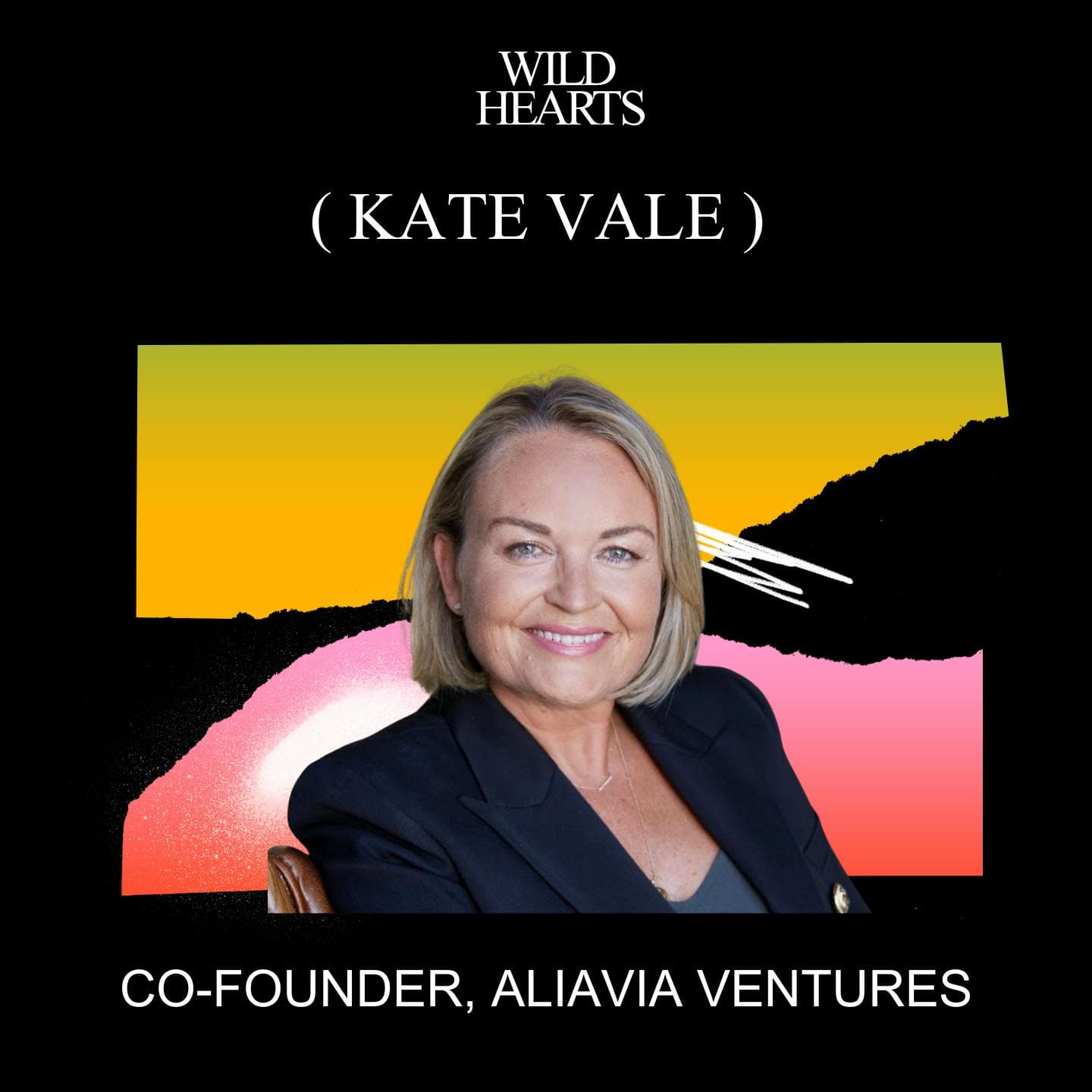
Episode Overview In this episode of Wild Hearts, guest host Maddy Guest interviews Kate Vale, the first employee at Google and Spotify in Australia. They discuss Kate's journey from launching Google from her lounge room to scaling Spotify into a household name, while exploring her leadership lessons and current focus on investing in female tech founders.
Key Topics Discussed
- Kate's Journey into Tech
- Early career in HR and recruitment.
- Transition into tech through companies like TMP Worldwide and LookSmart.
- Cold call from Google that led to her first role as the head of Google Australia.
- Launching Google in Australia
- Began operations from her home, answering calls as Google Australia.
- Focus on growing search advertising revenue and building the team.
- Early challenges included managing local currency and hiring stringent policies.
- Cultural Insights
- Importance of celebrating wins and fostering a positive workplace culture.
- Building high-performance teams with a focus on collaboration and morale.
- Spotify's Launch Challenges
- Spotify's launch was more complex due to the need for licensing agreements with music labels.
- Education piece necessary for artists and the public about the platform's value.
- Strategies for converting free users to paid subscriptions.
- Lessons in Scaling Teams
- Common mistakes startups make, such as scaling too quickly and hiring the wrong people.
- The importance of being diligent in the hiring process to prevent future issues.
- Investing in Female Founders
- Kate co-founded Aliavia Ventures to support early-stage female tech founders, particularly during the pandemic.
- Insights on what makes a great founder and the qualities to look for in potential investments.
Key Takeaways
- First Hire Importance: The first hire should complement the founder's skill set, providing support on the ground while the founder focuses on sales and strategy.
- Cultural Rituals: Celebrate achievements and maintain a fun, dynamic workplace to foster a positive team environment.
- Diligent Hiring: Taking the time to hire the right people is crucial, especially in Australia where letting someone go can be challenging.
- Investor Insights: For investors, the quality of the founding team is often more important than the idea itself. Founders should be passionate about solving real problems.
Conclusion Kate Vale's experiences at Google and Spotify offer valuable insights into launching tech companies in Australia and the unique challenges faced in scaling teams. Her current venture, Aliavia Ventures, reflects her commitment to empowering female founders in the tech space. This episode provides listeners with a mix of personal anecdotes, professional lessons, and inspiration for anyone interested in the tech industry or entrepreneurship.
Call to Action For those interested in learning more about building, designing, and creating innovative solutions in the tech world, be sure to subscribe to Wild Hearts for future episodes.
Written by AI. May contain mistakes. Listen to the episode to check what was said.
Transcript
Automatic transcript. May contain errors.0:00I remember after a hard day of skiing, I went down to the jacuzzi and sat down in the jacuzzi on my own. and then Larry and Sergey walked down and got into the jacuzzi with me. Oh my gosh. Yeah. Within five minutes, every single engineer was in the jacuzzi also because they were absolutely lauded and everybody wanted to be around them. I'd love to know, what do you think people get wrong about scaling teams? Definitely doing it too quickly. Hiring the wrong people because particularly in Australia, it's the hardest thing to manage people out of the business. Tag us into the room. what were some of those early conversations like when you're kind of pitching Aliavea to potential investors?
0:41Well, it was pretty much no, no, no, no. Welcome back to Wild Hearts. I'm normally your host, Mason Yates. But for the second week running, we have a surprise host in Maddie Guest. She'll be leading the conversation today with an incredible investor. And with that, let's hand it over to her. Hello, and a big thank you to Mace for letting me take over the mic on today's episode of Wild Hearts. As Mace mentioned, my name is Maddie Guest, and I am a part of the investment team here at Blackbird. I had the absolute privilege of chatting with the one and only Kate Vale for today's episode. Kate was not only Australia's first employee at Google, but also Australia's first employee at Spotify.
1:25We got all the juicy details and great stories from the early days of both of those three companies, including Kate's hot tub encounter with Larry and Sergey. But that is not all because today Kate is also the co-founder of the venture fund Aliavia Ventures which is investing in early stage female founders. All of this to say this episode really does have it all. Lessons from building teams in new markets to the playbooks of some of the world's greatest tech companies and what Kate looks for in founders when investing today. This is actually my second time meeting Kate after I had the absolute pleasure of interviewing her on my own podcast called So Invested a couple of years ago.
2:06So definitely go and check out our latest episode there when you're done with this one. But that is more than enough from me. I hope you enjoy this chat as much as I did. Kate is whip smart and has such a fun and infectious energy, but I'm sure you'll hear that for yourself. So let's get into it.
2:26Kate Vale, thank you very much for joining us on Wild Hearts. Thank you for having me. Excited to be here. Let's start right at the beginning. I would love to hear about what was your kind of first step into the world of tech? So I went to university in Melbourne and graduated at a time where there was no internet. So researching back online back then if you had a project to do or an assignment to do was literally on the microfiche. sorry you're gonna have to tell me what is a microfiche I'm showing my age funny yeah no that's good please I'm old and you're young um so it is a system where you um it's like underneath a microscope so there's like it would be research papers or pieces of information snippets in books that are not in the library so when you go into the library you go and research something and you kind of look through these manila folders and pull out like pieces of film and then you put it under what you call the microfiche and you can research and have a look through this telescope and take notes.
3:35Wow. Yeah, very old school. When you think about that, which like it's pretty cool in and of itself and then you think about AI today and how we use like Charger PET is almost an ex-Google words filed. Anyway, sorry, I interrupted you. You're at university. Yeah, I was trying to give you an idea of like how quickly it happened, you know, because I left university and then I got my first job in HR at a law firm in Melbourne and was there only for a couple of years before the internet sort of started to happen. So my first job, we used to have the in-trays, remember on your desk, you probably don't remember that, no, but you might have been told that, entries on your desk and there was internal office memos that used to be delivered by like the mailroom guy every day so that's how you got to that was your internal communication before email launched then email started to or email had launched at that period of time and um there was a company in melbourne called tmp worldwide and they had just acquired monster.com which was a competitor to seek.com and so i went and i got a job there they were looking for hr professionals because they were a recruitment advertising company.
4:47So that was kind of my first step into it and that must have been around about 1996 I want to say and then I moved with monster.com and TMP Worldwide from Melbourne to Sydney and the rest is kind of history. I got a job at Ozzy Mail which was a local ISP up there internet service provider and worked on their online sales team and then the dot-com bust happened in 2000 and literally the only companies that were hiring were the ones that were making money and I moved to a company called LookSmart which was an online search engine back then and I guess the competitors would have been AltaVista and then later Google and they were doing quite well because advertisers were still spending money on search advertising because it was working for them and they were getting good return on their investment.
5:39And then sitting at my desk one day, back in the days where you had desk phones and I picked up the phone and it was... I did actually have one of those. You did? Yeah. Okay. There you go. And it was the head of international expansion, David Lee at Google. And he said that my name had been passed around a few times and had come up a few times in conversations. And would I be interested in heading out to Mountain View for an interview? well I mean honestly I nearly died because we were all like loving Google from afar and we just didn't know whether they were ever going to become local and I think it would have been anyone's dream working um in the internet and particularly in um in the search engine world to get a job at Google so yes that was a very quick yes and off I went for the interview so you get that call they're asking if you want to come out to Mountain View I imagine you kind of get on a plane what do you remember about that first trip?
6:37It was pretty daunting. It was the first time I'd ever been into the US. So I think it was 2002, around the start of 2002. And yeah, I went out to Mountain View. Mountain View was quite sparse back then. I think it still is, right? Yeah, but there's a lot more internet businesses that are there. You know, there was no such thing as Facebook, for example or meta yeah and I went for one day of full interviews back then there was probably only 500 employees at Google or less than 500 employees at Google worldwide so maybe about 350 in Mountain View and that was across two pretty small one-story office buildings so you can imagine it's changed a lot now with hundreds of thousands of people but and spent maybe 10 hours and interviews met some pretty high up execs actually it was they were they're amazing though they made me feel very relaxed and I remember I was in the interview with someone uh the head of business development globally and Espiral ran by the window I'd never seen a squirrel before so I had to stop the interview and look at the squirrel so the things you remember about your your interviews.
7:47And then about, I don't know, maybe a week later, I got the call and was offered the role. So I took it with glee. So the role was, was it kind of the first Australian employee at Google? And what did they say? It's like, off you go back to Australia and set up an office. What did it look like? Yeah, well, the office was actually my lounge room. So for the first probably month I was answering my home phone as Google Australia and making important phone calls to clients and potential advertisers from my home phone. And yeah, the role was the first hire in region. And in fact, that was the first hire in all of Asia Pacific.
8:26So I was the first person on this side of the world. And to grow and scale a business there. So grow the revenue, really just scale it all from scratch. Wow. So you were kind of making calls. Who were you reaching out to in those early days? Who are you calling? What was the job kind of day to day? Well, I mean, my role was to grow search advertising revenue, but also I had to do a lot of press, which I'd not really done before. So I worked very closely with a girl called Debbie Frost. She actually left later and worked for Facebook and worked alongside Cheryl for a very long time so yeah i mean launch day was breakfast tv live tv uh announcing the launch of google across australia um day-to-day though grow it growing advertising revenue so i was reaching out to potential advertisers advertisers that i'd worked with before um potential partners for growing growing traffic or eyeballs and and hiring people i mean it's not not easy to be the first hire and grow a company from scratch and make sure you're hiring the right people.
9:38And a lot of my time was taken up hiring. In fact, my whole time at Google, that's where most of my time went. How did you kind of approach that? Like what made a good hire at Google in those early days? Well, there were very stringent rules around hiring. So, I mean, I think it's kind of well known that you can't get a job at Google without a degree. They used to tier the universities into top tier middle tier lower tier so they always tried to aim for a top tier university um in terms of who were hiring um the process was very drawn out i mean there were at least five interviews maybe in the earlier days more than that um and then we had to go through a hiring committee which was run by global and every single person that got an offer um larry and sergey the founders of google actually had to approve so I can't tell you I mean you never wanted one of your potential recruits to get up to Larry and Sergey and for them to say no so you would become very very good at working out who were the right hires and who they would like I didn't necessarily agree with that process but I mean we we hired the best of the best and and I think that that's proven now as to how the business has gone.
10:57Are there any examples that come to mind of where someone would get up to them and they would say no? Like surely it's gone through so many layers at that point that it would be okay. Yeah, I mean, there's a really senior hiring committee right under Larry and Sergey with some of the most senior execs in Google. And yeah, I mean, they ended up being the toughest because I don't think they wanted to ruin their reputation by Larry and Sergey saying no to them. So it kind of sounds like especially in those early days, but throughout your time at Google, you would have been surrounded by some pretty kind of iconic tech leaders that many of us would look to today.
11:31Do you remember any sort of great stories or anything that you kind of reflect on about some of those people from that time? Well, I really enjoyed working alongside Sheryl Sandberg and her support of women in business. So I initiated the women at Google in APAC in Asia Pacific. So I worked alongside her with that. And we had some pretty amazing female leaders and entrepreneurs and tech execs come into the Google Australia office so that a lot of our women execs and just women in general in the business could learn from some of the best in the country. So we learned to kind of localize it a little bit.
12:10And I've really enjoyed working alongside her. She had a book club, which I thought was really interesting. so she would always to any new hires i think she did this at facebook as well before you came on board there was an expectation of a certain number of books you should read and what they worked and um so kind of singh cassidy so she's now the ceo of zero which is a very well-known australian company she uh was my manager when we launched the apple business which was the asia pacific latin america so we put it all under one umbrella convention like it and they called it rest of world and it's it was pretty crazy to me because the rest of world probably had the highest population out of you know the rest of the world but they called it rest of world and kind of you know it was an operation managing or working on the side there I really enjoyed working under under her um and I think she was probably one of the first person that taught me about managing by consensus so she really liked to have her managers have a say in the way that we were making decisions in the business, which I really admired.
13:15Did you feel like that was a shift to maybe how some other people were kind of operating at Google at the time? Definitely, yeah. She was a really great hire, strong hire for Google. Then there was Lars Rasmussen. So Lars founded Google Maps. So they literally landed on my doorstep in Darling Park one afternoon. Well, actually, it was a Monday morning, sorry. They turned up on the doorstep. we're in like regis serviced offices and they said we're here like who's here i don't know who you are uh oh four guys and they said oh google's just acquired our company and i was like okay what sort of company and they said we're a mapping company and we're all in the office going google would never acquire a mapping company oh my gosh so they were aussie um so there were two aussies okay and two danes yeah brothers that were danes so um yeah i had no idea who they were and i wasn't told by hq so i had to wait till tuesday till mountain view opened up and then i rang them and i said who are these people oh my gosh and they said yes you have required the company make sure they feel comfortable and welcome anyway it was poor communication but yes so we kind of watched the whole of google maps unravel right from the very beginning and they showed us all the whole drop and drag technology, which is Ajax and what a lot of the internet is built on now is the technology that they built.
14:40And so that was amazing to watch. And we were part of the team that gave them a lot of feedback early on. But I mean, Google Maps revolutionized the way we get around. I've had no idea that that kind of, I guess, started in some ways in Australia. And so it was just the four guys to start off with? Yeah. So then we ended up hiring a head of Engineering, Alan Noble. I don't think he's at Google anymore, but he was there for a long time as well. And we really built out the Maps team in Australia. And yeah, that was one of the biggest tech hubs in Asia Pacific because it was a big product that they were working on.
15:18I would love to maybe shift gears a little bit now. Obviously, things moved very kind of quickly in the time that you were at Google. Did it really feel like that things kind of scaled overnight or did it feel a little bit slower than that in in reality? I mean it was incredible growth because I think there was a lot of excitement around Google launching in Australia so our revenue grew very quickly. Google was four years old in the US when we launched in Australia so I remember attending the fourth birthday party of Google in Mountain View so it was early days but Four years is pretty significant to get a business running and to get the commercials right of the business.
16:01So that was an easy thing to replicate in Australia. It did take us a while to accept the AUD, which caused all sorts of challenges early on because, I mean, the FX wasn't as bad as it is now back then, but still for Australian companies to be competing in a bidding war in search engine marketing in US dollars was not ideal. and as much as I thought that was going to be easy that it was a long time I think it was over six months before we managed to get to be able to bill in Australian dollars. Yeah wow what are some of the systems or rituals that you remember that you think kind of really allowed you to help build the culture in those early days as you did scale so fast?
16:41I would say particularly in Australia we were very good at celebrating wins so every milestone that we achieved we we celebrated I had a very young dynamic team who liked to work hard and play hard I would say that at Google and Spotify I think I was good at building a culture there where people love to work hard but we also rewarded ourselves at the end of the day and I think that's very important you want to go to work with a smile on your face otherwise it's why go any any classic stories of those early days yeah I mean there's a funny one so in the I think it was a 2005 ski trip so we used to go to on a ski trip every single year in the US here at Score Valley and all of the global teams were invited back then I mean we weren't very big there might have been a thousand people at the ski trip and eventually it got too big so it was just too hard to do but I remember after a hard day of skiing I went down to the jacuzzi and sat down in the jacuzzi on my own and then Larry and Sergei walked down and got into the jacuzzi with me and oh my gosh yeah within five minutes every single engineer was in the jacuzzi also because they were absolutely lauded and everybody wanted to be around them so I got some one-on-one time with them for for a little while but then it was very difficult to get out because I was sitting in a hot tub in my bikinis with a full hot tub, a full hot tub of engineers.
18:17So yeah. That is hilarious. What were they like? Was it kind of what you expect? Were they what you expected to be? Yes. Yeah. So actually they were asking me about my flight over and I was telling them about how tired I get because they still had the economy policy back then. And you're expected as soon as you land to go straight to work and I was saying how exhausting that was and if there was ever an opportunity maybe they should consider either premium economy or business class and in fact our conversation sparked something in them because they launched a new program called trips for google employees um which is kind of like a frequent flyer reward system so the more you traveled you got google points and you could use those to as a like credit or an update or upgrade for your flights so I honestly believe my discussion with them sparked their new policy.
19:12Love it okay so you were at Google for around was it till 2010 did you say? Yeah I was there for about nine years. And then your next role was equally as impressive can you maybe talk to us about how that position at Spotify the first employee once again in Australia came about? So actually there were a lot of zooglers or ex-googlers working at Spotify early on in the New York office in the US. And one of my friends was an early investor also in Spotify. And they reached out to me when Spotify was about to launch and asked me if I'd be interested in talking with them about the role. I have to be honest, I knew what Spotify was, but I hadn't really got an opportunity to play with it because it wasn't available in Australia.
20:03So I took advantage of the fact right away they gave me a free account and I played with it and I was completely overwhelmed. I mean, that was back in the days when I was probably using illegal download sites to listen to music as well. LimeWire. Yeah, yeah, the good old MP3. And paying like$2 for a song download on Apple. Yeah. So I could see straight away that this was going to revolutionise the way people consume music. And I love music. Even to this day, I'm busy almost every week going to gigs. You were at Coachella a couple of weeks ago. I was. I was at Coachella. I took my son this year, which was amazing.
20:47Oh, love it. We went very different directions when we got in there, just based on our taste in music. okay so it's based on your taste and not your son trying to get away from you or anything like maybe a bit of both yeah he doesn't see me as a cool mum maybe I mean he should yeah absolutely I think there's that I think they wish I worked for Spotify now because a lot of those perks and benefits that I got back then I couldn't really enjoy because I was so little they did get to a Taylor Swift concert that was their first concert in Sydney we're not very young and we were very close so they remember that but yeah that's a great claim now yeah yeah yeah and so yeah I knew it was going to revolutionize the way people listen to music and yeah I started the interview process and was lucky enough to get the offer and went and did all the same things again and you know you you learn a lot from the first time around and so I loved doing it the first time and I loved doing it the second time and I loved building the team there loved building the culture loved launching a new product to get any market.
21:50I think the education piece of Spotify was a lot harder than Google because Google was just simply a search engine and there were search results and you could purchase alongside the search results. Whereas Spotify was a way more complex product. We had to do deals with all of the labels so that we could have their music on our platform. So licensing takes a long time. You can't just launch Spotify in any market. You've got to do all those deals first. So as much as I wasn't the one doing the negotiations, I was involved with working with the labels there and getting content on the platform. And then hiring a team around me that could do all sorts of things from PR, marketing, you know, someone in label relations to manage the relationships with the labels and the artists.
22:33There was a lot of education in the press, particularly for artists at that time who didn't believe that they were being remunerated very well. But then as soon as Spotify was the largest music streaming platform in region, then the artists were obviously reaping the rewards of that. I'd love to maybe go and touch on that a little bit deeper because I just have this really vivid memory of when I think I was in my first job and I was sitting at this desk and chatting to my boss and we were playing Spotify through the speaker and he was saying to me, there's just no way this company is going to survive.
23:08You know, it's so reliant on ads. And at that time, you know, I don't think we had premiums. So we were listening to ads every few minutes and the artists hate it and all of this kind of stuff. What was in those early days, the kind of narrative that you were fighting against or that you were trying to shift about Spotify and what the product actually was? Well, Spotify was very successful in other markets. so we had market playbooks and we knew that if we stuck to them then Spotify was going to be successful in Australia. Australia is the sixth large was then the sixth largest music market in the world in terms of size so we knew that we had the population and we knew that we just had to persuade artists that that it was a good thing for them and not not a bad thing.
23:57I think we did launch with a paid tier but a lot of people early on were on the free tier the I think the standard in the US was um 70 % on free and 30 % on paid so that was kind of like I think where the numbers started to shift and so we worked towards that we got there and now of course it's completely the other way around most people pay for a Spotify premium because they don't want to they don't want to hear the ads so yeah and that's ultimately what we wanted people to do was to convert and And usually it takes a certain number of time for them being on the platform before they convert. And when you're new in market, you've just got to wait for that time to be out before they start converting.
24:37Can you give us a little bit of more insight into what was that playbook for launching in new markets? What did it kind of look like for Spotify? Gosh, I mean, you're testing my memory. That's okay. And look, some markets were just so different to others as well that it was hard to put a playbook in place. But we ended up creating a team called New Markets and that was to help Spotify launch into markets. And then we kind of had people that were in successful markets and who had experience on how to grow Spotify sit within those pods and help people that were scaling into new markets. And we were always there for advice on things.
25:16So whether that be marketing, I mean, every office had to have their own marketing campaigns because each office is or each market is very, very different. You know, I'll never forget we launched a campaign. Well, they wanted to launch a campaign in Australia around happy holidays. And it's like, well, it's not going to work because we're not happy holidays. geez so as much as I can't remember the specifics around it there was a lot of work around how to convert someone from free to pay how to do all of the deals with with the um with the labels and all of the licensing agreements like what's the best in show there and then what are some of the best marketing campaigns you've seen then what's some of the best press that you've done and how some how some of the press that's got some of the artists to say positive things about us and how do you do that in other markets?
26:06I mean, it's a very, very complex business, but as you know, now they're profitable and doing really well. I'm very proud of them. It would have been a nice time to be working there when they started reaping those rewards. Yeah, definitely. Were there any wild moments that you kind of remember either pitching to like pitching Spotify to artists or brands from those early days in Australia? I mean, I remember one global milestones when we got a million paid users on the platform and we thought that was huge and it was like a global celebration I don't know what the number is now but it's significantly larger but the fact that it took us so long to get to a million paid users and then I think you know you start to see it when you start converting people into paid and then the artists start getting paid more and there's this flow on effect and then artists are more positive yeah I mean there was a there's a lot to sell there's a lot to sell do you remember was there an artist in particular in Australia that you really wanted to get on the platform that felt like a win when you did um actually I don't even know if she is now but I know a hard one to to convert was Tina Arena oh wow but it was also really nice to get the labels on side as well so you know I think there were tough negotiations and then eventually when we started being their number one source of revenue and they could see the scale and the growth of the business, then working more closely with them on campaigns was rewarding.
27:32I would love to zoom out a little bit now and maybe kind of reflect on some of those big learnings from your time at Google and your time at Spotify. Do you have any thoughts around what makes a great first hire? Yeah, I mean, if I look back to my first two hires, I would say they both stayed with me throughout the entire time that I was there in fact when I left they were both still there someone that had like a a different skill set or a complementary skill set to myself so if I was busy out in market selling and talking to potential clients and doing press and interviews someone that could be in the office doing a lot of the back-end stuff while I was out doing more high-end and more strategy.
28:20So your first hire needs to be someone that can do stuff on the ground while you're out building. And we have a lot of people who listen to this pod who are either founders themselves or who are kind of in very early stage startups and are hoping to, if not already really scaling their teams. I'd love to know, what do you think people get wrong about scaling teams? Definitely doing it too quickly, hiring the wrong people, because particularly in Australia, it's the hardest thing to manage people out of the business. So US is much easier because it's hiring fire at will. Unfortunately, I don't agree with that.
29:00But in Australia, taking your time to find the right people so that you don't have to waste your time on that later. I can't tell you how many times I've seen founder breakups, breakups with employees, like really important employees that have been on for a long time and have equity in the business and then no longer adding any value to the business and it just takes up so much time and founders lose focus of what they really should be spending time on because they're dealing with HR issues. I remember reading this great story about how if you could press a button and it would mean that someone would come into your office and hand in their resignation right now it means that you have to figure out how to have the tough conversation and fire them and I thought that was such an interesting way of putting it because it's such a hard thing to do and yet especially in small teams like the people who are in your team is so important yeah yeah I mean I've seen it in companies that I've invested in personally where they get they bring people on they end up being a bad seed then they're a bad seed for everyone and affecting the progress and they influence everyone else poorly in the business and it's just such a waste of time when you lose focus and it's just if you know there's a bad egg you need to get that egg out of the dozen very quickly.
30:24And what advice would you give to someone who is joining a startup as employee number one or 10 or even 100? Yeah I mean I don't think I would say that they're any different but I would say you need to really be passionate about the product or whatever it is that the company that startup is offering if you're not passionate about it if you don't believe in it then it's never going to work I think putting in the hard yards and working hard but also knowing that you're going to be rewarded I really thinking about a company is this a company that I can grow in are they going to look after me as an individual are they going to invest in me as an individual they're all the questions that need to be asked early on when you're interviewing at a startup because you really want to be part of the journey and part of that growth it's as an employee when you go when you're in a startup and you go through that growth it's so exciting and rewarding you need to make sure that it's a place that you belong I'd love to before we kind of move on to our final topic maybe just touch on that a little bit more what does it feel like when you are in those organizations when they are, or not even organizations.
31:31What does it feel like when you're in those companies and they are just humming? Like things, you know that things are going well and the team is working together. Can you maybe just give us a little bit of a look inside? Yeah, it's exciting. And it's exciting to be part of something that's growing so quick and achieving great results. It's great to get international recognition as well, particularly as in the Australian business because we're generally such a small part of the international business but when you're doing well and the rest of the world actually wants to see what you're doing and and see your success it's a really great feeling I love walking around my office and seeing people smile and enjoying being there and know that knowing the company is just doing well it's a nice warm fuzzy feeling inside.
32:18I love it so what then inspired you you had had this incredible career on the startup and sort of operating side and today you have shifted into an investing role. What was behind that decision? So I guess working for big tech companies as a woman and seeing like a lack of mentorship and support in some of the companies that I've worked at, I was really driven to do something to support female founders. So as much as you know it's investing I think it was more the fact that I was going to be doing something where I felt like I could add value to female tech founders was something that really inspired me and then when the pandemic hit it was it went and funding started to really dry up for female tech founders it really inspired me to do something about it.
33:16So today you are the co-founder of a fund called Aliavia Ventures. You've kind of given us a nice lead in there, but I would love to hear how did it come together? What's kind of the founding story? So Marissa Warren is my co-founder and she's the managing partner of Aliavia. She sits over here in Los Angeles as well. So she's down in Laguna Beach. So a mutual friend of ours, Michelle Cox, introduced us back at the end of 2019. She said, one of my friends is moving over. I think you two would gel and you should just meet and have a coffee. So we did. We went down to Malibu. We had brunch with our families and we clicked.
33:58And at that point in time, I was kind of looking for the next thing to do. And she rang me a couple of weeks later and said, look, I actually not, wasn't a couple of weeks later, it was a couple of months later when COVID hit. She said, look, I've got this idea because funding's dried up for female founders why don't we start a VC together and I think it took me all of 10 seconds to say yes I'm keen so it went from there it took a long time to set up everything the fund from what we were going to call ourselves to what was our thesis like what sort of founders did we want to focus on what sort of industries did we want to focus on and yeah so we launched that at the end at the beginning of 2020 and started raising money at that point in time.
34:43So during a pandemic, raising money and females, first-time fund managers, raising for a fund was definitely not easy, but we did it. And we closed the fund, I think, about three years later and started investing in some pretty amazing companies that we're really proud of today. Take us into the room. What were some of those early conversations like when you were kind of pitching Aliavea to potential investors? Well, it was pretty much no, no no no um we actually had to get really creative because we were so sick of no's that and this was an idea from um a previous colleague of mine and he said well why don't you rather than just asking for money straight out why don't you ask friends and family for loan money so that they put money into the fund and you uh you repay them with some interest over time and so there's no there's no risk for them and then so that's what we started to do we got some money in um and then we started investing and we started getting a track record and then all those people would put money in kept kept their money in the fund and we were able to raise from that because we started getting um some traction so interesting who is your first investment first investment was a company in the ed tech space called how to and they're based in sydney so you talked about how you and marissa had to really sit down and think about you know what is your investment basis going to be what kind of founders do you want to invest in i would love to hear like what was kind of the outcome of some of those conversations we started off pretty broad actually and then we decided given the amount of money that we wanted to raise and first-time fund managers it wasn't going to be a huge pool of money that we really needed to be specific so then we decided to choose something that we both knew best particularly from Marissa because she'd worked in a lot of b2b SaaS companies like Microsoft and Workday that that's probably where we could offer most benefit to founders in terms of helping them grow their business and giving them real really good advice on how to grow and scale so I was kind of more the person that had grown and scaled companies and knew how to do that from the beginning and hiring strategies and the sort of people to hire whereas Marissa was more like go-to-market strategy and sales and how to do that.
Read the full transcript
37:06So we thought with our schools together that would be the best way to focus on the fund. So I mean the problem is we had no shortage of companies coming to us and opportunities and pipeline of companies to invest in. We just, we had to raise the money. So the raising the money part was the hard part. There are so many incredible female founders out there looking for money and we really want more billion dollar tech companies scaled around the world by women. There's too few of them and it's just not diverse enough. So for any female founders who are listening to this conversation, how do you kind of spot how do you spot early signs of greatness in the founders that you back what is it that you look for we've learned a lot over time we have a pretty incredible investment committee that work alongside us but really it is about the founder and the founding team obviously we want them to be working on a real problem we want them to have a really deep understanding of that problem quite often they're being personally affected by that problem and then a real solution that they're working very hard on they're passionate about that and maybe even like glimmers of success and hope like whether that's something to do with revenue or product that we see uh that we see can have like effect in today's economy so we invest probably 40 percent in Australia and about 60 percent in the US and we love those Australian companies that we spot that we know will have some sort of success in the US because we know that's going to give us a significant uplift in valuation if we can help bring them out here, help them scale.
38:53And that's good for our investors, for our LPs and great for our portfolio companies also. Are there any companies that you've invested in recently that you're particularly excited about at the moment? Oh gosh, I should have known you were going to ask me this one. This is like asking you to pick your favourite child, sorry. Yeah. Yeah. There's a company called Othelia and they launched in the script writing AI space before ChatGPT. And it's funny, Marissa and I were talking about this the other day. Like we thought that ChatGPT would be the demise of them, but actually it helped them grow and scale significantly because of the global understanding of AI.
39:37So they're working with a bunch of Hollywood Studios. They've had new investment, like they're really winning some big deals. And we were excited about their scale and the increase in their valuation. We'll see over the next few years. And final question for you, Kate, what kinds of energy or ideas are the ones that make you say yes at LAR? Again, I would say it's not really so much around the idea, but more about the founder like it's how to spot a good founding team when you meet them um I think that's it's the hardest thing to crack obviously if if founders have had some success in the past that's a real plus but many of the companies that we've invested in don't so there's no proven track record so we really need to see that spark and we spend a lot of time with our founders before we even think of potentially saying yes before we even put them up to our investment committee but you know making sure that they taking care of their numbers and not overspending and hiring the right people and really focusing on their problem and and really being customer focused and customer centric you'd be surprised how many companies we've interviewed that just not focused enough on on their customer makes sense well Kate thank you so much for your time today it's been such a joy getting to chat to you and hear more about those early days at Google and Spotify.
41:06I think particularly this audience like loves to get those kinds of insights into what those amazing tech companies were like right at the very beginning. And of course, now a big thank you for all of the incredible work that you're doing at Aliavia as well. Thanks Maddy. I hope everyone found it somewhat exciting. And even if they learned about what microfiche is, then that's a good thing, right? Exactly. Thank you, Kay. I appreciate your time. Okay. Thanks Maddy.
41:36Thank you so much for joining us on this latest episode of Wild Hearts. If you want to learn from other ambitious people that are building, designing, and creating the world that we want to live in, then please hit the follow or subscribe button. It would mean the world to us here on the Wild Hearts team. We have an insane producer, Melia Rayner, an incredible editor, Annie Jones, from Welcome to Day One. And our marketing and content support is provided by Jonathan Bleakley. and we couldn't do it without them. If you're searching for investment, please, my DMs are open. Find me on LinkedIn. I'd love to help.
42:11And so with that, we'll see you next week, Wild Hearts.
From the publisher
What’s it like to be employee number one at two of the most iconic tech companies of the past two decades?
In this episode of Wild Hearts, guest host and investor at Blackbird, Maddy Guest sits down with Kate Vale; Google and Spotify’s first hire in Australia.
From launching Google out of her lounge room to scaling Spotify into a household name, Kate shares behind-the-scenes stories of tech history in the making, the leadership lessons that stuck, and why her latest career act is all about investing in women.
In this conversation, we cover:
📞 The cold call from Google that changed her life and brought her to the global tech world—and tech in APAC
🚀 What it was like to launch Google Australia from her lounge room
🌍 Why Spotify was a harder sell than Google—and how she got artists on board
💡 The cultural rituals that helped Kate build high-performance teams across two giants
🔥 The one mistake most startups make when scaling their teams globally
📈 Why she co-founded a VC fund to back female tech founders during the pandemic
🎯 What Kate looks for in a founder, and the red flags that kill the deal
This episode is a fascinating look behind the scenes at some of the earliest experiences of bringing global tech companies to Australia, and how these experiences have shaped Steph’s career and investing approach.