
In short
Podcast Summary: Wild Hearts - Nikki Brown: When You Stop Being a Cog, You Become the Machine
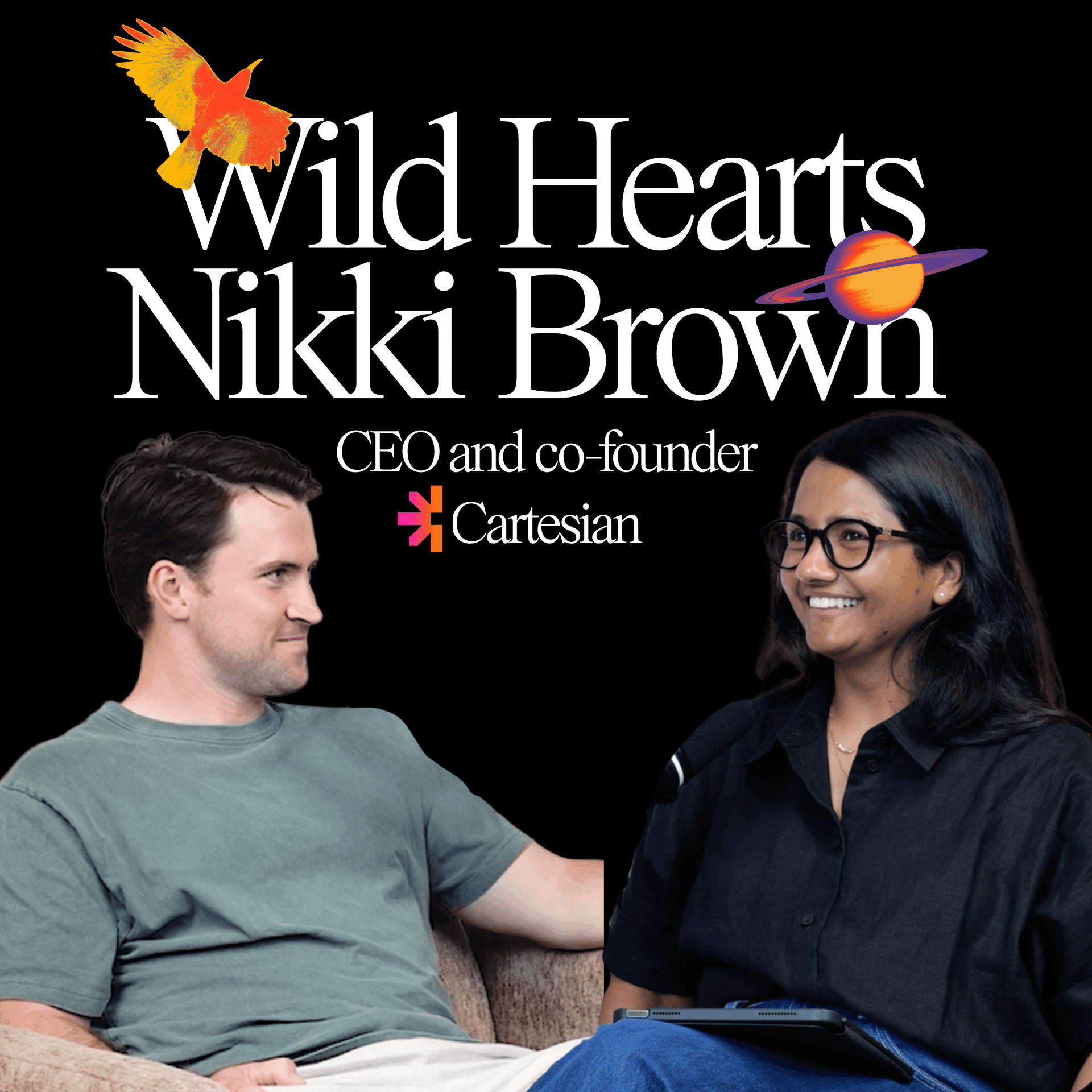
Episode Overview In this episode of *Wild Hearts*, host Mason interviews Nikki Brown, co-founder and CEO of Cartesian, an AI-native platform designed to enhance SaaS ecosystems. Nikki shares her journey from quitting her job at Google to founding a company that utilizes real-time AI agents to improve user engagement and retention. The episode discusses pivotal themes such as the importance of team dynamics over ideas, the evolving nature of sales, and personal resilience.
Key Takeaways
Nikki's Journey
- Background: Cambridge graduate who left Google after 9 months due to dissatisfaction with being a "cog in a machine."
- Personal Tragedy: The terminal illness of her husband provided clarity and shaped her approach to time management and relationships.
- Foundational Experience: Gained insights while working with startups and investors in Silicon Valley, which influenced her understanding of product development and the importance of team cohesion.
Cartesian's Mission
- AI-native Platform: Cartesian turns SaaS ecosystems into retention and growth engines by using AI to connect users with solutions exactly when they need them.
- Agent-first Ecosystem: Focuses on embedding solutions within existing platforms to facilitate seamless user interactions without traditional sales tactics.
Business Philosophy
- Team Over Ideas: Emphasizes that effective execution relies on having the right team rather than just a good idea.
- Sales Evolution: Argues that traditional B2B selling is declining, advocating for a model where sales are driven by user need and integrated into existing workflows.
- Building Relationships: Stresses that relationships and understanding customer needs are paramount in sales, echoing the adage "People buy from people."
Lessons on Resilience and Belief
- Expect Challenges: Acknowledges that being a founder is tough and requires a deep love for the work to overcome hurdles.
- Empathy and Listening: The importance of genuinely understanding customer pain points through open conversations without any sales agenda.
The Future of Selling
- Market Shifts: Sales strategies are changing as more businesses pivot toward ecosystem-based selling, with a focus on partnerships over traditional direct sales.
- Ecosystem Importance: Companies need to adapt to this shift. Those that fail to embrace ecosystem selling may struggle to survive in the future.
Key Concepts and Discussions
- Agent-first Ecosystem: Cartesian's innovative approach to embedding AI agents within existing platforms to streamline user experience.
- Team Dynamics: Nikki's belief that a startup's success is more about the people involved than the initial idea.
- Impact of Personal Experience: How personal tragedy can lead to profound changes in perspective and drive resilience in business.
- Sales Philosophy: Transitioning from traditional sales tactics to a model that focuses on immediate user needs and context-driven engagement.
Actionable Insights
- Engage with Customers: Founders should maintain close relationships with customers and continually seek feedback to adapt their products effectively.
- Focus on Team Chemistry: Building a team that works well together is crucial for navigating the ups and downs of startup life.
- Adapt Sales Strategies: Be prepared to change go-to-market strategies in response to market dynamics and consumer behavior shifts.
Closing Thoughts Nikki Brown's experiences and insights provide a valuable perspective on the intersection of personal challenges and entrepreneurial resilience. Her emphasis on empathy, team dynamics, and adaptability offers a roadmap for founders navigating the complexities of modern business landscapes. This episode serves as a reminder that the journey of entrepreneurship is as much about personal growth as it is about business success.
---
Thank you for tuning into this episode of *Wild Hearts*. If you want to stay updated on the stories of ambitious founders and innovators, be sure to subscribe and follow us!
Written by AI. May contain mistakes. Listen to the episode to check what was said.
Transcript
Automatic transcript. May contain errors.0:00Cartesian, we've built an agent-first ecosystem platform. Two years ago, pre-agents, this product was like a dream, but now it's actually here. It takes a huge amount of effort to be enterprise ready. We are just about to deploy. There is this whole world out there that's exploding. Idea first or team first? Oh, team first, for sure. Why? Execution is everything. In like traditional marketplaces, the classic advice is like focus on the supply and the demand will come. Yeah. Is that true in your case or how do you think about the chicken and egg? To go the journey, you have to have that belief when everyone else is saying, this is crazy or this won't work or like, who cares?
0:45What if the thing killing your pipeline isn't your product? It's your go-to-market playbook. Today's guest, Nikki Brown, argues that direct B2B selling isn't just slowing, it's dying. In its place, an agent-first ecosystem-led future where platforms open up, Buyers discover inside the product. And sales is triggered precisely at the moment of need. Nikki's journey snaps this into focus. She left Google after only nine months. Not because it wasn't great, but because she refused to be a cock. Then life hit harder. Her husband's terminal cancer. The result wasn't cynicism. It was steal. She says respect your time.
1:26Lose patience for noise. build with people you'd want to be beside you on your worst day. That chemistry plus execution became Cartesian. An agent first ecosystem platform that goes from dream to deployment ready in a market that barely existed two years ago. Here's one actionable takeaway from Nikki before we start. Stop trying to shove buyers through your funnel. Push on open doors is how she framed it. embed where your customers already work AWS, Atlassian, Salesforce and let agents surface need, route intent and hand your team qualified moments instead of cold leads In this conversation we discuss why platforms must open or be left behind the agent wave that will fragment SaaS how to sell by serving and listening daily and why belief like real earned belief outlasts the gut punches If you're a founder, operator or investor, this episode will recalibrate how you think about team, resilience and go to market in the age of agents.
2:34Let's dive in.
2:40Hi. Thank you for joining me on Wild Arts. Thanks for having me here. It's good to have you. I remember reading that you were only at Google for nine months. Why do you think that was? I think I was more in love with the idea of being at Google. The badge. I really wanted to land there after Cambridge and I was really, really lucky. I got to do some really cool things with them and, you know, they only took in a couple of people that year and I was really lucky to be one of them. And so I felt super ungrateful to, within a couple of weeks, feel like maybe this wasn't right for me. Within a few weeks.
3:24Yeah. Incredible team. I could not have landed in a better team. One of my best, best friends is still, I mean, you know, was from Google. Yeah. Still call him all the time, Phil, from in Berlin. Good on Phil, shout out. Yeah. Phil Bombay. and I still you know still talk to a lot of those Google people but yeah you realize a lot about yourself when you land somewhere like that especially when you've wanted it for so long for me I realized I wasn't happy being a cog refining what was an incredible machine I felt really like I had this energy that needed to get out and I needed to do something that was faster and, you know, just had energy and where I could have impact and learn faster and do more things.
4:14And it made sense for me to go and work in a startup. And that's what I did. Sounds like a really sharp feedback loop. Like I've been waiting a long time to get into Google. Yes, I was one of the few that got it. And then within two weeks, you realized I can't be in a cognitive machine. Well, I think you go through that, like, you know, it's a cycle. You think to yourself, oh, this doesn't feel right. No, I need to like, you know, I need to see it out at, you know, no, I want to stay. No, I need to go. No, I want to stay. And you started going through that cycle. It started going through some change, the teams as well.
4:52And that made it a little easier for me to make that decision that I needed to look for something else. We were chatting outside and you said, I don't like to fit into the status quo or fit into a box. Yeah. Did you know that then? I've always known that. Okay. I think you just ask my parents. They will tell you. Why? I've never taken the easy pathway. Okay. And I think that's much to their chagrin that that's the case. What's your earliest memory of not taking the easy road? Not doing medicine or law, I think. Doing that was the easy road? Yeah. Yeah. I think that would have been easy, you know, very defined pathway, very prestigious, you know, but it just wasn't for me.
5:33The idea of having a very defined career path just scared the bejesus out of me, to be honest. You know, and not having that freedom to think and change and see what was out there and figure out yourself, I think. You wore a few different hats after Google, but I'm curious, you realized that you wanted to join a startup. how did you go about the journey of like where should I go? What skills do I have? Yeah, I had no skills. I don't know, like you're the generalist, the master generalist. Yeah, I think I knew what I was pretty good at. Like I'd done finance, you know, at uni so I knew, you know, how to balance books and I knew sort of that commercial part.
6:14I had been for a very short period of time a strategy consultant, well, two and a half years, which taught me a lot about problem solving, also a very bad fit for me. And so I kind of had these very general business skills. So I knew that I could contribute in some way. I did end up working for a not-for-profit called Silicon Valley Company to the UK, which was started by Reid Hoffman and another really incredible angel investor in the UK called Sherry Kutu. They brought this amazing program of bringing investors and Silicon Valley entrepreneurs to London at the time where there was no tech hub there really.
6:49And so I got to work and I worked there to figure out startups really. And that was my entry into the land of tech and the land of startups. And I kind of just went from there, tried my feet with a few, just sort of consulting here and there, and then ended up sort of finding my place. Is that where you started gaining an empathy and appreciation for teams more than anything else downstream from that? The thing that I really started initially gaining empathy for is product. I was really went in thinking, oh my God, like that are things that are happening in product and the things that people are building are incredible.
7:30And I just had to be a part of that. My empathy for people and teams and my understanding of how critical they are in building a startup really probably came much later. You know, when you've been in teams that are working on incredible product, but it just isn't gelling, you understand how important it is to have a great team and not just like incredibly skilled people, but a team that works really well together in a particular situation. Idea first or team first? Oh, team first, for sure. Why? Because ideas are, you know, you can just get any idea anywhere. Like there's nothing really truly unique.
8:13Like execution is everything and you can't execute without the right team around you or being part of the right team for two reasons. One, you, you know, need to have the right skills and, you know, be able to work together and those skills need to fit together. But also like, you know, in a startup, you're going to have the worst times. You're going to have the best times and the worst times. And if you're going to have the worst times, you don't want to be spending it with a bunch of people you like really hate or you really can't get along with you want to be doing it with people that you still really love being around even though it's the shittiest time you've ever been through what was a special anecdote from either working with reed hoffman or the wider team while you were there that like led you to discover that passion for product it was interesting Reed was based in San Francisco, so I only ever got to hear his voice, his dulcet tones.
9:11Yes. Not Zoom calls, it was Skype calls at the time. It was really Sherry. I mean, and Sherry was, you know, sort of Reed's counterpart in the UK. And he used to always, like, you'd get on a call and he'd be so focused on what you were delivering and for who. But who is the customer and, you know, who is our audience? He was so focused on that. And Sherry was on the other side and she was so excited about all the startups that we were bringing in. And there was so many doing incredible things that you'd unearth in, you know, across Europe and the UK. And that's what really opened my eyes to what you could do, you know, and the change that you could affect with a small group of people and a really incredible piece of technology we're building and really a shared goal.
10:03What did some of the best startups have in common? I guess they were really, really bulldog focused on the thing they were solving for. I mean, there were startups where I'd look at them and think, what is this? But you talk to the founders and they just were so like, you don't get it. Like it's this and the customers love them. and it didn't matter what you said or what anyone said, they just so believed in what they were building and that kind of belief is you've got to have that if you're a founder. Even if it's something that doesn't work, to go the journey, you have to have that belief when everyone else is saying this is crazy or this won't work or who cares.
10:52Especially today, I hear a lot of people say I want to be a founder and I think that there is potentially a lot of sort of romanticism and you know a lot of cachet that comes with that term or that title I'm a founder but the reality is it's a really really hard thing to do is to be a founder you have to do some you know things that you're not comfortable doing that don't come naturally to you you have to learn you have to you know let people down sometimes you have to you know you take a lot of no's and and hard feedback you have to be really focused to love what you do more than anything to be a founder because the moment you hit that first roadblock it is so tempting to say this is too hard and that's where you really separate you'll know if you're your true founder is when you hit that first roadblock and you think, nope, I'm not done.
11:51This is just the beginning. How has tragedy in your life shaped or marked your experience in dealing with that level of hardship? Life in London was really good. I got to work in New York. I got to work, you know, in London and travel around and it was such an amazing life to like just spend every day and every weekend working without any responsibility really. Is this in the winter too? Oh, yeah. Oh, winter in London is amazing and don't let anyone tell you otherwise. There's nothing better than Christmas lights in London and, you know, Sunday roast and like sitting behind. I tell you what, the British do pubs like no other, am I right?
12:45Yeah. Yeah. Yeah. You know, the open fire, you're allowed to have dogs in London in the pub. Yeah. Makes such a big difference. Yeah. So, yeah, London was great. And my partner suddenly, my husband, was diagnosed with cancer and it was terminal and we had to fight through that. and when he passed away it was just hugely shattering and it put a roadblock on my life like nothing else and getting through that was, you know, it was extremely difficult but it has and it has completely changed me and completely changed the way I think about life. I think it has made me, shaped me probably into and, you know, set me up to be a better founder than I could ever be.
13:43Of course, you'd never want that to happen, but you take those hits and I've got to tell you, like literally nothing could happen in startup land now that could possibly like rock me or that I couldn't deal with now. There's nothing. There's nothing that could happen. There's no way. It's a life-defining, universe-shattering event. Yeah. And I, you know, I learned so much from – I'm a different person. The thing I learned most of all from it is like that I – like I learned to respect myself. I learned to respect myself as – yeah. That's profound. Well, I think when you're like – it's easy when you're working in startups and even as a founder to just not respect who you are as a person, not to believe in yourself, not to, you know, respect your time, respect your, you know, your relationships.
14:41But when you go through something like that, it completely changes your view of yourself and the people around you. I've got to say, though, it doesn't mean that I'm like, you know, I'm very empathetic, but I'm also like very, time is very precious and I don't have, I have less time for bullshit now for sure. Can you share more to the extent that you can? Having even the clarity to know that there wasn't that self-respect there and then rebuilding yourself or was it an overnight shift? Oh, no. Can you share a bit more about that arc of backing yourself? You have to reach the depths, right, of disbelief in yourself just to finally realize that hey I'm like I need to get back to where I was but not that person that I was back there like how do I need to be different what do I see about myself now that I've sort of gone through this and and I've come out the other side like you know it's an amazing thing to do to go through that and still like love the world and and want to be in it and and want to do amazing things this is in 2018 and so you moved back to australia yeah no that happened in 2016 okay so i spent two years like alone in london like just struggling it out i took no time off i just went straight back to work and for me it was part of that you know just work will solve everything but actually you got to respect yourself and give yourself time and i think that was a big part of the the learning as well like whatever you go through like giving yourself space and especially as founders you take a lot of hits like you like give yourself space to to work your way through it you don't have to keep barreling ahead and then you were able to take a breath after two years and that was the instigated move to Australia yeah I didn't think I'd stay here to to be honest.
16:53In Australia? Yeah. I thought I was because I had been away for so long. Yeah. I thought I'd, you know, come home. You know, my sister had had her, you know, her first child. I'll spend some time with my family, get to know my friends again. And I was so surprised at what was happening here. When I left Australia, there was no startup scene. There was like Blackbird didn't exist. Like it was just, it was quiet, you know, There were little things happening but not the way it was when I got back. And I thought, well, this is a community that it felt like London when I was there like 10 years earlier.
17:33Wow. I thought, this is a community that can really start building and I can be a part of. Yeah, so that's – I stayed. So it was what? How long did it take for you to go, screw it, I'm staying in Australia? No more Sunday roasts. Wow.
17:49It's still tempting. Probably a year. Yeah. Yeah, a year to sort of look around and think, yeah, I can make this work. Yeah. I don't, you know, I used to have this really strong belief that you have to be in the UK or in Europe and you have to be in the States to build a really big, defining, impactful company. And I don't necessarily think that's the case anymore. I think you still need to be there. For us, our core customers are definitely in the States. And so we have to be there and I have to be there. Yeah. But we have such incredible engineering talent here. Like it's really astounding. I was so shocked when we started sort of hiring into our team at how skilled they are and how much expertise they have.
18:46Having said that, all of them have spent time overseas and worked overseas. And I think that it's also a symbol of the great sort of adventurousness of Australians that they're willing to go overseas and get that experience and come back and bring it back here. Did you always want to be a founder? I would say that I always wanted to build something and I always wanted to build something that was interesting and kept me interested. And that's the hard thing. keeping me interested yeah right um and so I guess naturally that always meant that I was probably a good fit to be a founder yeah yeah did you start team first and then idea before cartesian uh no that was definitely idea so I'd been working on something Yaniv had been working on something.
19:40So Yuliv, my co-founder, my ride or die. And we had heard about what he was working on. I said, this guy, you know, this guy is working on something that is game-changing that I've been trying to solve for a long time. I need to meet him and see what he's doing. And when we met up, even though we'd never met before and, you know, we're both, I would say, pretty strong characters. The chemistry was instant. On Zoom? No, in person. In person, okay. In Melbourne. Yeah. And we just, you know that you're going to get along with a person when you're cracking really off-color jokes and you have them in stitches and vice versa.
20:26Yeah. Like you just have this shared language that you didn't know that you had. And I think that's really critical for a founder, at least in my experience, to have that relationship. And so, yes, in this case, the idea was first, but I think in some respects, the two things have to almost happen together, right? You have to work on something that you truly believe in and that you love. And if you happen to find someone that you really, really get along with and is on your wavelength, then it's kismet. what were some of the clues before the inception of the idea that you can look back on in hindsight and be like that was a clue that i should be working on this or that it should be and i think that we built yeah sometimes like the the discoveries of like the insight that will keep you interested yes like you look back in retrospect and it's like oh that was that was a clue yeah i can tell you your new story but i feel like i should let him tell it for me it was you know I've been working in startups trying to go to market for such a long time and 10 years ago it was pretty bloody easy compared to now um you know we could email someone cold and they would respond to you even if it was to say no thank you like thanks for your email but no thank you but now it's like cold emails just get ignored and you know and it's really like oh who does this who is this person right it's impossible um and it's become harder and harder and i remember like the last few companies you know i consulted to just trying to go to market through those traditional direct channels was impossible and so you start looking at like what are the other things that you could be doing and and there was this incredible like opportunity out there in ecosystems in sasa ecosystems attached to these really big companies where your users are and you know your users are there and you want to access them and there's this great opportunity for you to access them because these platforms let you access them.
22:32But it's so hard to go to market. You can get yourself on an ecosystem. You can get yourself on the Cisco ecosystem or the AWS or Atlassian, Google Cloud, any of those. but to actually sell after you've got there is pretty much impossible if you don't have the capital behind you to do the selling again. They don't do the selling for you. And so it just felt like I really missed opportunity. I'm like how can you make this easier? Why doesn't this work better? The simple answer is because there's no incentive for what there wasn't an incentive at the time for platforms to do that. Of course, that's fundamentally changed in the last two years.
23:26What's changed? Agents. We've now in a world where platform revenue is tanking from core product because the monetization model doesn't work anymore. You've got anyone can build an agent now. And so platforms and products can't upsell features anymore. Why would you? You can just go build an agent for that or you can go buy an agent for that. And so there's this real panic and scramble at the moment from the platforms, understanding that there is this whole world out there that's like exploding that is separate to the world that they've built. and it's happening without them. And so we're starting to see the big platforms are acting.
24:17So AWS, the hyperscalers, Salesforce, they've all acted super fast. They've built the agent frameworks. They're working on, they're saying developers, partners, come and build on us. We know you're out there. Please come and, you know, we've got the ecosystem for you. But everyone else, everyone else behind those big players, they're being left behind. And, you know, ecosystems more than ever are extremely critical and being able to monetize its ecosystems and connect those agent developers and developers in general to their users are becoming even more important because there's the way you monetize platforms is completely changing.
24:59Maybe you can share how you solve that problem and the business model that will fling up that you can catch. So Cartesian, we've built an agent-first ecosystem platform. And that means we've built effectively the monetization platform for this new world of agents. So we have an agent-first ecosystem, which means that companies now these days don't have to spend two years and millions and huge sales force to actually stand up an ecosystem and make it work. That's the first thing. We can do it in weeks, basically, with agents. and then we can actually give developers the framework to build on top of that to present to users and give a really amazing agent experience to those developers and we can actually monetize as well so with every third-party solution that gets sold you know via an ecosystem and that that happens today the platform gets a cut and the vendor makes their sale and the users get to tailor their platform the way they wanted to in a way that a platform doesn't necessarily have the ability to currently.
26:21Can you share an example of a user journey? For a developer. So for a third party. So let's imagine we are working with Atlassian, for example we will be you know in the Alassian ecosystem we're agent first so we have this framework for anyone to build an agent on top of but also we can we use agents to you know activate a sale activate a user and send leads to your sales team at the moment that a user is actually needing a solution. So Cartesian actually sits inside a product, say in Atlassian it might sit inside Jira. And so it sits quietly and it might sit within Atlassian's own sort of AI sitting in the background.
27:13And so it will detect a need from the user and the whole engine that sits behind Cartesian is a needs engine. So it actually analyzes everything a user is doing and it might see that you've moved something in a ticket to active in Jira and we might recognize that you need to add a service or some data tool and we'll pop up maybe via the Atlassian existing chatbot and we might say hey we understand that you're trying to do this thing and there is a solution that we can see that you can actually use to complete this task and it comes from the Atlassian ecosystem and it actually we'll actually look at the user look at their profile and their their user flow they might be just a user this is the buyer and we will actually suggest them hey you can try this out for free and you can send it to your jira admin to buy if you like it and so we're actually bringing the ecosystem and those users right into the product with agents so it's not a separate thing.
28:19Your ecosystem, your third party agents should actually be part of your product. And we believe that to the core. Most people would be scared working with some of these incumbents. Why aren't you? It's exciting. They have built incredible businesses and incredible ecosystems. Some of them have thousands and thousands of partners, like tens of thousands in the case of like Cisco and SAP, you know, and that's a big beast to sort of help to shift. It's exciting to, you know, to understand the latent demand that exists in those platforms and the users who want to be able to tailor the experience and to be able to connect that with, you know, the developers out there who have the domain expertise and the economics work sense for them to sort of service those niche cases, that's a really exciting prospect.
29:19Having said that, we're also really, I love the idea of working with those early product companies who know they want to build an ecosystem and it's kind of like greenfields. It doesn't exist yet and so you can completely reimagine and what an ecosystem should actually look like from the ground up. So is that where all of your energy is being spent? It's being spent on... Like the question behind the question is, what does the zero to one journey look like for you here? It's about deploying the product. It's about working on those early design partnerships with those bigger companies, but also some smaller ones to actually show how powerful our product is and how effective it is in driving value across all of those key players for users, for the platform and for those third parties as well.
30:16And there is this, you know, when you think about why ecosystems exist for product companies, it's because there is like this acknowledgement that you've hit the ceiling in how you can grow by yourself and by pulling in others and pulling in, you know, developers in your network, you can actually grow much, much faster together. In like traditional marketplaces, the classic advice is like focus on the supply and the demand will come. Yeah. Is that true in your case or how do you think about the chicken and egg? How do you think about earning the right to have that seat at the table? And like if I think about the example that you gave me, I'm also thinking about the level of like data that you probably would have access to to understand the context of someone's needs and then anticipate what the organic upsell journey would look like.
31:13Yeah. And so that's the sort of context behind the chicken and egg classic dilemma. Yeah. So that's interesting. And when we first set out on this journey, you know, there was always a question of where do we start, right? Because of the way, the nature of ecosystems, you have the users on one side and we acknowledged that there was this really latent demand from users. They want to, you know, tailor that platform experience. And there is this, the most obvious need is from the vendors who, you know, from even my experience, which is like we just want to sell to these users who are there and they want us.
31:51Like we just, we need to get to them. And so there's this really obvious sort of demand there. The question for us is those, that both sides of that network had been built and there was demand on both sides. The reason why we sort of built and are working with the platforms is because they hold the power there in that network. and now there is impetus for them to actually act in this pretty fast-changing world. And so the question of supply and demand, the answer is the demand and the supply was already there. It was just about figuring out how to access that supply and demand on both sides and doing it at the right time and now is the right time in the history of software.
32:45What have your observations been about the way that the platforms have shifted in their behavior? Are they default open or closed with other platforms? Yeah. Et cetera, et cetera. It changes. And you could talk your ear off about this. The history of like change in software and what happens. And always the default behavior is to close the platform. When you close a platform, you're protecting, you know, They think that the data is, you know, their greatest, I guess, asset in this. When you have agents being built and you want to protect your, you know, what you have built, always a natural inclination is to close it.
33:29But I think history and, you know, what we've seen with AWS in that last wave of growth, AWS, Microsoft, all of them, was sort of the opposite. it was actually to open everything and say here we're actually going to give you the tools to build on top because our greatest assets it's not the data it's the relationship and the network that we have the relationship with our partners with our customers more than anything they trust us they trust us to you know to vet you guys and they trust us with the decisions that they make about their software, that is the greatest asset that they have. And so it's not the data.
34:11It's opening up and giving others the, you know, with, of course, with security and all the things that you need to do, but it's to give others the opportunity to help you grow. And where is the product at today and what are you most proud of? Oh, so many things. We are just about to deploy, which is very exciting. for what is a very, I would say, complex built, complexly built, very sophisticated enterprise-grade product. So, you know, we've gone through all the security, we've designed it in a way that's ready for enterprise and taking care of user data and UGC and all of that. So that's immensely satisfying, I think, to actually see a vision for a product that literally could not have been built two years ago.
Read the full transcript
35:05Two years ago, pre-agents, this product was just like a dream. But now it's actually here. It's reality and it's working and it's, you know, able to do the things that we thought it could do and more. And that is, it's more than satisfying. It's thrilling, actually. and I can't wait to see it over time grow and get better. It takes a huge amount of effort to be enterprise ready. I can't imagine what it would be like to be platform ready. Are you like what degree of, to the extent that you can share, what degree of integration do you have? And do you have any like lessons you can share on like being platform or at least enterprise ready?
35:56Yeah. So, Enterprise Ready means different things, right? Back in the day, Enterprise Ready meant having like an on-prem, like serious rollout, like multiple, multiple months of like, you know, change management and blah, blah, blah, blah. The great thing about software today is that you can actually have, you know, these steps in Enterprise Ready. So for us, you can go from zero to the end, which is fully integrated into your product UI, with us working in the background, your agents, our agents. It's fully integrated. Or you can just start at the start, which is what a lot of our design partners are doing, which is, okay, the first step is just to get the data.
36:49We just want to understand what's happening in our ecosystem. Can you help us understand that? And that's super easy. That can just happen in like a couple of days. They are blind to that. Yeah. Wow. Yeah. It's a lot of activity in an ecosystem. Yeah. Yeah, a lot of activity. and it's they've not been you know the way they've been built is really out of um necessity or um just kind of like an experiment like oh our users are asking for these you know third party solutions we better go get some partners or we've got this partner portal oh oh wow we're making a lot of sales we you know better like integrate a billing system and so it kind of like often sort of comes out organically and builds organically and suddenly you have this very active like ecosystem that's making you money if you're monetizing it or or driving a huge number of integrations which is driving your LTV through the roof and so they weren't built initially a lot of them with you know with the thought that they're going to be so critical even though like You do have these businesses where ecosystems are absolutely critical to their growth.
38:08A lot of the time they start as an experiment. So they're critical, but they're completely blind to how critical they are. Well, I think that you're so focused on your core product, right? And that's so natural. And you should be focused on your core product. But the reality is your users and your business at some point cannot service all the needs of your users. And so that's where an ecosystem is incredibly useful. And that's why people, product companies start building ecosystems. And the benefit of them often accelerates as it grows and as your users become more proficient and as they become more mature and they need more, you know, different solutions that you're just never going to build, right?
38:57If you're, you know, manufacturing in Germany and you need like this specific like add-on that, you know, Atlassian is never going to build for you for Jira, there is a third party that does that and they make a very good business out of it. Imagine you're at$100 million of ARR just around the corner. Yeah, fingers crossed. What's the type of business that we're looking at in five years? I think this is a business that has changed the way that we think about go to market. Mic drop. I don't think it's because we're going to drive it necessarily. We are really riding on the coattails of a change that's already happening.
39:44Director business selling just is not working anymore. and users are trusting their big cloud infrastructure providers to give them, you know, to kind of vet new technologies. And they're giving incentives to do that, cloud credits and, you know, bundling things. So it makes sense that users and businesses who are buying software go through ecosystems to buy. And so as a business, whether you're doing a billion dollars of revenue like CrowdStrike or if you're a two-man show doing like just, you know, like half a million, it doesn't matter. Everyone is going to have to sell through an ecosystem or at least, you know, half of businesses will be doing it in five years.
40:35And if my business today is like 80 % direct sales, will that shift to 80 % ecosystem sales? If your business is doing 80 % direct sales, I think that if you don't shift fast, you won't be doing any sales at all. Can you tell me more about that? Users are going to be harder and harder to get to and to sell to. And the cost of acquisition through those traditional ways is just skyrocketing. And it makes more sense now and it's much easier and the CAC is much, you know, it makes much more sense now to go through the partner channel, whether it's an ecosystem or other than direct. And what have you observed about, like, why is there such a dramatic change?
41:28Like what are the factors at play here that are going to make it more expensive? There's just so much more software out there than there ever was. Yeah. I mentioned how easy it was to sell software like 10 years ago. It's not even like – I'm not even exaggerating. It was so easy to get to decision makers and for them to have to listen to you because there wasn't that much direct software selling, not like there is today. Like it always boggles my mind to see the state of Martech, the report that comes out every year, to see it going, just accelerating. Like it's literally like an exponential graph.
42:11And I remember when that first one only had 200. And now it has, what, 10 ,000, 12 ,000 on it. It's incredible. And that's only a problem that's only going to be significantly worse as agents become more and more prolific. As SaaS is replaced by agents and you start seeing a fragmenting of solutions into agentic forms, that problem is only going to be exacerbated. It's so funny. I'd seen your Giants video where it's... I'm cringe. Is it science as a sales or sales as a science? That makes more sense. Yeah. And like what parts of that would you throw in the bin or perhaps to put it on the upside framing, like what will stay true, what will stay constant in that talk?
43:03Oh, gosh, I should go back and watch it. Maybe not the talk, but like I guess whatever sales principles that come to mind, what are the ones that will actually be here to stay? I have this one like absolute rule. I think there are a lot of rules and as you can probably guess, I'm pretty much a rule breaker when it comes to pretty much everything, except the law. I'm very glorified. But that was the paradox that I was like holding onto, which was like, here's this sales expert, sales is dead, all of go-to-market will change, like the beginner's mindset, screw it, let's throw the playbook out. You're going to throw it out.
43:38Yeah. Yeah. There's only a few rules that I think are universal and forever. the one that I think is the most important is that you must stay close to your customer you must be talking to your customer every day you must be listening to them you must be listening them like truly listening to them with no agenda with no sense of trying to sell to them but purely for understanding and empathizing with them and that is like the foundations of sales I think if you truly understand your customer, you'll be able to help them solve a problem. And if you're solving a problem for them, you're selling to them, whether it's your product or a, you know, a great relationship that you have with them, a trust.
44:27And that is foundations for selling now or into the future. I mean, you know, that old adage of people only buy from people is so true. When you say though that go-to-market's going to completely change in the business that was 80 % selling, as a salesperson putting myself in those shoes, I'm also wondering, oh, crap, like what do I do now? I need to get myself into like – but it sounds like you're sharing a different view, which is to say that – Yeah, people are fundamental. Actually, people are more important than ever. Way more important than ever, I think. And we, you know, in building this like AI native agent first, you know, ecosystem platform and saying, you know, we want to accelerate sales in ecosystems and tap into this latent demand and you know make value for everyone we're not saying get rid of sales people we're actually saying you know the opposite we're saying you've got these incredible sales people in your ecosystems and your businesses you need to help them you need to support them with analytics and leads and and so they're not spending time on like just trying to scrounge up some leads to sell like you you really need to we they deserve better how have you been living proof of that philosophy with your current group of customers somebody once asked me you know what how did you figure out that this was a thing you know this idea what you're working on and you and i spoke to about 100 people more than 100 people i think it was more like 120 people in those early months when we were validating and you know I loved those conversations you will never learn more than just like with no agenda just talking to people about the shit they go through in their jobs right and just letting them explain what's hard and what they love and what they want change and it doesn't mean that you're like trying to solve every problem for them but just being immersed in their world really changes your framing and your mindsets as to how you build product and we go by that today we want to be I think like trusted advisor is probably overused and it's we don't want to be that like sort of that advisory but we do want to be in the trenches with them and feel like we're in the trenches with them.
46:59And so, I don't want to have a sales team doing customer calls for me. I want to be the one picking up the phone and talking to someone personally. I don't want to be sending messages to customers. I want to talk to them and take them for coffee and just see what's happening in their world. And I think it's so important, especially at this early stage. how do you authentically achieve your outcomes in these conversations while selling them something i think you can't think i'm selling them something you can't if you think that then you've lost a sale from the get-go you have you have to have a service mindset you have to have curiosity.
47:46You have to think, can I solve this for them? And if I can't, how can I help them solve it? Because sometimes they tell you stuff where you're like, well, our product doesn't do that. I can't help you with that. But you know what? I know this person who can help you with that. Or I know this product that can help you. And also being able to sort of have that relationship with them. And of course, that will change once you scale, because when you're at 100 million or 10 million or whatever you're not necessarily going to be having those conversations with people but it's really important to have that mindset that you're I'm not here to sell you I'm I'm here to learn more than anything of those 100 conversations was there one that stands out and which one sort of gave you the conviction that like actually hypothesis been validated it was really early but it was um uh I hope he doesn't mind me saying this Kieran Kieran McKenzie at Atlassian, head of ecosystem at the time.
48:45It's no longer there what a gem of a human he is. But we got on the phone to him and it was very early, very clunky the way we described things. It was like unpolished. We were just a rabble. And I guess I'm known for talking too much as well, which is unbranded. And he does this silence and he goes, you guys are building this? Well, this is a no-brainer. And it was just that. Like he just said, I could have used this like years ago and I've been trying to solve this for years. Like we just need this like now. And we've heard that across the board in variations and everyone has a sort of like, oh, we need to do it this way and that.
49:31But that's the balance as well. Like hearing a customer and hearing what they're saying and trying to balance what you know and bring your domain expertise into that and figuring out how you can actually solve what they need. What was it like fundraising in Australia? It was equal parts, very difficult and very easy. Okay. Yeah. It was very hard in that what we're doing is not easy to understand, I think. Particularly if you don't have context of how big SaaS businesses work or SaaS businesses in general and how they monetize and you don't really understand the impact of coming wave of agents and we're starting to see the impact of that now but back then when we raised it was not so obvious even though we were seeing it and so selling that story here was very hard we we had numerous conversations in the states and it was a lot easier to sell there a lot easier and every VC that we spoke to in the states were like wow this this is absolutely a thing we're seeing this but we're not pre-seed so come back when you have a seed and and we'll talk then and so that was really validating it was very much here um a hard slog to sell that and and for me I I have you know one of my mantras in life is push on open doors, right?
51:05And that is one of my sales mantras as well. It's a great one. Yeah. Because you can't waste your time trying to convince people who don't believe, I think. Find your believers. Yeah, find your believers. You know, it wasn't until we, you know, we found some believers here very much and Blackbird was one of them And, you know, it was such a thrilling, exciting moment to see, you know, Nikki's face light up and Silt to say, wow, you know, this is so exciting and they got it. And just to see that recognition. But also, you know, they work with amazing companies who have gone through this ecosystem journey.
51:49So they had context as well. And, of course, we, you know, got Maxine from CoVentures and she's amazing as well. and she's had that sort of that US experience and she got it immediately as well. And so, yeah, it was equal parts, easy and hard. What is the primer to help out the rest of Australia on how BigSass works? Like what would be the slide to share the context in the deck that should help it click for most? For our business or just in general? Well, like, yeah, the preface reading before the product to sort of like set yourself up to? I think if you're going to read one article about what's happening in our space, I would send you to Salesforce's announcement about their agent exchange, which happened a couple of months ago.
52:47So they've had, you know, they've sort of done all this work over the last year about building this framework for agents. And that one article, the one announcement, really explains why and how big platforms are thinking and operating and how they're leading the way and why this is important. Like if you're not building out your ecosystem and making way for agents and working with them and not shutting your doors to them, then you're going to be dust in a few years' time. That's a good primer. And you mentioned that, I think you softly mentioned the hard thing about like the bad thing about raising in Australia.
53:27Yeah. Can you share more? Is it just that there's this immaturity in the market of, I guess, knowledge or is it experiences or just share a bit more on that? I can't really put my finger on it for sure. Having not worked in VC here, I guess. um my sense is that there's just a lot of choice yeah like vcs here are pretty bloody lucky like it's there's this great crop of startups coming through with some really smart people and you know you have all these australians now who've got that experience from overseas and they're coming back and good on them for coming back as it is a place you know a great place to build a company and and you know we've got these examples of canberra and atlassian and these companies who have proved that you can build generational like huge companies and be here and so australians are coming back and starting to build companies and so they have choice and if it's not in your wheelhouse or you don't have that experience i can get why they would say no because the what they see here is still limited they see what they see right whereas in the us there's so much more competition from bcs for what they see and so they have to think broader and faster i guess on that note quickfire someone who's been an operator at multiple companies and is thinking about the founder late what's the most important thing they need to understand being a founder is really really really bloody hard and it is going to like punch you in the guts every single day and so you really have to love what you're working on otherwise you're going to fold at the first hurdle it's not about the title it's not about the events it's it's about trying to get something off the ground and you're responsible for staff and you're responsible for like your customers.
55:32It's a lot of, it's a lot riding on it. So you got to, really got to love it. What do you love the most about it? The people I work with. Like one of the greatest privileges of being a founder is that you get to pick the people you work with. It's my favourite thing. And you get to build the culture of the company you want to work in, which is such an incredible privilege. you know most often you're walking into a culture that's already there and I get to build it and choose the people I work with and they're such sensational human beings. Did you always set out that this would be like a venture capital business that you want to create something truly generational and special?
56:17Yeah. Or is that sort of like ambition unfolded over time as you've learned? I think you know we talked about respect for yourself. I think it's belief in yourself as well and that comes with time and age and experience that you do feel like you can bite off more than you can chew maybe and you have the belief that you can pull it off I think with experience maybe and it's a different belief for when you're much younger where you just feel like you can conquer the world you've kind of gone through that cycle this was always going to have to be a venture-backed business because of the ambition of the vision and the ambition of the product itself, the product build.
57:01It needed an understanding and ambitious venture partner as well. Again, on the theme of quickfire, the big end of town, what are some tips that we can have when we're speaking to the AWSs, the Atlassians? How should I go into that room? So the great thing today versus, you know, even five years ago is, and it's probably a symptom of what's happening now, is that those companies, those big, the big end of town, way more used to and way more important, open to, see, I said that importance of open, open to working with really small startups. because they understand that the innovation comes from these startups.
57:51And it's innovation that's really hard to generate internally because it's not organic. If you're saying to, you know, internally, I mean, you can, but it's much harder. If you're saying to your internal teams, we need to solve this problem, come up with a solution. It's very different to, you know, going out and partnering with a startup who's been working on it for a long time, who have domain expertise, have the skills, and have already built something. It's way, way different to generating it yourself. Those big companies are recognising that and they actually have programs that mean that you can slot straight in there.
58:29It's just not as hard as it used to be. It would have been impossible and it's still hard, absolutely, and you have to have the confidence that you can work with these guys. but if you have built something that can make a difference for them and you believe it, they will do their due diligence as well and so they will tell you where you need to change and as long as you have the confidence to accept that and be open and not be cowed by it, then it can absolutely happen. It's just not as hard as it used to be. In 12 months' time, when we see you again on Wild Hearts, what what will we hear in the media about what you've achieved i hope that uh that rather than being in the media that we you know we have customers who are telling other customers why they're growing so fast and why they've survived this like this wave of agents that's what I want to see nicely put thank you so much for coming on Wild Hearts thank you for putting me on the spot great questions thank you
59:49thank you so much for joining us for another episode of Wild Hearts if you want to learn more from other ambitious people building designing and creating the world that we all want to live in then please hit the subscribe and follow button. It would mean the world to us, the founders, the operators, and the investors who join us on Wild Hearts. This podcast is a labor of love from the Blackbird team and Day One. The show is produced by Camilla Herring and Melia Rayner at Blackbird. Our marketing genius is Eva Telemachus and our editors are from Day One, Annie Jones and Sanjay Chabria. Thank you all so much for listening.
1:00:29We'll see you next week. you
From the publisher
Nikki Brown is a Cambridge graduate who quit a dream job at Google after mere months. "I wasn't happy being a cog in a machine," she says. So she built her own.
Today, Nikki is co-founder and CEO of Cartesian, an AI-native platform backed by Blackbird that turns SaaS ecosystems into retention and growth engines. Cartesian's AI agents analyse user needs in real-time, detect buying intent, and connect users with the right ecosystem partners at exactly the moment they need them. No cold emails. No spray and pray. The result: users get personalised solutions, platforms deliver value, partners grow.
Nikki is building AI that works like she does: accumulating context and using it to connect meaningfully at the right moment. Finance gave her systems thinking. Tragedy gave her clarity. 120 conversations gave her deep customer insight.
In this episode, Nikki joins Mason to share why team beats idea every time, why relationships, not data, are the real moat, and why the foundations of sales never change: "People buy from people."
This one's for anyone questioning whether their "non-traditional" background disqualifies them - or wondering if their lived experience might just be the context that matters most.