
In short
Podcast Summary: Wild Hearts - Episode with Xavier Collins
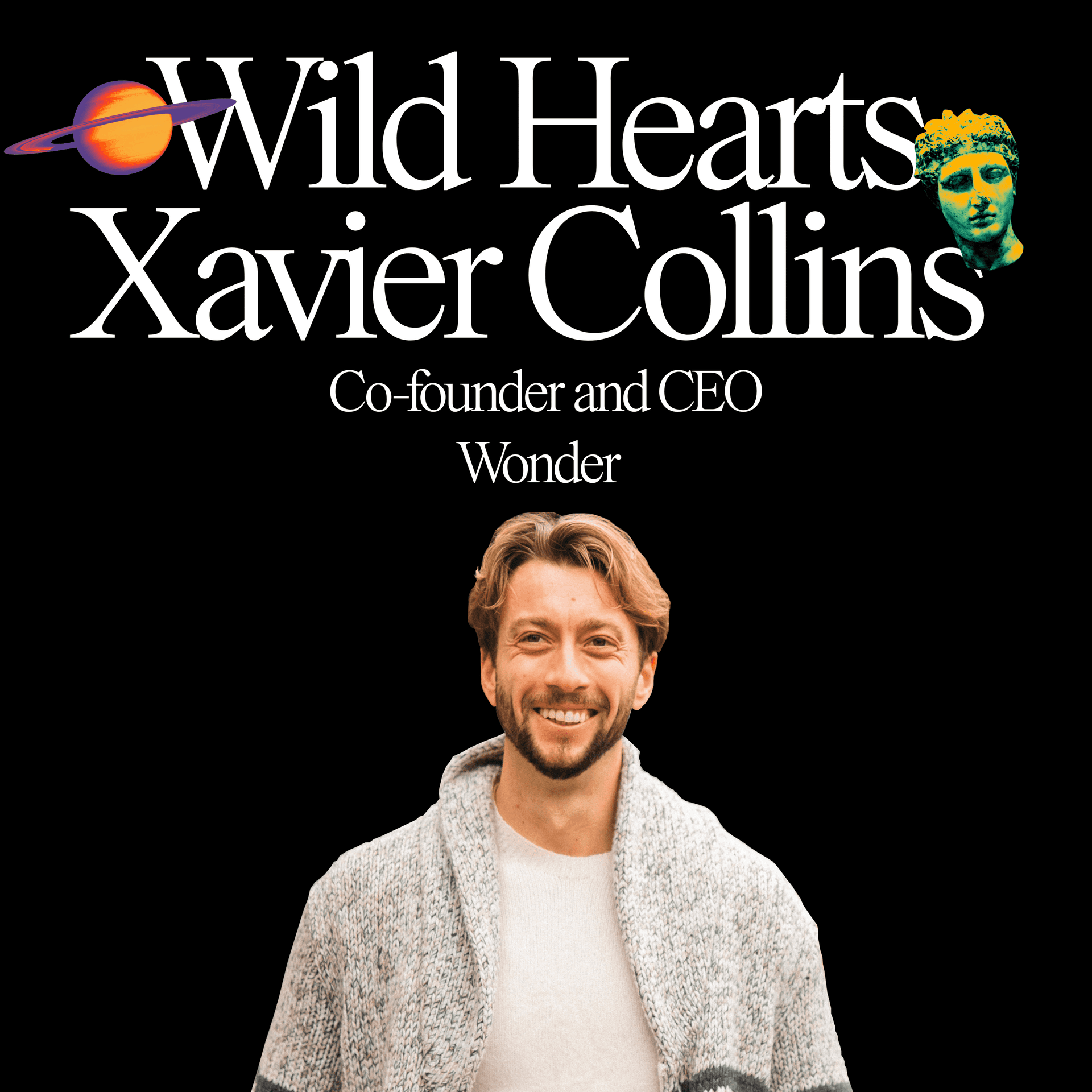
Podcast Overview Title: Wild Hearts Description: Wild Hearts reveals real-time lessons from founders and operators changing the world. Episode Title: Xavier Collins: The AI studio unlocking the future of storytelling Episode Description: Xavier Collins, co-founder of Wonder, discusses how technology is transforming storytelling and the film industry, democratizing access to creativity through AI.
---
Key Themes and Discussions
The Democratization of Storytelling
- AI and Filmmaking: AI is changing the traditional filmmaking landscape by allowing more creators to produce high-quality content without the barriers set by Hollywood.
- Unlocking Creativity: Collins emphasizes that AI will help bring to life the 90% of scripts that never get made, allowing new voices and diverse stories to emerge.
The Film Production Landscape
- Historical Context: Filmmaking has historically been under the control of a select few with capital and connections. AI shifts this dynamic, making production accessible to anyone with a computer.
- Quality over Quantity: As content creation becomes virtually infinite, the emphasis will be on the quality of storytelling, rather than the financial backing behind it.
The Role of Community and Collaboration
- Building Community: Wonder originates from a community of filmmakers and technologists who share resources and support one another through platforms like WhatsApp.
- Partnerships with Tech Companies: Working with major tech firms offers filmmakers access to cutting-edge tools, fostering innovation in storytelling.
Startup Principles in Hollywood
- Scrappy Mindset: Collins advocates for a startup mentality in Hollywood, focusing on rapid prototyping and iterating on ideas rather than sinking large amounts of capital into uncertain projects.
- Agility in Production: Emphasizes the importance of low ego and adaptability in a traditionally rigid industry.
AI as an Amplifier, Not a Replacement
- Creative Synergy: Collins argues that AI enhances human creativity rather than replacing it, allowing filmmakers to explore uncharted territories of storytelling.
- Case Studies: He references successful projects made with AI, highlighting its potential to create compelling narratives more efficiently.
The Future of Film and AI
- New Market Dynamics: The impact of AI will fundamentally alter the economics of filmmaking, enabling indie films to be produced for significantly lower costs.
- Cultural Shifts: There is a growing interest in unique and innovative storytelling methods that break away from the traditional sequel-driven model.
Metrics of Success
- Quality and Revenue: Collins discusses the importance of balancing quality storytelling with sustainable revenue models, emphasizing community engagement and audience retention.
Challenges Ahead
- Execution and Adaptation: The conversation acknowledges the inherent risks and the need for continuous adaptation to technological advancements and market trends.
---
Conclusion Xavier Collins’ insights reveal a transformative moment in storytelling, driven by AI and community-driven initiatives. As Wonder seeks to redefine cinematic production, it emphasizes the importance of innovation, collaboration, and remaining true to the essence of storytelling.
Key Takeaways
- AI is democratizing storytelling, allowing greater access to filmmaking tools.
- A community-driven approach fosters collaboration and innovation within the film industry.
- Maintaining a scrappy, startup mindset can help navigate the evolving landscape of entertainment.
- Quality storytelling will remain paramount as content creation becomes more accessible and expansive.
---
For more inspiring episodes on innovation and entrepreneurship, consider subscribing to the Wild Hearts podcast.
Written by AI. May contain mistakes. Listen to the episode to check what was said.
Transcript
Automatic transcript. May contain errors.0:00And I remember seeing it and being like, wait, this is all AI? there and then I turned to her and I was like this is going to change the world it's going to change the world this is probably a good chance to speak to some of the haters out there and obviously we've had huge pushback and there's huge doubters around like AI creativity and like no one's ever going to adopt that and like filmmakers don't want to use these tools but like I'm just telling you now it's 100 % the future does the end state look like a community driven Netflix? that's a great question, success slaps you in the face and mediocrity kills you slowly.
0:38After watching The Incredibles, I sprinted down the cinema stairs, across the edge of the screen, back up and around again, and for a moment, I wasn't nine years old. I was Dash. That's what great stories do. They don't just entertain, they transport you. For a century, only 10 % of films have ever been greenlit. What we see on screen is decided by a handful of people with the capital, connections and access to deliver stories to the world. AI is shifting that spotlight. It's not replacing storytellers, it's amplifying them. Giving a stage to the 90 % of ideas that never got made. Turning forgotten scripts into living, breathing worlds that move us again.
1:21That's what Xavier Collins and the team at Wanda Studios are chasing. because when the cost of access collapses, just like it did with the printing press or the internet, it doesn't just make things cheaper, it rewires who gets to create it. When film production becomes a marketplace, the next Spielberg might not come from Los Angeles and might be in Sydney or Auckland or your living room. This isn't the end of Hollywood. It's the beginning of the market where anyone with a computer can create Hollywood-grade cinema. You'll love this episode if you're keen to learn how Hollywood is being rebuilt in real time, how AI is amplifying creativity, and how Wonder is bridging the gap between today's AI tools and tomorrow's motion pictures.
2:06So I spoke with Xavier in August right before the Wonder Studios app was released. It's out now in the world, so feel free to check it out. The link is in the show notes. And I wanted to leave you with this. Wonder is the moment before magic, when imagination and technology hold hands and say, let's make something unforgettable. I'm Mason Yates, the principal of Blackbird. And friends, welcome back to Wild Hearts.
2:33How are you going, man? I'm good, man. I'm good. Yeah, we're doing really well. It's absolutely flying through the rocket ship. It's been crazy. I'm not going to lie. It's been like a mad experience. It feels like every day something new crazy happens. So just trying to stay on top of it. Why don't we start there? How would you summarize the last eight months? Maybe just share some of the pivotal moments. We launched the pre-seed with Blackbird, obviously as one of the key investors, in January. And then we officially announced our launch in April and seemed to be on a crazy trajectory. It's been a ridiculous six months.
3:11I think it's hard to distill it down into key milestones. I think the team is close to 20 people now. you know I can't sadly go into some of the projects we're working on but like we got to work with some of the world's biggest music artists some of the world's best documentary filmmakers some of the biggest studios in the world you know I think the best way I could summarize it is I remember like I think it was even I think it might have been like Mike Cannon Brooks so I went through Star Bay years ago with Blackbird when I was like in my early 20s and he was a mentor on the program and he said something like success slaps you in the face and I've always modified it to say success slaps you in the face and mediocrity kills you slowly.
3:55I've kind of experienced both. I've experienced both of them. I think it's just so obvious when you have product market fit. Many great founders can grind away at a business and turn something tough into a success. But when you really stumble across it and it is stumbling across it because so much of life is timing and luck. obviously there's there's hard work and all that stuff involved but like so much is timing and luck and when you really stumble across my pro market fit it's just in it's inescapable and the feeling is like electric it's exhausting but like you know it and so i think like if i had to distill the last six months it's been one long fever dream of like each week something new and crazy happening you know i look back at some of the first deals we did in the in the first month two months that were the craziest thing ever and now we look at the other night look at the next email that comes in earlier today and it's just like you kind of you don't get desensitized to it but i think you start to realize like wow this this could be so so so massive and i think that yeah it's kind of been it's been six months of hyper growth um getting to terms with the fact that we have something here and then just trying to find a way to like structure the business and like manage the operations in a way that can be built to scale you said and i quote we're at an inflection point in history where the power to craft and create visually striking stories is being rapidly democratized through technology can you expand on that quote yeah i think it's like Look, it's sometimes a bit like hackneyed when people would say like tech is democratizing access to XYZ, but I do really believe it in this case.
5:44I think it actually is true. So, you know, the way I kind of frame it up is that if you think about the evolution of creativity or the evolution of like content creation, you know, you had YouTube that came along and kind of democratized access to distribution. So anyone could have a TV channel. and that wave is like not even close to ending it's just like seems to be building and building but obviously that has completely flipped media from a world where like everything was controlled from the major studios to the big television networks now it's like anyone in their bedroom can have their own distribution channel and become a kind of sensation if they create content that engages with people so so youtube was like the first big inflection point like step change in the last kind of 20 years.
6:32I think the next one is AI. And what YouTube did is it democratized access to distribution. What AI is doing is it's lowering the barriers to Hollywood grade production. So many creatives, many aspiring filmmakers are now able to like get their story out there in a way that at a level of production value, at a level of creativity that would have been impossible. and so you know what does that really mean it means in the next kind of couple of years you know content creation is going to become infinite um across like infinite distribution channels um you know i like youtube and others but that's going to like radically shape the landscape of like entertainment moving forward and so what's going to matter in that new world you know i think the same things will remain true the same things will matter it's just going to take a new form just that the quality of the storytelling will matter.
7:28Like as content creation goes infinite, people will still be looking for like, what's the story that resonates? What's the content that like really captures people's imagination? The difference is though, it doesn't necessarily have to come from one of the most like well-funded sources come from anyone. And so that's quite exciting. I think that's quite exciting for writers and filmmakers and creatives. And we're already seeing that obviously with, with the anthology series that won the launch this, this summer, that was a big motivator behind it, which was like, how could we unearth the next generation of filmmaking talent?
7:59How could we partner with some of the big tech companies to kind of produce and fund, you know, individual filmmakers that had great ideas with a view of like, helping them launch on the kind of global scene. Wait, tell us more about that series. So that's really, so Justin Hackney, who's my co-founder, chief creative officer, It's kind of been like his vision since day one. He started as an actor. He was on the film 28 days later when he was a kid. It's where he met Danny Boyle, who became like a mentor, really got him into filmmaking. And ever since like an early age, he's been like obsessed with filmmaking, creatives, community building.
8:40And so this was really, I think, like the kind of apotheosis of that like journey, which was, you know, it's a very simple idea. it's essentially how can we as Wanda, an AI native studio, identify and start to produce films, you know, Wanda originals, from the best filmmaking talent in our community. It's such a good name, by the way. Which one? Wanda. Yeah, Justin, I'll take credit for that. Yeah, so the idea was really like kind of centered on that. So how could we identify the kind of best filmmakers in our community and start to elevate them? and I think it's a really cool idea because there are there are a lot of like win-wins in in the model right so like for for aspiring filmmakers it's a chance like one they get paid but two it's kind of like a y-combinator or a start mate accelerator for aspiring filmmakers we'll obviously partner with them help them produce this short film with a view that if we are able to take that concept and it's able to generate really great traction we'll partner with them 50 50 on the future ip of any series so we turn it into a feature length film or a game or whatever it is it's really our way of trying to like launch that filmmaker's career um so obviously great for us because we get to work with top people and acquire really great content and hopefully build our brand as like a next generation studio um and then lastly you know we were able to partner with the um some of the best tech companies in the world so 11 labs cling bow and free pick all of whom are huge players in the AI creativity space who are able to get behind the project as executive producers, support with funding, support with promotion.
10:26So it really is pioneering this next-gen industry. And then the anthology itself, season one, it's just four short films from four independent filmmakers. This season kind of explores AI and consciousness, which I know is a topic deep to a very close to Justin's heart and to mine. and each season will kind of follow that Black Mirror slash Love, Death, Robots style of uniting different filmmakers around a common thread and really just exposing the talent and the kind of craft that goes into making this type of content. To circle back to something you said earlier, I have a very clear picture in my mind of like YouTube has democratized access.
11:08That's vivid. What isn't so vivid is what Hollywood grade production looks like so be curious like what is the status quo and and what are the parts of the process that were there which have been democratized and which parts are not so you know i think the best way is like i mean one check out the um the anthology series on on youtube like some of those one of those videos that i saw it's been live for two weeks and it's hit like 60 000 views which is amazing it's a pretty dark jarring film called ikona you know when you see that it was made in a matter of months literally months and you know i think there's still somewhere to go with the tools and like a lot of what we actually do is focus on on hybrid and kind of bridging that gap to like traditional filmmaking so i think that's where the best quality stuff comes from but you know when you see that that film was made in a couple of months and like a level of which is like resonating with people to me that kind of that starts to show that like yeah this is this technology is breaking down those barriers without a doubt i think a great example is like kids animation we're doing some really interesting stuff there to be announced very shortly but we're partnering with one of the fastest growing kids books in in europe creating an animated youtube series with them so for someone like them historically if you wanted to create an animated film or animated YouTube series, you'd either have to go to Disney or someone similar and give up all the rights, or you'd have to have millions of dollars to invest in custom grade animation.
12:43Whereas today, if you're like an IP owner, you've got a great story, you've got something that with an audience, you can partner with Wonder and you can actually get that animated film to market for tens of thousands of dollars, hundreds of thousands of dollars versus millions. And so for small business with solid IP. It really is a game changer. And then you can also leverage tools like 11 Labs. We've got a solid partnership with to dub that content into multiple languages. So you can take a really solid story in like one particular region of the world and you can turn it into like a global success.
13:18And I think that is like completely unlocking the doors. And then the last example I would give is like, if you just look on X or LinkedIn, you know, there's so many of these i saw someone send me an ad ads this morning that was done that hit 40 million views and again it was just like a small team leveraging some of these tools i think partnering with david beckham so that'll get you there yeah exactly that's probably that probably drove some of it but you know it's kind of crazy like what um what can what can be done now by like smaller teams individual people in like very quick time frames i think that's to me like that's what i mean when to say like Hollywood grade production is becoming accessible to more and more people.
14:03It's still not there. And I think there's a lot of work to be done to like bridge the gap to traditional filmmakers, traditional storytellers. But it's starting to like build a grassroots of, yeah, like next gen content creators. Have you learned anything new in the last six months about storytelling? That's such a good question. I didn't know much about. I mean, look, I've always been a storyteller personally. Like I love telling stories, but I didn't know anything about storytelling professionally six months ago. So I'd probably say that I've learned a lot. But to be honest, if I had to distill like everything I've learned into like something simple to take away, I think it's just like, it remains instinctual.
14:46You know, I'm reading this book right now. I'm trying to upskill on the world of entertainment and Hollywood and storytelling. Cause you know, it's still, it's still an area where I have so much to learn I'm reading this book who knew which is by various Barry Dillers autobiography who was like um I think he was like chairman of Paramount in his like early 30s it's like a crazy story but one of the things that he says a couple times in the book is so much work is done money is spent on like the analytics and the research groups behind like what's going to be a good story and he i think you know really does trust his gut and kind of seems to have like an instinctual sense for like what's a good idea maybe there's bias in that and you know there's there's there's many ways you could explain the way but i do truly believe that with great creatives or people that seem to have like a good instinct for like what makes a great story like it's it's not really so much a day to play um as like an instinctual knowledge i think the only counterfactual to that is that Netflix, you know, with the data they're able to collect on like what people are watching, how long they last on a show, et cetera, et cetera, probably have the ability to like reverse engineer that instinctual gut check.
16:02But generally speaking, I think that like great storytelling is instinctual and great ideas are timeless. So, it's about tapping into that and figuring out like what drives that. There seems to be this tension between these timeless ideas and the intersection of two existing ideas to make something feel new and have your own unique, authentic storytelling instinct printed on whatever is now being created. Maybe call it taste. Do you see that tension? is there much like in your creative process is it 90 like evergreen and how do we celebrate the 10 of uniqueness or what i'm seeing or like at least an area that we're going to start pushing i hope you like pioneering is that if you look at the types of ideas that get green lit all the things that get made they're typically very safe um and that's a commercial decision right there's a reason why so many films are typically like sequels because there's a pre-established audience there's there's like product market fit so so much of like mainstream creativity content goes through a kind of like occam's razor of like safety like commercial safety and the power speaking to someone recently who was saying there's a list that gets published every year which is like the best films that don't get made best ideas that don't get made and so what we're really interested in is um given now that like we can basically start to flip the economics of film production um whether that's by partnering with like traditional filmmakers you know we're doing some really great stuff with documentary filmmakers for example um using ai to bring back to life or you know kind of document historical footage in documentary speak it's called like recreational footage so recreating scenes from history you know we're able to do that with you know incredible fidelity and like you know create archival footage that doesn't yet doesn't exist to help tell the story so does that suddenly unlock documentaries that wouldn't have been possible does that unlock a level of production value or creativity that can make a story like mass market mass appeal that wouldn't have been done on a traditional budget to do a documentary so today so many of the films that get green lit are like very commercially safe like a like a sequel etc so many great ideas never get made but this technology is like radically flipping the cost of production and the speed to production um documentaries are a great example you obviously like using ai to recreate archival historical footage that like may not otherwise exists opens up a lot of doors to create things and something we're doing already with a bunch of Emmy award-winning studios so what I'm really excited about and I think like an area that we're really interested in is can we partner with great writers great producers like from Hollywood from the traditional storytelling world and say to them like is there a particular piece of IP that you've always wanted to make that you can't make that hasn't been greenlit a new idea a new type of story can we find a way to spend something up quickly more cost effectively so that we can like test it and start to build an audience and start to build a fan base because if we can do that maybe then we can go to a major studio and get like a 40 million dollar film green lit because you can go with like proof that actually this story is really resonating we've released a mini series we've released something on youtube you know without giving too much away so i think there's there's a really exciting opportunity to to basically um to get like new stories made and we're really interested in that like can we can we figure out like are there other new stories new types of films that don't fit the like commercially safe bucket but because of the reduced production cost and the operational complexity can we get them to market and see if they could be successful.
20:11I love that. What other startup principles are you bringing to Hollywood? Justin and I joke about this a lot. I don't know if it's one of our cultural values, but we definitely joke about the fact that we have the dog in us.
20:29Which is like... It's a common phrase around here. It's a great phrase, but it's like, you know, everyone on the team, Like we kind of try and hire on that metric, like, do they have the dog in them? And it kind of means like, are we scrappy? Are we trying to just like get shit done? You know, low ego, let's figure it out as we go along. Let's build the plane as we're flying it. And I think, you know, Hollywood traditionally is a hits driven business. You know, it's very expensive business. And so, you know, we're not just looking at, I mean, we're obviously partnering with Hollywood right so we're not just looking at films we're also looking at advertising we're looking at music videos we'll one day look at games like this is a much bigger vision than just Hollywood but I think the kind of approach we've cut is like scrappy build out MVPs try and get from zero to one quickly and then like when things are working double down so I said like those are the kind of key frameworks from like startup land that we're trying to bring to this like new board of entertainment i think another one that's really interesting actually is like we are building technology underneath wonder so you know i didn't give too much context i'm like wondering what we do but wonder obviously ai native studio creating content across like films advertising music videos etc partnering with like ip owners kids books etc to like create global success stories um using ai to kind of unlock that ability to create content.
22:03Underneath that, we've got two things. One is a community, community of like some of the world's best filmmakers and technologists who are using these tools. It's currently a WhatsApp group, but it's moving to a dedicated platform that we'll be launching soon where like it'll be open to the public, people connect and find work and all these kinds of things. We want to try and like pioneer that community. But then separately, there is a piece of proprietary technology that underpins what we're doing. So on the filmmaking side, on the advertising side, we are building our own internal tooling to really make it easier for our creators to create output more efficiently, more effectively, but also push the boundaries of what's possible creatively.
22:47So we are bringing startup principles to the traditional entertainment industry. I think one of which is with our internal tool, the idea is like how can we really drive down the cost per minute of creating content which is going to do many things it's going to unlock new projects it's going to like reduce the time it takes to get things to market so you know we are focused from like a product kpi perspective on not only like the quality per minute so like for every kind of minute of like kids episode or film or music video or whatever it is like how do we dial up how do we push the creativity that comes down to like the people we have working on the project the quality of the idea etc you know the ability to use different tools in one stack so that's that's obviously one metric and then the other one is like how do we lower the cost per minute to create that stuff over time and so we are really thinking about wonder like in an ai native way for example like are there workflows are there things that like the creators are doing today that are repetitive that take a long time that aren't necessarily the best use of their time and how do we kind of build an agentic workflow to start to solve that how do we partner with some of the big underlying tech companies to get access to tools or like combine tools in a way that's going to make our creators more efficient so you know i think that kind of like laser product focus around a metric like cost per minute is a pretty unique tech framework for approaching you know scaling creativity i'm sure that in traditional hollywood they've got their own metrics but feels like that's like a pretty um a unique one unique one yet are there any metrics around whether you have hit the quality bar that's a great question so yeah there are like i think you know in in business terms fundamentally there's two ways to think about this like one is quality which could go to like awards recognition brand right which is kind of like i think a useful metric like obviously some of the stuff that we're producing now is submitting to the different film festivals you know there's some hybrid stuff we're doing i'm like really proud of working with you know as i mentioned like emmy winning documentary filmmakers where ai is just like one component as part of the whole storytelling piece and i think like like the jury's out like we'll see when this thing is released like where people land on it but i think that there's definitely metrics that will go to like the quality there which is like feedback you know fundamentally you know feedback accolades brand building etc then there's obviously metrics around revenue so like as a business you know we obviously need to be profitable and sustainable and have like a really clear path to how we're gonna you know continue to achieve that at scale and i think that the things that go into revenue are obviously like the quality of the ip the quality of the storytelling you know does this resonate does do people keep watching this do people come back there's there's the quality of the distribution so how big is our audience you know is that and is that audience engaged are they are they looking for similar content other ways that you can then take that piece of ip take that story and then develop it for example like could you create a game could you develop merchandise um could you create a sequel etc so i think that um we'll get a better and better grasp on quality as we go through based on like our ability to develop ideas that land and resonate with people and then once we've done that kind of like double down on the ways that we can grow those brands those stories over time one of the reasons why i mentioned that was because there are similarities in your model to venture capital or startups in general, where I think you said like 90 % of scripts never see the light of day.
26:57And those are pretty much the odds in the world of startups. I guess I'm sort of like curious around one, like this idea of the 90 % problem. But even if I just narrow in like, A, you've reduced the cost to access creativity for storytelling. And then there's the second part of the problem of like retention and keeping people engaged that second that second one is like in our world it's like distribution so you know there's this expression that in like sports defense wins championships and in technology distribution like mince unicorns i think retention is obviously a great metric but i think in the world of entertainment it's it's kind of more distribution So like when you release a piece of content, like, do you have an audience?
27:47How good are you at building an audience? You know, and so it's something we're really interested in where we're actually partnering with a bunch of like really major YouTube content creators who have obviously like nailed that piece. And so I think we're really interested in learning like if we partner with some of the world's biggest YouTube content creators, can we help bring what would be like typically low production value content closer to the middle? and then in exchange can we learn and develop our ability to like unlock distribution build those audiences build those fan bases you know how like learn from them we can support major youtube content creators with bringing like lower production value content to the middle and i think they can help us with like growing distribution but but like parking that on the 90 problem because you actually gave me an interesting thought is, you know, it is similar to the world of startups.
28:41And I think like, without going too deep into the analogy, I just kind of thought of something I think will bear out over the next couple of years. So what's been really interesting with venture capital and startups in the last kind of two years, and I think from here onwards, is going to be the rise of 10 person team unicorns. You know, it's kind of crazy as someone my first internship was at Uber. I worked, I was in the first 30 people at Deliveroo. You know, I saw that go from 30 people to like 1 ,500 people. I was obviously, used to run Europe for a business called Turo. I had a similar kind of journey, joined in the first 50 people, 100 people and saw it go to like 1 ,000.
29:19So, seeing that journey of like huge teams being needed to create massive companies, I think what's happening in venture capital, which is like flipping the economics, it's flipping, um you know if you just think about like a 10 person team building a unicorn like the number of funding rounds the speeds um the equity holdings of those employees like it's kind of crazy what's happening because ai in some cases is unlocking that ability to scale with so much less and i think you're probably going to see eventually the same thing and in filmmaking making in creativity like what if for example like one of the next major franchises big success stories is a couple of creators you know like a small production studio doesn't necessarily need to be like a paramount with thousands of people like you know you can see the rise in in like multi-billion dollar multi-billion dollar ip with just a few people behind it and a few like really powerful tools it does feel like the creative arts like if i think about game studios grand theft auto they've been building it designing it for over a decade the next one it comes out the end of this year it came out when maybe 11 years ago the prior one and there's a huge team huge budget they know that that franchise is going to make billions of dollars and these sort of big gaming studios and film studios feel like such a beautiful place to to collapse it to just the people who can move fast who have got that dog and can chase that cost per creative output i think you're gonna have both you're gonna have both you know i think i think the future is going to be hybrid i'm convinced of that and so you're still going to have massive studios you're still going to have these games like grand theft auto which which i think there's a reason why they're so Opio is a reason why they have like enduring value.
31:18I think that you'll see these studios, like fundamentally AI in this context is like a new tool. And so we're already seeing it. There's just a huge interest in like, how do people unlock this tool? And people use it to their advantage, like big studios just as well as small studios. Now, I think there is like a leveling of the playing field or at least like a new starting gun, which is one of the reasons we've been able to have as much success as we've been able to have as fast as we were able to have is that when this AI creative race has just started. And so everyone, whether you're one of the world's biggest advertising agencies in the world or Wonder Studios, is like starting at the same time, learning this new technology.
32:02And so you're able to like, you know, we're able to work on projects and work with clients that would seem impossible, you know, a few years ago because in the world today you know we're very fortunate that we happen to be one of the world leading ai studios that understand these tools better than most people uh you know thanks to thanks mainly to justin but also the community of like great careers he was able to curate the last couple of years so like you're gonna have this like reset and like this new race um which is gonna like mean that smaller studios now have a chance to compete or create amazing stuff but equally you're going to still have these huge like game studios film studios that that have this like billion dollar ip you know enduring value fan base um and those are going to sustain but i just think that in those contexts ai is going to be like a tool this is going to unlock them to do more to push the boundaries of what they otherwise would have created.
33:06In those contexts, AI is a creative unlock tool. It's not a cost-saving tool. It's like, how can you make those games? For example, I'm sure that one day there's going to be much more immersive games with NPCs that interact that have a whole backstory that can differ based on your interactions with them. So I think in the context of the bigger franchises, AI is going to just push the boundaries of creativity. how does one of studios honor the artistry and craft of filmmaking while also embracing these tools i mean that is a great question i think that's a that's something that's like very near and dear to justin's heart and i think if you look at our youtube channel and you look at all the anthology film releases um i kind of have this this joke that we're like we're like more bts than which is like bts is behind the scenes and and justin is obsessed with behind the scenes um every single thing we create every single artist we work with we actually invest honestly we've invested more of our own capital at this point in exposing the craft and going behind the scenes of like how this was made um exposing the filmmaker their story the why um then actually like making the content um which may i you know i think we'll have to shift over time as we start to invest more and more in larger scale productions but um you know generally speaking that is like a huge focus for us which is that how do you basically showcase the talent and the work that's involved in creating this stuff and it's it's very human-led and i think if anyone goes onto our youtube and has a look at some of the stuff like my personal favorite is this is the making of Finn the Frog, which is one of our first kids' animations.
34:54You can see it's like here, it's with Homer, who's one of our friends, who's an actor and a voice actor. He's written these stories. He's going into like why he wrote these stories and then basically how AI animation helped him unlock it and like introduce it to a new audience. If I fast forward, does the end state look like a community-driven Netflix? Like is that the end state that I should be imagining or something else? That's a great question. Um, that's a very, very good question. So let me talk about a lot. Yeah, I think without giving too much away, like I think the, the plan for Wanderer is to be really focused around community.
35:31We think that like, you know, A24 really led the way in terms of brand and the importance of brand. We think that community is the next evolution of brand. And we've been very fortunate that we're starting from like a running start with the kind of WhatsApp group of Real Dreams and the community of creatives that Justin's helped build these last three years. ever since OpenAI reached out to him years ago and asked him to help disseminate the tools amongst different creators and filmmakers. So we've got this nucleus of amazing technologists and amazing creators who are all experimenting and trying with these tools.
36:03And so we want to build out from that to create a platform where anyone who's interested in finding signal in this space can go, can find work, can collaborate, can get their project funded, et cetera. and I do think that eventually what that becomes is a platform community where a lot of this content is hosted can be watched but one step at a time got to stay scrappy keep a dog in us and so like the goal today is like what do we need to unlock today to make that vision possible in the future It's interesting you started in WhatsApp any reason why? That's a Justin thing I wish if it was me probably like a tech platform behind it but uh i think look i think i think whatsapp like the thing is like when justin started building this community it wasn't for a business you know and it's and it's still not for a business and that whatsapp group will always endure it's kind of its own separate life force but that was really about you know i'm having i'm channeling justin here but i think you know when i speak to him like he was a creator of his whole life is parents with teachers and he kind of came up in documentaries and when he first got into this technology he had like a lot of pushback you know he was fascinated by it because he's always been like a very technical person he's always goes deep down the rabbit hole on on things like this and so when you know i think for him it was like a bit of an existential crisis but also like you know for people very close friends of his like people in that community it was seen as a real threat and so you know i think in the early days so much of the community building was like learning how to come to terms with like what this technology meant for their industry um and finding like-minded people who were willing to like test and try things and not shout down or cancel and so it probably started as a whatsapp group of like like-minded people as a way of just like finding fellow like-minded cribs and then off the back of that obviously wonder kind of was built out of this community and took on a life of its own and became a separate business and you know has many like way different focuses um but one thing that i picked up on you know having spent 12 years building marketplaces building platforms you know obviously with like deliveroo and toro is that there were real problems in that WhatsApp group that weren't getting solved.
38:38For example, like people would post job opportunities, but they would just get lost immediately within like all the different chat that was going on. Or, you know, people would look to collaborate trying to find other artists with their particular skill set. But like, you know, you don't know who anyone is, or you have like a vague sense, but you don't have like an actual profile or like a way to see like the kind of work that they've done. So there were tech companies big tech companies that wanted access to these filmmakers that wanted to be able to connect with them and like get their own space so they could test out tools or you know get feedback on a new release so you know really like the platform idea really emerged from the fact that whatsapp was like an organic place and remains an organic place to like solve that connectivity problem but wonder is a kind of platform community-based business is built out of like what did whatsapp not solve going from zero to one if someone was to talk to me and say we're going to start life through partnerships with big companies i'd be really scared why has that worked for you that is all down to like the power of the community the power of like authentic relationships so on my side you know i've spent a lot of years building businesses and wherever I can, like supporting or paying it forward.
39:58Or like, you know, I remember when I was in my early 20s and I was going through StartMade and I was in America and I was couch surfing around and I got introduced to the head of entrepreneurship at Berkeley and jumped on a call with him and he asked me, sorry, how can I help you? What can I do? And we were just being like completely, you know, it was like I was so dumbfounded. he's obviously he's time poor but he was like what i genuinely wanted to help it was like what can i do to help who do you want to meet what can i do and it always stuck with me i was like that is such an amazing way to operate like just trying to help the next generation out um and so in my own career i've always at least tried wherever possible to like make a connection for someone or like if i speak to someone i'm like i hear an idea so as a result like you know been able to build like a really great network particularly amongst like a lot of the big tech companies, different people in different roles.
40:54And Justin is the exact same. I think Justin's done so much to set up a lot of the creative programs, you know, and not doing that for any kind of financial reward, but more doing it to like, help the community, like, get access to the tools and learn the stuff. And so it was so long termist. And I think that I think if you operate that way, and you build real value for people and you build real relationships, you know it wouldn't have worked if we didn't if we didn't have a good idea if we didn't have product market fit we didn't if we weren't able to create stuff that people really wanted but because we're able to solve that and then we have like very strong relationships built off like authentic interaction that a lot of these people these big tech companies it was very easy to like start to have those conversations but then fundamentally like no big tech company is going to work with you because they like you they're going to work with you because you're solving a problem for them and I think in the case of the anthology you know the tech companies are very incentivized to have world-leading creatives using their tools and to have like real life examples showcasing how VO could be used or how 11 Labs could be used or Kling's new models so we kind of were able to bridge that gap for them and and showcase like how their technology can change the world.
42:15So I think it was obviously a smart business decision from their perspective, but based in like real human relationships. One of the interesting parts of Wanda is almost like it rhymes with marketplaces. What sort of lessons have you taken from your prior experiences in marketplaces and gone, here's another one of those, let's go? I love that it does rhyme with marketplaces. It's not necessarily a marketplace. um you know it's not the business model we're setting out to build but it definitely has so many hallmarks and uh you know particularly on our agency side so like obviously one of the ways that we generate revenue is we'll do we'll do briefs for like big commercials or music videos whatever it is and we obviously have an in-house team of talent but when we need to scale up that team we're able to pull into the community and so there is definitely like a marketplace you know flexible model there, but it's not the core model, I think.
43:12But the key thing I learned about marketplaces, and I learned this directly from Will Xu, who is the founder of Deliveroo, and I had it drilled into me by Andre Haddad, who is the CEO of Turo. And it's always stuck with me, always Will and my team, I say it the whole time, is that any great marketplace always starts with quality supply. It's the most foundational lesson. That's why the founders of Airbnb went to New York themselves and took professional photography of the first homes because they wanted the supply to look so great. And so supply in our context, there's different ways you could frame supply.
43:47Supply could be the quality of the films that we make, the artists we work with, the technologists in our community. I know, for example, that the reason why the Wanda platform, when we do eventually expose that to the public is hopefully going to be a success is because if I'm someone who's interested in AI, I want to go to the place where all the best creators and best technologists are hanging up. It's quality supply that acts as the gravitational force, just like Deliveroo. It's key. It started with, can we get the best restaurants? I mean, one of the clues was in the WhatsApp group and the classic do things that don't scale another probably like paul graham mb insight but it has been the thing in so many ways that has driven the conversation by the sounds of it having the relationships getting in the door but also like and look at the evidence of the magic that people are now creating totally that's a second order consequence of having like brilliant people in one group it's another example of why like you want a high quality supply in the context of like building a business is like the quality of your team you know it's like sometimes that stuff is like an emergent property of having brilliant people in the same room you know i think the whatsapp group to your point of like doing things at timescale like so many is there's a number of founders in that group like you know of our competitors and we're all in the same space you know the chief creative officer of promise like with dave clark who's an incredibly talented ai creative filmmaker um he's obviously in the same WhatsApp group.
45:19We're always discussing new tools or ideas or things that come out. So it's about having a space where the best talent is. And I think to your point, it didn't scale initially, but an immersion property of that was some of the brilliant businesses and ideas and connections that formed as a result of having top talent in one place. if i was to look at a graph i would see like australian acting talent probably go upwards to the right over the last 30 years but if i was to look at funding in australian production for film i think it's been the total inverse of that give a view on why that is funding at like a macro level is driven by roi so for whatever reason money is drying up there like if we just zoom out from australia and we just look at like the space generally it's had like pretty cataclysmic events you know you had like this deluge of money from the streamers like the platforms like amazon netflix etc buying everything then you suddenly had like a huge tightening of the belt investors on wall street asking like about profit margins not just like sign-up growth which then meant that like everyone kind of got used to like the huge demand for these projects and projects being greenlit so easy um something similar happened in the startup world you know i think if you look back to like the kind of big zerb era where like every startup was just getting funded and then all of a sudden the market kind of like massively retrenched and so a lot of companies that raised money could not have raised money to have huge cataclysm of So again, something similar in like the kind of film world where a lot of like independent film producers in particular started really struggling.
Read the full transcript
47:08So you've got that dynamic playing out. You've then got like inflation and then inflation generally, but then also just like rising production costs generally, which makes it harder and harder to have projects green lit when like the capital required is going up, but the ROI profile probably isn't changing. So I think it's like a macro thing. you know i don't speak specifically to oz but i think there's definitely like those are the macro trends and like you know not to to make it a wonder sales pitch but i do think that's why like ai is definitely not like i i personally think it's an existential threat to the industry i think it's the opposite i really believe that you know i think that the existential threat to the industry is its current business model which you know if you speak to most people outside of the majors are like it's fundamentally broken so probably even in the majors i'd say it is too so i think it's coming just at the right time where hopefully these tools and this ability to create things faster and more cost effectively will mean that more productions get green lit more films get made more acting talent gets exposed more creative concepts get made versus like safe traditional stuff so because all of a sudden you're able to produce a two million dollar indie film for 1.5 or 1 so what does that do what does that do to the economics on the back end for the investors how many more films can you now make so yeah i think that will hopefully change that trajectory or trade do you have a goal in mind for the number of films you want to create this year uh no way more focused on the quality and like i'm way more interested in like how do we figure out the business model than hitting a number of films random analogy but i think that like one of the mistakes that a lot of startup founders make when they hire like a sales team is they say to the sales team you've got to do 100 calls this week you know you kpi people on 100 calls and it's classic like you know you show me the incentive i show you the outcome the person does 100 calls but they're calling like 30 numbers of companies that don't exist.
49:17So I've always been against... My hairdresser. Yeah. I've always been against setting metrics like that. How are you currently thinking about the business model? For me, it seemed the way that it was presented at the beginning seemed reasonably clear. But what are the questions? I think I feel really good on the business model. I feel really clear on the strategy. There's like three different businesses within Wunder. So I won't go through all of them. like there's obviously the community platform there's the advertising agency and there's like the ip generation but if i feel like really distill down on like what i think is going to be the kind of quote unquote venture scale business i think that like y combinator for ip business model of like partnering with really great storytellers people with an existing audience people with a really great idea and helping them launch that by building our own distribution unlocking Hollywood grade production for independent content creators, dubbing it into multiple languages, and then building a technology that underpins that, that allows us to create episodes or films at scale, dialing up revenue per minute over time, and dialing down cost per minute over time.
50:28I think that's basically the business model. And the real question is just like, will we be good enough at opportunity selection? that's probably our biggest challenge on the demand side is like deciding what projects to focus on and then on the on the on the operation side it's like will we be able to ship technology that actually does make episodic content creation more scalable over time why wouldn't you give your infrastructure to the community as well great question did justin pay you to ask this question no yes it's it's it's a hundred percent where we want to go the reason why it's just a secret it's a sequencing thing it's a sequencing thing and so you know what i say is that there's a lot of great technology out there right now looking for a real problem whereas like when i was coming up in tech there was like pretty average technology but very real problems you know i need to get from a to b or i want my food delivered to my house there's like a real problem that a lot of people has and wanted solving whereas like i want the most like pixel perfect 3d gaussian splat piece of software as an individual content creator you know it's like some of the technology that's already out there that's like available so cheaply it's just so incredible but just like you know i think the way i think about that is like there's there's more people willing to watch films than make them and so like that's why we're focused on that but long term if we get really good and build really great software that unlocks creatives then obviously we'd love to open source that to the community and give people access to it but i think if we spend our time now trying to build like a b2c b2b tech product and that was our key monetization strategy we'd be in the same boat of a lot of these startups which is like really great technology but not really like a great business model what do some of the haters ask the venture scale question got to me and i was like oh this is probably a good chance to to speak to some of the haters out there i would imagine the venture scale one like if i think about like the dirty words at the beginning it's like agency yeah it's like studio it's like um partnerships which i feel like you've answered all of them and i just wanted to see if there was another one where you could directly address it yeah i mean like we don't we don't really have haters at least to my knowledge um we definitely We definitely do have doubters, though.
52:54We definitely have doubters. And I mean, like, you get way more no's than you get yes. I mean, like, you know, again, I can't go into too much detail, but it's been, like, a really, really successful start. And obviously, there's been a lot of, like, venture interest. And I think that depending on when this comes out, like, there will be stories to be said around, like, our ability to attract, you know, top-tier venture capital. That being said, there's definitely a lot more no's than yes's, right? It's just the nature of the game. but those people don't even like remotely concern me um because when there has been a no it's always been from the perspective of like we just want to see how this thing plays out it's a lack of like courage of conviction whereas i think the people that i actually spend time with this and like see it like obviously anything can fail it's a roller coaster it's a really risky game startups are a hugely risky game they're a binary outcome you know i the last thing i want to have is hubris Like we have so much to do.
53:51We have so much like execution risk. But, you know, there's definitely the case that there is like a venture perspective, which is like, oh, an agency is not interesting. Or like, how is this venture scale? I think if you can't see how this business is venture scale, you shouldn't be in venture capital. Here's my honest opinion. I say that from, you know, close to 15 years. I've been lucky to work in or advise four unicorn companies, you know? So I'm by no means an expert, but I definitely think I have a lens on what is venture scalable. One of them actually is a Blackbird company, Holter, which I'm a huge fan of, amazing business.
54:28Shout out to Craig if he's listening. He'll be listening. He's been on the pod twice. Ah, nice. He's a legend, that guy. So I've seen venture scale businesses from the inside out on four occasions. And it's so obvious that this has so many ways in which that can be true. now the question is can we execute against it which is a much bigger question right and that's not obvious the other thing is that that framework of venture scale needs to be updated like people need to re-underwrite people need to re-underwrite what venture scale means in the world of ai because you're going to have globally successful advertising agencies with like 20 people i'm convinced wow what are some of the the traits in the four unicorns that you hope to embody like Like Holt is obviously a very, very different business to Wanda.
55:18But what stands out in your mind is something that's venture scalable? Holt is so impressive because it's like hardware and software. Just blows my mind how they've done that. Like marketplaces are hard businesses. Don't get me wrong. Like Turo was a really hard business. It was like, yeah, insurance was a huge driver of the P &L. Insurance is a really hard, you know, statistical business. like it's it's just it's like one big math equation so i've worked in like really hard marketplaces no doubt like someone a partner a16z once said to me you came up the hard path which is definitely true in terms of some of those like even delivery like such a hard business to make profitable but halter's like uniquely impressive because it's got like hardware and software you know i've been to their office and you've got like out the back you've got their like science lab set up where they're like building the collars just blows my blows my mind i think the unique trait of the businesses that i've worked in is that there are ideas that instinctively make a ton of sense but people doubt i've always loved to work on like that's a crazy idea like i remember when i was you know i was like handing out flyers at uber and i remember speaking to david rorsheim who was saying that like you know tomorrow uber x is going to launch and i was like what's uber x is like that's where like you know anyone can could drive you from a to b in the car i was like that would never work that's crazy like why would anyone do that and he's like what do you think a taxi driver is i've just never forgotten that and so like i love businesses that seem crazy to people but when you actually take a step back you're like obviously that makes sense you know uber makes complete sense delivery like you know i got told by everyone that's not going to work how's that ever going to make money i was joining obviously in the first 30 people and And I turned down this gig at like Free Hills in Sydney or this job at Uber.
57:10And everyone's like, you're crazy. It's never going to work. Same with Turo. People are like, no one's ever going to share out their car. You know, I'm sure that Craig had his fair share of pushback on like geofencing from farmers, not being like tech native, wanting to be tech adoptive. And obviously we've had huge pushback and there's huge doubters around like AI creativity and like no one's ever going to adopt that. And like filmmakers don't want to use these tools. But like, I'm just telling you now, like it's, it's a hundred percent of the future and, and it will, people will look back on those conversations and that resistance and be like, that was crazy.
57:45Totally. Has to be done correctly. It has to be done sensitively, has to be done in a way that like puts the creative at the core. It's why we think about, it's why we're like so interested in working with independent film producers. Like how can we help more independent films get made? How can we help more actors get gigs? You know, like it has to be done right. but I think once that is seen, people will look back and be like, wow, how do we not adopt those new tools faster? One of the unifying things in I think those three products is you almost remember where you were. You remember everything about the context about where you were when you use that product for the first time.
58:23Totally. Love that. You can't forget it. And I was thinking about your product experience and I was thinking about like that WhatsApp group. Are there like, are there quotes in there that we can that we can look back in 10 years time totally i'm sure i'm sure there's been so many yeah i mean there's been so many i i love that framing i remember exactly where i was when you know rossheim said that thing to me about uberx um i remember exactly where i was when i you know saw deliveroo for the first time i remember exactly exactly where i was where I got an email from the head of international at the time about Turo.
58:59And I will never forget exactly where I was when Justin showed me the first AI video that he'd made, which was a concept teaser for Alice in Wonderland film. So the actual company name of Wonder, the official company name is Rabbit Hole Labs. No way. We were sitting at Cannes. We just worked on a project together for like a Stallone film. he was still at 11 labs and I had like a film rights fund we were sitting at can at the film festival and we had like a couple of glasses of rose in the sun and we got deep into like AI and consciousness short ancient history came up and he pulls out his phone he shows me a video he makes for Alice in Wonderland and it had got millions of views online and I remember seeing it and being like this way this is this is all ai and it just i just i there and then i turned to and i was like this is going to change the world it's going to change the world for a friend of ours uh richard le shatia we we messaged the um ceo of a big production company in hollywood um she came straight back and she was like could i use this to create a teaser for my one of the films we're trying to get green lit and so then there and then rabbit hole labs was born as well it's called rabbit hole labs because it was based off alice in wonderland so it was like a real like a vivid vivid memory it was like one of those moments where like it hit me like a lightning bolt i knew immediately that this was going to change the world and yeah just super excited to be one year on could never have forecast how much would change how much would happen but you know the instinct remained correct so yeah man the last Aaron Abid has truly been an honor.
1:00:42Thank you so much for your time. That's it. Thank you. Appreciate it. I'm so jealous of your idea. Truly. Oh man. Can't take credit. Not my idea. Just one of many people's ideas. Just building the vision. But I really appreciate that dude.
1:01:01Thank you so much for joining us for another episode of Wild Hearts. If you want to learn more from other ambitious people building, designing and creating the world that we all want to live in, then please hit the subscribe and follow button. It would mean the world to us, the founders, the operators and the investors who join us on Wild Hearts. This podcast is a labor of love from the Blackbird team and day one. The show is produced by Camilla Herring and Melia Rayner at Blackbird. our marketing genius is Eva Telemachus and our editors are from day one Annie Jones and Sanjay Chabaria thank you all so much for listening we'll see you next week
From the publisher
When storytelling meets startup energy, magic happens.
In this week’s episode, Xavier Collins, co-founder of Wonder, joins Mason to explore how technology is tearing down the old gates of Hollywood, and what happens when anyone, anywhere, can tell stories that move the world.
Backed by Blackbird and LocalGlobe, Wonder is building an AI-native creative studio reimagining how films are made, who gets to make them, and what “production” even means. Xavier shares how AI can help the 90% of scripts that never get made finally see the light of day - from resurrecting forgotten footage to helping bold new voices get their first break.
We dive into instinct versus analytics, courage versus consensus, and the scrappy startup mindset redefining creative industries. It’s a story about belief, innovation, and the people daring to create what others think impossible.
This episode is for anyone who’s ever had a story they’ve wanted to tell, a dream they’ve wanted to build, or an idea they’ve been told was too crazy to work.
Because when content becomes infinite, the only thing that matters is the quality of the story - and your story might just be next.