Ask ChatGPT
 Worklife with Molly Graham
7 Apr 2026 · 38m · 13 chapters
Brain-gut connection and the question “Can you trust your gut?” plus practical GI myths and gut-health advice.
Dr. Trisha Pasricha, gastroenterologist at Harvard; writer for Washington Post “Ask a Doctor”; author of You’ve Been Pooping All Wrong. She studies neurogastroenterology (gut-brain signaling) and gut-brain disorders like IBS/chronic pain.
Digestion is controlled by the brain; “gut feelings” have a physiological basis (stomach rhythm changes tied to brain signaling such as corticotrophin-releasing hormones). Gut feelings are messages to slow down, not oracles to follow blindly. Probiotics are often overhyped; evidence is murkier than marketing suggests. Detox/colon cleanse culture is unnecessary because the liver filters gut contents.
Theater “sinking feeling” when blowing lines; butterflies on dates; a grad-school story where “creepy eyes” correctly flagged a bad match. “Puphoria” (joy from pooping) explained via relief and vagus-nerve relaxation; smartphone use in bathrooms may worsen hemorrhoids by prolonging sitting.
Written by AI. May contain mistakes.
Explore how digestion starts in the brain rather than just the gut.
“Here's something I've seen over and over in high growth organizations.”
Explore how digestion starts in the brain rather than just the gut.
“doing it without children present, because this is a topic that every kid loves.”
Delve into the physiological basis of gut feelings and decision making.
“that chocolate sliding down the plate, like soon you might start salivating.”
Examine how emotions influence gut feelings and decision making.
“But just think, what is it about my environment that my conscious brain may not have perceived yet, but that I understand?”
Learn how to interpret gut feelings instead of blindly following them.
“always trust my gut it's that i should do something with that information as opposed to just disregarding it, as we were talking about a moment ago.”
Learn how expertise influences the reliability of gut feelings in decision making.
“And just reframing that feeling of discomfort being bad to discomfort is novel.”
Delve into common misconceptions about GI health and expert recommendations.
“The truth is that the data is far murkier, far less profound than you would be led to believe.”
Explore strategies for women to advocate for their health in medical settings.
“This first one is really relevant to my world in studying disorders of gut-brain interaction.”
Understand how to effectively address and change health misinformation in conversations.
“information and you're clearly doing a lot of research.”
Learn surprising facts about digestion, including how to manage embarrassment with gas and bowel issues.
“So in our last few minutes here, I want to ask you a few more lightning questions if you're up for it, because they're just so fun.”
Explore how disgust can lead to curiosity about health and the importance of discussing bowel health openly.
“I have to tell you, I was not sure what I was going to make of this book that you wrote.”
Explore how gut health influences dopamine production and overall well-being.
“Because you've also shattered one of my assumptions about where dopamine lives.”
Learn about the team behind the show and their contributions.
“But thank you for joining us and at least inviting me to rethink that.”

Get the gist, explore an idea or ask about something said.
 Claude
On Worklife with Molly Graham, what are the key points of this episode?
Searching your listeningAutomatic transcript. May contain errors.
0:00With no fees or minimums on checking accounts, it's no wonder the Capital One bank guy is so passionate about banking with Capital One. If he were here, he wouldn't just tell you about no fees or minimums. He'd also talk about how most Capital One cafes are open seven days a week to assist with your banking needs. Yep, even on weekends, it's pretty much all he talks about. In a good way. What's in your wallet? Terms apply. See CapitalOne.com slash bank. Capital One N.A. Member FDIC.
0:32This episode is sponsored by Study.com. Life can be messy and complicated, and it can be hard to work towards finishing your college degree when other responsibilities get in the way. Luckily, Study.com is designed to help you earn college credit online and on your schedule. They offer over 220 online college courses that help students make progress towards completing a college degree in a flexible and more affordable way. Knock out your general courses like English, math, and history, and study on your phone or computer for just$95 a month. Study.com courses are fully online and self-paced and designed to transfer to over 2 ,000 colleges and universities.
1:11It's a great way to earn your college degree at an affordable price and on your own schedule, so life doesn't get in the way of your education. Go to study.com slash podcast to browse courses and get 10 % off your first month when you sign up. That's study.com slash podcast. This episode is brought to you by Walmart Business. Here's something I've seen over and over in high growth organizations. The leaders who actually transform how their teams operate aren't the ones with the biggest visions. They're the ones who ruthlessly protect their team's time and attention. And yet so many of us are still losing hours to the basics, like procurement, ordering supplies, chasing down purchases that should just happen.
1:53That's where Walmart business comes in. It's built to simplify your operations, a huge assortment of business products, everyday low prices, and fast, reliable shipping and fulfillment. You can manage all of it on your schedule, online, in-store, or right from the Walmart business app. It's Walmart, built for your business. Get your team focused on what actually moves the needle. Sign up for a free Walmart business account today at business.walmart.com. A gut feeling has a true physiological basis. I think the way we get it wrong, though, is that we take that gut feeling and then we say, okay, this gut feeling is good, or this gut feeling is bad, and we assign some value to it.
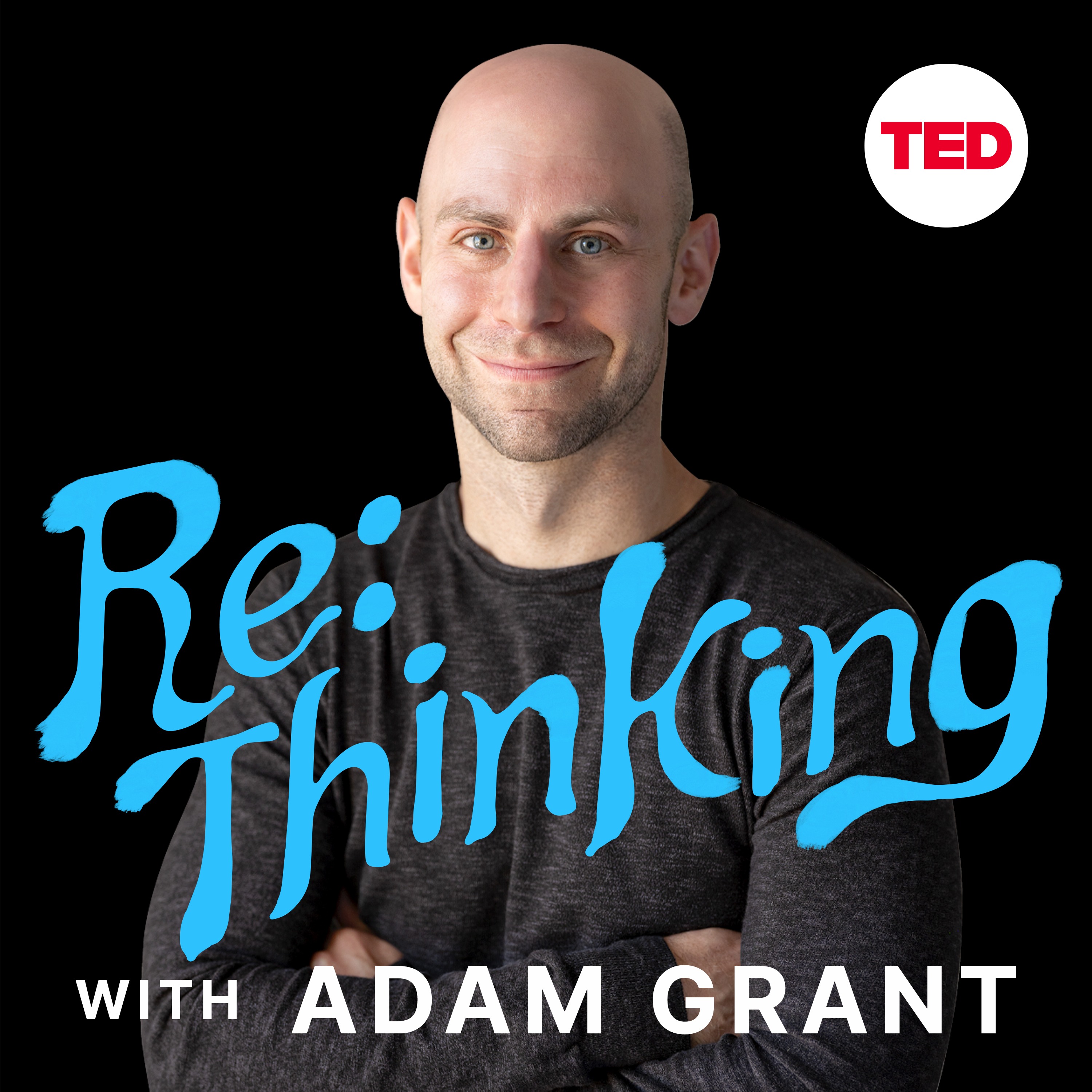
2:34But if you jump to label it too quickly, I think we can get this entirely backwards. Hey, everyone. It's Adam Grant. Welcome back to Rethinking, my podcast with Ted on the science of what makes us tick. I'm an organizational psychologist, and I'm taking you inside the minds of fascinating people to explore new thoughts and new ways of thinking.
2:58Trisha Posricha is a gastroenterologist at Harvard and the writer behind the Washington Post's Ask a Doctor column. She's been interested in the gut since she was a teenager. Now she has a new book out called You've Been Pooping All Wrong. I have to admit, this isn't the kind of topic we usually cover on this show. But Trisha and I had a fascinating conversation about the brain-gut connection, understanding what butterflies in your stomach might actually mean, and yes, some things you didn't know you wanted to know about bowel movements.
3:32So this is an unusual conversation for us, and definitely for me. And I can't believe that we're doing it without children present, because this is a topic that every kid loves. But I think there are some things that I need to rethink based on this conversation. So let me just ask you to start at the top, Tricia. Where does digestion actually begin? I've always thought about it as something that happens in the gut via the mouth. Yeah, I think that's how most people think about it. But digestion begins in the brain. And we've known that digestion begins in the brain for a very long time. And in a way, the gut is unlike so many other organs that our brain and our thoughts and our feelings can so strongly influence what our gut is doing.
4:21There's almost no other organ where the main thing, one of the main things it does can be completely controlled by your thoughts, right? Like your heart is going to keep on beating. You might think about a scary movie and you can kind of get it to ramp up, but it's not going to fundamentally change what it does. Whereas like right now, if you and I picture this like nice, warm, gooey chocolate cake, and you can picture that chocolate sliding down the plate, like soon you might start salivating. And actually your pancreas is going to start secreting insulin. And your whole gut starts to rev up purely because of your thoughts.
4:54And that is something that we had observed even as far back as like Ivan Pavlov and that famous experiment with his dogs. But it really is those set of experiments that birthed this whole field called neurogastroenterology, which is the study of the gut-brain connection. And that's what I study, and that's what I am now. And it's an exciting field because we now know how deep that connection is between the gut and the brain. Okay. So this bothers me as a psychologist, because whenever people say, trust your gut, I have a few reactions. The first one is, no, test your gut, because I don't know where you got your gut instincts and whether they're valid in the situation you're in or not.
5:33But secondly, I prefer to trust my brain. That's where I do my cognitive processing. And I'm afraid you're going to tell me it's a little more complicated than that. Well, I'm with you that I don't necessarily jump to trust my gut either, which may also be surprising as a gastroenterologist. I'm sure all my GI colleagues are like, how dare she? The gut is the superior organ. And, you know, let me just say that I think what we consider to be gut feelings in pop culture has taken on almost like a role of like an oracle. Like your gut can predict the future, can tell you the way things really are in a way that your brain may not be able to tell you.
6:13And this is something I've studied really, really closely for more than 20 years. And a gut feeling has a true physiological basis. and this is something that I studied when I was in high school and I developed a lie detector that could use your stomach to detect when somebody's telling the truth versus telling a lie and physiologically what I found is actually a little bit boring and a little bit simple and that is this your gut actually contracts at a predictable cycle just the way your heart contracts at around 60 beats per minute give or take is for your heart for your stomach it's about three cycles per minute.
6:52And when you tell a lie, that cycle gets completely disrupted. It goes into this chaotic rhythm called arrhythmia. And physiologically, that rhythm and that rhythm disturbance, which starts in the brain, is being driven by this molecule called corticotrophin releasing hormones. And it comes through the bloodstream and it immediately tells your stomach to halt and stops it from emptying. And if you think about it that way, what's cool is that it It means that your gut is often quickly responding to some change, some threat, some excitement that your amygdala is processing, sometimes maybe before your conscious brain in your head has pieced together why.
7:36And so your stomach can be this first herald of like, wait, there's something off about this environment. It can be like, for example, I used to be a theater kid. If I blew my lines on stage, I would get this like sinking feeling in the pit of my stomach. Right. Or maybe it's butterflies and you're on a date. We all intuitively know what I'm talking about when we talk about that gut kind of feeling. I think the way we get it wrong, though, is that we take that gut feeling and then we assign some value to it. And I usually tell people, like, if we just think about what is happening physiologically, that change in your gut's rhythm, which is giving you that gut feeling, that true gut feeling, it's not an oracle.
8:13It's just a message. And that message is just that you need to slow down. You shouldn't act on it immediately. But just think, what is it about my environment that my conscious brain may not have perceived yet, but that I understand? I love that. I mean, that's a really elegant physiological explanation of why I don't want people to blindly trust their gut instincts. Because you're right, there is a message, but the message has to be deciphered. Yeah, exactly. And it has to be translated in the context of everything you know. I mean, the amygdala, I think, in popular science, it gets a little bit dumbed down into saying, oh, this is the fear processing hub.
8:48And it's really like a more of an emotional processing hub. And sometimes what you're reacting to is not some fear or some deep-feated concern, but it actually might just be the novelty of a situation that you're not used to. And then conversely, I've seen the other thing happen, and this is very classic. You say you go on a date and you're with someone new, and then you don't get that butterflies in your stomach with that person, you know? And then I've had girlfriends come to me and be like, oh, we didn't have that spark. You know, like my gut was telling me like I didn't have it. And like, sure, maybe this person is not the right person for you.
9:20Very valid. However, I don't think you should make that decision based on whether you had butterflies in your stomach, whether you had a gut feeling about it right then and there without understanding the bigger context of why. Because maybe you didn't have that gut feeling because, again, physiologically, there was nothing unsettling about this experience. Like it might have actually just been a person with whom you felt very safe and comfortable. Is that such a bad thing? You know, and I think maybe you need another date or two to know, is he really boring or is he really just like a nice person that you feel happy with?
9:48And your next date should be structured more like the bachelor or bachelorette. You're going bungee jumping, right? Obviously. God, only, if only. This reminds me of something that happened in grad school. I invited a bunch of people to, I think it was a Valentine's Day gathering. Nice. Bold. Afterward, one of the attendees gave me feedback that a guy there had creeped her out. Oh, gosh. And I was surprised and disappointed. And I asked her why. And she said, you know, I can't locate it, but there was something about his eyes that just gave me a bad feeling. I knew I couldn't trust him. And I said, you know he's gay, right?
10:27And she was shocked because she thought he was hitting on every woman there. And it turned out that there was something about his eyes that reminded her of a creepy guy that she'd known. And the dots hadn't connected until that moment. Ugh, that is a classic example. And obviously, you know, they weren't meant for each other anyway, but like, goodness, that is exactly what can happen. I think when we just, we jump to a conclusion. Yeah, you know, it's interesting to me when we talk about the role of the gut in decision making. I just want to build on your oracle observation a little bit. Why do you think people are so eager to trust their gut?
11:08Yeah, I think it's for a couple of reasons. Like one, it is the first place that we respond emotionally in a lot of places. And that's something that we've known intuitively since we were kids. Like children, when they're feeling sick or where they're feeling nervous, they feel it in their stomach. They'll say, I have a tummy ache. That's often the first place. And that, again, very physiologically valid. We know how stress, how different kinds of emotional triggers can cause these real changes. And so it does feel like you might put this all together and say, yeah, my gut is this oracle. It knows.
11:39And I also think that in some ways the gut is a little mysterious, right? And I do love it for that. And I think the more I learn about the gut, the more I know we don't know. But historically, people have thought that the gut, this was Hippocrates who said, all disease begins in the gut. A lot of people think that a lot of our problems in health and in life can begin and end in the gut. So it does take on this meaning greater than the organ that it is. And again, I'm not downplaying the gut. I'm on team gut here. But I think that there is a lot of misunderstanding and maybe even oversimplification about what the gut does.
12:14Yeah, that resonates. And I wonder if there's also a memory bias at play here where it really eats at us when we had a bad gut feeling about something and we ignored it. whereas no pun intended no pun intended i mean i i think it's it's it's unforgettable when you have this gut instinct do not trust this person and then they end up screwing you over because you didn't listen to your gut or you know interrogate where's that feeling coming from and that sends a very strong message to change the next time but the message is not i should always trust my gut it's that i should do something with that information as opposed to just disregarding it, as we were talking about a moment ago.
12:55And I wonder if the times when we trust our gut and things don't work out are more easily dismissed or don't stick out in our memory as much. This is human nature. We're always going to remember a little bit of the times we got burned more than I think a little bit of like the factors surrounding how we ended up as happy as we did. You know, like when they do these studies, they look back and they say like, yeah, people tend to remember the past with a rosier lens, and that's often the case. But I think when it comes to moments of trauma, trauma can really reshape and rewire us, especially if that trauma occurs earlier on in our lives.
13:30The other piece of this that I'm curious about is there's this seductive appeal of, well, I don't have to do the analysis. I don't have to reason my way through this decision because my body will know and it will tell me. Yeah. You're getting this immediate feedback in the moment. And I do think that what is causing that physiologic change in the gut, that change the electrical rhythm, it's often discomfort. And again, I often tell people discomfort is not inherently bad. Sometimes what pushes you, what makes you uncomfortable can be an incredibly good thing. It can be a really good challenge.
14:05And just reframing that feeling of discomfort being bad to discomfort is novel. Discomfort is why do I feel this way can really open up your mind to say, like, maybe what I'm experiencing right now is not a bad sign. There's actually no prior memory that is resembling this moment. But I'm adding that layer on and I'm imagining that and putting all this stuff that's actually not there. Yep. I think that tracks. It reminds me of a paper by Eric Dane and Mike Pratt. They study gut feelings in terms of intuitions. And they look at whether you can trust your intuition or not when you're making decisions and predictions.
14:42And it turns out you can if you're either an expert or somebody with a lot of experience in a predictable domain. So if you, for example, are an avid shopper, you can trust your gut about whether a handbag is counterfeit or not. Whereas if you're a novice, you can because you don't have the years of experience in forming that subconscious pattern recognition process. But a lot of our decisions aren't like that. A lot of our gut feelings happen in domains where we don't have a lot of experience or there's not a stable pattern. And that's where I just want people to question, like, what is this signal coming from?
15:23And am I just uncomfortable because I'm in an unfamiliar environment? I often find that people put a lot of value on gut feelings during big life moments for which none of us have a ton of experience. And so then we're like, we are looking for other signs from the universe telling us this is good or bad. And maybe that is things like romantic encounters. Maybe it's like taking a leap in a business venture, like situations that you might only do a couple of times in your whole lifetime. And that's absolutely the moment where if you were an expert, like this would be wonderful. You'd have all of that background.
15:56But if you're not the expert, the message is let's pause and let's think about what the situation is telling me. Yeah, I guess I want to put then blindly trusting your gut in the same category as looking for answers in the stars. It seems very objective, but it's not valid. It's coming from a place of like, you do want to pay attention. Like, you want to pay attention to what's happening, what's triggering that feeling. And sometimes the cue to that feeling is not fully external. Like, it's important to even understand, am I being internally triggered too from something that is playing out in my mind that's causing these thoughts?
16:32For which there's nothing about the environment or the risks or the stakes that are actually the issue. The issue is my own biases that I'm bringing to the table. So there is something that's pulling this reaction to your gut, but I agree. It's not quite as bad as astrology, maybe, but it's getting there.
17:09sift through piles of resumes and find the right fit. That's why LinkedIn built HiringPro, your new hiring partner that screens candidates for you. So instead of sorting through applications, you can spend your time talking to candidates and finding your next great hire. With HiringPro, you can hire with confidence, knowing you're getting the best talent for your business. In fact, LinkedIn found that its users are 24 % less likely to need to reopen a role within 12 months compared to the leading competitor. Join the 2.7 million small businesses using LinkedIn to hire. Get started by posting your job for free at linkedin.com slash worklife.
17:49Terms and conditions apply. This episode is powered by AT &T Business. If you're running your own business, you know that the Sunday scaries are real. You're thinking about the invoices, the client calls the inventory, the list that never actually ends. And honestly, we usually don't think about our internet or our phone service until it isn't working. Sometimes a simple glitch can feel like a total catastrophe. That feeling of powerlessness when your tech fails you is the worst. It's a reminder that our connectivity isn't just a bill we pay. It's the backbone of everything we do. AT &T Business gets that.
18:29They know that for a small business owner, good enough isn't good enough. You need reliability that stays in the background so you can stay in the lead. If you're tired of the friction points and just want a provider that understands the stakes, check out AT &T Business. Powered by AT &T Business. Built to work. Get AT &T Business at business.att.com.
18:53With no fees or minimums on checking accounts, it's no wonder the Capital One Bank guy is so passionate about banking with Capital One. If he were here, he wouldn't just tell you about no fees or minimums. He'd also talk about how most Capital One cafes are open seven days a week to assist with your banking needs. Yep, even on weekends, it's pretty much all he talks about, in a good way. What's in your wallet? Terms apply. See CapitalOne.com slash bank. Capital One N.A. Member FDIC.
19:29okay lightning round time are you ready i'm so ready okay worst gi advice you see given regularly it would have to be probiotics and this comes as a surprise because i think most people assume based on the marketing that gastroenterologists everywhere love probiotics but we do not recommend probiotics for most conditions. The truth is that the data is far murkier, far less profound than you would be led to believe. And I find it really concerning when people are spending hundreds and hundreds of dollars on these probiotics. They're probably not getting the benefit they think they're getting. And they're focusing their attention on that rather than on the interventions that we know are better studied.
20:10So probiotics are like my big thing. Wow. All right. What's your best advice, GI-wise? Best advice would be to treat your gut like a brain. Like if you were going to go bike riding, there's no way that your mom would let you do that without a helmet, right? We protect our brain so aggressively, but we throw any old thing in our stomachs that if, like, we wouldn't want to cross the blood-brain barrier, you know, but it actually is hitting that brain. So you would want to eat a high-fiber diet. You would want to prioritize sleep. You eating fewer ultra-processed foods, eating more whole foods. Those things are great for your brain, but they're also the same things that help protect your gut.
20:49So it doesn't have to be overcomplicated once you start to think about it that way. What's something you've changed your mind about recently? Well, I will say this is like the biggest frame shift in all of GI. I used to think of cancer as a disease of older people. And if like a young person came to me and they were like, I've started having new diarrhea, even if I've seen blood in my stool, I would have said, okay, let's, you know, like, is this irritable bowel syndrome? Are these hemorrhoids? I wouldn't be thinking about cancer in a 20, 30-year-old. Today, I'm thinking about it. You know, most likely it is not what is happening, but it is a huge change in how I think, and I think about how all of us have been practicing.
21:31And you get to organize the world's greatest GI dinner party to talk about the gut with anyone alive or dead. Who are you inviting? Oh, this is so good. Ivan Pavlov is making that cut. He's getting on the list. Michael Levitt, Dr. Michael Levitt, was the father of flatulence research. If you don't know anything about him, you got to Google him and not just Google him, PubMed him. If you read the methods of his studies, you'll have so much respect for the scientific process. And like, you can understand why anyone who loved fart jokes as a kid should become a gastroenterology researcher. So he would totally make the list.
22:10And then I'd probably include my dad. He's like just the funniest guy I know. He's a neuro gastroenterologist. He's a researcher and he's just a very keen way of like pulling the threads together. So those three. Sounds like fun. All right. Office hours time. Do you have a puzzle problem or question for me? Yes. Thank you. I have two. Okay. This first one is really relevant to my world in studying disorders of gut-brain interaction. And so one of the main things I study is something like irritable bowel syndrome or diseases that don't even really have a name. They're just characterized by pain, by chronic pain and situations where the testing is normal.
22:54And most often, these diseases happen more often in women. And women's pain, this is true in my field. It's true in all of medicine. It's just, it's statistically undertreated. It's disbelieved more often than men's. And so from a psychology standpoint, what I would love you to tell me is how to give women more of a concrete toolkit to advocate for themselves and being taken seriously by their doctor. I think a lot of people in the medical community are quick to tell women to just not believe them and tell them this is all in their heads. Like how do we convince someone that someone's suffering is real?
23:30Wow. Well, I have two reactions. The first one is this should not be on women. This should be on medical professionals. Right. Yes. Period. Right. So let's change medical education to do a better job recognizing this bias and then counteracting it. I don't think that helps the average female patient overnight. So I think in the meantime, you're talking about a fundamental gap in empathy, right? A failure to be able to imagine somebody else's experience. And one of the ways that we close those gaps in psychology is we try to give people a more concrete look or direct sense of what the other person is experiencing.
24:11And so I think comparisons could be really helpful there. Um, you know, this hurts more than when I broke my foot or when I delivered a baby. Yeah. Like if you can put this on a relative scale and calibrate it against something that the provider can relate to, maybe it's a little harder to dismiss if you make it concrete that way. So maybe, maybe we need better pain scales that say, okay, zero is, you know, this is somebody poking you in the arm. Um, a 10 is, this is somebody amputating your arm. Yeah. You know, and then let's anchor each number on an imaginable form of pain that people have really lived.
24:50If you then give a 7 and the 7 is anchored to, I don't know, stepping on a Lego. Oh, that is really bad. That really hurts. If somebody says to a physician, this hurts more than if I just stepped on a Lego, I think it's hard not to pay attention. I love this because pain scales is like so embedded in our culture. Like if a patient comes in with pain, we're like, okay, where is it on a zero to 10? And they'll give a number. And the problem is that, yeah, we have our own subjective bias of what a 10 is. It's different from this person's 10. But if you were to say it's a seven and my seven is this, and then you give this concrete example, I've actually never heard it portrayed that way.
25:28And like, I think that would be helpful. You know, when I talk to my residents and they're like, oh, this person said they're 10 out of 10, but like they were sitting on their bed relaxed. Like, I'm not worried. And I say, you know, if someone's saying it's 10 out of 10, then we have to take that at face value and we have to act on it. But I think it's adding a little more nuance to that that someone else can say, this is really what that feels like. This is relevant to something we talked about when we talked about taste last year, which is when I tell people that I don't like chocolate, they don't get it.
25:56When I tell them I would rather eat dirt than eat chocolate. Oh, OK, you must really hate it. And I think we need to do the same thing for pain. OK, what's your other question? Okay, my other question, something I've seen, we've all seen since the pandemic and even before that, is that health misinformation, it really sticks with people and it spreads in a way that selling facts just don't seem to do. And so doctors often struggle when they're just seeing one-on-one a patient who believes something is false. What are the tools that you think actually help change somebody's mind about health information?
26:34And if you have like five minutes to do that. Yeah, it's a big question, right? Yeah, it's not easy. David McRaney wrote a great book that covers a lot of the relevant research. It's called How Minds Change. I also love Switch by the Heath Brothers. And those would be my two go-to resources on this topic. I think in terms of specific recommendations, one thing is, I think, you know, not immediately trying to make the other person feel like an idiot is always helpful. Yeah, that feels like a good foundation. Yes. And saying, hey, you know, I really appreciate the fact that you came in here with a lot of information and you're clearly doing a lot of research.
27:11And then, you know, trying to make it a dialogue and say, hey, my job is to help you separate signal from noise and really vet the rigor of these studies. So, you know, if you're open to it, can I walk you through what kind of study I would find credible versus not. And I think you're not going to change their mind in five minutes, right? By debunking the particular conspiracy or piece of misinformation they're buying into. What you want to do is establish a relationship whereby they trust your thought process, not just your conclusions. And they want to come to you to learn how to get better at critical thinking in your domain.
27:47I really like that. You have time, I think, to get them to believe that your way of thinking has some validity to it, even if you can't debunk that precise question. I like that a lot. Well, let me know how it goes for you. I'm going to try it. So in our last few minutes here, I want to ask you a few more lightning questions if you're up for it, because they're just so fun. One is, I did not know until I read your book that it's possible to fight the smell of a fart. How? Yeah, a lot of people think it's an inevitability. But actually, 99 % of the gas that you release is odorless. It's only that 1 % that contains sulfur.
28:27That's the problem. Okay, not surprising. It's the simplest solution. Bismuth subsalicylate found in products like Pepto-Bismol. It can neutralize the odors. So I don't think that we need to be like taking this every day the rest of our lives because I actually like don't think we need to live with that level of embarrassment once you know that people on average fart 10 to 20 times per day, you might realize you're not so different from everyone else. But I think if you have like a high risk social event, like you're visiting your in-laws for Thanksgiving or you're like, you know, in this like intimate work and you just, you need that for your confidence, like go ahead and take it like a day or two beforehand.
29:04And you actually will be able to neutralize it. You have to work a little bit harder about the sounds, but you can definitely get rid of the odor. Speaking of reassuring information, what percent of adults poop their pants? Gosh, 7%. Like, that's a big number. If you think about the activity we're talking about, we don't talk about it. What it does tell me is that you're not alone, if that's you. 7 % poop their pants, like, regularly. The kind of, again, encouraging part of that is that for a lot of the reasons why this happens, we have really good treatments. This, we call it fecal incontinence is one of the things that of everything we've talked about today that people listening are like oh this is so embarrassing it is so embarrassing that we know because we've done these studies in gi if the doctor doesn't ask the patient very specifically do you have this do you poop your pants patients do not bring it up on their own like that is very even though they'll come to that visit that is the most distressing it is this thing that makes them say, I can't leave my house.
30:05So if anyone hears this, it's common. Talk to your doctor if your doctor has forgotten to ask you about it, because the good news is that we can actually treat it. It's not inevitable. Great. Okay, one other myth to bust here. A lot of people have, I think, become fans of doing a colon cleanse or a detox ritual because they think there's poop or toxins lurking in their gut. Yeah. Not true? Not true. There is this cult of detoxification around. It's like detox culture is everywhere. And I actually, I kind of get where it comes from, like both in our current moment, which is like, you know, we think there are chemicals in the environment and our foods and pesticides and toxins.
30:46And I think it can feel really overwhelming, like we're putting poison in our bodies. And that's not the case. Like the awesome news is that everything that comes through your gut, it gets filtered first by your liver before it hits the rest of your circulation. Your liver is the cleanse that you need. Like there is no celery juice you could sip that is going to do a better job than your liver. And so like just, I wouldn't worry so much about detoxing with like a quick fix. What I would worry about is like, what is my long-term dietary habits? What are the patterns that will over time stress my liver?
31:20And that is things like alcohol and ultra processed foods and things that your doctor has been beating you on the head over for like the last 50 years of your life that you kind of already knew. That's actually really encouraging. Yeah, cancel that call and cleanse. Yeah, I wasn't planning to do one, but I'm glad to know that that was not a bad call. This episode is brought to you by LinkedIn. Running a small business means every hire matters. A bad hire can cost you time, money, and momentum. A good hire, they can change everything. But finding great talent isn't easy, especially when you don't have the time or resources to sift through piles of resumes and find the right fit.
32:02That's why LinkedIn built HiringPro, your new hiring partner that screens candidates for you, so instead of sorting through applications, you can spend your time talking to candidates and finding your next great hire. With HiringPro, you can hire with confidence, knowing you're getting the best talent for your business. In fact, LinkedIn found that its users are 24 % less likely to need to reopen a role within 12 months compared to the leading competitor. Join the 2.7 million small businesses using LinkedIn to hire. Get started by posting your job for free at linkedin.com slash worklife. Terms and conditions apply.
32:42This episode is sponsored by Rula. When you're going through a difficult breakup or a tough time at work or just dealing with the anxiety and stress of everyday life, the last thing you want to do is scour the internet for therapists who take your insurance. A lot of online therapy won't accept insurance at all, which means taking care of your mental health requires paying out of pocket or signing up for a pricey monthly subscription. But Rula does things differently. They partner with over 120 insurance plans, meaning the average copay is just$15 per session. That's real therapy from licensed professionals at a price point that actually makes sense.
33:21With a network of thousands of therapists nationwide, Rula can help you find the right one for you based on your needs, preferences, and state requirements. Thousands of people are already using Rula to get affordable, high-quality therapy that's actually covered by insurance. Visit Rula.com slash worklife to get started. That's R-U-L-A dot com slash worklife. You deserve mental health care that works with you, not against your budget. This episode is brought to you by National Business Furniture. You can find them at nbf.com. What your workspace looks like says a lot about the way you work and can make a big difference when it comes to productivity.
34:02The truth is our surroundings can impact how we think, how we feel, and who we become while we're in them. Your workspace can affect engagement, productivity, and maybe even retention. That's why getting your workspace right matters. It's proof that you value your team. National Business Furniture believes that every business deserves furniture that lasts, service that cares, and a partner that gets it, all on a budget that works. That's National Business Furniture's commitment to you. Find the right furniture for you and your team at nbf.com and use the promo code POD10 to save 10%. That's nbf.com.
34:40And experience the better way to buy office furniture.
34:47I have to tell you, I was not sure what I was going to make of this book that you wrote. Because I think people are disgusted and grossed out. by poop, period. But then I was reminded of this research that Paul Rosen did on disgust. So Paul's basic argument was that, you know, disgust evolved to keep us safe and we're disgusted by things that are toxic. And yet some things that disgust us also intrigue us. He said, and I'm going to paraphrase here, but it stopped me in my tracks when he said, okay, so most people are grossed out by poop in all forms. And yet most people are also curious about poop to the point that after they take a dump, they will look in the toilet and observe the shape and the color.
35:41And so this is kind of my long preamble to say, I think I've come around to the idea that this thing you study that people are disgusted by, they're also sort of intrigued by as adults, not just kids. Why? Why? What's going on here? Yeah. And you're asking someone who does this for a living. So we're in their like right space. But now I'm intrigued too. I mean, were you surprised because you are one of those people who takes a look or because you're one of those people who absolutely says like, no, I don't look. I just flush and I move on with my day. I'd never even thought about it and I didn't want to think about it.
36:14And it was so weird to me that somebody thought about it. Well, there's like a serious answer. And then there's like maybe the more real answer for like why people study this. And like, I would say the serious answer is that your gut and your gut health is so important to your overall health. And when we take a bigger step back and we look at what's happening in the world today, where a big conversation is about these early onset cases of colorectal cancer that we're missing. And we're missing them because people aren't bringing to their doctor's attention the symptoms about their guts because they're so embarrassed by it.
36:53People aren't even looking. They're not even looking before they flush. And, like, honestly, when I hear that, and I hear that from a lot of my patients, they're like, oh, I don't look. Because my first question is, well, what does your poop look like? You know, then I find that bizarre because I think, like, how can you not look? And so then that takes me to the, like, lighter side of this whole equation, which is, you know, in my world of neuro GI, it's kind of a relatively new subspecialty. But it's also the coolest, especially like the science is so exciting and emerging that I just think the way we've thought about our poop and about our bowels in a lot of ways has been proven so wrong over the last decades.
37:31And that's because I think for centuries, if not longer, we thought of our digestive tract as just this plumbing system. Right. And it's like you eat, you poop it out. And that's like kind of the end of the story. And then the microbiome entered the chat like, you know, 20, 30 years ago and the whole world changed. And then we realized and we kind of had hints that this was true earlier, that your gut is not just a set of pipes, it's a brain. It has this thing called an enteric nervous system. And if you shift that way of thinking, as I have, instead of thinking about your gut as this holding cell for your poop, and you think about it as a brain in and of itself, then one, you're not disgusted by it.
38:11You're fascinated by it. But then you also come to learn about all the different ways that not just your brain influences your gut, but also how your gut is influencing your brain. And the science of it is so exciting. Okay, so I have to ask you a bunch of things now. The first one is, I remember in grad school, we were in a seminar talking about the difference between happiness and joy. Happiness being more of a typically cognitive evaluation of how satisfied are you with your life, and joy being the momentary exuberance that you get when you have a peak experience. And you know where this is going.
38:50Some psychologists had done... I am so excited. It was an experience sampling study where you get at joy by instead of just asking people how happy are you and then trying to figure out what did you do that day. Basically, what they did was they texted or pinged you at different times throughout the day. And they said, right now, how much joy do you feel and what do you do? Yeah. And the conclusion from my colleague was we're really just animals because the two highest moments of joy consistently in the data were having sex and sitting on the toilet. Yep. That tracks. And I remember our professor saying joy equals sex plus shit.
39:30It's like an amazing class. I mean, it was a weird class in a lot of ways. But I think that that foreshadowed something that you write about in your book. which is the idea that people feel some degree of extreme joy when they are having a bowel movement. Explain this to me. Yeah, that is a concept that I call puphoria. And for example, right now I see a lot of patients with Parkinson's because that's what I study in my laboratory, the GI symptoms of Parkinson's. And as everyone knows, when you have something like Parkinson's disease, you have a lot of other very severe symptoms, things like tremors, difficulty walking, difficulty speaking.
40:10And yet, when you talk to these patients, people will tell me if they could trade away one thing, whether it's the tremors or the constipation or difficulty sleeping, it would be the constipation. Like they would rather live with tremors than they would live with the severity of their GI symptoms. And I find that to be true almost across the spectrum, that no matter how successful you are in life, no matter what else is going on, what other diseases you have, if you You cannot eat the food that you love and you cannot poop it out properly. People just don't feel joy. They don't feel like they have achieved like a high quality of life.
40:43And what I talk about when I'm talking about pooforia is like two stages, right? And one is long-term satisfaction with your bowel habits. And for me, maybe that's actually where having a bowel movement is the absolute least of your daily concerns. And 40 % of Americans, this is something that disrupts their daily lives. It's a huge number for something that we actually may or may not have a diagnosis attached to. We may not be talking about enough, but that's a lot of people who are not happy because they're not pooping well. But then there's also this interesting phenomena, which, again, we don't talk about that much probably out loud on a podcast or with friends, which is that people feel such immense joy when they have a good bowel movement.
41:25And I actually do think that there's two reasons why this happens. One, it can be hard work for a lot of people. Like it's not effortless. It's not easy. And so like sometimes people having like a nice, good bowel movement really feels like a relief because they know now the rest of my day is not, I'm not going to be thinking about this and worried about where the bathroom is and feeling that heaviness. So it's like a big sense of relief. And also there is this surge through your vagus nerve in order to have a bowel movement. That's very relaxing. That's like, you have to have that in order to have a good bowel movement.
41:56So there's both this physiological basis and this sense of like achievement and relief that comes with having one. Is that related to dopamine? Because you've also shattered one of my assumptions about where dopamine lives. Yeah. So most of your body's dopamine comes from the gut. And I mentioned that my laboratory studies Parkinson's disease. But what we really study is dopamine signaling in the gut. And this is true. You'll hear this of a lot of other neurotransmitters that we think of as predominantly being brain-centric neurotransmitters like serotonin. And that too is mostly produced by the gut.
42:29With the dopamine though, the dopamine produced by your gut actually doesn't cross the blood-brain barrier. So it's not necessarily as though the dopamine produced by your gut is the thing that's immediately giving you that hit of like satisfaction. I think you get that. But I think that's predominantly coming from the experience in your mind playing out about that like genuine sense of relief. Got it. Okay, so what's your advice on how to get to puphoria? Yeah, well, sometimes I start with just the basics of what modern life has taken from us. And sometimes that conversation starts with me just saying, how are you sitting when you have a bowel movement, right?
43:07And everyone's like, that's a weird question. I just sit on the toilet as one would. And actually, that's not the best or most natural way to have a bowel movement. And when you sit in this like 90 degree angle, like you're sitting on a chair, there's a kink in your colon. That tube is not all the way open. When you squat, as many people used to do in the past, far fewer are doing that today for all the reasons I understand, that actually the tube straightens up and you're able to pass stool a lot more easily. And of course, the next point is like, nobody wants to squat. I get that. But what you can do to achieve that, to open up that angle again, is just to raise your knees above the level of the waist.
43:45You can use a stool. You could use a stack of books. You could use a pair of stilettos. As long as you raise your knees above your waist, even healthy people will say, oh my gosh, I had no idea. This is way easier than it was. Another thing I talk about often is bringing our smartphones into the bathroom. That is like a big problem with our modern life. Speaking of dopamine. But when you bring your smartphone into your bathroom, you're getting distracted by design. And, you know, we did this study in my laboratory where we found that people who bring their smartphone in the bathroom, which is everybody.
44:15Okay, there's no shame in that. But those people, about half of them said they spent longer in the bathroom than they intended because they were distracted by their phone. That's not so surprising. There's no way we can expect you to focus on the job at hand in the bathroom if you have your smartphone and you're like in the middle of doom scrolling. And it's not so much like, oh, this is just going to waste your time. We're worried that this is what's driving hemorrhoids in a lot of people. Because the longer you sit on this open commode without any pelvic floor support, the more those hemorrhoidal veins they fill over time, that connective tissue weakens.
44:51So this is a habit that it's probably simpler to say we should break than it actually is because we're all so addicted to our phones. But it's like one of those things that just like we don't bring our smartphone to the dinner table, to the bedroom. We probably shouldn't be bringing it to the bathroom either. Good advice. Well, Tricia, this has been every bit as fun and enlightening as I hoped and also less gross. Yeah, I hope you feel that way. And I hope you take a look next time. I can't say I plan to. But thank you for joining us and at least inviting me to rethink that.
45:29Rethinking is hosted by me, Adam Grant. The show is produced by TED with Cosmic Standard. Our producer is Jessica Glazer. Our editor is Alejandra Salazar. Our engineer is Asia Pilar Simpson. Our technical director is Jacob Winnick. And our fact checker is Paul Durbin. Our team includes Eliza Smith, Roxanne Hilash, Banban Chang, Julia Dickerson, Tansika Sungmanivong and Whitney Pennington Rogers. Original music by Hansdale Hsu and Alison Leighton Brown.
45:59You know, I wash my hands after I poop like everybody else. You know, I'm a poop positive person, but like I have a reasonable distance too.
46:12With no fees or minimums on checking accounts, It's no wonder the Capital One bank guy is so passionate about banking with Capital One. If he were here, he wouldn't just tell you about no fees or minimums. He'd also talk about how most Capital One cafes are open seven days a week to assist with your banking needs. Yep, even on weekends, it's pretty much all he talks about. In a good way. What's in your wallet? Terms apply. See CapitalOne.com slash bank. Capital One N.A. Member FDIC. self-directed investing trading full-service wealth management automated investing financial planning thematic investing retirement planning and to think that's just a small taste of what schwab offers because schwab knows that when it comes to your finances choice matters no matter your goals investing style life stage or experience schwab has everything you need all in one place so you can invest your way.
47:07Visit Schwab.com to learn more. Hannah, I just Venmo'd you for dinner. Obsessed. I'm spending it right now on the lip gloss that's been sitting in my cart. What do you mean spending it right now? You can instantly spend your balance with the Venmo debit card or when you pay with Venmo at checkout. Stop. Say more. More exactly. The more you do with Venmo, the more you get. Like earning up to 5 % cash back with Venmo Stash. Get the Venmo debit card or checkout online. Venmo Stash Bundle Terms and Exclusions Apply. Max$100 per month. See terms at venmo.me slash stash terms. Venmo checkout not available at all merchants.
47:44The Venmo MasterCard is issued by the Bancorp Bank N.A.
You’ve probably experienced a “gut feeling” before—that sense of uneasiness in your stomach that tells you something is off, but your brain hasn’t quite worked out what it is yet. But can you really trust what your gut tells you? In this episode, Adam is joined by Harvard gastroenterologist Trisha Pasricha to decode what’s really going on between your mind and your stomach. Trisha breaks down the science behind brain-gut communication and offers tips for when and how to listen to your gut when making decisions or assessing a new environment. She also seeks Adam’s advice on helping doctors empathize with patients’ pain and invites him to rethink his position on poop. Building on her book You’ve Been Pooping All Wrong, she explains what your bowel movements can tell you about your overall health, how to experience “poophoria,” and why you shouldn’t bring your smartphone to the bathroom.
Featured guest
Connect with the team
For the full text transcript, visit https://www.ted.com/podcasts/worklife-transcripts
Hosted on Acast. See acast.com/privacy for more information.