Ask ChatGPT
 Worklife with Molly Graham
20 Jan 2026 · 35m · 15 chapters
Linguist Adam Aleksic (Etymology Nerd) explains how “Algo Speak” and Gen Alpha/Gen Z slang emerge from algorithmic platforms, meme culture, and media incentives. He argues that language spreads like a “virus,” but that the medium (e.g., TikTok, short-form video) is the missing piece in classic meme theory. He also discusses “brain rot” as a reflexive awareness of harmful/absurd internet effects rather than inherently harmful words, and uses Skibbity Toilet as an example of deeper commentary about surveillance and the “digital gaze.”
Adam Aleksic, 24-year-old linguist and online creator known as Etymology Nerd; author of Algo Speak.
TikTok’s “algorithm” is a pipeline of many ML systems; short-form + personalized feeds intensify engagement-driven language. Most internet slang traces heavily to African-American English and 4chan.
La Boo Boo matcha Dubai chocolate; “6-7” from clip-farming; “bop” (OnlyFans-algorithm workaround); “Skibbity Toilet”; “Rizler” brain-rot remix; “On Fleek” (Kayla Newman); “distracted boyfriend” meme; politicians using brain-rot speeches.
Written by AI. May contain mistakes.
Delve into the concept of Algo Speak and its impact on communication.
“Today's guest is a 24-year-old linguist named Adam Aleksic.”
Explore the meanings and origins of trending Gen Alpha slang.
“new pistachio chocolate from Dubai, obviously.”
Learn how algorithms have transformed language and communication.
“No, I mean, I didn't know the origin story and it turns out neither do my kids.”
Discover how language reflects cultural changes and societal beliefs.
“But this combination of the personalized algorithm and the short form video that dominates your entire screen and holds your entire attention made TikTok the most addicting app possible.”
Understand how language spreads and its implications for culture.
“So this reminds me of one of the more, I think, interesting ideas in Algo speak, which is language is a sort of virus in your view.”
Explore how online platforms shape our language and beliefs.
“And if 4chan is influencing our language that much, it stands to reason that 4chan is influencing our political beliefs, our social understandings as much.”
Discuss the challenges of crediting original creators in language evolution.
“You have the plan, and you just got handed a huge opportunity.”
Understand how memes evolve and influence societal communication.
“got a lot of lack for stealing the renegade dance without crediting this original creator.”
Delve into the fascination and implications of Gen Alpha slang.
“There's an incentive to master the memes and then share them.”
Explore why the brain rot vocabulary intrigues people and its cultural implications.
“Why are we so intrigued by the brain rot vocabulary as opposed to other slang?”
Discuss the importance of intentionality in language use and its impact.
“What is something you've changed your mind about with respect to words or language?”
Delve into what constitutes a meme and its layers of meaning in culture.
“It can have words, but it doesn't mean that.”
Examine how digital content like Skibbity Toilet reflects societal narratives.
“You've made a very compelling case, both in AlgoSpeak and in this conversation, that our language creates our reality and it also shapes other people's reality.”
Discover the balance between 'slop' content and meaningful engagement.
“It's going to be even more important moving forward as we are increasingly in this boundary of not knowing what is real.”
Reflect on the impact of language and sharing cultural experiences.
“Where it's in that should or could camp.”

Get the gist, explore an idea or ask about something said.
 Claude
On Worklife with Molly Graham, what are the key points of this episode?
Searching your listeningAutomatic transcript. May contain errors.
0:00This show is sponsored by Range Rover Sport. It's not just what you say, it's how you say it. To truly make an impact, you need to set an example, take the lead, and adapt to whatever comes your way. And when you're that driven, you drive an equally determined vehicle, the Range Rover Sport. Blending power, poise, and performance. Like you, it was designed to make an impact. The vehicle combines dynamic sporting personality, elegance, and agility to deliver a truly instinctive drive. Defining true modern luxury, it includes the latest innovations in comfort and convenience with features like the cabin air purification system, alongside active noise cancellation for all new levels of quality, comfort, and control.
0:42A forced inside and out, the Range Rover Sport was created with a choice of powerful engines, including a plug-in hybrid with an estimated range of 53 miles. Build your Range Rover Sport at rangerover.com slash US slash sport. This message is brought to you by Apple Card. Apple Card members can earn unlimited daily cash back on everyday purchases wherever they shop. This means you could be earning daily cash on just about anything, like a slice of pizza from your local pizza place or a latte from the corner coffee shop. Apply for Apple Card in the Wallet app to see your credit limit offer in minutes.
1:18Subject to credit approval, Apple Card issued by Goldman Sachs Bank USA, Salt Lake City Branch. Terms and more at AppleCard.com. What's up, Adam Grant from WorkLife, a TED podcast here. If managing supply runs is still on your to-do list, here's your sign to upgrade. Walmart Business has the tech, tools, and services that make it ridiculously easy to stock up for your office or team think schedule deliveries, multi-user accounts, and even IT setup. Bonus! With a Walmart Business Plus membership, you get free shipping, spend analytics, and 2 % rewards on orders of$250 or more. Join the smart way to shop at business.walmart.com.
1:56Terms apply.
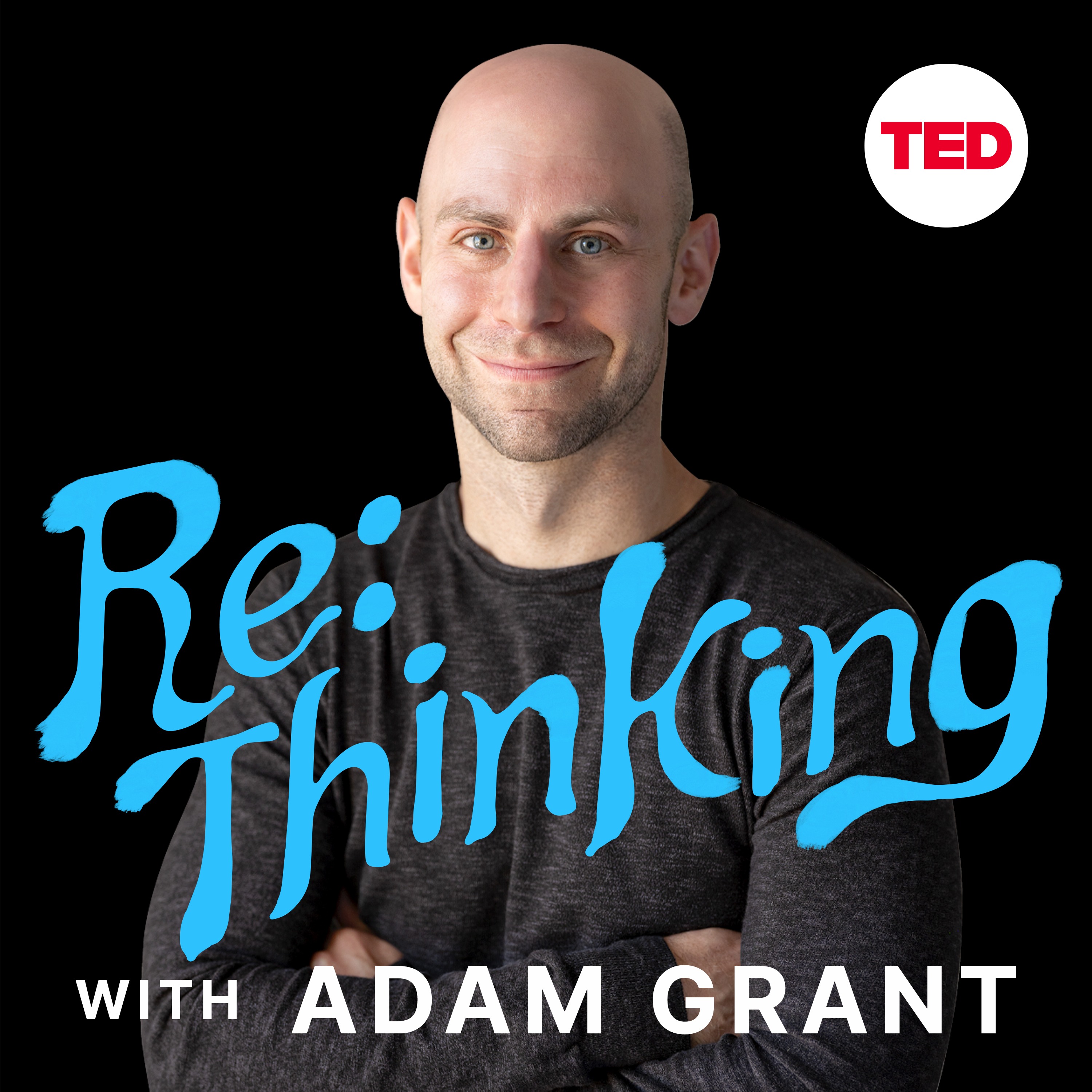
2:22Adam Aleksic: it, and then it becomes even more of a thing. Hey, everyone. It's Adam Graham. Welcome back to Rethinking, my podcast with Ted on the science of what makes us tick. I'm an organizational psychologist, and I'm taking you inside the minds of fascinating people to explore new thoughts and new ways of thinking.
2:44Today's guest is a 24-year-old linguist named Adam Aleksic. He's known online as Etymology Nerd for his enlightening and entertaining videos on the origins of words. His recent book, Algo Speak, offers a fascinating look at how algorithms are changing the way we communicate and demystifies a lot of Gen Z and Gen Alpha slang.
3:03Adam Aleksic: So yeah, you look at the meme, you dissect where it comes from, and you understand more about who we are as a society, how ideas are affecting us. I think if we educate ourselves and have deep media literacy about the things we are looking at, we are better able to judge reality. I had a lot of fun talking with him about the origins of internet language and whether the garbage memes created by AI might foretell the downfall of society. He even makes a case for watching the dreaded TV series Skibbity Toilet for the deeper social commentary it contains. No, I'm serious. We'll get there, but first, I asked him to give me a little test.
3:42My neighbor's mom is a huge fan of you, so she'll be really excited. One, I'm honored, and two, neighbor's mom, I feel like I've made it in life now. Can you start by quizzing me on Algo speak? Sure. I would love if you give me some words and then I'll do my best and you can tell me how I've done.
4:00Adam Aleksic: All right. I'll try to hit you with more trendy memes. Uh, La Boo Boo matcha Dubai chocolate was a popular meme this summer. How much do you know about the brain rot version of that? I'm sorry. I didn't recognize any of those words except I've heard people say La Boo Boo and brain rot and I don't know what La Boo Boo is. And as far as I can tell, brain rot is using a bunch of these algo speak words in ways that cause the quality of thinking and conversation to deteriorate. Yeah, that's interesting. You're kind of conflating two definitions there, which I think are important to separate. Brain rot can be something that is perceived to be mentally deleterious online, or it can be this meme aesthetic associated with things that are bad with your brain, but not necessarily.
4:40Adam Aleksic: Like there's nothing about matcha that is bad for your brain. And yet matcha is brain rot in the same sense as labubu, which is this plushy toy from China that looks a little ugly. And then there's Dubai chocolate, which is this popular new pistachio chocolate from Dubai, obviously. And so now we have this inundation of meaningless vocabulary and we start using it absurdly, ironically, to point back at the idea of the algorithm pushing this content. And the most recent iteration, this labubu matcha Dubai buy chocolate is pointing fun at that hyper commodification of items that are being pushed by the algorithm.
5:13Adam Aleksic: It's a sort of reflexive knowledge that these trends are being overrepresented to sell something online. So interesting. What's your next one? I didn't realize I'd have to be given a quiz. There was. Wait a minute. You get the easy part. You only you only have to give the quiz. I'm the one who has to take it. All right. Yeah. No, no. It requires, you know, teacher prep. Do you know about 6-7? My kids told me about it. And as far as I can tell, it has no meaning, but they think it's hilarious anyway. Yeah, I think this one's really interesting. It is sort of a meaningless interjection, kind of like Skibbity, but it comes out of clip farming culture where NBA players would say it in order to go viral.
5:50Adam Aleksic: And the idea was in an interview, if you say 6-7, you'll get remixed into a TikTok edit. And then other people, Gen Alpha children start saying 6-7 on camera in hopes of going viral. So actually, I think it's less of a meaningless thing and more of an absurd reference to this idea of clip farming culture, the idea that the algorithm is always implicitly there. And it's sort of an absurdist parody of the fact that we are existing in this algorithmic milieu. Wow. Fascinating. I completely failed at that. Okay. No, no, you did great, actually. It can be meaningless too. No, I mean, I didn't know the origin story and it turns out neither do my kids.
6:24I can't wait to tell them that I know something about Gen Alpha speak that they don't. Yes!
6:29Adam Aleksic: That's how you kill a meme, by the way. As soon as you tell them more about it, than they know. Noted, but I want to kill that meme because it's ridiculous. All right, what's your next one? New form of algo speak is the word bop, which probably means something different than what you learned growing up. Oh, okay. The idea is like an OnlyFans worker. And so in the past, a bop was like a really good song. And then out of, I think, Bay Area slang, African-American English, it percolated into the mainstream and was used by OnlyFans creators who needed a way to describe their profession without being censored by the algorithm.
7:05Adam Aleksic: So Bob started becoming popular in that sense. Okay, but doesn't the algorithm learn that? Well, yeah. There's also this idea of the algorithmic imaginary that we're hyper-correcting constantly. That the algorithm is suppressing less than you think. And yet because you don't know exactly what the algorithm is doing, people will attempt to circumvent it. And that's kind of algo speak. But algo speak is also, I think, more broadly, any way that we talk online that is conditioned uniquely by the constraints and expressive possibilities of the algorithm. Got it. Okay, why now? It seems to be new just in the last couple of years, but algorithms are not new.
7:40Is it just that TikTok largely has made algorithms more sophisticated in this way? Why was it not happening on old school Facebook or on a decade ago Instagram?
7:52Adam Aleksic: Yeah, well, it's important to emphasize that an algorithm is just a computer process where there's an input, something happens, and there's an output, right? Right. And in the past, algorithms were used for all kinds of things. The algorithm, as we refer to it on TikTok, is something different entirely, which is importantly, not one algorithm. It's hundreds of different algorithms that are involved in user classification and content classification and then matching users to that content and then censorship. All this stuff is kind of combined into what we think of as the algorithm, that pipeline between a video being uploaded and it showing up on your for you page.
8:24Adam Aleksic: But there's also an important addition of machine learning into this process. The new algorithms are based on neural nets, kind of the same architecture that's underlying chat CPT and these chatbots. It's an AI based algorithm that learns from itself, that learns from the content as it's uploaded, and that learns from your behaviors. It is created under this promise of a personalized for you page, a page that is meant to be for you and you alone, that is built through your activity online and your interests. And that is what kind of set TikTok apart when it acquired Musical.ly in 2017 and then started building itself out as this distinct platform.
9:00Adam Aleksic: Also, the rise of short form video is a whole nother aspect to analyze here how that has impacted our culture. But this combination of the personalized algorithm and the short form video that dominates your entire screen and holds your entire attention made TikTok the most addicting app possible. Users spend way more time on TikTok than any competing app in the past. And there are many good aspects in terms of democratized communication, but also many concerning aspects of what kind of speech is allowed to travel online. When did you first get into etymology and linguistics? About 10 years ago, actually.
9:34Adam Aleksic: I have been really fascinated with etymology from the start. I got into it for the fun facts. I like to say that the word etymology actually in Greek, etumos, means the study of truth. You find out something real about ourselves and about how we relate to society and to each other through our words. And I started this little blog for myself in high school called etymologynerd.com. And I do a little blog post a day on where words came from. And then I studied linguistics in college. And then I was like, well, what do I do with a linguistics degree? And I ended up making videos, which is the modern day etymology nerd.
10:04That's fantastic. It reminds me a little bit of, you probably know the origin of Abracadabra, right?
10:11Adam Aleksic: I was just looking into how the Harry Potter curse, Avada Kedavra, is based on Abracadabra. But it doesn't have something to do with the alphabet. Actually, I don't even know. You would know better than I would on that. The thing that always stuck out at me from the little I do know about that is the Aramaic translation, or one of them at least, is I create as I speak. Yeah. And I thought that was such a simple but profound way of describing how the access to language that we have actually shapes the way that we see the world. Oh, that's so fascinating. And also hocus pocus in Latin means this is my body.
10:45Adam Aleksic: I think there's such a fascinating connection between words and performance. So in the Bible, right, God says, let there be light, but it's the saying, let there be light. And then he goes on to name it light. The literal word is the thing that does it. There's such a fascinating connection with how ancient cultures thought about magic and language being inextricable. The word spell as in magic spell and spell as in spell a word go back to the same source because it's thought to be the same thing. by writing down the word, you are conjuring a physical change in the universe, which affects how other people understand each other.
11:16Adam Aleksic: By saying something right now, by you saying something, we're affecting the minds of all the people who are listening to this. That's unbelievably powerful to me. Me too. So this reminds me of one of the more, I think, interesting ideas in Algo speak, which is language is a sort of virus in your view. And the metaphor instantly made sense to me, because we do spread these words. In fact, I don't know of a way to learn a word other than through communication, right? I'm either hearing it from another person or I'm picking it up through something I've read, or I guess now we have a growing number of AI tools that can teach me a word, but they've usually ingested it from a data set that involves human communication.
11:57So talk to me about beyond the obvious, what is viral about language?
12:04Adam Aleksic: Yeah, so there is this virus metaphor And it is very useful up to a point. I want to caution that a metaphor can only take you so far. A metaphor being Greek for carry across, it's good for carrying across a concept. But the carrying is never quite where the concept is. It's a semantic domain in how we understand it. That being said, there is something very useful to understanding how language spreads through this sort of epidemiological lens. Where a word starts out in some small cluster community. And you see this all the time, especially on the internet. Maybe the internet's given us better tools than ever to understand language from this viral lens.
12:36Adam Aleksic: I mean, you can literally talk about going viral. But it starts with these like hosts and then it is transmitted and infects other people. And then those people become hosts for the word and then they say it and then it's infecting the minds of other people. And one thing I try to emphasize in the book is that pretty much 90 % of the internet's language right now is either from African-American English or it's from 4chan. Which, you know, you can draw your own conclusions. Wow. Okay, wow on two levels. One, I think that is scary, if that's becoming a source. But two, I just want to go back to the way that you dropped in that metaphor, scary across.
13:13I love this linguistic sleight of hand. And I think if I could redo college, one of the first things I would change is I would take at least one and probably multiple linguistics classes. I've always loved words. I'm definitely a word nerd. And I just think it's so cool how you can say it. And by the way, here's what a metaphor does. Its origin is to carry a cross. Other than the parlor trick, what's the value of you being able to do that?
13:41Adam Aleksic: Right. Well, part of it, again, is just the fun fact, the parlor trick. But the other part is that part I said, that etumus, truth, right? You find out an aspect of how humans understand society. You find out where these words are coming from, and you understand actually where ideas are coming from. I see language as sort of a bellwether, like a canary in the coal mine of greater cultural shifts. And if 4chan is influencing our language that much, it stands to reason that 4chan is influencing our political beliefs, our social understandings as much. And I strongly think that they are because language is never, you know, isolated in a system.
14:13Adam Aleksic: It serves as an indicator maybe of how we think. It is a little map of our vibes, I guess. Okay, so if that's the case, how easy is it for you to use this understanding of language to start implanting words into our vocabulary? I've tried. Trust me, I've tried. It's every linguist's dream to get people to say their word that they invented. But that's not really how it works. You have to have this effervescent, natural feeling to language. It has to spread usually along the conduits of what is seen as funny or cool. African-American English is seen as cool. 4chan language is seen as funny. It spreads through memes.
14:52Adam Aleksic: And we end up adopting something because it follows just these sort of pathways of how humans like to adopt concepts. We feel a resistance to something if it feels like it's being forced on us. There is a difference, I think. The elites can impose language when they use it to structure things. And then we just adopt the vocabulary of something like YouTube calling it channels and creators. Those are just decisions they made in their boardrooms in the late 2000s. And so now we just use words like channel and creator. And we don't think about what those words might mean. That's an upper elite structure decision that affects other people.
15:29Adam Aleksic: But unless you give me a platform to influence people, then I probably can't get my word to naturally percolate outwards. What's the word that you would most want to spread that you've coined? just with my friends i've secretly been seeding the word noxious to mean good for a while why i think it's it's like kind of like oh that's totally noxious bro like a surfer slang it sounds like it could mean good i think it's funny i guess yeah i guess i guess noxious should be in some ways the opposite of obnoxious right i why not you know i mean it does mean i think poison in latin but in a funny kind of way in the same way you say that's sick you know that's my secret dream to get more people saying noxious.
16:09Adam Aleksic: Oh, also, wordly as a suffix. Like you can say eastwardly is northwardly, but or like, what about this wordly? I'm going this wordly. I'm going Boston wordly. I think it's just a fun suffix. So if anybody's listening and they want to use this, I don't think we can make it happen, but you might as well try. I don't think the wordly is going to take off. That sounds like Shakespearean English. It's funny. It makes it a little more poetic.
16:33Are you really buying a car online on AutoTrader right now? Really? At a playground? Yeah, really. Look at these listings from dealers. Wow, your search can really get that specific? Really? And you just put in your info and boom, cars in your budget. Mom needs a second, honey. You can really have it delivered? Really, or I can pick it up at the dealership. One sec, sweetie. Mommy's buying a car. Mommy, look. Uh, I think your kid is walking up the slide. Kyle, again? Really? Autotrader, buy your car online. Really?
17:03Adam Aleksic: You're a pro at running your life, at committing to your workout. at showing up every day. At Bombas, we're pros too. Pros at making socks. Our sport assortment has specialized socks for whatever sport you're committed to. Running, hiking, golf, Pilates, and so much more. Made with sweat-wicking yarns, blister-fighting details, and targeted art support. Bombas Sport is pro-level socks from the pros of socks. For another pro, you. Go to bombas.com slash audio and use code audio for 20 % off your first purchase. That's bombas.com and use code audio. You have the vision for your business. You have the plan, and you just got handed a huge opportunity.
17:39But is your business connectivity reliable enough to make a move? Spectrum Business delivers fast, reliable internet, phone, TV, and mobile services, so you're always connected when it matters most. Get connectivity packages built for your business, with savings that keep your budget in check. And with fast, reliable internet, and 100 % U.S.-based customer support, you'll stay connected and ready to bring your vision to life. Learn more at spectrum.com slash business. Restrictions apply. Service is not available in all areas.
18:14I guess one of the challenges of having your words sort of arrive in the lexicon is at some point I've seen people get upset that they're not getting credit for what they've coined. Right. Right. And I've always found that so puzzling. It makes my day when somebody talks about like givers and takers, which is probably one of the ideas that I help to popularize without referencing me because that is a sign that the vocabulary has been useful to people. And it's kind of ingrained in the way they think and talk. And they don't even necessarily know that I exist. That to me is a marker of successful change.
18:50It's a sign that I've made a contribution.
18:52Adam Aleksic: Yeah, I think you have to accept the reality that if you're trying to influence culture, it's honestly good for that idea to spread on and take its own life and you kind of plant the seed that later on grows. But there is sort of this history of language being power as a tool of creating belonging. and the thing that's interesting with like african-american english is that a lot of the slang specifically comes out of the ballroom scene in the 80s and 90s this is this gay black latino space and it was used as a tool to subvert the straight white norms of the english language which they didn't feel represented them and it was used to build community words like slay serve tea cooked ate bussin all those are like from that area now they're thought of as gen z internet slang and they percolate outwards into the into the mainstream and now you know you have your white middle school girls saying slay, but it loses that initial power that I had within that community.
19:45Adam Aleksic: So there, you know, I see both sides as you can't stop it. You cannot stop a tsunami. The language is going to change. And then there's a new need to invent new shared vocabulary. And if anything, that's also beautiful, how it bubbles up kind of rhizomatically in a new direction that you have new development of language. But it is inexorable that language is going to keep marching on and get moved through these communities until you get to the base root of why it's moving through these communities the way it is. There's also individual attribution. I remember the example from On Fleek in 2014, when the Vine user Kayla Newman going by Peaches Monroe coined the phrase On Fleek in a short seven second video.
20:24Adam Aleksic: And that went viral. And Nicki Minaj rapped about being On Fleek and all these celebrities and Forever 20 round released On Fleek t-shirts. And meanwhile, Kayla Newman never saw a scent of profit and was like her idea was her creativity. But, you know, another argument is why shouldn't she see profit? It's not a word is not something you can really own. A trademark is kind of a different concept than just having a word that you came up with. But there is this idea online of crediting the originators of something. I think this has been more of a standard on TikTok since 2019 or so when Charlie D 'Amelio, the famous TikToker, got a lot of lack for stealing the renegade dance without crediting this original creator.
21:02Adam Aleksic: And so there's this culture of attribution. I mean, you can draw your own conclusions about how much attribution should be given, should not be given. I think it's cool when you have the opportunity to acknowledge where an idea came from. But at the same time, we need to accept the things that we cannot change. I used to see this happening a lot with music, especially. It's harder even to trace what a sound is, what an aesthetic is. And we have all these different genres of music, all tracing back to a few early starts in jazz and folk music and stuff. And I like to use the example of Stevie Wonder as another instance of virality, where his album Songs in the Key of Life is one of the most influential albums of all time.
21:41Adam Aleksic: His song Pastime Paradise from that album got remixed into Gangsta's Paradise by Coolio, his song, which has like two billion Spotify streams, his song Saturn, which imagines this better world on a planet called Saturn, later got redeveloped into SZA's Grammy Award winning hit with a billion streams, Saturn. He's the basis for the Mario Kart soundtrack. Elton John, Michael Jackson, Stevie Wonder was their greatest influence. So he was literally viral in the same way that you can think of the Kayla Newman coining on fleek. There's a higher node that influences lower nodes, a host that transmits an idea.
22:13Adam Aleksic: And this is sort of this concept of a meme, which is another meme in and of itself. We don't really know what a meme is. The word was coined in 1976 by Richard Dawkins in his book, The Selfish Gene. It comes from the Greek word for imitate. And he, I don't know, he has some, I think, underdeveloped ideas about what a meme could be. There is this idea that it can evolutionarily compete against other memes, which I think is, again, reductive as a metaphor, but it's useful. And so we have memes competing against each other in the wild. And when a meme is better able to compete for your attention, it is the one you end up using.
22:44Adam Aleksic: That's why we start using certain words. That's why we start listening to certain songs, the meme is winning. It is self-replicating. So I remember reading The Selfish Gene, I think it was in 2000, and being intrigued by the idea that cultures pass on memes just like, you know, biologically we pass on our genes. And it seems like the way that's happening is different now. It seems like there's much more cross-fertilization between different groups because of the internet and globalization. It also seems like because to your earlier point, people are trying to game the algorithm. There's an incentive to master the memes and then share them.
23:21I'm just thinking of a dumb example. The photo of the guy who's looking at the girl who looks like...
23:28Adam Aleksic: Oh, the distracted boyfriend meme. Distracted boyfriend. Thank you. That's from 2015. Yeah, yeah. There's a shared knowledge of what the distracted boyfriend signifies for sure. So yeah, I guess the question is then, how do you distinguish between a meme that's useful versus a meme that's being used? I think that's such an important question. And I want to sort of redefine that Dawkins' definition of a meme is just merely a self-replicating unit of culture. And an idea of a viral idea is merely something that goes from our head to another person's head. The missing piece of this equation is the medium.
23:58Adam Aleksic: Before it can go from my head to your head, I need to put my idea into a medium. Right now I'm using speech as a medium. Stevie Wonder was using song as a medium. and TikTok is itself a new medium. I think it's a paradigm shift in how we communicate it as fundamentally a new medium with new structured incentives for how we should be communicating to each other with new dimensions of what makes something go viral. A distracted boyfriend is a medium. There are many different types of memes where there is two choices presented and you need to choose between one of them. There's a split path meme where one of the paths is like this good idealized kingdom and the other one's this dark, evil land and this boy's confused about which way to go.
24:38Adam Aleksic: And I don't know how effective these new AI slop platforms are gonna be like Sora, but we have the short form video as a medium affecting our reality and through these personalized for you algorithms, that is a medium that has incentives for creators. It has certain implications for how we uptake the meme by how we interact with it from this like sort of phenomenological perspective. We have a unique way of looking at it and I'd love to get into that. Yeah, same. You know, this discussion reminds me of a video that I'm sure you've seen a million times. It's a polyglot who gives an entire speech using Gen Alpha slang.
25:18Adam Aleksic: All those words are also individual memes. And something interesting about memes is that they spread sometimes better as a package. And this is sort of tying back to that idea of brain rot, right? So Riz was a meme from the Twitch streamer Kai Sanat. And Skibbity was a meme from Skibbity Toilet, this YouTube shorts series. But then it got remixed in October 2023 in this Rizler song that combined a bunch of brain rot lyrics. Sticking out your giat for the Rizler, you're so Skibbity. But combining all that, harness the mimetic value of both of those at once. And sort of that viral video of the Gen Alpha teacher you were describing, he was using a bunch of different words, but using the mimetic power of all of them at the same time.
25:57Adam Aleksic: And that's kind of how I think brain rot as a genre emerges. There's other few examples of politicians using brain rot. Senator Fatima Payman in Australia and Senator Bernadette Clement in Canada both used brain rot speeches to help get points across about youth communication. It is a powerful tool for grabbing attention because there is an element of social fascination behind these words as well that drives the meme. Fundamentally, it is a human attentional thing that drives a meme. I would maybe add one layer to that that I'm curious to get your reaction to, which is, yes, memes grab attention, but also the surprise factor, the incongruity of somebody who does not belong to the generation sounding fluent in these words.
26:37It seems like in some ways the same status or cachet you get if as a gringo, I go to a Spanish speaking country and hablo español bastante bien. And all of a sudden somebody's like, wow, you speak better than I thought. You must not be what I thought you were.
26:54Adam Aleksic: Right. Well, I think awe or humor, which are two key high arousal emotions that help spread ideas. They both rely on this subversion of expectations. You have an idea of what's going to happen and then you break it. And often that requires setting up a frame of like, oh, this looks like a professor at a lecture. This looks like a distinguished Australian senator. And then you break the frame by introducing these terminally online phrases that seem incongruous. That for sure is a part of what makes something successful as an individual meme. I think in terms of memes with longevity, something like the word itself that needs to spread beyond context, part of it is the adaptability.
27:34Adam Aleksic: 6-7, for example, as a viral meme right now, is very popular because it shows up all the time. You are primed to see it whenever you count to 10. You, like, that is a very common number in prices, in accounting, in math. You see the number 6-7 almost daily. And so you're reminded of this meme constantly. You reference it. It becomes this in-person thing at the same time pointing to the absurdity of algorithmic recommendations. I think that's partially what makes a meme successful, that it has this applicability. Why are we so intrigued by the brain rot vocabulary as opposed to other slang? I think, well, one, there's that element of social fascination that this seems like this is online language.
28:17Adam Aleksic: Surely nobody could be using that offline. And then when somebody does use it offline, it becomes more of a thing. But fundamentally, because of that association of this is bad for your brain, it is a reflexive awareness of the Internet's harmful effects. and I don't think the words themselves are harmful and this is a point I really try to emphasize for people that there's a separation here between language and culture where language is just this way we have of describing the world. It is a tool. A tool can be neutral. A tool can be harnessed for good or for evil but with it come all these like loaded cultural ideas and that's when things can start to get misused.
28:55This episode is brought to you by Samsara, the people who keep our world moving. Drivers, field crews, operations teams deserve every advantage. That's where Samsara comes in. Samsara's AI-powered dashcams don't just record. They actively work to prevent accidents before they happen. We're talking real-time alerts, driver coaching, even drowsiness detection. So your team stays safer on every mile. And if something does go wrong, you have clear video evidence to protect your drivers from false claims. But Samsara is more than a dashcam. It's a complete connected operations platform. GPS tracking, asset visibility, maintenance insights, compliance tools, and more.
29:38All in one place. Give your team the visibility they deserve and don't wait for the next accident to take action. Head to Samsara.com slash worklife to request a free demo and see how Samsara brings visibility and safety to your operations. That's Samsara.com slash worklife. Samsara. Operate smarter.
30:03Spring Fest is heating up at Lowe's. And for a limited time, we have the extra big deals you need to impress guests. Get your outdoor space ready and save$50 on the select Cobalt 24-volt blower kit. Now$79. Plus, save$80 on the Char-Broil Performance 4-Burner Grill. Now$199. It's springtime, and our best lineup is here at Lowe's. Valid to 413. While supplies last, selection varies by location. Okay, I have to tell you, I was just looking on eBay where I go for all kinds of things I love, and there it was. That hologram trading card. One of the rarest, the last one I needed for my set. Shiny like the designer handbag of my dreams.
30:45One of a kind. eBay had it, and now everyone's asking, ooh, where'd you get your...
30:50Adam Aleksic: Windshield wiper. eBay has all the parts that fit my car. No more annoying. Just beautiful. Millions of finds? each with a story. eBay. Things people love.
31:06I think it may be time to go to a lightning round. All right, let's go. Okay. What is the word or phrase that you think we should abandon altogether? Forever.
31:18Adam Aleksic: I don't think we should. Like, they all serve a purpose. Is it stupid to say that? No, no. I don't like the word content. How about that? I think content on social media is something that is contained to a platform. Content is just something that fills up space, definitionally, like the contents of a box or drawer. So are videos just something that fill up space, or are they something that have the ability to move people and influence society, which I think they do? So I don't like the word content. I try to avoid it. Do you have a favorite either slang word or bit of algo speak right now? I really liked the Italian brain rot trend, which was in March, which is just these absurd AI generated animal hybrids.
32:00Adam Aleksic: And this is sort of like in that camp of nonsensical interjections. So you can just say tralalero tralala or tung tung tung tung to sahur. And these are like parts of Italian brain rot canon. Those are really fun to me. I like the little animals. Wow. I had not come across that at all. what is the worst advice that you hear given about language use well kind of what you were trying to trap me into saying which is that you we should or should not be saying certain things there there's a deep power to the words as we were discussing and we should be using them with intentionality but that doesn't mean we we shouldn't be saying the words we should use them in the context that we mean to and recover human intentionality i think there's too often this attitude of language also as transmission of data rather than this like deep thing that has the ability to change the universe, which is what it is.
32:51Adam Aleksic: What is something you've changed your mind about with respect to words or language? In terms of communication, I read this book, Communication as Culture by James Carey, and he pulls communication back to the original root, which is the same root as community, something that is meant to build a bond between people. And I think we tend over time to abstract language as that thing I was talking about, data transmission. How many information bits per second am I transmitting? That's how TikTok treats content. But with meaning and intentionality, that is communication, building community. I love that.
33:28What's a question you have for me as a psychologist? What do you think a meme is? I think of a meme as a recognizable symbol of culture that communicates meaning without requiring words.
33:44Adam Aleksic: But it can have words. It can have words, but it doesn't mean that. Okay. Interesting. I guess I'm wondering what recognizable is. I'm wondering, like, there's so, like, nobody really knows what a meme is. So I'm not trying to nitpick with your definition particularly. I'm asking because I'm struggling with what a meme is. Yeah, something with cultural significance for sure. Yeah, I think cultural significance is a good way to describe it. The reason I like recognizable, as I think this through a little bit more, is I think you can have memes that are only understandable to a small group of people, right?
34:13Some families have their own memes. Some sports teams and work teams have their own memes. Classrooms develop them, right? Often making fun of a professor who says certain words, that turns into a meme.
34:24Adam Aleksic: This isn't coming from a personal place, is it? No, anybody who's ever played buzzword bingo with me will know exactly what I'm talking about here. But also, I think, you know, you could scale the recognizability and say distracted boyfriend is recognized by millions and millions of people. So there's multiple layers or scrims of what a meme is as it exists. So with distracted boyfriend, there is the image. There are the words on the image, which are their own meme. There is the image as it appears on the platform. Even the entire medium is a meme. So you can go like multiple layers down of what content is or what the medium is, which is useful to remember that memes can exist in other memes and the memes that are higher up hierarchically will stick around longer.
35:06So what's the impact of all of this? You've made a very compelling case, both in AlgoSpeak and in this conversation, that our language creates our reality and it also shapes other people's reality. We can understand that and then say, okay, but why do I need to know the origins of the words that I'm using? Why do I need to know where brain rot comes from? Why do I need to know where skibbity comes from? Actually, Skibbity is a great example. My son explained to me that Skibbity came from Skibbity Toilet. I watched a few Skibbity Toilet episodes. I want that time back.
35:44Adam Aleksic: That added no value to my life. well i think it's actually incredibly important to look at skibbity toilet which is this youtube short series about a race of fictional camera headed androids battling toilets and what is this story telling us right if you're a gen alpha child looking at this it is diegetically narrated through the lens of a camera they often look at ipads and direct other cameras in the show so you now you're you are looking at this on your ipad as an ipad kid looking through the head of a camera looking at another camera and it's this commentary about surveillance it's about the this digital gaze and how we interact with this hyper mediated reality and on the other side of this technological progress is the basest thing you're taught is evil in the world but the toilet is the first bad thing you're encountering it is this story about the panopticon versus this just human kind of ugly force i see it as actually a dialectic commentary on our on our culture so yeah you look at the meme, you dissect where it comes from, and you understand more about who we are as a society, how ideas are affecting us.
36:49Adam Aleksic: I think if we educate ourselves and have deep media literacy about the things we are looking at, we are better able to judge reality. And I think that is so, so important. It's going to be even more important moving forward as we are increasingly in this boundary of not knowing what is real. There is very convincing AI deepfakes on the internet now. They're going to be widespread because of apps like Sora and Future apps without watermarks. We don't even know that algorithms don't recommend us the actual picture of reality. They recommend us what generates engagement. Because even if you're not online, the chocolate that's in your store nearby or the song that's playing on the radio in the bar that you're in with your friend, that comes from TikTok or the clothing people are wearing around you.
37:30Adam Aleksic: That comes from TikTok because this is where it's higher up in this memetic node percolating outwards into the mainstream, affecting all of our lives, regardless of whether you're on or offline. So I think we should take time to understand how we're being affected by the internet. And that requires this deep knowledge of ideas and why they're popular. Wow. Okay. I did not, this was not on my bingo card for today that I was going to rethink my aversion to Skibbity Toilet and discover that there is actually a lot to understand about culture through watching what I thought was garbage animated short TV.
38:08Adam Aleksic: There is something bad to slop, right? Where it's in that should or could camp. How did you define it? Want should. Want should, right. So there's the should where we look at slop. It kind of is satisfying. People actually prefer AI-generated poetry when they don't know it's AI-generated. People tend to like slop, you know? But we know we consciously want the complicated poetry, but it's more difficult for us to consume it. And so slop feeds into that reptile brain-based desire and the other stuff feeds into this conscious desire. It is useful to look at slop and consider, you know, how this is being targeted, but do it with rational understanding of what's going on.
38:46So I think one thing I just learned is that I clearly did not watch enough Skibbity Toilet to understand the larger metaphor, but I heard some of the language used and told our son, who at the time was 10, And this is not a great choice of viewing material. And I obviously need to take a second look. No, I mean, it is. I'm going to go back and ask him to rewatch it and tell me what.
39:12Adam Aleksic: That's not necessary, right? I'm not actively saying like, oh, you need to study Skibbity Toilet. But it's just good to be aware of what's going on. Well, Adam, I think it's safe to say that you ate this interview.
39:26Adam Aleksic: You just killed it. You killed the word. Completely. That's what I'm trying to do because that doesn't make any sense. Adam, thank you. I learned a ton and this was just incredibly fun too. Always fun to talk to another Adam. You know, our name means from the earth in Hebrew. Which I always thought was wildly unoriginal. I kind of like it. You know, it's touching grass at its core.
39:54Rethinking is hosted by me, Adam Grant. The show is produced by TED with Cosmic Standard. Our producer is Jessica Glazer. Our editor is Alejandra Salazar. Our engineer is Asia Pilar Simpson. Our technical director is Jacob Winnick. And our fact checker is Paul Durbin. Our team includes Eliza Smith, Roxanne Hilash, Banban Cheng, Julia Dickerson, Tansika Sung Manivang, and Whitney Pennington Rogers. Original music by Hans Dale Hsu and Alison Leighton Brown.
40:24Adam Aleksic: I think another word to be paying attention to right now is the word delve. Right. Delve is overrepresented on AI by like an order of magnitude from how humans say it. If somebody does a study on podcasts, now we're going to be using the word Delve more. Maybe we'll be a spike in that. Well, or we're going to artificially see the spike because people are analyzing the use of the word Delve like you just did. Maybe I should say the word noxious a bunch. This episode is brought to you by National Business Furniture. You can find them at nbf.com. I've been thinking about how the environment of our workspaces can help or hinder the way we work.
41:00So many organizations claim values like productivity and collaboration, but their spaces are built for a different era of work and tell an entirely different story. The truth is, our surroundings don't just influence how we work. They can have an impact on how we think, how we feel, and who we become while we're there. That's where National Business Furniture comes in. National Business Furniture is built on a simple idea. Every business deserves furniture that lasts, service that cares, and a partner who gets it at a budget that works. For more than 50 years, they've helped companies like yours create spaces that work best.
41:32If you want to create a space where people can really thrive, visit nbf.com and use the promo code POD10 to save 10%. That's nbf.com, a better way to buy office furniture.
41:47If you work in university maintenance, Grainger considers you an MVP because your playbook ensures your arena is always ready for tip-off and Grainger is your trusted partner. Offering the products you need all in one place from HVAC and plumbing supplies to lighting and more and all delivered with plenty of time left on the clock so your team always gets the win. Call 1-800-GRAINGER, visit grainger.com or just stop by. Grainger, for the ones who get it done.
42:17Adam Aleksic: meet the Defender 110 a vehicle built for the modern explorer with on-road presence and off-road prowess it's naturally capable and expedition ready a raised hood, sculpted grill and durable exterior make it look tough because it is inside, 5 seat comfort comes standard with an option for 7 navigate any terrain confidently with 3D surround cameras and the intuitive Pivi Pro infotainment system there's a Defender for every journey 90, 110, or 130, which boasts room for up to eight. Design your Defender 110 at LandRoverUSA.com. That's LandRoverUSA.com.
If you’ve ever wondered what “skibidi rizz” means or why kids are so obsessed with the number 67, Adam Aleksic wrote a book on it. Aleksic, better known at @etymologynerd online, is a 24-year-old linguist known for his enlightening and entertaining videos on the origin of words. In this episode, the two Adams discuss Aleksic’s new book Algospeak and the ways in which the internet is shaping the way we communicate both on and offline. Aleksic sheds light on the origins of the seemingly meaningless “brainrot” memes popular with Gen Z and Gen Alpha internet users, and reveals the complex and (sometimes) profound insights they have to offer about culture, the transmission of ideas and information, and how our access to language can change the way we see the world.
Host & Guest
Adam Grant (Instagram: @adamgrant | LinkedIn: @adammgrant | Website: https://adamgrant.net/)
Adam Aleksic (Instagram, TikTok, YouTube: @etymologynerd | Website: https://www.etymologynerd.com/)
Links
Algospeak by Adam Aleksic (https://www.amazon.com/Algospeak-Social-Transforming-Future-Language/dp/0593804074)
Follow TED!
X: https://www.twitter.com/TEDTalks
Instagram: https://www.instagram.com/ted
Facebook: https://facebook.com/TED
LinkedIn: https://www.linkedin.com/company/ted-conferences
TikTok: https://www.tiktok.com/@tedtoks
Podcasts: https://www.ted.com/podcasts
For the full text transcript, visit ted.com/podcasts/worklife/worklife-with-adam-grant-transcripts
Learn more about our flagship conference happening this April at attend.ted.com/podcast
Hosted on Acast. See acast.com/privacy for more information.