Ask ChatGPT
 Worklife with Molly Graham
3 Mar 2026 · 37m · 18 chapters
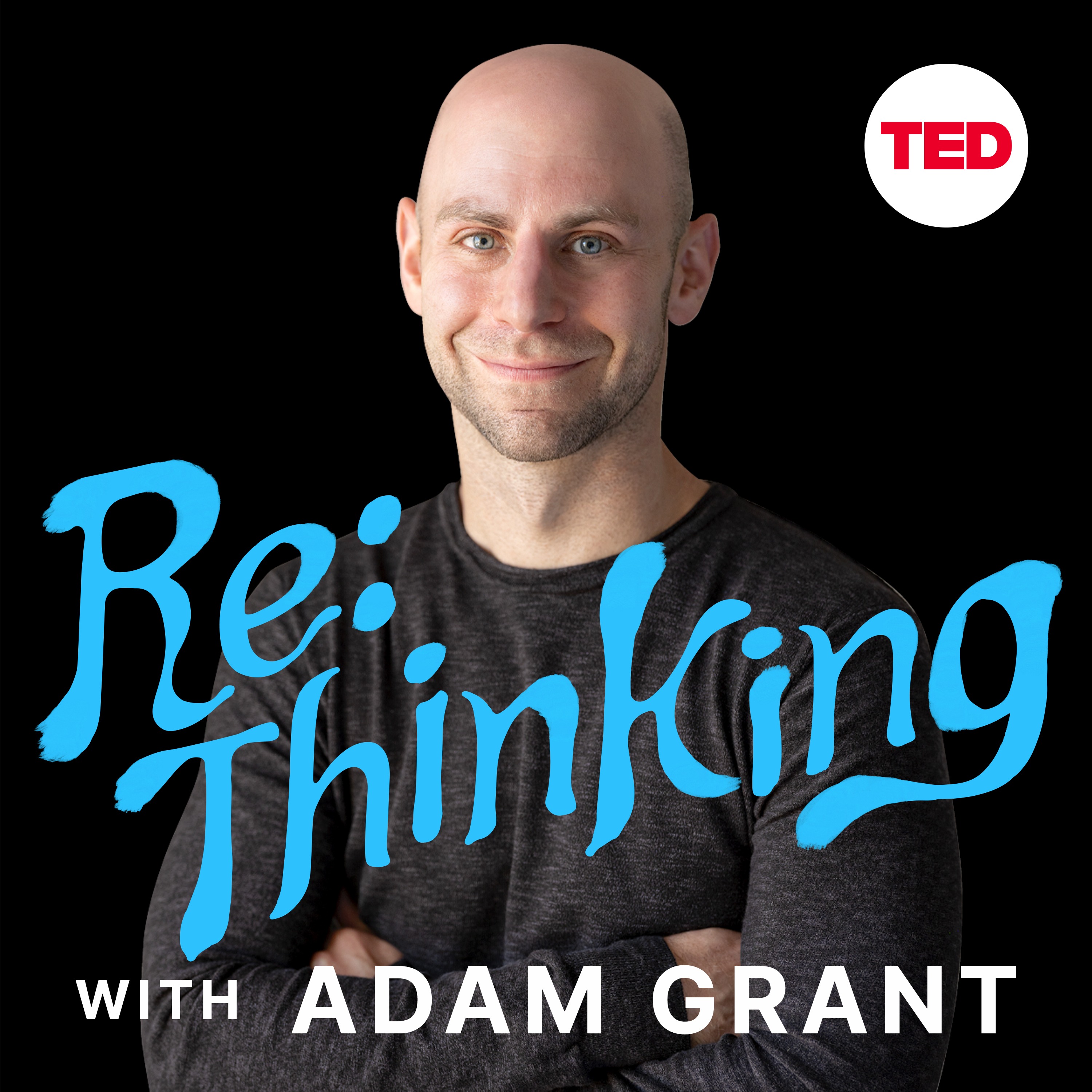
Esther Perel explains how relationship history becomes an “unofficial resume” that shapes how people interpret bosses, authority, and collaboration at work. She argues relationships require constant balancing between autonomy/self-reliance and loyalty/interdependence, and that teams should practice complementarity (integrating relational and task needs) rather than polarization (splitting into “either/or”). She also discusses matching: people often succeed when paired with leaders/mentors/therapists who complement their default relational style, and when organizations elicit minority perspectives to integrate cultural viewpoints.
relationship “dance” depends on both partners; scripts often reflect fear; good collaboration pairs two independent people; culture integration after M&A requires interdependence “invitation,” not just hiring for culture fit.
Adam’s autonomy upbringing; mentoring students who are proactive vs deferential; Amazon–Zappos and Microsoft–LinkedIn maintaining separation; polarity model (acknowledge pros/cons before proposing change).
Esther Perel, leading psychotherapist focused on personal/professional relationships; Adam Graham (organizational psychologist/host).
Written by AI. May contain mistakes.
Adam Graham introduces Esther Perel and discusses their connection.
“The leaders who actually transform how their teams operate aren't the ones with the biggest visions.”
Esther discusses the concept of unofficial resumes and their impact on work.
“It's been a while since we did a podcast together.”
Exploration of how upbringing shapes professional relationships.
“Because you're just emphasizing which boss you had.”
Discussion on the tension between autonomy and relationships in work.
“used to call it in German, really travel with you.”
How personal messages influence professional obligations and actions.
“It is inherent, sometimes higher and lower, but it is essential to relationships and it is a constant negotiation and a constant balancing.”
The importance of relational skills and intelligence in modern work.
“And so I think it was a realization that if I thought about autonomy as independence, then I wouldn't be able to show up for the people who mattered to me and my contributions would be limited.”
Explore the dynamics of independence in work relationships and effective mentoring.
“No, because I don't like holding other people accountable.”
Discuss cultural integration and the importance of balancing independence and interdependence in organizations.
“They built a family of vehicles, the versatile BZ, the adventurous BZ Woodland and the expressive CHR, each one meeting people where they are.”
Learn the importance of top-down communication in shaping organizational culture.
“You're more creative, but there's less motivation.”
Discover how to effectively facilitate change using the polarity model.
“I also think, though, that this is a time to talk about the collective relationship resume.”
Understand the importance of balancing advocacy and inquiry in decision-making.
“Because once preferences are known, people start to jump on the bandwagon of what's popular.”
Explore the tension between risk-taking and adhering to rules in organizations.
“And then we mapped that onto one of the core dimensions of organizational culture, which is task versus relationship focus.”
Learn about the dual needs for security and change within teams.
“And they spring from different sources and they pull us in different directions.”
Discover how to manage paradoxes for fostering creativity in organizations.
“You need a bunch of people who say, we can't do this.”
Examine how personal relationship histories affect workplace interactions.
“It's the holding of it that is actually what's going to yield the creativity, the innovation, all of that.”
Understand how sharing cultural backgrounds can enhance workplace inclusion.
“It's because you did something and if we had done it my way, and all of these are often scripts more about fear than about problem resolutions.”
Esther Perel shares quick-fire relationship advice and insights.
“Okay, what is the worst relationship building advice that you hear?”
Esther discusses her evolving thoughts on AI technology.
“What is something you've changed your mind about lately?”

Get the gist, explore an idea or ask about something said.
 Claude
On Worklife with Molly Graham, what are the key points of this episode?
Searching your listeningAutomatic transcript. May contain errors.
0:00This episode is sponsored by Toyota. A lot of us have this instinct to explore, to get out of our routines, to try something new, to maybe go somewhere we haven't been before. But the ability to do that, it depends on having the right tools. Toyota's new all-electric family is built with that in mind. Vehicles like the BZ Woodland are designed for movement and possibility, with dual motors, all-wheel drive, and the kind of capability that makes it easier to take the long way home, or leave town entirely. Because sometimes escape isn't about going far. It's just about knowing you can. Learn more at Toyota.com, the new all-electric family.
0:36Toyota, let's go places.
0:41This episode is sponsored by Study.com. Life can be messy and complicated, and it can be hard to work towards finishing your college degree when other responsibilities get in the way. Luckily, Study.com is designed to help you earn college credit online and on your schedule. They offer over 220 online college courses that help students make progress towards completing a college degree in a flexible and more affordable way. Knock out your general courses like English, math, and history, and study on your phone or computer for just$95 a month. Study.com courses are fully online and self-paced and designed to transfer to over 2 ,000 colleges and universities.
1:20It's a great way to earn your college degree at an affordable price and on your own schedule, so life doesn't get in the way of your education. Go to study.com slash podcast to browse courses and get 10 % off your first month when you sign up. That's study.com slash podcast. This episode is brought to you by Walmart Business. Here's something I've seen over and over in high-growth organizations. The leaders who actually transform how their teams operate aren't the ones with the biggest visions. They're the ones who ruthlessly protect their team's time and attention. And yet so many of us are still losing hours to the basics, like procurement, ordering supplies, chasing down purchases that should just happen.
2:02That's where Walmart Business comes in. It's built to simplify your operations, a huge assortment of business products, everyday low prices, and fast, reliable shipping and fulfillment. You can manage all of it on your schedule, online, in-store, or right from the Walmart Business app. It's Walmart. built for your business. Get your team focused on what actually moves the needle. Sign up for a free Walmart business account today at business.walmart.com. This tension is inherent. It's intrinsic. Every relationship straddles. How do I stay connected to myself without losing you? And how do I connect with you without losing me?
2:42This is core. Hey everyone, it's Adam Graham. Welcome back to Rethinking, my podcast with Ted on the science of what makes us tick. I'm an organizational psychologist, and I'm taking you inside the minds of fascinating people to explore new thoughts and new ways of thinking.
3:04Astaire Perel is a leading psychotherapist who focuses on personal and professional relationships. You might know Esther from her books or her fascinating podcast, Where Should We Begin? Today, I wanted to talk with her about the hidden influence of relationships, including her concept of the unofficial resume, which includes all the connections that have shaped us and affect how we show up at work and in life. This conversation is extra special because my own relationship with Esther has had a big impact on me. We've long been friends and colleagues, and a bonus episode of Work Life we did back together in 2020 actually helped spark the concept for Rethinking as a Show.
3:41Six years later, I'm excited to finally have her on. Okay, Esther, welcome. It's been a while since we did a podcast together. Yes, yes. But you know what it is? Sometimes we get on the phone and we talk at length, and it feels like we just actually did the podcast, but it was a private conversation. Then we say we should do a podcast about this, but you can't repeat the conversation. I think we need to just record our call. We should do the cool articles. That's the takeaway. So I want to talk to you about relationships today. I'm so intrigued by your concept of unofficial resumes, and I thought that would be a fun place to start.
4:18So we all know what the official resume is. What's the unofficial resume? So there are two parts in my mind to the unofficial resume. One is the many different things that you have done and experienced in your life that are not specific about your work history, but that have actually shaped who you are. And then the one that I am most interested in at this moment is your relationship history. To what extent does the way that you were socialized, the norms and the roles and the values that you were inculcated, how do they translate from family, community, religious institutions into your work life because that is never on the resume.
5:02You can see where the person worked, what they did, all the tasks, but you actually have no idea from what you read or what they tell you what it's like to work with them. So I love this concept and it's a bit of a stretch for us in organizational psychology because normally we think about past relationships mostly in terms of prior jobs. So we know that people tend to imprint on their first boss and then they assume that other leaders are going to be like them. And so if they were lucky to have a really caring leader, then they carry positive assumptions into their future jobs. If they had an abusive boss, watch out.
5:35They tend to assume that future workplaces are going to be hostile. But you want to take us both broader and farther back in people's histories, don't you? Yes, yes. Because you're just emphasizing which boss you had. I am looking at what was the relationship between you and this boss, not just because of who the boss is, but also because of who you are. And then what sauce did you cook together? And that leads me, there's a question I like to ask a lot. You know, it's just an opening door. It's not like everything resides there. But I often will ask people, were you raised primarily for autonomy and self-reliance?
6:16Or would you say that you were raised more for loyalty and interdependence? Risk for autonomy and self-reliance, it's sometimes in the circumstances of one's life that you were just left to your own devices. But you have a message in your head, I've got my own legs to stand on. I have to be the one to do it. Nobody can do it as well as me. When you have a problem, start thinking, what can I do? and baked in that is also how did you deal with authority? Did you learn to challenge it? Did you learn to succumb to it? Did you learn to be obedient, compliant? Did you fight it all the time? Did you trust it?
6:55Did you distrust it? Did you think it was an authority that betrayed you? And that can be parents or parental figures. It can be teachers, coaches. It's not just the nuclear family. It really goes much further. And if you race for loyalty and interdependence, yourself is embedded in a network of connections. It's not your own two feet. My problem is everybody else's problem too. And my happiness, my decisions are measured by how they affect others, not just what's good for me. These kind of worldviews, they really are more than just their Weltanschauungs, as they used to call it in German, really travel with you.
7:35They travel with you to work. And when you have had a bad relationship with a manager or a boss, it's not just because the boss was acting a certain way. It's also because of how you interpret it and how you responded to what the boss was doing. The same boss can often be liked by some and is totally disliked by others. Because a relationship is not just one person's personality. It's the dance between two personalities. So we have sort of a template then. that we walk into our jobs with. So let's take my, I guess, my upbringing as an example. I think I was raised primarily for autonomy and self-reliance, but have come to value some degree of loyalty and helpfulness over time.
8:23You wrote a whole book about it. I did. So what does that mean for how you would expect me to approach my professional interactions? It's not a deterministic view. It doesn't say you got this messaging or you were raised this way, therefore you are that way. It's this is the thing that influenced you more. And from that place, some people will say this suits me. This is my view and this is how I live in the world. Other people say I have missed that other side for so long. Other people say I learned over time that this approach had its limits. It may be a default setting, but I need to expand on it because these two approaches are not exclusive of each other.
9:06They are actually themselves interdependent. Yes. Okay. That was the next question then, which is what do you do when you want both of these things? So I want to have meaningful connections with others. I also value my own autonomy. And sometimes those goals are in tension and other times they're not. That tension is not sometimes there. It is always there, actually. It is inherent, sometimes higher and lower, but it is essential to relationships and it is a constant negotiation and a constant balancing. It's not something that you resolve to make go away. It's actually if you enter the world of relationships, this is going to be one of your primary tasks.
9:46For some of us, it's high tension and it's really complicated. I constantly comply. I'm pleaser. I succumb. I don't really hold on to my own views. And for others, I'm rigid. So you have compliable and then you have rigid. Some people need to become more pliable and some people actually could use solidification. But, you know, I asked a question earlier this morning. I said to the people around me, I said, what would you say are some of the messages that you received that you think went with you to work? So one of the people was saying, when you start something, you end it. It's just a one liner.
10:23But you know that in that one line, there is an entire way of acting and responding to one's obligations. And another person said integrity. And then I said, the central message for me actually was, don't just listen to what people say. Watch how they act. And I think when you ask it like that, people, most people have an immediate answer. They have a, if you say, if there's a cartoon above your head, what would it say in the balloon? You know, they have their line. They know their unofficial resume relationally. What would you say, Adam? Well, okay, ask me. What's the question? Yes, you began by saying I was raised with autonomy, and then I came to understand the importance of what?
11:06Relying on others? Asking for help? Letting myself be influenced by others? What is the transition? Well, for me, the core value is helping others. And so I think it was a realization that if I thought about autonomy as independence, then I wouldn't be able to show up for the people who mattered to me and my contributions would be limited. On the other end, helping others is a form of never needing them. Guilty as charged. It actually reinforced the autonomy. I hate needing people. Okay, so that's the thing. But I think one of the things you say you learned is you learned the interdependence a little bit more.
11:47You realized that there was something that you needed to soften. that has to do not with helping them, but with letting them either help you, advise you, intermingle with you. Fair. Is that accurate? Yes, that happened. Okay. Because helping others is actually an expression of autonomy that says, you need me, but I never need you. Wait, what are you trying to accuse me of, Esther? It's a descriptive, not an accusation. It's definitely, it's a valid analysis, I will say, because I have been accused in the past of having unbalanced relationships where people will say to me, you're always helping me and you never let me help you back.
12:28Right, right. And my excuse for a long time was, you know, I didn't become a professor to get help from students, right? This is a relationship where there's a mentor and a mentee. And I've really had to rethink that over time because I learned so much from my students. Right. And they want to feel that they have value to add. And by making that one-sided, I was actually limiting the relationship. Couldn't agree more. Couldn't agree more. And so now the next question is, do you see the value of adding this perspective into the workplace, right? I mean, you're an organizational psychologist. I'm a clinician.
13:04To me, the reason I began to think about that is because I think that relational skills have changed meaning in the workplace. They always used to be soft skills. You kind of disregarded them. They were often seen as feminine skills. And I think that there is such, especially with the rise of AI and everything around us, there is a sense that actually relational skills are often the bottom line. And actually, we don't call them skills anymore. It's relational intelligence because it's systemic. It's not just knowing how to talk and communicate. It's understanding the relational system inside companies.
13:38That's how I began to think about it. I thought, you know, there's something to bring to companies by bringing this relational way of thinking. So do you think that is valid too? Whose show do you think this is? I was going to ask you that question. No, it's actually really interesting. As I was listening to even your description of a relationship resume, it never occurred to me to talk about kind of my childhood as part of what it's like to work with me. And yet, it's such useful information. Do you micromanage? No, because I don't like holding other people accountable. I want them to be responsible.
14:15You have a real system in place, yes. Yeah. Yes, yes. You want them to be as autonomous as you. Correct. You want them to be as self-reliant as you. The ideal collaboration is one where we're both totally independent. Do you hear the contradiction in terms? Yes, of course I do. That's the joy of it, isn't it? But you're right. I've worked really well. When I think about the students that I've mentored, for example, I've been most successful when they are very independent and proactive. And I have struggled and consistently failed when they have a sort of a more... Deferential. Deferential, yes.
14:51Tell me what to do. Yes. Give me the guidelines, etc. Now that tells you which students you may want to work with and which ones should go to somebody else. Correct. And who you should hire to work with and who should be working with someone else. I think this is extremely useful information because too many bad matches are being made. It's about this. This is a very important dimension. A good collaboration is two independent people. It's really, it says a lot. Help, of course, is in micromanaging, is in how you communicate what you want to be done. You know, the amount of people who tell their bosses, you don't tell me clearly what you expect.
15:31You expect me to know what you want without having to spill it out because it's so obvious to you. I mean, you can see the scripts and each one of these scripts refers back to a particular relational dimension, which refers back to a particular type of socialization. Yeah, I see this is going to be therapy, which I clearly needed. I've had a hard time saying no to those students because it conflicts with my identity and value system around being helpful. And I don't want to turn them away. And I end up then being unhelpful to them. And I realized after the fact, yeah, I should have encouraged them to go to somebody else who's a better match for what they're looking for.
16:12It's interesting because I'm thinking about me as a therapist. You know, there are many times when I just say, I don't think I'm the right person. And at first, people don't like it. It's not a nice thing to say. Like, is there something with me? No, it's because there is something in the way that I think would work better with you. For me, it often has to do with pacing. Not everybody can go at the speed that I am accustomed to go. And for some people, it's just so welcome because, you know, I don't spend 20 minutes listening, not saying a thing. And for other people, this is not what suits them.
16:46So that's one distinction. Another distinction is that people tend to choose the manager, the mentor, the therapist who often strengthens their defense system or their default system. When in fact, what they need is a person from the other side. So don't worry too much about saying no. I think this matching thing is really useful, especially when you think who is going to work on what project with whom. It's less people are constantly thinking skills and tools rather than also relational styles. Yes. It's funny because this is exactly why you are such a great foil for me. My instinct is to pair up with people who are also very cognitive.
17:29and your emotional orientation always pushes me in new directions. We've had that conversation. We've had that debate in many flavors. But I appreciate it. And same for you. You tell me, where's the research? You tell me, give me the... No, no, it's really, it's a very good counterpart. Yes, go ahead. Next question. So I think that... Since you want to turn it around. I do, I do. So I'm thinking about this idea of complementarity and of course I'm immediately thinking about some relevant studies. There's a great paper that Chad Hartnell led showing that if you have a task-oriented culture and you hire a relationship - oriented CEO, that leader will add more to the bottom line than if you brought in a task-oriented CEO who basically just cloned what was already in the culture.
18:19Correct. And the reverse is true too, that if you have a relationship-oriented culture that's more kumbaya, the task-oriented CEO adds more value. But that's not the person we choose, to your point. If we're a task-oriented culture, we want the results-driven, hard-charging leader. How do you think about getting people to abandon that preference, knowing that the compliment may be more valuable, but it's harder to get excited about that person? Sometimes it's like a failed organ transplant when they come in because they seem like such a mismatch? My first framework, which I'm sure you are familiar with, but it's an old one and I find it so relevant still is high context, low context.
19:03Do you know it? Yep, but not as well as you. You know, high context, I'm going to just define the term, is communication that derives its meanings from the implicit, from shared understandings, shared history, non-verbal cues, body language. It is extremely contextual. That is the relational versus the task. Low-context society are often task-oriented societies. It's actually not just high-context, low-context. It's relational versus task. They're more literal. They rely on the words. They go for clarity and efficacy rather than for relationships. So the model of high-context, low-context applies directly to relational versus task.
19:49The question of complementarity is this. What are the pieces that are needed to do this? It needs a combo of relational and task. What is our strength? Task. What do we need to bolster? What is the side of us that we have actually not developed that we often negate or neglect or diminish? Choose the other one because the system needs the other one. Even if you don't need it personally and you don't like it, your company does. Usually your relationship does. Usually your culture does. You know, by definition, most of these complex situations straddle dualities and they need to integrate them. Complementarity is the ability to integrate the two parts.
20:34The opposite of complementarity is polarization, conversation, actually. Oh, that's so interesting. Because what is difficult for us is to actually bring those two things together. What do we do typically in a relationship? I become the relational person, you the task person. In a company, you have them split. In a country, you have them split. In the gender wars, you have them split. And politically, you have them split. And instead of understanding that each actually needs the other, what do we do? I outsource onto you the part of the equation that I don't want to have to deal with. You take care of that and I don't have to integrate anything.
21:16If I was alone, I would have to integrate those two poles, those dualities all the time. But since we are often not alone, we split. It's called splitting the ambivalence because complementarity deals with ambivalence, with opposing forces, opposing needs, opposing sources. When you manage to split it completely and you don't have to deal with, you know, micro picture, macro picture, you know, spending, saving, hiring, not hiring, whatever the tensions that people have, AI, not AI, remote, not remote. It's this or that. And once you have to do this and that and how we're going to do it, you're in complementarity zone.
21:56If it becomes an either or and you become the or that I don't want to have to deal with, then we are in a polarized situation. Oh, that makes so much sense. This episode is powered by AT &T Business. If you're running your own business, you know that the Sunday scaries are real. You're thinking about the invoices, the client calls the inventory, the list that never actually ends. And honestly, we usually don't think about our internet or our phone service until it isn't working. Sometimes a simple glitch can feel like a total catastrophe. That feeling of powerlessness when your tech fails you is the worst.
22:36It's a reminder that our connectivity isn't just a bill we pay. It's the backbone of everything we do. AT &T Business gets that. They know that for a small business owner, good enough isn't good enough. You need reliability that stays in the background so you can stay in the lead. If you're tired of the friction points and just want a provider that understands the stakes, check out AT &T Business. Powered by AT &T Business. Built to work. Get AT &T Business at business.att.com. This episode is brought to you by LinkedIn. Running a small business means every hire matters. A bad hire can cost you time, money, and momentum.
23:17A good hire, they can change everything. But finding great talent isn't easy, especially when you don't have the time or resources to sift through piles of resumes and find the right fit. That's why LinkedIn Build Hiring Pro. your new hiring partner that screens candidates for you. So instead of sorting through applications, you can spend your time talking to candidates and finding your next great hire. With Hiring Pro, you can hire with confidence, knowing you're getting the best talent for your business. In fact, LinkedIn found that its users are 24 % less likely to need to reopen a role within 12 months compared to the leading competitor.
23:56Join the 2.7 million small businesses using LinkedIn to hire. Get started by posting your job for free at linkedin.com slash worklife. Terms and conditions apply.
24:30They built a family of vehicles, the versatile BZ, the adventurous BZ Woodland and the expressive CHR, each one meeting people where they are. Because independence isn't about doing everything differently. It's about doing things in a way that feels natural to you. Learn more at Toyota dot com. The new all electric family. Toyota. Let's go places.
24:57okay so this this is lighting a bunch of different sparks oh i want to hear your response because i'm in the thick of this thing and i love complementarity and couples therapy is filled with it and the opposite of it is polarization yeah i never thought about that as the opposite but i think you're right i think so first of all this is i mean this is why the idea of culture ad has become popular instead of just culture fit, right? Because we're looking for somebody who's going to help us develop what's weak or what's missing, as opposed to just replicate what's already there. I think though, after listening to you talk about complementarity, ad is not enough because it suggests that we can, we're the task-oriented culture.
25:36We bring in the relationship-oriented person and they're basically in their own silo managing relationships. Correct. What we want is culture multiply, where they actually have to interact with our culture and there's some kind of dynamic tension. And to let themselves be influenced by each other. In both directions, exactly. In both directions. I think this is why a lot of mergers and acquisitions fail. You see either two companies come together or one decides to buy another. And the assumption is, wow, this culture is going to bring something we're missing, but they don't do the integration work.
26:11and they don't have the hard conversations about, are we actually going to start over and build a new culture together? Are we going to try to take elements of each that are successful? Are we going to have one absorb the other and expect usually the firm that's coming in that has less power to basically adapt and conform? And I think in some cases, the misfit or the tension is so profound that leaders realize it's actually better to just do the acquisition and let the two organizations maintain their independence. So I think about, as an example, I think about Amazon buying Zappos and saying, you know what, we realize the Zappos culture is different from the Amazon culture in a lot of ways.
26:51We don't want to mess with it. We're just going to let it run autonomously. Or more recently, Microsoft did that with LinkedIn. This makes me curious about how you think about when it's a good idea to do the integration work and when it's a good idea to maintain the separation. The first thing, just to complete the circle, in the version where you actually create an integration. The integration can only take place if each culture or each side or each person or each company says, I need that. That saying, I need that, is the invitation to interdependence versus separateness. So that's the first thing.
27:29However, I would probably say I'm more aware of when it's necessary than when people want it. It's necessary when you see people who absolutely do not want to be influenced. It's the rigidity that tells you it's needed. So they're the ones who need it most. They're also the most resistant to it. Exactly. As always, when you're forced, you know you need it, but you're not as open to it and as creative to doing it. When it's voluntary, there is less pressure. You're more creative, but there's less motivation. There's less incentive to do it. So then the question becomes, does it have to come from the bottom up or does it have to come from top down?
28:11I think my sense is it needs to come from the top down with a very clear explanation for why this is so important. Yeah. Well, empirically, you're right. You know, the evidence is strong that it's important for leaders to deliver this message top down and explain. They don't, right? They don't do it enough, right? And explain, here is why our culture is incomplete. Here's how we actually want to evolve. Here's what we want to learn from the organization we're merging with. Here's how our values and our practices and our norms are going to shift. And we see a lot of potential there. I also think, though, that this is a time to talk about the collective relationship resume.
28:50And for people across different teams to say, here's how we've done things historically. Here's what's not working for us. Here's what we're hoping to get better at. So I think that one of the ways that I found always useful to do this is actually to use the polarity model of Johnson. You know it? The quadrant? No. It's really helpful. So imagine you have, you know, one model, another model, centralized, decentralized, something like that. And you're not going to convince by just saying, you central people, you have to decentralize or reverse. What you do is you first start by talking quadrant one about all the good things that belong to the model that has been used.
29:31Then you talk about all the liabilities and the weaknesses in the model that you are proposing. Then you go to the liabilities and the weaknesses of the model that they have used. And only then do you go to what you think would actually be a more complementary model. Because if I try to convince you that you need to change, the main thing I do is reinforce your desire not to. It will only shift once I have acknowledged all the good you've done, all the weakness of mine, then the weakness of yours, and then maybe what I propose. Well, this is why when we teach group decision making, I love to cover the evidence around discussing the pros and cons of each option before we even share our preferences around which option we think is better.
30:17Because once preferences are known, people start to jump on the bandwagon of what's popular. you get groupthink. And also we run into the issue of if we're allowed to talk about which model we like, then we're going to have too much advocacy and not enough inquiry. If we're forced to go through the exercise - I want to repeat that because it's really important. Too much advocacy and not enough inquiry. Or too much reactivity and not enough reflectivity. It's the same. And I just want to highlight that because so much of where we come in is companies who are exactly on the fault line of reactive or advocate.
30:55Yeah. Now, this goes to something else that I was thinking about. If we go back to the beginning of this conversation, we were talking about autonomy versus interdependence. And then we mapped that onto one of the core dimensions of organizational culture, which is task versus relationship focus. You also mentioned, what was your relationship with authority? Were you obedient? Were you more defiant? And lo and behold, it turns out that is the other major dimension of organizational culture, which is risk versus rules. And this is what we're starting to talk about now is I think too many organizations and too many teams, it's the rigidity you were describing.
31:33They've got a set of rules that they're very comfortable with. Following them has led to success in the past. It also creates a sense of predictability and comfort and safety. Exactly. It's rules for safety. Yes. And I find myself really struggling in a lot of cases to nudge toward risk-taking, to say, look, you've got to manage risk like a stock portfolio. You can't have all of your decisions be secure because then you will have an unbalanced portfolio. You need a mix of very predictable, safe bets and also some more unpredictable, higher risk, potentially higher return choices. How do you think about getting people to take a little bit more risk?
32:12We all have these two fundamental sets of human needs, security and adventure, change and stability, continuity and innovation. I mean, it's all these dualities. And they spring from different sources and they pull us in different directions. But I think you're the one who said this to me once and you said the research on trust is inconclusive and it basically operates with a complete definitional vagueness. We don't really know what is trust. Is it a condition? Is it a feeling? Is it an outcome? What exactly is it? And we don't also know if you need to trust in order to take risks. That was Rachel Botsman who added that to our conversation.
32:54Or if it actually is the act of taking risks that strengthens the trust. I have found this extremely important and useful. And I don't have an answer. But the first thing is really to explain to people the necessity of both. If you just do rules, if you just do structure and security and safety and dependability and predictability and all of that, you will fossilize and die. If you just do change and innovation and dysregulation and risk-taking, etc., you may go chaotic. You will dysregulate and go chaotic. Both systems become ineffective and unhealthy, if we want to use that word. So again, they need each other.
33:41On any team, you need both. You need a bunch of people who say, we can't do this. And you need a bunch of people who say, let's go. This is another complementarity. It's essential that they sit at the same table and that they hear each other and that they understand that I focus on this, but I need you because the issue at hand needs this. Most issues are a negotiation between risk taking and risk assessment. Well, as usual, you make me think about some data. So Ella, Miron Spector, and Miriam Merez have shown that you get more innovation in teams if you have a mix of creative and conformist members.
34:24Correct. Which is exactly the dialectic that you're describing. They also find that encouraging people to accept paradoxes as opposed to resist them boosts creativity. And so I think what often gets in the way of creative thinking and problem solving is people saying, well, we've got to resolve our differences, right? I am somebody who loves to take risks. You are somebody who's very comfortable with familiar rules. And so we've got to pick one or the other and find a norm to follow. And the reality is that creativity flourishes when we hold those two values in tension. And we have to be open to accepting that.
35:04How? paradox expert. Yes, yes. The same as what we talked before, you know, most relationship issues, most organizational issues, most systemic issues are complex problems that you learn to manage, paradoxes that you hold and not problems that you solve. It's the holding of it that is actually what's going to yield the creativity, the innovation, all of that. It's the either or that is actually not the useful path. But it's very difficult to explain that to people. So how you ask people, are there a situation where you wish you had been more open to discovery, to curiosity? Sometimes I say, you are a very curious person.
35:50What makes this one more challenging for you? You know, something about this one makes you react with more stiffness. And yet usually you are quite open to alternatives. and often, by the way, this goes right back to the relationship history. This is where the layers underneath begin to reveal themselves and it's not just a work issue. It just plays out in the work issue. Sometimes I say, knowing yourself as well as you think you do, what makes it hard to work with you? Because in those situations when people can't integrate that risk and security, they polarize. They instantly polarize. and they dump on the other side.
36:32If it doesn't work, it's because of you. It's not because we did not succeed in really becoming interdependent parts who make the system thrive. It's because you did something and if we had done it my way, and all of these are often scripts more about fear than about problem resolutions. One thing we know is that the people who are most hesitant to take those kinds of risks are people who are minorities in an organization because they worry that if they share, especially their cultural backgrounds, they're going to stand out instead of fitting in. And despite that, you will be happy to know that there's some research by Rachel Arnett, which shows that if you, as a member of a minority group that's underrepresented in an organization, if you talk about your cultural background and your upbringing, you actually end up being included more by the majority.
37:26Yes. In part, that may be individuating. In part, it allows them to see you as a human being, as opposed to just a stereotype of a group. They learn more about you. They can find commonalities with you. And I found that really encouraging to say, the very people who are most hesitant to open up are often the people who benefit the most from doing it. But it's not just that they benefit. The whole organization benefits. We want to give lip service to diversity. But in fact, it's really about integrating particularism with universalism. I mean, it's having colors and shades and experiences and different hierarchies and different priorities of values.
38:10And I really think that this has taken a toll because of remote work, because there's a drainage of possibilities, of situations, opportunities to say, do you want to know how we do it in my country, where I'm from, the way I learned it? Then the question is, how do you elicit that? It takes people to say, you know, I'd love to hear from you. You may have a different perspective. Are there other points of views in the room? I could be really rich to know what are the other ways to think. It's not like the human experience is infinite. Whatever you are going through, a bunch of other people have gone through it in their own version.
38:49So please, do speak. And I think that every leader, every manager, every team leader should elicit that. Ron Heifetz talks very eloquently about how much you want to elicit the minority views whenever you have an adaptive challenge. It's not so important when you have a technical problem. But adaptive challenges demand that people tolerate anxiety. And to bring in other points of views, other cultures, other narratives can be anxiety producing to those who like to live in certainty. But it's necessary. This episode is brought to you by LinkedIn. Running a small business means every hire matters.
39:35A bad hire can cost you time, money, and momentum. A good hire, they can change everything. But finding great talent isn't easy, especially when you don't have the time or resources to sift through piles of resumes and find the right fit. That's why LinkedIn built HiringPro, your new hiring partner that screens candidates for you. So instead of sorting through applications, you can spend your time talking to candidates and finding your next great hire. With Hiring Pro, you can hire with confidence, knowing you're getting the best talent for your business. In fact, LinkedIn found that its users are 24 % less likely to need to reopen a role within 12 months compared to the leading competitor.
40:18Join the 2.7 million small businesses using LinkedIn to hire. Get started by posting your job for free at linkedin.com slash worklife. Terms and conditions apply. This episode is sponsored by Rula. When you're going through a difficult breakup or a tough time at work or just dealing with the anxiety and stress of everyday life, the last thing you want to do is scour the internet for therapists who take your insurance. A lot of online therapy won't accept insurance at all, which means taking care of your mental health requires paying out of pocket or signing up for a pricey monthly subscription.
40:55But Rula does things differently. They partner with over 120 insurance plans, meaning the average copay is just$15 per session. That's real therapy from licensed professionals at a price point that actually makes sense. With a network of thousands of therapists nationwide, Rula can help you find the right one for you based on your needs, preferences, and state requirements. Thousands of people are already using Rula to get affordable, high-quality therapy that's actually covered by insurance. Visit Rula.com slash worklife to get started. That's R-U-L-A dot com slash worklife. You deserve mental health care that works with you, not against your budget.
41:37This episode is brought to you by National Business Furniture. You can find them at nbf.com. What your workspace looks like says a lot about the way you work and can make a big difference when it comes to productivity. The truth is our surroundings can impact how we think, how we feel, and who we become while we're in them. Your workspace can affect engagement, productivity, and maybe even retention. That's why getting your workspace right matters. It's proof that you value your team. National Business Furniture believes that every business deserves furniture that lasts, service that cares, and a partner that gets it, all on a budget that works.
42:16That's National Business Furniture's commitment to you. Find the right furniture for you and your team at nbf.com and use the promo code POD10 to save 10%. That's nbf.com. And experience the better way to buy office furniture.
42:35Okay, last thing, lightning round. Are you ready? Yeah. Yes, go ahead. Okay, what is the worst relationship building advice that you hear? Do what's right for you. And don't think about what other people think. Okay, best advice. The quality of your relationships will determine the quality of your life. Don't neglect them. And don't think there is tomorrow. If you have something to say to someone, say it now. Okay, quick hot take. An unpopular opinion you're eager to defend. Don't text. Leave a message. Call. Because the voice is the first thing we hear in utero. It is the most intimate. You can't mistaken a voice and a tone and all the implicit meanings that are attached to it versus writing texts that are rife with misunderstandings and misinterpretations.
43:30Speak to people. I think this is why asynchronous voice memos are becoming popular. Yes. Yes. Okay. What is something you've changed your mind about lately? I changed my mind back and forth about AI almost weekly. You know, depending on if I see something that I find really helpful and inspiring and useful and times when I think it's just going to make the species disappear if this goes on. So I vacillate. I don't know that I changed my mind and it's definitive, but I vacillate constantly about my thinking and AI. Okay. And then last question. What's a question you have for me? Can we do this again?
44:10Yes, we must. I insist. Thank you so much. Thank you, Esther. What a blast as always. It's a pleasure, really.
44:44Tansika Sung Manivang and Whitney Pennington Rogers. Original music by Hans Dale Su and Alison Leighton Brown.
44:54Do you have a hard stop? I do. What time? We are going until 11.30. 11.30. Yes, we can go over a little bit. And we can give the full hour. All right. Well, that is not a hard stop then. Done. It's all baked in. Yeah, I'm just going to I'm just going to call you out on all your lies today. Watch out.
45:39of the CHR, the versatility of the BZ, or the capability of the BZ woodland. And with access to a growing network of chargers, including Tesla superchargers, it's designed to keep you moving, not slowing you down. Because capability isn't just about power, it's about removing friction. Learn more at toyota.com, the new all-electric family. Toyota, let's go places. Business is booming, but you know what really helped? Xero, the accounting platform for small businesses. I used to think unpaid bills were just part of it. But batch payments? Wow. Automated accounts payable? Even better. All in one place?
46:18That's a big one. And I can keep track from my phone while I get the job done. No bills in sight. What a life. Do right by yourself and your business and search XERO for your free trial. Conditions apply. When you're a maintenance engineer in a beverage manufacturing plant, You keep production lines moving and quality on track because there is no room for slowdowns. With Grainger's vast selection of high-quality motors, sensors, belts, and hard-to-find parts, you can get what you need fast and all in one place, so nothing gets in the way of getting the job done. Call 1-800-GRAINGER, click grainger.com, or just stop by.
46:58Grainger, for the ones who get it done.
Esther Perel is a psychotherapist known for her innovative approach to relationships. In this episode, Adam and Esther discuss the relational baggage we all carry through our lives and into our work, and how our differing personalities and relationship styles can affect collaboration and culture. They break down the differences between relationship- and task-oriented personalities, and consider the fine balance between risk-taking and rule-following that makes for a healthy relationship with ourselves and others.
Featured guest
Connect with the team
For the full text transcript, visit https://www.ted.com/podcasts/worklife-transcripts
Hosted on Acast. See acast.com/privacy for more information.