Ask ChatGPT
 Worklife with Molly Graham
27 Jan 2026 · 33m · 16 chapters
How to find and pursue purpose through disciplined creativity, using Andy Weir’s writing process as an example.
purpose beats “passion” because writing is hard work; creative output comes from many bad ideas plus self-discipline; originality often lives in scientific detail and in recombining familiar plots; motivation is sustained by rules (e.g., word-count targets and restricting distractions).
Weir describes “Project Hail Mary” as originally separate ideas (light-propelled fuel, waking aboard a spaceship, first-contact premise) later glued into one cohesive story; he details building Iridian alien biology from real astronomy (40 Eridani A/b), gravity, magnetic field, and atmospheric pressure (oceans at ~210°C under ~29 atmospheres). He also explains his “first draft” analogy (marble sculptor) and that “Project Hail Mary” took ~18 drafts.
Andy Weir, sci-fi author of The Martian and Project Hail Mary; background: self-published serial posted online while a software programmer, later picked up by major publishers and film/TV adaptations.
Written by AI. May contain mistakes.
Andy Weir shares his writing process and how he generates story ideas.
“He's become my favorite sci-fi writer, best known for his mega hits The Martian and Project Hail Mary.”
Andy discusses the challenges of writing and the labor involved in creating a book.
“One time I came up with an idea of like this guy who just seems to be lucky all the time.”
A conversation about what motivates writers and the satisfaction of completion.
“And also, there's another thing I try to tell writers that some people really just enjoy the process of writing.”
Andy explains the importance of research and detail in his storytelling process.
“And so that's the kind of writer I am anyway.”
Discover how creative people manage bad ideas and maintain motivation.
“But no, there is a part of this process you love.”
Engage in a lively discussion about predictions in sci-fi and the nature of extraterrestrial life.
“So, are you ready for a lightning round?”
Discover the personal influences of classic sci-fi authors on creativity.
“Even if it was just microbial, it would still be all over the place and it's not there.”
Learn about the contrast between optimistic and dystopian sci-fi stories.
“I guess what I see across your novels is the human characters are flawed, but they're still heroes in most cases.”
Get insights on effective writing practices and the self-publishing landscape.
“So if you have any sort of technology, there'll be one guy who goes like, you know what, we could kill a lot of people with this.”
Understand how parenthood can shift one’s priorities and worldview.
“A lot of authors have broken in via self-publishing, myself included.”
Examine the psychological dynamics in sci-fi narratives and their implications.
“So I was going to turn the floor over to you and say, if you have a question for an organizational psychologist, I am at your disposal.”
Hear the journey of a software engineer turning into a successful author.
“One of the places I wanted to go was to talk a little bit about your career pivot.”
Explore the author's extensive writing journey and the perseverance behind success.
“Now I'm married and I have an adorable baby.”
Explore the evolution of a writer's skills and the importance of perseverance.
“So what was it about writing that was a draw for you?”
Learn the importance of separating ideas from ego in the creative process.
“My biggest takeaway from Andy is how clearly he separates his ideas from his ego.”
Explore the evolution of a writer's skills and the importance of perseverance.
“That's getting a little bit zombie there.”

Get the gist, explore an idea or ask about something said.
 Claude
On Worklife with Molly Graham, what are the key points of this episode?
Searching your listeningAutomatic transcript. May contain errors.
0:00This episode is sponsored by Toyota. Independence is one of those words that sounds simple, but when you really think about it, it's deeply personal. For some people, it's about freedom. For others, it's about flexibility or just having options that actually fit your life. That idea shows up in interesting ways in the tools we choose, especially now as more people think about switching to electric vehicles. Toyota's approach is to give people real choice. With their new all-electric family, the BZ, the BZ Woodland and the CHR, each vehicle is designed a little differently, for different kinds of lives.
0:32So whether independence means getting through your day more efficiently, or having the freedom to explore what's next, it's about finding something that works for you. Learn more at Toyota.com, the new all-electric family. Toyota. Let's go places.
0:50This episode is brought to you by Bill, the intelligent finance platform that helps businesses and accounting firms scale with proven results. With AI-powered automation, Bill removes the busywork from your account's payable workflow. They handle capturing invoices, routing approvals, and syncing with your accounting software so that your team can focus on growth instead of paperwork. Bill is so reliable, according to Bill, 98 of the top 100 accounting firms in the U.S. trusted to simplify and secure their bill payment processes. Bill's handled over a trillion dollars in secure payments and is ranked number one overall on G2's 2025 list of best accounting and finance products.
1:39So stop the guesswork and start scaling with the proven choice. Go with a company whose financial infrastructure is trusted by nearly half a million customers. Ready to talk with an expert? Visit bill.com slash proven and get a$150 gift card as a thank you. That's bill.com slash proven. Terms and conditions apply. See offer page for details. This episode is sponsored by study.com. Life can be messy and complicated, and it can be hard to work towards finishing your college degree when other responsibilities get in the way. Luckily, study.com is designed to help you earn college credit online and on your schedule.
2:21They offer over 220 online college courses that help students make progress towards completing a college degree in a flexible and more affordable way. Knock out your general courses like English, math, and history, and study on your phone or computer for just$95 a month. Study.com courses are fully online and self-paced and designed to transfer to over 2 ,000 colleges and universities. It's a great way to earn your college degree at an affordable price and on your own schedule, so life doesn't get in the way of your education. Go to study.com slash podcast to browse courses and get 10 % off your first month when you sign up.
2:58That's study.com slash podcast.
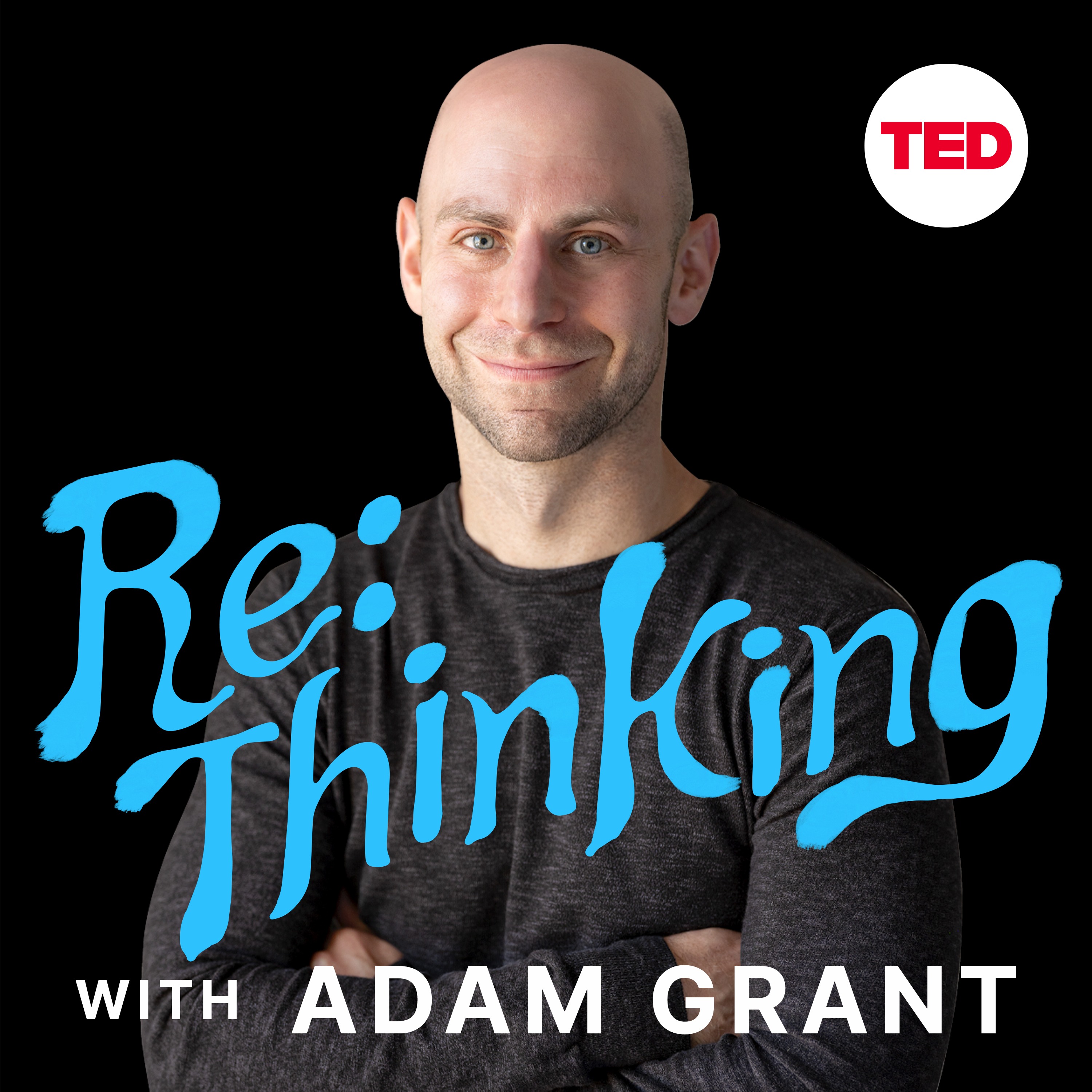
3:03Hey everyone, it's Adam Graham. Welcome back to Rethinking, my podcast on the science of what makes us tick. I'm an organizational psychologist, and I'm taking you inside the minds of fascinating people to explore new thoughts and new ways of thinking.
3:21My guest today is Andy Weir. He's become my favorite sci-fi writer, best known for his mega hits The Martian and Project Hail Mary. But he wasn't the number one New York Times bestselling author overnight. He started out self-publishing as a side gig while working as a computer programmer. And to borrow one of Andy's most quoted lines, what I admire most about his writing is his ability to science the shit out of it.
3:51Andy, it's great to meet you. It's great to be here. Thanks for having me. I'm excited to talk to the guy behind these books I've loved so much. And I think your mind is just endlessly interesting. The characters you come up with and the worlds that you transport me into would never have crossed my mind in a million years. I can't wait to figure out where that comes from. A lot of daydreaming, I guess. For me, I come up with like 100 ideas a day and usually 100 of them suck. So, but, you know, once in a while I'll come up with something I'm like, well, that's actually kind of interesting. Maybe I could work on that a little more.
4:23I feel like we could take maybe 90 of those ideas and just farm them out to other writers. I don't think you understand how much these ideas suck. One time I came up with an idea of like this guy who just seems to be lucky all the time. Like he wins the lottery, just keeps going. But it turns out it's actually his cat that's just really lucky. but the cat likes him so he's lucky and and that that's the story the big twist at the end is it's actually the cat that's lucky not him so just so you understand some of the ideas that i don't develop i don't know i think that could be an interesting short story i'm not sure if i would stay with him the whole book what are you talking about man this is a a six book series It's a kind of solicitous feline volume one.
5:11I don't know. I mean, the fact that you were able to pull off Cast Away on Mars and make it so endlessly interesting, I feel like you could do the same thing with a lucky cat. I do think, though, that hearing this is liberating to a lot of people who want to be creative, right? Because we only get to see your best ideas. Exactly. We don't see the ones that are on the cutting room floor. Well, you also don't see the first draft of even the good ideas. If you read any of my books, first drafts, you would not, you would not like them. What I tell authors or, you know, people who want to try to break into the business or people who are in the business and just ask my advice because they erroneously think I know things.
5:48What I tell them is that imagine you're a sculptor instead of a writer and you're driving along and you see this big chunk of marble out in the field and you're like, you know what, the shape of it and the texture of it, that would be perfect for like, like a statue of Zeus. You buy it from the farmer who owns it. Then you go and you get your truck and you get like a winch and you do all this stuff. This thing weighs like four tons. You've got to get it up into your truck. Then you drive it to your workshop. And then you've got to do just all this backbreaking labor to get that chunk of marble into your workshop.
6:22And there you go. Now you're ready to start carving the statue of Zeus. So all of that work you did right there, That's like the first draft for a writer. You have completed the entire book before you've really started the book. Project Hail Mary, for instance, I think it was the 18th draft that went to print. It's not just like I sit down at my keyboard, type magic, and then walk away. It's hard work. And also, there's another thing I try to tell writers that some people really just enjoy the process of writing. They really enjoy the creativity and getting things out on the paper. It's like cathartic to them or something.
7:03I'm not one of those people. For me, it's hard work and it's unpleasant and I don't like doing it. Okay. And yet here you are. Right. I think of writing as being kind of like gardening. You do it because you like the result. I like having the end result of having this beautiful garden, lots of flowers, trees, shrubs everywhere I wanted. Everything worked out exactly the way I wanted. But actually, when you're digging the ditches and pulling the weeds and you're back-breaking labor of doing every step of it, it's not pleasant. You do it because you want the result. And so that's the kind of writer I am anyway.
7:42That certainly tracks with what I've heard from other writers, but it doesn't match my experience at all. I feel like when I sit down to write, I do it in part because I love getting creative ideas out there. And in part because writing is one of my best tools for thinking. Just a side note, can we swear on your show? Yeah, of course. Okay. So fuck you. I hate doing the work. If I enjoyed doing the work like you did, I would be so much more prolific. I just, oh man. No, for me, the hardest part of writing is sitting my lazy ass down and writing. Like what's that old joke? Two guys at a bar, one of them says, I'm writing a novel.
8:19And the other one says, yeah, neither am I. There's a bit of a mystery for me here, which is if you're in love with the result and that's what motivates you, that result is already out there in a lot of forms, right? There are many great writers who have written books. You can enjoy their product. No, just me. Why do you need to be the one who makes it? Either you have a vision or an idea that you believe in that hasn't been written yet. I mean, your stories are so original. I would actually disagree with you there, believe it or not. I don't think my stories are that original. I've accidentally come up with my own way of telling well-trodden ground stories.
8:58So I'm a hard sci-fi author. I like to stick to real science as much as possible. And that's just because I'm a science dork. It's my hobby, my passion. This is what's interesting to me. Everybody's good at their hobby, right? If I was a gearhead, if I was way into cars, then maybe I'd write stories about cars, but I'm all about the science. So that's just what I'm into. If you just write down the basic plot outline, of my stories without any editorializing or any opinion, they're very well trodden ground. An astronaut is stranded on Mars. Okay. Like there was a movie in the 1950s called Robinson Crusoe on Mars, where he is stranded on Mars, like the exact same plot, right?
9:40My second book, Artemis, that no one remembers. That's like a criminal, a low stakes criminal living in a city in space. That's not new. And then finally, Project Hail Mary is like a first contact story. Like, it's been done. So the only thing that I bring to the table is I try to do it with like my own obsessive attention to like scientific detail. And that ends up taking the story in places that a lot of the other ones don't. So while I appreciate you claiming that I have original ideas. I think I don't. I think I just have like my own way of doing really, really well-trodden ideas. I mean, if you're going to take that perspective, we could go to Joseph Campbell and say, there's no such thing as an original story, right?
10:25Yeah. What is it they say is that there's like seven stories or something like that. Yes. But to me, the details are where the originality lives, right? I remember when I was reading Project Hail Mary, I don't even know how one would begin to think about what it means to be a species that functions this way. See, that's the part of writing that I love, the research and conceptualizing and glorious spreadsheets, spreadsheets, spreadsheets everywhere. Like, two or three spreadsheets open and then four Google searches for different things. I just love the ideating. I wish I had, like, some secret silent partner who would do the writing for me and I'd just do the research.
11:02Like, I love it. It's so fun. For the aliens in Project Hail Mary, side note, spoiler, I mean, if you're listening to this, you know, and like you haven't read Project Hail Mary and you somehow didn't know that there are intelligent aliens in it, then I don't know what to tell you. So working out how Iridian biology was, that was really fun for me because I started off by saying like, okay, I need to pick a star. Okay, a real star. Okay, so 40 Eridani. All right, it's a solar analog. Later in the book, we learn out that there was probably a panspermia event. So it makes sense that it'll have a star similar to ours.
11:37Then I wanted to pick a real exoplanet. So the first planet in the 40 Eridone system is actually, it's a real planet and its name is like 40 Eridone capital A lowercase b because astronomers suck at naming things, right? So, but we know some things about this planet. We know it's about eight times the mass of Earth. We know how long it takes to orbit the star. We know how far it is from the star and stuff like that. I'm like, OK, this is a planet that's like eight times the mass of Earth. So the gravity is going to be high. OK, that's something that's worth knowing. Second off, it's right next to its star.
12:09But I want there to be a biosphere here, which means it needs an atmosphere. If you're going to have an atmosphere and be right next to a star, then you need a really strong magnetic field or the star will sandblasted away your atmosphere. What makes a magnetic field is a liquid metal core and the planet rotating. But this one's got a badass magnetic field. So I'm just gonna say it's rotating really fast. So that's why Iridians have like a six hour day. And I'm like, okay, so I've defined something about this planet. Next up, it's right next to its star. I mean, it is closer to its star than Mercury is to our star.
12:45And I'm like, so that planet would be hot, really, really hot. And I want there to be like liquid water for life to be there. And I said like, okay, so how do you have oceans on a planet that's like right next to the star? And I'm like, well, you have an incredibly high atmospheric pressure because the higher the atmospheric pressure, the higher the boiling point of water. So the oceans are like 210 degrees Celsius, which is like 400 degrees Fahrenheit, but it's still water because the atmospheric pressure is like 29 atmospheres. That means the atmosphere is so thick, there wouldn't necessarily be much sunlight reaching the ground.
13:18so the life forms that live there would probably not rely on sight so why would you evolve eyes in the dark and so you know this is bit by bit how things came together so that was fun nobody wants to read a 40 page wikipedia article on iridian biology so i just i have to just the hardest part for me is like i came up with a bunch of cool stuff and now i don't get to tell like 90 of it like i worked out how iridian muscles work like i worked out all this crap This is reassuring to me, Andy, because I feel like we've located your intrinsic motivation. I was honestly starting to feel bad for you.
13:54Oh, yeah. You should. You're suffering and you're sacrificing yourself to create these stories for us. What a martyr. But no, there is a part of this process you love. You love the beginning and the end, just not the in between. Yeah. I love coming up with the idea and I love when I'm done writing the idea and I love receiving praise. I'm curious about, though, what happens to your motivation over the course of the part you don't like? So you start out fascinated by these questions. You come up with this whole world. You have principles of science behind it. And you know that if you don't run with it, you're not going to deliver something that you can be proud of.
14:28But you don't like the day to day. How do you keep yourself going? Well, it's not like I just wake up and weep for half an hour. It's just hard work. You know, it's like I said, it's hard work. I have to like, kind of like make a bunch of rules for myself. So when I'm working on a first draft, I make a rule. okay, I got to write a thousand words a day. And until I make my words, there's a bunch of things I am not allowed to do, quote unquote. I'm not allowed to watch any form of video entertainment. No YouTube, no streaming things, no TV, nothing. Not allowed to do that. Not allowed to do woodworking or crafting stuff, which is, I'm into that.
15:04That's my hobby. Certain websites that are just absolute time wasters that I'm not allowed to go to until I've made my words. and after that, I can do what I want. And so it's just self-discipline. I mean, every job everywhere has like periods of hard work that you don't want to do that you just gut it out. Yeah, well, I'm glad I'm not the only one who has a to-don't list in order to move forward on. I want to go back to something you touched on at the beginning of the conversation, which is just the sheer number of bad ideas that you have. The most creative people have more bad ideas than their peers.
15:41This has been demonstrated time and again with scientists, inventors, musicians, artists, playwrights. The more ideas you have, right, the better you're shot at stumbling onto something truly original. And so you need a lot of bad ones to get a few good ones. This is part of what's intriguing to me is I think that's where a lot of people fall apart is they generate a lot of ideas. But then we're too close to our own ideas to know whether they're good or not. I have a former student, Justin Berg, who studied this, and he finds that we're pretty bad at creative forecasting. Sometimes we fall in love with terrible ideas because we're really passionate about them.
16:15And in other cases, we actually don't see the potential in good ideas. A great study of Beethoven, for example, where you look at his own predictions about how his compositions were going to do. And he committed false positives, right? So self-assessment is hard. It's hard even for creative geniuses. you seem pretty good at knowing when you have a bad idea. How can you tell? I mean, at any given time, any idea I have is probably bad, right? So it's very easy for me to identify a bad idea. The hard thing for me is identifying a good idea. So I just have what I feel are a litany of bad ideas. And every now and then I'll kind of remember one and go like, well, you know maybe i guess if an idea keeps kind of resurfacing in my head and i keep thinking like yeah there's something there there's something there's something there there's something interesting there to fantasize about like what if i had this macguffin device or what if i had this power and it's like if i find myself thinking about the idea a lot then that probably means it would be interesting to a reader people often don't believe this but project hail mary was I mean I put a lot of work into making this happen but it's a single cohesive story where each thing leads into the next and all of the things that are going on in it all make sense in context with each other but they were originally a bunch of unrelated story ideas that I had like a pastiche of like like I had one idea about you know wouldn't it be cool if we had a fuel that used light as propellant that would be like the most efficient specific impulse.
17:53You could, you could like a few kilograms of this fuel and you could like travel the solar system. And then I was like, and then unrelated to that, like months later, I was like coming up with an idea about what if a guy woke up aboard a spaceship and didn't know it? And then like, how would you figure it out? And so on. And then because I live and breathe and like science fiction, I've always wanted to do a first contact story. And so all of these things just like were unrelated ideas that I glued together and then sanded down the seams and it looks like a single cohesive story. That's amazing.
18:30So you're telling me that Ryland Grace, Rocky, and Astrophages originally started out as separate narratives. Yeah. Yeah. And more, Strat as well. It's so interesting because she reminded me a little bit of the kind of profile you see in someone like Elon Musk, which is very high concern for humanity and relatively low concern for many individual humans. Well, I wouldn't put her in the category of like Elon Musk because I think Musk does a lot of cool stuff, but she is like, Elon Musk likes to go in 50 directions at once. And Strat is singularly obsessively focused on this one objective. And to be fair, if she fails, humanity will die, right?
19:10So she's not really worried about the morality of anything she does. She's like, if I have to kill a thousand people to save a billion, I will. And I'll sleep like a baby that night. The ultimate utilitarian. This episode is sponsored by Study.com. Life can be messy and complicated, and it can be hard to work towards finishing your college degree when other responsibilities get in the way. Luckily, Study.com is designed to help you earn college credit online and on your schedule. They offer over 220 online college courses that help students make progress towards completing a college degree in a flexible and more affordable way.
19:48Knock out your general courses like English, math, and history, and study on your phone or computer for just$95 a month. Study.com courses are fully online and self-paced and designed to transfer to over 2 ,000 colleges and universities. It's a great way to earn your college degree at an affordable price and on your own schedule, so life doesn't get in the way of your education. Go to study.com slash podcast to browse courses and get 10 % off your first month when you sign up. That's study.com slash podcast. This episode is powered by AT &T Business. If you're running your own business, you know that the Sunday scaries are real.
20:28You're thinking about the invoices, the client calls the inventory, the list that never actually ends. And honestly, we usually don't think about our internet or our phone service until it isn't working. Sometimes a simple glitch can feel like a total catastrophe. That feeling of powerlessness when your tech fails you is the worst. It's a reminder that our connectivity isn't just a bill we pay. It's the backbone of everything we do. AT &T Business gets that. They know that for a small business owner, good enough isn't good enough. You need reliability that stays in the background so you can stay in the lead.
21:05If you're tired of the friction points and just want a provider that understands the stakes, check out AT &T Business. Powered by AT &T Business, built to work. Get AT &T Business at business.att.com. This episode is sponsored by Quince. Summer always makes me want to simplify my closet. Fewer pieces, but better ones. Clothes that feel comfortable, polished, and easy to reach for again and again. That's why I keep coming back to Quince. I recently picked up their black convertible blazer and super soft wide leg pants and they have become instant staples. They're incredibly soft but still hold their shape and the blazer just pulls every look together.
21:46Quince uses high quality materials like European linen, organic cotton, and washable silk without the luxury markup. Everything is priced 50 to 80 percent less than similar brands and you can genuinely feel the quality when you put it on. And it's not just clothing. They have beautiful home, kitchen, and bedding essentials too. Elevate your summer wardrobe. Go to quince.com slash worklife for free shipping on your order and 365 day returns. Now available in Canada too. That's quince.com slash worklife for free shipping and 365 day returns. Quince.com slash worklife.
22:29So, are you ready for a lightning round? I suppose so. Excellent. Looking for short answers, a word, a sentence, whatever you prefer. Not a random word. The Treaty of Guadalupe-Hildago. I'm ready. That is not going to be a valid answer to any of the questions I've prepared. You don't have a single question about the Mexican-American War? I'm ready to rethink my list of questions to fit your predetermined answers if you want. How many Douglasins are there? What country has Lima in it? I had no idea talking to you would be this much fun, by the way. I imagine this is what it was like to interact with Douglas Adams.
23:09Fun fact, I did interact with Douglas Adams briefly. I worked at a software company called Nysus that made a word processor that Douglas Adams used. And he had a technical support question and I fielded his email. And I said, by the way, I love your books. And he said, yeah, thank you for helping me clear it up. That solved the problem. And thanks, I'm glad you like my books. That was it. Were you tempted to reply initially just with 42? No. No. It was my job to answer these questions, you know. I wasn't going to dork around on that. All right. So you probably are in a more interesting position to answer my first question than almost anyone.
23:52If you had to predict, what year are humans going to set foot on Mars? I would guess 2055. That's a lot later than I've been told by some spaceflight friends. I know. Why so late? I know. I just think people have been overestimating our ability to get to Mars for quite a while. I think we'll get there. I think it's a good chance that you and I will be alive. there's technology yet to be invented and also the drive to spend the money to do it. Yep. Okay. When it happens, if you're offered a seat, are you going? No. I'm an earthbound misfit. I write about brave people. I'm not one of them. I'm not astronaut material.
24:30I like pizza delivery. I like living in the trappings of civilization. I'm not a frontiersman. I'm not an explorer. I'm just a nerd in his office. And I like it that way. Will that nerd in his office be producing a sequel to Project Hail Mary anytime soon? People ask me that all the time. Of my books, it's one that really kind of says like, oh, oh, there could be a sequel. I have had some ideas for it, but I'm not like working on one right this second. Definitely leaving it open. It's not enough just to sequel a popular book. It has to be a good idea in its own right. Like in other words, if I just started with this book and no one had ever heard of Project Hail Mary, would this idea be good?
25:11And I don't have one yet. Everybody says, oh, you should write a book about what happens back on Earth, to which I say, like, okay, if I came out with a sequel to Project Hail Mary that didn't have Rocky in it, there'd be, like, an angry mob with pitchforks and torches at my front door. So I can't just do that. Where do you stand on whether extraterrestrial life exists? I think it's extremely likely, in fact, almost guaranteed that there is extraterrestrial life. However, I also firmly believe it's never been here. It's never come here to our solar system. I don't believe that we've been visited by aliens, intelligent, or even microbes.
25:53So the reason I believe there is extraterrestrial life is just that the universe is so huge. There are so many stars, so many galaxies, so many planets, it is extremely difficult for me to believe that, you know, chemicals that end up making copies of themselves have only ever happened on one planet and one star in one galaxy in this entire universe. I find that impossible to believe. So I've got to believe there's life out there. But the nearest life might be like two million light years away. Also, I firmly believe that we will never be able to travel faster than light or send information faster than light.
26:31People were coming up with ideas for, oh, maybe wormholes or quantum entanglement. But no, I've looked into all that. And no, you can't send information faster than light because the speed of light isn't just how fast photons go. It is really the speed at which reality can affect its neighbors. And so I just don't believe it'll be possible to travel faster than light. So that's my answer to the Fermi paradox, by the way. I was just going to say, you foreshadowed your answer to my next question, which is, where is everybody? They're too far away. They're too far. They're too far away. Also, as an added downer, I will say I don't think there's any native life anywhere in our system other than Earth.
27:11Like, I don't think there's any native life on Mars, because if there's life on a planet, it would be all over the damn place. Life is very, very good at evolving to fill every niche everywhere. If you were some aliens and you came to Earth and you said, like, I wonder if this place has life. You could grab like a handful of anything from Earth, put it under a microscope, and it would be teeming with life. Like you could grab just some air from the atmosphere. There'd be microbes in it. You grab dirt from the ground, microbes. You grab sand from the most barren parts of the Sahara Desert. There'd still be microbes in there.
27:44You could have the edge of a volcano or the bottom of the North Pole, whatever. You'd find life everywhere. You cannot avoid finding life. And yet we've gone to Mars and we've looked all over the place and done these exact experiments and found nothing. I believe that if life ever existed on Mars, it would be all over the place on Mars. Even if it was just microbial, it would still be all over the place and it's not there. Shouldn't be that hard to find. Okay. What about thinking about your own taste in sci-fi? Do you have a favorite book or author? I grew up reading actually my father's science fiction collection.
28:15I'm a Gen Xer, but I'm kind of a one generation off. I'm a baby boomer era sci-fi fan. So basically, I grew up reading Robert Heinlein, Arthur C. Clarke, and Isaac Asimov. If I have to pick a favorite author, I say Isaac Asimov. He was a visionary. And if I have to pick a favorite book, I always say I, Robot. Those three authors are kind of what defined for me what science fiction was. I guess one way I differ from a lot of other sci-fi writers is that I have a very optimistic view of humanity. And those books back then, they did. These were science fiction universes that you would want to live in.
28:47They had their problems. The characters had their problems and there might even be a space war going on or something like that. But it was still pretty awesome. And I feel it's really too bad that a lot of science fiction has been hijacked by these miserable dystopian hellscapes where teenagers doing random shit is the only way to save the day. And I'm just like, no. I guess what I see across your novels is the human characters are flawed, but they're still heroes in most cases. They try to be. And you see the good in the human condition, not just the potential for evil. I really do. And honestly, I think humanity is good.
29:22I mean, we notice right away it's newsworthy when humanity is bad. But the fact that we hyper-focus on it and notice it so much when humanity is bad should show you that the default is that we're good. One thing I like to do when I'm at live events and stuff like that is I challenge the audience and I say, name any technology that has ever been invented that has done more harm than good name anything and you know whatever it is they name i'll be able to tell them like yeah well what about this atomic bomb atomic bomb okay nuclear power how many people have not died in coal mines because we have nuclear power plants how many how much co2 and pollutants are not in the air because of the percentage of the global power network that's provided by nuclear power plants.
30:10Humanity has an inherent desire to do good by other humans. So if you have any sort of technology, there'll be one guy who goes like, you know what, we could kill a lot of people with this. And there'd be like 50 other guys who come up with interesting ways to improve people's lives with it. Writing. What is the worst writing advice you've ever gotten? I don't know if this is advice I was given, but in general, it's a contraindicated, you should never be writing in your mind a series of books you should always be writing one book so don't be thinking like oh in book one this is going to happen and i'm setting up for book two where this will happen and then book three because the end result is you'll just end up with a crappy book that's just basically a really really long prologue to some other book write the story and if it ends up taking more than one book okay but don't and and the last thing you want to do is say, I've got this awesome idea, but I don't want to put it in this book because I want that to be in the next book.
31:09It's like, no, put it in that book. Now that book is even more awesome. Do you have another favorite tip for aspiring writers? I have actually like three things that I like to tell any aspiring writers. Number one, to be a writer, you have to write. It's not enough to daydream. It's not enough to just think about exactly the history of why the king's royal guard wears their buttons on the left and or whatever else. It's fun to do world building, but that's not writing. You have to be like putting words onto paper or into your word processor or whatever your process is. You have to write. And that seems obvious, but it's hard work.
31:44Once you start writing is when you realize all the problems. And so you got to fix them. That's number one. Number two is very difficult. Resist the urge to tell your friends and family your story. Most of us, me certainly, are driven by a desire for other people to experience the story. If you tell your story to your friends and family, which can also be difficult when they are explicitly interested in asking you, oh, tell me more, tell me more, that sounds cool, then it satisfies your need for an audience and it saps your will to actually write it. So the best way to combat that is to make a rule for yourself saying like, no one can experience this story in any way other than reading it.
32:26And so I've got to write it. So you can still give it to your friends like a chapter at a time so you can get that incremental validation that you crave, but don't just verbally tell them the idea. And third and finally, we are in a wonderfully unique time period here. There has never been a better time in human history to self-publish. I definitely recommend trying to get a traditional publishing deal because traditional publishers have these publicity and marketing departments that you cannot possibly do anywhere near as well as on your own. But if you can't get a traditional publishing deal, self-publish.
33:02There's no barriers. 20 years ago and all the way back to the Gutenberg Press from there, you had to convince a company that they would make money by selling your book. Now there's no longer an old boy network between you and the reader. You can post things directly to the reader. The only thing it costs you is the time that you're going to spend writing that book, which is theoretically something you want to do anyway. So if you can't get a traditional publishing deal, then self-publish. It's fantastic. A lot of authors have broken in via self-publishing, myself included. Excellent. Is there an opinion, belief, or idea that you've rethought recently?
33:39I mean, lots of personal life stuff. I have a baby. He's 20 months old now. And that has completely changed my viewpoint on like a lot of things in the world and a lot of things about my own history and my own relationship with my own parents and stuff like that. It really changes every aspect of your life. Your whole outlook changes when you have a baby. Like I kind of care about what happens to earth after I die now, you know, like ever really did before. You didn't before? Well, I mean, not too much. If I'm being honest, I'm like, yeah, climate change is a real big issue. But also I'm 50, you know, so people talking about what's going to happen like, you know, 50, 60 years from now.
34:26I'm like, good chance I won't have to deal with that. But my son will. So now I kind of care. Wow. I'm shocked. I think we need a little more strat in you, clearly. I guess so. Well, there's only so much you can care about, right? It goes along, believe it or not, with my kind of generally optimistic human nature is that if you spend all of your time focusing on places where the world is going wrong, then you're not going to make any room for your own happiness. There are climate problems out there, but I'm still going to fly to California to visit my family. I'm not going to start a coal power plant.
35:09I have LED light bulbs and I work from home, so I have zero commute. But I'm also not going to spend my entire life being ashamed of the fact that humanity has modified the planet to make it more convenient for us. So I was going to turn the floor over to you and say, if you have a question for an organizational psychologist, I am at your disposal. Well, okay. So what do you think about my completely bullshit made up psychology in Project Hail Mary that they had to put the crew into comas or they'd kill each other? You have no idea how many hours I spent thinking about that one. I thought it was an interesting premise because even if the risk of that is very low, it's not zero, right?
35:52Peter Sudfeld and his colleagues have done some fascinating studies of humans and capsule environments. And we know that the possibility for severe conflict and some kind of combustion is non-trivial, right? So as a safeguard, I thought it was not a totally ridiculous direction to go. at the same time, I think that from both a selection standpoint and a team building perspective, we should know enough about how to put together a crew that's more concerned about saving humanity than they are about, you know, killing their crewmate who pissed them off. It's interesting because I was thinking this could go either direction because bear in mind, this isn't just a normal space mission.
36:32This is a suicide mission from day one. so they all know they're going to die so they're all just in a small capsule that they know they will not survive they'll never see anything outside the spaceship ever again so that could go one of two ways one could be like all right well this i have one overarching goal that i must accomplish because that is now it's my legacy purpose of my life yeah or the other thing it could be is like you know you could succumb to depression or whatever i'm gonna die anyway i may as well die right now killing this asshole who's just driven me over the edge it's such an interesting question i think that in general i would bet on the will to survive and the will to you know to protect the human race yeah but yeah i think if you get your selection wrong or your team composition wrong you could be in jeopardy the whole reason the coma pods and all that stuff was in there was i needed an excuse for there to just be one person i didn't want to tell the story of a crew.
37:33I wanted to tell the story of one person. And putting this mission together, they wouldn't just send one person. I needed it to make sense. Okay, yeah, they sent a crew of three, but only one of them survived the journey. What it also did was it gave us a chance to think about, okay, if I were that person, what would I do? And it made it much easier to put yourself in the shoes of humanity's last hope, as opposed to if it's a whole crew, it's not really on your shoulders. You don't feel the stakes the same way. Right. It would be more of an ensemble cast. It wouldn't be about Rylan Grace. And that's, I mean, I just, I, from the start, I wanted him to be by himself.
38:07One of the places I wanted to go was to talk a little bit about your career pivot. You were a software engineer. You worked in the video game world and also at AOL. How did you go from that to becoming a sci-fi writer and why? I mean, I always wanted to be a writer. Even when I was a teenager, I was writing. I graduated high school in 1990. The software market was just beginning kind of at that time. And I was into them. I liked them. But I also wanted to be a writer. So I kind of like weighed my options when it was time to go to college. Do I want to be a writer or do I want to be a software engineer?
38:38And I decided I liked regular meals. So I went for software engineering, but I always wrote. And so I ended up being a computer programmer for about 25 years, but I was always writing the whole time. And The Martian was a serial that I posted a chapter at time to my website. I mean, at this point, I had about 3 ,000 regular readers that I'd accumulated over 10 years. I posted short stories. I had other serials going on on my site. The Martian was the one that people liked. So that kind of like spurred me forward to keep working on it. When I finished it, I figured I was done. But I mean, it was so popular, I ended up self-publishing it to Amazon Kindle.
39:16And then that sold well enough that that got Random House attention. And then that got Fox's attention and I got Ridley Scott's attention and everything just spiraled wildly into control. To this day, I don't know what I did right. Because basically at the time I had what I consider a very small niche audience of literally like 3 ,000 people. That was the size of my mailing list. And these were hardcore science dorks. The sort of stuff I wrote was really intensely science focused. So I thought I was writing for this tiny niche audience. I thought This is for absolute dorks who want to see me like do the math in the narrative.
39:55Right. Because I like that. So there are a few other people who like that. But I never imagined that a book, which is basically a long series of algebra word problems, would end up being so popular. But it did. So I am still baffled. As for my career pivot, I actually I really liked being a computer programmer. I really enjoyed that career. When The Martian made it big, I did not quit my job. I continued working and I really liked it. I only quit my job because I got a second book deal where I now had like one year to write a book. But it was like kind of bittersweet leaving the software industry because like I said, especially, you know, by that time I'd been in the industry for 25 years.
40:42I was a senior level architect level engineer. I ran my team. I was like the technical lead. I liked my coworkers. I liked my bosses. My company was really good. Now I'm married and I have an adorable baby. But at the time I was single. And so I left that social environment where I'm like this respected pseudo leader and like everybody likes me and I go in every day and I have all this social interaction to being by myself just in my home office typing at my computer with nobody to talk to all day. And it was an adjustment. I would still go to lunch with my former co-workers. I'd be like, hey, when are you guys going to lunch?
41:23Let me know. I'm going to go hang out with you. So you're the guy who no longer works there but still shows up at the office party. Yeah, yeah, yeah. When it came out in theaters, they did a company-wide trip. The whole company went and rented out an entire theater to watch The Martian. They invited me, and of course I went. And so, yeah, I mean, it was so cool. I love that. I'm really intrigued by this early sense that you wanted to be a writer. Because normally when people say, I want to be X, but I don't like doing X, I take that as a sign that maybe they shouldn't do X, right? Like if you want to be a writer, that means you want to have written, not that you want to write.
42:02And this is kind of a risky decision. So what was it about writing that was a draw for you? And were you just good enough at it that you were willing to tolerate the unpleasantness? Well, I definitely didn't start off good at it. I didn't just write The Martian one day, and that was like the first thing I wrote. I had probably written a total of a million words, no exaggeration, of other crap before I wrote The Martian. And just like everybody else, when I started, I sucked. I am not a phenom or some sort of gifted child. I just did a lot of practice and work. you've got to suck for a long time at a skill before you kind of start to not suck a little bit.
42:40Like for 20 years, I was just writing. I was just writing stuff nobody's ever seen or heard of because it sucked. And The Martian was my third full length novel that I wrote. Wow. Where are the other two? One of them I wrote before really the internet was a big thing. So it is like, there are a few hard copies I'm trying to find and destroy them all. It's really a very bad book. Like, I mean, it makes me cringe when I just read like a paragraph from it. My mother has a copy that she's hidden because she doesn't want me to destroy everything. But yeah, it's really very bad. The second one, I thought actually, even now looking back, I think the plot and the storyline had merit, but it was like very poorly executed because I still had a lot to learn about prose.
43:27So that one might see the light of day one day. It's out there in the internet. It was called Theft of Pride. I mean, I'm sure you could find it online and I don't really make any attempt to, I mean, it's copyrighted. If somebody else tried to make print copies of it, I'd sue them. But like, I don't make any attempt to prevent piracy. I wrote this like, let's see, I finished it in the nineties, like 1999 ish. And yeah, The Martian came out in what, 2013. So I was like, yeah, there's about 15 years of writing skill improvement between this book and The Martian. So bear that mind when you're reading it, you're not going to get that same experience.
44:05Fair enough. Do you enjoy it more now that you've had success? Because at some level, when I think about one of the misunderstandings that people have of intrinsic motivation, a lot of people think that if they don't love a task when they first try it, that it's just not a passion for them. And what they don't realize is something that I think you just touched on, which is it's very hard to love something that you're terrible at. And you have to go from being a novice to at least pretty good, if not great, in order to find full enjoyment of it. Did you climb up that intrinsic motivation curve at all?
44:36I don't know, because you will definitely fail if you go into a new skill set with the idea of, like, I got to be the best in the world. But no one in the world starts out like world class. I guess it comes down to just being proud of the incremental progress. Like saying, wow, I'm a lot better at this than I was five years ago. That's pretty cool. I'm trending upward. I will probably be a lot better at this five years from now than I was, than I am now. And so just identifying progress is good. Don't look at it and say like, well, I suck. Instead say like, I suck less today than yesterday. I think that is a beautiful note to land on.
45:20Andy, this has been such a fun and thought-provoking conversation. It's almost impossible to love a book without being fascinated by the mind of the person who created it. sometimes the most interesting things in people's heads get into their books. Wait, that was your Max. Your mean is not that exciting. Your mean is on the same level as your Max in the books. It's every bit as interesting to talk to you as it is to read the words that you've poured over for years. That's a dream as a podcast host. You've convinced me. My next book is about the queen of clubs with her lucky cat. I definitely think that's a terrible idea.
46:00I'm running with it.
46:05My biggest takeaway from Andy is how clearly he separates his ideas from his ego. It doesn't shatter his self-esteem to admit that he has bad ideas. He knows we all have bad ideas. It's part of being human, and especially part of being a creative human. I think a key to doing original work is to be proud of your best ideas and amused by your worst ideas.
46:32Rethinking is hosted by me, Adam Grant, and produced by Ted with Cosmic Standard. Our team includes Colin Helms, Eliza Smith, Jacob Winnick, Asia Simpson, Samaya Adams, Michelle Quinn, Ben Ben Chang, Hannah Kingsley-Ma, Julia Dickerson, and Whitney Pennington Rogers. This episode was produced and mixed by Cosmic Standard. Original music by Hans Dale Su and Alison Leighton-Brown.
46:55I feel like I need a dose of your brain on a daily basis. That's getting a little bit zombie there. Got to say, a little zombie-ish. All right, let me put it differently. I think that - I think I want to eat your cranial matter now. This episode is sponsored by Toyota. One of the most interesting parts of being human is that we're all a little different. Different preferences, different priorities, different ways of seeing the world. And ideally, the things we use should reflect that. Toyota's new all-electric lineup is built as a family, but not a uniform one. Each vehicle has its own personality, from the sleek, expressive design of the CHR to the more rugged feel of the BZ woodland.
47:40It's not about standing out for the sake of it. It's about finding something that actually feels like you. Learn more at Toyota.com, the new all-electric family. Toyota, let's go places. This message comes from Jackson. Taxes aren't something you can only think about once a year. With investments, planning for tax days year-round. Fortunately, Jackson offers tax-efficient products. Visit jackson.com for more information on how our products can make your tax bill a little bit less painful. Jackson is short for Jackson Financial Incorporated, Jackson National Life Insurance Company, Lansing, Michigan, and Jackson National Life Insurance Company of New York.
48:16Purchase New York. Self-directed investing, trading, full-service wealth management, automated investing, financial planning, thematic investing, retirement planning. And to think, that's just a small taste of what Schwab offers. Because Schwab knows that when it comes to your finances, choice matters. No matter your goals, investing style, life stage, or experience, Schwab has everything you need all in one place. So you can invest your way. Visit schwab.com to learn more. Oh no, that's not better. I think I'm going to pass on that.
What does it take to build a strong community? In his new book Flourish, journalist and bestselling author Dan Coyle unveils novel insights. He and Adam discuss the simple step that united over 700 strangers in Paris, the unusual habit that has helped Norwich, Vermont become a breeding ground for Olympians, and the recipe for connection in Dan’s favorite Alaskan town. They also explore unexpected ways to build bridges in a fractured world.
Featured guest
Connect with the team
For the full text transcript, visit https://www.ted.com/podcasts/worklife-transcripts
Hosted on Acast. See acast.com/privacy for more information.