Ask ChatGPT
 Worklife with Molly Graham
13 Jan 2026 · 21m · 12 chapters
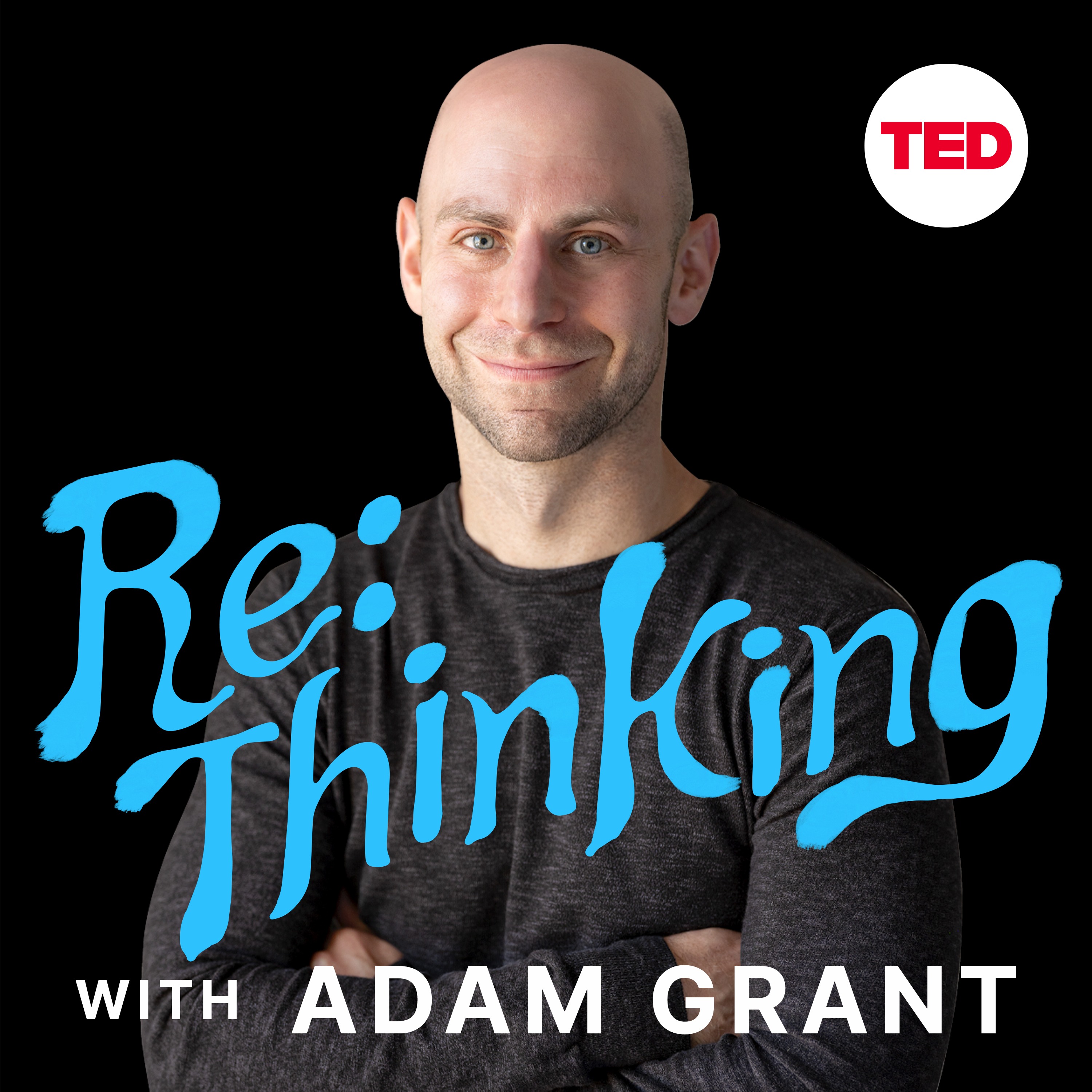
In this episode of Worklife with Adam Grant, organizational psychologist Adam Grant continues his insightful conversation with renowned documentary filmmaker Ken Burns. The discussion shifts towards more personal topics, including fatherhood, grief, and the aversion to careerism. Adam proposes ideas for Ken's future projects, revealing their shared passion for history and storytelling.
Written by AI. May contain mistakes.
Learn how personal experiences with loss have shaped Ken Burns as a father and filmmaker.
“The failure of the relationships were in fact a godsend with regard to parenting because it didn't permit the distractions of my work.”
Ken shares his worst career advice and reflects on the dangers of careerism.
“In this second half of our conversation, things turned a little personal.”
Ken discusses who he would invite to a dinner party and their significance in history.
“of that particular course if it turns out not to be, as Emerson said, if it doesn't inly rejoice.”
Ken pitches ideas for future documentaries, including suffragists and the Supreme Court.
“I mean, it's just filled with just spectacularly good and spectacularly bad decisions.”
A deep discussion on grief, its enduring nature, and personal experiences with loss.
“For years it was going to be on the Cold War.”
The conversation explores how Ken's approach to filmmaking provides unique perspectives.
“And in a way, Ken, that's what all of your work has done for us.”
Ken Burns discusses the process of filmmaking and storytelling as a conductor of historical narratives.
“And that there's nothing wrong with that.”
Burns reflects on the meaning of enthusiasm and its role in his storytelling.
“You want a whole worldview of that elephant.”
Ken Burns shares personal stories about grief and how it affects his work.
“Well, there was an article in a newspaper not to be named, the paper of record, some people call it, in which the word optimism was used as a pejorative, as a naive and pejorative condition.”
Burns emphasizes the importance of cherishing life and living fully, even in the face of loss.
“So, I mean, a couple of weeks ago, I just broke down and cried.”
Ken Burns discusses the importance of collaboration and acknowledging the team behind his projects.
“Well, it's good to live and to live fully and to live, you know, strange for someone who spends all his time in the past to live in the present.”
Burns shares insights from a character in his film about the revolutionary spirit.
“And it's important to acknowledge that if I've said we a couple of times, it's not royal.”

Get the gist, explore an idea or ask about something said.
 Claude
On Worklife with Molly Graham, what are the key points of this episode?
Searching your listeningAutomatic transcript. May contain errors.
0:00I've been divorced. I've been a single dad twice. The failure of the relationships were in fact a godsend with regard to parenting because it didn't permit the distractions of my work. which are enormous, to take away from the fundamental stuff that for half the time I had to be there and cooking dinner and doing laundry and, you know, homework. Wow. I have four daughters and they're 43 to 15. I'm nowhere near as good a filmmaker, I think, as I am a father. Hey everyone, it's Adam Grant. Welcome back to Rethinking, my podcast with Ted on the science of what makes us tick. I'm an organizational psychologist and I'm taking you inside the minds of fascinating people to explore new thoughts and new ways of thinking.
0:52This week, we're back with the king of historical documentaries, Ken Burns. In this second half of our conversation, things turned a little personal. We talked about the role of loss and grief in his work and about how he hates careerism. And I put him in the hot seat with the biggest challenge I can think of for someone like Ken Burns. All right. I want to ask if you're up for a lightning round. Sure. Well, you know, if I can have six part 12-hour answers. I know this is a very constraining forum for you. Yeah. No, no, no. I'm just warning you in apology for the tendency to get excited and then go on.
1:32It's part of the magic of your work, not something you should apologize for. Okay, so first lightning question, what is the worst career advice you've received? Why would you move to New Hampshire when you've been offered a job in New York City and you don't have a paying job because you're working on a film about the Brooklyn Bridge, my first one? And conversely, or not conversely, as a parallel to that, I was told by someone in an animation studio where we animate the movements on the photographs, He said, no one will ever look at a Zoom that's 35 minutes on a single face. And I said, please do it anyway.
2:13But the best advice was from Robert Penn Warren, who looked at me once and fixed me with these. They called George Meade, the general at Gettysburg, the union general, a damned old goggled eyed snapping turtle. And Red Warren was like that too. And he looked at me and he said, careerism is death. And I've actually never used the word career except in the way we're speaking at it now. I refer entirely to my professional life. Because careerism does presuppose that somebody else has already determined the rut you're in, the course you're going to take, and has limited a priori, therefore the options and the ability to escape the specific gravity of that particular course if it turns out not to be, as Emerson said, if it doesn't inly rejoice.
3:04which is the greatest adverb inly in self-reliance. All right. You get to host a dinner party with Louis Armstrong, Abraham Lincoln. I want people that would talk. Franklin and Elizabeth Cady Stanton. She's married and she has kids. And so Susan B. Anthony gets all the stuff, but she's the writer. She's the one who's just phenomenal stylist. I really love her. And in the revolutionary period, Abigail Adams may be the best writer of them all. and so gutsy and so fantastic. She has a great relationship with her prickly, you know, obnoxious, as he called himself, husband, John, but she's great. She's, you can't even say a proto-feminist.
3:44She's a feminist and she's anti-slavery back then. Like episode one, she's like, you know, this is wrong, everybody. You know, cut the crap. Well, that actually anticipates my next question, which is, I wanted to get you to react to a few pitches from me on who might be the subject or your next film. Even though I know what I'm doing for the next seven years. Of course. Seven years. And I now have to say God and funding willing, right? Now that I'm - Yes, of course. So the first one is, maybe this is a sequel to Not For Ourselves Alone, but I think Lucy Stone is the unsung hero of the suffrage movement.
4:19I agree. Terrific project. I agree. She's a wonderful story. And in fact, when I worked with my longtime editor, Paul Barnes, who was a co-producer on this, and the Roosevelt's, And while we were editing Civil War, every day we'd go out to lunch in New York City with whoever kind of collected. And he'd just be talking about this biography of Stanton and Anthony. And I just I listened to it and it sounded so great. I said, we'll do it. So we we did do it. And they die well before. But it's their language that becomes the amendment. Yeah. And the work is ongoing. You know, it's ongoing. All right.
4:53So you may not take it on, but you think someone should do the Lucy Stone. Oh, my God. Yes. Oh, and I'm sure they have. I mean, American experience, you sure there's not something that hasn't taken the post Stanton Anthony suffragists and done something with those folks? I mean, we mentioned her and we take it right up to Harry Byrne in Tennessee, who cast the deciding vote in the last state that will ratify that amendment. And he'd been against the amendment, but he'd come with a letter from his mom who told him to do the right thing. And he did. There we go. All right. Second idea was History of the Supreme Court.
5:32Oh, fantastic. Fantastic. And, you know, I think after I guess you'd have to say all the president's men that Bob Woodward's best book is about the Supreme Court. And a lot of other people have added some pretty good scholarship about it. I think it'd be a terrific thing. I mean, it's just filled with just spectacularly good and spectacularly bad decisions. You know, you can just do it on bad decisions. Right. You've all Levin, the conservative scholar that I was speaking with a few weeks ago, said that the founders would not be surprised by finding somebody wanting monarchical powers. They'd be surprised that Article One, the legislative branch, had given up and ceded so much of their powers.
6:14That's the thing they'd be, just what? We designed this with you guys at the center of it. And Levin said, you got to think of it in tenses that the legislative is future tense. You shall do this. The executive is present tense. I will execute this. And the Supreme Court is past tense, trying to make sense of what the tension between the future and the present is. It's sort of an interesting kind of elemental and yet completely seductive way of thinking about something that we tend to just burden with too much thinking and too much binary thinking when it needs something with more finesse. Are you just going to green light all of my pitches?
6:57Is that what's happening here? You know, because I really love, as I said, if I were given a thousand years to live, which I won't, I wouldn't run out of topics in American history. We're working on LBJ and the Great Society. We've been working on it for years. We're working on Emancipation to Exodus, which is the story essentially of Reconstruction both before and after the most misunderstood period in American history. I've conducted eight two-hour interviews with Barack Obama. No rush, because I want to escape the specific gravity of journalism to be able to do a big series on him. I think I've got at least two to go.
7:32He'd probably say one or maybe none. I'm done talking to you. We've been filming people who knew Dr. King. I want to do a series. For years it was going to be on the Cold War. Now I want to do it on the CIA. Because I figured you'd get the Cold War, but you also get all that intimate stuff of the CIA, right? Well, that was going to be my third pitch, actually, was the precursor to the CIA, the OSS. I thought would be a great. My favorite moment is that on September 2nd, 1945, that's the day the Japanese are surrendering on the USS Missouri and Tokyo Bay unconditionally. in Badian Square in Hanoi, Ho Chi Minh, this nationalist leader that the Russians and the Chinese are suspicious of because he's purportedly a communist, but they don't think he is.
8:16His life has been saved by OSS officers who've parachuted into Northern Vietnam and saved the life of a guerrilla leader in order to lead this thing. And he's saying, we hold these truths to be self-evident that all men are created equal. And standing next to him are OSS guys. Within five weeks, they have been told unequivocally by the State Department, get away from this guy. He's a commie and we don't like commies anymore. Wow. Yeah.
8:46Okay. Next lightning question. This is inspired by one of our past guests, Jared Cohen. The question is, who do you think had the best post-presidency? It's obviously between Jimmy Jimmy Carter and John Quincy Adams, and I can't decide. John Tyler had the worst. Yeah, I don't want to decide between those two guys. And everybody, I assume, knows enough within the sound of our voices, Adam, about Jimmy Carter, which is a remarkable, spectacular post-presidency. And not even hospice could kill him, you know? He's in hospice for a year and a half or something. But John Quincy Adams does what George Washington kind of suggests that being a citizen is this ongoing project, you know?
9:28What's something you've rethought or changed your mind about lately? So I think I've had a series of acquired political or maybe even at times philosophical, but certainly just societal opinions that I've now rejoiced in letting go. My best friend, someone asked him, what was the secret to his long marriage? And he said, we try not to make the other wrong. And I always have tried to apply that because I find that there is this knee-jerk necessity to sort of make this thing or this moment or that action or this person particularly wrong. And that the actual act of trying to check that, you fail, but trying to check that is actually what we're supposed to be doing.
10:16You know, when you're asking about the moral relativism. It's just a process, right? And none of us get out of here alive. None of us get out of here alive. So what is it that tends a garden, raises a child, cures a disease, does a symphony? This is the project.
10:40Okay, one more question for you. What is the question you have for me as an organizational psychologist. I had a conversation with Anderson Cooper on his grief podcast. And I said to him that I thought that the half-life of grief was endless. I lost my mom after an eight-year illness, nine-year illness when I was 11 years old. And that was 60 and a half years ago. and I wouldn't do what I do if she hadn't died. And it's really way longer than anyone should be without a mother. So do you agree that the half-life of grief is endless? It pays dividends. It has its positive aspects to it, but at the same time, it's loss and loss is loss.
11:33I do. I'm struck by the fact that our cultural narratives about grief are broken. We expect it to be acute and then to fade. And we talk all the time about closure, and I think closure is a myth. I do too. I think if you love someone, you never let them go. I think grief seems to ebb and flow over time, and we get better at processing it. But I don't think it ever fully fades. Do you? No. My aunt Sarah just died in 292, lived a great life, devoted to her husband and her husband to her. And I was talking to my uncle Johnny on the phone and I was saying, I'm so sorry. And, you know, let us know if there's anything you can do, if there's anything you want.
12:14And he goes, I want Sarah. You know, I just burst into tears because of course, it's like the little girl, you know, who's blowing out the cake at age three or four. What did you wish for? I wish for cake, right? Come on, get over it. You know, it's not world peace. It's not this or this. It's I want cake. And there's something really direct about that. And there's something really direct about what my uncle said. And it just reminded me the extent to which I am, as I think most people are in some ways, defined much more by loss than by the good times, the gated community, seeming security, and that it's really about these moments and the decisions that you make in them.
13:00I think this is such a widespread misunderstanding of grief and I blame it in part on the stage models that were popular for so long that said you have to progress through one to get to the next. And the reality is they're much more like phases of the moon where they wax and wane. And what that says to me is that moving forward after loss is not about erasing our sorrow. it's more about gaining perspective. And in a way, Ken, that's what all of your work has done for us. You zoom in and zoom out in ways that give us perspective that we never could have had otherwise. And I think that's a beautiful thing.
13:36Well, that is a very nice thing to say. I do recognize that there is a profound similarity between the architecture of the atom and the architecture of the solar system. And I think that too often we focus either on the macro or the micro to the exclusion of the other. And it is possible to spend time, say, in this American Revolution project where you are certainly with George Washington, but you're also with Betsy Ambler, who's 10 years old in 1775. And that there's nothing wrong with that. In fact, it's really good to collect, to exist in the tension between the cosmic and the microscopic, the atomic.
14:15I love that. And maybe at the risk of mixing metaphors, in talking to you, I have such a strong sense that you're more than a filmmaker. You are a conductor of history. I can, as you talk about it, I can see you, right? Sort of orchestrating the different notes and melodies and instruments in a way that brings it together. The day-to-day process is so much about stepping back from it and permitting the stuff, not imposing. People are always saying, so 10 years, what sort of theory of it did you do? What, you know, essentially what historiography, what, what lens did you see? You go, no, we got, we have all these different varieties of perspectives.
14:57Any one lens is the blind man describing one part of the elephant. And you don't want that. You want a whole worldview of that elephant. So a lot of it is just stepping back. But what happens when we finish, people go, you worked 10 years. Didn't you get bored? You go, no, you have no idea. I don't want to leave this thing. This evangelical period where we're out for nine months talking and doing endless conversations and interviews and screenings and 40 cities and all of that, you know, it's wearing, but I love it because what happens is that then you're beginning to conduct your own set of emotions that you've developed over the last 10 years and to try to share them because it's infectious, right?
15:39I remember once, right after the Civil War series, some journalist wanted to take me down a peg, you could tell, and describe me as enthusiastic. And I knew it was in a pejorative context that it had been used. And a friend of mine said, look it up. And I knew he didn't mean the definition. So I went to the etymology, and it means God in us. And I just looked at him and I said, thank you. You know, meaning, am I enthusiastic? I will plead guilty to that because somehow the Holy Spirit has just spoken in whatever story it might be. And I can get as excited about Elizabeth Cady Stanton and Susan B.
16:16Anthony or Benjamin Franklin or the Brooklyn Bridge or the Central Park Five as I can about the American Revolution or Vietnam or the Civil War. Gosh, if the worst critique that somebody can make of your work is that you're enthusiastic, you've made it. Well, there was an article in a newspaper not to be named, the paper of record, some people call it, in which the word optimism was used as a pejorative, as a naive and pejorative condition. And I go, F you, no, no, cynicism, that's a luxury that you may possess. I do not have that ability to be cynical. I have to remain optimistic about the human condition because I'm delving into it and I'm meeting unbelievably interesting people that sustain me and also, I think, mitigate the grief.
17:11My late father-in-law was a well-known psychologist in the Boston area named Gerald Steckler. And when I told him I seemed to be keeping my mother alive, He told me, you know, I bet you blow out your birthday candles wishing she'd come back. I go, how do you know? And he said, well, look what you do for a living. I said, what? He said, you wake the dead. You make Abraham Lincoln and Jackie Robinson come alive for us. Who do you think you're really waking up? So Lila Tupper Burns, my mother, deceased since April 28th, 1965, is here, right? she's part of the animating engine the fuel of this project of my trying to tell stories comes from her and her absence right all of it just confounding and exhilarating at the same time and isn't that the ultimate purpose of grief that's exactly right is to is to transform you don't wear the widow's black for a year and then that's it get over it as you're saying it cycles It's just, you figure out how to respond to each cycle.
18:18So, I mean, a couple of weeks ago, I just broke down and cried. I missed her, you know, and I just missed her. It's 60 and a half years. And yet my oldest daughter, who had never met her grandmother, obviously, named her first child Lila. And so the name that was draped in black grape of mourning, we now say it all the time. I saw Lila yesterday. I said, Lila. She's a granddaddy. gives me a big hug and you just go, these are the gifts. Wow. Grief reminds us to cherish life and no one reinforces that message more powerfully than you. Well, it's good to live and to live fully and to live, you know, strange for someone who spends all his time in the past to live in the present.
19:05I mean, this is the process that we work on with just incredibly talented people. In the case of the revolution, Sarah Bottsine and David Schmidt, who make it happen. My longtime collaborator, Jeffrey Ward, cinematographer, Buddy Squires, I've been working with Buddy for more than 50 years. I mean, they're family members, it feels like. And it's important to acknowledge that if I've said we a couple of times, it's not royal. There's a great, I will tell you, there's a great guy in our film that we follow throughout, a German mercenary named Johann Evel, Captain Johann Evel. And he is openly contemptuous of what he calls the rebels, just as the British, they don't call us patriots, they call us rebels.
19:43But he's in the surrendering army, Johann Evald is, at Yorktown. And he says, who would have thought a hundred years ago that out of this multitude of rabble would arise a people who could defy kings? Yeah. Another one bites the dust. I will use the royal we and say we are so grateful to have you in the present with us. And I will take your infectious enthusiasm any day. It's been my pleasure. It has been an oasis of conversation, Adam. Thank you.
20:19Rethinking is hosted by me, Adam Grant. The show is produced by Ted with Cosmic Standard. Our producer is Jessica Glazer. Our editor is Alejandra Salazar. Our engineer is Asia Pilar Simpson. Our technical director is Jacob Winnick. And our fact checker is Paul Durbin. Our team The theme includes Eliza Smith, Roxanne Hilash, Van Ben Chang, Julia Dickerson, Tansika Sung Manivong, and Whitney Pennington Rogers. Original music by Hans Dale Hsu and Alison Layton Brown.
Ken Burns is a documentary filmmaker who has produced works about Mark Twain, Jackie Robinson, the American Buffalo, the Civil War, and now, in his latest work, the American Revolution. In this second part of their conversation, Adam and Ken move to more personal topics: Ken’s experience with fatherhood, the role of grief and loss in his work, and his hatred of careerism. Adam pitches some new ideas for upcoming documentaries, and Ken reflects on a time when the word “enthusiastic” was used against him.
Host & Guest
Adam Grant (Instagram: @adamgrant | LinkedIn: @adammgrant | Website: https://adamgrant.net/)
Ken Burns (Website: https://kenburns.com/)
Links
https://www.facebook.com/kenburnspbs
https://www.youtube.com/user/kenburnspbs
https://kenburns.com/films/the-american-revolution/
Follow TED!
X: https://www.twitter.com/TEDTalks
Instagram: https://www.instagram.com/ted
Facebook: https://facebook.com/TED
LinkedIn: https://www.linkedin.com/company/ted-conferences
TikTok: https://www.tiktok.com/@tedtoks
Podcasts: https://www.ted.com/podcasts
For the full text transcript, visit ted.com/podcasts/worklife/worklife-with-adam-grant-transcripts
Hosted on Acast. See acast.com/privacy for more information.