Ask ChatGPT

 Worklife with Molly Graham
11 Nov 2025 · 42m
In this episode of Worklife with Adam Grant, host Adam Grant speaks with author and lifelong journaler Suleika Jaouad, who shares insights from her memoir Between Two Kingdoms and her new book Book of Alchemy. The conversation revolves around Jaouad's journaling practice, its impact on her journey through cancer, and the broader themes of reflection, creativity, and how to live each day with curiosity.
Written by AI. May contain mistakes.

Get the gist, explore an idea or ask about something said.
 Claude
On Worklife with Molly Graham, what are the key points of this episode?
Searching your listeningAutomatic transcript. May contain errors.
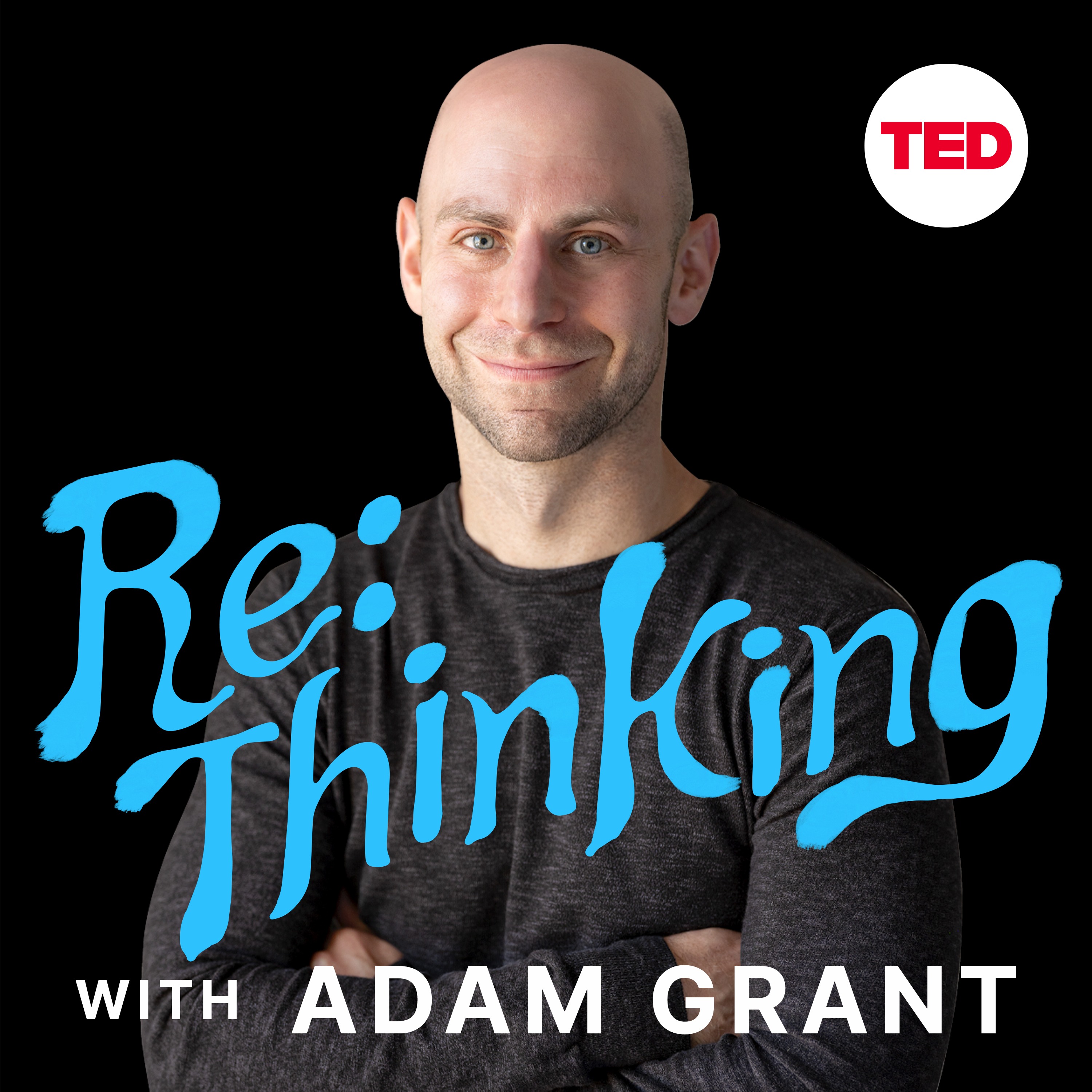
0:00How do I hold all of this? How do I hold the desire to continue living my life without hedging against my fear that I won't live long enough to live long enough to live. in that future. Hey everyone, it's Adam Grant. Welcome back to Rethinking, my podcast with Ted on the science of what makes us tick. I'm an organizational psychologist, and I'm taking you inside the minds of fascinating people to explore new thoughts and new ways of thinking.
0:36Zuleika Jawad is the author of the stunning memoir, Between Two Kingdoms, and the new Book of Alchemy, which in some ways is an extension of her popular newsletter, The Isolation Journals. Both are filled with thought-provoking prompts for journaling, and were inspired by her experience of journaling her way through cancer treatment, and now informed by her practice of journaling with her husband, musician John Batiste. I wasn't always a big fan of journaling, but I love how Suleika sees journaling as a practice that can take many forms. People use journaling in all kinds of ways. It was used by Japanese women as pillow books.
1:10where they would write gossip and secrets. It was used as a space for private reflection with immense public implications like Anne Frank and her diary. And for me, sometimes my journal looks like a painting. Sometimes it looks like one sentence or a grocery list. And sometimes it looks like morning pages that I write first thing in the morning before I've had my coffee, before that inner critic awakens and starts asking why in the world you're going on and on about something that seems seemingly pointless. Suleika and I talked about reimagining survival as a creative act, the joy of playing pranks with your friends, and how to hold both the beauty and pain of life together.
1:56I have to tell you, I think the starting point for me for this conversation is I've always hated the phrase, live each day like it's your last. Hate it. Every time I've heard it, as long as I can remember, my first thought is, nothing meaningful would ever get accomplished. People would just live in the moment, and there'd be no planning or building or creating for the future. And I was so excited when I found out that you also hate this sentence. I'll take it a step further. Not only would nothing meaningful be accomplished, but I really believe in some ways it's the worst advice. advice. And that's advice I got a year ago when I learned that the leukemia I have been navigating since the age of 22 was back for a third time.
2:43And I kept saying to my oncologist, I don't know how to cope with the overwhelming feeling of uncertainty. And I am a planner. I have my one-year plan, my five-year plan, my 10-year plans. I live through the act of not only dreaming, but dreaming as ambitiously and in as much of a forward-looking way as I can. And so I was struggling to make dinner plans one month out. I was struggling with all kinds of questions, including figuring out how to put a book out in the world. And I said, I don't even think I can commit to a book tour because I don't know if I'm going to be alive in six months. And so the advice was you have to live every day as if it's your last.
3:32So with great respect to my oncologist, who is absolutely wonderful, I finally came back in and said, I think you need to stop telling your patients to live every day as if it's your last. I've come to believe that it's bad advice. And what I've had to shift to is a gentler mindset. Because when I'm living every day as if it's my last, it's so much pressure. I'm trying to make every dinner as meaningful as possible. I'm trying to squeeze the juice out of every moment. And that is just a spiritually exhausting way to move through your life. And so instead, I'm trying to live every day as if it's my first.
4:16to wake up with a sense of curiosity and playfulness and wonder that a little kid might. And when I do that, it's not about crossing off these big bucket list items. It really grounds me in the present. It's the simple things. It's trying to channel that sense of awe that a toddler might when they see a caterpillar scuttling across the sidewalk for the first time. It's not that complicated. I love this. I love this so much. And what I think is ingenious about your idea of living each day like it's your first is you would always do both on your first day. I mean, you would be delighted by everything that you're experiencing for the first time.
4:57You would also be excited to think about what you might get to explore and experience and create tomorrow. And it seems like it would create an ideal combination of not just present focus, but also future-focused. Talk to me about that. Absolutely. And I think I was someone who was too future-focused before getting sick. I was a kid who felt this tremendous amount of self-imposed pressure to honor the sacrifices that my parents made for me. They were both immigrants. I was the first person in my family to go to college in the U.S. I spent my high school years just working myself down to a nub in order to get a scholarship to the best possible college I could.
5:46And everything was about becoming some future version of myself. And when I look back on my journal entries from college, I have no idea what I was actually experiencing because it was all angst about who I was going to become and angst about picking the exact right path and identifying my purpose and figuring out the steps between where I was then and where I hoped I would end up. And so the funny thing about getting that diagnosis at 22 is that it presented this important course corrective, which I think we all come up against at some point or another in our life. And it is the one certainty amidst all of the uncertainties we face, which is that we are not going to live forever.
6:41There is an infinite time to finally get to a place where you can enjoy your life now. You don't like check off boxes and then finally settle in. And I realized rather Rather than living for my five-year plan, I also needed to be enjoying my life in the moment. And maybe that sounds obvious to people, but I think when you are, I wanted to say, cursed with ambition, sometimes it can feel like a curse. It's so easy to focus on doing rather than being and to catapult into your days without actually pausing to think beyond my to-do list, what really matters to me right now? Who do I want to spend my day with?
7:36What's actually important beyond, to borrow David Brooks' phrase, the resume virtues? How can I start living for the eulogy virtues, the qualities that people are honored for usually long after they're gone? Were you brave? Were you kind? Were you a person on record who shows up for your loved ones? I hear you talking about the way you're living your life differently. I'm like, you were already the person you say you've turned into. I think when you confront your mortality or when you have some experience in your life that really brings you to your knees and forces you to reassess your priorities, there's a clarity that you have in that moment.
8:21But it's hard to hold on to that clarity. I think most of us don't have an aha moment and then you're good. If you're me, I'm relearning the same lessons over and over and over again. The image of the spiral is what comes to mind. I'm like getting closer, but I often find myself in a familiar place where I'm like, really? I thought we learned this. And the other thing I'll say is that I think my approach to work has changed. You know, one thing that happened with each bout of illness, which is to say each massive interruption to my life and work, was a kind of perverse sense of freedom and relief.
9:09A sense of freedom to pursue things I was curious about, not because they made sense work-wise or life-wise, but just because I wanted to, because they made me feel good. And each time I've allowed myself to follow that thread of curiosity without having a plan or an outcome in mind, it's always ended up being a transformative shift. So I'll give you an example. Three years ago, I was reentering the hospital to have a second bone marrow transplant, and I packed a diaper caddy full of journals because that's what got me through my first transplant. And I was like, I've got this. I have my personal journal.
9:49I have my medical journal where I'm going to keep notes from doctor's rounds. I have my shared journal with John, which is something that we've done for years. I had a reporter's pad titled observations from the nurse's station where I just wanted to write little notes to myself and I was like this is how I coped with it the first time around it's going to be okay I know how to do this and within about a week of being admitted to the hospital I had a series of complications that resulted in my vision being impaired for about two weeks and I could barely see, let alone write. And so a younger version of me would have felt deep defeat and frustration.
10:33But having my life upturned in this way over and over again has taught me that you really have to surf the waves of uncertainty without trying to direct or control what's happening. And so I pivoted. I was having these really terrifying fever dreams, literal fever dreams, like weird hallucinations of giant 10-foot giraffes that doubled as IV poles. And I was afraid to go to sleep at night. And I decided instead of writing, I was going to keep a visual journal. And I'm not a painter, haven't painted since I was a little kid making messy finger paintings. But I did it because it intrigued me. And every single day, I started making these watercolors of what was appearing in my dreams.
11:22And suddenly, instead of being afraid to go to sleep, I was intrigued about whatever new apparition was going to appear. And I've become obsessed with painting. It's all I want to do. I'm not planning to make a career out of it, but it's this incredible, unexpected passion that I wouldn't have had access to had I not allowed myself to be limber, to reimagine what and how survival might look like a creative act. Wow. Does this mean you've quit journaling? No. So what is this shared journal with John that you mentioned? This is actually John's idea. And John is a perfect example of someone who journals in unconventional ways.
12:14He journals in voice memos. He journals on the piano. He calls them his piano diaries. And when we were early on in our relationship, we were both spending a lot of time on the road. And John had this idea that in order to stay connected, we were going to write three long hand pages, as we always did, except that we were going to direct them to each other in the form of a letter. And that's what we did. Every single morning, we'd write our letters, snap a photo of them, and text them to each other. And what was incredible about it is there's a way in which when you're on the road, you might check in on the phone and you say, how was your day?
12:57How are you? But you're not really getting to the deeper grist. grist. And what would come up in these letters was not only surprising to each other, but I was often surprised by what would emerge in my own letter. And we had some of the richest, deepest conversations in those letters. And it's something we still do to this day. It's such an interesting way of bringing back the time-honored tradition of letter writing. It reminds me a little bit of, I think it was E.M. Forster who wrote, how can I know what I think until I see what I write? And I think that so many people have underestimated how useful writing is, not just as a tool for communicating, but a tool for thinking, reflecting, sense-making, processing emotions.
13:42What I love about the journal is it's a private space. This is not public writing. It's writing you do for yourself. It's not, I'm penning a masterpiece writing. It doesn't have to be grammatical. It doesn't even have to make sense. And for me, it's the most direct channel I have to my intuition and to my subconscious. And so I often will start an entry thinking to myself, I have nothing to say today. And I'm always surprised by what emerges. All of my best ideas have sent from my journal. All of my early drafts for books that in the moment didn't feel like early drafts happened in the journal.
14:28I credit my marriage to my journal. It's where I get to show up for myself without expectation, without pressure to be anything other than my most unedited, unvarnished self and to see what happens. It's so fascinating. I guess on a couple levels for me, One thing that puzzles me a little bit about this is I'm not sure my first thought, if I'm living today as my first, would be I'm going to write a journal. I'd want to go out and experience life, not spend time reflecting on it. What am I missing? Okay. So I feel that in the act of writing in a journal, whatever I write down has a higher likelihood of ending up in my memory bank.
15:18So one of my very favorite prompts that's in the Book of Alchemy is by this young woman, Ash Parson Story. She writes about being a young mom with an adopted son who's in the NICU and having terrible medical issues and feeling completely overwhelmed and completely subsumed by worry. And she assigned herself this prompt, which was that she just had to write 10 images from the last 24 hours. And especially in this last year and weeks where I'm not feeling well, where it's easy to feel overtaken by this sense of worry or fear, I find that it's an important way of not only fact-checking my narrative of how the week went or how the last 24 hours went, but it teaches me to notice the things I wouldn't otherwise notice.
16:09So I did it yesterday, actually, and I wrote about our senior toothless dog, Lentil, taking a nap in a patch of sunlight in the sense of peacefulness that I felt watching her. I wrote about my friends Amber and Priya coming over. We were supposed to go out to dinner, and instead of canceling the dinner, I invited them to come over in their pajamas. These are, you know, the silly everyday things that would otherwise go unnoticed. And what happens when I write them down is they train me to want to cultivate more of the things that nourish me and to identify what those things are. This is so compelling because I think what most people do when they want to remember an experience is they take out their phone and they snap a photo.
17:00But what we know is that that jolts you out of the experience and prevents you from living it. Whereas taking a separate moment to journal, it sounds like is both allowing you to savor it and also to get better at noticing the things you want to savor in the future. Exactly. It's also training the eye because when I end up writing about a moment that surprises me, I find myself seeking those details out in the world. I find myself paying closer attention when I'm walking through the park with my dog about what the weather feels like, how the breeze feels on my neck, what flowers were blooming, the funny sneeze of one of my dogs when it snuffed a sunflower, whatever it is.
17:47And, you know, I'm paraphrasing here. Mary Oliver says, to pay attention is our endless work. And it's so easy to move through your life in a blur without actually pausing to to note the things that are happening around you, the really simple things.
18:13So I have to loop back to something that I should have asked you about earlier, which is, I think you might have said that you credit your marriage to your journal. What?
18:26It's so funny. I found these journals from like seventh or eighth grade where I wrote about how I never thought I was going to get married, or I never thought I was going to be a person who could sustain long-term marriages. And I think this is a byproduct of being a kid who moved around a lot. I was an expert at being the new kid, at making fast friends, but my upbringing taught me that relationships have a shelf life. And so in terms of my relationship with John, we both were interested in building a different kind of relationship. And so I had a lot of anxieties. I had a lot of fears. And many of them were honestly anchored in illness in the sense of feeling that I knew I had a bad prognosis.
19:19and was it fair and was it responsible of me to make long-term commitments like marriage or to dream about having children when I knew that the probability was I wouldn't be able to do that. And so these were things that were about me. They were not about John as an individual. And what happened is that through the act of untangling these fears, of giving them ink, there was a sense of externalizing this swirl of indecipherable emotions I was having and being able to parse them out on the page to identify which ones were grounded in fact, which ones were grounded in fear, which ones were complete fictions, and to deconstruct them one by one.
20:15It allowed me to not only name my fears, but then to be able to speak them out loud. And this is one of the most powerful shifts about journaling. When I find that I'm able to be in conversation honestly with myself on the page, that I have deeper conversations with the people around me. And so I think the act of writing those things down allowed us to have conversations off the page together in a way we wouldn't have been. And so when I named these fears, John was like, first of all, nobody knows how long they're going to live. This is a till death do us part contract. It's not a live forever pact.
21:00And this is something we can talk about together. We can explore this as a conversation between the two of us. You don't need to be having this conversation with yourself alone. And I find that I don't always know what I'm thinking or worrying about until I write it down. I'm not sure I would have believed you on this last year, but I think I've come around once upon a time when people would talk about reading their journals out loud, I think, but that defeats the purpose of a journal. This is a private conversation. You don't want to make that visible to anybody, let alone public. And then two things happened.
21:44One is I went to an event earlier this year where we did journaling prompts and read them out loud. And the way that people opened up and bonded with each other was very different from the kinds of conversations that we have when we're just speaking off the cuff. I think it allowed people to go deeper, faster. And then I think the other thing that really shifted my thinking on this was my wife, Allison, published I Am the Cage, which as a novel grew out of journals she'd been doing for decades. And talking about the experiences that inspired the fiction she wrote was completely different from just writing about it.
22:21So I'm a convert, I think. So to be clear, I do believe the journal to be private. All of my journals live in a locked suitcase with a combo code. I never read my journal entries out loud. But what happens is when I'm grappling with something consciously in the journal, I end up wanting to grapple with it out loud with my most trusted advisors and loved ones. And so similarly, you know, I've started doing these living room gatherings that we're calling journaling club where we invite people to journal privately in their notebooks and not to share what they wrote word for word, but to talk about what comes up.
23:07And it can be any aspect of it. It can be, I really struggled with this prompt and I felt this immense sense of resistance. It can be something tangentially related. It can be responding to someone else's share. And so I'm just interested in that shift from the personal dialogue with the self to how it powers and shifts the conversations we have with each other without having to expose your deepest, darkest secrets in a jumbotron kind of way. it's not something i would have thought to do with other people like the idea of a journaling club almost sounds like an oxymoron and yet as i've learned from you about it it's not that different from the way that i might go running with someone like when i run i run too hard to talk otherwise it doesn't feel like a real workout and so it's not like we're communicating it's just you feel like you're not alone and you also feel like you have an accountability buddy And I guess I wonder if Journaling Club is much the same.
24:15I think so. You know, so much of our socializing is anchored around consuming food or some kind of beverage and talking. And as someone who is very much an introvert, I welcome forms of gathering that make space for both, that make space for comfortable, quiet, and make space for conversation if you want to participate in the conversation. And so, you know, the prompts in the book can be used as journaling prompts. They can be used as conversation prompts. But I'm interested in gatherings that aren't anchored around small talk and that make space for unusual conversations. And so I've done a number of these now, and some of them with people I've known for years or decades.
25:05And each time I'm astounded by the fact that I've learned things about people, including my own husband, who was in our last journaling club that I never knew before. So the way I've been structuring these journaling clubs is that we do a drawing prompt, we do a writing prompt, and we end with a conversation prompt. And the last one that we did for the conversation prompt was borrowed from Astaire Perel, and it was to name something that would be on your unofficial resume. and he rattled off a list of things on his unofficial resume. And I was like, what? Someone, an esteemed journalist, shocked everyone in the group when it came to her turn by saying, I love drugs.
25:50I'm a mother of three children. I'm a professional woman and I've been dabbling in psychedelics and I love them. And we all burst out laughing. A retired New York City police detective turned realtor shared that she's obsessed with making ceramic heads. You know, weird little details that inevitably yield follow-up questions. I love this. Well, you've actually changed my mind about something when it comes to journaling. Okay, tell me. I think I journaled sporadically as a kid. I remember doing it in middle school and high school on and off, and then doing it much more regularly in college and even having a class where we had to turn in a journal with our observations about psychology.
26:33And I hated the idea of a prompt, hated it because it just felt constraining. I didn't want to write about somebody else's topic. I wanted to choose my own. And I have to tell you, you made me rethink that because as I tried out some of the prompts in the book, I realized that they actually gave me freedom to write about things that I wouldn't have thought to write about. And they challenged me to take on topics that I wouldn't normally have navigated, but I still had plenty of flexibility to figure out exactly where I wanted to take them. Why did I get that wrong? Why was I so resistant? Well, I get it.
27:10I felt the same way. I'm someone who, if you had told me to write to a prompt 10 years ago, I would have said, absolutely not. That sounds too prescriptive and it sounds like homework and that's not why I do this. But there's a reason why people start or practice like morning pages and do it for a couple of months and drop off. There's a reason why many of us have bought a beautiful brand new journal with the intention of filling it out and written a couple of pages, then stopped, then bought another journal because that journal is ruined. And it's hard to find that momentum. It's easy to get stuck in your journaling when you're feeling stuck in your life or when you aren't given an invitation to kind of twist your mind out of its usual ruts.
28:00And so there are many times when I read a prompt and I'm like, I don't like that prompt. I don't feel like writing to that prompt. And sometimes I write into that. I write about my resistance to the prompt and that in and of itself yields something interesting. And so the way I think of it as like a kaleidoscope. A prompt allows you to twist the chamber ever so slightly so the light falls differently. And so I've come to enjoy being prompted in this way. I've come to welcome the shift in direction and the interesting thing that shift yields. I want to be challenged in my pages. It's what allows me to keep coming back.
28:44It's what allows me to stay consistent. You also, you did, I thought, such a beautiful job making prompts an opportunity to be in dialogue with great thinkers and writers and creators. And I think that's another layer I never really thought about. And it's also clearly what you've done in your journaling with John is to say, I'm not just writing to myself. I can actually be in conversation with other people I admire, with other people I care about. And I think the act of treating it as a dialogue, it also changes the way that you think and feel. I do think of journaling as a conversation, both with the self and with the people around you.
29:24And those people can be imagined or actual people. And so even though I had a real resistance to prompts, in a way I was prompting myself. I always begin my day by reading something. It can be a paragraph, it can be an essay, but I like to be in conversation with the ideas of people who challenge and intrigue me. And so that's what I set out to do in this book. It's not just journaling prompts, it's a mini essay from each of these various thinkers and artists and writers. because I like that sense of call and response that happens when you get to not only dialogue with your own words, but be in dialogue with the ideas of someone else.
30:09One of the things that it made me think about was I did some research years ago with Jane Dutton where we were interested in the juxtaposition of gratitude, receiving somebody else's generosity, and then contribution, offering something of value to others. And we did multiple experiments showing that when people kept contribution journals, it was in some ways better for them than keeping gratitude journals. That when they wrote about what they were grateful for, although often that made them happier and gave them a sense of connection to others, it also left them feeling passive. Like they were just recipients of other people's actions.
30:47Whereas when they wrote about their contributions, It created an active sense of I matter. I have something to offer. I have something to give. And it seemed to inject greater meaning into their lives. I remember when we did this research, journaling was just a vehicle for getting people to feel something and to see themselves in a different way. And as I've shared this research with people, they get so fired up about the idea of adding a contribution journal to whatever their gratitude practice is. I think a lot of people are in the habit of trying to count their blessings. What do you think is different about counting your contributions?
31:25It's such an interesting shift. I think there's a kind of positive feedback loop that happens when you not only note what you're grateful for, but when you note your own contributions. And it makes you want to do more of that. And so something I started doing at 22 when I was at my sickest is I maybe had like one or two hours in the day where I felt well enough to do something. And what that meant is I had to get really specific about how I wanted to spend that time and who I wanted to spend it with. And it was really clarifying. And so I'd ask myself in the morning, if there are three things I can do today, what are those three things?
32:10And right now I have more energy than one or two hours, but I still ask myself that question when I wake up to center myself. And it's not usually work related. Sometimes it is, sometimes it isn't. And sometimes I ask myself that question at the end of the day. What were the three things that mattered most to me? What were the three contributions that made me feel most nourished, most in integrity with myself, most successful and not in the conventional sense of success, but in the sense of feeling like you've done good? Yes. More of that, please.
32:51Okay, this is a great segue, actually, to the lightning round. Okay. First question is, I met you and John separately. I think within minutes of meeting each of you, you give off just an unusual sense of soulfulness, of being deep and reflective and thinking about the meaning of life. And unlike most of the people I know who exude that poignance, you both also live life with so much levity along with gravity and joy and playfulness. And I just remember this kind of, oh, oh, I love this because they both have both. And I don't know very many people who have both. And I just, like, I'd love your lightning description of, like, how do you maintain that together?
33:34So I'm reminded of a prompt that you wrote for my newsletter, The Isolation Journals. And you asked, what is your fun age? Do you remember this? Yes, I do remember this. We should probably explain fun age. Yes. So my least favorite part of college was that people wanted to go out drinking and dancing. Neither of which are things I do. And I wanted to go to a water park or play video games or play ping pong. And it just hit me one day, like my adult friends, the ones I really love hanging out with are the ones who have the same idea of what fun is as I do. And so like my fun age is I'm an eight-year-old or a nine-year-old.
34:13And it sounds like you two share that. Okay. So I think for both John and me, our fun age is both 80 and eight. Yes. We are total boring homebodies. like picture us on rocking chairs on the porch and that is literally what we do and we're also little kids I think we really intentionally cultivate and really try to tap into that sense of not just childlike wonder but complete absurdity and hilarity so when I was getting my bone marrow transplant we would entertain ourselves by making prank calls and not in a mean way but John is an incredible impersonator. And word got around and the nurses started coming to my room being like, hey, can you prank call my boyfriend?
35:03Can you prank call my husband? And so every night we would just do hours of prank calls. And we were like, I've never laughed harder in my entire life. John would call up Witten Marsalis and pretend to be an elderly Brooklynite named Ernie in search of milk, whatever it was. It was like totally silly and harmless. We'd leave voicemails. And it was never, you know, the kind of prank calls that leave people feeling bad, but that inevitably leave someone just like sputtering and cackling at the absurdity of whatever is happening. Wait, so you're pranking people you know? We're pranking people we know.
35:39And then at some point, John reveals it's him? Never. Although some people have caught on now. Some people have started pranking us back. Here's an iconic example. we were at a dinner party and because people know that we love to prank call they'll come prepared sometimes with like fun phone numbers that they want us to test out and so we called the novelist Jonathan Franzen and at this point it was like 10 30 11 p.m on a Tuesday and we're like is it too late to call hopefully you know they have their phone on do not disturb so John John calls Jonathan Franzen and this lovely woman picks up and John says he's from the Alabama Football Association and may he please speak to Jonathan Franzen.
36:27And we all expect her to hang up and instead she goes, oh, wonderful. Just one moment, please. Hands the phone to Jonathan Franzen. And John proceeds to explain that he's wondering if Jonathan Franzen would be willing to donate a kidney. And they get into this long conversation for 10 minutes, which ends with Jonathan Franzen graciously declining because he's actually a Texas football fan. And I will tell you that by the end of this call, we were all diehard Jonathan Franzen fans. And so I love it. It's like a little Rorschach test of what their fun age might be. I love this so much. I loved Frank Hollis as a kid.
37:13We also just prank each other in general. We're constantly leaping out from behind a couch to scare each other, swapping weird little objects around the house to make each other laugh. Yeah, it's that sense of fun and delight. Do you think you and your wife share a fun age? I think so. Our preferred way of going out at night is to stay in our pajamas and read or watch a movie. Board games, too. Yes, board games. We could play them endlessly. Same, except we get a little too competitive. Okay, I completely failed the lightning round. Let me ask you some actual lightning questions. Okay, great. So give me your dream dinner party guests.
37:57Who do I think would be fun in a pajama game-centered evening? Questlove, Amir.
38:09John Green Elizabeth Gilbert and Barbara our retired police detective realtor who's become our adopted aunt she's the funniest person I've ever met in my life what other bad advice drives you crazy along with live each day as if it's your last oh the one that really gets my blood boiling God doesn't give you more than you can handle I think it's that discomfort we have with allowing someone to not be okay and not immediately trying to plaster over it with a silver lining or some positive twist. Yeah, it's like it's a cousin of everything happens for a reason. Absolutely. Do you have any unpopular opinions that you're eager to defend?
39:01I love a cold call. I hate trying to make a plan over text message. This is definitely unpopular, but it shouldn't be because I don't know if you've seen it. There's some recent research showing that people underestimate how delighted others are by a random phone call and how much more meaningful and joyful that is than a text exchange. Interesting. What's the question you have for me? Let's end where we began. on if you were to live today as if it were your first, what would that ideal first day entail? Wow. I think, I mean, it would have to start with figuring out what my kids love to do. And I'm sure we would end up playing video games or skiing or at a water park.
39:54And that would be great fun, but just discovering the joy they feel in those activities and how it's not just sheer excitement, but also challenging themselves to take on something that might be a little bit scary or difficult. And then, you know, hearing them afterwards say like fun over fear, fun over fear. I think that's just incredibly exciting. I'm going to turn this back around on you. Is it fair to say that part of living each day like it's your first is paying more attention to the way that a three-year-old or a five-year-old or an eight-year-old sees the world? I think that's fair. And the truth is, you know, if you've ever been confronted by a toddler asking you a big question, as adults, we don't often know the answers to those questions.
40:43So maybe it's grounding yourself and what's right in front of you and having a little more curiosity and wonder about it. I could get behind that. Well, this has been such a treat. I have so many things I want to do now as a result of this conversation. Thank you, Suleika. Thank you. This has been such a joy.
41:07Rethinking is hosted by me, Adam Grant. The show is produced by TED with Cosmic Standard. Our producer is Jessica Glazer. Our editor is Alejandra Salazar. Our engineer is Asia Pilar Simpson. Our technical director is Jacob Winnick. And our fact checker is Paul Durbin. Our team includes Eliza Smith, Roxanne Hilash, Banban Chang, Julia Dickerson, Tansika Sung Manivong, and Whitney Pennington Rogers. Original music by Hans Dale Su and Alison Leighton Brown.
41:37I feel like Matthew McConaughey would be a good hang and he would bring some juicy shit-talking to the competitive board game playing. I can almost vouch for that. Okay. We just recorded a podcast with him and he is more like the person I thought he would be probably than anyone I've ever met. I'm like, if you created your caricature of Matthew McConaughey, that's actually Matthew McConaughey. Amazing.
Suleika Jaouad is the author of the memoir Between Two Kingdoms and the new Book of Alchemy—she’s also a lifelong journaler. In this episode, Adam and Suleika reflect on how Suleika’s journaling practice has helped her through cancer, discuss the art and science of journaling, and brainstorm creative ways to incorporate it into reflection and relationships. They also chat about Suleika and her husband Jon Batiste’s shared love of prank calls and bond over a mutual hatred of the common advice to live every day like it’s your last.
Host & Guest
Host: Adam Grant (Instagram: @adamgrant | LinkedIn: @adammgrant | Website: https://adamgrant.net/)
Guest: Suleika Jaouad (Instagram: @suleikajaouad | Website: https://www.suleikajaouad.com/)
Follow TED!
X: https://www.twitter.com/TEDTalks
Instagram: https://www.instagram.com/ted
Facebook: https://facebook.com/TED
LinkedIn: https://www.linkedin.com/company/ted-conferences
TikTok: https://www.tiktok.com/@tedtoks
Podcasts: https://www.ted.com/podcasts
For the full text transcript, visit ted.com/podcasts/worklife/worklife-with-adam-grant-transcripts
Hosted on Acast. See acast.com/privacy for more information.